

The DOI matches its Crossref record; 130 of the 130 references it cites were found in a registry or an index.
Simulation for skills training in neurosurgery: a systematic review, meta-analysis, and analysis of progressive scholarly acceptance
Open accessAbstract
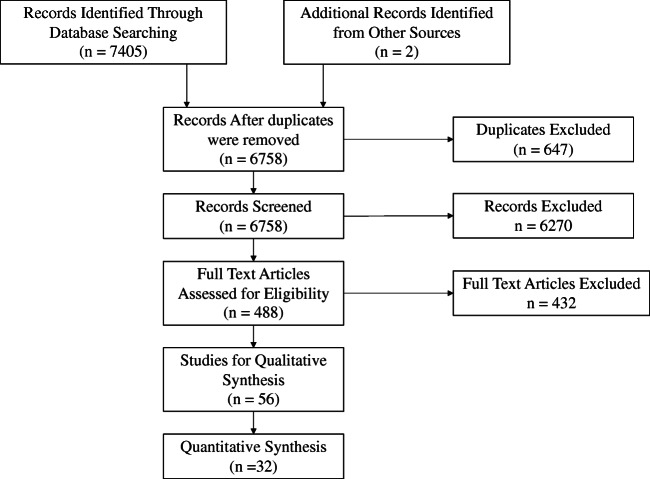
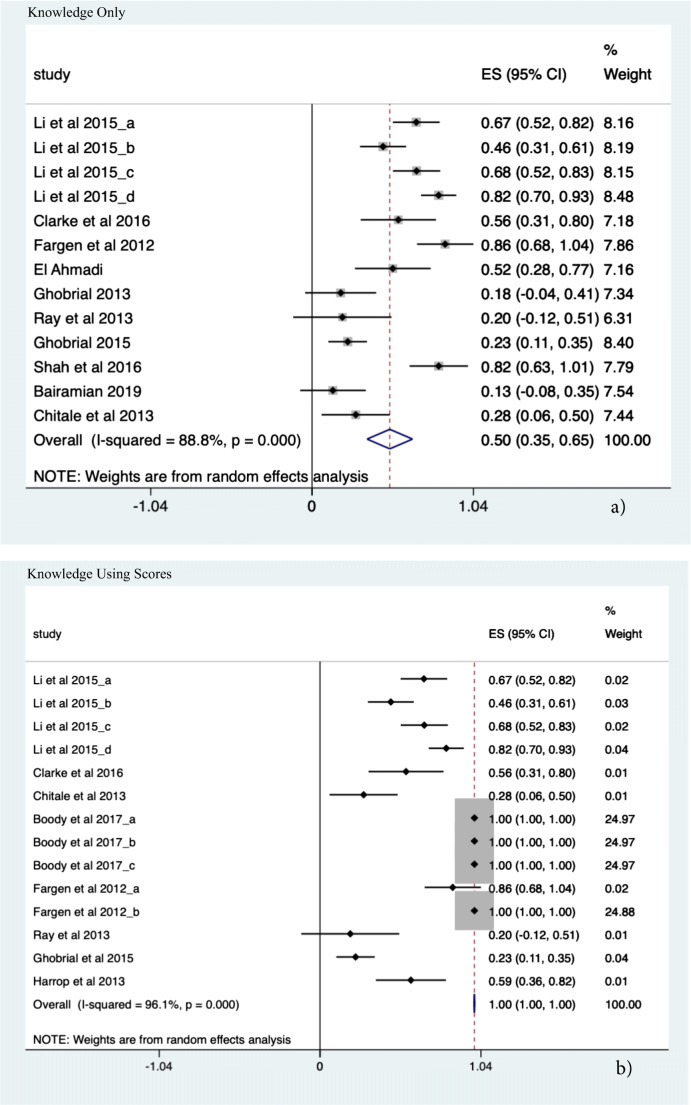
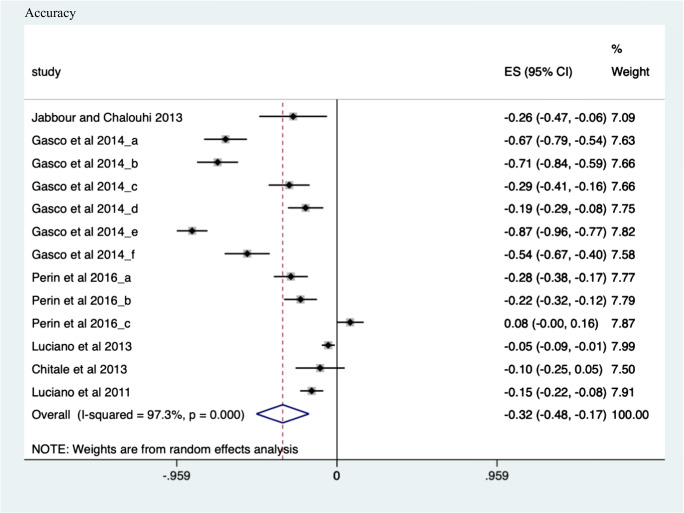
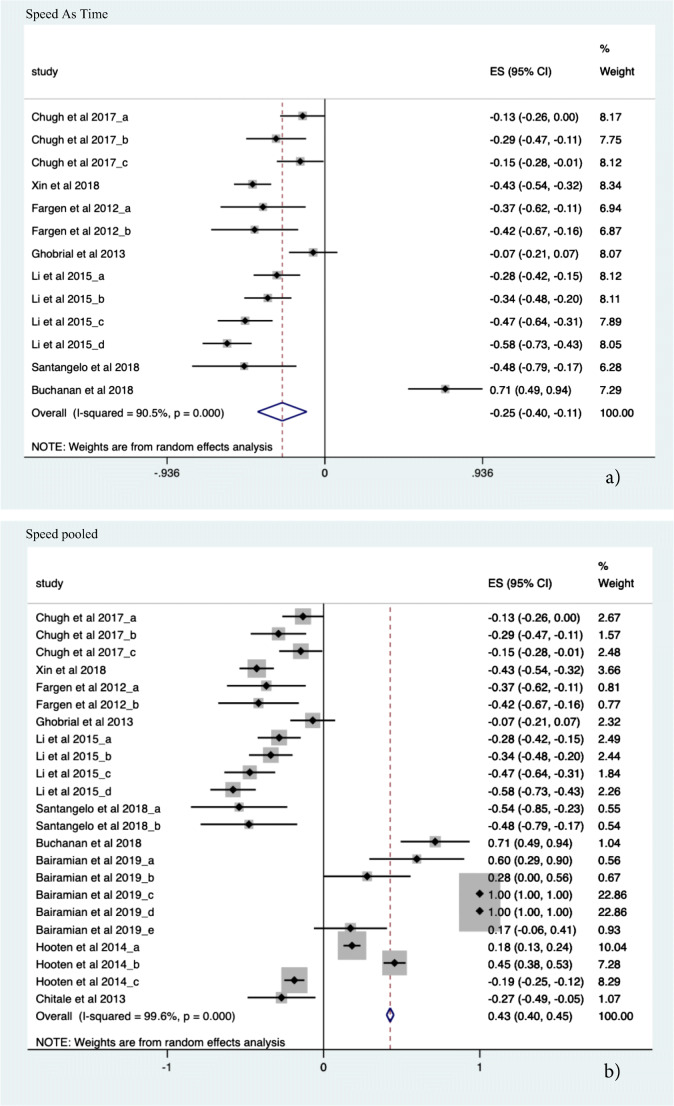
At a time of significant global unrest and uncertainty surrounding how the delivery of clinical training will unfold over the coming years, we offer a systematic review, meta-analysis, and bibliometric analysis of global studies showing the crucial role simulation will play in training. Our aim was to determine the types of simulators in use, their effectiveness in improving clinical skills, and whether we have reached a point of global acceptance. A PRISMA-guided global systematic review of the neurosurgical simulators available, a meta-analysis of their effectiveness, and an extended analysis of their progressive scholarly acceptance on studies meeting our inclusion criteria of simulation in neurosurgical education were performed. Improvement in procedural knowledge and technical skills was evaluated. Of the identified 7405 studies, 56 studies met the inclusion criteria, collectively reporting 50 simulator types ranging from cadaveric, low-fidelity, and part-task to virtual reality (VR) simulators. In all, 32 studies were included in the meta-analysis, including 7 randomised controlled trials. A random effects, ratio of means effects measure quantified statistically significant improvement in procedural knowledge by 50.2% (ES 0.502; CI 0.355; 0.649, p < 0.001), technical skill including accuracy by 32.5% (ES 0.325; CI - 0.482; - 0.167, p < 0.001), and speed by 25% (ES - 0.25, CI - 0.399; - 0.107, p < 0.001). The initial number of VR studies (n = 91) was approximately double the number of refining studies (n = 45) indicating it is yet to reach progressive scholarly acceptance. There is strong evidence for a beneficial impact of adopting simulation in the improvement of procedural knowledge and technical skill. We show a growing trend towards the adoption of neurosurgical simulators, although we have not fully gained progressive scholarly acceptance for VR-based simulation technologies in neurosurgical education.
Overview
The claims and statistics of this paper haven’t been checked yet.
Run the check — free, no account needed. It reads the open-access text and checks the sources it cites.
Integrity signals
Registry
Cites
Statistics
Figures
Verification
Claims the paper makes
The claims and statistics of this paper haven’t been checked yet.
Run the check — free, no account needed. It reads the open-access text and checks the sources it cites.
Claims other papers make about this one
Each is checked against this paper’s own text: does it say what the citing paper says it does?
In the citing paper
“In neurosurgery, a great variety of simulation-based trainings have been established to overcome the shortage of practical training time in the OR per resident.”
From Neurosurgery resident training using blended learning concepts: Course development and participant evaluation (2022) · cites this paper as [9]
In the citing paper
“These trainings account for the greater expectations of residents’ surgical skills when treating patients.1,7–9”
From Neurosurgery resident training using blended learning concepts: Course development and participant evaluation (2022) · cites this paper as [9]
Self-check
Percentages, sums and reported differences re-computed from the paper’s own numbers.
The self-check needs the paper’s full text.
Citations
Cites
Faster R-CNN: Towards Real-Time Object Detection with Region Proposal Networks
Ren, S., He, K., Girshick, R., & Sun, J. (2017) · IEEE Transactions on Pattern Analysis and Machine Intelligence · doi:10.1109/tpami.2016.2577031 · Cited by 73,472
He, K., Gkioxari, G., Dollar, P., & Girshick, R. (2017) · 2017 IEEE International Conference on Computer Vision (ICCV) · doi:10.1109/iccv.2017.322 · Cited by 29,137
Rayyan-a web and mobile app for systematic reviews.
Ouzzani, M., Hammady, H., Fedorowicz, Z., & Elmagarmid, A. (2016) · Systematic Reviews · doi:10.1186/s13643-016-0384-4 · Cited by 26,092
Moher, D., Cook, D. J., Eastwood, S., Olkin, I., Rennie, D., & Stroup, D. F. (1999) · The Lancet · doi:10.1016/s0140-6736(99)04149-5 · Cited by 4,826
Estimating the global incidence of traumatic brain injury
Dewan, M. C., Rattani, A., Gupta, S., Baticulon, R. E., Hung, Y., Punchak, M. A., Agrawal, A., Adeleye, A. O., Shrime, M. G., Rubiano, A. M., et al. (2018) · Journal of neurosurgery · doi:10.3171/2017.10.jns17352 · Cited by 3,459
He, K., Gkioxari, G., Dollar, P., & Girshick, R. (2020) · IEEE Transactions on Pattern Analysis and Machine Intelligence · doi:10.1109/tpami.2018.2844175 · Cited by 3,457
Standards for Educational and Psychological Testing
(2007) · Sage eBooks · doi:10.4135/9781412952644.n432 · Cited by 3,137
Association Between Funding and Quality of Published Medical Education Research
Reed, D. A., Cook, D. A., Beckman, T. J., Levine, R. B., Kern, D. E., & Wright, S. M. (2007) · JAMA · doi:10.1001/jama.298.9.1002 · Cited by 961
Cook, D. A., & Reed, D. A. (2015) · Academic Medicine · doi:10.1097/acm.0000000000000786 · Cited by 781
Dewan, M. C., Rattani, A., Fieggen, G. A. G., Arráez, M. Á. E., Servadei, F., Boop, F. A., Johnson, W. D., Warf, B. C., & Park, K. B. (2018) · Journal of neurosurgery · doi:10.3171/2017.11.jns171500 · Cited by 649
Research works printed but not linked: 1
- Gasco JH, Thomas; Patel, Achal; , Smith A, Paulson D, Muns A, Desai S, Moisi M, Kuo Y-F, Macdonald BO-B, Juan; , Patterson J (2013) Neurosurgery simulation in residency training: Feasibility, cost, and educational benefit. Neurosurgery 73:S39-S45 · DOI
Cited by
Sorted by citations
Items 101–104 of 104
Roche, A. F., Doyle, A. J., Kavanagh, D. O., Crimmins, D. W., Shinyanbola, D., Dablouk, L., Walsh, K. R., Zilani, G., Healy, V., Perin, A., et al. (2026) · Systematic Reviews · doi:10.1186/s13643-026-03274-y
Azarmehr, T., Pouladkhay, F., Farzi, J., Nazari, M., & Galavi, Z. (2026) · Journal of surgical education · doi:10.1016/j.jsurg.2026.104083
Carone, G., Castelli, N., Luigi, A., Maria, B. E., Belotti, E. G., Socaciu, P. B., Boccardi, E., Bonada, M., Marco, B., Carnicelli, I., et al. (2026) · Brain and Spine · doi:10.1016/j.bas.2026.107457
Multimodal Modeling of Surgical Wounds with Massive Bleeding
Ивановна, П. Л., Medievsky, A. V., Зотин, А. Г., & Simonov, K. V. (2026) · Intelligent systems reference library · doi:10.1007/978-3-032-40787-0_3
Metadata
- Authors
- Davids, J., Manivannan, S., Darzi, A., Giannarou, S., Ashrafian, H., & Marcus, H. J.
- Affiliations
- Imperial College Healthcare NHS Trust (GB)
- University Hospital Southampton NHS Foundation Trust (GB)
- Corresponding author
- Davids, Joseph
- Venue
- Neurosurgical Review
- Published
- 2020-09-18
- Volume
- 44
- Issue
- 4
- Pages
- 1853-1867
- ISSN
- 0344-5607 (ISSN-L)
- 1437-2320
- PMC
- PMC8338820
- OpenAlex
- W3087239859
- Cited by
- 106
- References
- 130
- Citations by year
- 2026: 16 · 2025: 23 · 2024: 26 · 2023: 12 · 2022: 24 · 2021: 5
- FWCI
- 2.32
- Type
- journal article
- Language
- en
- Open access
- hybrid
- doi.org
- Locations
- Neurosurgical Review (publishedVersion, cc-by)
- PubMed Central (publishedVersion, cc-by)
- PubMed (publishedVersion)
- Spiral (Imperial College London) (submittedVersion, cc-by)
- UCL Discovery (University College London) (submittedVersion)
- Funders
- Imperial College London
- Topics
- Health Sciences › Medicine › Surgery › Surgical Simulation and Training
- Social Sciences › Education › Simulation-Based Education in Healthcare
- Physical Sciences › Engineering › Biomedical Engineering › Anatomy and Medical Technology
- Keywords
- simulation-based training, neurosurgical training, virtual reality simulator, low-fidelity simulators, procedural knowledge, technical skills
- MeSH terms
- Virtual Reality, Clinical Competence, Computer Simulation, Humans, Neurosurgery, Neurosurgical Procedures
About these checks
Registry, retraction, Cites and statistics results are computed, not judged, with one exception: a printed reference that no index lists is read once by a model before it counts as a citation error. Claims are extracted by a model and kept only when their quote appears verbatim in the text; each cited source is then checked, with a model’s help, for whether it says what the claim relies on. Those verdicts can be wrong — read the claim’s quote and the cited source before relying on one.
Statistics and arithmetic are recomputed, not judged.
Confidence bands are shown only for fields calibrated on our annotated test set. None is calibrated yet, so no band is shown.
What counts as a claim ›How we measure confidence ›How we check this ›
Are you an author, or do you see a problem with this page? Request a review
