

Intravaginal and Menstrual Practices among Women Working in Food and Recreational Facilities in Mwanza, Tanzania: Implications for Microbicide Trials
Open accessThe DOI matches its Crossref record; 43 of the 43 references it cites were found in a registry or an index.
Abstract
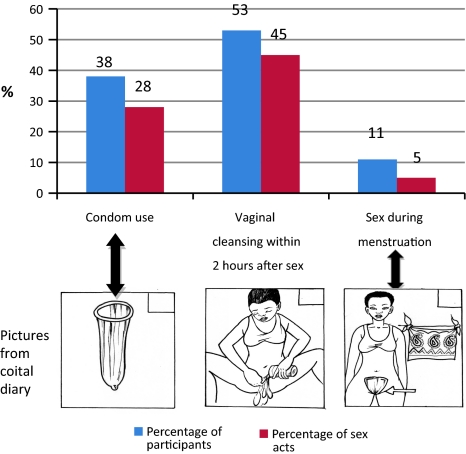
Intravaginal and menstrual practices may potentially influence results of trials of microbicides for HIV prevention through effects on the vaginal environment and on adherence to microbicide and placebo products. As part of the feasibility study for the Microbicides Development Programme Phase 3 trial of a vaginal microbicide in Mwanza, a variety of quantitative and qualitative methods were used to describe these practices, associations with behaviour and underlying social norms among women working in food and recreational facilities. Intravaginal cleansing by inserting fingers and either water alone or soap and water was thought necessary to remove "uchafu" (dirt), referring to vaginal secretions, including menstrual blood and post-coital discharge. Vaginal cleansing was carried out within 2 hours after 45% of sex acts. Sexual enhancement practices were less common. Intravaginal and menstrual practices and associated behaviours and demographic factors should be measured and monitored throughout microbicide trials to enable analyses of their impacts on microbicide effectiveness.
Overview
The claims and statistics of this paper haven’t been checked yet.
Free: it reads the open-access text and checks the first 5 claims that cite a source we can check. Create a free account to check every claim.
Integrity signals
Registry
Cites
Statistics
Figures
Verification
Claims the paper makes
The claims and statistics of this paper haven’t been checked yet.
Free: it reads the open-access text and checks the first 5 claims that cite a source we can check. Create a free account to check every claim.
Claims other papers make about this one
Each is checked against this paper’s own text: does it say what the citing paper says it does?
The source backs part of the claim, not all of it — or backs it for a different population, condition or comparison.
In the citing paper
“The use of unhygienic cloths for menstruation is associated with reproductive tract infection (RTI) symptoms, requiring verification.7–9”
From Menstrual cups and sanitary pads to reduce school attrition, and sexually transmitted and reproductive tract infections: a cluster randomised controlled feasibility study in rural Western Kenya (2016) · cites this paper as [8]
Experimental — accuracy not yet measured
Self-check
Percentages, sums and reported differences re-computed from the paper’s own numbers.
The self-check needs the paper’s full text.
Citations
Cites
Transforming AIDS prevention to meet women's needs: A focus on developing countries
Heise, L. L., & Elias, C. (1995) · Social Science & Medicine · doi:10.1016/0277-9536(94)00165-p · Cited by 287 · cited 1×
“many women, whose risk may derive mainly from male partner behaviour [14, 15].”
BackgroundBiomedical interventions to prevent HIV infection: evidence, challenges, and way forward
Padian, N. S., Buvé, A., Balkus, J., Serwadda, D., & Cates, W. (2008) · The Lancet · doi:10.1016/s0140-6736(08)60885-5 · Cited by 264 · cited 1×
“It has been noted that inadequate adherence (correct and consistent use) may have affected the results of randomised controlled trials of some HIV prevention interventions including microbicides, and that there is a need for research to reveal influences on adherence [12, 19–22].”
ResultMyer, L., Kuhn, L., Stein, Z. A., Wright, T. C., & Denny, L. (2005) · The Lancet Infectious Diseases · doi:10.1016/s1473-3099(05)70298-x · Cited by 193 · cited 2×
“They may also alter the risk of HIV acquisition [3–6, 23], though randomisation and blinding should ensure that IVP are similar in both arms of microbicide trials.”
BackgroundMicrobicide acceptability research: current approaches and future directions
Mantell, J. E., Myer, L., Carballo-Diéguez, A., Stein, Z., Ramjee, G., Morar, N. S., & Harrison, P. F. (2005) · Social Science & Medicine · doi:10.1016/j.socscimed.2004.05.011 · Cited by 159 · cited 2×
“Influences on intravaginal and menstrual practices thus form part of the range of individual, partner/interpersonal, cultural and environmental factors which may impact on satisfaction with a microbicide product and willingness to use it [8, 9, 16–18].”
BackgroundMcClelland, R. S., Lavreys, L., Hassan, W., Mandaliya, K. N., Ndinya‐Achola, J. O., & Baeten, J. M. (2006) · AIDS · doi:10.1097/01.aids.0000196165.48518.7b · Cited by 153 · cited 1×
“These methods should be contextually appropriate, based on ‘‘thorough understanding of the norms and beliefs surrounding the use of IVP’’ (McClelland: 272 [5]).”
MethodHIV infection and vaginal douching in Central Africa
Grésenguet, G., Kreiss, J. K., Chapko, M. K., Hillier, S. L., & Weiss, N. S. (1997) · AIDS · doi:10.1097/00002030-199701000-00015 · Cited by 147 · cited 3×
“se e [2 7 ] fo r”
Backgroundvan de Wijgert, J. H. H. M., Morrison, C. S., Cornelisse, P. G. A., Munjoma, M., Moncada, J., Awio, P., Wang, J., Van der Pol, B., Chipato, T., Salata, R. A., et al. (2008) · JAIDS Journal of Acquired Immune Deficiency Syndromes · doi:10.1097/qai.0b013e3181743936 · Cited by 131
A cross cultural study of vaginal practices and sexuality: Implications for sexual health
Hilber, A. M., Hull, T. H., Preston‐Whyte, E., Bagnol, B., Smit, J. A., Wacharasin, C., & Widyantoro, N. (2009) · Social Science & Medicine · doi:10.1016/j.socscimed.2009.10.023 · Cited by 130 · cited 3×
“This has led to efforts to develop standardised methods for IVP research [10, 11].”
BackgroundFonck, K. (2001) · Sexually Transmitted Infections · doi:10.1136/sti.77.4.271 · Cited by 125
Dry sex in Zimbabwe and implications for condom use
Civic, D., & Wilson, D. (1996) · Social Science & Medicine · doi:10.1016/0277-9536(95)00081-x · Cited by 124 · cited 1×
“The insertion of substances to dry and tighten the vagina appears to be common according to some studies in Southern Africa [30, 32, 33], notably with sex workers [34].”
Background
Research works printed but not linked: 1
- 42. Francis S, Allen C, Vallely A, et al. Intravaginal practices in a microbicide feasibility study in Mwanza, Tanzania: baseline associations with bacterial vaginosis, sexually transmitted infections and HIV. In: 17th Conference of the international society for STD Research. Seattle, USA; 2007 July 29–August 1.
Cited by
Mason, L., Nyothach, E., Alexander, K., Odhiambo, F. O., Eleveld, A., Vulule, J., Rheingans, R., Laserson, K. F., Mohammed, A., & Phillips-Howard, P. A. (2013) · PLoS ONE · doi:10.1371/journal.pone.0079132 · Cited by 375
“Sex during menstruation has long been recognized for its potential contribution to HIV transmission [57], however its prevalence and risk in particular subgroups, including adolescent girls, has received scant attention [58].”
BackgroundLow, N., Chersich, M. F., Schmidlin, K., Egger, M., Francis, S. C., H. H. M. van de Wijgert, J., Hayes, R. J., Baeten, J. M., Brown, J., Delany-Moretlwe, S., et al. (2011) · PLoS Medicine · doi:10.1371/journal.pmed.1000416 · Cited by 271
“Implications for Research and Policy It is becoming increasingly important to understand the distribution, motivations for, and health effects of intravaginal practices [12,47], particularly since a randomised controlled trial has, for the first time, shown that a vaginal microbicide can reduce acquisition of HIV infe…”
BackgroundSelf-citationPhillips-Howard, P. A., Nyothach, E., ter Kuile, F. O., Omoto, J., Wang, D., Zeh, C., Onyango, C., Mason, L., Alexander, K. T., Odhiambo, F. O., et al. (2016) · BMJ Open · doi:10.1136/bmjopen-2016-013229 · Cited by 209
Phillips-Howard, P. A., Otieno, G., Burmen, B., Otieno, F., Odongo, F., Odour, C., Nyothach, E., Amek, N., Zielinski-Gutierrez, E., Odhiambo, F., et al. (2015) · Journal of Women's Health · doi:10.1089/jwh.2014.5031 · Cited by 119
“Menstrual product use has been poorly documented in Africa,(12) with information on this gleaned mainly while testing new products(13,14,15) or while examining women’s behaviors in preparation for microbicide trials.(7) These findings suggest a paucity of options for impoverished females, where traditionally old cloth…”
BackgroundInfluentialMicrobicide clinical trial adherence: insights for introduction
Woodsong, C., MacQueen, K. M., Amico, K. R., Friedland, B., Gafos, M., Mansoor, L. E., Tolley, E. E., & McCormack, S. (2013) · Journal of the International AIDS Society · doi:10.7448/ias.16.1.18505 · Cited by 82
“In sub-Saharan Africa, evidence from multiple cultural contexts suggests that sexual activity tapers during menses [28 (cid:2) 30]; thus, in many settings adherence during menses may be a non-issue for coitally dependent methods.”
Woodsong, C., & Holt, J. D. S. (2015) · Advanced Drug Delivery Reviews · doi:10.1016/j.addr.2015.02.004 · Cited by 78
Hull, T. H., Hilber, A. M., Chersich, M., Bagnol, B., Prohmmo, A., Smit, J. A., Widyantoro, N., Utomo, I. D., François, I., Tumwesigye, N. M., et al. (2011) · Journal of Women s Health · doi:10.1089/jwh.2010.2281 · Cited by 75
“12 Moreover, products inserted into the vagina VAGINAL PRACTICES IN AFRICA AND ASIA might react with microbicides, making them inactive or potentially harmful.”
Scorgie, F., Foster, J., Stadler, J., Phiri, T., Hoppenjans, L., Rees, H., & Muller, N. (2016) · Medical Anthropology · doi:10.1080/01459740.2015.1094067 · Cited by 67
Lees, S. S., Zalwango, F., Andrew, B., Vandepitte, J., Seeley, J., Hayes, R., & Francis, S. C. (2013) · Social Science & Medicine · doi:10.1016/j.socscimed.2013.12.005 · Cited by 43
“IVP are highly prevalent amongst women involved in transactional sex in sub-Saharan Africa (Allen et al., 2010; Fonck et al., 2001; Francis et al., 2013; McClelland et al., 2006; Nagot et al., 2007; Watson-Jones et al., 2007), and this population is also at increased risk of HIV infection (Baral et…”
BackgroundResultInfluentialSelf-citationCherenack, E. M., & Sikkema, K. J. (2021) · International Journal of Behavioral Medicine · doi:10.1007/s12529-021-10005-1 · Cited by 40
the MTN-020/ASPIRE Study Team, Duby, Z., Katz, A. W. K., Browne, E. N., Mutero, P., Etima, J., Zimba, C. C., Woeber, K., Atujuna, M., Reddy, K., et al. (2019) · AIDS and Behavior · doi:10.1007/s10461-019-02514-8 · Cited by 34
A review of sanitation and hygiene in Tanzania
Thomas, J., Holbro, N., & Young, D. (2013) · doi:10.13140/rg.2.2.27784.26884 · Cited by 32
Alcaide, M. L., Chisembele, M., Malupande, E., Rodriguez, V. J., Fischl, M. A., Arheart, K. L., & Jones, D. L. (2017) · BMC Infectious Diseases · doi:10.1186/s12879-017-2436-3 · Cited by 24
“[1, 2] IVP carry deleterious consequences for women’s health as they are associated with the development of bacterial vaginosis and the acquisition of HIV infection.”
BackgroundVaginal Cleansing Practices in HIV Infected Zambian Women
Alcaide, M. L., Mumbi, M., Chitalu, N. W., & Jones, D. L. (2011) · AIDS and Behavior · doi:10.1007/s10461-011-0083-z · Cited by 21
“[3] found 75% of women in Tanzania reported VP, mainly with soap and water and for hygiene purposes.”
BackgroundExamining Targets for HIV Prevention: Intravaginal Practices in Urban Lusaka, Zambia
Alcaide, M. L., Chisembele, M., Mumbi, M., Malupande, E., & Jones, D. L. (2014) · AIDS Patient Care and STDs · doi:10.1089/apc.2013.0309 · Cited by 19
“In contrast, women in Africa use a variety of other products.(4,15,16) In our study, women used fingers, soap, water, roots, leaves, traditional medicines, vinegar, lemon, and beer.”
BackgroundMethodBiomarkers and biometric measures of adherence to use of ARV‐based vaginal rings
Stalter, R. M., Moench, T. R., MacQueen, K. M., Tolley, E. E., & Owen, D. H. (2016) · Journal of the International AIDS Society · doi:10.7448/ias.19.1.20746 · Cited by 20
Vallely, A., Fitzgerald, L., Fiya, V., Aeno, H., Kelly, A., Sauk, J., Kupul, M., Neo, J., Millan, J., Siba, P., et al. (2012) · BMC Research Notes · doi:10.1186/1756-0500-5-613 · Cited by 18
“microbicide gel is washed out immediately after sex) [24].”
BackgroundMethodResultInfluentialSelf-citationThe Vaginal Microbiota Among Adolescent Girls in Tanzania Around the Time of Sexual Debut
Francis, S. C., Crucitti, T., Smekens, T., Hansen, C. H., Andreasen, A. A., Jespers, V., Hardy, L., Irani, J., Changalucha, J. M., Baisley, K. J., et al. (2020) · Frontiers in Cellular and Infection Microbiology · doi:10.3389/fcimb.2020.00305 · Cited by 18
“crispatus prevalence diminishes with increased numbers of partners, uncircumcised partners or the initiation of intravaginal practices, which are more common in more sexually experienced women in the region (Gray et al., 2009; Allen et al., 2010).”
BackgroundSelf-citationLees, S. S. (2014) · Culture Health & Sexuality · doi:10.1080/13691058.2014.963680 · Cited by 16
Self-citationthe MDP team, Gafos, M., Pool, R., Mzimela, M. A., Ndlovu, H. B., McCormack, S., & Elford, J. (2013) · AIDS and Behavior · doi:10.1007/s10461-013-0676-9 · Cited by 16
“Increased intravaginal cleansing during menstruation is well documented [13, 22, 41, 62].”
Alcaide, M. L., Rodriguez, V. J., Fischl, M. A., Jones, D. L., & Weiss, S. M. (2017) · International Journal of Women s Health · doi:10.2147/ijwh.s125883 · Cited by 16
Esber, A. L., Moyo, P., Munjoma, M. W., Francis, S. A., van de Wijgert, J. H. H. M., Chipato, T., & Turner, A. N. (2014) · Sexually Transmitted Infections · doi:10.1136/sextrans-2014-051764 · Cited by 15
Self-citationWater, sanitation and hygiene at sex work venues to support menstrual needs
Phillips‐Howard, P. A., Osire, E. A., Akinyi, C., Zulaika, G., Otieno, F., & Mehta, S. D. (2024) · Frontiers in Public Health · doi:10.3389/fpubh.2024.1305601 · Cited by 14
Watnick, D. L., Keller, M. J., Stein, K., & Bauman, L. J. (2017) · AIDS and Behavior · doi:10.1007/s10461-017-1962-8 · Cited by 14
Gynaecological, Andrological and Urological Problems: An Ethnopharmacological Perspective
van Andel, T., de Boer, H., & Towns, A. (2015) · Wiley eBooks · doi:10.1002/9781118930717.ch18 · Cited by 12
Cultural considerations and beliefs surrounding preterm birth in Kenya and South Africa
Milford, C., Smith, E., Ngure, K., Thuo, N. B., Newmann, S. J., Lazarus, N., Beksinska, M. E., Mugo, N., & Rand, L. (2023) · Reproductive Health · doi:10.1186/s12978-023-01633-9 · Cited by 12
“Furthermore, vaginal practices and insertion of intravaginal products are influenced by culture and concepts of hygiene and sexuality [23, 24].”
BackgroundIntravaginal practices among a cohort of rural Malawian women
Esber, A. L., Turner, A. N., Mopiwa, G., & Norris, A. H. (2016) · Sexual Health · doi:10.1071/sh15139 · Cited by 10
Vaginal practices among women at risk for HIV acquisition in Soweto, South Africa
Lazarus, E. M., Otwombe, K. N., Dietrich, J. J., Andrasik, M. P., Morgan, C. A., Kublin, J. G., Gray, G. E., Isaacs, A. J., & Laher, F. (2019) · Southern African Journal of HIV Medicine · doi:10.4102/sajhivmed.v20i1.866 · Cited by 9
An Intervention to Decrease Intravaginal Practices in HIV-Infected Women in Zambia: A Pilot Study
Alcaide, M. L., Mumbi, M., Chitalu, N. W., & Jones, D. L. (2013) · Journal of the Association of Nurses in AIDS Care · doi:10.1016/j.jana.2012.08.009 · Cited by 9
“…dryness of the vagina and promote ‘‘dry sex,’’ a practice that is believed to increase sexual pleasure for men (Alcaide, Mumbi, Chitalu, & Jones, 2011; Allen et al., 2010; Beksinska, Rees, Kleinschmidt, & McIntyre, 1999; Fonck et al., 2001; Gallo, et al., 2010; Hilber, Francis, et al., 2010;…”
BackgroundMilford, C., Beksinska, M. E., Smit, J. A., & Deperthes, B. (2020) · Archives of Sexual Behavior · doi:10.1007/s10508-020-01673-3 · Cited by 9
Kusemererwa, S., Ruzagira, E., Onyango, M., Kabarambi, A., & Abaasa, A. M. (2024) · BMJ Open · doi:10.1136/bmjopen-2023-079497 · Cited by 8
Cherenack, E. M., Rubli, J., Dow, D. E., & Sikkema, K. J. (2020) · International Journal of Sexual Health · doi:10.1080/19317611.2020.1821861 · Cited by 7
Intravaginal practices among young HIV-infected women in Lusaka, Zambia
Chisembele, M., Rodriguez, V. J., Brown, M. R., Jones, D. L., & Alcaide, M. L. (2017) · International Journal of STD & AIDS · doi:10.1177/0956462417721438 · Cited by 7
Therapeutic Imaginaries in the Caribbean: Competing Approaches to HIV/AIDS Policy in Cuba and Belize
Pope, C. K. (2012) · Annals of the Association of American Geographers · doi:10.1080/00045608.2012.659971 · Cited by 6
Microbicides, sexuality and sexual health in KwaZulu-Natal, South Africa
Gafos, M. (2013) · City Research Online (City University London) · Cited by 4
Study of Harmful Vaginal Practices of Women in the Municipality of Ouagadougou, Burkina Faso
Dori, D., Porgo, R., Zamané, H., Méda, N., & Semdé, R. (2024) · Health · doi:10.4236/health.2024.165030 · Cited by 2
Dobkin, A., McWalters, J., Barnett, R. L., Ray, L., Espinoza, L., McGinn, A. P., Atrio, J., & Keller, M. J. (2020) · Sexually Transmitted Diseases · doi:10.1097/olq.0000000000001254 · Cited by 2
“Contributing factors associated with microbicide acceptability include intravaginal hygiene, menstrual practices, and sexual pleasure.(15,16) Prior acceptability studies have primarily focused on the experiences of women using the IVR during activities of daily living, and few have included assessment of ring use duri…”
BackgroundMcCullough, E., Zulaika, G., Osire, E. A., Akinyi, C., Otieno, F., Phillips‐Howard, P. A., Mehta, S. D., & Mason, L. (2026) · Frontiers in Reproductive Health · doi:10.3389/frph.2026.1817624 · Cited by 1
Cevallos, B. A. C. (2023) · TITULA · Cited by 1
Public Health Interventions Research Group Publications, last ten years 2012
Ps, H., Hocking, J. S., Agius, P. A., Ward, J. S., Bourne, C., Kaldor, J. M., Chlamydia, G. R., Ali, H., Rj, G., Fairley, C. K., et al. (2012)
Self-citationHPV risk factors and screening among Malawian women
Esber, A. L. (2016) · OhioLink ETD Center (Ohio Library and Information Network)
Hlophe, R. Z. (2019) · ResearchSpace (University of KwaZulu-Natal)
Jaiteh, M., Awolude, O. A., & Bah, H. T. (2022) · Research Square · doi:10.21203/rs.3.rs-2128844/v1
Jaiteh, M., Awolude, O. A., & Bah, H. T. (2022) · Research Square · doi:10.21203/rs.3.rs-2128823/v1
Inequities and disparities in reproductive health: Reproductive epidemiology
(2024) · Frontiers research topics · doi:10.3389/978-2-8325-4925-4
Makoba, L. O. (2021) · ResearchSpace (University of KwaZulu-Natal)
Mazibuko, N. (2023) · ResearchSpace (University of KwaZulu-Natal)
McCullough, E., Zulaika, G., Osire, E. A., Akinyi, C., Otieno, F., Phillips‐Howard, P. A., Mehta, S. D., & Mason, L. (2026) · Women s Health · doi:10.1177/17455057261465644
Metadata
- Authors
- Allen, C. F., Desmond, N., Chiduo, B., Medard, L., Lees, S. S., Vallely, A., Francis, S. C., Ross, D. A., & Hayes, R. J.
- Affiliations
- MRC/CSO Social and Public Health Sciences Unit (GB)
- National Institute for Medical Research (TZ)
- London School of Hygiene & Tropical Medicine (GB)
- Corresponding author
- Allen, Caroline F.
- ORCID
- Venue
- AIDS and Behavior
- Published
- 2010-07-28
- Volume
- 14
- Issue
- 5
- Pages
- 1169-1181
- ISSN
- 1090-7165 (ISSN-L)
- 1573-3254
- PMC
- PMC2944961
- OpenAlex
- W2122977383
- Cited by
- 43
- References
- 43
- Citations by year
- 2026: 2 · 2024: 4 · 2023: 1 · 2022: 2 · 2021: 1 · 2020: 4 · 2019: 2 · 2017: 4 · 2016: 4 · 2015: 4 · 2014: 3 · 2013: 6 · 2012: 3
- FWCI
- 2.48
- Type
- journal article
- Language
- en
- Open access
- hybrid
- doi.org
- Licence
- cc-by-nc
- Locations
- AIDS and Behavior (publishedVersion, cc-by-nc)
- PubMed Central (publishedVersion, cc-by-nc)
- PubMed (publishedVersion)
- LSTM Online Archive (Liverpool School of Tropical Medicine) (acceptedVersion)
- LSHTM Research Online (London School of Hygiene and Tropical Medicine) (acceptedVersion)
- Funders
- Department for International Development
- National Institute for Medical Research
- Medical Research Council
- Topics
- Health Sciences › Medicine › Infectious Diseases › HIV/AIDS Research and Interventions
- Life Sciences › Immunology and Microbiology › Microbiology › Reproductive tract infections research
- Health Sciences › Medicine › Epidemiology › HIV, Drug Use, Sexual Risk
- Keywords
- menstrual practices, vaginal hygiene, microbicide trials, HIV prevention, vaginal microbicides, social norms, trial adherence, Mwanza
- MeSH terms
- Administration, Intravaginal, Adult, Anti-Infective Agents, Employment, Female, Food, Humans, Hygiene, Male, Menstruation, Recreation, Tanzania, Vagina, Sexually Transmitted Diseases, Viral, HIV Infections, Workplace, Focus Groups, Clinical Trials, Phase III as Topic, Qualitative Research, Young Adult
About these checks
Registry, retraction, Cites and statistics results are computed, not judged, with one exception: a printed reference that no index lists is read once by a model before it counts as a citation error. Claims are extracted by a model and kept only when their quote appears verbatim in the text; each cited source is then checked, with a model’s help, for whether it says what the claim relies on. Those verdicts can be wrong — read the claim’s quote and the cited source before relying on one.
Statistics and arithmetic are recomputed, not judged.
Confidence bands are shown only for fields calibrated on our annotated test set. None is calibrated yet, so no band is shown.
What counts as a claim ›How we measure confidence ›How we check this ›
Are you an author, or do you see a problem with this page? Request a review
Data sources
Bibliographic data: Semantic Scholar, OpenAlex, Crossref.
Contains information from the Semantic Scholar Academic Graph Datasets, made available under the ODC Attribution License (ODC-BY 1.0).
Semantic Scholar’s data is described in: Kinney, R., et al. (2023). The Semantic Scholar Open Data Platform. arXiv:2301.10140.
