

Generative AI and LLM applications in renewable energy and smart grids: a systematic review for the sustainable energy transition
Open accessThe DOI matches its Crossref record; 181 of the 181 references it cites were found in a registry or an index; none of the 270 sources its claims cite is checked for support yet.
Abstract
The global energy transition toward decarbonization and digitalization requires advanced methods to manage decentralized, data-intensive cyber-physical energy systems. This systematic review analyzes 106 research studies on Generative Artificial Intelligence (GenAI) and Large Language Models (LLMs) in renewable energy and smart grids, organized into seven application clusters covering forecasting, system design, operation, reliability, data and cybersecurity, and energy markets. The review situates these applications within a Cyber-Physical-Social Systems (CPSS) framework. Results show that GANs dominate current applications (47.2%), followed by LLMs (10.4%) and VAEs (9.4%), with growing adoption of diffusion and score-based models (7.5% each). Selected studies report improved probabilistic forecasting and uncertainty calibration using diffusion and score-based approaches, subject to dataset and evaluation setup. GenAI supports system planning through synthetic scenario generation, enhances operational decision support and demand response coordination, and contributes to reliability, cybersecurity, and market analysis. LLMs primarily function as language-driven decision support and knowledge integration components across multiple application domains. Despite computational and data-related constraints, GenAI represents an important enabler of the sustainable digital transition by supporting resilience, adaptability, and governance in renewable energy systems.
Overview
CoChat Summary
TL;DR
This systematic review analyzes 106 studies on generative AI and LLMs in renewable energy and smart grids, organizing applications into seven clusters and a Cyber-Physical-Social Systems (CPSS) framework. It finds GANs dominate current applications (47.2%), with LLMs (10.4%) and VAEs (9.4%) also present, while diffusion and score-based models (7.5% each) show promise for probabilistic forecasting and uncertainty calibration.
Key findings
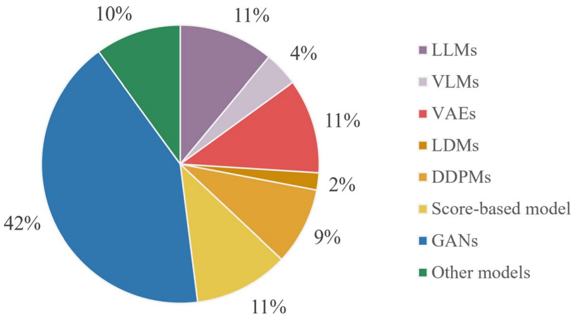
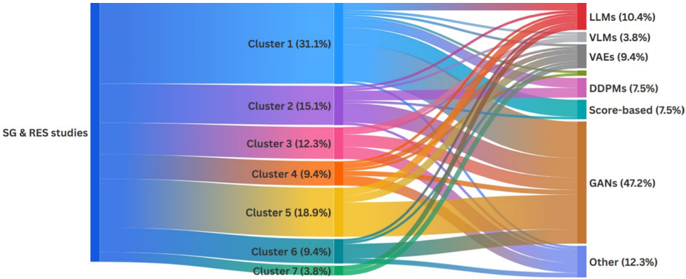
- Across 106 included studies, GANs are the most common GenAI model (47.2%), followed by LLMs (10.4%), VAEs (9.4%), and diffusion and score-based models (7.5% each).
- Selected studies report improved probabilistic forecasting and uncertainty calibration using diffusion and score-based approaches, subject to dataset and evaluation setup; GAN-based models often improve PV, wind, and load forecasting over baselines.
- GenAI supports system planning through synthetic scenario generation, operational decision support and demand response coordination, reliability, cybersecurity, and market analysis; LLMs primarily function as language-driven decision support and knowledge integration components rather than primary numerical forecasting, optimization, or control tools.
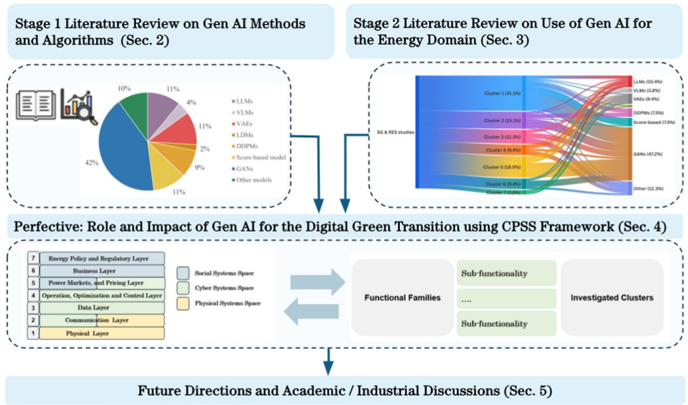
- The review maps applications to seven clusters and a CPSS framework, identifying future opportunities such as climate-impact stress testing, blackout recovery planning, flexibility market simulation, carbon trading and PPAs, and generative policy sandboxes.
Methods
- Two-stage literature review: Stage 1 provides a theoretical review of GenAI architectures; Stage 2 performs a systematic review of GenAI applications in renewable energy and smart grids.
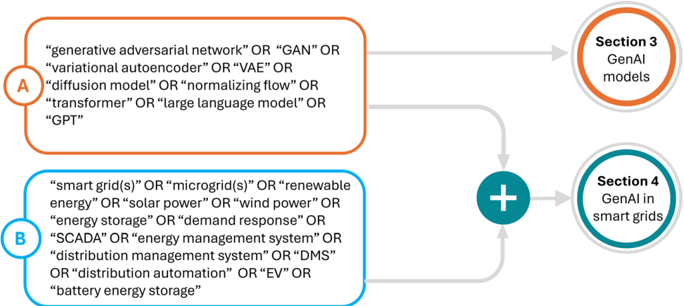
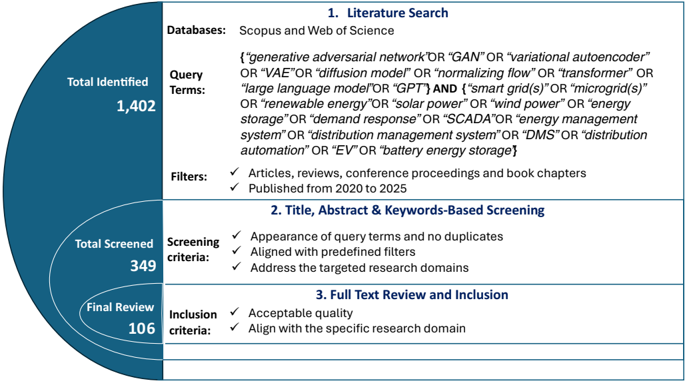
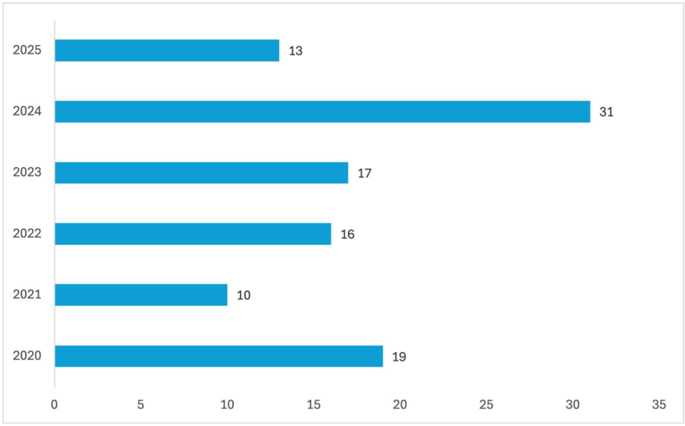
- Stage 2 searched Scopus and Web of Science using GenAI model-specific keywords combined with smart grid and renewable energy keywords, with filters for peer-reviewed journal articles, conference papers, and scholarly books published 2020–2025; 1,402 records were identified, reduced to 349 after abstract screening and duplicate removal, and finally 106 studies were included after full-text assessment.
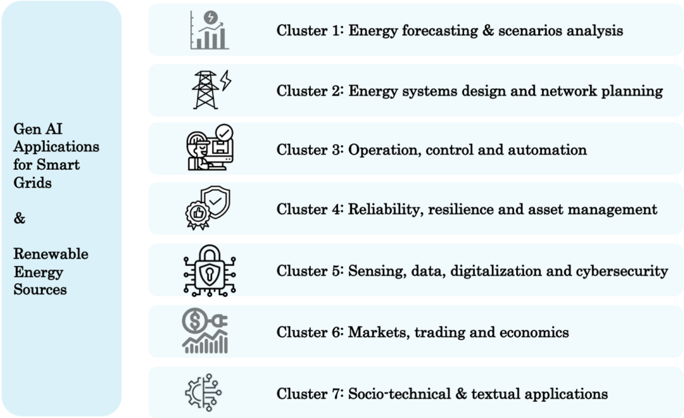
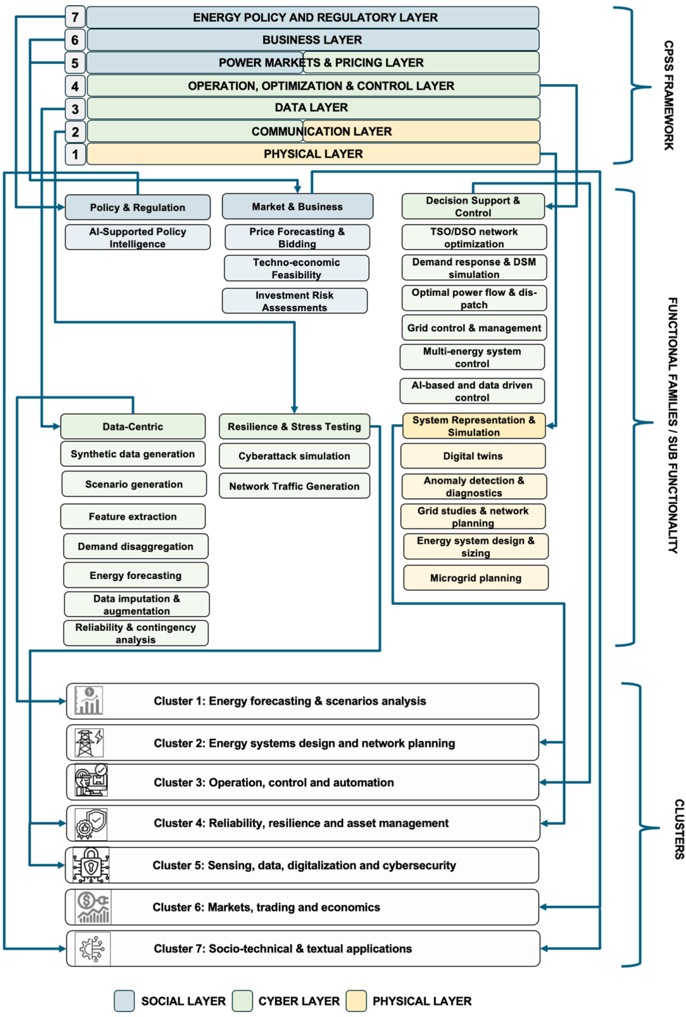
- Included studies were organized into seven application clusters and mapped to an extended CPSS/SGAM framework; the analysis is a qualitative synthesis and taxonomy, with limited direct quantitative comparison due to heterogeneous datasets and modeling assumptions.
Limitations
- Stated: the temporal cut-off of 2020–2025 means the review cannot capture unpublished pilots or architectural advances emerging after the cut-off in a rapidly developing field.
- Stated: direct model comparison is limited by heterogeneity in datasets, time horizons, temporal resolutions, and modeling assumptions; comparative analysis is mainly qualitative and should be followed by rigorous benchmarking.
- Stated and evident: the review cannot fully address deployment challenges such as computational requirements in resource-constrained EdgeAI grid applications or real-time latency requirements for critical grid operations; cluster classification overlaps are not always straightforward, and the CPSS mapping is qualitative, requiring further quantitative metrics and operational utility.
Model-written summary. Check it against the paper before relying on it.
Integrity signals
Registry
Cites
Statistics
Figures
Verification
Claims the paper makes
0 Valid · 27 Not valid · 259 Not checked · 218 Own results and interpretations
A result the paper states — it cites no source for it, so there is none to check. The quote shows it is in the paper.
In the paper
“GenAI supports system planning through synthetic scenario generation, enhances operational decision support and demand response coordination, and contributes to reliability, cybersecurity, and market analysis.”
§ Generative AI and LLM applications in renewable energy and smart grids: a systematic review for the sustainable energy transition > Abstract
plainstates a cause- Asserted: passes — The authors put it forward as true.
- Checkable: passes — It can be checked against evidence.
- Load-bearing: passes — The paper’s conclusions depend on it.
- Based: passes — The paper gives a reason why it holds.
A result the paper reports from its own data — it cites no other source for it, so there is none to check. The quote shows it is in the paper.
In the paper
“Results show that GANs dominate current applications (47.2%), followed by LLMs (10.4%) and VAEs (9.4%), with growing adoption of diffusion and score-based models (7.5% each).”
§ Generative AI and LLM applications in renewable energy and smart grids: a systematic review for the sustainable energy transition > Abstract
plain- Asserted: passes — The authors put it forward as true.
- Checkable: passes — It can be checked against evidence.
- Load-bearing: unclear — It is unclear whether the paper’s conclusions depend on it.
- Based: passes — The paper gives a reason why it holds.
A result the paper reports from its own data — it cites no other source for it, so there is none to check. The quote shows it is in the paper.
In the paper
“our analysis found that GANs was the most commonly used GenAI model in smart grids and renewable energy applications with applications across clusters (47.2%)”
§ Generative AI and LLM applications in renewable energy and smart grids: a systematic review for the sustainable energy transition > 3 Generative AI in smart grids and renewable energy applications
plain- Asserted: passes — The authors put it forward as true.
- Checkable: passes — It can be checked against evidence.
- Load-bearing: unclear — It is unclear whether the paper’s conclusions depend on it.
- Based: passes — The paper gives a reason why it holds.
214 more claims
Create a free account to see all 504 claims and to verify the 225 references still open.
- It may state two separate claims as one. 183
- Probably not a substantial claim. 170
Self-check
Percentages, sums and reported differences re-computed from the paper’s own numbers.
Each contradiction between two passages listed here was confirmed by an independent check.
Rated minor: it would not touch a result — a value no result rests on, a p-value that stays on the same side of the significance level, or a conflict that is clerical, resolved elsewhere in the paper, or outside its own findings.
In the paper
§ Generative AI and LLM applications in renewable energy and smart grids: a systematic review for the sustainable energy transition > 3.2 Cluster 2: Energy systems design and network planning
“Study (Li et al. 2025b) introduced an innovative distribution network planning method that combines GAN-generated uncertainty scenarios with Distributionally Robust Optimization (DRO) to determine optimal DER allocation.”
§ Generative AI and LLM applications in renewable energy and smart grids: a systematic review for the sustainable energy transition > References
“Li Y, Zhang S, Li Y (2025b) Ai-enhanced resilience in power systems: adversarial deep learning for robust short-term voltage stability assessment under cyber-attacks.”
Citations
Cites
Vaswani, A., Shazeer, N., Parmar, N., Uszkoreit, J., Jones, L., Gomez, A. N., Kaiser, L., & Polosukhin, I. (2017) · arXiv · doi:10.48550/arxiv.1706.03762 · Cited by 120,404
High-Resolution Image Synthesis with Latent Diffusion Models
Rombach, R., Blattmann, A., Lorenz, D., Esser, P., & Ommer, B. (2022) · 2022 IEEE/CVF Conference on Computer Vision and Pattern Recognition (CVPR) · doi:10.1109/cvpr52688.2022.01042 · Cited by 20,302
Generative adversarial networks
Goodfellow, I., Pouget-Abadie, J., Mirza, M., Xu, B., Warde-Farley, D., Ozair, S., Courville, A., & Bengio, Y. (2020) · Communications of the ACM · doi:10.1145/3422622 · Cited by 18,384
NeRF: representing scenes as neural radiance fields for view synthesis
Mildenhall, B., Srinivasan, P. P., Tancik, M., Barron, J. T., Ramamoorthi, R., & Ng, R. (2022) · Communications of the ACM · doi:10.1145/3503250 · Cited by 6,852
ESRGAN: Enhanced Super-Resolution Generative Adversarial Networks
Wang, X., Yu, K., Wu, S., Gu, J., Liu, Y., Dong, C., Qiao, Y., & Loy, C. C. (2019) · Lecture Notes in Computer Science · doi:10.1007/978-3-030-11021-5_5 · Cited by 4,731
Scalable Diffusion Models with Transformers
Peebles, W., & Xie, S. (2023) · 2023 IEEE/CVF International Conference on Computer Vision (ICCV) · doi:10.1109/iccv51070.2023.00387 · Cited by 2,284
Scalable Diffusion Models with Transformers
Peebles, W., & Xie, S. (2022) · arXiv · doi:10.48550/arxiv.2212.09748 · Cited by 2,284
Autoencoding beyond pixels using a learned similarity metric
Larsen, A., Sønderby, S. K., Larochelle, H., & Winther, O. (2016) · Research at the University of Copenhagen (University of Copenhagen) · Cited by 1,990
Tutorial on Variational Autoencoders
Doersch, C. (2016) · arXiv · doi:10.48550/arxiv.1606.05908 · Cited by 1,470
Generative Modeling by Estimating Gradients of the Data Distribution
Song, Y., & Ermon, S. (2019) · arXiv · doi:10.48550/arxiv.1907.05600 · Cited by 1,453
A survey of uncertainty in deep neural networks
Gawlikowski, J., Tassi, C. R. N., Ali, M., Lee, J., Humt, M., Feng, J., Kruspe, A., Triebel, R., Jung, P., Roscher, R., et al. (2023) · Artificial Intelligence Review · doi:10.1007/s10462-023-10562-9 · Cited by 1,406
MAD-GAN: Multivariate Anomaly Detection for Time Series Data with Generative Adversarial Networks
Li, D., Chen, D., Jin, B., Shi, L., Goh, J., & Ng, S.-K. (2019) · Lecture Notes in Computer Science · doi:10.1007/978-3-030-30490-4_56 · Cited by 1,185
Vision-Language Models for Vision Tasks: A Survey
Zhang, J., Huang, J., Jin, S., & Lu, S. (2024) · IEEE Transactions on Pattern Analysis and Machine Intelligence · doi:10.1109/tpami.2024.3369699 · Cited by 1,051
Probabilistic energy forecasting: Global Energy Forecasting Competition 2014 and beyond
Hong, T., Pinson, P., Fan, S., Zareipour, H., Troccoli, A., & Hyndman, R. J. (2016) · International Journal of Forecasting · doi:10.1016/j.ijforecast.2016.02.001 · Cited by 1,044
A Connection Between Score Matching and Denoising Autoencoders
Vincent, P. (2011) · Neural Computation · doi:10.1162/neco_a_00142 · Cited by 1,011
Pros and cons of GAN evaluation measures
Borji, A. (2019) · Computer Vision and Image Understanding · doi:10.1016/j.cviu.2018.10.009 · Cited by 963
Maximum Likelihood Training of Score-Based Diffusion ModelsPreprint
Song, Y. S., Durkan, C., Murray, I., & Ermon, S. (2021) · arXiv (Cornell University) · doi:10.48550/arxiv.2101.09258 · Cited by 776
Elucidating the Design Space of Diffusion-Based Generative Models
Karras, T., Aittala, M., Aila, T., & Laine, S. (2022) · arXiv · doi:10.48550/arxiv.2206.00364 · Cited by 702
Model-Free Renewable Scenario Generation Using Generative Adversarial Networks
Chen, Y., Wang, Y., Kirschen, D., & Zhang, B. (2018) · IEEE Transactions on Power Systems · doi:10.1109/tpwrs.2018.2794541 · Cited by 674
Machine learning pipeline for battery state-of-health estimation
Roman, D., Saxena, S., Robu, V., Pecht, M., & Flynn, D. (2021) · Nature Machine Intelligence · doi:10.1038/s42256-021-00312-3 · Cited by 660
Self-citationAntonopoulos, I., Robu, V., Couraud, B., Kirli, D., Norbu, S., Kiprakis, A., Flynn, D., Elizondo-Gonzalez, S., & Wattam, S. (2020) · Renewable and Sustainable Energy Reviews · doi:10.1016/j.rser.2020.109899 · Cited by 656
Self-citationILVR: Conditioning Method for Denoising Diffusion Probabilistic Models
Choi, J., Kim, S., Jeong, Y., Gwon, Y., & Yoon, S. (2021) · 2021 IEEE/CVF International Conference on Computer Vision (ICCV) · doi:10.1109/iccv48922.2021.01410 · Cited by 634
Reddy, S. (2024) · Implementation Science · doi:10.1186/s13012-024-01357-9 · Cited by 554
Elucidating the Design Space of Diffusion-Based Generative Models
Karras, T., Aittala, M., Aila, T., & Laine, S. (2022) · neural information processing systems · doi:10.52202/068431-1926 · Cited by 538
Improved Techniques for Training Score-Based Generative Models
Song, Y., & Ermon, S. (2020) · arXiv · doi:10.48550/arxiv.2006.09011 · Cited by 482
Generative artificial intelligence: a systematic review and applications
Sengar, S. S., Hasan, A. B., Kumar, S., & Carroll, F. (2024) · Multimedia Tools and Applications · doi:10.1007/s11042-024-20016-1 · Cited by 467
DPM-Solver: A Fast ODE Solver for Diffusion Probabilistic Model Sampling in Around 10 Steps
Lu, C., Zhou, Y., Bao, F., Chen, J., Li, C., & Zhu, J. (2022) · neural information processing systems · doi:10.52202/068431-0418 · Cited by 464
Deep Generative Design: Integration of Topology Optimization and Generative Models
Oh, S., Jung, Y., Kim, S., Lee, I., & Kang, N. (2019) · Journal of Mechanical Design · doi:10.1115/1.4044229 · Cited by 449
Mariani, M., & Dwivedi, Y. K. (2024) · Journal of Business Research · doi:10.1016/j.jbusres.2024.114542 · Cited by 409
ILVR: Conditioning Method for Denoising Diffusion Probabilistic ModelsPreprint
Choi, J., Kim, S., Jeong, Y., Gwon, Y., & Yoon, S. (2021) · arXiv (Cornell University) · doi:10.48550/arxiv.2108.02938 · Cited by 383
Estimating the Carbon Footprint of BLOOM, a 176B Parameter Language Model
Luccioni, A. S., Viguier, S., & Ligozat, A.-L. (2022) · arXiv · doi:10.48550/arxiv.2211.02001 · Cited by 378
NVAE: A Deep Hierarchical Variational Autoencoder
Vahdat, A., & Kautz, J. (2020) · arXiv (Cornell University) · doi:10.48550/arxiv.2007.03898 · Cited by 350
Deep Structured Energy Based Models for Anomaly Detection
Zhai, S., Cheng, Y., Lu, W., & Zhang, Z. (2016) · arXiv · doi:10.48550/arxiv.1605.07717 · Cited by 334
Wang, F., Zhang, Z., Liu, C., Yu, Y., Pang, S., Duić, N., Shafie-khah, M., & Catalão, J. P. S. (2019) · Energy Conversion and Management · doi:10.1016/j.enconman.2018.11.074 · Cited by 331
IoT-enabled smart grid via SM: An overview
Al-Turjman, F., & Abujubbeh, M. (2019) · Future Generation Computer Systems · doi:10.1016/j.future.2019.02.012 · Cited by 319
Risks and Benefits of Large Language Models for the Environment
Rillig, M. C., Ågerstrand, M., Bi, M., Gould, K. A., & Sauerland, U. (2023) · Environmental Science & Technology · doi:10.1021/acs.est.3c01106 · Cited by 270
Huang, X., Li, Q., Tai, Y., Chen, Z., Liu, J., Shi, J., & Liu, W. (2022) · Energy · doi:10.1016/j.energy.2022.123403 · Cited by 242
Mazhar, T., Irfan, H. M., Haq, I., Ullah, I., Ashraf, M., Shloul, T. A., Ghadi, Y. Y., Imran, & Elkamchouchi, D. H. (2023) · Electronics · doi:10.3390/electronics12010242 · Cited by 237
Zhang, C., Hu, D., & Yang, T. (2022) · Reliability Engineering & System Safety · doi:10.1016/j.ress.2022.108445 · Cited by 227
GP-GAN: Towards Realistic High-Resolution Image Blending
Wu, H., Zheng, S., Zhang, J., & Huang, K. (2019) · Proceedings of the 27th ACM International Conference on Multimedia · doi:10.1145/3343031.3350944 · Cited by 200
A Bibliometric Review of Large Language Models Research from 2017 to 2023
Fan, L., Li, L., Ma, Z., Lee, S., Yu, H., & Hemphill, L. (2024) · ACM Transactions on Intelligent Systems and Technology · doi:10.1145/3664930 · Cited by 196
Leinonen, J., Nerini, D., & Berne, A. (2021) · IEEE Transactions on Geoscience and Remote Sensing · doi:10.1109/tgrs.2020.3032790 · Cited by 184
Khodayar, M., Mohammadi, S., Khodayar, M. E., Wang, J., & Liu, G. (2020) · IEEE Transactions on Sustainable Energy · doi:10.1109/tste.2019.2897688 · Cited by 183
Zhan, J., Wang, C., Wang, H., Zhang, F., & Li, Z. (2023) · Renewable and Sustainable Energy Reviews · doi:10.1016/j.rser.2023.113955 · Cited by 171
Mikołajewska, E., Mikołajewski, D., Mikołajczyk, T., & Paczkowski, T. (2025) · Applied Sciences · doi:10.3390/app15063166 · Cited by 151
Denoising Adversarial Autoencoders
Creswell, A., & Bharath, A. A. (2019) · IEEE Transactions on Neural Networks and Learning Systems · doi:10.1109/tnnls.2018.2852738 · Cited by 150
A deep generative model for probabilistic energy forecasting in power systems: normalizing flows
Dumas, J., Wehenkel, A., Lanaspeze, D., Cornélusse, B., & Sutera, A. (2022) · Applied Energy · doi:10.1016/j.apenergy.2021.117871 · Cited by 126
Ozawa, A., Tsani, T., & Kudoh, Y. (2022) · Renewable and Sustainable Energy Reviews · doi:10.1016/j.rser.2022.112943 · Cited by 119
A Review of Smart Grid Anomaly Detection Approaches Pertaining to Artificial Intelligence
Burgos, M. F. G., Morato, J., & Vizcaíno-Imacaña, P. (2024) · Applied Sciences · doi:10.3390/app14031194 · Cited by 118
Optimizing molecules using efficient queries from property evaluations
Hoffman, S. C., Chenthamarakshan, V., Wadhawan, K., Chen, P., & Das, P. (2021) · Nature Machine Intelligence · doi:10.1038/s42256-021-00422-y · Cited by 114
Demir, S., Mincev, K., Kok, K., & Paterakis, N. G. (2021) · Applied Energy · doi:10.1016/j.apenergy.2021.117695 · Cited by 103
Nie, Y., Paletta, Q., Scott, A., Pomares, L. M., Arbod, G., Sgouridis, S. P., Lasenby, J., & Brandt, A. R. (2024) · Applied Energy · doi:10.1016/j.apenergy.2024.123467 · Cited by 96
Review of machine learning techniques for optimal power flow
Khaloie, H., Dolányi, M., Toubeau, J., & Vallée, F. (2025) · Applied Energy · doi:10.1016/j.apenergy.2025.125637 · Cited by 87
Sprout: Green Generative AI with Carbon-Efficient LLM Inference
Li, B., Jiang, Y., Gadepally, V. N., & Tiwari, D. (2024) · Conference on Empirical Methods in Natural Language Processing (EMNLP) · doi:10.18653/v1/2024.emnlp-main.1215 · Cited by 84
Integration of smart grid with Industry 5.0: Applications, challenges and solutions
Khan, S., Mazhar, T., Shahzad, T., Khan, M. A., Rehman, A. U., & Hamam, H. (2024) · Measurement Energy · doi:10.1016/j.meaene.2024.100031 · Cited by 84
Nie, Y., Zelikman, E., Scott, A., Paletta, Q., & Brandt, A. R. (2024) · Advances in Applied Energy · doi:10.1016/j.adapen.2024.100172 · Cited by 83
Anomaly Detection in Smart Grids using Machine Learning Techniques
Panthi, M. (2020) · International Conference on Power, Control and Computing Technologies (ICPC2T) · doi:10.1109/icpc2t48082.2020.9071434 · Cited by 79
Kim, S. Y., Ganesan, K., Dickens, P., & Panda, S. (2021) · Sustainability · doi:10.3390/su13052673 · Cited by 79
Yilmaz, B., & Korn, R. (2022) · Energy and AI · doi:10.1016/j.egyai.2022.100161 · Cited by 76
Meng, F., Zou, Q., Zhang, Z., Wang, B., Ma, H., Abdullah, H. M., Almalaq, A., & Mohamed, M. A. (2021) · Energy Reports · doi:10.1016/j.egyr.2021.04.019 · Cited by 75
A Review of Large Language Models for Energy Systems: Applications, Challenges, and Future Prospects
Mirshekali, H., Reza Shadi, M., Ghanadi Ladani, F., & Reza Shaker, H. (2025) · IEEE Access · doi:10.1109/access.2025.3610994 · Cited by 67
Olsson, M., Perninge, M., & Söder, L. (2010) · Electric Power Systems Research · doi:10.1016/j.epsr.2010.01.004 · Cited by 66
Hu, Y., Li, Y., Song, L., Lee, H. P., Rehm, P., Makdad, M., Miller, E., & Lü, N. (2023) · IEEE Transactions on Smart Grid · doi:10.1109/tsg.2023.3302192 · Cited by 65
Deep probabilistic solar power forecasting with Transformer and Gaussian process approximation
Xiong, B., Chen, Y., Chen, D., Fu, J., & Zhang, D. (2025) · Applied Energy · doi:10.1016/j.apenergy.2025.125294 · Cited by 63
Opportunities of applying Large Language Models in building energy sector
Zhang, L., & Chen, Z. (2025) · Renewable and Sustainable Energy Reviews · doi:10.1016/j.rser.2025.115558 · Cited by 62
Scenarios modelling for forecasting day-ahead electricity prices: Case studies in Australia
Lu, X., Qiu, J., Lei, G., & Zhu, J. G. (2021) · Applied Energy · doi:10.1016/j.apenergy.2021.118296 · Cited by 62
A Novel Evasion Attack Against Global Electricity Theft Detectors and a Countermeasure
Badr, M. M., Mahmoud, M. M. E. A., Abdulaal, M. J., Aljohani, A. J., Alsolami, F. J., & Balamsh, A. (2023) · IEEE Internet of Things Journal · doi:10.1109/jiot.2023.3243086 · Cited by 62
Perspectives for artificial intelligence in sustainable energy systems
Chen, D., Lin, X., & Qiao, Y. (2025) · Energy · doi:10.1016/j.energy.2025.134711 · Cited by 61
Bagheri, F., Dagdougui, H., & Gendreau, M. (2022) · Energy and Buildings · doi:10.1016/j.enbuild.2022.112426 · Cited by 61
Wang, X., Takaki, S., Yamagishi, J., King, S., & Tokuda, K. (2019) · IEEE/ACM Transactions on Audio Speech and Language Processing · doi:10.1109/taslp.2019.2950099 · Cited by 59
Zhang, Y., Schlueter, A., & Waibel, C. (2022) · Energy and AI · doi:10.1016/j.egyai.2022.100223 · Cited by 57
Li, F., Zheng, H., & Li, X. (2022) · Renewable Energy · doi:10.1016/j.renene.2022.08.134 · Cited by 57
Biswas, P., Rashid, A., Masum, A. A., Nasim, M. A. A., Anas Ferdous, A. S. M., Gupta, K. D., & Biswas, A. (2026) · IEEE Access · doi:10.1109/access.2025.3537651 · Cited by 56
Large Language Models Meet Energy Systems: Opportunities, Challenges, and Future Perspectives
Zhang, C., Zhang, J., Lu, J., & Zhao, Y. (2026) · Applied Energy · doi:10.1016/j.apenergy.2025.127076 · Cited by 53
Transformer-based renewable energy forecasting: A comprehensive review
Hussan, U., Wang, H., Peng, J., Jiang, H., & Rasheed, H. (2026) · Renewable and Sustainable Energy Reviews · doi:10.1016/j.rser.2025.116356 · Cited by 53
A GAN-Based Intrusion Detection Model for 5G Enabled Future Metaverse
Ding, S., Kou, L., & Wu, T. (2022) · Mobile Networks and Applications · doi:10.1007/s11036-022-02075-6 · Cited by 52
Li, Y., Zhang, S., & Li, Y. (2025) · Chaos, Solitons & Fractals · doi:10.1016/j.chaos.2025.116406 · Cited by 52
Modelling uncertainties in electrical power systems with stochastic differential equations
Verdejo, H., Awerkin, A., Kliemann, W., & Becker, C. (2019) · International Journal of Electrical Power & Energy Systems · doi:10.1016/j.ijepes.2019.05.054 · Cited by 52
Zhao, W., Shao, Z., Yang, S., & Lu, X. (2025) · Applied Energy · doi:10.1016/j.apenergy.2024.124555 · Cited by 50
Wen, H., Du, Y., Chen, X., Lim, E. G., Wen, H., & Yan, K. (2023) · Renewable Energy · doi:10.1016/j.renene.2023.119043 · Cited by 50
Miraki, A., Parviainen, P., & Arghandeh, R. (2025) · Energy and AI · doi:10.1016/j.egyai.2024.100459 · Cited by 49
TTVAE: Transformer-based generative modeling for tabular data generation
Wang, A. X., & Nguyen, B. P. (2025) · Artificial Intelligence · doi:10.1016/j.artint.2025.104292 · Cited by 47
Enhancing wind power prediction with self-attentive variational autoencoders: A comparative study
Harrou, F., Dairi, A., Dorbane, A., & Sun, Y. (2024) · Results in Engineering · doi:10.1016/j.rineng.2024.102504 · Cited by 47
Deep generative models in energy system applications: Review, challenges, and future directions
Zhang, X., Glaws, A., Cortiella, A., Emami, P., & King, R. (2024) · Applied Energy · doi:10.1016/j.apenergy.2024.125059 · Cited by 46
Optimal Power Flow in a highly renewable power system based on attention neural networks
Li, C., Kies, A., Zhou, K., Schlott, M., Sayed, O. E., Bilousova, M., & Stöcker, H. (2024) · Applied Energy · doi:10.1016/j.apenergy.2024.122779 · Cited by 46
Digitalization of Power Markets and Systems Using Energy Informatics
Cali, Ü., Kuzlu, M., Pipattanasomporn, M., Kempf, J., & Bai, L. (2021) · Springer eBooks · doi:10.1007/978-3-030-83301-5 · Cited by 46
Self-citationDLT-based equity crowdfunding on the techno-economic feasibility of solar energy investments
Halden, U., Cali, Ü., Dynge, M. F., Stekli, J., & Bai, L. (2021) · Solar Energy · doi:10.1016/j.solener.2021.08.067 · Cited by 44
Self-citationAI in power systems: a systematic review of key matters of concern
Henao, F., Edgell, R., Sharma, A., & Olney, J. (2025) · Energy Informatics · doi:10.1186/s42162-025-00529-1 · Cited by 43
Role of artificial intelligence in smart grid – a mini review
Balamurugan, M., Narayanan, K., Raghu, N., Arjun Kumar, G. B., & Trupti, V. N. (2025) · Frontiers in Artificial Intelligence · doi:10.3389/frai.2025.1551661 · Cited by 43
Cali, U., Catak, F. O., & Halden, U. (2024) · Artificial Intelligence Review · doi:10.1007/s10462-024-10827-x · Cited by 43
Self-citationLiao, W., Wu, L., Xu, S., & Fujimura, S. (2024) · IEEE Transactions on Instrumentation and Measurement · doi:10.1109/tim.2024.3427866 · Cited by 42
Zhang, Y., & Kong, L. (2022) · ISA Transactions · doi:10.1016/j.isatra.2021.11.008 · Cited by 42
Deep Neural Networks in Smart Grid Digital Twins: Evolution, Challenges, and Future Outlooks
Tsegaye, S., Heyi, K. G., Endaylalu, M. T., Melaku, Z. A., & Turufi, K. T. (2025) · IEEE Access · doi:10.1109/access.2025.3585967 · Cited by 40
Perera, U. A. K. K., Coralage, D. T. S., Ekanayake, I. U., Alawatugoda, J., & Meddage, D. P. P. (2024) · Results in Engineering · doi:10.1016/j.rineng.2024.101920 · Cited by 39
Ultra-Short-Term Wind Power Forecasting Based on CGAN-CNN-LSTM Model Supported by Lidar
Zhang, J., Zhao, Z., Yan, J., & Cheng, P. (2023) · Sensors · doi:10.3390/s23094369 · Cited by 38
Wang, Y., Zhou, Y., Ma, J., & jin, Q. (2024) · Applied Soft Computing · doi:10.1016/j.asoc.2023.111169 · Cited by 37
Cyber Attacks on Smart Energy Grids Using Generative Adverserial Networks
Ahmadian, S., Malki, H., & Han, Z. (2018) · 2018 IEEE Global Conference on Signal and Information Processing (GlobalSIP) · doi:10.1109/globalsip.2018.8646424 · Cited by 36
Buster, G., Pinchuk, P., Barrons, J., McKeever, R., Levine, A., & Lopez, A. (2024) · Energy and AI · doi:10.1016/j.egyai.2024.100431 · Cited by 34
Advanced Machine Learning in Smart Grids: An overview
Noura, H., Yaacoub, J.-P. A., Salman, O., & Chehab, A. (2025) · Internet of Things and Cyber-Physical Systems · doi:10.1016/j.iotcps.2025.05.002 · Cited by 32
Liao, Z., Kally, J., & Ru, S. (2024) · Sustainable Cities and Society · doi:10.1016/j.scs.2024.105522 · Cited by 32
EnergyDiff: Universal Time-Series Energy Data Generation Using Diffusion Models
Lin, N., Palensky, P., & Vergara, P. P. (2025) · IEEE Transactions on Smart Grid · doi:10.1109/tsg.2025.3581472 · Cited by 32
Denoising Diffusion Probabilistic Models for Probabilistic Energy Forecasting
Capel, E. H., & Dumas, J. (2023) · 2023 IEEE Belgrade PowerTech · doi:10.1109/powertech55446.2023.10202713 · Cited by 32
Asadi Aghajari, H., Niknam, T., Shasadeghi, M., Sharifhosseini, S. M., Taabodi, M. H., Sheybani, E., Javidi, G., & Pourbehzadi, M. (2025) · Applied Energy · doi:10.1016/j.apenergy.2025.125317 · Cited by 32
Data-Driven Approaches for Energy Theft Detection: A Comprehensive Review
Kim, S., Sun, Y., Lee, S., Seon, J., Hwang, B., Kim, J., Kim, J., Kim, K., & Kim, J. (2024) · Energies · doi:10.3390/en17123057 · Cited by 31
Comparison of LSTM and Transformer for Time Series Data Forecasting
Sonata, I., & Heryadi, Y. (2024) · International Conference on Informatics and Computational Sciences (ICICoS) · doi:10.1109/icicos62600.2024.10636892 · Cited by 31
DCGAN: Deep Convolutional GAN with Attention Module for Remote View Classification
Patil, A., & Venkatesh, V. (2021) · International Conference on Forensics, Analytics, Big Data, Security (FABS) · doi:10.1109/fabs52071.2021.9702655 · Cited by 30
Power system state estimation using conditional generative adversarial network
He, Y., Chai, S., Xu, Z., Lai, C. S., & Xu, X. (2020) · IET Generation, Transmission & Distribution · doi:10.1049/iet-gtd.2020.0836 · Cited by 30
Liu, Z., Liu, M., Wang, Q., & Tang, Y. P. (2024) · Engineering · doi:10.1016/j.eng.2024.11.025 · Cited by 30
Li, P., Shen, Y., Shang, Y., & Alhazmi, M. (2025) · IET Generation, Transmission & Distribution · doi:10.1049/gtd2.13350 · Cited by 30
Generative artificial intelligence for distributed learning to enhance smart grid communication
Sajjadi Mohammadabadi, S. M., Entezami, M., Karimi Moghaddam, A., Orangian, M., & Nejadshamsi, S. (2024) · International Journal of Intelligent Networks · doi:10.1016/j.ijin.2024.05.007 · Cited by 27
Transition from conventional to modern grids: Modern grid include microgrid and smartgrid
Kalkal, P., & Garg, V. K. (2017) · International Conference on Signal Processing, Computing and Control (ISPCC) · doi:10.1109/ispcc.2017.8269679 · Cited by 26
Choi, J., Park, J., Kyung, K., Kim, N. S., & Ahn, J. H. (2023) · IEEE Computer Architecture Letters · doi:10.1109/lca.2023.3305386 · Cited by 26
Risks of Practicing Large Language Models in Smart Grid: Threat Modeling and ValidationPreprint
Li, J., Yang, Y., & Sun, J. (2024) · arXiv · doi:10.48550/arxiv.2405.06237 · Cited by 26
A Comprehensive Review on the Application of Large Language Models (LLMs) in Power Systems
Ghafari, M., Sami, A., Rezapour, H., Saravani Ghayour, S., Lin, F., Basaran, K., Cristian Lazaroiu, G., & Siano, P. (2025) · IEEE Access · doi:10.1109/access.2025.3637226 · Cited by 25
Lu, X., Qiu, J., Lei, G., & Zhu, J. (2024) · IEEE Transactions on Power Systems · doi:10.1109/tpwrs.2023.3301442 · Cited by 25
Liu, H., & Tang, W. (2024) · Journal of Energy Storage · doi:10.1016/j.est.2024.111510 · Cited by 24
Li, W., & Han, M. (2023) · Renewable Energy · doi:10.1016/j.renene.2023.02.119 · Cited by 22
Walter, V., & Wagner, A. (2024) · Energy and AI · doi:10.1016/j.egyai.2024.100422 · Cited by 21
Zhang, C., & Yang, T. (2023) · Energies · doi:10.3390/en16197008 · Cited by 21
Electricity GANs: Generative Adversarial Networks for Electricity Price Scenario Generation
Yilmaz, B., Laudagé, C., Korn, R., & Desmettre, S. (2024) · Commodities · doi:10.3390/commodities3030016 · Cited by 20
GAN-GRID: A Novel Generative Attack on Smart Grid Stability Prediction
Efatinasab, E., Brighente, A., Rampazzo, M., Azadi, N., & Conti, M. (2024) · Lecture Notes in Computer Science · doi:10.1007/978-3-031-70879-4_19 · Cited by 20
A scenario framework for electricity grid using Generative Adversarial Networks
Yilmaz, B. (2023) · Sustainable Energy, Grids and Networks · doi:10.1016/j.segan.2023.101157 · Cited by 19
Optimizing Generative AI Chatbots for Net-Zero Emissions Energy Internet-of-Things Infrastructure
Matharaarachchi, A., Mendis, W., Randunu, K., De Silva, D., Gamage, G., Moraliyage, H., Mills, N., & Jennings, A. (2024) · Energies · doi:10.3390/en17081935 · Cited by 19
WG 2 AN: Synthetic wound image generation using generative adversarial network
Sarp, S., Kuzlu, M., Wilson, E., & Guler, O. (2021) · The Journal of Engineering · doi:10.1049/tje2.12033 · Cited by 19
Self-citationGenerative AI for Power Grid Operations
National Renewable Energy Laboratory (NREL), G., Choi, S., USDOE Office of Electricity (OE), Jain, R., Feng, C., Emami, P., Zhang, H., Hong, J., Kim, T., Park, S., et al. (2024) · doi:10.2172/2477920 · Cited by 19
Çavdar, İ. H., & Feryad, V. (2021) · Energies · doi:10.3390/en14154649 · Cited by 19
A Hybrid of Generative and Discriminative Models Based on the Gaussian-Coupled Softmax Layer
Hayashi, H. (2024) · IEEE Transactions on Neural Networks and Learning Systems · doi:10.1109/tnnls.2024.3358113 · Cited by 18
Menéndez Medina, A., & Heredia Álvaro, J. A. (2024) · Energies · doi:10.3390/en17102338 · Cited by 17
Kosana, V., Teeparthi, K., & Madasthu, S. (2022) · Sustainable Energy Technologies and Assessments · doi:10.1016/j.seta.2022.102467 · Cited by 17
Zhao, L., Li, Q., & Ding, G. (2024) · Journal of Web Engineering · doi:10.13052/jwe1540-9589.2316 · Cited by 17
How Hungry is AI? Benchmarking Energy, Water, and Carbon Footprint of LLM Inference
Jegham, N., Abdelatti, M., Koh, C. Y., Elmoubarki, L., & Hendawi, A. (2025) · arXiv · doi:10.48550/arxiv.2505.09598 · Cited by 16
Denoising Diffusion Probabilistic Model for Retinal Image Generation and Segmentation
Alimanov, A., & Islam, M. B. (2023) · 2023 IEEE International Conference on Computational Photography (ICCP) · doi:10.1109/iccp56744.2023.10233841 · Cited by 16
Li, J., Zhao, Z., & Jin, T. (2025) · Expert Systems with Applications · doi:10.1016/j.eswa.2025.128553 · Cited by 16
Classification of Negative Information on Socially Significant Topics in Mass Media
Mukhamediev, R. I., Yakunin, K., Mussabayev, R., Buldybayev, T., Kuchin, Y., Murzakhmetov, S., & Yelis, M. (2020) · Symmetry · doi:10.3390/sym12121945 · Cited by 15
Li, J., Li, F., Sun, K. D., & Sun, B. N. (2025) · Energy · doi:10.1016/j.energy.2025.136685 · Cited by 15
Sky Image forecasting with Generative Adversarial Networks for cloud coverage prediction
Andrianakos, G., Tsourounis, D., Oikonomou, S., Kastaniotis, D., Economou, G., & Kazantzidis, A. (2019) · 2019 10th International Conference on Information, Intelligence, Systems and Applications (IISA) · doi:10.1109/iisa.2019.8900774 · Cited by 14
Secured Cluster-Based Electricity Theft Detectors Against Blackbox Evasion Attacks
Elgarhy, I., El-Toukhy, A. T., Badr, M. M., Mahmoud, M., Fouda, M. M., Alsabaan, M., & Kholidy, H. A. (2024) · 2024 IEEE 21st Consumer Communications & Networking Conference (CCNC) · doi:10.1109/ccnc51664.2024.10454830 · Cited by 13
Weber, D., Heid, S., Bode, H., Lange, J. H., Hullermeier, E., & Wallscheid, O. (2021) · IEEE Access · doi:10.1109/access.2021.3062144 · Cited by 13
EPFG: Electricity Price Forecasting with Enhanced GANS Neural Network
Hanif, M., Shahzad, M. K., Mehmood, V., & Saleem, I. (2023) · IETE Journal of Research · doi:10.1080/03772063.2021.2000510 · Cited by 12
Zhang, Z., & Wu, M. (2021) · 2021 IEEE Power & Energy Society General Meeting (PESGM) · doi:10.1109/pesgm46819.2021.9637861 · Cited by 12
Perceptions of AI Across Sectors: A Comparative Review of Public AttitudesPreprint
Biały, F., Elliot, M. J., & Meckin, R. (2025) · arXiv (Cornell University) · doi:10.48550/arxiv.2509.18233 · Cited by 11
Nelson, T., Nolan, T., & Gilmore, J. (2025) · Australasian Journal of Environmental Management · doi:10.1080/14486563.2024.2442623 · Cited by 11
Sparse Adversarial Learning for FDIA Attack Sample Generation in Distributed Smart Grids
Li, F., Shen, W., Bi, Z., & Su, X. (2024) · Computer Modeling in Engineering & Sciences · doi:10.32604/cmes.2023.044431 · Cited by 11
Dust Event Impact on Photovoltaic Systems : Role of humidity in soiling and self-cleaning
Badi, H. A., Boland, J., Bruce, D., & Albadi, M. (2018) · 2018 IEEE International Conference on Smart Energy Grid Engineering (SEGE) · doi:10.1109/sege.2018.8499442 · Cited by 11
Zhang, W., Shi, J., Wang, J., & Jiang, Y. (2024) · Energy Reports · doi:10.1016/j.egyr.2024.05.041 · Cited by 10
Intelligent grid load forecasting based on BERT network model in low-carbon economy
Tao, P., Ma, H., Li, C., & Liu, L. (2023) · Frontiers in Energy Research · doi:10.3389/fenrg.2023.1197024 · Cited by 10
Yang, C., Meng, J., Liu, B., Wang, Z., & Wang, K. (2024) · Water · doi:10.3390/w16121731 · Cited by 10
AI-based synthetic data generation techniques for improved fault classification in power systems
Shukla, P. K., & Deepa, K. (2025) · Ain Shams Engineering Journal · doi:10.1016/j.asej.2025.103485 · Cited by 10
Xu, J., Ji, Z., Liu, X., Bao, Y., Zhang, S., Wang, W., & Pang, Z. (2023) · Frontiers in Energy Research · doi:10.3389/fenrg.2022.1012367 · Cited by 10
Xu, C., Xu, P., Dai, Y., Su, S., Zhang, L., Zhang, J., Bai, Y., Gao, T., Xie, Q., Shang, L., et al. (2025) · Energies · doi:10.3390/en18051275 · Cited by 8
Generative Adversarial Network-Assisted Framework for Power Management
Khan, N., Khan, S. U., Farouk, A., & Baik, S. W. (2024) · Cognitive Computation · doi:10.1007/s12559-024-10284-2 · Cited by 8
Generative AI-Enhanced Real-Time Anomaly Detection in Integrated Energy Systems
Badakhshan, S., & Zhang, J. (2026) · IEEE Transactions on Smart Grid · doi:10.1109/tsg.2025.3630562 · Cited by 8
An AI-driven solution to prevent adversarial attacks on mobile Vehicle-to-Microgrid services
Omara, A., & Kantarci, B. (2024) · Simulation Modelling Practice and Theory · doi:10.1016/j.simpat.2024.103016 · Cited by 7
Deep learning-driven False Data Injection attack in renewable integrated smart grids
Nawaz, R., Akhtar, R., Khan, S. U., Bu, S., & Mahmood, M. H. (2025) · Engineering Applications of Artificial Intelligence · doi:10.1016/j.engappai.2025.110953 · Cited by 7
Santos, R. D., Aguilar, J., & R-Moreno, M. D. (2022) · 2022 XVLIII Latin American Computer Conference (CLEI) · doi:10.1109/clei56649.2022.9959918 · Cited by 6
He, H., & Yuan, M. (2023) · Frontiers in Energy Research · doi:10.3389/fenrg.2023.1211360 · Cited by 6
Building, EnergyLLM: A Domain-Specific Large Language Model Trained on SPE Content
Eckroth, J., Boden, J., Hough, L., Gatewood, H., Gipson, S., Schoen, E., & Gunderson, B. (2025) · SPE Annual Technical Conference and Exhibition · doi:10.2118/228097-ms · Cited by 5
A False Data Injection Attack on Data-Driven Strategies in Smart Grid Using GAN
Dash, S. P., & Khandeparkar, K. V. (2023) · Lecture Notes in Computer Science · doi:10.1007/978-3-031-36822-6_27 · Cited by 5
Ranjbar, M. A., Azad, S., Nazari-Heris, M., & Mohammadpourfard, M. (2025) · e-Prime - Advances in Electrical Engineering, Electronics and Energy · doi:10.1016/j.prime.2025.101125 · Cited by 5
Unsupervised transfer learning for condition monitoring of a fleet of wind turbines
Peng, D., Liu, C., Desmet, W., & Gryllias, K. (2021) · Annual Conference of the PHM Society · doi:10.36001/phmconf.2021.v13i1.3069 · Cited by 5
Vision Language Models: Methods, Datasets and Training, and Bibliometric Analysis
Li, H., Li, H., & Shi, Y. (2025) · International Conference on Artificial Intelligence, Internet and Digital Economy (ICAID) · doi:10.1109/icaid65275.2025.11034473 · Cited by 5
Ortega, S. R. (2023) · Data Archiving and Networked Services (DANS) · doi:10.17632/fdfftr3tc2 · Cited by 5
Optimal energy scheduling for microgrid based on GAIL with Wasserstein distance
Wang, K., Zhang, Z., Meng, K., Lei, P., Wang, R., Yang, W., & Lin, Z. (2024) · AIP Advances · doi:10.1063/5.0207444 · Cited by 4
Han, J., Cai, C., Pan, W., Liu, H., & Xu, Z. (2024) · Energies · doi:10.3390/en17246234 · Cited by 4
Wang, H., & Ou, S. (2024) · 2024 IEEE 19th Conference on Industrial Electronics and Applications (ICIEA) · doi:10.1109/iciea61579.2024.10665213 · Cited by 3
How Text-to-Image Generative AI Is Transforming Mediated Action?Preprint
Tedre, M., & Vartiainen, H. (2023) · doi:10.36227/techrxiv.24449185 · Cited by 3
Zhang, J., Zhang, A., Lv, J., Liu, D., Sun, X., & Wu, B. (2024) · Sensors and Materials · doi:10.18494/sam5348 · Cited by 3
Smart Energy Management: From Conventional Optimization to Generative AI Techniques
Mongaillard, T., Lasaulce, S., & Varma, V. S. (2025) · Lecture Notes in Intelligent Transportation and Infrastructure · doi:10.1007/978-3-031-72959-1_15 · Cited by 2
Autoregressive Models for Solving the Problem of Forecasting Active Energy Complexes
Дурова, М. А., Zein, A., Борисова, С. В., Mishin, A. A., Kan, D., & Osipov, S. K. (2023) · International Youth Conference on Radio Electronics, Electrical and Power Engineering (REEPE) · doi:10.1109/reepe57272.2023.10086906 · Cited by 2
Wind Farm Layout Optimization with Diffusion Models
Shin, Y., Yun, T., Yun, S., Woo, S., Lim, S., & Park, J. (2025) · Proceedings of the 31st ACM SIGKDD Conference on Knowledge Discovery and Data Mining V.2 · doi:10.1145/3711896.3737181 · Cited by 2
Future Directions of Intelligent Energy Management and the Role of Generative AI
Sarmas, E., Marinakis, V., & Doukas, H. (2025) · Learning and Analytics in Intelligent Systems · doi:10.1007/978-3-031-85209-1_10 · Cited by 2
Charoensawat, P., Inthasuth, T., Almahjoub, A., & Saadi, M. (2024) · 2024 International Technical Conference on Circuits/Systems, Computers, and Communications (ITC-CSCC) · doi:10.1109/itc-cscc62988.2024.10628148 · Cited by 1
A Meta-Analysis of Solar Forecasting Based on Skill Score
Nguyen, T. N., & Müsgens, F. (2022) · arXiv (Cornell University) · doi:10.48550/arxiv.2208.10536 · Cited by 1
A Meta-Analysis of Solar Forecasting Based on Skill Score
Nguyen, T. N., & Müsgens, F. (2023) · doi:10.2139/ssrn.4419133 · Cited by 1
Renewable Energy Scenario Generation Based on Improved Generative Adversarial Network
He, Z., Huang, R., Wang, X., Fei, F., Zhou, H., Xu, C., & Ai, X. (2024) · doi:10.1109/epee63731.2024.10875318 · Cited by 1
Crystal Diffusion Variational Autoencoder for Periodic Material Generation
Xie, T., Fu, X., Ganea, O.-E., Barzilay, R., & Jaakkola, T. (2021) · arXiv · doi:10.48550/arxiv.2110.06197
Conditional Variational Autoencoder for Neural Machine Translation
Pagnoni, A., Liu, K., & Li, S. (2018) · arXiv · doi:10.48550/arxiv.1812.04405
Autoregressive Denoising Diffusion Models for Multivariate Probabilistic Time Series Forecasting
Rasul, K., Seward, C., Schuster, I., & Vollgraf, R. (2021) · arXiv · doi:10.48550/arxiv.2101.12072
ElectricityLoadDiagrams20112014
Trindade, A. (2015) · UC Irvine · doi:10.24432/c58c86
Pei, J., Wang, P., Wang, J., & Shi, D. (2025) · arXiv · doi:10.48550/arxiv.2501.02928
Research works printed but not linked: 11
- Chen C, Buhmann E, Kasieczka G et al (2021) Score-based generative models for calorimeter shower simu- lation. Phys Rev D 106(9):092009
- Chen X, Wang J, Li M, Zhang H (2022) Diffusion-based generative models for wind speed simulation in renewable energy applications. Appl Energy 328:120156
- Ho J, Jain A, Abbeel P (2020a) Denoising diffusion probabilistic models. Adv Neural Inf Process Syst 33:6840-6851
- Ho J, Jain A, Abbeel P (2020b) Denoising diffusion probabilistic models. In: Larochelle H, Ranzato M, Hadsell R, Balcan MF, Lin H (eds.) Advances in neural information processing systems, vol. 33, pp. 6840-6851.
- Hyvärinen A, Dayan P (2005) Estimation of non-normalized statistical models by score matching. J Mach Learn Res 6(4):1
- Kumar R, Patel A, Singh M, Thompson S (2023) Score-based generative models for synthetic load profile generation in smart grids. IEEE Trans Smart Grid 14(3):2145-2157
- Lai G, Chang W-C, Yang Y, Liu H (2022) Conditional score-based diffusion models for solar power forecast- ing. IEEE Trans Sustain Energy 14(2):1031-1041
- Liu Y, Martinez C, Johnson M, Brown E (2022) Constrained score-based generative models for energy sys- tem applications. Energy AI 9:100182
- Pandey A, Weber K, Nakamura Y, O'Brien P (2023) Multivariate score-based diffusion models for renewable energy portfolio optimization. Renew Sustain Energy Rev 178:113245
- Song J, Meng C, Ermon S (2021b) Denoising diffusion implicit models. Int Conf Learn Represent Song Y, Sohl-Dickstein JN, Kingma DP, Kumar A, Ermon S, Poole B (2021c) Score-based generative model- ing through stochastic differential equations. In: Proceedings of the 35th international conference on neural information processing systems. Curran Associates, Inc., pp. 12487-12502
- Yang C, Rodriguez M, Kim S-H, Anderson R (2023) Physics-informed score-based models for renewable energy forecasting. Nat Energy 8(4):285-294
Cited by
Mousavi, A., Mousavi, R., Mousavi, Y., & Fekih, A. (2026) · Energy 360. · doi:10.1016/j.energ.2026.100076 · Cited by 2
Self-citationWu, Q., & Zhao, W. (2026) · Cyber-Physical Energy Systems · doi:10.1016/j.cpes.2026.06.003 · Cited by 1
Mohamed, M. I. B. (2026) · doi:10.63374/qitp-ijpeat_07_02_001 · Cited by 1
Abdulghaini, M., & Fahmi, A. M. (2026) · Communications in computer and information science · doi:10.1007/978-3-032-39720-1_10
Metadata
- Authors
- Cali, U., Halden, U., Andoni, M., Catak, F. O., Chen, S., Couraud, B., Kantar, E., Knapper, S., Kucukdemiral, I., Kusetogullari, H., Kuzlu, M., Mousavi, Y., Norbu, S., Ustun, T. S., & Flynn, D.
- Affiliations
- SINTEF Energy Research (NO)
- University of York (GB)
- Old Dominion University (US)
- Glasgow Caledonian University (GB)
- Fukushima Renewable Energy Institute, AIST (JP)
- ORCID
- Venue
- Artificial Intelligence Review
- Published
- 2026-04-07
- Volume
- 59
- Issue
- 7
- Pages
- 153
- ISSN
- 0269-2821 (ISSN-L)
- 1573-7462
- OpenAlex
- W7151487234
- Cited by
- 18
- References
- 179
- Citations by year
- 2026: 18
- FWCI
- 4.27
- Type
- journal article
- Language
- en
- Open access
- hybrid
- doi.org
- Licence
- cc-by-nc-nd
- creativecommons.org/licenses/by-nc-nd/4.0 (tdm)
- creativecommons.org/licenses/by-nc-nd/4.0 (vor, 50 d)
- Locations
- Artificial Intelligence Review (publishedVersion, cc-by-nc-nd)
- ResearchOnline (publishedVersion, cc-by-nc-nd)
- ResearchOnline (Glasgow Caledonian University) (publishedVersion, cc-by-nc-nd)
- Enlighten: Publications (University of Glasgow) (acceptedVersion, cc-by-nc-nd)
- White Rose Research Online (University of Leeds, The University of Sheffield, University of York) (acceptedVersion, cc-by-nc-nd)
- ODU Digital Commons (Old Dominion University) (submittedVersion, cc-by-nc-nd)
- DiVA (Blekinge Institute of Technology) (submittedVersion, other-oa)
- Funders
- NTNU Norwegian University of Science and Technology
- Topics
- Physical Sciences › Engineering › Electrical and Electronic Engineering › Integrated Energy Systems Optimization
- Physical Sciences › Engineering › Electrical and Electronic Engineering › Smart Grid and Power Systems
- Physical Sciences › Engineering › Electrical and Electronic Engineering › Energy Load and Power Forecasting
- Keywords
- generative AI, large language models, renewable energy, smart grid, energy transition, generative adversarial networks, variational autoencoder, diffusion models, score-based models, probabilistic forecasting, uncertainty calibration, demand response, power system reliability, cybersecurity, energy markets, cyber-physical-social systems, decision support
About these checks
Registry, retraction, Cites and statistics results are computed, not judged, with one exception: a printed reference that no index lists is read once by a model before it counts as a citation error. Claims are extracted by a model and kept only when their quote appears verbatim in the text; each cited source is then checked, with a model’s help, for whether it says what the claim relies on. Those verdicts can be wrong — read the claim’s quote and the cited source before relying on one.
A language model drew the claims from the paper on 2026-11-24, under version 3 of the claim definition (model deepseek-v4.1-flash, prompt extract-v3).
A second model labelled each claim on 2026-11-24 (model jev-1.13-20260917, definition revision gold-guideline-v0.2).
Statistics and arithmetic are recomputed, not judged.
Confidence bands are shown only for fields calibrated on our annotated test set. None is calibrated yet, so no band is shown.
What counts as a claim ›How we measure confidence ›How we check this ›
Are you an author, or do you see a problem with this page? Request a review
Data sources
Bibliographic data: Semantic Scholar, OpenAlex, Crossref.
Contains information from the Semantic Scholar Academic Graph Datasets, made available under the ODC Attribution License (ODC-BY 1.0).
Semantic Scholar’s data is described in: Kinney, R., et al. (2023). The Semantic Scholar Open Data Platform. arXiv:2301.10140.
