

Vibration control of fluid-conveying pipes: a state-of-the-art review
Open accessThe DOI matches its Crossref record; 173 of the 173 references it cites were found in a registry or an index; 4 of the 114 sources its claims cite were checked for support.
Abstract
The paper reviews passive, active, semi-active vibration control, and structural optimization design for vibration reduction in fluid-conveying pipes.
Overview
CoChat Summary
TL;DR
This review surveys vibration control of fluid-conveying pipes, covering passive, active, semi-active, and structural-optimization approaches over roughly the past 20 years. It summarizes key advances and recommends future directions, including nonlinear absorbers, fluid-structure interaction modeling, and complex piping systems.
Key findings
- Passive control uses absorbers, dampers, and isolators; nonlinear energy sinks (NESs) avoid adding a new resonance frequency and can adaptively control multiple resonances. One NES with negative linear stiffness and cubic nonlinear stiffness achieved a maximum 98.19% suppression efficiency of pipe vibration (Yang et al. [72]).
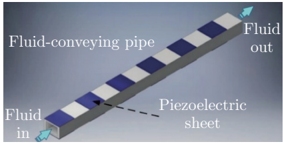
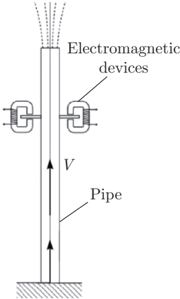
- Active control uses piezoelectric actuators, magnetic devices, and shape memory alloys. Feedforward control reduced the end vibration displacement of a concrete pump truck pipe by more than 80% (Li et al. [129]); an eddy-current actuator installed at approximately 60% of a vertical cantilevered pipe’s length increased the critical flow velocity by 25% (Szmidt et al. [133]).
- Semi-active control can change stiffness or damping in real time with small energy input; semi-active variable stiffness dampers were found helpful for seismic response control of pipe systems, and electromagnetic dampers showed better performance and more energy regeneration than passive electromagnetic dampers.
- Structural optimization and bandgap design—periodic supports, phononic crystals, local resonators—can reduce vibration; one periodic composite support achieved more than 20 dB attenuation in the bandgap frequency range (Wei et al. [142]), and fluid velocity was found to have little influence on bandgap characteristics of a non-uniform fluid transport pipe.
Methods
- Narrative state-of-the-art literature review of research published over the last 20 years on vibration control of fluid-conveying pipes.
- Organizes the literature into passive control (absorbers, dampers, isolators), active control, semi-active control, and optimal structural configuration for vibration attenuation, with a brief discussion of vibration analysis.
- Summarizes main advances in Table 1, classifies literature by pipe type and application, and suggests six future research topics.
Limitations
- Stated in the paper: active control of each pipe in multi-pipe systems is expensive and challenging; semi-active control is difficult to realize for each pipe in systems composed of different shapes; passive boundary DVA or damping-layer methods may be costly in large piping systems; and low-frequency resonance damping design still needs attention.
- Stated in the paper: to the authors’ best knowledge, no thorough reviews on the vibration control of fluid-conveying pipes existed before this work.
- Evident from the text: as a narrative review, it does not report a systematic search protocol or quantitative meta-analysis; findings are synthesized qualitatively.
Model-written summary. Check it against the paper before relying on it.
Integrity signals
Registry
Cites
Statistics
Figures

Verification
Claims the paper makes
3 Valid · 12 Not valid · 71 Not checked · 14 Own results and interpretations
Every source the paper cites for this claim was checked and supports it.
In the paper
“A failure in one of the multiple interconnected piping systems can induce severe damage, potentially leading to radiation leakage and diffusion accidents [4] .”
§ Vibration control of fluid-conveying pipes: a state-of-the-art review * > 1 Introduction
What the sources say
- Supportedcites [4] 4. KWAG, S., EEM, S., KWAK, J., LEE, H., OH, J., and KOO, G. H. Mitigation of seismic responses of actual nuclear piping by a newly developed tuned mass damper device. Nuclear Engineering and Technology, 53(8), 2728-2745 (2021) source
The Introduction states that failure in one of the interconnected piping systems can induce core damage and that severe damage can lead to radiation leakage and diffusion accidents. The claim closely paraphrases that passage. (LLM, conf=0.94)
plainstates a possible cause- Asserted: passes — The authors put it forward as true.
- Checkable: passes — It can be checked against evidence.
- Load-bearing: unclear — It is unclear whether the paper’s conclusions depend on it.
- Based: passes — The paper gives a reason why it holds.
- Supported
In the paper
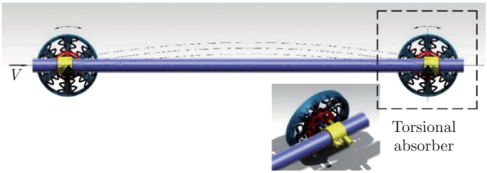
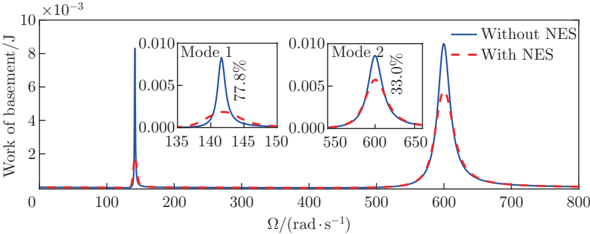
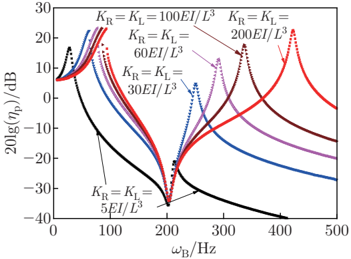
“Second, the torsional NES can control the first two resonances of the pipe, as shown in Fig. 9.”
§ Vibration control of fluid-conveying pipes: a state-of-the-art review * > ,tt
What the sources say
- Not checked — no full text of the sourcecites [83] 83. MAO, X. Y., DING, H., and CHEN, L. Q. Bending vibration control of pipes conveying fluids by nonlinear torsional absorbers at the boundary. Science China Technological Sciences, 64(8), 1690-1704 (2021) source
plainstates a cause- Asserted: passes — The authors put it forward as true.
- Checkable: passes — It can be checked against evidence.
- Load-bearing: passes — The paper’s conclusions depend on it.
- Based: passes — The paper gives a reason why it holds.
A claim is checked only against the cited paper’s full text, never its abstract, and none is available for its sources.
In the paper
“to show that these dampers were very effective in reducing the seismic response of the piping system.”
§ Vibration control of fluid-conveying pipes: a state-of-the-art review * > 2.2 Use of damper
What the sources say
- Not checked — no full text of the sourcecites [51] 51. KUNIEDA, M., CHIBA, T., and KOBAYASHI, H. Positive use of damping devices for piping systems -some experiences and new proposals. Nuclear Engineering and Design, 104(2), 107- 120 (1987) source
- Not checked — no full text of the sourcecites [84] 84. CHIBA, T. and KOBAYASHI, H. Response characteristics of piping system supported by visco- elastic and elasto-plastic dampers. Journal of Pressure Vessel Technology, 112(1), 34-38 (1990) source
- Not checked — no full text of the sourcecites [85] 85. PARULEKAR, Y. M., REDDY, G. R., VAZE, K. K., and MUTHUMANI, K. Passive control of seismic response of piping systems. Journal of Pressure Vessel Technology, 128(3), 364-369 (2005) source
boostedstates a cause- Asserted: passes — The authors put it forward as true.
- Checkable: passes — It can be checked against evidence.
- Load-bearing: passes — The paper’s conclusions depend on it.
- Based: passes — The paper gives a reason why it holds.
In the paper
“Third, effective control of pipe vibration can be achieved with a very light additional mass.”
§ Vibration control of fluid-conveying pipes: a state-of-the-art review * > ,tt
What the sources say
- Not checked — no full text of the sourcecites [83] 83. MAO, X. Y., DING, H., and CHEN, L. Q. Bending vibration control of pipes conveying fluids by nonlinear torsional absorbers at the boundary. Science China Technological Sciences, 64(8), 1690-1704 (2021) source
plainstates a cause- Asserted: passes — The authors put it forward as true.
- Checkable: passes — It can be checked against evidence.
- Load-bearing: passes — The paper’s conclusions depend on it.
- Based: passes — The paper gives a reason why it holds.
In the paper
“First, it has the characteristics of the NES, and does not change the resonance frequency of the pipe.”
§ Vibration control of fluid-conveying pipes: a state-of-the-art review * > ,tt
What the sources say
- Not checked — no full text of the sourcecites [83] 83. MAO, X. Y., DING, H., and CHEN, L. Q. Bending vibration control of pipes conveying fluids by nonlinear torsional absorbers at the boundary. Science China Technological Sciences, 64(8), 1690-1704 (2021) source
plain- Asserted: passes — The authors put it forward as true.
- Checkable: passes — It can be checked against evidence.
- Load-bearing: passes — The paper’s conclusions depend on it.
- Based: passes — The paper gives a reason why it holds.
43 more claims
Create a free account to see all 100 claims and to verify the 9 references still open.
- Probably not a substantial claim. 35
- It may state two separate claims as one. 27
- The quote only partly states this claim. 1
Self-check
Percentages, sums and reported differences re-computed from the paper’s own numbers.
Each contradiction between two passages listed here was confirmed by an independent check.
Rated minor: it would not touch a result — a value no result rests on, a p-value that stays on the same side of the significance level, or a conflict that is clerical, resolved elsewhere in the paper, or outside its own findings.
In the paper
§ Vibration control of fluid-conveying pipes: a state-of-the-art review * > 2.2 Use of damper
“In 2022, Hong et al. [90] developed a magnetorheological damping pipe clamp”
§ Vibration control of fluid-conveying pipes: a state-of-the-art review * > References
“90. HONG, R. D., NIE, S. L., JI, H., NIE, S., and GONG, F. Evaluation of flow-induced vibra- tion suppression performances of magneto-rheological damping pipe clamp using PID algorithm. Journal of Intelligent Material Systems and Structures, 34(11), 1330-1340 (2023)”
Rated minor: it would not touch a result — a value no result rests on, a p-value that stays on the same side of the significance level, or a conflict that is clerical, resolved elsewhere in the paper, or outside its own findings.
In the paper
§ Vibration control of fluid-conveying pipes: a state-of-the-art review * > 3.1 Use of piezoelectric actuators
“In 2004, Variyart and Brennan [115] described an actuator and sensor arrangement that was theoretically demonstrated to suppress the vibrations of infinitely long fluid-conveying pipes.”
§ Vibration control of fluid-conveying pipes: a state-of-the-art review * > References
“115. VARIYART, W. and BRENNAN, M. J. Active control of the n = 2 axial propagating wave in an infinite in vacuo pipe. Smart Materials and Structures, 13(1), 126-133 (2004)”
Rated minor: it would not touch a result — a value no result rests on, a p-value that stays on the same side of the significance level, or a conflict that is clerical, resolved elsewhere in the paper, or outside its own findings.
In the paper
§ Vibration control of fluid-conveying pipes: a state-of-the-art review * > 6.2 Classification of research literature
“passive control methods including the use of linear dynamic vibration absorbers [70] , NESs [69]”
§ Vibration control of fluid-conveying pipes: a state-of-the-art review * > 2.1.2 Use of nonlinear energy sinks (NESs)
“In 2019, Zhou et al. [70] introduced an NES to the vibration control of a cantilever pipe”
Citations
Cites
Journal of Marine Science and Technology
(2013) · Journal of Marine Science and Technology · doi:10.1007/773.1437-8213 · Cited by 743
Dynamic stability of pipes conveying fluid
Païdoussis, M. P., & Issid, N. T. (1974) · Journal of Sound and Vibration · doi:10.1016/s0022-460x(74)80002-7 · Cited by 618 · cited 1×
“High flow velocities may lead to dynamic instability of fluid-conveying pipes([9]).”
BackgroundDesigns, analysis, and applications of nonlinear energy sinks
Ding, H., & Chen, L.-Q. (2020) · Nonlinear Dynamics · doi:10.1007/s11071-020-05724-1 · Cited by 553 · cited 1×
“Since no new linear stiffness is introduced to the system, the NES can overcome the disadvantage of linear DVAs that increases the number of resonance frequencies([64]).”
BackgroundSelf-citationNonlinear vibration isolation for fluid-conveying pipes using quasi-zero stiffness characteristics
Ding, H., Ji, J., & Chen, L.-Q. (2019) · Mechanical Systems and Signal Processing · doi:10.1016/j.ymssp.2018.11.057 · Cited by 294
Self-citationVibration analysis and control technologies of hydraulic pipeline system in aircraft: A review
GAO, P., YU, T., ZHANG, Y., WANG, J., & ZHAI, J. (2021) · Chinese Journal of Aeronautics · doi:10.1016/j.cja.2020.07.007 · Cited by 286 · cited 5×
“Gao et al.([1]) considered the vibration analysis and vibration control technology of aircraft hydraulic piping systems in 2021.”
BackgroundInfluentialOverview of Mechanics of Pipes Conveying Fluids—Part I: Fundamental Studies
Ibrahim, R. A. (2010) · Journal of Pressure Vessel Technology · doi:10.1115/1.4001271 · Cited by 263 · cited 1×
“Ibrahim presented an overview of the modeling, dynamic analysis, and stability of pipe mechanics for transporting fluids([7]) and an overview of fluid elastic instability and related applications in single-phase and two-phase flows([6]) in 2010 and 2011, respectively.”
BackgroundVibration reduction by using the idea of phononic crystals in a pipe-conveying fluid
Yu, D., Wen, J., Zhao, H., Liu, Y., & Wen, X. (2008) · Journal of Sound and Vibration · doi:10.1016/j.jsv.2008.04.009 · Cited by 248 · cited 4×
“The above studies have shown that for a defined resonant frequency of a given fluid-conveying pipe, whether it is a periodic oscillator based on the local resonance theory([54,56]), or a single”
BackgroundMethodInfluentialVortex-induced vibrations and control of marine risers: A review
Hong, K.-S., & Shah, U. H. (2018) · Ocean Engineering · doi:10.1016/j.oceaneng.2018.01.086 · Cited by 222 · cited 2×
“Hong and Shah[18] focused on the dynamics and vibration control techniques of marine riser systems in 2018.”
BackgroundMamaghani, A. E., Khadem, S. E., & Bab, S. (2016) · Nonlinear Dynamics · doi:10.1007/s11071-016-2992-x · Cited by 162 · cited 3×
“Mamaghani et al.([68]) showed that under external periodic excitation, the midpoint of the pipe was the best position on the connection of the NES and the fluid-conveying pipe fixed at both ends for controlling the resonance of the first-order mode in 2016.”
BackgroundUsing pipe-in-pipe systems for subsea pipeline vibration control
Bi, K., & Hao, H. (2015) · Engineering Structures · doi:10.1016/j.engstruct.2015.11.018 · Cited by 150
Research works printed but not linked: 3
- 46. REN, J. T. and JIANG, J. S. Advances and trends on vibration of pipes conveying fluid. Advances in Mechanics, 33(3), 313-324 (2003)
- 47. XU, J. and YANG, Q. B. Recent development on models and nonlinear dynamics of pipes con- veying fluid. Advances in Mechanics, 34(2), 182-194 (2004)
- 121. BRENNAN, M. J., ELLIOT, S. J., and PINNINGTON, R. J. A non-intrusive fluid-wave actuator and sensor pair for the active control of fluid-borne vibrations in a pipe. Smart Materials & Structures, 5(3), 281-296 (1996) · DOI
Cited by
Recent progress on dynamics and control of pipes conveying fluid
Tang, Y., Zhang, H.-J., Chen, L., Ding, Q., Gao, Q., & Yang, T. (2024) · Nonlinear Dynamics · doi:10.1007/s11071-024-10486-1 · Cited by 129
A novel retaining clip for vibration reduction of fluid-conveying pipes by piecewise constraints
Dou, B., Li, M., & Ding, H. (2024) · Mechanical Systems and Signal Processing · doi:10.1016/j.ymssp.2024.111159 · Cited by 54
Self-citationMa, H., Ji, W., Zhang, Y., Zhang, H., Liu, H., & Sun, W. (2025) · Ocean Engineering · doi:10.1016/j.oceaneng.2025.120306 · Cited by 53
Vibration transmission characteristics analysis of a flexible casing-multiple pipes system
Guo, X., Ma, H., Ge, H., Chen, S., & Wen, B. (2024) · Mechanical Systems and Signal Processing · doi:10.1016/j.ymssp.2024.111536 · Cited by 51
Ma, H., Ji, W., Liu, H., & Sun, W. (2024) · Mechanical Systems and Signal Processing · doi:10.1016/j.ymssp.2024.111404 · Cited by 44
Advances in dynamics of fluid-conveying pipes: Model, strategy and experiment
Chen, Y., Yang, J.-H., Nan, T., Yang, X.-D., Lu, K., & Liang, F. (2026) · International Journal of Mechanical Sciences · doi:10.1016/j.ijmecsci.2026.111241 · Cited by 56
Ma, H., Ji, W., Zhang, H., Zhang, Y., Lv, S., & Sun, W. (2025) · International Journal of Mechanical Sciences · doi:10.1016/j.ijmecsci.2025.110334 · Cited by 40
Ding, Y.-H., Chen, Z., Liang, F., Lee, H.-P., Yu, H. B., Lin, S.-C., & Luo, J. (2024) · Acta Mechanica · doi:10.1007/s00707-024-03879-1 · Cited by 35
Dou, B., Luo, Z.-B., Deng, T.-C., Mao, X.-Y., Li, M., & Ding, H. (2025) · Thin-Walled Structures · doi:10.1016/j.tws.2025.112945 · Cited by 36
Self-citationWang, Z., Gao, P., Zhou, Z., Tijsseling, A. S., Qu, Y., Yan, W., Yuen, K., & Cheng, S. S. (2023) · Thin-Walled Structures · doi:10.1016/j.tws.2023.111488 · Cited by 32
Cao, R., Guo, Z., Chen, W., Dai, H., & Wang, L. (2024) · Applied Mathematics and Mechanics · doi:10.1007/s10483-024-3084-7 · Cited by 27
Reliability sensitivity analysis for water hammer-induced stress failure of fluid-conveying pipe
Zha, C., Pan, C., Sun, Z., & Liu, Q. (2024) · Applied Mathematical Modelling · doi:10.1016/j.apm.2024.02.028 · Cited by 30
Li, H., Ding, H., Chang, T., & Chen, L. (2025) · Engineering Structures · doi:10.1016/j.engstruct.2025.119675 · Cited by 25
Self-citationMultistable nonlinear energy sinks: a state-of-the-art review
Zeng, Y.-C., Ji, J., & Ding, H. (2025) · International Journal of Dynamics and Control · doi:10.1007/s40435-025-01911-3 · Cited by 34
Self-citationTheoretical and experimental study on dynamic characteristics of L-shaped fluid-conveying pipes
Guo, Y., & Ding, H. (2024) · Applied Mathematical Modelling · doi:10.1016/j.apm.2024.01.054 · Cited by 28
Self-citationLi, P., Zhang, Z., Wang, W., Ji, W., Yu, T., & Gao, P. (2025) · Journal of Vibration Engineering & Technologies · doi:10.1007/s42417-024-01673-w · Cited by 24
“At present, research on vibration control of fluid-conveying pipelines mainly includes passive control, active control, semi-active control [50].”
Wang, W., Ma, H., Liu, S., & Guo, X. (2025) · Mechanical Systems and Signal Processing · doi:10.1016/j.ymssp.2025.113437 · Cited by 22
Fan, J., Yang, Y., Chang, X., & Li, Y. (2024) · Applied Mathematical Modelling · doi:10.1016/j.apm.2024.04.043 · Cited by 22
Zhang, J., Ding, H., Mao, X.-Y., & Chen, L. (2024) · Nonlinear Dynamics · doi:10.1007/s11071-024-10445-w · Cited by 24
Self-citationHan, D., Jia, Q., Gao, Y., Jin, Q., Fang, X., Wen, J., & Yu, D. (2024) · Applied Mathematics and Mechanics · doi:10.1007/s10483-024-3166-8 · Cited by 20
Machine learning-based design strategy for weak vibration pipes conveying fluid
Deng, T.-C., Ding, H., Kitipornchai, S., & Yang, J. (2025) · Applied Mathematics and Mechanics · doi:10.1007/s10483-025-3276-7 · Cited by 19
Self-citationVibration energy harvesting of a three-directional functionally graded pipe conveying fluids
Yu, T., Liang, F., & Yang, H. (2025) · Applied Mathematics and Mechanics · doi:10.1007/s10483-025-3249-8 · Cited by 20
Nonlinear stress analysis of aero-engine pipeline based on semi-analytical method
Chen, W., Qu, X., Zhang, R., Guo, X., Ma, H., & Wen, B. (2025) · Applied Mathematics and Mechanics · doi:10.1007/s10483-025-3225-8 · Cited by 19
Wu, Y., Chen, E., Ruan, Z., Zhang, P., Pin, C., & Lu, Y. (2024) · International Journal of Non-Linear Mechanics · doi:10.1016/j.ijnonlinmec.2024.104981 · Cited by 18
Vibration isolation of fluid-conveying pipes with parallel retaining clips
Chen, Y., Liang, F., Nan, T., Yang, J.-H., & Yang, X.-D. (2025) · Thin-Walled Structures · doi:10.1016/j.tws.2025.113744 · Cited by 22
Enhanced energy harvesting of a spinning bi-directional piezoelectric pipe conveying fluid
Zhao, A., Guo, X. T., Liang, F., et al. (2025) · Applied Mathematical Modelling · doi:10.1016/j.apm.2025.116730 · Cited by 15
Jin, Y.-Y., Guo, X.-T., Chen, Y., & Liang, F. (2025) · Thin-Walled Structures · doi:10.1016/j.tws.2025.114433 · Cited by 15
Free vibration of an extended pipe conveying fluid with distributed retaining clips
Chen, Y., Yang, J.-H., Zhang, W. C., Nan, T., & Yang, X.-D. (2025) · Physics of Fluids · doi:10.1063/5.0265028 · Cited by 17
A Novel Approach to Vibration Control in Fluid-Conveying Pipes Using Piezoelectric Actuators
Pourmohammadi, M. J., Eftekhari, M., & Gholami, M. (2025) · Communications in Nonlinear Science and Numerical Simulation · doi:10.1016/j.cnsns.2025.108914 · Cited by 13
Series NESs for Suppressing Strongly Forced Vibration
Du, T.-K., Ding, H., Zhang, D., & Chen, L. (2024) · International Journal of Applied Mechanics · doi:10.1142/s1758825124500303 · Cited by 13
Self-citationNonlinear forced vibration and synchronization behavior of pipe-in-pipe system
Fan, J., Li, Y., & Yang, J. (2025) · International Journal of Mechanical Sciences · doi:10.1016/j.ijmecsci.2025.110089 · Cited by 12
Modeling and mechanism of vibration reduction of pipes by visco-hyperelastic materials
Jing, J., Mao, X.-Y., Ding, H., Li, H., & Chen, L. (2025) · Applied Mathematics and Mechanics · doi:10.1007/s10483-025-3263-6 · Cited by 15
Self-citationChen, Y., Yang, X.-D., & Liang, F. (2025) · Applied Mathematical Modelling · doi:10.1016/j.apm.2025.116272 · Cited by 13
Integration of vibration isolation and energy harvesting for a sandwich meta-pipe conveying fluid
Zhao, A., Liang, F., & Yang, H. (2025) · Journal of Fluids and Structures · doi:10.1016/j.jfluidstructs.2025.104376 · Cited by 11
Theoretical and experimental study of a programmable piecewise bistable NES
Zeng, Y.-C., Ji, J., & Ding, H. (2025) · International Journal of Mechanical Sciences · doi:10.1016/j.ijmecsci.2025.111126 · Cited by 22
Self-citationLi, W., Kong, X., Xu, Q., & Hao, Z. (2025) · Journal of Fluids and Structures · doi:10.1016/j.jfluidstructs.2024.104264 · Cited by 12
Dynamics of horizontal pipes conveying two phase flow with nonlinear boundary conditions
Oyelade, A. O., Ehigie, J. O., Orolu, K. O., & Oyediran, A. A. (2024) · Mechanical Systems and Signal Processing · doi:10.1016/j.ymssp.2024.111520 · Cited by 11
Geometrically exact post-buckling and post-flutter of standing cantilevered pipe conveying fluid
Dehrouyeh-Semnani, A. M. (2024) · Physica D Nonlinear Phenomena · doi:10.1016/j.physd.2024.134478 · Cited by 13
“Semler et al. [28] established a third-order approximate nonlinear mathematical model for the planar motion of cantilevered pipes conveying fluid, while Wadham-Gagnon et al. [29] extended this model to three-dimensional motion.”
InfluentialActive vibration control of nonlinear flexible structures via reduction on spectral submanifolds
Shen, C., & Li, M. (2025) · Nonlinear Dynamics · doi:10.1007/s11071-024-10801-w · Cited by 9
Pourmohammadi, M. J., & Eftekhari, M. (2024) · Journal of Vibration and Control · doi:10.1177/10775463241248680 · Cited by 10
“Ding and Ji conducted a review on fl uid-conveying pipe vibration control, classifying it into four groups: (1) passive vibration control, (2) semi-active vibration control, (3) active vibration control, and (4) structural optimization design for reducing vibrations (Ding and Ji, 2023).”
Wei, Z., Li, Y., Kapitaniak, T., et al. (2025) · Applied Mathematics and Mechanics · doi:10.1007/s10483-025-3243-6 · Cited by 8
Performance of piezoelectric beam type energy harvester under flow-induced vibration
Ray, A. R., & Koley, S. (2025) · Scientific Reports · doi:10.1038/s41598-025-98147-0 · Cited by 8
“This aligns with findings on high-frequency vibrations in fluid-conveying structures, where fluid damping and wave scattering result in rapid energy dissipation 31 .”
Nonlinear electromechanical coupling dynamics of a two-degree-of-freedom hybrid energy harvester
Chen, T., Wang, K., Chen, S., Xu, Z., Li, Z., & Zhou, J. (2025) · Applied Mathematics and Mechanics · doi:10.1007/s10483-025-3264-7 · Cited by 7
Low-frequency vibration suppression of meta-beam with softening nonlinearity
Zhang, W., Yang, D., & Guo, X. (2025) · Applied Mathematics and Mechanics · doi:10.1007/s10483-025-3258-9 · Cited by 7
Comparison of nonlinear modeling methods for the composite rubber clamp
Cao, Y., Ma, H., Guo, X., Zhao, B., Li, H., Wang, X., & Wang, B. (2024) · Applied Mathematics and Mechanics · doi:10.1007/s10483-024-3114-6 · Cited by 7
Vibration control of pipes by the visco-hyperelastic inertial damper
Jie, J., Mao, X.-Y., Ding, H., & Chen, L. (2025) · Nonlinear Dynamics · doi:10.1007/s11071-025-11573-7 · Cited by 9
Self-citationXu, H., Zhang, X., Sun, Z., & Sun, S. (2025) · Applied Mathematical Modelling · doi:10.1016/j.apm.2025.116317 · Cited by 9
Three-dimensional vibration of L-shaped pipes conveying fluid
Guo, Y., Ding, H., Mao, X.-Y., Sha, W. E. I., & Chen, L. (2025) · Acta Mechanica Sinica · doi:10.1007/s10409-024-24563-x · Cited by 6
Self-citationA vibration-reduction pipe clamp with piecewise stiffness
Dou, B., Luo, Z., Deng, T.-C., Mao, X.-Y., & Ding, H. (2025) · Applied Mathematical Modelling · doi:10.1016/j.apm.2025.116452 · Cited by 9
Self-citationZhou, X., Guo, Y., & Li, Y. (2025) · Ocean Engineering · doi:10.1016/j.oceaneng.2025.123032 · Cited by 5
Ma, H., Ji, W., Wang, D., Du, D., Zhang, Y., & Sun, W. (2025) · Mechanical Systems and Signal Processing · doi:10.1016/j.ymssp.2025.113450 · Cited by 9
A compliant helical structure to amplify inertia for nonlinear vibration absorption
Huang, J.-J., Niu, M., Fan, Y., & Chen, L. (2024) · Engineering Structures · doi:10.1016/j.engstruct.2024.119078 · Cited by 5
Zhou, M., Zhang, J., Zhang, Y., et al. (2026) · Mechanical Systems and Signal Processing · doi:10.1016/j.ymssp.2025.113842 · Cited by 4
Kumar, R. K., Iqbal, M., & Kumar, A. (2026) · Acta Mechanica · doi:10.1007/s00707-026-04687-5 · Cited by 5
Heshmati, M., & Daneshmand, F. (2025) · Applied Mathematical Modelling · doi:10.1016/j.apm.2025.115943 · Cited by 4
He, T., Gao, P., Jin, J., Yin, H., & Yu, T. (2025) · Proceedings of the Institution of Mechanical Engineers Part G Journal of Aerospace Engineering · doi:10.1177/09544100241307998 · Cited by 4
Inverse bandgap design and vibration response control of periodically supported pipeline
Zhang, L., Zhang, T., Ouyang, H., Li, T. Y., & Chen, H. (2025) · Journal of Sound and Vibration · doi:10.1016/j.jsv.2025.119611 · Cited by 7
Zhang, G., Fang, X., & Yu, D. (2026) · Journal of Sound and Vibration · doi:10.1016/j.jsv.2026.119833 · Cited by 8
Liu, J., Zhao, Q., & Wu, D. (2024) · Journal of the Brazilian Society of Mechanical Sciences and Engineering · doi:10.1007/s40430-024-05127-y · Cited by 4
“Thereafter, dynamics of fluid-conveying pipes have been attracting attention from researchers all over the world, and lots of relevant review articles have been reported publicly [9–12].”
Methodical Development of a Digital Twin for an Industry Valve
Koesters, A., Koetz, F., Bock, M., et al. (2024) · Machines · doi:10.3390/machines12100674 · Cited by 3
Numerical discretization errors of fluid-structure interaction model in pressurized pipeline systems
Huang, H. L., Guo, P., & Yan, J. (2025) · Applied Mathematical Modelling · doi:10.1016/j.apm.2025.115954 · Cited by 2
Study on the chaotic motion of U-shaped pipes conveying fluid
Huabin, W., Li, Y., Cao, X., Tao, J., & Wang, P. (2025) · Journal of Vibration and Control · doi:10.1177/10775463251345174 · Cited by 4
“The pipe conveying fl uid system encompasses a rich variety of dynamic phenomena, including periodic motion, bi-furcation, quasiperiodic motion, chaotic motion, and more (Ding and Ji, 2023; Pa¨ ı doussis, 2022; Tang et al., 2024; Xu and Yang, 2004).”
He, J., Liang, H., Yang, Y., Guo, Z., Li, D., Zhang, H., Hua, X., & Chen, Z. (2025) · Engineering Structures · doi:10.1016/j.engstruct.2025.121579 · Cited by 4
Du, D., Ma, H., & Sun, W. (2025) · Applied Sciences · doi:10.3390/app16010020 · Cited by 2
Chen, P., Yang, J.-H., Guo, X.-Y., Liu, H., & Yang, X.-D. (2026) · European Journal of Mechanics - A/Solids · doi:10.1016/j.euromechsol.2026.106029 · Cited by 6
Fan, J., Guo, Y., & Li, Y. (2026) · Nonlinear Dynamics · doi:10.1007/s11071-025-11952-0 · Cited by 2
Xu, H., Zhang, X., Sun, Z., Huang, J., & Ren, S. (2026) · International Journal of Mechanical Sciences · doi:10.1016/j.ijmecsci.2026.111382 · Cited by 3
Guo, X., Liu, S., Ma, H., Wang, W., Qu, X., & Zhang, R. (2026) · Mechanics Based Design of Structures and Machines · doi:10.1080/15397734.2026.2629450 · Cited by 2
Xu, L., Cheng, P., Li, G., et al. (2026) · Frontiers in Energy Research · doi:10.3389/fenrg.2026.1751161 · Cited by 2
Effects of fluid viscosity on natural characteristics of fluid-conveying pipes
Hu, H., Mao, X.-Y., Deng, T.-C., Han, F., & Ding, H. (2026) · Applied Mathematical Modelling · doi:10.1016/j.apm.2026.116921 · Cited by 3
Self-citationSchouwenaars, R., Cueva, I., Ramos, E., et al. (2025) · Engineering Failure Analysis · doi:10.1016/j.engfailanal.2025.109424 · Cited by 1
Flexural Waves Bandgap Analysis and Control in Pipeline Metamaterial Systems
Wei, S., Ruan, Z., Wang, S., et al. (2025) · International Journal of Structural Stability and Dynamics · doi:10.1142/s0219455426503451 · Cited by 1
Li, W., Kong, X., Xu, Q., et al. (2025) · Journal of Fluids and Structures · doi:10.1016/j.jfluidstructs.2025.104404 · Cited by 1
Zhang, Y. X., Zhang, H., Ma, H., et al. (2025) · Thin-Walled Structures · doi:10.1016/j.tws.2025.113918 · Cited by 1
Low-Frequency Vibration Attenuation in Locally Resonant Double-Layered Pipe Structures
Liu, S., Shi, Z., He, F., Jin, P., Li, J., Yang, Z., & Peng, X. (2025) · Mechanics of Solids · doi:10.1134/s0025654425602307 · Cited by 1
“Fluid-conveying pipes, as slender tubular structures, serve as the backbone for transporting fluids and gases across diverse industrial sectors [1].”
Model updating of local pipelines via enhanced adaptive genetic algorithm
Guo, Z., He, J., Zhang, J., Liang, H., Hua, X., & Chen, Z. (2025) · International Journal of Mechanical Sciences · doi:10.1016/j.ijmecsci.2025.111110 · Cited by 2
Guo, S., Li, K., & Liu, X. (2025) · Shock and Vibration · doi:10.1155/vib/4328584 · Cited by 1
“Fluid-conveying pipeline systems serve as critical infrastructure components for transporting liquids and gases across numerous industries [1, 2], including aerospace, petrochemical, and power generation.”
Forced vibration of a fully immersed pipe aspirating water: Experimental investigation
Hisamatsu, R., Riveros-Jerez, C. A., & Utsunomiya, T. (2026) · Journal of Fluids and Structures · doi:10.1016/j.jfluidstructs.2026.104565 · Cited by 1
Benadouda, M., Hebbouche, A., Bourouis, M. E. A., & Zahaf, S. (2026) · Mechanics of Advanced Materials and Structures · doi:10.1080/15376494.2026.2690488 · Cited by 1
Yang, D., Zhang, J., Bai, J., et al. (2026) · Nonlinear Dynamics · doi:10.1007/s11071-026-12912-y · Cited by 1
Jiang, S., Han, X., & Yu, H. (2024) · Applied Mathematics and Mechanics · doi:10.1007/s10483-024-3201-8 · Cited by 1
Inverse Bandgaps Design and Vibration Response Control of Periodically Supported PipelinePreprint
Zhang, L., Zhang, T., Ouyang, H., et al. (2023) · SSRN Electronic Journal · doi:10.2139/ssrn.4663572
Vibration characteristics of spinning and axially moving pipes conveying fluid
Jiang, X., & Tang, Y.-Q. (2025) · International Conference on Advanced Manufacturing Technology and Electronic Information (AMTEI) · doi:10.1117/12.3054349
“Ding et al. [4] contributes to the understanding of vibration control of fluid-conveying pipes and will help the research work on the vibration control of fluid-conveying pipes attract more attention.”
Xie, L., Jiang, Z., He, Z., Yu, H., & Qu, W. (2025) · International Journal of Structural Stability and Dynamics · doi:10.1142/s0219455426501907 · Cited by 2
Gao, B., Wang, H., Wang, T., & Wang, C. (2025) · Journal of Pressure Vessel Technology · doi:10.1115/1.4068435
An 1D-3D coupling method for flow-induced vibration of pump-valve-pipe system
Song, K., Zhou, J., Jin, G., Ye, T., Liu, H., & Liu, Z. (2025) · Journal of Vibration and Control · doi:10.1177/10775463251350241
“According to the review by Ding and Ji (Ding and Ji, 2023) and the studies on fl uid-conveying pipelines by Gao et al. (Gao et al., 2020, 2021), vibration control in integrated pipeline systems remains a challenging issue.”
High frequency vibration calculation methods for PFCPs
Wang, L., Yin, Y., Qi, L., Qu, C., Yu, Y., Liu, B., Xia, X., & Yang, S. (2025) · International Journal of Mechanical Sciences · doi:10.1016/j.ijmecsci.2025.110502 · Cited by 2
Demir, H. G. (2025) · Research on Engineering Structures and Materials · doi:10.17515/resm2025-898st0515rs · Cited by 1
Qu, W., Lai, C., Xia, L., Tian, T.-L., & Liang, Y.-F. (2025) · SSRN Electronic Journal · doi:10.2139/ssrn.5787824
Dynamic stability of a slightly curved pipe resting on a Winkler elastic foundation
Лилкова-Маркова, С., & Lolov, D. (2025) · doi:10.5937/iizs25012l
Synchronization of flow-induced vibration in a pipe-in-pipe system with pulsating flowPreprint
Fan, J., Guo, Y., Chang, X., et al. (2026) · SSRN Electronic Journal · doi:10.2139/ssrn.6222915
Song, S., Jung, T., & Yoon, S. H. (2026) · SSRN Electronic Journal · doi:10.2139/ssrn.6247789
Fatigue life extension in wide-band region of pipes by an inertial damper
Jing, J., Mao, X.-Y., Ding, H., & Chen, L. (2026) · Acta Mechanica Sinica · doi:10.1007/s10409-025-25282-x · Cited by 1
Self-citationAraújo, J. M., de Araújo, J. R. B., Dantas, N. J. B., et al. (2026) · Processes · doi:10.3390/pr14071065
Dry and Wet Modal Comparison of an Electro-Hydraulic Pump and Its Electromagnetic Vibration Analysis
Zeng, W., Tan, X., Chen, Z., et al. (2026) · Applied Sciences · doi:10.3390/app16083626
Rezaee, M., Maleki, V. A., & Fathi, R. (2026) · Results in Engineering · doi:10.1016/j.rineng.2026.110437
Fatigue life extension of fluid-conveying pipes via quasi-zero stiffness constraints
Deng, T.-C., Ding, H., Mao, X.-Y., Chen, L., & Yang, J. (2026) · Nonlinear Dynamics · doi:10.1007/s11071-026-12512-w · Cited by 1
Self-citationScalable Super-Resolution of Flow Conveyance Systems Through Adaptive Domain Decomposition
Xu, W., Archer, A., McCarrell, M., et al. (2026) · Journal of Computing and Information Science in Engineering · doi:10.1115/1.4071858
Jiao, Z., Li, S., Liu, S., Cai, Y., Li, H., & Liu, Z. (2026) · Smart Materials and Structures · doi:10.1088/1361-665x/ae6ae2
Programmable multistable mechanical metamaterials with multiple dynamic response mechanisms
Wang, Y., Wang, Y., Shang, S., et al. (2026) · Thin-Walled Structures · doi:10.1016/j.tws.2026.115093
Metadata
- Authors
- Ding, H., & Ji, J. C.
- Affiliations
- Shanghai University (CN)
- University of Technology Sydney (AU)
- Corresponding author
- Ding, Hu
- Ji, J. C.
- Venue
- Applied Mathematics and Mechanics
- Published
- 2023-09
- Volume
- 44
- Issue
- 9
- Pages
- 1423-1456
- ISSN
- 0253-4827 (ISSN-L)
- 1573-2754
- OpenAlex
- W4386376415
- Semantic Scholar
- a550483685509a38fafea3c33870f23ff96c1575
- Cited by
- 132
- References
- 166
- Citations by year
- 2026: 53 · 2025: 56 · 2024: 21 · 2023: 2
- FWCI
- 14.18
- Type
- journal article
- Language
- en
- Open access
- hybrid
- doi.org
- Licence
- cc-by
- creativecommons.org/licenses/by/4.0 (tdm)
- creativecommons.org/licenses/by/4.0 (vor)
- Locations
- Applied Mathematics and Mechanics (publishedVersion, cc-by)
- Funders
- Shanghai Municipal Education Commission (2019–01–07–00–09-E00018)
- Topics
- Physical Sciences › Engineering › Mechanical Engineering › Vibration and Dynamic Analysis
- Physical Sciences › Engineering › Civil and Structural Engineering › Vibration Control and Rheological Fluids
- Physical Sciences › Engineering › Computational Mechanics › Fluid Dynamics and Vibration Analysis
- Keywords
- fluid-conveying pipes, vibration control, flow-induced vibration, acoustic-induced vibration, passive vibration control, active vibration control, semi-active vibration control, structural optimization, vibration suppression, pipeline integrity, fatigue damage
About these checks
Registry, retraction, Cites and statistics results are computed, not judged, with one exception: a printed reference that no index lists is read once by a model before it counts as a citation error. Claims are extracted by a model and kept only when their quote appears verbatim in the text; each cited source is then checked, with a model’s help, for whether it says what the claim relies on. Those verdicts can be wrong — read the claim’s quote and the cited source before relying on one.
The claim verdicts this report counts are experimental: their accuracy is not yet measured.
A language model drew the claims from the paper on 2026-10-10, under version 3 of the claim definition (model deepseek-v4.1-flash, prompt extract-v3).
A second model labelled each claim on 2026-10-10 (model jev-1.13-20260917, definition revision gold-guideline-v0.2).
Cited sources are checked with a language model’s help (gpt-6-sol).
Statistics and arithmetic are recomputed, not judged.
Confidence bands are shown only for fields calibrated on our annotated test set. None is calibrated yet, so no band is shown.
What counts as a claim ›How we measure confidence ›How we check this ›
Are you an author, or do you see a problem with this page? Request a review
Data sources
Bibliographic data: Semantic Scholar, OpenAlex, Crossref.
Contains information from the Semantic Scholar Academic Graph Datasets, made available under the ODC Attribution License (ODC-BY 1.0).
Semantic Scholar’s data is described in: Kinney, R., et al. (2023). The Semantic Scholar Open Data Platform. arXiv:2301.10140.
