

Vibration control of fluid-conveying pipes: a state-of-the-art review
Open accessThe DOI matches its Crossref record; 173 of the 173 references it cites were found in a registry or an index; 4 of the 114 sources its claims cite were checked for support.
Abstract
The paper reviews passive, active, semi-active vibration control, and structural optimization design for vibration reduction in fluid-conveying pipes.
Overview
CoChat Summary
TL;DR
This review surveys vibration control of fluid-conveying pipes, covering passive, active, semi-active, and structural-optimization approaches over roughly the past 20 years. It summarizes key advances and recommends future directions, including nonlinear absorbers, fluid-structure interaction modeling, and complex piping systems.
Key findings
- Passive control uses absorbers, dampers, and isolators; nonlinear energy sinks (NESs) avoid adding a new resonance frequency and can adaptively control multiple resonances. One NES with negative linear stiffness and cubic nonlinear stiffness achieved a maximum 98.19% suppression efficiency of pipe vibration (Yang et al. [72]).
- Active control uses piezoelectric actuators, magnetic devices, and shape memory alloys. Feedforward control reduced the end vibration displacement of a concrete pump truck pipe by more than 80% (Li et al. [129]); an eddy-current actuator installed at approximately 60% of a vertical cantilevered pipe’s length increased the critical flow velocity by 25% (Szmidt et al. [133]).
- Semi-active control can change stiffness or damping in real time with small energy input; semi-active variable stiffness dampers were found helpful for seismic response control of pipe systems, and electromagnetic dampers showed better performance and more energy regeneration than passive electromagnetic dampers.
- Structural optimization and bandgap design—periodic supports, phononic crystals, local resonators—can reduce vibration; one periodic composite support achieved more than 20 dB attenuation in the bandgap frequency range (Wei et al. [142]), and fluid velocity was found to have little influence on bandgap characteristics of a non-uniform fluid transport pipe.
Methods
- Narrative state-of-the-art literature review of research published over the last 20 years on vibration control of fluid-conveying pipes.
- Organizes the literature into passive control (absorbers, dampers, isolators), active control, semi-active control, and optimal structural configuration for vibration attenuation, with a brief discussion of vibration analysis.
- Summarizes main advances in Table 1, classifies literature by pipe type and application, and suggests six future research topics.
Limitations
- Stated in the paper: active control of each pipe in multi-pipe systems is expensive and challenging; semi-active control is difficult to realize for each pipe in systems composed of different shapes; passive boundary DVA or damping-layer methods may be costly in large piping systems; and low-frequency resonance damping design still needs attention.
- Stated in the paper: to the authors’ best knowledge, no thorough reviews on the vibration control of fluid-conveying pipes existed before this work.
- Evident from the text: as a narrative review, it does not report a systematic search protocol or quantitative meta-analysis; findings are synthesized qualitatively.
Model-written summary. Check it against the paper before relying on it.
Integrity signals
Registry
Cites
Statistics
Figures

Verification
Claims the paper makes
3 Valid · 12 Not valid · 71 Not checked · 14 Own results and interpretations
Every source the paper cites for this claim was checked and supports it.
In the paper
“A failure in one of the multiple interconnected piping systems can induce severe damage, potentially leading to radiation leakage and diffusion accidents [4] .”
§ Vibration control of fluid-conveying pipes: a state-of-the-art review * > 1 Introduction
What the sources say
- Supportedcites [4] 4. KWAG, S., EEM, S., KWAK, J., LEE, H., OH, J., and KOO, G. H. Mitigation of seismic responses of actual nuclear piping by a newly developed tuned mass damper device. Nuclear Engineering and Technology, 53(8), 2728-2745 (2021) source
The Introduction states that failure in one of the interconnected piping systems can induce core damage and that severe damage can lead to radiation leakage and diffusion accidents. The claim closely paraphrases that passage. (LLM, conf=0.94)
plainstates a possible cause- Asserted: passes — The authors put it forward as true.
- Checkable: passes — It can be checked against evidence.
- Load-bearing: unclear — It is unclear whether the paper’s conclusions depend on it.
- Based: passes — The paper gives a reason why it holds.
- Supported
In the paper
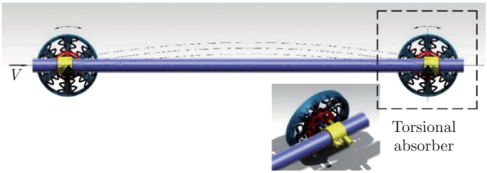
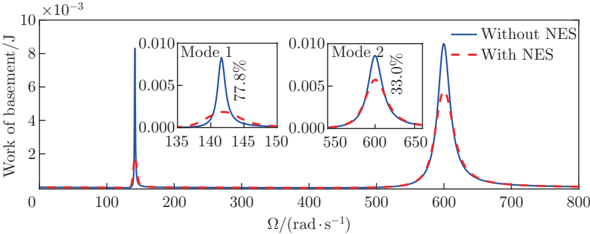
“Second, the torsional NES can control the first two resonances of the pipe, as shown in Fig. 9.”
§ Vibration control of fluid-conveying pipes: a state-of-the-art review * > ,tt
What the sources say
- Not checked — no full text of the sourcecites [83] 83. MAO, X. Y., DING, H., and CHEN, L. Q. Bending vibration control of pipes conveying fluids by nonlinear torsional absorbers at the boundary. Science China Technological Sciences, 64(8), 1690-1704 (2021) source
plainstates a cause- Asserted: passes — The authors put it forward as true.
- Checkable: passes — It can be checked against evidence.
- Load-bearing: passes — The paper’s conclusions depend on it.
- Based: passes — The paper gives a reason why it holds.
A claim is checked only against the cited paper’s full text, never its abstract, and none is available for its sources.
In the paper
“to show that these dampers were very effective in reducing the seismic response of the piping system.”
§ Vibration control of fluid-conveying pipes: a state-of-the-art review * > 2.2 Use of damper
What the sources say
- Not checked — no full text of the sourcecites [51] 51. KUNIEDA, M., CHIBA, T., and KOBAYASHI, H. Positive use of damping devices for piping systems -some experiences and new proposals. Nuclear Engineering and Design, 104(2), 107- 120 (1987) source
- Not checked — no full text of the sourcecites [84] 84. CHIBA, T. and KOBAYASHI, H. Response characteristics of piping system supported by visco- elastic and elasto-plastic dampers. Journal of Pressure Vessel Technology, 112(1), 34-38 (1990) source
- Not checked — no full text of the sourcecites [85] 85. PARULEKAR, Y. M., REDDY, G. R., VAZE, K. K., and MUTHUMANI, K. Passive control of seismic response of piping systems. Journal of Pressure Vessel Technology, 128(3), 364-369 (2005) source
boostedstates a cause- Asserted: passes — The authors put it forward as true.
- Checkable: passes — It can be checked against evidence.
- Load-bearing: passes — The paper’s conclusions depend on it.
- Based: passes — The paper gives a reason why it holds.
In the paper
“Third, effective control of pipe vibration can be achieved with a very light additional mass.”
§ Vibration control of fluid-conveying pipes: a state-of-the-art review * > ,tt
What the sources say
- Not checked — no full text of the sourcecites [83] 83. MAO, X. Y., DING, H., and CHEN, L. Q. Bending vibration control of pipes conveying fluids by nonlinear torsional absorbers at the boundary. Science China Technological Sciences, 64(8), 1690-1704 (2021) source
plainstates a cause- Asserted: passes — The authors put it forward as true.
- Checkable: passes — It can be checked against evidence.
- Load-bearing: passes — The paper’s conclusions depend on it.
- Based: passes — The paper gives a reason why it holds.
In the paper
“First, it has the characteristics of the NES, and does not change the resonance frequency of the pipe.”
§ Vibration control of fluid-conveying pipes: a state-of-the-art review * > ,tt
What the sources say
- Not checked — no full text of the sourcecites [83] 83. MAO, X. Y., DING, H., and CHEN, L. Q. Bending vibration control of pipes conveying fluids by nonlinear torsional absorbers at the boundary. Science China Technological Sciences, 64(8), 1690-1704 (2021) source
plain- Asserted: passes — The authors put it forward as true.
- Checkable: passes — It can be checked against evidence.
- Load-bearing: passes — The paper’s conclusions depend on it.
- Based: passes — The paper gives a reason why it holds.
43 more claims
Create a free account to see all 100 claims and to verify the 9 references still open.
- Probably not a substantial claim. 35
- It may state two separate claims as one. 27
- The quote only partly states this claim. 1
Self-check
Percentages, sums and reported differences re-computed from the paper’s own numbers.
Each contradiction between two passages listed here was confirmed by an independent check.
Rated minor: it would not touch a result — a value no result rests on, a p-value that stays on the same side of the significance level, or a conflict that is clerical, resolved elsewhere in the paper, or outside its own findings.
In the paper
§ Vibration control of fluid-conveying pipes: a state-of-the-art review * > 2.2 Use of damper
“In 2022, Hong et al. [90] developed a magnetorheological damping pipe clamp”
§ Vibration control of fluid-conveying pipes: a state-of-the-art review * > References
“90. HONG, R. D., NIE, S. L., JI, H., NIE, S., and GONG, F. Evaluation of flow-induced vibra- tion suppression performances of magneto-rheological damping pipe clamp using PID algorithm. Journal of Intelligent Material Systems and Structures, 34(11), 1330-1340 (2023)”
Rated minor: it would not touch a result — a value no result rests on, a p-value that stays on the same side of the significance level, or a conflict that is clerical, resolved elsewhere in the paper, or outside its own findings.
In the paper
§ Vibration control of fluid-conveying pipes: a state-of-the-art review * > 3.1 Use of piezoelectric actuators
“In 2004, Variyart and Brennan [115] described an actuator and sensor arrangement that was theoretically demonstrated to suppress the vibrations of infinitely long fluid-conveying pipes.”
§ Vibration control of fluid-conveying pipes: a state-of-the-art review * > References
“115. VARIYART, W. and BRENNAN, M. J. Active control of the n = 2 axial propagating wave in an infinite in vacuo pipe. Smart Materials and Structures, 13(1), 126-133 (2004)”
Rated minor: it would not touch a result — a value no result rests on, a p-value that stays on the same side of the significance level, or a conflict that is clerical, resolved elsewhere in the paper, or outside its own findings.
In the paper
§ Vibration control of fluid-conveying pipes: a state-of-the-art review * > 6.2 Classification of research literature
“passive control methods including the use of linear dynamic vibration absorbers [70] , NESs [69]”
§ Vibration control of fluid-conveying pipes: a state-of-the-art review * > 2.1.2 Use of nonlinear energy sinks (NESs)
“In 2019, Zhou et al. [70] introduced an NES to the vibration control of a cantilever pipe”
Citations
Cites
Journal of Marine Science and Technology
(2013) · Journal of Marine Science and Technology · doi:10.1007/773.1437-8213 · Cited by 743
Dynamic stability of pipes conveying fluid
Païdoussis, M. P., & Issid, N. T. (1974) · Journal of Sound and Vibration · doi:10.1016/s0022-460x(74)80002-7 · Cited by 618 · cited 1×
“High flow velocities may lead to dynamic instability of fluid-conveying pipes([9]).”
BackgroundDesigns, analysis, and applications of nonlinear energy sinks
Ding, H., & Chen, L.-Q. (2020) · Nonlinear Dynamics · doi:10.1007/s11071-020-05724-1 · Cited by 553 · cited 1×
“Since no new linear stiffness is introduced to the system, the NES can overcome the disadvantage of linear DVAs that increases the number of resonance frequencies([64]).”
BackgroundSelf-citationNonlinear vibration isolation for fluid-conveying pipes using quasi-zero stiffness characteristics
Ding, H., Ji, J., & Chen, L.-Q. (2019) · Mechanical Systems and Signal Processing · doi:10.1016/j.ymssp.2018.11.057 · Cited by 294
Self-citationVibration analysis and control technologies of hydraulic pipeline system in aircraft: A review
GAO, P., YU, T., ZHANG, Y., WANG, J., & ZHAI, J. (2021) · Chinese Journal of Aeronautics · doi:10.1016/j.cja.2020.07.007 · Cited by 286 · cited 5×
“Gao et al.([1]) considered the vibration analysis and vibration control technology of aircraft hydraulic piping systems in 2021.”
BackgroundInfluentialOverview of Mechanics of Pipes Conveying Fluids—Part I: Fundamental Studies
Ibrahim, R. A. (2010) · Journal of Pressure Vessel Technology · doi:10.1115/1.4001271 · Cited by 263 · cited 1×
“Ibrahim presented an overview of the modeling, dynamic analysis, and stability of pipe mechanics for transporting fluids([7]) and an overview of fluid elastic instability and related applications in single-phase and two-phase flows([6]) in 2010 and 2011, respectively.”
BackgroundVibration reduction by using the idea of phononic crystals in a pipe-conveying fluid
Yu, D., Wen, J., Zhao, H., Liu, Y., & Wen, X. (2008) · Journal of Sound and Vibration · doi:10.1016/j.jsv.2008.04.009 · Cited by 248 · cited 4×
“The above studies have shown that for a defined resonant frequency of a given fluid-conveying pipe, whether it is a periodic oscillator based on the local resonance theory([54,56]), or a single”
BackgroundMethodInfluentialVortex-induced vibrations and control of marine risers: A review
Hong, K.-S., & Shah, U. H. (2018) · Ocean Engineering · doi:10.1016/j.oceaneng.2018.01.086 · Cited by 222 · cited 2×
“Hong and Shah[18] focused on the dynamics and vibration control techniques of marine riser systems in 2018.”
BackgroundMamaghani, A. E., Khadem, S. E., & Bab, S. (2016) · Nonlinear Dynamics · doi:10.1007/s11071-016-2992-x · Cited by 162 · cited 3×
“Mamaghani et al.([68]) showed that under external periodic excitation, the midpoint of the pipe was the best position on the connection of the NES and the fluid-conveying pipe fixed at both ends for controlling the resonance of the first-order mode in 2016.”
BackgroundUsing pipe-in-pipe systems for subsea pipeline vibration control
Bi, K., & Hao, H. (2015) · Engineering Structures · doi:10.1016/j.engstruct.2015.11.018 · Cited by 150
Elimination of multimode resonances of composite plate by inertial nonlinear energy sinks
Chen, H.-Y., Mao, X.-Y., Ding, H., & Chen, L.-Q. (2020) · Mechanical Systems and Signal Processing · doi:10.1016/j.ymssp.2019.106383 · Cited by 147
Self-citationMechanics of Pipes Conveying Fluids—Part II: Applications and Fluidelastic Problems
Ibrahim, R. A. (2011) · Journal of Pressure Vessel Technology · doi:10.1115/1.4001270 · Cited by 135 · cited 1×
“Ibrahim presented an overview of the modeling, dynamic analysis, and stability of pipe mechanics for transporting fluids([7]) and an overview of fluid elastic instability and related applications in single-phase and two-phase flows([6]) in 2010 and 2011, respectively.”
BackgroundVIBRATION REDUCTION BY USING PERIODIC SUPPORTS IN A PIPING SYSTEM
Koo, G. H., & Park, Y. (1998) · Journal of Sound and Vibration · doi:10.1006/jsvi.1997.1292 · Cited by 117 · cited 2×
“In 1998, under the assumption that the main frequency components in the excitation load were known, Koo and Park([141]) showed that the design of periodic supports could effectively reduce the vibrations of fluid-conveying pipes.”
BackgroundVibration Control of a Pipeline Structure Using Pounding Tuned Mass Damper
Song, G. B., Zhang, P., Li, L. Y., Singla, M., Patil, D., Li, H. N., & Mo, Y. L. (2016) · Journal of Engineering Mechanics · doi:10.1061/(asce)em.1943-7889.0001078 · Cited by 116 · cited 4×
“Song et al.[58] 2016 Design of impact dampers to control vibration in large piping systems”
BackgroundMethodInfluentialNonlinear isolation of transverse vibration of pre-pressure beams
Ding, H., Lu, Z.-Q., & Chen, L.-Q. (2019) · Journal of Sound and Vibration · doi:10.1016/j.jsv.2018.11.028 · Cited by 96 · cited 5×
“Ding et al.([105]) utilized a quasi-zero stiffness isolator to isolate the transverse vibration of an elastic beam.”
BackgroundInfluentialSelf-citationPassive and adaptive vibration suppression of pipes conveying fluid with variable velocity
Yang, T.-Z., Yang, X.-D., Li, Y., & Fang, B. (2014) · Journal of Vibration and Control · doi:10.1177/1077546313480547 · Cited by 90 · cited 6×
“control Yang et al.[67] 2014 Design of an NES to control the transverse vibration of the fluid-conveying pipe without adding a new resonance frequency”
BackgroundInfluentialVibration self-suppression of spinning fluid-conveying pipes composed of periodic composites
Liang, F., Chen, Y., Gong, J., & Qian, Y. (2022) · International Journal of Mechanical Sciences · doi:10.1016/j.ijmecsci.2022.107150 · Cited by 89 · cited 2×
“In 2022, Liang et al.[149–150] proposed a novel fluid-conveying phononic crystal pipe model of a pipe composed of different materials arranged alternately.”
BackgroundJi, J. C., & Zhang, N. (2010) · Journal of Sound and Vibration · doi:10.1016/j.jsv.2009.12.020 · Cited by 88 · cited 1×
“Vibration absorbers are one of the widely used approaches for the vibration control due to their simple structure, high efficiency under specific conditions, and low cost([50]).”
BackgroundSelf-citationEnhanced targeted energy transfer for adaptive vibration suppression of pipes conveying fluid
Yang, T., Liu, T., Tang, Y., Hou, S., & Lv, X. (2019) · Nonlinear Dynamics · doi:10.1007/s11071-018-4581-7 · Cited by 85 · cited 5×
“The above studies demonstrated that the NESs offer a promising opportunity for adaptively controlling multiple resonance in fluid-conveying pipes in a wide frequency range([68,72,83]).”
BackgroundInfluentialLiu, E., Wang, X., Zhao, W., Su, Z., & Chen, Q. (2021) · Energy & Fuels · doi:10.1021/acs.energyfuels.0c03663 · Cited by 85 · cited 9×
“In 2020, Liu et al.[138] established a hoop support stiffness model with nonuniformly distributed springs and a hoop support damping model with uniformly distributed dampers.”
BackgroundMethodInfluentialVibration control in fluid conveying pipes using NES with nonlinear damping
Philip, R., Santhosh, B., Balaram, B., & Awrejcewicz, J. (2023) · Mechanical Systems and Signal Processing · doi:10.1016/j.ymssp.2023.110250 · Cited by 85
Zhou, K., Xiong, F. R., Jiang, N. B., Dai, H. L., Yan, H., Wang, L., & Ni, Q. (2019) · Nonlinear Dynamics · doi:10.1007/s11071-018-4637-8 · Cited by 84 · cited 3×
“In 2019, Zhou et al.[70] introduced an NES to the vibration control of a cantilever pipe, and found that the NES could increase the critical flow velocity of the cantilever pipe, thereby improving the stability of the pipe.”
BackgroundMethodDeng, T.-C., Ding, H., & Chen, L. (2022) · International Journal of Mechanical Sciences · doi:10.1016/j.ijmecsci.2022.107254 · Cited by 83 · cited 2×
“Deng et al.([32]) studied the effects of the retaining clip stiffness and position on the critical flow velocity, equilibrium configuration, and natural frequencies of pipes.”
BackgroundSelf-citationTang, Y., Wang, G., Yang, T., & Ding, Q. (2022) · Nonlinear Dynamics · doi:10.1007/s11071-022-07971-w · Cited by 83 · cited 2×
“Tang et al.[81] integrated a piezoelectric energy harvester and the NES to investigate the vibration attenuation and self-powered sensing of 3D functionally graded fluid-conveying pipes under the end supports of complex constraints.”
BackgroundJiang, J., Zhang, P., Patil, D., Li, H., & Song, G. (2017) · Structural Control and Health Monitoring · doi:10.1002/stc.2027 · Cited by 80 · cited 3×
“In studying the vibration control of compressor fluid-conveying pipes, the control methods adopted include semi-active control([134]), pipe configuration optimization([3]), pressure pulsation reduction([161]), active vibration control based on fluid motion([121]), and passive control with the introduction of dynamic v…”
BackgroundMethodMani, Y., & Senthilkumar, M. (2015) · Journal of Vibration and Control · doi:10.1177/1077546313492183 · Cited by 78 · cited 5×
“Mani and Senthilkumar([52]) developed an adaptive passive DVA with the help of a shape memory alloy spring, and used it to reduce the vibration amplitude of a fluid-conveying cantilever pipe in 2015.”
BackgroundMethodInfluentialNateghi, A., Sangiuliano, L., Claeys, C. C., et al. (2019) · Journal of Sound and Vibration · doi:10.1016/j.jsv.2019.05.009 · Cited by 76 · cited 6×
“Nateghi et al.([55]) used polymethyl methacrylate panels to make local resonance structures for vibration reduction and control of sound radiation in aluminum pipes in 2019.”
BackgroundMethodInfluentialXu, Z., Yang, Y., & Miao, A.-N. (2020) · Journal of Pipeline Systems Engineering and Practice · doi:10.1061/(asce)ps.1949-1204.0000504 · Cited by 76 · cited 2×
“For the fluid-conveying pipes of nuclear power plant, the vibration control methods mainly focus on introducing damping to increase the vibration energy dissipation, utilizing linear dynamic vibration absorber, using semi-active([130]) and active([19]) vibration control, and using vibration isolator([107]).”
BackgroundMethodVibration of Flexible Structures Under Nonlinear Boundary Conditions
Mao, X.-Y., Ding, H., & Chen, L.-Q. (2017) · Journal of Applied Mechanics · doi:10.1115/1.4037883 · Cited by 75 · cited 3×
“Mao et al.([104]) incorporated boundary conditions into the governing equations, and carried out the perturbation analysis based on the modified mode and the differential quadrature element method.”
MethodSelf-citationKhazaee, M., Khadem, S. E., Moslemi, A., & Abdollahi, A. (2020) · Mechanical Systems and Signal Processing · doi:10.1016/j.ymssp.2019.106442 · Cited by 74 · cited 1×
“Furthermore, the effects of different configurations of multiple NESs on the vibration control of fluid-conveying pipes were compared([74]).”
BackgroundYu, D., Wen, J., Zhao, H., Liu, Y., & Wen, X. (2011) · Journal of vibration and acoustics · doi:10.1115/1.4001183 · Cited by 73 · cited 2×
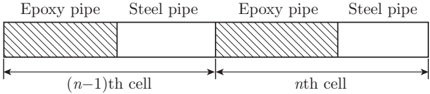
“Yu et al.([143]) designed a periodic binary composite fluid-conveying pipe, which consisted of infinitely repeating alternating pipe elements, as shown in Fig.”
BackgroundMethodSELF-EXCITED VIBRATION OF A CONTROL VALVE DUE TO FLUID–STRUCTURE INTERACTION
MISRA, A., BEHDINAN, K., & CLEGHORN, W. L. (2002) · Journal of Fluids and Structures · doi:10.1006/jfls.2002.0441 · Cited by 72 · cited 3×
“Second, the fluid-structure coupling behaviors between multiphase fluids and pipes and between fluids and control valves([26]) are often difficult to identify.”
BackgroundMethodExperimental and Theoretical Study of Transverse Vibration of a Tube Containing Flowing Fluid
Long, R. H. (1955) · Journal of Applied Mechanics · doi:10.1115/1.4010971 · Cited by 72
Some unresolved issues in fluid-structure interactions
Paı¨doussis, M. P. (2005) · Journal of Fluids and Structures · doi:10.1016/j.jfluidstructs.2005.03.009 · Cited by 70 · cited 1×
“Päıdoussis([24]) summarized three of the many unsolved or partially solved problems in fluid-structure interactions in 2005.”
BackgroundPerformance evaluation and design criterion of a nonlinear energy sink
Wang, G., Ding, H., & Chen, L. (2021) · Mechanical Systems and Signal Processing · doi:10.1016/j.ymssp.2021.108770 · Cited by 69 · cited 2×
“Nonlinear vibration absorbers, especially NESs, have shown excellent performance in structural vibration control research, and remain an attractive research topic([62,165]).”
BackgroundSelf-citationDynamics of cylindrical structures in axial flow: A review
Paı̈doussis, M. P. (2021) · Journal of Fluids and Structures · doi:10.1016/j.jfluidstructs.2021.103374 · Cited by 68 · cited 4×
“Päıdoussis[24] summarized three of the many unsolved or partially solved problems in fluid-structure interactions in 2005.”
BackgroundInfluentialShen, H., Wen, J., Yu, D., Asgari, M., & Wen, X. (2013) · Journal of Sound and Vibration · doi:10.1016/j.jsv.2013.03.007 · Cited by 66 · cited 2×
“In 2013, Shen et al.([116]) proposed a passive/active hybrid control technique to control the vibration and in-structural acoustic transfer of fluid-filled cylindrical shells.”
BackgroundOptimum X-plate dampers for seismic response control of piping systems
Bakre, S. V., Jangid, R. S., & Reddy, G. R. (2006) · International Journal of Pressure Vessels and Piping · doi:10.1016/j.ijpvp.2006.05.003 · Cited by 66 · cited 3×
“In 2006, Bakre et al.[86] introduced an X-plate damper.”
BackgroundA magnetic control method for large-deformation vibration of cantilevered pipe conveying fluid
Chen, W., Wang, L., & Peng, Z. (2021) · Nonlinear Dynamics · doi:10.1007/s11071-021-06662-2 · Cited by 66 · cited 5×
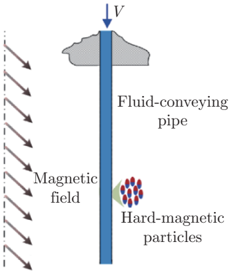
“In 2021, Chen et al.[122] studied the dynamic behavior of a fluid-conveying cantilever pipe made of hard-magnetic soft materials in an external magnetic field, as shown in Fig.”
BackgroundInfluentialKhazaee, M., Khadem, S. E., Moslemi, A., & Abdollahi, A. (2020) · Communications in Nonlinear Science and Numerical Simulation · doi:10.1016/j.cnsns.2020.105439 · Cited by 64 · cited 2×
“Khazaee et al.[73] compared the vibration control of fluid-conveying pipes by two NESs, grounded and ungrounded, in 2020.”
BackgroundTwo-modal resonance control with an encapsulated nonlinear energy sink
Geng, X.-F., & Ding, H. (2022) · Journal of Sound and Vibration · doi:10.1016/j.jsv.2021.116667 · Cited by 64
Self-citationVibration control of periodically supported pipes employing optimally designed dampers
Iqbal, M., Kumar, A., Jaya, M. M., & Bursi, O. S. (2022) · International Journal of Mechanical Sciences · doi:10.1016/j.ijmecsci.2022.107684 · Cited by 64 · cited 2×
“In 2022, Iqbal et al.([144]) presented a pipe supported periodically on a rack structure to design vibration control strategies.”
BackgroundWang, W., Dalton, D., Hua, X., Wang, X., Chen, Z., & Song, G. (2017) · Applied Sciences · doi:10.3390/app7100987 · Cited by 62 · cited 6×
“In 2017, Wang et al.([53]) utilized the vortex DVA to control the vibration of the fluid-conveying pipe in the seawater environment.”
BackgroundInfluentialDynamic model of curved pipe conveying fluid based on the absolute nodal coordinate formulation
Yuan, J.-R., & Ding, H. (2022) · International Journal of Mechanical Sciences · doi:10.1016/j.ijmecsci.2022.107625 · Cited by 62
Self-citationDesign of a nonlinear vibration absorber using three-to-one internal resonances
Ji, J. (2013) · Mechanical Systems and Signal Processing · doi:10.1016/j.ymssp.2013.06.019 · Cited by 61 · cited 1×
“If the restoring force provided by the linear part is insignificant relative to the nonlinear part, then the nonlinear part plays a major role in suppressing the vibration([61]).”
BackgroundSelf-citationGuo, Y., Zhu, B., & Li, Y. (2021) · Applied Mathematical Modelling · doi:10.1016/j.apm.2021.09.017 · Cited by 61
Reduction of flexural vibration of a fluid-filled pipe with attached vibration absorbers
Wu, J., Zhu, H., Sun, Y.-D., Yin, Z.-Y., & Su, M.-Z. (2021) · International Journal of Pressure Vessels and Piping · doi:10.1016/j.ijpvp.2021.104525 · Cited by 60 · cited 3×
“The above studies have shown that for a defined resonant frequency of a given fluid-conveying pipe, whether it is a periodic oscillator based on the local resonance theory([54,56]), or a single”
BackgroundMethodYe, S.-Q., Ding, H., Wei, S., Ji, J.-C., & Chen, L.-Q. (2021) · Ocean Engineering · doi:10.1016/j.oceaneng.2021.108899 · Cited by 59 · cited 1×
“For example, the vibration characteristics of fluid-conveying pipes were investigated by considering different boundary supporting conditions([27]), different pipe materials([35]), different pipe shapes([36]), and different working environments([37]).”
BackgroundSelf-citationZhang, Z., Gao, Z.-T., Fang, B., & Zhang, Y.-W. (2022) · Nonlinear Dynamics · doi:10.1007/s11071-022-07490-8 · Cited by 59 · cited 5×
“Zhang et al.[106] proposed to introduce inertial NESs into the ends of the elastic supported beam.”
BackgroundInfluentialZhou, K., Yi, H. R., Dai, H. L., Yan, H., Guo, Z. L., Xiong, F. R., Ni, Q., Hagedorn, P., & Wang, L. (2022) · Nonlinear Dynamics · doi:10.1007/s11071-021-07016-8 · Cited by 58
Modeling and parametric studies of retaining clips on pipes
Dou, B., Ding, H., Mao, X.-Y., Feng, H.-R., & Chen, L.-Q. (2023) · Mechanical Systems and Signal Processing · doi:10.1016/j.ymssp.2022.109912 · Cited by 58 · cited 2×
“Moreover, Dou et al.[28] proved that when calculating the natural frequencies of the pipe, ignoring the clip width or modeling the retaining clip as a boundary would cause a noticeable error.”
BackgroundSelf-citationBending vibration control of pipes conveying fluids by nonlinear torsional absorbers at the boundary
Mao, X., Ding, H., & Chen, L. (2021) · Science China Technological Sciences · doi:10.1007/s11431-020-1791-2 · Cited by 57 · cited 7×
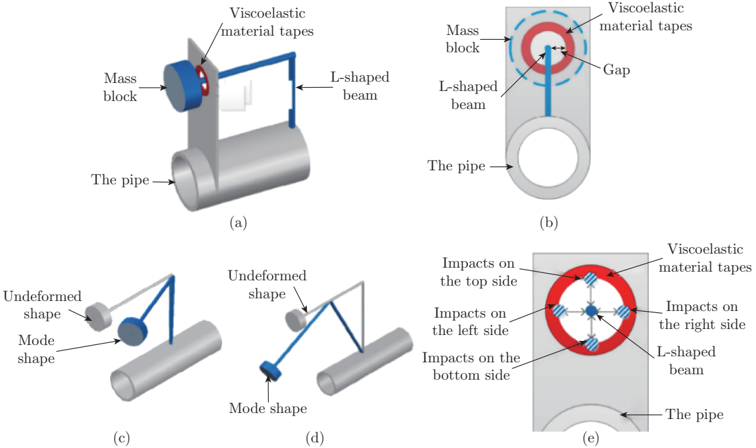
“Mao et al.[83] designed a novel torsional NES which was placed at the boundary of the pipe to control the flexural vibration of the pipe, as shown in Fig.”
BackgroundMethodInfluentialSelf-citationMass design of nonlinear energy sinks
Wang, G., & Ding, H. (2021) · Engineering Structures · doi:10.1016/j.engstruct.2021.113438 · Cited by 57
Self-citationCao, Y., Guo, X., Ma, H., Ge, H., Li, H., Lin, J., Jia, D., Wang, B., & Ma, Y. (2023) · Mechanical Systems and Signal Processing · doi:10.1016/j.ymssp.2023.110244 · Cited by 55 · cited 2×
“Cao et al.[33] studied the natural characteristics of fluid-conveying pipelines and the effect of the connecting hose.”
BackgroundFernandes, R., El-Borgi, S., Yazbeck, R., Boyd, J. G., & Lagoudas, D. C. (2022) · Applied Mathematical Modelling · doi:10.1016/j.apm.2021.12.036 · Cited by 53
Dehrouyeh-Semnani, A. M. (2022) · Mechanical Systems and Signal Processing · doi:10.1016/j.ymssp.2022.110016 · Cited by 53 · cited 2×
“In 2023, Dehrouyeh-Semnani[123] examined the nonlinear responses of a fluidconveying cantilevered hard-magnetic soft pipe with uniform and non-uniform magnetizations under an actuating parallel magnetic field.”
BackgroundVibration analysis of a fluid-conveying curved pipe with an arbitrary undeformed configuration
Hu, Y.-J., & Zhu, W. (2018) · Applied Mathematical Modelling · doi:10.1016/j.apm.2018.06.046 · Cited by 52
Yano, D., Ishikawa, S., Tanaka, K., & Kijimoto, S. (2019) · Journal of Sound and Vibration · doi:10.1016/j.jsv.2019.04.023 · Cited by 52 · cited 2×
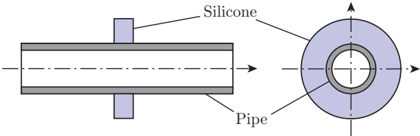
“1434 Hu DING and J. C. JI Yano et al.[94] and Ishikawa et al.[95] attached silicone as a damping material to the pipe, as shown in Fig.”
BackgroundUltra-thin Piezoelectric Lattice for Vibration Suppression in Pipe Conveying Fluid
Lyu, X., Chen, F., Ren, Q., Tang, Y., Ding, Q., & Yang, T. (2020) · Acta Mechanica Solida Sinica · doi:10.1007/s10338-020-00174-z · Cited by 52 · cited 6×
“In 2020, Lyu et al.[120] proposed a tunable phononic crystal device based on an ultra-thin piezoelectric patch to control the excessive vibration of the fluid-conveying pipe.”
BackgroundInfluentialDynamics of a cantilevered pipe subjected to internal and reverse external axial flow: A review
Païdoussis, M. P., Abdelbaki, A. R., Butt, M. F. J., Tavallaeinejad, M., Moditis, K., Misra, A. K., Nahon, M. A., & Ratigan, J. L. (2021) · Journal of Fluids and Structures · doi:10.1016/j.jfluidstructs.2021.103349 · Cited by 52
Bi, K., & Hao, H. (2016) · Engineering Structures · doi:10.1016/j.engstruct.2016.05.022 · Cited by 51 · cited 5×
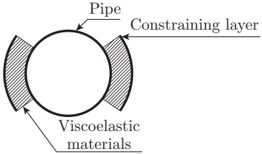
“Bi and Hao[91] 2016 Use of viscoelastic materials laid on the outer surface of the pipe to control the earthquake-induced vibration of the pipe on the ground”
BackgroundInfluentialPipeline leak and volume rate detections through Artificial intelligence and vibration analysis
Yang, J. M., Mostaghimi, H., Hugo, R., et al. (2021) · Measurement · doi:10.1016/j.measurement.2021.110368 · Cited by 51
Tang, Y., Wang, T., Ma, Z.-S., & Yang, T. (2021) · Nonlinear Dynamics · doi:10.1007/s11071-021-06656-0 · Cited by 50 · cited 1×
“For example, the vibration characteristics of fluid-conveying pipes were investigated by considering different boundary supporting conditions([27]), different pipe materials([35]), different pipe shapes([36]), and different working environments([37]).”
BackgroundAn approximate method for pipes conveying fluid with strong boundaries
Mao, X.-Y., Shu, S., Fan, X., Ding, H., & Chen, L.-Q. (2021) · Journal of Sound and Vibration · doi:10.1016/j.jsv.2021.116157 · Cited by 49 · cited 3×
“2 Model of a fluid-conveying pipe restrained by clips([27])”
BackgroundSelf-citationLow-frequency band gap characteristics of a novel spinning metamaterial pipe with Timoshenko model
Liang, F., Chen, Y., Guan, D., & Li, J. (2022) · Journal of Sound and Vibration · doi:10.1016/j.jsv.2022.117316 · Cited by 49
Fluid-structure interaction and band gap analysis of periodic composite liquid-filled pipe
Wu, J., Sun, Y.-D., Su, M.-Z., & Zhu, H.-Z. (2022) · Composite Structures · doi:10.1016/j.compstruct.2022.116444 · Cited by 49
Vibration analysis of aero parallel-pipeline systems based on a novel reduced order modeling method
Gao, P., Zhang, Y., Liu, X., Yu, T., & Wang, J. (2020) · Journal of Mechanical Science and Technology · doi:10.1007/s12206-020-0705-3 · Cited by 48 · cited 1×
“(iv) Pipes in engineering applications are mostly in the form of integrated piping systems([1,39]).”
BackgroundGlobal Dynamics of Pipes Conveying Pulsating Fluid in the Supercritical Regime
Zhou, S., Yu, T.-J., Yang, X.-D., & Zhang, W. (2017) · International Journal of Applied Mechanics · doi:10.1142/s1758825117500296 · Cited by 47 · cited 2×
“Research progresses have also been made in dynamic analysis methods, including the development of numerical methods and approximate analytical methods, and in exploring dynamic behaviors, including the dynamic responses under different excitation conditions and complex nonlinear vibrations under different parameter co…”
BackgroundMethodEl-Borgi, S., Alrumaihi, A., Rajendran, P., Yazbeck, R., Fernandes, R., Boyd, J. G., & Lagoudas, D. C. (2020) · International Journal of Mechanical Sciences · doi:10.1016/j.ijmecsci.2020.106211 · Cited by 46 · cited 5×
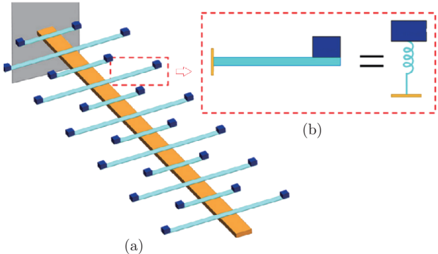
“In 2021, El-Borgi et al.[57] developed dynamic modeling of the resonator with a cantilever beam with a concentrated mass at the tip, and controlled certain bending mode resonances of the pipe by tuning the resonant element.”
BackgroundMethodInfluentialLi, X., Li, W., Shi, J., Li, Q., & Wang, S. (2021) · Chinese Journal of Aeronautics · doi:10.1016/j.cja.2021.04.010 · Cited by 46 · cited 1×
“Li et al.([145]) proposed the clamps’ locations optimization to minimize the system impedance at vibration frequencies.”
BackgroundInternal resonance and stress distribution of pipes conveying fluid in supercritical regime
Lu, Z.-Q., Zhang, K.-K., Ding, H., & Chen, L.-Q. (2020) · International Journal of Mechanical Sciences · doi:10.1016/j.ijmecsci.2020.105900 · Cited by 44 · cited 3×
“Under high-frequency excitations, even a small amplitude of vibration can lead to a safety hazard during long-term operation([1,82,168]).”
BackgroundSelf-citationEvaluation of gravity effects on the vibration of fluid-conveying pipes
Shao, Y.-F., & Ding, H. (2023) · International Journal of Mechanical Sciences · doi:10.1016/j.ijmecsci.2023.108230 · Cited by 44 · cited 5×
“Shao and Ding[31] evaluated the effect of gravity on the nonlinear vibration of a fluid-conveying pipe.”
BackgroundInfluentialSelf-citationYuan, J.-R., & Ding, H. (2023) · Mechanical Systems and Signal Processing · doi:10.1016/j.ymssp.2023.110275 · Cited by 44
Self-citationVibration Control of Conveying Fluid Pipe Based on Inerter Enhanced Nonlinear Energy Sink
Duan, N., Wu, Y., Sun, X., & Zhong, C. (2021) · IEEE Transactions on Circuits and Systems I Regular Papers · doi:10.1109/tcsi.2021.3049268 · Cited by 43 · cited 2×
“Duan et al.[76] 2021 Design of an enhanced NES using inerter to control vibration of the fluid-conveying pipe”
MethodFractional Dynamics of Fluid-Conveying Pipes Made of Polymer-Like Materials
Tang, Y., Yang, T., & Fang, B. (2018) · Acta Mechanica Solida Sinica · doi:10.1007/s10338-018-0007-9 · Cited by 42 · cited 1×
“For example, the vibration characteristics of fluid-conveying pipes were investigated by considering different boundary supporting conditions([27]), different pipe materials([35]), different pipe shapes([36]), and different working environments([37]).”
BackgroundZhao, X.-Y., Zhang, Y.-W., Ding, H., & Chen, L.-Q. (2018) · International Journal of Applied Mechanics · doi:10.1142/s1758825118500965 · Cited by 42 · cited 12×
“It is expected that controlling the complex dynamic responses of fluid-conveying pipes through NESs and implementing applied research into practice will still be active research topics.”
BackgroundMethodInfluentialSelf-citationGuo, Y., Zhu, B., Yang, B., & Li, Y. (2022) · Ocean Engineering · doi:10.1016/j.oceaneng.2021.110267 · Cited by 42
Dynamics and optimal control of an electromagnetically actuated cantilever pipe conveying fluid
Pisarski, D., Konowrocki, R., & Szmidt, T. (2018) · Journal of Sound and Vibration · doi:10.1016/j.jsv.2018.06.045 · Cited by 41 · cited 5×
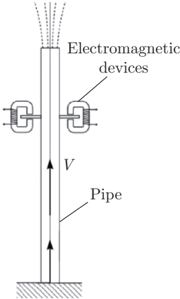
“Pisarski et al.[132] 2018 Design of an electromagnetic actuator to control the stability of a vertical cantilever pipe in three flow velocity ranges Szmidt et al.”
BackgroundInfluentialTan, J., Michael Ho, S. C., Zhang, P., & Jiang, J. (2019) · Applied Sciences · doi:10.3390/app9020285 · Cited by 41
Three-dimensional dynamics of a cantilevered pipe conveying pulsating fluid
Wang, Y., Tang, M., Yang, M., & Qin, T. (2022) · Applied Mathematical Modelling · doi:10.1016/j.apm.2022.10.023 · Cited by 41
Mirhashemi, S., Saeidiha, M., & Ahmadi, H. (2022) · Communications in Nonlinear Science and Numerical Simulation · doi:10.1016/j.cnsns.2022.107035 · Cited by 40 · cited 2×
“Mirhashemi et al.([79]) investigated the dynamics of a harmonically excited nonlinear fluid-conveying pipe attached to a local NES in 2023.”
BackgroundNikoo, H. M., Bi, K., & Hao, H. (2017) · Ocean Engineering · doi:10.1016/j.oceaneng.2017.06.063 · Cited by 39 · cited 2×
“In 2017, Nikoo et al.([154]) used the improved pipe-in-pipe design to control the vortexinduced vibration of the pipe.”
BackgroundACTIVE FLUTTER CONTROL OF A CANTILEVER TUBE CONVEYING FLUID USING PIEZOELECTRIC ACTUATORS
Lin, Y.-H., & Chu, C.-L. (1996) · Journal of Sound and Vibration · doi:10.1006/jsvi.1996.0470 · Cited by 38 · cited 6×
“In 2001, Lin and Chu[109] studied active feedback control of flow-induced vibration of fluidconveying pipes by using the Timoshenko beam theory.”
BackgroundInfluentialKwag, S., Eem, S., Kwak, J., Lee, H., Oh, J., & Koo, G.-H. (2021) · Nuclear Engineering and Technology · doi:10.1016/j.net.2021.02.009 · Cited by 38 · cited 6×
“A failure in one of the multiple interconnected piping systems can induce severe damage, potentially leading to radiation leakage and diffusion accidents([4]).”
BackgroundInfluentialZhu, H., Gao, Y., Hu, J., et al. (2021) · Applied Ocean Research · doi:10.1016/j.apor.2021.103017 · Cited by 37
Zang, Z.-P., & Gao, F. (2014) · Applied Ocean Research · doi:10.1016/j.apor.2014.02.004 · Cited by 36 · cited 3×
“In 2014, Zang and Gao([136]) conducted a series of experiments on the steady-current induced vibration of a piggyback pipe close to a plane seabed.”
BackgroundTransmissibility of Bending Vibration of an Elastic Beam
Ding, H., Dowell, E. H., & Chen, L.-Q. (2018) · Journal of Vibration and Acoustics · doi:10.1115/1.4038733 · Cited by 35 · cited 9×
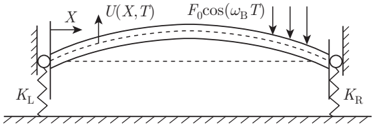
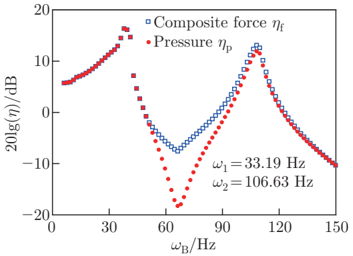
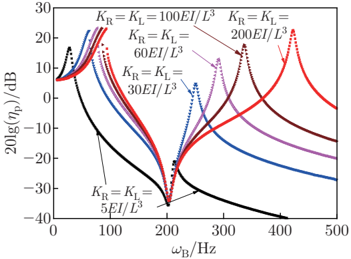
“13 Comparisons between the pressure and the composite force transmissibility([103]) (color online) 0 100 200 300 400 500 −40 −30 −20 −10 0 10 20 30”
BackgroundMethodInfluentialSelf-citationLi, J., Deng, H., & Jiang, W. (2019) · Journal of Vibration and Control · doi:10.1177/1077546319837789 · Cited by 35 · cited 2×
“In 2019, Li et al.([129]) proposed a feedforward vibration control method for fluid-conveying cantilever pipes to minimize the vibration displacement at the end.”
BackgroundFlow induced vibration of two-phase flow passing through orifices under slug pattern conditions
Bamidele, O. E., Hassan, M. A., & Ahmed, W. H. (2021) · Journal of Fluids and Structures · doi:10.1016/j.jfluidstructs.2020.103209 · Cited by 35 · cited 2×
“In 2021, Bamidele et al.([139]) studied the effect of flow restricting orifices on pipe vibrations.”
BackgroundStatic bifurcation and nonlinear vibration of pipes conveying fluid in thermal environment
Mao, X.-Y., Gao, S.-Y., Ding, H., & Chen, L.-Q. (2023) · Ocean Engineering · doi:10.1016/j.oceaneng.2023.114418 · Cited by 35
Self-citationIshikawa, S., Tanaka, K., Yano, D., & Kijimoto, S. (2020) · Journal of Sound and Vibration · doi:10.1016/j.jsv.2020.115272 · Cited by 34 · cited 2×
“1434 Hu DING and J. C. JI Yano et al.[94] and Ishikawa et al.[95] attached silicone as a damping material to the pipe, as shown in Fig.”
BackgroundLiu, X., Sun, W., & Gao, Z. (2020) · IEEE Access · doi:10.1109/access.2020.3044087 · Cited by 34 · cited 7×
“In 2020, Liu et al.[138] established a hoop support stiffness model with nonuniformly distributed springs and a hoop support damping model with uniformly distributed dampers.”
BackgroundInfluentialMaciel, V. S. F., Kheiri, M., & Franzini, G. R. (2022) · International Journal of Non-Linear Mechanics · doi:10.1016/j.ijnonlinmec.2022.104053 · Cited by 34 · cited 2×
“Maciel et al.([63]) composed a rotative nonlinear vibration absorber by a mass connected to the extremity of a rigid bar linked to the pipe by means of a hinge and a rotational damper.”
BackgroundVibration Control of an Aero Pipeline System with Active Constraint Layer Damping Treatment
Zhai, J., Li, J., Wei, D., Gao, P., Yan, Y., & Han, Q. (2019) · Applied Sciences · doi:10.3390/app9102094 · Cited by 33 · cited 1×
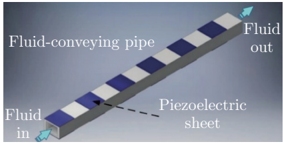
“For hydraulic system pipes, vibration control methods mainly focus on adhering piezoelectric sheets([159]), controlling fluid pressure([117]), regulating flow velocity pulsation([26,121,160]), regulating resonance([16]), and using the phononic crystal theory to optimize the support design([142]).”
MethodHao, M.-Y., Ding, H., Mao, X.-Y., & Chen, L.-Q. (2023) · Acta Mechanica Solida Sinica · doi:10.1007/s10338-022-00370-z · Cited by 33 · cited 1×
“The instability of the flow velocity may cause parametric vibrations of pipes([8]).”
BackgroundSelf-citationZhu, B., Zhang, X., & Zhao, T. (2023) · Journal of Sound and Vibration · doi:10.1016/j.jsv.2023.117558 · Cited by 33
Wang, B., Wang, H., He, Z., Liu, D., & Pan, P. (2023) · Engineering Structures · doi:10.1016/j.engstruct.2023.115744 · Cited by 33 · cited 7×
“Externally introduced damping, either various damping introduced at supports, or dampers suspended between the supports of pipes([17,89,101]), or a damping coating attached to pipes, could significantly reduce the vibration response of the fluid-conveying pipes under seismic excitation and high-frequency excitation.”
BackgroundMethodInfluentialStability analysis of a pipe conveying fluid with a nonlinear energy sink
Duan, N., Lin, S., Wu, Y., Sun, X., & Zhong, C. (2021) · Science China Information Sciences · doi:10.1007/s11432-019-2822-3 · Cited by 31
Ma, H., Sun, W., Wang, D., Du, D., Liu, X., & Lin, J. (2023) · Composite Structures · doi:10.1016/j.compstruct.2023.116944 · Cited by 31 · cited 1×
“In 2023, Ma et al.([96]) studied the nonlinear vibration characteristic of a straight pipe with a partially attached viscoelastic damping patch.”
BackgroundZhang, R., Di, Q., Wang, X., & Gu, C.-Y. (2010) · Journal of Hydrodynamics · doi:10.1016/s1001-6058(09)60066-4 · Cited by 30
Amiri, A., Masoumi, A., & Talebitooti, R. (2020) · International Journal of Mechanics and Materials in Design · doi:10.1007/s10999-020-09487-w · Cited by 30 · cited 5×
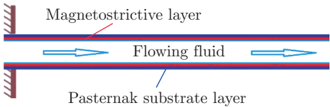
“19 A fluid-conveying micro-pipe with magnetostrictive layers([12]) (color online) Fluid-conveying pipe”
BackgroundInfluentialZhang, L., Zhang, T., Ouyang, H., Li, T., & You, M. (2023) · Journal of Sound and Vibration · doi:10.1016/j.jsv.2023.117702 · Cited by 30 · cited 5×
“Zhang et al.[106] proposed to introduce inertial NESs into the ends of the elastic supported beam.”
MethodInfluentialYOKOTA, S., SOMADA, H., & YAMAGUCHI, H. (1996) · JSME International Journal Series B · doi:10.1299/jsmeb.39.119 · Cited by 28 · cited 1×
“For hydraulic system pipes, vibration control methods mainly focus on adhering piezoelectric sheets([159]), controlling fluid pressure([117]), regulating flow velocity pulsation([26,121,160]), regulating resonance([16]), and using the phononic crystal theory to optimize the support design([142]).”
MethodEnhancement in the Seismic Performance of a Nuclear Piping System using Multiple Tuned Mass Dampers
Kwag, S., Kwak, J., Lee, H., Oh, J., & Koo, G.-H. (2019) · Energies · doi:10.3390/en12112077 · Cited by 28
Vibration Attenuation of Periodic Non-uniform Pipes Conveying Fluid
Shoaib, M., Chen, Z., & Li, F. (2021) · Journal of Vibration Engineering & Technologies · doi:10.1007/s42417-021-00347-1 · Cited by 28 · cited 2×
“In 2021, combining the Bragg scattering bandgap mechanism and the inertial amplification mechanism, Shoaib et al.[151] proposed a strategy to enhance the bandgap characteristics of periodic inhomogeneous fluid-conveying pipes.”
MethodChangbin, G., Zongxia, J., Shuai, W., Yaoxing, S., & Fanggang, Z. (2014) · Journal of Dynamic Systems, Measurement, and Control · doi:10.1115/1.4026343 · Cited by 27 · cited 4×
“In 2014, Guan et al.([117]) designed a piezoelectric direct-drive slide valve as an active vibration absorber for active control of fluid pressure pulsation.”
BackgroundMethodInfluentialADAPTIVE MODAL VIBRATION CONTROL OF A FLUID-CONVEYING CANTILEVER PIPE
Tsai, Y.-K., & Lin, Y.-H. (1997) · Journal of Fluids and Structures · doi:10.1006/jfls.1997.0092 · Cited by 26 · cited 10×
“In 2001, Lin and Chu[109] studied active feedback control of flow-induced vibration of fluidconveying pipes by using the Timoshenko beam theory.”
BackgroundInfluentialResonance regulation on a hydraulic pipe via boundary excitations
Fan, X., Zhu, C.-A., Mao, X.-Y., & Ding, H. (2023) · International Journal of Mechanical Sciences · doi:10.1016/j.ijmecsci.2023.108375 · Cited by 25 · cited 1×
“For hydraulic system pipes, vibration control methods mainly focus on adhering piezoelectric sheets([159]), controlling fluid pressure([117]), regulating flow velocity pulsation([26,121,160]), regulating resonance([16]), and using the phononic crystal theory to optimize the support design([142]).”
MethodSelf-citationPositive use of damping devices for piping systems — Some experiences and new proposals
Kunieda, M., Chiba, T., & Kobayashi, H. (1987) · Nuclear Engineering and Design · doi:10.1016/0029-5493(87)90292-5 · Cited by 24 · cited 5×
“Kunieda et al.[51] introduced the DVA, and confirmed its applicability to the pipe system through vibration tests by using a three-dimensional (3D) pipe model in 1987.”
BackgroundMethodInfluentialOh, H. E., Park, D. J., & Jeong, W. B. (2019) · Journal of Sound and Vibration · doi:10.1016/j.jsv.2018.09.040 · Cited by 24 · cited 1×
“In studying the vibration control of compressor fluid-conveying pipes, the control methods adopted include semi-active control([134]), pipe configuration optimization([3]), pressure pulsation reduction([161]), active vibration control based on fluid motion([121]), and passive control with the introduction of dynamic v…”
MethodMaximov, J. T., & Dunchev, V. (2018) · Coupled systems mechanics an international journal · doi:10.12989/csm.2018.7.4.485 · Cited by 24
Sabahi, M. A., Saidi, A. R., & Khodabakhsh, R. (2022) · Ocean Engineering · doi:10.1016/j.oceaneng.2021.110482 · Cited by 24 · cited 3×
“Sabahi et al.[92] presented the vibration analysis of functionally graded porous fluid-conveying micro-pipes embedded in a viscous damping medium, and showed that decreasing the powerlaw exponent and the porosity volume fraction could decrease the nonlinear natural frequency of the vibration of fluid-conveying micro-p…”
BackgroundInfluentialAn out-of-plane vibration model for in-plane curved pipes conveying fluid
Yuan, J.-R., & Ding, H. (2023) · Ocean Engineering · doi:10.1016/j.oceaneng.2023.113747 · Cited by 24
Self-citationResponse Characteristics of Piping System Supported by Visco-Elastic and Elasto-Plastic Dampers
Chiba, T., & Kobayashi, H. (1990) · Journal of Pressure Vessel Technology · doi:10.1115/1.2928583 · Cited by 23 · cited 2×
“In 1990, Chiba and Kobayashi([84]) developed visco-elastic dampers and elasto-plastic dampers for high damping supports for pipes.”
BackgroundMao, X.-Y., Sun, J., Ding, H., & Chen, L. (2019) · Journal of Sound and Vibration · doi:10.1016/j.jsv.2019.115128 · Cited by 23
Self-citationResponse of piping system on friction support to bi-directional excitation
Bakre, S. V., Jangid, R. S., & Reddy, G. R. (2006) · Nuclear Engineering and Design · doi:10.1016/j.nucengdes.2005.12.012 · Cited by 22 · cited 3×
“In 2006, Bakre et al.[86] introduced an X-plate damper.”
BackgroundSTABILIZATION OF CANTILEVERED FLEXIBLE STRUCTURES BY MEANS OF AN INTERNAL FLOWING FLUID
Sugiyama, Y., Katayama, T., Kanki, E., Nishino, K., & Åkesson, B. (1996) · Journal of Fluids and Structures · doi:10.1006/jfls.1996.0043 · Cited by 22 · cited 2×
“In 1996, Sugiyama et al.([124]) conducted a cantilever pipe experiment to dissipate the vibration energy of the pipe by the flowing fluid inside the pipe whose velocity is smaller than the critical flutter velocity, to achieve the stabilization of the pipe.”
BackgroundVibration Control of Nuclear Power Plant Piping System Using Stockbridge Damper under Earthquakes
Chang, S., Sun, W., Cho, S. G., & Kim, D. (2016) · Science and Technology of Nuclear Installations · doi:10.1155/2016/5014093 · Cited by 22 · cited 2×
“In 2016, Chang et al.[88] introduced the Stockbridge damper, and fixed it in a definite position of the pipe to study its seismic performance.”
BackgroundSzmidt, T., Pisarski, D., & Konowrocki, R. (2019) · Meccanica · doi:10.1007/s11012-019-00988-3 · Cited by 22 · cited 4×
“In 2019, Szmidt et al.[133] proposed eddy-current dampers to improve the dynamic stability of a cantilevered pipe discharging fluid.”
BackgroundInfluentialStudy on the stability of multi-span U-shaped pipe conveying fluid with complex constraints
Wen, H. B., Yang, Y.-R., & Li, Y.-D. (2023) · International Journal of Pressure Vessels and Piping · doi:10.1016/j.ijpvp.2023.104911 · Cited by 22
Nonlinear vortex-induced vibrations of fluid-conveying tensioned pipes in super-critical regimes
Zhang, B., Li, F., Chai, Y., et al. (2023) · Journal of Sound and Vibration · doi:10.1016/j.jsv.2023.117635 · Cited by 22
Khajehpour, S., & AZADI, V. (2015) · Latin American Journal of Solids and Structures · doi:10.1590/1679-78251535 · Cited by 21 · cited 3×
“In 2015, Khajehpour and Azadi[118] used an adaptive robust control method to suppress the transverse vibration of a rotating cantilever pipe based on the local piezoelectric layer pasted on both sides of the pipe.”
BackgroundMethodComparative performance of passive devices for piping system under seismic excitation
Kumar, P., Jangid, R. S., & Reddy, G. R. (2016) · Nuclear Engineering and Design · doi:10.1016/j.nucengdes.2015.11.019 · Cited by 21 · cited 7×
“Externally introduced damping, either various damping introduced at supports, or dampers suspended between the supports of pipes([17,89,101]), or a damping coating attached to pipes, could significantly reduce the vibration response of the fluid-conveying pipes under seismic excitation and high-frequency excitation.”
BackgroundInfluentialFan, X. N., Zhu, C.-A., Mao, X.-Y., & Ding, H. (2023) · Applied Mathematics and Mechanics · doi:10.1007/s10483-023-2967-6 · Cited by 21 · cited 2×
“Fan et al.([34]) studied the coupling vibration of a hydraulic pipe system consisting of two pipes restrained by clips to one bracket at their middle points.”
BackgroundSelf-citationAmbe, Y., Yamauchi, Y., Konyo, M., Tadakuma, K., & Tadokoro, S. (2022) · IEEE Access · doi:10.1109/access.2022.3140760 · Cited by 20 · cited 2×
“Ambe et al.([100]) proposed a stabilized controller for a jet-actuated two-dimensional cantilever pipe with a nozzle unit at the tip by using the damping effect of the internal flowing fluid, and verified the controller with a robot.”
BackgroundZhu, B., Guo, Y., Zhao, T., & Li, X. (2023) · Nonlinear Dynamics · doi:10.1007/s11071-023-08453-3 · Cited by 20
NON-LINEAR ACTIVE VIBRATION CONTROL OF A CANTILEVER PIPE CONVEYING FLUID
Lin, Y.-H., & Tsai, Y.-K. (1997) · Journal of Sound and Vibration · doi:10.1006/jsvi.1996.0858 · Cited by 18 · cited 4×
“In 1997, Tsai and Lin[112] used a model reference adaptive control approach in a modal space to control the flutter of fluid-conveying cantilever pipes.”
BackgroundInfluentialOptimal modal vibration suppression of a fluid-conveying pipe with a divergent mode
Lin, Y.-H., Huang, R.-C., & Chu, C.-L. (2004) · Journal of Sound and Vibration · doi:10.1016/s0022-460x(03)00281-5 · Cited by 18 · cited 3×
“In 2004, Lin et al.([110]) investigated the optimal independent modal space control of a fluid-conveying pipe fixed at both ends with a supercritical flow velocity, and applied the control torque onto the pipe by two independent arms.”
BackgroundLiu, E., Lian, D., Zheng, H., Su, Z., & Chen, Q. (2022) · Energy & Fuels · doi:10.1021/acs.energyfuels.1c03849 · Cited by 18 · cited 6×
“In 2020, Liu et al.[138] established a hoop support stiffness model with nonuniformly distributed springs and a hoop support damping model with uniformly distributed dampers.”
MethodInfluentialYuan, J.-R., Fan, X., Shu, S., Ding, H., & Chen, L.-Q. (2022) · International Journal of Applied Mechanics · doi:10.1142/s1758825122500144 · Cited by 17
Self-citationWei, Z., Li, B., Du, J., et al. (2016) · The European Physical Journal Applied Physics · doi:10.1051/epjap/2016150513 · Cited by 16 · cited 3×
“In 2016, Wei et al.([142]) designed a one-dimensional periodic composite structure for supporting the ship’s hydraulic pipe, which was composed of metal and rubber and used to control the vibration transmission of the hydraulic pipe to the bulkhead.”
BackgroundMethodEnhancement of seismic resilience of piping systems in nuclear power plants using steel coil damper
Cho, S. G., Furuya, O., & KURABAYASHI, H. (2019) · Nuclear Engineering and Design · doi:10.1016/j.nucengdes.2019.05.006 · Cited by 16 · cited 3×
“In 2019, Cho et al.([89]) introduced steel coil dampers into the earthquake resistance of pipes.”
BackgroundPassive Seismic Protection of Building Piping Systems — A Review
Tan, J. Q., Zhang, P., Feng, Q., & Song, G. (2020) · International Journal of Structural Stability and Dynamics · doi:10.1142/s0219455420300013 · Cited by 15 · cited 2×
“In 2020, Tan et al.([20]) discussed the seismic damage and passive seismic protection of building piping systems.”
BackgroundKumar, P., Jangid, R. S., & Reddy, G. R. (2013) · Nuclear Engineering and Design · doi:10.1016/j.nucengdes.2013.01.025 · Cited by 14 · cited 6×
“Vibration control of fluid-conveying pipes: a state-of-the-art review 1445 1446 Hu DING and J. C. JI continued Control technique Reference Year Key contribution Semi-active control Kumar et al.[130] 2013 Use of a semi-active variable stiffness damper to control the seismic response of a 3D fluid-conveying pipe system…”
BackgroundMethodInfluentialQuan, L. (2015) · Journal of Mechanical Engineering · doi:10.3901/jme.2015.18.175 · Cited by 14 · cited 2×
“Quan et al.[48] reviewed the research progress on fluid-structure interaction models and the passive, active, and semi-active vibration control of hydraulic pipes in 2015.”
BackgroundSemi-active noise control for a hermetic digital scroll compressor
Ye, K., Ji, J., & Han, S. (2020) · Journal of Low Frequency Noise, Vibration and Active Control · doi:10.1177/1461348419867019 · Cited by 14 · cited 2×
“In studying the vibration control of compressor fluid-conveying pipes, the control methods adopted include semi-active control([134]), pipe configuration optimization([3]), pressure pulsation reduction([161]), active vibration control based on fluid motion([121]), and passive control with the introduction of dynamic v…”
MethodSelf-citationEMPLOYING FLUID FLOW IN A CANTILEVER PIPE FOR VIBRATION CONTROL
Semercigil, S. E., Turan, Ö. F., & Lu, S. (1997) · Journal of Sound and Vibration · doi:10.1006/jsvi.1997.0987 · Cited by 13 · cited 1×
“For the fluid-conveying cantilevered pipes, some researchers have explored the active control methods based on piezoelectric([108,112,118]) and electromagnetic actuators, the transient optimal closed-loop control method([113]), the active control methods based on changing the fluid flow velocity([97]) and the fluid pr…”
BackgroundActive Control of Flow-Induced Vibrations via Feedback Decoupling
Yigit, F. (2008) · Journal of Vibration and Control · doi:10.1177/1077546307082191 · Cited by 13 · cited 2×
“In 2008, Yigit[126] discussed the applicability of active nodal vibration control into suppressing the flutter instability vibration of fluid-conveying cantilever pipes.”
BackgroundXu, Y., Liu, Z., Zhou, D., Tian, J., & Zhu, X. (2022) · Water Supply · doi:10.2166/ws.2021.220 · Cited by 13 · cited 3×
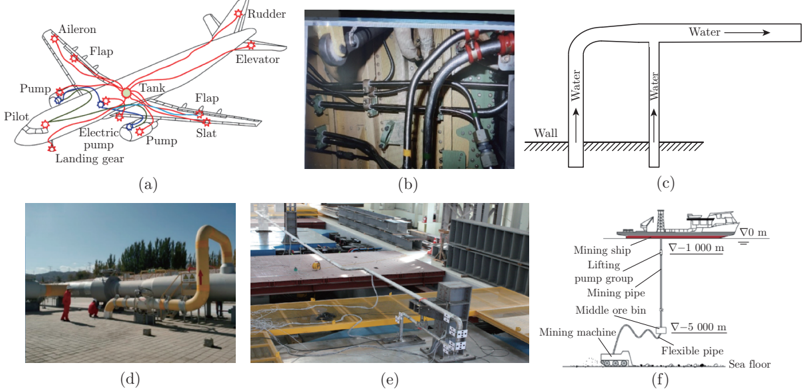
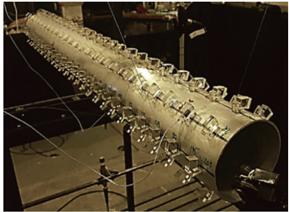
“1 Schematic of the piping layout and images of piping systems in practical applications: (a) schematic of the layout of aircraft hydraulic pipe system([1]), (b) hydraulic pipe image, (c) water supply pipe image([2]), (d) natural gas station pipe image([3]), (e) piping tested to simulate actual nuclear power plants([4]…”
BackgroundChehreghani, M., Shaaban, A., Misra, A. K., et al. (2023) · Journal of Fluids and Structures · doi:10.1016/j.jfluidstructs.2023.103889 · Cited by 13
Nonlinear dynamics of a vertical pipe subjected to a two-phase, solid-liquid internal flow
Gao, Y., Liu, L., Fu, S., Chai, S., & Shi, C. (2023) · Applied Mathematical Modelling · doi:10.1016/j.apm.2023.04.014 · Cited by 13
Optimal Control of Flow-Induced Vibration of Pipeline
Biswas, S. K., & Ahmed, N. U. (2001) · Dynamics and Control · doi:10.1023/a:1012592113721 · Cited by 12 · cited 2×
“In 2001, Biswas and Ahmed([135]) used the minimum integral principle of Pontryagin to find the optimal flow velocity with minimal vibrations in a fluid-conveying pipe.”
MethodLi, L., Nie, L., Ren, Y., & Jin, Q. (2022) · Journal of Vibration and Control · doi:10.1177/10775463221095297 · Cited by 12 · cited 1×
“Li et al.([93]) studied the fluid-conveying pipes composed of graphene-reinforced composite layers and a viscoelastic interlayer.”
BackgroundEffectiveness of Using RFHDS Connected PIP System for Subsea Pipeline Vibration Control
Bi, K., Hao, H., & Chen, W. (2017) · International Journal of Structural Stability and Dynamics · doi:10.1142/s0219455418400059 · Cited by 10 · cited 1×
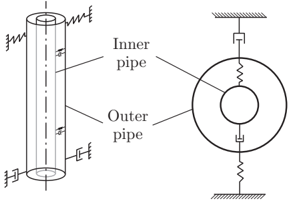
“In 2018, Bi et al.([155]) utilized rotational friction hinge dampers with springs to connect the inner and outer pipes.”
BackgroundXiao, L., & Liu, Q. (2021) · Mathematical Problems in Engineering · doi:10.1155/2021/8216439 · Cited by 10
Lyapunov-Based Stability Analysis for Fluid Conveying System With Parallel Nonlinear Energy Sinks
Duan, N., Wu, Y., Sun, X., & Zhong, C. (2021) · IEEE Transactions on Systems Man and Cybernetics Systems · doi:10.1109/tsmc.2021.3119959 · Cited by 10
Liu, Z., Tan, X. F., Liu, X., et al. (2020) · Computer Modeling in Engineering & Sciences · doi:10.32604/cmes.2020.012030 · Cited by 10 · cited 5×
“In 2020, Liu et al.[138] established a hoop support stiffness model with nonuniformly distributed springs and a hoop support damping model with uniformly distributed dampers.”
BackgroundInfluentialEffect of Shape Memory Alloy Actuation on Parametric Instability in Pipes Conveying Pulsating Fluid
Shaik, N. H., Sharma, A. K., & Bhattacharya, B. (2023) · Journal of Vibration Engineering & Technologies · doi:10.1007/s42417-022-00726-2 · Cited by 10 · cited 4×
“In 2022, Shaik et al.[128] effectively controlled the parametric instabilities of flexible pipes conveying pulsating fluid by applying shape memory alloy actuation.”
BackgroundInfluentialZhang, Y., Zhang, X., Xiong, F., et al. (2022) · International Journal of Dynamics and Control · doi:10.1007/s40435-022-00926-4 · Cited by 9 · cited 6×
“Zhang et al.[106] proposed to introduce inertial NESs into the ends of the elastic supported beam.”
BackgroundMethodInfluentialActive modal control of timoshenko pipes conveying fluid
Lin, Y., & Chu, C. (2001) · Journal of the Chinese Institute of Engineers · doi:10.1080/02533839.2001.9670607 · Cited by 8 · cited 3×
“In 2001, Lin and Chu[109] studied active feedback control of flow-induced vibration of fluidconveying pipes by using the Timoshenko beam theory.”
MethodPassive Control of Seismic Response of Piping Systems
Parulekar, Y. M., Reddy, G. R., Vaze, K. K., & Muthumani, K. (2006) · Journal of Pressure Vessel Technology · doi:10.1115/1.2217969 · Cited by 8 · cited 2×
“In 2005, Parulekar et al.([85]) introduced elastoplastic dampers as supports for the seismic resistance of cantilever pipes and 3D piping systems.”
BackgroundApplications of continuum fatigue risk monitoring in riser connectors system integrity management
Yan, Y., Zhang, S., Jin, X., et al. (2022) · Ocean Engineering · doi:10.1016/j.oceaneng.2022.110540 · Cited by 8
Wu, J., Zhu, H., Sun, Y.-D., Su, M.-Z., & Yin, Z.-Y. (2022) · Journal of Pressure Vessel Technology · doi:10.1115/1.4055066 · Cited by 8
Yang, L., Liu, L., Luo, C., Yu, Y., & Chen, Y. (2022) · Applied Sciences · doi:10.3390/app12147272 · Cited by 7 · cited 4×
“Yang et al.[67] proposed the use of an NES to attenuate the vibration response of simplysupported fluid-conveying pipes under impact in 2014.”
BackgroundInfluentialLyapunov-based Stability Analysis for Conveying Fluid Pipe with Nonlinear Energy Sink
Duan, N., Wu, Y., Sun, X., Zhong, C., & Wang, W. (2020) · IFAC-PapersOnLine · doi:10.1016/j.ifacol.2020.12.2161 · Cited by 7
Active control of the n= 2 axial propagating wave in an infinite in vacuo pipe
Variyart, W., & Brennan, M. J. (2004) · Smart Materials and Structures · doi:10.1088/0964-1726/13/1/014 · Cited by 6 · cited 4×
“In 2004, Variyart and Brennan[115] described an actuator and sensor arrangement that was theoretically demonstrated to suppress the vibrations of infinitely long fluid-conveying pipes.”
BackgroundInfluentialMłynarczyk, P., Cyklis, P., & Ryncarz, T. (2021) · International Journal of Refrigeration · doi:10.1016/j.ijrefrig.2021.09.008 · Cited by 6
Analysis of piping with hysteretic supports using response spectra
Igusa, T., Sinha, R., Kokubo, E., Furukawa, S., & Kawahata, J. (1993) · Nuclear Engineering and Design · doi:10.1016/0029-5493(93)90222-u · Cited by 5
Influence of Dry Friction on the Dynamics of Cantilevered Pipes Conveying Fluid
Guo, Z., Ni, Q., Wang, L., Zhou, K., & Meng, X. (2022) · Applied Sciences · doi:10.3390/app12020724 · Cited by 5 · cited 2×
“Guo et al.[99] introduced a dry friction restraint to improve the stability of fluid-conveying cantilever pipes.”
BackgroundJin, M. J. (2022) · Mechanics Based Design of Structures and Machines · doi:10.1080/15397734.2022.2044850 · Cited by 5 · cited 1×
“Jin([119]) presented the motion limiting nonlinear dynamics and frequency analysis of pipes reinforced with carbon nanotube agglomeration coupled with a piezoelectric actuator.”
BackgroundHong, R., Nie, S., Ji, H., et al. (2022) · Journal of Intelligent Material Systems and Structures · doi:10.1177/1045389x221142087 · Cited by 5 · cited 2×
“In 2022, Hong et al.([90]) developed a magnetorheological damping pipe clamp to suppress the low-frequency flow-induced vibrations of fluid-conveying pipelines.”
BackgroundAn actuator for the n=2 circumferential mode of a pipe
Variyart, W., & Brennan, M. J. (2003) · Journal of Sound and Vibration · doi:10.1016/s0022-460x(03)00253-0 · Cited by 4 · cited 5×
“3.2 Use of magnetic devices In 1996, Brennan et al.[121] designed a non-invasive, fluid wave hydraulic actuator driven by magnetostrictive elements for the active control of fluid-borne vibrations in a pipe.”
BackgroundInfluentialPassive Control of Seismic Response of Piping Systems
Parulekar, Y. M., Reddy, G. R., Vaze, K. K., & Muthumani, K. (2004) · ASME Pressure Vessels and Piping Conference (PVP) · doi:10.1115/pvp2004-2960 · Cited by 4
Use of an Irregular Cone to Reduce Ice-Induced Vibration of a Vertical Riser Pipe
Wang, S., Yue, Q., & Zhang, D. (2018) · Journal of Cold Regions Engineering · doi:10.1061/(asce)cr.1943-5495.0000177 · Cited by 3 · cited 5×
“In 2019, Wang et al.[137] proposed an irregular cone to control the ice-induced vibration of a vertical riser pipe.”
BackgroundInfluentialMaekawa, A., & Takahashi, T. A. (2021) · Journal of Pressure Vessel Technology · doi:10.1115/1.4050834 · Cited by 3
Research on signal propagation model of buried pipe fiber vibration monitoring system
Sun, Q., Zhou, S., & Chen, L. (2021) · Optik · doi:10.1016/j.ijleo.2021.168365 · Cited by 2
Bao, R. D. (2011) · Applied Mechanics and Materials · doi:10.4028/www.scientific.net/amm.120.537 · Cited by 1 · cited 2×
“In 2012, Bao[127] studied the active control of chaotic motion in a single-mode system with fixed supports at both ends of a fluid-conveying pipe under basic excitation.”
BackgroundBi, K., & Hao, H. (2015) · International Conference on Performance-based and Life-cycle Structural Engineering · doi:10.14264/uql.2016.1202
(1999) · doi:10.1002/(sici)1096-9845(199910)28:10<1121::aid-eqe858>3.0.co;2-o
Zhendong, W. E. I. (2016) · Journal of Mechanical Engineering · doi:10.3901/jme.2016.15.091
An Active Vibration Control Method for Typical Piping System of Nuclear Power Plant
Zhang, X., Sui, T., Zhang, H., et al. (2021) · 2021 IEEE 10th Data Driven Control and Learning Systems Conference (DDCLS) · doi:10.1109/ddcls52934.2021.9455612
Tang, Y., Wang, T., Ma, Z.-S., & Yang, T. (2021) · doi:10.21203/rs.3.rs-211647/v1
Zhou, K., Yi, H. R., Dai, H., Yan, H., Guo, Z. L., Xiong, F. R., Ni, Q., Hagedorn, P., & Wang, L. (2021) · doi:10.21203/rs.3.rs-527826/v1
Research works printed but not linked: 3
- 46. REN, J. T. and JIANG, J. S. Advances and trends on vibration of pipes conveying fluid. Advances in Mechanics, 33(3), 313-324 (2003)
- 47. XU, J. and YANG, Q. B. Recent development on models and nonlinear dynamics of pipes con- veying fluid. Advances in Mechanics, 34(2), 182-194 (2004)
- 121. BRENNAN, M. J., ELLIOT, S. J., and PINNINGTON, R. J. A non-intrusive fluid-wave actuator and sensor pair for the active control of fluid-borne vibrations in a pipe. Smart Materials & Structures, 5(3), 281-296 (1996) · DOI
Cited by
Recent progress on dynamics and control of pipes conveying fluid
Tang, Y., Zhang, H.-J., Chen, L., Ding, Q., Gao, Q., & Yang, T. (2024) · Nonlinear Dynamics · doi:10.1007/s11071-024-10486-1 · Cited by 129
A novel retaining clip for vibration reduction of fluid-conveying pipes by piecewise constraints
Dou, B., Li, M., & Ding, H. (2024) · Mechanical Systems and Signal Processing · doi:10.1016/j.ymssp.2024.111159 · Cited by 54
Self-citationMa, H., Ji, W., Zhang, Y., Zhang, H., Liu, H., & Sun, W. (2025) · Ocean Engineering · doi:10.1016/j.oceaneng.2025.120306 · Cited by 53
Vibration transmission characteristics analysis of a flexible casing-multiple pipes system
Guo, X., Ma, H., Ge, H., Chen, S., & Wen, B. (2024) · Mechanical Systems and Signal Processing · doi:10.1016/j.ymssp.2024.111536 · Cited by 51
Ma, H., Ji, W., Liu, H., & Sun, W. (2024) · Mechanical Systems and Signal Processing · doi:10.1016/j.ymssp.2024.111404 · Cited by 44
Metadata
- Authors
- Ding, H., & Ji, J. C.
- Affiliations
- Shanghai University (CN)
- University of Technology Sydney (AU)
- Corresponding author
- Ding, Hu
- Ji, J. C.
- Venue
- Applied Mathematics and Mechanics
- Published
- 2023-09
- Volume
- 44
- Issue
- 9
- Pages
- 1423-1456
- ISSN
- 0253-4827 (ISSN-L)
- 1573-2754
- OpenAlex
- W4386376415
- Cited by
- 132
- References
- 166
- Citations by year
- 2026: 53 · 2025: 56 · 2024: 21 · 2023: 2
- FWCI
- 14.18
- Type
- journal article
- Language
- en
- Open access
- hybrid
- doi.org
- Licence
- cc-by
- creativecommons.org/licenses/by/4.0 (tdm)
- creativecommons.org/licenses/by/4.0 (vor)
- Locations
- Applied Mathematics and Mechanics (publishedVersion, cc-by)
- Funders
- Shanghai Municipal Education Commission (2019–01–07–00–09-E00018)
- Topics
- Physical Sciences › Engineering › Mechanical Engineering › Vibration and Dynamic Analysis
- Physical Sciences › Engineering › Civil and Structural Engineering › Vibration Control and Rheological Fluids
- Physical Sciences › Engineering › Computational Mechanics › Fluid Dynamics and Vibration Analysis
- Keywords
- fluid-conveying pipes, vibration control, flow-induced vibration, acoustic-induced vibration, passive vibration control, active vibration control, semi-active vibration control, structural optimization, vibration suppression, pipeline integrity, fatigue damage
About these checks
Registry, retraction, Cites and statistics results are computed, not judged, with one exception: a printed reference that no index lists is read once by a model before it counts as a citation error. Claims are extracted by a model and kept only when their quote appears verbatim in the text; each cited source is then checked, with a model’s help, for whether it says what the claim relies on. Those verdicts can be wrong — read the claim’s quote and the cited source before relying on one.
The claim verdicts this report counts are experimental: their accuracy is not yet measured.
A language model drew the claims from the paper on 2026-10-10, under version 3 of the claim definition (model deepseek-v4.1-flash, prompt extract-v3).
A second model labelled each claim on 2026-10-10 (model jev-1.13-20260917, definition revision gold-guideline-v0.2).
Cited sources are checked with a language model’s help (gpt-6-sol).
Statistics and arithmetic are recomputed, not judged.
Confidence bands are shown only for fields calibrated on our annotated test set. None is calibrated yet, so no band is shown.
What counts as a claim ›How we measure confidence ›How we check this ›
Are you an author, or do you see a problem with this page? Request a review
Data sources
Bibliographic data: Semantic Scholar, OpenAlex, Crossref.
Contains information from the Semantic Scholar Academic Graph Datasets, made available under the ODC Attribution License (ODC-BY 1.0).
Semantic Scholar’s data is described in: Kinney, R., et al. (2023). The Semantic Scholar Open Data Platform. arXiv:2301.10140.
