

The Role of Practitioner Resilience and Mindfulness in Effective Practice: A Practice-Based Feasibility Study
Open accessThe DOI matches its Crossref record; 43 of the 48 references it cites were found in a registry or an index.
Abstract
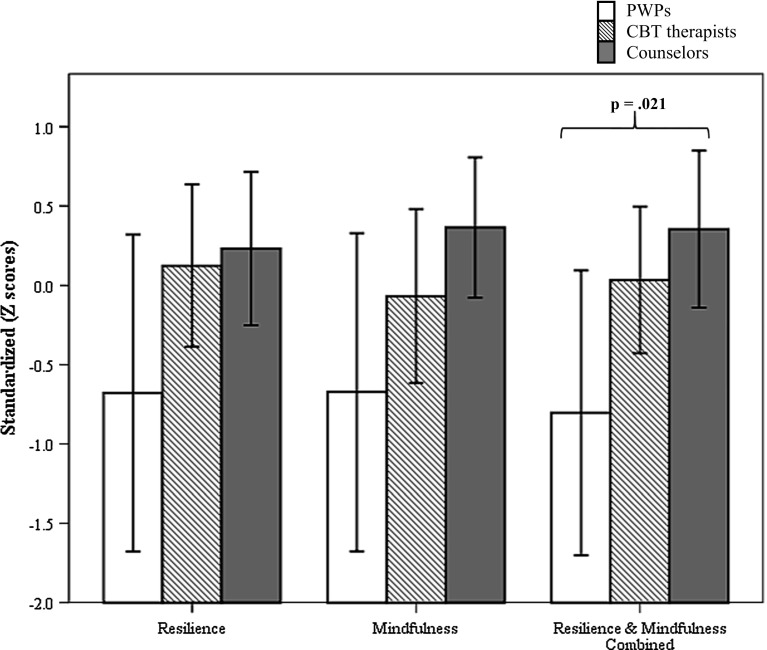
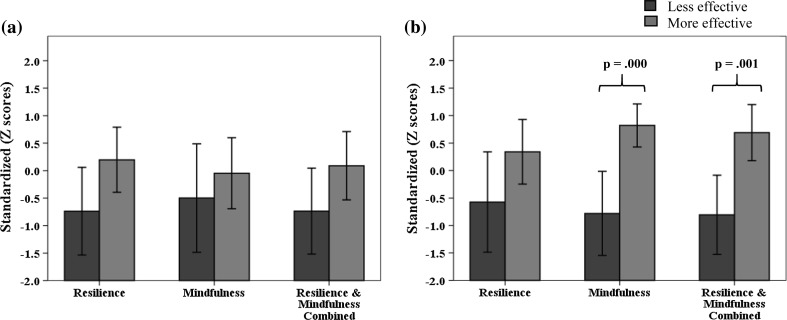
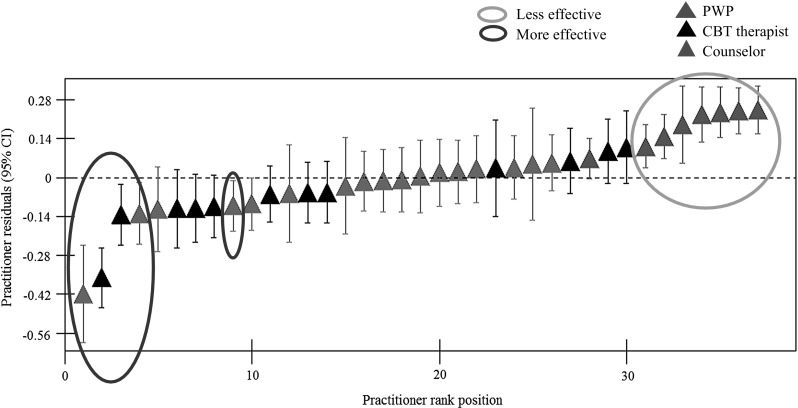
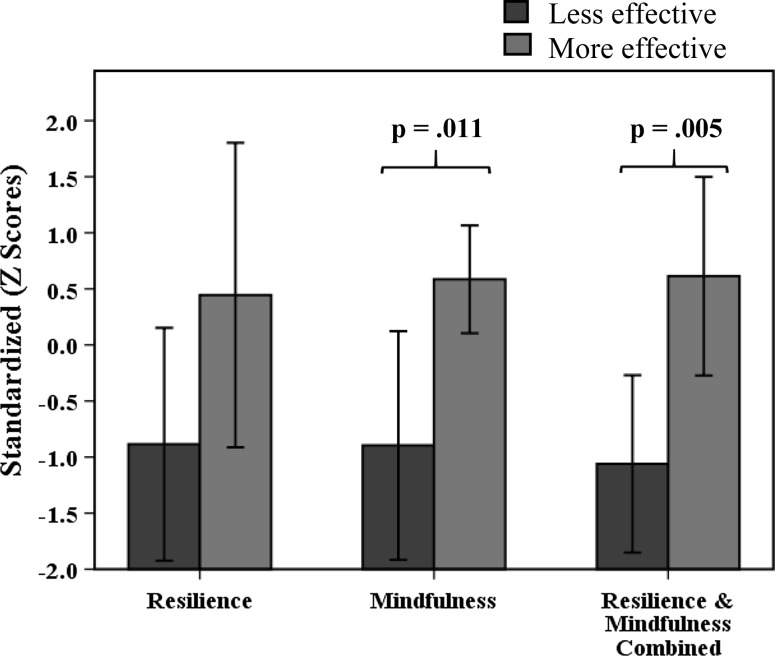
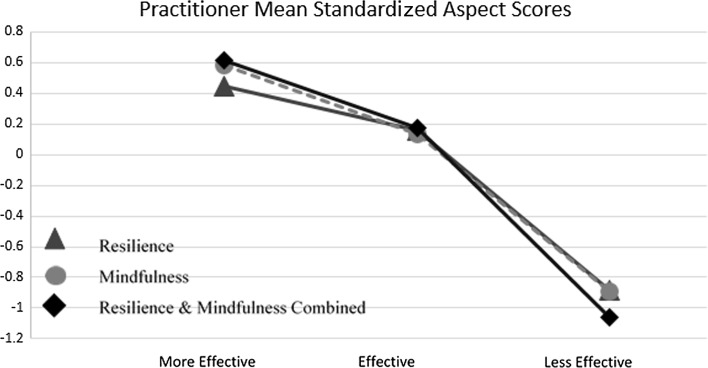
A growing body of literature attests to the existence of therapist effects with little explanation of this phenomenon. This study therefore investigated the role of resilience and mindfulness as factors related to practitioner wellbeing and associated effective practice. Data comprised practitioners (n = 37) and their patient outcome data (n = 4980) conducted within a stepped care model of service delivery. Analyses employed benchmarking and multilevel modeling to identify more and less effective practitioners via yoking of therapist factors and nested patient outcomes. A therapist effect of 6.7 % was identified based on patient depression (PHQ-9) outcome scores. More effective practitioners compared to less effective practitioners displayed significantly higher levels of mindfulness as well as resilience and mindfulness combined. Implications for policy, research and practice are discussed.
Overview
The claims and statistics of this paper haven’t been checked yet.
Free: it reads the open-access text and checks the first 5 claims that cite a source we can check. Create a free account to check every claim.
Integrity signals
Registry
Cites
Statistics
Figures
Verification
Claims the paper makes
The claims and statistics of this paper haven’t been checked yet.
Free: it reads the open-access text and checks the first 5 claims that cite a source we can check. Create a free account to check every claim.
Claims other papers make about this one
Each is checked against this paper’s own text: does it say what the citing paper says it does?
The cited source says what the claim attributes to it.
In the citing paper
“Therapists' resilience may also be an important determinant of clinical outcomes (Green et al., 2014;Pereira et al., 2017).”
From Associations between therapists’ occupational burnout and their patients’ depression and anxiety treatment outcomes (2018) · cites this paper as Pereira et al., 2017
The cited source says what the claim attributes to it.
In the citing paper
“which is comparable although marginally smaller to that observed in other studies conducted in IAPT services (Firth, Barkham, Kellett, & Saxon, 2015;Green, Barkham, Kellett, & Saxon, 2014;Pereira, Barkham, Kellett, & Saxon, 2017).”
From Associations between therapists’ occupational burnout and their patients’ depression and anxiety treatment outcomes (2018) · cites this paper as Pereira, Barkham, Kellett, & Saxon, 2017
Self-check
Percentages, sums and reported differences re-computed from the paper’s own numbers.
The self-check needs the paper’s full text.
Citations
Cites
The PHQ-9: Validity of a brief depression severity measure
Kroenke, K., Spitzer, R. L., & Williams, J. B. W. (2001) · Journal of General Internal Medicine · doi:10.1046/j.1525-1497.2001.016009606.x · Cited by 44,910 · cited 1×
“Patient Health Questionnaire-9 (PHQ-9; Kroenke et al. 2001; Spitzer et al. 1999) The PHQ-9 is a brief (9-item) self-report measure of depression.”
BackgroundA Brief Measure for Assessing Generalized Anxiety Disorder: The GAD-7
Spitzer, R. L., Kroenke, K., Williams, J. B. W., & Löwe, B. (2006) · Archives of Internal Medicine · doi:10.1001/archinte.166.10.1092 · Cited by 31,765 · cited 2×
“1999), Generalised Anxiety Disorder-7 (GAD-7; Spitzer et al. 2006), and the WSAS (Mundt et al.”
MethodThe benefits of being present: Mindfulness and its role in psychological well-being
Brown, K. W., & Ryan, R. M. (2003) · Journal of Personality and Social Psychology · doi:10.1037/0022-3514.84.4.822 · Cited by 13,448 · cited 1×
“Mindful Attention Awareness Scale (MAAS; Brown and Ryan 2003) This is a 15-item measure of mindfulness.”
BackgroundDevelopment of a new resilience scale: The Connor-Davidson Resilience Scale (CD-RISC)
Connor, K. M., & Davidson, J. R. T. (2003) · Depression and Anxiety · doi:10.1002/da.10113 · Cited by 11,793 · cited 3×
“Resilience has been defined as that which ‘‘embodies the personal qualities that enable one to thrive in the face of adversity’’ (Connor and Davidson 2003; p. 76), while mindfulness refers to ‘‘a state of psychological freedom that occurs when attention remains quiet and limber, without attachment…”
BackgroundInfluentialSpitzer, R. L. (1999) · JAMA · doi:10.1001/jama.282.18.1737 · Cited by 9,802 · cited 4×
“Patient Health Questionnaire-9 (PHQ-9; Kroenke et al. 2001; Spitzer et al. 1999) The PHQ-9 is a brief (9-item)”
BackgroundMethodInfluentialThe role of deliberate practice in the acquisition of expert performance
Ericsson, K. A., Krampe, R. T., & Tesch-Römer, C. (1993) · Psychological Review · doi:10.1037/0033-295x.100.3.363 · Cited by 9,564 · cited 2×
“Research findings on the acquisition of expertise show that it is not experience per se but rather the quality and quantity (e.g., at least 10 years) of experience that contribute to becoming an expert (Ericsson et al. 1993).”
BackgroundJacobson, N. S., & Truax, P. (1991) · Journal of Consulting and Clinical Psychology · doi:10.1037/0022-006x.59.1.12 · Cited by 7,770 · cited 1×
“Aggregated practitioner-level distributions were derived in order to rank practitioners on their effectiveness using a patient index of change criterion, namely reliable improvement (Jacobson and Truax 1991).”
MethodThe PHQ-9: A New Depression Diagnostic and Severity Measure
Kroenke, K., & Spitzer, R. L. (2002) · Psychiatric Annals · doi:10.3928/0048-5713-20020901-06 · Cited by 5,898 · cited 2×
“Scores of 5–9, 10–14, 15–19, and 20–27 are classified as reflecting mild, moderate, moderately severe, and severe levels of depression respectively (Kroenke and Spitzer 2002).”
BackgroundStressful life events, personality, and health: An inquiry into hardiness.
Kobasa, S. C. (1979) · Journal of Personality and Social Psychology · doi:10.1037//0022-3514.37.1.1 · Cited by 3,816 · cited 1×
“These included hardiness, control, commitment, seeing change as a challenge (Kobasa 1979) and patience/perseverance through stress.”
BackgroundBergin and Garfield's Handbook of Psychotherapy and Behavior Change
Lambert, M. J. (2003) · Cited by 3,383
Research works printed but not linked: 6
- Baldwin, S. A., & Imel, Z. E. (2013). Therapist effects: Findings and methods. In M. J. Lambert (Ed.), Bergin and Garfield's handbook of psychotherapy and behavior change (6th ed.). Hoboken, NJ: Wiley.
- Castonguay, L., Barkham, M., Lutz, W., & McAleavey, A. (2013). Practice-oriented research: Approaches and applications. In M. J. Lambert (Ed.), Bergin and Garfield's handbook of psychother- apy and behavior change (6th ed., pp. 85-133). Hoboken, NJ: Wiley.
- Marks, I. (1986). Behavioural psychotherapy: Maudsley book of clinical management. Bristol: Wright.
- National Institute for Health and Clinical Excellence. (2009). Depression: Management of depression in primary and secondary healthcare. London: NICE.
- National IAPT Programme Team. (2011). The IAPT data handbook: Guidance on recording and monitoring outcomes to support local evidence-based practice. National Institute for Health and Clinical Excellence. (2009). Depression: Management of depression in primary and sec- ondary healthcare. London: NICE. National Institute for Health and Clinical Excellence. (2011). Generalised anxiety disorder and panic (with or without agoraphobia) in adults. London: NICE.
- Rasbash, J., Charlton, C., Browne, W. J., Healy, M., & Cameron, B. (2009). MLwiN version 2.30. Bristol: Centre for Multilevel Modelling, University of Bristol.
Cited by
The professional and personal characteristics of effective psychotherapists: a systematic review
Heinonen, E., & Nissen-Lie, H. A. (2020) · Psychotherapy Research · doi:10.1080/10503307.2019.1620366 · Cited by 292
“Clinical experience ranged from less than 1 year for participants in some studies (de Jong, van Sluis, Nugter, Heiser, & Spinhoven, 2012; Dinger et al., 2007; Pereira et al., 2017) to a mean of 21 years in others (Sandell et al., 2000).”
BackgroundInfluentialA systematic review of therapist effects: A critical narrative update and refinement to review
Johns, R. G., Barkham, M., Kellett, S., & Saxon, D. (2019) · Clinical Psychology Review · doi:10.1016/j.cpr.2018.08.004 · Cited by 222
Self-citationWakefield, S., Kellett, S., Simmonds‐Buckley, M., Stockton, D., Bradbury, A., & Delgadillo, J. (2021) · British Journal of Clinical Psychology · doi:10.1111/bjc.12259 · Cited by 222
Self-citationDelgadillo, J., Saxon, D., & Barkham, M. (2018) · Depression and Anxiety · doi:10.1002/da.22766 · Cited by 151
“Therapists’ resilience may also be an important determinant of clinical outcomes (Green et al., 2014; Pereira et al., 2017).”
BackgroundSelf-citationBennett–Levy, J. (2018) · Journal of Behavior Therapy and Experimental Psychiatry · doi:10.1016/j.jbtep.2018.08.004 · Cited by 163
Bennett–Levy, J., & Finlay‐jones, A. L. (2018) · Cognitive Behaviour Therapy · doi:10.1080/16506073.2018.1434678 · Cited by 92
“mindfulness and resilience (Black et al., 2005; Mikulincer, Shaver, & Berant, 2013; Nissen-Lie et al., 2013, 2017; Pereira et al., 2017)—future research should not only consider whether PPs are linked to positive client outcomes, but whether these outcomes are mediated by changes in therapist-level variables.”
BackgroundDevelopment and Evaluation of Cognitive Analytic Guided Self-Help (CAT-SH) for Use in IAPT Services
Meadows, J., & Kellett, S. (2017) · Behavioural and Cognitive Psychotherapy · doi:10.1017/s1352465816000485 · Cited by 59
Self-citationBraun, S. E., Kinser, P. A., & Rybarczyk, B. (2019) · Translational Behavioral Medicine · doi:10.1093/tbm/iby059 · Cited by 56
Ratzon, A., Farhi, M., Ratzon, N. Z., & Adini, B. B. (2022) · International Journal of Environmental Research and Public Health · doi:10.3390/ijerph19095500 · Cited by 65
“The seemingly unchanged level of resilience at work may reflect the ongoing stressors that social workers continuously manage during their work (in both routine and during adversities), which paradoxically act as protective means [57,60].”
BackgroundWinblad, N. E., Changaris, M., & Stein, P. K. (2018) · Frontiers in Neuroscience · doi:10.3389/fnins.2018.00070 · Cited by 55
“Mindfulness has been associated with reduced symptoms of PTSD and increased resilience in multiple populations.”
BackgroundInfluentialTripp, D. A., Jones, K., Mihajlovic, V., Westcott, S., & MacQueen, G. (2022) · Journal of Health Psychology · doi:10.1177/1359105321999085 · Cited by 22
“For example, Pereira et al. (2016) observed significant improvements in depressed patients when treated with resilience and mindfulness approaches.”
BackgroundWhy mindfulness belongs in counseling psychology: A synergistic clinical and research agenda
Goldberg, S. B. (2017) · Counselling Psychology Quarterly · doi:10.1080/09515070.2017.1314250 · Cited by 21
“In a recent study, Pereira, Barkham, Kellett, and Saxon (2016) examined therapists ’ level of self-reported trait mindfulness as a predictor of patient post-treatment depression scores in a sample of n = 37 clinicians and the n = 4,980 clients that they treated.”
BackgroundMindfulness Is Linked with Affectivity in Daily Life: An Experience-Sampling Study with Meditators
Tschacher, W., & Lienhard, N. (2021) · Mindfulness · doi:10.1007/s12671-021-01615-7 · Cited by 16
“Results have implications for applied fields such as psychotherapy, where mindfulness and resilience were found to be attributes of particularly efficient therapists (the topic of so-called therapist effects: Lutz & Barkham, 2015; Pereira et al., 2017).”
BackgroundMatiz, A., Crescentini, C., Bergamasco, M., Budai, R., & Fabbro, F. (2021) · Consciousness and Cognition · doi:10.1016/j.concog.2021.103210 · Cited by 15
Embodiment und Wirkfaktoren in Therapie, Beratung und Coaching
Tschacher, W., & Bannwart, B. (2021) · Organisationsberatung Supervision Coaching · doi:10.1007/s11613-021-00690-y · Cited by 11
“Pereira et al. (2017) zeigten darüber hinaus, dass Resilienz und Achtsamkeit in der Praxis wichtige Therapeuteneigenschaften sind.”
BackgroundZhang, J., Li, W., Braithwaite, G. R., & Blundell, J. (2024) · Stress · doi:10.1080/10253890.2024.2361253 · Cited by 15
“…be a strong measure for stress detection in short-term analysis and closely associated with stress attenuation and psychophysiological resilience (Pereira et al., 2017; Roberto et al., 2018; Usui & Nishida, 2017). the fluctuation pattern of hRV indices indicated the Qct influence mechanism on…”
Owen, J., Cross, S., Mergia, V., & Fisher, P. (2022) · The Cognitive Behaviour Therapist · doi:10.1017/s1754470x22000356 · Cited by 16
Therapist Resilience in an Ever-Changing World: A Systematic Review
Cronin, S. E., Allen, T., Hou, J.-M., & Walker, L. (2023) · Journal of Prevention and Health Promotion · doi:10.1177/26320770221115862 · Cited by 8
“Therapist self-awareness promoted resilience in such a way that it even accounted for some variance in client outcomes (Pereira et al., 2017).”
BackgroundMcDevitt‐Petrovic, O., Shevlin, M. E., & Kirby, K. (2019) · British Journal of Clinical Psychology · doi:10.1111/bjc.12237 · Cited by 9
Salim, O., Davidsson, E., Carlsson, J., & Norberg, J. (2022) · Nordic Psychology · doi:10.1080/19012276.2022.2144937 · Cited by 13
“Factors such as professional self-doubt (Nissen-Lie et al., 2017), trait mindfulness (Pereira et al., 2017) and engagement in deliberate practice (Chow et al., 2015; Goldberg, Babins-Wagner et al., 2016) seems to predict difference in effectiveness between therapists.”
BackgroundVivolo, M., Owen, J., & Fisher, P. (2023) · Behavioural and Cognitive Psychotherapy · doi:10.1017/s1352465823000334 · Cited by 13
“A recent study in IAPT investigated the impact of mindfulness and resilience on therapist effectiveness, finding that more effective therapists reported higher levels of mindfulness and resilience, compared with less effective therapists (Pereira et al ., 2017).”
BackgroundWhat do we know about highly effective therapists? A systematic review
Pereira, G.-L., Sánchez, C. T., Alonso‐Vega, J., Echevarría‐Escalante, D., & Parga, M. X. F. (2023) · Anales de Psicología · doi:10.6018/analesps.499371 · Cited by 12
Schaffrath, J., Bommer, J., Schwartz, B., Lutz, W., & Deisenhofer, A. (2024) · PLoS ONE · doi:10.1371/journal.pone.0294183 · Cited by 8
“For example, in a study by Pereira and colleagues (n = 37), effective therapists showed a combination of higher resilience and mindfulness than their less effective colleagues [54].”
BackgroundChen, J., Zhang, C., Zhou, Y., & Xu, W. (2023) · Psychology in the Schools · doi:10.1002/pits.23057 · Cited by 7
The Therapist’s Role in Effective Therapy: Three Key Priorities for Research
Blow, A. J. (2017) · Administration and Policy in Mental Health and Mental Health Services Research · doi:10.1007/s10488-017-0804-3 · Cited by 5
James, K., Saxon, D. H., & Barkham, M. (2024) · Administration and Policy in Mental Health and Mental Health Services Research · doi:10.1007/s10488-024-01403-0 · Cited by 4
“…et al., 2018 , 2019 ; Delgadillo, De Jong et al., 2018 ; Goldberg et al., 2016), In addition to these, taking action to sustain individual resilience and wellbeing (Delgadillo, Saxon et al., 2018 ; Green et al., 2014 ; Pereira et al., 2017) may be a factor that practitioners may want to cultivate.”
BackgroundSelf-citationCreating a healthy work environment for the well-being of a cognitive behavioural psychotherapist
Kleszczewska-Albińska, A. (2020) · Psychiatria i Psychologia Kliniczna · doi:10.15557/pipk.2020.0035 · Cited by 7
Observations on the Relationship between Resilience and Mindfulness
Linder, J. N., & Mancini, J. A. (2020) · Counseling and Family Therapy Scholarship Review · doi:10.53309/hagg5814 · Cited by 8
Building resilience in early career mental health professionals
Nelson, R., Baker, F. R. L., Burrell, J., & Hardy, G. E. (2023) · The Journal of Mental Health Training Education and Practice · doi:10.1108/jmhtep-06-2022-0048 · Cited by 7
Deisenhofer, A., Meyer, L., Schaffrath, J., Weinmann‐Lutz, B., Poster, K., Bennemann, B., Prinz, J. N., & Lutz, W. (2021) · Zeitschrift für Klinische Psychologie und Psychotherapie · doi:10.1026/1616-3443/a000634 · Cited by 5
Counselor Preparation Using the Revised Trauma Egg and Resiliency Intervention
Compton, L., Schoeneberg, C., Drye, K., & Palen, C. (2022) · Journal of Creativity in Mental Health · doi:10.1080/15401383.2022.2143976 · Cited by 5
“A study in the United Kingdom found counselor resiliency correlated with clinical effectiveness and counselor wellbeing (Pereira et al., 2017), and Can and Watson’s (2019) investigation showed that resilience and wellbeing moderates compassion fatigue.”
BackgroundHarrison, M. G., Mendoza, N. B., Hocson, S. M. G., & King, R. B. (2026) · British Journal of Guidance and Counselling · doi:10.1080/03069885.2025.2610616 · Cited by 3
“The wellbeing of school counsellors themselves is associated with positive outcomes for young people (Nissen-Lie et al., 2013; Pereira et al., 2017), but counsellors face a host of challenges to their own wellbeing.”
Lee, M., Kim, S. J., Chae, J., Bhang, S., Lee, M., Kim, H. B., & Huh, H. J. (2023) · Psychiatry Investigation · doi:10.30773/pi.2022.0312 · Cited by 3
“32 The first session focuses on exploring the length of the spine and width of the back using pelvic movements, and the second session explores physical tension and breathing patterns using eye movements.”
Psychotherapeutische Kompetenzen
Caspar, F., Deisenhofer, A., Evers, O., Laireiter, A., Lutz, W., Prinz, J. N., Rief, W., Strauss, B. M., & Taubner, S. (2021) · Elsevier eBooks · doi:10.1016/b978-3-437-22601-4.00001-2 · Cited by 5
The Role of Counselor Trainees' Co-Regulated Mindfulness: A Cluster-Randomized Controlled Study
Warwick, L. (2023) · University of North Texas Digital Library (University of North Texas) · doi:10.12794/metadc2137602 · Cited by 3
Interventions in Psychotherapy
Tschacher, W., & Haken, H. (2019) · Springer eBooks · doi:10.1007/978-3-030-12748-0_3 · Cited by 1
Bowen, C. (2019) · Clinical Psychology Forum · doi:10.53841/bpscpf.2019.1.321.37 · Cited by 1
The One- and Two-Dimensional Fokker-Planck Equation
Tschacher, W., & Haken, H. (2019) · Springer eBooks · doi:10.1007/978-3-030-12748-0_8
Was macht Psychotherapeuten erfolgreich?
(2020) · PPmP - Psychotherapie · Psychosomatik · Medizinische Psychologie · doi:10.1055/a-1230-0564
Cervellione, B., Cannavò, M., & Davì, D. (2023) · QUADERNI DI GESTALT · doi:10.3280/gest2023-001005 · Cited by 1
Physician heal thyself (but integrate too?)
Coule, J. (2024) · Clinical Psychology Forum · doi:10.53841/bpscpf.2024.1.378.28
Comprehensive Inventory of Mindfulness Experiences (CHIME)
Kupper, Z., Tschacher, W., & Bergomi, C. R. (2025) · Springer eBooks · doi:10.1007/978-3-030-77644-2_18-1
Comprehensive Inventory of Mindfulness Experiences (CHIME)
Kupper, Z., Tschacher, W., & Bergomi, C. R. (2025) · Springer eBooks · doi:10.1007/978-3-031-47219-0_18
School counsellors’ wellbeing in the Global South: the importance of professional roles
Harrison, M. G., Ahorsu, D. K., Hocson, S. M. G., & King, R. B. (2026) · Asia Pacific Journal of Counselling and Psychotherapy · doi:10.1080/21507686.2026.2620750
“School counsellors play a critical role in supporting young people’s wellbeing, yet counsellors’ wellbeing is seldom investigated, despite being associated with better outcomes for young people (Nissen-Lie et al., 2013; Pereira et al., 2017).”
Rupture Repair and Mindfulness
Macdonald, J. B. (2026) · CBT: science into practice · doi:10.1007/978-3-032-07140-8_7
Comprehensive Inventory of Mindfulness Experiences (CHIME) in International Contexts
Kupper, Z., Tschacher, W., Roemer, A., Bergomi, C. R., & Medvedev, O. N. (2026) · Springer eBooks · doi:10.1007/978-3-030-89738-3_16-1
D’Antoni, F., Matiz, A., & Crescentini, C. (2026) · PSICOLOGIA DELLA SALUTE · doi:10.3280/pds2026-002005 · Cited by 1
Psychotherapeutische Kompetenzen
Rief, W., Schramm, E., & Strauss, B. M. (2026) · Elsevier eBooks · doi:10.1016/b978-3-437-21352-6.00001-8
Metadata
- Authors
- Pereira, J.-A., Barkham, M., Kellett, S., & Saxon, D.
- Affiliations
- University of Sheffield (GB)
- Sheffield Health and Social Care NHS Foundation Trust (GB)
- Corresponding author
- Pereira, Jo-Ann
- Venue
- Administration and Policy in Mental Health and Mental Health Services Research
- Published
- 2016-07-16
- Volume
- 44
- Issue
- 5
- Pages
- 691-704
- ISSN
- 0894-587X (ISSN-L)
- 1573-3289
- PMC
- PMC5550533
- OpenAlex
- W2473987941
- Cited by
- 49
- References
- 48
- Citations by year
- 2026: 6 · 2025: 2 · 2024: 5 · 2023: 8 · 2022: 4 · 2021: 6 · 2020: 4 · 2019: 5 · 2018: 6 · 2017: 3
- FWCI
- 6.24
- Type
- journal article
- Language
- en
- Open access
- hybrid
- doi.org
- Locations
- Administration and Policy in Mental Health and Mental Health Services Research (publishedVersion, cc-by)
- PubMed Central (publishedVersion, cc-by)
- PubMed (publishedVersion)
- White Rose Research Online (University of Leeds, The University of Sheffield, University of York) (acceptedVersion)
- Funders
- Private funding
- Topics
- Social Sciences › Psychology › Clinical Psychology › Psychotherapy Techniques and Applications
- Social Sciences › Psychology › Clinical Psychology › Mindfulness and Compassion Interventions
- Social Sciences › Psychology › Clinical Psychology › Psychiatric care and mental health services
- Keywords
- therapist effects, mindfulness, practitioner well-being, effective practice, stepped care, PHQ-9, benchmarking, multilevel modeling
- MeSH terms
- Adolescent, Adult, Aged, Aged, 80 and over, Feasibility Studies, Female, Humans, Male, Middle Aged, Psychotherapy, Quality of Health Care, Socioeconomic Factors, Benchmarking, Resilience, Psychological, Young Adult, Mindfulness
About these checks
Registry, retraction, Cites and statistics results are computed, not judged, with one exception: a printed reference that no index lists is read once by a model before it counts as a citation error. Claims are extracted by a model and kept only when their quote appears verbatim in the text; each cited source is then checked, with a model’s help, for whether it says what the claim relies on. Those verdicts can be wrong — read the claim’s quote and the cited source before relying on one.
Statistics and arithmetic are recomputed, not judged.
Confidence bands are shown only for fields calibrated on our annotated test set. None is calibrated yet, so no band is shown.
What counts as a claim ›How we measure confidence ›How we check this ›
Are you an author, or do you see a problem with this page? Request a review
Data sources
Bibliographic data: Semantic Scholar, OpenAlex, Crossref.
Contains information from the Semantic Scholar Academic Graph Datasets, made available under the ODC Attribution License (ODC-BY 1.0).
Semantic Scholar’s data is described in: Kinney, R., et al. (2023). The Semantic Scholar Open Data Platform. arXiv:2301.10140.
