

Long-term follow-up and treatment in nine boys with X-linked creatine transporter defect
Open accessThe DOI matches its Crossref record; 42 of the 44 references it cites were found in a registry or an index.
Abstract
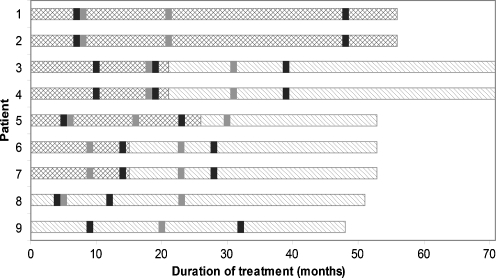
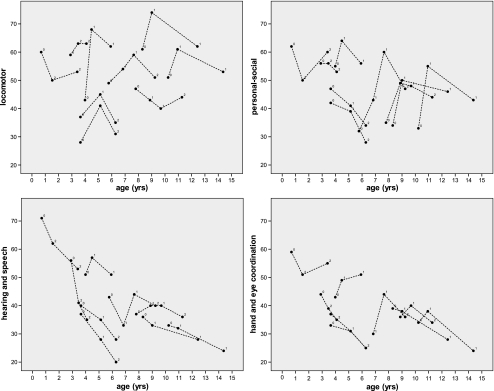
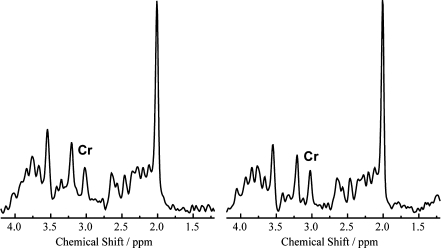
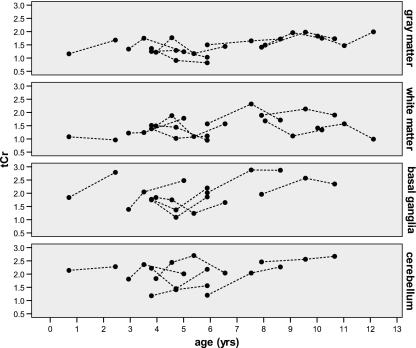
The creatine transporter (CRTR) defect is a recently discovered cause of X-linked intellectual disability for which treatment options have been explored. Creatine monotherapy has not proved effective, and the effect of treatment with L-arginine is still controversial. Nine boys between 8 months and 10 years old with molecularly confirmed CRTR defect were followed with repeated (1)H-MRS and neuropsychological assessments during 4-6 years of combination treatment with creatine monohydrate, L-arginine, and glycine. Treatment did not lead to a significant increase in cerebral creatine content as observed with H(1)-MRS. After an initial improvement in locomotor and personal-social IQ subscales, no lasting clinical improvement was recorded. Additionally, we noticed an age-related decline in IQ subscales in boys affected with the CRTR defect.
Overview
The claims and statistics of this paper haven’t been checked yet.
Free: it reads the open-access text and checks the first 5 claims that cite a source we can check. Create a free account to check every claim.
Integrity signals
Registry
Cites
Statistics
Figures
Verification
Claims the paper makes
The claims and statistics of this paper haven’t been checked yet.
Free: it reads the open-access text and checks the first 5 claims that cite a source we can check. Create a free account to check every claim.
Self-check
Percentages, sums and reported differences re-computed from the paper’s own numbers.
The self-check needs the paper’s full text.
Citations
Cites
Fitzmaurice, G. M., Laird, N. M., & Ware, J. H. (2011) · Wiley Series in Probability and Statistics · doi:10.1002/9781119513469 · Cited by 4,639 · cited 1×
“In longitudinal studies it is possible to separate crosssectional and longitudinal age effects (e.g., Fitzmaurice et al. 2004).”
BackgroundEstimation of metabolite concentrations from localized in vivo proton NMR spectra
Provencher, S. W. (1993) · Magnetic Resonance in Medicine · doi:10.1002/mrm.1910300604 · Cited by 3,655 · cited 1×
“Spectra were quantified using LCModel as described previously (Pouwels et al. 1999; Provencher 1993).”
MethodCreatine and Creatinine Metabolism
Wyss, M., & Kaddurah-Daouk, R. (2000) · Physiological Reviews · doi:10.1152/physrev.2000.80.3.1107 · Cited by 2,950 · cited 8×
“Creatine is then transported through the blood to creatine-requiring organs, mainly the brain and muscles, where it is taken up via the creatine transporter (CRTR) (Wyss and Kaddurah-Daouk 2000).”
BackgroundInfluentialX-Linked Creatine-Transporter Gene (SLC6A8) Defect: A New Creatine-Deficiency Syndrome
Salomons, G. S., van Dooren, S. J. M., Verhoeven, N. M., Cecil, K. M., Ball, W. S., Degrauw, T. J., & Jakobs, C. (2001) · The American Journal of Human Genetics · doi:10.1086/320595 · Cited by 396 · cited 1×
“The first male patient with CRTR defect was described in 2001 (Cecil et al. 2001; Salomons et al. 2001).”
BackgroundSelf-citationInborn Metabolic Diseases: Diagnosis and Treatment
(2012) · doi:10.1007/978-3-642-15720-2 · Cited by 377
Pouwels, P. J. W., Brockmann, K., Kruse, B., Wilken, B., Wick, M., Hanefeld, F., & Frahm, J. (1999) · Pediatric Research · doi:10.1203/00006450-199910000-00019 · Cited by 309 · cited 4×
“Single-voxel STEAM spectroscopy [repetition time (TR)/echo time (TE)/mixing time (TM)= 6,000/20/10 ms; 64 acquisitions] was obtained from volumes-of-interest (VOIs) in parietal gray matter (10 ml), parietal white matter (5 ml), basal ganglia (5 ml), and cerebellar vermis (8 ml) (Pouwels et al. 1999).”
InfluentialSelf-citationMolenberghs, G. (2005) · Journal of the American Statistical Association · doi:10.1198/jasa.2005.s24 · Cited by 262
Endogenous synthesis and transport of creatine in the rat brain: an in situ hybridization study
Braissant, O., Henry, H., Loup, M., Eilers, B., & Bachmann, C. (2001) · Molecular Brain Research · doi:10.1016/s0169-328x(00)00269-2 · Cited by 232 · cited 6×
“This is, however, in contrast with the hypothesis that the CNS mainly derives its creatine from endogenous synthesis (Braissant et al. 2001) because the permeability of the blood-brain barrier for creatine appears limited (Wyss and Schulze 2002), and astrocytes, contacting the capillary endothelial cells forming the b…”
InfluentialCecil, K. M., Salomons, G. S., Ball, W. S., Wong, B., Chuck, G., Verhoeven, N. M., Jakobs, C., & DeGrauw, T. J. (2001) · Annals of Neurology · doi:10.1002/ana.79 · Cited by 181 · cited 1×
“The first male patient with CRTR defect was described in 2001 (Cecil et al. 2001; Salomons et al. 2001).”
Self-citationWyss, M., & Schulze, A. (2002) · Neuroscience · doi:10.1016/s0306-4522(02)00088-x · Cited by 175 · cited 2×
“2001) because the permeability of the blood-brain barrier for creatine appears limited (Wyss and Schulze 2002), and astrocytes, contacting the capillary endothelial cells forming the blood-brain barrier, do not express CRTR (Braissant et al.”
Almeida, L. S., Verhoeven‐Duif, N. M., Roos, B., Valongo, C., Cardoso, M. L., Vilarinho, L., Salomons, G. S., & Jakobs, C. (2004) · Molecular Genetics and Metabolism · doi:10.1016/j.ymgme.2004.05.001 · Cited by 137 · cited 2×
“GAA and creatine were measured in plasma and urine using stable isotope dilution gas chromatography-mass spectrometry according to Almeida et al. (2004). The creatine uptake assay in cultured skin fibroblasts after incubation at 25 μM creatine and genomic sequence analysis of the SLC6A8 gene was performed as previousl…”
Self-citationExocytotic release of creatine in rat brain
Almeida, L. S., Salomons, G. S., Hogenboom, F., Jakobs, C., & Schoffelmeer, A. N. M. (2006) · Synapse · doi:10.1002/syn.20280 · Cited by 130 · cited 2×
“It is possible that creatine is released from central neurons and acts as a neuromodulator (Almeida et al. 2006).”
BackgroundSelf-citationCreatine synthesis: production of guanidinoacetate by the rat and human kidney in vivo
Edison, E. E., Brosnan, M. E., Meyer, C., & Brosnan, J. T. (2007) · American Journal of Physiology-Renal Physiology · doi:10.1152/ajprenal.00356.2007 · Cited by 120 · cited 2×
“Provision of arginine increased guanidinoacetic acid (GAA) and creatine synthesis in astroglial cells (Dringen et al. 1998), the rat kidney (Edison et al. 2007) and, in combination with glycine, in human CRTR-deficient lymphoblasts (Leuzzi et al. 2008).”
Hahn, K. A., Salomons, G. S., Tackels, D., Wood, T. C., Taylor, H. A., Schroer, R. J., Lubs, H. A., Jakobs, C., Olson, R. L., Holden, K. R., et al. (2002) · The American Journal of Human Genetics · doi:10.1086/340092 · Cited by 119 · cited 2×
“Our follow-up has been too short to decide whether the treatment might prevent complications later in life, such as myopathy and intestinal dysfunction, which have been described in adult patients (Kleefstra et al. 2005; Hahn et al. 2002).”
Self-citationBraissant, O., & Henry, H. (2008) · Journal of Inherited Metabolic Disease · doi:10.1007/s10545-008-0826-9 · Cited by 116 · cited 4×
“expected in cases of CRTR deficiency (Braissant and Henry 2008), which was indeed suggested in one patient (Sijens et al.”
InfluentialCongenital Creatine Transporter Deficiency
deGrauw, T. J., Salomons, G. S., Cecil, K. M., Chuck, G., Newmeyer, A., Schapiro, M. B., & Jakobs, C. (2002) · Neuropediatrics · doi:10.1055/s-2002-36743 · Cited by 106 · cited 3×
“In CRTR defect, high plasma creatine levels might result in some cellular creatine uptake via alternative mechanisms or residual activity of CRTR. CRTR-deficient fibroblasts take up creatine when incubated in high creatine concentrations (DeGrauw et al. 2002).”
Self-citationExpression and Function of Agat, Gamt and CT1 in the Mammalian Brain
Braissant, O., Bachmann, C., & Henry, H. (2007) · Springer eBooks · doi:10.1007/978-1-4020-6486-9_4 · Cited by 94 · cited 1×
“Braissant et al. found that AGAT and GAMT, although expressed in all CNS cell types, are rarely co-expressed within the same cell and hypothesized that GAA must be transported by CRTR between brain cells for creatine synthesis to occur (Braissant and Henry 2008; Braissant et al. 2007, 2010).”
Dissociation of AGAT, GAMT and SLC6A8 in CNS: Relevance to creatine deficiency syndromes
Braissant, O., Béard, E., Torrent, C., & Henry, H. (2010) · Neurobiology of Disease · doi:10.1016/j.nbd.2009.10.022 · Cited by 94 · cited 1×
“Braissant et al. found that AGAT and GAMT, although expressed in all CNS cell types, are rarely co-expressed within the same cell and hypothesized that GAA must be transported by CRTR between brain cells for creatine synthesis to occur (Braissant and Henry 2008; Braissant et al. 2007, 2010).”
X‐linked creatine deficiency syndrome: A novel mutation in creatine transporter gene SLC6A8
Bizzi, A., Bugiani, M., Salomons, G. S., Hunneman, D. H., Moroni, I., Estienne, M., Danesi, U., Jakobs, C., & Uziel, G. (2002) · Annals of Neurology · doi:10.1002/ana.10246 · Cited by 88 · cited 1×
“However creatine monotherapy has not proved to be successful in patients with CRTR defect (Anselm et al. 2006, 2008; Bizzi et al. 2002; DeGrauw et al. 2002; Dezortova et al. 2008; Poo-Arguelles et al. 2006).”
BackgroundSelf-citationTreatment of intractable epilepsy in a female with SLC6A8 deficiency
Mercimek‐Andrews, S., Connolly, M. B., Poskitt, K. J., Horvath, G. A., Lowry, N. J., Salomons, G. S., Casey, B. M., Sinclair, G. B., Davis, C., Jakobs, C., et al. (2010) · Molecular Genetics and Metabolism · doi:10.1016/j.ymgme.2010.08.016 · Cited by 80 · cited 1×
“Treatment with creatine combined with arginine and glycine also resulted in resolution of severe seizures in a 9-year-old girl with CRTR defect (Mercimek-Mahmutoglu et al. 2010).”
BackgroundSelf-citationMetabolism of Glycine in Primary Astroglial Cells: Synthesis of Creatine, Serine, and Glutathione
Dringen, R., Verleysdonk, S., Hamprecht, B., Willker, W., Leibfritz, D., & Brand, A. (1998) · Journal of Neurochemistry · doi:10.1046/j.1471-4159.1998.70020835.x · Cited by 75 · cited 4×
“Provision of arginine increased guanidinoacetic acid (GAA) and creatine synthesis in astroglial cells (Dringen et al. 1998), the rat kidney (Edison et al. 2007) and, in combination with glycine, in human CRTR-deficient lymphoblasts (Leuzzi et al. 2008).”
InfluentialX‐Linked creatine transporter deficiency in two patients with severe mental retardation and autism
Póo‐Argüelles, P., Arias, A., Vilaseca, M. A., Ribes, A., Artuch, R., Sans‐Fito, A., Moreno, A., Jakobs, C., & Salomons, G. (2006) · Journal of Inherited Metabolic Disease · doi:10.1007/s10545-006-0212-4 · Cited by 74 · cited 2×
“However creatine monotherapy has not proved to be successful in patients with CRTR defect (Anselm et al. 2006, 2008; Bizzi et al. 2002; DeGrauw et al. 2002; Dezortova et al. 2008; Poo-Arguelles et al. 2006).”
Self-citationImmunohistochemical localisation of the creatine transporter in the rat brain
Mak, C., Waldvogel, H. J., Dodd, J. R., Gilbert, R. T., Lowe, M. T. J., Birch, N. P., Faull, R. L. M., & Christie, D. L. (2009) · Neuroscience · doi:10.1016/j.neuroscience.2009.06.065 · Cited by 70 · cited 2×
“2010) and/or for release of creatine from neurons (Mak et al. 2009).”
Anselm, I. M., Alkuraya, F. S., Salomons, G. S., Jakobs, C., Fulton, A. B., Mazumdar, M., Rivkin, M., Frye, R., Poussaint, T. Y., & Marsden, D. (2006) · Journal of Inherited Metabolic Disease · doi:10.1007/s10545-006-0123-4 · Cited by 70 · cited 2×
“However creatine monotherapy has not proved to be successful in patients with CRTR defect (Anselm et al. 2006, 2008; Bizzi et al. 2002; DeGrauw et al. 2002; Dezortova et al. 2008; Poo-Arguelles et al. 2006).”
Self-citationRosenberg, E. H., Martínez Muñoz, C., Betsalel, O. T., van Dooren, S. J. M., Fernandez, M., Jakobs, C., deGrauw, T. J., Kleefstra, T., Schwartz, C. E., & Salomons, G. S. (2007) · Human Mutation · doi:10.1002/humu.20532 · Cited by 59 · cited 1×
“The creatine uptake assay in cultured skin fibroblasts after incubation at 25 μM creatine and genomic sequence analysis of the SLC6A8 gene was performed as previously described (Rosenberg et al. 2007).”
MethodSelf-citationTachikawa, M., Fujinawa, J., Takahashi, M., Kasai, Y., Fukaya, M., Sakai, K., Yamazaki, M., Tomi, M., Watanabe, M., Sakimura, K., et al. (2008) · Journal of Neurochemistry · doi:10.1111/j.1471-4159.2008.05652.x · Cited by 59 · cited 1×
“Arginine and glycine supplementation would then not lead to the aimed for creatine increase but to further GAA accumulation, an adverse effect because GAA is considered to be epileptogenic (Tachikawa et al. 2008).”
BackgroundMancini, G. M. S., Catsman‐Berrevoets, C. E., de Coo, I. F. M., Aarsen, F. K., Kamphoven, J. H. J., Huijmans, J. G., Duran, M., van der Knaap, M. S., Jakobs, C., & Salomons, G. S. (2005) · American Journal of Medical Genetics Part A · doi:10.1002/ajmg.a.30473 · Cited by 56 · cited 1×
“Two sibpairs patients have been published before (Mancini et al. 2005).”
Self-citationLunardi, G. L., Parodi, A., Perasso, L., Pohvozcheva, A. V., Scarrone, S., Adriano, E., Florio, T., Gandolfo, C., Cupello, A., Burov, S. V., et al. (2006) · Neuroscience · doi:10.1016/j.neuroscience.2006.06.058 · Cited by 53 · cited 2×
“…cross the bloodbrain barrier independent of the CRTR. Uptake of lipophilic creatine analogs was found in CRTR-blocked mouse hippocampal slices (Lunardi et al. 2006) and in human CRTR-deficient and control fibroblasts, however no effect of treatment with creatine ethyl ester (CEE) was found in…”
Fisch, G. S., Carpenter, N., Howard‐Peebles, P. N., Holden, J. J. A., Tarleton, J., Simensen, R., & Nance, W. (2007) · American Journal of Medical Genetics Part A · doi:10.1002/ajmg.a.31915 · Cited by 50 · cited 1×
“An age-related decline in IQ scores is also known to occur in Down’s syndrome and fragile X syndrome (Fisch et al. 2007) and might be common to more mental retardation disorders.”
BackgroundChilosi, A., Leuzzi, V., Battini, R., Tosetti, M., Ferretti, G., Comparini, A., Casarano, M., Moretti, E., Alessandrì, M. G., Bianchi, M. C., et al. (2008) · Neurocase · doi:10.1080/13554790802060821 · Cited by 49 · cited 2×
“6-year-old male patient with CRTR defect (Chilosi et al. 2008).”
InfluentialStöckler-Ipsiroglou, S., Mercimek‐Andrews, S., & Salomons, G. S. (2016) · Springer eBooks · doi:10.1007/978-3-662-49771-5_15 · Cited by 44
Self-citationNa+/Cl−/creatine transporter activity and expression in rat brain synaptosomes
Peral, M. J., Vázquez-Carretero, M. D., & Ilundain, A. A. (2010) · Neuroscience · doi:10.1016/j.neuroscience.2009.10.001 · Cited by 40 · cited 1×
“Therefore CRTR might also be essential for creatine reuptake and termination of synapsis (Peral et al. 2010) and/or for release of creatine from neurons (Mak et al. 2009).”
BackgroundKleefstra, T., Rosenberg, E., Salomons, G., Stroink, H., Van Bokhoven, H., Hamel, B., & De Vries, B. (2005) · Clinical Genetics · doi:10.1111/j.1399-0004.2005.00489.x · Cited by 38 · cited 1×
“Our follow-up has been too short to decide whether the treatment might prevent complications later in life, such as myopathy and intestinal dysfunction, which have been described in adult patients (Kleefstra et al. 2005; Hahn et al. 2002).”
BackgroundSelf-citation1H MR spectroscopy of the brain in Cr transporter defect
Sijens, P. E., Verbruggen, K. T., Oudkerk, M., Spronsen, V. F., & Soorani‐Lunsing, R. J. (2005) · Molecular Genetics and Metabolism · doi:10.1016/j.ymgme.2005.08.004 · Cited by 34 · cited 2×
“expected in cases of CRTR deficiency (Braissant and Henry 2008), which was indeed suggested in one patient (Sijens et al. 2005).”
1H MR spectroscopy as a diagnostic tool for cerebral creatine deficiency
Dezortová, M., Jírů, F., Petrášek, J., Malinová, V., Zeman, J., Jirsa, M., & Hájek, M. (2008) · Magnetic Resonance Materials in Physics Biology and Medicine · doi:10.1007/s10334-008-0137-z · Cited by 34 · cited 1×
“However creatine monotherapy has not proved to be successful in patients with CRTR defect (Anselm et al. 2006, 2008; Bizzi et al. 2002; DeGrauw et al. 2002; Dezortova et al. 2008; Poo-Arguelles et al. 2006).”
Response to creatine analogs in fibroblasts and patients with creatine transporter deficiency
Fons, C., Arias, Á., Sempere, A., Póo, P., Pineda, M., Mas, A., Sala, A. L., García‐Villoria, J., Vilaseca, M. A., Ozaez, L., et al. (2009) · Molecular Genetics and Metabolism · doi:10.1016/j.ymgme.2009.10.186 · Cited by 30 · cited 3×
“However Fons et al. (2010) reported no effect of a 9 month L-arginine supplementation in four male patients.”
InfluentialArginine and glycine stimulate creatine synthesis in creatine transporter 1-deficient lymphoblasts
Leuzzi, V., Alessandri, M., Casarano, M., Battini, R., & Cioni, G. (2008) · Analytical Biochemistry · doi:10.1016/j.ab.2008.01.018 · Cited by 28 · cited 2×
“Provision of arginine increased guanidinoacetic acid (GAA) and creatine synthesis in astroglial cells (Dringen et al. 1998), the rat kidney (Edison et al. 2007) and, in combination with glycine, in human CRTR-deficient lymphoblasts (Leuzzi et al. 2008).”
CARDIAC MANIFESTATIONS IN A CHILD WITH A NOVEL MUTATION IN CREATINE TRANSPORTER GENE SLC6A8
Anselm, I. A., Coulter, D. L., & Darras, B. T. (2008) · Neurology · doi:10.1212/01.wnl.0000310987.04106.45 · Cited by 26 · cited 2×
“However creatine monotherapy has not proved to be successful in patients with CRTR defect ( Anselm et al. 2006, 2008; Bizzi et al. 2002; DeGrauw et al. 2002; Dezortova et al. 2008; Poo-Arguelles et al. 2006).”
Stöckler‐Ipsiroglu, S., & Salomons, G. S. (2006) · Springer eBooks · doi:10.1007/978-3-540-28785-8_16 · Cited by 22
Self-citationS-Adenosyl- l -methionine restores photoreceptor function following acute retinal ischemia
Moxon‐Lester, L., Takamoto, K., Colditz, P. B., & Barnett, N. L. (2009) · Visual Neuroscience · doi:10.1017/s0952523809990241 · Cited by 16 · cited 3×
“SAMe crosses the blood-brain barrier and increases cerebral phosphocreatine ( Moxon-Lester et al. 2009 ).”
BackgroundInfluentialStöckler, S., Salomons, G. S., Saudubray, J., den Berghe, G. V., & Walter, J. H. (2012) · Pure Amsterdam UMC · Cited by 13
Self-citationSchütz, P. W., & Stöckler, S. (2007) · Elsevier eBooks · doi:10.1016/b978-012088592-3/50005-0 · Cited by 6
Cited by
Clinical Proton MR Spectroscopy in Central Nervous System Disorders
Öz, G., Alger, J. R., Barker, P. B., Bartha, R., Bizzi, A., Boesch, C., Bolan, P. J., Brindle, K. M., Cudalbu, C., Dinçer, A., et al. (2014) · Radiology · doi:10.1148/radiol.13130531 · Cited by 660
Self-citationRae, C. D. (2014) · Neurochemical Research · doi:10.1007/s11064-013-1199-5 · Cited by 496
Creatine biosynthesis and transport in health and disease
Joncquel-Chevalier Curt, M., Voicu, P.-M., Fontaine, M., Dessein, A.-F., Porchet, N., Mention-Mulliez, K., Dobbelaere, D., Soto-Ares, G., Cheillan, D., & Vamecq, J. (2015) · Biochimie · doi:10.1016/j.biochi.2015.10.022 · Cited by 238
Phenotype and genotype in 101 males with X-linked creatine transporter deficiency
van de Kamp, J. M., Betsalel, O. T., Mercimek-Mahmutoglu, S., Abulhoul, L., Grünewald, S., Anselm, I., Azzouz, H., Bratkovic, D., de Brouwer, A., Hamel, B., et al. (2013) · Journal of Medical Genetics · doi:10.1136/jmedgenet-2013-101658 · Cited by 164
Self-citationX‐linked creatine transporter deficiency: clinical aspects and pathophysiology
van de Kamp, J. M., Mancini, G. M., & Salomons, G. S. (2014) · Journal of Inherited Metabolic Disease · doi:10.1007/s10545-014-9713-8 · Cited by 118
“…creatine that is characteristic of all CDS.Creatine deficiency is apparent in all brain regions but in repeated MRS during the follow-up of nine affected boys we noted significantly higher creatine levels in basal ganglia and cerebellum than in gray matter and white matter (van de Kamp et al 2012).”
Self-citation
Metadata
- Authors
- van de Kamp, J. M., Pouwels, P. J. W., Aarsen, F. K., ten Hoopen, L. W., Knol, D. L., de Klerk, J. B., de Coo, I. F., Huijmans, J. G. M., Jakobs, C., van der Knaap, M. S., Salomons, G. S., & Mancini, G. M. S.
- Affiliations
- Department of Clinical Genetics VU University Medical Center PO Box 7057 Amsterdam 1007 MB The Netherlands
- Amsterdam UMC Location Vrije Universiteit Amsterdam (NL)
- Erasmus MC (NL)
- Department of Child and Adolescent Psychiatry Erasmus University Medical Center Rotterdam The Netherlands
- Department of Pediatrics, Metabolic Diseases Section Erasmus University Medical Center Rotterdam The Netherlands
- Department of Child Neurology Erasmus University Medical Center Rotterdam The Netherlands
- Department of Child Neurology VU University Medical Center Amsterdam The Netherlands
- Venue
- Journal of Inherited Metabolic Disease
- Publisher
- Wiley
- Published
- 2011-05-10
- Volume
- 35
- Issue
- 1
- Pages
- 141-149
- ISSN
- 0141-8955 (ISSN-L)
- 1573-2665
- PMC
- PMC3249187
- OpenAlex
- W2100868033
- Cited by
- 59
- References
- 44
- Citations by year
- 2026: 4 · 2024: 2 · 2023: 6 · 2022: 2 · 2021: 6 · 2020: 4 · 2019: 3 · 2018: 3 · 2017: 1 · 2016: 3 · 2015: 4 · 2014: 8 · 2013: 6 · 2012: 6
- FWCI
- 4.01
- Type
- journal article
- Language
- en
- Open access
- hybrid
- doi.org
- Licence
- Locations
- Journal of Inherited Metabolic Disease (publishedVersion, cc-by-nc)
- Europe PMC (PubMed Central) (publishedVersion, cc-by-nc)
- PubMed Central (publishedVersion, cc-by-nc)
- PubMed (publishedVersion)
- Pure Amsterdam UMC (publishedVersion)
- Amsterdam UMC (VU Amsterdam) - Institutional Repository (publishedVersion)
- EUR Research Repository (Erasmus University Rotterdam) (publishedVersion, other-oa)
- VU Research Portal (publishedVersion, other-oa)
- Data Archiving and Networked Services (DANS) (submittedVersion)
- EUR Research Repository (Erasmus University Rotterdam) (submittedVersion, other-oa)
- RePub (Erasmus University Rotterdam) (submittedVersion, other-oa)
- Digital Academic REpository of VU University Amsterdam (Vrije Universiteit Amsterdam) (submittedVersion)
- RePub (Erasmus University Rotterdam) (submittedVersion)
- Data Archiving and Networked Services (DANS) (submittedVersion, other-oa)
- Funders
- ZonMw
- Nederlandse Organisatie voor Wetenschappelijk Onderzoek (917.56.349)
- Topics
- Life Sciences › Biochemistry, Genetics and Molecular Biology › Clinical Biochemistry › Metabolism and Genetic Disorders
- Life Sciences › Biochemistry, Genetics and Molecular Biology › Biochemistry › Amino Acid Enzymes and Metabolism
- Life Sciences › Biochemistry, Genetics and Molecular Biology › Genetics › Genetics and Neurodevelopmental Disorders
- Keywords
- X-linked intellectual disability, creatine monohydrate, L-arginine, glycine, combination therapy, 1H magnetic resonance spectroscopy, neuropsychological outcomes, IQ decline, age-related cognitive decline, long-term follow-up
- MeSH terms
- Arginine, Brain, Child, Child, Preschool, Creatine, Glycine, Humans, Infant, Intelligence Tests, Male, Neurons, Magnetic Resonance Spectroscopy, Amino Acid Transport Disorders, Inborn, Membrane Transport Proteins, Chromosomes, Human, X, Genes, X-Linked
About these checks
Registry, retraction, Cites and statistics results are computed, not judged, with one exception: a printed reference that no index lists is read once by a model before it counts as a citation error. Claims are extracted by a model and kept only when their quote appears verbatim in the text; each cited source is then checked, with a model’s help, for whether it says what the claim relies on. Those verdicts can be wrong — read the claim’s quote and the cited source before relying on one.
Statistics and arithmetic are recomputed, not judged.
Confidence bands are shown only for fields calibrated on our annotated test set. None is calibrated yet, so no band is shown.
What counts as a claim ›How we measure confidence ›How we check this ›
Are you an author, or do you see a problem with this page? Request a review
Data sources
Bibliographic data: Semantic Scholar, OpenAlex, Crossref.
Contains information from the Semantic Scholar Academic Graph Datasets, made available under the ODC Attribution License (ODC-BY 1.0).
Semantic Scholar’s data is described in: Kinney, R., et al. (2023). The Semantic Scholar Open Data Platform. arXiv:2301.10140.
