

Long-term follow-up and treatment in nine boys with X-linked creatine transporter defect
Open accessThe DOI matches its Crossref record; 42 of the 44 references it cites were found in a registry or an index.
Abstract
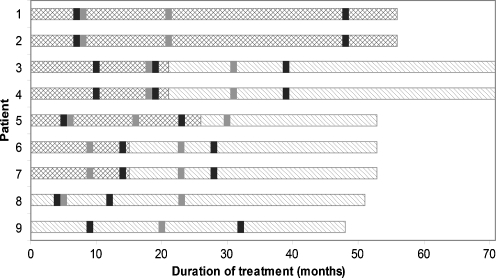
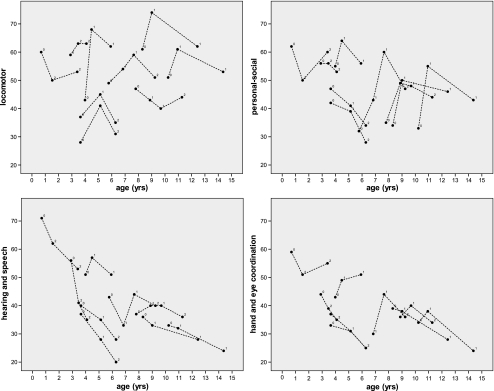
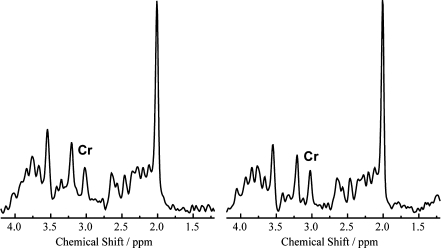
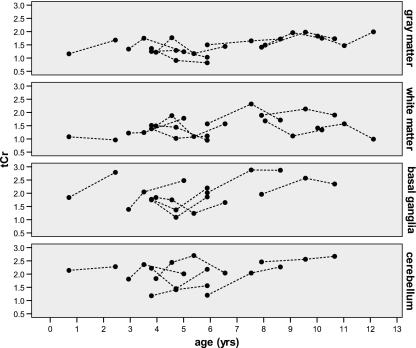
The creatine transporter (CRTR) defect is a recently discovered cause of X-linked intellectual disability for which treatment options have been explored. Creatine monotherapy has not proved effective, and the effect of treatment with L-arginine is still controversial. Nine boys between 8 months and 10 years old with molecularly confirmed CRTR defect were followed with repeated (1)H-MRS and neuropsychological assessments during 4-6 years of combination treatment with creatine monohydrate, L-arginine, and glycine. Treatment did not lead to a significant increase in cerebral creatine content as observed with H(1)-MRS. After an initial improvement in locomotor and personal-social IQ subscales, no lasting clinical improvement was recorded. Additionally, we noticed an age-related decline in IQ subscales in boys affected with the CRTR defect.
Overview
The claims and statistics of this paper haven’t been checked yet.
Free: it reads the open-access text and checks the first 5 claims that cite a source we can check. Create a free account to check every claim.
Integrity signals
Registry
Cites
Statistics
Figures
Verification
Claims the paper makes
The claims and statistics of this paper haven’t been checked yet.
Free: it reads the open-access text and checks the first 5 claims that cite a source we can check. Create a free account to check every claim.
Self-check
Percentages, sums and reported differences re-computed from the paper’s own numbers.
The self-check needs the paper’s full text.
Citations
Cites
Fitzmaurice, G. M., Laird, N. M., & Ware, J. H. (2011) · Wiley Series in Probability and Statistics · doi:10.1002/9781119513469 · Cited by 4,639 · cited 1×
“In longitudinal studies it is possible to separate crosssectional and longitudinal age effects (e.g., Fitzmaurice et al. 2004).”
BackgroundEstimation of metabolite concentrations from localized in vivo proton NMR spectra
Provencher, S. W. (1993) · Magnetic Resonance in Medicine · doi:10.1002/mrm.1910300604 · Cited by 3,655 · cited 1×
“Spectra were quantified using LCModel as described previously (Pouwels et al. 1999; Provencher 1993).”
MethodCreatine and Creatinine Metabolism
Wyss, M., & Kaddurah-Daouk, R. (2000) · Physiological Reviews · doi:10.1152/physrev.2000.80.3.1107 · Cited by 2,950 · cited 8×
“Creatine is then transported through the blood to creatine-requiring organs, mainly the brain and muscles, where it is taken up via the creatine transporter (CRTR) (Wyss and Kaddurah-Daouk 2000).”
BackgroundInfluentialX-Linked Creatine-Transporter Gene (SLC6A8) Defect: A New Creatine-Deficiency Syndrome
Salomons, G. S., van Dooren, S. J. M., Verhoeven, N. M., Cecil, K. M., Ball, W. S., Degrauw, T. J., & Jakobs, C. (2001) · The American Journal of Human Genetics · doi:10.1086/320595 · Cited by 396 · cited 1×
“The first male patient with CRTR defect was described in 2001 (Cecil et al. 2001; Salomons et al. 2001).”
BackgroundSelf-citationInborn Metabolic Diseases: Diagnosis and Treatment
(2012) · doi:10.1007/978-3-642-15720-2 · Cited by 377
Pouwels, P. J. W., Brockmann, K., Kruse, B., Wilken, B., Wick, M., Hanefeld, F., & Frahm, J. (1999) · Pediatric Research · doi:10.1203/00006450-199910000-00019 · Cited by 309 · cited 4×
“Single-voxel STEAM spectroscopy [repetition time (TR)/echo time (TE)/mixing time (TM)= 6,000/20/10 ms; 64 acquisitions] was obtained from volumes-of-interest (VOIs) in parietal gray matter (10 ml), parietal white matter (5 ml), basal ganglia (5 ml), and cerebellar vermis (8 ml) (Pouwels et al. 1999).”
InfluentialSelf-citationMolenberghs, G. (2005) · Journal of the American Statistical Association · doi:10.1198/jasa.2005.s24 · Cited by 262
Endogenous synthesis and transport of creatine in the rat brain: an in situ hybridization study
Braissant, O., Henry, H., Loup, M., Eilers, B., & Bachmann, C. (2001) · Molecular Brain Research · doi:10.1016/s0169-328x(00)00269-2 · Cited by 232 · cited 6×
“This is, however, in contrast with the hypothesis that the CNS mainly derives its creatine from endogenous synthesis (Braissant et al. 2001) because the permeability of the blood-brain barrier for creatine appears limited (Wyss and Schulze 2002), and astrocytes, contacting the capillary endothelial cells forming the b…”
InfluentialCecil, K. M., Salomons, G. S., Ball, W. S., Wong, B., Chuck, G., Verhoeven, N. M., Jakobs, C., & DeGrauw, T. J. (2001) · Annals of Neurology · doi:10.1002/ana.79 · Cited by 181 · cited 1×
“The first male patient with CRTR defect was described in 2001 (Cecil et al. 2001; Salomons et al. 2001).”
Self-citationWyss, M., & Schulze, A. (2002) · Neuroscience · doi:10.1016/s0306-4522(02)00088-x · Cited by 175 · cited 2×
“2001) because the permeability of the blood-brain barrier for creatine appears limited (Wyss and Schulze 2002), and astrocytes, contacting the capillary endothelial cells forming the blood-brain barrier, do not express CRTR (Braissant et al.”
Cited by
Clinical Proton MR Spectroscopy in Central Nervous System Disorders
Öz, G., Alger, J. R., Barker, P. B., Bartha, R., Bizzi, A., Boesch, C., Bolan, P. J., Brindle, K. M., Cudalbu, C., Dinçer, A., et al. (2014) · Radiology · doi:10.1148/radiol.13130531 · Cited by 660
Self-citationRae, C. D. (2014) · Neurochemical Research · doi:10.1007/s11064-013-1199-5 · Cited by 496
Creatine biosynthesis and transport in health and disease
Joncquel-Chevalier Curt, M., Voicu, P.-M., Fontaine, M., Dessein, A.-F., Porchet, N., Mention-Mulliez, K., Dobbelaere, D., Soto-Ares, G., Cheillan, D., & Vamecq, J. (2015) · Biochimie · doi:10.1016/j.biochi.2015.10.022 · Cited by 238
Phenotype and genotype in 101 males with X-linked creatine transporter deficiency
van de Kamp, J. M., Betsalel, O. T., Mercimek-Mahmutoglu, S., Abulhoul, L., Grünewald, S., Anselm, I., Azzouz, H., Bratkovic, D., de Brouwer, A., Hamel, B., et al. (2013) · Journal of Medical Genetics · doi:10.1136/jmedgenet-2013-101658 · Cited by 164
Self-citationX‐linked creatine transporter deficiency: clinical aspects and pathophysiology
van de Kamp, J. M., Mancini, G. M., & Salomons, G. S. (2014) · Journal of Inherited Metabolic Disease · doi:10.1007/s10545-014-9713-8 · Cited by 118
“…creatine that is characteristic of all CDS.Creatine deficiency is apparent in all brain regions but in repeated MRS during the follow-up of nine affected boys we noted significantly higher creatine levels in basal ganglia and cerebellum than in gray matter and white matter (van de Kamp et al 2012).”
Self-citationCreatine as a booster for human brain function. How might it work?
Rae, C. D., & Bröer, S. (2015) · Neurochemistry International · doi:10.1016/j.neuint.2015.08.010 · Cited by 123
“While symptoms are in common with those caused by lack of creatine synthesising enzymes, the deficiency is mostly intractable to remediation with oral creatine or with precursors such as guanidinoacetate or combined arginine/glycine therapy (van de Kamp et al., 2012).”
Creatine and guanidinoacetate transport at blood-brain and blood-cerebrospinal fluid barriers
Braissant, O. (2012) · Journal of Inherited Metabolic Disease · doi:10.1007/s10545-011-9433-2 · Cited by 112
Dunbar, M., Jaggumantri, S., Sargent, M. A., Stöckler‐Ipsiroglu, S., & van Karnebeek, C. (2014) · Molecular Genetics and Metabolism · doi:10.1016/j.ymgme.2014.05.011 · Cited by 87
“…The 7 studies included in this review collectively described 25 patients who met the inclusion criteria (Bizzi et al. 2002; DeGrauw et al. 2002 (patient 1); Fons et al. 2008; Mercimek-Mahmutoglu et al. 2010; Valayannopulos et al. 2011; Chilosi et al. 2012 (patients 1,2,3); van de Kamp et al. 2012).”
“Heads up” for creatine supplementation and its potential applications for brain health and function
Candow, D. G., Forbes, S. C., Ostojic, S. M., Prokopidis, K., Stock, M. S., Harmon, K. K., & Faulkner, P. (2023) · Sports Medicine · doi:10.1007/s40279-023-01870-9 · Cited by 78
“Because neuronal creatine is released from neurons following an action potential and is then taken back into the neuron via the creatine transporter, many researchers consider creatine to be a neurotransmitter [156].”
BackgroundInborn errors of creatine metabolism and epilepsy
Leuzzi, V., Mastrangelo, M., Battini, R., & Cioni, G. (2012) · Epilepsia · doi:10.1111/epi.12020 · Cited by 77
Current and potential new treatment strategies for creatine deficiency syndromes
Fernandes-Pires, G., & Braissant, O. (2022) · Molecular Genetics and Metabolism · doi:10.1016/j.ymgme.2021.12.005 · Cited by 72
Mercimek‐Andrews, S., Cordeiro, D., Cruz, V., Hyland, Κ., Struys, E. A., Kyriakopoulou, L. G., & Mamak, E. G. (2014) · European Journal of Paediatric Neurology · doi:10.1016/j.ejpn.2014.07.001 · Cited by 69
Baker, S. A., Gajera, C. R., Wawro, A. M., Corces, M. R., & Montine, T. J. (2021) · Brain Research · doi:10.1016/j.brainres.2021.147627 · Cited by 67
Creatine Supplementation in Children and Adolescents
Jagim, A. R., & Kerksick, C. M. (2021) · Nutrients · doi:10.3390/nu13020664 · Cited by 61
El‐Kasaby, A., Kasture, A. S., Koban, F., Hoťka, M., Asjad, H. M. M., Kubista, H., Freissmuth, M., & Sučić, S. (2019) · Neuropharmacology · doi:10.1016/j.neuropharm.2019.03.015 · Cited by 58
Creatine transporter deficiency leads to increased whole body and cellular metabolism
Perna, M. K., Kokenge, A. N., Miles, K. N., Udobi, K. C., Clark, J. F., Pyne‐Geithman, G. J., Khuchua, Z. A., & Skelton, M. R. (2016) · Amino Acids · doi:10.1007/s00726-016-2291-3 · Cited by 58
“Oral Cr supplementation has been shown to ameliorate motor deficits in CDS resulting from defective biosynthesis (Morris et al. 2007); however , Cr supplementation has been ineffective in the treatment of CTD (van de Kamp et al. 2012).”
Udobi, K. C., Kokenge, A. N., Hautman, E. R., Ullio, G., Coëne, J., Williams, M. T., Vorhees, C. V., Mabondzo, A. M., & Skelton, M. R. (2018) · Genes Brain & Behavior · doi:10.1111/gbb.12461 · Cited by 53
“…elevations in GAA levels are not observed in the urine and CSF of CTD patients (Van De Kamp et al., 2013, Van De Kamp et al., 2012a, Van De Kamp et al., 2012b), This does not exclude the possibility of increased GAA in the brain of CTD patients, but these findings do warrant further study…”
A novel mouse model of creatine transporter deficiency
Baroncelli, L., Alessandri, M., Tola, J., Putignano, E., Migliore, M., Amendola, E., Zonfrillo, F., Gross, C., Leuzzi, V., Cioni, G., et al. (2014) · F1000Research · doi:10.12688/f1000research.5369.1 · Cited by 53
“Beyond the genetic deletion, neurochemical abnormalities found in CrT−/y mice, reproducing the reduced levels of Cr that characterize the brain of CCDS1 patients (van de Kamp et al., 2012), are also helpful to confirm the successful disruption of CrT gene and the construct robustness of this model.”
BackgroundTreatment outcome of creatine transporter deficiency: international retrospective cohort study
Bruun, T. U. J., Sidky, S., Bandeira, A., Debray, F.-G., Ficicioglu, C. H., Goldstein, J., Joost, K., Koeberl, D. D., Diogo, L. M., Nassogne, M., et al. (2018) · Metabolic Brain Disease · doi:10.1007/s11011-018-0197-3 · Cited by 51
“Current clinical and neuropsychological assessment of patients, whose treatment outcomes were reported in 2012 (Valayannopoulos et al. 2012; van de Kamp et al. 2012), would likely shed light on the disease progression.”
Self-citationStöckler-Ipsiroglou, S., Mercimek‐Andrews, S., & Salomons, G. S. (2016) · Springer eBooks · doi:10.1007/978-3-662-49771-5_15 · Cited by 44
Self-citationDetection of variants in SLC6A8 and functional analysis of unclassified missense variants
Betsalel, O. T., Pop, A., Rosenberg, E. H., Fernandez-Ojeda, M. R., Jakobs, C., & Salomons, G. S. (2012) · Molecular Genetics and Metabolism · doi:10.1016/j.ymgme.2011.12.022 · Cited by 42
Self-citationDesRoches, C.-L., Patel, J., Wang, P., Minassian, B. A., Salomons, G. S., Marshall, C. R., & Mercimek‐Andrews, S. (2015) · Gene · doi:10.1016/j.gene.2015.04.011 · Cited by 41
Self-citationTrotier-Faurion, A., Dézard, S., Taran, F., Valayannopoulos, V., de Lonlay, P., & Mabondzo, A. (2013) · Journal of Medicinal Chemistry · doi:10.1021/jm400545n · Cited by 36
Abdulla, Z. I., Pennington, J. L., Gutierrez, A., & Skelton, M. R. (2019) · Behavioural Brain Research · doi:10.1016/j.bbr.2019.112254 · Cited by 33
New insights into creatine transporter deficiency: the importance of recycling creatine in the brain
van de Kamp, J. M., Jakobs, C., Gibson, K. M., & Salomons, G. S. (2012) · Journal of Inherited Metabolic Disease · doi:10.1007/s10545-012-9537-3 · Cited by 35
Self-citationMolinaro, A., Alessandri, M., Putignano, E., Leuzzi, V., Cioni, G., Baroncelli, L., & Pizzorusso, T. (2019) · Scientific Reports · doi:10.1038/s41598-018-37303-1 · Cited by 32
Snow, W. M., Cadonic, C., Cortes-Perez, C., Roy Chowdhury, S. K., Djordjevic, J., Thomson, E., Bernstein, M. J., Suh, M., Fernyhough, P., & Albensi, B. C. (2018) · Learning & Memory · doi:10.1101/lm.046284.117 · Cited by 31
Trotier-Faurion, A., Passirani, C., Béjaud, J., Dézard, S., Valayannopoulos, V., Taran, F., de Lonlay, P., Benoit, J.-P., & Mabondzo, A. (2015) · Nanomedicine · doi:10.2217/nnm.13.205 · Cited by 31
Creatine metabolism in urea cycle defects
Boenzi, S., Pastore, A., Martinelli, D., Goffredo, B. M., Boiani, A., Rizzo, C., & Dionisi‐Vici, C. (2012) · Journal of Inherited Metabolic Disease · doi:10.1007/s10545-012-9494-x · Cited by 32
“Attempts to treat patients with the Cr precursor arginine also failed to improve the neurological signs (Fons et al 2008; Valayannopoulos et al 2012; van de Kamp et al 2012).”
BackgroundFemale mice heterozygous for creatine transporter deficiency show moderate cognitive deficits
Hautman, E. R., Kokenge, A. N., Udobi, K. C., Williams, M. T., Vorhees, C. V., & Skelton, M. R. (2014) · Journal of Inherited Metabolic Disease · doi:10.1007/s10545-013-9619-x · Cited by 29
“Female carriers show a wide range of cognitive function with a majority of those examined show some cognitive deficits that range from mild learning deficits to significant intellectual disability (DeGrauw et al 2002; van de Kamp et al 2011a).”
Chilosi, A. M., Casarano, M., Comparini, A., Battaglia, F. M., Mancardi, M. M., Schiaffino, C., Tosetti, M., Leuzzi, V., Battini, R., & Cioni, G. (2012) · Orphanet Journal of Rare Diseases · doi:10.1186/1750-1172-7-43 · Cited by 25
“Few studies have described in detail the neuropsychological profile of patients affected by CRTR-D [8], in particular in terms of neuropsychological standardization tests [10,18,25,26,28,29]; the even fewer studies on adult patients, confirm the presence of mental retardation [11,30] or deterioration [12].”
BackgroundResultInfluentialLi, J., & Xu, S. (2023) · Brain Sciences · doi:10.3390/brainsci13101382 · Cited by 21
“In all patients with CTD, MR spectroscopy reveals severe reduction of creatine peaks in all brain regions [21].”
BackgroundDreha‐Kulaczewski, S. F., Kalscheuer, V. M., Tzschach, A., Hu, H., Helms, G., Brockmann, K., Weddige, A., Dechent, P., Schlüter, G., Krätzner, R., et al. (2013) · JIMD Reports · doi:10.1007/8904_2013_261 · Cited by 16
Nielsen, M. M., Petersen, E. T., Fenger, C., Ørngreen, M. C., Siebner, H. R., Boer, V. O., Považan, M., Lund, A. M., Grønborg, S. W., & Hammer, T. B. (2023) · Molecular Genetics and Metabolism · doi:10.1016/j.ymgme.2023.107694 · Cited by 16
Membrane transporters and the diseases corresponding to functional defects
Lai, Y. (2013) · Elsevier eBooks · doi:10.1533/9781908818287.1 · Cited by 19
Phenotypic Variability in a Portuguese Family With X-Linked Creatine Transport Deficiency
Garcia, P., Rodrigues, F., Valongo, C., Salomons, G. S., & Diogo, L. M. (2011) · Pediatric Neurology · doi:10.1016/j.pediatrneurol.2011.10.005 · Cited by 14
“No response to treatment has been observed in the majority of patients, and evidence indicates that creatine transporter defects may constitute a slowly progressive, neurodegenerative disorder, at least in males [7].”
BackgroundSelf-citationShi, K., Zhao, H., Xu, S., Han, H., & Li, W. (2021) · Molecular Genetics & Genomic Medicine · doi:10.1002/mgg3.1640 · Cited by 13
“However, the efficacy of therapy remains controversial (Jaggumantri et al., 2015; Stockler- Ipsiroglu et al., 2014; Valayannopoulos et al., 2012; Van de Kamp et al., 2012).”
BackgroundBiomarkers of Creatine Metabolism in Humans: From Plasma to Saliva and Beyond
Nedeljkovic, D., & Ostojić, S. M. (2024) · Clinical bioenergetics · doi:10.3390/clinbioenerg1010002 · Cited by 12
Creatine Deficiency Disorders: Phenotypes, Genotypes, Diagnosis, and Treatment Outcomes
Mulik, C., & Mercimek‐Andrews, S. (2023) · Turkish Archives of Pediatrics · doi:10.5152/turkarchpediatr.2023.23022 · Cited by 16
Stöckler, S., Braissant, O., & Schulze, A. (2014) · Springer eBooks · doi:10.1007/978-3-642-40337-8_32 · Cited by 15
STAR syndrome plus: The first description of a female patient with the lethal form
Bedeschi, M. F., Giangiobbe, S., Paganini, L., Tabano, S. M., Silipigni, R., Colombo, L., Crippa, B. L., Lalatta, F., Guerneri, S., & Miozzo, M. R. (2017) · American Journal of Medical Genetics Part A · doi:10.1002/ajmg.a.38484 · Cited by 9
“…creatine deficiency syndrome-1 (OMIM 300352), an X-linked disorder of creatine transport characterized by intellectual disability, severe speech delay, behavioral abnormalities, and seizures, with reported involvement in heterozygous females (Van de Kamp et al., 2012).”
BackgroundCreatine supplementation and muscles: From metabolism to medical practice
Vulturar, R., Jurjiu, B., Damian, M., Bojan, A. S., Pintilie, S. R., Jurcă, M. C., Chiş, A., & Grad, S. (2021) · Romanian Journal of Medical Practice · doi:10.37897/rjmp.2021.3.4 · Cited by 10
Creatine transporter deficiency, an underdiagnosed cause of male intellectual disability
Jangid, N., Surana, P., Salmonos, G., & Jain, V. (2020) · BMJ Case Reports · doi:10.1136/bcr-2020-237542 · Cited by 8
Fernandes‐Pires, G., Azevedo, M. D., Lanzillo, M., Roux‐Petronelli, C., Binz, P., Cudalbu, C., Sandi, C., Tenenbaum, L., & Braissant, O. (2024) · Molecular Therapy — Methods & Clinical Development · doi:10.1016/j.omtm.2024.101251 · Cited by 6
Movement Disorders and Inherited Metabolic Disorders: Recognition, Understanding, Improving Outcomes
(2020) · Cambridge University Press eBooks · doi:10.1017/9781108556767 · Cited by 10
Disorders of Creatine Metabolism
Stöckler‐Ipsiroglu, S., Braissant, O., & Schulze, A. (2022) · Springer eBooks · doi:10.1007/978-3-030-67727-5_15 · Cited by 7
Creatine Levels in Patients with Phenylketonuria and Mild Hyperphenylalaninemia: A Pilot Study
Verduci, E., Carbone, M. T., Fiori, L., Gualdi, C., Banderali, G., Carducci, C., Leuzzi, V., Biasucci, G., & Zuccotti, G. (2021) · Life · doi:10.3390/life11050425 · Cited by 5
Abdennadher, M., Inati, S. K., Rahhal, S. N., Khan, O. I., Bartolini, L., Thurm, A. E., Theodore, W. H., Miller, J. S., Porter, F. D., & Bianconi, S. E. (2023) · American Journal of Medical Genetics Part A · doi:10.1002/ajmg.a.63418 · Cited by 4
“Similar to previous reports, seizures in our cohort tended to be relatively infrequent and well-controlled, responding to one antiseizure medication in most cases (Van De Kamp et al., 2012; van de Kamp et al., 2013).”
BackgroundResultTachikawa, M. (2026) · Biological and Pharmaceutical Bulletin · doi:10.1248/bpb.b25-00796 · Cited by 3
Uçar, H. K., Bulut, F. D., Gürbüz, B. B., Dılek, O., & Güney, İ. (2023) · Genetika · doi:10.2298/gensr2301415u · Cited by 2
Ito, S., Iwata, Y., Uemura, T., Sugimoto, M., Kumabe, H., Miyano, A., Nakamura, T., Tashiro, N., Ieiri, M., Umezaki, M., et al. (2026) · Journal of Neuroscience · doi:10.1523/jneurosci.2010-25.2026 · Cited by 1
Case Report: X-Linked Creatine Transporter Deficiency in Two Saudi Brothers with Autism
Almatrafi, M. A., Al-Sabban, Z., Balkhy, S., & Abumansour, I. S. (2022) · Journal of Autism and Developmental Disorders · doi:10.1007/s10803-022-05860-0 · Cited by 1
Toniolo, R. A. (2016) · Digital Library of Theses and Dissertations (Universidade de São Paulo) · doi:10.11606/t.5.2016.tde-07122016-150647 · Cited by 2
Data for neurochemical and behavioral assessment in a mouse model of creatine deficiency
Baroncelli, L., Alessandri, M., Tola, J., Putignano, E., Migliore, M., Amendola, E., Gross, C. T., Leuzzi, V., Cioni, G., & Pizzorusso, T. (2025) · doi:10.5256/f1000research.5369.d36153 · Cited by 1
A Treatable Cause of Intellectual Disability and Autism in a Young Child
Yoganathan, S., Sharma, S., Varman, M., Malhotra, M., Chandran, M., Arunachal, G., & Thomas, M. M. (2020) · The Indian Journal of Pediatrics · doi:10.1007/s12098-020-03225-y
“Triple therapy with creatine monohydrate, glycine and arginine results in variable improvement [5].”
BackgroundMolinaro, A. (2020) · Premio Tesi dottorato/Premio Tesi di dottorato · doi:10.36253/978-88-5518-082-5
Evaluating a lack of creatine in the monoaminergic neurotransmitter system
Abdulla, Z. I. (2019) · OhioLink ETD Center (Ohio Library and Information Network)
Alessandri, M., Bosetti, C., Scaffei, E., Casalini, C., Balestrini, S., Tramacere, L., Ambrosi, P., Tosetti, M., Guerrini, R., & Battini, R. (2026) · Orphanet Journal of Rare Diseases · doi:10.1186/s13023-026-04289-3
“Although some of these supplementation therapies seem promising, the results remain insufficient to unequivocally establish long-term efficacy [23, 24].”
Trotier-Faurion, A. (2013) · theses.fr (ABES) · doi:10.70675/88744a8azcb26z49dbz977az6bf9162d955c
“Creatine also has low oral bioavailability due, in part, to (i) low lipophilicity and therefore poor membrane permeability, and (ii) rapid conversion to creatinine in the acidic environment of the stomach [5].”
BackgroundCreatine Deficiency Syndromes: Clinical Spectrum, Neuroimaging Features and Treatment Response
Burgaç, E., Çelik, M. Y., Bulut, F. D., Kaplan, İ., Köşeci, B., Kara, E., Gündüz, N. T., Mert, G. G., Kaya, Ö., Kör, D., et al. (2026) · International Journal of Developmental Neuroscience · doi:10.1002/jdn.70163
“Treatment with creatine (100–200 mg/kg/day, divided into three doses), L-arginine (400 mg/kg/day, divided into three doses), and L-glycine (150 mg/kg/day, divided into three doses) may have slowed disease progression (Mercimek-Mahmutoglu et al. 2010; Van de Kamp et al. 2012).”
Cerebral creatine deficiency syndromes
Pan, X., & Sun, Q. (2026) · Elsevier eBooks · doi:10.1016/b978-0-443-41379-7.00014-7
Kılıç, M. A., Karaman, V., Gençpınar, P., GÜNEŞ, A. S., Sönmez, F. M., Aydın, H. İ., Bildik, O., Sager, S. G., Uzunhan, T. A., Günay, Ç., et al. (2026) · European Journal of Pediatrics · doi:10.1007/s00431-026-07519-9
Metadata
- Authors
- van de Kamp, J. M., Pouwels, P. J. W., Aarsen, F. K., ten Hoopen, L. W., Knol, D. L., de Klerk, J. B., de Coo, I. F., Huijmans, J. G. M., Jakobs, C., van der Knaap, M. S., Salomons, G. S., & Mancini, G. M. S.
- Affiliations
- Department of Clinical Genetics VU University Medical Center PO Box 7057 Amsterdam 1007 MB The Netherlands
- Amsterdam UMC Location Vrije Universiteit Amsterdam (NL)
- Erasmus MC (NL)
- Department of Child and Adolescent Psychiatry Erasmus University Medical Center Rotterdam The Netherlands
- Department of Pediatrics, Metabolic Diseases Section Erasmus University Medical Center Rotterdam The Netherlands
- Department of Child Neurology Erasmus University Medical Center Rotterdam The Netherlands
- Department of Child Neurology VU University Medical Center Amsterdam The Netherlands
- Venue
- Journal of Inherited Metabolic Disease
- Publisher
- Wiley
- Published
- 2011-05-10
- Volume
- 35
- Issue
- 1
- Pages
- 141-149
- ISSN
- 0141-8955 (ISSN-L)
- 1573-2665
- PMC
- PMC3249187
- OpenAlex
- W2100868033
- Cited by
- 59
- References
- 44
- Citations by year
- 2026: 4 · 2024: 2 · 2023: 6 · 2022: 2 · 2021: 6 · 2020: 4 · 2019: 3 · 2018: 3 · 2017: 1 · 2016: 3 · 2015: 4 · 2014: 8 · 2013: 6 · 2012: 6
- FWCI
- 4.01
- Type
- journal article
- Language
- en
- Open access
- hybrid
- doi.org
- Licence
- Locations
- Journal of Inherited Metabolic Disease (publishedVersion, cc-by-nc)
- Europe PMC (PubMed Central) (publishedVersion, cc-by-nc)
- PubMed Central (publishedVersion, cc-by-nc)
- PubMed (publishedVersion)
- Pure Amsterdam UMC (publishedVersion)
- Amsterdam UMC (VU Amsterdam) - Institutional Repository (publishedVersion)
- EUR Research Repository (Erasmus University Rotterdam) (publishedVersion, other-oa)
- VU Research Portal (publishedVersion, other-oa)
- Data Archiving and Networked Services (DANS) (submittedVersion)
- EUR Research Repository (Erasmus University Rotterdam) (submittedVersion, other-oa)
- RePub (Erasmus University Rotterdam) (submittedVersion, other-oa)
- Digital Academic REpository of VU University Amsterdam (Vrije Universiteit Amsterdam) (submittedVersion)
- RePub (Erasmus University Rotterdam) (submittedVersion)
- Data Archiving and Networked Services (DANS) (submittedVersion, other-oa)
- Funders
- ZonMw
- Nederlandse Organisatie voor Wetenschappelijk Onderzoek (917.56.349)
- Topics
- Life Sciences › Biochemistry, Genetics and Molecular Biology › Clinical Biochemistry › Metabolism and Genetic Disorders
- Life Sciences › Biochemistry, Genetics and Molecular Biology › Biochemistry › Amino Acid Enzymes and Metabolism
- Life Sciences › Biochemistry, Genetics and Molecular Biology › Genetics › Genetics and Neurodevelopmental Disorders
- Keywords
- X-linked intellectual disability, creatine monohydrate, L-arginine, glycine, combination therapy, 1H magnetic resonance spectroscopy, neuropsychological outcomes, IQ decline, age-related cognitive decline, long-term follow-up
- MeSH terms
- Arginine, Brain, Child, Child, Preschool, Creatine, Glycine, Humans, Infant, Intelligence Tests, Male, Neurons, Magnetic Resonance Spectroscopy, Amino Acid Transport Disorders, Inborn, Membrane Transport Proteins, Chromosomes, Human, X, Genes, X-Linked
About these checks
Registry, retraction, Cites and statistics results are computed, not judged, with one exception: a printed reference that no index lists is read once by a model before it counts as a citation error. Claims are extracted by a model and kept only when their quote appears verbatim in the text; each cited source is then checked, with a model’s help, for whether it says what the claim relies on. Those verdicts can be wrong — read the claim’s quote and the cited source before relying on one.
Statistics and arithmetic are recomputed, not judged.
Confidence bands are shown only for fields calibrated on our annotated test set. None is calibrated yet, so no band is shown.
What counts as a claim ›How we measure confidence ›How we check this ›
Are you an author, or do you see a problem with this page? Request a review
Data sources
Bibliographic data: Semantic Scholar, OpenAlex, Crossref.
Contains information from the Semantic Scholar Academic Graph Datasets, made available under the ODC Attribution License (ODC-BY 1.0).
Semantic Scholar’s data is described in: Kinney, R., et al. (2023). The Semantic Scholar Open Data Platform. arXiv:2301.10140.
