

Therapeutic Potential of GLP-1 Receptor Agonists in Diabetes and Cardiovascular Disease: Mechanisms and Clinical Implications
Open accessThe DOI matches its Crossref record; 107 of the 107 references it cites were found in a registry or an index.
Abstract
BACKGROUND: Glucagon-like peptide-1 (GLP-1) is a crucial incretin hormone secreted by intestinal endocrine L cells. Given its pivotal physiological role, researchers have developed GLP-1 receptor agonists (GLP-1 RAs) through structural modifications. These analogues display pharmacological effects similar to those of GLP-1 but with augmented stability and are regarded as an effective means of regulating blood glucose levels in clinical practice. OBJECTIVE: This review aims to comprehensively summarize the role of GLP-1 RAs in the management of diabetes mellitus (DM) and cardiovascular disease (CVD), with a particular emphasis on the underlying signal transduction pathways and their therapeutic potential. METHODS: A comprehensive review was carried out through literature research. RESULTS AND DISCUSSION: In pancreatic β-cells, GLP-1 RAs regulate the secretion of insulin and glucagon in a glucosedependent manner by influencing signaling pathways such as cAMP, PI3K, and MAPK. They also contribute to the regulation of blood glucose levels by promoting the proliferation of β-cells and inhibiting apoptosis in these cells. Recent comprehensive studies have also demonstrated the favorable impact of GLP-1 RAs on cardiovascular wellbeing. In addition to the cardiovascular protection afforded by glucose metabolism regulation, a large body of evidence from animal and cellular studies has corroborated the beneficial effects of GLP-1 RAs on conditions such as heart failure (HF), hypertension, and ischemic cardiomyopathy. These benefits are mainly attributed to the alleviation of inflammatory responses, reduction of oxidative stress, and prevention of cell apoptosis. Clinical data shows that GLP-1 RAs can reduce the risk of major adverse cardiovascular events (MACE) in diabetic patients. CONCLUSION: GLP-1 RAs play an important role in the management of both diabetes and cardiovascular diseases. They show potential therapeutic value through the modulation of multiple signal transduction pathways. However, there may still be some issues in practical applications that require further research and resolution.
Overview
The claims and statistics of this paper haven’t been checked yet.
Free: it reads the open-access text and checks the first 5 claims that cite a source we can check. Create a free account to check every claim.
Integrity signals
Registry
Cites
Statistics
Figures
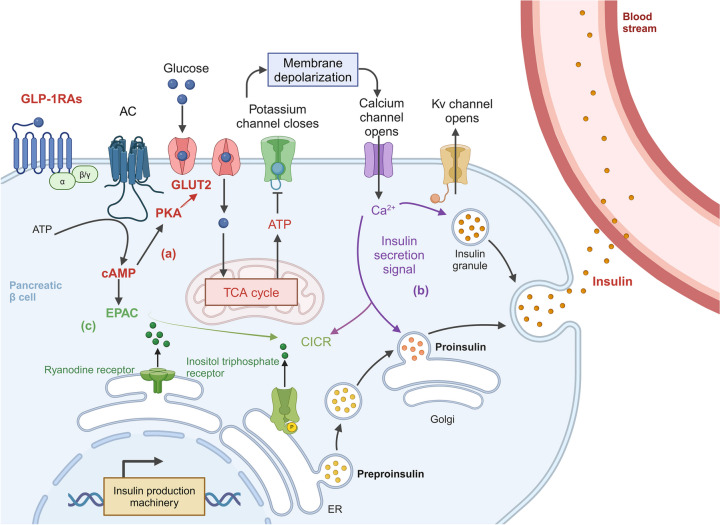
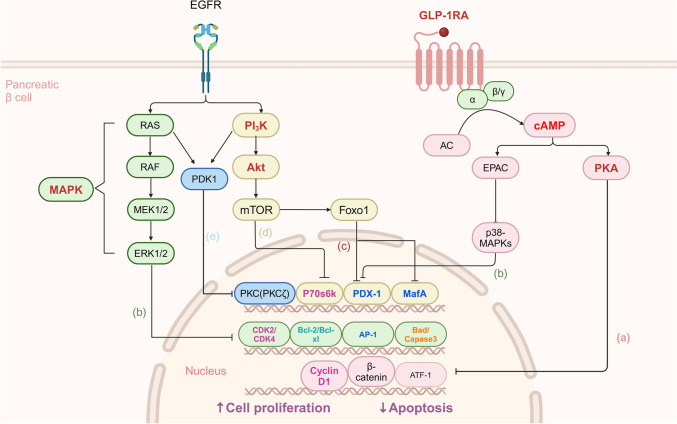
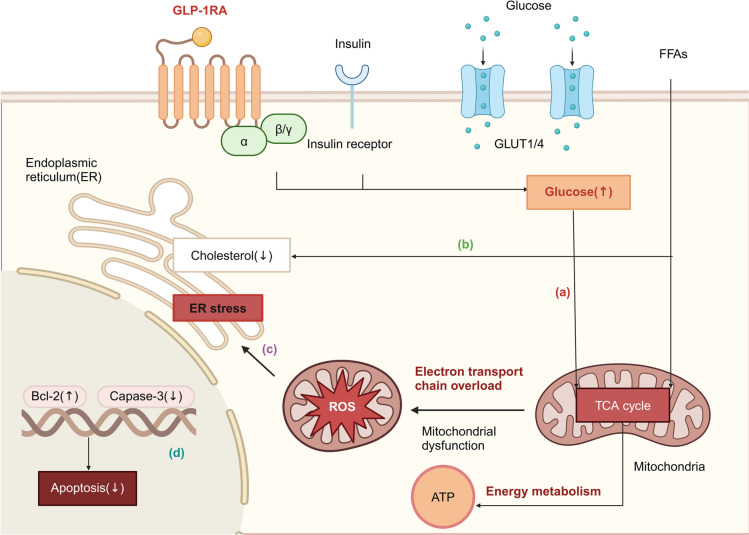
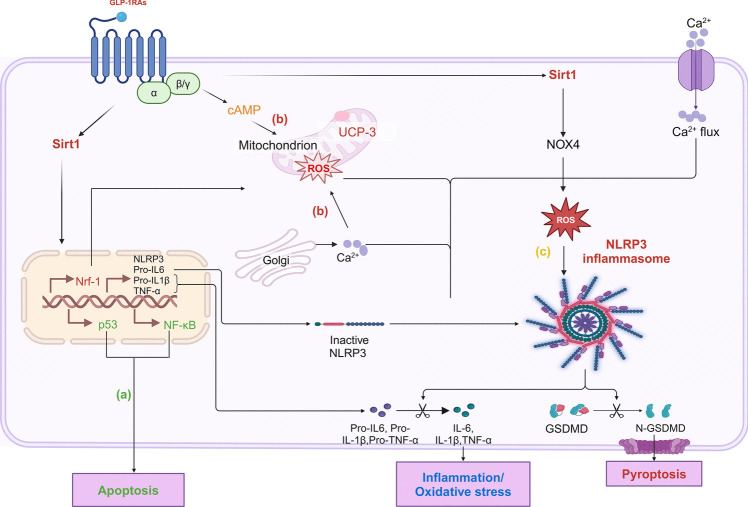
Verification
Claims the paper makes
The claims and statistics of this paper haven’t been checked yet.
Free: it reads the open-access text and checks the first 5 claims that cite a source we can check. Create a free account to check every claim.
Claims other papers make about this one
Each is checked against this paper’s own text: does it say what the citing paper says it does?
The source backs part of the claim, not all of it — or backs it for a different population, condition or comparison.
In the citing paper
“Cardiovascular outcome trials confirm reductions in major adverse cardiovascular events, and emerging evidence suggests benefits for renal function and inflammation (8, 24–29).”
From GLP-1 agonists and exercise: the future of lifestyle prioritization (2025) · cites this paper as [27]
Experimental — accuracy not yet measured
Self-check
Percentages, sums and reported differences re-computed from the paper’s own numbers.
The self-check needs the paper’s full text.
Citations
Cites
Mozaffarian, D., Benjamin, E. J., Go, A. S., Arnett, D. K., Blaha, M. J., Cushman, M., Das, S. R., de Ferranti, S., Després, J.-P., Fullerton, H. J., et al. (2016) · Circulation · doi:10.1161/cir.0000000000000366 · Cited by 2,466 · cited 1×
“Cardiovascular ailments associated with diabetes have become the foremost cause of diabetes-related morbidity and mortality, imposing a significant economic burden on society [7].”
Glucagon-like peptide 1 (GLP-1)
Müller, T. D., Finan, B., Bloom, S. R., D'Alessio, D., Drucker, D. J., Flatt, P. R., Fritsche, A., Gribble, F., Grill, H. J., Habener, J. F., et al. (2019) · Molecular Metabolism · doi:10.1016/j.molmet.2019.09.010 · Cited by 1,868 · cited 1×
“GLP-1 is a gut-derived hormone secreted in response to oral nutrient intake, exhibiting potent insulinotropic activity across several species, including humans [8].”
Tirzepatide for Heart Failure with Preserved Ejection Fraction and Obesity
Packer, M., Zile, M. R., Kramer, C. M., Baum, S. J., Litwin, S. E., Menon, V., Ge, J., Weerakkody, G. J., Ou, Y., Bunck, M. C., et al. (2025) · New England Journal of Medicine · doi:10.1056/nejmoa2410027 · Cited by 1,009 · cited 1×
“…trial, among patients with HFpEF, the dual glucagon-like peptide-1/glucose-dependent insulinotropic polypeptide agonist, tirzepatide, significantly reduces the combined risk of cardiovascular death or the exacerbation of HF. Specifically, it brings down the hospitalization rate for HF by 38% [68].”
Insulin Staining of ES Cell Progeny from Insulin Uptake
Rajagopal, J., Anderson, W. J., Kume, S., Martinez, O. I., & Melton, D. A. (2003) · Science · doi:10.1126/science.1077838 · Cited by 931 · cited 1×
“Epac activates the MAPK pathway, thereby promoting the activity of cyclin-dependent kinase 2 (CDK2) and CDK4, which in turn facilitate β-cell differentiation and proliferation [35, 36] (Fig.”
Molecular mechanisms of diabetic cardiomyopathy
Bugger, H., & Abel, E. D. (2014) · Diabetologia · doi:10.1007/s00125-014-3171-6 · Cited by 903
Nikolaidis, L. A., Mankad, S., Sokos, G. G., Miske, G., Shah, A., Elahi, D., & Shannon, R. P. (2004) · Circulation · doi:10.1161/01.cir.0000120505.91348.58 · Cited by 901 · cited 1×
“Above all, these benefits of IV infusion of GLP-1 are confirmed in preliminary studies in humans [57, 58].”
Blood pressure variability and cardiovascular disease: systematic review and meta-analysis
Stevens, S. L., Wood, S., Koshiaris, C., Law, K., Glasziou, P., Stevens, R. J., & McManus, R. J. (2016) · BMJ · doi:10.1136/bmj.i4098 · Cited by 871
Semaglutide in Patients with Obesity-Related Heart Failure and Type 2 Diabetes
Kosiborod, M. N., Petrie, M. C., Borlaug, B. A., Butler, J., Davies, M. J., Hovingh, G. K., Kitzman, D. W., Møller, D. V., Treppendahl, M. B., Verma, S., et al. (2024) · New England Journal of Medicine · doi:10.1056/nejmoa2313917 · Cited by 758 · cited 1×
“In HF with preserved ejection fraction (HFpEF), GLP-1 RAs may not reduce HF hospitalization but might lower atherosclerotic event risks [66, 67].”
Mechanisms of action of glucagon-like peptide 1 in the pancreas
Doyle, M. E., & Egan, J. M. (2007) · Pharmacology & Therapeutics · doi:10.1016/j.pharmthera.2006.11.007 · Cited by 680 · cited 1×
“These factors have been demonstrated to enhance both β-cell proliferation and α-to-β-cell trans-differentiation [38–40].”
Sokos, G. G., Nikolaidis, L. A., Mankad, S., Elahi, D., & Shannon, R. P. (2006) · Journal of Cardiac Failure · doi:10.1016/j.cardfail.2006.08.211 · Cited by 656
Cited by
GLP-1 agonists and exercise: the future of lifestyle prioritization
Codella, R., Senesi, P., & Luzi, L. (2025) · Frontiers in Clinical Diabetes and Healthcare · doi:10.3389/fcdhc.2025.1720794 · Cited by 16
Wang, T., Li, H., Wang, C., Li, X., Deng, A., & Jiao, X. (2025) · Experimental Eye Research · doi:10.1016/j.exer.2025.110644 · Cited by 16
The critical role of GLP-1 signaling pathways in the pathology of Parkinson's disease and diabetes
Chen, J., Dong, X., Lin, Y., & Lv, C. (2025) · Pathology - Research and Practice · doi:10.1016/j.prp.2025.155985 · Cited by 7
Jogani, V. G., Elfadil, O. M., Varayil, J. E., & Mundi, M. S. (2025) · Current Opinion in Critical Care · doi:10.1097/mcc.0000000000001294 · Cited by 11
邵倩, Xiong, J., Wu, J., Mao, J., & Hu, Q. (2026) · Frontiers in Molecular Biosciences · doi:10.3389/fmolb.2025.1729904 · Cited by 5
Lu, X., & Yang, L. (2026) · Frontiers in Medicine · doi:10.3389/fmed.2026.1763185 · Cited by 7
“…it is worth noting that although the current data do not show a significant increase in the risk of pancreatitis, long-term follow-up should still focus on the potential risks of pancreatitis and thyroid C-cell tumors, especially as GCGR activation may affect pancreatic exocrine function (55).”
Florescu, A. G., Pucerea, S. A., Floria, M., Rusu, E., Cuiban, E., Jinga, M., Galrinho, R. D., & Stanciu, S. M. (2025) · Romanian Journal of Military Medicine · doi:10.55453/rjmm.2025.128.6.9 · Cited by 8
Soares, L. A., Paniagua, C., Nguyen, J., Kojic, A., Sanfrey, E. R., Reyome, M. E., Aguayo, L., & Sattler, E. L. P. (2025) · Current Epidemiology Reports · doi:10.1007/s40471-025-00375-5 · Cited by 3
Bacelar-Jiménez, A., Alamareen, A. S., Madishetti, V. V., Samarah, M. S., Watson, C. J., Grieve, D., & O'Neill, K. (2026) · Cardiovascular Drugs and Therapy · doi:10.1007/s10557-026-07907-1 · Cited by 3
Targeting GLP-1 Signaling Ameliorates Cystogenesis in a Zebrafish Model of Nephronophthisis
Eckert, P., Nöller, M., Müller, M., Haas, R., Ruf, J., Franz, H., Moos, K., Yu, J.-A., Zhao, D., Xie, W., et al. (2025) · International Journal of Molecular Sciences · doi:10.3390/ijms26157366 · Cited by 4
“Both pathways converge on cAMP production, which activates downstream effectors such as protein kinase A and exchange proteins directly activated by cAMP (Epac), regulating ion channel activity, cytoskeletal dynamics, and cellular proliferation [62–64].”
Zhong, M., Wu, X., Liu, Y., Mao, Y., Liu, M., Liu, X., & Liu, Q. (2026) · Cardiovascular Drugs and Therapy · doi:10.1007/s10557-026-07882-7 · Cited by 5
Mahalingam, S., Kharbanda, K. K., Casey, C. A., & Rasineni, K. (2026) · Frontiers in Pharmacology · doi:10.3389/fphar.2026.1752204 · Cited by 3
Exploring Conformational Transitions in Biased and Balanced Ligand Binding of GLP-1R
Xu, M., Vogel, H., & Yuan, S. (2025) · Molecules · doi:10.3390/molecules30153216 · Cited by 3
Dziewierz, A., & Siudak, Z. (2025) · Cardiovascular Drugs and Therapy · doi:10.1007/s10557-025-07789-9 · Cited by 2
Liu, S. (2025) · Cardiovascular Drugs and Therapy · doi:10.1007/s10557-025-07812-z · Cited by 1
“Accumulated evidence has already demonstrated that GLP-1 receptor agonists—exemplified by semaglutide [ 4] —hold considerable therapeutic promise in diabetes and cardiovascular disease [ 5].”
Liu, J., Liu, Y.-H., Luo, H., Yu, S.-Y., Yu, S.-Y., Wu, Y., & Liu, Y. (2026) · Cardiovascular Drugs and Therapy · doi:10.1007/s10557-026-07876-5 · Cited by 1
“Clinical investigations have revealed that glucagon-like peptide-1 (GLP-1) receptor agonists, exemplified by lira - glutide and dulaglutide, exhibit cardioprotective properties [ 215 ].”
Cardioprotective potential of glucagon-like peptide-1 receptor agonist – a new frontier
Giri, K. R. (2025) · Medicine India · doi:10.25259/medindia_17_2025
Rheb1 signaling and the fate of pancreatic β cells: Toward a new frontier in diabetes therapy
Karimkhani, H. (2025) · World Journal of Diabetes · doi:10.4239/wjd.v16.i12.108609
“It would be intriguing to investigate whether part of the known β cell protective effects of GLP-1 analogues or modern antidiabetic drugs (like GLP-1 receptor agonists and possibly SGLT2 inhibitors through metabolic remodeling) involve modulation of the Rheb1/mTORC1 axis[20-22].”
Tong, J., Li, N., Hu, F., & Yue, Y. (2026) · European journal of medical research · doi:10.1186/s40001-026-03986-w
“Emerging evidence suggests that the cardiovascular benefits of SGLT-2 inhibitors and GLP-1 receptor agonists [29, 30] may be partially attributable to their weight-loss effects, which mitigate obesity-driven pathological processes such as adipokine dysregulation, systemic inflammation, and ectopic…”
Shi, Y., Ye, Y., Chang, S., Lu, D., & Chu, Y. (2026) · Cardiovascular Drugs and Therapy · doi:10.1007/s10557-026-07864-9
“In recent years, significant progress has been made in CVD treatments, including glucagon-like peptide-1 receptor agonists [6], siRNA-based therapies [ 7 ], stem cell therapy [8], and nanotechnology-driven approaches [9 ].”
Passos, P. R. C., Motta, R. V., Filho, V. O. C., Noronha, M. M., Venâncio, R. C., Cançado, G. G. L., Adler, A., Cobbold, J., & Tomlinson, J. (2026) · Diabetes Care · doi:10.2337/dc26-0336 · Cited by 1
Ren, H., & Lai, H. (2026) · Frontiers in Clinical Diabetes and Healthcare · doi:10.3389/fcdhc.2026.1823872
“GLP-1 receptor agonists (GLP-1RAs) reduce in fl ammation and oxidative stress, inhibit apoptosis, and improve endothelial function (110, 111).”
Parekh, R. S., Inban, P., Thai, A., Agrawal, A., Kudaiarov, D., & Tariq, H. (2026) · Disease-a-Month · doi:10.1016/j.disamonth.2026.102150
Geddam, R., Kamatham, S., & Ashok, C. (2026) · Obesity Medicine · doi:10.1016/j.obmed.2026.100721 · Cited by 1
Zhao, X., Zheng, S., Tang, C., Chen, J., Shi, C., Yuan, T., Liu, X., Yang, R., Zhi, Y., & Wang, S. (2026) · Cardiovascular Drugs and Therapy · doi:10.1007/s10557-026-07885-4
Yan, Z., Pu, X., Ren, T., Cai, Y., Xu, Y., Chen, J., Chang, X., Wang, Y., Liu, Z., & Liu, R. (2026) · Cardiovascular Drugs and Therapy · doi:10.1007/s10557-026-07941-z
Ulusu, N. N. (2026) · Antioxidants · doi:10.3390/antiox15091143 · Cited by 1
“In the GLP-1 signaling pathway, cAMP can activate Rap1 via EPAC (Exchange Protein directly activated by cAMP) and the PI3K/Akt pathway, plus inhibit gluconeogenic enzymes [291].”
Metadata
- Authors
- Zhang, X., Cao, C., Zheng, F., Liu, C., & Tian, X.
- Affiliations
- Shandong Provincial QianFoShan Hospital (CN)
- Corresponding author
- Tian, Xiuqing
- Venue
- Cardiovascular Drugs and Therapy
- Published
- 2025-01-20
- Volume
- 40
- Issue
- 1
- Pages
- 287-301
- ISSN
- 0920-3206 (ISSN-L)
- 1573-7241
- PMC
- PMC12872670
- OpenAlex
- W4406598762
- Semantic Scholar
- e5a6b87c558eda9a445ad4de77088a7a660aaf2f
- Cited by
- 27
- References
- 107
- Citations by year
- 2026: 15 · 2025: 12
- FWCI
- 3.67
- Type
- journal article
- Language
- en
- Open access
- hybrid
- doi.org
- Licence
- cc-by-nc-nd
- creativecommons.org/licenses/by-nc-nd/4.0 (tdm)
- creativecommons.org/licenses/by-nc-nd/4.0 (vor)
- Locations
- Cardiovascular Drugs and Therapy (publishedVersion, cc-by-nc-nd)
- Europe PMC (PubMed Central) (publishedVersion, cc-by-nc-nd)
- PubMed (publishedVersion)
- PubMed Central (publishedVersion, cc-by-nc-nd)
- Funders
- Natural Science Foundation of Shandong Province (Grant No. ZR2021MH039, Grant No. 8217021865)
- Clinical Science and Technology Innovation Program (Grant No.202019089)
- Major Project of Shandong University (Grant No. qlyxjy-201830)
- Project of Shandong Provincial Medical Association (Grant No. YXH2024YS039)
- Research Fund of Qianfoshan Hospital (Grant No. QYPY2021NSFC0619)
- Topics
- Health Sciences › Medicine › Endocrinology, Diabetes and Metabolism › Diabetes Treatment and Management
- Health Sciences › Medicine › Cardiology and Cardiovascular Medicine › Heart Failure Treatment and Management
- Health Sciences › Medicine › Endocrinology, Diabetes and Metabolism › Diabetes, Cardiovascular Risks, and Lipoproteins
- Keywords
- GLP-1 receptor agonists, glucagon-like peptide-1, diabetes mellitus, cardiovascular disease, incretin signaling, beta-cell function, insulin secretion, glucagon secretion, signaling pathways, cyclic AMP, phosphatidylinositol 3-kinase, mitogen-activated protein kinase, beta-cell proliferation, beta-cell apoptosis, heart failure, hypertension, ischemic cardiomyopathy, major adverse cardiovascular events, oxidative stress, inflammation
- MeSH terms
- Glucagon-Like Peptide-1 Receptor, Glucagon-Like Peptide-1 Receptor Agonists, Animals, Blood Glucose, Cardiovascular Diseases, Diabetes Mellitus, Humans, Hypoglycemic Agents, Signal Transduction, Treatment Outcome, Insulin-Secreting Cells, Glucagon-Like Peptide 1, Incretins
About these checks
Registry, retraction, Cites and statistics results are computed, not judged, with one exception: a printed reference that no index lists is read once by a model before it counts as a citation error. Claims are extracted by a model and kept only when their quote appears verbatim in the text; each cited source is then checked, with a model’s help, for whether it says what the claim relies on. Those verdicts can be wrong — read the claim’s quote and the cited source before relying on one.
Statistics and arithmetic are recomputed, not judged.
Confidence bands are shown only for fields calibrated on our annotated test set. None is calibrated yet, so no band is shown.
What counts as a claim ›How we measure confidence ›How we check this ›
Are you an author, or do you see a problem with this page? Request a review
Data sources
Bibliographic data: Semantic Scholar, OpenAlex, Crossref.
Contains information from the Semantic Scholar Academic Graph Datasets, made available under the ODC Attribution License (ODC-BY 1.0).
Semantic Scholar’s data is described in: Kinney, R., et al. (2023). The Semantic Scholar Open Data Platform. arXiv:2301.10140.
