

Effective learning with a personal AI tutor: A case study
Open accessThe DOI matches its Crossref record; 28 of the 28 references it cites were found in a registry or an index.
Abstract
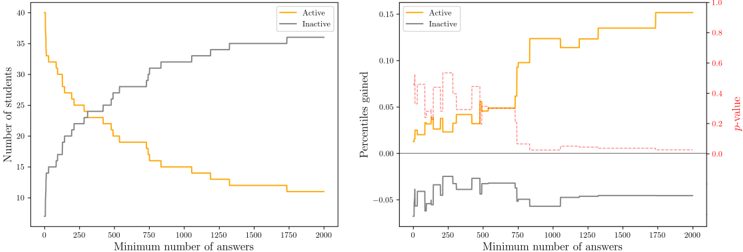
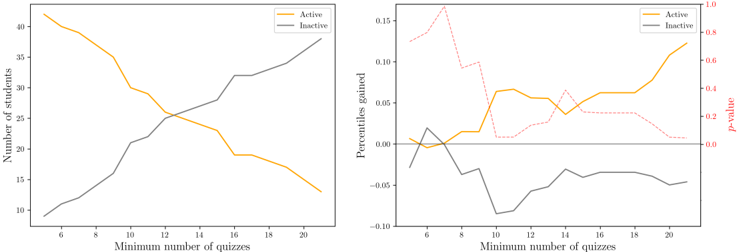
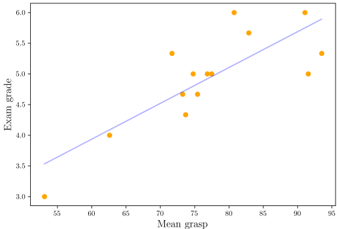
Effective learning strategies based on principles like personalization, retrieval practice, and spaced repetition are often challenging to implement due to practical constraints. Here we explore the integration of AI tutors to complement learning programs in accordance with learning sciences. A semester-long study was conducted at UniDistance Suisse, where an AI tutor app was provided to psychology students taking a neuroscience course (N=51). After automatically generating microlearning questions from existing course materials using GPT-3, the AI tutor developed a dynamic neural-network model of each student’s grasp of key concepts. This enabled the implementation of distributed retrieval practice, personalized to each student’s individual level and abilities. The results indicate that students who actively engaged with the AI tutor achieved significantly higher grades. Moreover, active engagement led to an average improvement of up to 15 percentile points compared to a parallel course without AI tutor. Additionally, the grasp strongly correlated with the exam grade, thus validating the relevance of neural-network predictions. This research demonstrates the ability of personal AI tutors to model human learning processes and effectively enhance academic performance. By integrating AI tutors into their programs, educators can offer students personalized learning experiences grounded in the principles of learning sciences, thereby addressing the challenges associated with implementing effective learning strategies. These findings contribute to the growing body of knowledge on the transformative potential of AI in education.
Overview
The claims and statistics of this paper haven’t been checked yet.
Free: it reads the open-access text and checks the first 5 claims that cite a source we can check. Create a free account to check every claim.
Integrity signals
Registry
Cites
Statistics
Figures
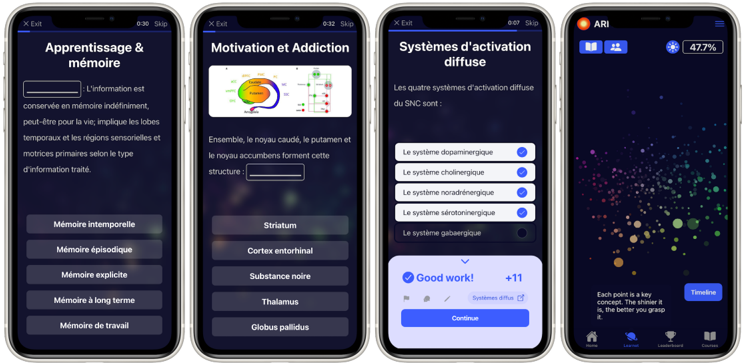
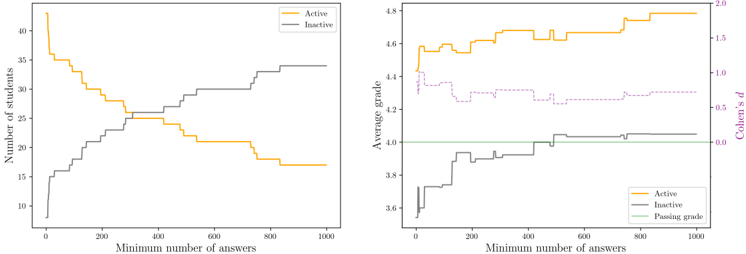
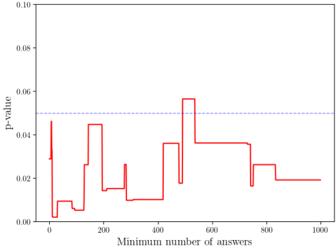
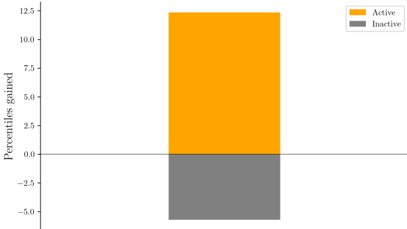
Verification
Claims the paper makes
The claims and statistics of this paper haven’t been checked yet.
Free: it reads the open-access text and checks the first 5 claims that cite a source we can check. Create a free account to check every claim.
Claims other papers make about this one
Each is checked against this paper’s own text: does it say what the citing paper says it does?
In the citing paper
“Studies with graduate students have found improvements using AI tutors (Baillifard et al., 2025;Fazlollahi et al., 2022).”
From AI chatbots in higher education: Comparing expectations to evidence (2026) · cites this paper as Baillifard et al., 2025
Self-check
Percentages, sums and reported differences re-computed from the paper’s own numbers.
The self-check needs the paper’s full text.
Citations
Cites
Vaswani, A., Shazeer, N., Parmar, N., Uszkoreit, J., Jones, L., Gomez, A. N., Kaiser, L., & Polosukhin, I. (2017) · arXiv · doi:10.48550/arxiv.1706.03762 · Cited by 120,404
(1978) · Medical Entomology and Zoology · Cited by 53,488
Language Models are Few-Shot Learners
Brown, T. B., Mann, B., Ryder, N., Subbiah, M., Kaplan, J., Dhariwal, P., Neelakantan, A., Shyam, P., Sastry, G., Askell, A., et al. (2020) · arXiv · doi:10.48550/arxiv.2005.14165 · Cited by 23,372
Zawacki-Richter, O., Marín, V. I., Bond, M., & Gouverneur, F. (2019) · International Journal of Educational Technology in Higher Education · doi:10.1186/s41239-019-0171-0 · Cited by 7,242 · cited 1×
“These applications can be grouped into four main categories (Zawacki-Richter et al., 2019).”
Dunlosky, J., Rawson, K. A., Marsh, E. J., Nathan, M. J., & Willingham, D. T. (2013) · Psychological Science in the Public Interest · doi:10.1177/1529100612453266 · Cited by 3,138
The 2 Sigma Problem: The Search for Methods of Group Instruction as Effective as One-to-One Tutoring
BLOOM, B. S. (1984) · Educational Researcher · doi:10.3102/0013189x013006004 · Cited by 2,734 · cited 2×
“…plays a crucial role, in particular by determining appropriate spacing intervals for each learner, by selecting the desirable levels of difficulty for retrieval practice exercises, and by interleaving and connecting concepts in a way that is adapted to individual progress (Bloom, 1984).”
Artificial intelligence in higher education: the state of the field
Crompton, H., & Burke, D. (2023) · International Journal of Educational Technology in Higher Education · doi:10.1186/s41239-023-00392-8 · Cited by 2,010 · cited 1×
“While the application of AI in education (AIEd) has been the subject of research for over three decades, recent advancements in machine learning have unlocked a wide range of possibilities to enhance education (Hannele Niemi, 2022; Ouyang et al., 2022; Crompton & Burke, 2023).”
The critical role of retrieval practice in long-term retention
Roediger, H. L., & Butler, A. C. (2011) · Trends in Cognitive Sciences · doi:10.1016/j.tics.2010.09.003 · Cited by 1,796 · cited 2×
“It has proven effective across a wide range of learning situations (Roediger & Butler, 2011).”
Ouyang, F., Zheng, L., & Jiao, P. (2022) · Education and Information Technologies · doi:10.1007/s10639-022-10925-9 · Cited by 831
Busato, V. V., Prins, F. J., Elshout, J. J., & Hamaker, C. (2000) · Personality and Individual Differences · doi:10.1016/s0191-8869(99)00253-6 · Cited by 740
Research works printed but not linked: 2
- Alemanno, S. (2022). Testing the effectiveness of personalized spaced repetition. EPFL, School of Computer and Communication Sciences. Master’s thesis supervised by Prof. Pierre Dillenbourg
- Hannele Niemi, Y. L., & Roy, D. (2022). Pea. Designing the future. Springer Cham: AI in Learning.
Cited by
Exploring the frontiers of LLMs in psychological applications: a comprehensive review
Ke, L., Tong, S., Cheng, P., & Peng, K. (2025) · Artificial Intelligence Review · doi:10.1007/s10462-025-11297-5 · Cited by 149
Wijaya, T. T., Yu, Q., Cao, Y., He, Y., & Leung, F. K. S. (2024) · Behavioral Sciences · doi:10.3390/bs14111008 · Cited by 103
Wang, Y. J., Wei, Z., Wijaya, T. T., Cao, Y., & Ning, Y. (2025) · BMC Psychology · doi:10.1186/s40359-025-02781-2 · Cited by 81
Agentic AI in Education: State of the Art and Future Directions
Kostopoulos, G., Gkamas, V., Rigou, M., & Kotsiantis, S. (2025) · IEEE Access · doi:10.1109/access.2025.3620473 · Cited by 69
“In addition to formal education, agentic AI has the capability of enabling independent and lifelong learning through enabling learners to develop personalized learning plans, establish independent goals and react to reflective prompts that instill metacognition and self-regulation [30], [41].”
Wu, X.-Y., Radloff, J., Yeter, I. H., Wang, L., & Chiu, T. K. F. (2025) · Interactive Learning Environments · doi:10.1080/10494820.2025.2563086 · Cited by 48
Artificial Intelligence and Dentomaxillofacial Radiology Education: Innovations and Perspectives
Negrete, D., Lopes, S. L. P. D. C., Barretto, M. D. D. A., de Moura, N. B., Nahás-Scocate, A. C. R., & Costa, A. L. F. (2025) · Dentistry Journal · doi:10.3390/dj13060245 · Cited by 33
Min, T., Lee, B., & Jho, H. (2025) · Education and Information Technologies · doi:10.1007/s10639-025-13410-1 · Cited by 26
Wang, J., & Fan, W. (2025) · Journal of Computer Assisted Learning · doi:10.1111/jcal.70137 · Cited by 24
The MIND model a microlearning AI-integrated instructional design for enhanced learning outcomes
Monib, W. K., Qazi, A., Apong, R. A. A. H. M., Santos, J. H., & Mahmud, M. M. (2025) · Scientific Reports · doi:10.1038/s41598-025-24910-y · Cited by 21
Utilization of Artificial Intelligence in Education: A Perspective on Learning Strategies
Yalçınalp, S., Türkoğlu, H., Koç, S. E., & Ersoy, H. (2024) · Artificial intelligence · doi:10.5772/intechopen.1005086 · Cited by 19
Wang, Y., & Yu, R. (2025) · International Journal of Human-Computer Interaction · doi:10.1080/10447318.2025.2513581 · Cited by 19
Impact of AI-Based Learning, Digital Literacy, Information Stewardship on Learning Outcomes
Pu, L., Liang, J., Wang, J., Zhang, N., & Zhong, W. (2024) · El Profesional de la Informacion · doi:10.3145/epi.2024.ene.0515 · Cited by 17
Annuš, N. (2025) · Education Sciences · doi:10.3390/educsci15091152 · Cited by 15
AI chatbots in higher education: Comparing expectations to evidence
Thoeni, A., & Fryer, L. K. (2026) · Computers in Human Behavior Reports · doi:10.1016/j.chbr.2026.101061 · Cited by 12
Enhancing Online Learning Through Multi-Agent Debates for CS University Students
Du, J., Xu, G., Liu, W., Zhou, D., & Liu, F. (2025) · Applied Sciences · doi:10.3390/app15115877 · Cited by 12
Καρόγλου, Μ., Ghergulescu, I., Stramarkou, M., Boukouvalas, C. J., & Krokida, M. (2025) · Applied Sciences · doi:10.3390/app15158524 · Cited by 12
Mehlan, R., Heß, C., Stierstorfer, Q., & Schaaff, K. (2026) · Lecture notes on data engineering and communications technologies · doi:10.1007/978-981-95-4423-3_5 · Cited by 12
Rai, M. E., Ngaw, M., & Nannas, N. J. (2025) · Education Sciences · doi:10.3390/educsci15101400 · Cited by 10
Enhancing Critical Thinking: The Role of AI in Modern Education
Asrifan, A., Khristianto, K., Budiman, A., Astuti, P. I., & Rossydi, A. (2025) · Advances in computational intelligence and robotics book series · doi:10.4018/979-8-3373-4576-5.ch012 · Cited by 8
Tarhini, A., Al-Sharafi, M. A., & Lawati, H. A. (2026) · Interactive Learning Environments · doi:10.1080/10494820.2026.2628249 · Cited by 8
Gallegos, M. D. C. J., Pilataxi, A. C. G., Toscano, M. B. C., & Sangucho, A. J. M. (2024) · Reincisol · doi:10.59282/reincisol.v3(6)2038-2069 · Cited by 8
The Role of Artificial Intelligence (AI) in Personalized Learning and Adaptive Assessments
Salendab, F. A., Cogo, D. A., Catipay, A. Z., & Millendez, G. J. T. (2025) · Advances in computational intelligence and robotics book series · doi:10.4018/979-8-3373-2185-1.ch004 · Cited by 7
Choi, W.-Y. (2026) · Education and Information Technologies · doi:10.1007/s10639-026-13945-x · Cited by 7
Humanity Amplified: The Fusion of Deep Learning and Human Insight to Shape the Future of InnovationPreprint
Bauschard, S., & Quidwai, S. (2023) · SSRN Electronic Journal · doi:10.2139/ssrn.4621210 · Cited by 6
Dymm, B., & Khalid, A. (2025) · Seminars in Neurology · doi:10.1055/a-2713-6622 · Cited by 6
Rosa, A. G., & Yokomizo, C. A. (2026) · Artificial Intelligence in Education · doi:10.1108/aiie-08-2025-0232 · Cited by 6
AI-Integrated Personalized Learning for High School Students
My, H. D. T., Tuan, T. L., Dinh, B. N., & Huu, S. N. (2025) · World Journal of Engineering and Technology · doi:10.4236/wjet.2025.132010 · Cited by 6
Impacto de la Inteligencia Artificial en la transformación digital y aprendizaje educativo.
Reyes, A. R. T., Macas, F. V. C., González, S. A. V., & Ramos, I. D. R. B. (2025) · EcoSur Innovación Tecnología y Desarrollo Sostenible de América Latina · doi:10.61582/k266es50 · Cited by 6
Knowledge-Based Design Requirements for Generative Social Robots in Higher EducationPreprint
Vonschallen, S., Oberle, D., Schmiedel, T., & Eyssel, F. (2026) · arXiv (Cornell University) · doi:10.48550/arxiv.2602.12873 · Cited by 6
Vicente, L., & Cabitza, F. (2025) · Lecture notes in computer science · doi:10.1007/978-3-031-93838-2_5 · Cited by 5
Co-designing Digital Humans for Online Learning: A Framework for Human-AI Pedagogical Integration
Lei, X., Pang, C. C., Jiang, Y., Tong, X., & Hui, P. (2026) · Lecture notes in computer science · doi:10.1007/978-3-032-30784-2_34 · Cited by 5
Enhancing Operating System Education With a Generative AI‐Supported Boppps Model: An Empirical Study
Zhou, R., Liu, Y., Sun, L., & Zhu, S. (2025) · Computer Applications in Engineering Education · doi:10.1002/cae.70114 · Cited by 5
The Role of AI Tutors in Improving Academic Performance and Student Engagement
Faridoon, N., Talpur, Q., Latif, F., Naz, G., & Shahzad, T. (2025) · ACADEMIA International Journal for Social Sciences · doi:10.63056/acad.004.03.0837 · Cited by 5
Law Professors Prefer AI Over Peer AnswersPreprint
Salinas, A., Frieders, C., Guha, N., Ma, S., Anzivino, R. C., Ayres, I., Bar‐Gill, O., Ben‐Shahar, O., Friedman, S. E., Geis, G. S., et al. (2026) · SSRN Electronic Journal · doi:10.2139/ssrn.6849678 · Cited by 5
Designing Instruction with Generative AI: 24/7 Support for Optimizing Teaching and Learning
Anders, B. A. (2025) · Routledge eBooks · doi:10.4324/9781003568544 · Cited by 5
The Future of Teaching: Examining the Role of AI Tutors and Human Teachers in Co-Teaching Models
Bangulzai, A. R., Begum, R., Mirza, M. A., & Ahmad, S. (2025) · The Critical Review of Social Sciences Studies · doi:10.59075/rtz61m29 · Cited by 5
Beyond the Classroom: Technology-Enabled Acceleration Models for Gifted Learners in the Digital Era
Aboud, Y. Z. (2026) · Multimodal Technologies and Interaction · doi:10.3390/mti10020017 · Cited by 5
Oubagine, R., Laaouina, L., Jeghal, A., & Tairi, H. (2025) · International Conference on Embedded Systems and Artificial Intelligence (ESAI) · doi:10.1109/esai67033.2025.11438800 · Cited by 5
Arias, D. P., Arias, B. I. I., Lastra, M. A. M., Camino, L. X. A., & Sani, V. E. M. (2025) · ASCE MAGAZINE · doi:10.70577/asce/2231.2251/2025 · Cited by 4
Chen, P., Huang, Y., Wu, T., & Lee, H. (2025) · International Conference on Modern Educational Technology (ICMET) · doi:10.1109/icmet67594.2025.11451842 · Cited by 4
Ramli, N., Mozie, N. M., Kassim, E. S., & Sari, J. D. P. (2025) · ADVANCES IN BUSINESS RESEARCH INTERNATIONAL JOURNAL · doi:10.24191/abrij.v11i2.8586 · Cited by 4
ROLE OF ARTIFICIAL INTELLIGENCE IN PERSONALIZED LEARNING
Kamil, A., Shah, F. U. H., Atif, S., Hayat, S., Aziz, S., & Nisar, A. (2025) · Contemporary Journal of Social Science Review · doi:10.63878/cjssr.v3i3.1011 · Cited by 4
Social Presence in Virtual Reality: A Comparative Study of AI NPCs and Human Instructors
Schmidbauer, M., Pirker, J., Mayer, E., & Odaker, T. (2025) · ACM SIGGRAPH Conference on Motion, Interaction and Games (MIG) · doi:10.1145/3769047.3769051 · Cited by 3
Vehapi, S., & Ziberi, B. (2026) · Discover Education · doi:10.1007/s44217-026-01399-9 · Cited by 3
Li, H., & Derakhshan, A. (2026) · BMC Psychology · doi:10.1186/s40359-026-04884-w · Cited by 3
Cabitza, F., & Vicente, L. (2026) · International Journal of Human-Computer Studies · doi:10.1016/j.ijhcs.2026.103855 · Cited by 3
Kılınç, S. (2025) · Future education and learning spaces · doi:10.1007/978-981-96-9251-4_2 · Cited by 3
From One-Size-Fits-All to AI-Driven Personalization in Education
Salendab, F. A., Baraguir, R. S., Nuñez, R. A. S., & Cogo, D. A. (2026) · Advances in computational intelligence and robotics book series · doi:10.4018/979-8-3373-2752-5.ch009 · Cited by 3
Online learner engagement and academic support in the age of generative AI
Borup, J., Graham, C. R., Archambault, L., Woo, L. J., Barbour, M. K., Shin, J. K., & Evmenova, A. S. (2026) · Computers & Education · doi:10.1016/j.compedu.2026.105763 · Cited by 3
Alshaie, F. S., Alshdokhi, K. A., & Alrefaee, Y. M. H. (2026) · Discover Sustainability · doi:10.1007/s43621-026-03172-2 · Cited by 3
James, B. (2025) · E-Journal of Humanities Arts and Social Sciences · doi:10.38159/ehass.202561227 · Cited by 3
Implementing AI-Powered Tutoring Systems to Enhance Personalized Learning in Higher Education
Ariza, H. H. (2026) · Lecture notes in networks and systems · doi:10.1007/978-3-032-09908-2_26 · Cited by 3
Permata, C. A., & Nugroho, D. P. (2025) · Education Jurnal Sosial Humaniora dan Pendidikan · doi:10.51903/5gn23z75 · Cited by 3
Artificial Intelligence in Learning: Assessing Perception, Motivation, and Academic Performance
Lama, P. B., Budhathoki, P. B., Ghimire, S. R., & Josh, S. (2025) · Dama Academic Scholarly Journal of Researchers · doi:10.4314/dasjr.v10i6.3 · Cited by 3
Vonschallen, S., Eyssel, F., & Schmiedel, T. (2026) · arXiv (Cornell University) · doi:10.48550/arxiv.2602.11483 · Cited by 3
Xu, M., Tamò‐Larrieux, A., & Rossi, A. (2025) · arXiv (Cornell University) · doi:10.48550/arxiv.2509.08554 · Cited by 3
Pemanfaatan Artificial Intelligence dalam Pembelajaran Ekonomi di Perguruan Tinggi
Sandi, G., Pritandhari, M., Suroto, S., Nurdin, N., & Rizal, Y. (2025) · Journal of Social Education · doi:10.23960/jips/v6i1.11-16 · Cited by 3
Creating an AI English Tutor With Personalized Content and Dynamic Lessons
Madhuri, J. N., Fatma, G., Aruna Kumari, K., Pathak, P., Sreela, B., & Faizal, M. K. M. (2024) · International Conference on Artificial Intelligence and Quantum Computation-Based Sensor Application (ICAIQSA) · doi:10.1109/icaiqsa64000.2024.10882220 · Cited by 3
Pani, A. K., Thalla, S., Lavanya, L., Sudhakar, K., & Gurumoorthy, S. (2025) · International Conference on Software, Systems and Information Technology (SSITCON) · doi:10.1109/ssitcon66133.2025.11342048 · Cited by 3
Halliday, S., Lavis, T., Callaghan, P., & Chur-Hansen, A. (2026) · Australian Psychologist · doi:10.1080/00050067.2025.2580236 · Cited by 2
“Two of the included papers examined the effectiveness of using GenAI as a personal study tutor (Baillifard et al., 2025; Chambers & Owen, 2024 S t u d e n t s w h o a c t i v e l y e n g a g e d w i t h t h e A I t u t o r a pp p e r f o r m e d b e tt e r o n t h e fi n a l e x a m i n t h e c o u…”
InfluentialMy digital mentor: a mixed-methods study of user-GAI interactions
Xian, L., Cao, G., & Zhang, N. (2025) · Frontiers in Psychology · doi:10.3389/fpsyg.2025.1636480 · Cited by 2
-, J. P. A. (2025) · International Journal on Science and Technology · doi:10.71097/ijsat.v16.i2.5259 · Cited by 2
Verma, A., & Singh, P. (2026) · Advances in computational intelligence and robotics book series · doi:10.4018/979-8-3373-3000-6.ch013 · Cited by 2
Wang, G., & Sun, F. (2026) · European Journal of Education · doi:10.1111/ejed.70619 · Cited by 2
Adawurah, M., & Buabeng-Andoh, C. (2025) · Education and Information Technologies · doi:10.1007/s10639-025-13706-2 · Cited by 2
Getting Students' Preferences Right: AI-Powered Macrolearning
Rof, A., Bikfalvi, A., & Marquès, P. (2025) · International Journal of Distance Education Technologies · doi:10.4018/ijdet.374214 · Cited by 2
User Readiness and AI Integration as Drivers of Smart Nano Learning in Mobile Environments
Chanyawudhiwan, G., & Mingsiritham, K. (2026) · International Journal of Interactive Mobile Technologies (iJIM) · doi:10.3991/ijim.v20i10.60759 · Cited by 2
Eğitimde Yapay Zekâ: Biçimlendirici Değerlendirme ile Denge Arayışı
Arslan, K., & Arslan, K. (2025) · Batı anadolu eğitim bilimleri dergisi · doi:10.51460/baebd.1757476 · Cited by 2
Wang, C., Petrie, C., Stouras, M., Ettlin, N., George, A., Mejia‐Domenzain, P., Swamy, V., Käser, T., & Svensson, O. (2026) · ACM Conference on Learning @ Scale (L@S) · doi:10.1145/3774398.3811623 · Cited by 2
Generative AI Tools in Higher Education: Benefits, Limitations, and Ethical Risks
SAIENKO, Y., Kyrychenko, V. V., Brona, O., Malii, A., & Pasichnyk, V. (2025) · International Journal on Culture History and Religion · doi:10.63931/ijchr.v7isi1.2.517 · Cited by 2
Lee, H., Li, P., Chen, P., Huang, Y., & Wu, T. (2026) · European Journal of Education · doi:10.1111/ejed.70527 · Cited by 2
Shi, J. (2025) · International Conference on Generative AI and Digital Media Arts · doi:10.1145/3770445.3770486 · Cited by 2
Evolutionary Landscape of Artificial Intelligence in Education: Review and Prospects
Jing, X., Feng, Z., Yang, X., Wang, Z., & Li, W. H. (2025) · International Symposium on Educational Technology · doi:10.1109/iset65607.2025.00042 · Cited by 2
Talukdar, S. R., Haque, M. M. A., Nabi, S. T., & Sikdar, S. (2026) · Advances in computational intelligence and robotics book series · doi:10.4018/979-8-3373-6598-5.ch010 · Cited by 2
Boaheng, I. (2025) · E-Journal of Humanities Arts and Social Sciences · doi:10.38159/ehass.20256922 · Cited by 2
Mafuhure, T., Phahlane, M. M., & Mbohwa, C. (2025) · Aceh International Journal of Science and Technology · doi:10.13170/aijst.14.2.47181 · Cited by 2
Walusimbi, J., Oguti, A. M., Ssentongo, J. B., & Ainebyona, K. (2026) · arXiv (Cornell University) · doi:10.48550/arxiv.2603.03339 · Cited by 2
A Systematic Literature Review on Artificial Intelligence Use in Personalized Learning
Drobnjak, A., Svetec, B., Divjak, B., & Botički, I. (2026) · IEEE Transactions on Learning Technologies · doi:10.1109/tlt.2026.3711814 · Cited by 1
ChatGPT in Political Education: A Comparative Study of Student and Faculty Perspectives
Song, H. (2025) · Education as Change · doi:10.25159/1947-9417/19336 · Cited by 1
Generative AI and Redefining Scope of Language Curriculum: TESOL Educators' Voices
Ahmed, R. A., Al-kadi, A. M. T., & Namusiginyi, B. (2026) · Advances in computational intelligence and robotics book series · doi:10.4018/979-8-3373-4521-5.ch009 · Cited by 1
Tenkorang, E. Y. A. –., Akpakli, D. D. K., & Boateng, F. O. (2025) · Journal of Education and Learning Technology · doi:10.38159/jelt.2025689 · Cited by 1
The Treatment of AI-Powered Services under European VAT
Beretta, G. (2026) · International Tax Studies · doi:10.59403/2aqkrx2 · Cited by 1
LXA v1.0: A Framework to Embrace Agentic AI in Mobile Learning for Industry 5.0 Readiness
Anthuvan, T., Prabhuram, S., Rathi, S., & Maheshwari, K. (2025) · International Journal of Interactive Mobile Technologies (iJIM) · doi:10.3991/ijim.v19i23.58635 · Cited by 1
Li, D., Zhang, G., & Liu, X. (2025) · Journal of Information Technology Education Innovations in Practice · doi:10.28945/5618 · Cited by 1
Pierrès, O., Darvishy, A., & Christen, M. (2025) · Proceedings of the AAAI/ACM Conference on AI Ethics and Society · doi:10.1609/aies.v8i3.36693 · Cited by 1
Inteligencia Artificial en la Educación
Gutiérrez, J. J., Figueroa, J. D. M., Choque, G. A. P., Matos, J. C., & Angulo, D. D. C. (2025) · Revista Veritas de Difusão Cientifica. · doi:10.61616/rvdc.v6i1.506 · Cited by 1
Artificial Intelligence and Education
Holmes, W., Persson, J., Chounta, I., Wasson, B., & Димитрова, В. (2022) · Points de vue sur la jeunesse · doi:10.3917/e.europ.holm.2022.01 · Cited by 1
Stutzman, D. N. (2026) · Scholars Crossing (Liberty University) · Cited by 1
Learning Environment, Learning Outcomes and Artificial Intelligence: The Synergistic Relationship
Lyanda, J. N. (2025) · International Journal of Research and Innovation in Social Science · doi:10.47772/ijriss.2025.91100510 · Cited by 1
Zhang, Z., Nouri, K. M., Tan, L., & Wei, G. (2026) · npj Science of Learning · doi:10.1038/s41539-026-00431-9 · Cited by 1
Towards AI-Enabled Training Needs Analysis Using Dual AI-Agent Collaboration
Patel, N. R., Barclay, P. J., McMillan, J., & McGuire, D. (2026) · International Conference on Agents and Artificial Intelligence (ICAART) · doi:10.5220/0014403000004052 · Cited by 1
Koivusipilä, T. (2025) · Tampere University Institutional Repository (Tampere University) · Cited by 1
Jatmoko, C., Rakasiwi, S., Agustina, F., Sinaga, D., & Lestiawan, H. (2025) · Kesejahteraan Bersama. · doi:10.62383/bersama.v2i3.1725 · Cited by 1
Xiao, F., Huang, J., Huang, J.-X., Ren, H., & Li, L. (2026) · International Journal of Educational Technology in Higher Education · doi:10.1186/s41239-026-00618-5 · Cited by 1
Mesterséges Intelligencia válasza az oktatásban felmerülő problémákra
Jakab, D. (2025) · Dunakavics · doi:10.63684/dk.2025.09.03 · Cited by 1
Vera, J. P. D., Hojas, D. S. P., Guachilema, M. D. C., & Ronquillo, D. G. E. (2026) · Ciencia Sociales y Económicas · doi:10.18779/csye.v10i1.1125 · Cited by 1
The Role of Artificial Intelligence in Personalized E-Learning Platforms
Cudal, H., & Balaba, E. I. (2025) · Wisdom Journal of Humanities and Social Sciences · Cited by 1
Suwarno, A., Supandi, S., & Dwijayanti, I. (2025) · Formatif Jurnal Ilmiah Pendidikan MIPA · doi:10.30998/formatif.v15i1.27696 · Cited by 1
Human Amplification, Intelligent Agents, and the Aim of AI Research
Jha, T., Everitt, T., & Grzankowski, A. (n.d.) · PhilPapers (PhilPapers Foundation) · Cited by 1
Metadata
- Authors
- Baillifard, A., Gabella, M., Lavenex, P. B., & Martarelli, C. S.
- Venue
- Education and Information Technologies
- Published
- 2024-07-13
- Volume
- 30
- Issue
- 1
- Pages
- 297-312
- ISSN
- 1360-2357 (ISSN-L)
- 1573-7608
- OpenAlex
- W4400608537
- Cited by
- 87
- References
- 28
- FWCI
- 12.95
- Type
- journal article
- Language
- en
- Open access
- hybrid
- Licence
- www.springernature.com/gp/researchers/text-and-data-mining (tdm)
- www.springernature.com/gp/researchers/text-and-data-mining (vor)
About these checks
Registry, retraction, Cites and statistics results are computed, not judged, with one exception: a printed reference that no index lists is read once by a model before it counts as a citation error. Claims are extracted by a model and kept only when their quote appears verbatim in the text; each cited source is then checked, with a model’s help, for whether it says what the claim relies on. Those verdicts can be wrong — read the claim’s quote and the cited source before relying on one.
Statistics and arithmetic are recomputed, not judged.
Confidence bands are shown only for fields calibrated on our annotated test set. None is calibrated yet, so no band is shown.
What counts as a claim ›How we measure confidence ›How we check this ›
Are you an author, or do you see a problem with this page? Request a review
Data sources
Bibliographic data: Semantic Scholar, OpenAlex, Crossref.
Contains information from the Semantic Scholar Academic Graph Datasets, made available under the ODC Attribution License (ODC-BY 1.0).
Semantic Scholar’s data is described in: Kinney, R., et al. (2023). The Semantic Scholar Open Data Platform. arXiv:2301.10140.
