

Global, regional and time-trend prevalence of central obesity: a systematic review and meta-analysis of 13.2 million subjects
Open accessThe DOI matches its Crossref record; 55 of the 55 references it cites were found in a registry or an index.
Abstract
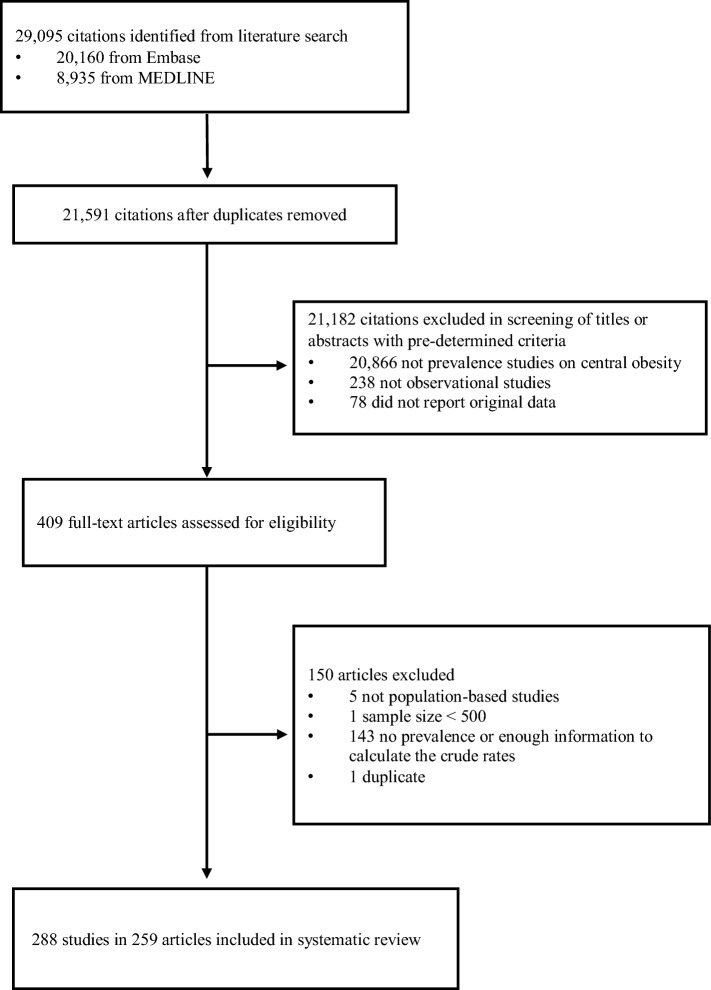
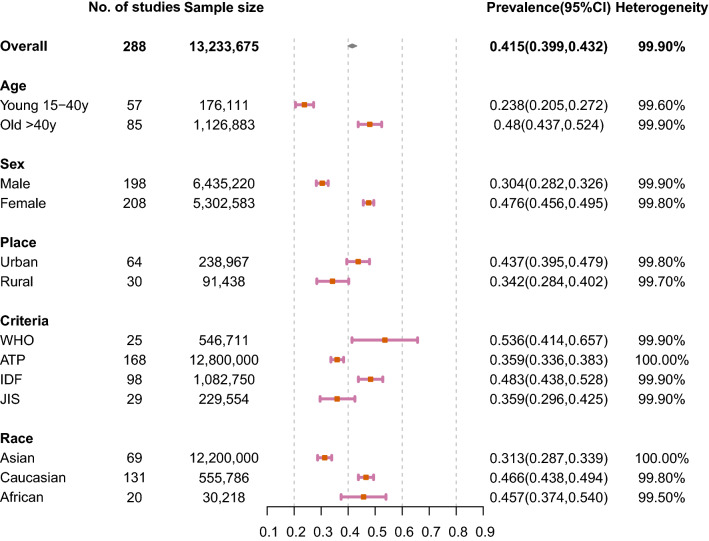
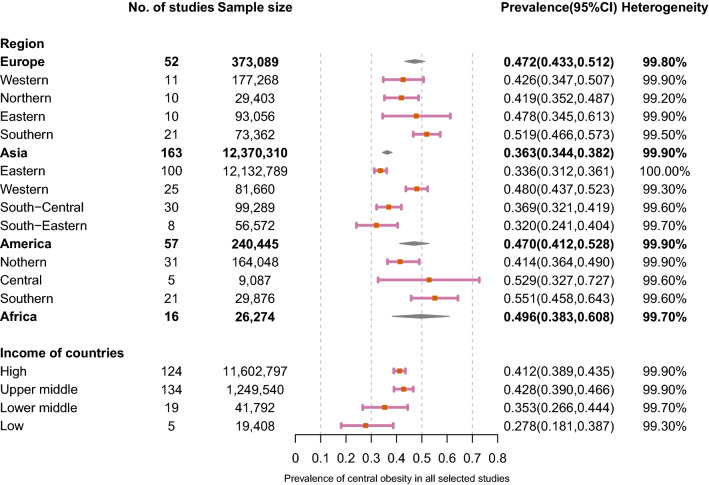
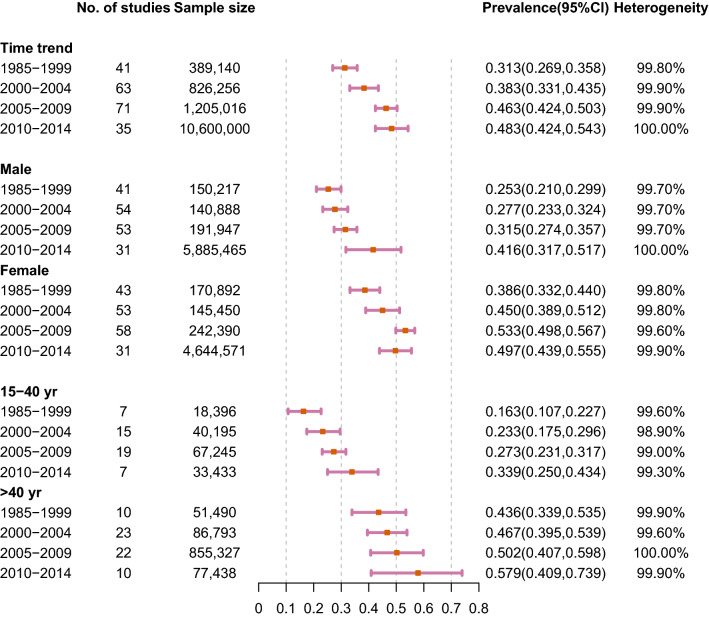
We aimed to examine the global prevalences of central obesity according to age, sex, race, place of residence, geographical region, national income level, and the definitions of central obesity. MEDLINE and Embase were searched. Studies with sample size of ≥ 500 and investigated individuals aged ≥ 15 years were included. Metaprop (a Stata command) was adopted to conduct a meta-analysis of prevalence, and the Freeman-Tukey Double Arcsine Transformation was used to stabilize the variances. A random-effects model was used to evaluate the prevalence and 95% confidence intervals (CI) of central obesity. There were 288 studies involving 13,233,675 individuals in this analysis. The overall prevalence of central obesity was 41.5% (95% CI 39.9–43.2%). A higher prevalence was found in older individuals, female subjects, urban residents, Caucasians, and populations of higher income level countries. Regarding regional variations, the highest prevalence was found in Sothern America (55.1%, 95% CI 45.8–64.3%) and Central American (52.9%, 95% CI 32.7–72.7%). Its prevalence was rapidly rising from 1985 to 2014. From 1985–1999 to 2010–2014, younger subjects aged 15–40 years showed a more drastic rise in prevalence (16.3 to 33.9%) than subjects aged > 40 years (43.6 to 57.9%). Male individuals have a more drastic rise (25.3 to 41.6%) than females (38.6 to 49.7%). Major increasing in prevalence of the condition in the past three decades, particularly in certain subgroups. These findings could act as a useful reference to inform public health strategies to minimize the impact of central obesity on population health.
Overview
The claims and statistics of this paper haven’t been checked yet.
Free: it reads the open-access text and checks the first 5 claims that cite a source we can check. Create a free account to check every claim.
Integrity signals
Registry
Cites
Statistics
Figures
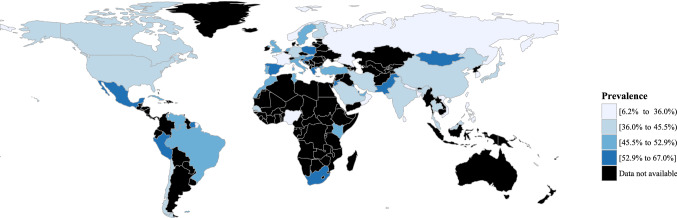
Verification
Claims the paper makes
The claims and statistics of this paper haven’t been checked yet.
Free: it reads the open-access text and checks the first 5 claims that cite a source we can check. Create a free account to check every claim.
Claims other papers make about this one
Each is checked against this paper’s own text: does it say what the citing paper says it does?
In the citing paper
“Global estimates indicate that nearly one in four (23·8%) people aged 15–40 years meet the criteria for obesity.50”
Self-check
Percentages, sums and reported differences re-computed from the paper’s own numbers.
The self-check needs the paper’s full text.
Citations
Cites
Dermyshi, E., Wang, Y., Yan, C., Hong, W., Qiu, G., Gong, X., & Zhang, T. (2017) · Neonatology · doi:10.1159/000454668 · Cited by 24,451
Meta-analysis of Observational Studies in Epidemiology<SUBTITLE>A Proposal for Reporting</SUBTITLE>
Stroup, D. F. (2000) · JAMA · doi:10.1001/jama.283.15.2008 · Cited by 20,623
Stang, A. (2010) · European Journal of Epidemiology · doi:10.1007/s10654-010-9491-z · Cited by 17,396
Global nutrition transition and the pandemic of obesity in developing countries
Popkin, B. M., Adair, L. S., & Ng, S. W. (2012) · Nutrition Reviews · doi:10.1111/j.1753-4887.2011.00456.x · Cited by 4,313
Guthold, R., Stevens, G. A., Riley, L. M., & Bull, F. C. (2020) · The Lancet Child & Adolescent Health · doi:10.1016/s2352-4642(19)30323-2 · Cited by 4,033
Metaprop: a Stata command to perform meta-analysis of binomial data
Nyaga, V. N., Arbyn, M., & Aerts, M. (2014) · Archives of Public Health · doi:10.1186/2049-3258-72-39 · Cited by 2,139
Waist circumference and not body mass index explains obesity-related health risk
Janssen, I., Katzmarzyk, P. T., & Ross, R. (2004) · The American Journal of Clinical Nutrition · doi:10.1093/ajcn/79.3.379 · Cited by 2,013
Diabetes in Asia: Epidemiology, Risk Factors, and Pathophysiology
Chan, J. C. N., Malik, V., Jia, W., Kadowaki, T., Yajnik, C. S., Yoon, K.-H., & Hu, F. B. (2009) · JAMA · doi:10.1001/jama.2009.726 · Cited by 1,997
Chronic stress at work and the metabolic syndrome: prospective study
Chandola, T., Brunner, E., & Marmot, M. (2006) · BMJ · doi:10.1136/bmj.38693.435301.80 · Cited by 1,075
Commentary: Heterogeneity in meta-analysis should be expected and appropriately quantified
Higgins, J. P. T. (2008) · International Journal of Epidemiology · doi:10.1093/ije/dyn204 · Cited by 995
Research works printed but not linked: 1
- 8. James W, Jackson‐Leach R, et al. Overweight and obesity (high body mass index). In: Zzati J, Lopez A (eds) Comparative quantification of health risks: global and regional burden of disease attributable to selected major risk factors. World Health Organization, Geneva; 2004: 497–596
Cited by
Items 101–200 of 327
Harimawan, A. I. W., Prabandari, A. A. S. M., Wihandani, D. M., Jawi, I. M., Weta, I. W., Senapathi, T. G. A., Dewi, N. N. A., Sundari, L. P. R., & Ryalino, C. (2025) · Frontiers in Nutrition · doi:10.3389/fnut.2025.1638075 · Cited by 12
Lin, C., Tai, C., Huang, J., Liu, C., Chen, H., Cheng, P., Chen, C.-Y., Peng, C., Wang, C., Weng, S., et al. (2022) · Journal of Gastroenterology and Hepatology · doi:10.1111/jgh.15936 · Cited by 11
Self-citationCorreia, J. C., Ahmad, S. S., Waqas, A., Meraj, H., & Pataky, Z. (2024) · Journal of Medical Internet Research · doi:10.2196/52142 · Cited by 9
Samadoulougou, S., Diallo, M., Cissé, K., Ngwasiri, C. A., Aminde, L. N., & Kirakoya‐Samadoulougou, F. (2022) · International Journal of Environmental Research and Public Health · doi:10.3390/ijerph191911863 · Cited by 14
“[16] noted an increased prevalence of abdominal obesity among the world adult population in recent decades, from 31.”
BackgroundResultInfluentialSchwenger, K. J. P., Alali, M., Ghorbani, Y., Fischer, S. E., Jackson, T. D., Okrainec, A., & Allard, J. P. (2022) · Obesity Surgery · doi:10.1007/s11695-022-06380-7 · Cited by 10
Kholmatova, K., Krettek, A., Dvoryashina, I. V., Malyutina, S. K., & Kudryavtsev, A. V. (2024) · International Journal of Circumpolar Health · doi:10.1080/22423982.2024.2386783 · Cited by 12
Valencia, J. G., Saavedra‐Garcia, L., Vera-Ponce, V. J., Espinoza-Rojas, R., & Barengo, N. C. (2023) · Journal of Clinical Medicine · doi:10.3390/jcm12103482 · Cited by 14
“The high prevalence found in our study can be partially attributed to ethnic differences, with previous research indicating that Latin Americans have a greater propensity for visceral adiposity accumulation than other ethnic groups [27,33].”
BackgroundInfluentialMarttila, J., Sipola, P., Juutilainen, A., Sillanmäki, S., Hedman, M., & Kuusisto, J. (2024) · High Blood Pressure & Cardiovascular Prevention · doi:10.1007/s40292-024-00659-9 · Cited by 8
Public Policies on Obesity: A Literature Review of Global Challenges and Response Strategies
Lan, X., & Sulaiman, N. (2024) · Cureus · doi:10.7759/cureus.62758 · Cited by 18
“[9].”
BackgroundInfluentialQin, C., Fan, C., Wang, J., Li, Q., Liu, J., Wang, H., & Feng, Q. (2025) · The Lancet Regional Health - Western Pacific · doi:10.1016/j.lanwpc.2025.101542 · Cited by 15
Self-citationMolavizadeh, D., Masrouri, S., Esmaeili, F., Azizi, F., & Hadaegh, F. (2025) · Journal of the American Heart Association · doi:10.1161/jaha.124.040930 · Cited by 11
Ntimana, C. B., & Choma, S. (2023) · Frontiers in Public Health · doi:10.3389/fpubh.2023.1165662 · Cited by 9
“Over the past decade, abdominal obesity has increased evenmore rapidly than BMI (5, 6).”
BackgroundEnkhtugs, K., Byambasukh, O., Boldbaatar, D., Tsedev-Ochir, T.-O., Enebish, O., Sereejav, E., Dangaa, B., Bayartsogt, B., Yadamsuren, E., & Nyamdavaa, K. (2024) · Healthcare · doi:10.3390/healthcare12121222 · Cited by 9
Ntimana, C. B., Mashaba, R. G., Seakamela, K. P., Maimela, E., Masemola, M. L., & Choma, S. (2024) · Obesities · doi:10.3390/obesities4030030 · Cited by 8
Fecal Microbiota Transplantation as an Alternative Method in the Treatment of Obesity
Hemachandra, S., Rathnayake, S., Jayamaha, A. A., Francis, B. S., Welmillage, D., Kaur, D. N., Zaw, H. K., Zaw, L. T., Chandra, H. A., & Abeysekera, M. E. (2025) · Cureus · doi:10.7759/cureus.76858 · Cited by 15
Hernández‐Vásquez, A., Olazo-Cárdenas, K. M., Visconti-Lopez, F. J., & Barrenechea-Pulache, A. (2022) · International Journal of Environmental Research and Public Health · doi:10.3390/ijerph191610333 · Cited by 11
“However, a systematic review and meta-analysis found that AO was twice as high in young adults compared to older subjects [4].”
BackgroundSyauqy, A., Permatasari, Z. A., Mattarahmawati, S. A., Ernawati, F., Pramono, A., Tsani, A. F. A., Fitranti, D. Y., Candra, A., & Ardiaria, M. (2024) · Nutrition and Health · doi:10.1177/02601060241283615 · Cited by 8
“Central obesity is a global public health concern (Wong et al., 2020).”
InfluentialFraile‐Μartinez, O., Ortega, M. A., & Montero, C. G. (2026) · International Journal of Molecular Sciences · doi:10.3390/ijms27020692 · Cited by 13
Gupta, R. D., Tamanna, N., Akonde, M., Gavi, S., Haider, S. S., & Chakraborty, P. A. (2022) · Obesity Medicine · doi:10.1016/j.obmed.2022.100427 · Cited by 7
Diabetes Epidemiology and Its Implications
Bloomgarden, Z. T., & Handelsman, Y. (2023) · Contemporary diabetes · doi:10.1007/978-3-031-26681-2_31 · Cited by 11
Cai, J., Lü, B., Chen, H., Lu, M., Zhang, Y., Luo, C., You, L., Dai, M., & Zhao, Y. (2024) · Public Health · doi:10.1016/j.puhe.2023.11.006 · Cited by 8
Zhang, B., Loh, V. H. Y., Reid, R. A., Nyanhanda, T., Jamalishahni, T., Turrell, G., & Rachele, J. N. (2024) · Health & Place · doi:10.1016/j.healthplace.2024.103263 · Cited by 8
Niu, T., Cao, S., Cheng, J., Zhang, Y., Zhang, Z., Xue, R., Ma, J., Ran, Q., & Xian, X. (2024) · Frontiers in Psychiatry · doi:10.3389/fpsyt.2024.1451703 · Cited by 9
Alipour, R., Marzabadi, L. R., Arjmand, B., Ayati, M. H., & Namazi, N. (2022) · Diabetes & Metabolic Syndrome Clinical Research & Reviews · doi:10.1016/j.dsx.2022.102586 · Cited by 13
Mewada, A., Keswani, J., Sharma, H., Tewani, G. R., & Nair, P. M. K. (2022) · International Journal of Yoga · doi:10.4103/ijoy.ijoy_63_22 · Cited by 8
“5%, with higher prevalence reported among older individuals, females, urban residents, and participants with higher socioeconomic status.[5]”
BackgroundPurnama, C. A., Meiliana, A., Barliana, M. I., Lestari, K., & Wijaya, A. (2024) · Journal of Obesity · doi:10.1155/2024/1424404 · Cited by 7
“Obesity has become a global epidemic in the past decade and has grown rapidly in developing countries, including Indonesia [1].”
BackgroundRamadan, M. M., Bajunaid, R. M., Kazim, S. M., Alhusseini, N. K., Al-Shareef, A. S., & ALSaleh, N. (2024) · Journal of Epidemiology and Global Health · doi:10.1007/s44197-024-00241-5 · Cited by 7
Oh, J., Kim, B. K., Yoon, J., Lee, H. H., Park, H., Lee, J., Park, Y., Yun, B., & Chung, J. (2024) · Cancers · doi:10.3390/cancers16183161 · Cited by 6
Weight-adjusted waist index and cardiovascular disease: a population-based study in Ravansar, Iran
Sadafi, S., Azizi, A., Shakiba, E., & Pasdar, Y. (2024) · Archives of Public Health · doi:10.1186/s13690-024-01451-w · Cited by 9
“A meta-analysis by Wong et al. (2020) reported a global prevalence of central obesity at 41.5% [5].”
InfluentialBigot, P., Boissier, R., Khene, Z., Albiges, L. K., Bernhard, J., Corréas, J.-M., Vergie, S. D., Doumerc, N., Ferragu, M., Ingels, A., et al. (2024) · Progrès en Urologie - FMC · doi:10.1016/j.fpurol.2024.08.011 · Cited by 8
Zhou, J., Wang, S., Wang, Q., Zhao, R., Wang, D., Xie, H., Du, Y., Xu, Y., Deng, J., Huang, Y., et al. (2025) · Food & Function · doi:10.1039/d4fo05578k · Cited by 8
Peng, X., Wang, J., Chen, T., He, L., Li, J., Xia, S., Kong, X., Zhou, N., Long, D., Sang, C., et al. (2025) · Scientific Reports · doi:10.1038/s41598-025-93338-1 · Cited by 9
“This sex-specific trend aligns with findings from a global epidemiological survey on central obesity, which revealed a more rapid increase in males 35 .”
Self-citationSchmucker, J., Kerniss, H., Hanses, U., Rühle, S., Marín, L. A. M., Osteresch, R., Fach, A., Eitel, I., Hambrecht, R., & Wienbergen, H. (2025) · European Journal of Preventive Cardiology · doi:10.1093/eurjpc/zwaf411 · Cited by 7
Approach to the cardiometabolic continuum. Narrative description
Rodulfo, J. I. A. (2021) · Clínica e Investigación en Arteriosclerosis (English Edition) · doi:10.1016/j.artere.2020.10.001 · Cited by 10
Bai, L., Yan, X., Lu, Y., Meng, Q., Rong, Y., Ye, L.-F., Pan, Z., Xing, B., & Wang, D. (2022) · Annals of Surgical Oncology · doi:10.1245/s10434-021-11234-0 · Cited by 8
Association of weight range with telomere length: A retrospective cohort study
Wang, X., Wen, J., Qu, Q., Gu, S., Zhang, L., Yu, H., & Xu, Q. (2023) · Frontiers in Endocrinology · doi:10.3389/fendo.2023.1106283 · Cited by 8
Wu, X., Li, G., Liu, L., Zhao, Y., Golden, A. R., & Cai, L. (2024) · BMC Cardiovascular Disorders · doi:10.1186/s12872-024-03741-1 · Cited by 8
“It has became a pressing global public health concern [2], and is also a main contributing factor to chronic non-communicable diseases (NCDs), such as cardiovascular diseases (CVD), hypertension, and certain types of cancer, among others [3].”
BackgroundInfluentialGhafouri-Taleghani, F., Bahadoran, Z., Jeddi, S., & Azizi, F. (2025) · Journal of Diabetes & Metabolic Disorders · doi:10.1007/s40200-025-01707-4 · Cited by 5
“The prevalence of AO is rising, affecting 41.5% of individuals aged 15 and older globally [6 ].”
InfluentialGomes, S. M., de Carvalho, A. M., Machado, A. D., Carli, E. D., Ferreira, M. A., Jacob, M. C. M., & Marchioni, D. M. L. (2025) · Food Security · doi:10.1007/s12571-025-01607-8 · Cited by 7
“Despite the global trend of increasing overweight and obesity (Wong et al., 2020 ) and the growing trend of over-weight and obesity, especially among black women (Esti-valeti et al., 2022 ), ensuring food and nutritional security can therefore reduce the prevalence of overweight for White women and…”
Liu, C., Liu, P., Liu, X., Wang, N., Wu, P., & Yu, J. (2025) · Frontiers in Oncology · doi:10.3389/fonc.2025.1671856 · Cited by 9
Wu, Y., Tong, Y., Wang, H., Zhang, X., Long, Y., Li, Q., Ren, J., & Liu, C. (2023) · Frontiers in Public Health · doi:10.3389/fpubh.2023.1122995 · Cited by 9
“As the incidence of central obesity raised rapidly during recent years (7, 25), several studies indicated a higher proportion of central obesity among females than males (6, 8), which could be attributed to fertility and decreased estrogen levels.”
BackgroundSelf-citationPharmacological Management of Obesity: A Century of Expert Opinions in Cecil Textbook of Medicine
Manu, P., Lăcătușu, C.-M., Rogozea, L. M., & Cernea, S. (2022) · American Journal of Therapeutics · doi:10.1097/mjt.0000000000001524 · Cited by 12
Tong, Y., Ko, J. K. Y., Lam, K. S. L., Tam, S., Lee, V. C. Y., Ho, P. C., Ng, E. H. Y., & Li, R. (2023) · Reproductive Biology and Endocrinology · doi:10.1186/s12958-023-01093-7 · Cited by 5
Nutritional Biomarkers for Predicting Pancreatic Beta Cell Failure in Central Obesity
Rahman, M. N., Diantini, A., Fattah, M., & Barliana, M. I. (2021) · The Indonesian Biomedical Journal · doi:10.18585/inabj.v13i1.1440 · Cited by 7
“5% which is higher than obesity prevalence.(5) Central Nutritional Biomarkers for Predicting Pancreatic Beta Cell Failure in Central Obesity”
BackgroundYimer, W., Asmare, L., Gebeyehu, F. B., Alemu, T., Mehamed, A., & Ayele, F. Y. (2025) · Frontiers in Nutrition · doi:10.3389/fnut.2024.1414930 · Cited by 7
Huang, H., & Xiao, X. (2025) · Journal of School Health · doi:10.1111/josh.70000 · Cited by 6
Filho, J. C. C. N., Nunes, M. P. O., de Matos, R. S., Pinto, D. V., Pereira, D. C. B. H. G., Branco, T. A. S. P. C., da Silva, G. B., Ramalho, J. D. A. M., & Daher, E. D. F. (2025) · PLoS ONE · doi:10.1371/journal.pone.0316610 · Cited by 5
Moshomo, T., Mawi, M., Williams, C. G., Molebatsi, K., Masupe, T., Manyake, K., Lockman, S., Molefe‐Baikai, O. J., Leero, A., Jarvis, J. N., et al. (2025) · BMJ Open · doi:10.1136/bmjopen-2024-096170 · Cited by 5
Ishida, N., Harada, S., Toki, R., Hirata, A., Matsumoto, M., Miyagawa, N., Iida, M., Edagawa, S., Miyake, A., Kuwabara, K., et al. (2025) · Journal of Diabetes Investigation · doi:10.1111/jdi.14377 · Cited by 5
Khanmohammadi, S., Karimi, K., Sadri, M., Ebrahimpur, M., Payab, M., Azadnajafabad, S., Akbarpour, S., Sharifi, F., & Rezaei, N. (2025) · Scientific Reports · doi:10.1038/s41598-025-23885-0 · Cited by 4
Xu, G., Wang, Z., Yu, C., Amin, B., Du, D., Li, T., Chen, G., Wang, L., Li, Z., Chen, W., et al. (2023) · Diabetes Metabolic Syndrome and Obesity · doi:10.2147/dmso.s389346 · Cited by 4
The risk of herpes zoster is positively associated with obesity, especially morbid obesity
Chen, H.-L., Chen, C., Hsieh, W.-C., Huang, Y.-H., Hsu, T.-J., Tsai, F., Cheng, Y.-C., & Hsu, C.-Y. (2024) · Scientific Reports · doi:10.1038/s41598-024-65195-x · Cited by 4
“Moreover, the highest prevalence of central obesity was 55.1% and 52.9% in Sothern America and Central American, respectively 4 .”
BackgroundInfluentialKosho, M. X. F., Verhelst, A. R. E., Teeuw, W. J., van Bruchem, S., Nazmi, K., Gerdes, V. E. A., & Loos, B. G. (2024) · Journal of Clinical Medicine · doi:10.3390/jcm13247512 · Cited by 5
Deng, Y., Ma, T., Ngai, F., Wang, H., Yang, L., Sun, Q. F., & Xie, Y. J. (2024) · Obesity Research & Clinical Practice · doi:10.1016/j.orcp.2025.01.003 · Cited by 4
Self-citationInteractive effects of abdominal obesity and insulin resistance on cardiometabolic risk
Lin, M., Chen, X., Wu, M., Xiao, J., Li, S., Tang, H., Tan, X., & Chen, Y. (2025) · Revista Española de Cardiología (English Edition) · doi:10.1016/j.rec.2025.03.006 · Cited by 4
Self-citationAsgari, E., Shiraseb, F., Mirzababaei, A., Tangestani, H., & Mirzaei, K. (2023) · Clinical Nutrition Research · doi:10.7762/cnr.2023.12.1.7 · Cited by 4
“According to a systematic review in 2020, the prevalence of central obesity is 41.5% in the world [2].”
BackgroundInfluentialThe Fruit Intake–Adiposity Paradox: Findings from a Peruvian Cross-Sectional Study
Valencia, J. G., Ramos, W., Cruz-Ausejo, L., Torres-Malca, J. R., Loayza-Castro, J. A., Zeñas-Trujillo, G. Z., Ponce, N. R. G., Zuzunaga-Montoya, F. E., Valladares-Garrido, M. J., Vera-Ponce, V. J., et al. (2023) · Nutrients · doi:10.3390/nu15051183 · Cited by 9
“Furthermore, considering the high healthcare cost attributed to general and central obesity [36,37], its steepening trend [16,17], and the potential cost savings on its reduction [38,39], strengthening costeffective public policies such as nutritional education targeted at vulnerable populations should be considered […”
BackgroundPrevalence of obesity and overweight in an adult population of Tehran metropolis
Shafiee, A., Nayebirad, S., Najafi, M. S., Jalali, A., Alaeddini, F., Saadat, S., Masoudkabir, F., Hosseini, K., Vasheghani‐Farahani, A., Sadeghian, S., et al. (2023) · Journal of Diabetes & Metabolic Disorders · doi:10.1007/s40200-023-01365-4 · Cited by 4
“In this meta-analysis, central obesity prevalence was higher in older adults and women, similar to our findings [2].”
InfluentialDehzad, M. J., Ghalandari, H., Fahimzad, F. S., Maghsoudi, Z., Makhtoomi, M., Nouri, M., & Askarpour, M. (2025) · International Journal of Food Sciences and Nutrition · doi:10.1080/09637486.2025.2496400 · Cited by 5
“According to the latest studies, the number of individuals estimated to be inflicted with obesity has increased dramatically (Wong et al. 2020).”
Family composition, income, and healthy diet in rural China: evidence from three provinces
Yang, M., Amar, N., Zhao, L. C., & Pan, C. (2025) · Frontiers in Nutrition · doi:10.3389/fnut.2025.1608024 · Cited by 4
“However, the negative impact on older members may reflect fixed incomes limiting diverse food purchases, a trend identified in prior studies examining economic constraints on dietary choices among the elderly (56).”
Bashir, A. O., Osman, O. E., & Adam, I. (2025) · Scientific Reports · doi:10.1038/s41598-025-15097-3 · Cited by 3
Rangul, V., Brennsaeter, M., Eik‐Nes, T. T., Kvaløy, K., & Friis, J. (2025) · BMC Public Health · doi:10.1186/s12889-025-23872-0 · Cited by 184
“Globally, adult obesity rates have more than doubled since 1990 [3], and the prevalence of abdominal obesity increased from 31.3 to 48.3% between 1985 and 2014 [4].”
InfluentialUbaid, S., Osama, M., Ullah, U., Din, Z. U., Hassan, M., & Hamza, M. (2025) · Cureus · doi:10.7759/cureus.92085 · Cited by 4
Global Food Policies and Obesity: Lessons From Selected Country Experiences
Alum, E. U., Akwari, A. A., Kibuuka, M., Ekpang, P. O., Ekpang, J. E., & Orji, O. U. (2026) · Food and Nutrition Bulletin · doi:10.1177/03795721251408170 · Cited by 3
Effects of antidepressants on body weight in patients treated in a naturalistic setting in Oman
Al-Jahwari, L., Qutishat, M., Al-Maqbali, M., Alrisi, K. A., AlBreiki, M., Albalushi, M., & Al‐Huseini, S. (2025) · Middle East Current Psychiatry · doi:10.1186/s43045-025-00496-z · Cited by 4
Huang, W., Yin, H., & Yang, B. (2025) · PLoS ONE · doi:10.1371/journal.pone.0326441 · Cited by 6
Simple anthropometric measures to predict visceral adipose tissue area in middle-aged Indonesian men
Matondang, S., Adiandrian, B., Karismaputri, K. S., Marcella, C., Prihartono, J., & Tahapary, D. L. (2023) · PLoS ONE · doi:10.1371/journal.pone.0280033 · Cited by 3
“Obese men in particular have shorter life expectancy compared to obese women [6], and a meta-analysis by Wong et al [7] found obesity to be more common in men aged>40 years compared to those below 40.”
BackgroundGupta, R. D., Haider, S. S., Nishat, M. N. S., Dey, S., Akonde, M., & Haider, M. R. (2023) · Journal of Public Health · doi:10.1007/s10389-023-01846-z · Cited by 3
“%) adults were obese globally (Wong et al. 2020).”
Coreopsis tinctoria improves energy metabolism in obese hyperglycemic mice
Huangfu, B., Yang, M., Xu, J., Gao, R., Hu, Y., Zhao, Y., Huang, K., & He, X. (2024) · Heliyon · doi:10.1016/j.heliyon.2024.e27449 · Cited by 3
“A meta-analysis showed that the global prevalence of central obesity is approximately 41.5% [1].”
InfluentialIniguez, A. B., Du, ., & Zhu, M. J. (2025) · Trends in Food Science & Technology · doi:10.1016/j.tifs.2025.105106 · Cited by 3
Martinez, R. M., de Almeida, C. D. O. R. P., Lima, T. P. B., Figueiredo, M. S., & Teodoro, A. J. (2022) · Research Society and Development · doi:10.33448/rsd-v11i4.27153 · Cited by 4
“…levels of cytokines and adipokines, being able to significantly altering many physiological mechanisms through a state of low-grade chronic inflammation that can lead to complications (Ikeoka et al., 2010; Nimptsch et al., 2019; WHO - World Health Organization, 2008; Wu & Ballantyne, 2020).”
BackgroundNkougni, J. T., Ntentié, F. R., Fonkoua, M., Azantsa, B. G. K., Takuissu, G. R., Lumngwena, E. N., Ngondi, J. L., & Oben, J. E. (2022) · Open Journal of Epidemiology · doi:10.4236/ojepi.2022.122016 · Cited by 2
Maestre-Miquel, C., López‐de‐Andrés, A., Pérez‐Farinós, N., Jiménez-Sierra, A., Benavente‐Marín, J. C., López‐González, Á., Viñuela, A., & Jiménez‐García, R. (2024) · Healthcare · doi:10.3390/healthcare12141382 · Cited by 3
Slusher, A. L., Visavadiya, N. P., Fico, B. G., Estébanez, B., Acevedo, E. O., & Huang, C. (2024) · Biology · doi:10.3390/biology13080599 · Cited by 2
The arabic version of the fat phobia scale—short form: reliability and structural validity
Ghazzawi, H., Alenezi, A. F., Souraya, S., Alhaj, O. A., Trabelsi, K., Amawi, A. T., Helmy, M. S., Saif, Z., Robinson, B. “. E., & Jahrami, H. (2025) · Eating and Weight Disorders - Studies on Anorexia Bulimia and Obesity · doi:10.1007/s40519-025-01727-2 · Cited by 3
“Both developed and developing countries have high prevalence and incidence rates, suggesting that obesity is a global health problem [1, 8, 9].”
Obesity and its associations with autonomic and cognitive functions in the general population
Lkhagvasuren, B., Pang, Z. P., Jadamba, T., Hiramoto, T., Cheslack‐Postava, K., Musa, G. J., Hoven, C. W., & Sudo, N. (2025) · PLoS ONE · doi:10.1371/journal.pone.0322802 · Cited by 4
Skurvydas, A., Valančienė, D., Lisinskienė, A., Dadelienė, R., Šarkauskienė, A., Fernāte, A., Vazne, Ž., Grants, J., Koka, A., & Majauskienė, D. (2025) · Frontiers in Public Health · doi:10.3389/fpubh.2025.1522918 · Cited by 2
Wu, Z., Owen, A. J., Woods, R. L., Zhou, Z., Chong, T. T. ‐., Orchard, S. G., Shah, R. C., Sheets, K. M., Murray, A. M., & Ryan, J. L. (2025) · Alzheimer s & Dementia Diagnosis Assessment & Disease Monitoring · doi:10.1002/dad2.70135 · Cited by 6
“4 Although the association of BMI with brain aging remains controversial, central adiposity is considered a risk factor for neurodegeneration.”
Dobrowolski, H., Włodarek, D., & Pańczyk, M. (2025) · Scientific Reports · doi:10.1038/s41598-025-14033-9 · Cited by 3
Pancreatic cancer mortality trend in Montenegro, 1990–2018
Vuković, M. N., Jakšić, M., Smolović, B., Lukić, M., & Vujović, A. (2025) · Gastroenterology report · doi:10.1093/gastro/goaf076 · Cited by 2
Xu, C., Khurana, R., Gao, X., Nie, X., Lehertshuber, C., Li, L., Romer, A., Brizzi, L. F., von Scheidt, M., Yadav, A., et al. (2025) · International Journal of Cardiology Cardiovascular Risk and Prevention · doi:10.1016/j.ijcrp.2025.200539 · Cited by 2
Rouhani, P., Mokhtari, E., Soltani, S., & Saneei, P. (2025) · Nutrition Reviews · doi:10.1093/nutrit/nuaf189 · Cited by 2
Aychiluhm, S. B., Ross, A. G., Isaac, V., Thapa, S., & Ahmed, K. Y. (2025) · BMC Medicine · doi:10.1186/s12916-025-04538-5 · Cited by 8
“These results are consistent with both national and global evidence, which reports a substantial burden of central obesity among young adults, particularly among males and older adolescents [61, 64].”
Xu, Z., Liu, M., Chen, M., Shen, X., Hao, X., Yun, Q., Zheng, Y., Cui, Y., Qiao, J., & Wang, F. (2026) · Journal of Diabetes Research · doi:10.1155/jdr/2197672 · Cited by 3
“Urbanization, with its associated increase in sedentary behavior and reduced physical activity, along with the growing consumption of ultraprocessed foods, has contributed to higher obesity rates [33, 34], which in turn increases T2DM risk.”
Adversity, adiposity, nutrition and metabolic well-being in multi-ethnic Asia
Mina, T. H., Jain, P. R., Forouhi, N. G., & Chambers, J. C. (2026) · Nature Metabolism · doi:10.1038/s42255-025-01441-4 · Cited by 4
“Visceral adiposity levels increased in all regions of the world over the past two decades 16 , and increased visceral adiposity has made a major contribution to the secular changes in global cardiometabolic risk 17 .”
Mahmood, S. B. Z., Sethi, S. S., Khan, M. S., Parkash, O., Bukhari, S., & Almas, A. (2026) · Journal of Health Population and Nutrition · doi:10.1186/s41043-026-01268-z · Cited by 2
Shi, J., Wei, D., Ma, C., Geng, J., Zhao, M., Hou, J., Huo, W., Jing, T., Chen, Z., Huang, S., et al. (2026) · International Journal of Obesity · doi:10.1038/s41366-026-02036-z · Cited by 2
1,25(OH)2D3 rescues obesity and impairment of lipid mobilization in Cyp27b1 deficient zebrafish
Yang, G., Zhang, Y., Huang, Y., & Wang, C. (2026) · Aquaculture and Fisheries · doi:10.1016/j.aaf.2026.02.010 · Cited by 3
Clinical Guide to Obesity and Nonherbal Nutraceuticals in Canine Orthopedic Conditions
Ratsch, B. E., Levine, D. F., & Wakshlag, J. J. (2022) · Veterinary Clinics of North America Small Animal Practice · doi:10.1016/j.cvsm.2022.03.002 · Cited by 6
Sperlich, S., Beller, J., Epping, J., Safieddine, B., Tetzlaff, F., Tetzlaff, J., & Geyer, S. (2022) · Gesundheit und Gesellschaft · doi:10.1007/978-3-658-37692-5_10 · Cited by 2
Analisis Faktor yang Terkait dengan Kejadian Obesitas Sentral pada Wanita Dewasa
Purwaningtyas, D. R., Tanjung, N. P., & Dhanny, D. R. (2023) · Nutri-Sains Jurnal Gizi Pangan dan Aplikasinya · doi:10.21580/ns.2023.7.1.10771 · Cited by 2
“(Kementrian Kesehatan RI a, 2019; Kementrian Kesehatan RI b, 2019; Wong et al. , 2020).”
Escalante, C. M. R., Fernandez, S., Espinoza-Rojas, R., Saavedra‐Garcia, L., Barengo, N. C., & Valencia, J. G. (2023) · International Journal of Environmental Research and Public Health · doi:10.3390/ijerph20237089 · Cited by 12
Permatasari, M. J., Syauqy, A., Noer, E. R., Pramono, A., & Tjahjono, K. (2023) · Jurnal Gizi Indonesia (The Indonesian Journal of Nutrition) · doi:10.14710/jgi.12.1.31-35 · Cited by 7
Chen, P., Song, Q., Wang, X., Li, M., Liu, L., Ning, J., Song, Y., Yu, C., & Guan, Q. (2024) · Journal of Psychosomatic Research · doi:10.1016/j.jpsychores.2024.111627 · Cited by 2
de Matos, C. V. B., Farinatti, P., Lopes, K. G., & Borges, J. P. (2024) · The Journal of Sports Medicine and Physical Fitness · doi:10.23736/s0022-4707.24.16094-x · Cited by 2
Determinants of nutrition knowledge among student migrants in West Midlands, United Kingdom
Olatunji, S., Asomuyide, O., Omar, M., Falobi, A. A., Falana, A. B., Ojo, C. C., Collins, P. M., Ahmed, Y. A., & Ojo, O. O. (2024) · F1000Research · doi:10.12688/f1000research.155200.1 · Cited by 2
Yadav, U., Kumar, N., & Sarvottam, K. (2024) · Acta Diabetologica · doi:10.1007/s00592-024-02379-x · Cited by 4
“[16]Waist circumference (WC) of the patients was measured at the midline between the lower rib margin and the iliac crest at the end of expiration, with the help of standardized measuring tape [17].”
Anwar, F. N., Roca, A. M., Vasudevan, V., Ilyas, Y., Loya, A. C., Medakkar, S. S., Federico, V. P., & Singh, K. (2024) · Journal of Clinical Neuroscience · doi:10.1016/j.jocn.2024.110889 · Cited by 3
Matias, T. S., Araújo, R. H. D. O., Tassitano, R. M., Ramírez‐Vélez, R., Sadarangani, K. P., Ywgne, J., Gaia, J. W. P., de Jesus, G. M., & da Silva, D. R. P. (2025) · Journal of Public Health · doi:10.1093/pubmed/fdae319 · Cited by 2
Wang, H., Cheng, L., Yuan, X., Lyu, J., Li, P., Yan, S.-Y., Wang, H., Ding, Y.-S., Hong, S., & Wang, H.-J. (2025) · Nutrients · doi:10.3390/nu17030376 · Cited by 4
Self-citation
Metadata
- Authors
- Wong, M. C. S., Huang, J., Wang, J., Chan, P. S. F., Lok, V., Chen, X., Leung, C., Wang, H. H. X., Lao, X. Q., & Zheng, Z.-J.
- Affiliations
- Chinese University of Hong Kong (HK)
- Peking University (CN)
- Corresponding author
- Wong, Martin C. S.
- Zheng, Zhi-Jie
- ORCID
- Venue
- European Journal of Epidemiology
- Published
- 2020-05-24
- Volume
- 35
- Issue
- 7
- Pages
- 673-683
- ISSN
- 0393-2990 (ISSN-L)
- 1573-7284
- PMC
- PMC7387368
- OpenAlex
- W3028494703
- Cited by
- 327
- References
- 55
- Citations by year
- 2026: 51 · 2025: 85 · 2024: 73 · 2023: 47 · 2022: 45 · 2021: 22 · 2020: 4
- FWCI
- 4.93
- Type
- journal article
- Language
- en
- Open access
- hybrid
- doi.org
- Licence
- cc-by
- creativecommons.org/licenses/by/4.0 (tdm)
- creativecommons.org/licenses/by/4.0 (vor)
- Locations
- European Journal of Epidemiology (publishedVersion, cc-by)
- PubMed Central (publishedVersion, cc-by)
- PubMed (publishedVersion)
- ENLIGHTEN (Jurnal Bimbingan dan Konseling Islam) (acceptedVersion, cc-by-sa)
- Topics
- Health Sciences › Medicine › Public Health, Environmental and Occupational Health › Obesity, Physical Activity, Diet
- Health Sciences › Medicine › Endocrinology, Diabetes and Metabolism › Diabetes, Cardiovascular Risks, and Lipoproteins
- Health Sciences › Medicine › Endocrinology, Diabetes and Metabolism › Adipokines, Inflammation, and Metabolic Diseases
- Keywords
- abdominal obesity, prevalence, temporal trends, regional variation, sex differences, age differences, urban-rural differences, race, income level, global burden of disease
- MeSH terms
- Adolescent, Adult, Age Factors, Aged, Developing Countries, Humans, Middle Aged, Residence Characteristics, Risk Factors, Sex Factors, Prevalence, Developed Countries, Racial Groups, Waist Circumference, Young Adult, Obesity, Abdominal
About these checks
Registry, retraction, Cites and statistics results are computed, not judged, with one exception: a printed reference that no index lists is read once by a model before it counts as a citation error. Claims are extracted by a model and kept only when their quote appears verbatim in the text; each cited source is then checked, with a model’s help, for whether it says what the claim relies on. Those verdicts can be wrong — read the claim’s quote and the cited source before relying on one.
Statistics and arithmetic are recomputed, not judged.
Confidence bands are shown only for fields calibrated on our annotated test set. None is calibrated yet, so no band is shown.
What counts as a claim ›How we measure confidence ›How we check this ›
Are you an author, or do you see a problem with this page? Request a review
Data sources
Bibliographic data: Semantic Scholar, OpenAlex, Crossref.
Contains information from the Semantic Scholar Academic Graph Datasets, made available under the ODC Attribution License (ODC-BY 1.0).
Semantic Scholar’s data is described in: Kinney, R., et al. (2023). The Semantic Scholar Open Data Platform. arXiv:2301.10140.
