

A comparison of code similarity analysers
Open accessThe DOI matches its Crossref record; 111 of the 111 references it cites were found in a registry or an index.
Abstract
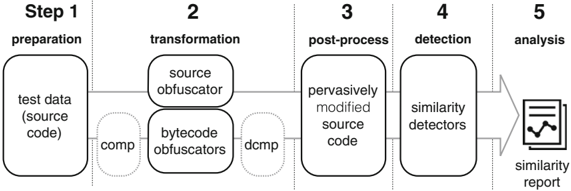
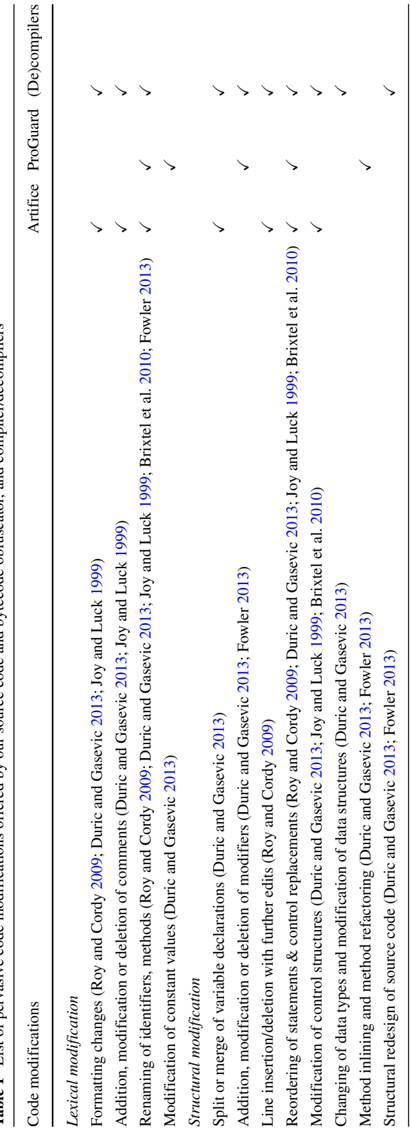
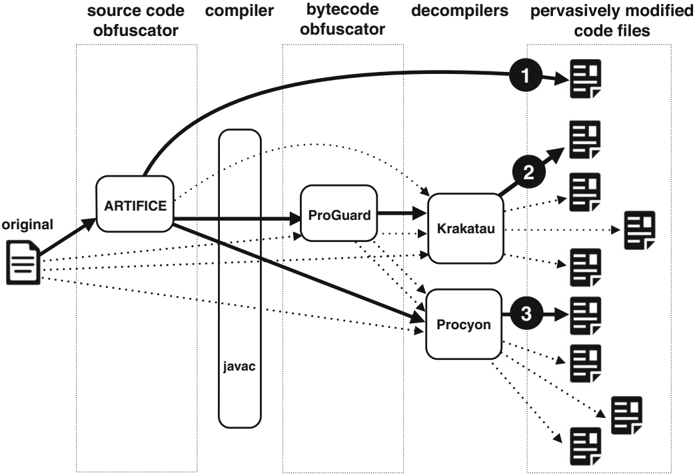
Copying and pasting of source code is a common activity in software engineering. Often, the code is not copied as it is and it may be modified for various purposes; e.g. refactoring, bug fixing, or even software plagiarism. These code modifications could affect the performance of code similarity analysers including code clone and plagiarism detectors to some certain degree. We are interested in two types of code modification in this study: pervasive modifications, i.e. transformations that may have a global effect, and local modifications, i.e. code changes that are contained in a single method or code block. We evaluate 30 code similarity detection techniques and tools using five experimental scenarios for Java source code. These are (1) pervasively modified code, created with tools for source code and bytecode obfuscation, and boiler-plate code, (2) source code normalisation through compilation and decompilation using different decompilers, (3) reuse of optimal configurations over different data sets, (4) tool evaluation using ranked-based measures, and (5) local + global code modifications. Our experimental results show that in the presence of pervasive modifications, some of the general textual similarity measures can offer similar performance to specialised code similarity tools, whilst in the presence of boiler-plate code, highly specialised source code similarity detection techniques and tools outperform textual similarity measures. Our study strongly validates the use of compilation/decompilation as a normalisation technique. Its use reduced false classifications to zero for three of the tools. Moreover, we demonstrate that optimal configurations are very sensitive to a specific data set. After directly applying optimal configurations derived from one data set to another, the tools perform poorly on the new data set. The code similarity analysers are thoroughly evaluated not only based on several well-known pair-based and query-based error measures but also on each specific type of pervasive code modification. This broad, thorough study is the largest in existence and potentially an invaluable guide for future users of similarity detection in source code.
Overview
The claims and statistics of this paper haven’t been checked yet.
Free: it reads the open-access text and checks the first 5 claims that cite a source we can check. Create a free account to check every claim.
Integrity signals
Registry
Cites
Statistics
Figures



Verification
Claims the paper makes
The claims and statistics of this paper haven’t been checked yet.
Free: it reads the open-access text and checks the first 5 claims that cite a source we can check. Create a free account to check every claim.
Self-check
Percentages, sums and reported differences re-computed from the paper’s own numbers.
The self-check needs the paper’s full text.
Citations
Cites
Scikit-learn: Machine Learning in Python
Pedregosa, F., Varoquaux, G., Gramfort, A., Michel, V., Thirion, B., Grisel, O., Blondel, M., Müller, A., Nothman, J., Louppe, G., et al. (2012) · arXiv · doi:10.48550/arxiv.1201.0490 · Cited by 71,016
Individual Comparisons by Ranking Methods
Wilcoxon, F. (1945) · Biometrics Bulletin · doi:10.2307/3001968 · Cited by 15,354
Addelman, S. (1979) · Technometrics · doi:10.1080/00401706.1979.10489788 · Cited by 6,750
Fisher, R. A. (1936) · BMJ · doi:10.1136/bmj.1.3923.554-a · Cited by 4,980
An Introduction to Kolmogorov Complexity and Its Applications
Li, M., & Vitányi, P. (2019) · Texts in Computer Science · doi:10.1007/978-3-030-11298-1 · Cited by 3,681
Halstead, M. H. (1977) · CERN Document Server (European Organization for Nuclear Research) · Cited by 3,672
Halstead, M. H. (1977) · CERN Document Server (European Organization for Nuclear Research) · Cited by 2,339
CCFinder: a multilinguistic token-based code clone detection system for large scale source code
Kamiya, T., Kusumoto, S., & Inoue, K. (2002) · IEEE Transactions on Software Engineering · doi:10.1109/tse.2002.1019480 · Cited by 1,711 · cited 6×
“ccfx (Kamiya et al. 2002) tokens and suffix tree matching deckard (Jiang et al. 2007b) characteristic vectors of AST optimised by LSH iclones (Göde and Koschke 2009) tokens and generalised suffix tree nicad (Roy and Cordy 2008) TXL and string comparison (LCS) simian (Harris 2015) line-based string…”
BackgroundMethodInfluentialAn Introduction to Kolmogorov Complexity and Its Applications
Li, M., & Vitányi, P. (2008) · Texts in Computer Science · doi:10.1007/978-0-387-49820-1 · Cited by 1,424
Clone detection using abstract syntax trees
Baxter, I. D., Yahin, A., Moura, L., Sant'Anna, M., & Bier, L. (2002) · Proceedings. International Conference on Software Maintenance (Cat. No. 98CB36272) · doi:10.1109/icsm.1998.738528 · Cited by 1,277 · cited 5×
“A few examples of well-known tree-based tools include CloneDR (Baxter et al. 1998), and Deckard (Jiang et al.”
BackgroundMethodInfluential
Research works printed but not linked: 2
- 73. Manning CD, Raghavan P, Schutze H (2009) An introduction toinformation retrieval, vol 21. Cambridge University Press, Cambridge
- 78. Nachenberg C (1996) Understanding and managing polymorphic viruses. The Symantec Enterprise Papers 30:16
Cited by
A Systematic Review on Code Clone Detection
Ain, Q. U., Butt, W. H., Anwar, M. W., Azam, F., & Maqbool, B. (2019) · IEEE Access · doi:10.1109/access.2019.2918202 · Cited by 165
“[76] compare the code similarity analyzers.”
BackgroundMethodInfluentialToxic Code Snippets on Stack Overflow
Ragkhitwetsagul, C., Krinke, J., Paixão, M. H. E., Bianco, G., & Oliveto, R. (2019) · IEEE Transactions on Software Engineering · doi:10.1109/tse.2019.2900307 · Cited by 136
“We are aware of effects of configurations to clone detection results and the importance of searching for optimised configurations in empirical clone studies [40], [41], [51], [52], [53].”
BackgroundSelf-citationComplement or Substitute? How AI Increases the Demand for Human SkillsPreprint
Mäkelä, E., & Stephany, F. (2025) · SSRN Electronic Journal · doi:10.2139/ssrn.5153230 · Cited by 119
Nasrabadi, M. Z., Parsa, S. A., Ramezani, M., Roy, C. K., & Ekhtiarzadeh, M. (2023) · Journal of Systems and Software · doi:10.1016/j.jss.2023.111796 · Cited by 132
Detecting LLM-Generated Text in Computing Education: Comparative Study for ChatGPT Cases
Orenstrakh, M. S., Karnalim, O., Suárez, C. A., & Liut, M. (2024) · 2024 IEEE 48th Annual Computers, Software, and Applications Conference (COMPSAC) · doi:10.1109/compsac61105.2024.00027 · Cited by 79
“In the context of plagiarism and collusion, automated detectors nullify common alterations that can be done without understanding the content [24, 43] and remove contents that are not evident for raising suspicion [48].”
BackgroundSiamese: scalable and incremental code clone search via multiple code representations
Ragkhitwetsagul, C., & Krinke, J. (2019) · Empirical Software Engineering · doi:10.1007/s10664-019-09697-7 · Cited by 96
Self-citationModelDiff: testing-based DNN similarity comparison for model reuse detection
Li, Y., Zhang, Z., Liu, B., Yang, Z., & Liu, Y. (2021) · ACM SIGSOFT International Symposium on Software Testing and Analysis (ISSTA) · doi:10.1145/3460319.3464816 · Cited by 92
“Code reuse is an important topic in software engineering research, and code similarity analysis [60, 61] is one of the most widely-used techniques to deal with such problems.”
BackgroundMethodChallenging Machine Learning-Based Clone Detectors via Semantic-Preserving Code Transformations
Zhang, W., Guo, S., Zhang, H., Sui, Y., Xue, Y., & Xu, Y. (2023) · IEEE Transactions on Software Engineering · doi:10.1109/tse.2023.3240118 · Cited by 74
“Recently, some approaches [6], [55], [74] perform code clone detection by extracting semantic code features, for example using hybrid features, such as CFGs and ASTs of a program [15], [23], [75], or through learning-based approaches [15], [16], [17], [18], [53], [55], [73], [75], [76], [77], [78].”
InfluentialAcademic Source Code Plagiarism Detection by Measuring Program Behavioral Similarity
Cheers, H., Lin, Y., & Smith, S. P. (2021) · IEEE Access · doi:10.1109/access.2021.3069367 · Cited by 59
“set generation for the evaluation of code similarity tools [46]–[48].”
BackgroundSimilarity Detection Techniques for Academic Source Code Plagiarism and Collusion: A Review
Karnalim, O., Simon, & Chivers, W. (2019) · IEEE International Conference on Teaching, Assessment, and Learning for Engineering · doi:10.1109/tale48000.2019.9225953 · Cited by 49
“[26] performed a comparative study involving 30 detection techniques taken from both the academic and professional domains.”
BackgroundOn the assessment of software defect prediction models via ROC curves
Morasca, S., & Lavazza, L. (2020) · Empirical Software Engineering · doi:10.1007/s10664-020-09861-4 · Cited by 48
Adapting Neural Text Classification for Improved Software Categorization
LeClair, A., Eberhart, Z., & McMillan, C. (2018) · IEEE International Conference on Software Maintenance (ICSM) · doi:10.1109/icsme.2018.00056 · Cited by 40
Multi-threshold token-based code clone detection
Golubev, Y., Poletansky, V., Povarov, N. I., & Bryksin, T. (2021) · IEEE International Conference on Software Analysis, Evolution and Reengineering (SANER) · doi:10.1109/saner50967.2021.00053 · Cited by 49
“Ragkhitwetsagul et al. [17] also compared various clone detection techniques in specific scenarios, including pervasive code modifications and boilerplate code.”
BackgroundAn automated approach to assess the similarity of GitHub repositories
Nguyen, P. T., Rocco, J. D., Rubei, R., & Ruscio, D. D. (2020) · Software Quality Journal · doi:10.1007/s11219-019-09483-0 · Cited by 43
“The concept of similarity is a key issue in various contexts, such as detecting cloned code (Evans et al. 2009; Ragkhitwetsagul et al. 2018a, b; Tiarks et al. 2011) software plagiarism (Leit˜ao 2004), or reducing test suite in model-based testing (Coutinho et al. 2014; Khan et al. 2016).”
BackgroundA picture is worth a thousand words: Code clone detection based on image similarity
Ragkhitwetsagul, C., Krinke, J., & Marnette, B. (2018) · IEEE International Workshop on Software Clones (IWSC) · doi:10.1109/iwsc.2018.8327318 · Cited by 42
“The second data set consists of three well-known Java open source systems used in another clone study [18]: JUnit v.4.13, JFreeChart v.1.5.0, and Apache Tomcat v.9.0.”
MethodInfluentialSelf-citationFrança, A. B., Danilo, M. L., Soares, J. M., & Giovanni, B. C. (2018) · IEEE Transactions on Computers · doi:10.1109/tc.2018.2881449 · Cited by 35
“[21] and not the tool with the same name developed by Joy and Luck [27].”
MethodEarly Detection of Smart Ponzi Scheme Contracts Based on Behavior Forest Similarity
Sun, W., Xu, G., Yang, Z., & Chen, Z. (2020) · IEEE International Conference on Software Quality, Reliability and Security (QRS) · doi:10.1109/qrs51102.2020.00047 · Cited by 35
“It has been used in code similarity analysis [27], [28].”
MethodChoosing Code Segments to Exclude from Code Similarity Detection
Simon, Karnalim, O., Sheard, J., Dema, I., Karkare, A., Leinonen, J., Liut, M., & McCauley, R. A. (2020) · ACM Conference on Innovation and Technology in Computer Science Education (ITiCSE) · doi:10.1145/3437800.3439201 · Cited by 36
“This tool is from the University of Warwick, and is not to be confused with another tool of the same name, from the University of Sydney [4, 46].”
BackgroundMethodThe Mutation and Injection Framework: Evaluating Clone Detection Tools with Mutation Analysis
Svajlenko, J., & Roy, C. K. (2019) · IEEE Transactions on Software Engineering · doi:10.1109/tse.2019.2912962 · Cited by 29
“Schulze and Meyer [33] as well as Ragkhitwetsagul [34], [35] have evaluated clone detection tools for duplicate code that has undergone automatic obfuscation in attempt to hide code plagiarism.”
BackgroundTao, N., Ventresque, A., Nallur, V., & Saber, T. (2024) · Algorithms · doi:10.3390/a17070287 · Cited by 32
Abbas, M., Ferrari, A., Shatnawi, A., Enoiu, E. P., Saadatmand, M., & Sundmark, D. (2022) · Requirements Engineering · doi:10.1007/s00766-021-00370-4 · Cited by 47
“[76] perform a comparison between 30 code similarity approaches used to identify code clones.”
MethodBigCloneBench Considered Harmful for Machine Learning
Krinke, J., & Ragkhitwetsagul, C. (2022) · IEEE International Workshop on Software Clones (IWSC) · doi:10.1109/iwsc55060.2022.00008 · Cited by 44
Self-citationMalicious source code detection using a translation model
Tsfaty, C., & Fire, M. (2023) · Patterns · doi:10.1016/j.patter.2023.100773 · Cited by 21
“51,52 In static analysis, the following techniques are commonly used to gather information regarding the detection mission. malware by code similarity techniques, 55 or a linter operation to check the program’s correctness.”
MethodOn Precision of Code Clone Detection Tools
Farmahinifarahani, F., Saini, V., Yang, D., Sajnani, H., & Lopes, C. V. (2019) · IEEE International Conference on Software Analysis, Evolution and Reengineering (SANER) · doi:10.1109/saner.2019.8668015 · Cited by 26
“[39].”
A Source Code Similarity Based on Siamese Neural Network
Xie, C., Wang, X., Qian, C., & Mengqi, W. (2020) · Applied Sciences · doi:10.3390/app10217519 · Cited by 23
Supporting the Detection of Software Supply Chain Attacks through Unsupervised Signature GenerationPreprint
Ohm, M., Kempf, L., Boes, F., & Meier, M. (2020) · arXiv (Cornell University) · doi:10.48550/arxiv.2011.02235 · Cited by 24
“The detection of similar code fragments is the main challenge for detection of software plagiarism [3]–[7].”
BackgroundMethodInfluentialThongtanunam, P., Shang, W., & Hassan, A. E. (2018) · Empirical Software Engineering · doi:10.1007/s10664-018-9645-2 · Cited by 24
Maintaining Academic Integrity in Programming: Locality-Sensitive Hashing and Recommendations
Karnalim, O. (2023) · Education Sciences · doi:10.3390/educsci13010054 · Cited by 20
Explanation in Code Similarity Investigation
Karnalim, O., & Simon, N. P. (2021) · IEEE Access · doi:10.1109/access.2021.3073703 · Cited by 21
“It is important to validate the findings on different data sets such as the SOCO data set [19], the OCD data set [53], and the BigCloneBench data set [54].”
MethodClone detection through srcClone: A program slicing based approach
Alomari, H. W., & Stephan, M. (2021) · Journal of Systems and Software · doi:10.1016/j.jss.2021.111115 · Cited by 19
Clone-Seeker: Effective Code Clone Search Using Annotations
Hammad, M., Babur, Ö., Basit, H. A., & van den Brand, M. (2022) · IEEE Access · doi:10.1109/access.2022.3145686 · Cited by 19
SootDiff: bytecode comparison across different Java compilers
Dann, A., Hermann, B., & Bodden, E. (2019) · State Of the Art in Java Program Analysis · doi:10.1145/3315568.3329966 · Cited by 24
Detecting Java software similarities by using different clustering techniques
Capiluppi, A., Ruscio, D. D., Rocco, J. D., Nguyen, P. T., & Ajienka, N. (2020) · Information and Software Technology · doi:10.1016/j.infsof.2020.106279 · Cited by 20
“The concept of similarity is a fundamental building block for any clustering technique, as well as a key issue in various contexts, such as detecting cloned code [24, 25, 26, 27], software plagiarism [28], or reducing test suite size in modelbased testing [29, 30].”
BackgroundCheers, H., Lin, Y., & Smith, S. P. (2021) · Empirical Software Engineering · doi:10.1007/s10664-021-09990-4 · Cited by 19
Automated Program Repair: Emerging Trends Pose and Expose Problems for Benchmarks
Renzullo, J., Reiter, P., Weimer, W. R., & Forrest, S. (2025) · ACM Computing Surveys · doi:10.1145/3704997 · Cited by 25
“Luckily, the problem is amenable to text-based clone detection and code similarity metrics, which is often used to detect plagiarism [98] or license violations [44].”
A Large-Scale Study of Model Integration in ML-Enabled Software Systems
Sens, Y., Knopp, H., Peldszus, S. M., & Berger, T. (2025) · ACM/IEEE International Conference on Software Engineering: Companion Proceedings (ICSE-Companion) · doi:10.1109/icse55347.2025.00185 · Cited by 23
“Upon screening meta-studies [63], [64], we decided to use JPlag [65], which supports Python and is ranked as one of the best tools.”
Asad, M., Ganguly, K. K., & Sakib, K. M. (2019) · IEEE International Conference on Software Maintenance (ICSM) · doi:10.1109/icsme.2019.00050 · Cited by 22
“On the other hand, a widely-used metric normalized Longest Common Subsequence (LCS) [14] is used to capture syntactic similarity [16].”
MethodGiving Back: Contributions Congruent to Library Dependency Changes in a Software Ecosystem
Wattanakriengkrai, S., Wang, D., Kula, R. G., Treude, C., Thongtanunam, P., Ishio, T., & Matsumoto, K. (2022) · IEEE Transactions on Software Engineering · doi:10.1109/tse.2022.3225197 · Cited by 17
“method to aggregate all source code and file paths for comparison, which is different to typical file-level similarity comparison techniques [48].”
MethodPreprocessing for Source Code Similarity Detection in Introductory Programming
Karnalim, O., Simon, & Chivers, W. (2020) · Koli Calling International Conference on Computing Education Research · doi:10.1145/3428029.3428065 · Cited by 14
“Ragkhitwetsagul et al. [25] performed a comparative study involving 30 techniques, with a focus on similarity detection in professional software engineering.”
BackgroundA Novel Graph-Based Program Representation for Java Code Plagiarism Detection
Cheers, H., & Lin, Y. (2020) · Proceedings of the 3rd International Conference on Software Engineering and Information Management · doi:10.1145/3378936.3378960 · Cited by 13
“Different measures of program similarity are vulnerable to different plagiarism-hiding transformations [13,16].”
BackgroundTF-IDF Inspired Detection for Cross-Language Source Code Plagiarism and Collusion
Karnalim, O. (2020) · Computer Science · doi:10.7494/csci.2020.21.1.3389 · Cited by 15
“Nevertheless, this treatment may reduce the detection accuracy [44]; the source code can be inaccurately parsed since source code grammars are different from text grammars.”
BackgroundAutomatic Clustering of Different Solutions to Programming Assignments in Computing Education
Gao, L., Wan, B., Fang, C., Li, Y., & Chen, C. (2019) · ACM Global Computing Education Conference (CompEd) · doi:10.1145/3300115.3309515 · Cited by 12
“To specifically evaluate each type of solution, we have studied the main algorithms for computing code similarity, including attributebased, grammar-based and semantic-based approaches [2, 7, 13, 14].”
MethodResultEvaluation of Contrastive Learning with Various Code Representations for Code Clone DetectionPreprint
Zubkov, M., Spirin, E., Bogomolov, E., & Bryksin, T. (2022) · SSRN Electronic Journal · doi:10.2139/ssrn.4159812 · Cited by 14
Tao, N., Ventresque, A., & Saber, T. (2022) · IEEE Congress on Evolutionary Computation (CEC) · doi:10.1109/cec55065.2022.9870312 · Cited by 10
“Ragkhitwetsagul et al. [30] surprisingly found that the string matching algo-rithm also works pretty well for measuring code similarity.”
BackgroundMAF: Method-Anchored Test Fragmentation for Test Code Plagiarism Detection
Sun, W., Wang, X., Wu, H., Duan, D., Sun, Z., & Chen, Z. (2019) · IEEE/ACM International Conference on Software Engineering: Software Engineering Education and Training (ICSE-SEET) · doi:10.1109/icse-seet.2019.00020 · Cited by 13
“, codeoriented and text-oriented methods [7], are introduced to calculate the similarities of test fragments of two test codes.”
BackgroundMethodClone Detection on Large Scala Codebases
Rahman, W., Xu, Y., Pu, F., Xuan, J., Jia, X., Basios, M., Kanthan, L., Li, L., Wu, F., & Xu, B. (2020) · IEEE International Workshop on Software Clones (IWSC) · doi:10.1109/iwsc50091.2020.9047640 · Cited by 13
“Among different clone detection techniques, token-based algorithms have shown promising results whilst being scalable to large datasets [16].”
BackgroundT-norms or t-conorms? How to aggregate similarity degrees for plagiarism detection
Bartoszuk, M., & Ga̧golewski, M. (2021) · Knowledge-Based Systems · doi:10.1016/j.knosys.2021.107427 · Cited by 11
Software system comparison with semantic source code embeddings
Karakatič, S., Miloševič, A., & Heričko, T. (2022) · Empirical Software Engineering · doi:10.1007/s10664-022-10122-9 · Cited by 10
“Reviews by Ragkhitwetsagul et al. (2018) and Ain et al. (2019) provide a good overview of techniques used for estimating similarities and finding clones between source code fragments.”
MethodIdentifying plagiarised programming assignments based on source code similarity scores
Cheers, H., & Lin, Y. (2022) · Computer Science Education · doi:10.1080/08993408.2022.2060633 · Cited by 9
“Ragkhitwetsagul et al. (2018) applied threshold values of 19% for JPlag, 19% for Plaggie, 6% for Sherlock-S, and 16% for Sim in an evaluation of source code similarity.”
BackgroundMethodLayered similarity detection for programming plagiarism and collusion on weekly assessments
Karnalim, O., Simon, N. P., & Chivers, W. (2022) · Computer Applications in Engineering Education · doi:10.1002/cae.22553 · Cited by 10
“The SOCO dataset [3] is a public dataset that is commonly used to measure the effectiveness of similarity detectors [38].”
MethodTao, N., Ventresque, A., & Saber, T. (2023) · IEEE Latin American Conference on Computational Intelligence (LA-CCI) · doi:10.1109/la-cci58595.2023.10409432 · Cited by 8
“In an unexpected discovery, Ragkhitwetsagul et al. [24] found that the string matching algorithm demonstrates remarkable efficacy in measuring code similarity.”
BackgroundMethodAn Experimental Comparison of Three Code Similarity Tools on Over 1,000 Student Projects
Horváth, M., & Pietriková, E. (2024) · IEEE World Symposium on Applied Machine Intelligence and Informatics (SAMI) · doi:10.1109/sami60510.2024.10432863 · Cited by 9
Assessing Similarity-Based Grammar-Guided Genetic Programming Approaches for Program Synthesis
Tao, N., Ventresque, A., & Saber, T. (2022) · Communications in computer and information science · doi:10.1007/978-3-031-22039-5_19 · Cited by 8
AYAT: A Lightweight and Efficient Code Clone Detection Technique
Giani, Y., Luo, P., & Shah, S. A. (2022) · Asia Conference on Computers and Communications (ACCC) · doi:10.1109/accc58361.2022.00015 · Cited by 8
“Many scholars [17 – 21] believe that the hybrid code clone detection technique holds better results than above mentioned traditional techniques.”
BackgroundAP-Coach: formative feedback generation for learning introductory programming concepts
Duong, T. N. B., Shar, L. K., & Shankararaman, V. (2022) · IEEE International Conference on Teaching, Assessment, and Learning for Engineering · doi:10.1109/tale54877.2022.00060 · Cited by 12
“In the scope of this work, we have implemented and evaluated the following approaches in AP-Coach for code similarity computation: • Difflib [13]: is a text-based approach that carries out similarity checking by comparing two string sequences of source code.”
MethodFlow Chart Generation-Based Source Code Similarity Detection Using Process Mining
Zhang, F., Li, L., Liu, C., & Zeng, Q. (2020) · Scientific Programming · doi:10.1155/2020/8865413 · Cited by 11
“Second, loop unrolling is divided into partial unrolling and full unrolling, and it reduces the number of cycles and increases the source code by copying the code in a loop body [15].”
BackgroundMethodCPscan: Detecting Bugs Caused by Code Pruning in IoT Kernels
Fu, L., Ji, S., Lu, K., Liu, P., Zhang, X., Duan, Y., Zhang, Z., Chen, W., & Wu, Y. (2021) · ACM SIGSAC Conference on Computer and Communications Security (CCS) · doi:10.1145/3460120.3484738 · Cited by 10
Vintila, F. (2024) · International Conference on Information Technology Based Higher Education and Training (ITHET) · doi:10.1109/ithet61869.2024.10837675 · Cited by 9
A Novel Approach for Detecting Logic Similarity in Plagiarised Source Code
Cheers, H., Lin, Y., & Smith, S. P. (2019) · IEEE International Conference on Software Engineering and Service Science (ICSESS) · doi:10.1109/icsess47205.2019.9040752 · Cited by 9
“[9] J.”
BackgroundAutomatic Generation of Adversarial Metamorphic Malware Using MAP-Elites
Babaagba, K. O., Tan, Z., & Hart, E. (2020) · Lecture notes in computer science · doi:10.1007/978-3-030-43722-0_8 · Cited by 10
“These metrics are chosen following previous work by [15].”
MethodBabaagba, K. O., & Wylie, J. M. (2023) · Genetic and Evolutionary Computation Conference Companion (GECCO Companion) · doi:10.1145/3583133.3596362 · Cited by 6
“rics (Cosine Similarity, Levenshtein Distance [17] and Fuzzy String Match [10]) and source code similarity metrics (Jplag and Sherlock Plagiarism detectors [16] as well as normalised compression distance [26]).”
BackgroundEvaluating lexical approximation of program dependence
Lee, S., Binkley, D., Gold, N., Islam, S., Krinke, J., & Yoo, S. (2019) · Journal of Systems and Software · doi:10.1016/j.jss.2019.110459 · Cited by 7
“Lexical similarity can be a good proxy for syntactic or semantic similarity (Ragkhitwetsagul et al., 2018).”
BackgroundSelf-citationDevelopment and benchmarking of multilingual code clone detector
Zhu, W., Yoshida, N., Kamiya, T., Choi, E., & Takada, H. (2024) · Journal of Systems and Software · doi:10.1016/j.jss.2024.112215 · Cited by 8
Syntactic–Semantic Detection of Clone-Caused Vulnerabilities in the IoT Devices
Kalinin, M., & Gribkov, N. A. (2024) · Sensors · doi:10.3390/s24227251 · Cited by 5
“Although these techniques achieved some success in code clone detection, they are limited by two barriers [13] Most methods require substantial data processing power, making them challenging to apply to complex tasks.”
Tao, N., Ventresque, A., Nallur, V., & Saber, T. (2024) · Computer Standards & Interfaces · doi:10.1016/j.csi.2024.103938 · Cited by 7
Li, Z., Chen, W., Yu, J., & Lu, Z. (2025) · Expert Systems with Applications · doi:10.1016/j.eswa.2025.129523 · Cited by 10
“Code similarity measurement has long been a central problem in software engineering and program analysis [48, 49].”
An Experimental Analysis of Graph-Distance Algorithms for Comparing API Usages
Nielebock, S., Blockhaus, P., Krüger, J., & Ortmeier, F. (2021) · IEEE International Working Conference on Source Code Analysis and Manipulation (SCAM) · doi:10.1109/scam52516.2021.00034 · Cited by 5
Improving Clone Detection Precision Using Machine Learning Techniques
Arammongkolvichai, V., Koschke, R., Ragkhitwetsagul, C., Choetkiertikul, M., & Sunetnanta, T. T. (2019) · International Workshop on Empirical Software Engineering in Practice (IWESEP) · doi:10.1109/iwesep49350.2019.00014 · Cited by 5
Self-citationVisual exploration of software evolution via topic modeling
Liu, H., Tao, Y., Qiu, Y., Huang, W., & Lin, H. B. (2021) · Journal of Visualization · doi:10.1007/s12650-020-00739-7 · Cited by 5
Artefact Relation Graphs for Unit Test Reuse Recommendation
White, R., Krinke, J., Barr, E. T., Sarro, F., & Ragkhitwetsagul, C. (2021) · IEEE International Conference on Software Testing, Verification and Validation (ICST) · doi:10.1109/icst49551.2021.00025 · Cited by 5
“This measure was selected as the Jaccard index is a widely accepted language-agnostic measure of similarity and a recent investigation [8] showed that textual similarity measurements can perform well on source code with modifications.”
BackgroundMethodInfluentialSelf-citationIdentifying Plagiarised Programming Assignments with Detection Tool Consensus
Cheers, H., Lin, Y., & Yan, W. (2022) · Informatics in Education · doi:10.15388/infedu.2023.05 · Cited by 6
“For example, consider the range of thresholds utilised for JPlag, that range between 19% (Ragkhitwetsagul et al., 2018) and 100% (Cosma and Joy, 2012).”
BackgroundMethodInfluentialReusing My Own Code: Preliminary Results for Competitive Coding in Jupyter Notebooks
Ritta, N., Settewong, T., Kula, R. G., Ragkhitwetsagul, C., Sunetnanta, T. T., & Matsumoto, K. (2022) · Asia-Pacific Software Engineering Conference (APSEC) · doi:10.1109/apsec57359.2022.00062 · Cited by 5
“Each tool has a different technique to measure the similarity of code and support different programming languages [15]. a) Similarity Detection of Code Cells: In this work, we have chosen NCDSearch [16] as the code similarity tool.”
MethodSelf-citationCrossFix: Resolution of GitHub issues via similar bugs recommendation
Tan, S. H., Li, Z., & Yan, L. (2023) · Journal of Software Evolution and Process · doi:10.1002/smr.2554 · Cited by 7
“47,48 To compute the dependency similarity, we support projects that use Gradle †† and Maven ‡‡ for compilations because (1) they are among the most popular open-source build automation tools and (2) Gradle has been widely used in both Java and Android projects.”
MethodPang, A., & Vahid, F. (2023) · ACM Conference on Innovation and Technology in Computer Science Education (ITiCSE) · doi:10.1145/3587102.3588855 · Cited by 5
“Some research [8] has examined how detection tools behave when students modify copied code.”
BackgroundRevisiting the challenges and surveys in text similarity matching and detection methods
Muhammad, A. H., Kusrini, K., & Oyong, I. (2022) · Jurnal Informatika · doi:10.26555/jifo.v16i3.a23471 · Cited by 4
Code Similarity Prediction Model for Industrial Management Features Based on Graph Neural Networks
Li, Z., Lei, H., Ma, Z., & Zhang, F. (2024) · Entropy · doi:10.3390/e26060505 · Cited by 4
“Existing tools [5] have demonstrated effective detection of similarity for Type I, II, and III.”
MethodLCCSS: A Similarity Metric for Identifying Similar Test Code
da Silva, L. P., & Vilain, P. (2020) · Brazilian Symposium on Software Components, Architectures, and Reuse (SBCARS) · doi:10.1145/3425269.3425283 · Cited by 4
“Code similarity metrics may be classified into five major approaches [37]: metric-based, text-based, token-based, tree-based and graph-based.”
BackgroundMethodUsing improved context-based code description for robust algorithmic binding to changing code
Goloveshkin, A., & Mikhalkovich, S. (2021) · Procedia Computer Science · doi:10.1016/j.procs.2021.10.024 · Cited by 5
WOJR: A Recommendation System for Providing Similar Problems to Programming Assignments
Yoshimura, R., Sakamoto, K., Washizaki, H., & Fukazawa, Y. (2022) · Applied System Innovation · doi:10.3390/asi5030053 · Cited by 5
“evaluated 30 code similarity detection techniques and tools, including JPlag [44].”
MethodA Plagiarism Detection Architecture Based on OpenStack Services
Vodă, G., & Alexandrescu, A. (2023) · International Conference on System Theory, Control and Computing (ICSTCC) · doi:10.1109/icstcc59206.2023.10308433 · Cited by 4
“In [8] the authors talk about SIM, JPlag and other detection tools’ performance, calculated on a large, generated data set of java files.”
Backgroundvan der Zwaag, J., Driesens, F., Postma, B., & Capiluppi, A. (2025) · Journal of Systems and Software · doi:10.1016/j.jss.2025.112496 · Cited by 3
An Empirical Study to Evaluate Structural Similarity for Source Code Translation
Yao, X., Yap, M. H., & Zhang, Y. (2019) · Technology Innovation Management and Engineering Science International Conference (TIMES-iCON) · doi:10.1109/times-icon47539.2019.9024512 · Cited by 3
“The Semantic-based method has high detection accuracy, but it is difficult to detect the source code of large data due to very high space-time complexity, which makes it impossible to obtain practical applications [13].”
MethodEnhancing Notation-Based Code Cloning Method With an External-Based Identifier Model
Chau, N.-T., & Jung, S. (2020) · IEEE Access · doi:10.1109/access.2020.3016943 · Cited by 3
“The copied and original code are considered semantically similar and can be characterized through their syntax [2].”
BackgroundTest case recommendation based on balanced distance of test targets
Sun, W., Zhang, Q., Fang, C., Chen, Y., Wang, X., & Wang, Z. (2022) · Information and Software Technology · doi:10.1016/j.infsof.2022.106994 · Cited by 3
Clone Detection Method Selection Based on Bandit Algorithm: a Preliminary Analysis
Tabo, T., Kudo, T., Tsunoda, M., Tahir, A., Bennin, K. E., Toda, K., Nakasai, K., & Monden, A. (2022) · IEEE International Workshop on Software Clones (IWSC) · doi:10.1109/iwsc55060.2022.00017 · Cited by 3
“We conducted a preliminary analysis on our approach based on the result reported in Section 5.5.1 of study [1].”
BackgroundMethodInfluentialKarnalim, O., Simon, & Chivers, W. (2023) · Computer Science Education · doi:10.1080/08993408.2023.2178063 · Cited by 5
“The detector should of course be effective, and its selection can be based on comparative studies, such as those conducted by Hage et al. (2011), Ragkhitwetsagul et al. (2018), and Heres and Hage (2017).”
Longest Common Subsequence-based Source Code Similarity
Pintér, Á., & Szénási, S. (2023) · IEEE International Symposium on Applied Computational Intelligence and Informatics (SACI) · doi:10.1109/saci58269.2023.10158551 · Cited by 3
“Source codes can also be treated as plain text, applying common string-based similarity metrics (as they are used in natural languages), which are the follows [12]:”
BackgroundA Study of Malicious Source Code Reuse Among GitHub, StackOverflow and Underground Forums
Tereszkowski-Kaminski, M., Dash, S. K., & Suárez‐Tangil, G. (2024) · Lecture notes in computer science · doi:10.1007/978-3-031-70896-1_3 · Cited by 3
A systematic literature review on cross-language source code clone detection
Alshabeeb, E. S., Mahmood, S., & Alshayeb, M. (2025) · Computer Science Review · doi:10.1016/j.cosrev.2025.100786 · Cited by 5
Clone Detection for Smart Contracts: How Far Are We?
Wang, Z., Wan, Z., Chen, Y., Zhang, Y., Lo, D., Xie, D., & Yang, X. (2025) · Proceedings of the ACM on software engineering. · doi:10.1145/3715776 · Cited by 6
“Ragkhitwetsagul et al. [35] evaluated 30 clone detection techniques and tools on Java codebases under various scenarios.”
Scalable and approximate program dependence analysis
Lee, S. (2020) · ACM/IEEE International Conference on Software Engineering: Companion Proceedings (ICSE-Companion) · doi:10.1145/3377812.3381392 · Cited by 2
“The main claim here is that the lexical similarity between the source code lines may be a good proxy for the functional similarity [20].”
BackgroundCode Similarity in Clone Detection
Krinke, J., & Ragkhitwetsagul, C. (2021) · Springer eBooks · doi:10.1007/978-981-16-1927-4_10 · Cited by 2
Self-citationBinary Code Similarity Detection: State and Future
Li, Z., Liu, H., Shan, R., Sun, Y., Jiang, Y., & Hu, N. (2023) · IEEE International Conference on Cloud Networking · doi:10.1109/cloudnet59005.2023.10490019 · Cited by 2
“Currently, there are existing research papers [2] that have provided a review of different methods and algorithms in BCSD , but there is still a lack of a classification framework and method summary for the latest research achievements in BCSD.”
MethodMuTCR: Test Case Recommendation via Multi-Level Signature Matching
Sun, W., Qian, W., Luo, B., & Chen, Z. (2023) · doi:10.1109/ast58925.2023.00022 · Cited by 1
“A large number of code similarity measurement meth-ods have been proposed one after another [29], [41].”
BackgroundMethodWu, Y., Chen, Y., Peng, X., Hu, B., Wang, X., Fu, B., & Zhao, W. (2024) · Empirical Software Engineering · doi:10.1007/s10664-024-10567-0 · Cited by 3
“Although the optimal settings for code clone detection may vary in different dataset (Ragkhitwetsagul et al. 2018), we find that the above settings provide a balanced precision and recall in this study.”
Algorithm Explainability for Malware Evolution with Search Trajectory Networks
Babaagba, K. O., Murali, R., & Thomson, S. L. (2025) · Genetic and Evolutionary Computation Conference Companion (GECCO Companion) · doi:10.1145/3712255.3734360 · Cited by 1
Mitigating Metamorphic Malware Through Adversarial Learning Techniques
Babaagba, K. O., & Tan, Z. (2026) · Network · doi:10.3390/network6020022 · Cited by 1
“Given the original malware m and a variant v , the compression distance is defined as [57]: where Z ( m ) is the compressed size of file m under compressor Z .”
CDUP: Detecting AI Generated Code Using Abstract Syntax Tree Analyst
Păuleț, Ș., & Moruz, A. (2025) · Procedia Computer Science · doi:10.1016/j.procs.2025.09.329 · Cited by 1
A New Assessment Framework for LLM-Generated Optimization Methods
Sakharov, M. (2025) · Lecture notes in networks and systems · doi:10.1007/978-3-032-13612-1_50 · Cited by 1
Ohm, M., Kempf, L., Boes, F., & Meier, M. (2020) · Cited by 2
Metadata
- Authors
- Ragkhitwetsagul, C., Krinke, J., & Clark, D.
- Affiliations
- University College London (GB)
- Corresponding author
- Ragkhitwetsagul, Chaiyong
- Krinke, Jens
- Clark, David
- Venue
- Empirical Software Engineering
- Published
- 2017-10-25
- Volume
- 23
- Issue
- 4
- Pages
- 2464-2519
- ISSN
- 1382-3256 (ISSN-L)
- 1573-7616
- OpenAlex
- W2766078762
- Semantic Scholar
- ed1b5e97277bdb779ee015420f9e188a105f3df0
- Cited by
- 122
- References
- 110
- Citations by year
- 2026: 3 · 2025: 11 · 2024: 17 · 2023: 14 · 2022: 22 · 2021: 17 · 2020: 20 · 2019: 14 · 2018: 4
- FWCI
- 19.35
- Type
- journal article
- Language
- en
- Open access
- hybrid
- doi.org
- Locations
- Empirical Software Engineering (publishedVersion, cc-by)
- UCL Discovery (University College London) (submittedVersion)
- Funders
- Mahidol University
- Faculty of Information and Communication Technology, Mahidol University
- Topics
- Physical Sciences › Computer Science › Information Systems › Software Engineering Research
- Social Sciences › Education › Academic integrity and plagiarism
- Physical Sciences › Computer Science › Hardware and Architecture › Physical Unclonable Functions (PUFs) and Hardware Security
- Keywords
- code clone detection, software plagiarism detection, code modification, obfuscation, boilerplate code, Java source code, false positive reduction
About these checks
Registry, retraction, Cites and statistics results are computed, not judged, with one exception: a printed reference that no index lists is read once by a model before it counts as a citation error. Claims are extracted by a model and kept only when their quote appears verbatim in the text; each cited source is then checked, with a model’s help, for whether it says what the claim relies on. Those verdicts can be wrong — read the claim’s quote and the cited source before relying on one.
Statistics and arithmetic are recomputed, not judged.
Confidence bands are shown only for fields calibrated on our annotated test set. None is calibrated yet, so no band is shown.
What counts as a claim ›How we measure confidence ›How we check this ›
Are you an author, or do you see a problem with this page? Request a review
Data sources
Bibliographic data: Semantic Scholar, OpenAlex, Crossref.
Contains information from the Semantic Scholar Academic Graph Datasets, made available under the ODC Attribution License (ODC-BY 1.0).
Semantic Scholar’s data is described in: Kinney, R., et al. (2023). The Semantic Scholar Open Data Platform. arXiv:2301.10140.
