

The DOI matches its Crossref record; 42 of the 42 references it cites were found in a registry or an index; 2 of the 10 sources its claims cite were checked for support.
X-GEVON- a novel explainable intelligent network to detect the multiple attacks in vanet systems
Open accessAbstract
Vehicular Ad-Hoc Networks (VANETs) play a vital role in the advancement of Intelligent Transportation Systems (ITS), offering secure and efficient communication between vehicles to support smart and traffic-independent road systems. With the integration of Internet of Things (IoT) technologies, vehicles have become capable of exchanging critical information over the internet, enabling real-time decision-making. However, this rapid digitization has also introduced significant security and privacy vulnerabilities, leading to increased susceptibility to malicious attacks that may cause catastrophic consequences. To address these security concerns, this study aims to develop a real-time, lightweight, and efficient deep learning model for detecting intrusions in VANET environments. The proposed framework, named X-GEVON, combines Gated Recurrent Units (GRU) for temporal feature extraction with an Enhanced Energy Valley Optimization (EVO) algorithm for hyperparameter tuning, ensuring high detection performance with minimal computational overhead. Furthermore, Explainable Artificial Intelligence (XAI) techniques, particularly the Local Interpretable Model-Agnostic Explanations (LIME), are integrated to provide transparent and interpretable classification results. The model is trained and tested on approximately 400,000 real-time data traces, including both normal and attack scenarios, generated using simulation tools such as SUMO, OMNET + + , and Python 3.19. Experimental results demonstrate that the proposed method significantly outperforms existing deep learning techniques, achieving a detection accuracy of 99.6%, a precision of 99.2%, and a recall of 99.4%. Additionally, the use of LIME enhances the interpretability of the model by explaining its prediction logic, making it more reliable for real-world applications. In conclusion, the X-GEVON framework offers a powerful, accurate, and explainable solution for intrusion detection in VANETs, bridging the gap between high-performance security models and transparent, interpretable AI systems.
Overview
CoChat Summary
TL;DR
The paper proposes X-GEVON, an explainable intrusion-detection framework for VANETs that combines modified GRU feature extraction, Enhanced Energy Valley Optimization for hyperparameter tuning, and LIME for interpretability. It reports high detection performance on approximately 400,000 simulated real-time traces, with abstract-level accuracy of 99.6%, precision of 99.2%, and recall of 99.4%.
Key findings
- On binary normal/attack detection, X-GEVON reached 99.5% accuracy, 99.4% precision, 99.2% recall, 99.0% specificity, and 99.1% F1 at k=5; performance remained stable across k=1–5, with accuracy rising from 99.2 at k=1 to 99.5 at k=5.
- Ablation showed adding EEVO to GRU improved accuracy from 91.2 to 99.5, precision from 90.98 to 99.4, recall from 90.8 to 99.2, specificity from 91 to 99.0, and F1-score from 90.0 to 99.1.
- Multi-class results reported X-GEVON accuracy of 99.6% for DoS, 99.82% for MIM, and 99.7% for Sybil/probing attacks; the abstract reports overall 99.6% accuracy, 99.2% precision, and 99.4% recall.
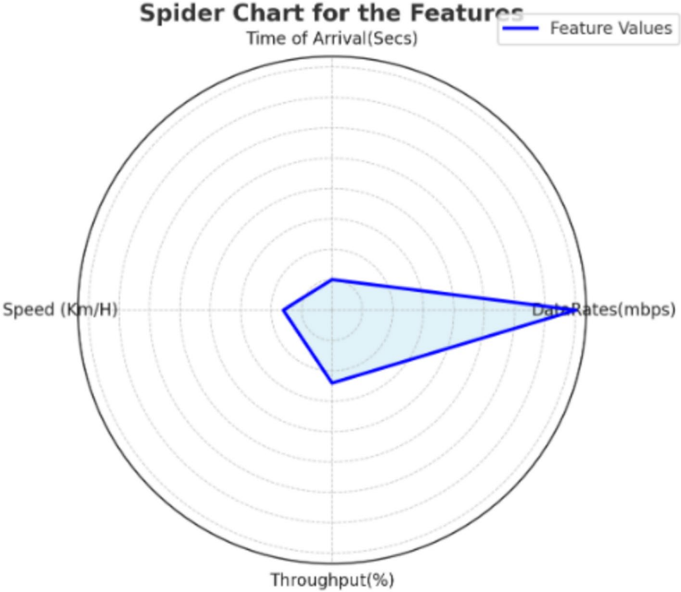
- Computational cost was lower than baselines: X-GEVON training time 155 s, inference time 1.4 ms/packet, and model size 5.2 MB, versus LSTM 204 s/3.5 ms/9.6 MB, GRU 190 s/3.0 ms/8.1 MB, and HHO-GRU 230 s/2.6 ms/8.9 MB. LIME indicated data rate had more impact on attack detection.
Methods
- Design: X-GEVON has four components—Real-Time Data Generation, Data-Preprocessing Unit, GRU Feature Extraction, and Enhanced Energy Value Optimized Deep Learning Network; the modified GRU reduces trainable parameters by a factor of 2 × nm, EEVO tunes hyperparameters, and LIME provides interpretability.
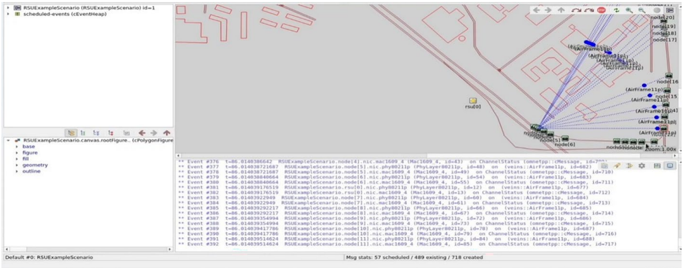
- Data: approximately 400,000 traces were generated using SUMO, OMNET++, VEINS, INET, and an Attack Injection Module; the route from Madurai to Hyderabad was simulated for 2 months; labels include normal, DoS, Blackhole, DDoS, and Man-in-the-Middle, while multi-class analysis also includes Sybil and probing attacks.
- Analysis: dataset split was 70% training, 20% testing, and 10% validation; results were averaged over 180 epochs; k=5 validation was used; metrics included accuracy, sensitivity/recall, specificity, precision, and F1-score; statistical validation used fitness-function assessment over 50 iterations and Wilcoxon signed-rank testing.
Limitations
- The paper does not state a limitations section for X-GEVON.
- Evident from the text: evaluation relies on simulated traces generated by SUMO/OMNET++/VEINS with injected attacks, not real-world VANET deployment, and the data come from a single simulated route (Madurai to Hyderabad) over 2 months.
- Evident from the text: some reported results are inconsistent or truncated—for example, the abstract reports 99.6% accuracy while the binary k=5 table reports 99.5%, and the DDoS X-GEVON row in Table 11 is incomplete—which limits reproducibility and interpretation.
Model-written summary. Check it against the paper before relying on it.
Integrity signals
Registry
Cites
Statistics
Figures






Verification
Claims the paper makes
2 Valid · 2 Not valid · 5 Not checked · 33 Own results and interpretations
A result the paper reports from its own data — it cites no other source for it, so there is none to check. The quote shows it is in the paper.
In the paper
“Experimental results demonstrate that the proposed method significantly outperforms existing deep learning techniques, achieving a detection accuracy of 99.6%, a precision of 99.2%, and a recall of 99.4%.”
§ X-GEVON-a novel explainable intelligent network to detect the multiple attacks in vanet systems > Abstract
boosted- Asserted: passes — The authors put it forward as true.
- Checkable: passes — It can be checked against evidence.
- Load-bearing: passes — The paper’s conclusions depend on it.
- Based: passes — The paper gives a reason why it holds.
- Rests on 3 assumptions not shown here.
A result the paper reports from its own data — it cites no other source for it, so there is none to check. The quote shows it is in the paper.
In the paper
“From the LIME model testing, it is found that data rate has more impact on the detection of attacks which is evident from Figures 15, 16, 17.”
§ X-GEVON-a novel explainable intelligent network to detect the multiple attacks in vanet systems > 5.6 Interpretability analysis
plainstates a cause- Asserted: passes — The authors put it forward as true.
- Checkable: passes — It can be checked against evidence.
- Load-bearing: unclear — It is unclear whether the paper’s conclusions depend on it.
- Based: passes — The paper gives a reason why it holds.
- Rests on an assumption not shown here.
A result the paper reports from its own data — it cites no other source for it, so there is none to check. The quote shows it is in the paper.
In the paper
“Based on the Figs.7 & 8it is obvious that the recommended approach exhibits stable performance with the changes in the dropouts ranging from 0.2 to 0.8.”
§ X-GEVON-a novel explainable intelligent network to detect the multiple attacks in vanet systems > 6 Conclusion
boosted- Asserted: passes — The authors put it forward as true.
- Checkable: passes — It can be checked against evidence.
- Load-bearing: passes — The paper’s conclusions depend on it.
- Based: passes — The paper gives a reason why it holds.
- Rests on 2 assumptions not shown here.
A result the paper reports from its own data — it cites no other source for it, so there is none to check. The quote shows it is in the paper.
In the paper
“However, the proposed X-GEVON has outperformed the other models and yielded the best outcomes in differentiating the normal and malicious users.”
- Also stated in: § 6 Conclusion · boosted
“Results demonstrated that recommended approach has achieved the best performance in detection of multiple attacks in VANET.”
§ X-GEVON-a novel explainable intelligent network to detect the multiple attacks in vanet systems > 5.1.2 Statistical evaluation
boostedstates a cause- Asserted: passes — The authors put it forward as true.
- Checkable: passes — It can be checked against evidence.
- Load-bearing: passes — The paper’s conclusions depend on it.
- Based: passes — The paper gives a reason why it holds.
- Rests on 2 assumptions not shown here.
- Also stated in: § 6 Conclusion · boosted
A result the paper reports from its own data — it cites no other source for it, so there is none to check. The quote shows it is in the paper.
In the paper
“Experimental results demonstrate that the proposed method significantly outperforms existing deep learning techniques, achieving a detection accuracy of 99.6%, a precision of 99.2%, and a recall of 99.4%.”
§ X-GEVON-a novel explainable intelligent network to detect the multiple attacks in vanet systems > Abstract
boosted- Asserted: passes — The authors put it forward as true.
- Checkable: passes — It can be checked against evidence.
- Load-bearing: passes — The paper’s conclusions depend on it.
- Based: passes — The paper gives a reason why it holds.
- Rests on 3 assumptions not shown here.
18 more claims
Create a free account to see all 42 claims and to verify the 1 reference still open.
- It may state two separate claims as one. 12
- Probably not a substantial claim. 8
- The quote only partly states this claim. 1
Self-check
Percentages, sums and reported differences re-computed from the paper’s own numbers.
Each contradiction between two passages listed here was confirmed by an independent check.
Rated major: it would touch a result — a value a result rests on, reported and recomputed p-values on opposite sides of the significance level, two passages that conflict with no sign which is right, or a cited work retracted before this paper was published.
In the paper
§ X-GEVON-a novel explainable intelligent network to detect the multiple attacks in vanet systems > 4.2 Data pre-processing unit
“Using this information, traffic is categorized into normal (label 0) and different types of attacks-DoS (1), Blackhole (2), DDoS (3), and Man-in-the-Middle (4).”
§ X-GEVON-a novel explainable intelligent network to detect the multiple attacks in vanet systems > 5.3 Multi-classification experimental analysis
“The multiple attacks such as DoS, DDoS, MIM, Sybil and Data probing are taken into consideration since it has been generated in real-world datasets.”
Rated minor: it would not touch a result — a value no result rests on, a p-value that stays on the same side of the significance level, or a conflict that is clerical, resolved elsewhere in the paper, or outside its own findings.
In the paper
§ X-GEVON-a novel explainable intelligent network to detect the multiple attacks in vanet systems > 6 Conclusion
“| GA | 0.845 | 0.6543 | 0.643 | 0.0274 | 0.06784 | 4.39 × 10 -6 |”
§ X-GEVON-a novel explainable intelligent network to detect the multiple attacks in vanet systems > 6 Conclusion
“| Algorithm | Best | Worst | Mean | Median | SD | Variance |”
Cited works that were retracted
Works this paper cites that were later retracted, from the retraction notices publishers deposit. Major when the notice came out before this paper was published.
Rated major: it would touch a result — a value a result rests on, reported and recomputed p-values on opposite sides of the significance level, two passages that conflict with no sign which is right, or a cited work retracted before this paper was published.
In the paper
“Praba, M.S. Bennet and Subashka Ramesh, S.S. ‘An Efficient Deep Learning Intrusion Detection Technique Using Panthera Leo Hunting Optimized Method for Vanet’. 1 Jan. 2023: 1–18.”
Cited work 10.3233/jifs-234401 · retracted 2025-04-17 · notice 10.1177/10641246251331509 · this paper published 2025-08-27
Rated major: it would touch a result — a value a result rests on, reported and recomputed p-values on opposite sides of the significance level, two passages that conflict with no sign which is right, or a cited work retracted before this paper was published.
Cited work 10.3233/jifs-233581 · retracted 2025-04-17 · notice 10.1177/10641246251331509 · this paper published 2025-08-27
Citations
Cites
2 retracted
RETRACTED: Optimized deep learning-based intrusion detection framework for vehicular network
Vishnukumar, R., & Ramaiah, M. (2023) · Journal of Intelligent & Fuzzy Systems · doi:10.3233/jifs-233581 · Cited by 2
Retracted- Retracted
Empirical Evaluation of Gated Recurrent Neural Networks on Sequence Modeling
Chung, J., Gulcehre, C., Cho, K., & Bengio, Y. (2014) · arXiv · doi:10.48550/arxiv.1412.3555 · Cited by 11,008
Microscopic Traffic Simulation using SUMO
Lopez, P. A., Wiessner, E., Behrisch, M., Bieker-Walz, L., Erdmann, J., Flotterod, Y.-P., Hilbrich, R., Lucken, L., Rummel, J., & Wagner, P. (2018) · 2018 21st International Conference on Intelligent Transportation Systems (ITSC) · doi:10.1109/itsc.2018.8569938 · Cited by 3,297
Chen, X., Zhang, H., Wu, C., Mao, S., Ji, Y., & Bennis, M. (2019) · IEEE Internet of Things Journal · doi:10.1109/jiot.2018.2876279 · Cited by 680
Modeling and Tools for Network Simulation
(2010) · Springer eBooks · doi:10.1007/978-3-642-12331-3 · Cited by 493
Varga, A. (2010) · Modeling and Tools for Network Simulation · doi:10.1007/978-3-642-12331-3_3 · Cited by 449
MTH-IDS: A Multitiered Hybrid Intrusion Detection System for Internet of Vehicles
Yang, L., Moubayed, A., & Shami, A. (2022) · IEEE Internet of Things Journal · doi:10.1109/jiot.2021.3084796 · Cited by 416
Intrusion Detection for IoT Based on Improved Genetic Algorithm and Deep Belief Network
Zhang, Y., Li, P., & Wang, X. (2019) · IEEE Access · doi:10.1109/access.2019.2903723 · Cited by 359
Adaptive, model-based monitoring for cyber attack detection
Valdes, A., & Skinner, K. (2000) · Lecture Notes in Computer Science · doi:10.1007/3-540-39945-3_6 · Cited by 309 · cited 1×
“However, given the highly dynamic characteristics of VANETs, the conventional IDS designs are not well-suited for this environment and need more improvisation in accordance with the characteristics of VANET [12, 13].”
Research works printed but not linked: 2
- Miller C, Valasek C. Adventures in automotive networks and control units. Def Con. 2013;21(15–31):13.
- Maui, HI, USA, 4–7 November 2018, pp.2575–2582. New York: IEEE. 52. INET. INET framework, https://inet.omnetpp.org/. Accessed 14 July 2019.
Cited by
Jeyaram, G., Vidhya, V., Dhanaraj, R. K., & Alabdultif, A. (2026) · Scientific Reports · doi:10.1038/s41598-026-36103-2 · Cited by 9
Beyond the Attack: Strategies for Attack Endgame Mitigation in VANETs
Abdelmaguid, M. A., Hassanein, H. S., & Zulkernine, M. (2025) · IEEE Transactions on Vehicular Technology · doi:10.1109/tvt.2025.3624720 · Cited by 3
Khan, G., Ali, W., Chauhan, V. K., Gola, K. K., & Kumari, N. (2026) · Wireless Personal Communications · doi:10.1007/s11277-026-12014-3
Li, Z., Yang, Y., Liu, X., & Shi, B. (2026) · Transactions on Emerging Telecommunications Technologies · doi:10.1002/ett.70373
A Bibliometric Analysis of Digital Textbook Research: Identifying Trends, Themes, and Networks
Tang, X., Chen, S., & Liu, X. (2026) · IEEE Access · doi:10.1109/access.2026.3670174
Metadata
- Authors
- Anjali, T., Goyal, R., & Balaji, G. N.
- Affiliations
- Amity University Madhya Pradesh (IN)
- Corresponding author
- Anjali, Thuvva
- Venue
- Discover Computing
- Published
- 2025-08-27
- Volume
- 28
- Issue
- 1
- ISSN
- 2948-2992 (ISSN-L)
- OpenAlex
- W4414837887
- Cited by
- 6
- References
- 40
- Citations by year
- 2026: 4 · 2025: 2
- FWCI
- 1.35
- Type
- journal article
- Language
- en
- Open access
- gold
- doi.org
- Licence
- cc-by-nc-nd
- creativecommons.org/licenses/by-nc-nd/4.0 (tdm)
- creativecommons.org/licenses/by-nc-nd/4.0 (vor)
- Locations
- Discover Computing (publishedVersion, cc-by-nc-nd)
- DOAJ (DOAJ: Directory of Open Access Journals) (submittedVersion, cc-by-sa)
- Topics
- Physical Sciences › Engineering › Electrical and Electronic Engineering › Vehicular Ad Hoc Networks (VANETs)
- Physical Sciences › Computer Science › Computer Networks and Communications › Network Security and Intrusion Detection
- Physical Sciences › Computer Science › Artificial Intelligence › Adversarial Robustness in Machine Learning
- Keywords
- vehicular ad hoc networks, intrusion detection, malicious attack detection, explainable AI, gated recurrent unit, hyperparameter optimization, lime, temporal feature extraction, lightweight deep learning, network security, intelligent transportation systems
About these checks
Registry, retraction, Cites and statistics results are computed, not judged, with one exception: a printed reference that no index lists is read once by a model before it counts as a citation error. Claims are extracted by a model and kept only when their quote appears verbatim in the text; each cited source is then checked, with a model’s help, for whether it says what the claim relies on. Those verdicts can be wrong — read the claim’s quote and the cited source before relying on one.
The claim verdicts this report counts are experimental: their accuracy is not yet measured.
A language model drew the claims from the paper on 2026-10-10, under version 3 of the claim definition (model deepseek-v4.1-flash, prompt extract-v3).
A second model labelled each claim on 2026-10-10 (model jev-1.13-20260917, definition revision gold-guideline-v0.2).
Statistics and arithmetic are recomputed, not judged.
Confidence bands are shown only for fields calibrated on our annotated test set. None is calibrated yet, so no band is shown.
What counts as a claim ›How we measure confidence ›How we check this ›
Are you an author, or do you see a problem with this page? Request a review
How to cite
Cite CoChat for the checks on this page, and the paper for its own findings.
- This page
- CoChat. (2026). Citation check: X-GEVON- a novel explainable intelligent network to detect the multiple attacks in vanet systems. https://app.cochat.ai/papers/10.1007/s10791-025-09696-x
- The paper
- Anjali, T., Goyal, R., & Balaji, G. N. (2025). X-GEVON- a novel explainable intelligent network to detect the multiple attacks in vanet systems. Discover Computing. https://doi.org/10.1007/s10791-025-09696-x
Data sources
Bibliographic data: Semantic Scholar, OpenAlex, Crossref.
Contains information from the Semantic Scholar Academic Graph Datasets, made available under the ODC Attribution License (ODC-BY 1.0).
Semantic Scholar’s data is described in: Kinney, R., et al. (2023). The Semantic Scholar Open Data Platform. arXiv:2301.10140.
