

California Autism Prevalence Trends from 1931 to 2014 and Comparison to National ASD Data from IDEA and ADDM
Open accessThe DOI matches its Crossref record; 56 of the 57 references it cites were found in a registry or an index.
Abstract
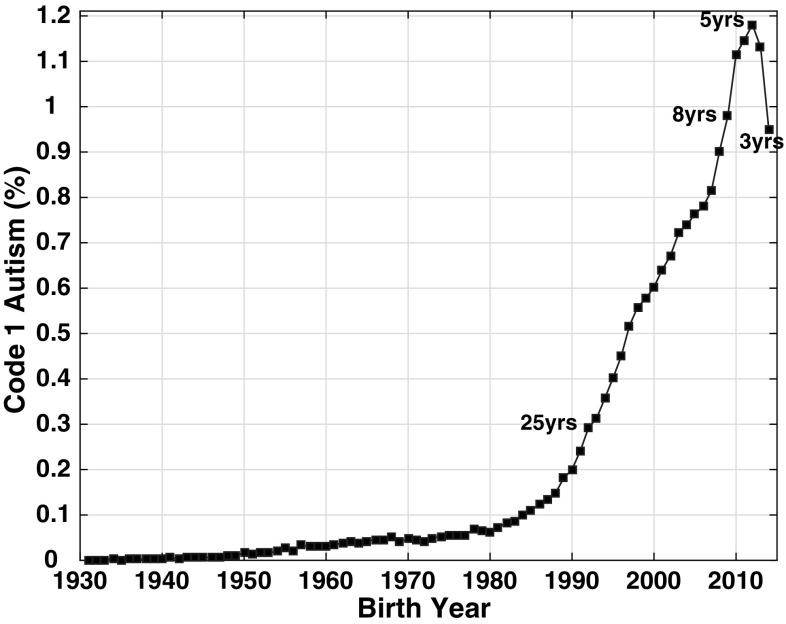
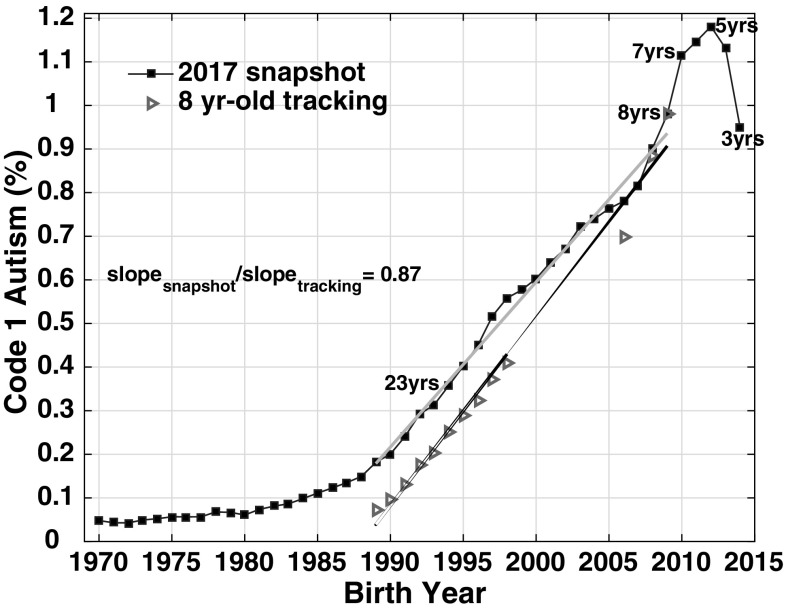
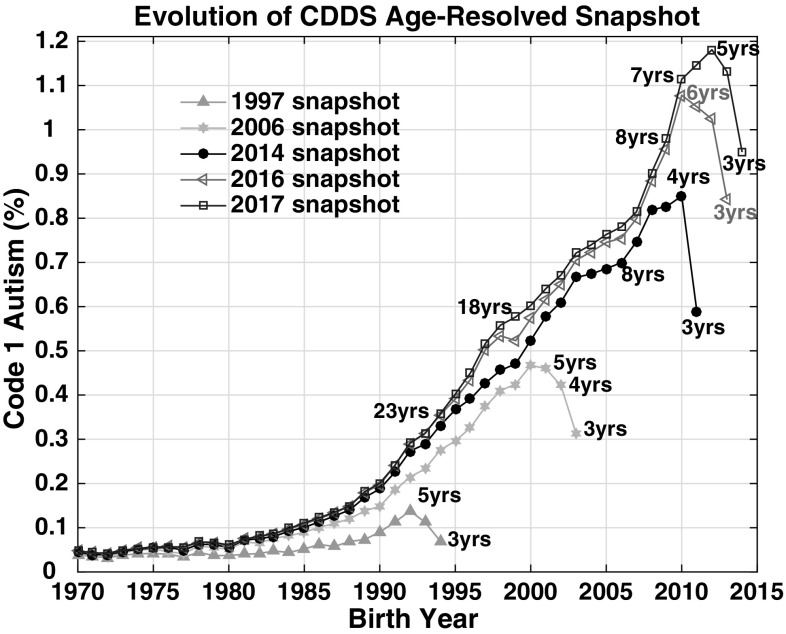
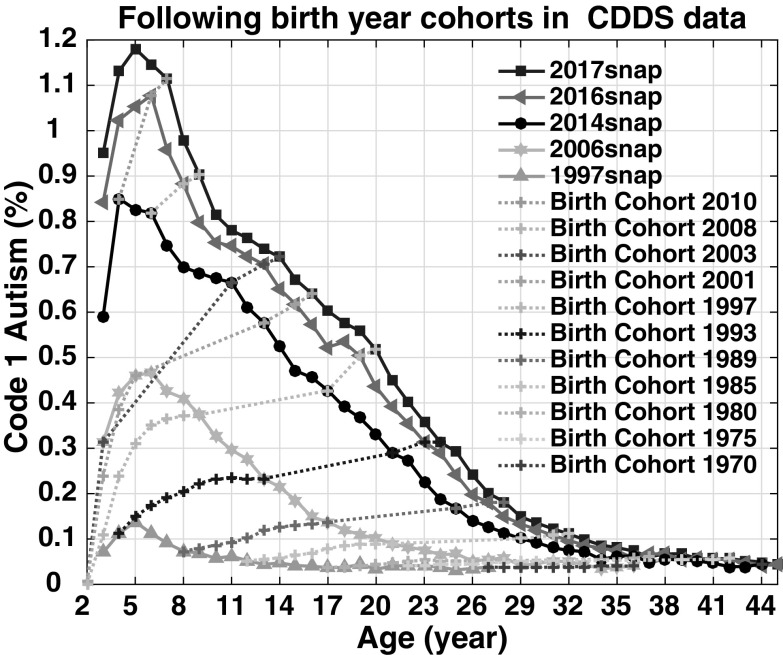
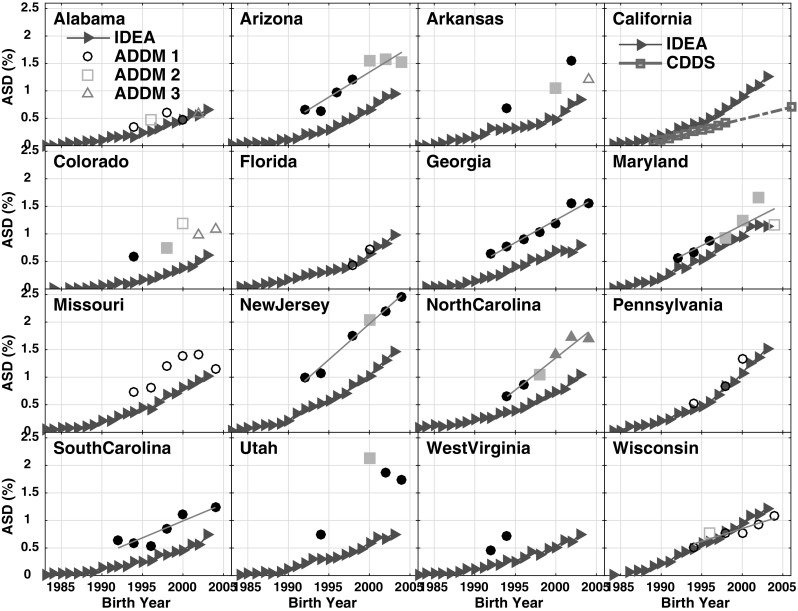
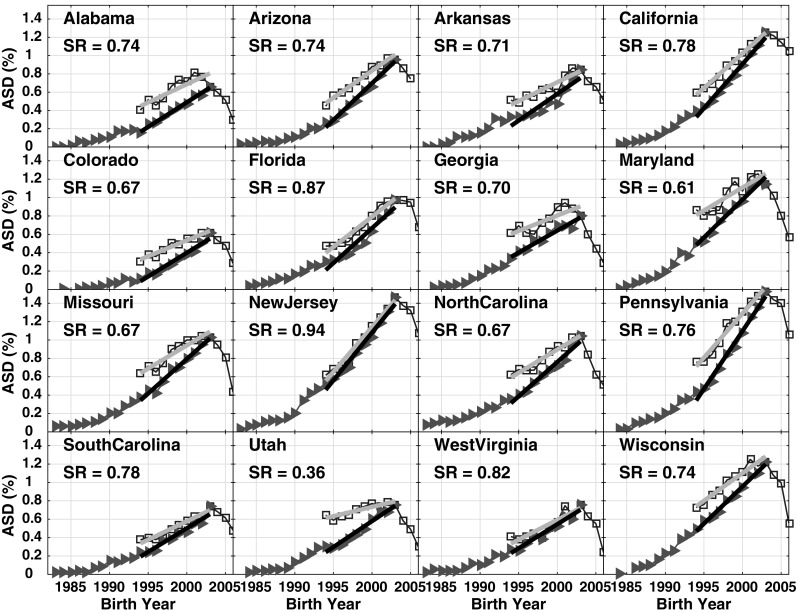
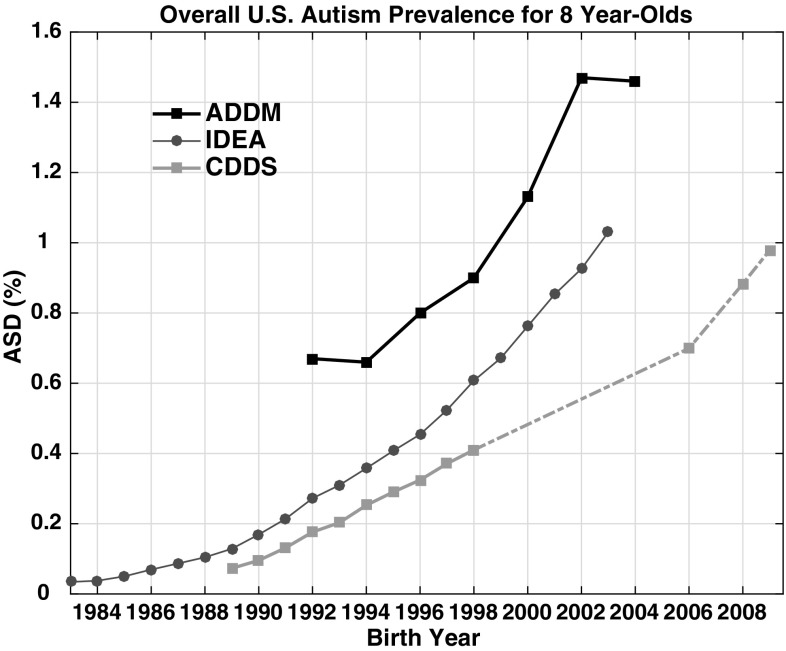
Time trends in U.S. autism prevalence from three ongoing datasets [Individuals with Disabilities Education Act, Autism and Developmental Disabilities Monitoring Network, and California Department of Developmental Services (CDDS)] are calculated using two different methods: (1) constant-age tracking of 8 year-olds and (2) age-resolved snapshots. The data are consistent across methods in showing a strong upward trend over time. The prevalence of autism in the CDDS dataset, the longest of the three data records, increased from 0.001% in the cohort born in 1931 to 1.2% among 5 year-olds born in 2012. This increase began around ~ 1940 at a rate that has gradually accelerated over time, including notable change points around birth years 1980, 1990 and, most recently, 2007.
Overview
The claims and statistics of this paper haven’t been checked yet.
Free: it reads the open-access text and checks the first 5 claims that cite a source we can check. Create a free account to check every claim.
Integrity signals
Registry
Cites
Statistics
Figures
Verification
Claims the paper makes
The claims and statistics of this paper haven’t been checked yet.
Free: it reads the open-access text and checks the first 5 claims that cite a source we can check. Create a free account to check every claim.
Claims other papers make about this one
Each is checked against this paper’s own text: does it say what the citing paper says it does?
In the citing paper
“All three datasets displayed a consistent upward trend over time (27).”
From Prevalence of Autism Spectrum Disorder and Co-morbidities in Children and Adolescents: A Systematic Literature Review (2021) · cites this paper as [27]
Self-check
Percentages, sums and reported differences re-computed from the paper’s own numbers.
The self-check needs the paper’s full text.
Citations
Cites
1 retracted
Christensen, D. L., Baio, J., Braun, K. V. N., Bilder, D., Charles, J., Constantino, J. N., Daniels, J., Durkin, M. S., Fitzgerald, R. T., Kurzius-Spencer, M., et al. (2016) · MMWR. Surveillance Summaries · doi:10.15585/mmwr.ss6503a1 · Cited by 1,964
Self-citationRetractedDiagnostic and Statistical Manual of Mental Disorders
American Psychiatric Association (2013) · doi:10.1176/appi.books.9780890425596 · Cited by 116,369
Diagnostic and Statistical Manual of Mental Disorders
Williams, J. B. W., & First, M. (2013) · Encyclopedia of Social Work · doi:10.1093/acrefore/9780199975839.013.104 · Cited by 109,519
Diagnostic and Statistical Manual of Mental Disorders, 5th ed.
Carter, M. J. (2014) · Therapeutic Recreation Journal · Cited by 15,169
(1943) · The Nervous child · Cited by 8,870
Diagnostic and Statistical Manual of Mental Disorders, 3rd ed
COOPER, A. M., & MICHELS, R. (1981) · American Journal of Psychiatry · doi:10.1176/ajp.138.1.128 · Cited by 7,356
Baio, J., Wiggins, L., Christensen, D. L., Maenner, M. J., Daniels, J., Warren, Z., Kurzius-Spencer, M., Zahorodny, W., Robinson, C., Rosenberg, et al. (2018) · MMWR. Surveillance Summaries · doi:10.15585/mmwr.ss6706a1 · Cited by 6,078
Self-citationDiagnostic and Statistical Manual of Mental Disorders, 3rd ed
KENDELL, R. E. (1980) · American Journal of Psychiatry · doi:10.1176/ajp.137.12.1630 · Cited by 5,189
Autistic disturbances of affective contact.
Kanner, L. (1968) · PubMed · Cited by 3,143
Morbidity and Mortality Weekly Report
(2010) · Wilderness & Environmental Medicine · doi:10.1016/j.wem.2010.09.015 · Cited by 2,950
Research works printed but not linked: 1
- Wright, P. W. D., & Wright, P. D. (2007). Wrightslaw: Special education law (2nd ed.). Harbor House Law Press, Inc. (ISBN-13:978-1892320162).
Cited by
Bougeard, C., Picarel-Blanchot, F., Schmid, R., Campbell, R., & Buitelaar, J. (2021) · Frontiers in Psychiatry · doi:10.3389/fpsyt.2021.744709 · Cited by 330
Zhang, M., Ding, H., & Zhang, Y. (2022) · doi:10.20944/preprints202202.0056.v1 · Cited by 211
(2022) · doi:10.3390/bs12050138 · Cited by 211
“The prevalence in various countries and regions has shown an increasing trend over time in all age groups [70-72], which highlights a growing need for resources to provide care for the ASD population.”
BackgroundThe lifetime social cost of autism: 1990–2029
Cakir, J., Frye, R. E., & Walker, S. J. (2020) · Research in Autism · doi:10.1016/j.rasd.2019.101502 · Cited by 180
May, T., Brignell, A., & Williams, K. (2020) · Autism Research · doi:10.1002/aur.2286 · Cited by 79
Diemer, M. C., Gerstein, E. D., & Regester, A. (2022) · Autism · doi:10.1177/13623613221113501 · Cited by 106
“While rates in the United States are rising (Nevison et al., 2018), those who do not fit the traditional image of autism may be being left behind.”
BackgroundMazurek, M. O., Stobbe, G., Loftin, R., Malow, B. A., Agrawal, M. M., Tapia, M., Hess, A., Farmer, J., Cheak-Zamora, N., Kuhlthau, K., et al. (2020) · Autism · doi:10.1177/1362361319879616 · Cited by 63
Autism Spectrum Disorder: Signaling Pathways and Prospective Therapeutic Targets
Baranova, J., Dragunas, G., Botelho, M. C. S., Ayub, A. L. P., Bueno-Alves, R., Alencar, R. R., Papaiz, D. D., Sogayar, M. C., Ulrich, H., & Correa, R. G. (2020) · Cellular and Molecular Neurobiology · doi:10.1007/s10571-020-00882-7 · Cited by 71
Race/Ethnicity-Resolved Time Trends in United States ASD Prevalence Estimates from IDEA and ADDM
Nevison, C. D., & Zahorodny, W. M. (2019) · Journal of Autism and Developmental Disorders · doi:10.1007/s10803-019-04188-6 · Cited by 67
Self-citationReece, A. S., & Hulse, G. K. (2019) · Epigenetics · doi:10.1080/15592294.2019.1633868 · Cited by 51
Autism Spectrum Disorder and Medical Cannabis: Review and Clinical Experience
Mostafavi, M., & Gaitanis, J. N. (2020) · Seminars in Pediatric Neurology · doi:10.1016/j.spen.2020.100833 · Cited by 63
Constable, P. A., Marmolejo‐Ramos, F., Gauthier, M., Lee, I., Skuse, D., & Thompson, D. (2022) · Frontiers in Neuroscience · doi:10.3389/fnins.2022.890461 · Cited by 42
Blaxill, M. F., Rogers, T., & Nevison, C. D. (2021) · Journal of Autism and Developmental Disorders · doi:10.1007/s10803-021-05120-7 · Cited by 54
Self-citationRetractedPregnancy drugs, fetal germline epigenome, and risks for next‐generation pathology: A call to action
Escher, J., & Robotti, S. (2019) · Environmental and Molecular Mutagenesis · doi:10.1002/em.22288 · Cited by 38
“Autism prevalence has surged to the point that 1 in 59 children are now identified as having autism spectrum disorders (Baio et al. 2018), with a prevalence observed to increase markedly with births in the 1980s (Nevison et al. 2018).”
BackgroundBennabi, M., Tarantino, N., Gaman, A., Scheid, I., Krishnamoorthy, R., Debré, P., Bouleau, A., Caralp, M., Guéguen, S., Moal, M. L., et al. (2019) · Molecular Autism · doi:10.1186/s13229-019-0269-1 · Cited by 41
Gonzales, J. A., Marchix, J., Aymeric, L., Berre‐Scoul, C. L., Zoppi, J., Bordron, P., Burel, M., Davidovic, L., Richard, J., Gaman, A., et al. (2021) · Microorganisms · doi:10.3390/microorganisms9081723 · Cited by 38
Bougeard, C., Picarel-Blanchot, F., Schmid, R., Campbell, R., & Buitelaar, J. K. (2024) · FOCUS The Journal of Lifelong Learning in Psychiatry · doi:10.1176/appi.focus.24022005 · Cited by 49
Yazdani, S., Capuano, A., Ghaziuddin, M., & Colombi, C. (2020) · Brain Sciences · doi:10.3390/brainsci10020099 · Cited by 30
“This higher prevalence may be partially due to better detection and assessment procedures and an expanded definition of ASD [3,5,6].”
BackgroundCalifornia Autism Prevalence by County and Race/Ethnicity: Declining Trends Among Wealthy Whites
Nevison, C. D., & Parker, W. (2020) · Journal of Autism and Developmental Disorders · doi:10.1007/s10803-020-04460-0 · Cited by 33
Self-citationNeonatal jaundice and autism spectrum disorder: a systematic review and meta-analysis
Kujabi, M. L., Petersen, J. P., Pedersen, M. V., Parner, E. T., & Henriksen, T. B. (2021) · Pediatric Research · doi:10.1038/s41390-020-01272-x · Cited by 36
Abdullahi, I., Wong, K., Bebbington, K. R., Mutch, R. C., de Klerk, N. H., Cherian, S., Downs, J. A., Leonard, H., & Glasson, E. J. (2019) · Journal of Autism and Developmental Disorders · doi:10.1007/s10803-019-04068-z · Cited by 28
Fowler, S. P., Gimeno, D., Swartz, M. D., Granados, P. S., Heilbrun, L. P., & Palmer, R. F. (2023) · Nutrients · doi:10.3390/nu15173772 · Cited by 21
“has dramatically risen [1], from fewer than 0.”
BackgroundSánchez, R. M., Losada, J. F. B., & Martínez, J. A. M. (2024) · Frontiers in Neuroendocrinology · doi:10.1016/j.yfrne.2024.101132 · Cited by 19
Wang, S.-H., Zhang, H., Zou, Y.-Y., Cheng, S., Zou, X., & Chen, K.-Y. (2022) · World Journal of Pediatrics · doi:10.1007/s12519-022-00555-z · Cited by 22
“The prevalence rate of ASD has been rising steadily in recent decades [2, 3].”
BackgroundCerminara, M., Spirito, G., Pisciotta, L., Squillario, M., Servetti, M., Divizia, M. T., Lerone, M., Berloco, B., Boeri, S., Nobili, L., et al. (2021) · Frontiers in Genetics · doi:10.3389/fgene.2021.625564 · Cited by 17
“Autism spectrum disorder (ASD) is a neurodevelopmental disorder characterized by etiological and clinical heterogeneity, with a frequency around 1% in the general population (Nevison et al., 2018).”
BackgroundElective Deliveries and the Risk of AutismPreprint
Liu, K., Teitler, J. O., Rajananda, S., Chegwin, V., Bearman, P., Hegyi, T., & Reichman, N. E. (2021) · SSRN Electronic Journal · doi:10.1016/j.amepre.2022.01.024 · Cited by 14
Yan, X., Li, Y., Li, Q., Li, Q., Xu, G., Lu, J., & Yang, W. (2026) · Journal of Autism and Developmental Disorders · doi:10.1007/s10803-024-06390-7 · Cited by 11
“Studies have shown that the emissions of environmental toxins such as bromodiphenyl ether, aluminum adjuvants, and herbicide glyphosate were on the rise and positively correlated with the increase in ASD (Nevison, 2014).”
Ramclam, A. N., Truong, D. M., Mire, S. S., Smoots, K. D., McNeel, M. M., Sakyi, G. J., & Daniels, F. M. (2022) · Psychology in the Schools · doi:10.1002/pits.22646 · Cited by 12
The Dangers of Acetaminophen for Neurodevelopment Outweigh Scant Evidence for Long-Term Benefits
Parker, W., Anderson, L. G., Jones, J. P., Anderson, R., Williamson, L. L., Bono‐Lunn, D., & Konsoula, Z. (2023) · Children · doi:10.3390/children11010044 · Cited by 18
“While various changes in social and clinical factors undoubtedly caused increases in the measured prevalence of ASD at the time that those factors emerged, careful analysis reveals that such factors do not account for 40 years of steadily increasing prevalence [88].”
BackgroundArchitecture for Children With Autism Spectrum Disorder and Their Therapists
Norouzi, N., & Garza, C. M. (2021) · HERD Health Environments Research & Design Journal · doi:10.1177/19375867211012489 · Cited by 9
“The California Department of Developmental Services reports a 1.2% increase from 1931 to 2017 (Nevison, 2018).”
BackgroundInfluentialGeneral anesthesia, germ cells and the missing heritability of autism: an urgent need for research
Escher, J., & Ford, L. D. (2020) · Environmental Epigenetics · doi:10.1093/eep/dvaa007 · Cited by 9
“Although the prevalence of neurodevelopmental abnormality, particularly autism spectrum disorders (ASDs), has increased markedly over the past three decades [31, 32], research programs have largely hunted for etiological clues in the DNA nucleotide sequence or developmental somatic exposures, reflective of the predomi…”
BackgroundThe effect of the home environment on children with autism spectrum disorder
Kahveci, G., Çaylak, E., & Dönay Nisa, K. A. R. A. (2023) · International Journal of Developmental Neuroscience · doi:10.1002/jdn.10304 · Cited by 11
“For autistic children, these reassurances last longer than expected and require all family members to adjust and monitor their behavior (Nevison et al., 2018).”
BackgroundReece, A. S., & Hulse, G. K. (2022) · European Archives of Psychiatry and Clinical Neuroscience · doi:10.1007/s00406-022-01446-0 · Cited by 33
“State autism rates were derived from the US Department of Education Individuals with Disabilities (IDEA) database [10].”
MethodAbdullahi, I., Sadka, N., Gilbert, M., & Barbaro, J. (2023) · Brain Sciences · doi:10.3390/brainsci13060903 · Cited by 6
Old Age in Adults with ASD: Psychosocial Aspects—a Systematic Review
Parchomiuk, M. (2021) · Review Journal of Autism and Developmental Disorders · doi:10.1007/s40489-020-00229-4 · Cited by 7
Comparing Caregiving Outcomes Among Male and Female Parents of Autistic Adults
Marsack‐Topolewski, C. N., & McGinley, J. M. (2024) · Families in Society The Journal of Contemporary Social Services · doi:10.1177/10443894241233328 · Cited by 5
Varia, J. C., Herbert, M. R., & Hooker, B. S. (2025) · Molecular Neurobiology · doi:10.1007/s12035-025-05589-8 · Cited by 10
“ASD remained a relatively unknown disorder affecting less than 1 in 2,500 children up until the 1980 s [388].”
O’Sharkey, K., Mitra, S., Chow, T., Goodrich, A. J., Conlon, K. C., Nuño, M., Bennett, D. H., Raffuse, S. M., Astaneh, M., Zhao, Y., et al. (2026) · Environment International · doi:10.1016/j.envint.2026.110131 · Cited by 6
Zhao, L., Jones, J. P., Anderson, L. G., Konsoula, Z., Nevison, C. D., Reissner, K. J., & Parker, W. (2023) · Korean Journal of Pediatrics · doi:10.3345/cep.2022.01319 · Cited by 14
“…that acetaminophen cannot cause ASD maintains that rising rates of ASD through time associated with acetaminophen use are, at least in part, a consequence of changing A e p t e A r c diagnostic criteria, increased awareness, and other factors (discussed by co-author CDN and colleagues (35)).”
BackgroundSelf-citationWinter, A. S., Yartel, A. K., Fountain, C., Cheslack‐Postava, K., Zhang, Y., Schieve, L. A., Kissin, D. M., & Bearman, P. (2024) · American Journal of Epidemiology · doi:10.1093/aje/kwae049 · Cited by 5
“6 14-16 For example, population-based studies in Denmark 17 and Massachusetts 18 found no association between ART and autism diagnosis.”
A bibliometric study on early childhood autism research
Uras, M. C., Şata, M., Kaya, A., Ziapour, A., & Yıldırım, M. (2025) · Psihologija · doi:10.2298/psi231229018u · Cited by 4
Prenatal and early childhood exposure to phthalates and neurodevelopment in 42 months old children
Cohen-Eliraz, L., Ornoy, A., Ein‐Mor, E., Bar-Nitsan, M., Calderon‐Margalit, R., & Peleg, T. P. (2025) · NeuroToxicology · doi:10.1016/j.neuro.2025.07.007 · Cited by 4
Experiences of Parental Caregivers of Adults with Autism in Navigating the World of Employment
Marsack‐Topolewski, C. N., & Samuel, P. S. (2024) · Journal of Autism and Developmental Disorders · doi:10.1007/s10803-024-06381-8 · Cited by 6
A 3-hit metabolic signaling model for the core symptoms of autism spectrum disorder
Naviaux, R. K. (2025) · Mitochondrion · doi:10.1016/j.mito.2025.102096 · Cited by 4
Pall, M. L. (2024) · Brain Sciences · doi:10.3390/brainsci14050454 · Cited by 4
Clinical applications of big data to child and adolescent mental health care
Wickersham, A., & Downs, J. M. (2022) · Elsevier eBooks · doi:10.1016/b978-0-323-91709-4.00005-6 · Cited by 7
Reece, A. S., & Hulse, G. K. (2023) · Frontiers in Psychiatry · doi:10.3389/fpsyt.2023.1182536 · Cited by 3
“Pediatric autism spectrum disorder (ASD) has also been shown to be growing exponentially across the USA since 2000 (278– 280).”
BackgroundAvatars and Digital Technology Literacy Applied in Psychology
Lee, J. J., & Dryjańska, L. (2019) · Advances in multimedia and interactive technologies book series · doi:10.4018/978-1-5225-9261-7.ch023 · Cited by 3
How family histories can inform research about germ cell exposures: the example of autism
Escher, J. (2021) · Biology of Reproduction · doi:10.1093/biolre/ioab092 · Cited by 3
The Prevalence of Autistic College Students in the United States
Cox, B. E., Stockwell, K. M., Kepple, C. R., & Francis, C. B. (2026) · Autism in Adulthood · doi:10.1177/25739581251405705 · Cited by 5
MacInnis, A. G. (2021) · PLoS ONE · doi:10.1371/journal.pone.0260738 · Cited by 3
Herrmann, L., Bindt, C., Fahrenkrug, S., Schweitzer, J., Schulte‐Markwort, M., Barkmann, C., & Becker-Hébly, I. (2021) · Zeitschrift für Kinder- und Jugendpsychiatrie und Psychotherapie · doi:10.1024/1422-4917/a000805 · Cited by 2
Finkelman, M., Wei, T., & Lowe, S. R. (2021) · Journal of Psychopathology and Behavioral Assessment · doi:10.1007/s10862-020-09853-0 · Cited by 1
Adaptive behavior of school-aged children with Autism Spectrum Disorder
Gerosideris, N., Daskalou, S. D., Kolaitis, G. A., Giannakopoulos, G., & Papanikolaou, Κ. (2023) · World Journal of Advanced Research and Reviews · doi:10.30574/wjarr.2023.20.3.2529 · Cited by 1
“Autism Spectrum Disorder (ASD) is a neurodevelopmental disorder whose core deficits become evident from early childhood, directly affecting the quality of life of the individual (Baio, et al., 2018; Nevison, Blaxill, & Zahorodny, 2018) [3][4].”
BackgroundMitroulaki, S., Merkouris, E., Tripsianis, G., Kadoglou, M., Samakouri, M. A., & Serdari, A. (2025) · BJPsych International · doi:10.1192/bji.2025.2 · Cited by 3
“14 Given the rising prevalence of ASD, 20,21 the need for psychometrically valid scales is critical, particularly in terms of predicting educators ’ attitudes and measuring their sense of self-ef fi cacy towards students with ASD in the context of inclusive education.”
Examining the relationship between maternal preeclampsia and autism spectrum disorder in childhood
Shema, N., Zamstein, O., Wainstock, T., Pariente, G., & Sheiner, E. (2025) · Hypertension in Pregnancy · doi:10.1080/10641955.2025.2527137 · Cited by 1
“In recent years, the incidence of ASD has steadily increased, prompting inquiries into possible influential factors (16,17).”
Reece, A. S., & Hulse, G. K. (2025) · Elsevier eBooks · doi:10.1016/b978-0-443-13492-0.00012-8 · Cited by 1
One or two languages for children on the autism spectrum?
Langdon, H. W., Seung, H., & Yu, B. (2019) · Logopaedica Lodziensia · doi:10.18778/2544-7238.03.08 · Cited by 1
Maternal Gestational Tdap Vaccination and Autism: A Critique of Becerra-Culqui et al. (2018)
Lyons‐Weiler, J., Fujito, A., & Pajer, B. (2022) · International Journal of Vaccine Theory Practice and Research · doi:10.56098/ijvtpr.v2i1.39 · Cited by 3
“(Nevison et al., 2018), the comparison in Figure 1 raises questions about the accuracy of the ASD diagnoses used by BC18.”
BackgroundMethodResultInfluentialBono‐Lunn, D., Kuchibhatla, M. N., Palkar, A., Hernandez, J. C., Sarafian, J. T., Lawton, V. G., Anderson, L. G., Jones, J. P., III, & Parker, W. (2022) · Preprints.org · doi:10.20944/preprints202011.0224.v2
Rückgang der Spermienqualität: Umweltmedizinische Ursachen
Mutter, J., & Hensinger, P. (2019) · Zeitschrift für Komplementärmedizin · doi:10.1055/a-0828-6436
Brown, S. D. (2020) · Digital Commons (Liberty University)
Beenstock, M. (2021) · IntechOpen eBooks · doi:10.5772/intechopen.95981
Beenstock, M. (2021) · Research in Autism · doi:10.1016/j.rasd.2021.101863 · Cited by 2
Maternal Opioid Prescription in Autism Spectrum Disorder
Rubenstein, E. (2019) · Springer eBooks · doi:10.1007/978-1-4614-6435-8_102340-1
Maternal Opioid Prescription in Autism Spectrum Disorder
Rubenstein, E. (2021) · Springer eBooks · doi:10.1007/978-3-319-91280-6_102340
Ma, G., Luo, Q., Li, J., 石慧, Chen, Y., & Song, Y. (2026) · Acta Psychologica · doi:10.1016/j.actpsy.2026.106255
Desaunay, P. (2019) · theses.fr (ABES) · doi:10.70675/ba734624z729bz412bz82dbzdcade5ce273e
Gonzales, J. A. (2020) · theses.fr (ABES) · doi:10.70675/4ccdfaa5z70caz46aez8413zac3224b64e9b · Cited by 1
Abdullahi, I., the Victorian ASELCC team, & Dissanayake, C. (2026) · International Journal of Developmental Disabilities · doi:10.1080/20473869.2026.2699870
Pearl, M., Berger, K. P., Cirillo, P. M., Krigbaum, N. Y., Poon, V., Windham, G. C., & Cohn, B. A. (2026) · Autism Research · doi:10.1002/aur.70344
“Department of Developmental Services data, widely used for ASD studies in California (e.g., Berger et al. 2021; CCADDRE 2018; Nevison et al. 2018), may under-represent ASD cases and those no longer residing in California.”
Nevison, C., & Zahorodny, W. M. (2026) · SAGE Open Medicine · doi:10.1177/20503121261490679
“16,17 However, the sensitivity of the changepoint to end year 2020 was tested.”
Self-citation
Metadata
- Authors
- Nevison, C., Blaxill, M., & Zahorodny, W.
- Affiliations
- Institute of Arctic and Alpine Research (US)
- Rutgers, The State University of New Jersey (US)
- Corresponding author
- Nevison, Cynthia
- Venue
- Journal of Autism and Developmental Disorders
- Published
- 2018-07-05
- Volume
- 48
- Issue
- 12
- Pages
- 4103-4117
- ISSN
- 0162-3257 (ISSN-L)
- 1573-3432
- PMC
- PMC6223814
- OpenAlex
- W2856553042
- Cited by
- 71
- References
- 57
- Citations by year
- 2026: 6 · 2025: 7 · 2024: 7 · 2023: 7 · 2022: 9 · 2021: 15 · 2020: 9 · 2019: 11
- FWCI
- 5.20
- Type
- journal article
- Language
- en
- Open access
- hybrid
- doi.org
- Licence
- cc-by
- creativecommons.org/licenses/by/4.0 (tdm)
- Locations
- Journal of Autism and Developmental Disorders (publishedVersion, cc-by)
- Europe PMC (PubMed Central) (publishedVersion, other-oa)
- PubMed Central (publishedVersion, cc-by)
- PubMed (publishedVersion)
- Topics
- Life Sciences › Neuroscience › Cognitive Neuroscience › Autism Spectrum Disorder Research
- Health Sciences › Medicine › Public Health, Environmental and Occupational Health › Down syndrome and intellectual disability research
- Health Sciences › Medicine › Psychiatry and Mental health › Child Nutrition and Feeding Issues
- Keywords
- autism prevalence, autism spectrum disorder, temporal trends, California, Individuals with Disabilities Education Act, cohort analysis, birth cohort, change points
- MeSH terms
- Autistic Disorder, California, Child, Developmental Disabilities, Female, Humans, Male, Population Surveillance, Prevalence
About these checks
Registry, retraction, Cites and statistics results are computed, not judged, with one exception: a printed reference that no index lists is read once by a model before it counts as a citation error. Claims are extracted by a model and kept only when their quote appears verbatim in the text; each cited source is then checked, with a model’s help, for whether it says what the claim relies on. Those verdicts can be wrong — read the claim’s quote and the cited source before relying on one.
Statistics and arithmetic are recomputed, not judged.
Confidence bands are shown only for fields calibrated on our annotated test set. None is calibrated yet, so no band is shown.
What counts as a claim ›How we measure confidence ›How we check this ›
Are you an author, or do you see a problem with this page? Request a review
Data sources
Bibliographic data: Semantic Scholar, OpenAlex, Crossref.
Contains information from the Semantic Scholar Academic Graph Datasets, made available under the ODC Attribution License (ODC-BY 1.0).
Semantic Scholar’s data is described in: Kinney, R., et al. (2023). The Semantic Scholar Open Data Platform. arXiv:2301.10140.
