

Acquisition and use of “priors” in autism: typical in deciding where to look, atypical in deciding what is there
Open accessThe DOI matches its Crossref record; 53 of the 53 references it cites were found in a registry or an index.
Abstract
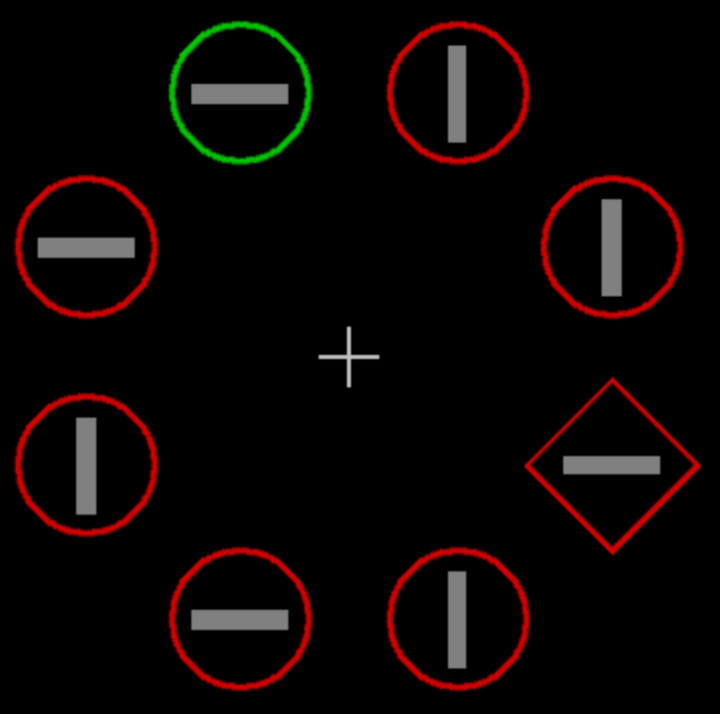
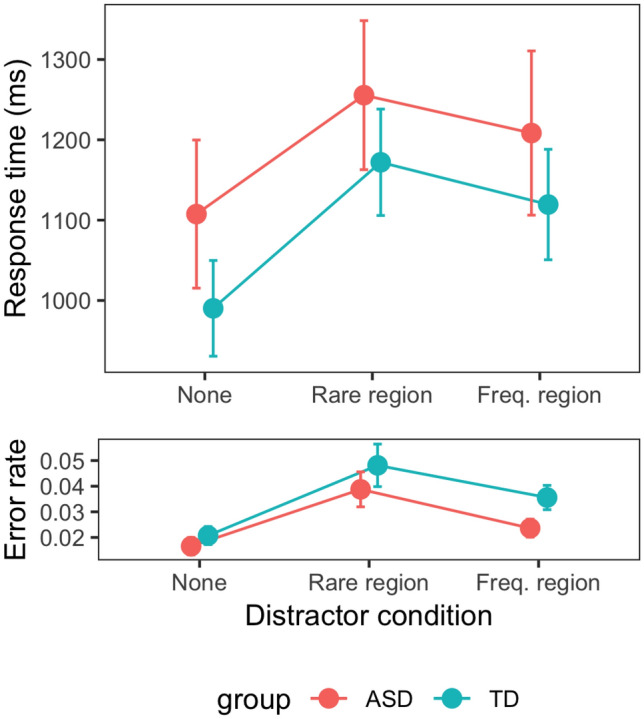
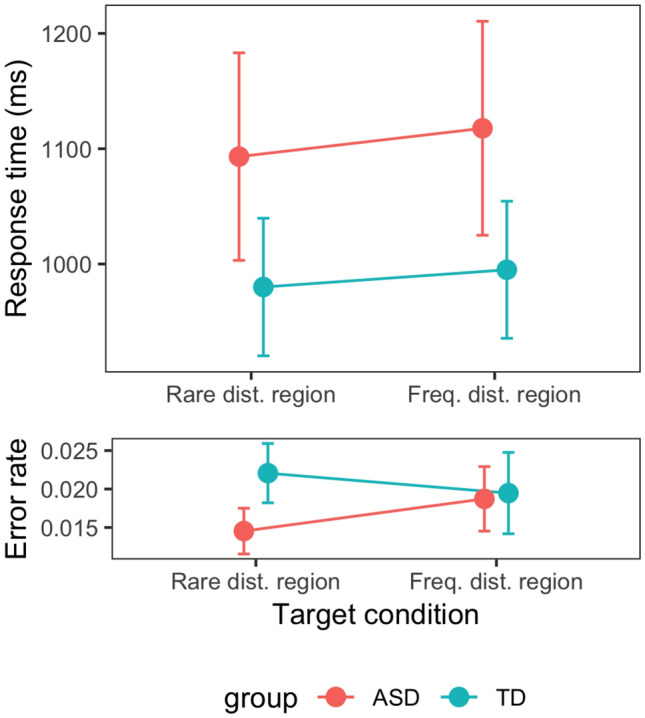
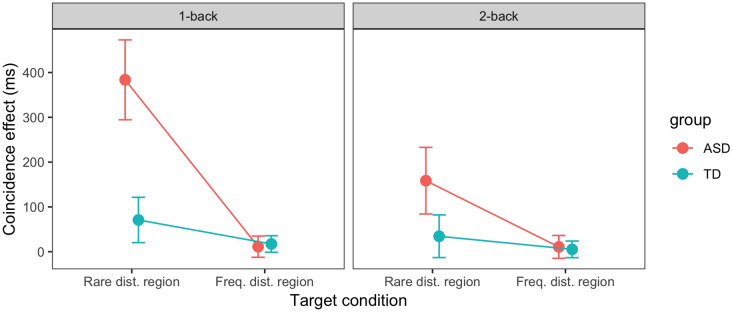
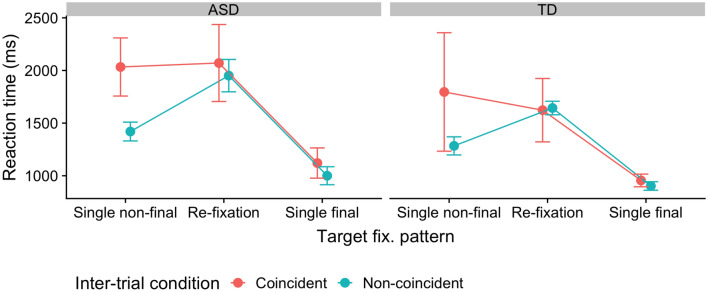
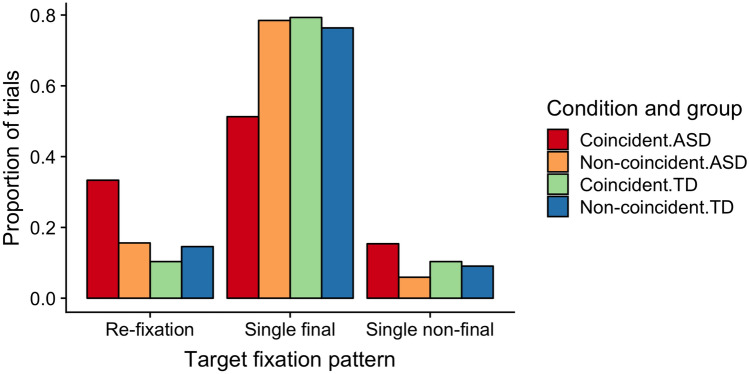
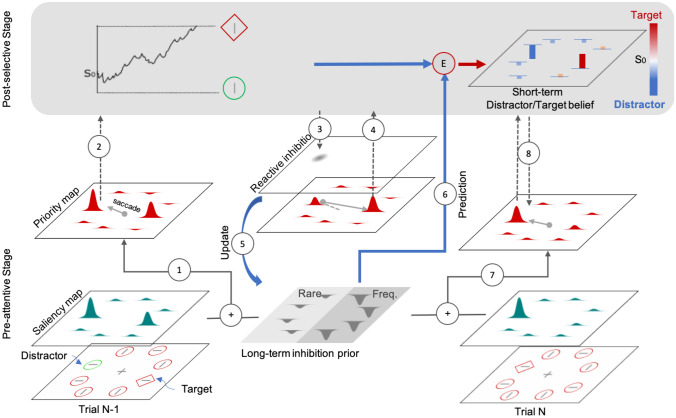
Individuals with Autism Spectrum Disorder (ASD) are thought to under-rely on prior knowledge in perceptual decision-making. This study examined whether this applies to decisions of attention allocation, of relevance for ‘predictive-coding’ accounts of ASD. In a visual search task, a salient but task-irrelevant distractor appeared with higher probability in one display half. Individuals with ASD learned to avoid ‘attentional capture’ by distractors in the probable region as effectively as control participants—indicating typical priors for deploying attention. However, capture by a ‘surprising’ distractor at an unlikely location led to greatly slowed identification of a subsequent target at that location—indicating that individuals with ASD attempt to control surprise (unexpected attentional capture) by over-regulating parameters in post-selective decision-making.
Overview
The claims and statistics of this paper haven’t been checked yet.
Free: it reads the open-access text and checks the first 5 claims that cite a source we can check. Create a free account to check every claim.
Integrity signals
Registry
Cites
Statistics
Figures
Verification
Claims the paper makes
The claims and statistics of this paper haven’t been checked yet.
Free: it reads the open-access text and checks the first 5 claims that cite a source we can check. Create a free account to check every claim.
Claims other papers make about this one
Each is checked against this paper’s own text: does it say what the citing paper says it does?
The source backs part of the claim, not all of it — or backs it for a different population, condition or comparison.
In the citing paper
“Children, adolescents, and adults with ASD exhibited impaired predictive abilities, characterized by reduced gaze visits and delays in responding to target stimuli compared to HC (Allenmark et al., 2021; Greene et al., 2019).”
From Predictive coding in neuropsychiatric disorders: a systematic transdiagnostic review. (2025) · cites this paper as Allenmark et al., 2021
Experimental — accuracy not yet measuredThe cited source says what the claim attributes to it.
In the citing paper
“Alterations in the way priors are iteratively updated [5, 58] may hold greater promise for understanding autism-related differences in predictive processing.”
From Predicting emotional valence in autism: a preregistered study in the Bayesian Brain framework (2026) · cites this paper as [58]
Self-check
Percentages, sums and reported differences re-computed from the paper’s own numbers.
The self-check needs the paper’s full text.
Citations
Cites
Diagnostic and Statistical Manual of Mental Disorders
American Psychiatric Association (2013) · doi:10.1176/appi.books.9780890425596 · Cited by 116,369
Brainard, D. H. (1997) · Spatial Vision · doi:10.1163/156856897x00357 · Cited by 19,702 · cited 1×
“Stimulus presentation, response recording, and eye-movement sampling were controlled via a customized Matlab program using the Psychtoolbox and the Eyelink Toolbox (Brainard 1997).”
MethodA feature-integration theory of attention.
Treisman, A. M., & Gelade, G. (1980) · Cognitive Psychology · doi:10.1016/0010-0285(80)90005-5 · Cited by 12,366
Diagnostic and Statistical Manual of Mental Disorders(DSM)
(2008) · Encyclopedia of Counseling · doi:10.4135/9781412963978.n182 · Cited by 10,830
The free-energy principle: a unified brain theory?
Friston, K. (2010) · Nature Reviews Neuroscience · doi:10.1038/nrn2787 · Cited by 8,120 · cited 2×
“Predictive-coding accounts of perception (Friston 2010; Friston and Kiebel 2009) assume that the brain continually makes predictions, based on prior knowledge, about the environmental causes of the sensory inputs it receives.”
BackgroundBeck, A. T., Steer, R. A., & Brown, G. (2011) · PsycTESTS Dataset · doi:10.1037/t00742-000 · Cited by 7,535
Baron-Cohen, S., Wheelwright, S., Skinner, R., Martin, J., & Clubley, E. (2001) · Journal of Autism and Developmental Disorders · doi:10.1023/a:1005653411471 · Cited by 6,450
Journal of experimental psychology: Human Perception and performance
(1987) · Journal of Sound and Vibration · doi:10.1016/0022-460x(87)90423-8 · Cited by 5,411
Baron-Cohen, S., & Wheelwright, S. (2004) · Journal of Autism and Developmental Disorders · doi:10.1023/b:jadd.0000022607.19833.00 · Cited by 4,093
Shifts in Selective Visual Attention: Towards the Underlying Neural Circuitry
Koch, C., & Ullman, S. (1987) · Matters of Intelligence · doi:10.1007/978-94-009-3833-5_5 · Cited by 3,722
Research works printed but not linked: 2
- Schmidt KH Metzler P WST-Wortschatztest 1992 Göttingen Beltz Test
- World Health Organization The ICD-10 classification of mental and behavioral disorders: Clinical descriptions and diagnostic guidelines 1992 Geneva World Health Organization
Cited by
10 years of Bayesian theories of autism: A comprehensive review
Angeletos Chrysaitis, N., & Seriès, P. (2023) · Neuroscience & Biobehavioral Reviews · doi:10.1016/j.neubiorev.2022.105022 · Cited by 92
Dwyer, P. S. R., Williams, Z. J., Lawson, W. B., & Rivera, S. M. (2024) · Neurodiversity · doi:10.1177/27546330241237883 · Cited by 76
“However, other studies suggest that autistic people ’ s attention can be captured by stimuli in ways that do appear to interfere with task performance and learning (Allenmark et al., 2021; Amso et al., 2014; Keehn et al., 2019b; Poole et al., 2018; Venker et al., 2021).”
Decision-making in autism: A narrative review
van der Plas, E., Mason, D., & Happe, F. G. E. (2023) · Autism · doi:10.1177/13623613221148010 · Cited by 41
“Similarly, on a probabilistic visual search task, autistic participants performed as well as comparison participants, except that reaction times were longer in the autism group when the target followed a distractor in a rare region of the search space (Allenmark et al., 2021).”
BackgroundPredictive coding in neuropsychiatric disorders: a systematic transdiagnostic review.
Qela, B., Damiani, S., De Santis, S., Groppi, F., Pichiecchio, A., Asteggiano, C., Brondino, N., Monteleone, A. M., Grassi, L., Politi, P., et al. (2025) · Neuroscience & Biobehavioral Reviews · doi:10.1016/j.neubiorev.2025.106020 · Cited by 26
“Children, adolescents, and adults with ASD exhibited impaired predictive abilities, characterized by reduced gaze visits and delays in responding to target stimuli compared to HC (Allenmark et al., 2021; Greene et al., 2019).”
Predictive Processing in Autism Spectrum Disorder: The Atypical Iterative Prior Updating Account
Shi, Z., Allenmark, F., Theisinger, L. A., Pistorius, R. L., Glasauer, S., Müller, H. J., & Falter, C. M. (2025) · Biological Psychiatry Global Open Science · doi:10.1016/j.bpsgos.2025.100468 · Cited by 27
“This null fi nding is consistent with recent indications that individuals with ASD do not show a generalized learning de fi cit but rather atypical responding to short-term prediction errors (19) or atypical updating of social expectations, such as other people ’ s intentions (22).”
Self-citationAllenmark, F., Zhang, B., Shi, Z., & Müller, H. J. (2022) · Journal of Experimental Psychology Human Perception & Performance · doi:10.1037/xhp0001054 · Cited by 27
Self-citationLiteralism in Autistic People: a Predictive Processing Proposal
Vicente, A., Michel, C., & Petrolini, V. (2023) · Review of Philosophy and Psychology · doi:10.1007/s13164-023-00704-x · Cited by 23
“Given the higher weight assigned to incoming signals, linguistic input ends up being processed in the here-and-now, thereby making any violation or imprecision appear more puzzling and salient (similarly to what happens perceptually, see Allenmark et al. 2021).”
Qiu, N., Zhang, B., Allenmark, F., Nasemann, J., Tsai, S., Müller, H. J., & Shi, Z. (2023) · Psychophysiology · doi:10.1111/psyp.14351 · Cited by 15
Self-citationDwyer, P. S. R., Williams, Z. J., Lawson, W. B., & Rivera, S. M. (2025) · Journal of Attention Disorders · doi:10.1177/10870547251361226 · Cited by 14
“However, autistic people can also display enhanced processing of background stimuli (Remington et al., 2019; Remington & Fairnie, 2017) and a susceptibility toward exogenous, stimulus-driven capture of attention (Allenmark et al., 2021; Keehn et al., 2019; Poole et al., 2018; Venker et al., 2021).”
Dynamic suppression of likely distractor locations: Task-critical modulation
Allenmark, F., Stanković, M., Müller, H. J., & Shi, Z. (2024) · Visual Cognition · doi:10.1080/13506285.2024.2393467 · Cited by 8
“…effect) to be indicative of proactive suppression of the likely distractor location(s) based on statistically acquired “predictions” (Allenmark et al., 2021, 2022; Di Caro et al., 2019; Ferrante et al., 2018; Sauter et al., 2018, 2021; Wang et al., 2019; Wang & Theeuwes, 2018; Zhang…”
Self-citationPlank, I. S., Tepest, R., Vogeley, K. T., & Falter, C. M. (2025) · Molecular Autism · doi:10.1186/s13229-025-00668-y · Cited by 7
“Additionally, they completed two unrelated tasks, a task modelled after Allenmark and colleagues [38] and a visual acuity task [39], which will be presented elsewhere.”
Self-citationHou, W., Cheng, R., Zhao, Z., Liao, H., & Li, J. (2024) · Autism Research · doi:10.1002/aur.3194 · Cited by 5
“Despite of being informative, these studies quantified priors based on whether the behavioral responses of participants conformed to the expected outcomes, which focused on the post-selective explicit decisions (Allenmark et al., 2021).”
Qiu, N., Allenmark, F., Müller, H. J., & Shi, Z. (2024) · Visual Cognition · doi:10.1080/13506285.2024.2438410 · Cited by 6
“Research shows that a salient distractor can considerably impact the search process (e.g., Theeuwes, 1992), often drawing the first saccadic eye movement toward the salient distractor rather than the less salient target (e.g., Allenmark et al., 2021; Sauter et al., 2021).”
Self-citationA Systematic Review and Meta-analysis of Empirical Evidence for the Simple Bayesian Model of Autism
Cui, K., Lin, X., Gao, R., Jing, S., Luo, F., & Wang, J. (2025) · Neuropsychology Review · doi:10.1007/s11065-025-09672-8 · Cited by 5
“Although multiple Bayesian theories of autism exist, empirical research has largely focused on the simple Bayesian model, particularly Pellicano and Burr’s (2012) hypo-prior account (Allenmark et al., 2021; Amoruso et al., 2019; Król & Król, 2019; Van de Cruys et al., 2018).”
Predictive Processing During Cue-Outcome Associative Learning in Autistic Children
Papastamou, F., Dumont, C., Destrebecqz, A., & Kissine, M. (2024) · Journal of Autism and Developmental Disorders · doi:10.1007/s10803-024-06448-6 · Cited by 3
“…is supported by studies demonstrating over-adaptation of precision weighing, higher learning rates, and faster learning updates in autistic adults (Allenmark et al., 2021; Goris et al., 2022 ; Lawson et al., 2017; Sapey Triomphe et al., 2021; Thillay et al., 2016), the literature also includes…”
Predicting emotional valence in autism: a preregistered study in the Bayesian Brain framework
Plank, I. S., Pior, A., Yurova, A., Nowak, J., Shi, Z., & Falter-Wagner, C. M. (2026) · Molecular Autism · doi:10.1186/s13229-026-00730-3 · Cited by 2
Self-citationYu, H., Allenmark, F., Müller, H. J., & Shi, Z. (2024) · Cognition · doi:10.1016/j.cognition.2024.105977 · Cited by 3
Self-citationRengarajan, S., Cannon, J. J., Baron, B., Mohan, N., & Chukoskie, L. (2023) · Lecture notes in computer science · doi:10.1007/978-3-031-37171-4_13 · Cited by 1
The Impact of Perceptual Load and Distractors’ Perceptual Grouping on Visual Search in ASD
Shen, W., Huang, Y., Zhang, L., & Shimin, F. U. (2026) · Behavioral Sciences · doi:10.3390/bs16010080 · Cited by 1
“Individuals with ASD are of particular interest to researchers due to their distinctive selective attention, especially their unique visual search patterns (Allenmark et al., 2021; Van de Cruys et al., 2021).”
Fu, C., Aixin, L., 吕小康, & 王崇颖 (2024) · Advances in Psychological Science · doi:10.3724/sp.j.1042.2024.01164
Temporal Dynamics of Local and Global Effects in Distractor InterferencePreprint
Allenmark, F., Yu, H., Shi, Z., & Müller, H. J. (2025) · SSRN Electronic Journal · doi:10.2139/ssrn.5605768
Self-citationPerception and production of non-verbal signals in autism
Robles, M. (2025) · Tesis Doctorals en Xarxa (Consorci de Serveis Universitaris de Catalunya) · doi:10.5282/edoc.35147
Chong, A., Pearson, D., & Moul, C. (2026) · Cognition & Emotion · doi:10.1080/02699931.2026.2672107
Diametrically opposed sex‐specific effects of autistic traits on risk‐taking in poker
Eriguchi, Y., Eguchi, S., Kuwabara, H., Aoki, N., Kuroda, M., Sakakibara, E., Kasai, K., & Kano, Y. (2026) · Psychiatry and Clinical Neurosciences Reports · doi:10.1002/pcn5.70372
“…points toward a potential hierarchical divergence: while ASD perception may be characterized by weak priors in the sensory domain (Figure 7a,b), 51,52 ASD strategic decision ‐ making is defined by over ‐ precise priors in the cognitive domain (Figure 7c), where negative feedback is treated as…”
Environmental volatility is associated with adaptive caution in visual search
Qiu, N., Allenmark, F., Chen, S., Müller, H. J., & Shi, Z. (2026) · PLoS Computational Biology · doi:10.1371/journal.pcbi.1014310
“The subsequent measures index processing after this initial allocation: the distractor dwell time, target acquisition and verification, and finally the manual response and its accuracy [21–23].”
Self-citation
Metadata
- Authors
- Allenmark, F., Shi, Z., Pistorius, R. L., Theisinger, L. A., Koutsouleris, N., Falkai, P., Müller, H. J., & Falter-Wagner, C. M.
- Affiliations
- Ludwig-Maximilians-Universität München (DE)
- Corresponding author
- Allenmark, Fredrik
- Venue
- Journal of Autism and Developmental Disorders
- Published
- 2020-12-29
- Volume
- 51
- Issue
- 10
- Pages
- 3744-3758
- ISSN
- 0162-3257 (ISSN-L)
- 1573-3432
- PMC
- PMC8460564
- OpenAlex
- W3116326241
- Cited by
- 27
- References
- 53
- Citations by year
- 2026: 6 · 2025: 6 · 2024: 7 · 2023: 4 · 2022: 4
- FWCI
- 1.07
- Type
- journal article
- Language
- en
- Open access
- hybrid
- doi.org
- Licence
- cc-by
- creativecommons.org/licenses/by/4.0 (tdm)
- creativecommons.org/licenses/by/4.0 (vor)
- Locations
- Journal of Autism and Developmental Disorders (publishedVersion, cc-by)
- Europe PMC (PubMed Central) (publishedVersion, other-oa)
- PubMed Central (publishedVersion, cc-by)
- PubMed (publishedVersion)
- Research Portal (King's College London) (publishedVersion, other-oa)
- MPG.PuRe (Max Planck Society) (submittedVersion, cc-by)
- Open access LMU (Ludwid Maxmilian's Universitat Munchen) (submittedVersion, cc-by)
- Funders
- Deutsche Forschungsgemeinschaft (MU773/16-1)
- Ludwig-Maximilians-Universität München (867900-3)
- Projekt DEAL
- Topics
- Life Sciences › Neuroscience › Cognitive Neuroscience › Autism Spectrum Disorder Research
- Life Sciences › Neuroscience › Cognitive Neuroscience › Visual perception and processing mechanisms
- Physical Sciences › Computer Science › Computer Vision and Pattern Recognition › Visual Attention and Saliency Detection
- Keywords
- autism spectrum disorder, prior knowledge, attentional capture, visual search, predictive coding, surprise, attention allocation, perceptual decision making, target identification
- MeSH terms
- Autism Spectrum Disorder, Attention, Autistic Disorder, Humans, Learning, Reaction Time, Knowledge
About these checks
Registry, retraction, Cites and statistics results are computed, not judged, with one exception: a printed reference that no index lists is read once by a model before it counts as a citation error. Claims are extracted by a model and kept only when their quote appears verbatim in the text; each cited source is then checked, with a model’s help, for whether it says what the claim relies on. Those verdicts can be wrong — read the claim’s quote and the cited source before relying on one.
Statistics and arithmetic are recomputed, not judged.
Confidence bands are shown only for fields calibrated on our annotated test set. None is calibrated yet, so no band is shown.
What counts as a claim ›How we measure confidence ›How we check this ›
Are you an author, or do you see a problem with this page? Request a review
Data sources
Bibliographic data: Semantic Scholar, OpenAlex, Crossref.
Contains information from the Semantic Scholar Academic Graph Datasets, made available under the ODC Attribution License (ODC-BY 1.0).
Semantic Scholar’s data is described in: Kinney, R., et al. (2023). The Semantic Scholar Open Data Platform. arXiv:2301.10140.
