

Anxiety and Worries of Individuals with Down Syndrome During the COVID-19 Pandemic: A Comparative Study in the UK
Open accessPublished version of a preprint
The DOI matches its Crossref record; 77 of the 77 references it cites were found in a registry or an index.
Abstract
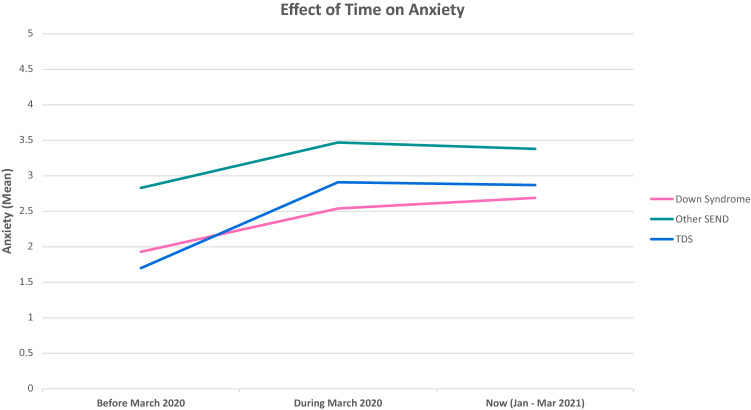
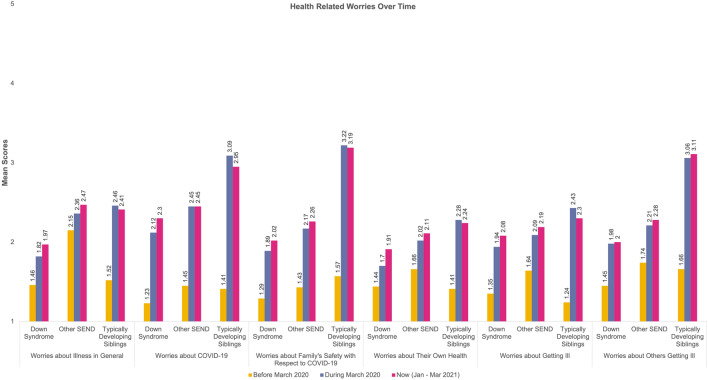
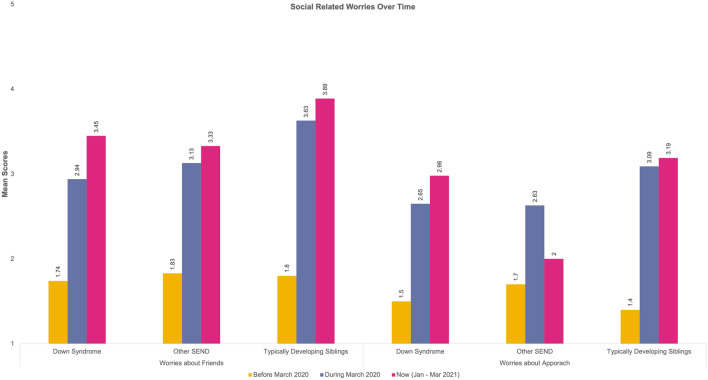
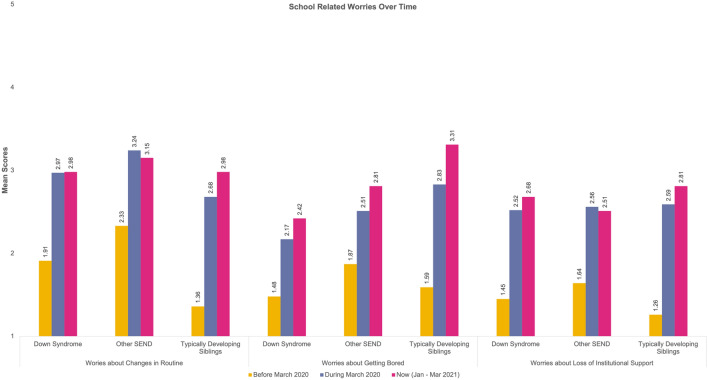
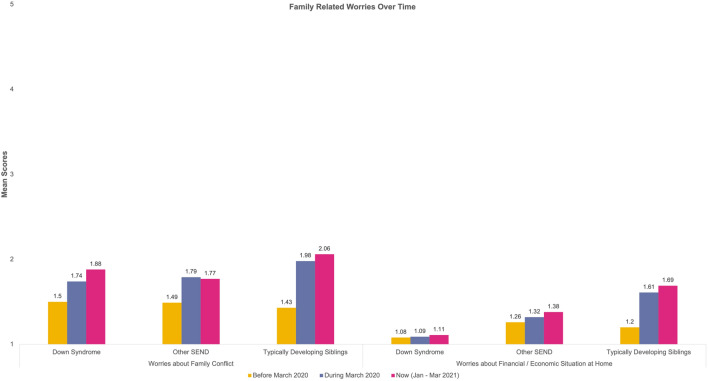
The present study explored the effects of the pandemic on individuals with Down Syndrome (DS; n = 67) compared to other groups with Special Education Needs and Disabilities (SEND; n = 48) and their Typically Developing Siblings (TDS; n = 56). In total, 115 caregivers reported on their own anxiety and worries and of their children. Anxiety levels for individuals with DS appeared to be lower compared to other SEND populations and to TDS. In terms of worries, individuals with DS worried more about social-related worries but worried less about family-related aspects compared to the other groups. In sum, individuals with DS might show less anxiety but still worried more about specific aspects related to the impact of COVID-19 pandemic on their lives.
Overview
The claims and statistics of this paper haven’t been checked yet.
Free: it reads the open-access text and checks the first 5 claims that cite a source we can check. Create a free account to check every claim.
Integrity signals
Registry
Cites
Statistics
Figures
Verification
Claims the paper makes
The claims and statistics of this paper haven’t been checked yet.
Free: it reads the open-access text and checks the first 5 claims that cite a source we can check. Create a free account to check every claim.
Claims other papers make about this one
Each is checked against this paper’s own text: does it say what the citing paper says it does?
The check wasn’t confident either way, so it gives no verdict — never disputed.
In the citing paper
“Research also indicates that mindfulness practice may help with the development of compassion and reducing stress, anxiety [34], and depression [10-13].”
From Psychological Interventions and Those With Elements of Positive Psychology for Child and Youth Mental Health During the COVID-19 Pandemic: Literature Review, Lessons Learned, and Areas for Future Knowledge Dissemination (2024) · cites this paper as [13]
Experimental — accuracy not yet measured
Self-check
Percentages, sums and reported differences re-computed from the paper’s own numbers.
The self-check needs the paper’s full text.
Citations
Cites
A Brief Measure for Assessing Generalized Anxiety Disorder: The GAD-7
Spitzer, R. L., Kroenke, K., Williams, J. B. W., & Löwe, B. (2006) · Archives of Internal Medicine · doi:10.1001/archinte.166.10.1092 · Cited by 31,765
A scaled version of the General Health Questionnaire
Goldberg, D. P., & Hillier, V. F. (1979) · Psychological Medicine · doi:10.1017/s0033291700021644 · Cited by 5,459
Rossi, R., Socci, V., Talevi, D., Mensi, S., Niolu, C., Pacitti, F., Di Marco, A., Rossi, A., Siracusano, A., & Di Lorenzo, G. (2020) · Frontiers in Psychiatry · doi:10.3389/fpsyt.2020.00790 · Cited by 1,448 · cited 1×
“…show the effect of multiple lockdowns can be effective (Scala, 2021), mental health researchers raised concerns around their impact on mental health as many countries, including the UK, were undergoing a series of lockdowns (Rossi et al., 2020; Thakur et al., 2020; Adams-Prassl et al., 2020).”
The impact of COVID-19 lockdown on child and adolescent mental health: systematic review
Panchal, U., Salazar de Pablo, G., Franco, M., Moreno, C., Parellada, M., Arango, C., & Fusar-Poli, P. (2023) · European Child & Adolescent Psychiatry · doi:10.1007/s00787-021-01856-w · Cited by 1,028 · cited 1×
“Though the impact of the COVID-19 pandemic and its restrictions have caused significant elevated rates of mental health to individuals with SEND (Panchal et al., 2021), to our knowledge there is no research on the effects of the pandemic on individuals with Down Syndrome and the challenges and…”
Parenting stress and child behavior problems: a transactional relationship across time
Neece, C. L., Green, S. A., & Baker, B. L. (2012) · American Journal on Intellectual and Developmental Disabilities · doi:10.1352/1944-7558-117.1.48 · Cited by 953
Russell, B. S., Hutchison, M., Tambling, R., Tomkunas, A. J., & Horton, A. L. (2020) · Child Psychiatry & Human Development · doi:10.1007/s10578-020-01037-x · Cited by 704
Behavioral phenotype of individuals with Down syndrome
Chapman, R. S., & Hesketh, L. J. (2000) · Mental Retardation and Developmental Disabilities Research Reviews · doi:10.1002/1098-2779(2000)6:2<84::aid-mrdd2>3.0.co;2-p · Cited by 672
Asbury, K., Fox, L., Deniz, E., Code, A., & Toseeb, U. (2021) · Journal of Autism and Developmental Disorders · doi:10.1007/s10803-020-04577-2 · Cited by 558
Validity of the scaled version of the General Health Questionnaire (GHQ-28) in a Spanish population
Lobo, A., Pérez-Echeverría, M. J., & Artal, J. (1986) · Psychological Medicine · doi:10.1017/s0033291700002579 · Cited by 535
Hauser-Cram, P., Warfield, M. E., Shonkoff, J. P., & Krauss, M. W. (2003) · Monographs of the Society for Research in Child Development · doi:10.1111/1540-5834.00151 · Cited by 449
Sanders, J. L., & Morgan, S. B. (1997) · Child & Family Behavior Therapy · doi:10.1300/j019v19n04_02 · Cited by 399
(1983) · PubMed · Cited by 377
Scott, K. M. (2011) · Archives of General Psychiatry · doi:10.1001/archgenpsychiatry.2011.77 · Cited by 361 · cited 1×
“According to previous research, early life adversities are a key factor for either short-or long-term mental health difficulties (Scott et al., 2011).”
Psychological effects of polar expeditions
Palinkas, L. A., & Suedfeld, P. (2008) · The Lancet · doi:10.1016/s0140-6736(07)61056-3 · Cited by 348 · cited 1×
“Such research spans situations such as solitary confinement (Chadick et al., 2018; Reiter et al., 2020), segregation (Valentine et al., 2019; Rubio et al., 2021), and polar expeditions (Palinkas & Suedfeld, 2008; Rubio et al., 2021).”
Language development in children and adolescents with Down syndrome
Chapman, R. S. (1997) · Mental Retardation and Developmental Disabilities Research Reviews · doi:10.1002/(sici)1098-2779(1997)3:4<307::aid-mrdd5>3.0.co;2-k · Cited by 311
Jeste, S., Hyde, C., Distefano, C., Halladay, A., Ray, S., Porath, M., Wilson, R. B., & Thurm, A. (2020) · Journal of Intellectual Disability Research · doi:10.1111/jir.12776 · Cited by 298
The impact of the coronavirus lockdown on mental health: evidence from the United States
Adams‐Prassl, A., Boneva, T., Golin, M., & Rauh, C. (2022) · Economic Policy · doi:10.1093/epolic/eiac002 · Cited by 294
Linking parental perceptions to interactions in young children with autism
Kasari, C., & Sigman, M. (1997) · Journal of Autism and Developmental Disorders · doi:10.1023/a:1025869105208 · Cited by 289 · cited 4×
“…having less pessimistic outlooks regarding their child’s future (Fidler et al., 2000), perceiving less temperamental difficulties in their children (Kasari & Sigman, 1997), and having greater and more satisfying social networks and support (Hauser-Cram et al., 2001), where these differences were…”
InfluentialRICE, M. L., WARREN, S. F., & BETZ, S. K. (2005) · Applied Psycholinguistics · doi:10.1017/s0142716405050034 · Cited by 236
Siblings of individuals with autism or Down syndrome: effects on adult lives
Orsmond, G. I., & Seltzer, M. M. (2007) · Journal of Intellectual Disability Research · doi:10.1111/j.1365-2788.2007.00954.x · Cited by 196
Behavior Problems of Children with Down Syndrome and Life Events
Coe, D. A., Matson, J. L., Russell, D., Slifer, K. J., Capone, G. T., Baglio, C., & Stallings, S. (1999) · Journal of Autism and Developmental Disorders · doi:10.1023/a:1023044711293 · Cited by 189
Language and verbal short-term memory skills in children with Down syndrome: A meta-analytic review
Næss, K.-A. B., Lyster, S.-A. H., Hulme, C., & Melby-Lervåg, M. (2011) · Research in Developmental Disabilities · doi:10.1016/j.ridd.2011.05.014 · Cited by 178
Tassé, M. J., Luckasson, R., & Schalock, R. L. (2016) · Intellectual and Developmental Disabilities · doi:10.1352/1934-9556-54.6.381 · Cited by 170
Health comorbidities and cognitive abilities across the lifespan in Down syndrome
LonDownS Consortium, Startin, C. M., D’Souza, H., Ball, G., Hamburg, S., Hithersay, R., Hughes, K. M. O., Massand, E., Karmiloff-Smith, A., Thomas, M. S. C., et al. (2020) · Journal of Neurodevelopmental Disorders · doi:10.1186/s11689-019-9306-9 · Cited by 165
Human mobility in response to COVID-19 in France, Italy and UK
Galeazzi, A., Cinelli, M., Bonaccorsi, G., Pierri, F., Schmidt, A. L., Scala, A., Pammolli, F., & Quattrociocchi, W. (2021) · Scientific Reports · doi:10.1038/s41598-021-92399-2 · Cited by 164
Hodapp, R. M., & Urbano, R. C. (2007) · Journal of Intellectual Disability Research · doi:10.1111/j.1365-2788.2007.00994.x · Cited by 162
van Gameren-Oosterom, H. B. M., Fekkes, M., Buitendijk, S. E., Mohangoo, A. D., Bruil, J., & Van Wouwe, J. P. (2011) · PLoS ONE · doi:10.1371/journal.pone.0021879 · Cited by 162
Fidler, D. J., Hodapp, R. M., & Dykens, E. M. (2000) · Early Education & Development · doi:10.1207/s15566935eed1104_2 · Cited by 156
Fidler, D., Hepburn, S., & Rogers, S. (2006) · Down Syndrome Research and Practice · doi:10.3104/reports.297 · Cited by 154
Pandemics and pre-existing mental illness: A systematic review and meta-analysis
Neelam, K., Duddu, V., Anyim, N., Neelam, J., & Lewis, S. (2021) · Brain, Behavior, & Immunity - Health · doi:10.1016/j.bbih.2020.100177 · Cited by 148
Greenberg, J. S., Seltzer, M. M., Krauss, M. W., Chou, R. J.-A., & Hong, J. (2004) · American Journal of Orthopsychiatry · doi:10.1037/0002-9432.74.1.14 · Cited by 146
Reiter, K., Ventura, J., Lovell, D., Augustine, D., Barragan, M., Blair, T., Chesnut, K., Dashtgard, P., Gonzalez, G., Pifer, N., et al. (2020) · American Journal of Public Health · doi:10.2105/ajph.2019.305375 · Cited by 133 · cited 1×
“Such research spans situations such as solitary confinement (Chadick et al., 2018; Reiter et al., 2020), segregation (Valentine et al., 2019; Rubio et al., 2021), and polar expeditions (Palinkas & Suedfeld, 2008; Rubio et al., 2021).”
Language and communication in fragile X syndrome
Abbeduto, L., & Hagerman, R. J. (1997) · Mental Retardation and Developmental Disabilities Research Reviews · doi:10.1002/(sici)1098-2779(1997)3:4<313::aid-mrdd6>3.0.co;2-o · Cited by 132
Families of children with Down syndrome
Cunningham, C. (1996) · Down Syndrome Research and Practice · doi:10.3104/perspectives.66 · Cited by 128
Children with disabilities in the United States and the COVID-19 pandemic
Houtrow, A. J., Harris, D. S., Molinero, A. M., Levin‐Decanini, T., & Robichaud, C. (2020) · Journal of Pediatric Rehabilitation Medicine · doi:10.3233/prm-200769 · Cited by 128
Profiles and development of adaptive behavior in children with Down syndrome
Dykens, E., Hodapp, R., & Evans, D. (2006) · Down Syndrome Research and Practice · doi:10.3104/reprints.293 · Cited by 120
The Impact of the Coronavirus Lockdown on Mental Health: Evidence from the US
Adams‐Prassl, A., Boneva, T., Golin, M., & Rauh, C. (2020) · RePEc: Research Papers in Economics · doi:10.17863/cam.57997 · Cited by 118
Improving the Communication of People with Down Syndrome,
Gottlieb, S. (2000) · Journal of Developmental & Behavioral Pediatrics · doi:10.1097/00004703-200008000-00014 · Cited by 116
Stressful Life Events and Child Anxiety: Examining Parent and Child Mediators
Platt, R., Williams, S. R., & Ginsburg, G. S. (2016) · Child Psychiatry & Human Development · doi:10.1007/s10578-015-0540-4 · Cited by 99
The Down Syndrome Advantage: Fact or Fiction?
Corrice, A. M., & Glidden, L. M. (2009) · American Journal on Intellectual and Developmental Disabilities · doi:10.1352/1944-7558-114.4.254-268 · Cited by 86
Daunhauer, L. A., & Fidler, D. J. (2011) · Occupational Therapy In Health Care · doi:10.3109/07380577.2010.535601 · Cited by 84
Guidelines for optimal medical care of persons with Down syndrome
Pueschel, S., Annerén, G., Durlach, R., Flores, J., Sustrová, M., & Verma, I. C. (1995) · Acta Paediatrica · doi:10.1111/j.1651-2227.1995.tb13768.x · Cited by 80
Foley, K., Taffe, J. R., Bourke, J., Einfeld, S., Tonge, B. J., Trollor, J. N., & Leonard, H. (2016) · PLoS ONE · doi:10.1371/journal.pone.0157667 · Cited by 80
Growing up with Down syndrome: Development from 6 months to 10.7 years
Marchal, J. P., Maurice‐Stam, H., Houtzager, B. A., van Rozenburg-Marres, S. L. R., Oostrom, K. J., Grootenhuis, M. A., & van Trotsenburg, A. S. P. (2016) · Research in Developmental Disabilities · doi:10.1016/j.ridd.2016.09.019 · Cited by 79
Speech and Language Development and Intervention in Down Syndrome and Fragile X Syndrome
Barker, R. M., & Romski, M. A. (2009) · Intellectual and developmental disabilities · doi:10.1352/1934-9556-47.6.479 · Cited by 78
The language development of children with Down syndrome: First words to two-word phrases
Buckley, S., & Oliver, B. R. (1994) · Down Syndrome Research and Practice · doi:10.3104/reports.33 · Cited by 77
Galeote, M., Sebastián, E., Checa, E., Rey, R., & Soto, P. (2011) · Journal of Intellectual & Developmental Disability · doi:10.3109/13668250.2011.599317 · Cited by 77
Social Cognition in Children with Down Syndrome
Cebula, K. R., & Wishart, J. G. (2008) · International review of research in mental retardation · doi:10.1016/s0074-7750(07)35002-7 · Cited by 76
Vocabulary development in children with Down syndrome: Longitudinal and cross-sectional data
Zampini, L., & D’Odorico, L. (2013) · Journal of Intellectual & Developmental Disability · doi:10.3109/13668250.2013.828833 · Cited by 68
Sensory Processing and Maladaptive Behavior: Profiles Within the Down Syndrome Phenotype
Will, E., Daunhauer, L. A., Fidler, D. J., Lee, N., Rosenberg, C. R., & Hepburn, S. (2019) · Physical & Occupational Therapy In Pediatrics · doi:10.1080/01942638.2019.1575320 · Cited by 65
Smartphone Abuse Amongst Adolescents: The Role of Impulsivity and Sensation Seeking
Garrote, G. P. D. A., Rubio, L., Gómez, M. B. M., & Buedo-Guirado, C. (2021) · Frontiers in Psychology · doi:10.3389/fpsyg.2021.746626 · Cited by 64
Ashworth, M., Palikara, O., & Van Herwegen, J. (2019) · Journal of Applied Research in Intellectual Disabilities · doi:10.1111/jar.12594 · Cited by 60
Self-citationVillani, E. R., Vetrano, D. L., Damiano, C., Paola, A. D., Ulgiati, A. M., Martin, L., Hirdes, J. P., Fratiglioni, L., Bernabei, R., Onder, G., et al. (2020) · Frontiers in Psychiatry · doi:10.3389/fpsyt.2020.578686 · Cited by 57
Accounting for the “Down Syndrome Advantage”
Esbensen, A. J., & Seltzer, M. M. (2011) · American Journal on Intellectual and Developmental Disabilities · doi:10.1352/1944-7558-116.1.3 · Cited by 55
Effect of the Pandemic and Lockdown on Mental Health of Children
Thakur, K., Kumar, N., & Sharma, N. (2020) · The Indian Journal of Pediatrics · doi:10.1007/s12098-020-03308-w · Cited by 55
Nærland, T., Bakke, K. A., Storvik, S., Warner, G., & Howlin, P. (2016) · Journal of Intellectual Disability Research · doi:10.1111/jir.12342 · Cited by 49
Sideropoulos, V., Dukes, D., Hanley, M., Palikara, O., Rhodes, S., Riby, D. M., Samson, A. C., & Van Herwegen, J. (2022) · Journal of Autism and Developmental Disorders · doi:10.1007/s10803-021-05168-5 · Cited by 49
Self-citationMiniarikova, E., Vernhet, C., Périés, M., Loubersac, J., Picot, M., Münir, K., & Baghdadli, A. (2021) · Journal of Psychiatric Research · doi:10.1016/j.jpsychires.2021.11.022 · Cited by 44
Chadick, C. D., Batastini, A. B., Levulis, S. J., & Morgan, R. D. (2018) · Legal and Criminological Psychology · doi:10.1111/lcrp.12125 · Cited by 43
COVID-19 in Children with Down Syndrome: Data from the Trisomy 21 Research Society Survey
Emes, E., Hüls, A., Baumer, N., Dierssen, M., Puri, S., Russell, L., Sherman, S. L., Strydom, A., Bargagna, S., Brandão, A. C., et al. (2021) · Journal of Clinical Medicine · doi:10.3390/jcm10215125 · Cited by 41
Athletes’ Psychological Adaptation to Confinement Due to COVID-19: A Longitudinal Study
Rubio, V. J., Sánchez‐Iglesias, I., Bueno, M., & Martin, G. (2021) · Frontiers in Psychology · doi:10.3389/fpsyg.2020.613495 · Cited by 40
Thomas, M. S. C., Ojinaga-Alfageme, O., D’Souza, H., Patkee, P. A., Rutherford, M., Mok, K. Y., Hardy, J., & Karmiloff‐Smith, A. (2020) · Research in Developmental Disabilities · doi:10.1016/j.ridd.2020.103638 · Cited by 39
Overmeire, R. V. (2020) · Journal of Traumatic Stress · doi:10.1002/jts.22594 · Cited by 36
Down syndrome children and their families
Gath, A. (2005) · American Journal of Medical Genetics · doi:10.1002/ajmg.1320370762 · Cited by 34
Barisnikov, K., & Lejeune, F. (2018) · PLoS ONE · doi:10.1371/journal.pone.0200932 · Cited by 33
Down syndrome and parental depression: A double hit on early expressive language development
D’Souza, H., Lathan, A., Karmiloff‐Smith, A., & Mareschal, D. (2020) · Research in Developmental Disabilities · doi:10.1016/j.ridd.2020.103613 · Cited by 24
Rafaniello, C., Sullo, M. G., Carnovale, C., Pozzi, M., Stelitano, B., Radice, S., Bernardini, R., Rossi, F., Clementi, E., & Capuano, A. (2020) · Frontiers in Psychiatry · doi:10.3389/fpsyt.2020.550201 · Cited by 24
Su, S., Wang, Y., Jiang, W., Zhao, W., Gao, R., Wu, Y., Tao, J., Su, Y., Zhang, J., Li, K., et al. (2022) · Frontiers in Psychiatry · doi:10.3389/fpsyt.2021.799917 · Cited by 24
Su, X., Cai, R. Y., Uljarević, M., Herwegen, J. V., Dukes, D., Yang, Y., Peng, X., & Samson, A. C. (2021) · Frontiers in Psychiatry · doi:10.3389/fpsyt.2021.708465 · Cited by 23
Self-citationAssessment of mental health problems in people with Down syndrome: key considerations
Spendelow, J. S. (2011) · British Journal of Learning Disabilities · doi:10.1111/j.1468-3156.2010.00670.x · Cited by 15
Prolonged isolation as a predictor of mental health for waived juveniles
Valentine, C., Restivo, E., & Wright, K. (2019) · Journal of Offender Rehabilitation · doi:10.1080/10509674.2019.1596188 · Cited by 15
Sánchez‐Teruel, D., & Bello, M. A. R. (2020) · International journal of psychological research · doi:10.21500/20112084.4493 · Cited by 14
Cognitive profiles of genetic syndromes with Intellectual Disability
Nuovo, S. D., & Buono, S. (2009) · DOAJ (DOAJ: Directory of Open Access Journals) · Cited by 10
COVID19 Crisis Response Survey for families of Individuals with Special NeedsPreprint
Herwegen, J. V., Dukes, D., & Samson, A. C. (2020) · doi:10.17605/osf.io/5nkq9 · Cited by 10
Self-citationHypothesis of Developmental Dyscalculia and Down Syndrome: Implications for Mathematics Education.
Faragher, R. M. (2017) · Mathematics Education Research Group of Australasia · Cited by 9
The mathematics of multiple lockdowns
Scala, A. (2021) · Scientific Reports · doi:10.1038/s41598-021-87556-6 · Cited by 8
Mothers and Fathers of Children With Down Syndrome: Parental Stress and Involvement in Childcare
(1999) · doi:10.1352/0895-8017(1999)104<0422:mafocw>2.0.co;2
Research works printed but not linked: 2
- Cuskelly, M., Faragher, R., & Jobling, A. (2017). Indicative evidence that developmental dyscalculia may be part of the down syndrome behavioural phenotype. Paper presented at the Conference of the Society for the Study of Behavioural Phenotypes, Leiden, Netherlands.
- Schalock RL Quality of life: Vol. 1. Conceptualization and measurement 1996 American Association on Mental Retardation
Cited by
Raza, A., Munir, K., Almutairi, M. S., & Sehar, R. (2024) · IEEE Access · doi:10.1109/access.2024.3359235 · Cited by 52
Memahami Anak Berkebutuhan Khusus: Down Syndrome
Kamil, N., Fitri, Z. Z., Nasution, H., & Putro, . Z. (2023) · Murhum Jurnal Pendidikan Anak Usia Dini · doi:10.37985/murhum.v4i2.179 · Cited by 33
Sideropoulos, V., Sokhn, N., Palikara, O., Herwegen, J. V., & Samson, A. C. (2023) · Scientific Reports · doi:10.1038/s41598-023-35176-7 · Cited by 19
Self-citationSantoro, S. L., Baker, S., Blake, J. M., Cabrera, M. J., Caughman, K., Chung, J. A., Cullen, S., Gallagher, M., Haugen, K. L., Hoke‐Chandler, R., et al. (2023) · American Journal of Medical Genetics Part A · doi:10.1002/ajmg.a.63233 · Cited by 11
Lyzwinski, L., Zwicker, J. D., Mcdonald, S., & Tough, S. (2024) · JMIR Pediatrics and Parenting · doi:10.2196/59171 · Cited by 7
“Research also indicates that mindfulness practice may help with the development of compassion and reducing stress, anxiety [34], and depression [10-13].”
BackgroundResult
Metadata
- Authors
- Sideropoulos, V., Kye, H., Dukes, D., Samson, A. C., Palikara, O., & Van Herwegen, J.
- Affiliations
- University College London (GB)
- University of Geneva (CH)
- University of Fribourg (CH)
- University of Warwick (GB)
- Corresponding author
- Sideropoulos, V.
- Venue
- Journal of Autism and Developmental Disorders
- Published
- 2022-02-01
- Volume
- 53
- Issue
- 5
- Pages
- 2021-2036
- ISSN
- 0162-3257 (ISSN-L)
- 1573-3432
- PMC
- PMC8806133
- OpenAlex
- W4220689434
- Cited by
- 21
- References
- 77
- Citations by year
- 2026: 1 · 2025: 2 · 2024: 10 · 2023: 7 · 2022: 1
- FWCI
- 4.56
- Type
- journal article
- Language
- en
- Open access
- hybrid
- doi.org
- Licence
- cc-by
- creativecommons.org/licenses/by/4.0 (tdm)
- creativecommons.org/licenses/by/4.0 (vor)
- Locations
- Journal of Autism and Developmental Disorders (publishedVersion, cc-by)
- PubMed Central (publishedVersion, cc-by)
- PubMed (publishedVersion)
- Warwick Research Archive Portal (University of Warwick) (acceptedVersion)
- Archive ouverte UNIGE (University of Geneva) (submittedVersion, cc-by)
- UCL Discovery (University College London) (submittedVersion)
- PsyArXiv (OSF Preprints) (submittedVersion, cc-by)
- PsyArXiv (OSF Preprints) (submittedVersion)
- Funders
- Baily Thomas Charitable Fund (TRUST/VC/AC/SG/5852-9005)
- Swiss National Science Foundation (SNSF PP00P1_176722)
- Topics
- Social Sciences › Psychology › Clinical Psychology › COVID-19 and Mental Health
- Health Sciences › Medicine › Public Health, Environmental and Occupational Health › Down syndrome and intellectual disability research
- Social Sciences › Psychology › Clinical Psychology › Family and Disability Support Research
- Keywords
- Down syndrome, COVID-19 pandemic, anxiety, worry, special educational needs and disabilities, typically developing siblings, caregivers, children with disabilities
- MeSH terms
- Autism Spectrum Disorder, COVID-19, Anxiety, Child, Down Syndrome, United Kingdom, Humans, Pandemics
About these checks
Registry, retraction, Cites and statistics results are computed, not judged, with one exception: a printed reference that no index lists is read once by a model before it counts as a citation error. Claims are extracted by a model and kept only when their quote appears verbatim in the text; each cited source is then checked, with a model’s help, for whether it says what the claim relies on. Those verdicts can be wrong — read the claim’s quote and the cited source before relying on one.
Statistics and arithmetic are recomputed, not judged.
Confidence bands are shown only for fields calibrated on our annotated test set. None is calibrated yet, so no band is shown.
What counts as a claim ›How we measure confidence ›How we check this ›
Are you an author, or do you see a problem with this page? Request a review
Data sources
Bibliographic data: Semantic Scholar, OpenAlex, Crossref.
Contains information from the Semantic Scholar Academic Graph Datasets, made available under the ODC Attribution License (ODC-BY 1.0).
Semantic Scholar’s data is described in: Kinney, R., et al. (2023). The Semantic Scholar Open Data Platform. arXiv:2301.10140.
