

Strategic considerations for establishing a large-scale seaweed industry based on fish feed application: a Norwegian case study.
Open accessThe DOI matches its Crossref record; 31 of the 31 references it cites were found in a registry or an index.
Abstract
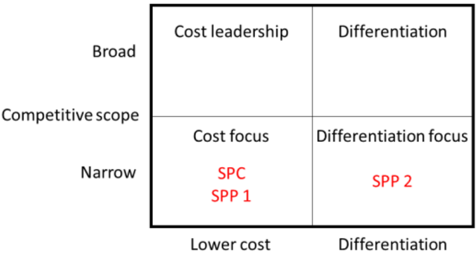
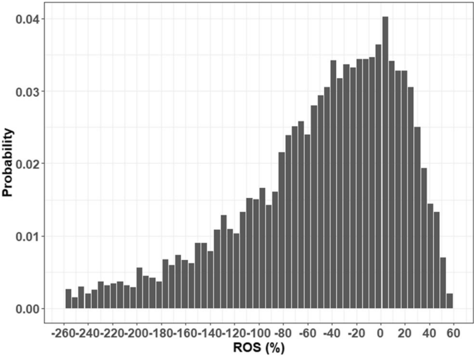
Soy protein concentrate (SPC) is a key ingredient in fish feed and most of it originates from Brazil. However, the Brazilian soy industry has reportedly resulted in significant environmental problems including deforestation. Consequently, new sources for protein are investigated and protein extracted from farmed seaweed is considered an alternative. Therefore, we investigate how seaweed protein product (SPP) can compete against SPC as a protein ingredient for fish feed. The study uses the positioning matrix, cost analyses involving the power law, and uncertainty analysis using Monte Carlo simulations, and key research challenges are identified. The initial finding is that, with the emerging seaweed industry, the cost of producing SPP is too high to be competitive for fish feed applications. To overcome this challenge, two solutions are investigated. First, substantial investments in cultivation and processing infrastructure are needed to accomplish scale, and a break-even scale of 65,000 tonnes is suggested. The second but more promising avenue, preferably in combination with the former, is the extraction of seaweed protein and high-value seaweed components. With mannitol and laminaran as co-products to the SPP, there is a 25–30% probability of a positive bottom line. Researches on extraction processes are therefore a necessity to maximize the extraction of value-added ingredients. Over time, it is expected that the competitive position of SPP will improve due to the upscaling of the volume of production as well as better biorefinery processes.
Overview
The claims and statistics of this paper haven’t been checked yet.
Free: it reads the open-access text and checks the first 5 claims that cite a source we can check. Create a free account to check every claim.
Integrity signals
Registry
Cites
Statistics
Figures

Verification
Claims the paper makes
The claims and statistics of this paper haven’t been checked yet.
Free: it reads the open-access text and checks the first 5 claims that cite a source we can check. Create a free account to check every claim.
Claims other papers make about this one
Each is checked against this paper’s own text: does it say what the citing paper says it does?
The cited source says what the claim attributes to it.
In the citing paper
“The upscaling of the production and optimization of the processing methods is expected to place seaweed biomass in a better market position for feed applications in the future (Emblemsvåg et al., 2020).”
From Current Status of the Algae Production Industry in Europe: An Emerging Sector of the Blue Bioeconomy (2021) · cites this paper as Emblemsvåg et al., 2020
Self-check
Percentages, sums and reported differences re-computed from the paper’s own numbers.
The self-check needs the paper’s full text.
Citations
Cites
Competitive Advantage: Creating and Sustaining Superior Performance
Porter, M. E. (1985) · Cited by 28,165
Literature review as a research methodology: An overview and guidelines
Snyder, H. (2019) · Journal of Business Research · doi:10.1016/j.jbusres.2019.07.039 · Cited by 11,524 · cited 1×
“This type of review often requires a more creative collection of data, as the purpose is usually not to cover all articles ever published on the topic but rather to combine perspectives and insights from different fields of research traditions” (Snyder 2019).”
BackgroundPORTER, Competitive advantage, creating and sustaining superior performance
Weil, K. E. (1985) · Revista de Administração de Empresas · doi:10.1590/s0034-75901985000200009 · Cited by 10,452
Competitive advantage, creating and sustaining superior performance
Weil, K. E. (1985) · LA Referencia (Red Federada de Repositorios Institucionales de Publicaciones Científicas) · Cited by 10,284
Bioactive compounds in seaweed: functional food applications and legislation
Holdt, S. L., & Kraan, S. (2011) · Journal of Applied Phycology · doi:10.1007/s10811-010-9632-5 · Cited by 2,135
Enríquez, S., Duarte, C. M., & Sand-Jensen, K. (1993) · Oecologia · doi:10.1007/bf00566960 · Cited by 964 · cited 1×
“Many strategic as well as logistical challenges are primarily driven by the rapid microbial decomposition of seaweed once harvested (Enriquez et al. 1993).”
BackgroundUtilisation of feed resources in production of Atlantic salmon (Salmo salar) in Norway
Ytrestøyl, T., Aas, T. S., & Åsgård, T. (2015) · Aquaculture · doi:10.1016/j.aquaculture.2015.06.023 · Cited by 502 · cited 2×
“Protein-rich macroalgae meal is a promising alternative to soy meal, which is currently the main protein source in the animal feed sector (Lum et al. 2013; Ytrestøyl et al. 2015).”
BackgroundMæhre, H. K., Malde, M. K., Eilertsen, K., & Elvevoll, E. O. (2014) · Journal of the Science of Food and Agriculture · doi:10.1002/jsfa.6681 · Cited by 374 · cited 3×
“The protein content of soy is, however, much higher (approximately 240 g kg−1) than that in macroalgae (Mæhre et al. 2014), and direct substitution of SPC will therefore not be feasible.”
BackgroundInfluentialEnvironmental issues of fish farming in offshore waters: perspectives, concerns and research needs
Holmer, M. (2010) · Aquaculture Environment Interactions · doi:10.3354/aei00007 · Cited by 329 · cited 1×
“Location is an important issue because concentration of the aquaculture industry has already caused major environmental problems in coastal areas (Holmer 2010), and local communities have increasingly expressed negative opinions about the extent of aquaculture activities in Norway.”
BackgroundDual potential of microalgae as a sustainable biofuel feedstock and animal feed
Lum, K. K., Kim, J., & Lei, X. G. (2013) · Journal of Animal Science and Biotechnology · doi:10.1186/2049-1891-4-53 · Cited by 276 · cited 2×
“Protein-rich macroalgae meal is a promising alternative to soy meal, which is currently the main protein source in the animal feed sector (Lum et al. 2013; Ytrestøyl et al. 2015).”
Background
Research works printed but not linked: 6
- Chapman A, Stévant P, Schipper J, Kråkås Ø, Aspøy B, Stavland A (2014) Markendsvurderinger for bærekreftig algedyrking i Integrert Multitrofisk Akvakultur (IMTA)-anlegg. Møreforskning, Alesund
- Ernst & Young. FAO (2019a) The FAO Fishery and Aquaculture Statistics Yearbook 2017; Dataset Global Aquaculture Production 1950-2017. Food and Agriculture Organization of the United Nations, Rome FAO (2019b) General Standard for Soy Protein Products -CXS 175- 1989. Food and Agriculture Organization (FAO) of the United Nations and World Health Organization (WHO), Rome
- FAO (2019b) General Standard for Soy Protein Products - CXS 175-1989. Food and Agriculture Organization (FAO) of the United Nations and World Health Organization (WHO), Rome
- Harper A (1981) Amino Acid Scoring Patterns. Joint FAO/WHO/UNU Expert Consultation on Energy and Protein Requirements, Rome
- Lundeberg H (2018) Soya i norsk fôr -Forbruk og arealbeslag (in Norwegian). Framtiden i våre hender, Oslo
- Williams R Jr (1947) Six-tenths factor aids in approximating costs. Chem Eng 54:124-125
Cited by
Current Status of the Algae Production Industry in Europe: An Emerging Sector of the Blue Bioeconomy
Araújo, R., Vázquez Calderón, F., Sánchez López, J., Azevedo, I. C., Bruhn, A., Fluch, S., Garcia Tasende, M., Ghaderiardakani, F., Ilmjärv, T., Laurans, M., et al. (2021) · Frontiers in Marine Science · doi:10.3389/fmars.2020.626389 · Cited by 653
“The upscaling of the production and optimization of the processing methods is expected to place seaweed biomass in a better market position for feed applications in the future (Emblemsvåg et al., 2020).”
MethodSelf-citationTowards achieving circularity and sustainability in feeds for farmed blue foods
Colombo, S. M., Roy, K., Mraz, J., Wan, A. H. L., Davies, S. J., Tibbetts, S. M., Øverland, M., Francis, D. S., Rocker, M. M., Gasco, L., et al. (2023) · Reviews in Aquaculture · doi:10.1111/raq.12766 · Cited by 170
Rudoviča, V., Rotter, A., Gaudêncio, S. P., Novoveská, L., Akgül, F., Akslen-Hoel, L. K., Alexandrino, D. A. M., Anne, O., Arbidāns, L., Atanassova, M., et al. (2021) · Frontiers in Marine Science · doi:10.3389/fmars.2021.723333 · Cited by 179
“The loss during harvesting is estimated to be around 30% and measured losses of up to 40% when seaweed biomass is frozen and thawed (e.g., Emblemsvåg et al., 2020).”
BackgroundSelf-citationFrom the sea to aquafeed: A perspective overview
Eroldoğan, O. T., Glencross, B. D., Novoveská, L., Gaudêncio, S. P., Rinkevich, B., Varese, G. C., Carvalho, M. F., Taşdemir, D., Šafařík, I., Nielsen, S. L., et al. (2022) · Reviews in Aquaculture · doi:10.1111/raq.12740 · Cited by 99
Self-citationThe future of protein sources in livestock feeds: implications for sustainability and food safety
Pexas, G., Doherty, B., & Kyriazakis, I. (2023) · Frontiers in Sustainable Food Systems · doi:10.3389/fsufs.2023.1188467 · Cited by 98
Weththasinghe, P., Rocha, S. D. C., Øyås, O., Lagos, L. X., Hansen, J. Ø., Mydland, L. T., & Øverland, M. (2022) · Animal Microbiome · doi:10.1186/s42523-021-00161-w · Cited by 83
“Alternative plant ingredients, such as soy products also raise serious ethical and sustainability concerns related with human food consumption [4], intensified crop production, deforestation, and other environmental issues [5, 6].”
The sugar kelp Saccharina latissima II: Recent advances in farming and applications
Sæther, M., Diehl, N., Monteiro, C., Li, H., Niedzwiedz, S., Burgunter‐Delamare, B., Scheschonk, L., Bischof, K., & Forbord, S. (2024) · Journal of Applied Phycology · doi:10.1007/s10811-024-03213-1 · Cited by 74
“…like soybean meal (48% protein DM -1 ) and fish meal (68.7% protein DM) (Angell et al. 2016), enrichment of the protein fraction and/or co-extraction with other high-value ingredients will presumably be required for commercially viable processing (Emblemsvåg et al. 2020; Aasen et al. 2022).”
InfluentialLomartire, S., & Gonçalves, A. M. M. (2023) · Marine Drugs · doi:10.3390/md21050261 · Cited by 68
Koesling, M., Kvadsheim, N. P., Halfdanarson, J., Emblemsvåg, J., & Rebours, C. (2021) · Journal of Cleaner Production · doi:10.1016/j.jclepro.2021.127301 · Cited by 60
Self-citationCerca, M., Sosa, A., Gusciute, E., & Murphy, F. (2022) · Sustainable Production and Consumption · doi:10.1016/j.spc.2022.09.013 · Cited by 35
Stévant, P., & Rebours, C. (2021) · Journal of Applied Phycology · doi:10.1007/s10811-021-02525-w · Cited by 28
Self-citationThe Economics of Aquatic Plants: The Case of Algae and Duckweed
Hochman, G., & Palatnik, R. R. (2022) · Annual Review of Resource Economics · doi:10.1146/annurev-resource-111920-011624 · Cited by 16
Acid preservation of the brown seaweed Saccharina latissima for food applications
Krook, J. L., Riboldi, L., Birkeland, I. M., Stévant, P., Larssen, W. E., Rhein‐Knudsen, N., Skeie, S. B., & Horn, S. J. (2024) · Algal Research · doi:10.1016/j.algal.2024.103524 · Cited by 15
van den Burg, S. W. K., Koch, S. J. I., Poelman, M., Veraart, J. A., Selnes, T., Foekema, E. M., & Lansbergen, R. (2023) · Wiley Interdisciplinary Reviews Climate Change · doi:10.1002/wcc.868 · Cited by 19
“…products replace either fossil-fuel based products (such as fuel Laurens & Nelson, 2020), plastic (Carina et al., 2021; Zhang et al., 2019), etc.), or other products such as food (Boukid et al., 2021; van der Heide et al., 2021) and feed (Emblemsvåg et al., 2020; Muizelaar et al., 2021).”
BackgroundUnited Nations Environment Programme (2023) · United Nations Environment Programme eBooks · doi:10.59117/20.500.11822/42642 · Cited by 28
Stévant, P., Zioga, E., Sørensen, J. S., Bang‐Berthelsen, C. H., Dahl, T. H., Barnung, T. N., Kleppe, M., & Løvdal, T. (2025) · Frontiers in Food Science and Technology · doi:10.3389/frfst.2024.1490547 · Cited by 10
Melchor-Martínez, E. M., Reyes, A. G., Peña‐Rodríguez, A., Delgado-Cortez, I. G., & Flores-Contreras, E. A. (2025) · Journal of Applied Phycology · doi:10.1007/s10811-025-03508-x · Cited by 12
“Moreover, the scalability of brown algae cultivation is limited by the availability of suitable growing environments and the potential high costs associated with large-scale production (Emblemsvåg et al. 2020; Ruiz Martínez et al. 2024).”
Seaweed Aquaculture Importance in Sustainable Economy in an Era of Climate Change
Mendes, M., Hillinger, A., Ihle, K., Cascais, M., Andrade, P., Cotas, J., Pacheco, D., Marques, J. C., Pereira, L., & Gonçalves, A. M. M. (2024) · IntechOpen eBooks · doi:10.5772/intechopen.114366 · Cited by 12
Biobased functional feed additives in Asian aquaculture: Trends, impacts, and future directions
Chakroborty, K., Lima, R. A., Hossain, M. F., & Rafiquzzaman, S. M. (2025) · Animal Feed Science and Technology · doi:10.1016/j.anifeedsci.2025.116222 · Cited by 10
Prospective seaweed systems for North-West European waters
Zaat, L. M., van den Burg, S. W. K., Ketelaar, T., Koppenberg, M., Möhring, N., & Meuwissen, M. P. M. (2025) · ICES Journal of Marine Science · doi:10.1093/icesjms/fsaf010 · Cited by 7
Pexas, G., Kyriazakis, I., & Doherty, B. (2023) · doi:10.46756/sci.fsa.gzi586 · Cited by 7
Erwin, E., Arbit, N. I. S., & Ridwan, R. A. (2025) · Corporate and Business Strategy Review · doi:10.22495/cbsrv6i4art8 · Cited by 5
“Emblemsvåg et al. (2020) propose that investments in cultivation infrastructure and biorefinery processes could improve the competitiveness of seaweed protein in fish feed markets, while Teniwut et al. (2017) identify asymmetric information as a barrier to production in Southeast Maluku.”
Tabrani, T., Angkasa, W. I., Rahmatika, D. N., Firmansyah, F., & Rahajo, T. B. (2022) · Return Study of Management Economic and Bussines · doi:10.57096/return.v1i03.21 · Cited by 4
Rocha, S. D. C., Lange, B. M., Montero, R., Michalak, L., Purushothaman, K., Press, C. M., Mercado, L. A., Lin, Q., Mydland, L. T., & Øverland, M. (2025) · Food Bioscience · doi:10.1016/j.fbio.2025.107599 · Cited by 3
Jinadasa, B. K. K. K., Øverland, M., Jayasinghe, G. D. T. M., & Mydland, L. T. (2024) · Springer eBooks · doi:10.1007/978-3-031-65529-6_6 · Cited by 3
mCDR and carbon sequestration in various macroalgae products (FY22 Seedling Report)
Rose, D., Renewable Power Office. Water Power Technologies Office USDOE Office of Energy Efficiency and Renewable Energy (EERE), & Ertsgaard, E. (2023) · OSTI OAI (U.S. Department of Energy Office of Scientific and Technical Information) · doi:10.2172/1985888 · Cited by 1
Tahang, H., Wahid, A. M. S., Kasri, K., & Irjayandi, I. (2022) · ECSOFIM (Economic and Social of Fisheries and Marine)/ECSOFiM (Economic and Social of Fisheries and Marine) · doi:10.21776/ub.ecsofim.2022.009.02.08
Scaling Up and Harvesting of Algae
Hamouda, R. A., Doleib, N. M., & Abuelmagd, M. A. (2022) · Practice, progress, and proficiency in sustainability · doi:10.4018/978-1-6684-2438-4.ch008
Syahrulawal, L., Torske, M. O., Sapkota, R., Næss, G., & Khanal, P. (2025) · Journal of Insects as Food and Feed · doi:10.1163/23524588-bja10237 · Cited by 1
van Duinen, R., Rivière, C., Strosser, P., Dijkstra, J. W., Rios, S. D., Luzzi, S., Bruhn, A., Nielsen, M. O., Göke, C., Samarasinghe, M. B., et al. (2023) · TNO Repository · Cited by 3
Ghazali, M., Sele, V., Sahuquillo, A., Morales-Rodríguez, A., Silva, M. S., Lopez-Sanchez, J. F., Donald, C. E., Berntssen, M. H. G., & Søfteland, L. (2026) · Journal of Hazardous Materials · doi:10.1016/j.jhazmat.2026.141972
From ocean to table: Seaweed as a nutrient-dense, health-promoting and sustainable protein source
Jali, S., Harshitha, C., & Balaji, S. (2026) · Algal Research · doi:10.1016/j.algal.2026.104720
Những thách thức và cơ hội mới trong sản xuất và cung cấp protein cho thức ăn chăn nuôi
Văn, Q. N. (2024) · Tạp chí khoa học Chăn nuôi và Thú y
Metadata
- Authors
- Emblemsvåg, J., Kvadsheim, N. P., Halfdanarson, J., Koesling, M., Nystrand, B. T., Sunde, J., & Rebours, C.
- Affiliations
- Norwegian University of Science and Technology (NO)
- Møreforsking (Norway) (NO)
- Norwegian Institute of Bioeconomy Research (NO)
- Corresponding author
- Emblemsvåg, Jan
- ORCID
- Venue
- Journal of Applied Phycology
- Published
- 2020-08-29
- Volume
- 32
- Issue
- 6
- Pages
- 4159-4169
- ISSN
- 0921-8971 (ISSN-L)
- 1573-5176
- OpenAlex
- W3082852017
- Semantic Scholar
- 181ff13f8c9032ae52d536c92f653af9f5f41c98
- Cited by
- 30
- References
- 30
- Citations by year
- 2026: 2 · 2025: 7 · 2024: 4 · 2023: 5 · 2022: 8 · 2021: 4
- FWCI
- 3.07
- Type
- journal article
- Language
- en
- Open access
- hybrid
- doi.org
- Licence
- cc-by
- creativecommons.org/licenses/by/4.0 (tdm)
- creativecommons.org/licenses/by/4.0 (vor)
- Locations
- Journal of Applied Phycology (publishedVersion, cc-by)
- NORA - Norwegian Open Research Archives (submittedVersion, cc-by)
- Funders
- Norges Forskningsråd (244244)
- Topics
- Life Sciences › Agricultural and Biological Sciences › Aquatic Science › Seaweed-derived Bioactive Compounds
- Life Sciences › Agricultural and Biological Sciences › Aquatic Science › Aquaculture Nutrition and Growth
- Life Sciences › Agricultural and Biological Sciences › Food Science › Food Industry and Aquatic Biology
- Keywords
- seaweed proteins, fish feed, soy protein concentrate, seaweed cultivation, seaweed biorefinery, production cost analysis, mannitol, laminarin, protein extraction, scale-up
About these checks
Registry, retraction, Cites and statistics results are computed, not judged, with one exception: a printed reference that no index lists is read once by a model before it counts as a citation error. Claims are extracted by a model and kept only when their quote appears verbatim in the text; each cited source is then checked, with a model’s help, for whether it says what the claim relies on. Those verdicts can be wrong — read the claim’s quote and the cited source before relying on one.
Statistics and arithmetic are recomputed, not judged.
Confidence bands are shown only for fields calibrated on our annotated test set. None is calibrated yet, so no band is shown.
What counts as a claim ›How we measure confidence ›How we check this ›
Are you an author, or do you see a problem with this page? Request a review
Data sources
Bibliographic data: Semantic Scholar, OpenAlex, Crossref.
Contains information from the Semantic Scholar Academic Graph Datasets, made available under the ODC Attribution License (ODC-BY 1.0).
Semantic Scholar’s data is described in: Kinney, R., et al. (2023). The Semantic Scholar Open Data Platform. arXiv:2301.10140.
