

Strategic considerations for establishing a large-scale seaweed industry based on fish feed application: a Norwegian case study.
Open accessThe DOI matches its Crossref record; 31 of the 31 references it cites were found in a registry or an index.
Abstract
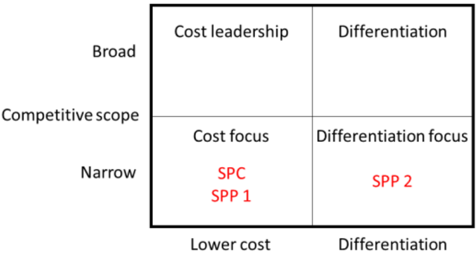
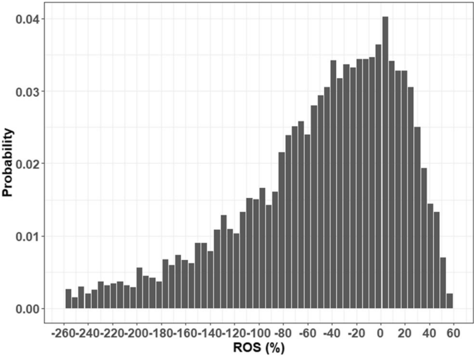
Soy protein concentrate (SPC) is a key ingredient in fish feed and most of it originates from Brazil. However, the Brazilian soy industry has reportedly resulted in significant environmental problems including deforestation. Consequently, new sources for protein are investigated and protein extracted from farmed seaweed is considered an alternative. Therefore, we investigate how seaweed protein product (SPP) can compete against SPC as a protein ingredient for fish feed. The study uses the positioning matrix, cost analyses involving the power law, and uncertainty analysis using Monte Carlo simulations, and key research challenges are identified. The initial finding is that, with the emerging seaweed industry, the cost of producing SPP is too high to be competitive for fish feed applications. To overcome this challenge, two solutions are investigated. First, substantial investments in cultivation and processing infrastructure are needed to accomplish scale, and a break-even scale of 65,000 tonnes is suggested. The second but more promising avenue, preferably in combination with the former, is the extraction of seaweed protein and high-value seaweed components. With mannitol and laminaran as co-products to the SPP, there is a 25–30% probability of a positive bottom line. Researches on extraction processes are therefore a necessity to maximize the extraction of value-added ingredients. Over time, it is expected that the competitive position of SPP will improve due to the upscaling of the volume of production as well as better biorefinery processes.
Overview
The claims and statistics of this paper haven’t been checked yet.
Free: it reads the open-access text and checks the first 5 claims that cite a source we can check. Create a free account to check every claim.
Integrity signals
Registry
Cites
Statistics
Figures

Verification
Claims the paper makes
The claims and statistics of this paper haven’t been checked yet.
Free: it reads the open-access text and checks the first 5 claims that cite a source we can check. Create a free account to check every claim.
Claims other papers make about this one
Each is checked against this paper’s own text: does it say what the citing paper says it does?
The cited source says what the claim attributes to it.
In the citing paper
“The upscaling of the production and optimization of the processing methods is expected to place seaweed biomass in a better market position for feed applications in the future (Emblemsvåg et al., 2020).”
From Current Status of the Algae Production Industry in Europe: An Emerging Sector of the Blue Bioeconomy (2021) · cites this paper as Emblemsvåg et al., 2020
Self-check
Percentages, sums and reported differences re-computed from the paper’s own numbers.
The self-check needs the paper’s full text.
Citations
Cites
Competitive Advantage: Creating and Sustaining Superior Performance
Porter, M. E. (1985) · Cited by 28,165
Literature review as a research methodology: An overview and guidelines
Snyder, H. (2019) · Journal of Business Research · doi:10.1016/j.jbusres.2019.07.039 · Cited by 11,524 · cited 1×
“This type of review often requires a more creative collection of data, as the purpose is usually not to cover all articles ever published on the topic but rather to combine perspectives and insights from different fields of research traditions” (Snyder 2019).”
BackgroundPORTER, Competitive advantage, creating and sustaining superior performance
Weil, K. E. (1985) · Revista de Administração de Empresas · doi:10.1590/s0034-75901985000200009 · Cited by 10,452
Competitive advantage, creating and sustaining superior performance
Weil, K. E. (1985) · LA Referencia (Red Federada de Repositorios Institucionales de Publicaciones Científicas) · Cited by 10,284
Bioactive compounds in seaweed: functional food applications and legislation
Holdt, S. L., & Kraan, S. (2011) · Journal of Applied Phycology · doi:10.1007/s10811-010-9632-5 · Cited by 2,135
Enríquez, S., Duarte, C. M., & Sand-Jensen, K. (1993) · Oecologia · doi:10.1007/bf00566960 · Cited by 964 · cited 1×
“Many strategic as well as logistical challenges are primarily driven by the rapid microbial decomposition of seaweed once harvested (Enriquez et al. 1993).”
BackgroundUtilisation of feed resources in production of Atlantic salmon (Salmo salar) in Norway
Ytrestøyl, T., Aas, T. S., & Åsgård, T. (2015) · Aquaculture · doi:10.1016/j.aquaculture.2015.06.023 · Cited by 502 · cited 2×
“Protein-rich macroalgae meal is a promising alternative to soy meal, which is currently the main protein source in the animal feed sector (Lum et al. 2013; Ytrestøyl et al. 2015).”
BackgroundMæhre, H. K., Malde, M. K., Eilertsen, K., & Elvevoll, E. O. (2014) · Journal of the Science of Food and Agriculture · doi:10.1002/jsfa.6681 · Cited by 374 · cited 3×
“The protein content of soy is, however, much higher (approximately 240 g kg−1) than that in macroalgae (Mæhre et al. 2014), and direct substitution of SPC will therefore not be feasible.”
BackgroundInfluentialEnvironmental issues of fish farming in offshore waters: perspectives, concerns and research needs
Holmer, M. (2010) · Aquaculture Environment Interactions · doi:10.3354/aei00007 · Cited by 329 · cited 1×
“Location is an important issue because concentration of the aquaculture industry has already caused major environmental problems in coastal areas (Holmer 2010), and local communities have increasingly expressed negative opinions about the extent of aquaculture activities in Norway.”
BackgroundDual potential of microalgae as a sustainable biofuel feedstock and animal feed
Lum, K. K., Kim, J., & Lei, X. G. (2013) · Journal of Animal Science and Biotechnology · doi:10.1186/2049-1891-4-53 · Cited by 276 · cited 2×
“Protein-rich macroalgae meal is a promising alternative to soy meal, which is currently the main protein source in the animal feed sector (Lum et al. 2013; Ytrestøyl et al. 2015).”
BackgroundState of the Art and Challenges for Offshore Integrated Multi-Trophic Aquaculture (IMTA)
Buck, B. H., Troell, M. F., Krause, G., Angel, D. L., Grote, B., & Chopin, T. (2018) · Frontiers in Marine Science · doi:10.3389/fmars.2018.00165 · Cited by 264 · cited 2×
“However, there is different understanding of the term “offshore” (Buck et al. 2018).”
BackgroundSeaweed aquaculture in Norway: recent industrial developments and future perspectives.
Stévant, P., Rebours, C., & Chapman, A. (2017) · Aquaculture International · doi:10.1007/s10499-017-0120-7 · Cited by 261 · cited 4×
“…1 Møreforsking Molde AS, Molde, Norway 2 NTNU – Norwegian University of Science and Technology, Trondheim, Norway 3 NIBIO – Norwegian Institute of Bioeconomy Research, Tingvoll, Norway 4 Møreforsking Ålesund AS, Ålesund, Norway processes for various applications (Stévant et al. 2017a).”
BackgroundSelf-citationAas, T. S., Ytrestøyl, T., & Åsgård, T. (2019) · Aquaculture Reports · doi:10.1016/j.aqrep.2019.100216 · Cited by 208 · cited 1×
“Additionally, 70% of the soy imported to Norway is used in fish feed production and salmon feed from Norwegian producers contains about 19% soy protein (Aas et al. 2019).”
BackgroundCastanheira, É. G., & Freire, F. (2013) · Journal of Cleaner Production · doi:10.1016/j.jclepro.2013.05.026 · Cited by 183 · cited 1×
“Seaweed extracted protein could potentially reduce the use of SPC used in fish feed, thereby combating deforestation, resource depletion, and significant GHG emissions associated with soybean production (Castanheira and Freire 2013; Raucci et al. 2015).”
BackgroundHandå, A., Forbord, S., Wang, X., Broch, O. J., Dahle, S. W., Størseth, T. R., Reitan, K. I., Olsen, Y., & Skjermo, J. (2013) · Aquaculture · doi:10.1016/j.aquaculture.2013.08.006 · Cited by 182 · cited 3×
“Another option is to exploit possible nutrient surplus in the proximity to salmon farms utilizing the concept of integratedmultitrophic aquaculture (IMTA), which is reported to result in higher yield of seaweed biomass (Handå et al. 2013). The choice of the species of macroalgae is crucial, not only for protein conten…”
BackgroundInfluentialEmblemsvåg, J. (2003) · Thammasat University Digital Collections · Cited by 174
Self-citationTechnology of Production of Edible Flours and Protein Products from Soybeans
Berk, Z. (1992) · Medical Entomology and Zoology · Cited by 174
Organic Waste Recycling: Technology and Management
Polprasert, C. (2007) · Medical Entomology and Zoology · Cited by 156
Seasonal and depth variations in the chemical composition of cultivated Saccharina latissima
Sharma, S., Neves, L., Funderud, J., Mydland, L. T., Øverland, M., & Horn, S. J. (2018) · Algal Research · doi:10.1016/j.algal.2018.03.012 · Cited by 140 · cited 1×
“More knowledge about factors influencing the protein content (Sharma et al. 2018) of seaweed is necessary for an increased protein yield, while upscaling of the farm area is absolutely possible to influence.”
BackgroundTsagkari, M., Couturier, J., Kokossis, A., & Dubois, J. (2016) · ChemSusChem · doi:10.1002/cssc.201600309 · Cited by 132 · cited 3×
“According to Tsagkari et al. (2016), it is frequently used due to its capability of extrapolating data from one scale to another.”
BackgroundInfluentialGreenhouse gas assessment of Brazilian soybean production: a case study of Mato Grosso State
Raucci, G. S., Moreira, C. S., Alves, P. A., Mello, F. F. C., Frazão, L. A., Cerri, C. E. P., & Cerri, C. C. (2014) · Journal of Cleaner Production · doi:10.1016/j.jclepro.2014.02.064 · Cited by 120 · cited 1×
“Seaweed extracted protein could potentially reduce the use of SPC used in fish feed, thereby combating deforestation, resource depletion, and significant GHG emissions associated with soybean production (Castanheira and Freire 2013; Raucci et al. 2015).”
BackgroundSeghetta, M., Romeo, D., D'Este, M., Alvarado-Morales, M., Angelidaki, I., Bastianoni, S., & Thomsen, M. (2017) · Journal of Cleaner Production · doi:10.1016/j.jclepro.2017.02.022 · Cited by 114 · cited 1×
“Another important environmental benefit from cultivating seaweed is the sequestration of nutrients and CO2 from the water (Seghetta et al. 2017).”
BackgroundStévant, P., Marfaing, H., Duinker, A., Fleurence, J., Rustad, T., Sandbakken, I. S., & Chapman, A. (2017) · Journal of Applied Phycology · doi:10.1007/s10811-017-1343-8 · Cited by 112 · cited 1×
“Harvested seaweed decomposes rapidly and therefore must be processed rapidly (Stévant et al. 2017b; Stévant et al. 2018).”
BackgroundThe kelp cultivation potential in coastal and offshore regions of Norway.
Broch, O. J., Alver, M. O., Bekkby, T., Gundersen, H., Forbord, S., Handå, A., Skjermo, J., & Hancke, K. (2019) · Frontiers in Marine Science · doi:10.3389/fmars.2018.00529 · Cited by 109 · cited 1×
“In addition, the best areas reported for seaweed farming in Norway are offshore (Broch et al. 2019).”
BackgroundStévant, P., Marfaing, H., Rustad, T., Sandbakken, I. S., Fleurence, J., & Chapman, A. (2017) · Journal of Applied Phycology · doi:10.1007/s10811-017-1126-2 · Cited by 99 · cited 4×
“…1 Møreforsking Molde AS, Molde, Norway 2 NTNU – Norwegian University of Science and Technology, Trondheim, Norway 3 NIBIO – Norwegian Institute of Bioeconomy Research, Tingvoll, Norway 4 Møreforsking Ålesund AS, Ålesund, Norway processes for various applications (Stévant et al. 2017a).”
BackgroundInfluentialBroch, O., Ellingsen, I., Forbord, S., Wang, X., Volent, Z., Alver, M., Handå, A., Andresen, K., Slagstad, D., Reitan, K., et al. (2013) · Aquaculture Environment Interactions · doi:10.3354/aei00080 · Cited by 86 · cited 1×
“Production yields for Saccharina latissima, as reported by Broch et al. (2013), are a possible yield of 75 tonnes fresh weight per ha in 4 months (February to June) or about 170 tonnes fresh weight per ha in 10 months (August to June).”
BackgroundBeltrán, A. M., Chiantore, M., Pecorino, D., Corner, R. A., Ferreira, J. G., Cò, R., Fanciulli, L., & Guinée, J. B. (2017) · The International Journal of Life Cycle Assessment · doi:10.1007/s11367-017-1363-2 · Cited by 57
Cheali, P., Gernaey, K. V., & Sin, G. (2015) · Frontiers in Energy Research · doi:10.3389/fenrg.2015.00003 · Cited by 48 · cited 3×
“6, a technique often called six tenth rule for rough estimates (Cheali et al. 2015).”
BackgroundMethodInfluentialHaque, M., Epplin, F. M., Biermacher, J. T., Holcomb, R. B., & Kenkel, P. L. (2014) · Biomass and Bioenergy · doi:10.1016/j.biombioe.2014.02.004 · Cited by 25 · cited 2×
“As a proxy with similar order of magnitude, we will use the study from Haque et al. (2014) on biorefineries for converting switch grass feedstock to cellulosic ethanol as a reference.”
BackgroundMethodEpilogue—Pathways Towards Sustainable Ocean Food Production
Buck, B. H., & Langan, R. (2017) · Springer eBooks · doi:10.1007/978-3-319-51159-7_14 · Cited by 2 · cited 1×
“Co-location with offshore fish farms might be beneficial, as argued by Buck and Langan (2017), but this is not included in this study as the technology for this solution will require significant innovations which are not yet developed.”
Background(2007) · PubMed
Research works printed but not linked: 6
- Chapman A, Stévant P, Schipper J, Kråkås Ø, Aspøy B, Stavland A (2014) Markendsvurderinger for bærekreftig algedyrking i Integrert Multitrofisk Akvakultur (IMTA)-anlegg. Møreforskning, Alesund
- Ernst & Young. FAO (2019a) The FAO Fishery and Aquaculture Statistics Yearbook 2017; Dataset Global Aquaculture Production 1950-2017. Food and Agriculture Organization of the United Nations, Rome FAO (2019b) General Standard for Soy Protein Products -CXS 175- 1989. Food and Agriculture Organization (FAO) of the United Nations and World Health Organization (WHO), Rome
- FAO (2019b) General Standard for Soy Protein Products - CXS 175-1989. Food and Agriculture Organization (FAO) of the United Nations and World Health Organization (WHO), Rome
- Harper A (1981) Amino Acid Scoring Patterns. Joint FAO/WHO/UNU Expert Consultation on Energy and Protein Requirements, Rome
- Lundeberg H (2018) Soya i norsk fôr -Forbruk og arealbeslag (in Norwegian). Framtiden i våre hender, Oslo
- Williams R Jr (1947) Six-tenths factor aids in approximating costs. Chem Eng 54:124-125
Cited by
Current Status of the Algae Production Industry in Europe: An Emerging Sector of the Blue Bioeconomy
Araújo, R., Vázquez Calderón, F., Sánchez López, J., Azevedo, I. C., Bruhn, A., Fluch, S., Garcia Tasende, M., Ghaderiardakani, F., Ilmjärv, T., Laurans, M., et al. (2021) · Frontiers in Marine Science · doi:10.3389/fmars.2020.626389 · Cited by 653
“The upscaling of the production and optimization of the processing methods is expected to place seaweed biomass in a better market position for feed applications in the future (Emblemsvåg et al., 2020).”
MethodSelf-citationTowards achieving circularity and sustainability in feeds for farmed blue foods
Colombo, S. M., Roy, K., Mraz, J., Wan, A. H. L., Davies, S. J., Tibbetts, S. M., Øverland, M., Francis, D. S., Rocker, M. M., Gasco, L., et al. (2023) · Reviews in Aquaculture · doi:10.1111/raq.12766 · Cited by 170
Rudoviča, V., Rotter, A., Gaudêncio, S. P., Novoveská, L., Akgül, F., Akslen-Hoel, L. K., Alexandrino, D. A. M., Anne, O., Arbidāns, L., Atanassova, M., et al. (2021) · Frontiers in Marine Science · doi:10.3389/fmars.2021.723333 · Cited by 179
“The loss during harvesting is estimated to be around 30% and measured losses of up to 40% when seaweed biomass is frozen and thawed (e.g., Emblemsvåg et al., 2020).”
BackgroundSelf-citationFrom the sea to aquafeed: A perspective overview
Eroldoğan, O. T., Glencross, B. D., Novoveská, L., Gaudêncio, S. P., Rinkevich, B., Varese, G. C., Carvalho, M. F., Taşdemir, D., Šafařík, I., Nielsen, S. L., et al. (2022) · Reviews in Aquaculture · doi:10.1111/raq.12740 · Cited by 99
Self-citationThe future of protein sources in livestock feeds: implications for sustainability and food safety
Pexas, G., Doherty, B., & Kyriazakis, I. (2023) · Frontiers in Sustainable Food Systems · doi:10.3389/fsufs.2023.1188467 · Cited by 98
Metadata
- Authors
- Emblemsvåg, J., Kvadsheim, N. P., Halfdanarson, J., Koesling, M., Nystrand, B. T., Sunde, J., & Rebours, C.
- Affiliations
- Norwegian University of Science and Technology (NO)
- Møreforsking (Norway) (NO)
- Norwegian Institute of Bioeconomy Research (NO)
- Corresponding author
- Emblemsvåg, Jan
- ORCID
- Venue
- Journal of Applied Phycology
- Published
- 2020-08-29
- Volume
- 32
- Issue
- 6
- Pages
- 4159-4169
- ISSN
- 0921-8971 (ISSN-L)
- 1573-5176
- OpenAlex
- W3082852017
- Cited by
- 30
- References
- 30
- Citations by year
- 2026: 2 · 2025: 7 · 2024: 4 · 2023: 5 · 2022: 8 · 2021: 4
- FWCI
- 3.07
- Type
- journal article
- Language
- en
- Open access
- hybrid
- doi.org
- Licence
- cc-by
- creativecommons.org/licenses/by/4.0 (tdm)
- creativecommons.org/licenses/by/4.0 (vor)
- Locations
- Journal of Applied Phycology (publishedVersion, cc-by)
- NORA - Norwegian Open Research Archives (submittedVersion, cc-by)
- Funders
- Norges Forskningsråd (244244)
- Topics
- Life Sciences › Agricultural and Biological Sciences › Aquatic Science › Seaweed-derived Bioactive Compounds
- Life Sciences › Agricultural and Biological Sciences › Aquatic Science › Aquaculture Nutrition and Growth
- Life Sciences › Agricultural and Biological Sciences › Food Science › Food Industry and Aquatic Biology
- Keywords
- seaweed proteins, fish feed, soy protein concentrate, seaweed cultivation, seaweed biorefinery, production cost analysis, mannitol, laminarin, protein extraction, scale-up
About these checks
Registry, retraction, Cites and statistics results are computed, not judged, with one exception: a printed reference that no index lists is read once by a model before it counts as a citation error. Claims are extracted by a model and kept only when their quote appears verbatim in the text; each cited source is then checked, with a model’s help, for whether it says what the claim relies on. Those verdicts can be wrong — read the claim’s quote and the cited source before relying on one.
Statistics and arithmetic are recomputed, not judged.
Confidence bands are shown only for fields calibrated on our annotated test set. None is calibrated yet, so no band is shown.
What counts as a claim ›How we measure confidence ›How we check this ›
Are you an author, or do you see a problem with this page? Request a review
Data sources
Bibliographic data: Semantic Scholar, OpenAlex, Crossref.
Contains information from the Semantic Scholar Academic Graph Datasets, made available under the ODC Attribution License (ODC-BY 1.0).
Semantic Scholar’s data is described in: Kinney, R., et al. (2023). The Semantic Scholar Open Data Platform. arXiv:2301.10140.
