

Re-approaching Celts: Origins, Society, and Social Change
Open accessThe DOI matches its Crossref record; 174 of the 184 references it cites were found in a registry or an index; none of the 227 sources its claims cite is checked for support yet.
Abstract
This work re-approaches the origins of “the Celts” by detailing the character of their society and the nature of social change in Europe across 700–300 BC. A new approach integrates regional burial archaeology with contemporary classical texts to further refine our social understanding of the European Iron Age. Those known to us as “Celts” were matrifocal Early Iron Age groups in central Gaul who engaged in social traditions out of the central European salt trade and became heavily involved in Mediterranean politics. The paper focuses on evidence from the Hallstatt–La Tène transition to solve a 150-year-old problem: how the Early Iron Age “Celts” became the early La Tène “Galatai,” who engaged in the Celtic migrations and the sacking of Rome at 387 BC.
Overview
CoChat Summary
TL;DR
Pope re-approaches Iron Age “Celts” by sequencing regional burial archaeology with contemporary classical texts across 700–300 BC, arguing that historical Celts were matrifocal Early Iron Age groups in central Gaul with Bronze Age origins, not a pan-European culture. She distinguishes Celts from La Tène Galatai and traces the Hallstatt–La Tène transition as a slow, regionally varied social process culminating in the migrations and 387 BC sack of Rome.
Key findings
- Historical “Celts” were matrifocal Early Iron Age groups in central Gaul, with Bronze Age origins; small groups settled in North Italy by the seventh century BC. The paper rejects Celts = late Hallstatt or Celts = La Tène, and argues that Galatai were La Tène “brave fighters” of northern/eastern communities descended from Celts.
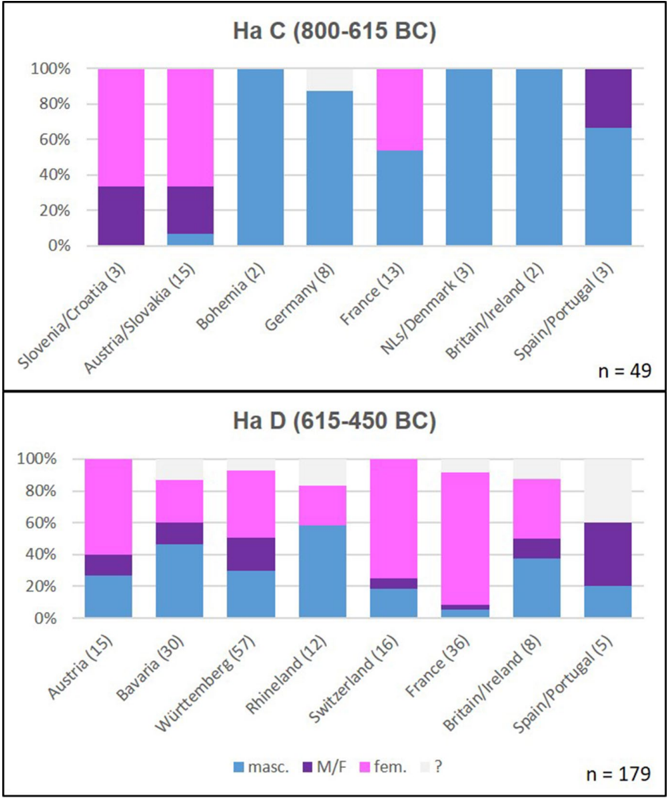
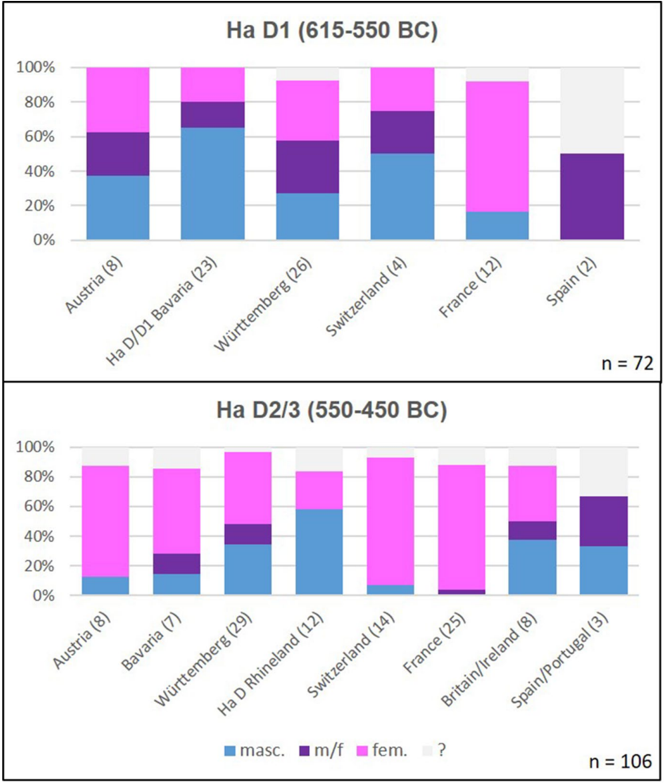
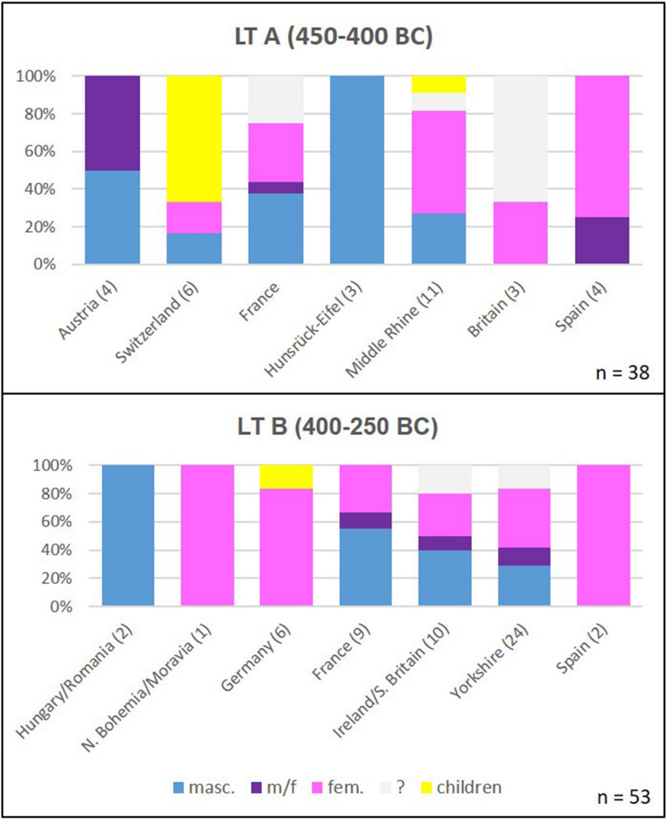
- Burial data show women often held more material wealth on death: in the north Alpine complex (721 graves), the two higher wealth classes are feminine, while masculine gender is associated with the two poorer wealth classes; at the Heuneburg, female burials outnumber males (39% to 21%), and all high-status Ha D1 graves in Gaul were feminine.
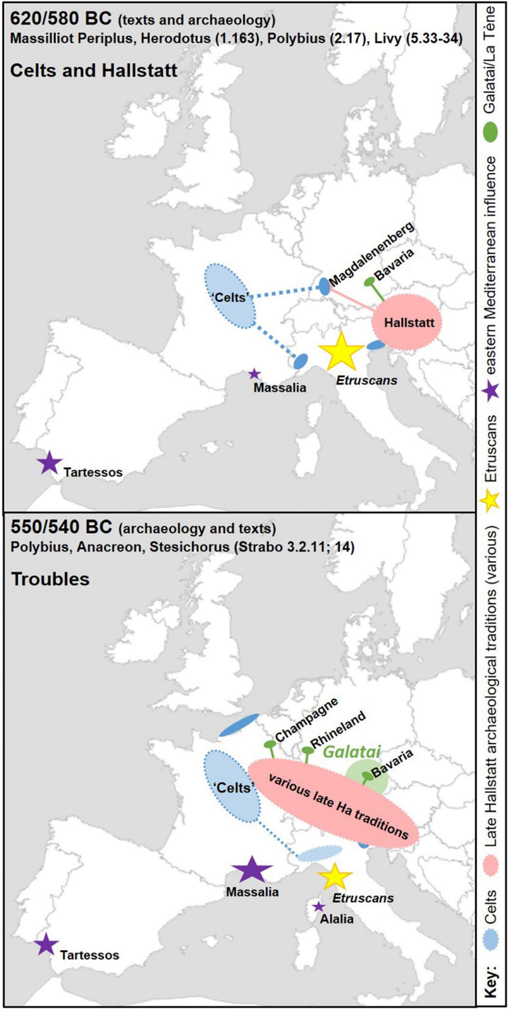
- Social change was regionally varied: 550/540 BC saw movement north and east out of late Hallstatt traditions, gendered as feminine in Champagne, masculine in Rhineland, and mixed in Bavaria; by 400 BC newer northern settlements were depopulating, with Champagne shifting from 162 active cemeteries in the late fifth century BC to just 36 in the first decades of the fourth century BC.
- The migrations to North Italy took place over 200 years, and the 387 BC sack of Rome was undertaken by descendants of the Celts/Galatai; early Greek writers placed Celts in central/northern Gaul, not across all Europe.
Methods
- Design: contextual, chronologically sequenced integration of regional burial archaeology and contemporary classical texts, aimed at cultural particularism and rejecting culture-historical, pan-European “Celtic” narratives.
- Data: 374 entries from high-status Early–Middle Iron Age graves across seven key regions (primarily Austria, Bavaria, Württemberg, Rhineland, eastern central Gaul, Switzerland, and northern England), with additional data from the Netherlands, Denmark, Ireland, Scotland, southern England, Spain, Portugal, Bohemia, Slovakia, Slovenia/Croatia, and Hungary; 31 contemporary textual sources were also sequenced.
- Analysis: archaeological data were ordered by period categories (Ha C, Ha D1, Ha D2, Ha D3, LT A, LT B) using sex/gender information and relative high status; texts were ordered by date of events and contextualized, then combined into a chronological social narrative for 700–300 BC.
Limitations
- The paper states that absolute dating remains limited; data collection was reliant on accessibility, so it is not exhaustive and omissions must be expected; much work remains in refining chronologies and in improving thinking/method around burial status and gender.
- The paper states that analysis beyond the scale of the grave, as necessary here, obscures detail, and that grave assemblages require close contextual study to determine whether goods were worn by the deceased or placed by mourners.
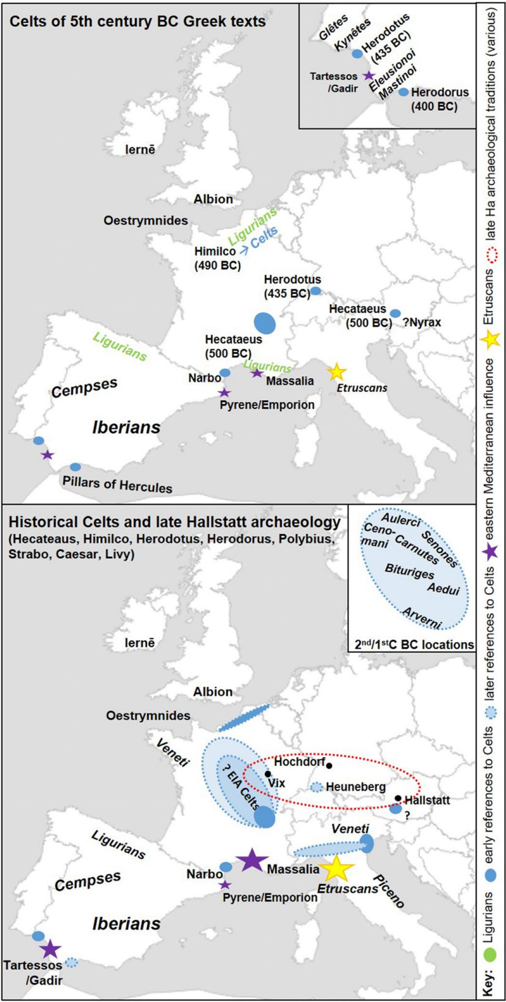
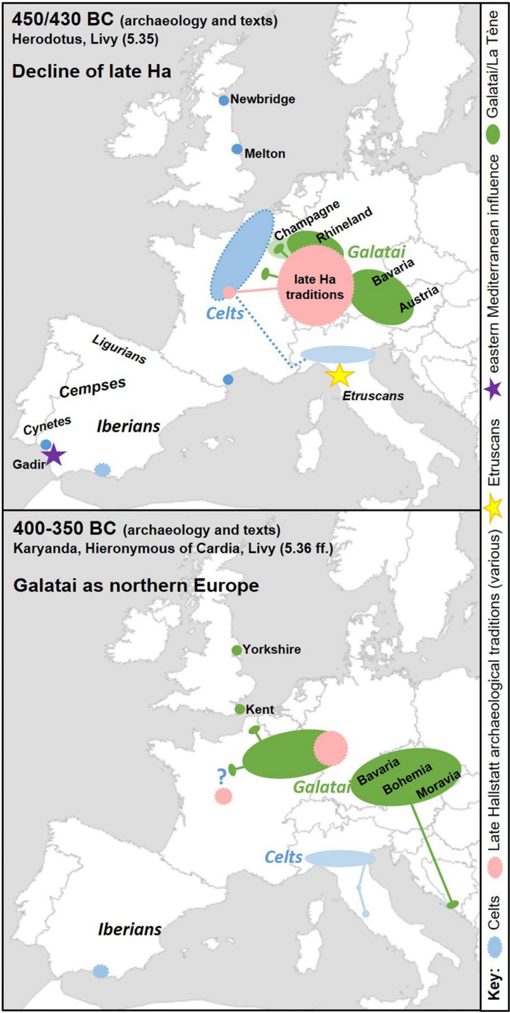
- Evident from the text: the synthesis spans a very large area and relies on later textual sources to map earlier groups, with Fig. 4 described as an approximate reconstruction; status variation within cemetery populations is also not the focus due to the geographical scope.
Model-written summary. Check it against the paper before relying on it.
Integrity signals
Registry
Cites
Statistics
Figures
Verification
Claims the paper makes
0 Valid · 46 Not valid · 157 Not checked · 145 Own results and interpretations
In the paper
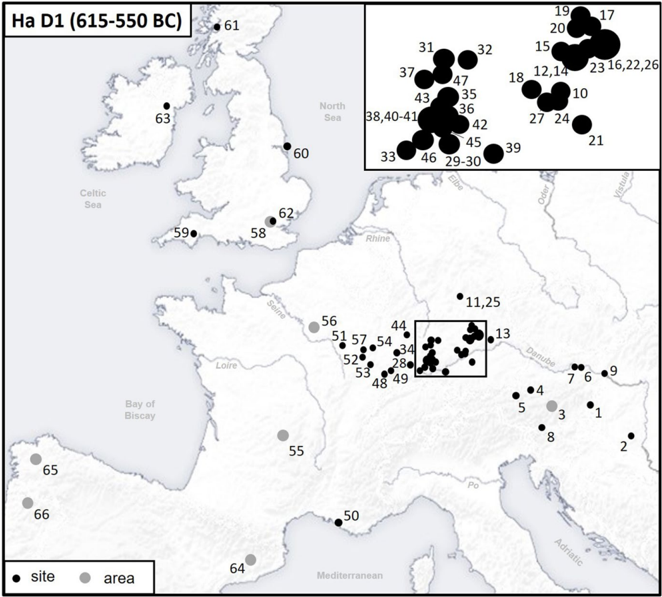
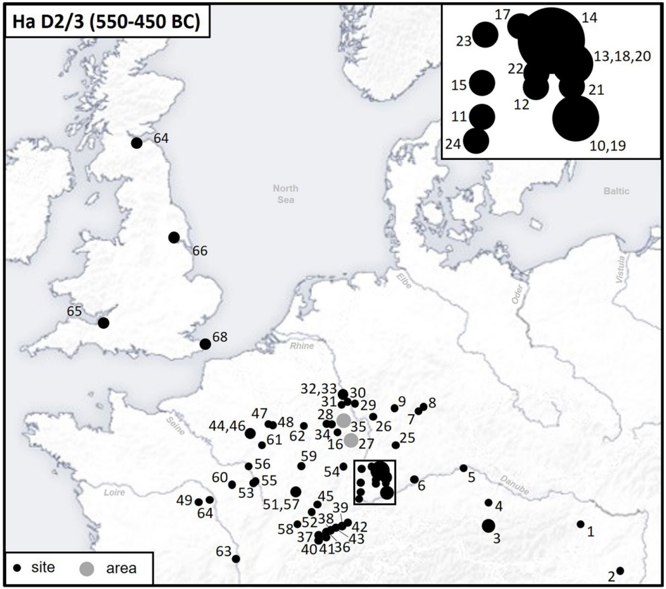
“The archaeology does reveal the Danube source as a clear Ha D1 settlement focus (Fig. 3).”
§ Social Change > Encountering the Celts (Seventh-Sixth Centuries BC)
What the sources say
- Not matchedcites Fig. 3
This doesn’t read as a citation we can look up.
boostedstates an association- Asserted: passes — The authors put it forward as true.
- Checkable: passes — It can be checked against evidence.
- Load-bearing: unclear — It is unclear whether the paper’s conclusions depend on it.
- Based: passes — The paper gives a reason why it holds.
- Not matched
None of the sources cited for this claim could be matched to a paper, so there is nothing to check it against.
In the paper
“Throughout the sixth century BC, the pattern of settlement in Bavaria to central France is one of small hilltop enclosures, with settlement focused in particular valleys (Büchsenseschütz and Mordant 2005;Collis 2003, fig.72).”
§ Social Change > Encountering the Celts (Seventh-Sixth Centuries BC)
What the sources say
- Not matchedcites Büchsenseschütz and Mordant 2005
An author–year citation the paper’s reference list doesn’t settle. We don’t search these by name.
- Not matchedcites Collis 2003
More than one paper fits this citation.
plain- Asserted: passes — The authors put it forward as true.
- Checkable: passes — It can be checked against evidence.
- Load-bearing: unclear — It is unclear whether the paper’s conclusions depend on it.
- Based: passes — The paper gives a reason why it holds.
- Not matched
In the paper
“The Heuneburg was rebuilt in Mediterranean style circa 600 BC (Krausse et al. 2016)”
§ Social Change > Encountering the Celts (Seventh-Sixth Centuries BC)
What the sources say
- Not matchedcites Krausse et al. 2016
An author–year citation the paper’s reference list doesn’t settle. We don’t search these by name.
plain- Asserted: passes — The authors put it forward as true.
- Checkable: passes — It can be checked against evidence.
- Load-bearing: unclear — It is unclear whether the paper’s conclusions depend on it.
- Based: passes — The paper gives a reason why it holds.
- Not matched
In the paper
“There was similarly high feminine grave wealth in northeast Germany/Poland from Ha D2/3-LT B (Trémeaud 2019, pp. 286-289).”
§ Social Change > Power Politics: Hochdorf, Vix, and Galatai (550-450 BC)
What the sources say
- Not checked yetcites Trémeaud 2019
plain- Asserted: passes — The authors put it forward as true.
- Checkable: passes — It can be checked against evidence.
- Load-bearing: unclear — It is unclear whether the paper’s conclusions depend on it.
- Based: passes — The paper gives a reason why it holds.
A result the paper reports from its own data — it cites no other source for it, so there is none to check. The quote shows it is in the paper.
In the paper
“Meanwhile, the burial archaeology of the newer, northern settlements reveals whole areas deserted at 400 BC (Rhineland, Marne, Bercy, Champagne, S. Bohemia; Supplemental Table 4).”
§ Social Change > Celtic Migrations
plain- Asserted: passes — The authors put it forward as true.
- Checkable: passes — It can be checked against evidence.
- Load-bearing: passes — The paper’s conclusions depend on it.
- Based: passes — The paper gives a reason why it holds.
85 more claims
Create a free account to see all 348 claims and to verify the 81 references still open.
- Probably not a substantial claim. 112
- It may state two separate claims as one. 201
- The quote only partly states this claim. 2
Self-check
Percentages, sums and reported differences re-computed from the paper’s own numbers.
Each contradiction between two passages listed here was confirmed by an independent check.
Rated minor: it would not touch a result — a value no result rests on, a p-value that stays on the same side of the significance level, or a conflict that is clerical, resolved elsewhere in the paper, or outside its own findings.
In the paper
§ Social Change > Conclusions
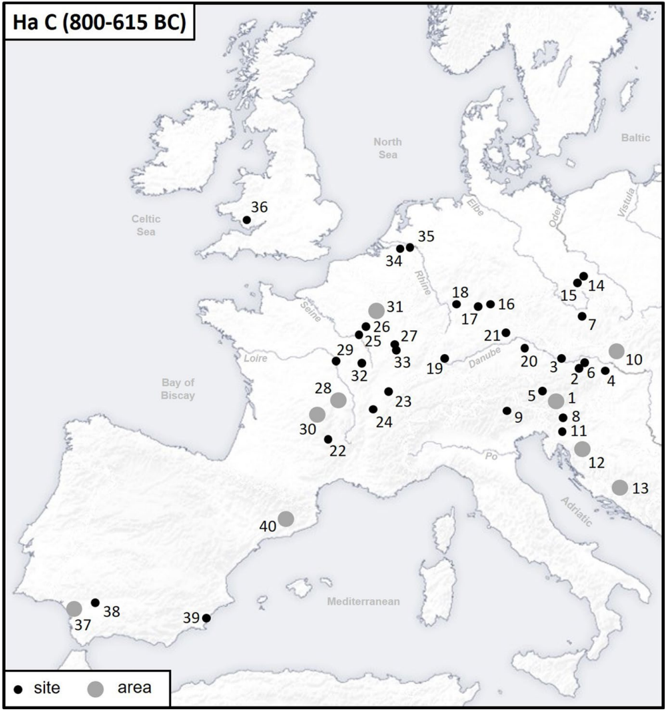
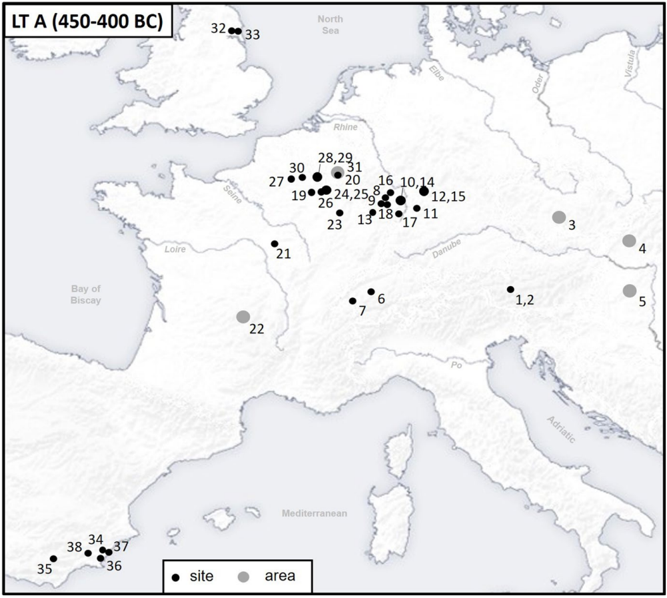
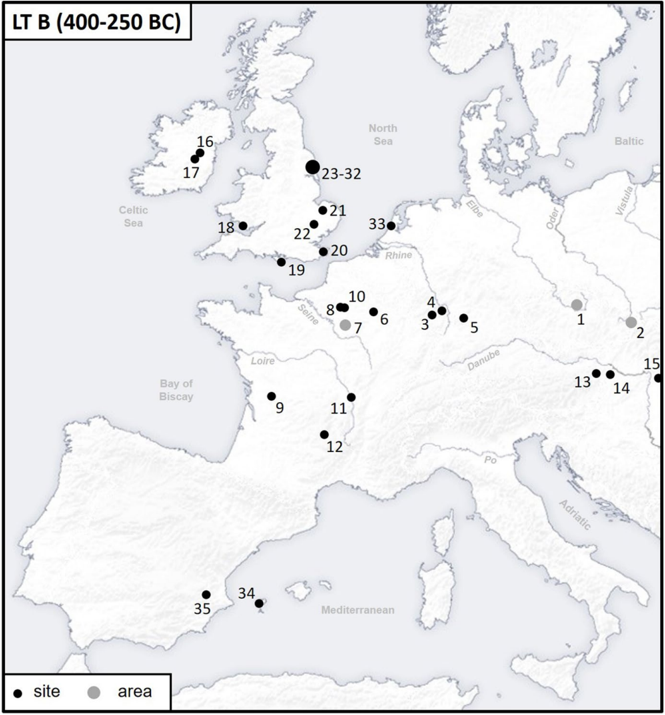
“Figure: 8 Fig. 8 Fig. 8 Map of La Tène A sites mentioned in the text (450-200 BC).”
§ Social Change > Archaeologists and Historical Sources
“Table 3 Chronology used in the text Period Dates Ha C 800-615 BC Ha D1 615-550 BC Ha D2 550-500 BC Ha D3 500-450 BC LT A 450-400 BC LT B 400-250 BC”
Citations
Cites
Reassembling the Social: An Introduction to Actor-Network-Theory
Latour, B. (2005) · doi:10.1093/oso/9780199256044.001.0001 · Cited by 16,778
Reassembling the social: An introduction to actor‐network‐theory
Turnbull, J. (2008) · New Zealand Geographer · doi:10.1111/j.1745-7939.2008.00151_4.x · Cited by 7,617
(1949) · Cited by 4,313
A History of Archaeological Thought
Trigger, B. G. (2006) · Cambridge University Press eBooks · doi:10.1017/cbo9780511813016 · Cited by 1,652
A History of Archaeological Thought. By Bruce G. Trigger.
Small, D. B. (1992) · American Journal of Archaeology · doi:10.2307/505763 · Cited by 1,293
Sex and Temperament in Three Primitive Societies
Fromm, E., & Sozialforschung, I. F. (1936) · Zeitschrift für Sozialforschung · doi:10.5840/zfs193651150 · Cited by 1,135
Engendering Archaeology: Women and Prehistory
Dyson, S. L., Gero, J. M., & Conkey, M. W. (1992) · Journal of Interdisciplinary History · doi:10.2307/205279 · Cited by 1,073
Brydon, L., MacCormack, C., & Strathern, M. (1981) · Man · doi:10.2307/2801516 · Cited by 1,041
Sex and Temperament in Three Primitive Societies
Mead, M. (1935) · Cited by 984
Heterarchy and the Analysis of Complex Societies
Crumley, C. L. (1995) · Archaeological Papers of the American Anthropological Association · doi:10.1525/ap3a.1995.6.1.1 · Cited by 958 · cited 2×
“Attempts to understand “Iron Age society” were improved by critiquing social hierarchy as a baseline state (Cripps 2007; Crumley 1995b; Hill 2006) and moving beyond analogy to contextual practice, with social models led more explicitly by the material evidence (see Pope 2007).”
Background
Research works printed but not linked: 85
- Antcil, M. (2019). Assessing regional dental affinities among Iron Age populations in Austria and their associations with the Celts. Presentation at IARSS Cardiff, based on unpublished Ph.D. thesis, John Moores University, Liverpool.
- Arnold, B. (1995a). The material culture of social structure: Rank and status in Early Iron Age Europe. In
- Bertrand, A. (1876). Archéologie celtique et cauloise: Mémoires et documents relatifs au premiers temps de notre histoire nationale, Didier, Paris.
- Bowden, M., and McOmish, D. (1987). The required barrier. Scottish Archaeological Review 4: 76-84.
- Bridgman, T. P. (2004). Keltoi, Galatai, Galli: Were they all one people? Harvard Celtic Colloquium 25: 155-162.
- Brun, P. (1988). Les 'résidences princières' comme centres territoriaux: Éléments de verification. In Les princes celtes et la méditerranée, Rencontres de l'École du Louvre, Paris, pp. 128-143.
- Brun, P. (1994). From Hallstatt to La Tène period in the perspective of the Mediterranean world econ- omy. In Kristiansen, K., and Jensen, J. (eds.), Europe in the First Millennium BC, Collis, Sheffield, pp. 57-65.
- Brun, P. (1995). From chiefdom to state organization in Celtic Europe. In Arnold, B., and Blair Gibson, D. (eds.), Celtic Chiefdom, Celtic State: The Evolution of Complex Social Systems in Prehistoric Europe, Cambridge University Press, Cambridge, pp. 13-25.
- Büchsenseschütz, O. (1995). The significance of major settlements in European Iron Age society. In
- Büchsenseschütz, O., and Mordant, C. (eds.) (2005). Architectures protohistoriques en Europe occi- dentale du Neolithique Final a l'âge de Fer, Comité des Travaux Historiques et Scientifiques, Paris.
- Butler, J. (1990). Gender Trouble, Routledge, London.
- Chadwick, N. (1964). Celtic Britain, Thames and Hudson, London.
- Chadwick, N. (1971). The Celts, Pelican, London.
- Champion, S. (1994). Regional studies: A question of scale. In Kristiansen, K., and Jensen, J. (eds.), Europe in the First Millennium BC, Collis, Sheffield, pp. 145-150.
- Čižmář, M. (1997). The Celtic population of Moravia in the fourth century BC. In Moscati, S., Frey, O.-H., Kruta, V., Raftery, B., and Szabó, M. (eds.), The Celts, 2nd ed., Rizzoli, New York, pp. 297-301.
- Clarke, A., and Haraway, D. (2018). Making Kin not Population: Reconceiving Generations, Prickly Par- adigm Press, Chicago.
- Clarke, D. L. (1972). A provisional model of an Iron Age society. In Clarke, D. L. (ed.), Models in Archaeology, Methuen, London, pp. 801-870.
- Collis, J. R. (1986). Adieu Hallstatt! Adieu La Tène! In Duval, A., and Gomez de Soto, J. (eds.), Actes du VIIIe Colloque sur Ies Ages du Fer en France non-Mediterranéenne, Angoulême, 1984, Aquitania Supplément 1, Fédération Aquitania, Bordeaux, pp. 327-330.
- Collis, J. R. (1994). Reconstructing Iron Age society. In Kristiansen, K., and Jensen, J. (eds.), Europe in the First Millennium BC, Collis, Sheffield, pp. 31-39.
- Collis, J. R. (1995). States without centres? The middle La Tène period in temperate Europe. In Arnold, B., and Blair Gibson, D. (eds.), Celtic Chiefdom, Celtic State: The Evolution of Complex Social Systems in Prehistoric Europe, Cambridge University Press, Cambridge, pp. 75-80.
- Collis, J. R. (1996). The origin and the spread of the Celts. Studia Celtica 30: 17-34.
- Collis, J. R. (2009a). Die konstruktion von chronologien. In Karl, R., and Leskovar, J. (eds.), Interpre- tierte Eisenzeiten 3, Oberösterreichische Landesmuseen, Linz, pp. 373-420.
- Crumley, C. (1995a). Building an historical ecology of Gaulish politics. In Arnold, B., and Blair Gibson, D. (eds.), Celtic Chiefdom, Celtic State: The Evolution of Complex Social Systems in Prehistoric Europe, Cambridge University Press, Cambridge, pp. 26-33.
- Cunliffe, B. W. (1974). Iron Age Communities in Britain, 1st ed., Routledge, London.
- Cunliffe, B. W. (1984). Iron Age Wessex: Continuity and change. In Cunliffe, B., and Miles, D. (eds.), Aspects of the Iron Age in Central Southern Britain, Committee for Archaeology Monograph 13, Oxford University, Oxford, pp. 12-44.
- Cunliffe, B. W., and Koch, J. T. (eds.) (2012). Celtic from the West: Alternative Perspectives from Archae- ology, Language and Literature, Oxbow, Oxford.
- Cunliffe, B. W. (2013). The Celts -Where next. In Cunliffe, B. W., and Koch, J. T. (eds.), Celtic from the West 2: Rethinking the Bronze Age and the Arrival of Indo-European in Atlantic Europe, Oxbow, Oxford, pp. 219-223.
- Cunliffe, B. W., and Koch, J. T. (eds.) (2019). Exploring Celtic Origins: New Ways Forward in Archaeol- ogy, Linguistics, and Genetics, Oxbow, Oxford.
- Cunnington, M. E. (1923). The Early Iron Age Inhabited Site at All Cannings Cross, Wiltshire, Simpson, Devizes.
- 'Arbois de Jubainville, H. (1875). Les celtes, les galates, les gaulois. Revues Archéologique 2: 1-15.
- Dillon, M., and Chadwick, N. K. (1967). The Celtic Realms, Weidenfeld and Nicolson, London.
- Dobesch, G. (1997). Ancient literary sources. In Moscati, S., Frey, O.-H., Kruta, V., Raftery, B., and Szabó, M. (eds.), The Celts, 2nd ed., Rizzoli, New York, pp. 30-38.
- Duval, P.-M. (1977). Les celtes, Éditions Gallimard, Paris.
- Moscati, S., Frey, O.-H., Kruta, V., Raftery, B., and Szabó M. (eds.) (1997). The Celts, 2nd ed., Riz- zoli, New York.
- Ehrenberg, M. (1989). Women in Prehistory, British Museum Press, London.
- Fischer, F. (1995). The early Celts of west central Europe: The semantics of social structure. In Arnold, B., and Blair Gibson, D. (eds.), Celtic Chiefdom, Celtic State: The Evolution of Complex Social Systems in Prehistoric Europe, Cambridge University Press, Cambridge, pp. 34-40.
- Green, S. (2008), Diet and status at the Iron Age site of Mill Hill: Carbon and nitrogen stable isotope evi- dence. B.A. thesis, Department of Archaeology, University of Cambridge, Cambridge.
- Hill, J. D. (1996). Hill-forts and the Iron Age of Wessex. In Champion, T. C., and Collis, J. R. (eds.), The Iron Age in Britain and Ireland: Recent Trends, Collis, Sheffield, pp. 95-116.
- Hill, J. D. (2006). Are we any closer to understanding how later Iron Age societies worked (or did not work)? In Haselgrove, C. (ed.), Celtes et gaulois: L'archéologie face à l'histoire: Les mutations de la fin de l'âge du Fer, Collection Bibracte 12/4, Glux-en-Glenne, pp. 169-179.
- Moore, T., and Armada, X.-L. (eds.), Atlantic Europe in the First Millennium BC: Crossing the Divide, Oxford University Press, Oxford, pp. 241-263. 1 3 Journal of Archaeological Research (2022) 30:1-67
- Cunliffe, B., and Miles, D. (eds.), Aspects of the Iron Age in Central Southern Britain, Committee for Archaeology Monograph No. 2, Oxford University, Oxford, pp. 72-88.
- Hinton, P. (1986). An analysis of burial rites at Münsingen-Rain: An approach to the study of Iron Age society. Actes VIII Colloque Association Française pour l'Etude de l'Age du Fer, Revue Aquitania (Supplément 1), Bordeaux, pp. 351-368.
- Hodson, F. R. (1990). Hallstatt: The Ramsauer Graves: Quantification and Analysis, RGZM Monogra- phien 16, Römisch-Germanisches Zentralmuseum, Mainz.
- Joffroy, R. (1960). L'oppidum de Vix et la civilization Hallstattienne finale, Université de Dijon, Paris.
- Sauer, E. W. (ed.), Archaeology and History: Breaking Down the Borders, Routledge, London, pp. 185-199.
- Karl, R., and Stifter, D. (eds.) (2007). The Celtic World: Critical Concepts in Historical Studies, vol. 1: Theory in Celtic Studies, Routledge, London.
- Kenyon, K. (1952). A survey of the evidence concerning the chronology and origins of Iron Age A in south- ern and midland England. London Institute of Archaeology Annual Report 8: 29-78.
- Krausse, D. (1999). Der "Keltenfürst" von Hochdorf: Dorfältester oder Sakralkönig? Anspruch und Wirklichkeit der sog. kulturanthropologischen Hallstatt-Archäologie. Archäologisches Korre- spondenzblatt 29: 339-358.
- Krausse, D., Fernández-Götz, M., Hansen, L., and Kretschmer, I. (2016). The Heuneburg and the Early Iron Age Princely Seats: First Towns North of the Alps, Archaeolingua, Budapest.
- Kruta, V. (1976). Les celtes, Presses Universitaires de France, Paris.
- Kruta, V. (1997). In search of the ancient Celts. In Moscati, S., Frey, O.-H., Kruta, V., Raftery, B., and Szabó, M. (eds.), The Celts, Rizzoli, New York, pp. 22-29.
- Kruta, V. (2005). The Celts: History and Civilisation, Hachette, London.
- McKinley, J. I., Leivers, M., Schuster, J., Marshall, P., Barclay, A. J., and Stoodley, N. (2014). Cliffs End Farm, Isle of Thanet, Kent, Wessex Archaeology, Salisbury.
- Milcent, P.-Y. (2003). Statut et fonctions d'un personage féminin hors norme. In Rolley, C. (ed.), La tombe princière de Vix, Éditions Picard, Paris, pp. 311-327.
- Mortillet, G. (1871). Les gaulois de Marzabotto dans l'Apennin. Revue Archaéologique 22: 288-290.
- Duval, P.-M. (1997). Celtic art. In Moscati, S., Frey, O.-H., Kruta, V., Raftery, B., and Szabó, M. (eds.), The Celts, 2nd ed., Rizzoli, New York, pp. 19-21.
- Macready, S., and Thompson, F. H. (eds.), Cross-Channel Trade between Gaul and Britain in the Pre-Roman Iron Age, Society of Antiquaries, London, pp. 92-107.
- Nash, D. (1985). Celtic territorial expansion and the Mediterranean world. In Champion, T. C., and Megaw, J. V. S. (eds.), Settlement and Society: Aspects of West European Prehistory in the First Millennium BC, Leicester University Press, Leicester, pp. 45-67.
- Pauli, L. (1980). Die herkunft der Kelten: Sinn und unsinn einer alten frage. In Pauli, L. (ed.), Die Kelten in Mitteleuropa: Kultur, Kunst, Wirtschaft, Salzburg, Salzburger Landesausstellung, pp. 16-24.
- Pauli, L. (1994). Case studies in Celtic archaeology. In Kristiansen, K., and Jensen, J. (eds.), Europe in the First Millennium BC, Collis, Sheffield, pp. 67-79.
- Piggott, S. (1967). Celts, Saxons and Early Antiquaries: The O'Donnell Lecture 1966, Edinburgh Univer- sity Press, Edinburgh.
- Pope, R. E. (2007). Ritual and the roundhouse: A critique of recent ideas on domestic space in later Brit- ish prehistory. In Haselgrove, C., and Pope, R. (eds.), The Earlier Iron Age in Britain and the Near Continent, Oxbow, Oxford, pp. 204-228.
- Pope, R. E. (2015a). Review of 'The Celts: Blood, Iron and Sacrifice' -BBC2. History Today (October). Available at: http:// www. histo rytod ay. com/ rachel-pope/ celts-blood-iron-and-sacri fice.
- Pope, R. E., and Haselgrove, C. C. (2007). Characterising the Early Iron Age. In Haselgrove, C., and Pope, R. (eds.), The Earlier Iron Age in Britain and the Near Continent, Oxbow, Oxford, pp. 204-228.
- Powell, T. G. E. (1958). The Celts, Thames and Hudson, London.
- Powell, T. G. E. (1971). From Urartu to Gundestrup: The agency of Thracian metalwork. In Boardman, J., Smith, M. A., and Powell, T. G. E. (eds.), The European Community in Later Prehistory: Studies in Honour of C. F. C. Hawkes, Routledge, London, pp. 183-210.
- Prtak, E. J. (2019). Writing 'herstory' from the Molly Cotton Archive: How women's careers impacted mid- 20th century Iron Age studies. M.S. thesis, Department of Archaeology, Classics and Egyptology, University of Liverpool, Liverpool.
- Rhŷs, J. 1882. Early Britain: Celtic Britain, Society for Promoting Christian Knowledge, London.
- Rolley, C. (ed.) (2003). La Tombe Princière de Vix, Picard/Société des Amis du Musée du Châtillonnais, Paris.
- Roualet, P. (1997). The Marnian culture of Champagne. In Moscati, S., Frey, O.-H., Kruta, V., Raftery, B., and Szabó, M. (eds.) The Celts, 2nd ed., Rizzoli, New York, pp. 165-172.
- Sankot, P. (1997). The Celtic population of Bohemia in the fourth century BC. In Moscati, S., Frey, O.-H., Kruta, V., Raftery, B., and Szabó, M. (eds.), The Celts, 2nd ed., Rizzoli, New York, pp. 294-296.
- Shipley, G. (2011). Pseudo-Skylax's Periplous: The Circumnavigation of the Inhabited World, Phoenix, Bristol.
- Sims-Williams, P. (1998). Celtomania and Celtoscepticism. Cambrian Medieval Celtic Studies 36: 1-35.
- Stopford J. (1987). Danebury: An alternative view. Scottish Archaeological Review 4: 70-75.
- Tierney, J. J. (1960). The Celtic ethnography of Posidonius. Proceedings of the Royal Irish Academy: Archaeology, Culture, History, Literature 60: 189-275.
- Veit, U. (2000). König und Hohepriester? Zur These der sakralen Gründung der Herrschaft in der Hallstat- tzeit. Archäologisches Korrespondenzblatt 30: 549-568.
- Moscati, S., Frey, O.-H., Kruta, V., Raftery, B., and Szabó, M. (eds.), The Celts, Rizzoli, New York, pp. 230-247.
- Wheeler, R. E. M. 1921. Roman and native in Wales: An imperial frontier problem, Transactions of the Hon- ourable Society of Cymmrodorion 1920-1921: 40-96.
- Arnold, B. (2011). The illusion of power, the power of illusion: Ideology and the concretization of social dif- ference in Early-Iron Age Europe. In Bernbeck, R., and McGuire, R. H. (eds.), Ideologies in Archaeol- ogy, University of Arizona Press, Tucson, pp. 151-172.
- Arnold, B. (2012). The Vix Princess redux: A retrospective on European Iron Age gender and mortuary studies. In Prados Torreira, L. (ed.), La arqueología funeraria desde una perspectiva de género, UA Ediciones, Madrid, pp. 211-232.
- Farley, J., and Hunter, F. (2015). Celts: Art and Identity, British Museum Press, London.
- Jordan, A. M. (2016). Her mirror, his sword: Unbinding binary gender and sex assumptions in Iron Age Brit- ish mortuary traditions. Journal of Archaeological Method and Theory 23: 870-899.
- Piggott, S., and Daniel, G. (1951). A Picture Book of Ancient British Art, Cambridge University Press, Cambridge.
- Schwab, R., Milcent, P.-Y., Armbruster, B., and Pernicka, E. (eds.) (2018). Early Iron Age Gold in Celtic Europe: Society, Technology, and Archaeometry, Proceedings of the International Congress Held in Toulouse, France, 11-14 March 2015, VML GmbH, Rahden/Westf.
- Sims-Williams, P. (2006). Ancient Celtic Place-Names in Europe and Asia Minor, Blackwell, Oxford.
Cited by
Continental influx and pervasive matrilocality in Iron Age Britain
Cassidy, L. M., Russell, M., Smith, M. J., Delbarre, G., Cheetham, P., Manley, H., Mattiangeli, V., Breslin, E. M., Jackson, I., McCann, M., et al. (2025) · Nature · doi:10.1038/s41586-024-08409-6 · Cited by 58
Bentley, R. A. (2022) · Annual Review of Anthropology · doi:10.1146/annurev-anthro-041320-021036 · Cited by 37
To Gender or not To Gender? Exploring Gender Variations through Time and Space
Gaydarska, B., Rebay‐Salisbury, K., Valiente, P. R., Fries, J. E., Hofmann, D., Augereau, A., Chapman, J. W., Mina, M., Pape, É., Ialongo, N., et al. (2023) · European Journal of Archaeology · doi:10.1017/eaa.2022.51 · Cited by 26
Culti rurali e culti urbani nella Bitinia ellenistica e romana
Ferraioli, F. (2021) · ARYS Antigüedad Religiones y Sociedades · doi:10.20318/arys.2021.5927 · Cited by 23
The Similar-Sounding Surnames of Haplogroup R-BY140757
Fitzpatrick, M., & Fitzpatrick, I. (2020) · Journal of the Fitzpatrick Clan Society · doi:10.48151/fitzpatrickclansociety00421 · Cited by 12
INSIDE OPPIDA TERRITORIES: THE LATE IRON AGE IN THE IBERIAN EASTERN MESETA (CENTRAL SPAIN)
Liceras‐Garrido, R. (2022) · Oxford Journal of Archaeology · doi:10.1111/ojoa.12240 · Cited by 10
Bickle, P., Hofmann, D., Souvatzi, S., Cintas-Peña, M., Rebay‐Salisbury, K., Schauer, P., Khalil, U., Shaw, D., & Vleet, K. E. V. (2025) · Current Anthropology · doi:10.1086/738727 · Cited by 7
Heathcliff as bog creature: racialized ecologies inWuthering Heights
Soberano, E. (2023) · Nineteenth Century Contexts · doi:10.1080/08905495.2023.2195354 · Cited by 6
Integration of Local Wisdom Values “Domyak Ritual” in Character Education
Prawiyogi, A. G., Dwimarwati, R., Afryanto, S., & Imran, M. E. (2023) · Studies in Learning and Teaching · doi:10.46627/silet.v4i1.189 · Cited by 6
Lamb, A. (2022) · Proceedings of the Prehistoric Society · doi:10.1017/ppr.2022.1 · Cited by 5
Gender in Earlier Bronze Age Ireland and Scotland
Haughton, M. (2022) · European Journal of Archaeology · doi:10.1017/eaa.2022.29 · Cited by 5
Guglielmo, A., Benedittis, A. D., Buligan, C., Zelin, E., & Stinco, G. (2025) · Melanoma Research · doi:10.1097/cmr.0000000000001029 · Cited by 4
Pope, R., & Teather, A. (2024) · Archaeological Dialogues · doi:10.1017/s1380203825100056 · Cited by 4
Self-citationTracing the spread of Celtic languages using ancient genomics
McColl, H., Kroonen, G., Pinotti, T., Barrie, W., Koch, J., Ling, J., Demoule, J.-P., Kristiansen, K., Sikora, M., & Willerslev, E. (2026) · Nature · doi:10.1038/s41586-026-11198-9 · Cited by 3
The Princely Burials of the Central Balkans in Context
Donev, D. (2024) · European Journal of Archaeology · doi:10.1017/eaa.2024.35 · Cited by 3
The History of Gender Archaeology
Díaz‐Andreu, M., & Pope, R. (2024) · Oxford University Press eBooks · doi:10.1093/oxfordhb/9780190092504.013.37 · Cited by 3
Self-citationA Perspective on Late Iron Age Women in the Iberian Northern Meseta
Liceras‐Garrido, R. (2022) · European Journal of Archaeology · doi:10.1017/eaa.2022.1 · Cited by 3
Reversals of fortune: Shared governance, “democracy,” and reiterated problem-solving
Thurston, T. L. (2022) · Frontiers in Political Science · doi:10.3389/fpos.2022.870773 · Cited by 3
Multi-disciplinary Approaches to Prehistoric Kinship Systems of Europe
Mittnik, A., & Bentley, R. A. (2026) · Cambridge Archaeological Journal · doi:10.1017/s0959774326100365 · Cited by 2
Dantas, D. (2023) · Studia Historica Historia Antigua · doi:10.14201/shha31320 · Cited by 1
Insularity and Identity: Prehistoric Britain and the Archaeology of Europe
Bradley, R. A. (2025) · Cambridge University Press eBooks · doi:10.1017/9781009557818 · Cited by 1
Exploring matrilocality in history: insights from ancient DNA
Seferidou, E., & Atağ, G. (2026) · Evolutionary Human Sciences · doi:10.1017/ehs.2026.10046 · Cited by 1
Texts, Politics and Identities: New Challenges on Iron Age Ethnicity. A Case from Northwest Iberia
ÁLVAREZ, S. N. (2024) · Cambridge Archaeological Journal · doi:10.1017/s0959774323000513 · Cited by 1
Peggy Piggott and Post-war British Archaeology
Pope, R., & Davies, M. H. (2024) · European Journal of Archaeology · doi:10.1017/eaa.2024.13 · Cited by 1
Self-citationCleruchi celtici in Grecia: Alcuni casi studio
Ciarini, A. (2025) · ARYS Antigüedad Religiones y Sociedades · doi:10.20318/arys.2025.8846 · Cited by 1
: Celtic from the West 3: Atlantic Europe in the Metal Ages: Questions of Shared Language
Zapatero, G. R. (2025) · Journal of Anthropological Research · doi:10.1086/737838 · Cited by 1
The state of hillfort studies in the British Isles
Oswald, A. (2022) · Landscapes · doi:10.1080/14662035.2022.2095128
Zapatero, G. R. (2023) · Complutum · doi:10.5209/cmpl.85230
Images and Agency: Dynamics of Early Celtic Art and the Axial Age of Eurasia
Wells, P. S. (2024) · Cambridge Archaeological Journal · doi:10.1017/s095977432400012x
A peaceful society? A preliminary approach to the Archaeology of conflict of the NW Iberian Iron Age
ÁLVAREZ, S. N. (2025) · Journal of Conflict Archaeology · doi:10.1080/15740773.2025.2588559
Matthews, K., & Matthews, K. (2025) · UA Campus Repository (The University of Arizona)
The Bioarchaeology of Roman Imperialism: A Case Study from the Danube Limes
Sammut, S. (2025) · ANU Open Research (Australian National University) · doi:10.25911/qvwd-vy63
Metadata
- Authors
- Pope, R.
- Affiliations
- University of Liverpool (GB)
- Corresponding author
- Pope, Rachel
- ORCID
- Pope, Rachel
- Venue
- Journal of Archaeological Research
- Published
- 2021-03-24
- Volume
- 30
- Issue
- 1
- Pages
- 1-67
- ISSN
- 1059-0161 (ISSN-L)
- 1573-7756
- OpenAlex
- W3130017185
- Cited by
- 34
- References
- 184
- Citations by year
- 2026: 4 · 2025: 9 · 2024: 7 · 2023: 5 · 2022: 7 · 2021: 1
- FWCI
- 19.15
- Type
- journal article
- Language
- en
- Open access
- hybrid
- doi.org
- Licence
- cc-by
- creativecommons.org/licenses/by/4.0 (tdm)
- creativecommons.org/licenses/by/4.0 (vor)
- Locations
- Journal of Archaeological Research (publishedVersion, cc-by)
- Topics
- Social Sciences › Arts and Humanities › Archeology (arts and humanities) › Archaeology of Roman Hispania and Gaul
- Social Sciences › Arts and Humanities › Archeology (arts and humanities) › Ancient and Medieval Archaeology Studies
- Social Sciences › Arts and Humanities › Archeology (arts and humanities) › Archaeological and Geological Studies
- Keywords
- Celts, Hallstatt, La Tène, Early Iron Age, Celtic migration, salt trade, Mediterranean politics, Gaul, social change, classical texts
About these checks
Registry, retraction, Cites and statistics results are computed, not judged, with one exception: a printed reference that no index lists is read once by a model before it counts as a citation error. Claims are extracted by a model and kept only when their quote appears verbatim in the text; each cited source is then checked, with a model’s help, for whether it says what the claim relies on. Those verdicts can be wrong — read the claim’s quote and the cited source before relying on one.
A language model drew the claims from the paper on 2026-11-18, under version 3 of the claim definition (model deepseek-v4.1-flash, prompt extract-v3).
A second model labelled each claim on 2026-11-18 (model jev-1.13-20260917, definition revision gold-guideline-v0.2).
Statistics and arithmetic are recomputed, not judged.
Confidence bands are shown only for fields calibrated on our annotated test set. None is calibrated yet, so no band is shown.
What counts as a claim ›How we measure confidence ›How we check this ›
Are you an author, or do you see a problem with this page? Request a review
Data sources
Bibliographic data: Semantic Scholar, OpenAlex, Crossref.
Contains information from the Semantic Scholar Academic Graph Datasets, made available under the ODC Attribution License (ODC-BY 1.0).
Semantic Scholar’s data is described in: Kinney, R., et al. (2023). The Semantic Scholar Open Data Platform. arXiv:2301.10140.
