

Classifier calibration: a survey on how to assess and improve predicted class probabilities
Open accessThe DOI matches its Crossref record; 100 of the 103 references it cites were found in a registry or an index, and 3 are not checked yet; 14 of the 35 sources its claims cite were checked for support.
Abstract
This paper provides both an introduction to and a detailed overview of the principles and practice of classifier calibration. A well-calibrated classifier correctly quantifies the level of uncertainty or confidence associated with its instance-wise predictions. This is essential for critical applications, optimal decision making, cost-sensitive classification, and for some types of context change. Calibration research has a rich history which predates the birth of machine learning as an academic field by decades. However, a recent increase in the interest on calibration has led to new methods and the extension from binary to the multiclass setting. The space of options and issues to consider is large, and navigating it requires the right set of concepts and tools. We provide both introductory material and up-to-date technical details of the main concepts and methods, including proper scoring rules and other evaluation metrics, visualisation approaches, a comprehensive account of post-hoc calibration methods for binary and multiclass classification, and several advanced topics.
Verified 2026-11-25 · 3 references not checked yet
Overview
CoChat Summary
TL;DR
This survey reviews the principles and practice of classifier calibration, covering definitions, proper scoring rules, evaluation metrics and visualisations, and post-hoc calibration methods for binary and multiclass classification. It aims to provide a unified perspective and practical guidance, illustrated with toy examples and synthetic test cases using the PyCalib library.
Key findings
- Multiclass calibration has at least three definitions: confidence calibration (only the highest predicted probability), classwise calibration (marginal probabilities), and multiclass calibration (the entire predicted probability vector); these are equivalent for binary classification but increasingly stronger for more than two classes.
- Proper scoring rules decompose into calibration loss and refinement loss; in the paper’s 10-instance, 3-class example, mean Brier score 0.71 = calibration loss 0.19 + refinement loss 0.52, and mean log-loss 1.12 = 0.29 + 0.83. A further decomposition gives Brier score 0.71 = epistemic loss 0.26 + irreducible loss 0.45, and log-loss 1.12 = 0.48 + 0.64.
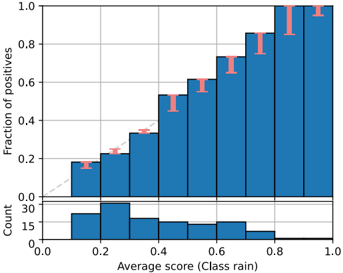
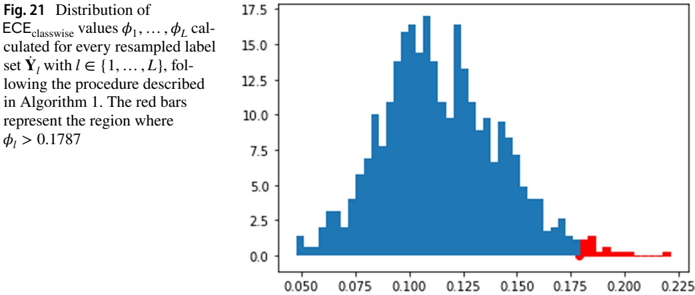
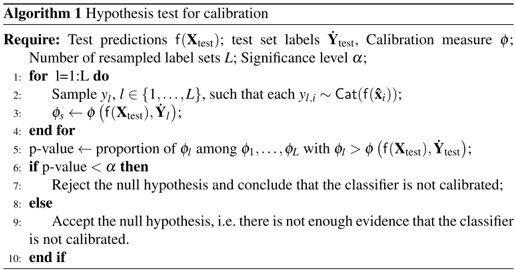
- On the running 30-instance toy example, binary-ECE = 0.1873, classwise-ECE = 0.1787, classwise-MCE = 0.48, confidence-ECE = 0.2117, and confidence-MCE = 0.3; the Hosmer–Lemeshow test gives C = 25.3 with p = 0.0003, and a resampling test for classwise-ECE gives p ≈ 0.016.
- The survey details post-hoc methods including empirical binning, isotonic regression, Platt scaling, and Beta calibration for binary problems, and temperature, vector, matrix, and Dirichlet scaling for multiclass problems, discussing advantages and drawbacks such as temperature scaling’s single parameter preventing overfitting but being potentially suboptimal, and Dirichlet calibration supporting the identity map with ODIR regularisation.
Methods
- Design: a survey/tutorial-style overview that grew out of a 2020 ECML-PKDD tutorial, covering motivation, definitions, proper scoring rules, evaluation and visualisation, post-hoc calibration methods, hypothesis tests, and advanced topics.
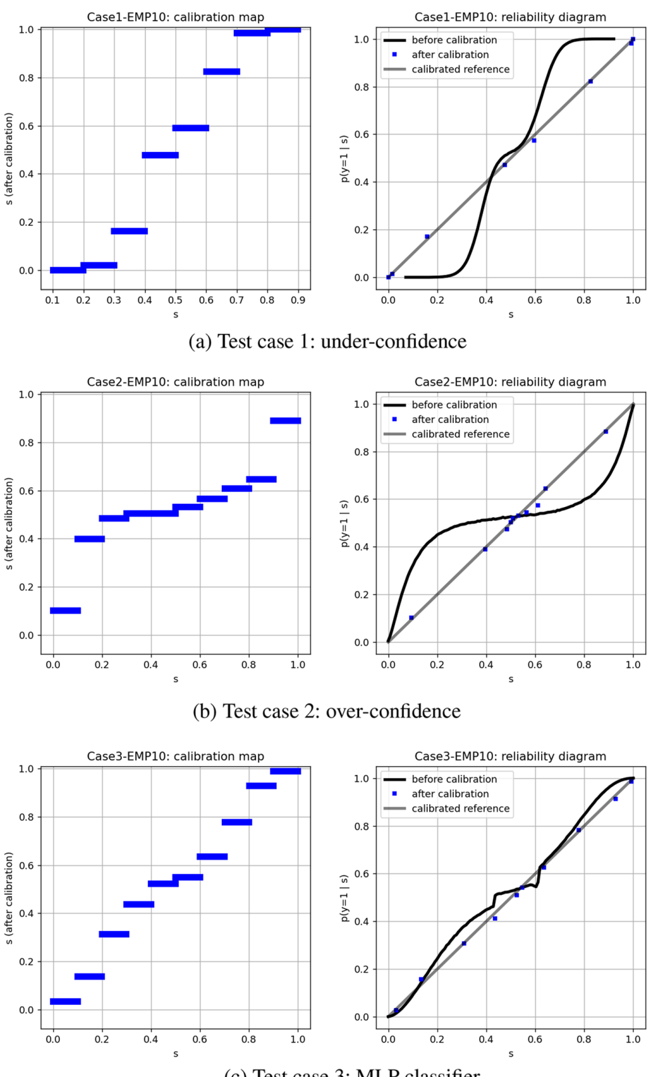
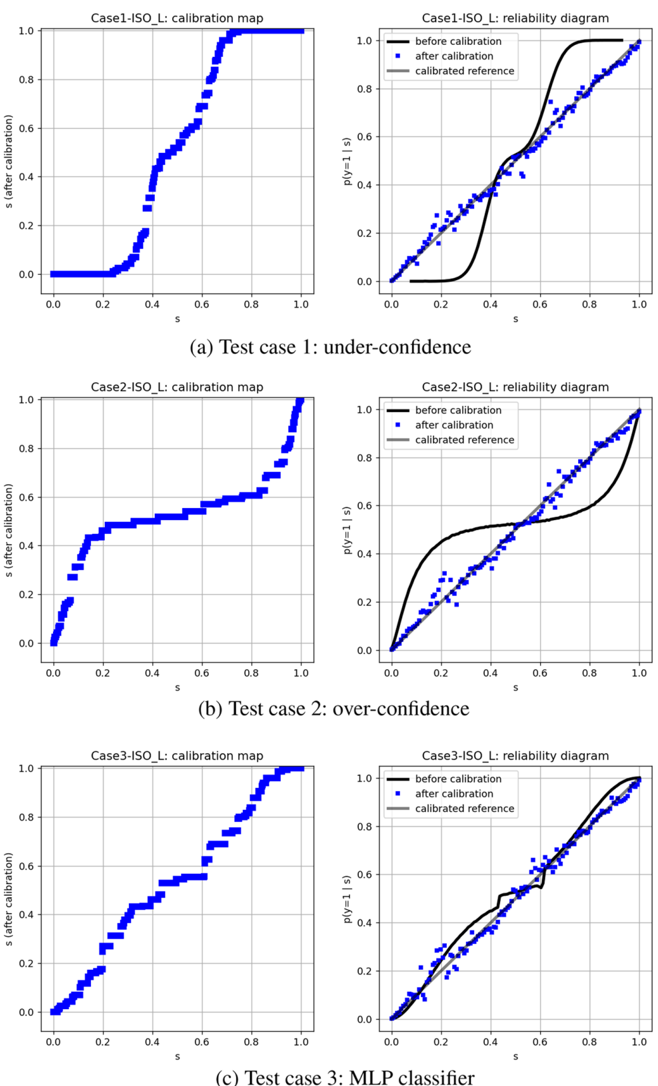
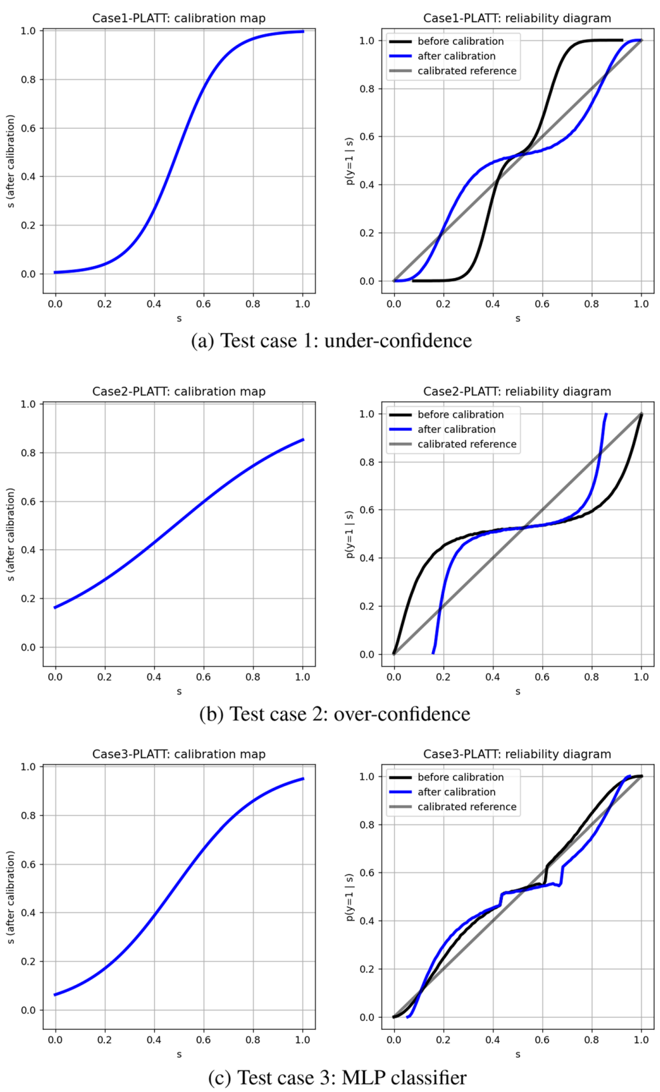
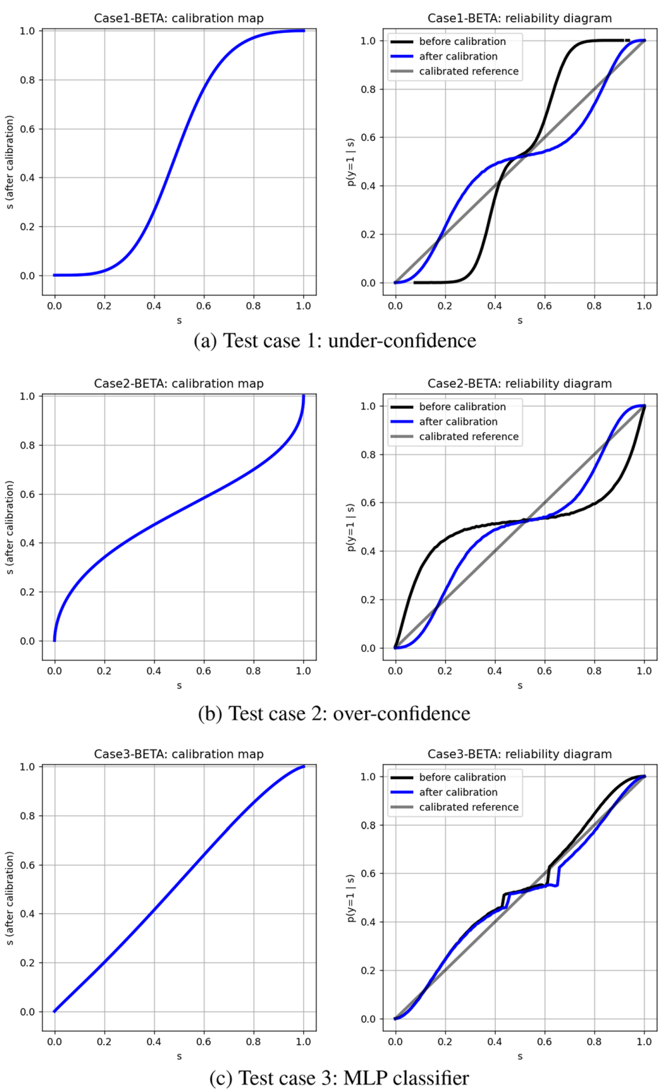
- Data or sample: illustrative toy examples (a 30-instance, 3-class table and a 10-instance, 3-class table) and synthetic two-class and three-class test cases; the MLP test case uses a two-layer structure with 128 hidden units per layer, ReLU activation, and 10,000 sampled training instances.
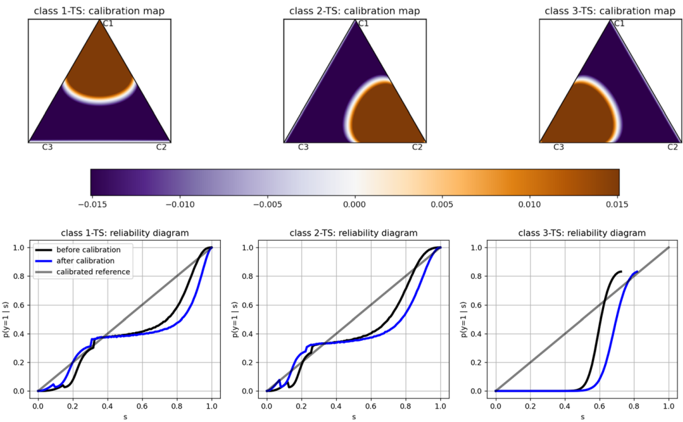
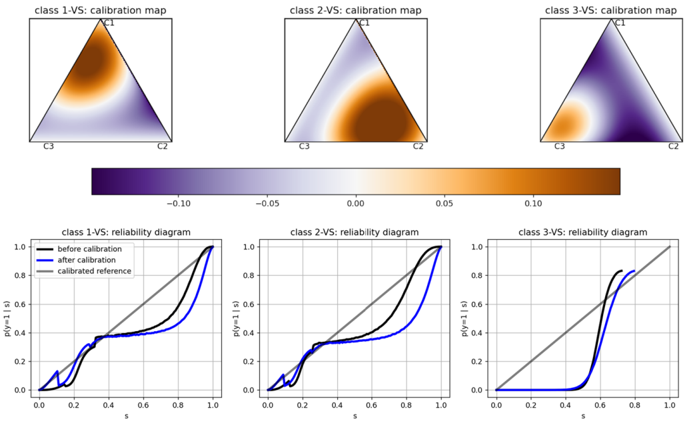
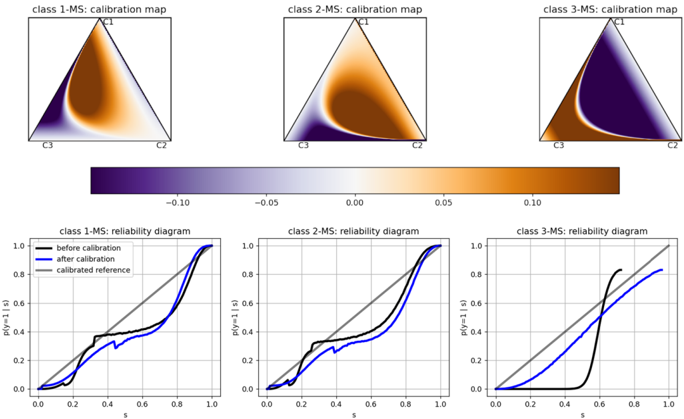
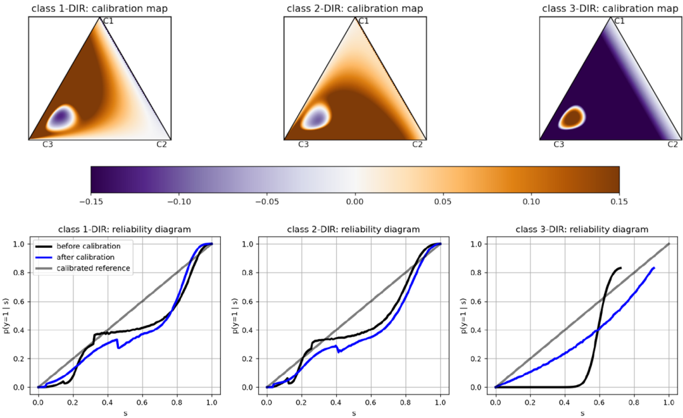
- Main analysis: conceptual synthesis and worked calculations of calibration metrics and scoring-rule decompositions, plus empirical illustration of calibration maps and reliability diagrams; most figures and results were generated using PyCalib, not a systematic benchmark.
Limitations
- The paper states its focus is the classical setup where the classifier is deployed in the same setting where it was calibrated, except for potential changes in class prior or misclassification costs; it does not cover robustness under other distributional shifts or out-of-distribution inputs.
- The paper lists open problems: there is no standard method to decide binning type or number of bins; post-hoc calibration does not improve robustness against out-of-distribution inputs; and epistemic/second-order uncertainty remains future work.
- Evident from the text: comprehensive analysis of calibration in other research fields and applications is left as future work, and the empirical demonstrations are synthetic/toy examples rather than a broad real-world benchmark.
Model-written summary. Check it against the paper before relying on it.
Integrity signals
Registry
Cites
Statistics
Figures
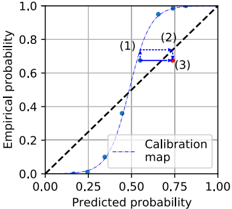
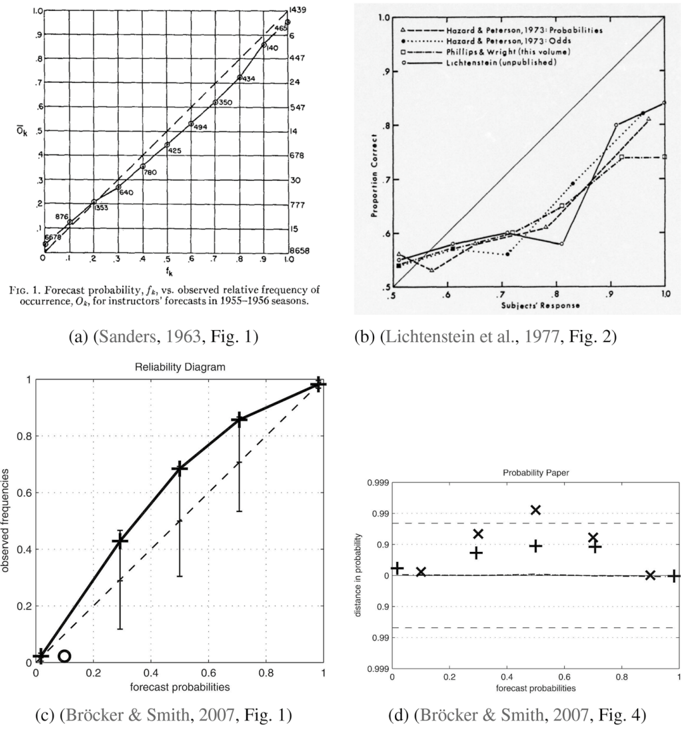
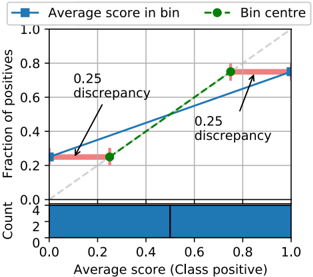
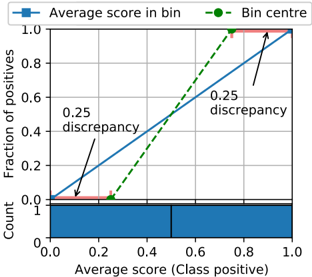
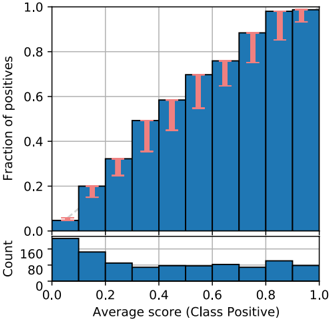
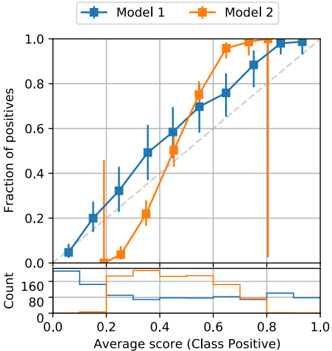
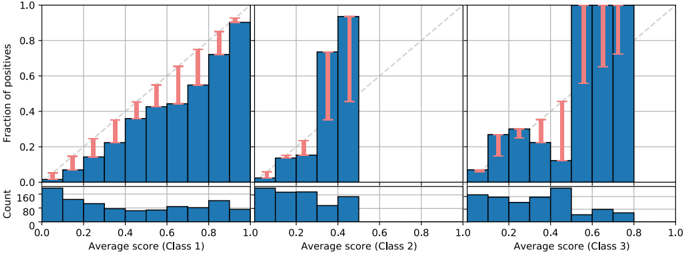
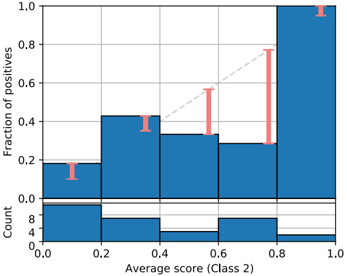
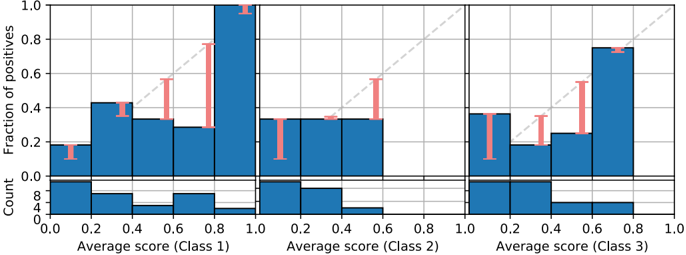
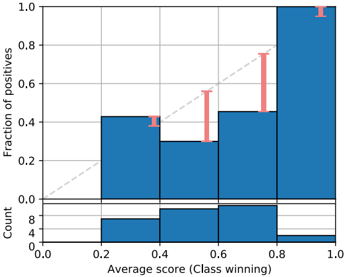
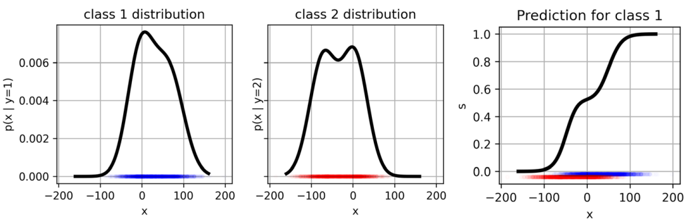
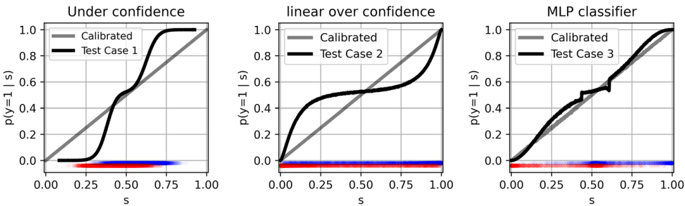
Verification
Claims the paper makes
9 Valid · 6 Not valid · 16 Not checked · 146 Own results and interpretations
The cited sources support only part of this claim — read each source’s verdict below.
In the paper
“The decomposition of proper scoring rule into calibration loss and refinement loss is then the sum of expected loss between S and C and expected loss between C and Y (Bröcker & Smith, 2007;Kull & Flach, 2015):”
§ Classifier calibration: a survey on how to assess and improve predicted class probabilities > 3.1 Decompositions of proper scoring rules
What the sources say
- Not checked — no full text of the sourcecites Bröcker & Smith, 2007 matched to “Increasing the Reliability of Reliability Diagrams” (2007) source
- Partly supportedcites Kull & Flach, 2015 matched to “Novel Decompositions of Proper Scoring Rules for Classification: Score Adjustment as Precursor to Calibration” (2015) sourceExperimental — accuracy not yet measured
The Abstract states that proper scoring rules have a well-known decomposition into calibration loss and refinement loss. It does not specify the claimed terms as expected loss between S and C and expected loss between C and Y, so that more precise formulation is not verified by our copy. (LLM, conf=0.82)
plain- Asserted: passes — The authors put it forward as true.
- Checkable: passes — It can be checked against evidence.
- Load-bearing: unclear — It is unclear whether the paper’s conclusions depend on it.
- Based: passes — The paper gives a reason why it holds.
Every source the paper cites for this claim was checked and supports it.
In the paper
“Some ideas do generalise quite easily: for example, we can model per-class scores by multivariate distributions such as Dirichlet distributions (Kull et al., 2019).”
§ Classifier calibration: a survey on how to assess and improve predicted class probabilities > 2.3 Multiclass calibration
What the sources say
- Supportedcites Kull et al., 2019 matched to “Beyond temperature scaling: Obtaining well-calibrated multiclass probabilities with Dirichlet calibration” (2019) source
The Abstract states the method is 'derived from Dirichlet distributions and generalising the beta calibration method from binary classification', and Section 3 (Dirichlet calibration) does exactly what the citing sentence attributes: it considers the distribution of prediction vectors separately on instances of each class and takes these k distributions to be Dirichlet. The Conclusion reinforces the 'generalises easily' framing, calling Dirichlet calibration 'a natural extension of the two-class beta calibration method' and noting that deriving maps from Dirichlet distributions opens the door to other exponential-family distributions. One minor nuance not carried by the claim: the paper stresses the Dirichlet form is a derivation device rather than an assumption that the per-class vectors really are Dirichlet-distributed. (LLM, conf=0.85)
plain- Asserted: passes — The authors put it forward as true.
- Checkable: passes — It can be checked against evidence.
- Load-bearing: unclear — It is unclear whether the paper’s conclusions depend on it.
- Based: passes — The paper gives a reason why it holds.
- Supported
The cited sources support only part of this claim — read each source’s verdict below.
In the paper
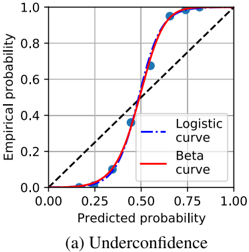
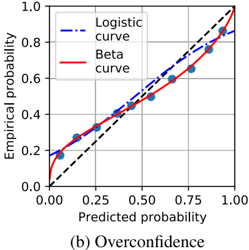
“One approach that works well is to model the classwise scores with Beta distributions (Kull et al., 2017a(Kull et al., , 2017b)).”
§ Classifier calibration: a survey on how to assess and improve predicted class probabilities > 2.2 Common forms of miscalibration, and how to fix them
What the sources say
- Supportedcites Kull et al., 2017a matched to “Beyond sigmoids: How to obtain well-calibrated probabilities from binary classifiers with beta calibration” (2017) source
Section 3.1 (p. 9) derives beta calibration by assuming beta-distributed scores for each class. Section 3.2 (p. 10) shows that the resulting calibration map can correct probability estimates pushed toward the extremes, an example of overconfidence. The paper notes in Section 3.4 (p. 16) that good calibration does not require each class’s scores to fit a beta distribution exactly; modelling their distribution ratio can suffice. (LLM, conf=0.87)
- Partly supportedcites Kull et al., 2017b matched to “Beyond sigmoids: How to obtain well-calibrated probabilities from binary classifiers with beta calibration” (2017) sourceExperimental — accuracy not yet measured
Section 3.1 (p. 9) derives beta calibration by assuming beta-distributed scores for each class, and Section 4.2 (p. 18) reports good performance for beta calibration. But Section 3.4 (pp. 15–16) distinguishes that method from fitting separate classwise beta distributions, which can fit poorly or produce inverted probabilities. The copy therefore supports beta calibration as an effective approach, not the unqualified claim that modelling each class’s scores with beta distributions works well for overconfidence specifically. (LLM, conf=0.83)
boostedstates an association- Asserted: passes — The authors put it forward as true.
- Checkable: passes — It can be checked against evidence.
- Load-bearing: unclear — It is unclear whether the paper’s conclusions depend on it.
- Based: passes — The paper gives a reason why it holds.
- Supported
The cited sources that could be checked couldn’t confirm or dispute this claim.
In the paper
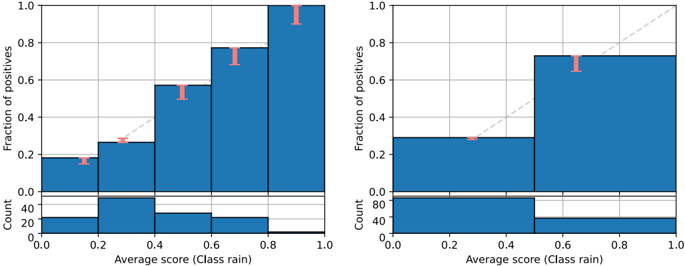
“In other words, binning approaches can reduce the calibration loss at the cost of a higher grouping loss (Kull & Flach, 2015).”
§ Classifier calibration: a survey on how to assess and improve predicted class probabilities > 5.3.1 Empirical binning
What the sources say
- Could not verifycites Kull & Flach, 2015 matched to “Novel Decompositions of Proper Scoring Rules for Classification: Score Adjustment as Precursor to Calibration” (2015) sourceExperimental — accuracy not yet measured
The available indexed passages are bibliographic metadata, not discussion of the paper’s findings. Searches for binning, calibration loss, and grouping loss returned no passage addressing the claimed trade-off, so our copy cannot verify it. (LLM, conf=0.72)
plainstates a causen = 3- Asserted: passes — The authors put it forward as true.
- Checkable: passes — It can be checked against evidence.
- Load-bearing: passes — The paper’s conclusions depend on it.
- Based: passes — The paper gives a reason why it holds.
- Could not verify
The cited sources support only part of this claim — read each source’s verdict below.
In the paper
“post-hoc calibration does not improve robustness against out-of-distribution inputs”
§ Classifier calibration: a survey on how to assess and improve predicted class probabilities > 7 Concluding remarks
What the sources say
- Partly supportedcites Ovadia et al., 2019 matched to “Can You Trust Your Model's Uncertainty? Evaluating Predictive Uncertainty Under Dataset Shift” (2019) sourceExperimental — accuracy not yet measured
The Introduction (p. 2) says post-hoc calibration can fail under even mild input shift, and the MNIST results (p. 5) say calibration on a validation set does not guarantee calibration on shifted data. But the claim is categorical about out-of-distribution inputs: the genomic-sequences results (Appendix F, p. 24) report that temperature scaling performed better than the vanilla model on a test set mixing in-distribution and OOD data. (LLM, conf=0.85)
plain- Asserted: passes — The authors put it forward as true.
- Checkable: passes — It can be checked against evidence.
- Load-bearing: unclear — It is unclear whether the paper’s conclusions depend on it.
- Based: passes — The paper gives a reason why it holds.
- Partly supported
63 more claims
Create a free account to see all 177 claims and to verify the 6 references still open.
- Probably not a substantial claim. 73
- It may state two separate claims as one. 55
Self-check
Percentages, sums and reported differences re-computed from the paper’s own numbers.
Rated minor: it would not touch a result — a value no result rests on, a p-value that stays on the same side of the significance level, or a conflict that is clerical, resolved elsewhere in the paper, or outside its own findings.
In the paper
“60 to 69 15 11 75”
§ Classifier calibration: a survey on how to assess and improve predicted class probabilities > 2 A brief introduction to classifier calibration
Reported 75 · recomputed 73.333333
Citations
Cites
Advances in neural information processing systems 7
(1996) · Computers & Mathematics with Applications · doi:10.1016/s0898-1221(96)90463-0 · Cited by 14,281
Distilling the Knowledge in a Neural Network
Hinton, G., Vinyals, O., & Dean, J. (2015) · arXiv · doi:10.48550/arxiv.1503.02531 · Cited by 14,204
On calibration of modern neural networks
Guo, C., Pleiss, G., Sun, Y., & Weinberger, K. Q. (2017) · arXiv · doi:10.48550/arxiv.1706.04599 · Cited by 14,095
Kupper, L. L., Hosmer, D. W., & Lemeshow, S. (1990) · Journal of the American Statistical Association · doi:10.2307/2290035 · Cited by 7,599
Probabilistic Outputs for Support vector Machines and Comparisons to Regularized Likelihood Methods
Platt, J. C. (1999) · Cited by 6,534
Strictly Proper Scoring Rules, Prediction, and Estimation
Gneiting, T., & Raftery, A. E. (2007) · Journal of the American Statistical Association · doi:10.1198/016214506000001437 · Cited by 5,793
Koenker, R., & Hallock, K. F. (2001) · Journal of Economic Perspectives · doi:10.1257/jep.15.4.143 · Cited by 4,413
(2012) · MPG.PuRe (Max Planck Society) · doi:10.5555/2188385.2188410 · Cited by 3,603
Can You Trust Your Model's Uncertainty? Evaluating Predictive Uncertainty Under Dataset Shift
Ovadia, Y., Fertig, E., Ren, J., Nado, Z., Sculley, D., Nowozin, S., Dillon, J. V., Lakshminarayanan, B., & Snoek, J. (2019) · arXiv · doi:10.48550/arxiv.1906.02530 · Cited by 2,993
Advances in Neural Information Processing Systems 27 (NIPS 2014)
Zhong, M., Goddard, N., & Sutton, C. A. (2014) · Cited by 2,636
Research works printed but not linked: 3
- 9. Bross, I. (1954). Design for decision. Science Education, 38(4), 325.
- 19. Flach, P. (2014). Classification in context: Adapting to changes in class and cost distribution. In First inter- national workshop on learning over multiple contexts at European conference on machine learning and principles and practice of knowledge discovery in databases (ECML-PKDD).
- 32. Jiang, Y., Nagarajan, V., Baek, C., & Kolter, J. Z. (2021). Assessing generalization of sgd via disagreement. arXiv preprintarXiv: 2106. 13799.
Cited by
Automated machine learning: past, present and future
Baratchi, M., Wang, C., Limmer, S., van Rijn, J. N., Hoos, H. H., Bäck, T., & Olhofer, M. (2024) · Artificial Intelligence Review · doi:10.1007/s10462-024-10726-1 · Cited by 210
Methodology and evaluation in sports analytics: challenges, approaches, and lessons learned
Davis, J. J., Bransen, L., Devos, L., Jaspers, A., Meert, W., Robberechts, P., Haaren, J. V., & Roy, M. V. (2024) · Machine Learning · doi:10.1007/s10994-024-06585-0 · Cited by 154
“Indeed, many tasks in sports rely on having sufficiently well-calibrated probability estimates (Silva Filho et al., 2023).”
Resilience-aware MLOps for AI-based medical diagnostic system
Moskalenko, V., & Kharchenko, V. (2024) · Frontiers in Public Health · doi:10.3389/fpubh.2024.1342937 · Cited by 32
Katsuki, M., Matsumori, Y., Kawamura, S., Kashiwagi, K., Koh, A., Tachikawa, S., & Yamagishi, F. (2023) · Headache The Journal of Head and Face Pain · doi:10.1111/head.14611 · Cited by 35
Human-in-the-loop active learning for goal-oriented molecule generation
Nahal, Y., Menke, J., Martinelli, J., Heinonen, M., Kabeshov, M., Janet, J. P., Nittinger, E., Engkvist, O., & Kaski, S. (2024) · Journal of Cheminformatics · doi:10.1186/s13321-024-00924-y · Cited by 47
Hybrid AI-enhanced lightning flash prediction in the medium-range forecast horizon
Cavaiola, M., Cassola, F., Sacchetti, D., Ferrari, F., & Mazzino, A. (2024) · Nature Communications · doi:10.1038/s41467-024-44697-2 · Cited by 39
“Theconceptofreliabilityisrelatedto the one of calibration, meaning that a reliable forecast denotes the goodness of calibration 56 .”
BackgroundExploration of Production Data for Predictive Maintenance of Industrial Equipment: A Case Study
Burmeister, N., Frederiksen, R. D., Høg, E. P., & Nielsen, P. A. (2023) · IEEE Access · doi:10.1109/access.2023.3315842 · Cited by 30
Rožanec, J. M., Bizjak, L., Trajkova, E., Zajec, P., Keizer, J., Fortuna, B., & Mladenić, D. (2023) · Journal of Intelligent Manufacturing · doi:10.1007/s10845-023-02098-0 · Cited by 36
Gürcan, F., & Soylu, A. (2024) · Cancers · doi:10.3390/cancers16234046 · Cited by 26
“The LinearSVC employs a linear kernel to maximize the margin between classes, while PassiveAC (PassiveAg-gressiveClassifier), used in conjunction with CalibratedClassifierCV, provides a robust approach to improving probability estimates [12,47,50].”
Dong, J., Jiang, Z., Pan, D., Chen, Z., Guan, Q., Zhang, H., Gui, G., & Gui, W. (2025) · IEEE Transactions on Neural Networks and Learning Systems · doi:10.1109/tnnls.2025.3565159 · Cited by 47
“Gawlikowski et al. [27] gave a comprehensive overview of uncertainty estimation in neural networks, Silva Filho et al. [28] provided a primer and the latest technical detail on confidence calibration, Ojha et al. [29] o ff ered an extensive survey on uncertainty of Artificial Intelligence in…”
Frasnetti, E., Cucchi, I., Pavoni, S., Frigerio, F., Cinquini, F., Serapian, S. A., Pavarino, L. F., & Colombo, G. (2024) · Journal of Chemical Theory and Computation · doi:10.1021/acs.jctc.4c01097 · Cited by 22
A Deep Learning Multimodal Framework for Fake News Detection
Kumari, S., & Singh, M. P. (2024) · Engineering Technology & Applied Science Research · doi:10.48084/etasr.8170 · Cited by 33
Xiong, R., Shi, Y., Jing, H., Liang, W., Nakahira, Y., & Tang, P. (2023) · Building and Environment · doi:10.1016/j.buildenv.2023.111053 · Cited by 22
Federated learning with explainable AI for liver disease prediction: A privacy-preserving approach
Kumar, D., Verma, C., & Illés, Z. (2025) · Intelligence-Based Medicine · doi:10.1016/j.ibmed.2025.100285 · Cited by 28
Evaluating probabilistic classifiers: The triptych
Dimitriadis, T., Gneiting, T., Jordan, A. I., & Vogel, P. (2023) · International Journal of Forecasting · doi:10.1016/j.ijforecast.2023.09.007 · Cited by 29
Stoppa, F., Bhattacharyya, S., de Austri, R. R., Vreeswijk, P. M., Caron, S., Zaharijaš, G., Bloemen, S., Principe, G., Malyshev, D. V., Vodeb, V., et al. (2023) · Astronomy and Astrophysics · doi:10.1051/0004-6361/202347576 · Cited by 19
Wang, J., & Hu, J. (2025) · Reliability Engineering & System Safety · doi:10.1016/j.ress.2025.111383 · Cited by 17
Souza, V. M. A., Veiga, P. S., & Ribeiro, A. G. R. (2024) · Knowledge-Based Systems · doi:10.1016/j.knosys.2024.112864 · Cited by 13
Kumar, P., & Lambert, C. G. (2024) · PeerJ Computer Science · doi:10.7717/peerj-cs.2451 · Cited by 14
From data to a validated score-based LR system: A practitioner’s guide
Leegwater, A. J., Vergeer, P., Alberink, I. B., van der Ham, L. V., van de Wetering, J., el Harchaoui, R., Bosma, W., Ypma, R. J. F., & Sjerps, M. J. (2024) · Forensic Science International · doi:10.1016/j.forsciint.2024.111994 · Cited by 15
Shaker, M., & Hüllermeier, E. (2025) · Knowledge-Based Systems · doi:10.1016/j.knosys.2025.114143 · Cited by 17
Ventriglia, V., Guerra, M., Cesaroni, C., Spogli, L., Altadill, D., Segarra, A., Galkin, I., Barta, V., Verhulst, T. G. W., de Paula, V., et al. (2025) · Journal of Space Weather and Space Climate · doi:10.1051/swsc/2025020 · Cited by 10
Pinto, I., Olazarán, Á., Jurío, D., de la Osa, B., Sainz, M., Oscoz, A., Ballaz, J., Gorricho, J., Galar, M., & Andonegui, J. (2025) · Frontiers in Digital Health · doi:10.3389/fdgth.2025.1547045 · Cited by 16
Variable-Based Calibration for Machine Learning Classifiers
Kelly, M., & Smyth, P. (2023) · Proceedings of the AAAI Conference on Artificial Intelligence · doi:10.1609/aaai.v37i7.25991 · Cited by 12
Ahmadi, N., Nguyen, Q. V., Sedlmayr, M., & Wolfien, M. (2024) · Scientific Reports · doi:10.1038/s41598-024-52723-y · Cited by 12
Kwon, H., & Kim, D.-J. (2026) · Scientific Reports · doi:10.1038/s41598-026-40637-w · Cited by 27
“Methodologically, richer calibration families 38 and conditional 39 or distributionally robust conformal constructions 40 could further stabilize guarantees under shift, while joint optimization 41 of subgroup-aware costs would align operating points with equity objectives beyond coverage parity.”
Chong, L., Cao, T., Tang, M., Pu, W., & Lei, P. (2025) · European Journal of Radiology · doi:10.1016/j.ejrad.2025.112060 · Cited by 9
Analysis of uncertainty of neural fingerprint-based models
Feldmann, C., Sieg, J., & Mathea, M. (2025) · Faraday Discussions · doi:10.1039/d4fd00095a · Cited by 13
Prince, T., Bommert, A., Rahnenführer, J., & Schmid, M. C. (2025) · PLoS ONE · doi:10.1371/journal.pone.0318349 · Cited by 11
“However, it can be shown that this bias depends on S i ( t ) but not ^ S i ð t Þ [21, 37].”
The Influence of Curiosity Traits and On-Demand Explanations in AI-Assisted Decision-Making
Cau, F. M., & Spano, L. D. (2025) · International Conference on Intelligent User Interfaces · doi:10.1145/3708359.3712165 · Cited by 14
Selection of powerful radio galaxies with machine learning
Carvajal, R., Matute, I., Afonso, J., Norris, R. P., Luken, K., Sanchéz-Sáez, P., Cunha, P. A. C., Humphrey, A., Messias, H., Amarantidis, S., et al. (2023) · Astronomy and Astrophysics · doi:10.1051/0004-6361/202245770 · Cited by 11
ALeRCE light curve classifier: Tidal disruption event expansion pack
Pávez-Herrera, M., Sanchéz-Sáez, P., Hernández-García, L., Bauer, F. E., Förster, F., Catelan, M., Muñoz-Arancibia, A., Ricci, C., Reyes, I., Bayo, A., et al. (2025) · Astronomy and Astrophysics · doi:10.1051/0004-6361/202451951 · Cited by 13
Accurate and efficient AI-assisted paradigm for adding granularity to ERA5 precipitation reanalysis
Cavaiola, M., Tuju, P. E., & Mazzino, A. (2024) · Scientific Reports · doi:10.1038/s41598-024-77542-z · Cited by 7
“Reliability, in essence, refers to the agreement between the predictions made by a model and the observed frequency of a particular phenomenon 39 .”
BackgroundBox-spoof attack against single object tracking
Jiang, Y., Yin, G., Jing, W., Mohaisen, L., Emam, M., & Yuan, Y. (2024) · Applied Intelligence · doi:10.1007/s10489-023-05264-2 · Cited by 6
Carnevale, D., Cavaiola, M., & Mazzino, A. (2024) · Energy Reports · doi:10.1016/j.egyr.2024.03.058 · Cited by 10
Heintz, T. A., Badathala, A., Wooten, A., Cu, C. W., Wallace, A., Pham, B. K., Wallace, A. W., & Cobert, J. M. (2025) · Anesthesiology · doi:10.1097/aln.0000000000005370 · Cited by 8
“25 We performed model calibration using multiple techniques including isotonic regression, 26 Platt scaling, 27 and temperature scaling 28 on the 2021 test set, and measured calibration using Brier scores 29 before and after calibration on the 2023 dataset (not used for training or calibrating).”
Nomqupu, S., Sali, A., Nyamugama, A., & Ndou, N. N. (2024) · Applied Sciences · doi:10.3390/app14072670 · Cited by 6
“In this case, the probability outcomes of the calibration model are thresholded to reduce mischaracterization of features [35].”
BackgroundA non-deteriorating approach to improve Natural Language Understanding in Conversational Agents
Arevalillo‐Herráez, M., Luise, R. S. A.-D., & Wu, Y. (2025) · Neurocomputing · doi:10.1016/j.neucom.2025.129652 · Cited by 7
Xu, T., Bassiouny, D., Srinidhi, C. L., Lam, M. S. W., Goubran, M., Nofech‐Mozes, S., & Martel, A. L. (2025) · Laboratory Investigation · doi:10.1016/j.labinv.2025.104121 · Cited by 6
Combining Priors with Experience: Confidence Calibration Based on Binomial Process Modeling
Dong, J., Jiang, Z., Pan, D., & Yu, H. (2025) · Proceedings of the AAAI Conference on Artificial Intelligence · doi:10.1609/aaai.v39i15.33792 · Cited by 9
Wong, K. K. (2025) · Biomedical Signal Processing and Control · doi:10.1016/j.bspc.2025.107867 · Cited by 10
A deep learning framework for multiplet splitting classification in 1H NMR
Fischetti, G., Schmid, N., Bruderer, S., Heitmann, B., Henrici, A., Scarso, A., Caldarelli, G., & WILHELM, D. (2025) · Journal of Magnetic Resonance · doi:10.1016/j.jmr.2025.107851 · Cited by 7
Analysing the Predictability of Language Model Performance
Schellaert, W., Martínez‐Plumed, F., & Hernández‐Orallo, J. (2025) · ACM Transactions on Intelligent Systems and Technology · doi:10.1145/3706118 · Cited by 19
Probabilistic scoring lists for interpretable machine learning
Hanselle, J., Heid, S., Fürnkranz, J., & Hüllermeier, E. (2025) · Machine Learning · doi:10.1007/s10994-024-06705-w · Cited by 7
“A better idea, therefore, is to estimate them jointly using a probability calibration method (de Menezes e Silva Filho et al., 2023).”
Calibration Methods in Imbalanced Binary Classification
(2023) · doi:10.21203/rs.3.rs-3242706/v1 · Cited by 4
Learning decision catalogues for situated decision making: The case of scoring systems
Heid, S., Hanselle, J., Fürnkranz, J., & Hüllermeier, E. (2024) · International Journal of Approximate Reasoning · doi:10.1016/j.ijar.2024.109190 · Cited by 6
Dynamic prior probability network for long-tailed visual recognition
Zhou, X., Sun, J., & Zhai, J. (2024) · Expert Systems with Applications · doi:10.1016/j.eswa.2024.126276 · Cited by 4
Erlei, A., Cau, F. M., Georgiev, R., Kumar, S. C., Bizer, K., & Gadiraju, U. (2026) · International Conference on Human Factors in Computing Systems · doi:10.1145/3772318.3791420 · Cited by 7
“To that end, we deploy a full mixed effect logistic panel regression with all conditions and our main co-variates technology affinity, risk attitudes, AI literacy, and task familiarity.”
Uncertainty quantification in ordinal classification: A comparison of measures
Haas, S., & Hüllermeier, E. (2025) · International Journal of Approximate Reasoning · doi:10.1016/j.ijar.2025.109479 · Cited by 7
(2025) · doi:10.1109/jstars.2025.3593330 · Cited by 3
“In agreement with other studies, we found binary classifi-cation models to be overconfident and tend to concentrate the prediction probabilities around 0 or 1 [35].”
Riera-Marín, M., Sikha, O. K., Rodríguez‐Comas, J., May, M. S., Pan, Z., Zhou, X., Liang, X., Erick, F. X., Prenner, A., Hémon, C., et al. (2025) · Computers in Biology and Medicine · doi:10.1016/j.compbiomed.2025.111024 · Cited by 16
“This issue is further exacerbated by data variability, class imbalances, and inter-rater disagreements [15].”
Cheng, J., Tian, J., Spoto, F., Azhir, A., Mork, D., & Estiri, H. (2025) · Scientific Reports · doi:10.1038/s41598-025-32656-w · Cited by 9
“Dementia was selected because approximately 50% of cases remain undiagnosed 13 , the condition requires specialist evaluation, exhibits substantial coding heterogeneity ranging from specific diagnoses such as G30.x Alzheimer’s disease to nonspecific codes like F03 unspecified dementia, and has…”
Value-Based Hybrid Intelligence
Sayin, B., Yang, J., Passerini, A., & Casati, F. (2023) · Frontiers in artificial intelligence and applications · doi:10.3233/faia230100 · Cited by 2
Exploring the impact of explainable AI and cognitive capabilities on users’ decisions
Cau, F. M., & Spano, L. D. (2025) · User modeling and user-adapted interaction · doi:10.1007/s11257-025-09438-0 · Cited by 10
“AI confidence calibration approaches (Silva Filho et al. 2023; Ma et al. 2024; Li et al. 2025) provide estimates that accurately reflect the likelihood of correctness in AI predictions.”
Interpretable Classifier Models for Decision Support Using High Utility Gain Patterns
Krishnamoorthy, S. (2024) · IEEE Access · doi:10.1109/access.2024.3455563 · Cited by 7
“The learning algorithms such as Naive Bayes, Boosting, and Random forest do not generate well-calibrated probabilities [46] that are of importance to human decision making [47].”
MethodRobust quantum dots charge autotuning using neural network uncertainty
Yon, V., Galaup, B., Rohrbacher, C., Rivard, J., Godfrin, C., Li, R., Kubicek, S., Greve, K. D., Gaudreau, L., Dupont-Ferrier, E., et al. (2024) · Machine Learning Science and Technology · doi:10.1088/2632-2153/ad88d5 · Cited by 8
“This ensures that our solution is not tailored specifically to one quantum device but can be applied to a wide range of QD-based spin qubit hardware.”
Calibration methods in imbalanced binary classification
Guilbert, T., Caelen, O., Chirita, A., & Saerens, M. (2024) · Annals of Mathematics and Artificial Intelligence · doi:10.1007/s10472-024-09952-8 · Cited by 16
Wettewa, S., Chai, P., Weerasinghe, N. P., Hou, L., Edirisinghe, R. K., Zhang, G. (., & Setunge, S. (2025) · Journal of Infrastructure Intelligence and Resilience · doi:10.1016/j.iintel.2025.100180 · Cited by 3
On the Capability of Classification Trees and Random Forests to Estimate Probabilities
Plante, J., & Radatz, M. (2024) · Journal of Statistical Theory and Practice · doi:10.1007/s42519-024-00376-5 · Cited by 6
Sayin, B., Yang, J., Passerini, A., & Casati, F. (2023) · Frontiers in artificial intelligence and applications · doi:10.3233/faia230085 · Cited by 1
Information leakage detection through approximate Bayes-optimal prediction
Gupta, P., Wever, M., & Hüllermeier, E. (2025) · Information Sciences · doi:10.1016/j.ins.2025.122419 · Cited by 4
Neuro-symbolic systems: a perspective of uncertainty management
Li, Z., Yao, Y., Ma, X., & lu, J. (2025) · Scientia Sinica Informationis · doi:10.1360/ssi-2024-0163 · Cited by 3
H-Calibration: Rethinking Classifier Recalibration With Probabilistic Error-Bounded Objective
Huang, W., Cao, G., Xia, J., Chen, J., Wang, H., & Zhang, J. (2025) · IEEE Transactions on Pattern Analysis and Machine Intelligence · doi:10.1109/tpami.2025.3582796 · Cited by 8
Enhancing Daily Wildfire Risk Prediction Application Through Interpretable Machine Learning Results
Apostolakis, A., Girtsou, S., Alexis, K., et al. (2024) · IEEE International Geoscience and Remote Sensing Symposium (IGARSS) · doi:10.1109/igarss53475.2024.10641551 · Cited by 2
“For the former methods (a) this is clear from the known fact that the classifier’s prediction does not match the class probabilities [27] (Fig.”
BackgroundAhrens, E., Jennum, P., Duun‐Henriksen, J., Djurhuus, B. D., Homøe, P., Kjær, T. W., & Hemmsen, M. C. (2024) · Sleep Health · doi:10.1016/j.sleh.2024.08.007 · Cited by 3
Hug-Iml: Interpretable Machine Learning for Decision Support Using High Utility Gain PatternsPreprint
Krishnamoorthy, S. (2024) · SSRN Electronic Journal · doi:10.2139/ssrn.4785680 · Cited by 2
Application of Boosting in Recommender Systems
Zharova, M. A., & Цурков, В. И. (2024) · Journal of Computer and Systems Sciences International · doi:10.1134/s1064230724700680 · Cited by 2
Yang, L., Yang, J., Cao, C., Li, M., Peng, F., & Liu, Q. (2025) · Applied Sciences · doi:10.3390/app15179253 · Cited by 2
Impact of pectoral muscle removal on deep-learning-based breast cancer risk prediction
Klaneček, Ž., Wang, Y., Wagner, T., Cockmartin, L., Marshall, N., Schott, B., Deatsch, A. E., Studen, A., Jarm, K., Krajc, M., et al. (2025) · Physics in Medicine and Biology · doi:10.1088/1361-6560/adb367 · Cited by 3
A survey on confidence calibration of deep learning under class imbalance dataPreprint
Dong, J., Jiang, Z., Pan, D., Chen, Z., Guan, Q., Zhang, H., Gui, G., & Gui, W. (2024) · doi:10.36227/techrxiv.171623912.22862601/v1 · Cited by 3
Katz, A., Ekuma, O., Enns, J. E., Cavett, T., Singer, A. G., Sanchez‐Ramirez, D. C., Keynan, Y., Lix, L. M., Walld, R., Yogendran, M. S., et al. (2025) · BMJ Open · doi:10.1136/bmjopen-2024-087920 · Cited by 4
Rethinking crash risk prediction: classification versus probabilistic perspectives
Zhang, Y. (2026) · European Transport Research Review · doi:10.1186/s12544-026-00822-4 · Cited by 1
“…fatalities) is insufficient for reliable statistical analysis, a feasible solution is to aggregate 5 In the empirical settings where true probabilities are unknown, such curves can be plotted with the observed proportion of the corresponding class on the y-axis to measure model calibration [44].”
Getting NBA Shots in Context: Analysing Basketball Shots with Graph Embeddings
Schmid, M., Schöpf, M., & Kolbinger, O. (2025) · Int. J. Comput. Sci. Sport · doi:10.2478/ijcss-2025-0005 · Cited by 2
Keles, M. B., & Göktürk, M. (2026) · Applied Sciences · doi:10.3390/app16020876 · Cited by 3
Calibrated Global Logit Fusion (CGLF) for Fetal Health Classification Using Cardiotocographic Data
Abraha, M. E., & Kim, J. (2025) · Electronics · doi:10.3390/electronics14204013 · Cited by 1
Detection of Novel Asset Failures in Predictive Maintenance Using Classifier Certainty
Fathi, K., Ristin, M., Sadurski, M., Kleinert, T., & van de Venn, H. W. (2024) · Mediterranean Conference on Control and Automation (MED) · doi:10.1109/med61351.2024.10566204 · Cited by 1
Aleatoric and Epistemic Uncertainty Measures for Ordinal Classification Through Binary Reduction
Haas, S., & Hüllermeier, E. (2026) · Machine Learning · doi:10.1007/s10994-025-06960-5 · Cited by 4
Dong, W., Diao, M., & Yang, M. (2026) · Applied Sciences · doi:10.3390/app16052495 · Cited by 3
(2023) · International Journal of Advanced Technology and Engineering Exploration · doi:10.19101/ijatee.2023.10101138 · Cited by 1
M atch : A Maximum-Likelihood Approach for Classification under Label Shift
Donyavi, Z., Li, F., Zhang, Y., Silva, D. F., & Batista, G. (2025) · ACM SIGKDD Conference on Knowledge Discovery and Data Mining (KDD) · doi:10.1145/3711896.3737040 · Cited by 1
Towards a Formal Account on Negative Latency
Dubslaff, C., Schulz, J., Wienhöft, P., Baier, C., Fitzek, F. H. P., Kiebel, S. J., & Lehmann, J. (2023) · Lecture notes in computer science · doi:10.1007/978-3-031-46002-9_11 · Cited by 8
Investigating Calibrated Classification Scores Through the Lens of Interpretability
Torabian, A., & Urner, R. (2024) · Communications in computer and information science · doi:10.1007/978-3-031-63800-8_11 · Cited by 2
Bilal, M. A., Hlyniana, K., Wang, Y., Akhter, M. P., & Sheng, S. (2026) · Remote Sensing · doi:10.3390/rs18132091 · Cited by 3
Alhawarat, M. O., Alkhatib, A., & Nijem, Q. (2026) · Applied Sciences · doi:10.3390/app16125876 · Cited by 4
Stoppa, F., Bhattacharyya, S., de Austri, R. R., Vreeswijk, P. M., Caron, S., Zaharijaš, G., Bloemen, S., Principe, G., Malyshev, D. V., Vodeb, V., et al. (2023) · arXiv (Cornell University) · doi:10.48550/arxiv.2307.14456 · Cited by 4
An Explainable AI Approach to Multimodel Sentiment Classification Using LIME
Kusumastuti, R., Putra, T. D., Oktafiani, D., & Turmudi, H. (2025) · International Conference on Cybernetics and Intelligent System (ICORIS) · doi:10.1109/icoris67789.2025.11296090 · Cited by 1
Practical guidance on automated sorting of underwater images in plankton ecology research
Sorochan, K. A., Vaswani, A. R., Howard, A., Rühl, S., O’Grady, E., Möller, K. O., & Johnson, C. L. (2026) · ICES Journal of Marine Science · doi:10.1093/icesjms/fsaf212 · Cited by 2
Freeland‐Haynes, L., Weldy, M. J., Navine, A. K., Hart, P. J., Denton, T., & Kitzes, J. A. (2026) · bioRxiv (Cold Spring Harbor Laboratory) · doi:10.64898/2026.09.08.747031
Metadata
- Authors
- Silva Filho, T., Song, H., Perello-Nieto, M., Santos-Rodriguez, R., Kull, M., & Flach, P.
- Affiliations
- University of Bristol (GB)
- University of Tartu (EE)
- Venue
- Machine Learning
- Published
- 2023-05-16
- Volume
- 112
- Issue
- 9
- Pages
- 3211-3260
- ISSN
- 0885-6125 (ISSN-L)
- 1573-0565
- OpenAlex
- W4376891107
- Semantic Scholar
- f471af0ba7d366233da32a1f7151fde42816790f
- Cited by
- 228
- References
- 95
- Citations by year
- 2026: 119 · 2025: 56 · 2024: 38 · 2023: 15
- FWCI
- 21.43
- Type
- journal article
- Language
- en
- Open access
- hybrid
- doi.org
- Licence
- cc-by
- creativecommons.org/licenses/by/4.0 (tdm)
- creativecommons.org/licenses/by/4.0 (vor)
- Locations
- Machine Learning (publishedVersion, cc-by)
- Bristol Research (University of Bristol) (publishedVersion, cc-by)
- arXiv (Cornell University) (submittedVersion)
- Explore Bristol Research (submittedVersion, cc-by)
- arXiv (Cornell University) (cc-by)
- Greater South Information System
- Funders
- Engineering and Physical Sciences Research Council (EP/R005273/1)
- Alan Turing Institute (EP/N510129/1)
- Estonian Research Competency Council (PRG1604)
- Topics
- Physical Sciences › Computer Science › Artificial Intelligence › Imbalanced Data Classification Techniques
- Physical Sciences › Computer Science › Artificial Intelligence › Machine Learning and Data Classification
- Physical Sciences › Computer Science › Artificial Intelligence › Adversarial Robustness in Machine Learning
- Keywords
- classifier calibration, uncertainty quantification, proper scoring rules, post-hoc calibration, multi-class classification, binary classification, probability calibration, cost-sensitive classification, decision making under uncertainty
About these checks
Registry, retraction, Cites and statistics results are computed, not judged, with one exception: a printed reference that no index lists is read once by a model before it counts as a citation error. Claims are extracted by a model and kept only when their quote appears verbatim in the text; each cited source is then checked, with a model’s help, for whether it says what the claim relies on. Those verdicts can be wrong — read the claim’s quote and the cited source before relying on one.
The claim verdicts this report counts are experimental: their accuracy is not yet measured.
A language model drew the claims from the paper on 2026-10-10, under version 3 of the claim definition (model deepseek-v4.1-flash, prompt extract-v3).
A second model labelled each claim on 2026-10-10 (model jev-1.13-20260917, definition revision gold-guideline-v0.2).
Cited sources are checked with a language model’s help (gpt-6-sol and qwen3.8-omni-flash).
Statistics and arithmetic are recomputed, not judged.
Confidence bands are shown only for fields calibrated on our annotated test set. None is calibrated yet, so no band is shown.
What counts as a claim ›How we measure confidence ›How we check this ›
Are you an author, or do you see a problem with this page? Request a review
Data sources
Bibliographic data: Semantic Scholar, OpenAlex, Crossref.
Contains information from the Semantic Scholar Academic Graph Datasets, made available under the ODC Attribution License (ODC-BY 1.0).
Semantic Scholar’s data is described in: Kinney, R., et al. (2023). The Semantic Scholar Open Data Platform. arXiv:2301.10140.
