

AI4People—An Ethical Framework for a Good AI Society: Opportunities, Risks, Principles, and Recommendations
Open accessThe DOI matches its Crossref record; 6 of the 8 references it cites were found in a registry or an index; 1 of the 33 sources its claims cite were checked for support.
Abstract
This article reports the findings of AI4People, an Atomium-EISMD initiative designed to lay the foundations for a "Good AI Society". We introduce the core opportunities and risks of AI for society; present a synthesis of five ethical principles that should undergird its development and adoption; and offer 20 concrete recommendations-to assess, to develop, to incentivise, and to support good AI-which in some cases may be undertaken directly by national or supranational policy makers, while in others may be led by other stakeholders. If adopted, these recommendations would serve as a firm foundation for the establishment of a Good AI Society.
Overview
CoChat Summary
## TL;DR
AI4People proposes an ethical framework for a “Good AI Society” by synthesizing AI’s major social opportunities and risks, five guiding principles, and 20 policy recommendations. The paper argues that ethics adds a “dual advantage”: it helps organizations capture socially valuable AI opportunities while avoiding costly harms.
## Key findings
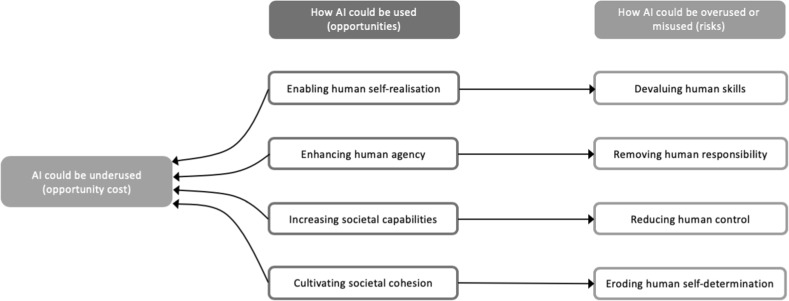
- The authors identify four chief opportunities AI offers society: who we can become, what we can do, what we can achieve, and how we can interact.
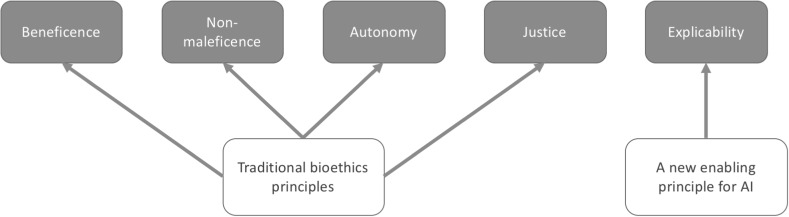
- They synthesize 47 principles from six high-profile AI ethics documents and argue these converge on five principles for AI: beneficence, non-maleficence, autonomy, justice, and explicability.
- The paper argues that AI should be developed to decrease inequality, increase shared benefits, and remain explicable, because explicability is described as critical for public trust and understanding.
- The recommendations section sets out 20 Action Points grouped into assessment, development, incentivisation, and support.
## Methods
- The paper is a conceptual and comparative ethics analysis, not an empirical study.
- It reviews six existing AI ethics documents: Asilomar, Montreal, IEEE, EGE, AIUK, and the Partnership on AI, and compares their principles.
- The authors then synthesize these into a framework and derive 20 recommendations for a Good AI Society.
## Limitations
- The paper states that it presents a European approach meant to be complementary to other approaches, so its recommendations are not claimed to be universally exhaustive or final.
- The text itself makes evident that the analysis is normative and document-based, not based on original empirical data or tested interventions (text-evident limitation).
- The paper also presents the recommendations as a “living document”, implying they are provisional and meant to evolve rather than serve as a definitive endpoint.
Model-written summary. Check it against the paper before relying on it.
Integrity signals
Registry
Cites
Statistics
Figures
Verification
Claims the paper makes
1 Valid · 1 Not valid · 27 Not checked · 35 Own results and interpretations
The cited sources support only part of this claim — read each source’s verdict below.
In the paper
“Everything from email scams to full-scale cyber-warfare may be accelerated or intensified by the malicious use of AI technologies (Taddeo 2018).”
§ AI4People—An Ethical Framework for a Good AI Society: Opportunities, Risks, Principles, and Recommendations > The Opportunities and Risks of AI for Society
What the sources say
- Partly supportedcites Taddeo 2018 matched to “The Limits of Deterrence Theory in Cyberspace” (2018) sourceExperimental — accuracy not yet measured
Section 4.3 (page unavailable) says machine-learning systems deployed for cyber defence can pose risks of unforeseen, disproportionate damage, supporting a narrower concern that AI could intensify harm in cyber conflict. It does not address malicious AI use, email scams, or AI accelerating attacks across that range. (LLM, conf=0.77)
hedgedstates a possible cause- Asserted: passes — The authors put it forward as true.
- Checkable: passes — It can be checked against evidence.
- Load-bearing: unclear — It is unclear whether the paper’s conclusions depend on it.
- Based: passes — The paper gives a reason why it holds.
- Rests on an assumption not shown here.
- Partly supported
None of the sources cited for this claim could be matched to a paper, so there is nothing to check it against.
In the paper
“Taken together, they yield 47 principles.5”
§ AI4People—An Ethical Framework for a Good AI Society: Opportunities, Risks, Principles, and Recommendations > A Unified Framework of Principles for AI in Society
What the sources say
- Not matchedcites Asilomar AI Principles 2017
An author–year citation the paper’s reference list doesn’t settle. We don’t search these by name.
- Not matchedcites Montreal Declaration 2017
An author–year citation the paper’s reference list doesn’t settle. We don’t search these by name.
- Not matchedcites IEEE 2017
An author–year citation the paper’s reference list doesn’t settle. We don’t search these by name.
plainstates a cause- Asserted: passes — The authors put it forward as true.
- Checkable: passes — It can be checked against evidence.
- Load-bearing: passes — The paper’s conclusions depend on it.
- Based: passes — The paper gives a reason why it holds.
- Not matched
A conclusion the paper draws from its own results — it cites no other source for it, so there is none to check. The quote shows it is in the paper.
In the paper
“But they are not exhaustive.”
§ AI4People—An Ethical Framework for a Good AI Society: Opportunities, Risks, Principles, and Recommendations > A Unified Framework of Principles for AI in Society
plain- Asserted: passes — The authors put it forward as true.
- Checkable: passes — It can be checked against evidence.
- Load-bearing: passes — The paper’s conclusions depend on it.
- Based: passes — The paper gives a reason why it holds.
A conclusion the paper draws from its own results — it cites no other source for it, so there is none to check. The quote shows it is in the paper.
In the paper
“On the basis of the following comparative analysis, we argue that one more, new principle is needed in addition: explicability, understood as incorporating both intelligibility and accountability.”
§ AI4People—An Ethical Framework for a Good AI Society: Opportunities, Risks, Principles, and Recommendations > A Unified Framework of Principles for AI in Society
plain- Asserted: passes — The authors put it forward as true.
- Checkable: passes — It can be checked against evidence.
- Load-bearing: passes — The paper’s conclusions depend on it.
- Based: passes — The paper gives a reason why it holds.
A conclusion the paper draws from its own results — it cites no other source for it, so there is none to check. The quote shows it is in the paper.
In the paper
“The four bioethical principles adapt surprisingly well to the fresh ethical challenges posed by artificial intelligence.”
§ AI4People—An Ethical Framework for a Good AI Society: Opportunities, Risks, Principles, and Recommendations > A Unified Framework of Principles for AI in Society
boosted- Asserted: passes — The authors put it forward as true.
- Checkable: passes — It can be checked against evidence.
- Load-bearing: passes — The paper’s conclusions depend on it.
- Based: passes — The paper gives a reason why it holds.
5 more claims
Create a free account to see all 64 claims and every source verdict.
- Probably not a substantial claim. 51
- It may state two separate claims as one. 9
- Not yet classified. 2
- The quote only partly states this claim. 1
Claims other papers make about this one
Each is checked against this paper’s own text: does it say what the citing paper says it does?
The source backs part of the claim, not all of it — or backs it for a different population, condition or comparison.
In the citing paper
“While AI systems can influence learning outcomes through adaptive contributions, they cannot bear responsibility for those outcomes, engage in ethical reflection about educational goals, or possess the experiential understanding that grounds pedagogical wisdom”
From Towards a philosophy of ensemble cognition: Reconceptualising agency and mind in AI-mediated educational environments (2026) · cites this paper as Floridi et al., 2018
Experimental — accuracy not yet measuredThe source backs part of the claim, not all of it — or backs it for a different population, condition or comparison.
In the citing paper
“This trust will be important for the future of AI as a lack of trust could permanently harm the reputation of AI in healthcare, or lead to additional costs through inefficient regulation or repeated amendment (Floridi et al., 2018).”
From Liability for harm caused by AI in healthcare: an overview of the core legal concepts (2023) · cites this paper as Floridi et al., 2018
Experimental — accuracy not yet measuredThe source backs part of the claim, not all of it — or backs it for a different population, condition or comparison.
In the citing paper
“Indeed, the framework played a valuable role in the work of AI 4 People, Europe's first global forum on the social impact of AI, which recently adopted it to propose 20 concrete recommendations for a 'Good AI Society' to the European Commission (Floridi et al., 2018 ).”
From A Unified Framework of Five Principles for AI in Society (2019) · cites this paper as Floridi et al., 2018
Experimental — accuracy not yet measuredThe source backs part of the claim, not all of it — or backs it for a different population, condition or comparison.
In the citing paper
“De manera complementaria, autores como Floridi et al. (2018) abogan por incorporar principios como la justicia, la beneficencia y el respeto por la autonomía en todas las etapas del desarrollo de herramientas basadas en IA [23].”
From Avances, Retos Éticos y Perspectivas de la Inteligencia Artificial (IA) en la Educación de América Latina (2025) · cites this paper as [23]
Experimental — accuracy not yet measuredThe source backs part of the claim, not all of it — or backs it for a different population, condition or comparison.
In the citing paper
“Talos represents ancient human fears about the uncontrollable power of man-made creations, fears that persist into contemporary concerns about AI (Floridi et al., 2018; Sebastian, 2023; Tabassi, 2023b).”
From Delegated agency and moral responsibility in artificial intelligence (2026) · cites this paper as Floridi et al., 2018
Experimental — accuracy not yet measured
30 more claims about this paper
Create a free account to see every claim other papers make about this one.
Citations
Cites
Floridi, L. (2013) · Oxford University Press eBooks · doi:10.1093/acprof:oso/9780199641321.001.0001 · Cited by 651
Self-citationSoft Ethics and the Governance of the Digital
Floridi, L. (2018) · Philosophy & Technology · doi:10.1007/s13347-018-0303-9 · Cited by 325 · cited 2×
“2 The analysis in this and the following two sections is also available in Cowls and Floridi (2018).”
BackgroundSelf-citationArtificial Intelligence Crime: An Interdisciplinary Analysis of Foreseeable Threats and Solutions
King, T. C., Aggarwal, N., Taddeo, M., & Floridi, L. (2020) · Science and Engineering Ethics · doi:10.1007/s11948-018-00081-0 · Cited by 271
Self-citationThe Limits of Deterrence Theory in Cyberspace
Taddeo, M. (2018) · Philosophy & Technology · doi:10.1007/s13347-017-0290-2 · Cited by 98
Prolegomena to a White Paper on an Ethical Framework for a Good AI Society
Cowls, J., & Floridi, L. (2018) · SSRN Electronic Journal · doi:10.2139/ssrn.3198732 · Cited by 76
Self-citationArtificial Intelligence Crime: An Interdisciplinary Analysis of Foreseeable Threats and Solutions
King, T., Aggarwal, N., Taddeo, M., & Floridi, L. (2018) · SSRN Electronic Journal · doi:10.2139/ssrn.3183238 · Cited by 17
Self-citation
Research works printed but not linked: 3
- Asilomar AI Principles. (2017). Principles developed in conjunction with the 2017 Asilomar conference [Benevolent AI 2017]. Retrieved September 18, 2018 from https://futureoflife.org/ai-principles.
- Cowls, J., & Floridi, L. (2018). Prolegomena to a White Paper on Recommendations for the Ethics of AI (June 19, 2018). Available at SSRN: https://ssrn.com/abstract=3198732.
- The IEEE Initiative on Ethics of Autonomous and Intelligent Systems. (2017). Ethically Aligned Design, v2. Retrieved September 18, 2018 from https://ethicsinaction.ieee.org.
Cited by
Items 901–1,000 of 4,603
Artificial Intelligence Ethics from the Perspective of Educational Technology Companies and Schools
Kousa, P., & Niemi, H. (2022) · Springer eBooks · doi:10.1007/978-3-031-09687-7_17 · Cited by 24
Rodríguez, A. L. T., & Bernardi, M. R. (2024) · Sophía · doi:10.17163/soph.n36.2024.07 · Cited by 27
Anokwuru, E. A., Omachi, A., & Enyejo, L. A. (2022) · International Journal of Scientific Research in Computer Science Engineering and Information Technology · doi:10.32628/cseit2541333 · Cited by 23
Gauld, C., Micoulaud‐Franchi, J., & Dumas, G. (2020) · Psychological Medicine · doi:10.1017/s0033291720003906 · Cited by 15
“The need for the principle of Explainability should be added to this list, specifically regarding the issues involved by AI (Floridi et al., 2018).”
BackgroundHarnessing AI in critical care: opportunities, challenges and key steps for success
Kalimouttou, A., Stevens, R. D., & Pirracchio, R. (2026) · Thorax · doi:10.1136/thorax-2024-222125 · Cited by 12
“65 Control problems arise from the inherent complexity of AI systems, particularly those employing DL.”
Integrating multimodal data and machine learning for entrepreneurship research
Shrestha, Y. R., & He, V. F. (2025) · Strategic Entrepreneurship Journal · doi:10.1002/sej.1546 · Cited by 18
Exploring the Impact of ISO/IEC 42001:2023 AI Management Standard on Organizational Practices
Biroğul, S., Şahin, Ö., & əsgərli, H. (2025) · Advances in Artificial Intelligence Research · doi:10.54569/aair.1709628 · Cited by 27
Enacting Responsible AI: A Configurational Analysis of AI Principles in Practice
Akbarighatar, P., Pappas, I. O., Purao, S., & Vassilakopoulou, P. (2025) · Information Systems Frontiers · doi:10.1007/s10796-025-10618-x · Cited by 19
“…including Audi, Elsevier, Meta, Fujitsu, Google, Intesa SanPaolo, Johnson & Johnson and Microsoft, civil society organizations, academia, and government entities) proposed five principles: beneficence, non-maleficence, autonomy, justice/fairness, and accountability (Floridi et al., 2018).”
Simón, J. S., Brun, M. P., Mirabet, S. E., Nogueira, M. A. D. F., Martín-Guart, R., & de Azevedo, S. T. (2025) · Telecommunications Policy · doi:10.1016/j.telpol.2025.103033 · Cited by 20
Jiang, J., Domingues, L., & Mendes, J. M. (2025) · Frontiers in Digital Health · doi:10.3389/fdgth.2025.1620270 · Cited by 18
Memduhoğlu, A., Fulman, N., Polat, N., & Atas, T. (2025) · Expert Systems with Applications · doi:10.1016/j.eswa.2025.130171 · Cited by 17
Fundira, M., & Mbohwa, C. (2025) · Discover Artificial Intelligence · doi:10.1007/s44163-025-00432-4 · Cited by 42
“…for the concept of “Ethics as a Service” in this paper is grounded in Habermas’s discourse ethics and Floridi's distributed responsibility [42] The theoretical framework used in this paper is based on the four core principles of bioethics: beneficence, non-maleficence, autonomy, and…”
InfluentialShankar, R., Foo, T. H., Devi, F., & Xu, Q. (2025) · Journal of Mental Health · doi:10.1080/09638237.2025.2595612 · Cited by 16
Cenci, A., Ilskov, S. J., Andersen, N. S., & Chiarandini, M. (2023) · AI and Ethics · doi:10.1007/s43681-023-00274-9 · Cited by 17
“Due to an exclusive focus on the conceptual level and in selecting a set of universal values, mainstream accounts in AI ethics [50, 51, 125] or digital humanities [14] seem unable to satisfactorily link theory and practice.”
L’intelligence artificielle peut-elle être une innovation responsable ?
Vuarin, L., Lopes, P. G., & Massé, D. (2023) · Innovations · doi:10.3917/inno.pr2.0153 · Cited by 18
Ethical Challenges for Human–Agent Interaction in Virtual Collaboration at Work
Hofeditz, L., Mirbabaie, M., & Ortmann, M. (2023) · International Journal of Human-Computer Interaction · doi:10.1080/10447318.2023.2279400 · Cited by 19
“In contrast to Floridi et al. (2018), with virtual collaboration at the workplace, we focused on one specific domain with specific challenges that even increase in importance.”
InfluentialSpaans, R. H., Drumond, B., van Daalen, K. R., Rorato, A. C., Derbyshire, A., Silva, A. D., Lana, R. M., Vega, M. S., Carrasco‐Escobar, G., Escada, M. I. S., et al. (2024) · PLoS ONE · doi:10.1371/journal.pone.0287270 · Cited by 19
“Cawthorne et al ., in their review on the use of drones in a healthcare setting, used the four bioethical principles and added a fifth principle from the field of artificial intelligence; explicability [11].”
MethodEthical Challenges of Using Artificial Intelligence in Judiciary
John, A. M., Aiswarya, M. U., & Panachakel, J. T. (2023) · IEEE International Conference on Metrology for eXtended Reality, Artificial Intelligence and Neural Engineering (MetroXRAINE) · doi:10.1109/metroxraine58569.2023.10405688 · Cited by 18
“Accountability in AI refers to the principle and practice of holding AI systems, their developers, and users responsible for the behavior, decisions, and outcomes of the AI system [18].”
BackgroundEthical principles shaping values-based cybersecurity decision-making
Fenech, J. M., Richards, D., & Formosa, P. (2024) · Computers & Security · doi:10.1016/j.cose.2024.103795 · Cited by 26
“Principlism is the most common approach in applied ethics, and is used extensively in related fields such as bioethics (Beauchamp and Childress, 2001) and artificial intelligence (Floridi et al. (2018)).”
Ethical Challenges and Managerial Implications of Artificial Intelligence in Digital Marketing
Benjelloun, A. S., & Kabak, S. (2024) · Lecture notes in networks and systems · doi:10.1007/978-981-99-9040-5_32 · Cited by 12
The Ethics of Understanding: Exploring Moral Implications of Explainable AI
Yadav, B. R. (2024) · International Journal of Science and Research (IJSR) · doi:10.21275/sr24529122811 · Cited by 27
“Explainable AI, according to Floridi et al. (2018), respects users' autonomy by giving them the knowledge needed to comprehend and maybe challenge choices made by AI.”
BackgroundA Lifecycle Approach for Artificial Intelligence Ethics in Energy Systems
El-Haber, N., Burnett, D., Halford, A., Stamp, K., Silva, D. D., Manic, M., & Jennings, A. (2024) · Energies · doi:10.3390/en17143572 · Cited by 17
A Comparative Analysis of Artificial Intelligence Regulatory Law in Asia, Europe, and America
Alfiani, F. R. N., & Santiago, F. (2024) · SHS Web of Conferences · doi:10.1051/shsconf/202420407006 · Cited by 23
Explanation needs and ethical demands: unpacking the instrumental value of XAI
Alpsancar, S., Buhl, H. M., Matzner, T., & Scharlau, I. (2024) · AI and Ethics · doi:10.1007/s43681-024-00622-3 · Cited by 24
“In the logic of the EU’s ethical guidelines, explicability is an ethical principle that encompasses and brings together the two demands of “intelligibility and accountability” [ 69, 70, p. 696].”
AI Literacy Framework and Strategies for Implementation in Developing Nations
Kathala, K. C. R., & Palakurthi, S. (2024) · International Conference on Education Technology and Computer · doi:10.1145/3702163.3702449 · Cited by 28
“Moreover, AI literacy empowers citizens to engage in informed discussions about the ethical and societal implications of AI, ensuring that the development and deployment of these technologies align with human values and societal needs as per Floridi et al., 2018 [6].”
Opportunities and challenges of AI-systems in political decision-making contexts
Tretter, M. (2025) · Frontiers in Political Science · doi:10.3389/fpos.2025.1504520 · Cited by 20
Aplicaciones de inteligencia artificial generativa en la transformación digital empresarial
Galarza-Sánchez, P. C., Boné-Andrade, M. F., & Bravo, V. J. P. (2023) · Revista Científica Ciencia y Método · doi:10.55813/gaea/rcym/v1/n1/8 · Cited by 25
Developing and validating an ethical risk scale for service robots in hospitality
Lin, B., Lee, W., Choi, H. C., & Andereck, K. L. (2025) · International Journal of Hospitality Management · doi:10.1016/j.ijhm.2025.104383 · Cited by 18
Wong, J. M. S. (2025) · Discover Education · doi:10.1007/s44217-025-00692-3 · Cited by 20
“While prior work has explored AI’s applications in education [5–7] and its ethical implications [4, 8, 9], this study uniquely positions AI systems as speculative agents, generating their own visions of educational futures.”
From General Principles to Procedural Values: Responsible Digital Health Meets Public Health Ethics
Nyrup, R. (2021) · Frontiers in Digital Health · doi:10.3389/fdgth.2021.690417 · Cited by 15
Starke, G., & Poppe, C. J. (2022) · Ethics and Information Technology · doi:10.1007/s10676-022-09650-1 · Cited by 12
“…even granted explain-ability or the related ideal of explicability a place along-side the four influential principles of biomedical ethics by Beauchamp and Childress, complementing beneficence, non-maleficence, respect for autonomy and justice (Floridi et al., 2018; Beauchamp & Childress, 2019).”
BackgroundLillywhite, B., & Wolbring, G. (2023) · AI & Society · doi:10.1007/s00146-022-01618-5 · Cited by 21
“…(ML) are impacting many facets of people’s ability to have a good life (Canadian Institute for Advanced Research (CIFAR) 2018; European Group on Ethics in Science and New Technologies 2018; Floridi et al. 2018; The IEEE Global Initiative on Ethics of Autonomous and Intelligent Systems 2019).”
Rajamäki, J., Gioulekas, F., Rocha, P. A. L., García, X., Ofem, P. O., & Tyni, J. (2023) · Healthcare · doi:10.3390/healthcare11101454 · Cited by 17
“ceptions, acceptability, accountability, transparency, explainability, privacy, security, and literacy of both patients and physicians, the development of new ethical frameworks is required [21].”
BackgroundOn the Impact of Explanations on Understanding of Algorithmic Decision-Making
Schmude, T., Koesten, L. M., Möller, T. B., & Tschiatschek, S. (2023) · ACM Conference on Fairness, Accountability, and Transparency (FAccT) · doi:10.1145/3593013.3594054 · Cited by 31
“Fairness is seen as one of the central criteria for "trustworthy AI" [39] or "ethical AI" [21].”
BackgroundAn Empathy Imitation Game: Empathy Turing Test for Care- and Chat-bots
Howick, J., Morley, J., & Floridi, L. (2021) · Minds and Machines · doi:10.1007/s11023-021-09555-w · Cited by 18
Self-citationRobot Evolution: Ethical Concerns
Eiben, A. E., Ellers, J., Meynen, G., & Nyholm, S. R. (2021) · Frontiers in Robotics and AI · doi:10.3389/frobt.2021.744590 · Cited by 15
“This property entails that when AI-powered algorithms are used to make morally-sensitive decisions, humans should be able to obtain “ a factual, direct, and clear explanation of the decision-making process ” (Floridi et al., 2018), or of the decision resulting from the algorithm (Robbins 2019).”
BackgroundTowards the Fourth Industrial Revolution in Namibia: An Undergraduate AI Course Africanized
Shipepe, A., Uwu-Khaeb, L., Kolog, E. A., Apiola, M., Mufeti, T. K., & Sutinen, E. (2021) · IEEE Frontiers in Education Conference (FIE) · doi:10.1109/fie49875.2021.9637356 · Cited by 23
The Role of Engineers in Harmonising Human Values for AI Systems Design
Umbrello, S. (2022) · Journal of Responsible Technology · doi:10.1016/j.jrt.2022.100031 · Cited by 23
The Stakeholder Playbook for Explaining AI SystemsPreprint
Hoffman, R., Klein, G. L., Mueller, S. T., Jalaeian, M., & Tate, C. (2021) · PsyArXiv (OSF Preprints) · doi:10.31234/osf.io/9pqez · Cited by 21
Pagallo, U., & Durante, M. (2022) · J — Multidisciplinary Scientific Journal · doi:10.3390/j5010011 · Cited by 30
Self-citationAbdulrahman, A., & Richards, D. (2021) · Multimodal Technologies and Interaction · doi:10.3390/mti5090056 · Cited by 11
“Following the five AI4People ethical principles of beneficence, non-maleficence, justice, autonomy and explainability [154], XAs can play an important role to empower humans by making them aware of the relevant decision process and options, helping them to reflect on their current behaviours and what they hope to achi…”
BackgroundA Scoping Review of Informed Consent Practices in Human–Computer Interaction Research
Schwind, V., Tadesse, N. Z., da Cunha, E. S., Hamidi, Y., Sultani, S. S., & Sehrt, J. (2025) · ACM Transactions on Computer-Human Interaction · doi:10.1145/3721284 · Cited by 18
Do we need watchful eyes on our workers? Ethics of using computer vision for workplace surveillance
Sebastian, R. A., Ehinger, K., & Miller, T. (2025) · AI and Ethics · doi:10.1007/s43681-025-00726-4 · Cited by 21
“Whereas Floridi et al. [54] identified beneficence, non-maleficence, explicability, justice, autonomy, and accountability.”
Balancing AI transparency: Trust, Certainty, and Adoption
Ngo, V. M. (2025) · Information Development · doi:10.1177/02666669251346124 · Cited by 30
Zallio, M., Ike, C. B., & Chivăran, C. (2025) · AI · doi:10.3390/ai6070143 · Cited by 22
Trust AI regulation? Discerning users are vital to build trust and effective AI regulation
Alalawi, Z., Bova, P., Cimpeanu, T., Stefano, A. D., Duong, M. H., Domingos, E. F., Han, T. A., Krellner, M., Ogbo, N. B., Powers, S. T., et al. (2025) · Applied Mathematics and Computation · doi:10.1016/j.amc.2025.129627 · Cited by 38
Dhaigude, A. S., & Kamath, G. B. (2025) · Journal of Open Innovation Technology Market and Complexity · doi:10.1016/j.joitmc.2025.100640 · Cited by 30
Zhang, N., Wong, W. L., & Barrot, J. S. (2025) · Scientific Reports · doi:10.1038/s41598-025-21205-0 · Cited by 30
“Addressing these challenges requires robust bias-auditing frameworks and technology integration aligned with emancipatory pedagogies 69 .”
Generative artificial intelligence use in the workplace: implications for management practice
Hernández-Tamurejo, Á., Bužinskienė, R., Barbosa, B., Miceikienė, A., & Saura, J. R. (2025) · Review of Managerial Science · doi:10.1007/s11846-025-00949-z · Cited by 23
“Additionally, the term “black box” has been used to describe the unknown process of AI decision-making to generate content, and opening this black box is necessary to enhance transparency in business and management practices (Floridi et al. 2018).”
Governing AI with trust: an adaptive framework for institutional legitimacy in the UK public sector
Cojocaru, A. (2025) · Transforming Government People Process and Policy · doi:10.1108/tg-05-2025-0125 · Cited by 23
A Discussion on Ethical Cybersecurity Issues in Digital Service Chains
Tronnier, F., Pape, S., Löbner, S., & Rannenberg, K. (2022) · Lecture notes in computer science · doi:10.1007/978-3-031-04036-8_10 · Cited by 18
Digitalization of Social Impact for Social Economy Organizations
Berardi, L., & Valentinetti, D. (2023) · Canadian journal of nonprofit and social economy research · doi:10.29173/cjnser617 · Cited by 16
Grimm, A., Steegh, A., Çolakoğlu, J., Kubsch, M., & Neumann, K. (2023) · Frontiers in Education · doi:10.3389/feduc.2022.1082748 · Cited by 20
“As general recommendations, there exist for example checklists to address privacy issues (Drachsler and Greller, 2016), policies (Slade, 2016), and principles (Floridi et al., 2018; Phillips et al., 2020).”
BackgroundThe State of Ethical AI in Practice: A Multiple Case Study of Estonian Public Service Organizations
Hinton, C. (2023) · International Journal of Technoethics · doi:10.4018/ijt.322017 · Cited by 19
“Autonomy: Floridi et al. (2018) explain that in bioethics, autonomy refers to the idea that patients have the right to make decisions about receiving treatments that would impact them.”
BackgroundInfluentialArtificial Intelligence and Extended Reality in Luxury Fashion Retail: Analysis and Reflection
Loureiro, S. M. C. (2023) · Springer series on cultural computing · doi:10.1007/978-3-031-27166-3_18 · Cited by 15
Promoting Ethical Uses in Artificial Intelligence Applied to Education
Matias, A., & Zipitria, I. (2023) · Lecture notes in computer science · doi:10.1007/978-3-031-32883-1_53 · Cited by 18
Panagoulias, D. P., Virvou, M. K., & Tsihrintzis, G. A. (2023) · IEEE International Conference on Tools with Artificial Intelligence (ICTAI) · doi:10.1109/ictai59109.2023.00077 · Cited by 19
“On the other hand, Responsible Artificial Intelligence (RAI) refers to the deployment of AI-empowered systems in which transparency and alignment with the basic human values of ethics and accountability are of utmost importance [14].”
BackgroundPanagoulias, D. P., Virvou, M. K., & Tsihrintzis, G. A. (2023) · IEEE International Conference on Bioinformatics and Bioengineering (BIBE) · doi:10.1109/bibe60311.2023.00062 · Cited by 15
“This is a phenomenon known as the “black box paradox” [18]–[25].”
Responsible artificial intelligence for measuring efficiency: a neural production specification
Konstantakis, K. Ν., Michaelides, P. G., Xidonas, P., Prelorentzos, A. N., & Samitas, A. (2024) · Annals of Operations Research · doi:10.1007/s10479-024-05929-2 · Cited by 13
“In a similar vein, Floridi et al. (2018) emphasized the importance of addressing issues such as transparency, accountability, and fairness in AI systems to ensure ethical practices and a positive societal impact.”
Hernández, A. D., & Owen, R. (2024) · Journal of Responsible Innovation · doi:10.1080/23299460.2024.2331655 · Cited by 15
A Teleological Approach to Information Systems Design
Fumagalli, M., Ferrario, R., & Guizzardi, G. (2024) · Minds and Machines · doi:10.1007/s11023-024-09673-1 · Cited by 13
Exploring empathy in artificial intelligence: synthesis and paths for future research
Chaturvedi, A. (2024) · Information Discovery and Delivery · doi:10.1108/idd-03-2024-0048 · Cited by 19
Menezes, C. M., Tucci, C., Tamai, K., Chhabra, H. S., AlHelal, F. H., Bussières, A., Muehlbauer, E. J., Roberts, L. C., Alsobayel, H., Barneschi, G., et al. (2024) · Global Spine Journal · doi:10.1177/21925682241290226 · Cited by 18
Ioku, T., Song, J., & Watamura, E. (2024) · Big Data & Society · doi:10.1177/20539517241290217 · Cited by 22
“However, using AI raises concerns about unintentional decision-making biases and serious environmental consequences (Floridi et al., 2018).”
Enhancing Cyber Security through Artificial Intelligence and Machine Learning: A Literature Review
Porras, C. A. M. (2024) · Journal of Cyber Security · doi:10.32604/jcs.2024.056164 · Cited by 26
Pieper, M., & Gleasure, R. (2025) · Information Systems Journal · doi:10.1111/isj.12585 · Cited by 18
“On the other hand, there is also evidence that bias can become magnified in black-boxed AI algorithms when those systems are trusted to make decisions without human oversight (Faraj, Pachidi, and Sayegh 2018; Floridi et al. 2018).”
AI in Skill Development, Critical Thinking, Digital Literacy, and AI-Driven Job Preparation
Pandit, S., Sarkar, S. K., Barik, S., & Sahu, S. (2025) · Advances in educational technologies and instructional design book series · doi:10.4018/979-8-3693-8191-5.ch002 · Cited by 19
Generative AI and Its Potential Impact on Humanity
Nasr, R. S., & El‐Deeb, S. (2025) · International Journal of Consumer Studies · doi:10.1111/ijcs.70024 · Cited by 20
Giaccone, P., D’Antoni, F., Russo, F., Ambrosio, L., Papalia, G. F., d’Angelis, O., Vadalà, G., Comelli, A., Vollero, L., Merone, M., et al. (2025) · BMC Musculoskeletal Disorders · doi:10.1186/s12891-025-08356-x · Cited by 14
AI Ethics beyond Principles: Strengthening the Life-world Perspective
Heuser, S., Steil, J. J., & Salloch, S. (2025) · Science and Engineering Ethics · doi:10.1007/s11948-025-00530-7 · Cited by 18
“Five ethical principles (beneficence, non-malefi-cence, autonomy, justice and explicability) for AI development and adoption were prominently introduced by the AI4People initiative in 2018, based on an assessment of 20 AI-related recommendations (Floridi et al., 2018).”
Kouloukoui, D., de Marcellis-Warin, N., & Warin, T. (2025) · AI & Society · doi:10.1007/s00146-025-02232-x · Cited by 19
“Floridi (2018) argues that AI presents an impactful duality: it offers unprecedented opportunities for efficiency and innovation while bringing multifaceted risks, ranging from algorithmic biases to existential threats.”
Analysing the Suitability of Artificial Intelligence in Healthcare and the Role of AI Governance
You, Z., Wang, Y., & Xiao, Y. (2025) · Health Care Analysis · doi:10.1007/s10728-025-00514-5 · Cited by 13
“Similarly, a study by Floridi et al. [ 22 ] explores public attitudes toward AI in health - care, underscoring the significance of ethical frameworks in shaping perceptions and fostering trust among patients and healthcare professionals. van Wullenkord and Eys - sel [ 23 ] emphasize that following…”
Mohammadi, A., & Maghsoudi, M. (2025) · AI & Society · doi:10.1007/s00146-025-02331-9 · Cited by 25
“Other high-priority strategies include fostering AI-driven innovation for social good (West 2018), enhancing AI governance structures (Floridi et al. 2018), investing in AI research and development (Marr 2019), promoting AI literacy and education (Luckin and Holmes 2016), and leveraging AI to…”
The Emergence of AI in Public Health Is Calling for Operational Ethics to Foster Responsible Uses
Chassang, G., Béranger, J., & Rial‐Sebbag, E. (2025) · International Journal of Environmental Research and Public Health · doi:10.3390/ijerph22040568 · Cited by 20
“…practical issues, the development of a public health AI ethics based on procedural values should be supported and further elaborated to operationalise ethics [119], such as with the Accountability for Reasonableness model [120], serving institutional accountable moral decision-making process [11].”
Spiritual confusion in the era of artificial intelligence: a psychology of religion perspective
Alkhouri, K. I. (2025) · International Review of Psychiatry · doi:10.1080/09540261.2025.2488761 · Cited by 11
“…due to 4IR (Fourth Industrial Revolution), suggest enhanced personalization of spiritual experiences and improved accessibility to religious knowledge, yet these advancements must be balanced against the preservation of authentic religious practices and values (Floridi et al., 2018, pp. 3–4).”
Exploring Research and Tools in AI Security: A Systematic Mapping Study
Narula, S., GhasemiGol, M., Carnerero-Cano, J., Minnich, A., Lupu, E., & Takabi, D. (2025) · IEEE Access · doi:10.1109/access.2025.3567195 · Cited by 31
“Threat models in AI play a crucial role in identifying and mitigating potential risks associated with AI systems [3], [6], [7], [22], [33], [34], [35], [36], [37], [38], [39], [40], [112], [113], [114], [115], [116].”
Addressing Ethical Considerations and Responsible AI Practices
Luthra, A., Dixit, S., Garg, S., Singh, A., & Anchal, M. (2025) · Emerald Group Publishing Limited eBooks · doi:10.1108/978-1-83549-852-120251007 · Cited by 13
The AI transparency dilemma: when more is less for trust and adoption
Ngo, V. M. (2025) · Information Discovery and Delivery · doi:10.1108/idd-03-2025-0056 · Cited by 23
Norta, A., Udokwu, C. J., Voicu-Dorobanţu, R., Ogunyemi, A. A., Sturua, N., & Craß, S. (2025) · Future Internet · doi:10.3390/fi17070309 · Cited by 23
“Although [92] claims that even before the widespread use of LLM, there was a need for a unified vision of the future of AI, the proposed guidelines fail to find a common thread.”
Foundation models in medicine are a social experiment: time for an ethical framework
Ranisch, R., & Haltaufderheide, J. (2025) · npj Digital Medicine · doi:10.1038/s41746-025-01924-4 · Cited by 19
Ethical Issues, Cybersecurity and Automated Vehicles
Landini, S. (2019) · AIDA Europe research series on insurance law and regulation · doi:10.1007/978-3-030-27386-6_14 · Cited by 17
Pötzschke, S., & Rinken, S. (2022) · IMISCOE research series · doi:10.1007/978-3-031-01319-5 · Cited by 18
Interactive Robot Learning: An Overview
Chétouani, M. (2023) · Lecture notes in computer science · doi:10.1007/978-3-031-24349-3_9 · Cited by 21
“…H y p e s i s i s r having humans at the [84, 56] that should be addressed including the definition of develop human-centric AI that minimizes negative unintended individuals and on the [57, 30]. w i t h e o f a r i a b l e t o r d n s s t i r o 5 : I h e t h o t , Interactive Robot Interactive 3 .”
The trend and future of techno-ethics: a bibliometric analysis of three decades
Verma, S., & Garg, N. (2023) · Library Hi Tech · doi:10.1108/lht-10-2022-0477 · Cited by 13
The wheel of artificial intelligence governance
Monteiro, N., & Singh, V. (2025) · Sustainable Futures · doi:10.1016/j.sftr.2025.101279 · Cited by 26
Leveraging Sustainable Emerging Technologies to Transform HRM Practices in Innovation Ecosystems
Singh, R., Corvello, V., Mitra, A., & Coniglio, I. M. (2025) · Emerald Group Publishing Limited eBooks · doi:10.1108/978-1-83662-368-720251006 · Cited by 11
Artificial intelligence in hospitality & tourism: ethics, values and cognitive work ability
Khan, A., & Soomro, M. A. (2025) · Current Issues in Tourism · doi:10.1080/13683500.2025.2530590 · Cited by 18
AI, Deskilling, and the Prospects for Public Reason
Ferdman, A. (2025) · Minds and Machines · doi:10.1007/s11023-025-09737-w · Cited by 20
“Deskilling in sensitive, skill-intensive domains, such as healthcare diagnosis or aviation, may be 1 3 dangerous in the event of adversarial attack or malfunction (Floridi et al., 2018 ).”
Xu, X., Meng, F., & Gou, Y. (2025) · Education Sciences · doi:10.3390/educsci15091199 · Cited by 20
“This module, informed by recent research on AI ethics frameworks (Jobin et al., 2019; Floridi et al., 2018), aims to help learners systematically master ethical norms for AI-assisted research, providing practical ethical judgment and action guidance.”
Development and validation of Generative AI Competence Scale (GenAIComp) among university students
Lee, S. C., Baby, T., Vongvit, R., Lee, J., Kim, Y., Cha, M. C., & Yoon, S. H. (2025) · Technology in Society · doi:10.1016/j.techsoc.2025.103059 · Cited by 34
Navigating the future of artificial intelligence technologies for improving the care of older adults
Abadir, M., Dineen, W., Myers, D., Yu, S., & Phan, P. (2025) · Innovation in Aging · doi:10.1093/geroni/igaf092 · Cited by 15
Tong, A., Zainol, Z., Chong, T. S., & Renganathan, K. (2025) · Young Consumers Insight and Ideas for Responsible Marketers · doi:10.1108/yc-10-2024-2303 · Cited by 19
Zaidan, E., Truby, J., Ibrahim, I. A., & Hoppe, T. (2025) · Technology in Society · doi:10.1016/j.techsoc.2025.103159 · Cited by 25
From promise to concern: Public perceptions of AI in ESG frameworks over time
Laviola, F. A., & Cucari, N. (2026) · Technology in Society · doi:10.1016/j.techsoc.2026.103219 · Cited by 17
Voultsiou, E., & Moussiades, L. (2026) · Electronics · doi:10.3390/electronics15030524 · Cited by 13
Hamamra, B., Khlaif, Z. N., & Mahamid, N. (2026) · International Journal of Educational Technology in Higher Education · doi:10.1186/s41239-026-00597-7 · Cited by 26
Casolino, R., Mateo, J., de Vries, E. G. E., Johns, A. J., Courtot, M., Lawlor, R. T., Perdomo, S., Gray, S. W., Pérez-López, R., Turnbull, C., et al. (2026) · The Lancet Oncology · doi:10.1016/s1470-2045(26)00302-5 · Cited by 12
Stevens, M., & Beaulieu, A. (2023) · Information Communication & Society · doi:10.1080/1369118x.2023.2289971 · Cited by 10
“This has led various academic institutes, private-sector corporations and public-sector organisations to formulate principles and guidelines for ethical, accountable and responsible AI (Floridi et al., 2018; The Institute for Ethical AI & Machine Learning, 2023; OECD, 2019).”
BackgroundEvaluating the Effectiveness of AI-Driven Frameworks in Predicting and Preventing Cyber Attacks
Meduri, K., Gonaygunta, H., & Nadella, G. S. (2024) · International Journal of Research Publication and Reviews · doi:10.55248/gengpi.5.0324.0875 · Cited by 15
Kieslich, K., & Lünich, M. (2024) · ACM Conference on Fairness, Accountability, and Transparency (FAccT) · doi:10.1145/3630106.3658548 · Cited by 21
“This approach is aligned with the normative goal of creating AI according to an idea of the Common Good [7, 20, 21], which aims to maximize ethical standards in AI that serve all affected individuals and not just a few stakeholders.”
Method
Metadata
- Authors
- Floridi, L., Cowls, J., Beltrametti, M., Chatila, R., Chazerand, P., Dignum, V., Luetge, C., Madelin, R., Pagallo, U., Rossi, F., Schafer, B., Valcke, P., & Vayena, E.
- Affiliations
- University of Oxford (GB)
- Centre National de la Recherche Scientifique (FR)
- Digital Europe (BE)
- Umeå University (SE)
- University of Turin (IT)
- IBM (United States) (US)
- Bocconi University (IT)
- ETH Zurich (CH)
- Corresponding author
- Floridi, Luciano
- ORCID
- Venue
- Minds and Machines
- Published
- 2018-11-26
- Volume
- 28
- Issue
- 4
- Pages
- 689-707
- ISSN
- 0924-6495 (ISSN-L)
- 1572-8641
- PMC
- PMC6404626
- OpenAlex
- W2902634493
- Cited by
- 4,774
- References
- 8
- Citations by year
- 2026: 1965 · 2025: 1116 · 2024: 523 · 2023: 413 · 2022: 287 · 2021: 255 · 2020: 145 · 2019: 70
- FWCI
- 234.15
- Type
- journal article
- Language
- en
- Open access
- hybrid
- doi.org
- Licence
- cc-by
- creativecommons.org/licenses/by/4.0 (tdm)
- Locations
- Minds and Machines (publishedVersion, cc-by)
- Europe PMC (PubMed Central) (publishedVersion, other-oa)
- PubMed Central (publishedVersion, cc-by)
- PubMed (publishedVersion)
- Institutional Research Information System University of Turin (University of Turin) (submittedVersion, other-oa)
- Lirias (submittedVersion, cc-by)
- Data Archiving and Networked Services (DANS) (submittedVersion, cc-by)
- DiVA at Umeå University (Umeå University) (submittedVersion, other-oa)
- mediaTUM – the media and publications repository of the Technical University Munich (Technical University Munich) (submittedVersion, other-oa)
- mediaTUM – the media and publications repository of the Technical University Munich (Technical University Munich) (submittedVersion)
- PhilPapers (PhilPapers Foundation) (submittedVersion)
- Edinburgh Research Explorer (University of Edinburgh) (submittedVersion, cc-by)
- Research Repository (Delft University of Technology) (submittedVersion)
- Repository for Publications and Research Data (ETH Zurich) (submittedVersion, cc-by)
- ETH Zürich Research Collection (cc-by)
- Funders
- Atomium
- Topics
- Physical Sciences › Computer Science › Artificial Intelligence › Ethics and Social Impacts of AI
- Social Sciences › Law › Digitalization, Law, and Regulation
- Physical Sciences › Environmental Science › Management, Monitoring, Policy and Law › Innovation, Sustainability, Human-Machine Systems
- Keywords
- AI ethics, ethical principles, AI policy recommendations, AI governance, artificial intelligence adoption
About these checks
Registry, retraction, Cites and statistics results are computed, not judged, with one exception: a printed reference that no index lists is read once by a model before it counts as a citation error. Claims are extracted by a model and kept only when their quote appears verbatim in the text; each cited source is then checked, with a model’s help, for whether it says what the claim relies on. Those verdicts can be wrong — read the claim’s quote and the cited source before relying on one.
The claim verdicts this report counts are experimental: their accuracy is not yet measured.
A language model drew the claims from the paper on 2026-09-28, under version 3 of the claim definition (model deepseek-v4.1-flash, prompt extract-v3).
A second model labelled each claim on 2026-09-28 (model jev-1.13-20260917, definition revision gold-guideline-v0.2).
Cited sources are checked with a language model’s help (gpt-6-sol).
Statistics and arithmetic are recomputed, not judged.
Confidence bands are shown only for fields calibrated on our annotated test set. None is calibrated yet, so no band is shown.
What counts as a claim ›How we measure confidence ›How we check this ›
Are you an author, or do you see a problem with this page? Request a review
Data sources
Bibliographic data: Semantic Scholar, OpenAlex, Crossref.
Contains information from the Semantic Scholar Academic Graph Datasets, made available under the ODC Attribution License (ODC-BY 1.0).
Semantic Scholar’s data is described in: Kinney, R., et al. (2023). The Semantic Scholar Open Data Platform. arXiv:2301.10140.
