

Application of region-based video surveillance in smart cities using deep learning
Open accessThe DOI matches its Crossref record; 39 of the 39 references it cites were found in a registry or an index.
Abstract
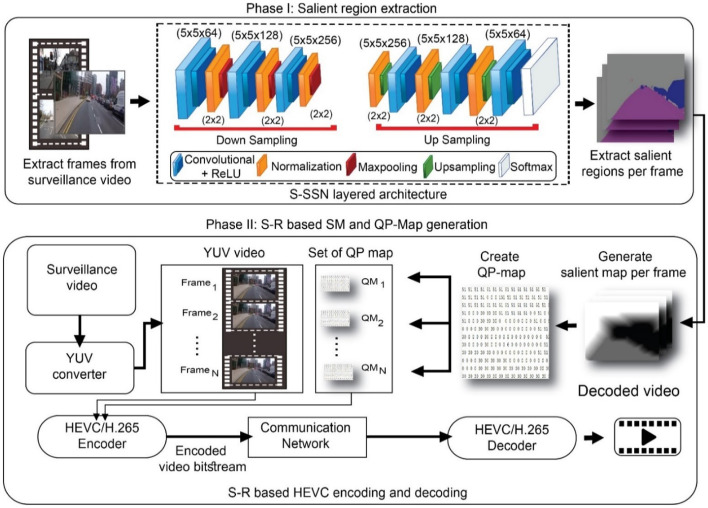
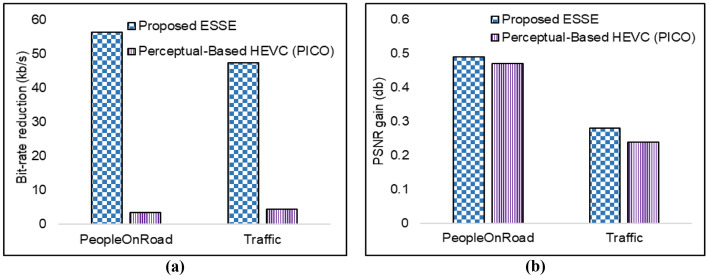
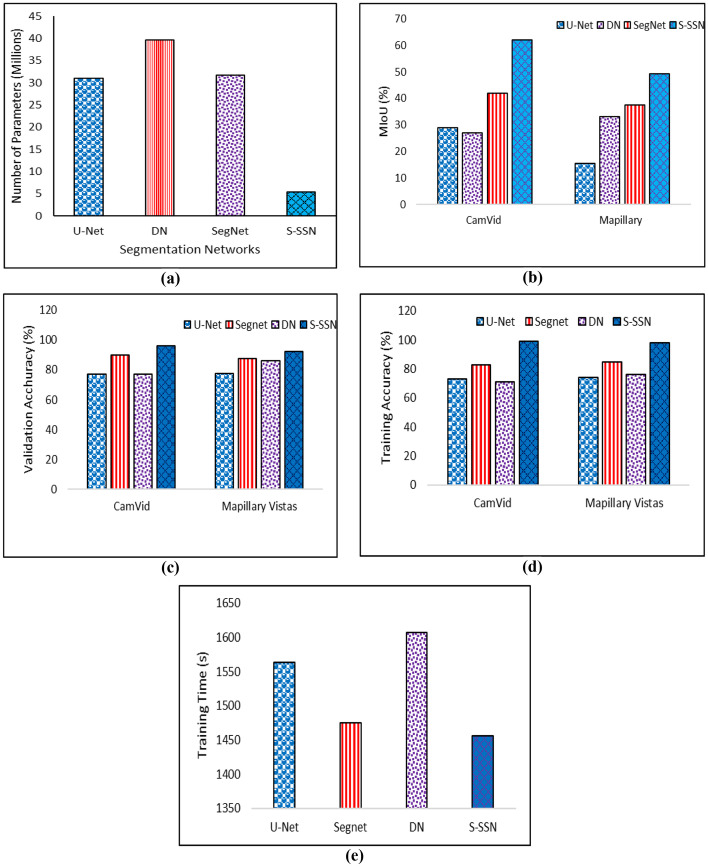
Smart video surveillance helps to build more robust smart city environment. The varied angle cameras act as smart sensors and collect visual data from smart city environment and transmit it for further visual analysis. The transmitted visual data is required to be in high quality for efficient analysis which is a challenging task while transmitting videos on low capacity bandwidth communication channels. In latest smart surveillance cameras, high quality of video transmission is maintained through various video encoding techniques such as high efficiency video coding. However, these video coding techniques still provide limited capabilities and the demand of high-quality based encoding for salient regions such as pedestrians, vehicles, cyclist/motorcyclist and road in video surveillance systems is still not met. This work is a contribution towards building an efficient salient region-based surveillance framework for smart cities. The proposed framework integrates a deep learning-based video surveillance technique that extracts salient regions from a video frame without information loss, and then encodes it in reduced size. We have applied this approach in diverse case studies environments of smart city to test the applicability of the framework. The successful result in terms of bitrate 56.92%, peak signal to noise ratio 5.35 bd and SR based segmentation accuracy of 92% and 96% for two different benchmark datasets is the outcome of proposed work. Consequently, the generation of less computational region-based video data makes it adaptable to improve surveillance solution in Smart Cities.
Overview
The claims and statistics of this paper haven’t been checked yet.
Free: it reads the open-access text and checks the first 5 claims that cite a source we can check. Create a free account to check every claim.
Integrity signals
Registry
Cites
Statistics
Figures
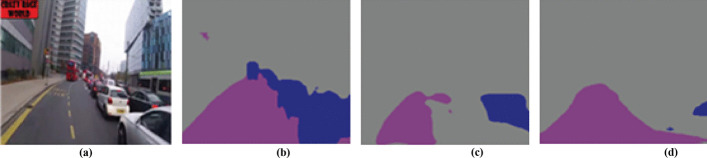
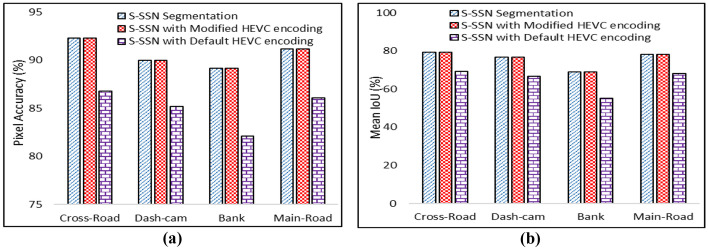
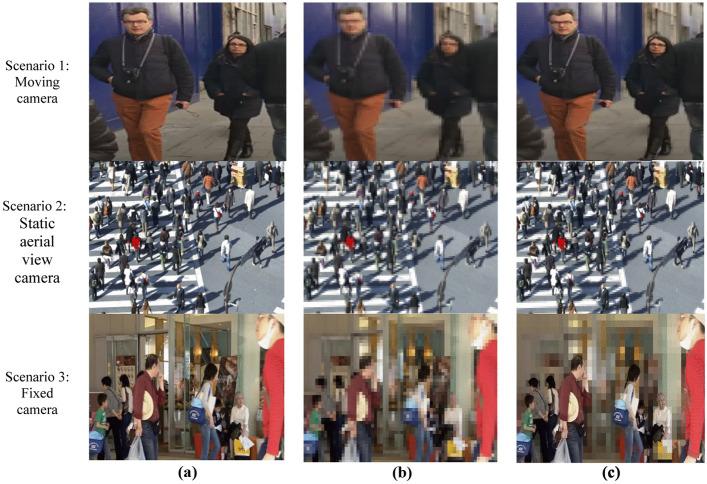
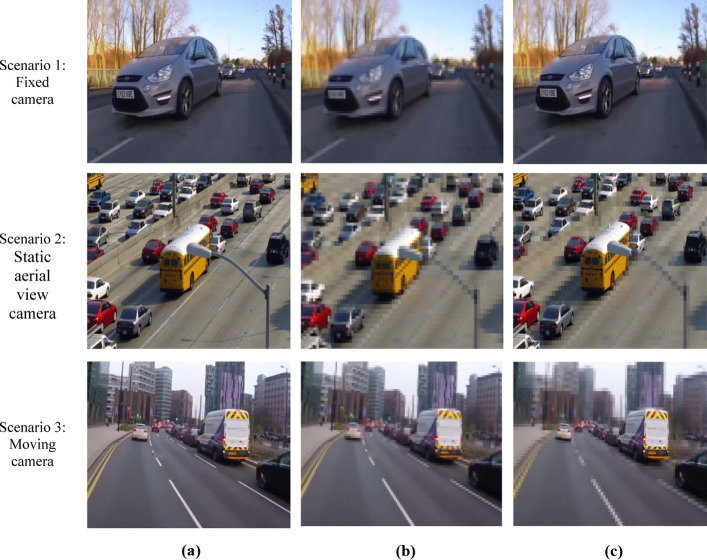
Verification
Claims the paper makes
The claims and statistics of this paper haven’t been checked yet.
Free: it reads the open-access text and checks the first 5 claims that cite a source we can check. Create a free account to check every claim.
Claims other papers make about this one
Each is checked against this paper’s own text: does it say what the citing paper says it does?
The source backs part of the claim, not all of it — or backs it for a different population, condition or comparison.
In the citing paper
“Video compression involves reducing the size of video data to make it easier to store and transmit without sacrificing too much quality, which optimizes the use of bandwidth and reduces the cost of data storage and the transmission time [29,33].”
From A Survey of Video Surveillance Systems in Smart City (2023) · cites this paper as [29]
Experimental — accuracy not yet measuredThe cited source says what the claim attributes to it.
In the citing paper
“Specifying an ROI retains the quality of the most pertinent information in a transmission and reduces the amount of data transmitted, which increases the efficiency and bandwidth of a network utility [28][29][30][31][32].”
From A Survey of Video Surveillance Systems in Smart City (2023) · cites this paper as [29]
The cited source says what the claim attributes to it.
In the citing paper
“Content filtering [22], compression [29], caching [169], and dynamic content delivery [50] techniques may be used to ensure efficient bandwidth utilization.”
From A Survey of Video Surveillance Systems in Smart City (2023) · cites this paper as [29]
Self-check
Percentages, sums and reported differences re-computed from the paper’s own numbers.
The self-check needs the paper’s full text.
Citations
Cites
U-Net: Convolutional Networks for Biomedical Image Segmentation
Ronneberger, O., Fischer, P., & Brox, T. (2015) · Lecture notes in computer science · doi:10.1007/978-3-319-24574-4_28 · Cited by 99,404
SegNet: A Deep Convolutional Encoder-Decoder Architecture for Image Segmentation
Badrinarayanan, V., Kendall, A., & Cipolla, R. (2017) · IEEE Transactions on Pattern Analysis and Machine Intelligence · doi:10.1109/tpami.2016.2644615 · Cited by 19,631
Fully convolutional networks for semantic segmentation
Shelhamer, E., Long, J., & Darrell, T. (2017) · IEEE Transactions on Pattern Analysis and Machine Intelligence · doi:10.1109/tpami.2016.2572683 · Cited by 11,898
Overview of the High Efficiency Video Coding (HEVC) Standard
Sullivan, G. J., Ohm, J.-R., Han, W.-J., & Wiegand, T. (2012) · IEEE Transactions on Circuits and Systems for Video Technology · doi:10.1109/tcsvt.2012.2221191 · Cited by 8,263 · cited 1×
“D transforms [44], scaling and quantization [46] module.”
Learning Deconvolution Network for Semantic Segmentation
Noh, H., Hong, S., & Han, B. (2015) · 2015 IEEE International Conference on Computer Vision (ICCV) · doi:10.1109/iccv.2015.178 · Cited by 4,422 · cited 3×
“The state-of-the-art DL techniques for semantic segmentation include SegNet [3], U-Net [36], fully convolution network (FCN) [39] and deconvolution network [34].”
Distance transformations in digital images
Borgefors, G. (1986) · Computer Vision, Graphics, and Image Processing · doi:10.1016/s0734-189x(86)80047-0 · Cited by 1,898 · cited 1×
“Next, a for each S-R is generated using distance transform [7].”
ViBe: A Universal Background Subtraction Algorithm for Video Sequences
Barnich, O., & Van Droogenbroeck, M. (2011) · IEEE Transactions on Image Processing · doi:10.1109/tip.2010.2101613 · Cited by 1,885 · cited 1×
“A fast coding unit (CU) depth level selection method is proposed in [4] that can be enhanced along with rate-distortion by extracting regions of interest (RoIs) in smart city surveillance.”
Proceedings. 2005 IEEE Computer Society Conference on Computer Vision and Pattern Recognition
(2005) · 2005 IEEE Computer Society Conference on Computer Vision and Pattern Recognition (CVPR'05) · doi:10.1109/cvpr.2005.3 · Cited by 1,083
Azimi, M., Eslamlou, A., & Pekcan, G. (2020) · Sensors · doi:10.3390/s20102778 · Cited by 769
Survey on semantic segmentation using deep learning techniques
Lateef, F., & Ruichek, Y. (2019) · Neurocomputing · doi:10.1016/j.neucom.2019.02.003 · Cited by 559 · cited 1×
“Utilizing semantic segmentation for S-R extraction can be beneficial for multiple object identification that provides efficient video surveillance [29].”
Research works printed but not linked: 1
- Ester M, Kriegel H-P, Sander J, Xu X (1996) Density-based spatial clustering of applications with noise. In: International conference knowledge discovery and data mining
Cited by
Anomaly detection using edge computing in video surveillance system: review
Patrikar, D. R., & Parate, M. R. (2022) · International Journal of Multimedia Information Retrieval · doi:10.1007/s13735-022-00227-8 · Cited by 177
“DNNs are a popular choice for smart city [160] including intelligent parking systems [49], vehicle classification and traffic flow prediction [11], to prevent vehicle accidents [36].”
BackgroundA Survey of Video Surveillance Systems in Smart City
Myagmar-Ochir, Y., & Kim, W. (2023) · Electronics · doi:10.3390/electronics12173567 · Cited by 134
“Zahra et al. [29] proposed the ESSE (efficient shallow segmentation-based encoding) framework for video surveillance to identify suspicious people or vehicles and to detect traffic patterns and road conditions.”
BackgroundMethodA Survey on Adaptive Smart Urban Systems
Bittencourt, J. C. N., Costa, D. G., Portugal, P., & Vasques, F. (2024) · IEEE Access · doi:10.1109/access.2024.3433381 · Cited by 69
“The study of [109] contributes to the field of crime prevention to predict crime locations and simulate suspect vehicle movements.”
BackgroundDeep BiLSTM Attention Model for Spatial and Temporal Anomaly Detection in Video Surveillance
Natha, S. A. S., Ahmed, F., Siraj, M., Leghari, M., Altamimi, M. L., & Chandio, A. A. (2025) · Sensors · doi:10.3390/s25010251 · Cited by 58
Video surveillance in smart cities: current status, challenges & future directions
Sharma, H., & Kanwal, N. (2024) · Multimedia Tools and Applications · doi:10.1007/s11042-024-19696-6 · Cited by 50
FUVC: A Flexible Codec for Underwater Video Transmission
Zheng, Y., Luo, J., Chen, W., Li, Z., & Zhao, T. (2024) · IEEE Transactions on Geoscience and Remote Sensing · doi:10.1109/tgrs.2024.3374389 · Cited by 17
“Zahra et al. [23] extracted significant regions using a semantic network and modified HEVC by the generated QP maps to transmission.”
MethodYOLOv5-MS: Real-Time Multi-Surveillance Pedestrian Target Detection Model for Smart Cities
Song, F., & Li, P. (2023) · Biomimetics · doi:10.3390/biomimetics8060480 · Cited by 18
Um-e-Habiba, Ahmed, I., Alqahtani, M. F., Asif, M., & Khalid, M. (2024) · Energy Strategy Reviews · doi:10.1016/j.esr.2024.101602 · Cited by 22
Sabha, A., & Selwal, A. (2023) · Multimedia Tools and Applications · doi:10.1007/s11042-023-16434-2 · Cited by 15
RetractedMultiple Moving Vehicles Tracking Algorithm with Attention Mechanism and Motion Model
Gao, J., Han, G., Zhu, H., & Liao, L. (2024) · Electronics · doi:10.3390/electronics13010242 · Cited by 14
Enhancing real-time mobile health video streams: A cross-layer Region-of-Interest based approach
Elhachi, H., Labiod, M. A., Boumehrez, F., & Redadaa, S. (2024) · Computer Networks · doi:10.1016/j.comnet.2024.111014 · Cited by 12
Sajid, M., Khan, A. H., Malik, K. R., Khan, J. A., & Alwadain, A. S. (2025) · PeerJ Computer Science · doi:10.7717/peerj-cs.2944 · Cited by 14
Cheng, M., Jin, H., Zhao, Q., Wang, Y., Wu, Y., Huang, S., & Yue, W. (2025) · Sustainable Cities and Society · doi:10.1016/j.scs.2025.106994 · Cited by 7
Srinivasan, K. (2025) · Knowledge-Based Systems · doi:10.1016/j.knosys.2025.113084 · Cited by 4
Identification of Unusual Events for Smart City Surveillance—A Federated Approach
Qamar, T., Bawany, N. Z., & Mughal, M. H. (2025) · IEEE Access · doi:10.1109/access.2025.3648440 · Cited by 4
MR-Former: Improving universal image segmentation via refined masked-attention transformer
Zhu, X., Yu, W., Dong, X., Zhang, W., & Kong, B. (2025) · Alexandria Engineering Journal · doi:10.1016/j.aej.2025.09.072 · Cited by 4
Luma Range Scaling for Enhanced VVC Efficiency in Video Coding for Machines
Partanen, T., Marie, A., Mercat, A., Vanne, J., Hannuksela, M. M., Zhang, H., Aminlou, A., & Cricri, F. (2024) · IEEE International Workshop on Multimedia Signal Processing (MMSP) · doi:10.1109/mmsp61759.2024.10743894 · Cited by 4
An enhanced deep learning-based feature extraction framework for moving object detection
Panigrahi, U., Sahoo, P. K., Panda, M. K., Samantaray, A. K., & Panda, G. (2025) · Discover Applied Sciences · doi:10.1007/s42452-025-07433-z · Cited by 5
“Among these, background subtraction (BGS) [1, 2], and [3] stand out as prominent methods frequently utilized in surveillance applications and are alternatively referred to as local change detection.”
Shahabadkar, R., Govinda, S., & Firdose, S. (2023) · Lecture notes in networks and systems · doi:10.1007/978-3-031-35317-8_19 · Cited by 4
UMV2: Deep Learning Model for Semantic Segmentation of Satellite Imagery
Lokula, B., Ishore, P. V. V., & Prasad, L. V. N. (2025) · International Journal of Computational and Experimental Science and Engineering · doi:10.22399/ijcesen.1362 · Cited by 3
Chellam, J. A. I., Malliga, P., Manoharan, M., & Ramkumar, M. (2025) · Signal Image and Video Processing · doi:10.1007/s11760-024-03784-z · Cited by 2
Video Surveillance Device Failure Detection by IoT
Puneeth, M., Devanagavi, G. D., & Tabassum, N. (2023) · International Conference on Applied Artificial Intelligence and Computing (ICAAIC) · doi:10.1109/icaaic56838.2023.10140539 · Cited by 2
Anomaly recognition in surveillance based on feature optimizer using deep learning
Khanam, S., Sharif, M. I., Raza, M., Ishaq, W., Fayyaz, M., & Kadry, S. (2025) · PLoS ONE · doi:10.1371/journal.pone.0313692 · Cited by 4
“A deep neural network gives very exceptional outcomes in the area of surveillance for anomaly detection, as the methodology proposed by experts is to perceive and segment individuals in pictures and recordings [26–28].”
Face recognition-based intelligent smart home surveillance via real-time video analysis
Sabha, A., & Selwal, A. (2025) · Progress in Artificial Intelligence · doi:10.1007/s13748-025-00410-y · Cited by 3
Emerging Trends in Anomaly Detection for Surveillance Videos: Methods and Insights
Anju, J., & Rahiman, M. A. (2025) · International Conference on Machine Learning and Autonomous Systems (ICMLAS) · doi:10.1109/icmlas64557.2025.10967935 · Cited by 1
“Zahra et al. [8] proposed the Efficient Shallow Segmentation based Encoding (ESSE) framework for video surveillance in smart cities, utilizing a saliency-based High-efficiency video coding (HEVC encoding) technique and a shallow-semantic segmentation network (S-SSN) to reduce bandwidth usage while…”
Human-Centric AI for Enhancing Security in Smart City Anomaly Detection
Misra, S., Barik, K., Kvalvik, P., & Chockalingam, S. (2025) · IFIP advances in information and communication technology · doi:10.1007/978-3-031-96522-7_6 · Cited by 3
Real-Time Accident Detection and Notification System Using Convolutional Neural Networks
Shah, A., Mahant, A., Sayyed, A., Kanhegaonkar, V., Mirajkar, R., & Bagade, J. V. (2024) · International Conference on Innovative Sustainable Computational Technologies (CISCT) · doi:10.1109/cisct62494.2024.11134239 · Cited by 1
“In paper [8] the author uses a custom dataset, presents a framework that optimizes video data quality and reduces file sizes using deep learning models like Segnet and U-net.”
VEGAN: CCTV video quality enhancement with GAN-based foreground separation and super-resolution
Asghar, A., Sharif, W., & Shifa, A. (2026) · Array · doi:10.1016/j.array.2025.100673 · Cited by 1
Adaptive Luma Range Optimization in Visual Coding for Machines
Partanen, T., Mercat, A., Vanne, J., Hannuksela, M. M., Zhang, H., Aminlou, A., & Cricri, F. (2025) · IEEE International Conference on Image Processing Workshops (ICIPW) · doi:10.1109/icipw68931.2025.11386118 · Cited by 1
“The encoding optimization techniques, on the other hand, use saliency information to guide the encoder to allocate more bits to ROI regions than to non-ROI regions [8], [16] – [18].”
Task Enhancement Tiles for Ultra Lightweight Post-processing in Visual Coding for Machines
Partanen, T., Marie, A., Kortelahti, R., Mercat, A., Vanne, J., Hannuksela, M. M., Zhang, H., Aminlou, A., & Cricri, F. (2025) · Picture Coding Symposium · doi:10.1109/pcs65673.2025.11417579 · Cited by 2
“They are typically based on region of interest ( ROI ) approaches [4], [5], while other techniques include temporal subsampling [4], spatial downscaling [6], and dynamic range scaling of pixel intensities [7].”
Video pre-motion detection by fragment processing
Mashtalir, S., & Lendel, D. P. (2024) · International Conference on Information Control Systems & Technologies (ICST) · doi:10.55056/ceur-ws.org/vol-3790/paper30.pdf · Cited by 1
“…objects and images with set of other images have been proposed in literature [10] such as optical flow [11,12,13], image segmentation [14,15,16] and region based methods [17,18,19], but techniques based on local features are the most popular for detection, recognition and tracking applications.”
Gupta, B. B., Chui, K. T., Gaurav, A., & Wu, J. (2024) · IEEE International Symposium on Cluster, Cloud and Internet Computing Workshops (CCGridW) · doi:10.1109/ccgridw63211.2024.00034 · Cited by 1
“Furthermore, the application of deep learning in video surveillance has been a focus of research [21]. introduced a framework that integrates deep learning-based video surveillance techniques for extracting salient regions from video frames without information loss [21].”
BackgroundZhukabayeva, T. K., Ahmad, Z., Сатыбалдина, Д., & Yedilkhan, D. (2026) · Frontiers in Artificial Intelligence · doi:10.3389/frai.2026.1836157 · Cited by 1
“To overcome the problem of video transmission efficiency and bandwidth in smart city settings, Zahra et al. (2021) suggested a video encoding model, salient region, to selectively encode the region of interest (pedestrians, vehicles, and road structures) with gross band-width conservation and high…”
Saini, M., & Sengupta, E. (2024) · Multimedia Tools and Applications · doi:10.1007/s11042-024-20159-1 · Cited by 3
“In this regard, smart cities must build egalitarian approaches to problems [74, 84].”
Surveillance and Monitoring in Smart Cities with UAV and Machine Learning Integration
Haider, Z. A., Rahman, T., Zeb, A., Khan, I. U., Sharafian, A., & Ullah, I. (2025) · Apress eBooks · doi:10.1007/979-8-8688-1047-3_7 · Cited by 2
Chen, Q., Chen, J., Sun, K., Huang, M., Chen, G., & Liu, H. (2024) · ISPRS International Journal of Geo-Information · doi:10.3390/ijgi13120463
Abad, E. O. M., & Soxo, P. X. P. (2025) · Código Científico Revista de Investigación · doi:10.55813/gaea/ccri/v6/n1/912
A Scalable IoT Framework for Real-Time Video Analytics: A Smart Campus Case Study
de Sousa, K. R., Santos, L. I. F., Soares, P. R. M., Rego, L. F. B., Rodrigues, E. B., & Rêgo, P. A. L. (2025) · IEEE Latin Conference on IoT (LCIoT) · doi:10.1109/lciot64881.2025.11118468
Thirunavukkarasu, K., & Raju, L. (2025) · International Journal of Communication Systems · doi:10.1002/dac.70262
Comparative Analysis of Deep Learning Architectures for Video Surveillance in Smart Cities
Samypen, Y. (2025) · Journal of Information Technology and Digital World · doi:10.36548/jitdw.2025.4.001
Alsanad, H. R., Al_Hassani, R. T., Alrawi, A. A., Graovac, S., & Mashhadany, Y. A. (2025) · Anbar journal for engineering sciences/Mağallaẗ al-anbār li-l-ʻulūm al-handasiyyaẗ · doi:10.37649/ajes-25-008
“Data have effects, both proximate and mediate strategic urban planning [15].”
Value Co-creation Case Study: The Smart City Ecosystem
Qiu, R. G. (2025) · Springer eBooks · doi:10.1007/978-3-032-12911-6_5
Real-time Facial Recognition Systems: A Survey of Techniques, Applications and Challenges
Abdullah, M., & Khalil, M. (2025) · International Conference on Digital Futures and Transformative Technologies (ICoDT2) · doi:10.1109/icodt269104.2025.11360711
“The most popular network for VSSS is CNN. CNNs are able to recognize and categorize items inside images by learning ever-more-complex representations of the images [32], [33].”
Integrating Image Processing and AI in Modern Surveillance: A Roadmap for Smart Cities
Sharma, V., Raj, A., & Rani, Z. (2026) · Emerald Group Publishing Limited eBooks · doi:10.1108/978-1-80592-815-720261001
Yau, S., Yahaya, S., Bakura, S. A., & Abdulganiyu, O. H. (2026) · Elsevier eBooks · doi:10.1016/b978-0-443-36408-2.00013-8
Rizk, M., Taleb, H., Rhayem, A., Chaaya, J. A., Zaki, C., & Nasser, A. (2026) · Research Square · doi:10.21203/rs.3.rs-8815873/v1
Kadao, A. K., Mishra, A., Kizi, A. Z. I., Yousif, K. A., Yashashwini, S., & Srinivasan, R. (2026) · ASU International Conference in Emerging Technologies for Sustainability and Intelligent Systems (ICETSIS) · doi:10.1109/icetsis68266.2026.11549315
“Traditional solutions cannot solve the issues of increasing invasions of privacy [18] and may not have the ability to detect small or evolving abnormalities [19].”
Angayarkanni, V., Kshirsagar, P. R., Thiagarajan, R., Tak, T. K., & Balakrishnan, S. (2026) · Expert Systems with Applications · doi:10.1016/j.eswa.2026.133335
A Comprehensive Review on Deep Learning Approaches for Smart Surveillance Systems
Garg, A., Gupta, S., & Gulati, P. (2026) · IETE Technical Review · doi:10.1080/02564602.2026.2688073 · Cited by 1
“These models learn to detect patterns, objects, faces, and activities within streams of video, enabling surveillance systems to move beyond simple detection and conduct smart analysis in RT [11, 12].”
Medvei, M. M., Gurău, D. G., & Coca, M. (2026) · Future Internet · doi:10.3390/fi18070349
“It details the features of these systems, which leverage advanced computer vision [59] and deep learning techniques [60].”
Traffic Video Data Enhancement for ITS in Smart Cities
Bose, S., Kolekar, M. H., & Arora, S. (2026) · Intelligent systems reference library · doi:10.1007/978-3-032-21753-0_16
Robust Low-Light Pedestrian Detection via Optimized Zero-DCE and YOLOv8
Zhang, D., Yue, E., Liu, B., & Wu, D. (2026) · IEEE Access · doi:10.1109/access.2026.3719936
“Visual sensors play a pivotal role in modern Internet of Things (IoT) applications, ranging from intelligent traffic systems (ITS) and autonomous driving to urban security surveillance [1], [2].”
Optimized Federated Adversarial Learning Framework for Privacy-Preserving Facial Surveillance
Sumathi, M., Srikar, K. V. P., Akhila, N. G., & Koushal, Y. (2026) · Lecture notes in networks and systems · doi:10.1007/978-3-032-27845-6_24
Local Spacing-Aware Hungarian Matching for Stable Point-Supervised Crowd Counting
Jiang, K., Lin, Y., & Ao, Z. (2026) · Lecture notes in computer science · doi:10.1007/978-3-032-37138-6_7
Maria Camryn, A., Rishwantthi, R., & Alexander, R. (2026) · International Conference on Soft Computing for Security Applications (ICSCSA) · doi:10.1109/icscsa69367.2026.11707843
“The use of artificial intelligence (AI), deep learning, and computer vision has greatly enhanced the ability to automate the analysis of surveillance videos, leading to more accurate detection of objects and faces [2], [3].”
Metadata
- Authors
- Zahra, A., Ghafoor, M., Munir, K., Ullah, A., & Ul Abideen, Z.
- Affiliations
- COMSATS University Islamabad (PK)
- University of Lincoln (GB)
- University of the West of England (GB)
- National University of Modern Languages (PK)
- Corresponding author
- Ghafoor, Mubeen
- Venue
- Multimedia Tools and Applications
- Published
- 2021-12-27
- Volume
- 83
- Issue
- 5
- Pages
- 15313-15338
- ISSN
- 1380-7501 (ISSN-L)
- 1573-7721
- PMC
- PMC8710820
- OpenAlex
- W4200558008
- Cited by
- 53
- References
- 39
- Citations by year
- 2026: 14 · 2025: 21 · 2024: 12 · 2023: 5 · 2022: 1
- FWCI
- 2.10
- Type
- journal article
- Language
- en
- Open access
- hybrid
- doi.org
- Licence
- cc-by
- creativecommons.org/licenses/by/4.0 (tdm)
- creativecommons.org/licenses/by/4.0 (vor)
- Locations
- Multimedia Tools and Applications (publishedVersion, cc-by)
- PubMed Central (publishedVersion, cc-by)
- PubMed (publishedVersion)
- Lincoln Repository (University of Lincoln) (acceptedVersion)
- UWE Research Repository (UWE Bristol) (submittedVersion, cc-by)
- Figshare (submittedVersion, cc-by)
- Topics
- Physical Sciences › Computer Science › Signal Processing › Video Coding and Compression Technologies
- Physical Sciences › Computer Science › Computer Vision and Pattern Recognition › Video Surveillance and Tracking Methods
- Physical Sciences › Computer Science › Computer Vision and Pattern Recognition › Visual Attention and Saliency Detection
- Keywords
- smart cities, salient region extraction, video compression, HEVC, low-bandwidth video transmission, deep learning, video segmentation, bit rate reduction, PSNR
About these checks
Registry, retraction, Cites and statistics results are computed, not judged, with one exception: a printed reference that no index lists is read once by a model before it counts as a citation error. Claims are extracted by a model and kept only when their quote appears verbatim in the text; each cited source is then checked, with a model’s help, for whether it says what the claim relies on. Those verdicts can be wrong — read the claim’s quote and the cited source before relying on one.
Statistics and arithmetic are recomputed, not judged.
Confidence bands are shown only for fields calibrated on our annotated test set. None is calibrated yet, so no band is shown.
What counts as a claim ›How we measure confidence ›How we check this ›
Are you an author, or do you see a problem with this page? Request a review
Data sources
Bibliographic data: Semantic Scholar, OpenAlex, Crossref.
Contains information from the Semantic Scholar Academic Graph Datasets, made available under the ODC Attribution License (ODC-BY 1.0).
Semantic Scholar’s data is described in: Kinney, R., et al. (2023). The Semantic Scholar Open Data Platform. arXiv:2301.10140.
