

A survey of model compression strategies for object detection
Open accessThe DOI matches its Crossref record; 267 of the 283 references it cites were found in a registry or an index, and 14 are not checked yet; 20 of the 45 sources its claims cite were checked for support.
Abstract
Abstract Deep neural networks (DNNs) have achieved great success in many object detection tasks. However, such DNNS-based large object detection models are generally computationally expensive and memory intensive. It is difficult to deploy them to devices with low memory resources or scenarios with high real-time requirements, which greatly limits their application and promotion. In recent years, many researchers have focused on compressing large object detection models without significantly degrading their performance, and have made great progress. Therefore, this paper presents a survey of object detection model compression techniques in recent years. Firstly, these compression techniques were divided into six categories: network pruning, lightweight network design, neural architecture search (NAS), low-rank decomposition, network quantization, and Knowledge distillation (KD) methods. For each category, we select some representative state-of-the-art methods and compare and analyze their performance on public datasets. After that, we discuss the application scenarios and future directions of model compression techniques. Finally, this paper is further concluded by analyzing the advantages and disadvantages of six types of model compression techniques.
Verified 2026-11-25 · 14 references not checked yet
Overview
CoChat Summary
## TL;DR
This paper is a survey of object detection model compression methods, organized into six categories: pruning, lightweight network design, NAS, low-rank decomposition, quantization, and knowledge distillation. It reviews 252 papers and compares representative methods on public datasets to discuss trade-offs among accuracy, parameter count, FLOPs, and deployment suitability.
## Key findings
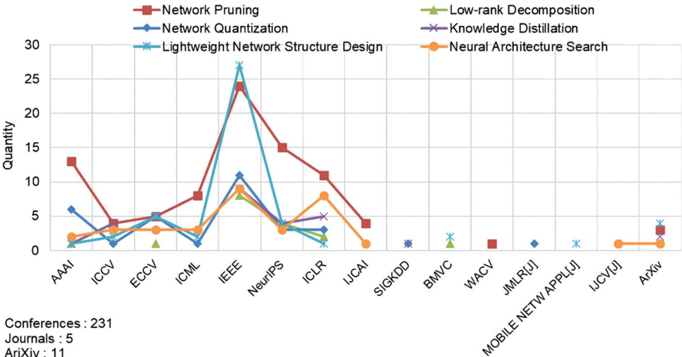
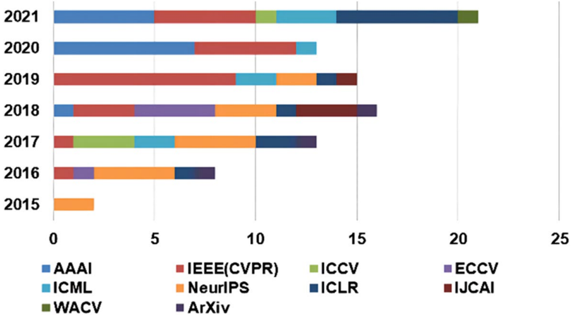
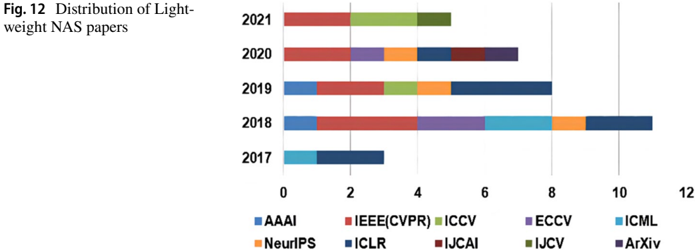
- The authors collected 252 papers on model compression from top conferences and journals; they report 236 conference papers, 5 journal papers, and 11 arXiv papers.
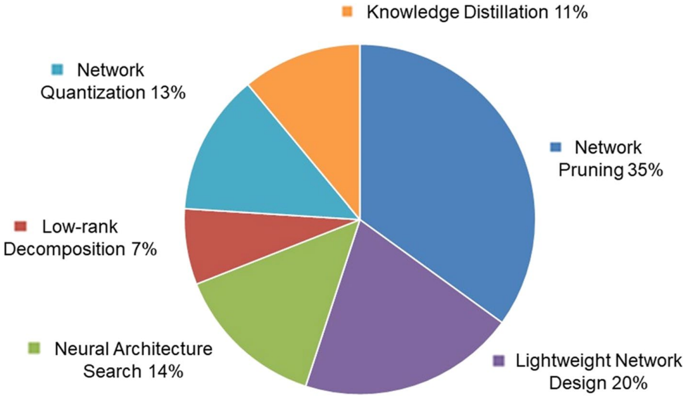
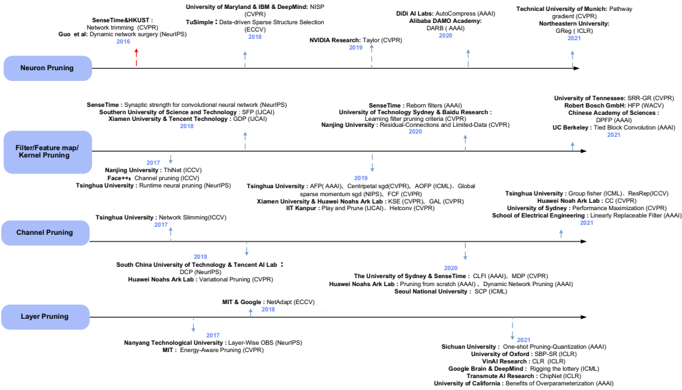
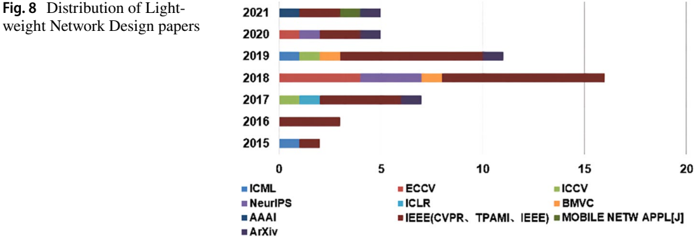
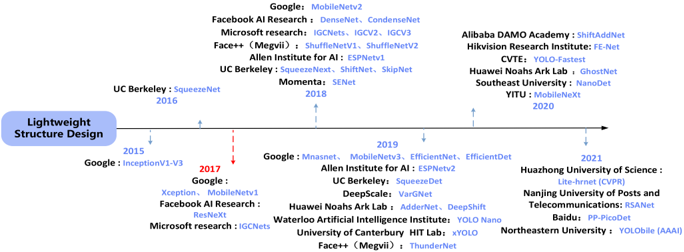
- They identify six compression strategies and note that network pruning and lightweight network design account for the largest proportions among the surveyed methods.
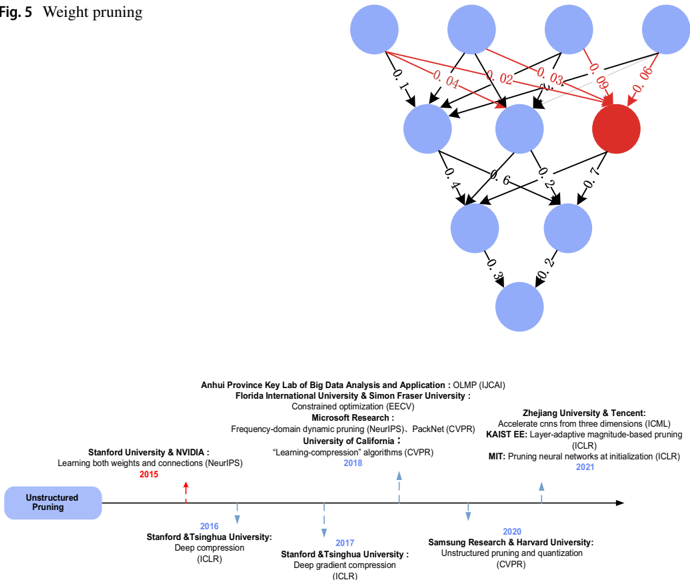
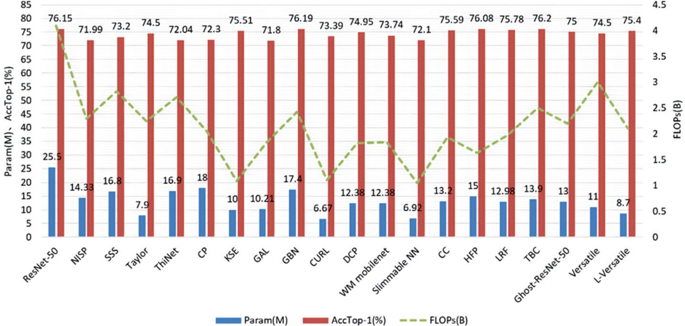
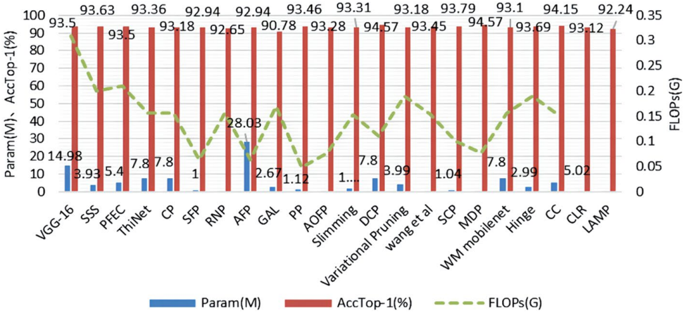
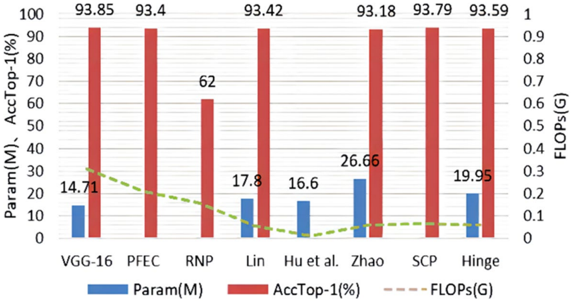
- For network pruning, the paper says many methods achieve precision losses of less than 0.5% and can reduce model size by more than 90% in some cases; it also notes AOFP, SCP, and Lin as strong examples.
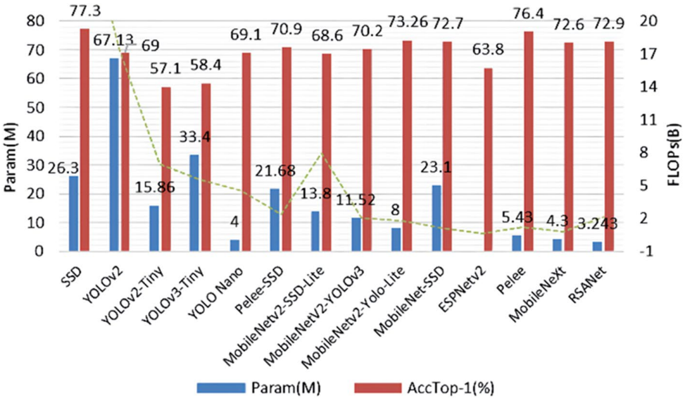
- In the lightweight-object-detection comparison on COCO test-dev2015, PP-PicoDet is reported as the best overall among the listed lightweight models, with 0.99M parameters and 27.1% AP; YOLO-LITE has 0.6M parameters, 12.26 AP, and 1 FLOPs(B).
- In the NAS comparison on CIFAR10, CP-NAS is reported as having 2.9M parameters and 96.35% accuracy; the paper also reports AutoFormer at 99.1% accuracy in the NAS comparison table.
- In KD on ImageNet, the paper states that the compressed student model is generally not much lower than the teacher network; for one reported case, AIN drops only 0.15%.
## Methods
- Survey design: the paper is a literature survey that categorizes object-detection compression methods into six groups and discusses representative methods in each group.
- Data/sample: it reviews 252 papers and compares methods on public datasets including COCO test-dev2015, VOC 2007, ImageNet ILSVRC 2012, CIFAR10, and CIFAR100.
- Main analysis: it compares methods using metrics such as Param, FLOPs, AccTop-1, AP, and mAP, and summarizes trade-offs plus application scenarios and future directions.
## Limitations
- The paper states that performance varies by implementation, dataset, and application scenario, so results are not directly universal.
- It also states that most compression methods trade off accuracy for smaller size or lower computation, and this accuracy-compression balance remains a central challenge.
- Evident from the text: many comparisons are compiled from original papers’ reported results, not re-run under a single unified experimental protocol; the paper explicitly says it assumes published results are the best experimental results obtained by the original authors.
Model-written summary. Check it against the paper before relying on it.
Integrity signals
Registry
Cites
Statistics
Figures

Verification
Claims the paper makes
13 Valid · 24 Not valid · 25 Not checked · 144 Own results and interpretations
The cited sources support only part of this claim — read each source’s verdict below.
In the paper
“Threshold pruning methods ranging from LMP [14] to dynamic weight selection via spatial correlation [21], and the recent random initializationbased pruning method [25] (performed to further sparsity the network) have achieved good results.”
What the sources say
- Partly supportedcites [14] 14. Han S, Mao H, Dally WJ (2015b). Deep compression: compressing deep neural networks with pruning, trained quantization and huffman coding. In Proceedings of International Conference on Learning Representations, 2016. https:// doi. org/ 10. 48550/ arXiv. 1510. 00149 sourceExperimental — accuracy not yet measured
Section 2 (p. 2) describes successful threshold-based pruning: it removes small-weight connections and reports substantial parameter reductions without loss of accuracy. But the paper starts pruning after normal network training; its discussion of random initialization concerns quantization centroids, not a random-initialization-based pruning method (Section 3.2, p. 4). (LLM, conf=0.87)
- Not matchedcites [21] 21. Liu Z, Xu J, Peng X, Xiong R (2018) Frequency-domain dynamic pruning for convolutional neural networks. Proceedings of the 32nd International Conference on Neural Information Processing Systems. pp 1051-1061
We searched by its title and found no matching paper.
- Not checked yetcites [25] 25. Frankle J, Dziugaite GK, Roy DM, Carbin M (2020) Pruning neural networks at initialization: why are we missing the mark? In Proceedings of International Conference on Learning Representations 535:6377-6389. https:// doi. org/ 10. 5555/ 34957 24. 34962 59 doi:10.5555/3495724.3496259
plain- Asserted: passes — The authors put it forward as true.
- Checkable: passes — It can be checked against evidence.
- Load-bearing: unclear — It is unclear whether the paper’s conclusions depend on it.
- Based: passes — The paper gives a reason why it holds.
- Partly supported
Every source the paper cites for this claim was checked and supports it.
In the paper
“By using the normal convolutional layer and XNOR layer for training and recall, it achieved greater inference speed on desktop CPU and GPU.”
What the sources say
- Supportedcites [150] 150. Barry D, Shah M, Keijsers M, Khan H, Hopman B (2019). XYOLO: a model for real-time object detection in humanoid soccer on low-end hardware. In 2019 International Conference on Image and Vision Computing New Zealand (IVCNZ), pp 1-6. https:// doi. org/ 10. 1109/ IVCNZ 48456. 2019. 89609 63 source
The Abstract states 'Greater inference speed-ups were also achieved on a desktop CPU and GPU,' and Section B (Comparative Computational Speed, Table II) quantifies this: 706.36 FPS on the GTX 960M GPU (≈7x Tiny-YOLO-XNOR, ≈9x Tiny-YOLO) and 87x / 35x better than Tiny-YOLO and Tiny-YOLO-XNOR on the i7-6700HQ desktop CPU. Section II (Network) also confirms the mechanism the citing sentence attaches to it — xYOLO 'utilizes both normal convolutional and XNOR layers in both training and recall.' (LLM, conf=0.92)
plainstates a cause- Asserted: passes — The authors put it forward as true.
- Checkable: passes — It can be checked against evidence.
- Load-bearing: unclear — It is unclear whether the paper’s conclusions depend on it.
- Based: passes — The paper gives a reason why it holds.
- Supported
The cited sources support only part of this claim — read each source’s verdict below.
In the paper
“Many methods based on the sparse learning (SL) framework have also been proven to be effective [43-47]”
What the sources say
- Not matchedcites [43] 43. Kingma DP, Salimans T, Welling M (2015) Variational dropout and the local reparameterization trick. In Advances in Neural Information Processing Systems (NIPS) 28:2575-2583
We searched by its title and found no matching paper.
- Supportedcites [44] 44. Louizos C, Welling M, Kingma DP (2017) Learning sparse neural networks through L0 regularization. arXiv:1712.01312. https:// doi. org/ 10. 48550/ arXiv. 1712. 01312 source
The Introduction (p. 1) of Louizos et al. states that 'it has been shown in recent works (Han et al., 2015; Ullrich et al., 2017; Molchanov et al., 2017)' that deep networks 'can be pruned significantly without any loss in accuracy', and that model compression and sparsification techniques address over-parameterisation and overfitting. The Related Work section (p. 6) treats sparsification as an established, effective line of methods ('neuron pruning ... can lead to computation savings'), and Section 4.1 / Table 1 (p. 7) lists several competing sparsity-based methods (Sparse VD, BC-GNJ/BC-GHS, GL, GD, SBP) achieving low errors, with the authors' own L0 approach 'competitive with other methods that tackle neural network compression'. The only wording difference is the citing paper's label 'sparse learning (SL) framework', which this source calls compression/sparsification/pruning — same content, so the broad background statement is supported. (LLM, conf=0.82)
- Supportedcites [45] 45. Molchanov D, Ashukha A, Vetrov D (2017) Variational dropout sparsifies deep neural networks. In International Conference on Machine Learning (PMLR) 70:2498-2507 source
The Introduction states that 'Inducing sparsity during training of DNNs leads to regularization, compression, and acceleration of the resulting model', and Section 2 (Related Work) surveys numerous sparse-learning-based approaches — pruning, elastic net / structured sparsity regularization, composite techniques, and the Sparse Bayesian Learning (ARD) framework of Tipping (2001) — describing them as successful, effective regularizers/compressors. Section 5.3 further reports these methods achieving strong sparsity with comparable accuracy on LeNet architectures, so our copy clearly treats the topic the way the broad background statement does. The citing sentence is a general survey claim backed by a reference range, not an attribution of an original finding, so no exact sentence is required. (LLM, conf=0.80)
- Not matchedcites [46] 46. Neklyudov K, Molchanov D, Ashukha A, Vetrov D (2017) Structured bayesian pruning via log-normal multiplicative noise. In Advances in Neural Information Processing Systems, pp 6778-6787 <!-- image --> 1 3
We searched by its title and found no matching paper.
- Supportedcites [47] 47. Lemaire C, Achkar A, Jodoin PM (2019) Structured pruning of neural networks with budget-aware regularization. In: Proceedings of the IEEE/CVF Conference on Computer Vision and Pattern Recognition 2019:9108-9116. https:// doi. org/ 10. 1109/ CVPR. 2019. 00932 source
The Introduction of our copy states directly that 'Among the structured pruning methods, those that implement a sparsity learning (SL) framework have shown to be effective as pruning and training are done simultaneously', citing six SL works [4,17,21,22,24,26] — i.e. many such methods. Section 2 (Previous Works) reinforces this by enumerating the SL family (L1, Group LASSO, L0-approximation, and several variational methods), and Section 5 reports that these variational/SL methods outperform earlier magnitude- and Hessian-based pruning. The only difference is wording: our copy says 'shown to be effective' rather than 'proven', and terms it 'sparsity learning' rather than 'sparse learning'; the attributed content is otherwise intact. (LLM, conf=0.85)
boosted- Asserted: passes — The authors put it forward as true.
- Checkable: passes — It can be checked against evidence.
- Load-bearing: unclear — It is unclear whether the paper’s conclusions depend on it.
- Based: passes — The paper gives a reason why it holds.
- Not matched
Every source the paper cites for this claim was checked and supports it.
In the paper
“On the basis of SqueezeNet, they proposed SqueezeNext [126] by directly incorporating separation convolution to achieve improved parameter compression.”
What the sources say
- Supportedcites [126] 126. Gholami A, Kwon K, Wu B, Tai Z, Yue X, Jin P, Keutzer K (2018). Squeezenext: hardware-aware neural network design. In Proceedings of the IEEE Conference on Computer Vision and Pattern Recognition Workshops, pp 1638-1647. https:// doi. org/ 10. 1109/ CVPRW. 2018. 00215 source
The Introduction says SqueezeNext uses SqueezeNet as a baseline and adds separable 3 × 3 convolutions to further reduce model size. The Design section explains that decomposing a convolution into two separable convolutions reduces its parameter count. (LLM, conf=0.94)
plainstates a cause- Asserted: passes — The authors put it forward as true.
- Checkable: passes — It can be checked against evidence.
- Load-bearing: unclear — It is unclear whether the paper’s conclusions depend on it.
- Based: passes — The paper gives a reason why it holds.
- Supported
A result the paper reports from its own data — it cites no other source for it, so there is none to check. The quote shows it is in the paper.
In the paper
“It can be seen that network pruning and lightweight network structure design methods account for the largest proportions among the current model compression methods.”
plain- Asserted: passes — The authors put it forward as true.
- Checkable: passes — It can be checked against evidence.
- Load-bearing: unclear — It is unclear whether the paper’s conclusions depend on it.
- Based: passes — The paper gives a reason why it holds.
35 more claims
Create a free account to see all 206 claims and to verify the 17 references still open.
- It may state two separate claims as one. 85
- Probably not a substantial claim. 139
- The quote only partly states this claim. 3
Self-check
Percentages, sums and reported differences re-computed from the paper’s own numbers.
Rated major: it would touch a result — a value a result rests on, reported and recomputed p-values on opposite sides of the significance level, two passages that conflict with no sign which is right, or a cited work retracted before this paper was published.
In the paper
“In this paper, a total of 252 papers are collected from the top conferences and journals contained in class A and part of class B of computer vision, as recommended by the CCF and ACM.”
Reported 252 · recomputed 247
Citations
Cites
Deep Residual Learning for Image Recognition
He, K., Zhang, X., Ren, S., & Sun, J. (2016) · 2016 IEEE Conference on Computer Vision and Pattern Recognition (CVPR) · doi:10.1109/cvpr.2016.90 · Cited by 235,474
Very Deep Convolutional Networks for Large-Scale Image Recognition
Simonyan, K., & Zisserman, A. (2014) · arXiv · doi:10.48550/arxiv.1409.1556 · Cited by 114,148
You Only Look Once: Unified, Real-Time Object Detection
Redmon, J., Divvala, S., Girshick, R., & Farhadi, A. (2016) · 2016 IEEE Conference on Computer Vision and Pattern Recognition (CVPR) · doi:10.1109/cvpr.2016.91 · Cited by 53,803
Densely Connected Convolutional Networks
Huang, G., Liu, Z., van der Maaten, L., & Weinberger, K. Q. (2016) · arXiv · doi:10.48550/arxiv.1608.06993 · Cited by 48,960
Densely Connected Convolutional Networks
Huang, G., Liu, Z., Van Der Maaten, L., & Weinberger, K. Q. (2017) · 2017 IEEE Conference on Computer Vision and Pattern Recognition (CVPR) · doi:10.1109/cvpr.2017.243 · Cited by 48,566
Going deeper with convolutions
Szegedy, C., Liu, W., Jia, Y., Sermanet, P., Reed, S., Anguelov, D., Erhan, D., Vanhoucke, V., & Rabinovich, A. (2015) · 2015 IEEE Conference on Computer Vision and Pattern Recognition (CVPR) · doi:10.1109/cvpr.2015.7298594 · Cited by 48,562
Squeeze-and-Excitation Networks
Hu, J., Shen, L., & Sun, G. (2018) · 2018 IEEE/CVF Conference on Computer Vision and Pattern Recognition · doi:10.1109/cvpr.2018.00745 · Cited by 35,667
Rethinking the Inception Architecture for Computer Vision
Szegedy, C., Vanhoucke, V., Ioffe, S., Shlens, J., & Wojna, Z. (2016) · 2016 IEEE Conference on Computer Vision and Pattern Recognition (CVPR) · doi:10.1109/cvpr.2016.308 · Cited by 32,138
(2016) · Cited by 31,590
MobileNetV2: Inverted Residuals and Linear Bottlenecks
Sandler, M., Howard, A., Zhu, M., Zhmoginov, A., & Chen, L.-C. (2018) · 2018 IEEE/CVF Conference on Computer Vision and Pattern Recognition · doi:10.1109/cvpr.2018.00474 · Cited by 28,755
Research works printed but not linked: 22
- 12. LeCun Y, Denker JS, Solla SA (1990)Optimal brain damage. In: advancesin neural information processing systems 2:598-605
- 19. Wang W, Chen M, Zhao S, Chen L, Hu J, Liu H, Liu W (2021) ACTD Accelerate cnns from three dimensions: a comprehensive pruning framework. International Conference on Machine Learning, vol 2021. PMLR, pp 10717-10726
- 25. Frankle J, Dziugaite GK, Roy DM, Carbin M (2020) Pruning neural networks at initialization: why are we missing the mark? In Proceedings of International Conference on Learning Representations 535:6377-6389. https:// doi. org/ 10. 5555/ 34957 24. 34962 59 · doi:10.5555/3495724.3496259
- 39. Yoon J, Hwang SJ (2017) Combined group and exclusive sparsity for deep neural networks. In International Conference on Machine Learning (PMLR) 70:3958-3966
- 58. Lin C, Zhong Z, Wu W, Yan J (2018) Synaptic strength for convolutional neural network. Adv Neural Inf Processing Syst 2018:10149-10158
- 80. Zhuang Z, Tan M, Zhuang B, Liu J, Guo Y, Wu Q, Zhu J (2018) Discrimination-aware channel pruning for deep neural networks. In Advances in Neural Information Processing Systems 31:883-894.
- 81. Peng H, Wu J, Chen S, Huang J (2019) Collaborative channel pruning for deep networks. In International Conference on Machine Learning 1:5113-5122 (PMLR)
- 86. Kang M, Han B (2020) Operation-aware soft channel pruning using differentiable masks. In International Conference on Machine Learning 119:5122-5131
- 110. Tan M, Le QV (2019b) Mixconv: mixed depthwise convolutional kernels. In British Machine Vision Conference (BMVC), 33(116):1-13. https:// dx. doi. org/ 10. 5244/C. 33. 116
- 123. Wang Y, Xu C, Xu C, Xu C, Tao D (2018) Learning versatile filters for efficient convolutional neural networks. In Advances in Neural Information Processing Systems 31:1608-1618
- 132. Wang RJ, Li X, Ling CX (2018) Pelee: a real-time object detection system on mobile devices. In Adv Neural Inf Proces Syst 43(10):3349-3364. https:// doi. org/ 10. 1109/ TPAMI. 2020. 29836 86 · DOI · Paper page
- 164. Cai H, Chen T, Zhang W, Yu Y, Wang J (2018) Efficient architecture search by network transformation. In Proceedings of the AAAI Conference on Artificial Intelligence 32(1):2787-794
- 166. Wong C, Houlsby N, Lu Y, Gesmundo A (2018) Transfer learning with neural automl. In Adv Neural Inf Proces Syst 31:8366-8375
- 179. Pham H, Guan M, Zoph B, Le Q, Dean J (2018) Efficient neural architecture search via parameters sharing. In International Conference on Machine Learning 80:4095-4104
- 190. Lin J, Chen WM, Lin Y, Cohn J, Gan C, Han S (2020) Mcunet: tiny deep learning on iot devices. In Adv Neural Inf Proces Syst 33:11711-11722
- 200. Hu Q, Wang P, Cheng J (2018) From hashing to cnns: training binary weight networks via hashing. In Proceedings of the AAAI Conference on Artificial Intelligence 32(1):3247-3254
- 211. Wu J, Wang Y, Wu Z, Wang Z, Veeraraghavan A, Lin Y (2018) Deep k-means: re-training and parameter sharing with harder cluster assignments for compressing deep convolutions. In International Conference on Machine Learning 80:5363-5372
- 229. Hinton G, Vinyals O, Dean J (2015) Distilling the knowledge in a neural network. In: Proc Adv Neural Inf Processing Syst Workshop 27:2014
- 254. Denil M, Shakibi B, Dinh L, Ranzato M, de Freitas N (2013) Predicting parameters in deep learning. Adv Neural Inf Processing Syst. Lake Tahoe 26:2148-2156
- 256. Denton EL, Zaremba W, Bruna J, LeCun Y, Fergus R (2014) Exploiting linear structure within convolutional networks for efficient evaluation. Neural information processing systems foundation (NIPS). 2014: 1269-1277
- 274. Krizhevsky A, Sutskever I, Hinton GE (2012) Imagenet classification with deep convolutional neural networks. In Adv Neural Inf Proces Syst 60(6):84-90
- 279. Yang K, Jiao Z, Liang J, Lei H, Li C, Zhong Z (2022) An application case of object detection model based on Yolov3-SPP model pruning. IEEE Int Conf Artif Intell Comput App (ICAICA) 2022:578-582 Publisher's Note Springer Nature remains neutral with regard to jurisdictional claims in published maps and institutional affiliations. <!-- image -->
Cited by
A comprehensive review of model compression techniques in machine learning
Dantas, P. V., Sabino da Silva, W., Cordeiro, L. C., & Carvalho, C. B. (2024) · Applied Intelligence · doi:10.1007/s10489-024-05747-w · Cited by 261
Kazanskiy, N. L., Khabibullin, R. M., Nikonorov, A. V., & Khonina, S. N. (2025) · Sensors · doi:10.3390/s25195965 · Cited by 135
“Research on lightweight AI architectures and model compression techniques is making significant strides, enabling the deployment of AI models on resource-constrained devices like drones and edge sensors [171,172].”
Khan, S. M., Sajjad, M., Abbas, N., Escorcia‐Gutierrez, J., Gamarra, M., & Muhammad, K. (2024) · Computers in Biology and Medicine · doi:10.1016/j.compbiomed.2024.108146 · Cited by 69
Ma, J., Zhou, Y., Zhou, Z., Zhang, Y., & He, L. (2025) · Marine Pollution Bulletin · doi:10.1016/j.marpolbul.2025.118136 · Cited by 58
Self-citationRobust Aerial Person Detection With Lightweight Distillation Network for Edge Deployment
Zhang, X., Feng, Y., Zhang, S., Wang, N., Lü, G., & Mei, S. (2024) · IEEE Transactions on Geoscience and Remote Sensing · doi:10.1109/tgrs.2024.3421310 · Cited by 68
“Several common lightweight object detection methods mainly include model compression [37], network pruning [38], LPQ [39], lightweight network [40], and model distillation [41].”
MethodHabash, N. M., Alqumsan, A. A., & Zhou, T. (2025) · Sensors · doi:10.3390/s25247563 · Cited by 36
Xie, C., Zhai, X., Chi, H., Li, W., Li, X., Sha, Y., & Li, K. (2024) · IEEE Transactions on Consumer Electronics · doi:10.1109/tce.2024.3475517 · Cited by 15
“Compared to other pruning techniques, this pruning method does not require sparse libraries or specialized hardware [39].”
Si, Q., & Han, S. I. (2025) · IEEE Access · doi:10.1109/access.2025.3544631 · Cited by 12
“In scenarios where resources are extremely constrained, further reductions in computational complexity and storage requirements are often essential [51].”
Lightweight deep learning model-based UAVs visual detection
Mahmood, S. A., Abdulmunem, F. A., & Lafta, S. H. (2024) · Multimedia Tools and Applications · doi:10.1007/s11042-024-20328-2 · Cited by 9
“To realize this target, optimization schemes such as network architecture design, network quantization, and model pruning are essentially employed to decrease memory storage demands, and enhance run speed while maintaining the accuracy of original networks [41].”
A systematic literature review of lightweight YOLO models for object detection
Wang, L., Wang, H., Letchmunan, S., Xiao, R., Ahmed, O. H., & Liu, Z. (2025) · PeerJ Computer Science · doi:10.7717/peerj-cs.3357 · Cited by 20
Raza, A., & Hanif, F. (2026) · Applied Artificial Intelligence · doi:10.1080/08839514.2026.2626114 · Cited by 11
A Novel Attention‐Based Layer Pruning Approach for Low‐Complexity Convolutional Neural Networks
Hossain, M. B., Gong, N., & Shaban, M. (2024) · Advanced Intelligent Systems · doi:10.1002/aisy.202400161 · Cited by 7
A survey of lightweight methods for object detection networks
He, J., Jiang, J., & Zhang, C. (2025) · Array · doi:10.1016/j.array.2025.100589 · Cited by 9
A Pruning and Distillation Based Compression Method for Sonar Image Detection Models
Cheng, C., Hou, X., Wang, C., Wen, X., Liu, W., & Zhang, F. (2024) · Journal of Marine Science and Engineering · doi:10.3390/jmse12061033 · Cited by 6
Sabbar, Y., & Nisar, K. S. (2026) · Transactions on Computational Modeling and Intelligent Systems · doi:10.65112/tcmis.10028 · Cited by 23
“…operators poses severe computational challenges [87], which have been mitigated by fast convolution algorithms [88], kernel compression strategies [89], and spectral approximations [90], thereby reducing memory and time complexity from O ( N 2 ) to nearly O ( N log N ) without significant loss of…”
Wang, Y., Zhang, S., Xu, J., Cheng, Z., & Du, G. (2025) · Symmetry · doi:10.3390/sym17071116 · Cited by 10
Masked Feature Compression for Object Detection
Dai, C., Song, T., Jin, Y., Ren, Y., Yang, B., & Song, G. (2024) · Mathematics · doi:10.3390/math12121848 · Cited by 4
“One way to solve this problem is to directly compress the models [20], while another is to compress the images captured by edge devices and transmit them to the powerful cloud server for processing.”
MethodMahato, S., Bi, H., & Neethirajan, S. R. (2025) · Frontiers in Artificial Intelligence · doi:10.3389/frai.2025.1545247 · Cited by 6
“To scale further, model compression techniques like quantization and pruning can be applied to reduce latency and memory usage, as has been done successfully in other object detection domains (Lyu et al., 2024).”
Mou, H., & Zhang, M. (2025) · Digital Signal Processing · doi:10.1016/j.dsp.2025.105704 · Cited by 4
A Structurally Optimized and Efficient Lightweight Object Detection Model for Autonomous Driving
Li, M., Wang, J., Chen, S., Liu, L., Li, K., Zhao, Z., & Yun, H. (2025) · Sensors · doi:10.3390/s26010054 · Cited by 3
“Lightweight architectures have gained increasing attention due to their reduced parameter count and lower computational complexity while maintaining competitive accuracy [9].”
Real-time small object detection on embedded hardware for 360-degree vision
van Lier, M., van Leeuwen, M. C., van Manen, B., & Kampmeijer, L. (2024) · doi:10.1117/12.3031503 · Cited by 3
“…methods such as lightweight network design, neural architecture search, model quantization, network pruning, knowledge distillation and low-rank decomposition can improve the efficiency of object detection models [8], [9] [10] concerning inference speed, memory size and power consumption [11].”
Simplifying Two-Stage Object Detectors for On-Board Remote Sensing
Kang, J., Yang, H., & Kim, H. (2025) · IEEE Access · doi:10.1109/access.2025.3599526 · Cited by 7
“Pruning is a technique that lightens a model by deleting redundant weights [9].”
SPyramidLightNet: A Lightweight Shared Pyramid Network for Efficient Underwater Debris Detection
Luo, Y., & Eljamal, O. (2025) · Applied Sciences · doi:10.3390/app15179404 · Cited by 3
Yang, T., Peng, B., Zhang, J., Zhang, D., Liang, C., & Fan, X. (2025) · Computers and Electronics in Agriculture · doi:10.1016/j.compag.2025.111342 · Cited by 4
Self-citationSmall Target Detection in Agricultural Visual Perception: Progress and Challenges
Li, H., Cheng, H., Niu, Q., Li, C., Wang, L., He, X., Yang, Y., & Wang, P. (2026) · Agriculture · doi:10.3390/agriculture16131366 · Cited by 4
On energy complexity of fully-connected layers
Šíma, J., Cabessa, J., & Vidnerová, P. (2024) · Neural Networks · doi:10.1016/j.neunet.2024.106419 · Cited by 3
“…at the cost of only a small loss in accuracy by using approximate computing methods (Armeniakos et al., 2023; Deng et al., 2020; Li et al., 2023; Lyu et al., 2023; Mittal, 2016; Tang et al., 2024), e.g. low float precision (Gupta et al., 2015), approximate multipliers (Ansari et al., 2020), etc.”
BackgroundMethodAerialFace: A Light Weight Framework for Unmanned Aerial Vehicle Face Recognition
Ou, Z., Yao, L., Wu, T., et al. (2024) · International Conference on Automatic Face and Gesture Recognition · doi:10.1109/fg59268.2024.10582027 · Cited by 2
“The increase in model parameters in deep learning complicates deployment on drones [21], [22].”
BackgroundSecFePAS: Secure Facial-Expression-Based Pain Assessment with Deep Learning at the Edge
Batool, K., Anwar, S., & Mann, Z. Á. (2024) · IFIP International Information Security Conference · doi:10.1109/sec62691.2024.00046 · Cited by 2
“Further work is needed, aiming at improving accuracy together with run time reduction for SecFePAS.”
Harmonizing for defect visibility with Fine-Grained Hierarchical Interaction Learning
Wu, Z., Long, Y., Su, X. Q., Luo, Y., You, S., & Long, J. (2025) · IEEE International Conference on Acoustics Speech and Signal Processing · doi:10.1109/icassp49660.2025.10888754 · Cited by 1
An, N., Yang, Z., Wan, L., Li, J., & Wang, Y. (2026) · Sensors · doi:10.3390/s26061768 · Cited by 1
“These models significantly reduce computational complexity and memory overhead through techniques such as parameter compression [34], structural pruning [35], model quantization [36] and efficient module design [37], thereby achieving strong real-time capabilities.”
A Study on Lightweight Object Detection in Thermal Images and Its Recent Advances
Malhotra, H., & Ravinder, M. (2024) · Lecture notes in networks and systems · doi:10.1007/978-981-97-3817-5_24 · Cited by 1
Asha, S., Vignesh, S. H., & Raghavan, T. M. (2024) · International Conference on Advancement in Electronics & Communication Engineering (AECE) · doi:10.1109/aece62803.2024.10911723 · Cited by 1
“…and slim-neck design COCO dataset [6] BSF-XNOR PASCAL VOC2007 and VOC2012 [8] Data-adaptive BNNs COCO dataset [9] Voltage-mode XNOR MNIST and CIFAR-10 dataset [13] FPGA-based accelerators COCO dataset [15] Bayesian algorithm COCO test-dev2015, VOC 2007, ImageNet ILSVRC 2012, CIFAR10, CIFAR100”
PCA-based compression of deep LSTMs: a robust framework for uncertain industrial systems
Yahyaoui, Z., Hajji, M., & Bouazzi, Y. (2025) · Computing · doi:10.1007/s00607-025-01565-1 · Cited by 1
Weight-Rounding Error in Deep Neural Networks
Šíma, J., & Vidnerová, P. (2025) · Lecture notes in computer science · doi:10.1007/978-3-032-06078-5_23 · Cited by 2
More, S. S., & Bansode, R. (2024) · Lecture notes in networks and systems · doi:10.1007/978-981-97-4228-8_30
Approach to lightweighting backbone network models through quantization and Bayesian optimization
Choi, J., & Lee, D. (2025) · International Conference on Machine Vision · doi:10.1117/12.3055304
“Research on model weight reduction in deep learning is conducted through various methodologies[33, 32, 29, 21, 20, 15, 12].”
Dynamic Fashion Trend Prediction & Personalized Outfit Recommendations: A Technical Analysis
Kotha, S. (2025) · International Journal of Advances in Engineering and Management · doi:10.35629/5252-0704701708
DDC Sketch: A Dynamically Adaptive Framework for Network Traffic Measurement
Tai, S., Wang, P., Zhao, J., et al. (2025) · Lecture notes in computer science · doi:10.1007/978-981-96-8728-2_33
MAtCHelper: An Automated Tool for Guiding in the Acceleration and Compression of Neural Networks
Población-Criado, D., Quiñones, E., & García-Gasulla, D. (2025) · IFIP advances in information and communication technology · doi:10.1007/978-3-031-96228-8_20
An Optimizing Instance Segmentation for Real-Time Performance Based on Yolact++ Lightweight NetworkPreprint
Song, Y., Yanping, Q., Liu, J., & Li, J. (2025) · SSRN Electronic Journal · doi:10.2139/ssrn.5353424
The Dynamic Traffic Monitoring with MAB-Based Sketch Structures for Distributed Network Environments
Wang, P. (2025) · International Conference on Artificial Intelligence, Big Data and Algorithms (CAIBDA) · doi:10.1109/caibda65784.2025.11182812
Football sports automatic judgment model based on improved YOLOv7 and RNN
Wang, T., Yan, X., Li, J., & Luo, X. (2025) · PLoS ONE · doi:10.1371/journal.pone.0334158
“SODA is a fundamental step in sports video scene recognition, aimed at identifying specific target objects from video frames [18–20].”
Cross-Entropy Loss of Approximated Deep Neural Networks
Šíma, J., & Vidnerová, P. (2025) · Lecture notes in computer science · doi:10.1007/978-981-95-4367-0_31
Zhang, R., Chen, Z., Huo, G., Zhang, X., Luo, W., & Mu, L. (2025) · Remote Sensing · doi:10.3390/rs17243971
YOLO Meets Tlaxcala: Toward Real-Time Urban Object Detection for Assistive Technology
Martínez, E. M., Cuecuecha, E. M., García-Ramírez, J., & Ramos-Aguilar, E. (2026) · Springer eBooks · doi:10.1007/978-3-032-08894-9_18
Zhang, J., Lv, J., Zhang, H., Li, M., & Huang, M. (2026) · IEEE Transactions on Geoscience and Remote Sensing · doi:10.1109/tgrs.2026.3650963 · Cited by 5
“Building on these advantages, one-stage detectors such as the YOLO series [5] have become mainstream for AAV-based tasks due to their favorable balance between speed and accuracy [6].”
AI-Augmented Signal Processing Models for Remote Health Monitoring in Low-Resource Settings
Sahu, S., Mallick, N., Sethi, R. C., Pattnayak, P., & Mohanty, A. (2025) · IEEE International Conference on Information Technology, Electronics and Intelligent Communication Systems (ICITEICS) · doi:10.1109/iciteics64870.2025.11341275
“Edge processors such as the ARM Cortex-M family and Google Edge TPU are utilised in medical wearables because they are low-power but highly efficient [14].”
YOLC with dynamic sparse attention for high-speed small target detection in wearable sports images
Chen, H., Song, Y., Liu, W., & Kang, W. (2026) · Scientific Reports · doi:10.1038/s41598-026-38079-5
Quantum Kernel Methods for Brain Aneurysm Risk Classification
Yadav, S., Yadav, H., Munshi, A., & D’Souza, R. M. (2026) · Communications in computer and information science · doi:10.1007/978-3-032-17625-7_5
An Improved Training Strategy Based YOLOv10 Method for Catenary Insulator Defect Detection
姚, 敦. (2026) · Software Engineering and Applications · doi:10.12677/sea.2026.151009
Application of Artificial Intelligence in Biomimetic Underwater Vehicles – A Review
Yu, S., Wang, Y., Zhang, H., Li, X., & Fengchen, L. I. (2026) · Journal of Bionic Engineering · doi:10.1007/s42235-026-00877-y
A Deep Learning-Based Computer Vision Framework for Intelligent Image Recognition
Wu, Y. (2026) · International Conference on Big Data and Informatization Education (ICBDIE) · doi:10.1145/3806980.3806986
Khaldy, M. A. A., Otaiwi, Z., & Al–Qerem, A. (2026) · International Conference on Computational Intelligence Approaches and Applications (ICCIAA) · doi:10.1109/icciaa68481.2026.11543764
Atrous convolution neural network based hybrid precoding for mmWave MIMO systems
Liu, F., Tong, J., Yang, X., et al. (2026) · Signal Processing · doi:10.1016/j.sigpro.2026.110773
Eze, M., Ebiesuwa, O., Oyebola, A., Okesola, K., Ojo, A., & Mgbeahuruike, E. E. (2026) · British Journal of Computer Networking and Information Technology · doi:10.52589/bjcnit-mizpefhd
MLKD: model’s loss-aware knowledge distillation for pruning deep convolutional neural networks
Shamisavi, M., & Alizadeh, B. (2026) · The Journal of Supercomputing · doi:10.1007/s11227-026-08683-3
“By understanding how each category approaches the problem, we can better appreciate the advancements in DCNN compression and pruning, and learn how to bring the usage of deep neural networks closer to embedded devices [3, 4].”
Li, K., Ma, C., Nie, X., Zhang, M., Meng, Y., & Zhang, D. (2026) · Buildings · doi:10.3390/buildings16153055
Self-citationInformation-Aware Hybrid Model Compression via Entropy-Regularized Progressive Sparsification
Patnaik, P., Panda, B., Mishra, S., et al. (2026) · OPJU International Technology Conference on Smart Computing for Innovation and Advancement in Industry (OTCON) · doi:10.1109/otcon69332.2026.11629714
“More common methods used in traditional compression are pruning, quantization, and knowledge distillation, which typically lead to sudden accuracy drops owing to their discrete and non - differentiability [3], [4].”
Zhang, J., & Shang, J. (2026) · Algorithms · doi:10.3390/a19080670
吴凯申, Li, M., & Zhao, H. (2026) · International Conference on Computer Vision, Image and Deep Learning (CVIDL) · doi:10.1109/cvidl70130.2026.11637664
Deployment-oriented pruning for real-time object detection: a survey
Zhou, G., & Zhang, D. (2026) · Applied Intelligence · doi:10.1007/s10489-026-07416-6
Self-citationWu, N., Shen, L., Chen, X., Luo, G., Huang, Y., Wang, J., Tan, D., & Xu, W. (2026) · Applied Sciences · doi:10.3390/app16178780
“…large scales, extreme aspect ratios, and long-tailed categories. https://doi.org/10.3390/app16178780 In terms of model compression, pruning, quantization, knowledge distillation, and lightweight network design are the main approaches for optimizing the deployment of object detection models [10].”
InfluentialQu, G., Wang, Y., & Shen, Z. (2026) · Lecture notes in networks and systems · doi:10.1007/978-3-032-30954-9_4
Real-time YOLO across Cloud, edge, and IoT: architectures, optimisations, and deployment patterns
Attar, H., Ababneh, J., Kalaycıoğlu, A., Solyman, A., Hafez, M., Elhaty, I. A., & Solyman, A. (2026) · Journal of Cloud Computing Advances Systems and Applications · doi:10.1186/s13677-026-00976-5 · Cited by 1
Qiu, W. (2026) · Engineering Research Express · doi:10.1088/2631-8695/aeaac8
“There is a strong conflict between different evaluation indicators, and deep networks with high detection accuracy are often accompanied by a huge number of parameters and floating-point operations, which cannot meet the millisecond level delay requirements for real-time detection [6, 7].”
Metadata
- Authors
- Lyu, Z., Yu, T., Pan, F., Zhang, Y., Luo, J., Zhang, D., Chen, Y., Zhang, B., & Li, G.
- Affiliations
- Civil Aviation University of China (CN)
- Corresponding author
- Lyu, Zonglei
- Venue
- Multimedia Tools and Applications
- Published
- 2023-11-02
- Volume
- 83
- Issue
- 16
- Pages
- 48165-48236
- ISSN
- 1380-7501 (ISSN-L)
- 1573-7721
- OpenAlex
- W4388229123
- Semantic Scholar
- 15b51bc5e8730669fc0c66bb8db7b21640e9789b
- Cited by
- 65
- References
- 228
- Citations by year
- 2026: 24 · 2025: 26 · 2024: 15
- FWCI
- 5.89
- Type
- journal article
- Language
- en
- Open access
- hybrid
- doi.org
- Licence
- cc-by
- creativecommons.org/licenses/by/4.0 (tdm)
- creativecommons.org/licenses/by/4.0 (vor)
- Locations
- Multimedia Tools and Applications (publishedVersion, cc-by)
- Funders
- Fundamental Research Funds for Central Universities of the Civil Aviation University of China (3122021088)
- Topics
- Physical Sciences › Computer Science › Computer Vision and Pattern Recognition › Advanced Neural Network Applications
- Physical Sciences › Computer Science › Artificial Intelligence › Domain Adaptation and Few-Shot Learning
- Physical Sciences › Computer Science › Artificial Intelligence › Machine Learning and Data Classification
- Keywords
- model compression, object detection, network pruning, neural architecture search, low-rank decomposition, neural network quantization, knowledge distillation, deep neural network, edge deployment, real-time inference
About these checks
Registry, retraction, Cites and statistics results are computed, not judged, with one exception: a printed reference that no index lists is read once by a model before it counts as a citation error. Claims are extracted by a model and kept only when their quote appears verbatim in the text; each cited source is then checked, with a model’s help, for whether it says what the claim relies on. Those verdicts can be wrong — read the claim’s quote and the cited source before relying on one.
The claim verdicts this report counts are experimental: their accuracy is not yet measured.
A language model drew the claims from the paper on 2026-10-10, under version 3 of the claim definition (model deepseek-v4.1-flash, prompt extract-v3).
A second model labelled each claim on 2026-10-10 (model jev-1.13-20260917, definition revision gold-guideline-v0.2).
Cited sources are checked with a language model’s help (gpt-6-sol and qwen3.8-omni-flash).
Statistics and arithmetic are recomputed, not judged.
Confidence bands are shown only for fields calibrated on our annotated test set. None is calibrated yet, so no band is shown.
What counts as a claim ›How we measure confidence ›How we check this ›
Are you an author, or do you see a problem with this page? Request a review
Data sources
Bibliographic data: Semantic Scholar, OpenAlex, Crossref.
Contains information from the Semantic Scholar Academic Graph Datasets, made available under the ODC Attribution License (ODC-BY 1.0).
Semantic Scholar’s data is described in: Kinney, R., et al. (2023). The Semantic Scholar Open Data Platform. arXiv:2301.10140.
