

A survey of model compression strategies for object detection
Open accessThe DOI matches its Crossref record; 267 of the 283 references it cites were found in a registry or an index, and 14 are not checked yet; 20 of the 45 sources its claims cite were checked for support.
Abstract
Abstract Deep neural networks (DNNs) have achieved great success in many object detection tasks. However, such DNNS-based large object detection models are generally computationally expensive and memory intensive. It is difficult to deploy them to devices with low memory resources or scenarios with high real-time requirements, which greatly limits their application and promotion. In recent years, many researchers have focused on compressing large object detection models without significantly degrading their performance, and have made great progress. Therefore, this paper presents a survey of object detection model compression techniques in recent years. Firstly, these compression techniques were divided into six categories: network pruning, lightweight network design, neural architecture search (NAS), low-rank decomposition, network quantization, and Knowledge distillation (KD) methods. For each category, we select some representative state-of-the-art methods and compare and analyze their performance on public datasets. After that, we discuss the application scenarios and future directions of model compression techniques. Finally, this paper is further concluded by analyzing the advantages and disadvantages of six types of model compression techniques.
Verified 2026-11-25 · 14 references not checked yet
Overview
CoChat Summary
## TL;DR
This paper is a survey of object detection model compression methods, organized into six categories: pruning, lightweight network design, NAS, low-rank decomposition, quantization, and knowledge distillation. It reviews 252 papers and compares representative methods on public datasets to discuss trade-offs among accuracy, parameter count, FLOPs, and deployment suitability.
## Key findings
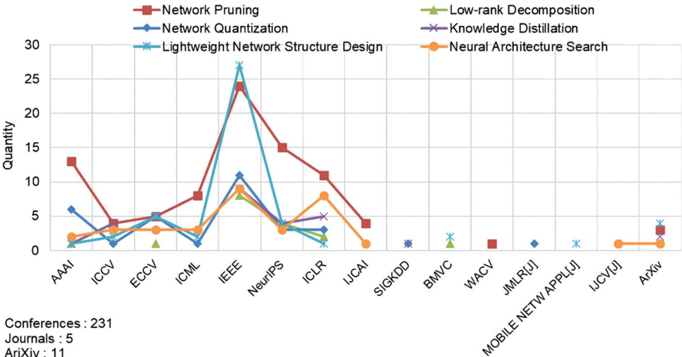
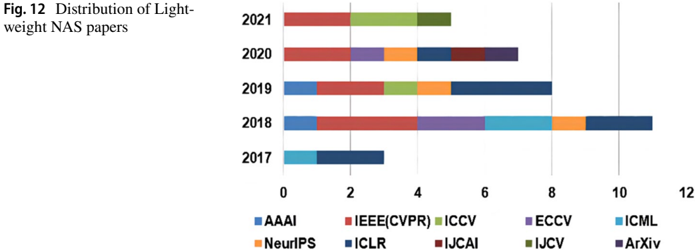
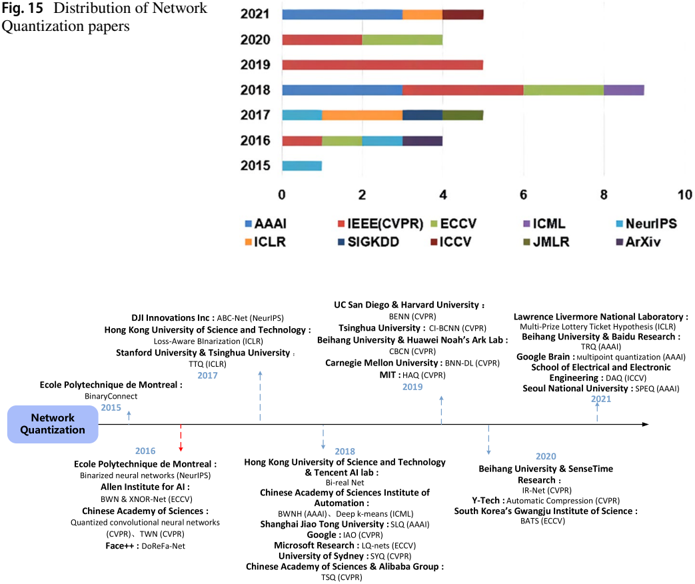
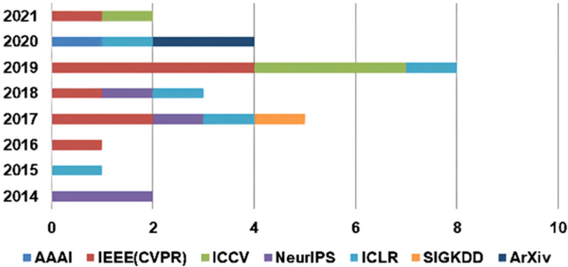
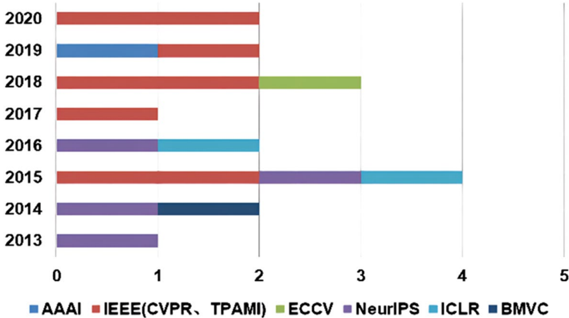
- The authors collected 252 papers on model compression from top conferences and journals; they report 236 conference papers, 5 journal papers, and 11 arXiv papers.
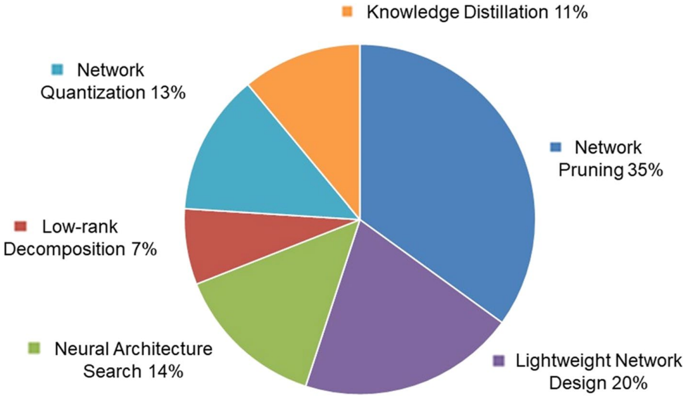
- They identify six compression strategies and note that network pruning and lightweight network design account for the largest proportions among the surveyed methods.
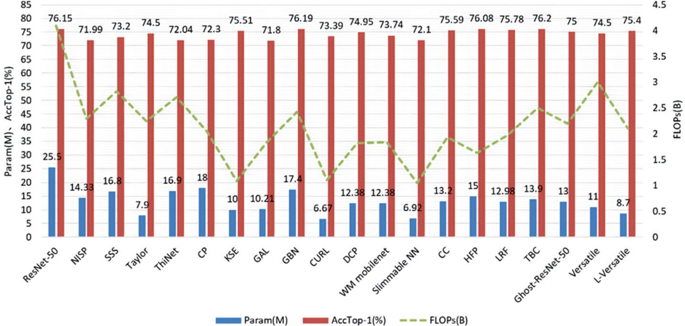
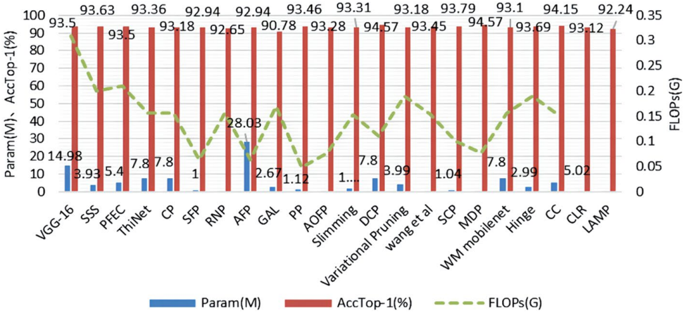
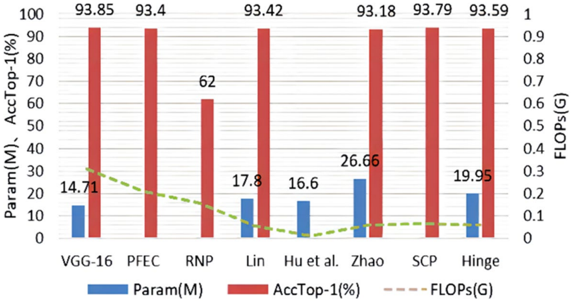
- For network pruning, the paper says many methods achieve precision losses of less than 0.5% and can reduce model size by more than 90% in some cases; it also notes AOFP, SCP, and Lin as strong examples.
- In the lightweight-object-detection comparison on COCO test-dev2015, PP-PicoDet is reported as the best overall among the listed lightweight models, with 0.99M parameters and 27.1% AP; YOLO-LITE has 0.6M parameters, 12.26 AP, and 1 FLOPs(B).
- In the NAS comparison on CIFAR10, CP-NAS is reported as having 2.9M parameters and 96.35% accuracy; the paper also reports AutoFormer at 99.1% accuracy in the NAS comparison table.
- In KD on ImageNet, the paper states that the compressed student model is generally not much lower than the teacher network; for one reported case, AIN drops only 0.15%.
## Methods
- Survey design: the paper is a literature survey that categorizes object-detection compression methods into six groups and discusses representative methods in each group.
- Data/sample: it reviews 252 papers and compares methods on public datasets including COCO test-dev2015, VOC 2007, ImageNet ILSVRC 2012, CIFAR10, and CIFAR100.
- Main analysis: it compares methods using metrics such as Param, FLOPs, AccTop-1, AP, and mAP, and summarizes trade-offs plus application scenarios and future directions.
## Limitations
- The paper states that performance varies by implementation, dataset, and application scenario, so results are not directly universal.
- It also states that most compression methods trade off accuracy for smaller size or lower computation, and this accuracy-compression balance remains a central challenge.
- Evident from the text: many comparisons are compiled from original papers’ reported results, not re-run under a single unified experimental protocol; the paper explicitly says it assumes published results are the best experimental results obtained by the original authors.
Model-written summary. Check it against the paper before relying on it.
Integrity signals
Registry
Cites
Statistics
Figures

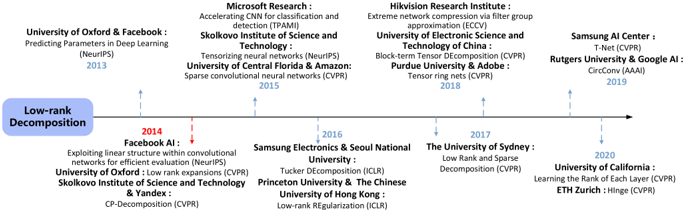
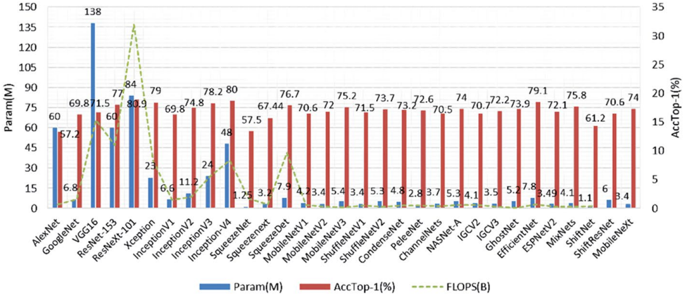
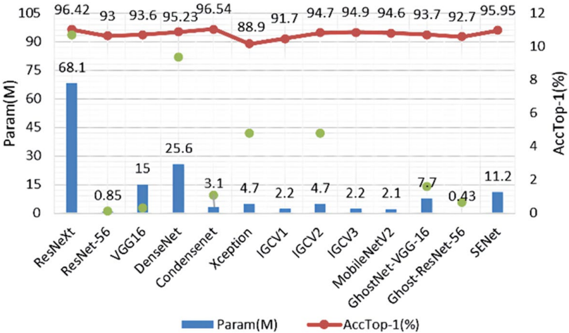
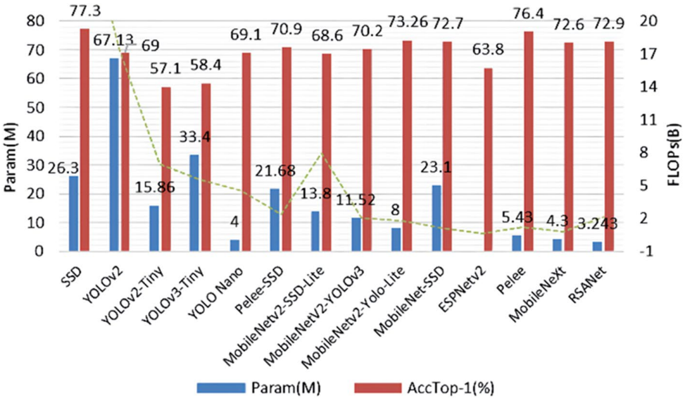
Verification
Claims the paper makes
13 Valid · 24 Not valid · 25 Not checked · 144 Own results and interpretations
The cited sources support only part of this claim — read each source’s verdict below.
In the paper
“Threshold pruning methods ranging from LMP [14] to dynamic weight selection via spatial correlation [21], and the recent random initializationbased pruning method [25] (performed to further sparsity the network) have achieved good results.”
What the sources say
- Partly supportedcites [14] 14. Han S, Mao H, Dally WJ (2015b). Deep compression: compressing deep neural networks with pruning, trained quantization and huffman coding. In Proceedings of International Conference on Learning Representations, 2016. https:// doi. org/ 10. 48550/ arXiv. 1510. 00149 sourceExperimental — accuracy not yet measured
Section 2 (p. 2) describes successful threshold-based pruning: it removes small-weight connections and reports substantial parameter reductions without loss of accuracy. But the paper starts pruning after normal network training; its discussion of random initialization concerns quantization centroids, not a random-initialization-based pruning method (Section 3.2, p. 4). (LLM, conf=0.87)
- Not matchedcites [21] 21. Liu Z, Xu J, Peng X, Xiong R (2018) Frequency-domain dynamic pruning for convolutional neural networks. Proceedings of the 32nd International Conference on Neural Information Processing Systems. pp 1051-1061
We searched by its title and found no matching paper.
- Not checked yetcites [25] 25. Frankle J, Dziugaite GK, Roy DM, Carbin M (2020) Pruning neural networks at initialization: why are we missing the mark? In Proceedings of International Conference on Learning Representations 535:6377-6389. https:// doi. org/ 10. 5555/ 34957 24. 34962 59 doi:10.5555/3495724.3496259
plain- Asserted: passes — The authors put it forward as true.
- Checkable: passes — It can be checked against evidence.
- Load-bearing: unclear — It is unclear whether the paper’s conclusions depend on it.
- Based: passes — The paper gives a reason why it holds.
- Partly supported
Every source the paper cites for this claim was checked and supports it.
In the paper
“By using the normal convolutional layer and XNOR layer for training and recall, it achieved greater inference speed on desktop CPU and GPU.”
What the sources say
- Supportedcites [150] 150. Barry D, Shah M, Keijsers M, Khan H, Hopman B (2019). XYOLO: a model for real-time object detection in humanoid soccer on low-end hardware. In 2019 International Conference on Image and Vision Computing New Zealand (IVCNZ), pp 1-6. https:// doi. org/ 10. 1109/ IVCNZ 48456. 2019. 89609 63 source
The Abstract states 'Greater inference speed-ups were also achieved on a desktop CPU and GPU,' and Section B (Comparative Computational Speed, Table II) quantifies this: 706.36 FPS on the GTX 960M GPU (≈7x Tiny-YOLO-XNOR, ≈9x Tiny-YOLO) and 87x / 35x better than Tiny-YOLO and Tiny-YOLO-XNOR on the i7-6700HQ desktop CPU. Section II (Network) also confirms the mechanism the citing sentence attaches to it — xYOLO 'utilizes both normal convolutional and XNOR layers in both training and recall.' (LLM, conf=0.92)
plainstates a cause- Asserted: passes — The authors put it forward as true.
- Checkable: passes — It can be checked against evidence.
- Load-bearing: unclear — It is unclear whether the paper’s conclusions depend on it.
- Based: passes — The paper gives a reason why it holds.
- Supported
The cited sources support only part of this claim — read each source’s verdict below.
In the paper
“Many methods based on the sparse learning (SL) framework have also been proven to be effective [43-47]”
What the sources say
- Not matchedcites [43] 43. Kingma DP, Salimans T, Welling M (2015) Variational dropout and the local reparameterization trick. In Advances in Neural Information Processing Systems (NIPS) 28:2575-2583
We searched by its title and found no matching paper.
- Supportedcites [44] 44. Louizos C, Welling M, Kingma DP (2017) Learning sparse neural networks through L0 regularization. arXiv:1712.01312. https:// doi. org/ 10. 48550/ arXiv. 1712. 01312 source
The Introduction (p. 1) of Louizos et al. states that 'it has been shown in recent works (Han et al., 2015; Ullrich et al., 2017; Molchanov et al., 2017)' that deep networks 'can be pruned significantly without any loss in accuracy', and that model compression and sparsification techniques address over-parameterisation and overfitting. The Related Work section (p. 6) treats sparsification as an established, effective line of methods ('neuron pruning ... can lead to computation savings'), and Section 4.1 / Table 1 (p. 7) lists several competing sparsity-based methods (Sparse VD, BC-GNJ/BC-GHS, GL, GD, SBP) achieving low errors, with the authors' own L0 approach 'competitive with other methods that tackle neural network compression'. The only wording difference is the citing paper's label 'sparse learning (SL) framework', which this source calls compression/sparsification/pruning — same content, so the broad background statement is supported. (LLM, conf=0.82)
- Supportedcites [45] 45. Molchanov D, Ashukha A, Vetrov D (2017) Variational dropout sparsifies deep neural networks. In International Conference on Machine Learning (PMLR) 70:2498-2507 source
The Introduction states that 'Inducing sparsity during training of DNNs leads to regularization, compression, and acceleration of the resulting model', and Section 2 (Related Work) surveys numerous sparse-learning-based approaches — pruning, elastic net / structured sparsity regularization, composite techniques, and the Sparse Bayesian Learning (ARD) framework of Tipping (2001) — describing them as successful, effective regularizers/compressors. Section 5.3 further reports these methods achieving strong sparsity with comparable accuracy on LeNet architectures, so our copy clearly treats the topic the way the broad background statement does. The citing sentence is a general survey claim backed by a reference range, not an attribution of an original finding, so no exact sentence is required. (LLM, conf=0.80)
- Not matchedcites [46] 46. Neklyudov K, Molchanov D, Ashukha A, Vetrov D (2017) Structured bayesian pruning via log-normal multiplicative noise. In Advances in Neural Information Processing Systems, pp 6778-6787 <!-- image --> 1 3
We searched by its title and found no matching paper.
- Supportedcites [47] 47. Lemaire C, Achkar A, Jodoin PM (2019) Structured pruning of neural networks with budget-aware regularization. In: Proceedings of the IEEE/CVF Conference on Computer Vision and Pattern Recognition 2019:9108-9116. https:// doi. org/ 10. 1109/ CVPR. 2019. 00932 source
The Introduction of our copy states directly that 'Among the structured pruning methods, those that implement a sparsity learning (SL) framework have shown to be effective as pruning and training are done simultaneously', citing six SL works [4,17,21,22,24,26] — i.e. many such methods. Section 2 (Previous Works) reinforces this by enumerating the SL family (L1, Group LASSO, L0-approximation, and several variational methods), and Section 5 reports that these variational/SL methods outperform earlier magnitude- and Hessian-based pruning. The only difference is wording: our copy says 'shown to be effective' rather than 'proven', and terms it 'sparsity learning' rather than 'sparse learning'; the attributed content is otherwise intact. (LLM, conf=0.85)
boosted- Asserted: passes — The authors put it forward as true.
- Checkable: passes — It can be checked against evidence.
- Load-bearing: unclear — It is unclear whether the paper’s conclusions depend on it.
- Based: passes — The paper gives a reason why it holds.
- Not matched
Every source the paper cites for this claim was checked and supports it.
In the paper
“On the basis of SqueezeNet, they proposed SqueezeNext [126] by directly incorporating separation convolution to achieve improved parameter compression.”
What the sources say
- Supportedcites [126] 126. Gholami A, Kwon K, Wu B, Tai Z, Yue X, Jin P, Keutzer K (2018). Squeezenext: hardware-aware neural network design. In Proceedings of the IEEE Conference on Computer Vision and Pattern Recognition Workshops, pp 1638-1647. https:// doi. org/ 10. 1109/ CVPRW. 2018. 00215 source
The Introduction says SqueezeNext uses SqueezeNet as a baseline and adds separable 3 × 3 convolutions to further reduce model size. The Design section explains that decomposing a convolution into two separable convolutions reduces its parameter count. (LLM, conf=0.94)
plainstates a cause- Asserted: passes — The authors put it forward as true.
- Checkable: passes — It can be checked against evidence.
- Load-bearing: unclear — It is unclear whether the paper’s conclusions depend on it.
- Based: passes — The paper gives a reason why it holds.
- Supported
A result the paper reports from its own data — it cites no other source for it, so there is none to check. The quote shows it is in the paper.
In the paper
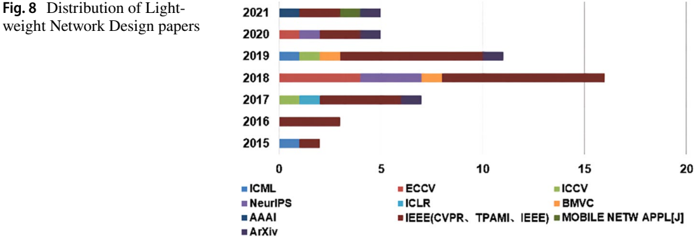
“It can be seen that network pruning and lightweight network structure design methods account for the largest proportions among the current model compression methods.”
plain- Asserted: passes — The authors put it forward as true.
- Checkable: passes — It can be checked against evidence.
- Load-bearing: unclear — It is unclear whether the paper’s conclusions depend on it.
- Based: passes — The paper gives a reason why it holds.
35 more claims
Create a free account to see all 206 claims and to verify the 17 references still open.
- It may state two separate claims as one. 85
- Probably not a substantial claim. 139
- The quote only partly states this claim. 3
Self-check
Percentages, sums and reported differences re-computed from the paper’s own numbers.
Rated major: it would touch a result — a value a result rests on, reported and recomputed p-values on opposite sides of the significance level, two passages that conflict with no sign which is right, or a cited work retracted before this paper was published.
In the paper
“In this paper, a total of 252 papers are collected from the top conferences and journals contained in class A and part of class B of computer vision, as recommended by the CCF and ACM.”
Reported 252 · recomputed 247
Citations
Cites
Items 201–283 of 283
Rigging the Lottery: Making All Tickets Winners
Evci, U., Gale, T., Menick, J., Castro, P. S., & Elsen, E. (2019) · arXiv (Cornell University) · doi:10.48550/arxiv.1911.11134 · Cited by 112
Auto-Balanced Filter Pruning for Efficient Convolutional Neural Networks
Ding, X., Ding, G., Han, J., & Tang, S. (2018) · Proceedings of the AAAI Conference on Artificial Intelligence · doi:10.1609/aaai.v32i1.12262 · Cited by 109
Learning Time/Memory-Efficient Deep Architectures with Budgeted Super Networks
Véniat, T., & Denoyer, L. (2018) · IEEE Computer Society Conference on Computer Vision and Pattern Recognition/Proceedings - IEEE Computer Society Conference on Computer Vision and Pattern Recognition/Proceedings · doi:10.1109/cvpr.2018.00368 · Cited by 108
Yang, H., Gui, S., Zhu, Y., & Liu, J. (2020) · IEEE Computer Society Conference on Computer Vision and Pattern Recognition/Proceedings - IEEE Computer Society Conference on Computer Vision and Pattern Recognition/Proceedings · doi:10.1109/cvpr42600.2020.00225 · Cited by 106
Manifold Regularized Dynamic Network Pruning
Tang, Y., Wang, Y., Xu, Y., Deng, Y., Xu, C., Tao, D., & Xu, C. (2021) · 2021 IEEE/CVF Conference on Computer Vision and Pattern Recognition (CVPR) · doi:10.1109/cvpr46437.2021.00498 · Cited by 104
Improved Knowledge Distillation via Teacher Assistant
Mirzadeh, S. I., Farajtabar, M., Li, A., Levine, N., Matsukawa, A., & Ghasemzadeh, H. (2020) · Proceedings of the AAAI Conference on Artificial Intelligence · doi:10.1609/aaai.v34i04.5963 · Cited by 101
PerforatedCNNs: Acceleration through Elimination of Redundant Convolutions
Figurnov, M., Ibraimova, A., Vetrov, D., & Kohli, P. (2015) · arXiv (Cornell University) · doi:10.48550/arxiv.1504.08362 · Cited by 101
QDNN: deep neural networks with quantum layers
Zhao, C., & Gao, X.-S. (2021) · Quantum Machine Intelligence · doi:10.1007/s42484-021-00046-w · Cited by 100
A novel channel pruning method for deep neural network compressionPreprint
Hu, Y., Sun, S., Li, J., Wang, X., & Gu, Q. (2018) · arXiv (Cornell University) · doi:10.48550/arxiv.1805.11394 · Cited by 97
Approximated Oracle Filter Pruning for Destructive CNN Width Optimization
Ding, X., Ding, G., Guo, Y., Han, J., & Yan, C. (2019) · arXiv · doi:10.48550/arxiv.1905.04748 · Cited by 96
YOLObile: Real-Time Object Detection on Mobile Devices via Compression-Compilation Co-Design
Cai, Y., Li, H., Yuan, G., Niu, W., Li, Y., Tang, X., Ren, B., & Wang, Y. (2021) · Proceedings of the AAAI Conference on Artificial Intelligence · doi:10.1609/aaai.v35i2.16179 · Cited by 93
Chen, W., Xie, D., Zhang, Y., & Pu, S. (2019) · 2019 IEEE/CVF Conference on Computer Vision and Pattern Recognition (CVPR) · doi:10.1109/cvpr.2019.00741 · Cited by 91
Self-citationStructured Pruning of Neural Networks With Budget-Aware Regularization
Lemaire, C., Achkar, A., & Jodoin, P.-M. (2019) · 2019 IEEE/CVF Conference on Computer Vision and Pattern Recognition (CVPR) · doi:10.1109/cvpr.2019.00932 · Cited by 90
Universal discriminative quantum neural networks
Chen, H., Wossnig, L., Severini, S., Neven, H., & Mohseni, M. (2021) · Quantum Machine Intelligence · doi:10.1007/s42484-020-00025-7 · Cited by 89
Universal discriminative quantum neural networks
Chen, H., Wossnig, L., Severini, S., Neven, H., & Mohseni, M. (2018) · arXiv · doi:10.48550/arxiv.1805.08654 · Cited by 89
BATS: Binary ArchitecTure Search
Bulat, A., Martínez, B., & Tzimiropoulos, G. (2020) · Lecture notes in computer science · doi:10.1007/978-3-030-58592-1_19 · Cited by 82
ChannelNets: Compact and Efficient Convolutional Neural Networks via Channel-Wise Convolutions
Gao, H., Wang, Z., Cai, L., & Ji, S. (2020) · IEEE Transactions on Pattern Analysis and Machine Intelligence · doi:10.1109/tpami.2020.2975796 · Cited by 81
IntraQ: Learning Synthetic Images with Intra-Class Heterogeneity for Zero-Shot Network Quantization
Zhong, Y., Lin, M., Nan, G., Liu, J., Zhang, B., Tian, Y., & Ji, R. (2022) · 2022 IEEE/CVF Conference on Computer Vision and Pattern Recognition (CVPR) · doi:10.1109/cvpr52688.2022.01202 · Cited by 80
Self-citationLiu, C., Ding, W., Xia, X., Zhang, B., Gu, J., Liu, J., Ji, R., & Doermann, D. (2019) · 2019 IEEE/CVF Conference on Computer Vision and Pattern Recognition (CVPR) · doi:10.1109/cvpr.2019.00280 · Cited by 79
Self-citationInterleaved Group Convolutions for Deep Neural Networks
Zhang, T., Qi, G.-J., Xiao, B., & Wang, J. (2017) · arXiv (Cornell University) · doi:10.48550/arxiv.1707.02725 · Cited by 73
Play and Prune: Adaptive Filter Pruning for Deep Model Compression
Singh, P., Verma, V., Rai, P., & Namboodiri, V. P. (2019) · International Joint Conference on Artificial Intelligence · doi:10.48550/arxiv.1905.04446 · Cited by 73
Extreme Network Compression via Filter Group Approximation
Peng, B., Tan, W., Li, Z., Zhang, S., Xie, D., & Pu, S. (2018) · Lecture notes in computer science · doi:10.1007/978-3-030-01237-3_19 · Cited by 71
Constraint-Aware Deep Neural Network Compression
Chen, C., Tung, F., Vedula, N., & Mori, G. (2018) · Lecture notes in computer science · doi:10.1007/978-3-030-01237-3_25 · Cited by 71
OPQ: Compressing Deep Neural Networks with One-shot Pruning-Quantization
Hu, P., Peng, X., Zhu, H., Aly, M. M. S., & Lin, J. (2021) · Proceedings of the AAAI Conference on Artificial Intelligence · doi:10.1609/aaai.v35i9.16950 · Cited by 71
Structured Compression by Weight Encryption for Unstructured Pruning and Quantization
Kwon, S. J., Lee, D., Kim, B., Kapoor, P., Park, B., & Wei, G.-Y. (2020) · IEEE Computer Society Conference on Computer Vision and Pattern Recognition/Proceedings - IEEE Computer Society Conference on Computer Vision and Pattern Recognition/Proceedings · doi:10.1109/cvpr42600.2020.00198 · Cited by 69
Play and Prune: Adaptive Filter Pruning for Deep Model Compression
Singh, P. P., Verma, V. K., Rai, P., & Namboodiri, V. P. (2019) · International Joint Conference on Artificial Intelligence · doi:10.24963/ijcai.2019/480 · Cited by 68
T-Net: Parametrizing Fully Convolutional Nets With a Single High-Order Tensor
Kossaifi, J., Bulat, A., Tzimiropoulos, G., & Pantic, M. (2019) · 2019 IEEE/CVF Conference on Computer Vision and Pattern Recognition (CVPR) · doi:10.1109/cvpr.2019.00801 · Cited by 65
Distilling Holistic Knowledge with Graph Neural Networks
Zhou, S., Wang, Y., Chen, D., Chen, J., Wang, X., Wang, C., & Bu, J. (2021) · 2021 IEEE/CVF International Conference on Computer Vision (ICCV) · doi:10.1109/iccv48922.2021.01022 · Cited by 63
Channel Pruning Guided by Classification Loss and Feature Importance
Guo, J., Ouyang, W., & Xu, D. (2020) · Proceedings of the AAAI Conference on Artificial Intelligence · doi:10.1609/aaai.v34i07.6720 · Cited by 62
Tied Block Convolution: Leaner and Better CNNs with Shared Thinner Filters
Wang, X., & Yu, S. X. (2021) · Proceedings of the AAAI Conference on Artificial Intelligence · doi:10.1609/aaai.v35i11.17226 · Cited by 61
Lin, T. (2020) · 2020 IEEE 39th International Performance Computing and Communications Conference (IPCCC) · doi:10.1109/ipccc50635.2020.9391558 · Cited by 59
Ruan, X., Liu, Y., Li, B., Yuan, C., & Hu, W. (2021) · Proceedings of the AAAI Conference on Artificial Intelligence · doi:10.1609/aaai.v35i3.16351 · Cited by 58
Post-training Quantization with Multiple Points: Mixed Precision without Mixed Precision
Liu, X., Ye, M., Zhou, D., & Liu, Q. (2021) · Proceedings of the AAAI Conference on Artificial Intelligence · doi:10.1609/aaai.v35i10.17054 · Cited by 55
ChipNet: Budget-Aware Pruning with Heaviside Continuous ApproximationsPreprint
Tiwari, R., Bamba, U., Chavan, A., & Gupta, D. K. (2021) · arXiv (Cornell University) · doi:10.48550/arxiv.2102.07156 · Cited by 54
Kim, D., Lee, J., & Ham, B. (2021) · IEEE/CVF International Conference on Computer Vision (ICCV) · doi:10.1109/iccv48922.2021.00522 · Cited by 53
Optimization based Layer-wise Magnitude-based Pruning for DNN Compression
Li, G., Qian, C., Jiang, C., Lu, X., & Tang, K. (2018) · Proceedings of the Twenty-Seventh International Joint Conference on Artificial Intelligence · doi:10.24963/ijcai.2018/330 · Cited by 53
Self-citationDynamic Network Pruning with Interpretable Layerwise Channel Selection
Wang, Y., Zhang, X., Hu, X., Zhang, B., & Su, H. (2020) · Proceedings of the AAAI Conference on Artificial Intelligence · doi:10.1609/aaai.v34i04.6098 · Cited by 53
Self-citationLearning Architectures for Binary Networks
Kim, D., Singh, K. P., & Choi, J. (2020) · Lecture notes in computer science · doi:10.1007/978-3-030-58610-2_34 · Cited by 51
Learning Architectures for Binary Networks
Kim, D., Singh, K. P., & Choi, J. (2020) · European Conference on Computer Vision · doi:10.48550/arxiv.2002.06963 · Cited by 49
It's All In the Teacher: Zero-Shot Quantization Brought Closer to the Teacher
Choi, K., Lee, H. Y., Hong, D., Yu, J., Park, N., Kim, Y., & Lee, J. (2022) · IEEE Computer Society Conference on Computer Vision and Pattern Recognition/Proceedings - IEEE Computer Society Conference on Computer Vision and Pattern Recognition/Proceedings · doi:10.1109/cvpr52688.2022.00813 · Cited by 48
MorphNet: Fast & Simple Resource-Constrained Structure Learning of Deep NetworksPreprint
Gordon, A., Eban, E., Nachum, O., et al. (2017) · arXiv (Cornell University) · doi:10.48550/arxiv.1711.06798 · Cited by 48
Robust Pruning at InitializationPreprint
Hayou, S., Ton, J.-F., Doucet, A., & Teh, Y. W. (2020) · arXiv (Cornell University) · doi:10.48550/arxiv.2002.08797 · Cited by 47
Neural Response Interpretation through the Lens of Critical Pathways
Khakzar, A., Baselizadeh, S., Khanduja, S., Rupprecht, C., Kim, S. T., & Navab, N. (2021) · IEEE Computer Society Conference on Computer Vision and Pattern Recognition/Proceedings - IEEE Computer Society Conference on Computer Vision and Pattern Recognition/Proceedings · doi:10.1109/cvpr46437.2021.01332 · Cited by 47
Shift-Net: Image Inpainting via Deep Feature RearrangementPreprint
Yan, Z., Li, X., Li, M., et al. (2018) · arXiv (Cornell University) · doi:10.48550/arxiv.1801.09392 · Cited by 46
Learning Student Networks in the Wild
Chen, H., Guo, T., Xu, C., Li, W., Xu, C., Xu, C., & Wang, Y. (2021) · IEEE Computer Society Conference on Computer Vision and Pattern Recognition/Proceedings - IEEE Computer Society Conference on Computer Vision and Pattern Recognition/Proceedings · doi:10.1109/cvpr46437.2021.00636 · Cited by 45
TRQ: Ternary Neural Networks With Residual Quantization
Li, Y., Ding, W., Liu, C., Zhang, B., & Guo, G. (2021) · Proceedings of the AAAI Conference on Artificial Intelligence · doi:10.1609/aaai.v35i10.17036 · Cited by 45
Self-citationFast ConvNets Using Group-wise Brain DamagePreprint
Lebedev, V., & Lempitsky, V. (2015) · arXiv (Cornell University) · doi:10.48550/arxiv.1506.02515 · Cited by 45
BN-NAS: Neural Architecture Search with Batch Normalization
Chen, B., Li, P., Li, B., Chen, L., Li, C., Sun, M., Yan, J., & Ouyang, W. (2021) · IEEE/CVF International Conference on Computer Vision (ICCV) · doi:10.1109/iccv48922.2021.00037 · Cited by 43
Liu, S., Chen, T., Chen, X., Shen, L., Mocanu, D. C., Wang, Z., & Pechenizkiy, M. (2022) · arXiv · doi:10.48550/arxiv.2202.02643 · Cited by 43
Linearly Replaceable Filters for Deep Network Channel Pruning
Joo, D., Yi, E., Baek, S., & Kim, J. (2021) · Proceedings of the AAAI Conference on Artificial Intelligence · doi:10.1609/aaai.v35i9.16978 · Cited by 43
Diffenderfer, J., & Kailkhura, B. (2021) · arXiv · doi:10.48550/arxiv.2103.09377 · Cited by 39
Residual Knowledge DistillationPreprint
Gao, M., Shen, Y., Li, Q., & Loy, C. C. (2020) · arXiv (Cornell University) · doi:10.48550/arxiv.2002.09168 · Cited by 38
Learning Channel-Wise Interactions for Binary Convolutional Neural Networks
Wang, Z., Lu, J., & Zhou, J. (2021) · IEEE Transactions on Pattern Analysis and Machine Intelligence · doi:10.1109/tpami.2020.2988262 · Cited by 36
Reborn Filters: Pruning Convolutional Neural Networks with Limited Data
Tang, Y., You, S., Xu, C., Han, J., Qian, C., Shi, B., Xu, C., & Zhang, C. (2020) · Proceedings of the AAAI Conference on Artificial Intelligence · doi:10.1609/aaai.v34i04.6058 · Cited by 33
Knowledge distillation via adaptive instance normalizationPreprint
Yang, J., Martínez, B., Bulat, A., & Tzimiropoulos, G. (2020) · arXiv (Cornell University) · doi:10.48550/arxiv.2003.04289 · Cited by 32
VarGNet: Variable Group Convolutional Neural Network for Efficient Embedded ComputingPreprint
Zhang, Q., Li, J., Meng, Y., Song, L., Zhou, H., Li, Z., Meng, W., Zhang, X., & Wang, G. (2019) · arXiv (Cornell University) · doi:10.48550/arxiv.1907.05653 · Cited by 29
Holistic Filter Pruning for Efficient Deep Neural Networks
Enderich, L., Timm, F., & Burgard, W. (2021) · IEEE Winter Conference on Applications of Computer Vision · doi:10.1109/wacv48630.2021.00264 · Cited by 29
Binarized Neural Architecture Search for Efficient Object Recognition
Chen, H., Zhuo, L., Zhang, B., Zheng, X., Liu, J., Ji, R., Doermann, D., & Guo, G. (2020) · International Journal of Computer Vision · doi:10.1007/s11263-020-01379-y · Cited by 28
Self-citationNetwork Pruning That Matters: A Case Study on Retraining Variants
Le, D. H., & Hua, B.-S. (2021) · arXiv · doi:10.48550/arxiv.2105.03193 · Cited by 28
Object Detection and Classification from a Real-Time Video Using SSD and YOLO Models
Feroz, M. A., Sultana, M., Hasan, M. R., et al. (2021) · Advances in intelligent systems and computing · doi:10.1007/978-981-16-2543-5_4 · Cited by 27
CircConv: A Structured Convolution with Low Complexity
Liao, S., & Yuan, B. (2019) · Proceedings of the AAAI Conference on Artificial Intelligence · doi:10.1609/aaai.v33i01.33014287 · Cited by 27
Stochastic Precision Ensemble: Self-Knowledge Distillation for Quantized Deep Neural Networks
Boo, Y., Shin, S., Choi, J., & Sung, W. (2021) · Proceedings of the AAAI Conference on Artificial Intelligence · doi:10.1609/aaai.v35i8.16839 · Cited by 25
IGCV$2$: Interleaved Structured Sparse Convolutional Neural NetworksPreprint
Xie, G., Wang, J., Zhang, T., Lai, J., Hong, R., & Qi, G.-J. (2018) · arXiv (Cornell University) · doi:10.48550/arxiv.1804.06202 · Cited by 24
Chang, X., Li, Y., Oymak, S., & Thrampoulidis, C. (2021) · Proceedings of the AAAI Conference on Artificial Intelligence · doi:10.1609/aaai.v35i8.16859 · Cited by 24
Liu, Z., Wu, B., Luo, W., et al. (2018) · arXiv (Cornell University) · doi:10.48550/arxiv.1808.00278 · Cited by 23
Zhou, Q., Wang, J., Liu, J., Li, S., Ou, W., & Jin, X. (2021) · Mobile Networks and Applications · doi:10.1007/s11036-020-01723-z · Cited by 21
Biswas, D., Rahman, M. M. M., Zong, Z., & Tesic, J. (2022) · 2022 IEEE International Conference on Networking, Architecture and Storage (NAS) · doi:10.1109/nas55553.2022.9925528 · Cited by 20
xYOLO: A Model For Real-Time Object Detection In Humanoid Soccer On Low-End Hardware
Barry, D., Shah, M., Keijsers, M., Khan, H., & Hopman, B. (2019) · 2019 International Conference on Image and Vision Computing New Zealand (IVCNZ) · doi:10.1109/ivcnz48456.2019.8960963 · Cited by 19
CP-NAS: Child-Parent Neural Architecture Search for 1-bit CNNs
Zhuo, L., Zhang, B., Chen, H., Yang, L., Chen, C., Zhu, Y., & Doermann, D. (2020) · International Joint Conference on Artificial Intelligence · doi:10.24963/ijcai.2020/144 · Cited by 17
Self-citationDARB: A Density-Adaptive Regular-Block Pruning for Deep Neural Networks
Ren, A., Zhang, T., Yuhao, W., Sheng, L., Dong, P., Chen, Y.-K., Xie, Y., & Wang, Y. (2020) · Proceedings of the AAAI Conference on Artificial Intelligence · doi:10.1609/aaai.v34i04.6000 · Cited by 16
Self-citationNeural Network Pruning with Residual-Connections and Limited-DataPreprint
Luo, J.-H., & Wu, J. (2019) · arXiv (Cornell University) · doi:10.48550/arxiv.1911.08114 · Cited by 11
Self-citationWang, Y., Zhang, X., Xie, L., Zhou, J., Su, H., Zhang, B., & Hu, X. (2020) · Proceedings of the AAAI Conference on Artificial Intelligence · doi:10.1609/aaai.v34i07.6910 · Cited by 8
Self-citationLearning Versatile Convolution Filters for Efficient Visual Recognition
Han, K., Wang, Y., Xu, C., Xu, C., Wu, E., & Tao, D. (2022) · IEEE Transactions on Pattern Analysis and Machine Intelligence · doi:10.1109/tpami.2021.3114368 · Cited by 8
Model Compression in Object Detection
Salvi, A. D. A., & Barros, R. C. (2021) · International Joint Conference on Neural Networks (IJCNN) · doi:10.1109/ijcnn52387.2021.9533792 · Cited by 4
Multi-View Feature Clustering Technique for Detection and Classification of Human Actions
Ahmed, S. T., Guptha, N. S., Fathima, A., et al. (2021) · doi:10.4108/eai.16-5-2020.2304034 · Cited by 2
Basha, S. M., Ahmed, S. T., & AlShammari, N. K. (2022) · Smart innovation, systems and technologies · doi:10.1007/978-981-16-9447-9_9 · Cited by 2
Poliakov, E., Luu, V.-T., Tran, V.-H., & Huang, C.-C. (2022) · IEEE International Conference on Multimedia and Expo (ICME) · doi:10.1109/icme52920.2022.9859994 · Cited by 2
Low-Rank+Sparse Tensor Compression for Neural Networks
Hawkins, C., Yang, H., Li, M., Lai, L., & Chandra, V. (2021) · arXiv · doi:10.48550/arxiv.2111.01697 · Cited by 2
A Compression-Compilation Co-Design Framework Towards Real-Time Object Detection on Mobile Devices
Cai, Y., Yuan, G., Li, H., Niu, W., Li, Y., Tang, X., Ren, B., & Wang, Y. (2021) · Proceedings of the AAAI Conference on Artificial Intelligence · doi:10.1609/aaai.v35i18.17992 · Cited by 2
ShiftAddNet: A Hardware-Inspired Deep Network
You, H., Chen, X., Zhang, Y., Li, C., Li, S., Liu, Z., Wang, Z., & Lin, Y. C. (2020) · arXiv · doi:10.48550/arxiv.2010.12785
Self-citationQuantized Neural Networks: Training Neural Networks with Low Precision Weights and Activations
Hubara, I., Courbariaux, M., Soudry, D., El-Yaniv, R., & Bengio, Y. (2016) · arXiv · doi:10.48550/arxiv.1609.07061
Research works printed but not linked: 22
- 12. LeCun Y, Denker JS, Solla SA (1990)Optimal brain damage. In: advancesin neural information processing systems 2:598-605
- 19. Wang W, Chen M, Zhao S, Chen L, Hu J, Liu H, Liu W (2021) ACTD Accelerate cnns from three dimensions: a comprehensive pruning framework. International Conference on Machine Learning, vol 2021. PMLR, pp 10717-10726
- 25. Frankle J, Dziugaite GK, Roy DM, Carbin M (2020) Pruning neural networks at initialization: why are we missing the mark? In Proceedings of International Conference on Learning Representations 535:6377-6389. https:// doi. org/ 10. 5555/ 34957 24. 34962 59 · doi:10.5555/3495724.3496259
- 39. Yoon J, Hwang SJ (2017) Combined group and exclusive sparsity for deep neural networks. In International Conference on Machine Learning (PMLR) 70:3958-3966
- 58. Lin C, Zhong Z, Wu W, Yan J (2018) Synaptic strength for convolutional neural network. Adv Neural Inf Processing Syst 2018:10149-10158
- 80. Zhuang Z, Tan M, Zhuang B, Liu J, Guo Y, Wu Q, Zhu J (2018) Discrimination-aware channel pruning for deep neural networks. In Advances in Neural Information Processing Systems 31:883-894.
- 81. Peng H, Wu J, Chen S, Huang J (2019) Collaborative channel pruning for deep networks. In International Conference on Machine Learning 1:5113-5122 (PMLR)
- 86. Kang M, Han B (2020) Operation-aware soft channel pruning using differentiable masks. In International Conference on Machine Learning 119:5122-5131
- 110. Tan M, Le QV (2019b) Mixconv: mixed depthwise convolutional kernels. In British Machine Vision Conference (BMVC), 33(116):1-13. https:// dx. doi. org/ 10. 5244/C. 33. 116
- 123. Wang Y, Xu C, Xu C, Xu C, Tao D (2018) Learning versatile filters for efficient convolutional neural networks. In Advances in Neural Information Processing Systems 31:1608-1618
- 132. Wang RJ, Li X, Ling CX (2018) Pelee: a real-time object detection system on mobile devices. In Adv Neural Inf Proces Syst 43(10):3349-3364. https:// doi. org/ 10. 1109/ TPAMI. 2020. 29836 86 · DOI · Paper page
- 164. Cai H, Chen T, Zhang W, Yu Y, Wang J (2018) Efficient architecture search by network transformation. In Proceedings of the AAAI Conference on Artificial Intelligence 32(1):2787-794
- 166. Wong C, Houlsby N, Lu Y, Gesmundo A (2018) Transfer learning with neural automl. In Adv Neural Inf Proces Syst 31:8366-8375
- 179. Pham H, Guan M, Zoph B, Le Q, Dean J (2018) Efficient neural architecture search via parameters sharing. In International Conference on Machine Learning 80:4095-4104
- 190. Lin J, Chen WM, Lin Y, Cohn J, Gan C, Han S (2020) Mcunet: tiny deep learning on iot devices. In Adv Neural Inf Proces Syst 33:11711-11722
- 200. Hu Q, Wang P, Cheng J (2018) From hashing to cnns: training binary weight networks via hashing. In Proceedings of the AAAI Conference on Artificial Intelligence 32(1):3247-3254
- 211. Wu J, Wang Y, Wu Z, Wang Z, Veeraraghavan A, Lin Y (2018) Deep k-means: re-training and parameter sharing with harder cluster assignments for compressing deep convolutions. In International Conference on Machine Learning 80:5363-5372
- 229. Hinton G, Vinyals O, Dean J (2015) Distilling the knowledge in a neural network. In: Proc Adv Neural Inf Processing Syst Workshop 27:2014
- 254. Denil M, Shakibi B, Dinh L, Ranzato M, de Freitas N (2013) Predicting parameters in deep learning. Adv Neural Inf Processing Syst. Lake Tahoe 26:2148-2156
- 256. Denton EL, Zaremba W, Bruna J, LeCun Y, Fergus R (2014) Exploiting linear structure within convolutional networks for efficient evaluation. Neural information processing systems foundation (NIPS). 2014: 1269-1277
- 274. Krizhevsky A, Sutskever I, Hinton GE (2012) Imagenet classification with deep convolutional neural networks. In Adv Neural Inf Proces Syst 60(6):84-90
- 279. Yang K, Jiao Z, Liang J, Lei H, Li C, Zhong Z (2022) An application case of object detection model based on Yolov3-SPP model pruning. IEEE Int Conf Artif Intell Comput App (ICAICA) 2022:578-582 Publisher's Note Springer Nature remains neutral with regard to jurisdictional claims in published maps and institutional affiliations. <!-- image -->
Cited by
A comprehensive review of model compression techniques in machine learning
Dantas, P. V., Sabino da Silva, W., Cordeiro, L. C., & Carvalho, C. B. (2024) · Applied Intelligence · doi:10.1007/s10489-024-05747-w · Cited by 261
Kazanskiy, N. L., Khabibullin, R. M., Nikonorov, A. V., & Khonina, S. N. (2025) · Sensors · doi:10.3390/s25195965 · Cited by 135
“Research on lightweight AI architectures and model compression techniques is making significant strides, enabling the deployment of AI models on resource-constrained devices like drones and edge sensors [171,172].”
Khan, S. M., Sajjad, M., Abbas, N., Escorcia‐Gutierrez, J., Gamarra, M., & Muhammad, K. (2024) · Computers in Biology and Medicine · doi:10.1016/j.compbiomed.2024.108146 · Cited by 69
Ma, J., Zhou, Y., Zhou, Z., Zhang, Y., & He, L. (2025) · Marine Pollution Bulletin · doi:10.1016/j.marpolbul.2025.118136 · Cited by 58
Self-citationRobust Aerial Person Detection With Lightweight Distillation Network for Edge Deployment
Zhang, X., Feng, Y., Zhang, S., Wang, N., Lü, G., & Mei, S. (2024) · IEEE Transactions on Geoscience and Remote Sensing · doi:10.1109/tgrs.2024.3421310 · Cited by 68
“Several common lightweight object detection methods mainly include model compression [37], network pruning [38], LPQ [39], lightweight network [40], and model distillation [41].”
Method
Metadata
- Authors
- Lyu, Z., Yu, T., Pan, F., Zhang, Y., Luo, J., Zhang, D., Chen, Y., Zhang, B., & Li, G.
- Affiliations
- Civil Aviation University of China (CN)
- Corresponding author
- Lyu, Zonglei
- Venue
- Multimedia Tools and Applications
- Published
- 2023-11-02
- Volume
- 83
- Issue
- 16
- Pages
- 48165-48236
- ISSN
- 1380-7501 (ISSN-L)
- 1573-7721
- OpenAlex
- W4388229123
- Cited by
- 65
- References
- 228
- Citations by year
- 2026: 24 · 2025: 26 · 2024: 15
- FWCI
- 5.89
- Type
- journal article
- Language
- en
- Open access
- hybrid
- doi.org
- Licence
- cc-by
- creativecommons.org/licenses/by/4.0 (tdm)
- creativecommons.org/licenses/by/4.0 (vor)
- Locations
- Multimedia Tools and Applications (publishedVersion, cc-by)
- Funders
- Fundamental Research Funds for Central Universities of the Civil Aviation University of China (3122021088)
- Topics
- Physical Sciences › Computer Science › Computer Vision and Pattern Recognition › Advanced Neural Network Applications
- Physical Sciences › Computer Science › Artificial Intelligence › Domain Adaptation and Few-Shot Learning
- Physical Sciences › Computer Science › Artificial Intelligence › Machine Learning and Data Classification
- Keywords
- model compression, object detection, network pruning, neural architecture search, low-rank decomposition, neural network quantization, knowledge distillation, deep neural network, edge deployment, real-time inference
About these checks
Registry, retraction, Cites and statistics results are computed, not judged, with one exception: a printed reference that no index lists is read once by a model before it counts as a citation error. Claims are extracted by a model and kept only when their quote appears verbatim in the text; each cited source is then checked, with a model’s help, for whether it says what the claim relies on. Those verdicts can be wrong — read the claim’s quote and the cited source before relying on one.
The claim verdicts this report counts are experimental: their accuracy is not yet measured.
A language model drew the claims from the paper on 2026-10-10, under version 3 of the claim definition (model deepseek-v4.1-flash, prompt extract-v3).
A second model labelled each claim on 2026-10-10 (model jev-1.13-20260917, definition revision gold-guideline-v0.2).
Cited sources are checked with a language model’s help (gpt-6-sol and qwen3.8-omni-flash).
Statistics and arithmetic are recomputed, not judged.
Confidence bands are shown only for fields calibrated on our annotated test set. None is calibrated yet, so no band is shown.
What counts as a claim ›How we measure confidence ›How we check this ›
Are you an author, or do you see a problem with this page? Request a review
Data sources
Bibliographic data: Semantic Scholar, OpenAlex, Crossref.
Contains information from the Semantic Scholar Academic Graph Datasets, made available under the ODC Attribution License (ODC-BY 1.0).
Semantic Scholar’s data is described in: Kinney, R., et al. (2023). The Semantic Scholar Open Data Platform. arXiv:2301.10140.
