

Embodying Time in the Brain: A Multi-Dimensional Neuroimaging Meta-Analysis of 95 Duration Processing Studies
Open accessThe DOI matches its Crossref record; 181 of the 182 references it cites were found in a registry or an index.
Abstract
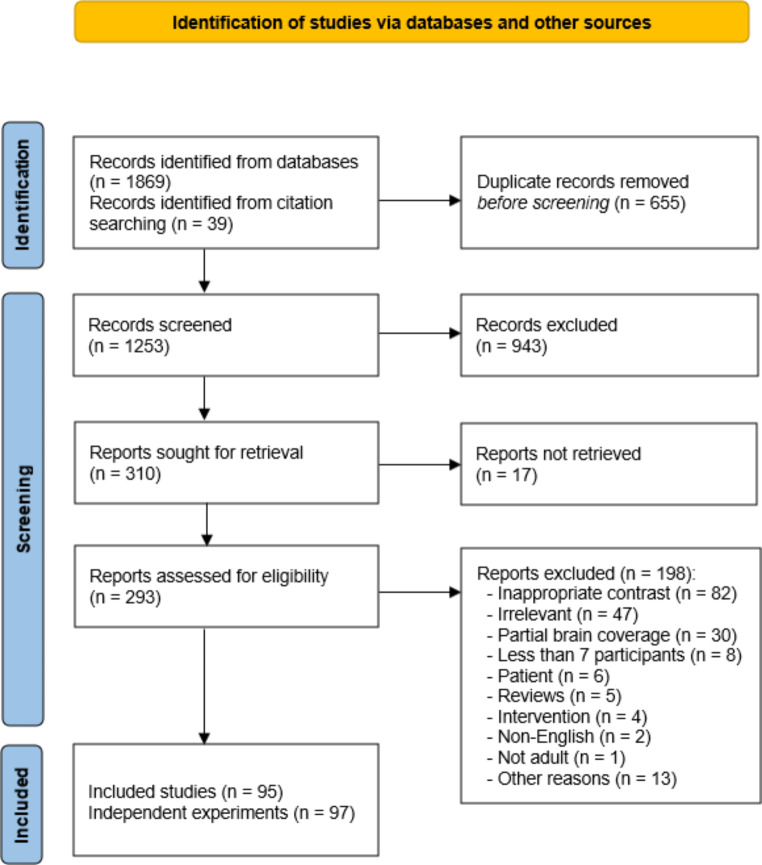
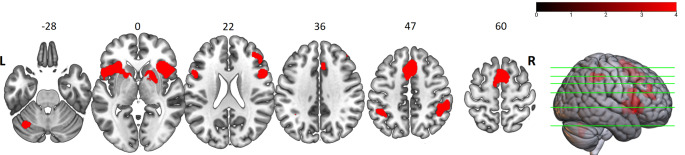
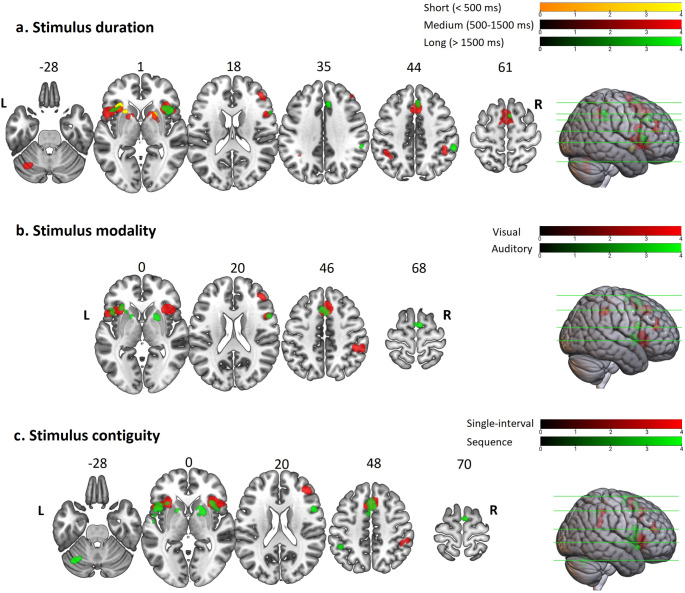
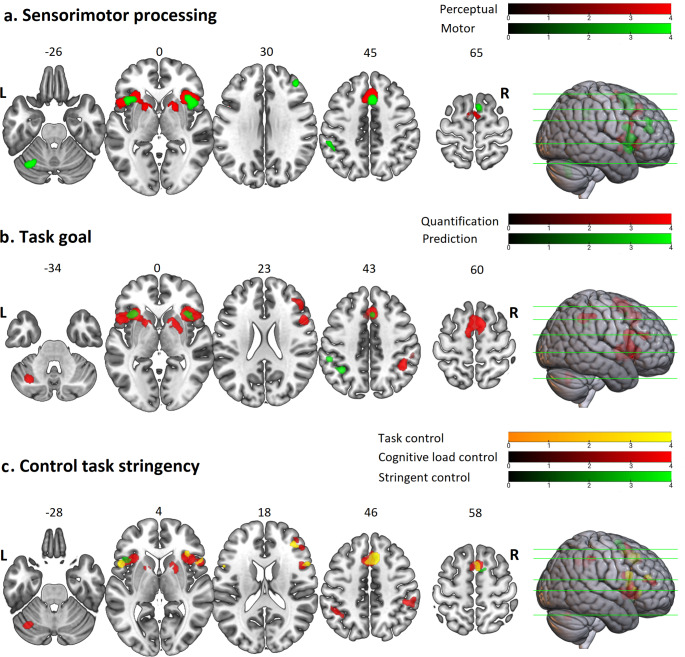
Time is an omnipresent aspect of almost everything we experience internally or in the external world. The experience of time occurs through such an extensive set of contextual factors that, after decades of research, a unified understanding of its neural substrates is still elusive. In this study, following the recent best-practice guidelines, we conducted a coordinate-based meta-analysis of 95 carefully-selected neuroimaging papers of duration processing. We categorized the included papers into 14 classes of temporal features according to six categorical dimensions. Then, using the activation likelihood estimation (ALE) technique we investigated the convergent activation patterns of each class with a cluster-level family-wise error correction at p < 0.05. The regions most consistently activated across the various timing contexts were the pre-SMA and bilateral insula, consistent with an embodied theory of timing in which abstract representations of duration are rooted in sensorimotor and interoceptive experience, respectively. Moreover, class-specific patterns of activation could be roughly divided according to whether participants were timing auditory sequential stimuli, which additionally activated the dorsal striatum and SMA-proper, or visual single interval stimuli, which additionally activated the right middle frontal and inferior parietal cortices. We conclude that temporal cognition is so entangled with our everyday experience that timing stereotypically common combinations of stimulus characteristics reactivates the sensorimotor systems with which they were first experienced.
Overview
The claims and statistics of this paper haven’t been checked yet.
Free: it reads the open-access text and checks the first 5 claims that cite a source we can check. Create a free account to check every claim.
Integrity signals
Registry
Cites
Statistics
Figures
Verification
Claims the paper makes
The claims and statistics of this paper haven’t been checked yet.
Free: it reads the open-access text and checks the first 5 claims that cite a source we can check. Create a free account to check every claim.
Claims other papers make about this one
Each is checked against this paper’s own text: does it say what the citing paper says it does?
The cited source says what the claim attributes to it.
In the citing paper
“A recent meta-analysis of a wide range of neuroimaging experiments has identified the insula as one of the only two brain regions robustly involved in time perception [83,84].”
From The Insular Cortex: An Interface Between Sensation, Emotion and Cognition (2024) · cites this paper as [84]
Self-check
Percentages, sums and reported differences re-computed from the paper’s own numbers.
The self-check needs the paper’s full text.
Citations
Cites
The PRISMA 2020 statement: An updated guideline for reporting systematic reviews
Page, M. J., McKenzie, J. E., Bossuyt, P. M., Boutron, I., Hoffmann, T. C., Mulrow, C. D., Shamseer, L., Tetzlaff, J. M., Akl, E. A., Brennan, S. E., et al. (2021) · BMJ · doi:10.1136/bmj.n71 · Cited by 108,283
The magical number seven, plus or minus two: Some limits on our capacity for processing information.
Miller, G. A. (1956) · Psychological Review · doi:10.1037/h0043158 · Cited by 17,812
The magical number seven, plus or minus two: Some limits on our capacity for processing information.
Miller, G. A. (1994) · Psychological Review · doi:10.1037/0033-295x.101.2.343 · Cited by 17,161
Barsalou, L. W. (2008) · Annual Review of Psychology · doi:10.1146/annurev.psych.59.103006.093639 · Cited by 5,936 · cited 2×
“Activation of these two regions can therefore be interpreted in terms of embodied models of cognition that highlight the significance of both bodily states and simulation-like pro - cesses in the neural representation of cognitive processes (Barsalou, 2007).”
BackgroundTalairach, J., Tournoux, P., & Rayport, M. (1988) · Thieme eBooks · Cited by 5,058
A new SPM toolbox for combining probabilistic cytoarchitectonic maps and functional imaging data
Eickhoff, S. B., Stephan, K. E., Mohlberg, H., Grefkes, C., Fink, G. R., Amunts, K., & Zilles, K. (2005) · NeuroImage · doi:10.1016/j.neuroimage.2004.12.034 · Cited by 4,033
Self-citationWhat makes us tick? Functional and neural mechanisms of interval timing
Buhusi, C. V., & Meck, W. H. (2005) · Nature Reviews Neuroscience · doi:10.1038/nrn1764 · Cited by 2,062 · cited 2×
“There is abundant evidence for partial dissociation of timing mechanisms as a function of context (for a review, please see Buhusi & Meck, 2005; Paton & Buonomano, 2018).”
BackgroundWhen the brain plays music: auditory–motor interactions in music perception and production
Zatorre, R. J., Chen, J. L., & Penhune, V. B. (2007) · Nature Reviews Neuroscience · doi:10.1038/nrn2152 · Cited by 1,754 · cited 2×
“Therefore, it is conceivable that ventrolateral PMC, with its role in audio-vocal transformation, is involved in the motor representation of the temporal structure of events (Chen et al., 2009; Fiebach & Schubotz, 2006; Zatorre, Chen, & Penhune, 2007 ).”
BackgroundPredictive coding under the free-energy principle
Friston, K., & Kiebel, S. (2009) · Philosophical Transactions of the Royal Society B: Biological Sciences · doi:10.1098/rstb.2008.0300 · Cited by 1,579 · cited 1×
“…sensory-motor integration, a phenomenon under - lying the capacity for real-time internal representation of events’ structure (Bornkessel-Schlesewsky & Schlesewsky, 2013; Rauschecker, 2011, 2018) and predictive coding (Friston & Kiebel, 2009; Proksch et al., 2020; Zatorre et al., 2007).”
Background3D statistical neuroanatomical models from 305 MRI volumes
Evans, A. C., Collins, D. L., Mills, S. R., Brown, E. D., Kelly, R. L., & Peters, T. M. (2005) · 1993 IEEE Conference Record Nuclear Science Symposium and Medical Imaging Conference · doi:10.1109/nssmic.1993.373602 · Cited by 1,487 · cited 2×
“MNI (Evans et al., 1993), as well as categorical dimensions of stimulus duration, stimulus modality, stimulus contiguity, sensorimotor processing, task goal, and control task strin-gency.”
Method
Research works printed but not linked: 2
- Daikoku, T., Daikoku, T., & Goswami, U. (2020). The Hierarchical Structure of Temporal Modulations in Music is Universal across Genres and matches Infant-Directed Speech. bioRxiv.
- Snyder, B. (2008). Memory for music. In The Oxford Handbook of Music Psychology.
Cited by
The Insular Cortex: An Interface Between Sensation, Emotion and Cognition
Zhang, R., Deng, H., & Xiao, X. (2024) · Neuroscience Bulletin · doi:10.1007/s12264-024-01211-4 · Cited by 158
“A recent meta-analysis of a wide range of neuroimaging experiments has identified the insula as one of the only two brain regions robustly involved in time perception [83, 84].”
Gkintoni, E., & Halkiopoulos, C. (2025) · Biomimetics · doi:10.3390/biomimetics10110730 · Cited by 57
Reimann, G. M., Küppers, V., Camilleri, J. A., Hoffstaedter, F., Langner, R., Laird, A. R., Fox, P. T., Spiegelhalder, K., Eickhoff, S. B., & Tahmasian, M. (2023) · Sleep Medicine Reviews · doi:10.1016/j.smrv.2023.101821 · Cited by 38
Self-citationTime processing in neurological and psychiatric conditions
Hinault, T., D’Argembeau, A., Bowler, D., Piolino, P., Desaunay, P., Provasi, J., Platel, H., The, J. T., Charretier, L., Giersch, A., et al. (2023) · Neuroscience & Biobehavioral Reviews · doi:10.1016/j.neubiorev.2023.105430 · Cited by 36
“Activation of the insula, the supplementary motor area (SMA), the superior/inferior frontal gyri, the superior temporal gyrus, and the striatum, are common across contexts and duration judgements (Nani et al., 2019; Naghibi et al., 2023; Mondok and Wiener, 2023).”
BackgroundTime, space, memory and brain–body rhythms
Buzsáki, G. (2025) · Nature reviews. Neuroscience · doi:10.1038/s41583-025-00987-2 · Cited by 43
When the Heart Meets the Mind: Exploring the Brain–Heart Interaction during Time Perception
Khoshnoud, S., Leitritz, D., Bozdağ, M. Ç., Igarzábal, F. A., Noreika, V., & Wittmann, M. (2024) · Journal of Neuroscience · doi:10.1523/jneurosci.2039-23.2024 · Cited by 25
Towards a neurodevelopmental cognitive perspective of temporal processing
Buzi, G., Eustache, F., Droit‐Volet, S., Desaunay, P., & Hinault, T. (2024) · Communications Biology · doi:10.1038/s42003-024-06641-4 · Cited by 26
“Do the authors have any more concrete proposals that would enable them to envisage these prospects for practical clinical applications in relation to the neurodevelopmental aspects of temporal skills?”
The neural link between stimulus duration and spatial location in the human visual hierarchy
Centanino, V., Fortunato, G., & Bueti, D. (2024) · Nature Communications · doi:10.1038/s41467-024-54336-5 · Cited by 17
How the body and brain process time
Teghil, A., & Wittmann, M. (2025) · Neuroscience & Biobehavioral Reviews · doi:10.1016/j.neubiorev.2025.106416 · Cited by 18
Wittmann, M., & Droit‐Volet, S. (2024) · Current topics in behavioral neurosciences · doi:10.1007/7854_2024_520 · Cited by 19
Neural Representation of Episodic Time
Kwok, S. C., Lapate, R. C., Sakon, J. J., van Wassenhove, V., Xue, G., & Zheng, J. (2025) · Journal of Neuroscience · doi:10.1523/jneurosci.1397-25.2025 · Cited by 14
Effort and boredom shape our experience of time
Wolff, W., Özay-Otgonbayar, S., Danckert, J. A., Bieleke, M., & Martarelli, C. (2025) · Neuroscience & Biobehavioral Reviews · doi:10.1016/j.neubiorev.2025.106375 · Cited by 12
The Motor of Time: Coupling Action to Temporally Predictable Events Heightens Perception
Coull, J. T., Korolczuk, I., & Morillon, B. (2024) · Advances in experimental medicine and biology · doi:10.1007/978-3-031-60183-5_11 · Cited by 10
Self-citationInteroceptive and Bodily Processing in Prospective and Retrospective Timing
Teghil, A. (2024) · Current topics in behavioral neurosciences · doi:10.1007/7854_2024_516 · Cited by 11
The feeling of the passage of time linked to individual interoceptive awareness abilities
Droit‐Volet, S., Monier, F., Larderet, M., Gil, S., & Martinelli, N. N. (2025) · Consciousness and Cognition · doi:10.1016/j.concog.2025.103868 · Cited by 10
Teghil, A., Boccia, M., Vita, A. D., Zazzaro, G., Monti, M. S., Trebbastoni, A., Talarico, G., Campanelli, A., Bruno, G., Guariglia, C., et al. (2023) · Scientific Reports · doi:10.1038/s41598-023-49222-x · Cited by 8
“…a network including the SMA, the basal ganglia, the insular cortex, the inferior and middle frontal gyrus as well as the intraparietal sulcus 86 , timing of durations at longer timescales (e.g. minutes and beyond) and memory for durations have been consistently associated with the…”
BackgroundCoordinate-Based Meta-Analyses of the Time Perception Network
Wiener, M. (2024) · Advances in experimental medicine and biology · doi:10.1007/978-3-031-60183-5_12 · Cited by 8
Perspectives on Time and Personality: Philip G. Zimbardo (1934–2024) in Memoriam
Stolarski, M., Suddendorf, T., Wittmann, M., Oyserman, D., Joireman, J. A., Victor, K., Trope, Y., & Matthews, G. (2026) · Journal of Personality · doi:10.1111/jopy.70052 · Cited by 9
Neuroimaging Signatures of Metacognitive Improvement in Sensorimotor Timing
Bader, F., & Wiener, M. (2023) · Journal of Neuroscience · doi:10.1523/jneurosci.1789-22.2023 · Cited by 10
He, Y., Hong, Y., & Wu, Y. (2024) · NeuroImage · doi:10.1016/j.neuroimage.2024.120904 · Cited by 7
“Previous studies on brain asymmetry have highlighted the lateralized feature of these regions, and our findings support these conclusions (Ambrosini et al., 2020; Wise et al., 1999; Kann et al., 2016; Nemati et al., 2023; Wu et al., 2022; Naghibi et al., 2024).”
ResultProshina, E. A., Mitiureva, D. G., & Sysoeva, O. (2024) · Frontiers in Neuroscience · doi:10.3389/fnins.2024.1506987 · Cited by 7
Remembering future intentions: Recent advancements in event- and time-based prospective memory
Zuber, S., Scarampi, C., Laera, G., & Kliegel, M. (2024) · Elsevier eBooks · doi:10.1016/b978-0-443-15754-7.00023-7 · Cited by 8
The Self-Simulational Theory of temporal extension
Bellingrath, J. E. (2023) · Neuroscience of Consciousness · doi:10.1093/nc/niad015 · Cited by 7
The role of depressive symptoms in the interplay between aging and temporal processing
Buzi, G., Eustache, F., D’Argembeau, A., & Hinault, T. (2023) · Scientific Reports · doi:10.1038/s41598-023-38500-3 · Cited by 7
Sub-second and multi-second dopamine dynamics underlie variability in human time perception
Sadibolova, R., DiMarco, E. K., Jiang, A., Maas, B., Tatter, S. B., Laxton, A. W., Kishida, K. T., & Terhune, D. B. (2026) · Brain · doi:10.1093/brain/awag336 · Cited by 5
Vaisvaser, S. (2025) · Frontiers in Psychiatry · doi:10.3389/fpsyt.2025.1726099 · Cited by 4
“The insular cortex, cerebellum, and supplementary motor area have consistently been shown to be involved in the perceived passage of time, as well as temporal distortions in neurological and psychiatric conditions (107 – 109).”
Garcés, M. S., Goena, J., Alústiza, I., Molero, P., Alegre, M., & Ortuño, F. (2025) · Schizophrenia · doi:10.1038/s41537-025-00580-7 · Cited by 4
“…to consolidate the available evidence and identify the areas consistently implicated in temporal processing, including both cortical regions — such as the SMA, prefrontal cortex, parietal cortex, and insula — and subcortical structures like the putamen, thalamus, and cerebellum 19,21,38,41 – 45 .”
Time for What? Dissociating Explicit Timing Tasks through Electrophysiological Signatures
Bueno, F. D., Nobre, A. C., & Cravo, A. M. (2024) · eNeuro · doi:10.1523/eneuro.0351-23.2023 · Cited by 5
“…studies exploring perceptual and motor temporal judgments have primarily relied on behavioral (Keele et al., 1985; Ivry and Hazeltine, 1995; Merchant et al., 2008a,b; Rammsayer and Troche, 2014) and fMRI measures (Bueti et al., 2008; Wiener et al., 2010; Nani et al., 2019; Naghibi et al., 2023).”
Centanino, V., Fortunato, G., & Bueti, D. (2026) · PLoS Biology · doi:10.1371/journal.pbio.3003704 · Cited by 4
“For example, unimodal tuning has never been documented in the anterior insula, which is consistently activated by timing tasks [1–3] and considered central to the embodied account of time [1,3,16–18].”
InfluentialMondok, C. M., & Wiener, M. (2025) · Journal of Neurophysiology · doi:10.1152/jn.00348.2024 · Cited by 4
Accuracy of patient-reported spell duration: A comparative study
Deniz, K., Poleksic, M., Sharma, A., Wendt, L. H., Sainju, R. K., & Fattal, D. (2023) · Epilepsy & Behavior · doi:10.1016/j.yebeh.2023.109573 · Cited by 3
Visibility manipulations affect the functional connectivity related to illusory body ownership
Pamplona, G. S. P., Salzmann, L., Giussani, A., Albanese, L., Stämpfli, P., Schneller, S., Gassert, R., & Ionta, S. (2025) · Cortex · doi:10.1016/j.cortex.2025.06.016 · Cited by 3
Common electrophysiological signatures of relative magnitude in both space and time
Mieulet, E., Śmigasiewicz, K., Korolczuk, I., Casini, L. A., Vidal, F., & Coull, J. T. (2025) · Scientific Reports · doi:10.1038/s41598-025-23391-3 · Cited by 3
“…electrodes might reflect activity in the SMA 3,48–50 . fMRI data consistently demonstrate that SMA is a region activated by judgements about the relative duration of events 51–55 and single-cell recordings in monkey SMA 37,56,57 have identified duration-specific patterns of neural activity.”
Self-citationChen, L., Jin, Y., Ge, Z., Lu, L., & Li, L. (2025) · Cognitive Science · doi:10.1111/cogs.70037 · Cited by 3
Structural and functional neural substrates underlying the concreteness effect
Yan, J., Li, W., Zhang, T., Zhang, J., Jin, Z., & Li, L. (2023) · Brain Structure and Function · doi:10.1007/s00429-023-02668-1 · Cited by 3
“And for memorizing words, SMA regulates sequence operations in cognitive activities by maintaining early elements and integrating later elements into higher-order representations (Cona and Semenza 2017), as in a timely introspective simulation process of experiences in sensory and motor modalities (Naghibi et al. 2023…”
BackgroundSubjective time perception in dementia: a behavioural and neuroanatomical analysis
Requena‐Komuro, M., Jiang, J., Benhamou, E., Sivasathiaseelan, H., Johnson, J. C. S., Chokesuwattanaskul, A., Nelson, A., Hardy, C. J. D., & Warren, J. D. (2025) · Brain Communications · doi:10.1093/braincomms/fcaf496 · Cited by 2
“59-62 The neuroanatomy of temporal processing is complex 61-67 : metanalyses have de-lineated separable substrates for processing sub-second intervals (particularly subcortical circuitry, including basal ganglia and cerebellum) and supra-second intervals (a cortical network encompassing lateral…”
InfluentialfNIRS cortical activation in Tai Chi observational learning
Yang, S., He, S., & Shi, B. (2026) · Frontiers in Psychology · doi:10.3389/fpsyg.2026.1710673 · Cited by 2
Dreams, Jokes, and Songs: How Brains Build Consciousness
Thagard, P. R. (2025) · doi:10.1093/9780198962373.001.0001 · Cited by 2
From self-organizing systems to subjective temporal extension
Bellingrath, J. E. (2026) · Neuroscience of Consciousness · doi:10.1093/nc/niag018 · Cited by 3
“…reveal both self-modeling and temporal inference as centrally implicated in insula functioning (for a meta-analysis on neuroimaging studies of self-modeling, see e.g. Qin et al., 2020; for meta-analyses on neuroimaging studies of time perception, see Mondok and Wiener, 2023, Naghibi et al., 2023).”
Goena, J., Vidal-Adroher, C., Solis-Barquero, S., Jiménez-Mesa, C., Garcés, M. S., Fernandez, M. A. R., García-Eulate, R., Molero, P., Catalán, A., Alústiza, I., et al. (2025) · Journal of Psychiatric Research · doi:10.1016/j.jpsychires.2025.01.042 · Cited by 1
Strigo, I. A., Simmons, A. N., & Wittmann, M. (2025) · Current topics in behavioral neurosciences · doi:10.1007/7854_2025_583 · Cited by 1
Sugimoto, M., Kimura, I., & Hayashi, M. J. (2026) · eNeuro · doi:10.1523/eneuro.0366-25.2026 · Cited by 1
“Recent functional magnetic resonance imaging (fMRI) studies have shown that multiple brain regions are involved in temporal processing in the range of hundreds of milliseconds to about one second (Wiener et al., 2010b; Coull and Droit-Volet, 2018; Naghibi et al., 2024).”
Zelič, Ž., Patchitt, J., Fincham, G. W., Santarcangelo, E. L., & Critchley, H. (2026) · Biological Psychology · doi:10.1016/j.biopsycho.2026.109236 · Cited by 1
Vaisvaser, S. (2026) · Brain Sciences · doi:10.3390/brainsci16060627 · Cited by 1
“These embodied temporal processes engage key neural hubs, mainly the bilateral insula, cerebellum, and supplementary motor area, where interoceptive and sensorimotor signals converge to represent duration [61,62].”
Mémoire et conscience de soi dans le Trouble de stress post-traumatique
Charretier, L. (2024) · theses.fr (ABES) · doi:10.70675/ed7f96f1ze4f7z48fdzb479z25d57c5eb2e5 · Cited by 2
Impact of babyface schema on time perception: Insights from neutral and crying facial expressions
Jia, L., Shao, B., Wang, L., Wang, X., & Shi, Z. (2024) · PsyCh Journal · doi:10.1002/pchj.766
“A recent comprehensive meta-analysis of 95 studies on time perception suggested that the activation of pre-supplementary motor area (SMA) and the bilateral insula during timing context are associated with the sensorimotor and interoceptive views of embodied timing (Naghibi et al., 2024).”
BackgroundPredictive modeling of significance thresholding in activation likelihood estimation meta-analysis
Frahm, L., Patil, K. R., Satterthwaite, T. D., Fox, P. T., Eickhoff, S. B., & Langner, R. (2024) · Imaging Neuroscience · doi:10.1162/imag_a_00423
Self-citationReadiness potential in human functional magnetic resonance imaging motor task dataPreprint
Strindberg, M., Tian, Y., & Fransson, P. (2025) · bioRxiv (Cold Spring Harbor Laboratory) · doi:10.1101/2025.01.31.635910
Representations of Time: A Psychosemantic Approach
Vasileva, I. V., & Chumakov, M. V. (2025) · Sibirskiy psikhologicheskiy zhurnal · doi:10.17223/17267080/95/1
Thagard, P. R. (2025) · Oxford University Press eBooks · doi:10.1093/9780198962373.003.0002
Religion, Sports, and Other Domains of Consciousness
Thagard, P. R. (2025) · Oxford University Press eBooks · doi:10.1093/9780198962373.003.0006
Thagard, P. R. (2025) · Oxford University Press eBooks · doi:10.1093/9780198962373.002.0005
Thagard, P. R. (2025) · Oxford University Press eBooks · doi:10.1093/9780198962373.003.0003
Thagard, P. R. (2025) · Oxford University Press eBooks · doi:10.1093/9780198962373.003.0011
Thagard, P. R. (2025) · Oxford University Press eBooks · doi:10.1093/9780198962373.003.0008
Thagard, P. R. (2025) · Oxford University Press eBooks · doi:10.1093/9780198962373.002.0008
Thagard, P. R. (2025) · Oxford University Press eBooks · doi:10.1093/9780198962373.003.0009
Thagard, P. R. (2025) · Oxford University Press eBooks · doi:10.1093/9780198962373.002.0006
Thagard, P. R. (2025) · Oxford University Press eBooks · doi:10.1093/9780198962373.003.0007
Alternative Theories of Consciousness
Thagard, P. R. (2025) · Oxford University Press eBooks · doi:10.1093/9780198962373.003.0010
Thagard, P. R. (2025) · Oxford University Press eBooks · doi:10.1093/9780198962373.003.0012
Thagard, P. R. (2025) · Oxford University Press eBooks · doi:10.1093/9780198962373.003.0004
Thagard, P. R. (2025) · Oxford University Press eBooks · doi:10.1093/9780198962373.003.0005
Thagard, P. R. (2025) · Oxford University Press eBooks · doi:10.1093/9780198962373.002.0007
Rungs on the Ladder to Consciousness
Thagard, P. R. (2025) · Oxford University Press eBooks · doi:10.1093/9780198962373.003.0001
Thagard, P. R. (2025) · Oxford University Press eBooks · doi:10.1093/9780198962373.002.0002
de Souza, E. A., & Salmón, C. E. G. (2026) · Brain Imaging and Behavior · doi:10.1007/s11682-026-01128-8
“In addition to the pre-SMA, the insula has been identified as a key brain region involved in duration processing across various timing contexts (Naghibi et al., 2024), it is considered a central hub for interoceptive processes and has been proposed as a potential neural and subjective time metrics.”
InfluentialThe biscriptual advantage in graphomotor control : behavioral and neurophysiological investigations
Alhaddad, G. (2024) · theses.fr (ABES) · doi:10.70675/2e9ecc92z5030z4e90z8b5dz6ae19fd3b48f
Hypnotizability and Time Reproduction
Zelič, Ž., Puccini, V., & Santarcangelo, E. L. (2026) · The Cerebellum · doi:10.1007/s12311-026-02005-2
Ünver, R. (2026) · Neuroscience & Biobehavioral Reviews · doi:10.1016/j.neubiorev.2026.106781
A cross-frequency architecture links biological and behavioral periodicitiesPreprint
Criscuolo, A., Liu, T., Schwartze, M., & Kotz, S. A. (2026) · bioRxiv (Cold Spring Harbor Laboratory) · doi:10.64898/2026.07.03.736377 · Cited by 2
“The lower cutoff eliminates residual slow drift and postural sway, and the upper cutoff attenuates high-frequency mechanical vibrations; this passband encompasses the full physiological range of human walking and running cadences (approximately 30–180 steps per minute) 111,112 .”
Arslanova, I., Jaglinska, M., & Tsakiris, M. (2026) · Neuropsychologia · doi:10.1016/j.neuropsychologia.2026.109550
Embodied attention shapes temporal cognition
Pisani, A., Candini, M., Cappelletti, M., & D’Angelo, M. (2026) · British Journal of Psychology · doi:10.1111/bjop.70107
Movement-Anchored Emotional Memory: An Embodied Neuropsychological Framework
Vaisvaser, S. (2026) · Journal of Clinical Medicine · doi:10.3390/jcm15186971
“…flow, and sensorimotor sequencing, ground the sense of duration, continuity, and anticipation within ongoing action, with the bilateral insula, cerebellum, and supplementary motor area serving as convergence points for interoceptive and sensorimotor signals that represent temporal duration [67,68].”
The sleep-wake circuit plays a role in temporal distortions
Reggia, J. A., & Teymourlouei, A. (2026) · Consciousness and Cognition · doi:10.1016/j.concog.2026.104145
A Sensory-Origin Model of Prospective Timing
Piovesan, A., & Makris, S. (2026) · Timing & Time Perception · doi:10.1163/22134468-bja10143
Metadata
- Authors
- Naghibi, N., Jahangiri, N., Khosrowabadi, R., Eickhoff, C. R., Eickhoff, S. B., Coull, J. T., & Tahmasian, M.
- Affiliations
- Shahid Beheshti University (IR)
- Allameh Tabataba'i University (IR)
- Forschungszentrum Jülich (DE)
- Centre National de la Recherche Scientifique (FR)
- Corresponding author
- Tahmasian, Masoud
- Venue
- Neuropsychology Review
- Published
- 2023-03-01
- Volume
- 34
- Issue
- 1
- Pages
- 277-298
- ISSN
- 1040-7308 (ISSN-L)
- 1573-6660
- PMC
- PMC10920454
- OpenAlex
- W4322720037
- Cited by
- 69
- References
- 182
- Citations by year
- 2026: 11 · 2025: 32 · 2024: 16 · 2023: 10
- FWCI
- 2.59
- Type
- journal article
- Language
- en
- Open access
- hybrid
- doi.org
- Licence
- cc-by
- creativecommons.org/licenses/by/4.0 (tdm)
- creativecommons.org/licenses/by/4.0 (vor)
- Locations
- Neuropsychology Review (publishedVersion, cc-by)
- PubMed Central (publishedVersion, cc-by)
- PubMed (publishedVersion)
- HAL AMU (submittedVersion, other-oa)
- Informationszentrum Lebenswissenschaften (ZB MED) (submittedVersion, cc-by)
- Funders
- Forschungszentrum Jülich GmbH
- Topics
- Life Sciences › Neuroscience › Cognitive Neuroscience › Neuroscience and Music Perception
- Life Sciences › Neuroscience › Cognitive Neuroscience › Neural and Behavioral Psychology Studies
- Social Sciences › Psychology › Experimental and Cognitive Psychology › Multisensory perception and integration
- Keywords
- time perception, temporal cognition, pre-supplementary motor area, insula, interoception, sensorimotor experience, dorsal striatum, inferior parietal cortex, middle frontal cortex
- MeSH terms
- Brain, Brain Mapping, Humans, Magnetic Resonance Imaging, Neuroimaging, Gray Matter
About these checks
Registry, retraction, Cites and statistics results are computed, not judged, with one exception: a printed reference that no index lists is read once by a model before it counts as a citation error. Claims are extracted by a model and kept only when their quote appears verbatim in the text; each cited source is then checked, with a model’s help, for whether it says what the claim relies on. Those verdicts can be wrong — read the claim’s quote and the cited source before relying on one.
Statistics and arithmetic are recomputed, not judged.
Confidence bands are shown only for fields calibrated on our annotated test set. None is calibrated yet, so no band is shown.
What counts as a claim ›How we measure confidence ›How we check this ›
Are you an author, or do you see a problem with this page? Request a review
Data sources
Bibliographic data: Semantic Scholar, OpenAlex, Crossref.
Contains information from the Semantic Scholar Academic Graph Datasets, made available under the ODC Attribution License (ODC-BY 1.0).
Semantic Scholar’s data is described in: Kinney, R., et al. (2023). The Semantic Scholar Open Data Platform. arXiv:2301.10140.
