

Volatile organic compounds produced after exposure of tomato roots to the soil yeast Solicoccozyma terrea modulate root nitrate transporters in tomato
Open accessThe DOI matches its Crossref record; 45 of the 45 references it cites were found in a registry or an index; 11 of the 37 sources its claims cite were checked for support.
Abstract
The volatile organic compounds (VOCs) released by the soil yeast Solicoccozyma terrea were evaluated in an experiment with tomato seedlings. A mixture with 57 VOCs was identified which promoted lateral roots formation in tomato plants. Three compounds (isopropyl alcohol, 2-pentylfuran and trans-1,3-pentadiene) were exclusively present in the TSt treatment (seedlings + yeast). All three compounds stimulated lateral roots formation and increased root volume. These compounds showed a stimulatory effect on the expression of NRT1.2, NRT2.1 and NRT2.3 nitrate transporters under N deficiency conditions. This study provides, for the first time, information on a soil yeast capable of promoting lateral roots formation in tomato through VOCs and that isopropyl alcohol, 2-pentylfuran and trans-1,3-pentadiene modulate root nitrate transporters expression under N deficiency conditions.
Overview
CoChat Summary
## TL;DR
This study shows that the soil yeast *Solicoccozyma terrea* YCPUC79 releases VOCs that increase lateral root formation in tomato seedlings. Three VOCs unique to the yeast–tomato exposure—isopropyl alcohol, 2-pentylfuran, and trans-1,3-pentadiene—also altered root biomass, hormone levels, and nitrate transporter gene expression under different nitrogen supplies.
## Key findings
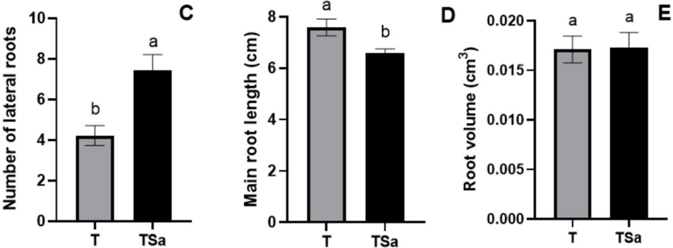
- In the yeast exposure treatment (TSt), tomato seedlings had more lateral roots than the no-yeast treatment (T): 7.44 ± 0.77 vs 4.22 ± 0.49, with p < 0.0021.
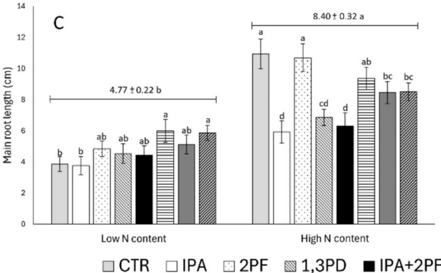
- Main root length was reduced by exposure to *S. terrea* VOCs: 6.58 ± 0.17 cm in TSt vs 7.58 ± 0.32 cm in T, p < 0.010; root volume did not differ (p < 0.9033).
- The VOC survey identified 181 compounds across treatments; excluding control compounds, 57 VOCs were associated with the yeast or seedlings, and the authors report a mixture with 57 VOCs that promoted lateral root formation.
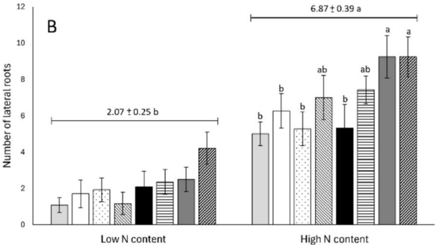
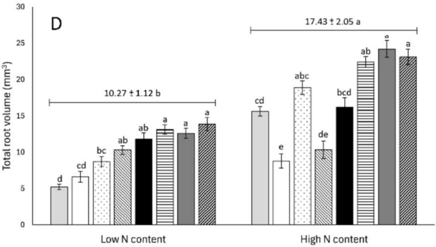
- Three compounds were exclusive to the TSt treatment: isopropyl alcohol, 2-pentylfuran, and trans-1,3-pentadiene; all three stimulated lateral roots and increased root volume, and they stimulated NRT1.2, NRT2.1, and NRT2.3 expression under N deficiency.
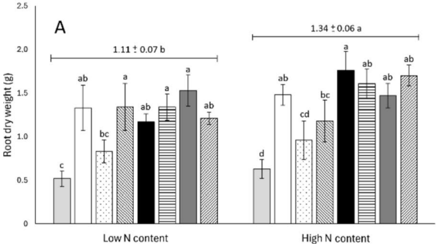
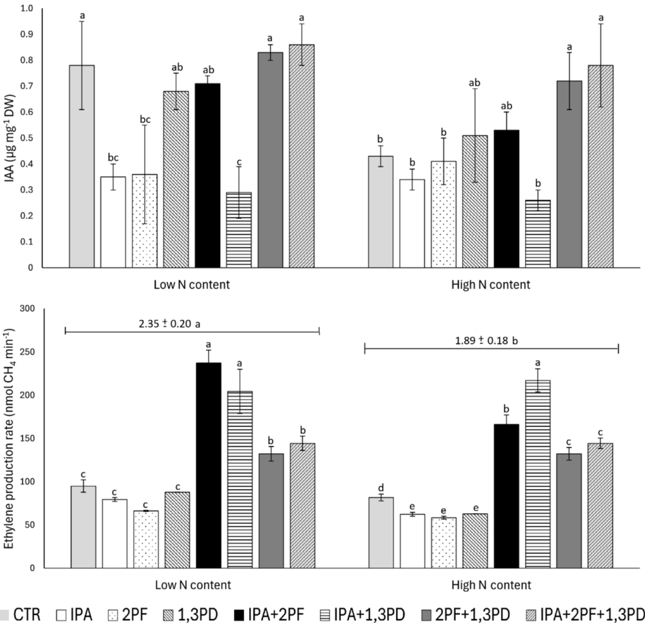
- Under high N, isopropyl alcohol and trans-1,3-pentadiene promoted root dry biomass (p < 0.0001), while trans-1,3-pentadiene-containing combinations increased lateral roots, root IAA (p < 0.0001), and ethylene (p < 0.0012).
- Under low N, all VOC treatments increased root biomass and total volume (p < 0.0001), but some treatments lowered root IAA while ethylene increased in combinations of two or more compounds.
## Methods
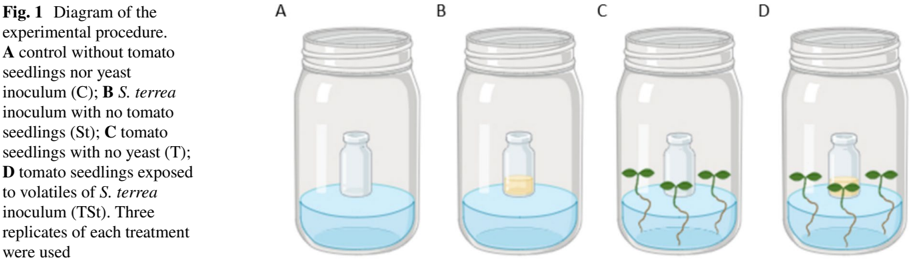
- Tomato seedlings (cv. Attiya) were exposed in glass flasks to four treatments: tomato only (T), yeast only (St), tomato exposed to yeast VOCs (TSt), and control with neither (C); the exposure ran for 5 days and was repeated twice with three replicates per treatment.
- VOCs were collected from headspace and analyzed by GC–MS; root morphology was measured with WinRhizo, and selected compounds were then tested alone or in combination under high N (10 mM) and low N (0.5 mM) conditions.
- Gene expression of NRT1.1, NRT1.2, NRT2.1, and NRT2.3 was measured by qPCR, using α-tubulin as the reference gene; one-way ANOVA was used for growth/VOC/hormone data and two-way ANOVA for transporter expression.
## Limitations
- The authors state that the applicability to other crops “requires further studies,” and that effectiveness in greenhouse or open-field soils still needs testing because of interactions with indigenous soil microorganisms.
- They also say it will be necessary to assess how soil texture, organic matter, pH, electrical conductivity, and moisture affect the yeast’s effectiveness.
- Evident from the text: the work is based on a controlled flask/seedling system, so it does not directly demonstrate field performance or long-term crop outcomes.
Model-written summary. Check it against the paper before relying on it.
Integrity signals
Registry
Cites
Statistics
Figures
Verification
Claims the paper makes
9 Valid · 2 Not valid · 14 Not checked · 33 Own results and interpretations
Every source the paper cites for this claim was checked and supports it.
In the paper
“The only report we found dealing with the stimulatory effect of VOCs released by yeasts details the compounds released by yeasts isolated from artic plant flowers (Niu et al. 2022).”
What the sources say
- Supportedcites Niu et al. 2022 matched to “Identification and functional studies of microbial volatile organic compounds produced by Arctic flower yeasts” (2023) source
The Conclusions state that the paper identified VOCs emitted by yeasts isolated from Arctic flowers and found that those VOCs promoted plant growth and flowering. The Results (section 3.5) report positive effects on plant growth. The phrase “only report we found” describes the citing authors’ search, not a finding attributed to Niu et al. (LLM, conf=0.94)
hedged- Asserted: passes — The authors put it forward as true.
- Checkable: passes — It can be checked against evidence.
- Load-bearing: passes — The paper’s conclusions depend on it.
- Based: passes — The paper gives a reason why it holds.
- Supported
A result the paper reports from its own data — it cites no other source for it, so there is none to check. The quote shows it is in the paper.
In the paper
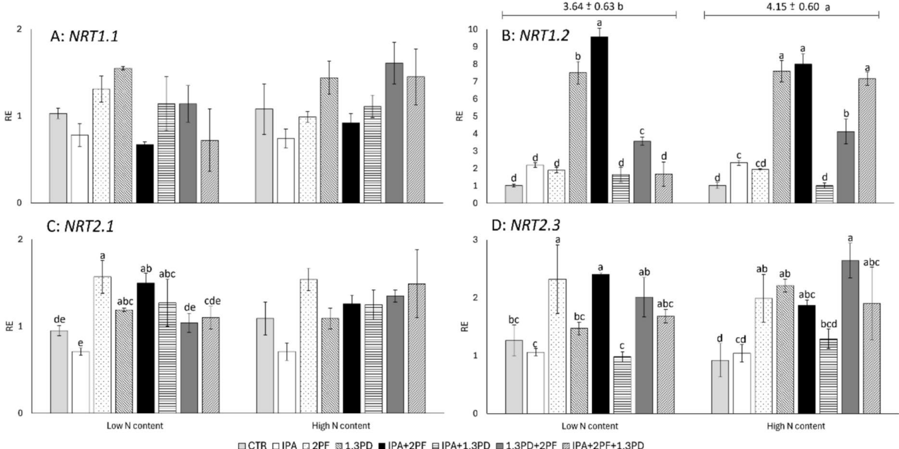
“However, the low-affinity transporter, NRT1.2, overexpressed significantly (p < 0.0001) under low N conditions after the exposure to trans-1,3-pentadiene or the combination of 2-pentylfuran plus isopropyl alcohol and trans-1,3-pentadiene plus 2-pentylfuran (Fig. 5B).”
plainstates a cause- Asserted: passes — The authors put it forward as true.
- Checkable: passes — It can be checked against evidence.
- Load-bearing: passes — The paper’s conclusions depend on it.
- Based: passes — The paper gives a reason why it holds.
A result the paper reports from its own data — it cites no other source for it, so there is none to check. The quote shows it is in the paper.
In the paper
“These compounds showed a stimulatory effect on the expression of NRT1.2, NRT2.1 and NRT2.3 nitrate transporters under N deficiency conditions.”
plainstates a cause- Asserted: passes — The authors put it forward as true.
- Checkable: passes — It can be checked against evidence.
- Load-bearing: passes — The paper’s conclusions depend on it.
- Based: passes — The paper gives a reason why it holds.
A result the paper reports from its own data — it cites no other source for it, so there is none to check. The quote shows it is in the paper.
In the paper
“The high affinity transporter NRT2.1 overexpressed (p < 0.0001) in plants under low N conditions after exposure to 2-pentylfuran alone or in combination with isopropyl alcohol similarly to trans-1,3-pentadiene (Fig. 5C).”
plainstates a cause- Asserted: passes — The authors put it forward as true.
- Checkable: passes — It can be checked against evidence.
- Load-bearing: passes — The paper’s conclusions depend on it.
- Based: passes — The paper gives a reason why it holds.
A result the paper reports from its own data — it cites no other source for it, so there is none to check. The quote shows it is in the paper.
In the paper
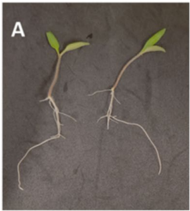
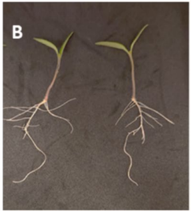
“After 5 days of plant exposure to the shared ambient with S. terrea YCPUC79 inoculum (TSt), tomato seedlings showed a root system with a higher number of lateral roots (p < 0.002) than the treatment of tomato seedlings with no yeast inoculum (T) (Fig. 2A, 2B and 2C).”
- Also stated in: § Results · plain
“Concerning the number of lateral roots, seedlings exposed to S. terrea YCPUC79 inoculum (TSt) presented an average of 7.44 ± 0.77 lateral roots, while seedlings with no exposure (T) only reached 4.22 ± 0.49 lateral roots (p < 0.0021) (Fig. 2C).”
plainstates a cause- Asserted: passes — The authors put it forward as true.
- Checkable: passes — It can be checked against evidence.
- Load-bearing: unclear — It is unclear whether the paper’s conclusions depend on it.
- Based: passes — The paper gives a reason why it holds.
- Also stated in: § Results · plain
25 more claims
Create a free account to see all 58 claims and to verify the 4 references still open.
- Probably not a substantial claim. 23
- It may state two separate claims as one. 17
- The quote only partly states this claim. 1
Self-check
Percentages, sums and reported differences re-computed from the paper’s own numbers.
Each contradiction between two passages listed here was confirmed by an independent check.
Rated minor: it would not touch a result — a value no result rests on, a p-value that stays on the same side of the significance level, or a conflict that is clerical, resolved elsewhere in the paper, or outside its own findings.
In the paper
§ Results
“In the TSa treatment, the highest concentration corresponded to 1-propenylthiol released by the tomato plants, followed by 2-pentanone and (S)2-pentanol produced by the yeast (Table 4).”
§ Methods
“Four treatments (tomato seedlings, T; S. terrea inoculum without tomato seedlings, St; tomato seedlings exposed to the volatiles of S. terrea inoculum, TSt; and a control without tomato seedlings or yeast inoculum, C) were assessed in terms of root morphology.”
Citations
Cites
A new mathematical model for relative quantification in real-time RT-PCR
Pfaffl, M. W. (2001) · Nucleic Acids Research · doi:10.1093/nar/29.9.e45 · Cited by 34,610 · cited 1×
“Finally, each gene relative expression (RE) was determined following the relation defined by Pfaffl (2001), using the expression values in the plants with no exposure to the volatiles as the control group.”
Plant biostimulants: Definition, concept, main categories and regulation
du Jardin, P. (2015) · Scientia Horticulturae · doi:10.1016/j.scienta.2015.09.021 · Cited by 2,823
Agricultural uses of plant biostimulants
Calvo, P., Nelson, L., & Kloepper, J. W. (2014) · Plant and Soil · doi:10.1007/s11104-014-2131-8 · Cited by 2,294
Rhizobacterial volatile emissions regulate auxin homeostasis and cell expansion in Arabidopsis
Zhang, H., Kim, M.-S., Krishnamachari, V., Payton, P., Sun, Y., Grimson, M., Farag, M. A., Ryu, C.-M., Allen, R., Melo, I. S., et al. (2007) · Planta · doi:10.1007/s00425-007-0530-2 · Cited by 515 · cited 1×
“In addition, Zhang et al. (2007) demonstrated that Bacillus subtilis releases VOCs that regulate IAA homeostasis in arabidopsis plants which resulted in a greater accumulation of IAA in the roots and less in the leaves.”
Plant Growth Promotion by Volatile Organic Compounds Produced by Bacillus subtilis SYST2
Tahir, H. A. S., Gu, Q., Wu, H., Raza, W., Hanif, A., Wu, L., Colman, M. V., & Gao, X. (2017) · Frontiers in Microbiology · doi:10.3389/fmicb.2017.00171 · Cited by 436 · cited 1×
“…by a reduction in the length of the main root, which is associated with faster growth due to different mechanisms including higher efficiency in water and nutrient uptake, higher ion selectivity in the endodermis, and lower synthesis of abscisic acid (Gutierrez-Luna et al. 2010; Tahir et al. 2017).”
Gutiérrez-Luna, F. M., López-Bucio, J., Altamirano-Hernández, J., Valencia-Cantero, E., de la Cruz, H. R., & Macías-Rodríguez, L. (2010) · Symbiosis · doi:10.1007/s13199-010-0066-2 · Cited by 246 · cited 1×
“…by a reduction in the length of the main root, which is associated with faster growth due to different mechanisms including higher efficiency in water and nutrient uptake, higher ion selectivity in the endodermis, and lower synthesis of abscisic acid (Gutierrez-Luna et al. 2010; Tahir et al. 2017).”
Hung, R., Lee, S., & Bennett, J. W. (2013) · Fungal Ecology · doi:10.1016/j.funeco.2012.09.005 · Cited by 224 · cited 1×
“Microorganisms such as Trichoderma viride or Azotobacter chroo-coccum present the capacity of releasing isopentyl alcohol, which results in enhanced fresh weight accumulation and lateral root formation in Arabidopsis thaliana and Raphanus sativus (Hung et al. 2013).”
Bailly, A., Groenhagen, U., Schulz, S., Geisler, M., Eberl, L., & Weisskopf, L. (2014) · The Plant Journal · doi:10.1111/tpj.12666 · Cited by 207 · cited 1×
“It has been demonstrated that microbial VOCs interact with plant hormones either modifying the distribution among plant organs or by overexpressing genes involved in their synthesis or transport (Bailly et al. 2014; Gamez-Arcas et al. 2022; Li et al. 2022; Poveda 2021).”
Amprayn, K.-O., Rose, M. T., Kecskés, M., Pereg, L., Nguyen, H. T., & Kennedy, I. R. (2012) · Applied Soil Ecology · doi:10.1016/j.apsoil.2011.11.009 · Cited by 198
Beneficial effects of microbial volatile organic compounds (MVOCs) in plants
Poveda, J. (2021) · Applied Soil Ecology · doi:10.1016/j.apsoil.2021.104118 · Cited by 190 · cited 2×
“It has been demonstrated that microbial VOCs interact with plant hormones either modifying the distribution among plant organs or by overexpressing genes involved in their synthesis or transport (Bailly et al. 2014; Gamez-Arcas et al. 2022; Li et al. 2022; Poveda 2021).”
Oro, L., Feliziani, E., Ciani, M., Romanazzi, G., & Comitini, F. (2018) · International Journal of Food Microbiology · doi:10.1016/j.ijfoodmicro.2017.10.027 · Cited by 179 · cited 1×
“…, Saccharomyces cerevisiae , Pichia kudriavzevii , P. occidentalis and Meyerozyma guilliermondii release VOCs with the capacity to control fungal diseases affecting crops or produce during postharvest (Choin-ska et al. 2020; Contarino et al. 2019; Di Francesco et al. 2021; Oro et al. 2018).”
Sun, B., Gu, L., Bao, L., Zhang, S., Wei, Y., Bai, Z., Zhuang, G., & Zhuang, X. (2020) · Soil Biology and Biochemistry · doi:10.1016/j.soilbio.2020.107911 · Cited by 178 · cited 1×
“Many crops have been reported to increase their nitrogen uptake efficiency after inoculation with soil-borne bacteria or fungi (Dellagi et al. 2020; Sarkar et al. 2021; Sun et al. 2020).”
Volatile organic compounds (VOCs) produced by biocontrol yeasts
Contarino, R., Brighina, S., Fallico, B., Cirvilleri, G., Parafati, L., & Restuccia, C. (2019) · Food Microbiology · doi:10.1016/j.fm.2019.01.008 · Cited by 168 · cited 1×
“…, Saccharomyces cerevisiae , Pichia kudriavzevii , P. occidentalis and Meyerozyma guilliermondii release VOCs with the capacity to control fungal diseases affecting crops or produce during postharvest (Choin-ska et al. 2020; Contarino et al. 2019; Di Francesco et al. 2021; Oro et al. 2018).”
Metabolic Pathways for Degradation of Aromatic Hydrocarbons by Bacteria
Ladino-Orjuela, G., Gomes, E., da Silva, R., Salt, C., & Parsons, J. R. (2015) · Reviews of Environmental Contamination and Toxicology · doi:10.1007/978-3-319-23573-8_5 · Cited by 133
Beneficial soil-borne bacteria and fungi: a promising way to improve plant nitrogen acquisition
Dellagi, A., Quillere, I., & Hirel, B. (2020) · Journal of Experimental Botany · doi:10.1093/jxb/eraa112 · Cited by 116 · cited 1×
“Many crops have been reported to increase their nitrogen uptake efficiency after inoculation with soil-borne bacteria or fungi (Dellagi et al. 2020; Sarkar et al. 2021; Sun et al. 2020).”
Controls on isoprene emission from trees in a subtropical dry forest
LERDAU, M., & KELLER, M. (1997) · Plant, Cell & Environment · doi:10.1111/j.1365-3040.1997.00075.x · Cited by 115 · cited 1×
“…stress such as drought, where plants can release a significant amount of carbon into the atmosphere in the form of VOCs, becoming net sources of carbon (Lerdau and Keller 1997; Funk et al. 2004), our results indicate that tomato plants became more carbon-limited under exposure to yeast volatiles.”
Stress‐induced changes in carbon sources for isoprene production in Populus deltoides
FUNK, J. L., MAK, J. E., & LERDAU, M. T. (2004) · Plant, Cell & Environment · doi:10.1111/j.1365-3040.2004.01177.x · Cited by 114 · cited 1×
“…stress such as drought, where plants can release a significant amount of carbon into the atmosphere in the form of VOCs, becoming net sources of carbon (Lerdau and Keller 1997; Funk et al. 2004), our results indicate that tomato plants became more carbon-limited under exposure to yeast volatiles.”
Raza, W., Wang, J., Wu, Y., Ling, N., Wei, Z., Huang, Q., & Shen, Q. (2016) · Applied Microbiology and Biotechnology · doi:10.1007/s00253-016-7584-7 · Cited by 112
Hernández-Fernández, M., Cordero-Bueso, G., Ruiz-Muñoz, M., & Cantoral, J. M. (2021) · Plants · doi:10.3390/plants10050822 · Cited by 111 · cited 1×
“…indole acetic acid (IAA) by the yeast along with the capacity to reduce ethylene synthesis due to the activity of the enzyme 1-aminocyclopropane-1-car-boxylic acid deaminase (ACCD) in agreement with the findings of other authors (Fernandez-San Millan et al. 2020; Hernandez-Fernandez et al. 2021).”
Rath, M., Mitchell, T. R., & Gold, S. E. (2018) · Microbiological Research · doi:10.1016/j.micres.2017.12.014 · Cited by 108
Lee, S., Hung, R., Yap, M., & Bennett, J. W. (2015) · Archives of Microbiology · doi:10.1007/s00203-015-1104-5 · Cited by 106 · cited 1×
“For instance, VOCs emitted by species in the genus Trichoderma stimulated the development of Arabidopsis thaliana plants, resulting in a greater shoot volume and size compared to plants not exposed to the microorganism (Lee et al. 2015).”
Physiological and molecular insight of microbial biostimulants for sustainable agriculture
Kaushal, P., Ali, N., Saini, S., Pati, P. K., & Pati, A. M. (2023) · Frontiers in Plant Science · doi:10.3389/fpls.2023.1041413 · Cited by 104 · cited 8×
“In addition, Zhang et al. (2007) demonstrated that Bacillus subtilis releases VOCs that regulate IAA homeostasis in arabidopsis plants which resulted in a greater accumulation of IAA in the roots and less in the leaves.”
InfluentialSarkar, D., Sankar, A., Devika, O. S., Singh, S., Shikha, Parihar, M., Rakshit, A., Sayyed, R. Z., Gafur, A., Ansari, M. J., et al. (2021) · Scientific Reports · doi:10.1038/s41598-021-95092-6 · Cited by 99 · cited 2×
“Many crops have been reported to increase their nitrogen uptake efficiency after inoculation with soil-borne bacteria or fungi (Dellagi et al. 2020; Sarkar et al. 2021; Sun et al. 2020).”
Fernandez-San Millan, A., Farran, I., Larraya, L., Ancin, M., Arregui, L. M., & Veramendi, J. (2020) · Microbiological Research · doi:10.1016/j.micres.2020.126480 · Cited by 86
Jiang, C.-H., Xie, Y.-S., Zhu, K., Wang, N., Li, Z.-J., Yu, G.-J., & Guo, J.-H. (2019) · Plant Growth Regulation · doi:10.1007/s10725-018-00473-z · Cited by 80 · cited 1×
“Similarly, bacteria in the genus Bacillus emit VOCs that significantly promoted biomass accumulation in arabidopsis and tomato plants due to the activation of IAA and strigo-lactone synthesis in the plant (Jiang et al. 2019).”
Choińska, R., Piasecka-Jóźwiak, K., Chabłowska, B., Dumka, J., & Łukaszewicz, A. (2020) · Antonie van Leeuwenhoek · doi:10.1007/s10482-020-01420-7 · Cited by 77
Cheng, X., Etalo, D. W., van de Mortel, J. E., Dekkers, E., Nguyen, L., Medema, M. H., & Raaijmakers, J. M. (2017) · Environmental Microbiology · doi:10.1111/1462-2920.13927 · Cited by 76
Catabolism of volatile organic compounds influences plant survival
Oikawa, P. Y., & Lerdau, M. T. (2013) · Trends in Plant Science · doi:10.1016/j.tplants.2013.08.011 · Cited by 74 · cited 1×
“Three replicates were used for expression analysis the plant could be attributed to an increase in catabolism (Oikawa and Lerdau 2013), a process likely associated with the stimulation of lateral root growth.”
Functional Diversity of Various Constituents of a Single Root System
Waisel, Y., & Eshel, A. (2002) · Plant Roots · doi:10.1201/9780203909423.ch9 · Cited by 74
Bacterial volatile organic compounds (VOCs) promote growth and induce metabolic changes in rice
Almeida, O. A. C., de Araujo, N. O., Mulato, A. T. N., Persinoti, G. F., Sforça, M. L., Calderan-Rodrigues, M. J., & Oliveira, J. V. D. C. (2023) · Frontiers in Plant Science · doi:10.3389/fpls.2022.1056082 · Cited by 66 · cited 1×
“Furthermore, Almeida et al. (2022) reported that bacteria of the genera Serratia and Achromo-bacter emit volatiles that increased stem dry weight in rice plants and promoted the accumulation of biomass under in vivo conditions.”
Functional Diversity of Various Constituents of a Single Root System
Waisel, Y., & Eshel, A. (2002) · CRC Press eBooks · doi:10.1201/9780203909423-18 · Cited by 65
Biocontrol Activity and Plant Growth Promotion Exerted by Aureobasidium pullulans Strains
Di Francesco, A., Di Foggia, M., Corbetta, M., Baldo, D., Ratti, C., & Baraldi, E. (2021) · Journal of Plant Growth Regulation · doi:10.1007/s00344-020-10184-3 · Cited by 62 · cited 2×
“…, Saccharomyces cerevisiae , Pichia kudriavzevii , P. occidentalis and Meyerozyma guilliermondii release VOCs with the capacity to control fungal diseases affecting crops or produce during postharvest (Choin-ska et al. 2020; Contarino et al. 2019; Di Francesco et al. 2021; Oro et al. 2018).”
Li, Y., Shao, J., Fu, Y., Chen, Y., Wang, H., Xu, Z., Feng, H., Xun, W., Liu, Y., Zhang, N., et al. (2021) · Plant Cell & Environment · doi:10.1111/pce.14230 · Cited by 61
LeNRT2.3 functions in nitrate acquisition and long‐distance transport in tomato
Fu, Y.-L., Yi, H., Bao, J., et al. (2015) · FEBS Letters · doi:10.1016/j.febslet.2015.03.016 · Cited by 54 · cited 2×
“3 has positive effects on tomato plants, from increasing nitrate uptake to enhance plant dry biomass accumulation and fruit yield (Fu et al. 2015).”
Carvajal, M., Godoy, L., Gebauer, M., Catrileo, D., & Albornoz, F. (2024) · Plant and Soil · doi:10.1007/s11104-023-05906-x · Cited by 40 · cited 2×
“Soil yeasts isolated from soils under semi-arid conditions in Chile, stimulate plant growth, as shown in tomato seedling exposed to the yeast (Carvajal et al. 2024).”
Self-citationBaroja‐Fernández, E., Almagro, G., Sánchez‐López, Á. M., Bahaji, A., Gámez‐Arcas, S., Diego, N. D., Doležal, K., Muñoz, F. J., Climent, E., & Pozueta‐Romero, J. (2021) · Frontiers in Plant Science · doi:10.3389/fpls.2021.752653 · Cited by 35
Action mechanisms of small microbial volatile compounds in plants
Gámez-Arcas, S., Baroja-Fernández, E., García-Gómez, P., Muñoz, F. J., Almagro, G., Bahaji, A., Sánchez-López, Á. M., & Pozueta-Romero, J. (2022) · Journal of Experimental Botany · doi:10.1093/jxb/erab463 · Cited by 33
Chen, Y., Li, Y., Fu, Y., Jia, L., Li, L., Xu, Z., Zhang, N., Liu, Y., Fan, X., Xuan, W., et al. (2024) · Journal of Experimental Botany · doi:10.1093/jxb/erae125 · Cited by 31 · cited 2×
“3 genes was reported in rice and arabidopsis plants exposed to Bacillus velezensis (Chen et al. 2024), but no direct link to any specific compounds was reported.”
Li, J., Zhao, C., Hu, S., Song, X., Lv, M., Yao, D., Song, Q., & Zuo, K. (2020) · Biochemical and Biophysical Research Communications · doi:10.1016/j.bbrc.2020.08.025 · Cited by 29 · cited 1×
“2 transporter is not only involved in nitrate acquisition but also in the transport and sensing of abscisic acid (Li et al. 2020), then the overexpression of this gene may allow for better adaptation of tomato roots to stress conditions, not only related to nutrient starvation.”
LeNRT1.1 Improves Nitrate Uptake in Grafted Tomato Plants under High Nitrogen Demand
Albornoz, F., Gebauer, M., Ponce, C., et al. (2018) · International Journal of Molecular Sciences · doi:10.3390/ijms19123921 · Cited by 23 · cited 1×
“The relative quantification was undergone using α-tubulin as the reference gene following the Pfaffl methodology (Albornoz et al. 2018).”
Self-citationNieto, K. F., & Frankenberger, W. T. (1990) · Plant and Soil · doi:10.1007/bf00014421 · Cited by 21 · cited 1×
“Isopentyl alcohol is a precursor in the synthesis of cytokinins, therefore the positive effect in the exposure to this substance relies on the stimulation of cell division and expansion mediated by this hormone (Nieto and Frankenberger 1990).”
Niu, J., Li, X., Zhang, S., Yao, Y., Zhang, Y., Liu, Y., Peng, X., Huang, J., & Peng, F. (2023) · Frontiers in Plant Science · doi:10.3389/fpls.2022.941929 · Cited by 17 · cited 3×
“…deal with yeasts synthesizing VOCs with plant growth promotion, including a study with yeasts isolated from arc-tic plants that promoted plant growth on Arabidopsis thaliana (Niu et al. 2022) or a study with A. pullu-lans promoting plant growth in bean and soybean (Di Francesco et al. 2021).”
A rapid and robust colorimetric method for measuring relative abundance of auxins in plant tissues
Manna, M., Balakrishnan, R., & Sinha, A. K. (2024) · Phytochemical Analysis · doi:10.1002/pca.3340 · Cited by 12 · cited 8×
“In addition, Zhang et al. (2007) demonstrated that Bacillus subtilis releases VOCs that regulate IAA homeostasis in arabidopsis plants which resulted in a greater accumulation of IAA in the roots and less in the leaves.”
InfluentialCarvajal, M., Godoy, L., Gebauer, M., et al. (2025) · Plant and Soil · doi:10.1007/s11104-025-07244-6 · Cited by 1
Self-citation
Cited by
Modulation of Root Nitrogen Uptake Mechanisms Mediated by Beneficial Soil Microorganisms
Albornoz, F., & Godoy, L. (2025) · Plants · doi:10.3390/plants14172729 · Cited by 16
“3 [15].”
Self-citationLi, Y., Shi, W., Zhang, X., Zhang, X., & Lv, J. (2025) · Journal of environmental chemical engineering · doi:10.1016/j.jece.2025.119013 · Cited by 1
Tao, Z., Fangdong, L. I., Tong, Z., Li, B., Lyu, D., He, J., & Qin, S. (2025) · Applied Soil Ecology · doi:10.1016/j.apsoil.2025.106733 · Cited by 2
Health or disease – a question of rhizomicrobial ecology? The case of grapevine trunk disease
Khattab, I. M., Magold, T., Lenk, F., et al. (2026) · Plant and Soil · doi:10.1007/s11104-026-08541-4
“These two vineyards exhibited the lowest relative abundance of Fusarium, but higher levels of two other pathogenic genera, Penicillium and Dactylonectria , as well as an elevated presence of the beneficial fungus Solicocczyma , known to promote root growth (Albornoz et al., 2025).”
Albornoz, F., Gebauer, M., Catrileo, D., Carvajal, M., & Godoy, L. (2026) · Plant and Soil · doi:10.1007/s11104-026-08321-0
Self-citation
Metadata
- Authors
- Albornoz, F., Carvajal, M., Catrileo, D., Gebauer, M., & Godoy, L.
- Affiliations
- Pontificia Universidad Católica de Chile (CL)
- Corresponding author
- Godoy, Liliana
- Venue
- Plant and Soil
- Published
- 2025-03-24
- Volume
- 514
- Issue
- 1
- Pages
- 359-371
- ISSN
- 0032-079X (ISSN-L)
- 1573-5036
- OpenAlex
- W4408767021
- Semantic Scholar
- ac568c771d9d4c43a7dda36dbf420863439ca30a
- Cited by
- 9
- References
- 41
- Citations by year
- 2026: 6 · 2025: 3
- FWCI
- 4.90
- Type
- journal article
- Language
- en
- Open access
- hybrid
- doi.org
- Licence
- cc-by
- creativecommons.org/licenses/by/4.0 (tdm)
- creativecommons.org/licenses/by/4.0 (vor)
- Locations
- Plant and Soil (publishedVersion, cc-by)
- Topics
- Life Sciences › Agricultural and Biological Sciences › Plant Science › Plant-Microbe Interactions and Immunity
- Life Sciences › Agricultural and Biological Sciences › Plant Science › Mycorrhizal Fungi and Plant Interactions
- Life Sciences › Agricultural and Biological Sciences › Plant Science › Allelopathy and phytotoxic interactions
- Keywords
- microbial volatile organic compounds, soil yeasts, tomato, lateral root formation, root architecture, nitrate transporters, NRT2.1, nitrogen deficiency, isopropanol, 2-pentylfuran, plant-microbe interactions
About these checks
Registry, retraction, Cites and statistics results are computed, not judged, with one exception: a printed reference that no index lists is read once by a model before it counts as a citation error. Claims are extracted by a model and kept only when their quote appears verbatim in the text; each cited source is then checked, with a model’s help, for whether it says what the claim relies on. Those verdicts can be wrong — read the claim’s quote and the cited source before relying on one.
The claim verdicts this report counts are experimental: their accuracy is not yet measured.
A language model drew the claims from the paper on 2026-10-10, under version 3 of the claim definition (model deepseek-v4.1-flash, prompt extract-v3).
A second model labelled each claim on 2026-10-10 (model jev-1.13-20260917, definition revision gold-guideline-v0.2).
Cited sources are checked with a language model’s help (gpt-6-sol).
Statistics and arithmetic are recomputed, not judged.
Confidence bands are shown only for fields calibrated on our annotated test set. None is calibrated yet, so no band is shown.
What counts as a claim ›How we measure confidence ›How we check this ›
Are you an author, or do you see a problem with this page? Request a review
Data sources
Bibliographic data: Semantic Scholar, OpenAlex, Crossref.
Contains information from the Semantic Scholar Academic Graph Datasets, made available under the ODC Attribution License (ODC-BY 1.0).
Semantic Scholar’s data is described in: Kinney, R., et al. (2023). The Semantic Scholar Open Data Platform. arXiv:2301.10140.
