

Patient-reported outcomes in randomized clinical trials: development of ISOQOL reporting standards
Open accessThe DOI matches its Crossref record; 34 of the 35 references it cites were found in a registry or an index.
Abstract
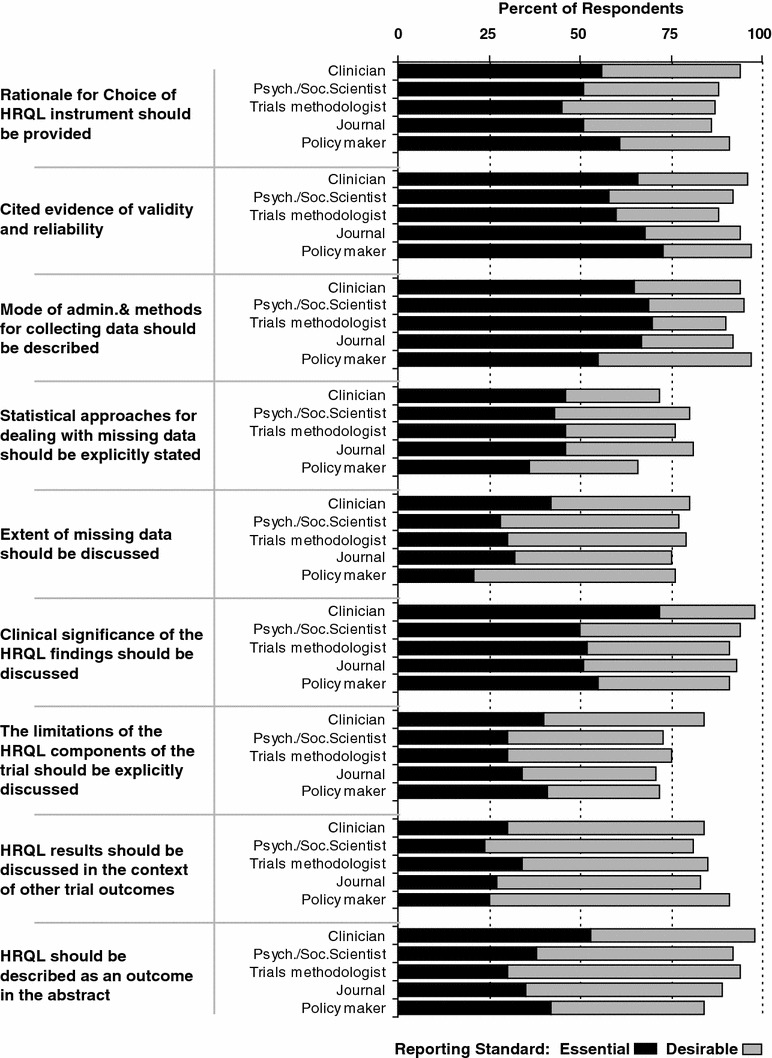
PURPOSE: To develop expert consensus on a suite of reporting standards for HRQL outcomes of RCTs. METHODS: A Task Force of The International Society of Quality of Life Research (ISOQOL) undertook a systematic review of the literature to identify candidate reporting standards for HRQL in RCTs. Subsequently, a web-based survey was circulated to the ISOQOL membership. Respondents were asked to rate candidate standards on a 4-point Likert scale based on their perceived value in reporting studies in which HRQL was a study outcome (primary or secondary). Results were synthesized into draft reporting guidelines, which were further reviewed by the membership to inform the final guidance. RESULTS: Forty-six existing candidate standards for reporting HRQL results in RCTs were synthesized to produce a 40 item survey that was completed electronically by 161 respondents. The majority of respondents rated all 40 items to be either 'essential' or 'desirable' when HRQL was a primary RCT outcome. Ratings changed when HRQL was a secondary study outcome. Feedback on the survey findings resulted in the Task Force generalizing the guidance to include patient-reported outcomes (PROs). The final guidance, which recommends standards for use in reporting PROs generally, and more specifically, for PROs identified as primary study outcomes, was approved by the ISOQOL Board of Directors. CONCLUSIONS: ISOQOL has developed a suite of recommended standards for reporting PRO results of RCTs. Improved reporting of PROs will enable accurate interpretation of evidence to inform patient choice, aid clinical decision making, and inform health policy.
Overview
The claims and statistics of this paper haven’t been checked yet.
Free: it reads the open-access text and checks the first 5 claims that cite a source we can check. Create a free account to check every claim.
Integrity signals
Registry
Cites
Statistics
Figures
Verification
Claims the paper makes
The claims and statistics of this paper haven’t been checked yet.
Free: it reads the open-access text and checks the first 5 claims that cite a source we can check. Create a free account to check every claim.
Claims other papers make about this one
Each is checked against this paper’s own text: does it say what the citing paper says it does?
The check wasn’t confident either way, so it gives no verdict — never disputed.
In the citing paper
“However, in ISOQOL's reporting standards for the use of PROMs in randomized controlled trials,27 the issue of patient involvement was rejected after consideration.”
From Patient involvement in the development of patient‐reported outcome measures: a scoping review (2017) · cites this paper as [27]
Experimental — accuracy not yet measured
Self-check
Percentages, sums and reported differences re-computed from the paper’s own numbers.
The self-check needs the paper’s full text.
Citations
Cites
CONSORT 2010 Statement: updated guidelines for reporting parallel group randomised trials
the CONSORT Group, Schulz, K. F., Altman, D. G., & Moher, D. (2010) · BMC Medicine · doi:10.1186/1741-7015-8-18 · Cited by 13,371
Self-citationEysenbach, G. (2004) · Journal of Medical Internet Research · doi:10.2196/jmir.6.3.e34 · Cited by 6,480 · cited 1×
“Likewise, the ‘view rate’ of email invitations cannot be calculated due to the anonymous nature of the research method [32].”
BackgroundCONSORT 2010 statement: updated guidelines for reporting parallel group randomized trials
Schulz, K. F., Altman, D. G., Moher, D., & for the CONSORT Group* (2010) · Annals of Internal Medicine · doi:10.7326/0003-4819-152-11-201006010-00232 · Cited by 3,824
Self-citationA Critical Appraisal of the Quality of Quality-of-Life Measurements
Gill, T. M. (1994) · JAMA: The Journal of the American Medical Association · doi:10.1001/jama.1994.03520080061045 · Cited by 2,208 · cited 1×
“Results Systematic review Fifteen papers by 14 unique first authors were identified that contained guidelines or standards for HQRL reporting in RCTs [7–9, 17–28].”
BackgroundGuidance for Developers of Health Research Reporting Guidelines
Moher, D., Schulz, K. F., Simera, I., & Altman, D. G. (2010) · PLoS Medicine · doi:10.1371/journal.pmed.1000217 · Cited by 1,437 · cited 14×
“Feedback from the ISOQOL membership at the annual conference resulted in an important shift in the nature of the ISOQOL extension; the extension would no longer be exclusive to HRQL outcomes but rather would recommend reporting standards for all PROs.”
MethodInfluentialSelf-citationRevicki, D. A., Osoba, D., Fairclough, D., Barofsky, I., Berzon, R., Leidy, N. K., & Rothman, M. (2000) · Quality of Life Research · doi:10.1023/a:1008996223999 · Cited by 577
Self-citationPatient-reported Outcomes in Cancer: A Review of Recent Research and Policy Initiatives
Lipscomb, J., Gotay, C. C., & Snyder, C. F. (2007) · CA: A Cancer Journal for Clinicians · doi:10.3322/ca.57.5.278 · Cited by 312
Self-citationGoodwin, P. J., Black, J. T., Bordeleau, L. J., & Ganz, P. A. (2003) · JNCI Journal of the National Cancer Institute · doi:10.1093/jnci/95.4.263 · Cited by 248
Efficace, F., Bottomley, A., Osoba, D., Gotay, C., Flechtner, H., D’haese, S., & Zurlo, A. (2003) · Journal of Clinical Oncology · doi:10.1200/jco.2003.12.121 · Cited by 246
Self-citation
Cited by
Reporting of Patient-Reported Outcomes in Randomized Trials: The CONSORT PRO Extension
Calvert, M., Blazeby, J., Altman, D. G., Revicki, D. A., Moher, D., Brundage, M. D., & CONSORT PRO Group, F. T. (2013) · JAMA · doi:10.1001/jama.2013.879 · Cited by 1,386
“Initial work was led by the International Society for Quality of Life Research (ISOQOL) Reporting Guidelines Task Force and focused on establishing and developing guidance for RCTs with HRQL as an outcome.(10) Following feedback from stakeholders the scope of the guidance was expanded to include PROs.”
MethodInfluentialSelf-citationMercieca-Bebber, R., King, M. T., Calvert, M. J., Stockler, M. R., & Friedlander, M. (2018) · Patient Related Outcome Measures · doi:10.2147/prom.s156279 · Cited by 659
“The CONSORT-PRO extension, Calvert et al 73 The iSOQOL reporting standards, Brundage et al 72 The CONSORT-PRO extension, Calvert et al 73 The CONSORT-PRO extension, Calvert et al 73 The”
Self-citationPolit, D. F. (2014) · Quality of Life Research · doi:10.1007/s11136-014-0632-9 · Cited by 478
“5 % of the respondents (members of the International Society of Quality of Life Research) [1].”
BackgroundInfluentialPatient involvement in the development of patient‐reported outcome measures: a scoping review
Wiering, B., de Boer, D., & Delnoij, D. (2017) · Health Expectations · doi:10.1111/hex.12442 · Cited by 371
Recommended Patient-Reported Core Set of Symptoms to Measure in Adult Cancer Treatment Trials
Reeve, B. B., Mitchell, S. A., Dueck, A. C., Basch, E., Cella, D., Reilly, C. M., Minasian, L. M., Denicoff, A. M., O'Mara, A. M., Fisch, M. J., et al. (2014) · JNCI Journal of the National Cancer Institute · doi:10.1093/jnci/dju129 · Cited by 350
Frank, L., Forsythe, L., Ellis, L., Schrandt, S., Sheridan, S., Gerson, J., Konopka, K., & Daugherty, S. (2015) · Quality of Life Research · doi:10.1007/s11136-014-0893-3 · Cited by 288
“This model has roots in CBPR, in early definitions of outcomes research [16], and in the tenets of patient-reported outcomes assessment [17, 18].”
MethodBausewein, C., Daveson, B. A., Currow, D. C., Downing, J., Deliens, L., Radbruch, L., Defilippi, K., Lopes Ferreira, P., Costantini, M., Harding, R., et al. (2016) · Palliative Medicine · doi:10.1177/0269216315589898 · Cited by 240
Survivorship and Quality of Life in Head and Neck Cancer
Ringash, J. (2015) · Journal of Clinical Oncology · doi:10.1200/jco.2015.61.4115 · Cited by 220
Patient reported outcomes in orthopaedics
Gagnier, J. J. (2017) · Journal of Orthopaedic Research · doi:10.1002/jor.23604 · Cited by 219
Vodicka, E., Kim, K., Devine, E. B., Gnanasakthy, A., Scoggins, J. F., & Patrick, D. L. (2015) · Contemporary Clinical Trials · doi:10.1016/j.cct.2015.04.004 · Cited by 211
“The International Society for Quality of Life Research has developed reporting standards for PROs in randomized controlled trials [28].”
MethodBottomley, A., Pe, M., Sloan, J., Basch, E., Bonnetain, F., Calvert, M., Campbell, A., Cleeland, C., Cocks, K., Collette, L., et al. (2016) · The Lancet Oncology · doi:10.1016/s1470-2045(16)30510-1 · Cited by 203
Self-citationTaphoorn, M. J. B., Dirven, L., Kanner, A. A., Lavy-Shahaf, G., Weinberg, U., Taillibert, S., Toms, S. A., Honnorat, J., Chen, T. C., Sroubek, J., et al. (2018) · JAMA Oncology · doi:10.1001/jamaoncol.2017.5082 · Cited by 201
Wu, A. W., Kharrazi, H., Boulware, L. E., & Snyder, C. F. (2013) · Journal of Clinical Epidemiology · doi:10.1016/j.jclinepi.2013.04.005 · Cited by 188
Self-citationMishra, S. I., Scherer, R. W., Snyder, C., Geigle, P., & Gotay, C. (2014) · Oncology Nursing Forum · doi:10.1188/14.onf.e326-e342 · Cited by 170
“Guidelines addressing the specific reporting considerations for HRQOL and other patient-reported outcomes have been published (Brundage et al., 2013), including a CONSORT extension (Calvert et al., 2013).”
BackgroundSelf-citationJones, E., Wainwright, T., Foster, J., Smith, J., Middleton, R., & Francis, N. (2014) · The Annals of The Royal College of Surgeons of England · doi:10.1308/003588414x13824511649571 · Cited by 160
The CONSORT Patient-Reported Outcome (PRO) extension: implications for clinical trials and practice
Calvert, M., Brundage, M., Jacobsen, P. B., Schünemann, H. J., & Efficace, F. (2013) · Health and Quality of Life Outcomes · doi:10.1186/1477-7525-11-184 · Cited by 142
“Briefly, a systematic search was used to identify candidate reporting standards for PROs [15].”
MethodSelf-citationBasch, E. (2014) · Annual Review of Medicine · doi:10.1146/annurev-med-010713-141500 · Cited by 141
Methods for Developing Patient-Reported Outcome-Based Performance Measures (PRO-PMs)
Basch, E., Spertus, J. A., Dudley, R. A., Wu, A. W., Chuahan, C., Cohen, P. D., Smith, M. L., Black, N. A., Crawford, A., Christensen, K., et al. (2015) · Value in Health · doi:10.1016/j.jval.2015.02.018 · Cited by 136
“[2] Brundage M, Blazeby J, Revicki D, et al.”
BackgroundElsman, E. B. M., Mokkink, L. B., Terwee, C. B., Beaton, D., Gagnier, J. J., Tricco, A. C., Baba, A., Butcher, N. J., Smith, M., Hofstetter, C., et al. (2024) · Journal of Clinical Epidemiology · doi:10.1016/j.jclinepi.2024.111422 · Cited by 126
Self-citationMercieca-Bebber, R., Palmer, M. J., Brundage, M., Calvert, M., Stockler, M. R., & King, M. T. (2016) · BMJ Open · doi:10.1136/bmjopen-2015-010938 · Cited by 121
Self-citationPatient-reported outcomes as end points in clinical trials in rheumatoid arthritis
Gossec, L., Dougados, M., & Dixon, W. (2015) · RMD Open · doi:10.1136/rmdopen-2014-000019 · Cited by 115
“9 38 However, many PROs published in rheumatology, have not been developed and/or validated according to these rules.”
BackgroundGiesinger, J. M., Efficace, F., Aaronson, N. K., Calvert, M., Kyte, D. G., Cottone, F., Cella, D. F., & Gamper, E. (2021) · Value in Health · doi:10.1016/j.jval.2020.11.004 · Cited by 111
Self-citationMartínez‐Martín, P. (2016) · Movement Disorders · doi:10.1002/mds.26885 · Cited by 131
“Anchor-based methods establish a relationship between the change observed in the HRQoL measure and an independent measure for the same or closely related concept (the anchor), whereas distributionbased methods are based on the ratio between difference in mean scores and variability in the sample.(34,105-109) Both meth…”
MethodVodicka, E. L., Kim, K., Devine, B., Gnanasakthy, A., Scoggins, J. F., & Patrick, D. L. (2015) · Value in Health · doi:10.1016/j.jval.2015.03.1214 · Cited by 102
Pe, M. L., Dorme, L., Coens, C., Basch, E., Calvert, M., Campbell, A., Cleeland, C. S., Cocks, K., Collette, L., Dirven, L., et al. (2018) · The Lancet Oncology · doi:10.1016/s1470-2045(18)30418-2 · Cited by 108
Self-citationPatient Reported Outcomes in Rheumatoid Arthritis Clinical Trials
Orbai, A., & Bingham, C. O. (2015) · Current Rheumatology Reports · doi:10.1007/s11926-015-0501-8 · Cited by 106
Patient-Reported Outcome Performance Measures in Oncology
Basch, E., Snyder, C., McNiff, K., Brown, R., Maddux, S., Smith, M. L., Atkinson, T. M., Howell, D., Chiang, A., Wood, W., et al. (2014) · Journal of Oncology Practice · doi:10.1200/jop.2014.001423 · Cited by 93
Self-citationEfficace, F., Gaïdano, G., & Lo‐Coco, F. (2017) · Blood · doi:10.1182/blood-2017-03-737403 · Cited by 98
Self-citationElsman, E. B. M., Mokkink, L. B., Terwee, C. B., Beaton, D., Gagnier, J. J., Tricco, A. C., Baba, A., Butcher, N. J., Smith, M., Hofstetter, C., et al. (2024) · Quality of Life Research · doi:10.1007/s11136-024-03634-y · Cited by 111
Self-citationImpaired health-related quality of life in meningioma patients—a systematic review
Najafabadi, A. H. Z., Peeters, M. C. M., Dirven, L., Lobatto, D. J., Groen, J. L., Broekman, M. L. D., Peerdeman, S. M., Peul, W. C., TAPHOORN, M. J. B., & van Furth, W. R. (2016) · Neuro-Oncology · doi:10.1093/neuonc/now250 · Cited by 109
Stover, A. M., McLeod, L., Langer, M. M., Chen, W.-H., & Reeve, B. B. (2019) · Journal of Patient-Reported Outcomes · doi:10.1186/s41687-019-0130-5 · Cited by 103
Singh, J. A., Satele, D., Pattabasavaiah, S., Buckner, J. C., & Sloan, J. A. (2014) · Health and Quality of Life Outcomes · doi:10.1186/s12955-014-0187-z · Cited by 87
“Background Patient-reported outcomes (PROs) are increasingly becoming the focus of research and clinical practice [1,2].”
BackgroundSelf-citationKhullar, O. V., Rajaei, M. H., Force, S. D., Binongo, J., Lasanajak, Y., Robertson, S. L., Pickens, A., Sancheti, M. S., Lipscomb, J., Gillespie, T. W., et al. (2017) · The Annals of Thoracic Surgery · doi:10.1016/j.athoracsur.2017.01.110 · Cited by 85
Grensman, A., Acharya, B. D., Wändell, P., Nilsson, G. H., Falkenberg, T., Sundin, Ö., & Werner, S. (2018) · BMC Complementary and Alternative Medicine · doi:10.1186/s12906-018-2141-9 · Cited by 81
“Health related quality of life (HRQoL) has become an increasingly popular measurement in research as it provides us with the patient’s perspective of his or her HRQoL and aids in designing better treatment and prevention [22].”
BackgroundCorica, T., Nowak, A. K., Saunders, C. M., Bulsara, M. K., Taylor, M., Vaidya, J. S., Baum, M., & Joseph, D. J. (2016) · International Journal of Radiation Oncology*Biology*Physics · doi:10.1016/j.ijrobp.2016.04.024 · Cited by 92
“Four domains were identified from the BIABC questionnaire and the range of possible scores w re: Arm Concerns-as it includes a question about breast-pain (5-25), Body Concerns (6-30), Body Stigma (15-75), and Transparency (obviousness of cancer to others and concern about cancer related appearance) (5-25); Four domain…”
BackgroundEfficace, F., Mandelli, F., Avvisati, G., Cottone, F., Ferrara, F., Bona, E. D., Specchia, G., Breccia, M., Levis, A., Sica, S., et al. (2014) · Journal of Clinical Oncology · doi:10.1200/jco.2014.55.3453 · Cited by 81
Self-citationGilbert, A., Ziegler, L. E., Martland, M., Davidson, S. E., Efficace, F., Sebag‐Montefiore, D., & Velikova, G. (2015) · International Journal of Radiation Oncology*Biology*Physics · doi:10.1016/j.ijrobp.2015.02.021 · Cited by 86
“PRO quality assessment was adapted from the recently published ISOQOL recommended standards [14].”
BackgroundMethodInfluentialSelf-citationRombach, I., Rivero‐Arias, O., Gray, A. M., Jenkinson, C., & Burke, Ó. (2016) · Quality of Life Research · doi:10.1007/s11136-015-1206-1 · Cited by 91
Efficace, F., Feuerstein, M. A., Fayers, P. M., Cafaro, V., Eastham, J. A., Pusic, A. L., & Blazeby, J. M. (2013) · European Urology · doi:10.1016/j.eururo.2013.10.017 · Cited by 83
“Each item of the ISOQOL checklist was rated as yes if documented in the publication (scored as 1) or no if not documented (scored 0).”
BackgroundMethodSelf-citationAn introduction to patient-reported outcome measures in ophthalmic research
Denniston, A. K., Kyte, D. G., Calvert, M., & Burr, J. M. (2014) · Eye · doi:10.1038/eye.2014.41 · Cited by 87
Self-citationPatient-Reported Outcomes in Clinical Trials of Rare Diseases
Basch, E., & Bennett, A. V. (2014) · Journal of General Internal Medicine · doi:10.1007/s11606-014-2892-z · Cited by 79
Elsman, E. B. M., Butcher, N. J., Mokkink, L. B., Terwee, C. B., Tricco, A., Gagnier, J. J., Aiyegbusi, O. L., Barnett, C., Smith, M., Moher, D., et al. (2022) · Systematic Reviews · doi:10.1186/s13643-022-01994-5 · Cited by 68
Self-citationStrategies to use tablet computers for collection of electronic patient-reported outcomes
Schick-Makaroff, K., & Molzahn, A. (2015) · Health and Quality of Life Outcomes · doi:10.1186/s12955-014-0205-1 · Cited by 68
“Although guidelines for reporting patient-reported outcomes have been established [13,17-19], utilization of ePROs is a more recent development.”
BackgroundBennett, A. V., Reeve, B. B., Basch, E., Mitchell, S. A., Meeneghan, M., Battaglini, C. L., Smith‐Ryan, A. E., Phillips, B., Shea, T. C., & Wood, W. A. (2015) · Quality of Life Research · doi:10.1007/s11136-015-1179-0 · Cited by 66
“Although patient-reported outcome (PRO) measures are the standard approach for assessing symptoms, functional status, and quality of life [1–4], PRO assessment is not feasible for some patient populations, such as those with impaired cognitive function, limited literacy or fluency, lack of home…”
Planning and reporting of quality-of-life outcomes in cancer trials
Schandelmaier, S., Conen, K. L., von Elm, E. B., You, J. J., Blümle, A., Tomonaga, Y., Amstutz, A., Briel, M., Kasenda, B., Schandelmaier, S., et al. (2015) · Annals of Oncology · doi:10.1093/annonc/mdv283 · Cited by 72
“In addition, reporting quality of QoL outcomes was found to be highly variable [8, 9], and recent initiatives have provided guidance in an effort to improve and harmonize reporting practices [10, 11].”
Recognizing the Financial Burden of Cancer Patients in Clinical Trials
Nipp, R. D., Powell, E., Chabner, B. A., & Moy, B. (2015) · The Oncologist · doi:10.1634/theoncologist.2015-0068 · Cited by 69
He, G., Zheng, C., Yu, M.-A., & Zhang, H. (2017) · International Journal of Surgery · doi:10.1016/j.ijsu.2017.01.080 · Cited by 64
“The quality of life after treatment was evaluated by the Standard of Quality of Life ac cording to the rule of World Health Organization (WHO),which scores the clinical judgement of quality of life standards, to consciously in the treatment for pati ents with symptoms, including appetite, mood, psychiatric and other i…”
MethodPreliminary evidence on the uptake, use and benefits of the CONSORT-PRO extension
Mercieca‐Bebber, R., Rouette, J., Calvert, M., King, M. T., McLeod, L., Holch, P., Palmer, M., & Brundage, M. (2017) · Quality of Life Research · doi:10.1007/s11136-017-1508-6 · Cited by 56
“44/214 citing articles (including 3 RCTs) had a co-author who was involved in the development of CONSORT-PRO [9, 12] or its predecessor, the ISOQOL PRO reporting standards [17].”
BackgroundSelf-citationDirven, L., TAPHOORN, M. J. B., Reijneveld, J. C., Blazeby, J. M., Jacobs, M., Pusic, A. L., Sala, E. L., Stupp, R., Fayers, P. M., & Efficace, F. (2014) · European Journal of Cancer · doi:10.1016/j.ejca.2014.06.016 · Cited by 62
“[13] This applies not only to brain tumour research, because similar methodological limitations were found in other cancers, such as prostate or lung cancer.”
InfluentialSelf-citationEfficace, F., Jacobs, M., Pusic, A. L., Greimel, E., Piciocchi, A., Kieffer, J. M., Gilbert, A., Fayers, P. M., & Blazeby, J. M. (2014) · European Journal of Cancer · doi:10.1016/j.ejca.2014.04.005 · Cited by 57
“Including a PRO assessment in a RCT requires special consideration of a number of methodological aspects, and major efforts have been made to increase standards of PRO reporting in RCT by international leading groups such as the CONSORT Group and the ISOQOL [8,16].”
MethodInfluentialSelf-citationDirven, L., Armstrong, T. S., Blakeley, J. O., Brown, P. D., Grant, R., Jalali, R., Leeper, H. E., Mendoza, T. R., Nayak, L., Reijneveld, J. C., et al. (2018) · The Lancet Oncology · doi:10.1016/s1470-2045(18)30004-4 · Cited by 58
Chung, A. E., & Basch, E. (2015) · Journal of the American Medical Informatics Association · doi:10.1093/jamia/ocu007 · Cited by 55
“Not only would an electronically patient-reported or shared patient-provider ROS likely improve the accuracy of symptom detection and the efficiency of clinical workflow, but it would also facilitate systematic collection of structured, patient-reported data for aggregated analyses for comparative effectiveness resear…”
Mercieca‐Bebber, R., Perreca, A., King, M. T., Macann, A., Whale, K., Soldati, S., Jacobs, M., & Efficace, F. (2016) · European Journal of Cancer · doi:10.1016/j.ejca.2015.12.025 · Cited by 53
“These inherent complexities in assessing the value and impact of PRO studies lead us to recommend that authors follow established guidance both in designing [33,34] and reporting [17,18] PRO studies.”
BackgroundMethodSelf-citationEffect of Pulmonary Arterial Hypertension-Specific Therapies on Health-Related Quality of Life
Rival, G., Lacasse, Y., Martin, S., Bonnet, S., & Provencher, S. (2014) · CHEST Journal · doi:10.1378/chest.13-2634 · Cited by 48
Chakraborty, R., Cannella, L., Cottone, F., & Efficace, F. (2020) · The Lancet Haematology · doi:10.1016/s2352-3026(20)30292-1 · Cited by 54
Self-citationQuality of life in patients with adrenal disease: A systematic review
Ho, W., & Druce, M. (2018) · Clinical Endocrinology · doi:10.1111/cen.13719 · Cited by 44
Caregiver-Reported Outcomes and Barriers to Care among Patients with Cleft Lip and Palate
Bennett, K. G., Ranganathan, K., Patterson, A. K., Baker, M. K., Vercler, C. J., Kasten, S. J., Buchman, S. R., & Waljee, J. F. (2018) · Plastic & Reconstructive Surgery · doi:10.1097/prs.0000000000004987 · Cited by 44
Basch, E., Autio, K. A., Smith, M. R., Bennett, A. V., Weitzman, A., Scheffold, C., Sweeney, C. J., Rathkopf, D. E., Smith, D. C., George, D. J., et al. (2014) · European Urology · doi:10.1016/j.eururo.2014.02.013 · Cited by 44
“Studies of approved anticancer therapies in mCRPC have demonstrated modest pain palliation [14–16], but have not consistently evaluated PROs in line with current FDA guidance and contemporary methodology [13,17–21].”
BackgroundCannella, L., Caocci, G., Jacobs, M., Vignetti, M., Mandelli, F., & Efficace, F. (2015) · Critical Reviews in Oncology/Hematology · doi:10.1016/j.critrevonc.2015.07.012 · Cited by 44
Self-citationFountain, D. M., Allen, D., Joannides, A. J., Nandi, D., Santarius, T., & Chari, A. (2016) · Neuro-Oncology · doi:10.1093/neuonc/now107 · Cited by 46
Martini, C. L., Gamper, E., Wintner, L. M., Nilica, B., Sperner‐Unterweger, B., Holzner, B., & Virgolini, I. J. (2016) · Health and Quality of Life Outcomes · doi:10.1186/s12955-016-0527-2 · Cited by 41
“The assessment of HRQoL as an important secondary outcome in clinical studies, using reliable and valid selfreport instruments, has become the criterion standard in oncology [8–10].”
Backgroundthe International Society for Quality of Life Research (ISOQOL), Mercieca-Bebber, R., Williams, D., Tait, M.-A., Roydhouse, J., Busija, L., Sundaram, C. S., Wilson, M., Langford, A., Rutherford, C., et al. (2018) · Quality of Life Research · doi:10.1007/s11136-018-1921-5 · Cited by 41
Self-citationKwan, B. M., Sills, M. R., Graham, D. J., Hamer, M. K., Fairclough, D. L., Hammermeister, K. E., Kaiser, A., Diaz‐Perez, M. D. J., & Schilling, L. M. (2016) · The Journal of the American Board of Family Medicine · doi:10.3122/jabfm.2016.01.150141 · Cited by 44
Holch, P., Henry, A. M., Davidson, S. E., Gilbert, A., Routledge, J. A., Shearsmith, L., Franks, K., Ingleson, E., Albutt, A., & Velikova, G. (2016) · International Journal of Radiation Oncology*Biology*Physics · doi:10.1016/j.ijrobp.2016.11.008 · Cited by 45
Efficace, F., Cottone, F., Sommer, K., Kieffer, J. M., Aaronson, N. K., Fayers, P. M., Grøenvold, M., Caocci, G., Lo‐Coco, F., Gaïdano, G., et al. (2019) · Value in Health · doi:10.1016/j.jval.2019.06.004 · Cited by 50
Self-citationCondon, D. M., Chapman, R., Shaunfield, S. L., Kallen, M. A., Beaumont, J. L., Eek, D., Mitra, D., Benjamin, K. L., McQuarrie, K., Liu, J., et al. (2019) · Quality of Life Research · doi:10.1007/s11136-019-02344-0 · Cited by 39
Efficace, F., Rees, J. R. E., Fayers, P. M., Pusic, A. L., TAPHOORN, M. J. B., Greimel, E., Reijneveld, J. C., Whale, K., & Blazeby, J. M. (2014) · Health and Quality of Life Outcomes · doi:10.1186/1477-7525-12-86 · Cited by 42
“Further international initiatives have subsequently been launched to increase the quality of PRO assessment in clinical trials, including guidance from the International Society for Quality of Life Research (ISOQOL) [18].”
BackgroundMethodSelf-citationSystematic Review of Health-Related Quality of Life in Patients with Pulmonary Arterial Hypertension
Gu, S., Hu, H., & Dong, H. (2016) · PharmacoEconomics · doi:10.1007/s40273-016-0395-y · Cited by 45
The Rationale for Collecting Patient-Reported Symptoms during Routine Chemotherapy
Basch, E. (2014) · American Society of Clinical Oncology Educational Book · doi:10.14694/edbook_am.2014.34.161 · Cited by 43
Olíva, E. N., Platzbecker, U., Fenaux, P., Garcia‐Manero, G., LeBlanc, T. W., Patel, B. J., Kubasch, A. S., & Sekeres, M. A. (2021) · Blood Reviews · doi:10.1016/j.blre.2021.100851 · Cited by 36
A Systematic Review of Voice-Related Patient-Reported Outcome Measures for Use with Adults
Slavych, B. K., Zraick, R. I., & Ruleman, A. (2021) · Journal of Voice · doi:10.1016/j.jvoice.2021.09.032 · Cited by 43
Søreide, K., & Søreide, A. H. (2013) · Frontiers in Oncology · doi:10.3389/fonc.2013.00157 · Cited by 39
Friedlander, M. L., Mercieca‐Bebber, R., & King, M. T. (2016) · Annals of Oncology · doi:10.1093/annonc/mdw080 · Cited by 37
Self-citationMouillet, G., Efficace, F., Thiery‐Vuillemin, A., Charton, É., Hemelrijck, M. V., Sparano, F., & Anota, A. (2020) · Cancer Medicine · doi:10.1002/cam4.3335 · Cited by 38
Self-citationSloan, J. A., Halyard, M. Y., Naqa, I. E., & Mayo, C. S. (2016) · International Journal of Radiation Oncology*Biology*Physics · doi:10.1016/j.ijrobp.2016.04.002 · Cited by 32
“Further, effect sizes of at least 50% times the standard deviation have been established by extensive application in clinical studies to be non-ignorable [4,11,22].”
Self-citationHerrera‐Escobar, J. P., Osman, S. Y., Das, S., Toppo, A. J., Orlas, C. P., Castillo‐Angeles, M., Rosario, A., Janjua, M., Arain, M. A., Reidy, E., et al. (2021) · The Journal of Trauma: Injury, Infection, and Critical Care · doi:10.1097/ta.0000000000003108 · Cited by 32
Rouette, J., Blazeby, J. M., King, M. T., Calvert, M., Peng, Y., Meyer, R. M., Ringash, J. G., Walker, M., & Brundage, M. (2014) · Quality of Life Research · doi:10.1007/s11136-014-0871-9 · Cited by 34
“Publications of HRQL results are sometimes either delayed in the literature or published in a different scientific journal [2, 9, 26, 28], rendering it difficult for clinicians to integrate RCT HRQL findings into their practice, especially when published in journals not necessarily geared toward a clinical audience [2…”
BackgroundSelf-citationClinician's Checklist for Reading and Using an Article About Patient-Reported Outcomes
Wu, A. W., Bradford, A. N., Velanovich, V., Sprangers, M. A. G., Brundage, M., & Snyder, C. F. (2014) · Mayo Clinic Proceedings · doi:10.1016/j.mayocp.2014.01.017 · Cited by 33
Self-citationHubbard, J. M., Grothey, A. F., McWilliams, R. R., Buckner, J. C., & Sloan, J. A. (2014) · Journal of Oncology Practice · doi:10.1200/jop.2013.001276 · Cited by 30
Self-citationStark, D., Cook, A. D., Brown, J. M., Brundage, M., Embleton-Thirsk, A., Kaplan, R. S., Raja, F. A., Swart, A. M., Velikova, G., Qian, W., et al. (2017) · Cancer · doi:10.1002/cncr.30657 · Cited by 29
“Our sensitivity analyses indicate that our findings are robust to missing data, and this greatly strengthens our interpretation.(29,30) However, weaknesses include the limited data (5%) from women beyond cancer progression.”
ResultSelf-citationvan der Meulen, M., Najafabadi, A. H. Z., Broersen, L. H. A., Schoones, J. W., Pereira, A. M., van Furth, W. R., Claessen, K. M. J. A., & Biermasz, N. R. (2021) · The Journal of Clinical Endocrinology & Metabolism · doi:10.1210/clinem/dgab874 · Cited by 32
“For this study, we used the ISOQOL reporting guideline (16) and found that reporting of PROs in studies among patients with acromegaly or GHD is generally of poor quality.”
MethodVanderhout, S. M., Fergusson, D. A., Cook, J. A., & Taljaard, M. (2022) · PLoS Medicine · doi:10.1371/journal.pmed.1003896 · Cited by 29
“Several reviews of cancer trials, which included PROs as outcomes [28–31], revealed that adherence to guidelines from SPIRIT [7] and ISOQOL [5] for reporting on PROs in clinical trials was consistently suboptimal; authors often did not adequately describe justifications for choice of PRO or sample size calculations.”
BackgroundInfluentialElsman, E. B. M., Mokkink, L. B., Terwee, C. B., Beaton, D., Gagnier, J. J., Tricco, A. C., Baba, A., Butcher, N. J., Smith, M., Hofstetter, C., et al. (2024) · Journal of Patient-Reported Outcomes · doi:10.1186/s41687-024-00727-7 · Cited by 31
Self-citationAhmed, K., Kyte, D., Keeley, T., Efficace, F., Armes, J., Brown, J. M., Calman, L., Copland, C., Gavin, A., Glaser, A., et al. (2016) · BMJ Open · doi:10.1136/bmjopen-2016-012863 · Cited by 24
Self-citationfor the Pelvic Floor Disorders Network, Sung, V. W., Borello‐France, D., Dunivan, G. C., Gantz, M. G., Lukacz, E. S., Moalli, P., Newman, D. K., Richter, H. E., Ridgeway, B., et al. (2016) · International Urogynecology Journal · doi:10.1007/s00192-016-3031-7 · Cited by 24
“measure is to ensure that the sample size calculation is relevant based on clinical rationale and meaningfulness to patients [58].”
BackgroundMethodDoostfatemeh, M., Ayatollahi, S. M. T., & Jafari, P. (2016) · Value in Health · doi:10.1016/j.jval.2016.03.1857 · Cited by 26
Patient-reported outcomes with nivolumab in advanced solid cancers
Tykodi, S. S., Schadendorf, D., Cella, D. F., Reck, M., Harrington, K. J., Wagner, S., & Shaw, J. W. (2018) · Cancer Treatment Reviews · doi:10.1016/j.ctrv.2018.08.001 · Cited by 26
Elsman, E. B. M., Mokkink, L. B., Terwee, C. B., Beaton, D., Gagnier, J. J., Tricco, A. C., Baba, A., Butcher, N. J., Smith, M., Hofstetter, C., et al. (2024) · Health and Quality of Life Outcomes · doi:10.1186/s12955-024-02256-9 · Cited by 39
Self-citationMeasurement invariance, the lack thereof, and modeling change
Edwards, M. C., Houts, C. R., & Wirth, R. J. (2017) · Quality of Life Research · doi:10.1007/s11136-017-1673-7 · Cited by 28
Sarilumab: patient-reported outcomes in rheumatoid arthritis
Crotti, C., Biggioggero, M., Becciolini, A., & Favalli, E. G. (2018) · Patient Related Outcome Measures · doi:10.2147/prom.s147286 · Cited by 22
“34 Moreover, other limitations may be related to the inefficiency of collecting overlapping PROs, 41 challenges of tools validation, 42 and unknown associations with long-term outcomes.”
ter Veer, E., van Kleef, J. J., Sprangers, M. A. G., Mohammad, N. H., van Oijen, M. G. H., & van Laarhoven, H. W. M. (2018) · Gastric Cancer · doi:10.1007/s10120-018-0792-3 · Cited by 23
“First, the Minimum Standard Checklist for Evaluating HRQoL Outcomes in Cancer Clinical Trials was published in 2003 and might not be as extensive as those published later, such as the CONSORT PRO or the ISOQOL-recommended PRO reporting standards (both published in 2013) [10, 58].”
MethodLiu, L., Choi, J., Musoro, J. Z., Sauerbrei, W., Amdal, C. D., Alanya, A., Barbachano, Y., Cappelleri, J. C., Falk, R. S., Fiero, M. H., et al. (2023) · The Lancet Oncology · doi:10.1016/s1470-2045(23)00110-9 · Cited by 25
Self-citationQuality of life in patients with gastroenteropancreatic tumours: A systematic literature review
Watson, C., Tallentire, C. W., Ramage, J. K., Srirajaskanthan, R., Leeuwenkamp, O. R., & Fountain, D. (2020) · World Journal of Gastroenterology · doi:10.3748/wjg.v26.i25.3686 · Cited by 19
Efficace, F., Cottone, F., Sparano, F., Caocci, G., Vignetti, M., & Chakraborty, R. (2022) · Clinical Lymphoma Myeloma & Leukemia · doi:10.1016/j.clml.2022.01.009 · Cited by 19
Self-citationBarbic, S. P., Kidd, S. A., Durisko, Z., Yachouh, R., Rathitharan, G., & McKenzie, K. J. (2018) · Canadian Journal of Community Mental Health · doi:10.7870/cjcmh-2018-005 · Cited by 21
Eliya, Y., Averbuch, T., Le, N., Xie, F., Thabane, L., Mamas, M. A., & Spall, H. G. C. V. (2021) · Journal of the American Heart Association · doi:10.1161/jaha.121.022353 · Cited by 19
Eng, L., Chan, R. J., Chan, A., Charalambous, A., Darling, H., Grech, L., van den Hurk, C. J. G., Kirk, D., Mitchell, S. A., Poprawski, D. M., et al. (2024) · JCO Oncology Practice · doi:10.1200/op.23.00715 · Cited by 18
Feuerstein, M. A., Jacobs, M., Piciocchi, A., Bochner, B. H., Pusic, A. L., Fayers, P. M., Blazeby, J. M., & Efficace, F. (2015) · Urologic Oncology Seminars and Original Investigations · doi:10.1016/j.urolonc.2015.04.002 · Cited by 17
“The level of PRO reporting based on ISOQOL recommendations is presented in the Supplement Table.”
BackgroundMethodInfluentialSelf-citationRees, J. R. E., Whale, K., Fish, D. R., Fayers, P. M., Cafaro, V., Pusic, A. L., Blazeby, J. M., & Efficace, F. (2015) · Journal of Cancer Research and Clinical Oncology · doi:10.1007/s00432-015-1970-x · Cited by 37
Self-citationGiesinger, J. M., Blazeby, J. M., Aaronson, N. K., Sprangers, M. A. G., Fayers, P. M., Sparano, F., Rees, J. R. E., Anota, A., Wan, C., Pezold, M., et al. (2020) · Value in Health · doi:10.1016/j.jval.2020.02.007 · Cited by 35
Self-citation
Metadata
- Authors
- Brundage, M., Blazeby, J., Revicki, D., Bass, B., de Vet, H., Duffy, H., Efficace, F., King, M., Lam, C. L. K., Moher, D., Scott, J., Sloan, J., Snyder, C., Yount, S., & Calvert, M.
- Affiliations
- Queen's University (CA)
- University of Bristol (GB)
- United BioSource Corporation (United Kingdom) (GB)
- University of Birmingham (GB)
- Fondazione Gimema Onlus (IT)
- The University of Sydney (AU)
- University of Hong Kong (HK)
- Ottawa Hospital Research Institute (CA)
- Janssen (United Kingdom) (GB)
- Mayo Clinic (US)
- Johns Hopkins Medicine (US)
- Northwestern University (US)
- Corresponding author
- Calvert, Melanie
- ORCID
- Venue
- Quality of Life Research
- Published
- 2012-09-18
- Volume
- 22
- Issue
- 6
- Pages
- 1161-1175
- ISSN
- 0962-9343 (ISSN-L)
- 1573-2649
- PMC
- PMC3731511
- OpenAlex
- W2072805665
- Semantic Scholar
- f46b8192f3883128a14182972f7ddc90cc376383
- Cited by
- 207
- References
- 35
- Citations by year
- 2026: 8 · 2025: 9 · 2024: 21 · 2023: 12 · 2022: 12 · 2021: 11 · 2020: 11 · 2019: 11 · 2018: 16 · 2017: 14 · 2016: 22 · 2015: 21 · 2014: 29 · 2013: 9
- FWCI
- 5.20
- Type
- journal article
- Language
- en
- Open access
- hybrid
- doi.org
- Licence
- cc-by
- creativecommons.org/licenses/by/2.0 (tdm)
- Locations
- Quality of Life Research (publishedVersion, cc-by)
- Europe PMC (PubMed Central) (publishedVersion)
- PubMed Central (publishedVersion, cc-by)
- PubMed (publishedVersion)
- Pure Amsterdam UMC (publishedVersion)
- Amsterdam UMC (VU Amsterdam) - Institutional Repository (publishedVersion)
- The HKU Scholars Hub (University of Hong Kong) (submittedVersion)
- University of Birmingham Research Portal (University of Birmingham) (submittedVersion)
- Data Archiving and Networked Services (DANS) (submittedVersion, other-oa)
- Data Archiving and Networked Services (DANS) (submittedVersion)
- Topics
- Social Sciences › Decision Sciences › Statistics, Probability and Uncertainty › Meta-analysis and systematic reviews
- Social Sciences › Sociology and Political Science › Delphi Technique in Research
- Social Sciences › Economics, Econometrics and Finance › Economics and Econometrics › Health Systems, Economic Evaluations, Quality of Life
- Keywords
- patient-reported outcomes, reporting guidelines, quality of life, health-related quality of life, randomized controlled trials, expert consensus, primary outcomes, secondary outcomes
- MeSH terms
- Consensus Statements as Topic, Decision Making, Health Status, Humans, Quality of Life, Randomized Controlled Trials as Topic, Outcome Assessment, Health Care, Advisory Committees, Consensus, Patient Outcome Assessment
About these checks
Registry, retraction, Cites and statistics results are computed, not judged, with one exception: a printed reference that no index lists is read once by a model before it counts as a citation error. Claims are extracted by a model and kept only when their quote appears verbatim in the text; each cited source is then checked, with a model’s help, for whether it says what the claim relies on. Those verdicts can be wrong — read the claim’s quote and the cited source before relying on one.
Statistics and arithmetic are recomputed, not judged.
Confidence bands are shown only for fields calibrated on our annotated test set. None is calibrated yet, so no band is shown.
What counts as a claim ›How we measure confidence ›How we check this ›
Are you an author, or do you see a problem with this page? Request a review
Data sources
Bibliographic data: Semantic Scholar, OpenAlex, Crossref.
Contains information from the Semantic Scholar Academic Graph Datasets, made available under the ODC Attribution License (ODC-BY 1.0).
Semantic Scholar’s data is described in: Kinney, R., et al. (2023). The Semantic Scholar Open Data Platform. arXiv:2301.10140.
