

The lunar lander neutron and dosimetry (LND) experiment on Chang'E 4
Open accessThe DOI matches its Crossref record; 59 of the 61 references it cites were found in a registry or an index.
Abstract
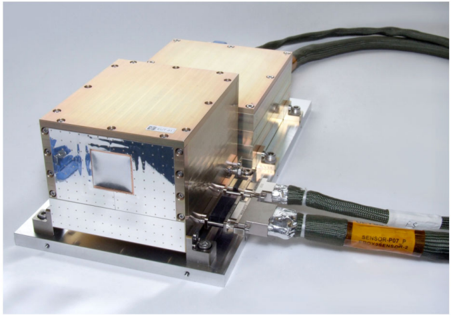
Chang’E 4 is the first mission to the far side of the Moon and consists of a lander, a rover, and a relay spacecraft. Lander and rover were launched at 18:23 UTC on December 7, 2018 and landed in the von Kármán crater at 02:26 UTC on January 3, 2019. Here we describe the Lunar Lander Neutron & Dosimetry experiment (LND) which is part of the Chang’E 4 Lander scientific payload. Its chief scientific goal is to obtain first active dosimetric measurements on the surface of the Moon. LND also provides observations of fast neutrons which are a result of the interaction of high-energy particle radiation with the lunar regolith and of their thermalized counterpart, thermal neutrons, which are a sensitive indicator of subsurface water content.
Overview
The claims and statistics of this paper haven’t been checked yet.
Free: it reads the open-access text and checks the first 5 claims that cite a source we can check. Create a free account to check every claim.
Integrity signals
Registry
Cites
Statistics
Figures
Verification
Claims the paper makes
The claims and statistics of this paper haven’t been checked yet.
Free: it reads the open-access text and checks the first 5 claims that cite a source we can check. Create a free account to check every claim.
Self-check
Percentages, sums and reported differences re-computed from the paper’s own numbers.
The self-check needs the paper’s full text.
Citations
Cites
Agostinelli, S., Allison, J., Amako, K., Apostolakis, J., Araujo, H., Arce, P., Asai, M., Axen, D., Banerjee, S., Barrand, G., et al. (2003) · Nuclear Instruments and Methods in Physics Research Section A: Accelerators, Spectrometers, Detectors and Associated Equipment · doi:10.1016/s0168-9002(03)01368-8 · Cited by 25,106 · cited 8×
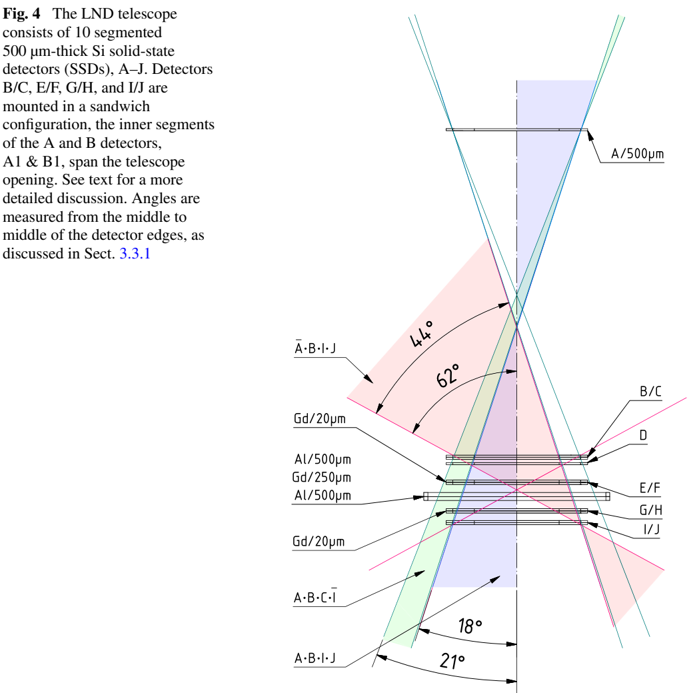
“Of course, the anti-coincidence is not perfect, but a GEANT4 simulation showed an efficiency of 99.807% ± 10−3%.”
MethodInfluentialGeant4 developments and applications
Allison, J., Amako, K., Apostolakis, J., Araujo, H., Arce Dubois, P., Asai, M., Barrand, G., Capra, R., Chauvie, S., Chytracek, R., et al. (2006) · IEEE Transactions on Nuclear Science · doi:10.1109/tns.2006.869826 · Cited by 6,946 · cited 1×
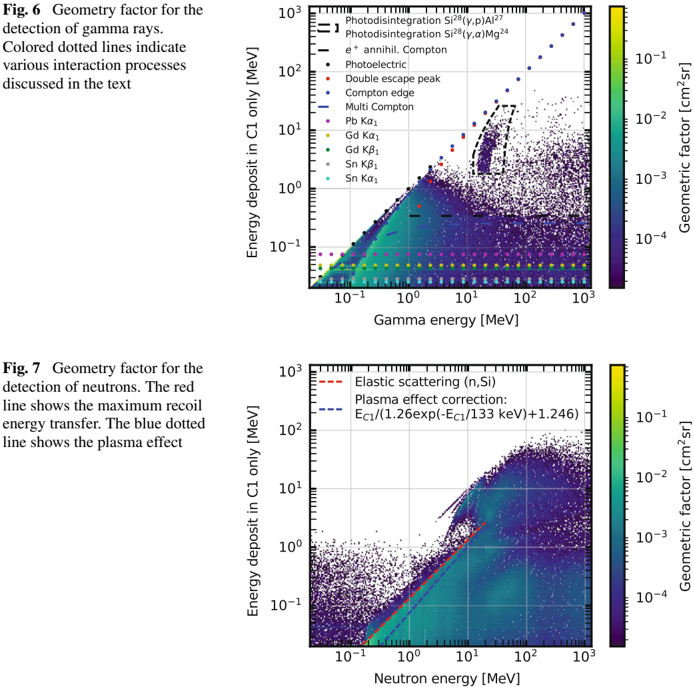
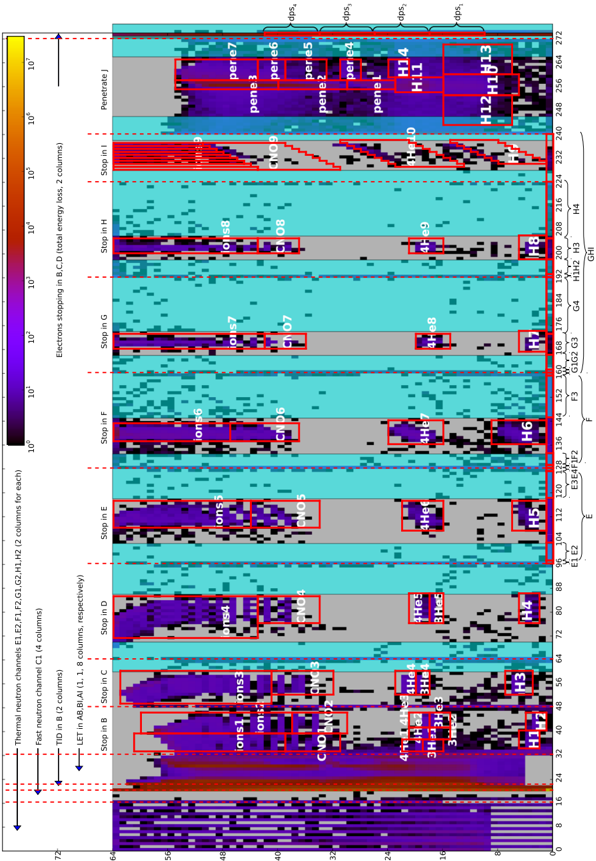
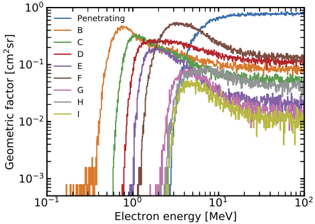
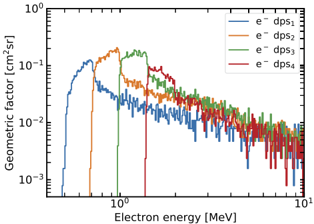
“The geometric factor for the measurement is color coded as shown in the color bar on the right and was simulated using GEANT4 version 10-1-patch-25 (Agostinelli et al. 2003; Allison et al. 2006, 2016).”
MethodAllison, J., Amako, K., Apostolakis, J., Arce, P., Asai, M., Aso, T., Bagli, E., Bagulya, A., Banerjee, S., Barrand, G., et al. (2016) · Nuclear Instruments and Methods in Physics Research Section A: Accelerators, Spectrometers, Detectors and Associated Equipment · doi:10.1016/j.nima.2016.06.125 · Cited by 4,194
Zur Theorie des Durchgangs schneller Korpuskularstrahlen durch Materie
Bethe, H. (1930) · Annalen der Physik · doi:10.1002/andp.19303970303 · Cited by 4,076 · cited 1×
“…path length of a charged projectile particle with nuclear charge Z1 and velocity v in a detector is given by the well-known Bethe-Bloch equation (Bethe 1930; Bloch 1933), dE dx = − Z 2 1e 4ne 4π · ε20β2c2me · [ ln ( 2meβ2c2 〈EB〉 ) − ln(1 − β2) − β2 ] , (11) where β = v/c, c the speed of light,…”
Zur Bremsung rasch bewegter Teilchen beim Durchgang durch Materie
Bloch, F. (1933) · Annalen der Physik · doi:10.1002/andp.19334080303 · Cited by 867 · cited 1×
“…of a charged projectile particle with nuclear charge Z1 and velocity v in a detector is given by the well-known Bethe-Bloch equation (Bethe 1930; Bloch 1933), dE dx = − Z 2 1e 4ne 4π · ε20β2c2me · [ ln ( 2meβ2c2 〈EB〉 ) − ln(1 − β2) − β2 ] , (11) where β = v/c, c the speed of light, EB is the…”
Feldman, W. C., Maurice, S., Binder, A. B., Barraclough, B. L., Elphic, R. C., & Lawrence, D. J. (1998) · Science · doi:10.1126/science.281.5382.1496 · Cited by 686 · cited 1×
“Thermal and epithermal neutrons serve as sensitive probes for the shallow subsurface water (proton) (Feldman et al. 1998a, 1998b) and FeO content (Elphic et al. 1998) and their quantitative measurement is therefore of great interest for planetary exploration.”
BackgroundMeasurement of the flux and energy spectrum of cosmic-ray induced neutrons on the ground
Gordon, M. S., Goldhagen, P., Rodbell, K. P., Zabel, T. H., Tang, H. H. K., Clem, J. M., & Bailey, P. (2004) · IEEE Transactions on Nuclear Science · doi:10.1109/tns.2004.839134 · Cited by 392 · cited 5×
“The extremely large cross section of gadolinium (Gd) to capture thermal neutrons and subsequently emit a conversion electron has been exploited for thermal neutron measurements on Earth, but to our knowledge never before in space (see Sect.”
BackgroundInfluentialEvidence for water ice near the lunar poles
Feldman, W. C., Maurice, S., Lawrence, D. J., Little, R. C., Lawson, S. L., Gasnault, O., Wiens, R. C., Barraclough, B. L., Elphic, R. C., Prettyman, T. H., et al. (2001) · Journal of Geophysical Research: Planets · doi:10.1029/2000je001444 · Cited by 384 · cited 1×
“Because the South-Pole Aitken Basin has some permanently shadowed regions, it is believed that it may harbor significant amounts of water (Feldman et al. 2001).”
BackgroundLawrence, D. J., Feldman, W. C., Elphic, R. C., Little, R. C., Prettyman, T. H., Maurice, S., Lucey, P. G., & Binder, A. B. (2002) · Journal of Geophysical Research: Planets · doi:10.1029/2001je001530 · Cited by 292 · cited 3×
“Determine the FeO content in the South-Pole Aitken Basin: The South-Pole Aitken Basin is the second largest known impact crater in the solar system.”
BackgroundMeasurements of primary and atmospheric cosmic-ray spectra with the BESS-TeV spectrometer
Haino, S., Sanuki, T., Abe, K., Anraku, K., Asaoka, Y., Fuke, H., Imori, M., Itasaki, A., Maeno, T., Makida, Y., et al. (2004) · Physics Letters B · doi:10.1016/j.physletb.2004.05.019 · Cited by 268 · cited 1×
“It is expected to exhibit large temporal variations in the intensity as well as the composition of the radiation and is quite different from that measured on the surface of Earth (Gordon et al. 2004; Haino et al. 2004; Neher 1971; Kremer et al. 1999).”
Background
Research works printed but not linked: 9
- 1. D. Abdushukurov, Gadolinium Foils as Converters of Thermal Neutrons in Detectors of Nuclear Radiation. Physics Research and Technology (2010). Nova Science Publishers, Incorporated. http://books.google.de/books?id=SqmkSgAACAAJ
- 2. A.M. Adamcyk, M.S. Clowdsley, G.D. Qualls, S.B. Blattnig, K.T. Lee, D.J. Fry, N.N. Stoffle, L.C. Simonsen, T.C. Slaba, S.A. Walker, in IEEE Aerospace Conference 2011, March 05, 2011-March 12, 2011, Big Sky, MT, United States (2011). NASA Johnson Space Center, Houston, TX, United States, documents number JSC-CN-21080
- 29. G.H. Heiken, D.T. Vaniman, B.M. French, Lunar Sourcebook, a User's Guide to the Moon (1991)
- 44. T. Möller, Measurement of the radiation exposure for high altitude flights in the polar region. Dissertation. Christian-Albrechts-Universität zu Kiel, Kiel, Germany (2013)
- 45. T. Möller, B. Ehresmann, J. Labrenz, L. Panitzsch, in 20th Symposium on European Rocket and Balloon Programmes and Related Research, ed. by L. Ouwehand. ESA Special Publication, vol. 700 (2011), pp. 641-644
- 47. T. Möller, T. Berger, S. Böttcher, S. Burmeister, B. Ehresmann, B. Heber, J. Labrenz, L. Panitzsch, R. Wimmer-Schweingruber, in Proc. Int. Cosmic Ray Conf. (2013b). http://www.cbpf.br/~icrc2013/papers/ icrc2013-0422.pdf
- 54. H.E. Spence (Crater Science Team), in Annual Meeting of the Lunar Exploration Analysis Group. LPI Con- tributions, vol. 1595 (2010), p.
- 59. R.F. Wimmer-Schweingruber, J. Koehler, E.C. Gonzales, B. Heber, S. Boettcher, S. Burmeister, L. Seimetz, B. Schuster, in AGU Fall Meeting Abstracts, vol. 2008 (2008), pp. P53C-1458
- 63. L. Xu, Y.L. Zou, J. Wu, in Lunar and Planetary Science Conference. Lunar and Planetary Inst. Technical Report, vol. 49 (2018), p. 1856
Cited by
First measurements of the radiation dose on the lunar surface
Zhang, S., Wimmer-Schweingruber, R. F., Yu, J., Wang, C., Fu, Q., Zou, Y., Sun, Y., Wang, C., Hou, D., Böttcher, S. I., et al. (2020) · Science Advances · doi:10.1126/sciadv.aaz1334 · Cited by 184
Self-citationLi, C., Zuo, W., Wen, W., Zeng, X., Gao, X., Liu, Y., Fu, Q., Zhang, Z., Su, Y., Ren, X., et al. (2021) · Space Science Reviews · doi:10.1007/s11214-021-00793-z · Cited by 103
Self-citationThe underexplored frontier of ice giant dynamos
Soderlund, K. M., & Stanley, S. (2020) · Philosophical Transactions of the Royal Society A Mathematical Physical and Engineering Sciences · doi:10.1098/rsta.2019.0479 · Cited by 51
Radiation Environment at the Surface and Subsurface of the Moon: Model Development and Validation
Dobynde, M. I., & Guo, J. (2021) · Journal of Geophysical Research Planets · doi:10.1029/2021je006930 · Cited by 40
“On the surface of the Moon, the upward albedo radiation generated in the soil is an important quantity to differentiate the lunar radiation field from the deep space radiation field (Wimmer-Schweingruber et al., 2020).”
BackgroundMethodSelf-citationVolatiles and Refractories in Surface-Bounded Exospheres in the Inner Solar System
Grava, C., Killen, R. M., Benna, M., Berezhnoy, A. A., Halekas, J. S., Leblanc, F., Nishino, M. N., Plainaki, C., Raines, J. M., Sarantos, M., et al. (2021) · Space Science Reviews · doi:10.1007/s11214-021-00833-8 · Cited by 36
Particle radiation environment in the heliosphere: Status, limitations, and recommendations
Guo, J., Wang, B., Whitman, K., Plainaki, C., Zhao, L., Bain, H. M., Cohen, C. M. S., Dalla, S., Dumbović, M., Janvier, M., et al. (2024) · Advances in Space Research · doi:10.1016/j.asr.2024.03.070 · Cited by 40
Self-citationComparing the Properties of ICME‐Induced Forbush Decreases at Earth and Mars
von Forstner, J. L. F., Guo, J., Wimmer-Schweingruber, R. F., Dumbović, M., Janvier, M., Démoulin, P., Veronig, A., Temmer, M., Papaioannou, A., Dasso, S., et al. (2020) · Journal of Geophysical Research Space Physics · doi:10.1029/2019ja027662 · Cited by 28
Self-citationFirst Solar Energetic Particles Measured on the Lunar Far-side
Xu, Z., Guo, J., Wimmer-Schweingruber, R. F., von Forstner, J. L. F., Wang, Y., Dresing, N., Lohf, H., Zhang, S., Heber, B., & Yang, M. (2020) · The Astrophysical Journal Letters · doi:10.3847/2041-8213/abbccc · Cited by 28
“6 of Wimmer-Schweingruber et al. (2020).”
MethodSelf-citationThe First Ground Level Enhancement Seen on Three Planetary Surfaces: Earth, Moon, and Mars
Guo, J., Li, X., Zhang, J., Dobynde, M. I., Wang, Y., Xu, Z., Berger, T., Semkova, J., Wimmer-Schweingruber, R. F., Hassler, D. M., et al. (2023) · Geophysical Research Letters · doi:10.1029/2023gl103069 · Cited by 28
Self-citationvon Forstner, J. L. F., Dumbović, M., Möstl, C., Guo, J., Papaioannou, A., Elftmann, R., Xu, Z., Terasa, J. C., Kollhoff, A., Wimmer-Schweingruber, R. F., et al. (2021) · Astronomy and Astrophysics · doi:10.1051/0004-6361/202039848 · Cited by 32
Self-citationWang, C., Zhang, G., Wang, Y., & Song, L. (2025) · Galaxies · doi:10.3390/galaxies13050103 · Cited by 28
Self-citationRadial evolution of the April 2020 stealth coronal mass ejection between 0.8 and 1 AU
von Forstner, J. L. F., Dumbović, M., Möstl, C., Guo, J., Papaioannou, A., Elftmann, R., Xu, Z., Terasa, J. C., Kollhoff, A., Wimmer-Schweingruber, R. F., et al. (2021) · Springer Link (Chiba Institute of Technology) · doi:10.1051/0004-6361/202039848/pdf · Cited by 22
Self-citationGuidelines for radiation-safe human activities on the Moon
Dobynde, M. I., & Guo, J. (2024) · Nature Astronomy · doi:10.1038/s41550-024-02287-8 · Cited by 22
Self-citationLuo, P., Zhang, X., Fu, S., Li, Y., Li, C., & Cao, J. (2022) · Science Advances · doi:10.1126/sciadv.abk1760 · Cited by 19
“On 3 January 2019, China successfully sent a lander (CE-4) and a rover (Yutu-2) to the Von Kármán crater in the South Pole Aitken basin, the largest known impact crater on the Moon and one of the largest in the solar system ( 36 ).”
InfluentialXu, Z., Guo, J., Wimmer-Schweingruber, R. F., Dobynde, M. I., Kühl, P., Khaksarighiri, S., & Zhang, S. (2022) · Frontiers in Astronomy and Space Sciences · doi:10.3389/fspas.2022.974946 · Cited by 18
Self-citationQi, S., Wang, J., Liu, X., Xia, C., Li, X., Shao, W., & Wang, Z. (2024) · Applied Thermal Engineering · doi:10.1016/j.applthermaleng.2024.123854 · Cited by 19
Medical countermeasures for the hematopoietic-subsyndrome of acute radiation syndrome in space
Kernagis, D. N., Balcer-Kubiczek, E., Bazyar, S., Orschell, C. M., & Jackson, I. L. (2022) · Life Sciences in Space Research · doi:10.1016/j.lssr.2022.06.002 · Cited by 16
Regolith-based lunar habitat for astronaut radiation protection and organ dose assessment
Blunier, S., Athanasopoulos, D., Dittmar, C., Thoresen, F., Cowley, A., & Fogtman, A. (2025) · Planetary and Space Science · doi:10.1016/j.pss.2025.106116 · Cited by 16
The Electron Proton Helium INstrument as an example for a Space Weather Radiation Instrument
Kühl, P., Heber, B., Gómez-Herrero, R., Malandraki, O., Posner, A., & Sierks, H. (2020) · Journal of Space Weather and Space Climate · doi:10.1051/swsc/2020056 · Cited by 15
“An energy-loss histogram of one of the inner detectors in anti-coincidence to all other detectors would have provided more capabilities in the analysis of c-rays following the approach of the Lunar Lander Neutron and Dosimetry (LND) experiment on Chang’e4 (Wimmer-Schweingruber et al., 2020) and PSP/IS IS/EPI-Hi (McCom…”
MethodQuang, N. D., Kim, H. J., Vuong, P. Q., Ton, N., Nam, U., Park, W.-K., Sohn, J., Choi, Y.-J., Kim, S., Youn, S., et al. (2022) · Nuclear Engineering and Technology · doi:10.1016/j.net.2022.10.041 · Cited by 15
“Many basic research and applications, such as rare event and dark matter searches, nuclear nonproliferation, international safe-guards, space neutron environment, boron neutron capture therapy, and neutron dosimetry, rely on the understanding of neutron energy spectrum and intensity [1 e 6].”
Development of novel crystal scintillators for lunar surface science
Vuong, P. Q., Quang, N. D., Kim, H. J., Lee, J., Kang, S. C., Nam, U., Park, W.-K., Sohn, J., Choi, Y.-J., Youn, S., et al. (2022) · Radiation Physics and Chemistry · doi:10.1016/j.radphyschem.2022.110425 · Cited by 14
BioMoon: a concept for a mission to advance space life sciences and astrobiology on the Moon
Cockell, C. S., Green, D. A., Caplin, N., Grenouilleau, J., McDonald, F. E., Calvaruso, M., Billi, D., Cullen, D. C., Davey, M. P., Micco, V. D., et al. (2024) · Discover Space. · doi:10.1007/s11038-024-09558-4 · Cited by 15
“…of the lander, 2) Low and high energy neutron detectors inside the lander similar to the Lunar Lander Neutron and Dosimetry (LND) instrument [36], measuring radiation from above and radiation coming up from lunar surface (this was envisaged to require two sets of dosimeters), and 3) Smaller…”
Self-citationEnergetic ions in the Venusian system: Insights from the first Solar Orbiter flyby
Allen, R. C., Cernuda, I., Pacheco, D., Berger, L., Xu, Z., von Forstner, J. L. F., Rodríguez-Pacheco, J., Wimmer-Schweingruber, R. F., Ho, G. C., Mason, G. M., et al. (2021) · Astronomy and Astrophysics · doi:10.1051/0004-6361/202140803 · Cited by 11
Self-citationSánchez‐Cano, B., Witasse, O. G., Knutsen, E. W., Meggi, D., Viet, S., Lester, M., Wimmer-Schweingruber, R. F., Pinto, M., Moissl, R., Benkhoff, J., et al. (2023) · Space Weather · doi:10.1029/2023sw003540 · Cited by 11
Self-citationLiu, W. M., Guo, J., Zhang, J., & Semkova, J. (2023) · The Astrophysical Journal · doi:10.3847/1538-4357/acce3c · Cited by 11
Self-citationThe Electron Proton Helium INstrument as an example for a Space Weather Radiation Instrument
Kühl, P., Heber, B., Gómez-Herrero, R., Malandraki, O., Posner, A., & Sierks, H. (2020) · Springer Link (Chiba Institute of Technology) · doi:10.1051/swsc/2020056/pdf · Cited by 9
Composition Variation of the 2023 May 16 Solar Energetic Particle Event Observed by SolO and PSP
Xu, Z., Cohen, C. M. S., Leske, R. A., Muro, G. D., Cummings, A. C., McComas, D. J., Schwadron, N. A., Christian, E. R., Wiedenbeck, M. E., McNutt, R. L., et al. (2024) · The Astrophysical Journal Letters · doi:10.3847/2041-8213/ad8b18 · Cited by 11
Self-citationLosekamm, M. J., Biswas, J., Chupin, T., Deiml, M., Deremetz, M., Evagora, A. M., Fau, G., Flahaut, J., Gancet, J., Glier, M., et al. (2022) · The Planetary Science Journal · doi:10.3847/psj/ac8cfd · Cited by 9
“LND, the only post-Apollo investigation to measure neutrons, is primarily sensitive to fast neutrons—and therefore has only a limited and experimental ability to measure the hydrogen abundance below the lander (Wimmer-Schweingruber et al. 2020).”
BackgroundDesign and Development of Energy Particle Detector on China’s Chang’e-7
Wang, L., Shen, G., Zhang, H., Hou, D., Zhang, S., Zhang, X., Quan, Z., Liao, J., Ji, W., & Sun, Y. (2024) · Aerospace · doi:10.3390/aerospace11110893 · Cited by 8
Self-citationPositioning, navigation, and timing on the Moon and Mars with galactic cosmic rays
Leone, G., TANAKA, H. K. M., Holma, M., Krishnan, S., Duffy, A. R., Enqvist, T., Kuusiniemi, P., Joutsenvaara, J., Cerretto, G., Cantoni, E., et al. (2025) · iScience · doi:10.1016/j.isci.2025.112496 · Cited by 9
“32 The Lunar Lander Neutrons and Dosimetry (LND) experiment onboard the Chang’e 4 mission 33 measured an average dose equivalent of 1369 μ Sv/ day ( ∼ 500 mSv/year).”
The Space Radiobiological Exposure Facility on the China Space Station
Zhang, B., Zhong, R., Shen, G., Tuo, C., Dong, Y., Wang, W., Zhang, M., Tong, G., Zhang, H., Yuan, B., et al. (2025) · Astrobiology · doi:10.1089/ast.2024.0027 · Cited by 7
“The neutron spectrum detector has a design similar to that of the telescope used in the lunar lander neutron and dosimetry experiment (Wimmer-Schweingruber et al., 2020; Zhang et al., 2020).”
Self-citationHou, D., Zhang, S., Yu, J., Wimmer-Schweingruber, R. F., Burmeister, S., Lohf, H., Yuan, B., Shen, G., Wang, C., Xiaoxin, H. O. U., et al. (2020) · Journal of Instrumentation · doi:10.1088/1748-0221/15/01/p01032 · Cited by 7
Self-citationComprehensive review of neutron techniques, detection, and dosimetry in science and technology
Saengkaew, P., & Ploykrachang, K. (2026) · Discover Applied Sciences · doi:10.1007/s42452-025-08024-8 · Cited by 6
Long‐Term Variation of the Galactic Cosmic Ray Radiation Dose Rates
Lyu, D., Qin, G., & Shen, Z. (2024) · Space Weather · doi:10.1029/2023sw003804 · Cited by 6
“As a part of the Chang’E-4 lander science payload, the LND aims to measure the particle radiation environment and radiation dose at the lunar surface (Wimmer-Schweingruber et al., 2020).”
BackgroundMethodInfluentialLUVMI-X: A Versatile Platform for Resource Prospecting on the Moon
Losekamm, M. J., Barber, S. J., Biswas, J., Chupin, T., Evagora, A. M., Fau, G., Fodorcan, D., Gancet, J., Kubitza, S., Madakashira, H. K., et al. (2021) · ASCE International Conference on Engineering, Science, Construction, and Operations in Challenging Environments (Earth and Space) · doi:10.1061/9780784483374.029 · Cited by 6
A background suppression detector array for fast neutron measurement in space science study
Han, C., Wang, S., Shi, Q., Degeling, A. W., Wang, E., Jia, X., Hasebe, N., & Zong, Q. (2024) · Measurement · doi:10.1016/j.measurement.2024.114479 · Cited by 6
Shen, Z., 李, C. 彩. L., Zuo, P., Qin, G., & Xu, X. (2025) · The Astrophysical Journal · doi:10.3847/1538-4357/ade71b · Cited by 4
Yuesong, C. H. E. N., Tang, Y., Fan, Y., Yan, J., Wang, C., & Zou, Y. (2022) · Chinese Journal of Space Science · doi:10.11728/cjss2022.04.yg30 · Cited by 3
Self-citationAssessment of the Radiation Situation during Short-Term Flights to the Moon
Ivanov, I. V., Burmistrov, V. I., & Matkevich, E. I. (2024) · Medical Radiology and radiation safety · doi:10.33266/1024-6177-2024-69-1-50-60 · Cited by 2
Wei, Z., Huang, Y. B., & Cheng, Y. (2025) · The European Physical Journal C · doi:10.1140/epjc/s10052-025-14619-7 · Cited by 2
“In addition, several in-situ measurements of neutron radiation environment on the lunar surface and in lunar orbit was performed, such as the Chang’e 4 and Apollo 17 missions [8– 10].”
Durairaj, N., Kalainathan, S., & Babu, S. M. (2023) · Physics Open · doi:10.1016/j.physo.2023.100170 · Cited by 2
Ivanov, I. V., & Burmistrov, V. I. (2023) · Russian Journal of Occupational Health and Industrial Ecology · doi:10.31089/1026-9428-2023-63-6-367-378 · Cited by 1
The Lunar OutpOst Neutron Spectrometer (LOONS)
Bruno, A., de Nolfo, G. A., Daehn, M., Dumonthier, J. J., Legere, J. S., Liceaga-Indart, I., Messner, R., Mitchell, J. G., Ryan, J. M., Suarez, G., et al. (2022) · IEEE Nuclear Science Symposium and Medical Imaging Conference (NSS/MIC) · doi:10.1109/nss/mic44845.2022.10399092 · Cited by 1
“More recently, the Lunar Neutron Detector on China’s Chang’e 4 detected the first lunar surface neutrons on a lander at the lunar far side [11].”
BackgroundJupiter wind as a unifying bridge: a testable paradigm in the Tianwen-4 era
WeiDong, G., Yong, W., Yao, Z., YuQi, W., & Yuan, C. (2026) · Earth and Planetary Physics · doi:10.26464/epp2026051 · Cited by 1
Durairaj, N., Kalainathan, S., & Babu, S. M. (2023) · Springer tracts in electrical and electronics engineering · doi:10.1007/978-981-99-2548-3_5 · Cited by 1
Liu, W., Dobynde, M. I., Guo, J., Semkova, J., & Krastev, K. (2025) · arXiv (Cornell University) · doi:10.48550/arxiv.2511.09040 · Cited by 1
“The Lunar Lander Neutron and Dosimetry (LND, Wimmer-Schweingruber et al., 2020) experiment on board the Chang’E-4 mission, launched in 2019, has contributed significantly to our understanding of the lunar surface radiation dose and provided insight into the radiation environment on the far side of…”
Self-citationThe Lunar Farside Transients and Technology Telescope (LFT3) MissionPreprint
DeBoer, D. R., Ashe, C. K., Johnson, O. A., Keane, E. F., Lesh, A. C., Lynch, R., Marshall, E. J., Prabu, S., Slosar, A., Tremblay, C. D., et al. (2026) · arXiv (Cornell University) · doi:10.48550/arxiv.2607.25762 · Cited by 1
The Lunar Cosmic-Ray and Neutron Spectrometer: Phase-A Design and Technology Studies
Losekamm, M. J., Eckert, L., & Poeschl, T. (2022) · IEEE Aerospace Conference (AERO) · doi:10.1109/aero53065.2022.9843295
A neural-network framework for tracking and identifying cosmic-ray nuclei in the RadMap Telescope
Meyer-Hetling, L., Losekamm, M. J., Paul, S. M., & Pöschl, T. (2026) · Journal of Space Weather and Space Climate · doi:10.1051/swsc/2026001
Marasca, J. C. B., Gutiérrez, H. D., & Hadatty, J. I. M. (2025) · arXiv (Cornell University) · doi:10.48550/arxiv.2511.09743
Tan, F., Guo, C., & 鲁同所 (2025) · Journal of Physics Conference Series · doi:10.1088/1742-6596/3115/1/012002
Calibration and characterization of the neutron spectrometer onboard the Weiming-1 CubeSat
Han, C., Wang, S., Shi, Q., Wang, X., Ma, Y., Li, W., He, P., Degeling, A. W., Liang, D., Wang, M., et al. (2026) · Measurement · doi:10.1016/j.measurement.2026.120422
“Previously, various background suppression techniques, such as anti-coincidence and neutron – gamma discrimination based on Pulse Shape Discrimination (PSD), have been developed to address this issue [31,36 – 38].”
A galactic cosmic ray cavity in Earth-Moon space
Shang, W., Liu, J., Xu, Z., Yue, C., Guo, R., Xiao, C., Shi, Q., Wimmer-Schweingruber, R. F., Guo, J., Degeling, A. W., et al. (2026) · Science Advances · doi:10.1126/sciadv.adv1908
“In addition, proton data with a higher-energy channel from 42.3 to 139.2 MeV were investigated ( 18 , 20 ).”
InfluentialSelf-citationProtective Use of Regolith for Planetary and Lunar Exploration (PURPLE)
Akisheva, Y. (2023) · theses.fr (ABES) · doi:10.70675/3608e477z18b3z4eeaz94c6z8512e5f8badf
The medium-energy electron detector on board CSES-02
Shen, G., ZhenXia, Z., Donghui, H., HuanXin, Z., Sun, Y., ChunQin, W., Bin, Y., Ping, Z., ZiDa, Q., & YaoDe, S. (2026) · Earth and Planetary Physics · doi:10.26464/epp2026052
Self-citationMikaelian, S. S. (2026) · IEEE Aerospace Conference (AERO) · doi:10.1109/aero66936.2026.11519989
“Preliminary results reported in [17] present measurements from the Chang'e-4 Lunar Lander Neutrons and Dosimetry (LND) instrument, providing the first long-duration, in-situ characterization of the lunar surface radiation environment using silicon detectors.”
Estudio del diseño y viabilidad estructural de un módulo espacial habitable en órbita terrestre baja
Gorina, N. G. (2026) · UPCommons institutional repository (Universitat Politècnica de Catalunya)
Wang, Y., Feng, C., Zhang, T., Kai, Y., & Liu, S. (2026) · Nuclear Instruments and Methods in Physics Research Section A Accelerators Spectrometers Detectors and Associated Equipment · doi:10.1016/j.nima.2026.171773
Analysis of Probable Radiation Exposure to Cosmonauts in a Short-Term Lunar Mission
Ivanov, I. V., Burmistrov, V. I., & Matkevich, E. I. (2025) · Human Physiology · doi:10.1134/s0362119726700040
“A b s o r b e d d o s e , c G y The corresponding equivalent dose rate from charged particles, calculated using a radiation weighting factor of W R = 4.3 [36], is 1367 μ Sv/day.”
InfluentialSELENE: A Deep Learning Model for Predicting Lunar Absorbed Radiation Dose Rates
Tummala, S., Bhatia, M., & Chun, R. (2026) · Communications in computer and information science · doi:10.1007/978-3-032-22196-4_7
Zhao, J., Li, Z., Ma, Q., Lin, Q., Qing, Y., Zheng, X., Gorbunov, M. S., Gao, B., Wang, C., Zhang, M., et al. (2026) · IEEE International Symposium on Circuits and Systems proceedings · doi:10.1109/iscas66217.2026.11562270
Self-citationExpanding Astrobiology: The Case for a Lunar Biorepository
Hagedorn, M., Parenti, L. R., Craddock, R. A., Comizzoli, P., Mabee, P., Meinke, B. K., Wolf, S., Bischof, J. C., Sandlin, R. D., Tessier, S. N., et al. (2026) · New Space · doi:10.1177/21680256261468245
“27 This will yield invaluable radiation information to help inform improved shielding.”
Huang, Z., Cheng, C. X., Cheng, W. S., Zhang, G., Li, N., Xu, X., & Qu, W. (2026) · Nuclear Science and Techniques · doi:10.1007/s41365-026-02021-1
Performance Study of Compact Semiconductor Neutron Spectrometer HardPix for Lunar Water Mapping
Filgas, R., Matthiä, D., Cintas, H., Slavíček, T., Jelínek, J., Gohl, S., Malich, M., da Luz, H. N., Bergmann, B. L., Berger, T., et al. (2026) · Sensors · doi:10.3390/s26165256
“An example of this approach is the Lunar Lander Neutron and Dosimetry (LND) experiment aboard the Chang’E-4 lander [16].”
Self-citationPazianotto, M. T., Frigi, F. L., & Federico, C. A. (2026) · Astroparticle Physics · doi:10.1016/j.astropartphys.2026.103301
Metadata
- Authors
- Wimmer-Schweingruber, R. F., Yu, J., Böttcher, S. I., Zhang, S., Burmeister, S., Lohf, H., Guo, J., Xu, Z., Schuster, B., Seimetz, L., Freiherr von Forstner, J. L., Ravanbakhsh, A., Knierim, V., Kolbe, S., Woyciechowski, H., Kulkarni, S. R., Yuan, B., Shen, G., Wang, C., Chang, Z., Berger, T., Hellweg, C. E., Matthiä, D., Hou, D., Knappmann, A., Büschel, C., Hou, X., Ren, B., & Fu, Q.
- Affiliations
- Chinese Academy of Sciences (CN)
- Christian-Albrechts-Universität zu Kiel (DE)
- University of Science and Technology of China (CN)
- Deutsches Zentrum für Luft- und Raumfahrt e. V. (DLR) (DE)
- China Electronics Technology Group Corporation (CN)
- Corresponding author
- Wimmer-Schweingruber, Robert F.
- Venue
- Space Science Reviews
- Published
- 2020-08-18
- Volume
- 216
- Issue
- 6
- Pages
- 1320
- ISSN
- 0038-6308 (ISSN-L)
- 1572-9672
- OpenAlex
- W2605773825
- Semantic Scholar
- ca1243bc111a45007693e95bb961d989fdb353af
- Cited by
- 57
- References
- 61
- Citations by year
- 2026: 12 · 2025: 8 · 2024: 10 · 2023: 6 · 2022: 8 · 2021: 6 · 2020: 7
- FWCI
- 3.01
- Type
- journal article
- Language
- en
- Open access
- hybrid
- doi.org
- Licence
- cc-by
- creativecommons.org/licenses/by/4.0 (tdm)
- creativecommons.org/licenses/by/4.0 (vor)
- Locations
- Space Science Reviews (publishedVersion, cc-by)
- elib (German Aerospace Center) (acceptedVersion)
- arXiv (Cornell University) (submittedVersion)
- Multimedialen Archiv und Publikationsserver der Christian-Albrechts-Universität zu Kiel (Christian-Albrechts-Universität zu Kiel) (submittedVersion, cc-by)
- arXiv (Cornell University) (cc-by)
- Lunar and Planetary Science Conference
- Funders
- Deutsches Zentrum für Luft- und Raumfahrt (50 JR 1604)
- Beijing Science and Technology Planning Project (Z181100002918003)
- Topics
- Physical Sciences › Earth and Planetary Sciences › Space and Planetary Science › Planetary Science and Exploration
- Physical Sciences › Earth and Planetary Sciences › Space and Planetary Science › Astro and Planetary Science
- Physical Sciences › Engineering › Aerospace Engineering › Spacecraft Design and Technology
- Keywords
- Chang'e-4, fast neutrons, thermal neutrons, lunar regolith, subsurface water content, Von Kármán crater
About these checks
Registry, retraction, Cites and statistics results are computed, not judged, with one exception: a printed reference that no index lists is read once by a model before it counts as a citation error. Claims are extracted by a model and kept only when their quote appears verbatim in the text; each cited source is then checked, with a model’s help, for whether it says what the claim relies on. Those verdicts can be wrong — read the claim’s quote and the cited source before relying on one.
Statistics and arithmetic are recomputed, not judged.
Confidence bands are shown only for fields calibrated on our annotated test set. None is calibrated yet, so no band is shown.
What counts as a claim ›How we measure confidence ›How we check this ›
Are you an author, or do you see a problem with this page? Request a review
Data sources
Bibliographic data: Semantic Scholar, OpenAlex, Crossref.
Contains information from the Semantic Scholar Academic Graph Datasets, made available under the ODC Attribution License (ODC-BY 1.0).
Semantic Scholar’s data is described in: Kinney, R., et al. (2023). The Semantic Scholar Open Data Platform. arXiv:2301.10140.
