

The DOI matches its Crossref record; 36 of the 36 references it cites were found in a registry or an index.
Polysomnography in stable COPD under non-invasive ventilation to reduce patient-ventilator asynchrony and morning breathlessness
Open accessAbstract
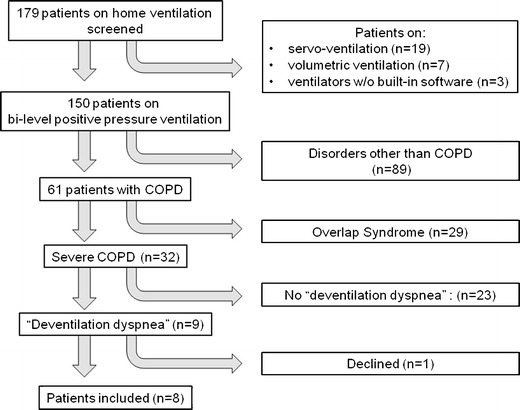
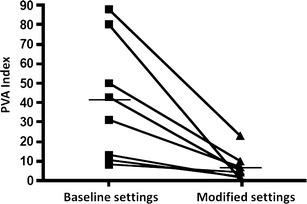
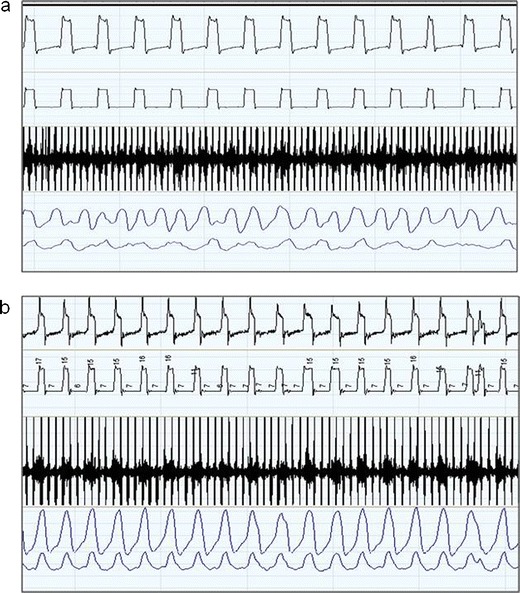
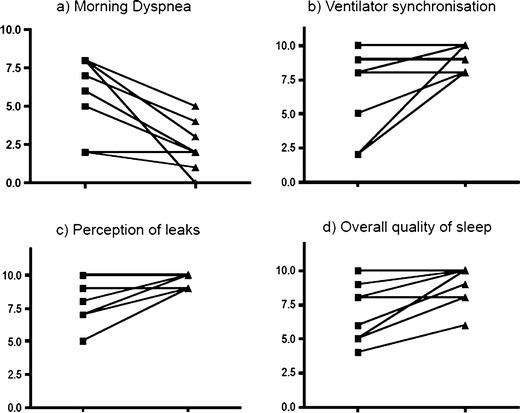
BACKGROUND: Stable severe chronic obstructive pulmonary disease (COPD) patients with chronic hypercapnic respiratory failure treated by nocturnal bi-level positive pressure non-invasive ventilation (NIV) may experience severe morning deventilation dyspnea. We hypothesised that in these patients, progressive hyperinflation, resulting from inappropriate ventilator settings, leads to patient-ventilator asynchrony (PVA) with a high rate of unrewarded inspiratory efforts and morning discomfort. METHODS: Polysomnography (PSG), diaphragm electromyogram and transcutaneous capnography (PtcCO(2)) under NIV during two consecutive nights using baseline ventilator settings on the first night, then, during the second night, adjustment of ventilator parameters under PSG with assessment of impact of settings changes on sleep, patient-ventilator synchronisation, morning arterial blood gases and morning dyspnea. RESULTS: Eight patients (61 ± 8 years, FEV(1) 30 ± 8% predicted, residual volume 210 ± 30% predicted) were included. In all patients, pressure support was decreased during setting adjustments, as well as tidal volume, while respiratory rate increased without any deleterious effect on nocturnal PtcCO(2) or morning PaCO(2). PVA index, initially high (40 ± 30%) during the baseline night, decreased significantly after adjusting ventilator settings (p = 0.0009), as well as subjective perception of PVA leaks, and morning dyspnea while quality of sleep improved. CONCLUSION: The subgroup of COPD patients treated by home NIV, who present marked deventilation dyspnea and unrewarded efforts may benefit from adjustment of ventilator settings under PSG or polygraphy.
Overview
The claims and statistics of this paper haven’t been checked yet.
Run the check — free, no account needed. It reads the open-access text and checks the sources it cites.
Integrity signals
Registry
Cites
Statistics
Figures
Verification
Claims the paper makes
The claims and statistics of this paper haven’t been checked yet.
Run the check — free, no account needed. It reads the open-access text and checks the sources it cites.
Claims other papers make about this one
Each is checked against this paper’s own text: does it say what the citing paper says it does?
The source backs part of the claim, not all of it — or backs it for a different population, condition or comparison.
In the citing paper
“Nevertheless, only a few studies have paid attention to adherence to NIV in COPD people, and most of them have focused only on early NIV failure (33,34) or on the quantification of adherence (35).”
From Promoting Acceptance and Adherence to Noninvasive Ventilation in Chronic Obstructive Pulmonary Disease: A Randomized Controlled Trial. (2022) · cites this paper as [34]
Experimental — accuracy not yet measuredThe source backs part of the claim, not all of it — or backs it for a different population, condition or comparison.
In the citing paper
“Ventilator settings are not easy to adjust and they influence sleep quality, which has spill-over effects on daytime life [34, 35].”
From A psychological intervention to promote acceptance and adherence to non-invasive ventilation in people with chronic obstructive pulmonary disease: study protocol of a randomised controlled trial. (2017) · cites this paper as [35]
Experimental — accuracy not yet measured
Self-check
Percentages, sums and reported differences re-computed from the paper’s own numbers.
The self-check needs the paper’s full text.
Citations
Cites
Vestbo, J., Hurd, S. S., Agustí, A. G., Jones, P. W., Vogelmeier, C., Anzueto, A., Barnes, P. J., Fabbri, L. M., Martinez, F. J., Nishimura, M., et al. (2013) · American Journal of Respiratory and Critical Care Medicine · doi:10.1164/rccm.201204-0596pp · Cited by 15,983
Rabe, K. F., Hurd, S., Anzueto, A., Barnes, P. J., Buist, S. A., Calverley, P., Fukuchi, Y., Jenkins, C., Rodriguez-Roisin, R., van Weel, C., et al. (2007) · American Journal of Respiratory and Critical Care Medicine · doi:10.1164/rccm.200703-456so · Cited by 4,925
McNicholas, W. T., Strohl, K. P., White, D. P., Levy, P. A., Schmidt, W., Wheatley, J. R., Redline, S. S., Carley, D. W., Buysse, D. J., Young, T. B., et al. (1999) · PubMed · Cited by 3,665
Rabe, K. F. (2007) · American Journal of Respiratory and Critical Care Medicine · Cited by 2,567
Patient-ventilator asynchrony during assisted mechanical ventilation
Thille, A. W., Rodríguez, P., Cabello, B., Lellouche, F., & Brochard, L. J. (2006) · Intensive Care Medicine · doi:10.1007/s00134-006-0301-8 · Cited by 919 · cited 2×
“We hypothesised that in these patients, inappropriate ventilator settings may lead to dynamic hyperinflation, increased intrinsic PEEP, resulting in unrewarded inspiratory efforts [13, 14] and morning discomfort when interrupting NIV [15].”
BackgroundPatterns of home mechanical ventilation use in Europe: results from the Eurovent survey
Lloyd-Owen, S. J., Donaldson, G. C., Ambrosino, N., Escarabill, J., Farré, R., Fauroux, B., Robert, D., Schönhofer, B., Simonds, A. K., & Wedzicha, J. A. (2005) · European Respiratory Journal · doi:10.1183/09031936.05.00066704 · Cited by 623 · cited 2×
“Despite the lack of evidence to support its use in chronic obstructive pulmonary disease (COPD), noninvasive ventilation (NIV) is widely prescribed in this indication in Europe [1].”
BackgroundO'Donnell, D. E., & Webb, K. A. (1993) · American Review of Respiratory Disease · doi:10.1164/ajrccm/148.5.1351 · Cited by 543
Jones, D. J., Paul, E. A., Jones, P., & Wedzicha, J. A. (1995) · American Journal of Respiratory and Critical Care Medicine · doi:10.1164/ajrccm.152.2.7633704 · Cited by 477 · cited 1×
“improvements in health-related quality of life [3, 5, 6], hospital admissions [7, 8], dyspnea [6] and quality of sleep [5].”
Background
Cited by
Sorted by citations
Ergan, B., Oczkowski, S. J. W., Rochwerg, B. N., Carlucci, A., Chatwin, M., Clini, E. M., Elliott, M., Gonzalez‐Bermejo, J., Hart, N., Luján, M., et al. (2019) · European Respiratory Journal · doi:10.1183/13993003.01003-2019 · Cited by 308
Self-citationMurphy, P. B., Brignall, Moxham, J., Polkey, M. I., Davidson, & Hart, N. (2012) · International Journal of COPD · doi:10.2147/copd.s36151 · Cited by 112
Long-term survival following initiation of home non-invasive ventilation: a European study
Patout, M., Lhuillier, E., Kaltsakas, G., Benattia, A., Dupuis, J., Arbane, G., Declercq, P.-L., Ramsay, M., Marino, P. S., Molano, L.-C., et al. (2020) · Thorax · doi:10.1136/thoraxjnl-2019-214204 · Cited by 99
“…settings may also contribute to improve adherence, 36 although such approach may need to be limited to a well-defined subgroup of patients, 37 as the use of polysomnography during NIV set-up remains controversial 38 and the lack of clear clinical efficacy is further impaired by practical…”
Long‐term adherence with non‐invasive ventilation improves prognosis in obese COPD patients
Borel, J., Pepin, J., Pison, C., Vesin, A., Gonzalez‐Bermejo, J., Court‐Fortune, I., & Timsit, J. (2014) · Respirology · doi:10.1111/resp.12327 · Cited by 83
Ramsay, M., Mandal, S., Suh, E., Steier, J. S., Douiri, A., Murphy, P. B., Polkey, M. I., Simonds, A. K., & Hart, N. (2015) · Thorax · doi:10.1136/thoraxjnl-2015-206944 · Cited by 74
Analysis and applications of respiratory surface EMG: report of a round table meeting
Jonkman, A. H., Warnaar, R. S. P., Baccinelli, W., Carbon, N. M., D'Cruz, R. F., Doorduin, J., van Doorn, J. L. M., Elshof, J., Estrada-Petrocelli, L., Graßhoff, J., et al. (2024) · Critical Care · doi:10.1186/s13054-023-04779-x · Cited by 72
“Although synchronized interaction between the patient and ventilator is known to influence comfort, breathlessness, and sleep quality [101, 102], patient-ventilator asynchrony is common in HMV without adversely impacting upon effective gas exchange [3].”
BackgroundDangers, L., Montlahuc, C., Kouatchet, A., Jaber, S., Meziani, F., Perbet, S., Similowski, T., Resche‐Rigon, M., Azoulay, É., & Demoule, A. (2018) · European Respiratory Journal · doi:10.1183/13993003.02637-2017 · Cited by 69
Garofalo, E., Bruni, A., Pelaia, C., Liparota, L., Lombardo, N., Longhini, F., & Navalesi, P. (2018) · Expert Review of Respiratory Medicine · doi:10.1080/17476348.2018.1480941 · Cited by 64
Long-Term Mechanical Ventilation: Recommendations of the Swiss Society of Pulmonology
Janssens, J.-P., Michel, F., Schwarz, E. I., Prella, M., Bloch, K. E., Adler, D., Brill, A., Geenens, A., Karrer, W. L., Ogna, A., et al. (2020) · Respiration · doi:10.1159/000510086 · Cited by 55
Self-citationNocturnal non-invasive positive pressure ventilation for COPD
Windisch, W., Storre, J. H., & Köhnlein, T. (2015) · Expert Review of Respiratory Medicine · doi:10.1586/17476348.2015.1035260 · Cited by 53
“While a reduction of PaCO2 is the physiological goal of NPPV, any form of dynamic hyperinflation needs to be avoided as dynamic hyperventilation can lead to a phenomenon called ‘deventilation dyspnea,’ occurring when patients get switched from nocturnal ventilation to subsequent spontaneous breathing [59].”
BackgroundNoninvasive ventilation in stable hypercapnic COPD: what is the evidence?
Duiverman, M. L. (2018) · ERJ Open Research · doi:10.1183/23120541.00012-2018 · Cited by 52
Dupuis‐Lozeron, E., Gex, G., Pasquina, P., Bridevaux, P., Borel, J., Soccal, P. M., Windisch, W., Pépin, J., Janssens, J.-P., & Adler, D. (2018) · European Respiratory Journal · doi:10.1183/13993003.011822018 · Cited by 51
Self-citationPatout, M., Gagnadoux, F., Rabec, C. A., Trzépizur, W., Georges, M., Perrin, C., Tamisier, R., Pépin, J., Llontop, C., Attali, V., et al. (2020) · Respirology · doi:10.1111/resp.13784 · Cited by 51
Self-citationAsynchronies and sleep disruption in neuromuscular patients under home noninvasive ventilation
Crescimanno, G., Canino, M., & Marrone, O. (2012) · Respiratory Medicine · doi:10.1016/j.rmed.2012.05.013 · Cited by 48
Randomised controlled trial of polysomnographic titration of noninvasive ventilation
Hannan, L. M., Rautela, L., Berlowitz, D. J., McDonald, C. F., Cori, J. M., Sheers, N. L., Chao, C., O’Donoghue, F. J., & Howard, M. E. (2019) · European Respiratory Journal · doi:10.1183/13993003.02118-2018 · Cited by 47
D'Cruz, R. F., Murphy, P. B., & Kaltsakas, G. (2020) · Journal of Thoracic Disease · doi:10.21037/jtd-cus-2020-006 · Cited by 51
van der Leest, S., & Duiverman, M. L. (2018) · Respirology · doi:10.1111/resp.13450 · Cited by 44
Update: non-invasive ventilation in chronic obstructive pulmonary disease
Shah, N. M., D'Cruz, R. F., & Murphy, P. B. (2018) · Journal of Thoracic Disease · doi:10.21037/jtd.2017.10.44 · Cited by 45
Adler, D., & Janssens, J.-P. (2018) · Respiration · doi:10.1159/000494063 · Cited by 40
Self-citationCaldarelli, V., Borel, J., Khirani, S., Ramirez, A., Cutrera, R., Pépin, J., & Fauroux, B. (2013) · Intensive Care Medicine · doi:10.1007/s00134-012-2806-7 · Cited by 38
“In a step by step strategy monitoring during sleep, the occurrence and the severity of leaks can be addressed firstly by the use of the devices’ built-in software [1, 26].”
BackgroundMethodSelf-citationMonitoring Long Term Noninvasive Ventilation: Benefits, Caveats and Perspectives
Janssens, J.-P., Cantero, C., Pasquina, P., Georges, M., & Rabec, C. A. (2022) · Frontiers in Medicine · doi:10.3389/fmed.2022.874523 · Cited by 36
“Proposed algorithms recommend PSG or PG only after a thorough analysis of symptoms, PtcCO2, ventilator software and correction of leaks (4, 68) (Figure 6).”
MethodSelf-citationMurphy, P. B., Arbane, G., Ramsay, M., Suh, E., Mandal, S., Jayaram, D., Leaver, S. K., Polkey, M. I., & Hart, N. (2015) · European Respiratory Journal · doi:10.1183/09031936.00205714 · Cited by 35
Bonnevie, T., Elkins, M. R., Paumier, C., Médrinal, C., Combret, Y., Patout, M., Muir, J., Cuvelier, A., Gravier, F., & Prieur, G. (2019) · COPD Journal of Chronic Obstructive Pulmonary Disease · doi:10.1080/15412555.2019.1672637 · Cited by 34
The role of telemonitoring in patients on home mechanical ventilation
van den Biggelaar, R. J. M., Hazenberg, A., & Duiverman, M. L. (2023) · European Respiratory Review · doi:10.1183/16000617.0207-2022 · Cited by 32
Piper, A. J., & Yee, B. J. (2014) · Comprehensive physiology · doi:10.1002/cphy.c140008 · Cited by 32
“These asynchronies can be categorized as affecting EPAP to IPAP transitions (ineffective triggering, double triggering or autotriggering) or IPAP to EPAP transitions (premature or prolonged cycling) (406) (Fig.”
InfluentialAarrestad, S., Qvarfort, M., Kleiven, A. L., Tollefsen, E., Skjønsberg, O. H., & Janssens, J.-P. (2018) · Respiratory Medicine · doi:10.1016/j.rmed.2018.09.015 · Cited by 27
Self-citationPractical Insight to Monitor Home NIV in COPD Patients
Arnal, J.-M., Texereau, J., & Garnero, A. (2017) · COPD Journal of Chronic Obstructive Pulmonary Disease · doi:10.1080/15412555.2017.1298583 · Cited by 28
“Deventilation syndrome is improved by decreasing pressure support and optimizing patient ventilator synchrony (20).”
BackgroundVolpato, E., Banfi, P., & Pagnini, F. (2022) · Psychosomatic Medicine · doi:10.1097/psy.0000000000001053 · Cited by 24
“Moreover, most of the previous studies suggested that the difficult adjustment of the ventilator settings and the influence of NIVon sleep quality with spillover effects on daytime life can have an impact on its usage (36,37).”
BackgroundResultRamsay, M., & Hart, N. (2013) · Current Opinion in Pulmonary Medicine · doi:10.1097/mcp.0b013e3283659e4c · Cited by 20
Hannan, L. M., Sahi, H., ROAD, J. D., McDonald, C. F., Berlowitz, D. J., & Howard, M. E. (2016) · Annals of the American Thoracic Society · doi:10.1513/annalsats.201509-590oc · Cited by 20
Duiverman, M. L. (2020) · Pulmonology · doi:10.1016/j.pulmoe.2020.08.002 · Cited by 19
“showed that actively titrating NIV to minimize PVA and sleep-disordered breathing decreased morning dyspnea and increased patient-comfort.(40) There are multiple methods available to monitor PVA noninvasively.”
MethodVolpato, E., Banfi, P., & Pagnini, F. (2017) · Trials · doi:10.1186/s13063-017-1802-1 · Cited by 18
“are not easy to adjust and they influence sleep quality, which has spill-over effects on daytime life [34, 35].”
BackgroundSetting up home noninvasive ventilation
Arnal, J.-M., Thévenin, C.-P., Couzinou, B., Texereau, J., & Garnero, A. (2019) · Chronic Respiratory Disease · doi:10.1177/1479973119844090 · Cited by 18
“Deventilation syndrome is characterized by dyspnea when removing the mask.(10) Causes of this discomfort are multiple, and a progressive decrease in ventilatory support can sometimes reduce this discomfort.”
BackgroundChronic obstructive pulmonary disease and sleep
Lee-Chiong, T. L. (2013) · Current Respiratory Care Reports · doi:10.1007/s13665-013-0048-y · Cited by 18
Adler, D., Bridevaux, P., Contal, O., Georges, M., Dupuis‐Lozeron, E., Claudel, E., Pépin, J., & Janssens, J.-P. (2013) · Respiratory Medicine · doi:10.1016/j.rmed.2013.10.010 · Cited by 18
“SpO2 < 90% (% TST) 13 [4; 27] 11 [5; 27] 7 [2; 23]”
BackgroundSelf-citationKamińska, M., Rimmer, K. P., Mckim, D. A., Nonoyama, M. L., Giannouli, E., Morrison, D., O’Connell, C. M., Petrof, B. J., & Maltais, F. (2021) · Canadian Journal of Respiratory Critical Care and Sleep Medicine · doi:10.1080/24745332.2021.1911218 · Cited by 15
Measuring Adherence to Long-Term Noninvasive Ventilation
Chao, C., Berlowitz, D. J., Howard, M. E., Rautela, L., McDonald, L. A., & Hannan, L. M. (2021) · Respiratory Care · doi:10.4187/respcare.08745 · Cited by 14
“1,24,43 In a pilot randomized controlled trial conducted by this research group, a supportive effect of polysomnographic titration of NIV on adherence was apparent in users who were initially nonadherent.”
Pure SARS-CoV-2 related AVDS (Acute Vascular Distress Syndrome)
Jounieaux, V., Basille, D., Arab, O. A., Guillaumont, M., Andréjak, C., Mahjoub, Y., & Rodenstein, D. O. (2021) · BMC Infectious Diseases · doi:10.1186/s12879-021-05805-5 · Cited by 13
“This type of dyspnoea could be related in part to deventilation dyspnoea which is observed in patients with severe COPD immediately after interruption of nocturnal non-invasive ventilation (NIV) and preventing the patient from getting out of bed and carrying out usual daily activities for more than 30min after one nig…”
BackgroundSelf-citationUpdate: Non-Invasive Positive Pressure Ventilation in Chronic Respiratory Failure Due to COPD
Altıntaş, N. (2015) · COPD Journal of Chronic Obstructive Pulmonary Disease · doi:10.3109/15412555.2015.1043520 · Cited by 13
Noninvasive positive pressure ventilation in stable patients with COPD
Wiles, S. P., Aboussouan, L. S., & Mireles‐Cabodevila, E. (2019) · Current Opinion in Pulmonary Medicine · doi:10.1097/mcp.0000000000000657 · Cited by 13
Home Noninvasive Ventilation in COPD
Kamińska, M., Adam, V., & Orr, J. E. (2024) · CHEST Journal · doi:10.1016/j.chest.2024.01.030 · Cited by 12
“53 It can be remedied by adjusting parameters and improving synchrony.”
BackgroundPerioperative Implementation of Noninvasive Positive Airway Pressure Therapies
Hillman, D. R., Jungquist, C. R., & Auckley, D. H. (2018) · Respiratory Care · doi:10.4187/respcare.05730 · Cited by 12
Christophe Letellier, A., Luján, M., Arnal, J.-M., Carlucci, A., Chatwin, M., Ergan, B., Kampelmacher, M. J., Storre, J. H., Hart, N., Gonzalez‐Bermejo, J., et al. (2021) · Frontiers in Medical Technology · doi:10.3389/fmedt.2021.690442 · Cited by 12
Domiciliary NIV for COPD: where are we now?
Elliott, M. (2014) · The Lancet Respiratory Medicine · doi:10.1016/s2213-2600(14)70159-6 · Cited by 11
Rabec, C. A., Cuvelier, A., Cheval, C., Jaffré, S., Janssens, J.-P., Mercy, M., Prigent, A., Rouault, S., Talbi, S., Vandenbroeck, S., et al. (2016) · Revue des Maladies Respiratoires · doi:10.1016/j.rmr.2016.07.003 · Cited by 11
Self-citationImpact of home mechanical ventilation on sleep quality
Schwarz, S. B., Magnet, F. S., & Windisch, W. (2017) · Current Opinion in Pulmonary Medicine · doi:10.1097/mcp.0000000000000424 · Cited by 11
Noninvasive mechanical ventilation with high pressure strategy remains a “double edged sword”?
Esquinas, A. M., & Clini, E. M. (2013) · International Journal of COPD · doi:10.2147/copd.s42239 · Cited by 11
“The authors acknowledge that ventilator settings and higher pressure may well be associated with higher levels of leak and that these may interfere with patient-ventilator synchrony and thus adherence with noninvasive mechanical ventilation.(5) The data from the current study add to the previously published data to al…”
Sleep and Mechanical Ventilation in Stable COPD Patients
Grassion, L., & Gonzalez‐Bermejo, J. (2017) · COPD Journal of Chronic Obstructive Pulmonary Disease · doi:10.1080/15412555.2017.1324838 · Cited by 10
“(50), using polysomnographic monitoring of NIV, showed that correction of nocturnal events allowed better clinical tolerability and decreased dyspnoea after stopping NIV, but also a significant reduction of PtcCO2 and PaCO2 with significantly lower inspiratory pressures (16.”
MethodEsquinas, A. M., Uçar, Z. Z., & Kıraklı, C. (2014) · Sleep And Breathing · doi:10.1007/s11325-013-0931-3 · Cited by 10
Lüthgen, M., Rüller, S., & Herzmann, C. (2022) · Respiratory Research · doi:10.1186/s12931-022-01924-y · Cited by 9
“In addition to optimizing ventilation settings [7], a potential therapy for morning dyspnea could be ventilation in pursed-lips-breathing-ventilation (PLBV) [8].”
BackgroundResultInfluentialSchellenberg, M., Imach, S., Iberl, G., Kirchner, M., Herth, F. J. F., & Trudzinski, F. C. (2022) · Scientific Reports · doi:10.1038/s41598-022-05118-w · Cited by 9
Non-invasive ventilation: interpretation of ventilator supplied data
Léotard, A., Carlucci, A., Luján, M., Rabec, C. A., Langevin, B., Lofaso, F., Winck, J. C., Catalán, J. S., Lalmolda, C., Gonzalez‐Bermejo, J., et al. (2026) · Thorax · doi:10.1136/thorax-2025-223931 · Cited by 7
“28 29 A detailed overview of tracings provided by the ventilator software allows a simultaneous analysis of pressure, flow, leaks, tidal volume, as well as a descriptive analysis of flow curves.”
Self-citationElshof, J., Oppersma, E., Wisse, J. J., Bladder, G., Meijer, P. M., Torres, A., Wijkstra, P. J., & Duiverman, M. L. (2024) · Respiration · doi:10.1159/000540780 · Cited by 6
Home mechanical ventilation for stable COPD in GOLD 2017: W hat are we ventilating?
López-Campos, J. L., Caballero‐Eraso, C., & Barrot‐Cortés, E. (2017) · Respirology · doi:10.1111/resp.13091 · Cited by 6
Is it still relevant to consider polysomnography as essential for noninvasive ventilation titration?
Borel, J., & Gonzalez‐Bermejo, J. (2019) · European Respiratory Journal · doi:10.1183/13993003.00619-2019 · Cited by 6
Home paediatric CPAP/NIV: the basics
Khirani, S., Amaddeo, A., Griffon, L., Dosso, M., Vedrenne‐Cloquet, M., Poirault, C., Dudoignon, B., & Fauroux, B. (2025) · Sleep Medicine · doi:10.1016/j.sleep.2025.106886 · Cited by 5
Warnaar, R. S. P., Francovich, J., van Baaren, L., Donker, D. W., Jonkman, A. H., & Oppersma, E. (2025) · Critical Care · doi:10.1186/s13054-025-05696-x · Cited by 5
“In the context of chronic respiratory failure, home mechanical ventilation (HMV) is frequently complicated by PVA, leading to reduced comfort, more dyspnea, and impaired sleep quality [10, 11].”
Mycroft, K., Nasiłowski, J., Klimiuk, J., & Przybyłowski, T. (2021) · Advances in Medical Sciences · doi:10.1016/j.advms.2021.01.001 · Cited by 5
Soleimani, F., Donker, D. W., Oppersma, E., & Duiverman, M. L. (2024) · Expert Review of Respiratory Medicine · doi:10.1080/17476348.2024.2384024 · Cited by 4
“In a small study performed by Adler et al., they managed to reduce morning breathlessness or deventilation dyspnea by correcting for PVA using a diagnostic PSG, and adjusting the ventilator settings accordingly [75].”
Purohit, S., Madan, M., Kumar, R., Kaushik, R., Ish, P., Mahendran, A., Chakrabarti, S., Gupta, N. K., & Gupta, N. (2023) · Monaldi Archives for Chest Disease · doi:10.4081/monaldi.2023.2755 · Cited by 4
“Another probable explanation for this finding may be progressive hyperinflation, resulting from inappropriately higher initial ventilator settings, that led to patient-ventilator asynchrony (PVA) with a high rate of unrewarded inspiratory efforts resulting in deventilation dyspnea [10].”
BackgroundContribution of Back-Up Respiratory Rate Setting in Noninvasive Ventilation
Janssens, J.-P., Adler, D., Pasquina, P., & Contal, O. (2015) · Springer eBooks · doi:10.1007/978-3-319-21653-9_79 · Cited by 4
Self-citationLefouili, M., Arnol, N., Journet, S., Chauderon, P., Adler, D., Janssens, J.-P., Pépin, J., Bailly, S., & Borel, J. (2024) · Archivos de Bronconeumología · doi:10.1016/j.arbres.2024.05.004 · Cited by 3
Self-citationMonitoring home mechanical ventilation: Polysomnography or built-in ventilator software?
Arnal, J.-M., & Khirani, S. (2026) · Respiratory Medicine · doi:10.1016/j.rmed.2026.108713 · Cited by 2
Complementary Home Mechanical Ventilation Techniques: SEPAR Year 2014
Chiner, E., Sancho-Chust, J. N., Landete, P., Senent, C., & Gómez-Merino, E. (2014) · Archivos de Bronconeumología · doi:10.1016/j.arbr.2014.06.025 · Cited by 2
“58”
Técnicas complementarias a la ventilación mecánica domiciliaria. Año SEPAR 2014
Chiner, E., Sancho-Chust, J. N., Landete, P., Senent, C., & Gómez-Merino, E. (2014) · Archivos de Bronconeumología · doi:10.1016/j.arbres.2014.06.011 · Cited by 2
Mathieu, L., Rabec, C. A., Beltramo, G., Aho, S., Tankéré, P., Schenesse, D., Chorvoz, J., Bonniaud, P., & Georges, M. (2024) · Respiratory Medicine and Research · doi:10.1016/j.resmer.2024.101114 · Cited by 2
Sun, Y., Wei, Q., & Liu, Z. (2015) · American Journal of Therapeutics · doi:10.1097/mjt.0000000000000222 · Cited by 2
“Deventilation Syndrome” in CPAP Users with Obstructive Sleep Apnea: Clinical Impact and Solutions
Beyoğlu, Ç. A., Özdilek, A., & Erbabacan, E. (2015) · Springer eBooks · doi:10.1007/978-3-319-21653-9_83 · Cited by 2
Schlaf- und Lebensqualität in der außerklinischen Beatmung
Schwarz, S. B., Magnet, F. S., Windisch, W., & Storre, J. H. (2017) · Somnologie - Schlafforschung und Schlafmedizin · doi:10.1007/s11818-017-0106-8 · Cited by 2
“Asynchronie, den Schlaf wiederum negativ beeinflussen können [1, 32, 34, 52].”
BackgroundNon-Invasive Ventilation in Stable Chronic Obstructive Pulmonary Disease
Coșei, V. C., Borcea, C.-I., Zaharie, A.-M., Mihălțan, F.-D., & Deleanu, O. (2019) · Current Respiratory Medicine Reviews · doi:10.2174/1573398x15666190104123054 · Cited by 2
Accuracy of Ventilator-Reported Triggering and Cycling Mechanisms in Home-Use Ventilators
Allgot, M. S., Fondenes, O., Luján, M., Skjønsberg, O. H., & Aarrestad, S. (2026) · Respiratory Care · doi:10.1177/19433654261450554 · Cited by 1
“42 For instance, by utilizing the markers displayed in PSG/RPG in a case of unrewarded inspiratory effort, the fi nding of de fl ection in the effort signal (thoracoabdominal belts) with no corresponding fl ow-triggered breath but a time-triggered breath (re fl ecting the backup rate) should prompt an…”
An Update on Domiciliary Non-Invasive Ventilation
(2015) · Journal of Pulmonary & Respiratory Medicine · doi:10.4172/2161-105x.1000234 · Cited by 1
Acute Dyspnea After Use of Non-Invasive Ventilation in COPD Patients: The Deventilation SyndromePreprint
Schellenberg, M., Imach, S., Iberl, G., Kirchner, M., Herth, F. J. F., & Trudzinski, F. C. (2021) · Research Square · doi:10.21203/rs.3.rs-519619/v1 · Cited by 1
Pelletier, J. (2014) · OpenGrey (Institut de l'Information Scientifique et Technique)
Windisch, W., Pépin, J., Köhnlein, T., & Dreher, M. (2014)
Self-citationTunçay, E., & Esquinas, A. M. (2018) · Respiration · doi:10.1159/000487602
Carvajal, R. H., Casado, M. S., de Miguel‐Díez, J., & Gabaldón, E. L. (2018) · Medicina Clínica · doi:10.1016/j.medcli.2018.01.018
Comment régler un ventilateur de domicile ?
Grassion, L., Llontop, C., Layachi, L., Hubert, E., Morélot‐Panzini, C., & Gonzalez‐Bermejo, J. (2018) · Revue des Maladies Respiratoires · doi:10.1016/j.rmr.2017.04.007
Patient-ventilator interaction in domiciliary non-invasive ventilation
Ramsay, M. (2018) · Research Portal (King's College London)
Carvajal, R. H., Casado, M. S., de Miguel‐Díez, J., & Gabaldón, E. L. (2018) · Medicina Clínica (English Edition) · doi:10.1016/j.medcle.2018.10.005
Pathophysiologie der Ateminsuffizienz: Atmungsregulation, Atemlast und Muskelkapazität
Adler, D., & Janssens, J.-P. (2019) · Kompass Pneumologie · doi:10.1159/000496010
Self-citationAuto‐titration of EPAP during NIV: A better night's sleep?
Suh, E., & Murphy, P. B. (2019) · Respirology · doi:10.1111/resp.13587
Perioperative management of a patient with deventilation syndrome
Beyoğlu, Ç. A., & Köksal, G. M. (2020) · Obesity Research & Clinical Practice · doi:10.1016/j.orcp.2020.01.003
Ventilation non invasive à domicile chez des patients BPCO sévères hypercapniques (étude SOMNOVENT’)
Messe, R., Guillien, A., Claudé, F., Laurent, L., & Degano, B. (2020) · Revue des Maladies Respiratoires · doi:10.1016/j.rmr.2020.06.017
Lüthgen, M., Rüller, S., & Herzmann, C. (2021) · Research Square · doi:10.21203/rs.3.rs-861025/v1
Nocturnal Non-Invasive Ventilation for Chronic Obstructive Pulmonary Disease: A Final Breakthrough?
Legg, E. (2014) · EMJ Respiratory · doi:10.33590/emjrespir/10310471
Patiënt met een neurologische aandoening
Bruins, P., & van der Meulen, M. F. G. (2023) · Bohn Stafleu van Loghum eBooks · doi:10.1007/978-90-368-2843-7_28
Risk Factors for Prolonged Psychiatric Morbidity During Noninvasive Ventilator Support
Çakmak, S. (2023) · Springer eBooks · doi:10.1007/978-3-031-27968-3_24
Risk Factors for Prolonged Psychiatric Morbidity During Noninvasive Ventilator Support
Çakmak, S. (2023) · Springer eBooks · doi:10.1007/978-3-031-27968-3_12
Non-invasive Ventilation for Stable Hypercapnic Chronic Obstructive Pulmonary Disease
Piper, A. J. (2023) · Springer eBooks · doi:10.1007/978-3-031-38340-3_28
Lalmolda, C., Pomares, X., Martí, S., Ferré, À., Farrero, E., Prats, E., Flórez, P., Magrans, R., Montanyà, J., Montón, C., et al. (2025) · ERJ Open Research · doi:10.1183/23120541.01388-2024
“Some limitations of the study should be highlighted: the results of the study may not be extrapolated to COPD patients, who traditionally have a high prevalence of asynchronies, especially ineffective efforts related to air trapping [22].”
Deventilationssyndrom unter nichtinvasiver Beatmung
Stanzel, S. B., & Wollsching-Strobel, M. (2025) · Pneumo News · doi:10.1007/s15033-025-4202-3
ReSurfEMG: A Python Package for Comprehensive Analysis of Respiratory Surface EMG
Warnaar, R. S. P., Moore, C. M., Baccinelli, W., Soleimani, F., Donker, D. W., & Oppersma, E. (2025) · Sensors · doi:10.3390/s25206465
“Additionally, ReSurfEMG provides the analytical foundation for future detection of patient-ventilator asynchrony, a key contributor to diaphragm injury and ventilator intolerance [2–5].”
Recognizing and managing deventilation syndrome in patients with COPD
Carvalho, I. F., Jacob1, 2. M., & Marinho, A. (2025) · Jornal Brasileiro de Pneumologia · doi:10.36416/1806-3756/e20250256
“The concept of DVS was first introduced by Adler et al., (1) who described it as acute dyspnea following NIV withdrawal in patients with chronic respiratory failure.”
Republication de : PPC/VNI pédiatrique à domicile : les bases
Khirani, S., Amaddeo, A., Griffon, L., Dosso, M., Vedrenne‐Cloquet, M., Poirault, C., Dudoignon, B., & Fauroux, B. (2026) · Médecine du Sommeil · doi:10.1016/j.msom.2026.01.002
de Souza, R. F., Gonçalves, H. A., Ferreira, M. H. L., Passos, F. S., Cavalcante, A. M., dos Santos, P. R., & Martins, J. V. S. (2026) · Respiratory Medicine and Research · doi:10.1016/j.resmer.2026.101282
Comparison of diaphragmatic function between pressure support and NAVA using ultrasonography
Kotoulas, S., Soilemezi, E., Pisanidou, P., Morfesis, P., Angeloudi, E., Mouratidou, C., Mouloudi, E. K., & Liatsi, D. (2026) · Respiratory Medicine · doi:10.1016/j.rmed.2026.108929
Metadata
- Authors
- Adler, D., Perrig, S., Takahashi, H., Espa, F., Rodenstein, D., Pépin, J. L., & Janssens, J.-P.
- Affiliations
- University Hospital of Geneva (CH)
- Cliniques Universitaires Saint-Luc (BE)
- Inserm (FR)
- Corresponding author
- Adler, Dan
- Venue
- Sleep and Breathing
- Published
- 2011-11-04
- Volume
- 16
- Issue
- 4
- Pages
- 1081-1090
- ISSN
- 1520-9512 (ISSN-L)
- 1522-1709
- PMC
- PMC3497941
- OpenAlex
- W2034389724
- Cited by
- 104
- References
- 36
- Citations by year
- 2026: 9 · 2025: 6 · 2024: 6 · 2023: 6 · 2022: 5 · 2021: 7 · 2020: 8 · 2019: 10 · 2018: 14 · 2017: 6 · 2016: 2 · 2015: 8 · 2014: 10 · 2013: 5 · 2012: 2
- FWCI
- 4.62
- Type
- journal article
- Language
- en
- Open access
- hybrid
- doi.org
- Licence
- Locations
- Sleep And Breathing (publishedVersion, cc-by-nc)
- PubMed Central (publishedVersion, cc-by-nc)
- PubMed (publishedVersion)
- Archive ouverte UNIGE (University of Geneva) (publishedVersion, other-oa)
- reroDoc Digital Library (submittedVersion)
- Digital Access to Libraries (submittedVersion, other-oa)
- Archive ouverte UNIGE (University of Geneva) (submittedVersion, cc-by)
- Topics
- Health Sciences › Medicine › Pulmonary and Respiratory Medicine › Respiratory Support and Mechanisms
- Health Sciences › Medicine › Physiology (medical) › Obstructive Sleep Apnea Research
- Health Sciences › Medicine › Pulmonary and Respiratory Medicine › Chronic Obstructive Pulmonary Disease (COPD) Research
- Keywords
- chronic obstructive pulmonary disease, non-invasive ventilation, patient-ventilator asynchrony, hypercapnic respiratory failure, pressure support ventilation, diaphragm electromyography, sleep quality, hyperinflation
- MeSH terms
- Aged, Blood Gas Monitoring, Transcutaneous, Circadian Rhythm, Dyspnea, Equipment Failure, Female, Humans, Male, Middle Aged, Oxygen, Software, Switzerland, Therapy, Computer-Assisted, Wakefulness, Polysomnography, Pulmonary Disease, Chronic Obstructive, Continuous Positive Airway Pressure
About these checks
Registry, retraction, Cites and statistics results are computed, not judged, with one exception: a printed reference that no index lists is read once by a model before it counts as a citation error. Claims are extracted by a model and kept only when their quote appears verbatim in the text; each cited source is then checked, with a model’s help, for whether it says what the claim relies on. Those verdicts can be wrong — read the claim’s quote and the cited source before relying on one.
Statistics and arithmetic are recomputed, not judged.
Confidence bands are shown only for fields calibrated on our annotated test set. None is calibrated yet, so no band is shown.
What counts as a claim ›How we measure confidence ›How we check this ›
Are you an author, or do you see a problem with this page? Request a review
