

The prevalence of obstructive sleep apnoea in women with polycystic ovary syndrome: a systematic review and meta-analysis
Open accessThe DOI matches its Crossref record; 76 of the 76 references it cites were found in a registry or an index.
Abstract
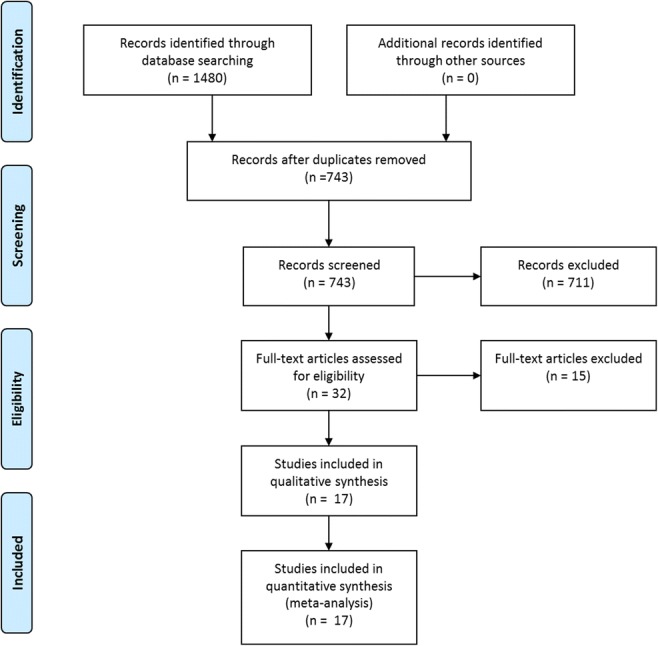
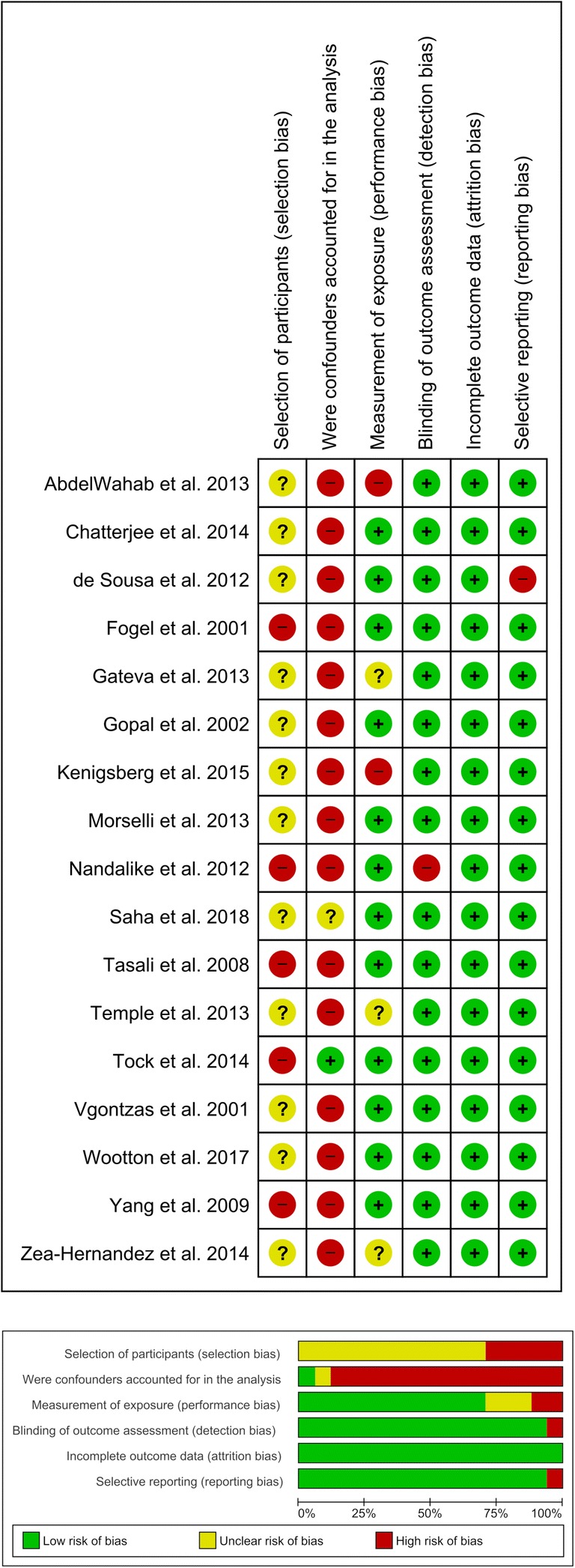
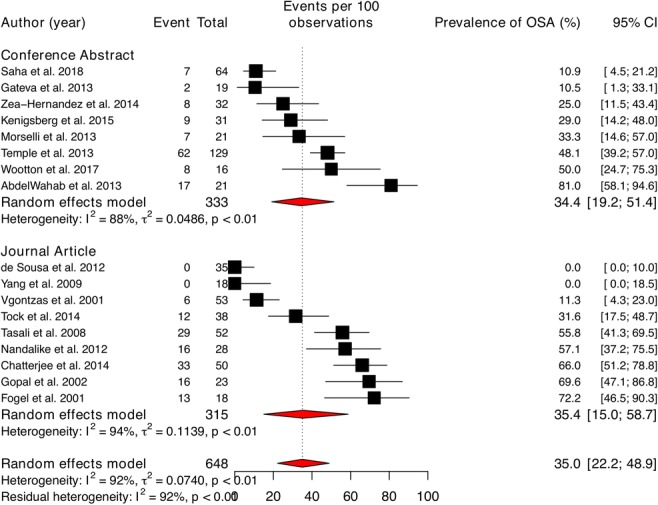
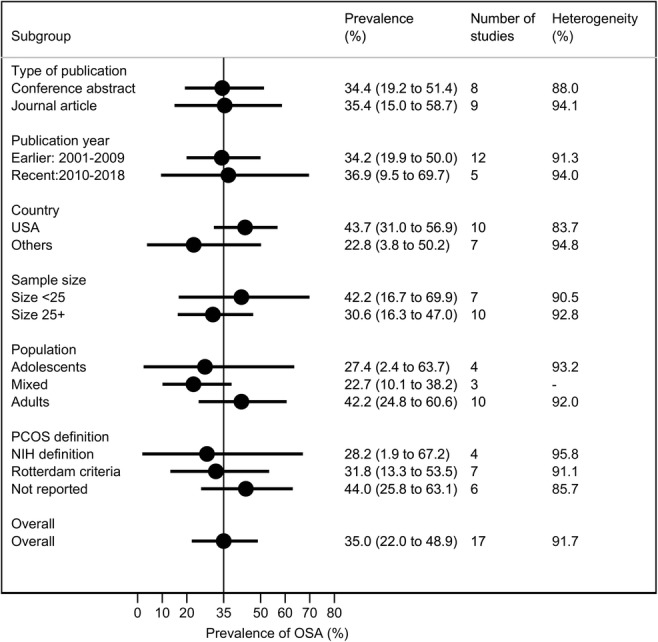
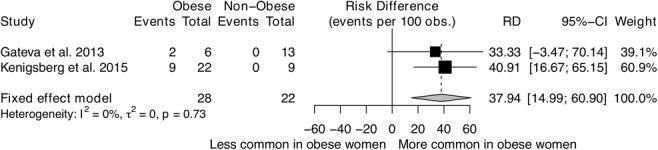
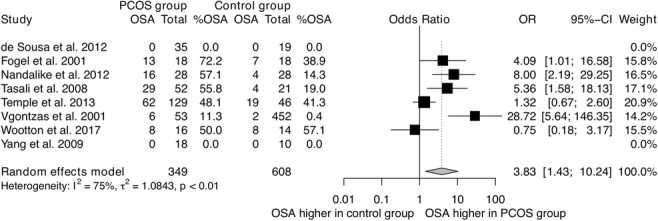
BACKGROUND: Obesity is a common risk factor for polycystic ovary syndrome (PCOS) and obstructive sleep apnoea (OSA). Both PCOS and OSA are associated with increased risk of type 2 diabetes and cardiovascular disease. Hence, it is important to determine the burden of OSA in women with PCOS. METHODS: We searched electronic databases (MEDLINE, Embase, CINAHL, PsycINFO, Scopus, Web of Science, OpenGrey, CENTRAL), conference abstracts, and reference lists of relevant articles, up to January 2019. No restriction for language or publication status. Studies that examined the presence of OSA in women with PCOS using polysomnography and/or level III devices were eligible for inclusion. RESULTS: Seventeen studies involving 648 participants were included. Our meta-analysis showed that 35.0% (95% CI 22.2-48.9%) of women with PCOS had OSA. This prevalence was not affected by variation in PCOS definition between studies. Approximately one-tenth of the variation in OSA prevalence was related to differences in study population (higher in adults than adolescents and mixed populations), and around one-tenth was related to sample size (higher in smaller studies). OSA prevalence was markedly higher in obese versus lean women with PCOS, and in women with PCOS compared to controls (odds ratio = 3.83, 95% CI 1.43-10.24, eight studies, 957 participants (349 PCOS and 608 controls)). However, most of the studies were at high risk of selection bias, did not account for important confounders, included predominantly women with class II obesity, and were conducted in one country (USA). CONCLUSIONS: Future studies need to examine the true prevalence of OSA in a more representative sample of women with PCOS. Nevertheless, our results suggest that the prevalence of OSA in women with PCOS and obesity is high and clinicians should have a high index of suspicion of OSA in these women.
Overview
The claims and statistics of this paper haven’t been checked yet.
Free: it reads the open-access text and checks the first 5 claims that cite a source we can check. Create a free account to check every claim.
Integrity signals
Registry
Cites
Statistics
Figures
Verification
Claims the paper makes
The claims and statistics of this paper haven’t been checked yet.
Free: it reads the open-access text and checks the first 5 claims that cite a source we can check. Create a free account to check every claim.
Claims other papers make about this one
Each is checked against this paper’s own text: does it say what the citing paper says it does?
The source backs part of the claim, not all of it — or backs it for a different population, condition or comparison.
In the citing paper
“Similar to previous meta-analyses (22, 23, 26), our subgroup analysis demonstrated that the overall prevalence of OSA was higher in adults with PCOS, but not in adolescents with PCOS.”
From Obstructive sleep apnea syndrome in polycystic ovary syndrome: a systematic review and meta-analysis (2025) · cites this paper as [23]
Experimental — accuracy not yet measuredThe source backs part of the claim, not all of it — or backs it for a different population, condition or comparison.
In the citing paper
“Previous systematic reviews have also reported higher risk of OSA in PCOS relative to those without PCOS, but this varies between the odds ratios (ORs) of 2.86 and 8.30 (22–26).”
From Obstructive sleep apnea syndrome in polycystic ovary syndrome: a systematic review and meta-analysis (2025) · cites this paper as [23]
Experimental — accuracy not yet measuredThe cited source says what the claim attributes to it.
In the citing paper
“In particular, it is estimated that up to 35 % of women with PCOS may have obstructive sleep apnoea (OSA) [62], compared to 9-38 % in the general population [63].”
From Providing lifestyle advice to women with PCOS: an overview of practical issues affecting success (2021) · cites this paper as [62]
The cited source says what the claim attributes to it.
In the citing paper
“This finding is consistent with prior meta-analyses which have reported a higher risk of OSAS in individuals with both PCOS and obesity compared with those without obesity (23, 26).”
From Obstructive sleep apnea syndrome in polycystic ovary syndrome: a systematic review and meta-analysis (2025) · cites this paper as [23]
The cited source says what the claim attributes to it.
In the citing paper
“Previous research has shown mixed results, with one meta-analysis reporting a greater proportion of OSAS in PCOS based on NIH criteria (26), while another reported no such variations across PCOS definitions (23).”
From Obstructive sleep apnea syndrome in polycystic ovary syndrome: a systematic review and meta-analysis (2025) · cites this paper as [23]
1 more claim about this paper
Create a free account to see every claim other papers make about this one.
Self-check
Percentages, sums and reported differences re-computed from the paper’s own numbers.
The self-check needs the paper’s full text.
Citations
Cites
Measuring inconsistency in meta-analyses
Higgins, J. P. T., Thompson, S. G., Deeks, J. J., & Altman, D. G. (2003) · BMJ · doi:10.1136/bmj.327.7414.557 · Cited by 63,139
Bias in meta-analysis detected by a simple, graphical test
Egger, M., Smith, G. D., Schneider, M., & Minder, C. (1997) · BMJ · doi:10.1136/bmj.315.7109.629 · Cited by 56,722
Meta-analysis in clinical trials
DerSimonian, R., & Laird, N. (1986) · Controlled Clinical Trials · doi:10.1016/0197-2456(86)90046-2 · Cited by 39,552
Quantifying heterogeneity in a meta‐analysis
Higgins, J. P. T., & Thompson, S. G. (2002) · Statistics in Medicine · doi:10.1002/sim.1186 · Cited by 36,763
Meta-analysis of Observational Studies in Epidemiology<SUBTITLE>A Proposal for Reporting</SUBTITLE>
Stroup, D. F. (2000) · JAMA · doi:10.1001/jama.283.15.2008 · Cited by 20,623
(2004) · Fertility and Sterility · doi:10.1016/j.fertnstert.2003.10.004 · Cited by 9,050
Prospective Study of the Association between Sleep-Disordered Breathing and Hypertension
Peppard, P. E., Young, T., Palta, M., & Skatrud, J. (2000) · New England Journal of Medicine · doi:10.1056/nejm200005113421901 · Cited by 4,973
Marin, J. M., Carrizo, S. J., Vicente, E., & Agusti, A. G. (2005) · The Lancet · doi:10.1016/s0140-6736(05)71141-7 · Cited by 4,678
Kapur, V. K., Auckley, D. H., Chowdhuri, S., Kuhlmann, D. C., Mehra, R., Ramar, K., & Harrod, C. G. (2017) · Journal of Clinical Sleep Medicine · doi:10.5664/jcsm.6506 · Cited by 3,253
The Prevalence and Features of the Polycystic Ovary Syndrome in an Unselected Population
Azziz, R., Woods, K. S., Reyna, R., Key, T. J., Knochenhauer, E. S., & Yildiz, B. O. (2004) · The Journal of Clinical Endocrinology & Metabolism · doi:10.1210/jc.2003-032046 · Cited by 2,712
Research works printed but not linked: 3
- Saha S, Sinha S, Sharma SK, Soneja M, Nischal N, Pandey RM (2018) Sleep disorders in polycystic ovary syndrome (PCOS) and their metabolic correlates. American Journal of Respiratory and Critical Care Medicine Conference: American Thoracic Society International Conference, ATS 197 (MeetingAbstracts)
- Wootton DM, Luo H, Yazdani A, Sin S, McDonough J, Isasi CR, Wagshul ME, Arens R (2017) Increased cfd pharyngeal airway flow resistance in adolescent girls with polycystic ovarian syndrome and obstructive sleep apnea syndrome. American Journal of Respiratory and Critical Care Medicine Conference: American Thoracic Society International Conference, ATS 195 (no pagination). 10.1164/ajrccm-conference.2017.D30 · doi:10.1164/ajrccm-conference.2017.d30
- Zea-Hernandez J, Sin S, Graw-Panzer K, Arens R (2014) Sleep disordered breathing in adolescent girls with polycystic ovary syndrome. Paper presented at the American Thoracic Society International Conference, ATS
Cited by
The hematologic consequences of obesity
Purdy, J. C., & Shatzel, J. J. (2021) · European Journal Of Haematology · doi:10.1111/ejh.13560 · Cited by 227
Witchel, S. F., Teede, H. J., & Peña, A. S. (2019) · Pediatric Research · doi:10.1038/s41390-019-0615-1 · Cited by 159
Kyrou, I., Karteris, E., Robbins, T., Chatha, K. K., Drenos, F., & Randeva, H. S. (2020) · BMC Medicine · doi:10.1186/s12916-020-01697-5 · Cited by 137
Self-citationPolycystic ovary syndrome and type 2 diabetes mellitus: A state-of-the-art review
Livadas, S., Anagnostis, P. G., Bosdou, J. Κ., Bantouna, D., & Paparodis, R. D. (2022) · World Journal of Diabetes · doi:10.4239/wjd.v13.i1.5 · Cited by 132
Adipocyte and steroidogenic cell cross-talk in polycystic ovary syndrome
de Medeiros, S. F., Rodgers, R. J., & Norman, R. J. (2021) · Human Reproduction Update · doi:10.1093/humupd/dmab004 · Cited by 102
Islam, H., Masud, J., Islam, Y. N., & Haque, F. K. M. (2022) · Women s Health · doi:10.1177/17455057221117966 · Cited by 133
Circadian Rhythms Within the Female HPG Axis: From Physiology to Etiology
Shao, S., Zhao, H., Lu, Z., Lei, X., & Zhang, Y. (2021) · Endocrinology · doi:10.1210/endocr/bqab117 · Cited by 81
“Obstructive sleep apnea (OSA), a condition characterized by recurrent upper airway instability during sleep, has been a recent focus of research, as it affects almost one-third of PCOS patients (70).”
BackgroundZhang, B., Zhou, W., Shi, Y., Zhang, J., Cui, L., & Chen, Z.-J. (2020) · BMC Endocrine Disorders · doi:10.1186/s12902-020-0497-6 · Cited by 75
Long‐term health outcomes in young women with polycystic ovary syndrome: A narrative review
Allen, L. A., Shrikrishnapalasuriyar, N., & Rees, D. A. (2022) · Clinical Endocrinology · doi:10.1111/cen.14609 · Cited by 62
“However, the increased risk of symptoms persists even when women with PCOS are matched by BMI with controls.77 The cutaneous manifestations of PCOS (hirsutism, acne and scalp hair loss) are emotionally distressing, while fertility may be another major concern, albeit that depression and anxiety scores remain higher th…”
BackgroundInfluentialThe role of gonadotropin‐releasing hormone neurons in polycystic ovary syndrome
McCartney, C. R., Campbell, R. E., Marshall, J. C., & Moenter, S. M. (2022) · Journal of Neuroendocrinology · doi:10.1111/jne.13093 · Cited by 94
Providing lifestyle advice to women with PCOS: an overview of practical issues affecting success
Ee, C., Pirotta, S., Mousa, A., Moran, L., & Lim, S. (2021) · BMC Endocrine Disorders · doi:10.1186/s12902-021-00890-8 · Cited by 70
“Women with sleep disturbances that are not due to OSA may still benefit from a sleep specialist referral, and sleep hygiene should be prescribed.”
BackgroundInfluentialPinto, J., Cera, N., & Pignatelli, D. (2024) · Journal of Endocrinological Investigation · doi:10.1007/s40618-024-02329-y · Cited by 62
“Moreover, a higher prevalence of sleeping disorders has been reported in PCOS [35], with disorders like hyper-somnia and obstructive sleep apnea [34, 36, 37].”
BackgroundPolycystic ovary syndrome and aging: Health implications after menopause
Helvacı, N., & Yıldız, B. O. (2020) · Maturitas · doi:10.1016/j.maturitas.2020.05.013 · Cited by 55
Higher blood pressure in normal weight women with PCOS compared to controls
Mellembakken, J. R., Mahmoudan, A., Mørkrid, L., Poromaa, I. S., Morin-Papunen, L. C., Tapanainen, J. S., Piltonen, T., Hirschberg, A. L., Stener‐Victorin, E., Vanky, E., et al. (2021) · Endocrine Connections · doi:10.1530/ec-20-0527 · Cited by 46
“sleep apnea is associated with higher risk of metabolic disease including HT (37).”
BackgroundZhang, J., Ye, J., Tao, X., Lu, W., Chen, X., & Liu, C. (2022) · Frontiers in Endocrinology · doi:10.3389/fendo.2022.971604 · Cited by 33
“…androgen levels PSG 7 Hachul 2019 crosssectional Brazil OSA 30/14 34.3(1.1)/ 22.4(1.6) 29.7(1.2)/ 27.9(1.7) Rotterdam criteria PSG, Questionnaire 7 Kahal 2020 crosssectional UK OSA 39(15/24) 37.3(7.3)/ 32.2(7.8) 33(26-43)/ 29.5(27-33) Rotterdam criteria Questionnaire 7 Karasu 2021 crosssectional…”
BackgroundInfluentialNonalcoholic fatty liver disease and obstructive sleep apnea in women with polycystic ovary syndrome
Doycheva, I., & Ehrmann, D. A. (2022) · Fertility and Sterility · doi:10.1016/j.fertnstert.2022.03.020 · Cited by 40
Yao, Q.-Y., Yuan, X.-Q., Liu, C., Du, Y., Yao, Y., Wu, L., Jiang, H., Deng, T., Guo, N., Deng, Y.-L., et al. (2022) · Human Reproduction · doi:10.1093/humrep/deac040 · Cited by 38
The role of the autonomic nervous system in polycystic ovary syndrome
Yu, Y., Chen, T., Zheng, Z., Jia, F., Liao, Y., Ren, Y., Liu, X., & Liu, Y. (2024) · Frontiers in Endocrinology · doi:10.3389/fendo.2023.1295061 · Cited by 38
Padovano, D., Martínez‐Rodrigo, A., Pastor, J. M., Rieta, J. J., & Alcaraz, R. (2022) · IEEE Access · doi:10.1109/access.2022.3201911 · Cited by 35
Polycystic ovary syndrome and risks for COVID-19 infection: A comprehensive review
de Medeiros, S. F., Yamamoto, M. M. W., de Medeiros, M. A. S., Yamamoto, A. K. L. W., & Barbosa, B. B. (2022) · Reviews in Endocrine and Metabolic Disorders · doi:10.1007/s11154-022-09715-y · Cited by 34
Kite, C., Atkinson, L., McGregor, G., Clark, C. C. T., Brown, J. E. P., Kyrou, I., & Randeva, H. S. (2021) · Frontiers in Global Women s Health · doi:10.3389/fgwh.2021.649104 · Cited by 36
Self-citationPossible cognition changes in women with polycystic ovary syndrome: a narrative review
Naz, M. S. G., Rahnemaei, F. A., Tehrani, F. R., Sayehmiri, F., Ghasemi, V., Banaei, M., & Ozgoli, G. (2023) · Obstetrics & Gynecology Science · doi:10.5468/ogs.22165 · Cited by 29
Atkinson, L., Kite, C., McGregor, G., James, T., Clark, C. C. T., Randeva, H. S., & Kyrou, I. (2021) · Journal of Personalized Medicine · doi:10.3390/jpm11100952 · Cited by 26
“, type 2 diabetes (T2DM) and obstructive sleep apnoea (OSA)) compliment the common presenting PCOS phenotypes [15,16,19,20].”
BackgroundSelf-citationClinical guidelines «Polycystic Ovary Syndrome»
Adamyan, L. V., Andreeva, E. N., Absatarova, Y. S., Grigoryan, O. R., Dedov, I. I., Mel'nichenko, G. A., Сутурина, Л. В., Филиппов, О. С., Sheremetyeva, E. V., Евгеньевна, Ч. Г., et al. (2022) · Problems of Endocrinology · doi:10.14341/probl12874 · Cited by 32
Kahal, H., Tahrani, A. A., Kyrou, I., Dimitriadis, G. K., Kimani, P., Barber, T. M., Nicholls, M., Ali, A., Weickert, M. O., & Randeva, H. S. (2020) · Therapeutic Advances in Endocrinology and Metabolism · doi:10.1177/2042018820906689 · Cited by 26
Self-citationPolycystic Ovarian Syndrome in Adolescents
Adone, A., & Fulmali, D. G. (2023) · Cureus · doi:10.7759/cureus.34183 · Cited by 32
“The investigations for PCOS include general physical examination, pelvic sonography, blood test for hormones, family history, and hirsutism [4].”
BackgroundYang, R. J., Gao, C., Yan, Y., Huang, Y., Wang, J., Zhang, C., Ma, X., Li, N., Du, X., Zhang, L., et al. (2021) · Sleep And Breathing · doi:10.1007/s11325-021-02376-2 · Cited by 22
Zhang, Q., Wang, Z., Ding, J., Yan, S., Hao, Y., Chen, H., Yang, J., & Hu, K. (2023) · Journal of Clinical Sleep Medicine · doi:10.5664/jcsm.10780 · Cited by 20
Kite, C., Parkes, E., Taylor, S. R., Davies, R. W., Lagojda, L., Brown, J. E. P., Broom, D. R., Kyrou, I., & Randeva, H. S. (2022) · Medical Sciences · doi:10.3390/medsci10040053 · Cited by 22
Self-citationPolycystic ovary syndrome in obstructive sleep apnea-hypopnea syndrome: an updated meta-analysis
He, J., Ruan, X., & Li, J. (2024) · Frontiers in Endocrinology · doi:10.3389/fendo.2024.1418933 · Cited by 16
“In a meta-analysis conducted by Kahal et al. (59), the morbidity of OSAHS in women with PCOS was as high as 35% (95% CI: 22.0% – 48.9%).”
BackgroundInfluentialSleep and obstructive sleep apnea in women with infertility
Ibrahim, S., Mehra, R., Tantibhedhyangkul, J., Bena, J., & Flyckt, R. L. (2023) · Sleep And Breathing · doi:10.1007/s11325-022-02770-4 · Cited by 17
Obstructive sleep apnea syndrome in polycystic ovary syndrome: a systematic review and meta-analysis
Abdul Jafar, N. K., Al Balushi, A., Subramanian, A., Lee, S. I., Bennett, C. J., Moran, L. J., Mousa, A., Tay, C. T., Teede, H. J., & Mansfield, D. R. (2025) · Frontiers in Endocrinology · doi:10.3389/fendo.2025.1532519 · Cited by 15
Bambhroliya, Z., Sandrugu, J., Lowe, M., Okunlola, O. I., Raza, S., Osasan, S. A., Sethia, S., Batool, T., & Hamid, P. (2022) · PubMed Central · doi:10.7759/cureus.26325 · Cited by 24
“Another paper from Kahal investigated the prevalence of OSA in women with PCOS [26].”
BackgroundJafar, N. K. A., Fan, M., Moran, L., Mansfield, D. R., & Bennett, C. (2025) · Clinical Endocrinology · doi:10.1111/cen.15219 · Cited by 18
“Seventeen studies had moderate risk of bias and were rated as ‘ fair ’ quality [26, 31, 33 – 35, 37, 45, 47 – 49, 51 – 54, 56, 58, 59], five studies had high risk of bias and were rated as “ poor ” quality [30, 32, 36, 38, 46] and two studies had low risk of bias and were rated as ‘ good ’ quality…”
InfluentialZhou, X. P., Greenwood, E. A., Pasch, L. A., Shinkai, K., Cedars, M. I., & Huddleston, H. G. (2021) · Journal of Clinical Sleep Medicine · doi:10.5664/jcsm.9372 · Cited by 16
Beyond counting sheep: Exploring the link between polycystic ovary syndrome and sleep health
Jafar, N. K. A., Bennett, C. J., Moran, L. J., & Mansfield, D. R. (2023) · Seminars in Reproductive Medicine · doi:10.1055/s-0043-1777724 · Cited by 12
Percy, C., Turner, A., & Orr, C. (2024) · JMIR Formative Research · doi:10.2196/52427 · Cited by 12
“Women with PCOS are at increased risk of sleep disturbances [21] and obstructive sleep apnea [22,23] and appear to have an elevated risk for postpartum depression [24].”
BackgroundMir, R., Tayeb, F. J., Barnawi, J., Jalal, M. M., Saeedi, N. H., Hamadi, A., Altayar, M. A., Alshammari, S. E., Mtiraoui, N., Ali, M. E. M., et al. (2022) · International Journal of Environmental Research and Public Health · doi:10.3390/ijerph19053114 · Cited by 14
Liu, C., Ding, L., Yang, H., & Chen, Z. (2022) · Endocrine Journal · doi:10.1507/endocrj.ej21-0761 · Cited by 12
de Medeiros, S. F., Barbosa, B. B., de Medeiros, M. A. S., Yamamoto, A. K. L. W., & Yamamoto, M. M. W. (2022) · Revista Brasileira Ginecologia e Obstetrícia · doi:10.1055/s-0041-1741030 · Cited by 11
Correlation Between Hemoglobin Levels and Polycystic Ovary Syndrome Metabolic Disorder
Ha, L., Du, Y.-D., Qu, X., & Wang, J. (2023) · Diabetes Metabolic Syndrome and Obesity · doi:10.2147/dmso.s430120 · Cited by 12
“16,17 Multiple studies have shown that patients with PCOS are more prone to obstructive sleep apnea (OSA) than non-PCOS patients of childbearing age, 18,19 and Hb levels were significantly higher in patients with OSA.”
Nandi, A., Singh, K. D., & Sharma, K. (2025) · Microchimica Acta · doi:10.1007/s00604-025-07187-w · Cited by 14
“…stroke [9], carotid intima-media thickness [10]), metabolic risk (obesity [11], insulin resistance [12], nonalcoholic fatty liver disease [13], obstructive sleep apnea [14]), endometrial cancer [15], and mental health and neurological disease (depression, anxiety [16], eating disorder [17]) [18].”
Kite, C., Atkinson, L., McGregor, G., Clark, C. C. T., Randeva, H. S., & Kyrou, I. (2023) · International Journal of Environmental Research and Public Health · doi:10.3390/ijerph20032309 · Cited by 9
Self-citationCopinschi, G., & Caufriez, A. (2021) · Current Opinion in Endocrine and Metabolic Research · doi:10.1016/j.coemr.2021.01.001 · Cited by 7
Naserpoor, L., Jannatifar, R., Roshanaei, K., Khoshandam, M., & Kalhor, N. (2022) · PubMed Central · doi:10.22074/ijfs.2021.524795.1090 · Cited by 11
“Women with PCOS had an increased prevalence of IGT, diabetic Mellitus, metabolic syndrome (28, 29).”
BackgroundSex transition from female to male as a risk factor for sleep-disordered breathing
Genzor, S., Praško, J. P., Mizera, J., Kufa, J., Žůrková, M., Jakubec, P., Vykopal, M., & Vaněk, J. (2023) · Sleep Medicine · doi:10.1016/j.sleep.2023.01.006 · Cited by 7
Li, N., Yang, R. J., Zhao, Y., Wang, Y., Tang, Q., Li, J., Huang, Y., Huang, Y., Zhang, L., Wang, Y., et al. (2025) · Sleep And Breathing · doi:10.1007/s11325-025-03399-9 · Cited by 6
“Several studies have demonstrated a significantly higher prevalence of OSA in patients with PCOS compared to the general population, often with more severe symptoms [10, 11].”
Progress of the application clinical prediction model in polycystic ovary syndrome
Guan, G., Yifu, P., Yuan, G., Xialei, L., Shi, F., Sun, Q., Jinjin, X., Linna, Z., Xiaozuo, Z., Wen, F., et al. (2023) · Journal of Ovarian Research · doi:10.1186/s13048-023-01310-2 · Cited by 7
“There have been a handful of studies reporting that PCOS may frequently be concurrent with nonalcoholic fatty liver disease (NAFLD) [87, 88], obstructive sleep apnea syndrome [89, 90], diabetes [91, 92] and the like.”
BackgroundSex and gender differences in sleep disorders: An overview
Shaib, F. H., & Attarian, H. P. (2023) · Principles of Gender-Specific Medicine · doi:10.1016/b978-0-323-88534-8.00036-5 · Cited by 7
Lifestyle Medicine for Women: The Time Is Now!
Geyer, C., McHugh, J., & Tollefson, M. (2021) · American Journal of Lifestyle Medicine · doi:10.1177/15598276211004233 · Cited by 6
Liu, X., He, R., Zhu, K., Lin, Z., Jiang, Z., Wu, H., Yu, J., Luo, Q., Sheng, J., & Huang, H. (2024) · Journal of Thoracic Disease · doi:10.21037/jtd-24-885 · Cited by 6
Approach to the diagnosis and treatment of polycystic ovarian syndrome in adolescent patients
Machado, I. F. R., Tinano, F. R., Latronico, A. C., & Gomes, L. G. (2026) · The Journal of Clinical Endocrinology & Metabolism · doi:10.1210/clinem/dgag198 · Cited by 5
Karakoç, İ. (2024) · TURKISH MEDICAL STUDENT JOURNAL · doi:10.4274/tmsj.galenos.2024.2023-11-1 · Cited by 3
Obstructive Sleep Apnea and Polycystic Ovary Syndrome
Chu, Y., Hilbert, J., & Mohsenin, V. (2022) · Springer eBooks · doi:10.1007/978-3-030-92589-5_20 · Cited by 3
Alur-Gupta, S., Sun, F., Zhang, H., Derby, C. A., Kravitz, H. M., Neal-Perry, G. S., Swanson, L. M., Vitek, W., Santoro, N. F., & Sammel, M. D. (2025) · The Journal of Clinical Endocrinology & Metabolism · doi:10.1210/clinem/dgaf529 · Cited by 2
Sekundäre obstruktive Schlafapnoe
Schulz, R., & Schulz, E. (2023) · Somnologie - Schlafforschung und Schlafmedizin · doi:10.1007/s11818-023-00430-7 · Cited by 2
Polycystic ovary syndrome: the competence of a family doctor
Artyomenko, V., Velychko, V. I., Lahoda, D. O., Nastradina, N. M., & Nitochko, K. (2023) · Reproductive Endocrinology · doi:10.18370/2309-4117.2023.67.63-67 · Cited by 2
Ha, L., Wang, J., Yuan, Y.-Y., Liu, H., & Yang, J. (2025) · International Journal of Women s Health · doi:10.2147/ijwh.s543184 · Cited by 1
Huang, Y., Li, J., Li, N., Zhu, Y., & Wang, Y. (2026) · BMC Pregnancy and Childbirth · doi:10.1186/s12884-026-08808-9 · Cited by 2
“Meta-analyses show that women with polycystic ovary syndrome (PCOS) have substantially higher obstructive sleep apnea (OSA) prevalence than peers, and clinical series in PCOS cohorts receiving IVF report OSA in approximately 30% of patients [7].”
Association Between Clinical-Demographic Factors and Sleep Quality in Polycystic Ovary Women
JAAFAR, Z. M., Al-Rawaf, S. A., & Mousa, E. T. (2026) · Journal of Obstetrics Gynecology and Cancer Research · doi:10.24200/jogcr.11.7.583 · Cited by 1
Obesity, Dysmetabolic and Proinflammatory Milieu of Polycystic Ovary Syndrome
Morong, J. J., & González, F. (2022) · Springer eBooks · doi:10.1007/978-3-030-92589-5_9 · Cited by 1
Diagnosis and treatment of polycystic ovary syndrome in adolescents
Hillard, P. J. A. (2021) · Elsevier eBooks · doi:10.1016/b978-0-12-818872-9.00018-2 · Cited by 1
Liu, C., Mu, L., Ding, L., Yang, H., & Chen, Z. (2021) · Research Square · doi:10.21203/rs.3.rs-983421/v1
Kyrou, I., Kahal, H., Weickert, M. O., Barber, T. M., & Randeva, H. S. (2022) · Elsevier eBooks · doi:10.1016/b978-0-12-823045-9.00029-8
Self-citationTobias, L. A. (2023) · Elsevier eBooks · doi:10.1016/b978-0-323-65403-6.00052-4
Jakhar, R., Sen, E. D., & Rastogi, P. (2024) · International Journal of Biosciences (IJB) · doi:10.12692/ijb/25.2.283-291
Obstructive Sleep Apnea in Women
Khullar, A., & Swainson, J. (2024) · Canadian Women s Health Today · doi:10.58931/cwht.2024.1316
Zhang, Y., Zhou, W., Su, Q., & Chen, Q. (2025) · Combinatorial Chemistry & High Throughput Screening · doi:10.2174/0113862073325251241101054306
Yılmaz, S., & Küpçü, Z. (2025) · Revista da Associação Médica Brasileira · doi:10.1590/1806-9282.20241615 · Cited by 1
“Those with PCOS lack progesterone and estrogen, which are protective in the regulation of respiration during sleep, and have excessive androgens that trigger central adiposity, which increases the risk of OSA by 5–10 times 3,6 .”
Percy, C. A., Turner, A., Alper, B., & Wark, P. A. (2026) · JMIR Formative Research · doi:10.2196/69206
Mei, H., Zhao, C., Jin, H., Qi, W.-Y., Lu, X., Xin, Y., Wang, W., Sun, Y., & Li, W. (2025) · Frontiers in Medicine · doi:10.3389/fmed.2025.1717587 · Cited by 1
Yazdchi, K., Ansaripour, S., Eghtedar, S., Heydari, Z., Farnia, V., Alikhani, M., Salem, S., Brüh, A. B., Bahmani, D. S., & Brand, S. (2025) · Journal of Psychiatry and Brain Science · doi:10.20900/jpbs.20250018
Clinical Presentation of Polycystic Ovary Syndrome
Sidana, S. (2025) · BENTHAM SCIENCE PUBLISHERS eBooks · doi:10.2174/9798898810931125010009
Miscellaneous Comorbidities in PCOS
Sridhar, G. R., & Nagamani, G. M. (2025) · BENTHAM SCIENCE PUBLISHERS eBooks · doi:10.2174/9798898810962125010017
Guan, G., Yifu, P., Yuan, G., Xialei, L., Fan, S., Qian, S., Xu, J., Linna, Z., Xiaozuo, Z., Wen, F., et al. (2024) · Figshare · doi:10.6084/m9.figshare.26645149
Guan, G., Yifu, P., Yuan, G., Xialei, L., Fan, S., Qian, S., Xu, J., Linna, Z., Xiaozuo, Z., Wen, F., et al. (2024) · Figshare · doi:10.6084/m9.figshare.26645146
Guan, G., Yifu, P., Yuan, G., Xialei, L., Fan, S., Qian, S., Xu, J., Linna, Z., Xiaozuo, Z., Wen, F., et al. (2024) · Figshare · doi:10.6084/m9.figshare.26645152
Mustari, M., Kamrul-Hasan, A. B. M., Tanni, A. Z., Ahammed, A., Raunak, A. I. B., Afsana, F., Pathan, M. F., Saifuddin, M., Rahman, M. M., Akter, N., et al. (2025) · Bangladesh Journal of Endocrinology and Metabolism · doi:10.4103/bjem.bjem_38_25
Sleep Disturbance and Polycystic Ovary Syndrome: A Review
Dolai, B., Prakash, S., & Agarwal, T. (2026) · Journal of Ayurveda and Integrated Medical Sciences · doi:10.21760/jaims.10.12.46
Wang, Z. L., Qin, J., Wang, J., Chen, Z., Qiao, Z., Yan, M., & Wu, D. (2026) · International Journal of Endocrinology · doi:10.1155/ije/3604933 · Cited by 1
Riscos de infecção por SARS-CoV-2 e COVID-19 em mulheres com síndrome dos ovários policísticos
de Medeiros, S. F., de Medeiros, M. A. S., Carvalho, A. B. D. S., Yamamoto, A. K. L. W., & Yamamoto, M. M. W. (2022) · Femina · doi:10.61622/0100-72545010202208 · Cited by 1
Li, T., Zhao, S., Zhou, X., Kong, M., Dai, Z., & Chen, X. (2026) · Frontiers in Medicine · doi:10.3389/fmed.2026.1764278
Sung, J., Chang, R., Chen, S., Lin, P., Li, C. J., Tsui, K.-H., & Lin, L. (2026) · BJOG An International Journal of Obstetrics & Gynaecology · doi:10.1111/1471-0528.70274
Exploring lifestyle management in polycystic ovary syndrome through implementation frameworks
Mcgowan, M., Cowan, S., Tay, C. T., McGowan, M. Μ., & Ng, A. H. (2026) · Experimental Physiology · doi:10.1113/ep092880 · Cited by 1
“People with PMOS experience obstructive sleep apnoea at a higher rate in comparison to those without PMOS (Abdul Jafar et al., 2025; Kahal et al., 2020) and are more likely to report sleep disturbancesindependentofobstructivesleepapnoea(Moetal.,2019; Moran et al., 2015).”
Tabashiri, A., kanani, P., Naz, M. S. G., & Tehrani, F. R. (2026) · Health Science Reports · doi:10.1002/hsr2.73223
“These findings were in consistent with previous systematic review and meta‐analysis studies [16, 17].”
Tauqir, S., SHAKOOR, S., Karim, F. H., Khan, M. A., & Shah, I. (2026) · Journal of Rehman Medical Institute · doi:10.52442/jrmi.v12i3.1042
Abdulameer, M. S., Karbul, N. A., & Madhi, Z. S. (2026) · Al-Turath Medical Journal · doi:10.63964/atmj.2026.2.3.11
Síndrome de ovario poliquístico y riesgo cardiometabólico en mujeres: revisión sistemática
León-Pallasco, D. A., Paredes-Tobar, O. S., & Coque, E. J. P. (2026) · Sanitas. Revista arbitrada de ciencias de la salud. · doi:10.62574/8dk0nx87
Polycystic Ovarian Syndrome and Diabetes Mellitus: A Bidirectional Endocrine Disorder
Barman, I., Malik, S., Bora, J., Sharma, T., Sarma, J., Priya, S., Rustagi, S., Thapliyal, S., Deshwal, R. K., Ray, S., et al. (2026) · Biomedical & Pharmacology Journal · doi:10.13005/bpj/3486
李红涛, Yin, T., Wang, Y., Wang, Y., Xu, N., Yi, W., & Yang, H. (2026) · Frontiers in Endocrinology · doi:10.3389/fendo.2026.1978249
“A separate meta-analysis estimated 35% OSA prevalence but emphasized selection bias, predominantly United States samples with class II obesity, and inadequate confounder control (68).”
Cardozo, L. L. Y., Eissa, M., Basnet, J., Thompson, K., & Romero, D. G. (2026) · The American Journal of the Medical Sciences · doi:10.1016/j.amjms.2026.10.006
Metadata
- Authors
- Kahal, H., Kyrou, I., Uthman, O. A., Brown, A., Johnson, S., Wall, P. D. H., Metcalfe, A., Parr, D. G., Tahrani, A. A., & Randeva, H. S.
- Affiliations
- University Hospital Coventry (GB)
- Aston University (GB)
- University of Warwick (GB)
- Heartlands Hospital (GB)
- Corresponding author
- Randeva, Harpal S.
- ORCID
- Venue
- Sleep and Breathing
- Published
- 2019-05-20
- Volume
- 24
- Issue
- 1
- Pages
- 339-350
- ISSN
- 1520-9512 (ISSN-L)
- 1522-1709
- PMC
- PMC7127997
- OpenAlex
- W3013329539
- Cited by
- 87
- References
- 76
- Citations by year
- 2026: 12 · 2025: 15 · 2024: 10 · 2023: 13 · 2022: 18 · 2021: 13 · 2020: 5 · 2019: 1
- FWCI
- 1.09
- Type
- journal article
- Language
- en
- Open access
- hybrid
- doi.org
- Licence
- cc-by
- creativecommons.org/licenses/by/4.0 (tdm)
- creativecommons.org/licenses/by/4.0 (vor)
- Locations
- Sleep And Breathing (publishedVersion, cc-by)
- PubMed Central (publishedVersion, cc-by)
- PubMed (publishedVersion)
- Warwick Research Archive Portal (University of Warwick) (acceptedVersion)
- University of Birmingham Research Portal (University of Birmingham) (submittedVersion, cc-by)
- Funders
- University of Warwick
- Topics
- Health Sciences › Medicine › Physiology (medical) › Obstructive Sleep Apnea Research
- Health Sciences › Medicine › Reproductive Medicine › Ovarian function and disorders
- Social Sciences › Psychology › Experimental and Cognitive Psychology › Sleep and related disorders
- Keywords
- obstructive sleep apnea, polycystic ovary syndrome, prevalence, obesity, women, type 2 diabetes risk, cardiovascular risk, sleep-disordered breathing
- MeSH terms
- Adolescent, Adult, Cross-Sectional Studies, Female, Humans, Obesity, Polycystic Ovary Syndrome, Risk Factors, Comorbidity, Odds Ratio, Polysomnography, Sleep Apnea, Obstructive, Young Adult
About these checks
Registry, retraction, Cites and statistics results are computed, not judged, with one exception: a printed reference that no index lists is read once by a model before it counts as a citation error. Claims are extracted by a model and kept only when their quote appears verbatim in the text; each cited source is then checked, with a model’s help, for whether it says what the claim relies on. Those verdicts can be wrong — read the claim’s quote and the cited source before relying on one.
Statistics and arithmetic are recomputed, not judged.
Confidence bands are shown only for fields calibrated on our annotated test set. None is calibrated yet, so no band is shown.
What counts as a claim ›How we measure confidence ›How we check this ›
Are you an author, or do you see a problem with this page? Request a review
Data sources
Bibliographic data: Semantic Scholar, OpenAlex, Crossref.
Contains information from the Semantic Scholar Academic Graph Datasets, made available under the ODC Attribution License (ODC-BY 1.0).
Semantic Scholar’s data is described in: Kinney, R., et al. (2023). The Semantic Scholar Open Data Platform. arXiv:2301.10140.
