

Access Barriers to Services by Immigrant Mothers of Children with Autism in Canada
Open accessThe DOI matches its Crossref record; 75 of the 77 references it cites were found in a registry or an index.
Abstract
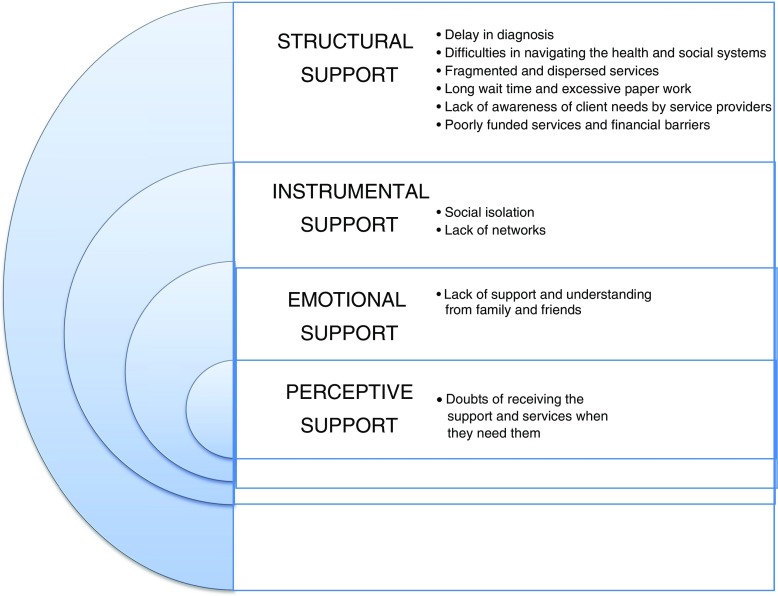
Equal access for autism services remains suboptimal for diverse groups. In Canada, little is known about the barriers immigrant mothers face accessing services and support for their children with developmental disabilities. In this qualitative study, 21 immigrant mothers of children with Autism, from a diverse ethno cultural background, were interviewed in Toronto, Canada. We apply House's (1981) four domains of social support to analyze findings. Structural support challenges, such as delays in diagnosis, fragmented and dispersed services were common, followed by instrumental challenges due to loss of social ties and stigma. Lack of expected support from partners, and negative perceptions of services, were identified as emotional and perceptive challenges. Focused attention is required to address inequalities within the context of current access pathways for autism.
Overview
The claims and statistics of this paper haven’t been checked yet.
Free: it reads the open-access text and checks the first 5 claims that cite a source we can check. Create a free account to check every claim.
Integrity signals
Registry
Cites
Statistics
Figures
Verification
Claims the paper makes
The claims and statistics of this paper haven’t been checked yet.
Free: it reads the open-access text and checks the first 5 claims that cite a source we can check. Create a free account to check every claim.
Claims other papers make about this one
Each is checked against this paper’s own text: does it say what the citing paper says it does?
The source backs part of the claim, not all of it — or backs it for a different population, condition or comparison.
In the citing paper
“In Canada, the USA, and the UK, parents of children with ASD, for whom English is not the fi rst language, encountered language barriers when accessing health services, communicating with their physicians, and interpreting/ responding to administrative forms.”
From Tackling healthcare access barriers for individuals with autism from diagnosis to adulthood (2022) · cites this paper as [38]
Experimental — accuracy not yet measuredThe source backs part of the claim, not all of it — or backs it for a different population, condition or comparison.
In the citing paper
“While stigma is a reality for most families affected by ASD, its impacts on access to diagnosis and treatment services are exacerbated for many racial/ethnic minorities (including immigrants).”
From Tackling healthcare access barriers for individuals with autism from diagnosis to adulthood (2022) · cites this paper as [38]
Experimental — accuracy not yet measuredThe source backs part of the claim, not all of it — or backs it for a different population, condition or comparison.
In the citing paper
“Studies from Canada, UK, and the USA have determined that immigrant parents from some cultures do not acknowledge that their children have developmental disabilities because of the associated stigma.”
From Tackling healthcare access barriers for individuals with autism from diagnosis to adulthood (2022) · cites this paper as [38]
Experimental — accuracy not yet measuredThe cited source says what the claim attributes to it.
In the citing paper
“Language barriers also hinder access to and navigation of healthcare services for ASD.”
From Tackling healthcare access barriers for individuals with autism from diagnosis to adulthood (2022) · cites this paper as [38]
Self-check
Percentages, sums and reported differences re-computed from the paper’s own numbers.
The self-check needs the paper’s full text.
Citations
Cites
Qualitative Inquiry and Research Design: Choosing Among Five Approaches
Lewis, S. (2015) · Health Promotion Practice · doi:10.1177/1524839915580941 · Cited by 22,105
(2017) · Cited by 16,036
The SAGE handbook of qualitative research
(2005) · Choice Reviews Online · doi:10.5860/choice.43-1330 · Cited by 10,183
(2011) · Cited by 7,157
Qualitative inquiry and research design: Choosing among five approaches, 2nd ed.
Creswell, J. W. (2007) · Cited by 4,999
What's in a name? Qualitative description revisited
Sandelowski, M. (2010) · Research in Nursing & Health · doi:10.1002/nur.20362 · Cited by 4,975 · cited 2×
“The Mothers Project applied a qualitative descriptive approach (Sandelowski 2010), conducting in-depth interviews to explore the experiences and perspectives of immigrant Int J Ment Health Addiction”
MethodWork Stress and Social Support.
Deutsch, S., & House, J. S. (1983) · Contemporary Sociology · doi:10.2307/2069001 · Cited by 4,762 · cited 6×
“The questions were designed to explore the four domains of House’s classification of social support (House 1981) that addressed issues related to mothers challenges in accessing both formal and informal social support and services, school/education system, accessing informational and perceptual…”
BackgroundMethodInfluentialSocial determinants of health: the solid facts
Wilkinson, R. G., & Marmot, M. G. (2003) · University Libraries (University of Maryland) · doi:10.13016/yroj-yfcz · Cited by 2,709
Rudd (2006) · doi:10.1002/(issn)1097-4679 · Cited by 2,635
Social support: a conceptual analysis
Langford, C. P. H., Bowsher, J., Maloney, J. P., & Lillis, P. P. (1997) · Journal of Advanced Nursing · doi:10.1046/j.1365-2648.1997.1997025095.x · Cited by 1,286
Research works printed but not linked: 2
- Sorheim T Immigrants with intellectual disability and their families: Encountering the Norwegian National Insurance Service Norsk Tidsskrift For Migrasjonsforskning 2006 82 141 148
- The Intersection of poverty and immigration in BC and Canada Info Sheet. Issue 6. 2013 Vancouver, B.C. Affiliation of Multicultural Societies and Services Agencies of BC
Cited by
Tackling healthcare access barriers for individuals with autism from diagnosis to adulthood
Malik-Soni, N., Shaker, A., Luck, H., Mullin, A. E., Wiley, R. E., Lewis, M. E. S., Fuentes, J., & Frazier, T. W. (2022) · Pediatric Research · doi:10.1038/s41390-021-01465-y · Cited by 309
Standards of diagnostic assessment for autism spectrum disorder
Brian, J. A., Zwaigenbaum, L., & Ip, A. (2019) · Paediatrics & Child Health · doi:10.1093/pch/pxz117 · Cited by 126
“Cultural factors may, in turn, affect help-seeking behaviours (31).”
BackgroundPapoudi, D., Jørgensen, C. H. R., Guldberg, K., & Meadan, H. (2020) · Review Journal of Autism and Developmental Disorders · doi:10.1007/s40489-020-00210-1 · Cited by 150
“Furthermore, they may not always know how to navigate the system and how to access support and services due to language barriers and the challenges they face of living in a different culture (Khanlou et al. 2017).”
BackgroundSmith-Young, J., Chafe, R., & Audas, R. (2020) · Health Services Insights · doi:10.1177/1178632920902141 · Cited by 130
Barriers faced by immigrant families of children with autism: A program to address the challenges
Sritharan, B., & Koola, M. M. (2018) · Asian Journal of Psychiatry · doi:10.1016/j.ajp.2018.11.017 · Cited by 87
Schmengler, H., Cohen, D., Tordjman, S., & Melchior, M. (2021) · Frontiers in Psychiatry · doi:10.3389/fpsyt.2021.566368 · Cited by 71
Wallace-Watkin, C., Sigafoos, J., & Waddington, H. L. (2022) · Autism · doi:10.1177/13623613221123712 · Cited by 70
“…with fellow parents of autistic children played a significant role in accessing services as parents were able to share personal experiences, advice, and support (Dababnah & Bulson, 2015; Fox et al., 2017; Guler et al., 2018; Khanlou et al., 2017; Lee & Meadan, 2021; Sakai et al., 2019).”
BackgroundInfluentialAderinto, N., Olatunji, G. D., & Idowu, O. (2023) · Annals of Medicine and Surgery · doi:10.1097/ms9.0000000000001107 · Cited by 77
“Insufficient infrastructure, long waiting lists and delayed diagnosis contribute to inadequate treatment, exacerbating the challenges faced by individuals with ASD and their families([50]).”
BackgroundFamilies’ Access to Early Intervention and Supports for Children With Developmental Disabilities
Sapiets, S. J., Hastings, R. P., Stanford, C. E., & Totsika, V. (2022) · Journal of Early Intervention · doi:10.1177/10538151221083984 · Cited by 75
“…or lack of services, waiting times, cultural barriers, financial barriers, and geographical barriers (Betz et al., 2004; Birkin et al., 2008; Crane et al., 2016; Dababnah & Bulson, 2015; Hussain & Tait, 2015; Khanlou et al., 2017; Kohler, 1999; McWilliam et al., 1995; Zuckerman et al., 2015).”
Rivard, M., Millau, M., Magnan, C., Mello, C., & Boulé, M. (2019) · Journal of Developmental and Physical Disabilities · doi:10.1007/s10882-018-9653-6 · Cited by 68
“…countries, children and families who receive specialized services for autism spectrum disorder (ASD) often face multiple challenges associated not only with their diagnosis, but with cultural differences (e.g., in communication, values, perceived needs; Khanlou et al. 2017; Millau et al. 2018).”
BackgroundLim, N., O’Reilly, M. F., Sigafoos, J., Lancioni, G. E., & Sanchez, N. J. (2020) · Review Journal of Autism and Developmental Disorders · doi:10.1007/s40489-020-00216-9 · Cited by 61
“…(2010) USA Bangladesh (3), Pakistan (3) N= 6 (3) Range = 30s to 40s Range = 10–15 N = 3 Range = 5–6 Hindi and English (n = 3) Urdu and English (n = 3) Khanlou et al. (2017) Canada Asia (14), Europe (5), Latin America (2) N= 21 (0) M = 41.3 M = 10.7 N = 27 (11) Range = 2–31 English Miller-Gairy…”
BackgroundMethodInfluentialFong, V. C., Lee, B. S., & Iarocci, G. (2021) · Autism · doi:10.1177/13623613211034067 · Cited by 53
“Furthermore, research has shown that even after receiving a diagnosis, children of immigrant parents are less likely to access early intervention and other ASD-related services such as school-based supports and speech-language therapy (Habayeb et al., 2020; Khanlou et al., 2017).”
BackgroundBroder‐Fingert, S., Carter, A. S., Pierce, K., Stone, W. L., Wetherby, A. M., Scheldrick, C., Smith, C., Bacon, E. C., James, S., Ibañez, L. V., et al. (2018) · Autism · doi:10.1177/1362361318766238 · Cited by 49
Son, E., Moring, N. S., Igdalsky, L., & Parish, S. L. (2018) · Journal of Child Health Care · doi:10.1177/1367493517753084 · Cited by 44
“Within the large population of CSHCNs, children who belong to minority racial and ethnic groups face important inequities in health-care access, quality, satisfaction and outcomes, as compared to both White CSHCNs and children without disabilities (Emerson, 2012; Heer et al., 2012; Khanlou et al., 2017; Magana et al.,…”
BackgroundLindsay, S., Li, Y., Joneja, S., & Hsu, S. (2024) · Disability and Rehabilitation · doi:10.1080/09638288.2024.2364823 · Cited by 37
“This finding is consistent with previous studies that immigrant mothers with children with autism face policy-related barriers, such as extensive paperwork and long wait times, and some of them did not receive government supports [82,83].”
Han, E. K. L., Tan, M. M. J., Crane, L., & Legido‐Quigley, H. (2021) · Autism · doi:10.1177/13623613211016112 · Cited by 45
“Qualitative studies have also documented the challenges that minority groups face in accessing autism services, including language barriers, lack of awareness and lack of empowerment (Fox et al., 2016; Jegatheesan et al., 2010; Khanlou et al., 2017; Zuckerman et al., 2014).”
BackgroundPredictors of Health-Related Quality of Life in Neurodivergent Children: A Systematic Review
Mahjoob, M., Paul, T., Carbone, J., Bokadia, H., Cardy, R. E., Kassam, S., Anagnostou, E. A., Andrade, B. F., Penner, M., & Kushki, A. (2023) · Clinical Child and Family Psychology Review · doi:10.1007/s10567-023-00462-3 · Cited by 35
“These can impact well-being through access to health resources (Khanlou et al., 2017), intergenerational trauma (Czyzewski, 2011), and experiences of discrimination (Benner et al., 2018).”
BackgroundCultural Experiences of Arab American Caregivers Raising Children with Autism Spectrum Disorder
Habayeb, S., Dababnah, S., John, A., & Rich, B. A. (2019) · Journal of Autism and Developmental Disorders · doi:10.1007/s10803-019-04218-3 · Cited by 31
Pathways to a Diagnosis of Autism Spectrum Disorder
Zavaleta-Ramírez, P., Rosetti, M., Albores‐Gallo, L., Vargas–Soberanis, M. A., López, O. N., & Medina‐Mora, M. E. (2020) · Psychiatric Services · doi:10.1176/appi.ps.201900518 · Cited by 30
A Snapshot of Social Support Networks Among Parental Caregivers of Adults with Autism
Marsack‐Topolewski, C. N. (2019) · Journal of Autism and Developmental Disorders · doi:10.1007/s10803-019-04285-6 · Cited by 38
Bešić, E., & Hochgatterer, L. (2020) · Frontiers in Education · doi:10.3389/feduc.2020.00061 · Cited by 33
Chen, Y., Duku, E., Szatmári, P., Salt, M., Smith, I. M., Richard, A., Zwaigenbaum, L., Vaillancourt, T., Zaidman‐Zait, A., Bennett, T., et al. (2023) · JCPP Advances · doi:10.1002/jcv2.12212 · Cited by 24
“…status) and early identification and diagnosis of autism (Daniels & Mandell, 2014; Thomas et al., 2012), access to and utilization of services (Khanlou et al., 2017; Lim et al., 2021; Pickard & Ingersoll, 2016; Smith et al., 2020), as well as educational placement (Gindi, 2020; Kurth et al.,…”
BackgroundGarasia, S., Bishop, V. R., Clayton, S. B., Pinnington, G., Arinze, C., & Jalil, E. (2023) · BMC Health Services Research · doi:10.1186/s12913-023-09417-4 · Cited by 32
“Uninsured pregnant women are also a group of concern as many go without any prenatal care and may experience complications during labour and delivery [4, 21].”
BackgroundRfat, M., Zeng, Y., Yang, Y., Adhikari, K., & Zhu, Y. (2022) · Journal of Evidence-Based Social Work · doi:10.1080/26408066.2022.2162357 · Cited by 27
Joh-Carnella, N., Livingston, E., Kagan-Cassidy, M., Vandermorris, A., Smith, J., Lindberg, D. M., & Fallon, B. (2023) · Frontiers in Psychiatry · doi:10.3389/fpsyt.2023.1195440 · Cited by 29
Rivard, M., Millau, M., Mello, C., Clément, C., Mejia-Cardenas, C., Boulé, M., & Magnan, C. (2020) · Journal of Developmental and Physical Disabilities · doi:10.1007/s10882-020-09764-8 · Cited by 25
Chinese Immigrant Mothers of Children with Developmental Disabilities: Stressors and Social Support
Su, C., Khanlou, N., & Mustafa, N. (2018) · International Journal of Mental Health and Addiction · doi:10.1007/s11469-018-9882-z · Cited by 25
“Many parents of children with DDs have limited knowledge to seek support services (Khanlou et al. 2015a, 2017; Jennings et al. 2014).”
BackgroundMethodResultInfluentialSelf-citationBeauchamp, M. L. H., Amorim, K., Wunderlich, S., Lai, J., Scorah, J., & Elsabbagh, M. (2022) · Frontiers in Psychiatry · doi:10.3389/fpsyt.2022.915999 · Cited by 32
“Similarly, children from immigrant families tend to access autism services at a later age than nonimmigrant children (16) and their parents often report feelings of isolation and loneliness (17).”
BackgroundNgondwe, P., & Tefera, G. M. (2025) · Healthcare · doi:10.3390/healthcare13030313 · Cited by 28
Barriers and facilitators to health care access for migrant children in Canada: A scoping review
Alshamary, S., Bashir, E., & Salami, B. O. (2024) · Journal of Pediatric Nursing · doi:10.1016/j.pedn.2024.05.029 · Cited by 15
Kim, H.-Y., Kim, S. A., Lee, H., & Dodds, R. L. (2023) · Journal of Autism and Developmental Disorders · doi:10.1007/s10803-023-06145-w · Cited by 19
Mills, A. S., Vimalakanthan, K., Sivapalan, S., Shanmugalingam, N., & Weiss, J. A. (2020) · Journal of Autism and Developmental Disorders · doi:10.1007/s10803-020-04538-9 · Cited by 16
“Studies report stigma regarding autism and mental health in South Asian communities, as well as a considerable lack of services in individuals’ first language (Khanlou et al. 2017; Minhas et al. 2015).”
Self-citationAcademic skills in children with autism spectrum disorders with monolingual or bilingual experience
Vanegas, S. B. (2019) · Autism & Developmental Language Impairments · doi:10.1177/2396941519888170 · Cited by 22
“Identifying these disparities has resulted in increased efforts to better understand the unique needs and experiences of culturally diverse children with ASD and their families (Engstrand, Klang, Hirvikoski, Allodi, & Roll-Petersson, 2018; Khanlou et al., 2017; Yingling, Hock, & Bell, 2018).”
BackgroundCasale, L., Gentles, S. J., McLaughlin, J., & Schneider, M. (2023) · PLoS ONE · doi:10.1371/journal.pone.0293656 · Cited by 16
Attitudes and Perceptions of Muslim Parents Toward Their Children with Autism: a Systematic Review
Bernier, A. S., & McCrimmon, A. W. (2021) · Review Journal of Autism and Developmental Disorders · doi:10.1007/s40489-021-00256-9 · Cited by 20
Smith-Young, J., Pike, A. D., Swab, M., & Chafe, R. (2024) · JBI Evidence Synthesis · doi:10.11124/jbies-23-00332 · Cited by 23
Neurobiology of cognitive abilities in early childhood autism
Denisova, K. (2024) · JCPP Advances · doi:10.1002/jcv2.12214 · Cited by 15
“Providing such objective neurobiological information might help remove some of the stigma related to autism diagnosis in the underserved communities (e.g. (DiGuiseppi et al., 2021; Khanlou et al., 2017)) and facilitate earlier diagnoses.”
BackgroundAutism, Stigma, and South Asian Immigrant Families in Canada
Shafi, F., Karunakaran, A., & Ahmad, F. (2024) · International Journal of Environmental Research and Public Health · doi:10.3390/ijerph21030369 · Cited by 16
“…in obtaining a concrete diagnosis, language and communication challenges, lack of information about care programs, and economic hardships around having to secure out-of-pocket expensive services given the underfunding of government programs and a lack of comprehensive coverage for services [5].”
BackgroundInfluentialIntersectionality of disability and cultural/linguistic diversity in the UK: a literature review
Kaplan, G., & Celik, P. (2023) · Frontiers in Education · doi:10.3389/feduc.2023.1239777 · Cited by 23
Vázquez, L. M., Khanlou, N., Davidson, D. E., & Aidarus, F. (2018) · Qualitative Health Research · doi:10.1177/1049732318808249 · Cited by 11
Self-citationLord, P. (2020) · Canadian Journal of Disability Studies · doi:10.15353/cjds.v9i5.700 · Cited by 27
Bachour, M.-K. (2023) · Housing Studies · doi:10.1080/02673037.2023.2200236 · Cited by 16
“More recent studies have showcased the role service providers play in helping newcomers resettle in Canada (Daswani, Bunce & Cummings, 2011; Khanlou et al. , 2017; Salami et al. , 2019; Shaw & Funk, 2019).”
Protection of Privacy of Information Rights among Young Adults with Developmental Disabilities
Khanlou, N., Mantini, A., Khan, A., Degendorfer, K., & Zangeneh, M. (2018) · International Journal of Mental Health and Addiction · doi:10.1007/s11469-018-9904-x · Cited by 9
“…fluency, lack of social networks, and new knowledge required post-migration of service delivery systems and their rights, which were reported to affect their access to and utilization of health and social services (Khanlou et al., 2017a; Khanlou et al., 2017b; Khanlou et al., 2017c; Khanlou, 2018).”
BackgroundSelf-citationDurbin, A., Jung, J. K. H., Chung, H., Lin, E. H. B., Balogh, R. S., & Lunsky, Y. (2019) · PLoS ONE · doi:10.1371/journal.pone.0215804 · Cited by 14
'Of course you crash' Parenting a young child with neurodevelopmental difficulties
Fäldt, A. E., & Fängström, K. (2024) · Research in Developmental Disabilities · doi:10.1016/j.ridd.2024.104825 · Cited by 10
The Experiences of Families Raising an Autistic Child: A Rapid Review
Phetoe, B. K., Coetzee, H., Erasmus, P., & Tsabedze, W. F. (2023) · The Open Psychology Journal · doi:10.2174/18743501-v16-e230419-2022-100 · Cited by 12
Exploring the Intersectionality of Disability and Refugee Statuses: Reflecting on My Refugee Journey
Rfat, M., Zeng, Y., & Trani, J. (2023) · The British Journal of Social Work · doi:10.1093/bjsw/bcad024 · Cited by 7
Fong, V. C., McLaughlin, J., Schneider, M., & Bruno, G. (2024) · Research in Autism · doi:10.1016/j.rasd.2023.102314 · Cited by 9
Täljedal, T., Granlund, M., Osman, F., Selinus, E. N., & Fängström, K. (2024) · Frontiers in Psychology · doi:10.3389/fpsyg.2024.1389995 · Cited by 8
Fakolade, A. O., Stone, C., & Bobbette, N. (2023) · International Journal of Environmental Research and Public Health · doi:10.3390/ijerph20227072 · Cited by 8
“However, family caregivers of people with IDD continue expressing concerns and unmet needs [16,24].”
BackgroundLeft behind: newcomer children with disabilities and their families
Dada, S., Khan, N., & Dewji, N. (2024) · Frontiers in Public Health · doi:10.3389/fpubh.2024.1332403 · Cited by 6
Rea, C. J., Lesch, K., Hernández, B., Hayes, M., Sprecher, E., Epee-Bounya, A., Wilson, K., & Shah, S. N. (2024) · Journal of Autism and Developmental Disorders · doi:10.1007/s10803-024-06556-3 · Cited by 8
Young Children with Autism Spectrum Disorder in Early Education and Care
Maich, K., Davies, A., Penney, S., Butler, E., Young, G. D., & Philpott, D. (2019) · Exceptionality Education International · doi:10.5206/eei.v29i3.9388 · Cited by 9
“…early intervention services, structures of race, ethnicity, colonialism, socio-economic class, and migration can additionally impact experiences with disability, intervention, and professional supports in the early years (Ineese-Nash, Bomberry, Underwood, & Hache, 2018; Khanlou et al., 2017).”
BackgroundObaigwa, E., & Cloete, L. G. (2019) · Open Journal of Pediatrics and Child Health · doi:10.17352/ojpch.000018 · Cited by 6
“Likewise, cultural prejudices as a result of lack of information hinder the treatment of children with ASD [2,4,5,8,12,13,16,1921,26,28,29].”
BackgroundResultInfluentialThe impact of COVID-19 on receipt of health services among children with and without autism
Brunt, S., Sadikova, E., Pappagianopoulos, J. E., & Mazurek, M. O. (2023) · Autism · doi:10.1177/13623613231176930 · Cited by 9
“Stigma within the healthcare system continues to be another barrier to families seeking health and related services, even more so for families of color and immigrant families (Khanlou et al., 2017; Kinnear et al., 2016).”
BackgroundCatalyzing service providers’ potential to enhance immigrants’ social occupational possibilities
Khangura, S. S., So, M., Yekta, A. R., & Huot, S. (2022) · Journal of Occupational Science · doi:10.1080/14427591.2022.2038250 · Cited by 5
Bachour, M.-K. (2023) · Journal of Urban Affairs · doi:10.1080/07352166.2023.2274549 · Cited by 4
“…of social service providers stems from the growing academic recognition of the critical roles service providers play in servicing marginalized communities in cities across Canada (see Ashton et al., 2016; Khanlou et al., 2017; Salami et al., 2019; Shaw & Funk, 2019; Tastsoglou et al., 2014).”
Identifying Needs of Ethiopian and Eritrean American Parents of Autistic Children
Adere, A., Dababnah, S., & Habayeb, S. (2023) · Journal of Autism and Developmental Disorders · doi:10.1007/s10803-023-06102-7 · Cited by 6
“Although not directly assessed in this study, barriers and dissatisfaction with services may be related to acculturation stressors, including difficulties navigating new health and education systems (Khanlou et al., 2017) and language barriers (St Amant et al., 2018).”
Linnsand, P., Nygren, G., Hermansson, J., Gillberg, C., & Carlsson, E. (2024) · Frontiers in Child and Adolescent Psychiatry · doi:10.3389/frcha.2024.1341729 · Cited by 6
Balram, R., Doh, D., Georgeou, N., Soldatić, K., & Mogensen, L. L. (2024) · Disability & Society · doi:10.1080/09687599.2024.2348081 · Cited by 4
“A common trend that appears to be emerging across settler-colonial countries, such as Australia and Canada, is that culturally and racially marginalised (CaRM) families have had little access to local formalised care systems (see Khanlou et al. 2017; Soldatic et al. 2024).”
Rivard, M., Mello, C., Patel, S., Morin, M., & Morin, D. (2024) · Journal of Autism and Developmental Disorders · doi:10.1007/s10803-024-06265-x · Cited by 4
“However, several studies have identified multiple barriers to access these services across the country (see for example, Khanlou et al., 2017 ).”
González, M., Yoo, P. Y., Noyek, S. E., MacLeod, B., Kee, M., Phoenix, M. P., Micsinszki, S. K., Knutson, M., Neilson, C. J., & Woodgate, R. L. (2025) · Frontiers in Rehabilitation Sciences · doi:10.3389/fresc.2025.1638513 · Cited by 5
Collins, E., Al‐Jaishi, A. A., Farrow, A., Amankwah, N., Georgiades, S., Salt, M., Holmes, K., & Edjoc, R. (2025) · BMJ Open · doi:10.1136/bmjopen-2024-096019 · Cited by 3
Smith-Young, J., Murray, C. L., & Swab, M. (2018) · The JBI Database of Systematic Reviews and Implementation Reports · doi:10.11124/jbisrir-2017-003437 · Cited by 6
“Some of the facilitators in accessing ASD diagnostic services that were identified in primary studies include higher levels of parental education(10,24) and higher socioeconomic status.(10,18,21,24) A good understanding of the barriers and facilitators in accessing ASD diagnostic services gained from a systematic revi…”
BackgroundPetrovska, I. V., Giannakopoulou, A. C., Tsecoura, V., Winstanley, A., Miletto, R., Roşca, G. C., Ivanova, B., Kaisa, V., & Trajkovski, V. (2021) · Advances in Autism · doi:10.1108/aia-11-2020-0066 · Cited by 5
Inequidades Sociales en salud, migración y desarrollo infantil
Puerto, M. S. C., & Vázquez, M. S. (2022) · TEMPUS PSICOLÓGICO · doi:10.30554/tempuspsi.6.1.4681.2022 · Cited by 2
Luyindula, P., & Rivières‐Pigeon, C. D. (2022) · Canadian Journal of Community Mental Health · doi:10.7870/cjcmh-2022-035 · Cited by 3
Rim, D., Shin, H., & Jeon, H. (2023) · Child & Family Social Work · doi:10.1111/cfs.13055 · Cited by 2
Su, C., & Khanlou, N. (2023) · INYI Journal · doi:10.25071/1929-8471.92 · Cited by 3
Self-citationLes normes de l’évaluation diagnostique du trouble du spectre de l’autisme
Brian, J. A., Zwaigenbaum, L., & Ip, A. (2019) · Paediatrics & Child Health · doi:10.1093/pch/pxz118 · Cited by 7
Choi, C. J. W., & Kim, B. J. (2022) · Australian Social Work · doi:10.1080/0312407x.2021.2020857 · Cited by 2
“…families caring for individuals living with disabilities face challenges as they lack familiarity with the cultural expectations in the host society (Arfa et al., 2020) and experience inequalities in health-care access (Khanlou et al., 2017; Son et al., 2018) compared to mainstream communities.”
BackgroundResultMilan, D., & Leopoldino, C. B. (2024) · REVISTA DIÁLOGOS E PERSPECTIVAS EM EDUCAÇÃO ESPECIAL · doi:10.36311/2358-8845.2024.v11n2.e0240016 · Cited by 4
Kerr, J., Nicholson, H., Richards, R., & Anderson, C. (2026) · British Journal of Clinical Psychology · doi:10.1111/bjc.70033 · Cited by 1
“Fragmented service provision, inadequate service communication and long waitlist periods are commonly reported by parents (Khanlou et al., 2017).”
Sam, J., Ahmad, F., Khalaf, T. Z., Sathies, A., & Dada, S. (2026) · International Journal of Environmental Research and Public Health · doi:10.3390/ijerph23020222 · Cited by 2
“These findings echo what Khanlou et al. [14] describe as the “double jeopardy” of racialized disability, where care-givers contend simultaneously with prejudice and bureaucratic fragmentation.”
InfluentialLuyindula, P., & Rivières‐Pigeon, C. D. (2022) · Canadian social work review · doi:10.7202/1091517ar · Cited by 1
Vázquez, L. M., Khanlou, N., Nunes, F., Khan, A., & Nielsen, L. S. (2024) · Identities · doi:10.1080/1070289x.2024.2353465 · Cited by 4
“To capture the systems-based influences on youths’ identity, we extracted our knowledge from three sources: a thorough review of the empirical literature on Asian and Latino youth identity in multicultural society; our previous work (Khanlou et al. 2017) and input from youth.”
Self-citationFrüh, E. A., Rachedi, Z., & Lidén, H. (2017) · Enfances Familles Générations · doi:10.7202/1045030ar · Cited by 1
Woodbury‐Smith, M., & Tran, F. (2017) · Springer eBooks · doi:10.1007/978-1-4614-6435-8_102115-1
Toronto's Housing Crisis: An Intersectional Politics of Housing and Settlement Services for Refugees
Bachour, M.-K. (2020) · TSpace (University of Toronto)
Woodbury‐Smith, M., & Tran, F. (2021) · Springer eBooks · doi:10.1007/978-3-319-91280-6_102115
Moola, F. J., Moothathamby, N., Posa, S., & Naganathan, M. (2024) · Studies in Social Justice · doi:10.26522/ssj.v18i1.3992 · Cited by 2
O’Shea, D., Lisiecka, D., & McGarty, P. (2024) · Advances in Communication and Swallowing · doi:10.3233/acs-230010 · Cited by 1
Wallace-Watkin, C. (2024) · Open Access Victoria University of Wellington | Te Herenga Waka (Figshare) · doi:10.26686/wgtn.25858234
Roberts, C. R. (2022) · University of North Texas Digital Library (University of North Texas) · doi:10.12794/metadc1944307 · Cited by 2
Sibbie, P., Lämsä, R., Skogberg, N., Peltonen, K., & Laajasalo, T. (2025) · Journal of Social Service Research · doi:10.1080/01488376.2025.2495720
Wang, A. X., & McLaren, H. (2025) · International Journal of Early Childhood · doi:10.1007/s13158-025-00435-3 · Cited by 7
“…revealed that immigrant parents had low levels of awareness of available support services (Fox et al., 2017; Jegatheesan, 2009; Kang et al., 2023; Khanlou et al., 2017; Luelmo et al., 2022; Quebles et al., 2022; Smith et al., 2023, 2024; Su et al., 2021; Woolfenden et al., 2015; Zuckerman et…”
InfluentialHaidar, B. S., & Meadan, H. (2025) · Behavior Analysis in Practice · doi:10.1007/s40617-025-01092-7
“They also valued culturally responsive practices, which they perceived to enhance family engagement and ensure that transition plans addressed both the child and their family needs (Khanlou et al., 2017).”
Jiang, Y., & Fu, Q. (2025) · International Journal of Developmental Disabilities · doi:10.1080/20473869.2025.2563738
Kaya, A., & Arslan, M. (2025) · International Journal of Developmental Disabilities · doi:10.1080/20473869.2025.2585906
Garasia, S., Bishop, V. R., Clayton, S. B., Pinnington, G., Arinze, C., & Jalil, E. (2024) · Figshare · doi:10.6084/m9.figshare.26586444
Access to Autism Spectrum Disorder Services for Immigrant Families in Canada: A Scoping Review
Chow, S., Chang, O., Rajeswaran, T., Gojsevic, M., Lewis, I., Smile, S., Kawamura, A. A., & D’Costa, R. (2026) · Advances in Neurodevelopmental Disorders · doi:10.1007/s41252-026-00473-5 · Cited by 1
“Lastly, there were several potentially relevant articles that were excluded because data from children < 18 years of age could not be separated from older dependents (Fong et al., 2021, 2022, 2023; Khanlou et al., 2017; Shanmugarajah et al., 2022).”
Pisula, E., Banasiak, A., & Winczura, B. (2026) · Research in Autism · doi:10.1016/j.reia.2026.202846
Amanzai, H., Stafford, A., Wang, B. Q., Guruge, S., Catallo, C., Nishi, S. K., Walton, N. A., Borges, A., Sediq, M., & Joy, P. (2026) · Journal of Transcultural Nursing · doi:10.1177/10436596261441556
“…al., 2017; Rivard et al., 2019, 2020; Shanmugarajah et al., 2022 7 Lack of social support and social isolation Casale et al., 2023; Imanpour, 2024; Khanlou et al., 2017; Rivard et al., 2019, 2020 5 Emotional and mental strain Casale et al., 2023; Fong et al., 2022; Kim et al., Anti-bilingualism…”
InfluentialVázquez, L. M., Wray, R., & Khanlou, N. (2026) · INYI Journal · doi:10.25071/1929-8471.178
“Caregivers voice their concerns about financial literacy (Khanlou et al., 2019; 2017), an important skill that researchers have tied to people’s well -being (Finlayson, 2009).”
InfluentialSelf-citationD'Souza, K., & Flanagan, T. D. (2026) · Research in Neurodiversity · doi:10.1016/j.rin.2026.100080
Metadata
- Authors
- Khanlou, N., Haque, N., Mustafa, N., Vazquez, L. M., Mantini, A., & Weiss, J.
- Affiliations
- York University (CA)
- St. Michael's Hospital (CA)
- Corresponding author
- Khanlou, Nazilla
- Venue
- International Journal of Mental Health and Addiction
- Published
- 2017-01-17
- Volume
- 15
- Issue
- 2
- Pages
- 239-259
- ISSN
- 1557-1874 (ISSN-L)
- 1557-1882
- PMC
- PMC5378730
- OpenAlex
- W2578148882
- Cited by
- 97
- References
- 77
- Citations by year
- 2026: 7 · 2025: 8 · 2024: 19 · 2023: 17 · 2022: 10 · 2021: 9 · 2020: 9 · 2019: 9 · 2018: 7 · 2017: 2
- FWCI
- 9.16
- Type
- journal article
- Language
- en
- Open access
- hybrid
- doi.org
- Locations
- International Journal of Mental Health and Addiction (publishedVersion, cc-by)
- Europe PMC (PubMed Central) (publishedVersion, cc-by)
- PubMed Central (publishedVersion, cc-by)
- PubMed (publishedVersion)
- Funders
- York University
- Topics
- Social Sciences › Psychology › Clinical Psychology › Family and Disability Support Research
- Life Sciences › Neuroscience › Cognitive Neuroscience › Autism Spectrum Disorder Research
- Social Sciences › Psychology › Clinical Psychology › Migration, Health and Trauma
- Keywords
- autism spectrum disorder, immigrant mothers, access to services, barriers to care, developmental disabilities, social support, delayed diagnosis, stigma, social ties, partner support, service perception, health disparities, Toronto
About these checks
Registry, retraction, Cites and statistics results are computed, not judged, with one exception: a printed reference that no index lists is read once by a model before it counts as a citation error. Claims are extracted by a model and kept only when their quote appears verbatim in the text; each cited source is then checked, with a model’s help, for whether it says what the claim relies on. Those verdicts can be wrong — read the claim’s quote and the cited source before relying on one.
Statistics and arithmetic are recomputed, not judged.
Confidence bands are shown only for fields calibrated on our annotated test set. None is calibrated yet, so no band is shown.
What counts as a claim ›How we measure confidence ›How we check this ›
Are you an author, or do you see a problem with this page? Request a review
Data sources
Bibliographic data: Semantic Scholar, OpenAlex, Crossref.
Contains information from the Semantic Scholar Academic Graph Datasets, made available under the ODC Attribution License (ODC-BY 1.0).
Semantic Scholar’s data is described in: Kinney, R., et al. (2023). The Semantic Scholar Open Data Platform. arXiv:2301.10140.
