

Monitoring of Health and Demographic Outcomes in Poor Urban Settlements: Evidence from the Nairobi Urban Health and Demographic Surveillance System
Open accessThe DOI matches its Crossref record; 16 of the 18 references it cites were found in a registry or an index.
Abstract
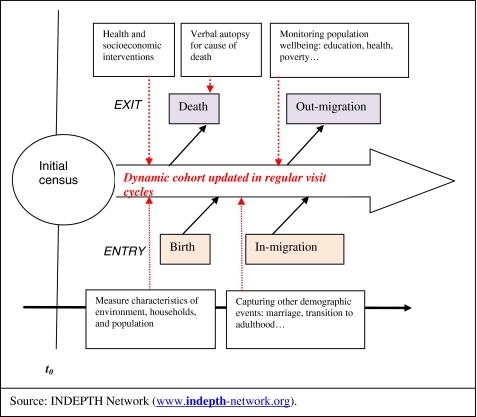
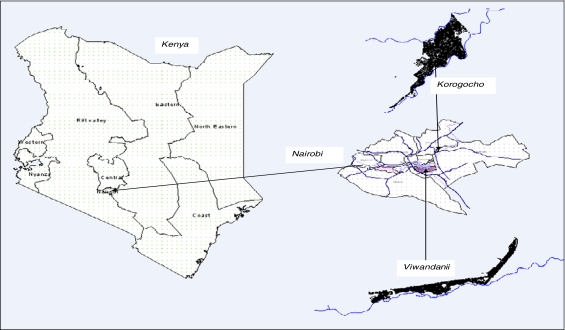
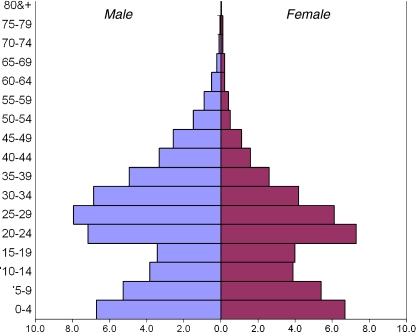
The Nairobi Urban Health and Demographic Surveillance System (NUHDSS) was set up in Korogocho and Viwandani slum settlements to provide a platform for investigating linkages between urban poverty, health, and demographic and other socioeconomic outcomes, and to facilitate the evaluation of interventions to improve the wellbeing of the urban poor. Data from the NUHDSS confirm the high level of population mobility in slum settlements, and also demonstrate that slum settlements are long-term homes for many people. Research and intervention programs should take account of the duality of slum residency. Consistent with the trends observed countrywide, the data show substantial improvements in measures of child mortality, while there has been limited decline in fertility in slum settlements. The NUHDSS experience has shown that it is feasible to set up and implement long-term health and demographic surveillance system in urban slum settlements and to generate vital data for guiding policy and actions aimed at improving the wellbeing of the urban poor.
Overview
The claims and statistics of this paper haven’t been checked yet.
Free: it reads the open-access text and checks the first 5 claims that cite a source we can check. Create a free account to check every claim.
Integrity signals
Registry
Cites
Statistics
Figures
Verification
Claims the paper makes
The claims and statistics of this paper haven’t been checked yet.
Free: it reads the open-access text and checks the first 5 claims that cite a source we can check. Create a free account to check every claim.
Claims other papers make about this one
Each is checked against this paper’s own text: does it say what the citing paper says it does?
The source backs part of the claim, not all of it — or backs it for a different population, condition or comparison.
In the citing paper
“The close to one billion people that are estimated to live in urban slums or informal settlements are highly susceptible to COVID-19 infection since basic needs such as water, toilets, sewers, drainage, waste collection, and secure and adequate housing are already in short supply or non-existent [4–7].”
From Slum Health: Arresting COVID-19 and Improving Well-Being in Urban Informal Settlements (2020) · cites this paper as [6]
Experimental — accuracy not yet measuredThe source backs part of the claim, not all of it — or backs it for a different population, condition or comparison.
In the citing paper
“The close to one billion people that are estimated to live in urban slums or informal settlements are highly susceptible to COVID-19 infection since basic needs such as water, toilets, sewers, drainage, waste collection, and secure and adequate housing are already in short supply or non-existent [4–7].”
From Slum Health: Arresting COVID-19 and Improving Well-Being in Urban Informal Settlements (2020) · cites this paper as [6]
Experimental — accuracy not yet measuredThe check wasn’t confident either way, so it gives no verdict — never disputed.
In the citing paper
“The close to one billion people that are estimated to live in urban slums or informal settlements are highly susceptible to COVID-19 infection since basic needs such as water, toilets, sewers, drainage, waste collection, and secure and adequate housing are already in short supply or non-existent [4–7].”
From Slum Health: Arresting COVID-19 and Improving Well-Being in Urban Informal Settlements (2020) · cites this paper as [6]
Experimental — accuracy not yet measured
Self-check
Percentages, sums and reported differences re-computed from the paper’s own numbers.
The self-check needs the paper’s full text.
Citations
Cites
World Urbanization Prospects: The 1996 Revision
Brockerhoff, M., & Nations, U. (1998) · Population and Development Review · doi:10.2307/2808041 · Cited by 5,881
Kenya Demographic and Health Survey 1989
Kenya, & Std Control Programme (1989) · Cited by 1,756
Obonyo, J. (2010) · Cited by 732
Kyobutungi, C., Ziraba, A. K., Ezeh, A., & Yé, Y. (2008) · Population Health Metrics · doi:10.1186/1478-7954-6-1 · Cited by 231 · cited 1×
“There is need for further investigation to shed light on what is driving the mortality decline in these communities given that the immunizations levels are very low(20) and the burden of disease for under-5-yearold children (which is mostly driven by diarrhea and pneumonia) remains very high.(21) Other analyses of the…”
BackgroundSelf-citationChildhood vaccination in informal urban settlements in Nairobi, Kenya: Who gets vaccinated?
Mutua, M. K., Kimani-Murage, E., & Ettarh, R. R. (2011) · BMC Public Health · doi:10.1186/1471-2458-11-6 · Cited by 218
Ezeh, A. C., Mberu, B. U., & Emina, J. O. (2009) · Philosophical Transactions of the Royal Society B: Biological Sciences · doi:10.1098/rstb.2009.0166 · Cited by 153 · cited 1×
“Analysis of trends over time shows that fertility has remained constant over the 7-year period and is probably consistent with the general stall observed in Nairobi since the mid-1990’s.(11,12)”
ResultSelf-citationThe Navrongo Community Health and Family Planning Project
Binka, F. N., Nazzar, A., & Phillips, J. F. (1995) · Studies in Family Planning · doi:10.2307/2137832 · Cited by 148
Circular migration patterns and determinants in Nairobi slum settlements
Béguy, D., Bocquier, P., & Zulu, E. M. (2010) · Demographic Research · doi:10.4054/demres.2010.23.20 · Cited by 145 · cited 1×
“Other analyses have shown, however, that female migration is more intense than male migration.(14) Contrary to conventional thinking about the lack of permanence of residence in slum settlements, these data show that slums provide long-term homes for many people.”
BackgroundSelf-citationThe stall in the fertility transition in Kenya.
Westoff, C. F., & Cross, A. R. (2006) · Population Studies · Cited by 124
Prospective Community Studies in Developing Countries
Gupta, M. D., Aaby, P., Garenne, M., & Pison, G. (1998) · doi:10.1093/oso/9780198292098.001.0001 · Cited by 95
Research works printed but not linked: 4
- INDEPTH Network Population and Health in Developing Countries. Population, health and Survival at INDEPTH Sites 2002 Ottawa, Canada IDRC
- Garenne M Cantrelle P Gupta MD Aaby P Garenne M Pison G Three decades of research on population and health: the ORSTOM experience in rural Senegal, 1962–1991 Prospective Community Studies in Developing Countries 1997 Oxford, England Clarendon 233 252
- International Centre for Diarrhoeal Diseases Research Bangladesh -ICDDR B Health and Demographic Surveillance System—Matlab. Registration of health and demographic events 2008 2010 Dhaka, Bangladesh ICDDR, B
- Society for International Development Pulling Apart: Facts and Figures on Inequality in Kenya 2004 Nairobi, Kenya SID Eastern Africa Regional Office
Cited by
Items 101–199 of 199
Ngaruiya, C., Oti, S. O., van de Vijver, S. J. M., Kyobutungi, C. K., & Free, C. (2019) · PLoS ONE · doi:10.1371/journal.pone.0220834 · Cited by 16
Ajayakumar, J., Curtis, A. J., Rouzier, V., Pape, J. W., Bempah, S., Alam, M. T., Alam, M. M., Rashid, M. H., Ali, A., & Morris, J. G. (2021) · International Journal of Health Geographics · doi:10.1186/s12942-021-00259-z · Cited by 14
Nyariro, M. (2021) · Agenda · doi:10.1080/10130950.2020.1855850 · Cited by 18
“A typical living unit might be 10 × 10 feet with a single room (Emina et al. 2011, Undie et al. 2009).”
BackgroundCharacterization of Healthy Housing in Africa: Method, Profiles, and Determinants
Iddi, S., Muindi, K., Gitau, H., & Mberu, B. U. (2022) · Journal of Urban Health · doi:10.1007/s11524-021-00603-5 · Cited by 20
Self-citationMumin, F. I., Wesonga, F. D., Handuleh, J. I. M., White, R. G., & Mor, S. M. (2022) · BMC Public Health · doi:10.1186/s12889-022-14878-z · Cited by 16
Chumo, I., Kabaria, C. W., Shankland, A., Igonya, E. K., & Mberu, B. U. (2023) · Frontiers in Public Health · doi:10.3389/fpubh.2022.1043602 · Cited by 20
Modeling a Pandemic (COVID-19) Management Strategy for Urban Slums Using Social Geometry Framework
Onditi, F., Obimbo, M., Kinyanjui, S., & Nyadera, İ. N. (2020) · European Journal of Development Research · doi:10.1057/s41287-020-00317-5 · Cited by 13
Poverty and Uneven Food Security in Urban Slums
Mohamed, S. F., Mberu, B. U., Amendah, D. D., Kimani-Murage, E. W., Ettarh, R., Schofield, L., Egondi, T., Wekesah, F. M., & Kyobutungi, C. K. (2016) · Springer eBooks · doi:10.1007/978-3-319-43567-1_8 · Cited by 18
Madhavan, S., Béguy, D., Clark, S., & Kabiru, C. (2018) · Demographic Research · doi:10.4054/demres.2018.38.44 · Cited by 14
“However, compared to the other slum where the NUHDSS is conducted, Viwandani, Korogocho has a more settled population (Emina et al. 2011).”
Reynolds, E. C., Onyango, D., Mwando, R., Oele, E., Misore, T., Agaya, J. A., Otieno, P. O., Barr, B. A. T., Lee, G. O., & Akelo, V. (2021) · Current Developments in Nutrition · doi:10.1093/cdn/nzab065 · Cited by 20
“In this setting, inappropriate complementary feeding practices, compounded by conditions of poverty, increase the risk of childhood stunting (13, 14).”
BackgroundMutua, M. K., Mohamed, S. F., Iddi, S., Muyingo, S. K., Mwangi, B., & Kadengye, D. T. (2020) · Global Epidemiology · doi:10.1016/j.gloepi.2020.100044 · Cited by 15
Tsiachristas, A., Gathara, D., Aluvaala, J., Chege, T., Barasa, E., & English, M. (2019) · BMJ Global Health · doi:10.1136/bmjgh-2019-001817 · Cited by 12
Karuga, R., Steege, R., Njoroge, I., Liani, M. L., Georgi, N. W., Otiso, L., Muturi, N., Okoth, L., Theobald, S., & Tolhurst, R. (2022) · Social Sciences · doi:10.3390/socsci11070296 · Cited by 16
“Korogocho, the fourth largest informal settlement located in the northeast of Nairobi, covers an area of about 0.97 km2 (Beguy et al. 2015; Emina et al. 2011).”
BackgroundInfluentialAbuya, B. A., Kitsao-Wekulo, P., & Muhia, N. (2018) · Qualitative Research in Education · doi:10.17583/qre.2018.3240 · Cited by 14
“However, some of these costs may be pushed upwards by the school management and fees become too costly and unaffordable by parents from the slums where 35% of households live below the poverty line (Emina et al., 2011).”
BackgroundPlanning a family in Nairobi’s informal settlements: results of a qualitative study
Towriss, C. A., Béguy, D., Wringe, A., Hussein, B. H., & Timæus, I. M. (2019) · Journal of Biosocial Science · doi:10.1017/s0021932019000452 · Cited by 12
Single mothers coping with food insecurity in a Nairobi slum
Madhavan, S., Clark, S., & Schmidt, S. (2020) · Urban Studies · doi:10.1177/0042098020963849 · Cited by 11
“Driven by lack of access to production, urban residents are almost entirely dependent on buying food, which is difficult when economic opportunities and employment are so fragile (Crush and Caesar, 2014; Emina et al., 2011).”
BackgroundMarlow, M. A., Maciel, E. L. N., Sales, C. M. M., Gomes, T., Snyder, R. E., Daumas, R. P., & Riley, L. W. (2015) · Journal of Urban Health · doi:10.1007/s11524-015-9957-0 · Cited by 11
Oduro, M. S., Iddi, S., Asiedu, L., Asiki, G., Kadengye, D. T., & System, T. N. U. H. A. D. S. (2024) · PLoS ONE · doi:10.1371/journal.pone.0272684 · Cited by 18
Wanjohi, M., Kimani-Murage, E. W., Asiki, G., Holdsworth, M., Pradeilles, R., Langat, N., Amugsi, D. A., Wilunda, C., & Klipstein‐Grobusch, K. (2024) · Journal of Health Population and Nutrition · doi:10.1186/s41043-024-00664-7 · Cited by 15
Mohamed, S. F., Macharia, T. N., Asiki, G., & Gill, P. S. (2023) · PLOS Global Public Health · doi:10.1371/journal.pgph.0001625 · Cited by 12
“The Korogocho site by contrast is a more established slum settlement with a high proportion of married men living with their spouses and children [19].”
BackgroundOloo, L., Elsey, H., Abboah‐Offei, M., Kiyeng, M., Amboka, P., Okelo, K., Kitsao-Wekulo, P., Kimani-Murage, E. W., Langat, N., & Nampijja, M. (2023) · Frontiers in Public Health · doi:10.3389/fpubh.2023.1195460 · Cited by 16
Oti, S. O., Wamukoya, M., Mahy, M. I., & Kyobutungi, C. K. (2013) · Global Health Action · doi:10.3402/gha.v6i0.21638 · Cited by 8
Stoebenau, K., Madhavan, S., Kim, S. W., & Wainaina, C. (2024) · Population and Development Review · doi:10.1111/padr.12601 · Cited by 8
Chepngeno‐Langat, G., van der Wielen, N., Falkingham, J., & Evandrou, M. (2021) · Journal of Aging & Social Policy · doi:10.1080/08959420.2021.1926197 · Cited by 15
“The NUHDSS follows the population living in these two slum areas and collects periodic data on demographic, economic and health transitions as well as household level information on livelihoods and amenities (Emina et al., 2011).”
BackgroundJames, A. E., & Palmer, G. H. (2015) · International Journal of Child Health and Nutrition · doi:10.6000/1929-4247.2015.04.02.5 · Cited by 8
Oyando, R., Orangi, S., Mwanga, D. M., Pinchoff, J., Abuya, T., Muluve, E., Mbushi, F., Austrian, K., & Barasa, E. (2021) · Wellcome Open Research · doi:10.12688/wellcomeopenres.17367.1 · Cited by 7
The effect of free primary education policy on late school entry in urban primary schools in Kenya
Ngware, M., Oketch, M., Ezeh, A., & Mutisya, M. (2013) · International Review of Education · doi:10.1007/s11159-013-9389-6 · Cited by 7
“4 The Nairobi Urban Health and Demographic Surveillance System (DSS), a platform established by the African Population and Health Research Centre (APHRC), ‘‘collects data on two informal settlements – Korogocho and Viwandani – in Nairobi City every four months on issues ranging from household dynamics to fertility and…”
BackgroundSelf-citationOnditi, F., Obimbo, M., Kinyanjui, S., & Nyadera, İ. N. (2020) · doi:10.21203/rs.3.rs-40952/v1 · Cited by 7
“…studies that found out that within the informal settlement there are higher levels of intra and inter social mixing, poor environmental conditions, transient residence, and less regard to human well-beings that makes slum residents highly vulnerable to infectious diseases (Emina et al. 2011).”
BackgroundResultJiwani, S. S., Cissé, K., Mutua, M. K., Jacobs, C. N., Njeri, A., Adero, G., Musukuma, M., Ngosa, D., Sissoko, F., Kouanda, S., et al. (2025) · BMJ Global Health · doi:10.1136/bmjgh-2024-017337 · Cited by 9
Okoth, L., Steege, R., Ngunjiri, A. S. W., Theobald, S., & Otiso, L. (2023) · Health Policy and Planning · doi:10.1093/heapol/czad070 · Cited by 7
Mutua, M. K., Mohamed, S. F., Kimani-Murage, E. W., Kiarie, L. N., Janusz, C. B., Aaby, P., Fisker, A. B., Echoka, E., & Ravn, H. (2020) · Annals of Human Biology · doi:10.1080/03014460.2020.1725121 · Cited by 9
Wanjohi, M., Ogada, I. A., Wekesah, F. M., Khayeka‐Wandabwa, C., & Kimani-Murage, E. W. (2020) · BMJ Nutrition Prevention & Health · doi:10.1136/bmjnph-2019-000060 · Cited by 9
Examining the Role of Social Determinants of Health and COVID-19 Risk in 28 African Countries
Moise, I. K., Ortiz-Whittingham, L. R., Owolabi, K., Halwindi, H., & Miti, B. A. (2024) · COVID · doi:10.3390/covid4010009 · Cited by 7
Correlates of HIV-status awareness among adults in Nairobi slum areas
Ettarh, R., Kimani, J. K., Kyobutungi, C. K., & Wekesah, F. M. (2012) · African Journal of AIDS Research · doi:10.2989/16085906.2012.754833 · Cited by 6
Abuya, B. A., Ngware, W. M., Mutisya, M., & Nyariro, M. (2016) · International Journal of Adolescence and Youth · doi:10.1080/02673843.2016.1185446 · Cited by 11
“Individuals qualify to become Demographic Surveillance System (DSS) residents either through baseline enumeration, in-migration or birth (Emina et al., 2011) The NUDSS also provides a sampling framework and a platform for nesting other studies.”
BackgroundAchieng, A., Ajayi, A. I., & Kabiru, C. W. (2025) · BMJ Open · doi:10.1136/bmjopen-2024-093696 · Cited by 5
“None of us had a prior relationship with the participants.”
Chumo, I., Kabaria, C. W., Elsey, H., Ozano, K., Phillips‐Howard, P. A., & Mberu, B. U. (2023) · Frontiers in Public Health · doi:10.3389/fpubh.2022.1035284 · Cited by 7
Single Motherhood and Stress in a Kenyan Slum: The Importance of Paternal and Kin Support
Clark, S., Henderson, M., & Kabiru, C. W. (2023) · Journal of Family Issues · doi:10.1177/0192513x221150978 · Cited by 10
“Estimates suggest that as many as one-third to one-half of these residents are children (Emina et al., 2011; UNFPA, 2007).”
BackgroundScholfield, D., Kavembe, G. D., Duncan, R. R., Ragama, B. O., Mecha, J. O., Orwa, A., Otomu, G., Wanga, E., Astleford, J., Gutto, J., et al. (2023) · PLoS ONE · doi:10.1371/journal.pone.0294202 · Cited by 5
“Moreover, residents in informal settlements can spend as much as ten percent of their daily income on water, often supplied by ‘water barons’ through informal vendors/kiosks [16, 17].”
BackgroundImpact of Housing and Infrastructure on handwashing in Peru
Malika, N. M., Barbagelatta, G., Penny, M. E., Reynolds, K. A., & Sinclair, R. (2020) · International Health · doi:10.1093/inthealth/ihaa008 · Cited by 5
Poverty Dynamics in Nairobi’s Slums: Testing for True State Dependence and Heterogeneity EffectsPreprint
Faye, O., Islam, N., & Zulu, E. M. (2011) · SSRN Electronic Journal · doi:10.2139/ssrn.1960615 · Cited by 5
Self-citationMukiira, C. (2012) · University of the Witwatersrand, Johannesburg Institutional Repository on DSpace (University of the Witwatersrand, Johannesburg) · Cited by 5
Understanding demographic events and migration patterns in two urban slums of Nairobi City in Kenya
Omondi, E. O., Iddi, S., Chepkemoi, S., Mugotitsa, B., Cygu, S. B., Okumu, B., Ziraba, A. K., Kadengye, D. T., & Kiragga, A. N. (2024) · Scientific Reports · doi:10.1038/s41598-024-79895-x · Cited by 4
“These demographic events are pivotal in shaping the overall population structure and directly impacting the health and well-being of the residents in these areas 25 .”
Mogaji, H. O., Nery, N., Argibay, H. D., Cruz, J. S., Carneiro, I. D. O., Lustosa, R., Ko, A. I., Costa, F., Begon, M., & Khalil, H. (2024) · BMJ Public Health · doi:10.1136/bmjph-2023-000572 · Cited by 5
Towriss, C. (2014) · LSHTM Research Online (London School of Hygiene and Tropical Medicine) · doi:10.17037/pubs.01917783 · Cited by 15
“This is likely due to the fact that the majority of respondents in the study did not have formal employment; indeed, over 30% of the adult female population in these two settlements is engaged in casual employment or informal business (verses 14% in formal employment) (Emina et al., 2011).”
BackgroundInfluentialFamilies on the space–time continuum: Conceptualizing and measuring temporal and spatial dimensions
Madhavan, S. (2024) · Journal of Marriage and the Family · doi:10.1111/jomf.12984 · Cited by 5
Chumo, I., Kabaria, C. W., Phillips‐Howard, P. A., Gitau, H., Elsey, H., & Mberu, B. U. (2024) · Journal of Water Sanitation and Hygiene for Development · doi:10.2166/washdev.2024.177 · Cited by 4
The Health of Women and Girls in Urban Areas with a Focus on Kenya and South Africa: A Review
Hawkins, K., MacGregor, H., & Oronje, R. N. (2013) · Figshare · Cited by 4
Oduro, M. S., Iddi, S., Asiedu, L., Asiki, G., Kadengye, D. T., & System, T. N. U. H. A. D. S. (2022) · medRxiv · doi:10.1101/2022.07.26.22278058 · Cited by 3
“Children born into and living in these settlements are at an increased risk of morbidity [35], or varying levels of stunting (from being marginally stunted to severely stunted) due to exposure to multiple health hazards [36].”
Wanjohi, M., Asiki, G., Pradeilles, R., Kabiru, C. W., Iddi, S., Langat, N., Amugsi, D. A., Wilunda, C., Klipstein‐Grobusch, K., & Kimani-Murage, E. W. (2025) · BMC Public Health · doi:10.1186/s12889-025-24259-x · Cited by 2
“On the other hand, the population in Korogocho is more stable with an average of 14 years duration of stay in the slum and a higher poverty index compared to Viwandani [33, 34].”
Nyamasege, C. K., Kimani-Murage, E. W., Imungi, J. K., Kaindi, D. W. M., & Wagatsuma, Y. (2021) · Community Health Equity Research & Policy · doi:10.1177/0272684x211022584 · Cited by 2
“Both slums have limited access to formal health care, inadequate education facilities, poor housing, inadequate infrastructure, violence, polluted environment, insecurity, high unemployment rates, and poor health indicators.(19)”
BackgroundCohort Profile: Kimpese Health and Demographic Surveillance System, Democratic Republic of Congo
Fumwakwau, J. K., Derra, K., Nzolo, D. B., Mampunza, S. M. M., & Phanzu, D. M. (2024) · International Journal of Epidemiology · doi:10.1093/ije/dyae150 · Cited by 3
Does Marriage Benefit Maternal Mental Health? New Evidence from Nairobi, Kenya
Madhavan, S., Sidze, E., Stoebenau, K., Wagner, M. A., & Wainaina, C. (2025) · Journal of Health and Social Behavior · doi:10.1177/00221465251330840 · Cited by 2
“These two areas have a combined population of about 90,000 (Wamukoya et al. 2020) and are characterized by inadequate sanitation, limited health care facilities, low-quality housing, and high levels of crime, unemployment, and poverty (Emina et al. 2011).”
Cohort Profile: The Migration and Health in Malawi (MHM) Study
Anglewicz, P. A., VanLandingham, M., Manda‐Taylor, L., & Kohler, H. (2017) · ScholarlyCommons (University of Pennsylvania) · Cited by 2
Bajpai, K., Larson, J., & Mehta, K. (2013) · International Conference on Information and Communication Technologies and Development (ICTD) · doi:10.1145/2516604.2516624 · Cited by 2
“In addition, since previous studies [16, 17] and our own experience indicate the overwhelming male presence in this demographic, we had to modify the sampling further to include an adequate number of female respondents.”
BackgroundResultBakibinga, P., & Matanda, D. J. (2022) · Springer eBooks · doi:10.1007/978-3-030-79515-3_46 · Cited by 2
Chumo, I., Kabaria, C. W., & Mberu, B. U. (2025) · Frontiers in Sustainable Cities · doi:10.3389/frsc.2025.1693073 · Cited by 3
INDEPTH Network Cause-Specific Mortality
Issue, C. S. (2014) · Global Health Action · doi:10.3402/gha.v7.26631 · Cited by 1
(2018) · Journal of Tropical Medicine and Health · doi:10.29011/2688-6383.000025 · Cited by 1
Chumo, I., Mberu, B. U., Gitau, H., Nandongwa, I., Wado, Y. D., & Kabaria, C. W. (2023) · SSM - Mental Health · doi:10.1016/j.ssmmh.2023.100240 · Cited by 1
Nampijja, M., Langat, N., Oloo, L., Amboka, P., Okelo, K., Muendo, R., Habib, S., Kiyeng, M., Ray, A., Abboah‐Offei, M., et al. (2023) · Frontiers in Public Health · doi:10.3389/fpubh.2023.1194978 · Cited by 1
Etyang, A. O., Harding, S., & Cruickshank, J. K. (2013) · Journal of Hypertension · doi:10.1097/hjh.0b013e32836103fb · Cited by 2
Slum Dwellers and Savings: Organizing for Change in Informal Settlements
Shah, H. D. (2014) · eScholarship (California Digital Library) · Cited by 3
(19290097), P. O., & Igonya, E. K. (2018) · Human Rights Documents online · doi:10.1163/2210-7975_hrd-0148-2015054 · Cited by 1
Jiwani, S. S., Cissé, K., Mutua, M. K., Jacobs, C. N., Njeri, A., Adero, G., Musukuma, M., Ngosam, D., Sissoko, F. B., Kouanda, S., et al. (2025) · medRxiv · doi:10.1101/2025.01.09.25320278 · Cited by 1
Field Lessons from a Zoonotic Disease Study in the Nairobi Health Surveillance System
Amendah, D. D., Muriuki, P., Ngomi, N. N., Kavao, M., & Muhia, N. (2015) · Online Journal of Public Health Informatics · doi:10.5210/ojphi.v7i1.5769
Cotton, C., & Béguy, D. (2015) · Scholarship@Western (Western University)
Double burden of disease in the slums of Kenya
Oti, S. O. (2015) · UvA-DARE (University of Amsterdam)
James, A. E., & Palmer, G. H. (2015) · Annals of Global Health · doi:10.1016/j.aogh.2015.02.713
“having unstable employment, and another quarter economically inactive, passive reliance on increasing incomes alone is unlikely to improve nutritional outcomes in the near-term [55].”
BackgroundYoung People: Vulnerability, Risk and HIV in the Urban Slum
Jones, G. (2015) · SpringerBriefs in public health · doi:10.1007/978-3-319-26814-9_4
Infant Feeding Challenges Encountered by HIV Positive Mothers in Korogocho Slums, Nairobi, Kenya
Siruri, B. M. (2016) · Texila international journal of public health · doi:10.21522/tijph.2013.04.04.art027
Factors Determining Media-based Partner/Spouse Seeking in the Era of HIV and AIDS Pandemic
Miriti, N. K., Kasili, S., & Wanzala, W. (2016) · Epidemiology Open Access · doi:10.4172/2161-1165.1000283 · Cited by 1
“…and/or spouses for the following types of relationship: Relationships built towards marriage, long term relationship with no strings attached of marriage, short-term relationship, holiday partners/ friends, weekend partners/friends, one day relationships, and overnight partners/friends [10-15].”
BackgroundCost-benefit ethics: the utilitarian approach to fetal research.
Pilon, J. G. (1977) · PubMed · Cited by 1
Ng'ethe, J. W. (2017) · University of Nairobi Research Archive (University of Nairobi)
Abuya, B. A., & Muhia, N. (2020) · Qualitative Research in Education · doi:10.17583/qre.2020.5144
The Effects of Child Care Subsidies on Women’s Economic Opportunities in the Slums of Nairobi
Clark, S. (2015) · AEA Randomized Controlled Trials · doi:10.1257/rct.843
The Effects of Child Care Subsidies on Women’s Economic Opportunities in the Slums of Nairobi
Clark, S. (2015) · AEA Randomized Controlled Trials · doi:10.1257/rct.843-4.0
Mumin, F. I., Wesonga, F. D., Handuleh, J. I. M., White, R. G., & Mor, S. M. (2022) · Research Square · doi:10.21203/rs.3.rs-1711321/v1
Women s Economic Empowerment: From Deprivation to Sustenance
Shah, P. S. (2022) · Kardan Journal of Social Sciences and Humanities · doi:10.31841/kjssh.2022.48
Developing “Social Pendulum Theory of Access” to Explain the (Un)changing Urban Geography
Onditi, F. (2022) · Springer eBooks · doi:10.1007/978-3-030-87624-1_106-1
Chumo, I., Kabaria, C. W., Elsey, H., Ozano, K., Phillips‐Howard, P. A., & Mberu, B. U. (2022) · Research Square · doi:10.21203/rs.3.rs-2049611/v1
Poverty dynamics in Nairobi's slums; Testing for state dependence and heterogeneity effects
Faye, O., Islam, N., & Zulu, E. M. (2022) · Economía · doi:10.18800/economia.202202.003 · Cited by 5
Inside an Urban House - A Cross Sectional Study on Urban Housing Standards
Sali, R. M., & S., P. T. (2023) · JOURNAL OF CLINICAL AND BIOMEDICAL SCIENCES · doi:10.58739/jcbs/v13i1.23.7 · Cited by 1
(2024) · Frontiers research topics · doi:10.3389/978-2-8325-4665-9
Madhavan, S., Omuya, M., Schatz, E. J., & Wainaina, C. (2024) · Journal of Family Issues · doi:10.1177/0192513x241268701
“These two areas have a combined population of about 90,000 (Wamukoya et al., 2020) and are characterized by inadequate sanitation, limited formal health care facilities, low-quality housing, high levels of crime, unemployment, and poverty (Emina et al., 2011).”
FACTORS AFFECTING HOUSEHOLD FOOD SECURITY IN NON-FOOD-CENTER AREAS
Gultom, J., Hanani, N., Qurbani, I. D., & Asmara, R. (2024) · Journal of Law and Sustainable Development · doi:10.55908/sdgs.v12i12.4134
POLICY OF IMPLEMENTING FOOD SECURITY STRATEGIES IN NON - FOOD CENTERS
Gultom, J., Hanani, N., Asmara, R., & Qurbani, I. D. (2024) · Journal of Law and Sustainable Development · doi:10.55908/sdgs.v12i12.4191
Mwanga, D. M., Kipchirchir, I. C., Muhua, G. O., Newton, C. R. J. C., Kadengye, D. T., Junior, A., Akpalu, A., Sen, A., Mmbando, B. P., Newton, C. R., et al. (2025) · Global Epidemiology · doi:10.1016/j.gloepi.2025.100183 · Cited by 1
Nwafor, J. A., Edet, R., & Nwokocha, E. E. (2025) · Gender Issues · doi:10.1007/s12147-025-09356-w · Cited by 1
Mwanga, D. M., Kipchirchir, I. C., Muhua, G. O., Newton, C. R. J. C., & Kadengye, D. T. (2025) · Open Journal of Statistics · doi:10.4236/ojs.2025.153018
Contextualizing Young Mothers’ Agency in Nairobi through Photovoice and Interviews
Nyariro, M. (2025) · Girlhood Studies · doi:10.3167/ghs.2025.180210
Elungata, P. (2025) · Frontiers in Sociology · doi:10.3389/fsoc.2025.1266401
Self-citationMwanga, D. M., Kipchirchir, I. C., Muhua, G. O., Newton, C. R. J. C., & Kadengye, D. T. (2025) · Frontiers in Research Metrics and Analytics · doi:10.3389/frma.2025.1583476
Mumin, F. I., Wesonga, F. D., Handuleh, J. I. M., White, R. G., & Mor, S. M. (2023) · Figshare · doi:10.6084/m9.figshare.22608415
Wainaina, C., Sidze, E., Maina, B. W., Badillo-Amberg, I., Odhiambo, H., Kathoka, F., Khasowa, D., & Okoror, C. E. M. (2021) · Figshare · doi:10.6084/m9.figshare.16696279
Bobholz, F., Anguzu, R., Dickson‐Gómez, J., Oladebo, T., Bobholz, M. J., Ikonte, C., Beyer, K., Kiguli, J., & Nyabigambo, A. (2025) · Pan-African Journal of Health and Environmental Science · doi:10.56893/ajhes2025v04i02.08
Mwanga, D. M., Wekesah, F. M., Ouma, F. O., Kariuki, S. M., Kinuthia, J. W., Otieno, P. O., Kwasa, T., Mongare, Q., Machuka, A., Cygu, S. B., et al. (2025) · Global Epidemiology · doi:10.1016/j.gloepi.2025.100241
Chumo, I., Kabaria, C. W., Elsey, H., Phillips‐Howard, P. A., & Mberu, B. (2026) · BMC Public Health · doi:10.1186/s12889-026-28653-x
“Korogocho features a stable, settled population [30], while Viwandani is located near an industrial area, and has highly mobile and educated residents [30]. one-on-one conversations with 8 parents and 8 childcare providers in each study site who were mostly involved in the day-to-day activities.”
Cohort Profile: Kinship, nuptiality and child well-being in Africa—the JAMO study
Madhavan, S., Stoebenau, K., Leonard, K., Sidze, E., Mberu, B., Kitsao-Wekulo, P., Kimani, E., Wainaina, C., Omuya, M., Wagner, M., et al. (2026) · International Journal of Epidemiology · doi:10.1093/ije/dyag178
Metadata
- Authors
- Emina, J., Beguy, D., Zulu, E. M., Ezeh, A. C., Muindi, K., Elung’ata, P., Otsola, J. K., & Yé, Y.
- Affiliations
- African Population and Health Research Center (KE)
- African Institute for Development Policy (KE)
- United States International University Africa (KE)
- Corresponding author
- Emina, Jacques
- Venue
- Journal of Urban Health
- Published
- 2011-06
- Volume
- 88
- Issue
- S2
- Pages
- 200-218
- ISSN
- 0028-7091 (ISSN-L)
- 1099-3460
- 1468-2869
- PMC
- PMC3132229
- OpenAlex
- W2087723561
- Semantic Scholar
- 1ec14116cfe40b89764de97dec550204721e8f0c
- Cited by
- 196
- References
- 18
- Citations by year
- 2026: 2 · 2025: 14 · 2024: 14 · 2023: 17 · 2022: 15 · 2021: 12 · 2020: 15 · 2019: 13 · 2018: 9 · 2017: 7 · 2016: 16 · 2015: 20 · 2014: 17 · 2013: 16 · 2012: 6
- FWCI
- 63.62
- Type
- journal article
- Language
- en
- Open access
- hybrid
- doi.org
- Licence
- cc-by-nc
- Locations
- Journal of Urban Health (publishedVersion, cc-by-nc)
- Europe PMC (PubMed Central) (publishedVersion, cc-by-nc)
- PubMed Central (publishedVersion, cc-by-nc)
- PubMed (publishedVersion)
- Funders
- Rockefeller Foundation
- William and Flora Hewlett Foundation
- Wellcome Trust
- Topics
- Social Sciences › Urban Studies › Urban and Rural Development Challenges
- Social Sciences › Health › Public Health and Social Inequalities
- Social Sciences › Development › Poverty, Education, and Child Welfare
- Keywords
- health and demographic surveillance, urban slums, urban poverty, human mobility, child mortality, fertility, urban well-being, intervention evaluation, Nairobi
- MeSH terms
- Adolescent, Adult, Aged, Aged, 80 and over, Birth Rate, Child, Child, Preschool, Demography, Emigration and Immigration, Female, Humans, Infant, Infant Mortality, Infant, Newborn, Kenya, Male, Middle Aged, Population Surveillance, Poverty Areas, Socioeconomic Factors, Urban Population, Child Mortality, Young Adult
About these checks
Registry, retraction, Cites and statistics results are computed, not judged, with one exception: a printed reference that no index lists is read once by a model before it counts as a citation error. Claims are extracted by a model and kept only when their quote appears verbatim in the text; each cited source is then checked, with a model’s help, for whether it says what the claim relies on. Those verdicts can be wrong — read the claim’s quote and the cited source before relying on one.
Statistics and arithmetic are recomputed, not judged.
Confidence bands are shown only for fields calibrated on our annotated test set. None is calibrated yet, so no band is shown.
What counts as a claim ›How we measure confidence ›How we check this ›
Are you an author, or do you see a problem with this page? Request a review
Data sources
Bibliographic data: Semantic Scholar, OpenAlex, Crossref.
Contains information from the Semantic Scholar Academic Graph Datasets, made available under the ODC Attribution License (ODC-BY 1.0).
Semantic Scholar’s data is described in: Kinney, R., et al. (2023). The Semantic Scholar Open Data Platform. arXiv:2301.10140.
