

Establishment and validation of cell pools using primary muscle cells derived from satellite cells of pig skeletal muscle
Open accessThe DOI matches its Crossref record; 27 of the 27 references it cites were found in a registry or an index.
Abstract
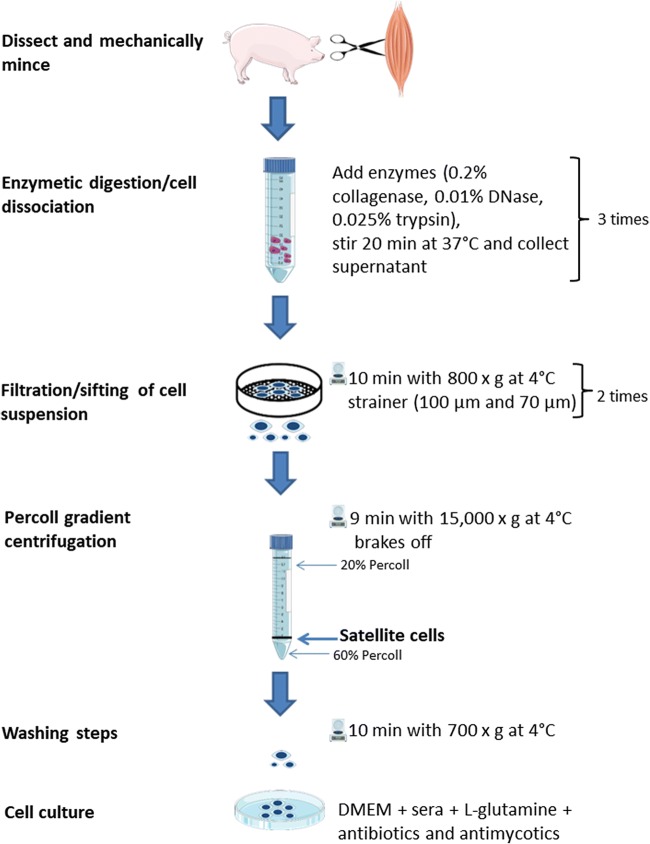
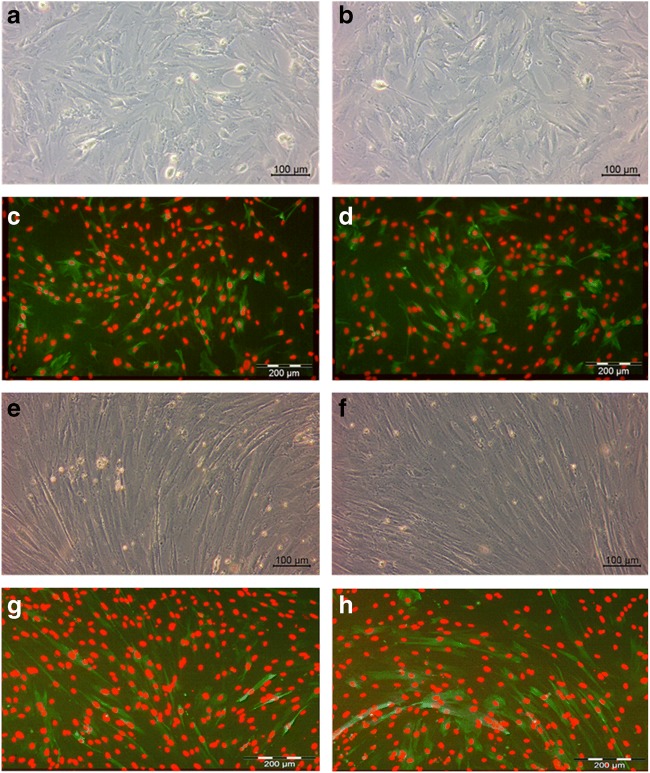
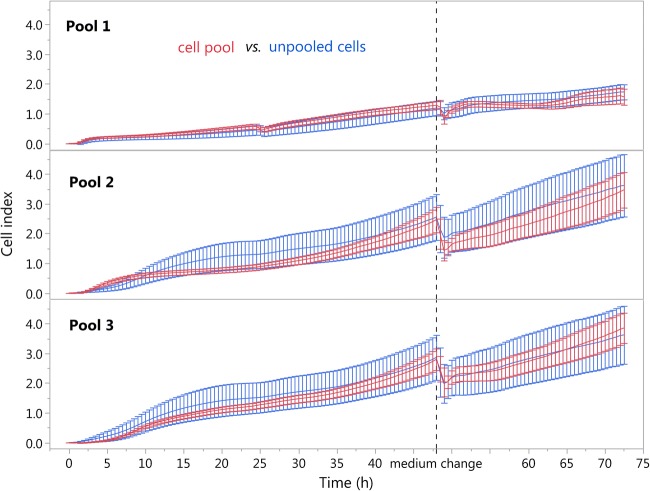
Primary cell cultures derived from satellite cells of skeletal muscle provide an appropriate in vitro model for proliferating myoblasts and differentiating myotubes for muscle biological research. These cell cultures may consist of harvested cells per animal or of a cell pool made of cells from several animals. However, cell pooling reduces the biological variability of the different cell donors. On the other hand, the use of cell pools offers an opportunity to use less donor tissue and to perform long-term projects with a broad spectrum of analysis and replications. In the literature, information about the donors of cell pools, the procedure used for pooling, and the characterization/validation of cell pools is often lacking. In this study, we established three cell pools consisting of M. rhomboideus or M. longissimus from ten or six piglets, each with one gender and medium birth weight. Real-time impedimetric monitoring was used to evaluate the proliferative growth behavior of myoblasts for the cell pools in comparison to their corresponding unpooled cells over a period of 72 h, with a measurement being taken every 30 min. For each of the tested cell pools, cell index, slope, and doubling time did not differ between the cell pool and the unpooled cells of the donor animals. Differentiation capacity and mRNA expression of PAX7 , MYOD and MYOG remained unchanged between the cell pool and the unpooled cells. Current results support that the use of cell pools is an appropriate method to reflect the average proliferative growth behavior of unpooled cells.
Overview
The claims and statistics of this paper haven’t been checked yet.
Free: it reads the open-access text and checks the first 5 claims that cite a source we can check. Create a free account to check every claim.
Integrity signals
Registry
Cites
Statistics
Figures
Verification
Claims the paper makes
The claims and statistics of this paper haven’t been checked yet.
Free: it reads the open-access text and checks the first 5 claims that cite a source we can check. Create a free account to check every claim.
Claims other papers make about this one
Each is checked against this paper’s own text: does it say what the citing paper says it does?
The source backs part of the claim, not all of it — or backs it for a different population, condition or comparison.
In the citing paper
“This strategy has been shown to significantly reduce variability in proliferation, differentiation, metabolic activity, and other cellular responses, thereby improving experimental reproducibility (Stoddart et al. 2012;Metzger et al. 2020;Kannan et al. 2024).”
From Primary cell cultures versus immortalized cell lines: critical comparative insights into biological fidelity and translational applications (2026) · cites this paper as Metzger et al. 2020
Experimental — accuracy not yet measured
Self-check
Percentages, sums and reported differences re-computed from the paper’s own numbers.
The self-check needs the paper’s full text.
Citations
Cites
SATELLITE CELL OF SKELETAL MUSCLE FIBERS
Mauro, A. (1961) · The Journal of Cell Biology · doi:10.1083/jcb.9.2.493 · Cited by 3,683 · cited 2×
“The discovery of satellite cells (Mauro 1961) from skeletal muscle, their isolation, and their subsequent cultivation as proliferating and differentiating progenies (myoblasts and myotubes) provides a unique model for muscle biology research.”
A morphological biosensor for mammalian cells
Giaever, I., & Keese, C. R. (1993) · Nature · doi:10.1038/366591a0 · Cited by 770 · cited 2×
“Impedance as a cellular readout was previously established (Giaever and Keese 1993) and previously used for primary skeletal muscle myoblasts (Sente et al.”
Proliferation of muscle satellite cells on intact myofibers in culture
Bischoff, R. (1986) · Developmental Biology · doi:10.1016/0012-1606(86)90234-4 · Cited by 402 · cited 1×
“…Biology, Leibniz Institute for Farm Animal Biology (FBN), Wilhelm-Stahl-Allee 2, D-18196, Dummerstorf, Germany pioneered by Bekoff and Betz (1977) and Bischoff (1986) using rat skeletal muscle and was later performed with goat and pig muscle fibers (Yamanouchi et al. 2009; Wilschut et al. 2010).”
Looking back to the embryo: defining transcriptional networks in adult myogenesis
Parker, M. H., Seale, P., & Rudnicki, M. A. (2003) · Nature Reviews Genetics · doi:10.1038/nrg1109 · Cited by 366 · cited 2×
“It is known that the adult myogenesis occurring after the activation of satellite cells can be viewed as a suitable model for embryonic myogenesis and that their programmed transcriptional profiles are similar (Parker et al. 2003).”
Replicating myoblasts express a muscle-specific phenotype.
Kaufman, S. J., & Foster, R. F. (1988) · Proceedings of the National Academy of Sciences · doi:10.1073/pnas.85.24.9606 · Cited by 207 · cited 2×
“…of the percentage of myogenic cells by immunostaining using an antibody against desmin (D1033 mouse monoclonal anti-desmin antibody, SigmaAldrich), which is characteristic of replicating myoblasts (Kaufman and Foster 1988) and 4,6-diami-dino-2phenylindole (DAPI, Carl Roth) for the nuclei.”
Enzymatic liberation of myogenic cells from adult rat muscle
Bischoff, R. (1974) · The Anatomical Record · doi:10.1002/ar.1091800410 · Cited by 190 · cited 1×
“This method was established by Bischoff (1974) using rat muscle and subsequently adapted for farm animals, such as sheep (Dodson et al. 1986), chicken (Yablonka-Reuveni et al. 1987), cattle (Dodson et al. 1987), turkeys (McFarland et al. 1988), fish (Powell et al. 1989), pigs (Doumit and Merkel…”
Isolation and clonal analysis of satellite cells from chicken pectoralis muscle
Yablonka-Reuveni, Z., Quinn, L. S., & Nameroff, M. (1987) · Developmental Biology · doi:10.1016/0012-1606(87)90226-0 · Cited by 165 · cited 2×
“…method was established by Bischoff (1974) using rat muscle and subsequently adapted for farm animals, such as sheep (Dodson et al. 1986), chicken (Yablonka-Reuveni et al. 1987), cattle (Dodson et al. 1987), turkeys (McFarland et al. 1988), fish (Powell et al. 1989), pigs (Doumit and Merkel…”
Properties of isolated adult rat muscle fibres maintained in tissue culture.
Bekoff, A., & Betz, W. J. (1977) · The Journal of Physiology · doi:10.1113/jphysiol.1977.sp012013 · Cited by 111 · cited 1×
“…4 Institute of Genome Biology, Leibniz Institute for Farm Animal Biology (FBN), Wilhelm-Stahl-Allee 2, D-18196, Dummerstorf, Germany pioneered by Bekoff and Betz (1977) and Bischoff (1986) using rat skeletal muscle and was later performed with goat and pig muscle fibers (Yamanouchi et al. 2009;…”
Conditions for isolation and culture of porcine myogenic satellite cells
Doumit, M. E., & Merkel, R. A. (1992) · Tissue and Cell · doi:10.1016/0040-8166(92)90098-r · Cited by 105 · cited 3×
“…(1974) using rat muscle and subsequently adapted for farm animals, such as sheep (Dodson et al. 1986), chicken (Yablonka-Reuveni et al. 1987), cattle (Dodson et al. 1987), turkeys (McFarland et al. 1988), fish (Powell et al. 1989), pigs (Doumit and Merkel 1992), and horses (Greene and Raub 1992).”
Atienzar, F. A., Tilmant, K., Gerets, H. H., Toussaint, G., Speeckaert, S., Hanon, E., Depelchin, O., & Dhalluin, S. (2011) · SLAS Discovery · doi:10.1177/1087057111402825 · Cited by 105 · cited 1×
“Most publications using impedance-based label-free technology have focused on the effects of various compounds on cellular adhesion and proliferation (Atienzar et al. 2011; Will et al. 2012).”
Cited by
Current Issues and Technical Advances in Cultured Meat Production: A Review
Hong, T. K., Shin, D., Choi, J., Tae, J., & Han, S. G. (2021) · Food Science of Animal Resources · doi:10.5851/kosfa.2021.e14 · Cited by 119
Bioprocessing technology of muscle stem cells: implications for cultured meat
Guan, X., Zhou, J., Du, G., & Chen, J. (2021) · Trends in biotechnology · doi:10.1016/j.tibtech.2021.11.004 · Cited by 87
Gu, H., Zhou, Y., Yang, J., Li, J., Peng, Y., Zhang, X., Miao, Y., Jiang, W. J., Bu, G., Hou, L., et al. (2021) · The FASEB Journal · doi:10.1096/fj.202001812rr · Cited by 83
Ma, Y., Deng, B., He, R., & Huang, P. (2024) · Heliyon · doi:10.1016/j.heliyon.2024.e24593 · Cited by 79
Samad, M. A., Saiman, M. Z., Majid, N. B. A., Karsani, S. A., & Yaacob, J. S. (2021) · Molecules · doi:10.3390/molecules26020376 · Cited by 71
Wikandari, R., Manikharda, M., Baldermann, S., Ningrum, A., & Taherzadeh, M. J. (2021) · Bioengineered · doi:10.1080/21655979.2021.2003665 · Cited by 72
Marketing Strategies for Cultured Meat: A Review
Siddiqui, S. A., Khan, S., Murid, M., Asif, Z., Oboturova, N. P., Nagdalian, A. A., Блинов, А. В., Ibrahim, S. A., & Jafari, S. M. (2022) · Applied Sciences · doi:10.3390/app12178795 · Cited by 55
Artificial intelligence and machine learning applications for cultured meat
Todhunter, M. E., Jubair, S., Verma, R., Saqe, R., Shen, K., & Duffy, B. (2024) · Frontiers in Artificial Intelligence · doi:10.3389/frai.2024.1424012 · Cited by 54
Vertebrate cell culture as an experimental approach – limitations and solutions
Abbas, M., Moradi, F., Hu, W., Regudo, K. L., Osborne, M., Pettipas, J., Atallah, D. S., Hachem, R., Ott-Peron, N., & Stuart, J. A. (2021) · Comparative Biochemistry and Physiology Part B Biochemistry and Molecular Biology · doi:10.1016/j.cbpb.2021.110570 · Cited by 37
Palin, M., Lapointe, J., Gariépy, C., Beaudry, D., & Kalbe, C. (2020) · PLoS ONE · doi:10.1371/journal.pone.0239496 · Cited by 22
Self-citationKalbe, C., Metzger, K., Gariépy, C., & Palin, M. (2023) · Histochemistry and Cell Biology · doi:10.1007/s00418-023-02193-6 · Cited by 18
“Isolation and characterization of porcine satellite cells from the LD and RH muscles was performed as reported previously (Metzger et al. 2020).”
Self-citationZhao, Y., Albrecht, E., Stange, K., Li, Z., Schregel, J., Sciascia, Q. L., Metges, C. C., & Maak, S. (2021) · Scientific Reports · doi:10.1038/s41598-021-92959-6 · Cited by 17
Metzger, K., Dannenberger, D., Tuchscherer, A., Ponsuksili, S., & Kalbe, C. (2021) · BMC Molecular and Cell Biology · doi:10.1186/s12860-021-00376-4 · Cited by 14
Self-citationCell Therapy by Mesenchymal Stromal Cells Versus Myoblasts in a Pig Model of Urinary Incontinence
Knoll, J., Amend, B., Harland, N., Isser, S., Bézière, N., Kraushaar, U., Stenzl, A., & Aicher, W. K. (2023) · Tissue Engineering Part A · doi:10.1089/ten.tea.2023.0103 · Cited by 12
“36,37 For MPC characterization, expression of desmin, and CD56 were explored by immunofluorescence (IF) and flow cytometry (FC), respectively (Table 1).”
Romano, V., Belviso, I., Sacco, A. M., Cozzolino, D., Nurzyńska, D., Amarelli, C., Maiello, C., Sirico, F., Meglio, F. D., & Castaldo, C. (2022) · Frontiers in Physiology · doi:10.3389/fphys.2022.879046 · Cited by 11
“Both CPC from normal (CPC-N) and pathological hearts (CPC-P) were pooled to reduce the biological variability among patients (Metzger et al., 2020) and plated at a 2 × 10(4) / cm(2) density and cultured with Nutrient Mixture F-12 medium, supplemented with 10% FBS, 5% horse serum, 0.”
MethodInfluentialGeng, R., Knoll, J., Harland, N., Amend, B., Enderle, M. D., Linzenbold, W., Abruzzese, T., Kalbe, C., Kemter, E., Wolf, E., et al. (2022) · Cell Transplantation · doi:10.1177/09636897221080943 · Cited by 10
Self-citationPause, F. C., Baufeld, A., Urli, S., Crociati, M., Stradaioli, G., Vanselow, J., & Kalbe, C. (2025) · The Science of The Total Environment · doi:10.1016/j.scitotenv.2025.179378 · Cited by 9
Self-citationA 1.1 Mb duplication CNV on chromosome 17 contributes to skeletal muscle development in Boer goats
Yuan, Y., 西南大学动物科学技术学院, 重., Zhang, W., Yang, B., Zhou, D., Xu, L., He, Y., Zhang, H., Liu, C., Ma, Y., et al. (2023) · 动物学研究 · doi:10.24272/j.issn.2095-8137.2022.384 · Cited by 9
Jin, A., Bennie, R. Z., Ogilvie, O. J., Trlin, H. J. F., Kong, N. S., Yu, H., Dobson, R. C. J., & Domigan, L. J. (2023) · Sustainable Food Proteins · doi:10.1002/sfp2.1023 · Cited by 8
Potential of animal-welfare compliant and sustainably sourced serum from pig slaughter blood
Hahn, O., Peters, K., Hartmann, A., Dannenberger, D., & Kalbe, C. (2024) · Cell and Tissue Research · doi:10.1007/s00441-024-03904-8 · Cited by 8
“The myogenic differentiation procedure was performed according to Metzger et al. (2020).”
InfluentialSelf-citationMetzger, K., Kalbe, C., Siengdee, P., & Ponsuksili, S. (2022) · Frontiers in Physiology · doi:10.3389/fphys.2022.979283 · Cited by 8
“Therefore, we cultured proliferating myoblasts below (35°C) and above (39°C and 41°C, respectively) the standard cultivation temperature (37°C) and evaluated the effects on the transcriptome, oxidative stress and energetic metabolism, using our well-established cell pooling approach (Metzger et al., 2020).”
MethodInfluentialSelf-citationDonandt, T., Hintze, S., Krause, S., Wolf, E., Schoser, B. G. H., Walter, M. C., & Meinke, P. (2022) · Life · doi:10.3390/life12101668 · Cited by 5
“The isolation and enrichment of satellite cells were performed according to the adapted protocols from [20,21].”
MethodKnoll, J., Amend, B., Abruzzese, T., Harland, N., Stenzl, A., & Aicher, W. K. (2024) · Life · doi:10.3390/life14020212 · Cited by 5
“Myoblasts were isolated, enriched, and expanded following five distinct procedures based on two different publications [17,18] (Figure 1).”
BackgroundMethodInfluentialLee, D., Everest, D. J., Cooley, W. A., & Chambers, M. A. (2023) · PLoS ONE · doi:10.1371/journal.pone.0293956 · Cited by 4
Hiebert, A., & Anderson, J. E. (2020) · Canadian Journal of Zoology · doi:10.1139/cjz-2019-0243 · Cited by 4
“Pooled samples 164 are valid in studying myoblast proliferation and gene expression patterns, despite the potential to mask 165 variations in biology among donor animals (Metzger et al. 2019).”
BackgroundTranscriptomic Response of Differentiating Porcine Myotubes to Thermal Stress and Donor Piglet Age
Sarais, F., Metzger, K., Hadlich, F., Kalbe, C., & Ponsuksili, S. (2023) · International Journal of Molecular Sciences · doi:10.3390/ijms241713599 · Cited by 4
“rhomboideus tissue was described by Metzger at al [15].”
BackgroundMethodInfluentialSelf-citationSuali, L., Chia, Y., Rustin, C., Lem, F. F., Ching, X. J., Mansur, M. A. B., Henry, Z. A., Chan, M. K. S., Wong, M. B. F., & Pan, S. Y. (2026) · Biotechnic & Histochemistry · doi:10.1080/10520295.2026.2714776 · Cited by 2
“This strategy has been shown to significantly reduce variability in proliferation, differentiation, metabolic activity, and other cellular responses, thereby improving experimental reproducibility (Stoddart et al. 2012; Metzger et al. 2020; Kannan et al. 2024).”
Harland, N., Johnen, L., Avula, K. T., Ladinig, A., Schwarz, L., Knoll, J., Stenzl, A., & Aicher, W. K. (2025) · Biomedicines · doi:10.3390/biomedicines13040917 · Cited by 2
Organ-on-chip models for pulmonary permeability studies
Lee, D., & Chambers, M. A. (2024) · Elsevier eBooks · doi:10.1016/b978-0-443-15510-9.00018-9 · Cited by 2
Metzger, K., Dannenberger, D., Tuchscherer, A., Ponsuksili, S., & Kalbe, C. (2021) · Figshare · doi:10.6084/m9.figshare.14853327
Self-citationHarland, N., Schwarz, L., Avci‐Adali, M., Buzanich-Ladinig, A., Serna-Higuita, L. M., Stenzl, A., & Aicher, W. K. (2026) · Medical Sciences · doi:10.3390/medsci14010027
“Such differences may even depend on the applied cell culture protocols [28,29,49,50].”
Lee, H. J., Kim, D. B., Lee, H. W., Jang, H. G., Kim, J. H., & Lee, S. H. (2026) · Food Science of Animal Resources · doi:10.21203/rs.3.rs-9147387/v1
FROM MUSCLE TO MEAT: MORPHO-FUNCTIONAL FOUNDATIONS FOR APPLICATIVE ASPECTS.
Modina, S. C. B., Giancamillo, A. D., Ceciliani, F., & Pallaoro, M. (2025) · Archivio Istituzionale della Ricerca (Universita Degli Studi Di Milano)
Metadata
- Authors
- Metzger, K., Tuchscherer, A., Palin, M.-F., Ponsuksili, S., & Kalbe, C.
- Affiliations
- Research Institute for Farm Animal Biology (FBN) (DE)
- Agriculture and Agri-Food Canada (CA)
- Corresponding author
- Kalbe, Claudia
- Venue
- In Vitro Cellular & Developmental Biology - Animal
- Published
- 2019-12-23
- Volume
- 56
- Issue
- 3
- Pages
- 193-199
- ISSN
- 1071-2690 (ISSN-L)
- 1543-706X
- PMC
- PMC7186252
- OpenAlex
- W2996611931
- Cited by
- 32
- References
- 27
- Citations by year
- 2026: 2 · 2025: 2 · 2024: 5 · 2023: 6 · 2022: 5 · 2021: 9 · 2020: 3
- FWCI
- 1.41
- Type
- journal article
- Language
- en
- Open access
- hybrid
- doi.org
- Licence
- cc-by
- creativecommons.org/licenses/by/4.0 (tdm)
- creativecommons.org/licenses/by/4.0 (vor)
- Locations
- In Vitro Cellular & Developmental Biology - Animal (publishedVersion, cc-by)
- PubMed Central (publishedVersion, cc-by)
- PubMed (publishedVersion)
- Funders
- Leibniz-Institut für Nutztierbiologie
- Leibniz-Gemeinschaft
- Topics
- Life Sciences › Biochemistry, Genetics and Molecular Biology › Molecular Biology › Muscle Physiology and Disorders
- Life Sciences › Agricultural and Biological Sciences › Animal Science and Zoology › Meat and Animal Product Quality
- Life Sciences › Biochemistry, Genetics and Molecular Biology › Molecular Biology › Pluripotent Stem Cells Research
- Keywords
- satellite cells, pig skeletal muscle, myoblast proliferation, myotube differentiation, Pax7, MyoD, myogenin, in vitro muscle model
- MeSH terms
- Animals, Cells, Cultured, Phenotype, Swine, Time Factors, Muscle, Skeletal, Cell Culture Techniques, Muscle Development, Satellite Cells, Skeletal Muscle
About these checks
Registry, retraction, Cites and statistics results are computed, not judged, with one exception: a printed reference that no index lists is read once by a model before it counts as a citation error. Claims are extracted by a model and kept only when their quote appears verbatim in the text; each cited source is then checked, with a model’s help, for whether it says what the claim relies on. Those verdicts can be wrong — read the claim’s quote and the cited source before relying on one.
Statistics and arithmetic are recomputed, not judged.
Confidence bands are shown only for fields calibrated on our annotated test set. None is calibrated yet, so no band is shown.
What counts as a claim ›How we measure confidence ›How we check this ›
Are you an author, or do you see a problem with this page? Request a review
Data sources
Bibliographic data: Semantic Scholar, OpenAlex, Crossref.
Contains information from the Semantic Scholar Academic Graph Datasets, made available under the ODC Attribution License (ODC-BY 1.0).
Semantic Scholar’s data is described in: Kinney, R., et al. (2023). The Semantic Scholar Open Data Platform. arXiv:2301.10140.
