

Bias in algorithms of AI systems developed for COVID-19: A scoping review
Open accessThe DOI matches its Crossref record; 50 of the 50 references it cites were found in a registry or an index.
Abstract
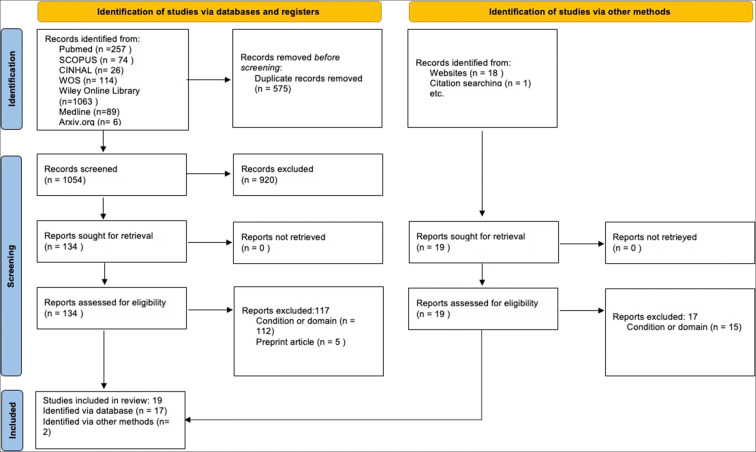
To analyze which ethically relevant biases have been identified by academic literature in artificial intelligence (AI) algorithms developed either for patient risk prediction and triage, or for contact tracing to deal with the COVID-19 pandemic. Additionally, to specifically investigate whether the role of social determinants of health (SDOH) have been considered in these AI developments or not. We conducted a scoping review of the literature, which covered publications from March 2020 to April 2021. Studies mentioning biases on AI algorithms developed for contact tracing and medical triage or risk prediction regarding COVID-19 were included. From 1054 identified articles, 20 studies were finally included. We propose a typology of biases identified in the literature based on bias, limitations and other ethical issues in both areas of analysis. Results on health disparities and SDOH were classified into five categories: racial disparities, biased data, socio-economic disparities, unequal accessibility and workforce, and information communication. SDOH needs to be considered in the clinical context, where they still seem underestimated. Epidemiological conditions depend on geographic location, so the use of local data in studies to develop international solutions may increase some biases. Gender bias was not specifically addressed in the articles included. The main biases are related to data collection and management. Ethical problems related to privacy, consent, and lack of regulation have been identified in contact tracing while some bias-related health inequalities have been highlighted. There is a need for further research focusing on SDOH and these specific AI apps.
Overview
The claims and statistics of this paper haven’t been checked yet.
Free: it reads the open-access text and checks the first 5 claims that cite a source we can check. Create a free account to check every claim.
Integrity signals
Registry
Cites
Statistics
Figures
Verification
Claims the paper makes
The claims and statistics of this paper haven’t been checked yet.
Free: it reads the open-access text and checks the first 5 claims that cite a source we can check. Create a free account to check every claim.
Claims other papers make about this one
Each is checked against this paper’s own text: does it say what the citing paper says it does?
The cited source says what the claim attributes to it.
In the citing paper
“However, recent studies have raised concerns about biases within these algorithms that could lead to health disparities, and potentially harm [14–16].”
From Bias in artificial intelligence algorithms and recommendations for mitigation (2023) · cites this paper as [15]
The cited source says what the claim attributes to it.
In the citing paper
“The studies revealed that when training data are based on local data (in terms of geographical location), when such data is used to develop international solutions, bias in introduced into the system.”
From Artificial intelligence algorithm bias in information retrieval systems and its implication for library and information science professionals: A scoping review (2025) · cites this paper as Delgado et al. (2022)
In the citing paper
“AI models developed for COVID-19 patient risk prediction, triage, and contact tracing have shown feature selection bias through inadequate representation or consideration of social determinants of health (SDOH), such as race, socio-economic status, and access to technology. The underrepresentation of these factors has led to biased outcomes, particularly those most vulnerable or marginalized95.”
From Bias recognition and mitigation strategies in artificial intelligence healthcare applications (2025) · cites this paper as [95]
In the citing paper
“In the study, the main biases are related to data collection and management, and ethical problems related to privacy, consent, and lack of regulation.”
From Artificial intelligence algorithm bias in information retrieval systems and its implication for library and information science professionals: A scoping review (2025) · cites this paper as Delgado et al. (2022)
Self-check
Percentages, sums and reported differences re-computed from the paper’s own numbers.
The self-check needs the paper’s full text.
Citations
Cites
The PRISMA 2020 statement: An updated guideline for reporting systematic reviews
Page, M. J., McKenzie, J. E., Bossuyt, P. M., Boutron, I., Hoffmann, T. C., Mulrow, C. D., Shamseer, L., Tetzlaff, J. M., Akl, E. A., Brennan, S. E., et al. (2021) · BMJ · doi:10.1136/bmj.n71 · Cited by 108,283
Scoping studies: towards a methodological framework
Arksey, H., & O'Malley, L. (2005) · International Journal of Social Research Methodology · doi:10.1080/1364557032000119616 · Cited by 36,742 · cited 1×
“This scoping review followed the recommended five-step framework for scoping reviews (Arksey and O ’ Malley 2005; Munn et al. 2018; Pham et al. 2014; Tricco et al. 2016).”
MethodMunn, Z., Peters, M. D. J., Stern, C., Tufanaru, C., McArthur, A., & Aromataris, E. (2018) · BMC Medical Research Methodology · doi:10.1186/s12874-018-0611-x · Cited by 11,385
Cochrane Database of Systematic Reviews
(2011) · Progress in Neurology and Psychiatry · doi:10.1002/pnp.208 · Cited by 4,667
A scoping review of scoping reviews: advancing the approach and enhancing the consistency
Pham, M. T., Rajić, A., Greig, J. D., Sargeant, J. M., Papadopoulos, A., & McEwen, S. A. (2014) · Research Synthesis Methods · doi:10.1002/jrsm.1123 · Cited by 3,078
Wynants, L., Van Calster, B., Bonten, M. M., Collins, G. S., Debray, T. P., De Vos, M., Haller, M. C., Heinze, G., Moons, K. G., Riley, R. D., et al. (2020) · doi:10.1101/2020.03.24.20041020 · Cited by 3,070 · cited 7×
“2020), and one from The Netherlands (Wynants et al. 2020), Spain (Sáez et al.”
BackgroundInfluentialFeasibility of controlling COVID-19 outbreaks by isolation of cases and contacts
Hellewell, J., Abbott, S., Gimma, A., Bosse, N. I., Jarvis, C. I., Russell, T. W., Munday, J. D., Kucharski, A. J., Edmunds, W. J., Sun, F., et al. (2020) · The Lancet Global Health · doi:10.1016/s2214-109x(20)30074-7 · Cited by 2,550 · cited 1×
“DCT becomes less effective when dealing with asymptomatic individuals, since symptom checkers and apps rely on pulse, temperature, and sleeping patterns (Hellewell et al. 2020, cited in Mbunge 2020).”
BackgroundA scoping review on the conduct and reporting of scoping reviews
Tricco, A. C., Lillie, E., Zarin, W., O’Brien, K., Colquhoun, H., Kastner, M., Levac, D., Ng, C., Sharpe, J. P., Wilson, K., et al. (2016) · BMC Medical Research Methodology · doi:10.1186/s12874-016-0116-4 · Cited by 2,250
Explainability for artificial intelligence in healthcare: a multidisciplinary perspective
the Precise4Q consortium, Amann, J., Blasimme, A., Vayena, E., Frey, D., & Madai, V. I. (2020) · BMC Medical Informatics and Decision Making · doi:10.1186/s12911-020-01332-6 · Cited by 2,203 · cited 1×
“By algorithmic biases in AI, we refer to systematic errors in a computer system, with a consequent deviation from the expected prediction behavior of an AI tool (Amann et al. 2020).”
MethodAmazon Scraps Secret AI Recruiting Tool that Showed Bias against Women *
Dastin, J. (2022) · Ethics of Data and Analytics · doi:10.1201/9781003278290-44 · Cited by 1,165
Research works printed but not linked: 1
- Buolamwini J Gebru T Gender shades: Intersectional accuracy disparities in commercial gender classification Proceedings of Machine Learning Research 2018 81 1 15
Cited by
Bias in artificial intelligence algorithms and recommendations for mitigation
Nazer, L. H., Zatarah, R., Waldrip, S., Ke, J. X. C., Moukheiber, M., Khanna, A. K., Hicklen, R. S., Moukheiber, L., Moukheiber, D., Ma, H., et al. (2023) · PLOS Digital Health · doi:10.1371/journal.pdig.0000278 · Cited by 621
Bias recognition and mitigation strategies in artificial intelligence healthcare applications
Hasanzadeh, F., Josephson, C. B., Waters, G., Adedinsewo, D., Azizi, Z., & White, J. A. (2025) · npj Digital Medicine · doi:10.1038/s41746-025-01503-7 · Cited by 320
“The underrepresentation of these factors has led to biased outcomes, particularly those most vulnerable or marginalized 95 . https://doi.org/10.1038/s41746-025-01503-7 Review article npj Digital Medicine| (2025) 8:154”
InfluentialA Scoping Review of Reporting Gaps in FDA-Approved AI Medical Devices
Muralidharan, V., Adewale, B. A., Huang, C. J., Nta, M. T., Ademiju, P. O., Pathmarajah, P., Hang, M. K., Adesanya, O., Abdullateef, R. O., Babatunde, A. O., et al. (2024) · npj Digital Medicine · doi:10.1038/s41746-024-01270-x · Cited by 201
Schukow, C., Smith, S. C., Landgrebe, E., Parasuraman, S., Folaranmi, O. O., Paner, G. P., & Amin, M. B. (2024) · Advances in Anatomic Pathology · doi:10.1097/pap.0000000000000406 · Cited by 84
“37 Last, but not the least, it is apparent that AI natural language processing – generated medical references must be made transparent and clear to readers whenever they are used.”
BackgroundKhera, R., Asnani, A. H., Krive, J., Addison, D., Zhu, H., Vasbinder, A. L., Fleming, M. R., Arnaout, R., Razavi, P., & Okwuosa, T. M. (2025) · Circulation Genomic and Precision Medicine · doi:10.1161/hcg.0000000000000097 · Cited by 91
“109 These incidents highlight the vulnerable nature of AI systems and the need for oversight.”
The impact of artificial intelligence on research efficiency
Madanchian, M., & Taherdoost, H. (2025) · Results in Engineering · doi:10.1016/j.rineng.2025.104743 · Cited by 107
Artificial intelligence for telemedicine diabetic retinopathy screening: a review
Nakayama, L. F., Ribeiro, L. Z., Novaes, F. D. C., Miyawaki, I. A., Miyawaki, A. E., de Oliveira, J. A. E., de Oliveira, T. V. F., Malerbi, F. K., Regatieri, C. V., Celi, L. A., et al. (2023) · Annals of Medicine · doi:10.1080/07853890.2023.2258149 · Cited by 57
“Biases are a growing concern in the development and deployment of Ai systems, with numerous reports of problematic deployments in sepsis diagnosis, cOviD and patient triage [27,36,37].”
BackgroundEthical, Legal and Social Implications of Emerging Technology (ELSIET) Symposium
Kendal, E. S. (2022) · Journal of Bioethical Inquiry · doi:10.1007/s11673-022-10197-5 · Cited by 53
“The third paper, by Koplin, Skeggs, and Gyngell (2022), similarly falls into one of Palm and Hansson’s (2006) key criteria for eTA, as these authors propose allowing a commercial market for the sale and purchase of human DNA. For Palm and Hansson (2006), such a proposal would require ethical evaluation to prevent the…”
BackgroundHussain, S. A., Bresnahan, M., & Zhuang, J. (2025) · Ethnicity & Health · doi:10.1080/13557858.2024.2422848 · Cited by 44
“While several reviews of health algorithms have been previously conducted, only a few have included in-depth investigations of racial and ethnic bias in health algorithms (Ali et al. 2023; Delgado et al. 2022; Siddique et al. 2024; Tipton et al. 2023).”
Sarantopoulos, A., Mastori Kourmpani, C., Yokarasa, A. L., Makamanzi, C., Antoniou, P., Spernovasilis, N., & Tsioutis, C. (2024) · Tropical Medicine and Infectious Disease · doi:10.3390/tropicalmed9100228 · Cited by 40
“More specifically, concerning the U.S. healthcare system during the COVID-19 pandemic, the same level of risk was assigned to black patients as white patients, even though the black patients were sicker, resulting in insufficient hospitalization and medical care for black patients [52].”
BackgroundBias Mitigation in Primary Health Care Artificial Intelligence Models: Scoping Review
Sasseville, M., Ouellet, S., Rhéaume, C., Sahlia, M., Couture, V., Després, P., Paquette, J.-S., Darmon, D., Bergeron, F., & Gagnon, M.-P. (2025) · Journal of Medical Internet Research · doi:10.2196/60269 · Cited by 38
“Strategies aimed at identifying and mitigating bias, defined as a persistent inclination either in favor or toward something [9], in predictive models are in development and beginning to be empirically applied [10,11].”
Ding, X., Shang, B., Xie, C., Xin, J., & Yu, F. (2025) · Humanities and Social Sciences Communications · doi:10.1057/s41599-025-04564-x · Cited by 55
“Such biases can propagate inequality in patient diagnosis and healthcare resource distribution, sparking debate over their nature and impact (Delgado et al. 2022; El Naqa et al. 2021; Estiri et al. 2022; Röösli et al. 2021; Williams et al. 2020).”
Critical Bias in Critical Care Devices
Charpignon, M.-L., Byers, J., Cabral, S., Celi, L. A., Fernandes, C., Gallifant, J., Lough, M. E., Mlombwa, D., Moukheiber, L., Ong, B. A., et al. (2023) · Critical Care Clinics · doi:10.1016/j.ccc.2023.02.005 · Cited by 35
Odone, A., Barbati, C., Amadasi, S., Schultz, T., & Resnik, D. B. (2025) · The Lancet Infectious Diseases · doi:10.1016/s1473-3099(25)00412-8 · Cited by 56
Moyano-Fernández, C., Rueda, J., Delgado, J., & Ausín, T. (2024) · Global Bioethics · doi:10.1080/11287462.2024.2322208 · Cited by 34
“…expenditures with carbon dioxide emissions (Ahmad et al., 2021), healthcare carbon expenditure does not necessarily translate into better medical quality of life because unaddressed social determinants of health and biases could a ff ect the outcomes (Bilgili et al., 2021; Delgado et al., 2022).”
BackgroundSelf-citationNavigating Bias and Fairness in Digital AI Systems
Tariq, M. U. (2024) · Advances in human and social aspects of technology book series · doi:10.4018/979-8-3693-4147-6.ch006 · Cited by 31
de Manuel, A., Delgado, J., Jounou, I. P., Ausín, T., Casacuberta, D., Cruz-Piqueras, M., Guersenzvaig, A., Moyano-Fernández, C., Rodríguez‐Arias, D., Rueda, J., et al. (2023) · Big Data & Society · doi:10.1177/20539517231179199 · Cited by 34
“More than 70 recommendations and guidelines have been formulated on ethics and AI in recent years (Floridi, 2019), covering issues such as agency, autonomy, morality, rights, trust, transparency, and so on.”
BackgroundSelf-citationA step toward building a unified framework for managing AI bias
Rana, S. A., Azizul, Z. H., & Awan, A. A. (2023) · PeerJ Computer Science · doi:10.7717/peerj-cs.1630 · Cited by 23
Igbinovia, M. O., & Mensah Danquah, M. (2025) · Technical Services Quarterly · doi:10.1080/07317131.2025.2512282 · Cited by 27
“In the context of an AI algorithm developed for COVID-19 patient risk prediction, triage, and contact tracing, Delgado et al. (2022) proposed a typology of biases based on bias, limitations, and other ethical issues in both areas of analysis.”
Boch, A., Ryan, S., Kriebitz, A., Amugongo, L. M., & Lütge, C. (2023) · Robotics · doi:10.3390/robotics12040110 · Cited by 35
“Moreover, when looking at the specific implementation of AI systems in the healthcare sector during the pandemic, screaming examples of the accentuation of discrimination against specific groups have been noted even in geographical target populations [91,92].”
Li, J., & Liu, Q. (2024) · Journal of the Knowledge Economy · doi:10.1007/s13132-024-02152-z · Cited by 33
“Improving model scalability can also involve optimizing architectures and using parallel processing techniques to accommodate larger datasets and more intricate design tasks (Delgado et al., 2022).”
RetractedPalma, G. D., Scendoni, R., Tambone, V., Alloni, R., & Micco, F. D. (2025) · Journal of Healthcare Risk Management · doi:10.1002/jhrm.70000 · Cited by 29
“43 (Figure 2).”
Saber, A. F., Ahmed, S. K., Hussein, S. H., & Qurbani, K. (2024) · Oral Oncology Reports · doi:10.1016/j.oor.2024.100343 · Cited by 29
Artificial intelligence and global health equity
Dychiao, R. G., Nazer, L. H., Mlombwa, D., & Celi, L. A. (2024) · BMJ · doi:10.1136/bmj.q2194 · Cited by 29
Hurley, N. C., Schroeder, K. M., & Hess, A. S. (2023) · Transfusion · doi:10.1111/trf.17526 · Cited by 23
“Training sets biased by unbalanced section criteria or skewed content have led, for example, to many examples of racially biased AI behaviors.(19,20) LLMs have frequently been observed to “hallucinate” information— for example, inserting a value for body mass index into a patient history where no body mass index was p…”
BackgroundCurrent ethical and social issues in epidemiology
Salerno, J., Coughlin, S. S., Goodman, K. W., & Hlaing, W. M. (2023) · Annals of Epidemiology · doi:10.1016/j.annepidem.2023.02.001 · Cited by 23
Ragni, M. V., Young, G. A., Batsuli, G. M., Bisson, E., Carpenter, S. L., Croteau, S. E., Cuker, A. C., Curtis, R., Denne, M., Ewenstein, B. M., et al. (2023) · Expert Review of Hematology · doi:10.1080/17474086.2023.2181781 · Cited by 18
“The integration of artificial intelligence into any health care process must be done with explicit awareness of, and efforts to eliminate, algorithmic bias which may be introduced in the algorithm design, previous data collection, coding, and/or selection [91,92].”
BackgroundArticulating the social responsibilities of translational science
Smith, E. M. R., Molldrem, S., Farroni, J. S., & Tumilty, E. (2024) · Humanities and Social Sciences Communications · doi:10.1057/s41599-023-02597-8 · Cited by 14
A Clinician’s Guide to Understanding Bias in Critical Clinical Prediction Models
de Matos, J. C. R. G., Gallifant, J., Chowdhury, A., Economou-Zavlanos, N., Charpignon, M., Gichoya, J. W., Celi, L. A., Nazer, L. H., King, H., & Wong, A.-K. I. (2024) · Critical Care Clinics · doi:10.1016/j.ccc.2024.05.011 · Cited by 14
Mapping artificial intelligence bias: a network-based framework for analysis and mitigation
AlMakinah, R., Goodarzi, M., Tok, B., & Canbaz, M. A. (2024) · AI and Ethics · doi:10.1007/s43681-024-00609-0 · Cited by 14
“This method is particularly advanta - geous when comprehensive overviews of the topic under investigation are lacking [ 22 ].”
Ghosh, A., Saini, A., & Barad, H. (2025) · World Medical & Health Policy · doi:10.1002/wmh3.70015 · Cited by 12
Patient-centered pharmacovigilance: priority actions from the inherited bleeding disorders community
Robinson, F., Wilkes, S., Schaefer, N., Goldstein, M., Rice, M., Gray, J., Meyers, S., & Valentino, L. A. (2023) · Therapeutic Advances in Drug Safety · doi:10.1177/20420986221146418 · Cited by 10
Artificial intelligence: a challenge to scientific communication
Gauckler, C., & Werner, M. H. (2024) · Klinische Monatsblätter für Augenheilkunde · doi:10.1055/a-2418-5238 · Cited by 6
“Repeating biases may also be highly problematic in health information [51,52].”
Yet another turn? priotising the needs of diplomacy over the capabilities of generative AI
Sevin, E., & Eken, M. E. (2024) · Place Branding and Public Diplomacy · doi:10.1057/s41254-024-00325-w · Cited by 10
“Examples abound regarding how the data sets used to train AI models lead to social discrimination (Johnson and Johnson 2023; Delgado et al. 2022; Najibi 2020).”
Buslón, N., Cirillo, D., Ríos, O., & del Rosario, S. P. (2025) · Journal of Medical Internet Research · doi:10.2196/72325 · Cited by 8
“Among the many aspects of this transformation, artificial intelligence (AI) has played a major role in enhancing medical and health care capabilities [10], although it is not exempt from biases in data collection and management affecting its accuracy, fairness, and generalizability [11].”
Health Equity in Clinical Research Informatics
Maurud, S., Henni, S. H., & Moen, A. (2023) · Yearbook of Medical Informatics · doi:10.1055/s-0043-1768720 · Cited by 9
“Illustrating this concern is the establishment of the High-Level Expert Group on Artificial Intelligence (AI HLEG) by the European Commission [15], to accommodate for the implementation of the Commission’s vision for ethical AI [40].”
BackgroundInfluentialAutomatic detection of problem-gambling signs from online texts using large language models
Smith, E. S., Peters, J., & Reiter, N. (2024) · PLOS Digital Health · doi:10.1371/journal.pdig.0000605 · Cited by 19
“Finally, considering such models for application in practice, it must be kept in mind that such methods bear the risk of algorithmic bias, i.e., systematic errors in machine-based decisions that create unfair outcomes for specific persons or groups [56, 57].”
MethodMuralidharan, V., Adewale, B. A., Huang, C. J., Nta, M. T., Ademiju, P. O., Pathmarajah, P., Hang, M. K., Adesanya, O. A., Abdullateef, R. O., Babatunde, A. O., et al. (2024) · medRxiv · doi:10.1101/2024.05.20.24307582 · Cited by 4
The Impact and Implication of Artificial Intelligence on Thematic Healthcare and Quality of Life
Lainjo, B., & Tmouche, H. (2023) · International Journal of Applied Research on Public Health Management · doi:10.4018/ijarphm.318140 · Cited by 6
“Regarding socioeconomic disparity, Delgado et al. (2022) state that DCT is effective only if the patient has adequate personal wealth and can afford to stay at home for as long as necessary.”
BackgroundMethodEthical Considerations and Bias in AI Applications in Healthcare
Ali, A. (2025) · Information systems engineering and management · doi:10.1007/978-3-031-84404-1_7 · Cited by 6
Faye, S. L., Nkweteyim, D. L., Sow, G. H. C., Diop, B., Diongue, F. B., Cissé, B., Dickson, N. S., Dia, N., Badu, K., Ayana, G., et al. (2025) · AI and Ethics · doi:10.1007/s43681-025-00779-5 · Cited by 10
“However, these models failed to account for the informal transportation networks, communal living patterns, and limited digital access that characterize many African contexts, resulting in misleading predictions and inappropriate policy recommendations [ 29 ].”
Chikotie, T. T., Watson, B. W., & Watson, L. R. (2024) · Communications in computer and information science · doi:10.1007/978-3-031-57639-3_9 · Cited by 3
A Pipeline for Automated Quality Control of Chest Radiographs
Selby, I., González-Solares, E., Breger, A., Roberts, M., Sánchez, L. E., Babar, J. L., Rudd, J. H. F., Walton, N. A., Sala, E., Schönlieb, C., et al. (2025) · Radiology Artificial Intelligence · doi:10.1148/ryai.240003 · Cited by 8
Adoption of Artificial Intelligence in Corporate Finance: Addressing Bias and Ethical Considerations
Kunjumuhammed, S. K. (2024) · Advances in finance, accounting, and economics book series · doi:10.4018/979-8-3693-2185-0.ch001 · Cited by 2
Wang, D., Yang, T., Zhang, C.-T., Zhan, P., Miao, Z.-X., Li, B., & Yang, H. S. (2025) · World Journal of Radiology · doi:10.4329/wjr.v17.i9.110447 · Cited by 3
Ethical Challenges in AI-based Clinical Decision Support System
Tran, T. T. T., & Wang, X. (2025) · ACIS International Conference on Software Engineering, Artificial Intelligence, Networking and Parallel/Distributed Computing (SNPD) · doi:10.1109/snpd65828.2025.11254312 · Cited by 3
“For instance, windows, walls, or doors can affect the range of discover-able devices Bluetooth-based, leading to lower accuracy of COVID-19 applications that use Bluetooth signals to track interactions with diagnosed individuals [4].”
InfluentialNejadshamsi, S., Chu, C. H., McGilton, K. S., Li, X., Ronquillo, C., & Rahimi, S. A. (2025) · JAMIA Open · doi:10.1093/jamiaopen/ooaf171 · Cited by 3
“Delgado et al. 32 reviewed the role of social determinants of health (SDOH) in exacerbating biases during the pandemic, noting that datasets often reflect systemic inequities such as socioeconomic disparities and limited healthcare access.”
AI ethics for the everyday intensivist
Tan, S. C., Modra, L. J., & Hensman, T. (2025) · Critical Care and Resuscitation · doi:10.1016/j.ccrj.2025.100115 · Cited by 5
“12,13 These examples fl ag the importance of ensuring that the AI is trained towards an objective that is ethically appropriate, without entrenching pre-existing inequity in healthcare that was encoded in historical data.”
Occupational Therapy Students’ Perceptions of Using ChatGPT for an Academic Course Assignment
Tom, D., Wu, R., & Shea, C. (2025) · The Open Journal of Occupational Therapy · doi:10.15453/2168-6408.2376 · Cited by 6
How Advancements in AI Can Help Improve Neuro-Ophthalmologic Diagnostic Clarity
Kenney, R., & O’Neill, K. A. (2024) · Journal of Neuro-Ophthalmology · doi:10.1097/wno.0000000000002283 · Cited by 2
Lippolis, E. (2024) · Elsevier eBooks · doi:10.1016/b978-0-443-13681-8.00015-1 · Cited by 2
Nakayama, L. F., de Matos, J. C. R. G., Ainomugisha, B., Baryashaba, A., Gallifant, J., Han, A., Kaggwa, F., Lee, E. R., Mwavu, R., Restrepo, D. S., et al. (2025) · Journal of Translational Critical Care Medicine · doi:10.1097/jtccm-d-25-00017 · Cited by 1
Soujaa, I., & Tao, J. (2026) · Springer eBooks · doi:10.1007/978-3-032-12344-2_8 · Cited by 1
AI in variant analysis: fast track to genetic diagnoses
Wilk, E. J., Taluri, S., Howton, T. C., Crumley, A. B., Mrug, M. M., & Lasseigne, B. N. (2026) · Human Genetics · doi:10.1007/s00439-026-02847-0 · Cited by 2
“Instead, datasets should be reliable and representative of the affected patient population (Tomašev et al. 2020; Nakayama et al. 2022; Daneshjou et al. 2022; Delgado et al. 2022 ; Center for Devices and Radiological Health 2025a; McCoy et al. 2025 ; Annual Report 2023, 2023 ).”
Current Applications of Artificial Intelligence in Neuro-Ophthalmic Imaging: A Narrative Approach
Iorga, R. E., Donica, V. C., Danielescu, C., Bogdănici, C. M., Dănulescu, R. M., & Moraru, A. D. (2026) · Medical Sciences · doi:10.3390/medsci14040422 · Cited by 1
“Other concerns include limited model transparency, difficulties in clinical interpretability, ethical considerations, and the environmental impact associated with large-scale computational processing [33].”
Schneider, D., Brown, E. D. L., Ward, M., Sciubba, D. M., & Lo, S.-F. L. (2025) · AI and Ethics · doi:10.1007/s43681-025-00795-5 · Cited by 2
“While prior research has documented algorithmic bias in various contexts [ 16, 17], our work demonstrates that the problem extends beyond traditional demographic dispari - ties to a more fundamental unpredictability in AI decision-making.”
Peer Review #1 of "A step toward building a unified framework for managing AI bias (v0.1)"
(2023) · PeerJ Computer Science · doi:10.7287/peerj-cs.1630v0.1/reviews/1
Peer Review #2 of "A step toward building a unified framework for managing AI bias (v0.1)"
(2023) · PeerJ Computer Science · doi:10.7287/peerj-cs.1630v0.1/reviews/2
Peer Review #2 of "A step toward building a unified framework for managing AI bias (v0.2)"
(2023) · PeerJ Computer Science · doi:10.7287/peerj-cs.1630v0.2/reviews/2
Peer Review #2 of "A step toward building a unified framework for managing AI bias (v0.3)"
(2023) · PeerJ Computer Science · doi:10.7287/peerj-cs.1630v0.3/reviews/2
Amao, D. K., Ogunkunle, O. O., Agu, J. N., Omoniyi, A. D., & Sakpere, W. (2025) · African Journal of Law Political Research and Administration · doi:10.52589/ajlpra-ee96ajbg · Cited by 1
Talha, M., Khan, A. K., Faisal, S. M., & Islam, M. (2025) · Lecture notes in networks and systems · doi:10.1007/978-3-032-00441-3_1
Ethics and Law: How Artificial Intelligence May Shape Cancer Research During Pregnancy
Linkeviciute, A., Pakutinskas, P., & Peccatori, F. A. (2025) · AI in Precision Oncology · doi:10.1177/2993091x251369836
“22 Sometimes, AI biases arise from biased, incomplete, or unrepresentative training data; in other cases, algorithms re fl ect biased developers who do not usually have medical training.”
Teenagers at Risk: the Consequences of AI Bias and Information Quality on Decision-Making
Putri, N. S. H., Cayady, G., Handono, A. N. Y. H., & Lingkan, A. B. (2025) · International Conference on Information Technology, Information Systems and Electrical Engineering (ICITISEE) · doi:10.1109/icitisee68184.2025.11355146 · Cited by 1
“In addition, Previous studies conducted by Delgado et al. (2022) performed a scoping review to examine ethical bias found in AI algorithms used for predicting COVID-19 patient risk, triage, and contact tracing.”
Ethical Data Mining in Healthcare: Toward a Professionally Grounded Framework
Rahman, H. (2026) · AJIT-e Academic Journal of Information Technology · doi:10.5824/ajite.2026.01.005.x
A systematic review and thematic analysis of gender bias in AIPreprint
Liu, J. (2026) · Research Square · doi:10.21203/rs.3.rs-9240627/v1
Role of AI and Machine Learning in Designing Next-Generation Therapeutics
Kaushik, A., Verma, G., Bharadava, K., Kumar, S., & Kaushal, R. S. (2026) · Springer eBooks · doi:10.1007/978-981-92-0477-9_17
Al-Farsi, M., Al-Harthy, S., & Al-Rawahi, N. (2025) · Journal of Health Informatics and Digital Systems · doi:10.68159/l292264899
GÖDE, A. (2026) · Advances in computational intelligence and robotics book series · doi:10.4018/979-8-2600-4599-2.ch008
Metadata
- Authors
- Delgado, J., de Manuel, A., Parra, I., Moyano, C., Rueda, J., Guersenzvaig, A., Ausin, T., Cruz, M., Casacuberta, D., & Puyol, A.
- Affiliations
- Universidad de Granada (ES)
- Elisava Barcelona School of Design and Engineering (ES)
- Universitat Autònoma de Barcelona (ES)
- Corresponding author
- Casacuberta, David
- Venue
- Journal of Bioethical Inquiry
- Published
- 2022-07-20
- Volume
- 19
- Issue
- 3
- Pages
- 407-419
- ISSN
- 1176-7529 (ISSN-L)
- 1872-4353
- PMC
- PMC9463236
- OpenAlex
- W4286210149
- Cited by
- 70
- References
- 50
- Citations by year
- 2026: 7 · 2025: 25 · 2024: 20 · 2023: 17 · 2022: 1
- FWCI
- 2.99
- Type
- journal article
- Language
- en
- Open access
- hybrid
- doi.org
- Licence
- cc-by
- creativecommons.org/licenses/by/4.0 (tdm)
- creativecommons.org/licenses/by/4.0 (vor)
- Locations
- Journal of Bioethical Inquiry (publishedVersion, cc-by)
- Research Square (acceptedVersion, cc-by)
- PubMed Central (publishedVersion, cc-by)
- PubMed (publishedVersion)
- Dipòsit Digital de Documents de la UAB (Universitat Autònoma de Barcelona) (submittedVersion, cc-by)
- RISalud Institutional Health Repository of Andalucía (submittedVersion, cc-by)
- Institutional Repository of the University of Granada (University of Granada) (submittedVersion, cc-by)
- Institutional Repository of the University of Granada (University of Granada) (submittedVersion, cc-by-nc-nd)
- DIGITAL.CSIC (Spanish National Research Council (CSIC)) (submittedVersion, cc-by)
- RIUVic (UVic-UCC) (submittedVersion, other-oa)
- Funders
- Fundación BBVA
- Topics
- Physical Sciences › Computer Science › Artificial Intelligence › Ethics and Social Impacts of AI
- Health Sciences › Medicine › Health Informatics › Artificial Intelligence in Healthcare and Education
- Physical Sciences › Computer Science › Information Systems › COVID-19 Digital Contact Tracing
- Keywords
- algorithmic bias, AI ethics, COVID-19 pandemic, contact tracing, triage, risk prediction, social determinants of health, health disparities, racial disparities, socioeconomic disparities, data bias, privacy, consent, AI regulation
- MeSH terms
- COVID-19, Artificial Intelligence, Humans, Bias, Contact Tracing, Pandemics
About these checks
Registry, retraction, Cites and statistics results are computed, not judged, with one exception: a printed reference that no index lists is read once by a model before it counts as a citation error. Claims are extracted by a model and kept only when their quote appears verbatim in the text; each cited source is then checked, with a model’s help, for whether it says what the claim relies on. Those verdicts can be wrong — read the claim’s quote and the cited source before relying on one.
Statistics and arithmetic are recomputed, not judged.
Confidence bands are shown only for fields calibrated on our annotated test set. None is calibrated yet, so no band is shown.
What counts as a claim ›How we measure confidence ›How we check this ›
Are you an author, or do you see a problem with this page? Request a review
Data sources
Bibliographic data: Semantic Scholar, OpenAlex, Crossref.
Contains information from the Semantic Scholar Academic Graph Datasets, made available under the ODC Attribution License (ODC-BY 1.0).
Semantic Scholar’s data is described in: Kinney, R., et al. (2023). The Semantic Scholar Open Data Platform. arXiv:2301.10140.
