

Bias in algorithms of AI systems developed for COVID-19: A scoping review
Open accessThe DOI matches its Crossref record; 50 of the 50 references it cites were found in a registry or an index.
Abstract
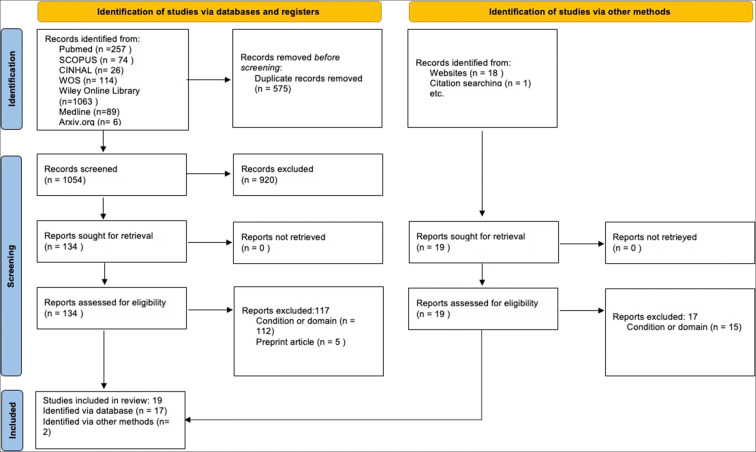
To analyze which ethically relevant biases have been identified by academic literature in artificial intelligence (AI) algorithms developed either for patient risk prediction and triage, or for contact tracing to deal with the COVID-19 pandemic. Additionally, to specifically investigate whether the role of social determinants of health (SDOH) have been considered in these AI developments or not. We conducted a scoping review of the literature, which covered publications from March 2020 to April 2021. Studies mentioning biases on AI algorithms developed for contact tracing and medical triage or risk prediction regarding COVID-19 were included. From 1054 identified articles, 20 studies were finally included. We propose a typology of biases identified in the literature based on bias, limitations and other ethical issues in both areas of analysis. Results on health disparities and SDOH were classified into five categories: racial disparities, biased data, socio-economic disparities, unequal accessibility and workforce, and information communication. SDOH needs to be considered in the clinical context, where they still seem underestimated. Epidemiological conditions depend on geographic location, so the use of local data in studies to develop international solutions may increase some biases. Gender bias was not specifically addressed in the articles included. The main biases are related to data collection and management. Ethical problems related to privacy, consent, and lack of regulation have been identified in contact tracing while some bias-related health inequalities have been highlighted. There is a need for further research focusing on SDOH and these specific AI apps.
Overview
The claims and statistics of this paper haven’t been checked yet.
Free: it reads the open-access text and checks the first 5 claims that cite a source we can check. Create a free account to check every claim.
Integrity signals
Registry
Cites
Statistics
Figures
Verification
Claims the paper makes
The claims and statistics of this paper haven’t been checked yet.
Free: it reads the open-access text and checks the first 5 claims that cite a source we can check. Create a free account to check every claim.
Claims other papers make about this one
Each is checked against this paper’s own text: does it say what the citing paper says it does?
The cited source says what the claim attributes to it.
In the citing paper
“However, recent studies have raised concerns about biases within these algorithms that could lead to health disparities, and potentially harm [14–16].”
From Bias in artificial intelligence algorithms and recommendations for mitigation (2023) · cites this paper as [15]
The cited source says what the claim attributes to it.
In the citing paper
“The studies revealed that when training data are based on local data (in terms of geographical location), when such data is used to develop international solutions, bias in introduced into the system.”
From Artificial intelligence algorithm bias in information retrieval systems and its implication for library and information science professionals: A scoping review (2025) · cites this paper as Delgado et al. (2022)
In the citing paper
“AI models developed for COVID-19 patient risk prediction, triage, and contact tracing have shown feature selection bias through inadequate representation or consideration of social determinants of health (SDOH), such as race, socio-economic status, and access to technology. The underrepresentation of these factors has led to biased outcomes, particularly those most vulnerable or marginalized95.”
From Bias recognition and mitigation strategies in artificial intelligence healthcare applications (2025) · cites this paper as [95]
In the citing paper
“In the study, the main biases are related to data collection and management, and ethical problems related to privacy, consent, and lack of regulation.”
From Artificial intelligence algorithm bias in information retrieval systems and its implication for library and information science professionals: A scoping review (2025) · cites this paper as Delgado et al. (2022)
Self-check
Percentages, sums and reported differences re-computed from the paper’s own numbers.
The self-check needs the paper’s full text.
Citations
Cites
The PRISMA 2020 statement: An updated guideline for reporting systematic reviews
Page, M. J., McKenzie, J. E., Bossuyt, P. M., Boutron, I., Hoffmann, T. C., Mulrow, C. D., Shamseer, L., Tetzlaff, J. M., Akl, E. A., Brennan, S. E., et al. (2021) · BMJ · doi:10.1136/bmj.n71 · Cited by 108,283
Scoping studies: towards a methodological framework
Arksey, H., & O'Malley, L. (2005) · International Journal of Social Research Methodology · doi:10.1080/1364557032000119616 · Cited by 36,742 · cited 1×
“This scoping review followed the recommended five-step framework for scoping reviews (Arksey and O ’ Malley 2005; Munn et al. 2018; Pham et al. 2014; Tricco et al. 2016).”
MethodMunn, Z., Peters, M. D. J., Stern, C., Tufanaru, C., McArthur, A., & Aromataris, E. (2018) · BMC Medical Research Methodology · doi:10.1186/s12874-018-0611-x · Cited by 11,385
Cochrane Database of Systematic Reviews
(2011) · Progress in Neurology and Psychiatry · doi:10.1002/pnp.208 · Cited by 4,667
A scoping review of scoping reviews: advancing the approach and enhancing the consistency
Pham, M. T., Rajić, A., Greig, J. D., Sargeant, J. M., Papadopoulos, A., & McEwen, S. A. (2014) · Research Synthesis Methods · doi:10.1002/jrsm.1123 · Cited by 3,078
Wynants, L., Van Calster, B., Bonten, M. M., Collins, G. S., Debray, T. P., De Vos, M., Haller, M. C., Heinze, G., Moons, K. G., Riley, R. D., et al. (2020) · doi:10.1101/2020.03.24.20041020 · Cited by 3,070 · cited 7×
“2020), and one from The Netherlands (Wynants et al. 2020), Spain (Sáez et al.”
BackgroundInfluentialFeasibility of controlling COVID-19 outbreaks by isolation of cases and contacts
Hellewell, J., Abbott, S., Gimma, A., Bosse, N. I., Jarvis, C. I., Russell, T. W., Munday, J. D., Kucharski, A. J., Edmunds, W. J., Sun, F., et al. (2020) · The Lancet Global Health · doi:10.1016/s2214-109x(20)30074-7 · Cited by 2,550 · cited 1×
“DCT becomes less effective when dealing with asymptomatic individuals, since symptom checkers and apps rely on pulse, temperature, and sleeping patterns (Hellewell et al. 2020, cited in Mbunge 2020).”
BackgroundA scoping review on the conduct and reporting of scoping reviews
Tricco, A. C., Lillie, E., Zarin, W., O’Brien, K., Colquhoun, H., Kastner, M., Levac, D., Ng, C., Sharpe, J. P., Wilson, K., et al. (2016) · BMC Medical Research Methodology · doi:10.1186/s12874-016-0116-4 · Cited by 2,250
Explainability for artificial intelligence in healthcare: a multidisciplinary perspective
the Precise4Q consortium, Amann, J., Blasimme, A., Vayena, E., Frey, D., & Madai, V. I. (2020) · BMC Medical Informatics and Decision Making · doi:10.1186/s12911-020-01332-6 · Cited by 2,203 · cited 1×
“By algorithmic biases in AI, we refer to systematic errors in a computer system, with a consequent deviation from the expected prediction behavior of an AI tool (Amann et al. 2020).”
MethodAmazon Scraps Secret AI Recruiting Tool that Showed Bias against Women *
Dastin, J. (2022) · Ethics of Data and Analytics · doi:10.1201/9781003278290-44 · Cited by 1,165
Nagendran, M., Chen, Y., Lovejoy, C. A., Gordon, A. C., Komorowski, M., Harvey, H., Topol, E. J., Ioannidis, J. P. A., Collins, G. S., & Maruthappu, M. (2020) · BMJ · doi:10.1136/bmj.m689 · Cited by 1,152 · cited 1×
“…diversity of data sets from different populations and geographical regions and demonstrating the reproducibility of AI-based algorithms in different settings would be required if the usage of AI tools is going to be generalized (Chen and See 2020; Nagendran et al. 2020; Zou and Schiebinger 2021).”
BackgroundThe International encyclopedia of ethics
(2013) · Choice Reviews Online · doi:10.5860/choice.51-0021 · Cited by 617
Artificial Intelligence and COVID-19: Deep Learning Approaches for Diagnosis and Treatment
Jamshidi, M., Lalbakhsh, A., Talla, J., Peroutka, Z., Hadjilooei, F., Lalbakhsh, P., Jamshidi, M., Spada, L. L., Mirmozafari, M., Dehghani, M., et al. (2020) · IEEE Access · doi:10.1109/access.2020.3001973 · Cited by 551 · cited 1×
“There is an increasing multiplicity of artificial intelligence (AI) systems and algorithms focused on COVID-19 early detection in risk patients and their prognosis (Jamshidi et al. 2020).”
BackgroundBaeza-Yates, R. (2018) · Communications of the ACM · doi:10.1145/3209581 · Cited by 432 · cited 2×
“Many papers have already stressed the matter of bias in artificial intelligence in different areas, such as the content and use of websites (Baeza-Yates, 2018), the process of recruitment (Dastin 2018), the racial bias in assessment in criminal sentences (Angwin et al. 2016), or the racial bias in…”
BackgroundThe use of mobile phone data to inform analysis of COVID-19 pandemic epidemiology
Grantz, K. H., Meredith, H. R., Cummings, D. A. T., Metcalf, C. J. E., Grenfell, B. T., Giles, J. R., Mehta, S., Solomon, S., Labrique, A., Kishore, N., et al. (2020) · Nature Communications · doi:10.1038/s41467-020-18190-5 · Cited by 413 · cited 8×
“dren, elderly, or individuals with fewer resources are excluded from the stored information (Grantz et al. 2020).”
BackgroundInfluentialThe ethics of algorithms: key problems and solutions
Tsamados, A., Aggarwal, N., Cowls, J., Morley, J., Roberts, H., Taddeo, M., & Floridi, L. (2022) · AI & SOCIETY · doi:10.1007/s00146-021-01154-8 · Cited by 384
Park, S., Choi, G. J., & Ko, H. (2020) · JAMA · doi:10.1001/jama.2020.6602 · Cited by 374
Intersectionality and why it matters to global health
Kapilashrami, A., & Hankivsky, O. (2018) · The Lancet · doi:10.1016/s0140-6736(18)31431-4 · Cited by 367 · cited 1×
“…approach is useful to understand how gender intersects with other social identities (e.g., race, ethnicity, socioeconomic status, sexuality, or disability), increasing marginalization, social disadvantage, and bad healthcare outcomes (Kapilashrami and Hankivsky 2018; Figueroa et al. 2021).”
BackgroundAngwin, J., Larson, J., Mattu, S., & Kirchner, L. (2022) · Ethics of Data and Analytics · doi:10.1201/9781003278290-37 · Cited by 349
(2020) · Conducting Health Research: Principles, Process, and Methods · doi:10.4135/9781071909621.n12 · Cited by 310
Tayob, N., Richardson, P., White, D. L., Yu, X., Davila, J. A., Kanwal, F., Feng, Z., & El-Serag, H. B. (2018) · BMC Medical Research Methodology · doi:10.1186/s12874-017-0458-6 · Cited by 217
Why Systematic Review rather than Narrative Review?
Pae, C.-U. (2015) · Psychiatry Investigation · doi:10.4306/pi.2015.12.3.417 · Cited by 215 · cited 1×
“Narrative reviews can be associated with selection bias (Pae 2015).”
BackgroundDigital contact tracing technologies in epidemics: a rapid review
Anglemyer, A., Moore, T. H., Parker, L., Chambers, T., Grady, A., Chiu, K., Parry, M., Wilczynska, M., Flemyng, E., & Bero, L. (2020) · Cochrane Database of Systematic Reviews · doi:10.1002/14651858.cd013699 · Cited by 202 · cited 5×
“Data-related problems: Most applications have not reached operational maturity (Scott and Coiera 2020), and their effectiveness has not been proved (Anglemyer et al. 2020).”
BackgroundInfluentialMbunge, E. (2020) · Diabetes & Metabolic Syndrome: Clinical Research & Reviews · doi:10.1016/j.dsx.2020.08.029 · Cited by 198 · cited 17×
“…Fahmi, and Abramson 2020), Italy (Casiraghi et al. 2020; Ravizza et al. 2021), India (Malik et al. 2021; Mali and Pratap 2020) and Swaziland (Mbunge 2020; Mbunge et al. 2020), and one from The Netherlands (Wynants et al. 2020), Spain (Sáez et al. 2021), Germany (Klingwort and Schnell 2020),…”
BackgroundMethodInfluentialA critical review of emerging technologies for tackling COVID ‐19 pandemic
Mbunge, E., Akinnuwesi, B., Fashoto, S. G., Metfula, A. S., & Mashwama, P. (2021) · Human Behavior and Emerging Technologies · doi:10.1002/hbe2.237 · Cited by 184 · cited 12×
“Brazil, for example, has increased its technological surveillance in order to minimize the COVID-19 transmission chain (Mbunge et al. 2020).”
BackgroundInfluentialArtificial Intelligence for COVID-19: Rapid Review
(2020) · doi:10.2196/21476 · Cited by 160 · cited 1×
“…diversity of data sets from different populations and geographical regions and demonstrating the reproducibility of AI-based algorithms in different settings would be required if the usage of AI tools is going to be generalized (Chen and See 2020; Nagendran et al. 2020; Zou and Schiebinger 2021).”
BackgroundThe need for feminist intersectionality in digital health
Figueroa, C. A., Luo, T., Aguilera, A., & Lyles, C. R. (2021) · The Lancet Digital Health · doi:10.1016/s2589-7500(21)00118-7 · Cited by 156 · cited 2×
“…approach is useful to understand how gender intersects with other social identities (e.g., race, ethnicity, socioeconomic status, sexuality, or disability), increasing marginalization, social disadvantage, and bad healthcare outcomes (Kapilashrami and Hankivsky 2018; Figueroa et al. 2021).”
BackgroundThe need for privacy with public digital contact tracing during the COVID-19 pandemic
Bengio, Y., Janda, R., Yu, Y. W., Ippolito, D., Jarvie, M., Pilat, D., Struck, B., Krastev, S., & Sharma, A. (2020) · The Lancet Digital Health · doi:10.1016/s2589-7500(20)30133-3 · Cited by 146 · cited 2×
“Never-theless, DCT systems may perpetuate some biases that influence the results obtained, while raising security and privacy concerns (Bengio et al. 2020; Sun et al. 2021).”
BackgroundEnsuring that biomedical AI benefits diverse populations
Zou, J., & Schiebinger, L. (2021) · EBioMedicine · doi:10.1016/j.ebiom.2021.103358 · Cited by 124 · cited 1×
“…diversity of data sets from different populations and geographical regions and demonstrating the reproducibility of AI-based algorithms in different settings would be required if the usage of AI tools is going to be generalized (Chen and See 2020; Nagendran et al. 2020; Zou and Schiebinger 2021).”
BackgroundHow artificial intelligence may help the Covid‐19 pandemic: Pitfalls and lessons for the future
Malik, Y. S., Sircar, S., Bhat, S., Ansari, M. I., Pande, T., Kumar, P., Mathapati, B., Balasubramanian, G., Kaushik, R., Natesan, S., et al. (2021) · Reviews in Medical Virology · doi:10.1002/rmv.2205 · Cited by 119
Time to evaluate COVID-19 contact-tracing apps
Colizza, V., Grill, E., Mikolajczyk, R., Cattuto, C., Kucharski, A. J., Riley, S., Kendall, M., Lythgoe, K., Bonsall, D., Wymant, C., et al. (2021) · Nature Medicine · doi:10.1038/s41591-021-01236-6 · Cited by 93 · cited 1×
“Digital contact tracing (DCT) via smartphone apps was established as a new public-health intervention in many countries in 2020 to reduce the levels of COVID-19 transmission (Colizza et al. 2021).”
Casiraghi, E., Malchiodi, D., Trucco, G., Frasca, M., Cappelletti, L., Fontana, T., Esposito, A. A., Avola, E., Jachetti, A., Reese, J., et al. (2020) · IEEE Access · doi:10.1109/access.2020.3034032 · Cited by 92 · cited 5×
“…and Ko 2020; Roche 2020; Röösli, Rice, and Hernandez-Boussard 2021; Scott and Coiera 2020; Shachar, Gerke, and Adashi 2020), five original articles (Casiraghi et al. 2020; Hisada et al. 2020; Marabelli, Vaast, and Li 2021; Moss and Metcalf 2020 ; Ravizza et al. 2021), two case studies (Gulliver,…”
BackgroundInfluentialSáez, C., Romero, N., Conejero, J. A., & García-Gómez, J. M. (2021) · Journal of the American Medical Informatics Association · doi:10.1093/jamia/ocaa258 · Cited by 77 · cited 4×
“For countries, we found five articles from the United States (Grantz et al. 2020; Marabelli, Vaast, and Li 2021; Moss and Metcalf 2020; Röösli, Rice, and Hernandez-Boussard 2021; Shachar, Gerke, and Adashi 2020 ), one from the United States and South-Korea (Park, Choi, and Ko 2020), two from Australia (Scott and Coier…”
BackgroundInfluentialBias at warp speed: how AI may contribute to the disparities gap in the time of COVID-19
Röösli, E., Rice, B., & Hernandez-Boussard, T. (2021) · Journal of the American Medical Informatics Association · doi:10.1093/jamia/ocaa210 · Cited by 76
Preventing the digital scars of COVID-19
Marabelli, M., Vaast, E., & Li, J. L. (2021) · European Journal of Information Systems · doi:10.1080/0960085x.2020.1863752 · Cited by 63 · cited 5×
“For countries, we found five articles from the United States (Grantz et al. 2020; Marabelli, Vaast, and Li 2021; Moss and Metcalf 2020; Röösli, Rice, and Hernandez-Boussard 2021; Shachar, Gerke, and Adashi 2020 ), one from the United States and South-Korea (Park, Choi, and Ko 2020), two from…”
BackgroundInfluentialAn Empirical Assessment of Global COVID-19 Contact Tracing Applications
Sun, R., Wang, W., Xue, M., Tyson, G., Camtepe, S. A., & Ranasinghe, D. C. (2021) · ACM/IEEE International Conference on Software Engineering: Companion Proceedings (ICSE-Companion) · doi:10.1109/icse43902.2021.00101 · Cited by 61 · cited 2×
“Never-theless, DCT systems may perpetuate some biases that influence the results obtained, while raising security and privacy concerns (Bengio et al. 2020; Sun et al. 2021).”
BackgroundGuo, Y., Zhang, Y., Lyu, T., Prosperi, M., Wang, F., Xu, H., & Bian, J. (2021) · Journal of the American Medical Informatics Association · doi:10.1093/jamia/ocab098 · Cited by 45 · cited 2×
“While other reviews analyse the application of AI designed for COVID-19 (Guo et al. 2021), our intention is to focus this one in two specific topics: biases exclusively in AI systems developed for 1) DCT and 2) medical triage regarding COVID-19, as they have been two of the most widely developed automatized systems du…”
MethodBayesian Modeling of Intersectional Fairness: The Variance of Bias
Foulds, J. R., Islam, R., Keya, K. N., & Pan, S. (2020) · Proceedings of the 2020 SIAM International Conference on Data Mining · doi:10.1137/1.9781611976236.48 · Cited by 39
AI Surveillance during Pandemics: Ethical Implementation Imperatives
Shachar, C., Gerke, S., & Adashi, E. Y. (2020) · Hastings Center Report · doi:10.1002/hast.1125 · Cited by 39 · cited 4×
“…from the United States (Grantz et al. 2020; Marabelli, Vaast, and Li 2021; Moss and Metcalf 2020; Röösli, Rice, and Hernandez-Boussard 2021; Shachar, Gerke, and Adashi 2020 ), one from the United States and South-Korea (Park, Choi, and Ko 2020), two from Australia (Scott and Coiera 2020;…”
BackgroundInfluentialHigh Tech, High Risk: Tech Ethics Lessons for the COVID-19 Pandemic Response
Moss, E., & Metcalf, J. (2020) · Patterns · doi:10.1016/j.patter.2020.100102 · Cited by 38 · cited 8×
“Many of the predictive surveillance algorithms used in DCT control focus attention on populations where bias is very present, especially in highly racialized or lower-income populations (Moss and Metcalf 2020).”
BackgroundInfluentialHisada, S., Murayama, T., Tsubouchi, K., Fujita, S., Yada, S., Wakamiya, S., & Aramaki, E. (2020) · Scientific Reports · doi:10.1038/s41598-020-75771-6 · Cited by 29 · cited 6×
“2021; Marabelli, Vaast, and Li 2021; Mbunge 2020; Park, Choi, and Ko 2020; Roche 2020; Röösli, Rice, and Hernandez-Boussard 2021; Scott and Coiera 2020; Shachar, Gerke, and Adashi 2020), five original articles (Casiraghi et al. 2020; Hisada et al. 2020; Marabelli, Vaast, and Li 2021; Moss and Metcalf 2020 ; Ravizza et…”
BackgroundInfluentialCan AI help in the fight against COVID ‐19?
Scott, I. A., & Coiera, E. W. (2020) · The Medical Journal of Australia · doi:10.5694/mja2.50821 · Cited by 22
Critical Limitations of Digital Epidemiology
Klingwort, J., & Schnell, R. (2020) · Survey research methods · doi:10.18148/srm/2020.v14i2.7726 · Cited by 22
Hendl, T., & Roxanne, T. (2022) · Bioethics · doi:10.1111/bioe.13013 · Cited by 19 · cited 1×
“As some authors have pointed out, the shared use of public databases might facilitate future international analysis aimed at noticing the interspatial diversity and multiple SDOH factors affecting under-represented groups (Hendl and Roxanne 2022).”
BackgroundRoche, S. (2020) · Journal of Location Based Services · doi:10.1080/17489725.2020.1811409 · Cited by 17 · cited 16×
“The risks of seeing such an established form of socio-spatial “ triage ” and patients and certain categories of the ostracized population are huge (Roche 2020).”
BackgroundMethodInfluentialMali, S. N., & Pratap, A. P. (2020) · Infectious Disorders - Drug Targets · doi:10.2174/1871526520666200622144857 · Cited by 13 · cited 2×
“…Australia (Scott and Coiera 2020; Gulliver, Fahmi, and Abramson 2020), Italy (Casiraghi et al. 2020; Ravizza et al. 2021), India (Malik et al. 2021; Mali and Pratap 2020) and Swaziland (Mbunge 2020; Mbunge et al. 2020), and one from The Netherlands (Wynants et al. 2020), Spain (Sáez et al. 2021),…”
BackgroundTechnical considerations when implementing digital infrastructure for social policy
Gulliver, R., Fahmi, M., & Abramson, D. (2020) · Australian Journal of Social Issues · doi:10.1002/ajs4.135 · Cited by 12 · cited 2×
“…Shachar, Gerke, and Adashi 2020 ), one from the United States and South-Korea (Park, Choi, and Ko 2020), two from Australia (Scott and Coiera 2020; Gulliver, Fahmi, and Abramson 2020), Italy (Casiraghi et al. 2020; Ravizza et al. 2021), India (Malik et al. 2021; Mali and Pratap 2020) and…”
BackgroundA Proposal For COVID-19 Applications Enabling Extensive Epidemiological Studies
Ravizza, A., Sternini, F., Molinari, F., Santoro, E., & Cabitza, F. (2021) · Procedia Computer Science · doi:10.1016/j.procs.2021.01.206 · Cited by 5 · cited 4×
“…Gerke, and Adashi 2020), five original articles (Casiraghi et al. 2020; Hisada et al. 2020; Marabelli, Vaast, and Li 2021; Moss and Metcalf 2020 ; Ravizza et al. 2021), two case studies (Gulliver, Fahmi, and Abramson 2020; Sáez et al. 2021), two systematic reviews (Mbunge et al. 2020; Wynants et…”
BackgroundInfluentialAusín, T., & Martínez, M. A. (2020) · Enrahonar An international journal of theoretical and practical reason · doi:10.5565/rev/enrahonar.1304 · Cited by 4 · cited 2×
“But such a proposal should dialogue with crucial aspects for bioethics, like privacy, volun-tariness, and informed consent (Ausín and Andreu Martínez 2020).”
BackgroundResultMulti-fairness under class-imbalancePreprint
Roy, A. G., Iosifidis, V., & Ntoutsi, E. (2021) · arXiv (Cornell University) · doi:10.48550/arxiv.2104.13312 · cited 1×
“” Although there are some papers and proposals on the theme in a general level (Foulds et al. 2020; Roy, Iosifidis, and Ntoutsi 2021), further research is required to develop an intersectional perspective in AI systems — regarding the conceptualization and the computational design — both in a…”
Background
Research works printed but not linked: 1
- Buolamwini J Gebru T Gender shades: Intersectional accuracy disparities in commercial gender classification Proceedings of Machine Learning Research 2018 81 1 15
Cited by
Bias in artificial intelligence algorithms and recommendations for mitigation
Nazer, L. H., Zatarah, R., Waldrip, S., Ke, J. X. C., Moukheiber, M., Khanna, A. K., Hicklen, R. S., Moukheiber, L., Moukheiber, D., Ma, H., et al. (2023) · PLOS Digital Health · doi:10.1371/journal.pdig.0000278 · Cited by 621
Bias recognition and mitigation strategies in artificial intelligence healthcare applications
Hasanzadeh, F., Josephson, C. B., Waters, G., Adedinsewo, D., Azizi, Z., & White, J. A. (2025) · npj Digital Medicine · doi:10.1038/s41746-025-01503-7 · Cited by 320
“The underrepresentation of these factors has led to biased outcomes, particularly those most vulnerable or marginalized 95 . https://doi.org/10.1038/s41746-025-01503-7 Review article npj Digital Medicine| (2025) 8:154”
InfluentialA Scoping Review of Reporting Gaps in FDA-Approved AI Medical Devices
Muralidharan, V., Adewale, B. A., Huang, C. J., Nta, M. T., Ademiju, P. O., Pathmarajah, P., Hang, M. K., Adesanya, O., Abdullateef, R. O., Babatunde, A. O., et al. (2024) · npj Digital Medicine · doi:10.1038/s41746-024-01270-x · Cited by 201
Schukow, C., Smith, S. C., Landgrebe, E., Parasuraman, S., Folaranmi, O. O., Paner, G. P., & Amin, M. B. (2024) · Advances in Anatomic Pathology · doi:10.1097/pap.0000000000000406 · Cited by 84
“37 Last, but not the least, it is apparent that AI natural language processing – generated medical references must be made transparent and clear to readers whenever they are used.”
BackgroundKhera, R., Asnani, A. H., Krive, J., Addison, D., Zhu, H., Vasbinder, A. L., Fleming, M. R., Arnaout, R., Razavi, P., & Okwuosa, T. M. (2025) · Circulation Genomic and Precision Medicine · doi:10.1161/hcg.0000000000000097 · Cited by 91
“109 These incidents highlight the vulnerable nature of AI systems and the need for oversight.”
Metadata
- Authors
- Delgado, J., de Manuel, A., Parra, I., Moyano, C., Rueda, J., Guersenzvaig, A., Ausin, T., Cruz, M., Casacuberta, D., & Puyol, A.
- Affiliations
- Universidad de Granada (ES)
- Elisava Barcelona School of Design and Engineering (ES)
- Universitat Autònoma de Barcelona (ES)
- Corresponding author
- Casacuberta, David
- Venue
- Journal of Bioethical Inquiry
- Published
- 2022-07-20
- Volume
- 19
- Issue
- 3
- Pages
- 407-419
- ISSN
- 1176-7529 (ISSN-L)
- 1872-4353
- PMC
- PMC9463236
- OpenAlex
- W4286210149
- Cited by
- 70
- References
- 50
- Citations by year
- 2026: 7 · 2025: 25 · 2024: 20 · 2023: 17 · 2022: 1
- FWCI
- 2.99
- Type
- journal article
- Language
- en
- Open access
- hybrid
- doi.org
- Licence
- cc-by
- creativecommons.org/licenses/by/4.0 (tdm)
- creativecommons.org/licenses/by/4.0 (vor)
- Locations
- Journal of Bioethical Inquiry (publishedVersion, cc-by)
- Research Square (acceptedVersion, cc-by)
- PubMed Central (publishedVersion, cc-by)
- PubMed (publishedVersion)
- Dipòsit Digital de Documents de la UAB (Universitat Autònoma de Barcelona) (submittedVersion, cc-by)
- RISalud Institutional Health Repository of Andalucía (submittedVersion, cc-by)
- Institutional Repository of the University of Granada (University of Granada) (submittedVersion, cc-by)
- Institutional Repository of the University of Granada (University of Granada) (submittedVersion, cc-by-nc-nd)
- DIGITAL.CSIC (Spanish National Research Council (CSIC)) (submittedVersion, cc-by)
- RIUVic (UVic-UCC) (submittedVersion, other-oa)
- Funders
- Fundación BBVA
- Topics
- Physical Sciences › Computer Science › Artificial Intelligence › Ethics and Social Impacts of AI
- Health Sciences › Medicine › Health Informatics › Artificial Intelligence in Healthcare and Education
- Physical Sciences › Computer Science › Information Systems › COVID-19 Digital Contact Tracing
- Keywords
- algorithmic bias, AI ethics, COVID-19 pandemic, contact tracing, triage, risk prediction, social determinants of health, health disparities, racial disparities, socioeconomic disparities, data bias, privacy, consent, AI regulation
- MeSH terms
- COVID-19, Artificial Intelligence, Humans, Bias, Contact Tracing, Pandemics
About these checks
Registry, retraction, Cites and statistics results are computed, not judged, with one exception: a printed reference that no index lists is read once by a model before it counts as a citation error. Claims are extracted by a model and kept only when their quote appears verbatim in the text; each cited source is then checked, with a model’s help, for whether it says what the claim relies on. Those verdicts can be wrong — read the claim’s quote and the cited source before relying on one.
Statistics and arithmetic are recomputed, not judged.
Confidence bands are shown only for fields calibrated on our annotated test set. None is calibrated yet, so no band is shown.
What counts as a claim ›How we measure confidence ›How we check this ›
Are you an author, or do you see a problem with this page? Request a review
Data sources
Bibliographic data: Semantic Scholar, OpenAlex, Crossref.
Contains information from the Semantic Scholar Academic Graph Datasets, made available under the ODC Attribution License (ODC-BY 1.0).
Semantic Scholar’s data is described in: Kinney, R., et al. (2023). The Semantic Scholar Open Data Platform. arXiv:2301.10140.
