

Rate and Determinants of Excessive Fat-Free Mass Loss After Bariatric Surgery
Open accessThe DOI matches its Crossref record; 29 of the 29 references it cites were found in a registry or an index.
Abstract
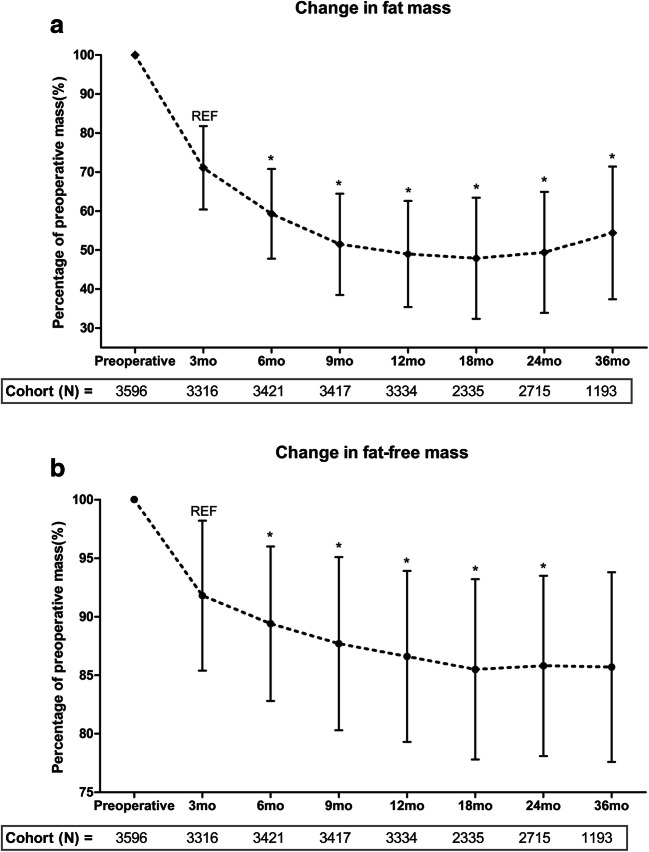
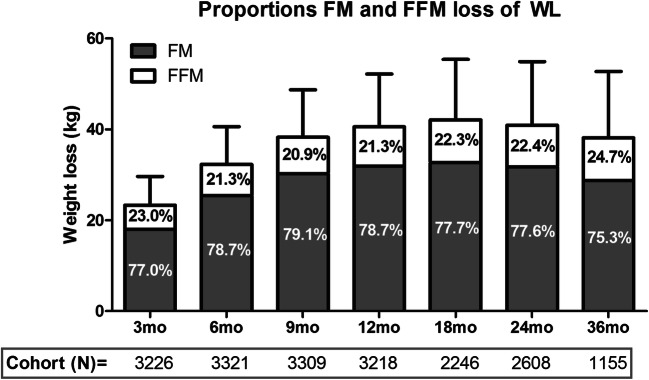
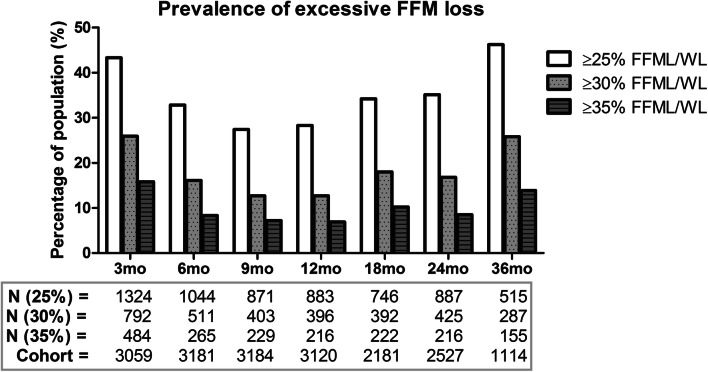
Purpose: Fat-free mass (FFM) loss is a concerning aspect of bariatric surgery, but little is known about its time-course and factors related with excessive FFM loss. This study examined (i) the progress of FFM loss up to 3 years post-bariatric surgery and (ii) the prevalence and determinants of excessive FFM loss. Materials and Methods: A total of 3596 patients (20% males, 43.5 ± 11.1 years old, BMI = 44.2 ± 5.5 kg/m 2 ) underwent sleeve gastrectomy (SG) or Roux-en-Y gastric bypass (RYGB) surgery. Bioelectrical impedance analysis was performed preoperatively and 3, 6, 9, 12, 18, 24 and 36 months post-surgery. Changes in body composition were assessed by mixed model analysis. Prevalence of excessive FFM loss (based on three different cutoff values: ≥ 25%, ≥ 30% and ≥ 35% FFM loss/weight loss (= %FFML/WL)) was estimated and its determinants were assessed by linear regression analysis. Results: Highest rates of FFM loss were found at 3 and 6 months post-surgery, reflecting 57% and 73% of peak FFM loss, respectively. Prevalence of excessive FFM loss ranged from 14 to 46% at 36 months post-surgery, with an older age ( β = 0.14, 95%CI = 0.10–0.18, P < .001), being male ( β = 3.99, 95%CI = 2.86–5.12, P < .001), higher BMI ( β = 0.13, 95%CI = 0.05–0.20, P = .002) and SG ( β = 2.56, 95%CI = 1.36–3.76, P < .001) as determinants for a greater %FFML/WL. Conclusion: Patients lost most FFM within 3 to 6 months post-surgery. Prevalence of excessive FFM loss was high, emphasizing the need for more vigorous approaches to counteract FFM loss. Furthermore, future studies should assess habitual physical activity and dietary intake shortly after surgery in relation to FFM loss.
Overview
The claims and statistics of this paper haven’t been checked yet.
Free: it reads the open-access text and checks the first 5 claims that cite a source we can check. Create a free account to check every claim.
Integrity signals
Registry
Cites
Statistics
Figures
Verification
Claims the paper makes
The claims and statistics of this paper haven’t been checked yet.
Free: it reads the open-access text and checks the first 5 claims that cite a source we can check. Create a free account to check every claim.
Claims other papers make about this one
Each is checked against this paper’s own text: does it say what the citing paper says it does?
In the citing paper
“In a study of 3596 patients (20% males, mean age 43.5 years) receiving sleeve gastrectomy or Roux-en-Y gastric bypass surgery followed for 3-years it was found that the highest rate of loss in FFM occurred at 3- and 6-months (57% and 78% of peak loss) post-surgery, with higher preoperative BMI one of the key factors associated with greater FFM loss [11]”
From Weighing the risk of GLP-1 treatment in older adults: Should we be concerned about sarcopenic obesity? (2025) · cites this paper as [11]
Self-check
Percentages, sums and reported differences re-computed from the paper’s own numbers.
The self-check needs the paper’s full text.
Citations
Cites
Sjöström, L. (2013) · Journal of Internal Medicine · doi:10.1111/joim.12012 · Cited by 1,835 · cited 1×
“Bariatric surgery is considered the most effective strategy in patients with morbid obesity to achieve long-lasting weight loss, improve quality of life and reduce comorbidities [1, 2].”
BackgroundThe underappreciated role of muscle in health and disease
Wolfe, R. R. (2006) · The American Journal of Clinical Nutrition · doi:10.1093/ajcn/84.3.475 · Cited by 1,537
Gloy, V. L., Briel, M., Bhatt, D. L., Kashyap, S. R., Schauer, P. R., Mingrone, G., Bucher, H. C., & Nordmann, A. J. (2013) · BMJ · doi:10.1136/bmj.f5934 · Cited by 1,351 · cited 1×
“Bariatric surgery is considered the most effective strategy in patients with morbid obesity to achieve long-lasting weight loss, improve quality of life and reduce comorbidities [1, 2].”
BackgroundMuscle type and fiber type specificity in muscle wasting
Ciciliot, S., Rossi, A. C., Dyar, K. A., Blaauw, B., & Schiaffino, S. (2013) · The International Journal of Biochemistry & Cell Biology · doi:10.1016/j.biocel.2013.05.016 · Cited by 623
Cunningham, J. (1991) · The American Journal of Clinical Nutrition · doi:10.1093/ajcn/54.6.963 · Cited by 607
Breen, L., & Phillips, S. M. (2011) · Nutrition & Metabolism · doi:10.1186/1743-7075-8-68 · Cited by 576
Changes in fat-free mass during significant weight loss: a systematic review
Chaston, T. B., Dixon, J. B., & O'Brien, P. E. (2007) · International Journal of Obesity · doi:10.1038/sj.ijo.0803483 · Cited by 493
Nair (2005) · doi:10.1093/ajcn/81.5.953 · Cited by 469
Nutritional deficiencies after bariatric surgery
Bal, B. S., Finelli, F. C., Shope, T. R., & Koch, T. R. (2012) · Nature Reviews Endocrinology · doi:10.1038/nrendo.2012.48 · Cited by 418
Heymsfield, S. B., Gonzalez, M. C. C., Shen, W., Redman, L., & Thomas, D. (2014) · Obesity Reviews · doi:10.1111/obr.12143 · Cited by 350
Cited by
Nuijten, M. A. H., Eijsvogels, T. M. H., Monpellier, V. M., Janssen, I. M. C., Hazebroek, E. J., & Hopman, M. T. E. (2022) · Obesity Reviews · doi:10.1111/obr.13370 · Cited by 236
“This weight loss does not only exclusively consists of fat mass loss but also includes loss of muscle mass.(2,3) Muscle mass can be expressed by various terms, such as fat-free mass (FFM), lean body mass (LBM), and skeletal muscle mass (SMM).”
BackgroundSelf-citationBennett, J. P., & Lim, S. K. (2025) · Journal of Obesity & Metabolic Syndrome · doi:10.7570/jomes25010 · Cited by 72
“68,69 Comprehensive risk models can also benefit from understanding how individuals who lose a greater proportion of FFM, compared to FM, differ in their long-term health outcomes.”
Nutritional Management in Bariatric Surgery Patients
Deledda, A., Pintus, S., Loviselli, A., Fosci, M., Fantola, G., & Velluzzi, F. (2021) · International Journal of Environmental Research and Public Health · doi:10.3390/ijerph182212049 · Cited by 55
Baad, V. M. A., Bezerra, L. R., de Holanda, N. C. P., dos Santos, A. C. O., da Silva, A. A. M., Bandeira, F., & Cavalcante, T. C. F. (2022) · Obesity Surgery · doi:10.1007/s11695-022-06335-y · Cited by 40
“Both techniques, despite anatomical and functional changes, according to more recent studies, lead to loss of muscle mass in a similar way, especially in the first 12 months after surgery [26, 27].”
BackgroundRomeijn, M. M., Holthuijsen, D. D. B., Kolen, A. M., Janssen, L., Schep, G., van Dielen, F. M. H., & Leclercq, W. K. G. (2021) · Nutrition Journal · doi:10.1186/s12937-021-00688-3 · Cited by 40
“Within the first year after laparoscopic Roux-en-Y gastric bypass (RYGB), patients lose about 22% of their LBM [9, 10].”
BackgroundProkopidis, K., Daly, R. M., & Suetta, C. (2025) · The Journal of nutrition, health and aging · doi:10.1016/j.jnha.2025.100652 · Cited by 40
“…receiving sleeve gastrectomy or Roux-en-Y gastric bypass surgery followed for 3-years it was found that the highest rate of loss in FFM occurred at 3-and 6-months (57% and 78% of peak loss) post-surgery, with higher preoperative BMI one of the key factors associated with greater FFM loss [11].”
Efecto hipolipemiante del consumo de mate en individuos dislipidémicos
Messina, D. N., Avena, V., Kemnitz, M., Corte, C., Balzo, D. D., Mussi, J., & Elizalde, R. P. (2015) · Americanae (AECID Library) · doi:10.13140/rg.2.1.4651.0164 · Cited by 40
Haghighat, N., Ashtary-Larky, D., Bagheri, R., Aghakhani, L., Asbaghi, O., Amini, M., Moeinvaziri, N., Hosseini, B., Wong, A., Shamekhi, Z., et al. (2022) · Surgery for Obesity and Related Diseases · doi:10.1016/j.soard.2022.02.022 · Cited by 36
Nuijten, M. A. H., Tettero, O. M., Wolf, R. J., Bakker, E. A., Eijsvogels, T. M. H., Monpellier, V. M., Hazebroek, E. J., Janssen, I. M. C., & Hopman, M. T. E. (2020) · Obesity Surgery · doi:10.1007/s11695-020-05009-x · Cited by 34
“Nevertheless, the follow-up of 2 years is still interesting because our population passed the tipping point of weight loss (39) and patients entered the normalization phase in their personal environment.”
BackgroundSelf-citationPrevalence of low skeletal muscle mass following bariatric surgery
Molero, J., Olbeyra, R. P., Flores, L., Jiménez, A., de Hollanda, A., Andreu, A., Ibarzábal, A., Moize, V. L., Cañizares, S., Balibrea, J. M., et al. (2022) · Clinical Nutrition ESPEN · doi:10.1016/j.clnesp.2022.03.009 · Cited by 29
Bühler, J., Rast, S., Beglinger, C., Peterli, R., Peters, T. T. A., Gebhart, M., Meyer‐Gerspach, A. C., & Wölnerhanssen, B. K. (2020) · Obesity Facts · doi:10.1159/000512450 · Cited by 26
Nuijten, M. A. H., Eijsvogels, T. M. H., Sanders, B., Vriese, L., Monpellier, V. M., Hazebroek, E. J., Janssen, I. M. C., & Hopman, M. T. E. (2023) · Obesity Surgery · doi:10.1007/s11695-023-06650-y · Cited by 24
“Preoperative patient characteristics were previously found to explain little (~ 5%) of the inter-individual variation in FFML that is typically observed following bariatric surgery [9].”
BackgroundSelf-citationBarzin, M., Almasi, M. H., Mahdavi, M., Khalaj, A., Valizadeh, M., & Hosseinpanah, F. (2021) · Obesity Surgery · doi:10.1007/s11695-021-05722-1 · Cited by 22
“In addition, their patients had a higher overall mean age [2].”
BackgroundMethodResultInfluentialIncretin Receptor Agonism, Fat-free Mass, and Cardiorespiratory Fitness: A Narrative Review
Liu, Z., Weeldreyer, N. R., & Angadi, S. S. (2025) · The Journal of Clinical Endocrinology & Metabolism · doi:10.1210/clinem/dgaf335 · Cited by 21
Cardoso, P., Santos, T. V., Ramon‐Krauel, M., Pais, S., & Sousa‐Coelho, A. L. D. (2025) · Obesity Surgery · doi:10.1007/s11695-025-07816-6 · Cited by 21
“This risk might be greater in the first months after the surgery when there might occur greater loss of muscle mass and function [6, 11].”
Tomaç, H., Malkoç, M., & Angın, E. (2023) · Heliyon · doi:10.1016/j.heliyon.2023.e19032 · Cited by 19
“Functional exercises, which are based on a multifaceted exercise model, aim to improve joint stability, neuromuscular control, muscle strength, and endurance [31].”
BackgroundOrioli, L., Samaras, S., Sawadogo, K. A., de Barsy, M., Lause, P., Deswysen, Y., Navez, B., Thissen, J., & Loumaye, A. (2024) · Clinical Nutrition · doi:10.1016/j.clnu.2024.05.046 · Cited by 19
Nicoletti, C. F., Esteves, G. P., Genário, R., Santo, M. A., de Cleva, R., Gualano, B., & Roschel, H. (2020) · Obesity Surgery · doi:10.1007/s11695-020-05107-w · Cited by 17
“This is also the case in patients who underwent bariatric surgery, for whom the loss of fat-free mass may rise as high as 23% within the first months after surgery [21] and may significantly impact functional capacity, bone remodeling, and cardiometabolic parameters [22].”
BackgroundHaghighat, N., Ashtary‐Larky, D., Aghakhani, L., Asbaghi, O., Hosseinpour, H., Hosseini, B., Shahabinezhad, A., Pourmohammad, A., Hosseini, S. V., Amini, M., et al. (2021) · Obesity Surgery · doi:10.1007/s11695-021-05512-9 · Cited by 17
“…(8) 40.7 BIA BS 43.1 FM Mierzyńska, 2015 (Poland) 1,3,6 50 (30) 47.6 BIA BS 47.7 FM, BFP Fjeldborg, 2015 (Denmark) 12 31 (19) 43.9 DEXA RYGB 48.5 FM Nuijten, 2020 (Netherlands) 3,6,12 3596 (2877) 43.5 ± 11.1 BIA BS 44.2 ± 5.5 FM, BFP Ozeki, 2018 (Japan) 3,6,12 32 (18) 40.5 ± 9.1 BIA SG 45.1 ± 9.7…”
InfluentialPoint-Counterpoint Debate: Surgery vs Medical Treatment for the Management of Obesity
Schauer, P. R., & Rothberg, A. E. (2024) · The Journal of Clinical Endocrinology & Metabolism · doi:10.1210/clinem/dgae888 · Cited by 16
Eriksson, J. W., Pereira, M. J., Kagios, C., Kvernby, S., Lundström, E., Fanni, G., Lundqvist, M., Carlsson, B., Sundbom, M., Tarai, S., et al. (2024) · Diabetologia · doi:10.1007/s00125-024-06150-3 · Cited by 15
“This has previously been reported as a rapid and possibly temporary effect following OS, although the mechanisms are not clear [34, 35].”
BackgroundSantini, S., Vionnet, N., Pasquier, J., Suter, M., Hans, D. B., Rodríguez, E. G., Pitteloud, N., & Favre, L. (2021) · European Journal of Endocrinology · doi:10.1530/eje-21-0895 · Cited by 14
Radkhah, H., Zooravar, D., Shateri-Amiri, B., Saffar, H., Najjari, K., & Hazaveh, M. M. (2025) · Obesity Surgery · doi:10.1007/s11695-024-07643-1 · Cited by 13
Mousavi, M., Tabesh, M. R., Khalaj, A., Eini‐Zinab, H., Jahromi, S. R., & Abolhasani, M. (2021) · Obesity Surgery · doi:10.1007/s11695-021-05420-y · Cited by 13
Maïmoun, L., Aouinti, S., Puech, M., Lefebvre, P., Deloze, M., Barbara, P. D. S., Renard, É., Cristol, J., Myzia, J., Picot, M., et al. (2023) · Nutrients · doi:10.3390/nu15051201 · Cited by 12
“Finally, higher preoperative BMI, female gender and patients undergoing SG were also found to be determinants of greater LTM [14,61].”
BackgroundPérez, N., Trape, M. A., Caixàs, A., Secilla, A. C., Vicente, C. J. H., moral, M. L., Hernández-Lázaro, A., & Luna, A. (2026) · Journal of Clinical Medicine · doi:10.3390/jcm15020630 · Cited by 11
“Excessive FFM loss was defined using established cut-off points of ≥ 25%, ≥ 30%, and ≥ 35% %FFML/WL, to allow comparability with prior studies [10].”
InfluentialArtero, E. G., Ferrer-Márquez, M., Torrente‐Sánchez, M. J., Martínez‐Rosales, E., Carretero‐Ruiz, A., Hernández‐Martínez, A., López-Sánchez, L., Esteban‐Simón, A., del Rey, A. R., Alcaraz‐Ibáñez, M., et al. (2021) · Obesity Surgery · doi:10.1007/s11695-021-05559-8 · Cited by 11
“More interestingly, we will be able to test whether this exercise program can mitigate the decrease in muscle mass that normally accompanies bariatric surgery [46].”
BackgroundOrioli, L., Thissen, J.-P., & Loumaye, A. (2025) · Clinical Nutrition · doi:10.1016/j.clnu.2025.106547 · Cited by 10
Protein Supplement Tolerability and Patient Satisfaction after Bariatric Surgery
Luijpers, L. C., Nuijten, M. A. H., Groenhuijzen, E. J., van Hogezand, L. L., Monpellier, V. M., Eijsvogels, T. M. H., & Hopman, M. T. E. (2024) · Obesity Surgery · doi:10.1007/s11695-024-07462-4 · Cited by 10
“However, previous studies have shown a significant proportion of fat-free mass loss (FFM) with weight loss [9, 26].”
BackgroundSelf-citationAbiri, B., Valizadeh, M., Seifi, Z., Amini, S., & Haidari, F. (2025) · Eating and Weight Disorders - Studies on Anorexia Bulimia and Obesity · doi:10.1007/s40519-025-01761-0 · Cited by 9
“Age, sex, preoperative BMI, and surgery type are important predictors of fat-free mass (FFM) loss after BS [45].”
Hu, C., Sun, D., Fang, Y., Cen, X., Xu, Y., Baker, J. S., & Gu, Y. (2024) · Frontiers in Endocrinology · doi:10.3389/fendo.2024.1465718 · Cited by 8
Meta-analysis of changes in skeletal muscle mass within 1 year after bariatric surgery
Hua, M., Li, J., Wang, T., Xu, Y., Zhao, Y., Sun, Q., Yuan, H., & Wang, D. (2025) · Surgical Endoscopy · doi:10.1007/s00464-024-11512-4 · Cited by 8
“In addition, age also affects postoperative skeletal muscle loss [21].”
Flores, L. E., Beavers, K. M., Beavers, D. P., Greene, K. A., Madrid, D. A., Miller, R. M., Ard, J. D., Bilek, L. D., & Weaver, A. A. (2022) · JCSM Rapid Communications · doi:10.1002/rco2.72 · Cited by 8
“Losing some lean body mass is an anticipated consequence following SG surgery due to the magnitude and speed of weight loss(4,5); however, excessive lean mass loss can diminish functional capacity, slow resting metabolism, and hinder the ability to perform activities of daily living.(3,6) These adverse consequences ar…”
BackgroundEvaluation of Stomatognathic System Parameters After Bariatric Surgery
Malek-Zadeh, C. H., Watanabe, L. M., Salgado, W., de Vasconcelos, P. B., Regalo, S. C. H., & Nonino, C. B. (2021) · Obesity Surgery · doi:10.1007/s11695-021-05774-3 · Cited by 8
“also found a prominent loss of FFM within 3 to 6 months [20].”
BackgroundChanges of Facial Features After Bariatric Surgery: a Systematic Review
Wong, Z. Y., Ramasamy, P., Ingels, K. J. A. O., Parmar, C. D., Yang, W., & Pouwels, S. (2022) · Obesity Surgery · doi:10.1007/s11695-022-06363-8 · Cited by 6
“While bariatric surgery promotes fat loss [20], this effect can synergistically affect facial aging.”
BackgroundTaselaar, A. E., Boes, A. J., de Bruin, R. W. F., Kuijper, T. M., Lancker, K. V., van der Harst, E., & Klaassen, R. A. (2023) · Trials · doi:10.1186/s13063-023-07654-w · Cited by 6
“As previous research indicates that most of the fat-free mass loss occurs in the first 3 to 6 months after surgery [5], it seems important to investigate whether protein powder supplementation affects fat-free mass loss in the early postoperative period.”
BackgroundProtein supplementation preserves muscle mass in persons against sleeve gastrectomy
Afsar, N., & ÖZDOĞAN, Y. (2024) · Frontiers in Nutrition · doi:10.3389/fnut.2024.1476258 · Cited by 6
“Patients have been found to lose approximately 22% of their lean body mass within the first year after Laparoscopic Roux-en-Y gastric Bypass (RYGB) (27, 28).”
BackgroundMoslehi, N., Kamali, Z., Barzin, M., Khalaj, A., & Mirmiran, P. (2024) · European journal of medical research · doi:10.1186/s40001-024-02009-w · Cited by 5
“Despite this, the prevalence of excessive FFM loss after bariatric surgery has been high, indicating that more robust approaches are required to mitigate FFM loss [2, 22].”
BackgroundSheer drop ahead: reviewing sarcopenia outcomes in elderly patients undergoing bariatric surgery
Stumpf, M. A. M., Cercato, C., de Melo, M. E., & Mancini, M. C. (2025) · Reviews in Endocrine and Metabolic Disorders · doi:10.1007/s11154-025-09946-9 · Cited by 5
Body Composition Changes and Predictor of Weight Loss in Short Term after Sleeve Gastrectomy
Ji, G., Zhu, C., Wang, S., Zhou, L., & Wu, J. (2025) · Obesity Surgery · doi:10.1007/s11695-025-07830-8 · Cited by 5
“Excessive loss of FFM may lead to a reduced basal metabolic rate and weight regain [9, 10].”
Nuijten, M. A. H., de Roos, B. M., Karregat, J. H. M., Hazebroek, E. J., Monpellier, V. M., Janssen, I. M. C., Hopman, M. T. E., Bakker, E. A., & Eijsvogels, T. M. H. (2025) · Clinical Obesity · doi:10.1111/cob.70054 · Cited by 5
“For FFML/WL, high loss was defined as ≥ 30%, based on previous observations [9, 15–17].”
InfluentialSelf-citationMoslehi, N., Kamali, Z., Mirmiran, P., Barzin, M., & Khalaj, A. (2023) · Nutrition · doi:10.1016/j.nut.2023.112331 · Cited by 5
Luna, M., Pereira, S., Saboya, C. J., & Ramalho, A. (2024) · Metabolites · doi:10.3390/metabo14090502 · Cited by 5
“In the first six months post-RYGB, a highly catabolic period, there is greater loss of fat and fat-free mass [58].”
BackgroundThe Impact of Bariatric Surgery on Nitrogen Balance at Six months Post-surgery
Vinjamuri, R. G., Wu, V., Eng, A. K. H., Tan, J. T. H., Lim, E. K. W., Lee, P. C., Kovalik, J., & Tan, H. C. (2024) · Obesity Surgery · doi:10.1007/s11695-024-07269-3 · Cited by 4
Sabooni, K., Farsi, F., Safari, S., Mahjoubi, M., Jazi, A. H. D., Moosavi, D., Gholi, Z., Kermansaravi, M., & Shahmiri, S. S. (2025) · Clinical Nutrition ESPEN · doi:10.1016/j.clnesp.2025.07.1122 · Cited by 4
Derenzo, N., Maran, E., de Melo, W. A., da Silva, K. S., D’Aviz, J. B. M., Christinelli, H. C. B., Costa, M. A. R., & Fernandes, C. A. M. (2024) · Contribuciones a las Ciencias Sociales · doi:10.55905/revconv.17n.3-303 · Cited by 4
Physical activity and sedentary behaviors in bariatric surgery patients: A scoping review
Al-Hazzaa, H. M. (2019) · Saudi Journal of Obesity · doi:10.4103/sjo.sjo_8_22 · Cited by 4
Metabolic, clinical and body composition changes in Mexican adults undergoing bariatric surgery
Rivera-Carranza, T., Girón, A. L.-T., Rojano‐Rodriguez, M., Romero‐Loera, L. S., & Zúñiga-León, E. (2024) · Nutrición Hospitalaria · doi:10.20960/nh.05214 · Cited by 3
Gam, S., Hermann, A. P., Juhl, C. B., Hansen, S., & Gram, B. (2025) · Obesity · doi:10.1002/oby.70062 · Cited by 3
Abbasi, M., Elyasinia, F., Jahromi, A., Farsi, F., Fard, R. J., Jahromi, N., Pirisedigh, A., Soroush, A., & Hasani‐Ranjbar, S. (2026) · Obesity Surgery · doi:10.1007/s11695-026-08673-7 · Cited by 3
Engelmann, M. G., Götze, J., Baumbach, P., Neu, C., Settmacher, U., Ardelt, M., Kissler, H. J., & Coldewey, S. M. (2025) · Frontiers in Endocrinology · doi:10.3389/fendo.2024.1488175 · Cited by 3
Martins, C., Aukan, M. I., & Luca, M. D. (2024) · BMC Research Notes · doi:10.1186/s13104-024-06822-8 · Cited by 3
“Excessive loss of FFM ( > 25% of weight loss coming from FFM) occurs in approximately 14–46% of bariatric surgery patients [29].”
BackgroundAdvancing Physical Function Outcomes in Glucagon-Like Peptide-1 Receptor Agonist Trials
Karregat, J. H. M., Phillips, S. M., Hopman, M. T. E., Eijsvogels, T. M. H., & Kambič, T. (2025) · Annals of Internal Medicine · doi:10.7326/annals-25-03519 · Cited by 3
Self-citationCui, B., Sun, X., Li, W., Li, P., Wang, G., Yu, Z., Tang, H., Ling, J., Yi, X., Zhu, L., et al. (2021) · Obesity Surgery · doi:10.1007/s11695-021-05430-w · Cited by 2
Aguas‐Ayesa, M., Yárnoz‐Esquíroz, P., Olazarán, L., Garde-Aizpún, A., Marugán-Pinos, R., Valentí, V., Landecho, M. F., Moncada, R., Perdomo, C. M., Silva, C., et al. (2025) · Clinical Nutrition · doi:10.1016/j.clnu.2025.09.003 · Cited by 2
Tabesh, M. R., Khalaj, A., Mousavi, M., Abolhasani, M., Shabkhiz, F., & Soori, R. (2026) · BMC Musculoskeletal Disorders · doi:10.1186/s12891-026-09722-z · Cited by 2
“…criteria included (1) pregnancy during the study (2), musculoskeletal problems or (3) neurological disorders that could impact functional tests (4), the presence of pace-makers or other electrical devices that could interfere with body composition analysis (50, the use of weight-affecting…”
Belfield, A., Korzepa, M., Waddell, A., Rogers, L. M., Quinlan, J. I., & Breen, L. (2026) · American Journal of Clinical Nutrition · doi:10.1016/j.ajcnut.2026.101542 · Cited by 2
Unilateral peroneal neuropathy in a patient following laparoscopic sleeve gastrectomy
Lee, K.-Y., Kathiravel, Y., & Khullar, S. (2024) · Postgraduate Medicine · doi:10.1080/00325481.2024.2398413 · Cited by 2
Seo, E., Kwon, Y., & Park, S. S. (2024) · Metabolites · doi:10.3390/metabo14080444 · Cited by 2
“The metric was calculated using the following formula: FFM loss/weight loss % = FFM (post) − FFM (pre)/weight (post) − weight (pre) × 100 [4,10].”
BackgroundMethodInfluentialJungert, A., Finze, A., Betzler, A. M., Reißfelder, C., Blank, S., Otto, M., Vassilev, G., & Betzler, J. (2025) · Journal of Clinical Medicine · doi:10.3390/jcm14144961 · Cited by 2
Moslehi, N., Kamali, Z., Barzin, M., Khalaj, A., & Mirmiran, P. (2025) · Obesity Surgery · doi:10.1007/s11695-025-08095-x · Cited by 1
The Role of Insulin Sensitivity in Lean Mass Changes During Weight Loss With or Without Exercise
Bartholomew, C. L., Martins, C., & Gower, B. A. (2025) · Obesity · doi:10.1002/oby.70010 · Cited by 1
Purcell, S. A., Bennett, J. P., Stoklossa, C. J., Siervo, M., & Prado, C. M. M. (2026) · Obesity Surgery · doi:10.1007/s11695-025-08465-5 · Cited by 1
“Low LST is associated with the development of frailty-related conditions including sarcopenia and loss of mobility, and cardiovascular morbidity, especially when it occurs with high fat mass (FM) [18–20].”
Maia, M., Mendonça, F., Leite, A. R., Soares, P., Neves, J. S., Luís, C., Rodrigues, I., Moreno, T., Pedro, J. M. P., Silva, D. F., et al. (2026) · Obesity Surgery · doi:10.1007/s11695-026-08565-w · Cited by 1
Moslehi, N., Kamali, Z., Golzarand, M., Barzin, M., Khalaj, A., & Mirmiran, P. (2026) · Obesity Surgery · doi:10.1007/s11695-026-08582-9 · Cited by 1
“%FFML = [(preoperative FFM - postoperative FFM)/ (preoperative weight - postoperative weight)] × 100 [ 20].”
El-Sayed, T., Sivaharan, A., Ugwumba, L., Yousef, Y., McCaslin, J. E., Williams, R., & Nandhra, S. (2026) · European Journal of Vascular and Endovascular Surgery · doi:10.1016/j.ejvs.2026.06.042 · Cited by 1
Physical Exercise in Obesity and Metabolic Bariatric Surgery: The First Latin American Consensus
Herrera-Santelices, A., Aquino, C., Borzone, L. A., Alderete, S., Andrade-Mayorga, O., BALOCCHI, F., Bruno, M. L., Cancino-López, J., Cano-Montoya, J., Lavín, K. C., et al. (2026) · Obesity Surgery · doi:10.1007/s11695-026-08897-7 · Cited by 1
Lippmann, L., Kissler, H. J., Settmacher, U., Rauchfuß, F., Dondorf, F., Rohland, O., Schwenk, L., Deeb, A. A., Bauschke, A., & Ardelt, M. (2026) · Langenbeck s Archives of Surgery · doi:10.1007/s00423-026-04232-x · Cited by 1
“After bariatric surgery, the greatest loss of fat-free or lean mass generally occurs during the first postoperative months, and systematic reviews have also described an early decrease in PhA [11–14].”
de Roos, B. M., Monpellier, V. M., Hansen, D., Eijsvogels, T. M. H., Thijssen, D. H. J., & Karregat, J. H. M. (2026) · Netherlands Heart Journal · doi:10.1007/s12471-026-02076-0 · Cited by 1
“…metabolic bariatric surgery) and pharmacological obesity treatments have proven highly effective for inducing weight loss, with weight reductions of ~20% with pharmacological [8] therapies and up to ~35% following metabolic bariatric surgery [9], driving their rapid uptake in clinical practice.”
InfluentialSelf-citationAzevedo, B. D. S. S., Silva, F. A. E., Dias, B. K. B., de Souza, M. R., Fagundes, C. F., & Almeida, V. R. (2020) · Research Society and Development · doi:10.33448/rsd-v9i11.9874 · Cited by 1
Implementation of Controlled Physical Activity Programs
Alarcón, A. S., Troncoso-Ortiz, E. J., Machado, C. A., & Paniura, A. F. (2023) · Springer eBooks · doi:10.1007/978-3-031-26614-0_15 · Cited by 1
Lamarca, F., Vieira, F. T., Melendez-Araújo, M. S., Lima, R. M., Dutra, E. S., & de Carvalho, K. M. B. (2025) · European Journal of Clinical Nutrition · doi:10.1038/s41430-025-01577-2 · Cited by 1
“Although the participants seemed to be in a much more favorable health condition than in the preoperative period, the frequency of weight recurrence is challenging and commonly related to loss of FFM, increase in FM, and progressive worsening of body composition [49, 50].”
Lee, I. O., Seo, E., Kwon, Y., Lee, C. M., Kim, N. H., Kim, J.-H., Choi, S. I., & Park, S. S. (2025) · Metabolites · doi:10.3390/metabo15080543 · Cited by 1
“Based on evidence suggesting that a %FFML/BWL ≈ 25% represents an optimal level of weight loss in patients with obesity, patients were classified into two groups accordingly [19–25].”
de Oliveira, G. S. (2021) · LA Referencia (Red Federada de Repositorios Institucionales de Publicaciones Científicas) · Cited by 1
Attlee, A., Hasab, H., Rashed, L. M., Nutrition Section, M. O. H. A. P., Al-Haway, M., & Alwahedi, A. (2021) · Malaysian Journal of Nutrition · doi:10.31246/mjn-2021-0024
Optimizing weight loss outcomes in bariatric surgery
Romeijn, M. M. (2022) · Research Publications (Maastricht University) · doi:10.26481/dis.20221007mr
Taselaar, A. E., Boes, A. J., de Bruin, R. W. F., Kuijper, T. M., Lancker, K. V., van der Harst, E., & Klaassen, R. A. (2023) · Figshare · doi:10.6084/m9.figshare.24540661
Impact of physical activity pre-and postoperative after bariatric malabsorptive surgery
Marc-Hernández, A., & Belando‐Pedreño, N. (2024) · Elsevier eBooks · doi:10.1016/b978-0-443-21672-5.00019-6
Belmoudden, H., Ibrahmi, B. A., & Bour, A. (2024) · Italian Journal of Medicine · doi:10.4081/itjm.2024.1778
Sánchez, A., Basfi-fer, K., Inostroza, J., Carrasco, G., Sambra, V., Codoceo, J., & Rojas, P. (2024) · Research Square · doi:10.21203/rs.3.rs-4863214/v1
(2025) · Frontiers research topics · doi:10.3389/978-2-8325-6039-6
Knopp, K. B. (2025) · Obesity Surgery · doi:10.1007/s11695-025-08023-z
“This finding was corroborated by results of our earlier RYGB study and by other studies [14, 20, 21].”
Resistance Training following Metabolic-Bariatric Surgery: Motivators, Barriers, and Preferences
Luijpers, L. C., Nuijten, M. A. H., Monpellier, V. M., de Roos, B. M., Karregat, J. H. M., Eijsvogels, T. M. H., & Hopman, M. T. E. (2025) · Obesity Facts · doi:10.1159/000547770
“This is, to our knowledge, the first study to evaluate motivators, barriers, facilitators, and wishes that are correlated to RT uptake in a large and representative [34, 35], reinforcing the representativeness of our sample.”
Self-citationZoledronic Acid for prevention of bone and muscle loss after BAriatric Surgery (ZABAS)
Gam, S. (2024) · University of Southern Denmark Research Portal (University of Southern Denmark) · doi:10.21996/79xz-hg80
Taselaar, A. E., Boes, A. J., de Bruin, R. W. F., Kuijper, T. M., Van Lancker, K., van der Harst, E., & Klaassen, R. A. (2024) · Figshare · doi:10.6084/m9.figshare.24540898
Taselaar, A. E., Boes, A. J., de Bruin, R. W. F., Kuijper, T. M., Van Lancker, K., van der Harst, E., & Klaassen, R. A. (2024) · Figshare · doi:10.6084/m9.figshare.26638059
Taselaar, A. E., Boes, A. J., de Bruin, R. W. F., Kuijper, T. M., Van Lancker, K., van der Harst, E., & Klaassen, R. A. (2024) · Figshare · doi:10.6084/m9.figshare.26638062
Mukorako, P. (2022) · Corpus Université Laval (Université Laval)
Exercise Interventions for Preserving Fat-Free Mass Post-Bariatric Surgery: A Systematic Review
Prenen, S., & Kerkhofs, N. (2024) · Document Server@UHasselt (UHasselt)
Tolvanen, L. (2023) · Open Archive (Karolinska Institutet)
de Roos, B. M., Yeh, L.-L. Y., van den Hooff, P. S., Nuijten, M. A. H., Twisk, J. W. R., Liem, R. S. L., van Acker, G. J. D., Severens, J. L., Kambič, T., Serlie, M. J. M., et al. (2025) · BMJ Open · doi:10.1136/bmjopen-2025-108346
Self-citationChen, Y., Xu, J., Pu, Y., Liu, D., Du, Q., Fumpa, M., Widjaja, J., Wan, Q., Cheng, Z., & Chen, Y. (2026) · Obesity Surgery · doi:10.1007/s11695-025-08424-0
Zhai, B., Liu, Q., Dong, N., & Xie, J. (2026) · Obesity Surgery · doi:10.1007/s11695-026-08600-w
de Roos, B. M., & Kambič, T. (2026) · Repository of the University of Ljubljana (University of Ljubljana)
Altundal, Y. E., Büyükaşık, S., Kankaya, B., Ozgul, M., Ramadanoglu, E., & Alış, H. (2026) · Diagnostics · doi:10.3390/diagnostics16162656
“Nuijten et al. [22] found in a cohort of 3596 patients that being male was a determinant of a greater proportion of weight loss as fat-free mass (%FFML/WL; β = 3.99, p < 0.001), and this remained significant after multivariate adjustment.”
Influentialvan der Meer, R., Monpellier, V. M., Liem, R. S. L., Janssen, I. M. C., Hazebroek, E. J., & Serlie, M. J. M. (2026) · American Journal of Clinical Nutrition · doi:10.1016/j.ajcnut.2026.101441
Self-citationYıldız, N., Coşkun, H., Görçin, S., Batar, N., Arslan, Ş., & Besler, H. T. (2026) · Journal of Clinical Medicine · doi:10.3390/jcm15186940
“The reference cohort described below expresses this quantity as %FFML/WL, calculated as the change in fat-free mass divided by the change in body weight between the preoperative assessment and the follow-up visit, multiplied by 100 [26].”
InfluentialSchipper, R. M., Heusschen, L., Schepers, L., Verstraete, F. F., Hazebroek, E., Kampman, E., & Berendsen, A. A. M. (2026) · BMJ Open · doi:10.1136/bmjopen-2026-119119
Self-citation
Metadata
- Authors
- Nuijten, M. A. H., Monpellier, V. M., Eijsvogels, T. M. H., Janssen, I. M. C., Hazebroek, E. J., & Hopman, M. T. E.
- Affiliations
- Radboud University Medical Center (NL)
- Nederlandse Obesitas Kliniek (NL)
- Rijnstate Hospital (NL)
- Corresponding author
- Hopman, Maria T. E.
- ORCID
- Venue
- Obesity Surgery
- Published
- 2020-05-15
- Volume
- 30
- Issue
- 8
- Pages
- 3119-3126
- ISSN
- 0960-8923 (ISSN-L)
- 1708-0428
- PMC
- PMC7305251
- OpenAlex
- W3024815245
- Cited by
- 87
- References
- 29
- Citations by year
- 2026: 15 · 2025: 23 · 2024: 19 · 2023: 6 · 2022: 7 · 2021: 12 · 2020: 4
- FWCI
- 6.85
- Type
- journal article
- Language
- en
- Open access
- hybrid
- doi.org
- Licence
- cc-by
- creativecommons.org/licenses/by/4.0 (tdm)
- creativecommons.org/licenses/by/4.0 (vor)
- Locations
- Obesity Surgery (publishedVersion, cc-by)
- PubMed Central (publishedVersion, cc-by)
- PubMed (publishedVersion)
- Radboud Repository (Radboud University) (submittedVersion, other-oa)
- Radboud Repository (Radboud University) (submittedVersion)
- Funders
- Radboud University Medical Center
- Topics
- Health Sciences › Medicine › Surgery › Bariatric Surgery and Outcomes
- Health Sciences › Medicine › Surgery › Body Contouring and Surgery
- Health Sciences › Medicine › Physiology (medical) › Body Composition Measurement Techniques
- Keywords
- fat-free mass loss, bariatric surgery
- MeSH terms
- Adult, Aged, Female, Gastrectomy, Humans, Male, Middle Aged, Obesity, Morbid, Gastric Bypass, Weight Loss, Body Mass Index, Bariatric Surgery
About these checks
Registry, retraction, Cites and statistics results are computed, not judged, with one exception: a printed reference that no index lists is read once by a model before it counts as a citation error. Claims are extracted by a model and kept only when their quote appears verbatim in the text; each cited source is then checked, with a model’s help, for whether it says what the claim relies on. Those verdicts can be wrong — read the claim’s quote and the cited source before relying on one.
Statistics and arithmetic are recomputed, not judged.
Confidence bands are shown only for fields calibrated on our annotated test set. None is calibrated yet, so no band is shown.
What counts as a claim ›How we measure confidence ›How we check this ›
Are you an author, or do you see a problem with this page? Request a review
Data sources
Bibliographic data: Semantic Scholar, OpenAlex, Crossref.
Contains information from the Semantic Scholar Academic Graph Datasets, made available under the ODC Attribution License (ODC-BY 1.0).
Semantic Scholar’s data is described in: Kinney, R., et al. (2023). The Semantic Scholar Open Data Platform. arXiv:2301.10140.
