

Preparation of some eco-friendly corrosion inhibitors having antibacterial activity from sea food waste
Open accessThe DOI matches its Crossref record; 57 of the 57 references it cites were found in a registry or an index.
Abstract
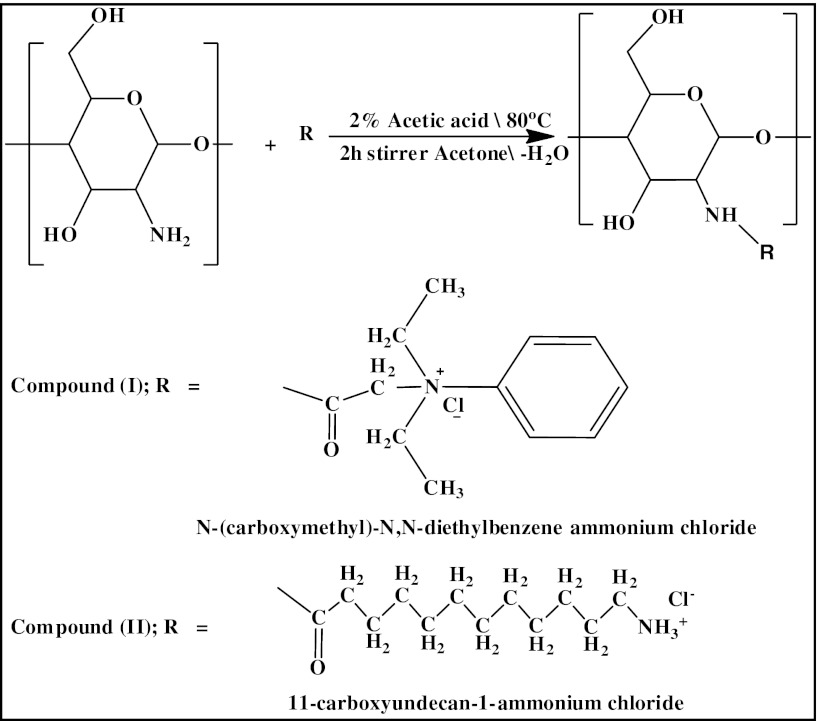
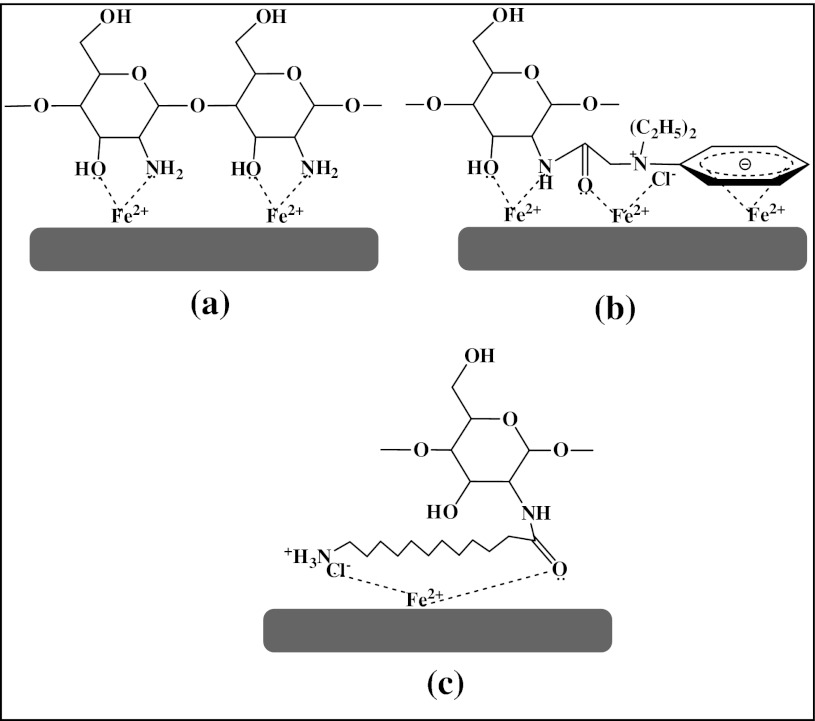
Chitosan is one of the important biopolymers and it is extracted from exoskeletons of crustaceans in sea food waste. It is a suitable eco‐friendly carbon steel corrosion inhibitor in acid media; the deacetylation degree of prepared chitosan is more than 85.16 %, and the molecular weight average is 109 kDa. Chitosan was modified to 2‐N,N‐diethylbenzene ammonium chloride N‐oxoethyl chitosan (compound I), and 12‐ammonium chloride N‐oxododecan chitosan (compound II) as soluble water derivatives. The corrosion inhibition efficiency for carbon steel of compound (I) in 1 M HCl at varying temperature is higher than for chitosan and compound (II). However, the antibacterial activity of chitosan for Enterococcus faecalis, Escherichia coli, Staphylococcus aureus, and Candida albicans is higher than for its derivatives, and the minimum inhibition concentration and minimum bacterial concentration of chitosan and its derivatives were carried out with the same strain.
Overview
The claims and statistics of this paper haven’t been checked yet.
Free: it reads the open-access text and checks the first 5 claims that cite a source we can check. Create a free account to check every claim.
Integrity signals
Registry
Cites
Statistics
Figures
Verification
Claims the paper makes
The claims and statistics of this paper haven’t been checked yet.
Free: it reads the open-access text and checks the first 5 claims that cite a source we can check. Create a free account to check every claim.
Claims other papers make about this one
Each is checked against this paper’s own text: does it say what the citing paper says it does?
The cited source says what the claim attributes to it.
In the citing paper
“Chitosan, a biopolymer derived from crustacean waste, has been found to possess important antibacterial properties, as it exhibits activity against several bacterial strains including Enterococcus faecalis , Escherichia coli , Staphylococcus aureus , and Candida albicans [55]”
From Valorization of Food Waste to Produce Value-Added Products Based on Its Bioactive Compounds (2023) · cites this paper as [55]
Self-check
Percentages, sums and reported differences re-computed from the paper’s own numbers.
The self-check needs the paper’s full text.
Citations
Cites
National Committee for Clinical Laboratory Standards
Bruck, E. (1980) · Pediatrics · doi:10.1542/peds.65.1.187 · Cited by 14,751
Environmental Chemistry of Soils
McBride, M. B. (1994) · Medical Entomology and Zoology · Cited by 5,997
Chitosan as antimicrobial agent: applications and mode of action.
Rabea, E. I., Badawy, M. E.-T., Stevens, C. V., Smagghe, G., & Steurbaut, W. (2003) · Biomacromolecules · doi:10.1021/bm034130m · Cited by 3,123 · cited 1×
“albicans are tabulated in Table 5 which indicate a better antimicrobial activity of chitosan [51] than its derivatives.”
BackgroundAntimicrobial properties of chitosan and mode of action: a state of the art review
Kong, M., Chen, X. G., Xing, K., & Park, H. J. (2010) · International Journal of Food Microbiology · doi:10.1016/j.ijfoodmicro.2010.09.012 · Cited by 3,037 · cited 1×
“aureus, due to the cell wall surface characteristics [53], to be attributed to differences in the hydrophilicity and negative charge distributed on the surface of cell wall [54].”
BackgroundChitosan: A versatile biopolymer for orthopaedic tissue-engineering
Di Martino, A., Sittinger, M., & Risbud, M. V. (2005) · Biomaterials · doi:10.1016/j.biomaterials.2005.03.016 · Cited by 1,634 · cited 1×
“Chitosan exhibits various biological activities and biomedical applications including excellent biocompatibility, biodegradability, osteoconductivity, antimicrobial properties, a flocculating agent, a drug delivery vehicle, an immobilization and encapsulation agent of toxic heavy metals, and also in cosmetics [12, 13].”
BackgroundInsights into the mode of action of chitosan as an antibacterial compound.
Raafat, D., von Bargen, K., Haas, A., & Sahl, H.-G. (2008) · Applied and Environmental Microbiology · doi:10.1128/aem.00453-08 · Cited by 888 · cited 1×
“The exact mechanism of the antimicrobial action of chitosan is still ambiguous, although six main mechanisms, none of which are mutually exclusive, have been proposed [18, 19] as follows: (1) Interactions between the positively charged moieties on the chitosan molecules and those negatively charged ones on the microbi…”
BackgroundEffect of molecular structure of chitosan on protein delivery properties of chitosan nanoparticles
Xu, Y., & Du, Y. (2003) · International Journal of Pharmaceutics · doi:10.1016/s0378-5173(02)00548-3 · Cited by 816 · cited 1×
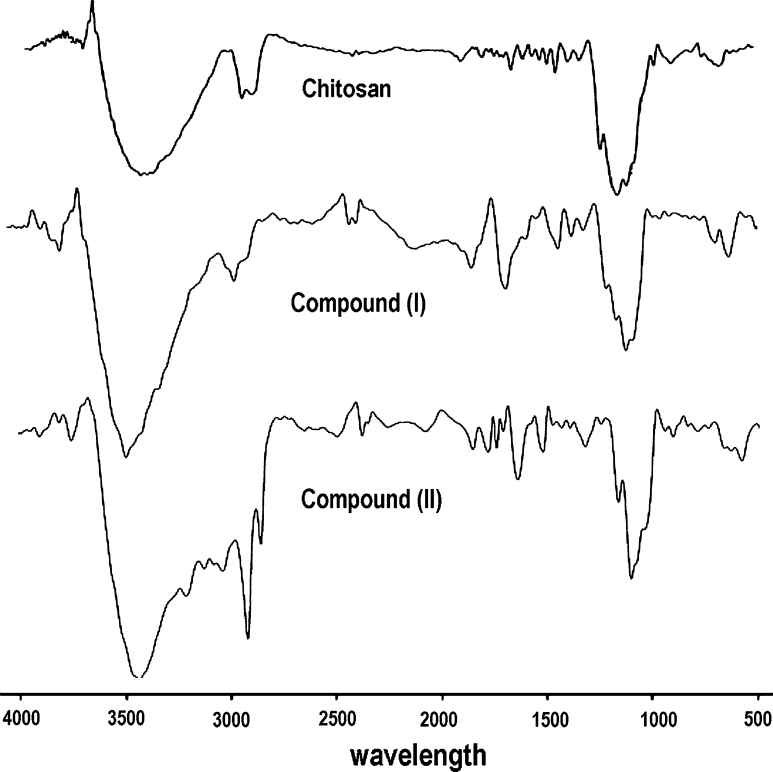
“The broad band due to the stretching vibration of –NH2 and –OH group can be observed at 3,400–3,500 cm [31, 32].”
BackgroundAlves, N. M., & Mano, J. F. (2008) · International Journal of Biological Macromolecules · doi:10.1016/j.ijbiomac.2008.09.007 · Cited by 804 · cited 1×
“of applications, ranging from medical applications [16] to agriculture [17].”
BackgroundExtraction and characterization of chitin and chitosan from marine sources in Arabian Gulf
Sagheer, F. A. A., Al-Sughayer, M. A., Muslim, S., & Elsabee, M. Z. (2009) · Carbohydrate Polymers · doi:10.1016/j.carbpol.2009.01.032 · Cited by 642 · cited 2×
“where C/N is the ratio carbon/nitrogen [36] as determined by elemental analysis.”
BackgroundMethodPranoto, Y., Rakshit, S. K., & Salokhe, V. M. (2005) · LWT - Food Science and Technology · doi:10.1016/j.lwt.2004.09.014 · Cited by 593 · cited 1×
“Chitosan exhibits main characteristic bands of carbonyl (RC=O) and amine group (–NH2) at 1,654 and 1,540 cm, respectively [29, 30].”
Background
Cited by
Umoren, S. A., & Eduok, U. M. (2016) · Carbohydrate Polymers · doi:10.1016/j.carbpol.2015.12.038 · Cited by 539
Verma, C., Olasunkanmi, L. O., Ebenso, E. E., Quraishi, M. A., & Obot, I. B. (2016) · The Journal of Physical Chemistry C · doi:10.1021/acs.jpcc.6b04429 · Cited by 514
RETRACTED: Microbial strategies for bio-transforming food waste into resources
Sharma, P., Gaur, V. K., Kim, S.-H., & Pandey, A. (2020) · Bioresource Technology · doi:10.1016/j.biortech.2019.122580 · Cited by 389
RetractedGreen Corrosion Inhibitors from Natural Sources and Biomass Wastes
Marzorati, S., Verotta, L., & Trasatti, S. P. (2018) · Molecules · doi:10.3390/molecules24010048 · Cited by 345
“In some works, the Langmuir plot are built just with 3 point data [89].”
Umoren, S. A., Obot, I. B., Madhankumar, A., & Gasem, Z. M. (2015) · Carbohydrate Polymers · doi:10.1016/j.carbpol.2015.02.036 · Cited by 293
Valorization of Food Waste to Produce Value-Added Products Based on Its Bioactive Compounds
Liu, Z., de Souza, T. S. P., Holland, B., Dunshea, F., Barrow, C., & Suleria, H. A. R. (2023) · Processes · doi:10.3390/pr11030840 · Cited by 254
Chauhan, D. S., Verma, C., & Quraishi, M. A. (2021) · Journal of Molecular Structure · doi:10.1016/j.molstruc.2020.129374 · Cited by 235
Assad, H., & Kumar, A. (2021) · Journal of Molecular Liquids · doi:10.1016/j.molliq.2021.117755 · Cited by 230
Biswas, A., Pal, S., & Udayabhanu, G. (2015) · Applied Surface Science · doi:10.1016/j.apsusc.2015.06.128 · Cited by 230
Verma, C., Haque, J., Quraishi, M. A., & Ebenso, E. E. (2019) · Journal of Molecular Liquids · doi:10.1016/j.molliq.2018.11.040 · Cited by 205
Umoren, S. A., Gasem, Z. M., & Obot, I. B. (2013) · Industrial & Engineering Chemistry Research · doi:10.1021/ie401737u · Cited by 178
Modified biopolymer-dextrin based crosslinked hydrogels: application in controlled drug delivery
Das, D., & Pal, S. (2015) · RSC Advances · doi:10.1039/c4ra16103c · Cited by 162
Gupta, N. K., Joshi, P. G., Srivastava, V., & Quraishi, M. A. (2017) · International Journal of Biological Macromolecules · doi:10.1016/j.ijbiomac.2017.08.064 · Cited by 152
Heterocyclic biomolecules as green corrosion inhibitors
Quraishi, M. A., Chauhan, D. S., & Saji, V. S. (2021) · Journal of Molecular Liquids · doi:10.1016/j.molliq.2021.117265 · Cited by 146
Ashraf, M. A., Ullah, S., Ahmad, I., Qureshi, A. K., Balkhair, K. S., & Rehman, M. A. (2013) · Journal of the Science of Food and Agriculture · doi:10.1002/jsfa.6371 · Cited by 157
Hegazy, M. A. (2015) · Journal of Molecular Liquids · doi:10.1016/j.molliq.2015.04.042 · Cited by 130
Self-citationHigh pressure extraction and its application in the extraction of bio-active compounds: A review
Khan, S. A., Aslam, R., & Makroo, H. A. (2019) · Journal of Food Process Engineering · doi:10.1111/jfpe.12896 · Cited by 128
Faydy, M. E., Lakhrissi, B., Jama, C., Zarrouk, A. M., Olasunkanmi, L. O., Ebenso, E. E., & Bentiss, F. (2019) · Journal of Materials Research and Technology · doi:10.1016/j.jmrt.2019.11.014 · Cited by 124
Badr, E. A. A., Hefni, H. H. H., Shafek, S. H., & Shaban, S. M. (2020) · International Journal of Biological Macromolecules · doi:10.1016/j.ijbiomac.2020.04.184 · Cited by 120
Self-citationAcosta-Ferreira, S., Castillo, O. S., Madera-Santana, J. T., Mendoza-García, D. A., Núñez-Colín, C. A., Grijalva-Verdugo, C., Villa‐Lerma, A. G., Morales-Vargas, A. T., & Rodríguez‐Núñez, J. R. (2020) · Biotechnology Reports · doi:10.1016/j.btre.2020.e00554 · Cited by 122
“[30] in samples of chitosan obtained from shrimp shell by the chemical method.”
MethodBasiony, N. M. E., Badr, E. E., Baker, S. A., & El-Tabei, A. S. (2020) · Applied Surface Science · doi:10.1016/j.apsusc.2020.148246 · Cited by 110
Hefni, H. H. H., Azzam, E. M. S., Badr, E. A. A., Hussein, M. H. M., & Tawfik, S. M. (2015) · International Journal of Biological Macromolecules · doi:10.1016/j.ijbiomac.2015.11.073 · Cited by 97
Self-citationHegazy, M. A., Nazeer, A. A., & Shalabi, K. (2015) · Journal of Molecular Liquids · doi:10.1016/j.molliq.2015.05.043 · Cited by 95
Self-citationRole of green chemistry in sustainable corrosion inhibition: a review on recent developments
Jahdaly, B. A. A., Maghraby, Y. R., Ibrahim, A. H., Shouier, K. R., Alturki, A. M., & El-Shabasy, R. M. (2022) · Materials Today Sustainability · doi:10.1016/j.mtsust.2022.100242 · Cited by 92
Hegazy, M. A., Rashwan, S. M., Kamel, M. M., & Kotb, M. S. E. (2015) · Journal of Molecular Liquids · doi:10.1016/j.molliq.2015.06.051 · Cited by 96
Self-citationMaah, M. A. A. M. J., & Yusoff, I. (2014) · Journal of Biotechnology & Biomaterials · Cited by 80
Hegazy, M. A., El-Tabei, A. S., Bedair, A. H., & Sadeq, M. A. (2015) · RSC Advances · doi:10.1039/c5ra06473b · Cited by 82
Self-citationTawfik, S. M. (2015) · RSC Advances · doi:10.1039/c5ra20340f · Cited by 81
Panchal, J., Shah, D., Patel, R., Shah, S., Prajapati, M., & Shah, M. (2021) · Journal of Bio- and Tribo-Corrosion · doi:10.1007/s40735-021-00540-5 · Cited by 76
Verma, C., & Quraishi, M. A. (2021) · Current Research in Green and Sustainable Chemistry · doi:10.1016/j.crgsc.2021.100184 · Cited by 86
Abu‐Elala, N. M., Mohamed, S., Zaki, M. M., & Eissa, A. E. (2015) · Fish & Shellfish Immunology · doi:10.1016/j.fsi.2015.08.004 · Cited by 68
Afshari, F., Ghomi, E. R., Dinari, M., & Ramakrishna, S. (2023) · ChemistrySelect · doi:10.1002/slct.202203231 · Cited by 63
Corrosion inhibition of aminated hydroxyl ethyl cellulose on mild steel in acidic condition
Sangeetha, Y., Meenakshi, S., & Sundaram, C. S. (2016) · Carbohydrate Polymers · doi:10.1016/j.carbpol.2016.05.002 · Cited by 59
Alao, A. O., Popoola, A. P. I., Dada, M. O., & Sanni, O. (2023) · Frontiers in Energy Research · doi:10.3389/fenrg.2022.1063315 · Cited by 55
Kesari, P., Udayabhanu, G., Roy, A., & Pal, S. (2022) · International Journal of Biological Macromolecules · doi:10.1016/j.ijbiomac.2022.11.192 · Cited by 50
Wanees, S. A. E., & Seda, S. H. (2019) · Journal of Dispersion Science and Technology · doi:10.1080/01932691.2018.1544080 · Cited by 48
“Temperature enhances the rate of diffusion of Hþ ions to the metal surface, as well as the ionic mobility.([50]) The decrease in rcorr values, in case of an inhibitor, confirms the mitigation of H2 production, without altering the mechanism of the reaction.”
BackgroundMethodHegazy, M. A., Rehim, S. S. A. E., Badawi, A. M., & Ahmed, M. (2015) · RSC Advances · doi:10.1039/c5ra05388a · Cited by 47
Self-citationControlling of H2 gas production during Zn dissolution in HCl solutions
Wanees, S. A. E., Basiony, N. M. E., Al-Sabagh, A. M., Alsharif, M. A., Haleem, S. M. A. E., & Migahed, M. A. (2017) · Journal of Molecular Liquids · doi:10.1016/j.molliq.2017.10.035 · Cited by 47
Hegazy, M. A., & Aiad, I. A. (2015) · Journal of Industrial and Engineering Chemistry · doi:10.1016/j.jiec.2015.06.012 · Cited by 41
Self-citationFouda, A. S., Elmorsi, M. A., Shaban, S. M., Fayed, T. A., & Azazy, O. (2017) · Egyptian Journal of Petroleum · doi:10.1016/j.ejpe.2017.10.004 · Cited by 38
El‐Dib, F. I., Tawfik, F. M., Eshaq, G., Hefni, H. H. H., & ElMetwally, A. E. (2016) · International Journal of Biological Macromolecules · doi:10.1016/j.ijbiomac.2016.01.108 · Cited by 39
Self-citationChitosan/copper nanocomposites: Correlation between electrical and antibacterial properties
Prokhorov, E., España‐Sánchez, B. L., Luna‐Bárcenas, G., Padilla‐Vaca, F., Cruz-Soto, M. E., Vazquez-Lepe, M. O., Kovalenko, Y., & Elizalde-Peña, E. A. (2019) · Colloids and Surfaces B Biointerfaces · doi:10.1016/j.colsurfb.2019.04.047 · Cited by 37
Kesari, P., Udayabhanu, G., Roy, A., & Pal, S. (2023) · Journal of Industrial and Engineering Chemistry · doi:10.1016/j.jiec.2023.02.031 · Cited by 35
Al-Gorair, A. S., Wanees, S. A. E., Hegazy, M. A., Al-Juaid, S. S., Soliman, K. A., & Asab, M. M. (2023) · Materials Chemistry and Physics · doi:10.1016/j.matchemphys.2023.127351 · Cited by 34
Self-citationAslam, R., Zhao, J., Chen, J., Wang, Q., Verma, C., Alfantazi, A. M., Sun, Y., & Yan, Z. (2025) · Langmuir · doi:10.1021/acs.langmuir.4c04571 · Cited by 32
Abdallah, Y. M., El‐Gammal, O. A., El‐Lateef, H. M. A., & Shalabi, K. (2022) · RSC Advances · doi:10.1039/d2ra01751b · Cited by 32
Saleh, M. G. A., Alfakeer, M., Felaly, R. N., Al‐Sharif, M. S., Al-Juaid, S. S., Soliman, K. A., Hegazy, M. A., Nooh, S. A., Abdallah, M., & Wanees, S. A. E. (2024) · ACS Omega · doi:10.1021/acsomega.4c03135 · Cited by 31
Self-citationDihydropyridine derivatives as controllers for production of hydrogen during zinc dissolution
Saleh, M. G. A., Wanees, S. A. E., & Mustafa, S. K. (2018) · Chemical Engineering Communications · doi:10.1080/00986445.2018.1527319 · Cited by 31
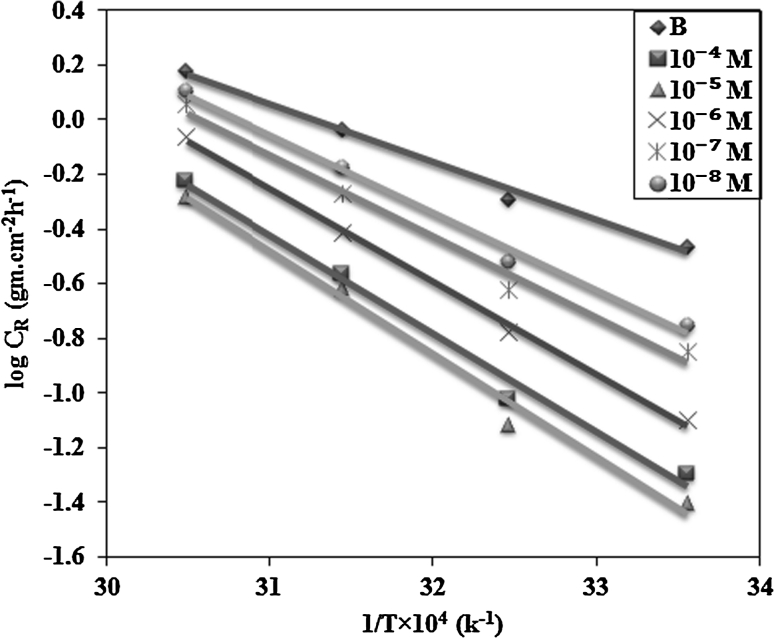
“In addition, the rise in Ea values in the presence of such inhibitors indicates a physisorption process (Hussein et al., 2013).”
BackgroundCaffeine and nicotine in 3% NaCl solution with CO 2 as corrosion inhibitors for low carbon steel
Espinoza-Vázquez, A., & Rodríguez‐Gómez, F. J. (2016) · RSC Advances · doi:10.1039/c6ra07673d · Cited by 31
Timothy, U. J., Mamudu, U., Solomon, M. M., Umoren, P. S., Igwe, I. O., Anyanwu, P. I., Aharanwa, B. C., Lim, R. C., Uchechukwu, T. O., & Umoren, S. A. (2024) · International Journal of Biological Macromolecules · doi:10.1016/j.ijbiomac.2024.132065 · Cited by 30
Sun, H., Wang, H., Wang, H., & Yan, Q. (2018) · Environmental Science Water Research & Technology · doi:10.1039/c8ew00322j · Cited by 30
El‐Dib, F. I., Eshaq, G., ElMetwally, A. E., & Hefni, H. H. H. (2020) · Advanced Industrial and Engineering Polymer Research · doi:10.1016/j.aiepr.2020.12.001 · Cited by 26
Self-citationSynthesis of new high molecular weight phosphorylated chitosans for improving corrosion protection
Coquery, C., Négrell, C., Caussé, N., Pébère, N., & David, G. (2018) · Pure and Applied Chemistry · doi:10.1515/pac-2018-0509 · Cited by 24
Mitigation of hydrogen production on C-steel in HCl solution using a benzylidene compound
Wanees, S. A. E., Saleh, M. G. A., Hegazy, M. A., Alahmdi, M. I., Soliman, K. A., Elsayed, N. H., Abdelfattah, M., Aljohani, M. M., Nooh, S. A., Asab, M. M., et al. (2023) · Journal of Adhesion Science and Technology · doi:10.1080/01694243.2023.2255042 · Cited by 23
Self-citationEssawy, A. A., Sayyah, S. M., & El-Nggar, A. M. (2017) · Journal of Photochemistry and Photobiology B Biology · doi:10.1016/j.jphotobiol.2017.05.044 · Cited by 23
Fouda, A. S., Elmorsi, M. A., Fayed, T. A., Shaban, S. M., & Azazy, O. (2018) · Surface Engineering and Applied Electrochemistry · doi:10.3103/s1068375518020060 · Cited by 23
Devi, G. N., Saranya, J., Manjubaashini, N., Thangadurai, T. D., Roopan, S. M., & Chitra, S. (2017) · Progress in Organic Coatings · doi:10.1016/j.porgcoat.2017.04.034 · Cited by 22
(2021) · International Journal of Corrosion and Scale Inhibition · doi:10.17675/2305-6894-2021-10-4-1 · Cited by 22
Sayyah, S. M., Essawy, A. A., & El-Nggar, A. M. (2015) · Reactive and Functional Polymers · doi:10.1016/j.reactfunctpolym.2015.07.005 · Cited by 24
Ismayilov, I. T., Stepanov, N., Efremenko, E. N., & Abbasov, V. М. (2015) · Moscow University Chemistry Bulletin · doi:10.3103/s0027131415040033 · Cited by 22
Wang, Q., Zhang, J., Shi, D., & Du, M. (2015) · Journal of Surfactants and Detergents · doi:10.1007/s11743-015-1717-3 · Cited by 22
Essawy, A. A., Sayyah, S. M., & El-Nggar, A. M. (2015) · RSC Advances · doi:10.1039/c5ra20343k · Cited by 21
Alshammari, M. S., Essawy, A. A., El-Nggar, A. M., & Sayyah, S. M. (2020) · Journal of Chemistry · doi:10.1155/2020/3297184 · Cited by 20
“Starting with the shrimp shells, Chitosan was extracted according to the methodology described in literature [22, 23] (M.”
MethodTümerkan, E. T. A., Kozacı, L. D., Miri, A. K., Maharjan, S., & Cecen, B. (2023) · Materials Today Sustainability · doi:10.1016/j.mtsust.2023.100445 · Cited by 22
Functional chitosan surfactants for corrosion inhibition in petroleum industry
Hefni, H. H. H. (2024) · International Journal of Biological Macromolecules · doi:10.1016/j.ijbiomac.2024.134704 · Cited by 21
Self-citationChidiebere, M. A., Oguzie, E. E., Liu, L., Li, Y., & Wang, F. (2014) · Journal of Dispersion Science and Technology · doi:10.1080/01932691.2014.956114 · Cited by 19
Negm, N. A. M., El‐Farargy, A. F., Halim, E. A. A., El‐lboudy, S., & Ahmed, A. E. I. (2014) · Journal of Surfactants and Detergents · doi:10.1007/s11743-014-1599-9 · Cited by 19
Bajpai, P. (2015) · Elsevier eBooks · doi:10.1016/b978-0-12-803409-5.00008-2 · Cited by 29
“Hussein et al.”
Shaban, S. M., Fouda, A. S., Elmorsi, M. A., Fayed, T. A., & Azazy, O. (2018) · Anti-Corrosion Methods and Materials · doi:10.1108/acmm-08-2017-1824 · Cited by 18
Sangeetha, Y., Meenakshi, S., & Sundaram, C. S. (2015) · Journal of Applied Polymer Science · doi:10.1002/app.43004 · Cited by 17
Wanees, S. A. E. (2020) · Egyptian Journal of Chemistry · doi:10.21608/ejchem.2020.42128.2849 · Cited by 16
Oghenekohwo, V. J., Maamoun, A. A., Zulfiqar, S., Forrester, M. J., Slovák, V., Wang, T., & Cochran, E. W. (2023) · ACS Applied Polymer Materials · doi:10.1021/acsapm.3c02269 · Cited by 17
Saleh, M. G. A., Alfakeer, M., Atef, Y., Al-Juaid, S. S., Ghanem, A., Kamel, M. M., Rashwan, S. M., Elsadek, M. G. A., & Wanees, S. A. E. (2024) · Inorganic Chemistry Communications · doi:10.1016/j.inoche.2024.112699 · Cited by 14
El‐Dib, F. I., Hussein, M. H. M., Hefni, H. H. H., Eshaq, G., & ElMetwally, A. E. (2014) · Journal of Applied Polymer Science · doi:10.1002/app.41078 · Cited by 12
Self-citationChitosan-Based Green and Sustainable Corrosion Inhibitors for Carbon Steel
Verma, C., Kumar, A. M., Mazumder, M. A. J., & Quraishi, M. A. (2018) · InTech eBooks · doi:10.5772/intechopen.74989 · Cited by 13
“Similar to most of the carbohydrates, chitosan is rich in functional groups (hydroxyl and amino) it would be a potential inhibitor for metallic corrosion [15, 16].”
BackgroundMethodWang, M., Zhang, J., Wang, Q., & Du, M. (2019) · International Journal of Electrochemical Science · doi:10.20964/2019.09.24 · Cited by 13
Dey, S., Talukdar, A., & Bhattacharya, S. (2025) · Discover Chemistry. · doi:10.1007/s44371-025-00217-9 · Cited by 18
“[66 ].”
Essawy, A. A., Hefni, H. H. H., & El-Nggar, A. M. (2019) · Springer eBooks · doi:10.1007/978-3-030-05399-4_5 · Cited by 13
Self-citationInnovative surfactant of Gemini-type for dissolution mitigation of steel in pickling HCl medium
Kamel, M. M., Hegazy, M. A., Rashwan, S. M., & Kotb, M. E. (2020) · Chinese Journal of Chemical Engineering · doi:10.1016/j.cjche.2020.09.051 · Cited by 12
Self-citationFekry, M., Elmesallamy, S. M., El‐Rahman, N. R. A., Bekhit, M., & El‐saied, H. A. (2022) · Environmental Science and Pollution Research · doi:10.1007/s11356-022-20169-2 · Cited by 12
“The degree of deacetylation is 92% (Hussein et al. 2013).”
Mitigation of marine microbial corrosion using natural products based on chitosan polymer
Kobisy, A. S., Guan, F., Duan, J., Tawfik, S. M., Guo, D., Wang, Y., & Salgar-Chaparro, S. J. (2025) · International Journal of Biological Macromolecules · doi:10.1016/j.ijbiomac.2025.145429 · Cited by 11
Modified chitosan as an effective inhibitor against the corrosion of C-steel in HCl solutions
Saleh, M. G. A., Alfakeer, M., Felaly, R. N., Al-Juaid, S. S., Soliman, K. A., & Wanees, S. A. E. (2024) · Journal of Adhesion Science and Technology · doi:10.1080/01694243.2024.2428401 · Cited by 9
“The increase in the E a value computed in the existence of the BIMC compound with a decrease in the anti-corrosion efficacy would offer the probability of the physisorption process of the BIMC compound on the examined metal surface [65–67].”
Nathiya, R. S., Perumal, S., Murugesan, V., Anbarasan, P. M., & Raj, V. (2017) · Journal of Bio- and Tribo-Corrosion · doi:10.1007/s40735-017-0103-2 · Cited by 9
Saleh, M. G. A., & Wanees, S. A. E. (2022) · Desalination and Water Treatment · doi:10.5004/dwt.2022.28374 · Cited by 9
Talha, M. (2024) · Corrosion Reviews · doi:10.1515/corrrev-2024-0067 · Cited by 8
The Effect of Electrophoretic Deposition Current to Tinplate Coating with Chitosan
Gapsari, F., Setyarini, P. H., & Fajrin, E. F. (2019) · International Journal of Integrated Engineering · doi:10.30880/ijie.2019.11.05.003 · Cited by 7
“This kind of material is a natural polymer which is extracted from shells, bones, or skin in seafood waste [19].”
BackgroundThulasi, G., Pragathiswaran, C., & Anusuya, N. (2020) · Materials Today Proceedings · doi:10.1016/j.matpr.2020.08.647 · Cited by 11
Saleh, M. G. A., Alfakeer, M., Felaly, R. N., Al-Juaid, S. S., Soliman, K. A., Hegazy, M. A., Abdelfattah, M. A. A., Abdallah, M., & Wanees, S. A. E. (2025) · Journal of Dispersion Science and Technology · doi:10.1080/01932691.2025.2520872 · Cited by 6
Self-citationBiocascading: Platform Molecules, Value Added Chemicals, and Bioactives
Cecchi, T. (2021) · Springer eBooks · doi:10.1007/978-3-030-63436-0_5 · Cited by 7
Environmentally benign heterocyclic corrosion inhibitors
Quraishi, M. A., Chauhan, D. S., & Saji, V. S. (2020) · Elsevier eBooks · doi:10.1016/b978-0-12-818558-2.00009-6 · Cited by 6
β-amino Acid-Derived Triazols as Corrosion Inhibitors for API 5L X52 Steel Immersed in 1 M HCl
Espinoza-Vázquez, A., Rodríguez‐Gómez, F. J., Juaristi, E., Escudero‐Casao, M., Negrón-Silva, G. E., Ángeles-Beltrán, D., & Palomar-Pardave, M. E. (2018) · International Journal of Electrochemical Science · doi:10.20964/2018.08.60 · Cited by 5
Green Corrosion Inhibitors from Biomass and Natural Sources
Grassino, A. N. (2021) · Materials research foundations · doi:10.21741/9781644901496-3 · Cited by 4
Acila, M., Chemchem, M., merabet, L., Laib, K., & Chemchem, A. (2026) · Surfaces and Interfaces · doi:10.1016/j.surfin.2026.109434 · Cited by 3
Recent Development in Energy Conversion Systems
(2024) · Frontiers research topics · doi:10.3389/978-2-8325-4636-9 · Cited by 3
The Promise of Functionalized Chitosan‐Based Self‐Healing Hydrogels
Rumon, M. M. H., Sayem, M., Halder, S. K., Brishti, R. S., Das, A., Hasan, M. A., & Shakil, M. S. (2025) · Advances in Polymer Technology · doi:10.1155/adv/4913728 · Cited by 4
Bioactives and Bioactivities from Food Byproducts
Radha, Prakash, S., Kumari, N., Sharma, N., Puri, S., Singh, J., Thakur, M., Pundir, A., & Kumar, M. (2024) · Current Food Science and Technology Reports · doi:10.1007/s43555-024-00039-3 · Cited by 3
“In seafood or aquatic by-products, chitosan derived from crus - tacean waste exhibits antibacterial properties [24 ].”
Comparative Study of Different Organic Molecules as an Anti-Corrosion for Mild Steel in Kerosene
Yaqo, E. A., Anaee, R. A. M., & Abdulmajeed, M. H. (2020) · Engineering and Technology Journal · doi:10.30684/etj.v38i3a.507 · Cited by 3
“These derivatives have great importance in many application fields and they showed different biological activities such as antiviral, anticonvulsant, antibacterial, antifungal, anticancer activities, anti-inflammatory [6-8].”
BackgroundFood Processing Industries, Food Waste Classification and Handling, Target Compounds
Cecchi, T. (2021) · Springer eBooks · doi:10.1007/978-3-030-63436-0_2 · Cited by 3
Natural Polymers and Their Derivatives as Corrosion Inhibitors for the Oil and Gas Industry
Rahiman, A. F. S. A., Menaka, R., & Sethumanickam, S. (2022) · doi:10.1002/9783527835621.ch2 · Cited by 3
Umoren, S. A., Solomon, M. M., & Saji, V. S. (2022) · Elsevier eBooks · doi:10.1016/b978-0-12-823854-7.00006-0 · Cited by 2
Metadata
- Authors
- Hussein, M. H. M., El‐Hady, M. F., Shehata, H. A. H., Hegazy, M. A., & Hefni, H. H. H.
- Affiliations
- Egyptian Petroleum Research Institute (EG)
- Al-Azhar University (EG)
- Corresponding author
- Hefni, Hassan H. H.
- Venue
- Journal of Surfactants and Detergents
- Publisher
- Wiley
- Published
- 2012-08-24
- Volume
- 16
- Issue
- 2
- Pages
- 233-242
- ISSN
- 1097-3958 (ISSN-L)
- 1558-9293
- PMC
- PMC3573188
- OpenAlex
- W2079622158
- Cited by
- 119
- References
- 57
- Citations by year
- 2026: 2 · 2025: 9 · 2024: 13 · 2023: 9 · 2022: 9 · 2021: 10 · 2020: 12 · 2019: 7 · 2018: 11 · 2017: 7 · 2016: 4 · 2015: 19 · 2014: 5 · 2013: 2
- FWCI
- 3.82
- Type
- journal article
- Language
- en
- Open access
- bronze
- doi.org
- Locations
- Journal of Surfactants and Detergents (publishedVersion)
- Europe PMC (PubMed Central) (publishedVersion, cc-by)
- PubMed Central (publishedVersion, cc-by)
- PubMed (publishedVersion)
- Topics
- Physical Sciences › Materials Science › Materials Chemistry › Corrosion Behavior and Inhibition
- Physical Sciences › Materials Science › Biomaterials › Nanocomposite Films for Food Packaging
- Life Sciences › Immunology and Microbiology › Applied Microbiology and Biotechnology › Antimicrobial agents and applications
- Keywords
- chitosan, chitosan derivatives, corrosion inhibitors, carbon steel corrosion, hydrochloric acid, antibacterial activity, degree of deacetylation, molecular weight, Enterococcus faecalis, Escherichia coli, Staphylococcus aureus, Candida albicans, minimum inhibitory concentration
About these checks
Registry, retraction, Cites and statistics results are computed, not judged, with one exception: a printed reference that no index lists is read once by a model before it counts as a citation error. Claims are extracted by a model and kept only when their quote appears verbatim in the text; each cited source is then checked, with a model’s help, for whether it says what the claim relies on. Those verdicts can be wrong — read the claim’s quote and the cited source before relying on one.
Statistics and arithmetic are recomputed, not judged.
Confidence bands are shown only for fields calibrated on our annotated test set. None is calibrated yet, so no band is shown.
What counts as a claim ›How we measure confidence ›How we check this ›
Are you an author, or do you see a problem with this page? Request a review
Data sources
Bibliographic data: Semantic Scholar, OpenAlex, Crossref.
Contains information from the Semantic Scholar Academic Graph Datasets, made available under the ODC Attribution License (ODC-BY 1.0).
Semantic Scholar’s data is described in: Kinney, R., et al. (2023). The Semantic Scholar Open Data Platform. arXiv:2301.10140.
