

The DOI matches its Crossref record; 44 of the 48 references it cites were found in a registry or an index; none of the 49 sources its claims cite is checked for support yet.
Textbooks as a Resource for Teaching Mathematics Through Problem Posing: Catalyzing Instructional Change
Open accessAbstract
Research has shown that teaching mathematics through problem posing, or problem-posing based learning (P-PBL), is a student-centered instructional approach that can improve students’ cognitive and affective aspects of learning. However, since textbooks continue to include very few opportunities for problem posing, researchers have been working to support teachers to integrate problem posing into classroom instruction, drawing on textbooks as a resource. In this paper, we describe how teachers in the P-PBL Project have engaged in instructional change with support from researchers around a high-quality middle school mathematics textbook series. Through curriculum analysis and cases drawn from meetings with project teachers, teacher journals, and classroom observations, we examine problem-posing tasks in textbooks and how project teachers use textbooks as a resource for P-PBL. We found that, for a given curriculum, problem posing catalyzes changes in teachers’ classroom instruction, but care must be taken to connect such changes to textbook lesson learning goals. This study also shows the affordances and challenges of textbooks the teachers encountered as they learned about P-PBL. To conclude, we propose promising future directions for research based on observations stemming from our work with teachers.
Overview
CoChat Summary
TL;DR
This study examines how middle school teachers use Illustrative Mathematics (IM) textbooks as resources for problem-posing-based learning (P-PBL), analyzing existing Co-Craft Questions tasks and cases of teacher redesign. It finds that problem posing can catalyze instructional change, but changes must stay tied to textbook lesson learning goals and proceed in small steps.
Key findings
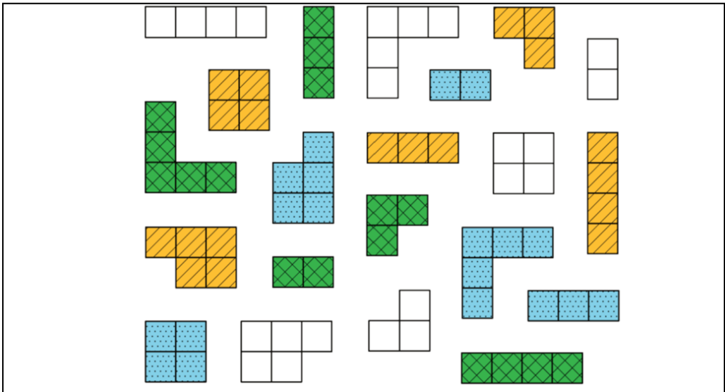
- IM middle school textbooks contained 70 Co-Craft Questions tasks in all: 19 in Grade 6, 27 in Grade 7, and 24 in Grade 8. The most common representations were informational statements (26%), pictures (21%), and graphs (14%); Grade 6 had the greatest variety of representations (10 types).
- PP prompts were mostly “Write down possible mathematical questions that might be asked about the situation” (76%) and “Write down possible mathematical questions that could be answered about the situation” (21%), which the authors say suggests PP incorporation is not yet entirely systematic.
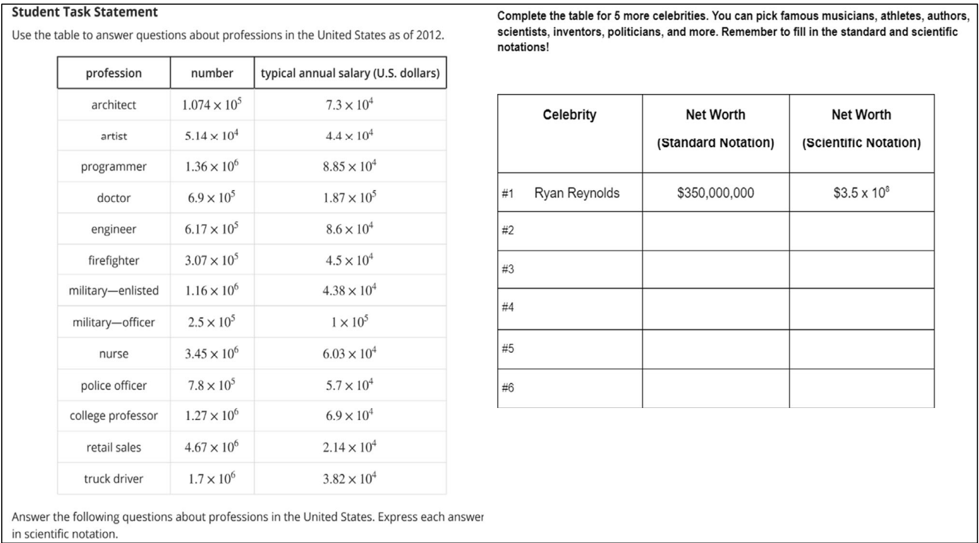
- Teachers developed additional PP tasks from textbooks through three strategies: changing prompts to convert problem-solving tasks into PP tasks, modifying problem situations to increase engagement while maintaining learning goals, and involving students in designing assessment tasks.
- Textbooks mediated instructional change: IM provided footholds but minimal implementation support, teachers sometimes conflated PP with PS, and the ASSSC discussion protocol helped center posed-problem handling on textbook lesson learning goals; small incremental changes were more feasible than large lesson overhauls.
Methods
- Qualitative curriculum analysis and case study within the 4-year P-PBL Project; the team searched all IM middle school textbooks for existing PP tasks, especially Co-Craft Questions, cataloguing features such as grade level, representations, and prompt wording.
- The project worked with 35 middle school mathematics teachers across three school districts; this paper drew examples from four teachers. Data sources included IM textbooks, teacher journal entries, recorded professional learning meetings and summer workshops, classroom observations, and individual planning meetings.
- Thematic analysis of journal entries identified themes about shifts in teachers’ practices and agency; the larger project uses a quasi-experimental design coupled with design-based research and improvement science, but this paper reports curriculum analysis and cases.
Limitations
- Stated: the authors do not claim their strategies are the only viable P-PBL approaches; they are in the early stages of exploring the ASSSC protocol; and they chose IM, a high-quality curriculum, while other textbooks may have fewer affordances.
- Stated: careful interpretation of textbook design choices tests the limits of what many teachers can practically afford, and district pacing constrained richer PP activities in Ms. Khan’s case.
- Evident from the text: the illustrative cases come from only four of 35 project teachers, and this paper reports no student outcome effect sizes; the findings are qualitative and context-specific rather than generalizable.
Model-written summary. Check it against the paper before relying on it.
Integrity signals
Registry
Cites
Statistics
Figures


Verification
Claims the paper makes
0 Valid · 2 Not valid · 34 Not checked · 70 Own results and interpretations
A result the paper states — it cites no source for it, so there is none to check. The quote shows it is in the paper.
In the paper
“However, not surprisingly, teachers faced challenges with implementation.”
§ Textbooks as a Resource for Teaching Mathematics Through Problem Posing: Catalyzing Instructional Change > 5.1 Project Efforts to Help Teachers Implement PP Tasks in the IM Context
plain- Asserted: passes — The authors put it forward as true.
- Checkable: passes — It can be checked against evidence.
- Load-bearing: passes — The paper’s conclusions depend on it.
- Based: passes — The paper gives a reason why it holds.
A result the paper states — it cites no source for it, so there is none to check. The quote shows it is in the paper.
In the paper
“these strategies and the instructional and discussion models reflect the size of steps that appear to work for teachers to increase their understanding of P-PBL and gradually change their instruction within the framework of high-quality textbooks.”
§ Textbooks as a Resource for Teaching Mathematics Through Problem Posing: Catalyzing Instructional Change > 6.1 Small Steps Are Critical
hedgedstates an association- Asserted: passes — The authors put it forward as true.
- Checkable: unclear — It is unclear whether it could be checked against evidence.
- Load-bearing: passes — The paper’s conclusions depend on it.
- Based: passes — The paper gives a reason why it holds.
A result the paper states — it cites no source for it, so there is none to check. The quote shows it is in the paper.
In the paper
“we have examined how textbooks can be resources in the process of P-PBL instructional change and shared specific strategies for teachers to develop PP tasks based on textbooks with only a small proportion of PP tasks.”
§ Textbooks as a Resource for Teaching Mathematics Through Problem Posing: Catalyzing Instructional Change > 6.2 P-PBL Instructional Change Influencing Mathematics Textbooks
plainstates an association- Asserted: passes — The authors put it forward as true.
- Checkable: passes — It can be checked against evidence.
- Load-bearing: passes — The paper’s conclusions depend on it.
- Based: passes — The paper gives a reason why it holds.
A result the paper states — it cites no source for it, so there is none to check. The quote shows it is in the paper.
In the paper
“challenges arose from trying to take too big a leap to change an entire textbook lesson at once.”
§ Textbooks as a Resource for Teaching Mathematics Through Problem Posing: Catalyzing Instructional Change > 6.1 Small Steps Are Critical
plainstates a causeSingle case- Asserted: passes — The authors put it forward as true.
- Checkable: passes — It can be checked against evidence.
- Load-bearing: passes — The paper’s conclusions depend on it.
- Based: passes — The paper gives a reason why it holds.
A result the paper reports from its own data — it cites no other source for it, so there is none to check. The quote shows it is in the paper.
In the paper
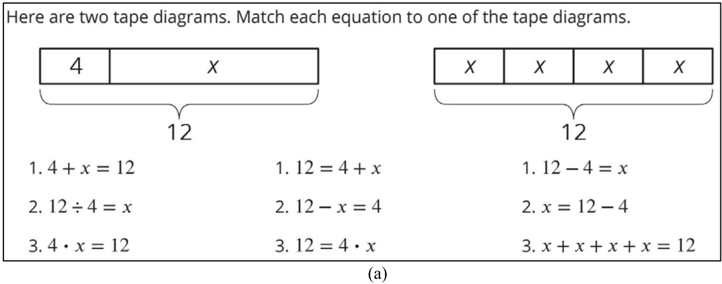
“After this discussion, students completed the original matching activity in the textbook (Fig. 2), confidently matching equations to diagrams not included in the PP activity.”
§ Textbooks as a Resource for Teaching Mathematics Through Problem Posing: Catalyzing Instructional Change > 4.3.1 Changing Prompts to Convert PS Tasks into PP Tasks
plain- Asserted: passes — The authors put it forward as true.
- Checkable: passes — It can be checked against evidence.
- Load-bearing: passes — The paper’s conclusions depend on it.
- Based: passes — The paper gives a reason why it holds.
39 more claims
Create a free account to see all 106 claims and to verify the 36 references still open.
- Probably not a substantial claim. 49
- It may state two separate claims as one. 21
- The quote only partly states this claim. 1
Citations
Cites
Second Handbook of Research on Mathematics Teaching and Learning.
Lester, F. (2007) · Cited by 3,090
Teaching Practice: A Cross-Professional Perspective
Grossman, P., Compton, C., Igra, D., Ronfeldt, M., Shahan, E., & Williamson, P. W. (2009) · Teachers College Record: The Voice of Scholarship in Education · doi:10.1177/016146810911100905 · Cited by 1,508
Handbook of International Research in Mathematics Education
English, L. D. (2002) · Routledge eBooks · doi:10.4324/9781410602541 · Cited by 642
Third International Handbook of Mathematics Education
(2013) · Springer eBooks · doi:10.1007/978-1-4614-4684-2 · Cited by 633
Stein, M. K., & Lane, S. (1996) · Educational Research and Evaluation · doi:10.1080/1380361960020103 · Cited by 592
Fostering creativity through instruction rich in mathematical problem solving and problem posing
Silver, E. A. (1997) · Zentralblatt für Didaktik der Mathematik · doi:10.1007/s11858-997-0003-x · Cited by 436
Conceptualizing the curriculum enactment process in mathematics education
Remillard, J. T., & Heck, D. J. (2014) · ZDM · doi:10.1007/s11858-014-0600-4 · Cited by 322
Parise, L. M., & Spillane, J. P. (2010) · The Elementary School Journal · doi:10.1086/648981 · Cited by 270
(2013) · Routledge eBooks · doi:10.4324/9780203053515 · Cited by 242
Cai, J., & Hwang, S. (2020) · International Journal of Educational Research · doi:10.1016/j.ijer.2019.01.001 · Cited by 215
Self-citation
Research works printed but not linked: 4
- Ball, D. L., & Cohen, D. K. (1996). Reform by the book: What is-or might be-the role of curriculum materials in teacher learning and instructional reform. Educational Researcher, 25, 6–14. https://doi.org/10.3102/0013189X0250090. · doi:10.3102/0013189x0250090
- Kelemanik, G., Lucenta, A., & Creighton, S. J. (2016). Routines for reasoning: Fostering the mathematical practices in all students. Heinemann.
- Krawitz, J., & Wiehe, K. (2024). Impact of prompts on expectancies for success, task values, and costs in problem posing. In T. Evans, O. Marmur, J. Hunter, G. Leach, & J. Jhagroo (Eds.), Proceedings of the 47th conference of the international group for the psychology of mathematics education (Vol. 3, pp. 161–168). PME.
- Park, M., Lee, E. J., & Cho, J. W. (2019). An analysis of problem-posing tasks in 7th grade mathematics textbooks based on 2015 national mathematics curriculum. Journal of the Korean Society of Mathematical Education Series E: Communications of Mathematical Education, 33(2), 123–139.
Cited by
Fan, L., Qi, C., Seah, W. T., & Liu, Q. (2025) · ZDM · doi:10.1007/s11858-025-01736-6 · Cited by 12
Mathematical Problem-Posing Research: Revisiting Some Answered and Unanswered Questions
Ölmez, İ. B., Han, J., Hwang, S., & Cai, J. (2025) · Avances de Investigación en Educación Matemática · doi:10.35763/aiem28.8124 · Cited by 4
Self-citationNew Advances and Directions of Mathematical Problem-Posing Research
Cai, J., Лейкин, Р., & Robison, V. (2026) · Research in mathematics education · doi:10.1007/978-3-032-05493-7_1 · Cited by 3
Self-citationReviewing the Current State of Knowledge in Mathematical Problem-Posing Research
Ölmez, İ. B., Hwang, S., Han, J., & Cai, J. (2026) · Research in mathematics education · doi:10.1007/978-3-032-05493-7_8 · Cited by 2
Self-citationde Coahuila, U. A., Can, S. D. C., Muñoz, G. M., & CICATA-IPN (2025) · Investigación e Innovación en Matemática Educativa · doi:10.46618/iime.256
Metadata
- Authors
- Hwang, S., Han, J., Muirhead, F., Brown, A., Melville, M., & Cai, J.
- Affiliations
- University of Delaware (US)
- Purdue University Fort Wayne (US)
- Corresponding author
- Cai, Jinfa
- Venue
- ZDM – Mathematics Education
- Published
- 2025-05-12
- Volume
- 57
- Issue
- 5
- Pages
- 987-1001
- ISSN
- 1615-679X (ISSN-L)
- 1863-9690
- 1863-9704
- OpenAlex
- W4410286421
- Semantic Scholar
- 310b82c8f231746ff65bbbbaa65a65e260eb065d
- Cited by
- 14
- References
- 48
- Citations by year
- 2026: 10 · 2025: 4
- FWCI
- 11.25
- Type
- journal article
- Language
- en
- Open access
- hybrid
- doi.org
- Licence
- cc-by
- creativecommons.org/licenses/by/4.0 (tdm)
- creativecommons.org/licenses/by/4.0 (vor)
- Locations
- ZDM (publishedVersion, cc-by)
- Funders
- National Science Foundation (DRL-2101552)
- Topics
- Social Sciences › Education › Mathematics Education and Teaching Techniques
- Social Sciences › Education › Problem and Project Based Learning
- Social Sciences › Education › Mathematics Education and Pedagogy
- Keywords
- problem posing, mathematics textbooks, instructional change, junior high school mathematics, teacher professional development, curriculum evaluation, student-centered instruction, learning objectives, teachers' journal
About these checks
Registry, retraction, Cites and statistics results are computed, not judged, with one exception: a printed reference that no index lists is read once by a model before it counts as a citation error. Claims are extracted by a model and kept only when their quote appears verbatim in the text; each cited source is then checked, with a model’s help, for whether it says what the claim relies on. Those verdicts can be wrong — read the claim’s quote and the cited source before relying on one.
A language model drew the claims from the paper on 2026-11-15, under version 3 of the claim definition (model deepseek-v4.1-flash, prompt extract-v3).
A second model labelled each claim on 2026-11-15 (model jev-1.13-20260917, definition revision gold-guideline-v0.2).
Statistics and arithmetic are recomputed, not judged.
Confidence bands are shown only for fields calibrated on our annotated test set. None is calibrated yet, so no band is shown.
What counts as a claim ›How we measure confidence ›How we check this ›
Are you an author, or do you see a problem with this page? Request a review
How to cite
Cite CoChat for the checks on this page, and the paper for its own findings.
- This page
- CoChat. (2026). Citation check: Textbooks as a Resource for Teaching Mathematics Through Problem Posing: Catalyzing Instructional Change. https://app.cochat.ai/papers/10.1007/s11858-025-01694-z
- The paper
- Hwang, S., Han, J., Muirhead, F., Brown, A., Melville, M., & Cai, J. (2025). Textbooks as a Resource for Teaching Mathematics Through Problem Posing: Catalyzing Instructional Change. ZDM – Mathematics Education. https://doi.org/10.1007/s11858-025-01694-z
Data sources
Bibliographic data: Semantic Scholar, OpenAlex, Crossref.
Contains information from the Semantic Scholar Academic Graph Datasets, made available under the ODC Attribution License (ODC-BY 1.0).
Semantic Scholar’s data is described in: Kinney, R., et al. (2023). The Semantic Scholar Open Data Platform. arXiv:2301.10140.
