

The DOI matches its Crossref record; 1 of the 1 references it cites were found in a registry or an index.
Testing the single-pass VOC removal efficiency of an active green wall using methyl ethyl ketone (MEK)
Open accessAbstract
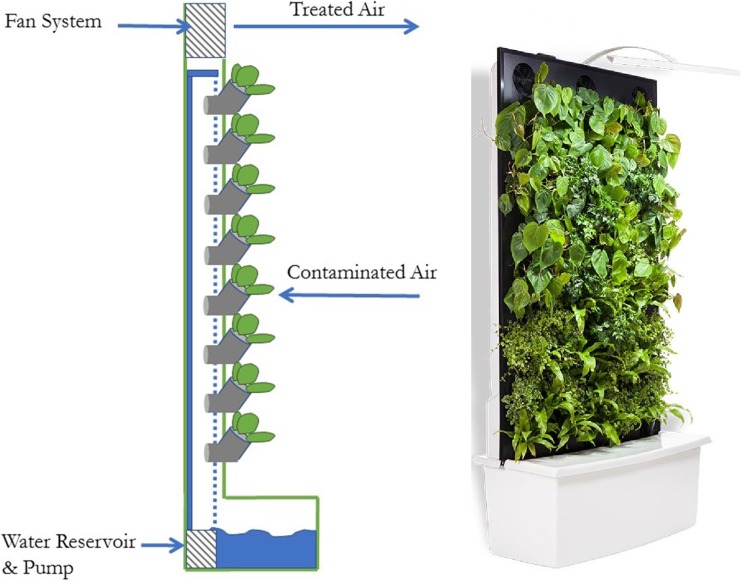
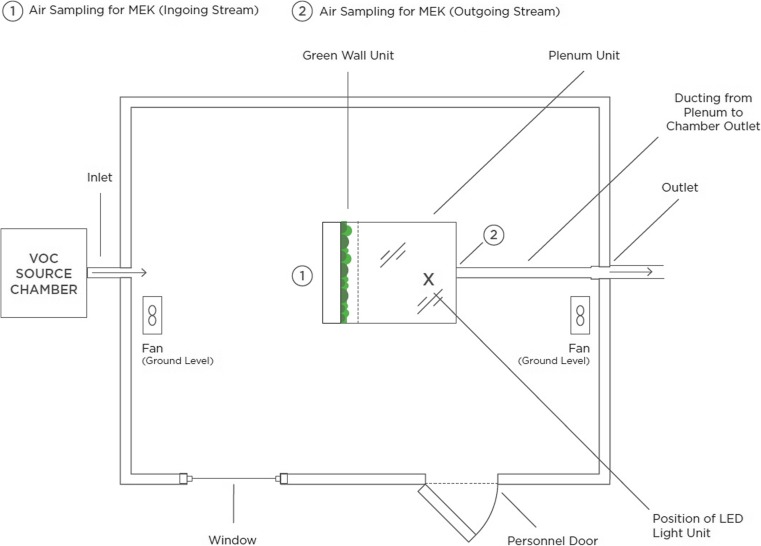
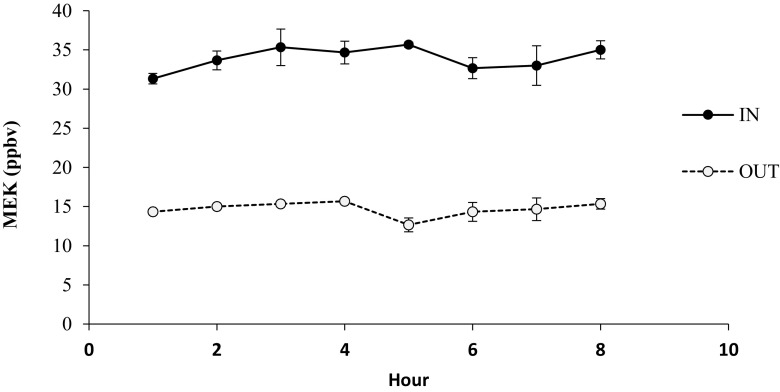
In recent years, research into the efficacy of indoor air biofiltration mechanisms, notably living green walls, has become more prevalent. Whilst green walls are often utilised within the built environment for their biophilic effects, there is little evidence demonstrating the efficacy of active green wall biofiltration for the removal of volatile organic compounds (VOCs) at concentrations found within an interior environment. The current work describes a novel approach to quantifying the VOC removal effectiveness by an active living green wall, which uses a mechanical system to force air through the substrate and plant foliage. After developing a single-pass efficiency protocol to understand the immediate effects of the system, the active green wall was installed into a 30-m 3 chamber representative of a single room and presented with the contaminant 2-butanone (methyl ethyl ketone; MEK), a VOC commonly found in interior environments through its use in textile and plastic manufacture. Chamber inlet levels of MEK remained steady at 33.91 ± 0.541 ppbv. Utilising a forced-air system to draw the contaminated air through a green wall based on a soil-less growing medium containing activated carbon, the combined effects of substrate media and botanical component within the biofiltration system showed statistically significant VOC reduction, averaging 57% single-pass removal efficiency over multiple test procedures. These results indicate a high level of VOC removal efficiency for the active green wall biofilter tested and provide evidence that active biofiltration may aid in reducing exposure to VOCs in the indoor environment.
Overview
The claims and statistics of this paper haven’t been checked yet.
Run the check — free, no account needed. It reads the open-access text and checks the sources it cites.
Integrity signals
Registry
Cites
Statistics
Figures
Verification
Claims the paper makes
The claims and statistics of this paper haven’t been checked yet.
Run the check — free, no account needed. It reads the open-access text and checks the sources it cites.
Self-check
Percentages, sums and reported differences re-computed from the paper’s own numbers.
The self-check needs the paper’s full text.
Citations
Cites
Volatile emissions from common consumer products
Steinemann, A. (2015) · Air Quality, Atmosphere & Health · doi:10.1007/s11869-015-0327-6 · Cited by 156
Research works printed but not linked: 42
- Arif AA, Shah SM (2007) Association between personal exposure to volatile organic compounds and asthma among US adult population. Int Arch Occup Environ Health 80:711–719 · DOI
- Ayala A, Brauer M, Mauderly JL, Samet JM (2012) Air pollutants and sources associated with health effects. Air Quality Atmos Health 5:151–167 · DOI
- Aydogan A, Montoya LD (2011) Formaldehyde removal by common indoor plant species and various growing media. Atmos Environ 45:2675–2682 · DOI
- Bernstein JA, Alexis N, Bacchus H, Bernstein IL, Fritz P, Horner E, Li N, Mason S, Nel A, Oullette J, Reijula K, Reponen T, Seltzer J, Smith A, Tarlo SM (2008) The health effects of nonindustrial indoor air pollution. J Allergy Clin Immunol 121:585–591 · DOI
- Chen W, Zhang JS, Zhang Z (2005) Performance of air cleaners for removing multiple volatile organic compounds in indoor air. ASHRAE Trans 11:1101–1104
- Cosnier F, Grossmann S, Nunge H, Brochard C, Muller S, Lambert-Xolin A-M, Sebillaud S, Rieger B, Thomas A, Décret M-J, Burgart M, Gaté L, Cossec B, Campo P (2017) Metabolism of inhaled methylethylketone in rats. Drug Chem Toxicol 1–9. http://dx.doi.org/10.1080/01480545.2017.1289220 · DOI
- Da Silva CFFP, Rana C, Maskell D, Dengel A, Ansell MP, Ball RJ (2016) Influence of eco-materials on indoor air quality. Green Mater 4:72–80 · DOI
- Darlington A, Dat J, Dixon M (2001) The biofiltration of indoor air: air flux and temperature influences the removal of toluene, ethylbenzene, and xylene. Environ Sci Technol 35:240–246 · DOI
- Dela Cruz M, Christensen JH, Thomsen JD, Müller R (2014a) Can ornamental potted plants remove volatile organic compounds from indoor air?—a review. Environ Sci Pollut Res 21:13909–13928 · DOI
- Dela Cruz M, Müller R, Svensmark B, Pedersen JS, Christensen JH (2014b) Assessment of volatile organic compound removal by indoor plants—a novel experimental setup. Environ Sci Pollut Res 21:7838–7846 · DOI
- Macdonald Gibson JM, Brammer AS, Davidson CA, Folley T, Launay FJP, Thomsen JTW (2013). Burden of disease from indoor air pollution. In: MacDonald Gibson J, Brammer A, Davidson C, Folley T, Launay F, Thomsen J (eds) Environmental burden of disease assessment. Springer Netherlands, Dordrecht, pp 109-132. http://dx.doi.org/10.1007/978-94-007-5925-1 · DOI
- Goldstein RS, Hewitt WR, Hook JB (2013) Toxic interactions. Academic Press Inc, San Diego
- Irga PJ, Torpy FR, Burchett MD (2013) Can hydroculture be used to enhance the performance of indoor plants for the removal of air pollutants? Atmos Environ 77:267–271 · DOI · Paper page
- Kim KJ, Kim HJ, Khalekuzzaman M, Yoo EH, Jung HH, Jang HS (2016) Removal ratio of gaseous toluene and xylene transported from air to root zone via the stem by indoor plants. Environ Sci Pollut Res 23:6149–6158 · DOI
- Lai HK et al (2004) Personal exposures and microenvironment concentrations of PM2.5, VOC, NO2 and CO in Oxford, UK. Atmos Environ 38:6399–6410 · DOI
- Lawin H, Fanou LA, Hinson V, Wanjiku J, Ukwaja NK, Gordon SB, Fayomi B, Balmes JR, Houngbegnon P, Avokpaho E, Sanni A (2017) Exhaled carbon monoxide: a non-invasive biomarker of short-term exposure to outdoor air pollution. BMC Public Health 17:320 · DOI
- Lee CH, Choi B, Chun MY (2015) Stabilization of soil moisture and improvement of indoor air quality by a plant-biofilter integration system. Kor J Hort Sci Technol 33:751–762
- Liu Y-J, Mu Y-J, Zhu Y-G, Ding H, Crystal Arens N (2007) Which ornamental plant species effectively remove benzene from indoor air? Atmos Environ 41:650–654 · DOI
- Lu Y, Liu J, Yoshino H, Lu B, Jiang A, Li F (2012) Use of biotechnology coupled with bake-out exhaust to remove indoor VOCs. Indoor Built Environ 21:741–748 · DOI
- Mitchell B (2013) Building materials can be a major source of indoor air pollution. Occup Health Saf 82:62–64
- Orwell RL, Wood RA, Tarran J, Torpy FR, Burchett M (2004) Removal of benzene by the indoor plant/substrate microcosm and implications for air quality. Water Air Soil Pollut 157:193–207 · DOI
- Orwell RL, Wood RA, Burchett MD, Tarran J, Torpy F (2006) The potted-plant microcosm substantially reduces indoor air VOC pollution: II. laboratory study. Water. Soil and Air Pollution 177:59–80 · DOI
- Pipal AS, Kumar A, Jan R, Taneja A (2012) Role of plants in removing indoor air pollutants. In: Chemistry of phytopotentials: health, energy and environmental perspectives. pp 319–321. https://doi.org/ · DOI
- Ren H, Koshy P, Chen W-F, Qi S, Sorrell CC (2017) Photocatalytic materials and technologies for air purification. J Hazard Mater 325:340–366 · DOI
- Revah S, Morgan-Sagastume JM (2005) Methods of odor and VOC control. In: Shareefdeen Z, Singh A (eds) Biotechnology for odor and air pollution control. Springer, Berlin Heidelberg, pp 29–63. https://doi.org/10.1007/3-540-27007-8_3 · DOI
- Rodgers K, Hutzel W, Dana M, Handy R (2012) Can plants save money: a look at the biowall. International High Performance Buildings Conference. West Lafayette, Indiana
- Rumchev K, Spickett J, Bulsara M, Phillips M, Stick S (2004) Association of domestic exposure to volatile organic compounds with asthma in young children. Thorax 59:746–751 · DOI · Paper page
- Siswanto D, Chhon Y, Thiravetyan P (2016) Uptake and degradation of trimethylamine by Euphorbia milii. Environ Sci Pollut Res 23:17067–17076 · DOI
- Soreanu G, Dixon M, Darlington A (2013) Botanical biofiltration of indoor gaseous pollutants—a mini-review. Chem Eng J 229:585–594 · DOI
- Su F-C, Mukherjee B, Batterman S (2011) Trends of VOC exposures among a nationally representative sample: analysis of the NHANES 1988 through 2004 data sets. Atmos Environ 45:4858–4867 · DOI
- Thomas CK, Kim KJ, Kays SJ (2015) Phytoremdiation of indoor air. Hortscience 50:765–768 · DOI
- Torpy FR, Zavattaro M, Irga PJ (2016) Green wall technology for the phytoremediation of indoor air: a system for the reduction of high CO2 concentrations. Air Qual Atmos Health 5:151–167
- Wang Z (2011) Dynamic botanical filtration system for indoor air purification. Ph.D. dissertation, Syracuse University
- Wang Z, Pei J, Zhang JS (2012) Modeling and simulation of an activated carbon-based botanical air filtration system for improving indoor air quality. Build Environ 54:109–115 · DOI
- Wang F, Li C, Liu W, Jin Y, Guo L (2014) Effects of subchronic exposure to low-dose volatile organic compounds on lung inflammation in mice. Environ Toxicol 29:1089–1097 · DOI
- Wolverton BC, Wolverton JD (1993) Plants and soil microorganisms: removal of formaldehyde, xylene, and ammonia from the indoor environment. J Miss Acad Sci 38:11–15
- Wolverton BC, Johnson A, Bounds K (1989) Interior landscape plants for indoor air pollution abatement. National Aeronautics and Space Administration, Davidsonville
- Wood RA, Orwell RL, Tarran J, Torpy F (2002) Potted plant-growth media: interactions and capacities in removal of volatiles from indoor air. J Environ Hortic Sci Biotec 77:120–129 · DOI
- World Health Organisation (W.H.O) (2014) Burden of disease from ambient air pollution for 2012. The World Health Organisation, Geneva
- Xu Z, Wang L, Hou H (2011) Formaldehyde removal by potted plant–soil systems. J Hazard Mater 192:314–318
- Zaleski RT, Pavkov KL, Keller LH (2007) Methyl ethyl ketone safety characterization for infants and children: assessment in the USEPA Voluntary Children’s Chemical Evaluation Program. Hum Ecol Risk Assess Int J 13:747–772 · DOI
- Zhang JS, Mittelmark M, Wang Z (2011) Air Cleaning Technologies for Indoor Air Quality (ACT-IAQ): growing fresh and clean Air FINAL SUMMARY REPORT. Building Energy and Environmental Systems Laboratory. Syracuse University, New York
Cited by
Sorted by citations
A review on phytoremediation of contaminants in air, water and soil
Wei, Z., Van Le, Q., Peng, W., Yang, Y., Yang, H., Gu, H., Lam, S. S., & Sonne, C. (2021) · Journal of Hazardous Materials · doi:10.1016/j.jhazmat.2020.123658 · Cited by 419
Sharma, S., Bakht, A., Jahanzaib, M., Lee, H., & Park, D. (2022) · doi:10.21203/rs.3.rs-2091762/v1 · Cited by 44
Metadata
- Authors
- Torpy, F., Clements, N., Pollinger, M., Dengel, A., Mulvihill, I., He, C., & Irga, P.
- Affiliations
- University of Technology Sydney (AU)
- Mayo Clinic (US)
- Building Research Establishment (GB)
- Corresponding author
- Torpy, Fraser
- Venue
- Air Quality, Atmosphere & Health
- Published
- 2017-10-27
- Volume
- 11
- Issue
- 2
- Pages
- 163-170
- ISSN
- 1873-9318 (ISSN-L)
- 1873-9326
- PMC
- PMC5847137
- OpenAlex
- W2766970526
- Cited by
- 120
- References
- 1
- Citations by year
- 2026: 14 · 2025: 14 · 2024: 10 · 2023: 17 · 2022: 16 · 2021: 15 · 2020: 18 · 2019: 9 · 2018: 7
- FWCI
- 4.80
- Type
- journal article
- Language
- en
- Open access
- hybrid
- doi.org
- Locations
- Air Quality Atmosphere & Health (publishedVersion, cc-by)
- PubMed Central (publishedVersion, cc-by)
- PubMed (publishedVersion)
- OPUS - Open Publications of UTS Scholars (University of Technology Sydney) (submittedVersion)
- UTS ePRESS (University of Technology Sydney) (submittedVersion)
- Funders
- Delos, Well Building standard
- Topics
- Physical Sciences › Environmental Science › Health, Toxicology and Mutagenesis › Indoor Air Quality and Microbial Exposure
- Physical Sciences › Chemical Engineering › Process Chemistry and Technology › Odor and Emission Control Technologies
- Physical Sciences › Engineering › Electrical and Electronic Engineering › Aerosol Filtration and Electrostatic Precipitation
- Keywords
- biofiltration, volatile organic compounds, methyl ethyl ketone, indoor air quality, VOC removal efficiency, indoor air pollution
About these checks
Registry, retraction, Cites and statistics results are computed, not judged, with one exception: a printed reference that no index lists is read once by a model before it counts as a citation error. Claims are extracted by a model and kept only when their quote appears verbatim in the text; each cited source is then checked, with a model’s help, for whether it says what the claim relies on. Those verdicts can be wrong — read the claim’s quote and the cited source before relying on one.
Statistics and arithmetic are recomputed, not judged.
Confidence bands are shown only for fields calibrated on our annotated test set. None is calibrated yet, so no band is shown.
What counts as a claim ›How we measure confidence ›How we check this ›
Are you an author, or do you see a problem with this page? Request a review
