

Management of Type 1 Diabetes in Pregnancy
Open accessThe DOI matches its Crossref record; 148 of the 151 references it cites were found in a registry or an index.
Abstract
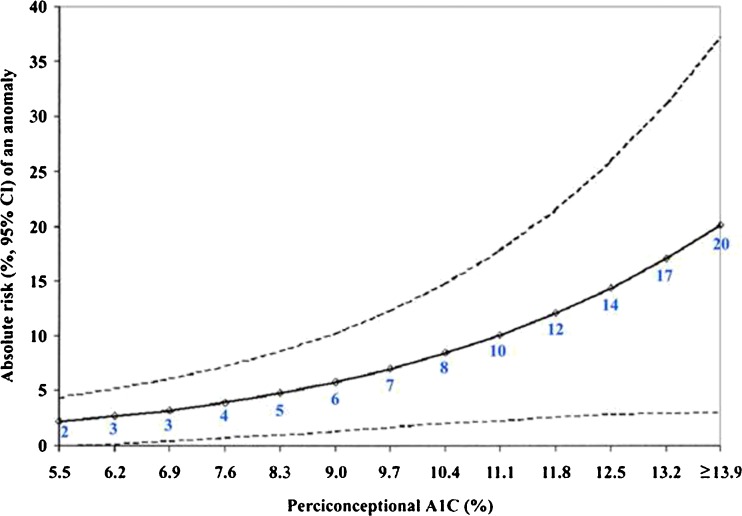
Women with type 1 diabetes (T1DM) have unique needs during the preconception, pregnancy, and postpartum periods. Preconception counseling is essential for women with T1DM to minimize pregnancy risks. The goals of preconception care should be tight glycemic control with a hemoglobin A1c (A1C) < 7 % and as close to 6 % as possible, without significant hypoglycemia. This will lower risks of congenital malformations, preeclampsia, and perinatal mortality. The safety of medications should be assessed prior to conception. Optimal control of retinopathy, hypertension, and nephropathy should be achieved. During pregnancy, the goal A1C is near-normal at <6 %, without excessive hypoglycemia. There is no clear evidence that continuous subcutaneous insulin infusion (CSII) versus multiple daily injections (MDI) is superior in achieving the desired tight glycemic control of T1DM during pregnancy. Data regarding continuous glucose monitoring (CGM) in pregnant women with T1DM is conflicting regarding improved glycemic control. However, a recent CGM study does provide some distinct patterns of glucose levels associated with large for gestational age infants. Frequent eye exams during pregnancy are essential due to risk of progression of retinopathy during pregnancy. Chronic hypertension treatment goals are systolic blood pressure 110-129 mmHg and diastolic blood pressure 65-79 mmHg. Labor and delivery target plasma glucose levels are 80-110 mg/dl, and an insulin drip is recommended to achieve these targets during active labor. Postpartum, insulin doses must be reduced and glucoses closely monitored in women with T1DM because of the enhanced insulin sensitivity after delivery. Breastfeeding is recommended and should be highly encouraged due to maternal benefits including increased insulin sensitivity and weight loss and infant and childhood benefits including reduced prevalence of overweight. In this article, we discuss the care of pregnant patients with T1DM.
Overview
The claims and statistics of this paper haven’t been checked yet.
Free: it reads the open-access text and checks the first 5 claims that cite a source we can check. Create a free account to check every claim.
Integrity signals
Registry
Cites
Statistics
Figures
Verification
Claims the paper makes
The claims and statistics of this paper haven’t been checked yet.
Free: it reads the open-access text and checks the first 5 claims that cite a source we can check. Create a free account to check every claim.
Claims other papers make about this one
Each is checked against this paper’s own text: does it say what the citing paper says it does?
The cited source says what the claim attributes to it.
In the citing paper
“Elevated BG levels at conception and during the early first trimester are associated with increased rates of congenital malformations, spontaneous abortion, intrauterine fetal demise, pre-eclampsia, preterm delivery, and perinatal mortality.110–114”
From American Association of Clinical Endocrinology Clinical Practice Guideline: Developing a Diabetes Mellitus Comprehensive Care Plan-2022 Update. (2022) · cites this paper as [111]
Self-check
Percentages, sums and reported differences re-computed from the paper’s own numbers.
The self-check needs the paper’s full text.
Citations
Cites
James, P. A., Oparil, S., Carter, B. L., Cushman, W. C., Dennison-Himmelfarb, C., Handler, J., Lackland, D. T., LeFevre, M. L., MacKenzie, T. D., Ogedegbe, O., et al. (2014) · JAMA · doi:10.1001/jama.2013.284427 · Cited by 7,950
Intensive diabetes treatment and cardiovascular disease in patients with type 1 diabetes
(2005) · New England Journal of Medicine · doi:10.1056/nejmoa052187 · Cited by 5,138
Stagnaro-Green, A., Abalovich, M., Alexander, E., Azizi, F., Mestman, J., Negro, R., Nixon, A., Pearce, E. N., Soldin, O. P., Sullivan, S., et al. (2011) · Thyroid · doi:10.1089/thy.2011.0087 · Cited by 2,942
Antenatal corticosteroids for accelerating fetal lung maturation for women at risk of preterm birth
Roberts, D., Brown, J., Medley, N., & Dalziel, S. R. (2017) · Cochrane Database of Systematic Reviews · doi:10.1002/14651858.cd004454.pub3 · Cited by 2,806
De Groot, L., Abalovich, M., Alexander, E. K., Amino, N., Barbour, L., Cobin, R. H., Eastman, C. J., Lazarus, J. H., Luton, D., Mandel, S. J., et al. (2012) · The Journal of Clinical Endocrinology & Metabolism · doi:10.1210/jc.2011-2803 · Cited by 1,866
Soluble Endoglin and Other Circulating Antiangiogenic Factors in Preeclampsia
Levine, R. J., Lam, C., Qian, C., Yu, K. F., Maynard, S. E., Sachs, B. P., Sibai, B. M., Epstein, F. H., Romero, R., Thadhani, R., et al. (2006) · New England Journal of Medicine · doi:10.1056/nejmoa055352 · Cited by 1,802
Antenatal corticosteroids for accelerating fetal lung maturation for women at risk of preterm birth
Roberts, D., & Dalziel, S. R. (2006) · Cochrane Database of Systematic Reviews · doi:10.1002/14651858.cd004454.pub2 · Cited by 1,578
Early Photocoagulation for Diabetic Retinopathy
(1991) · Ophthalmology · doi:10.1016/s0161-6420(13)38011-7 · Cited by 1,259
Soluble Endoglin and Other Circulating Antiangiogenic Factors in Preeclampsia
(2006) · New England Journal of Medicine · doi:10.1056/nejmx060063 · Cited by 1,235
Major congenital malformations after first-trimester exposure to ACE inhibitors
Cooper, W. O., Hernandez-Diaz, S., Arbogast, P. G., Dudley, J. A., Dyer, S., Gideon, P. S., Hall, K., & Ray, W. A. (2006) · New England Journal of Medicine · doi:10.1056/nejmoa055202 · Cited by 1,192
Research works printed but not linked: 3
- Reader D Thomas AM Kitzmiller JL Jovanovic LB Brown FM Coustan DR Reader D Medical nutrition therapy: goals for pregnancy complicated by pre-existing diabetes mellitus Managing preexisting diabetes and pregnancy: technical reviews and consensus recommendations 2008 Alexandria ADA
- Trevathan WR Smith EO McKenna J Evolutionary medicine and health, new perspectives 2007 New York Oxford University Press
- Kjos SL Tsatsoulis A Wyckoff J Brown FM Contraception for women with diabetes, in diabetes in women Pathophysiology and therapy 2009 New York Humana press
Cited by
Blonde, L., Umpierrez, G. E., Reddy, S. S., McGill, J. B., Berga, S. L., Bush, M., Chandrasekaran, S., DeFronzo, R. A., Einhorn, D., Galindo, R. J., et al. (2022) · Endocrine Practice · doi:10.1016/j.eprac.2022.08.002 · Cited by 507
Dynamics of diabetes and obesity: Epidemiological perspective
Boles, A., Kandimalla, R., & Reddy, P. H. (2017) · Biochimica et Biophysica Acta (BBA) - Molecular Basis of Disease · doi:10.1016/j.bbadis.2017.01.016 · Cited by 263
“The definition applies regardless either with insulin biological action on glucose or with diet modification as therapy or GDM exist after pregnancy [87-93].”
Diabetes Technology Update: Use of Insulin Pumps and Continuous Glucose Monitoring in the Hospital
Umpierrez, G. E., & Klonoff, D. C. (2018) · Diabetes Care · doi:10.2337/dci18-0002 · Cited by 251
The Impact of Kidney Development on the Life Course: A Consensus Document for Action
The Low Birth Weight and Nephron Number Working Group (2017) · Nephron · doi:10.1159/000457967 · Cited by 164
Current understanding of the role of gut dysbiosis in type 1 diabetes
Abdellatif, A. M., & Sarvetnick, N. (2019) · Journal of Diabetes · doi:10.1111/1753-0407.12915 · Cited by 75
“The risk for T1D is highly increased in offspring from diabetic mothers.(109) Administration of SCFAs to rat breeders via their drinking water prior to pregnancy and further treatment of the offspring with SCFAs after weaning resulted in amelioration of Kilham rat virus (KRV)-induced T1D.”
BackgroundPiazza, F. V., Segabinazi, E., Meireles, A. L. F., Mega, F., Spindler, C. D. F., Augustin, O. A., Salvalaggio, G. D. S., Achaval, M., Kruse, M. S., Coirini, H., et al. (2019) · Cellular and Molecular Neurobiology · doi:10.1007/s10571-019-00658-8 · Cited by 54
The emerging role of metformin in gestational diabetes mellitus
Gray, S. G., McGuire, T. M., Cohen, N., & Little, P. J. (2017) · Diabetes Obesity and Metabolism · doi:10.1111/dom.12893 · Cited by 40
Obstetric and neonatal complications among women with autoimmune disease
Williams, A., Grantz, K. L., Seeni, I., Robledo, C. A., Li, S., Ouidir, M., Nobles, C. J., & Mendola, P. (2019) · Journal of Autoimmunity · doi:10.1016/j.jaut.2019.05.015 · Cited by 38
Maternal and fetal outcomes of pregnant women with type 1 diabetes, a national population study
Lin, S., Kuo, C., Chiou, M., & Chang, S. (2017) · Oncotarget · doi:10.18632/oncotarget.20952 · Cited by 40
“In addition to glycemic control, multidisciplinary patient-centered care of type 1 diabetes before and during pregnancy likely has led to better gestational outcomes [9].”
BackgroundDahlberg, H., & Berg, M. (2019) · International Journal of Qualitative Studies on Health and Well-Being · doi:10.1080/17482631.2019.1698496 · Cited by 29
“Because of their diabetes, there is a higher risk of adverse outcomes for both themselves and the expected and newborn child (Colstrup, Mathiesen, Damm, Jensen, & Ringholm, 2013; Feldman & Brown, 2016; Ringholm, Mathiesen, Kelstrup, & Damm, 2012).”
BackgroundMcGrath, R. T., Glastras, S. J., Seeho, S. K. M., SCOTT, E. S., Fulcher, G. R., & HOCKING, S. L. (2017) · Diabetes Care · doi:10.2337/dc17-0626 · Cited by 20
Pharmacologic Treatment of Diabetes in Pregnancy
Bishop, K. C., Harris, B. S., Boyd, B. K., Reiff, E. S., Brown, L., & Kuller, J. A. (2019) · Obstetrical & Gynecological Survey · doi:10.1097/ogx.0000000000000671 · Cited by 21
“30 Although glargine is comparable to NPH and is associated with fewer hypoglycemic events, there are no data on long-term risks of glargine in pregnancy.(3,4) Detemir has been shown to be noninferior to NPH in terms of glycemic control and rates of hypoglycemia in a randomized trial.”
BackgroundInfluentialMorikawa, M., Kato‐Hirayama, E., Mayama, M., Saito, Y., Nakagawa, K., Umazume, T., Chiba, K., Kawaguchi, S., Okuyama, K., & Watari, H. (2020) · PLoS ONE · doi:10.1371/journal.pone.0230488 · Cited by 20
“In addition, the data regarding continuous glucose monitoring is conflicting regarding the improvement of glycemic control [37].”
BackgroundType 1 Diabetes in Pregnancy: A Review of Complications and Management
Huda, M. S. B., Jaffar, F., & Laycock, K. (2021) · Current Diabetes Reviews · doi:10.2174/1573399818666211105124829 · Cited by 25
Peterson-Burch, F., Abujaradeh, H., Charache, N., Fischl, A. F. R., & Charron‐Prochownik, D. (2018) · Current Diabetes Reports · doi:10.1007/s11892-018-0983-7 · Cited by 17
Griffin, B. L., Stone, R. H., El‐Ibiary, S. Y., Westberg, S. M., Shealy, K. M., Forinash, A. B., Yancey, A. M., Vest, K. M., Karaoui, L. R., Rafie, S., et al. (2018) · Annals of Pharmacotherapy · doi:10.1177/1060028018764447 · Cited by 20
Wilkie, G., Orr, L. C., Leung, K., & Leftwich, H. K. (2021) · The Journal of Maternal-Fetal & Neonatal Medicine · doi:10.1080/14767058.2021.2004114 · Cited by 14
“Women with type 1 diabetes mellitus (T1DM) have unique needs during pregnancy and in the postpartum period, with approximately 0.2% of all pregnancies affected by T1DM [1].”
BackgroundInfluentialTiselko, A. V., Kapustin, R. V., Milyutina, Y. P., Borovik, N. V., Ивановна, А. Е., & Yarmolinskaya, M. I. (2022) · The Journal of Maternal-Fetal & Neonatal Medicine · doi:10.1080/14767058.2022.2050361 · Cited by 14
“This fact calls for the search of new evaluation criteria of carbohydrate metabolism disorder [6,10].”
BackgroundMcCarthy, E. A., Williamson, R., & Shub, A. (2018) · Australian and New Zealand Journal of Obstetrics and Gynaecology · doi:10.1111/ajo.12913 · Cited by 15
Jotić, A., Milicic, T. J., Lalic, K. S., Lukić, L., Macesic, M. V., Gajović, J. S., Stoiljkovic, M. M., Gojnić-Dugalić, M., Jeremić, V., & Lalic, N. M. (2020) · Diabetes Therapy · doi:10.1007/s13300-020-00780-7 · Cited by 14
Inpatient Glycemic Management of the Pregnant Patient
Yeh, T., Yeung, M., & Curanaj, F. A. M. (2018) · Current Diabetes Reports · doi:10.1007/s11892-018-1045-x · Cited by 13
Lindén, K., Berg, M., Adolfsson, A., & Sparud‐Lundin, C. (2017) · Sexual & Reproductive Healthcare · doi:10.1016/j.srhc.2017.12.004 · Cited by 13
Premarriage counseling in Type 1 diabetes
Priya, G., Kalra, B., Grewal, E., & Dardi, I. (2018) · Indian Journal of Endocrinology and Metabolism · doi:10.4103/ijem.ijem_550_17 · Cited by 11
“Continuing intensive control through pregnancy reduces the risk of growth retardation, macrosomia, birth trauma, perinatal mortality, neonatal hypoglycemia, and other adverse neonatal outcomes.[41]”
BackgroundToledo‐Chávarri, A., Delgado, J., & Rodríguez‐Martin, B. (2023) · Health Expectations · doi:10.1111/hex.13876 · Cited by 9
“9 In this regard, there are studies showing that improving preconception care for women with pre ‐ existing diabetes can diminish adverse outcomes.”
BackgroundCypryk, K., Wender-Ożegowska, E., Cyganek, K., Sieradzki, J., Skoczylas, K., Chen, X., Cordero, T. L., Shin, J., & Cohen, O. (2023) · Acta Diabetologica · doi:10.1007/s00592-022-02020-9 · Cited by 9
“Pregnancies complicated by T1D warrant particularly careful management, given the risks of adverse outcomes for both mother and baby [6].”
BackgroundGupta, R., Khoury, J. C., Altaye, M., Jandarov, R., & Szczesniak, R. D. (2020) · Journal of Diabetes Research · doi:10.1155/2020/3074532 · Cited by 7
“In mothers with T1DM, poor glycemic control was associated with both spontaneous and indicated preterm birth [32].”
BackgroundGarey, C., Lynn, J., Sabino, A. F., Hughes, A. S., & McAuliffe‐Fogarty, A. H. (2020) · Gynecological Endocrinology · doi:10.1080/09513590.2020.1749998 · Cited by 5
Pham, A. Q., Lingvay, I., Ahmadi, N., Santiago-Munoz, P. C., & Abreu, M. (2025) · Diabetes Research and Clinical Practice · doi:10.1016/j.diabres.2025.112454 · Cited by 5
Gupta, R., Khoury, J. C., Altaye, M., Jandarov, R., & Szczesniak, R. D. (2021) · Statistics in Medicine · doi:10.1002/sim.8875 · Cited by 6
“Duration of follow up among women was 155 (62-182) days.”
BackgroundInfluentialGravidität bei vorbestehendem Diabetes (Update 2019)
Kautzky‐Willer, A., Harreiter, J., Winhofer-Stöckl, Y., Weitgasser, R., & Lechleitner, M. (2019) · Wiener klinische Wochenschrift · doi:10.1007/s00508-019-1456-y · Cited by 6
Dixon, B. R., Nankervis, A. J., Hopkins, S., & Cade, T. J. (2018) · Obstetric Medicine · doi:10.1177/1753495x18797769 · Cited by 4
Hoek-Hogchem, R., Bovenberg, S. A., Dekker, P., Birnie, E., Veeze, H. J., Duvekot, H., Galjaard, S., & Aanstoot, H. (2022) · Experimental and Clinical Endocrinology & Diabetes · doi:10.1055/a-1797-8317 · Cited by 5
Lekšić, G., Baretić, M., Ivanišević, M., & Jurišić‐Eržen, D. (2020) · International Journal of Environmental Research and Public Health · doi:10.3390/ijerph17186566 · Cited by 4
Gravidität bei vorbestehendem Diabetes (Update 2023)
Kautzky‐Willer, A., Winhofer, Y., Weitgasser, R., Lechleitner, M., & Harreiter, J. (2023) · Wiener klinische Wochenschrift · doi:10.1007/s00508-023-02188-2 · Cited by 4
Tang, X., Wei, J., Jiang, Z., & Wu, S. (2023) · Archives of Gynecology and Obstetrics · doi:10.1007/s00404-023-07298-w · Cited by 3
“In the second and third trimesters of pregnancy with GDM, when the HbA1c level is controlled within 6.0%, the incidence of adverse pregnancy events such as preeclampsia, premature delivery, and infants larger than gestational age are the lowest [17].”
InfluentialPregestational Diabetes Mellitus
Zajdenverg, L., & Negrato, C. A. (2021) · Springer eBooks · doi:10.1007/978-3-030-83434-0_22 · Cited by 3
Honoki, H., Yagi, K., Tsuda, S., Wada, T., Enkaku, A., Nakagawa‐Yokoyama, M., Kamigishi, M., Shikata, M., Takikawa-Nishiday, A., Fujisaka, S., et al. (2021) · Diabetology International · doi:10.1007/s13340-020-00489-9 · Cited by 5
“Maternal hypoglycemia has not been reported to increase the risk of congenital disabilities, fetal death, fetal physiology (fetal heart, breathing, or body movement), umbilical artery Doppler waveforms, or neonatal intelligence [7].”
BackgroundBaretić, M., Lekšić, G., & Ivanišević, M. (2023) · Diabetes Spectrum · doi:10.2337/ds22-0094 · Cited by 2
“This does not mean that the risk of hypoglycemia should be underestimated; indeed, severe hypoglycemia occurs in up to half of pregnancies in women with type 1 diabetes, mostly in the fi rst trimester (14,15).”
BackgroundCastillo, N., Malo, M., Villacres, N., Chauca, J., Cornetero-Muro, V., de Flores, K. R., Tapia, R., & Ríos, R. (2017) · Revista Peruana de Medicina Experimental y Salud Pública · doi:10.17843/rpmesp.2017.341.2774 · Cited by 16
“La definición de las prevalencias de los grupos definidos en el componente 1, incluyendo la población a tamizar, se construyeron a partir de estimaciones de fuentes secundarias y de estudios analíticos transversales nacionales e internacionales (8,11-49) dado que las fuentes primarias nacionales se hallaban en etapa d…”
BackgroundEndocrine Considerations in Pregnant Women with Chronic Kidney Disease
Presswala, L. S., & Myers, A. K. (2019) · Springer eBooks · doi:10.1007/978-3-030-25324-0_10 · Cited by 2
Stakeholder Engagement in Type 1 Diabetes Research, Quality Improvement, and Clinical Care
Rioles, N. A., March, C. A., Muñoz, C. E., Ilkowitz, J. T., OHMER, A. L., & Wolf, R. M. (2023) · Endocrinology and Metabolism Clinics of North America · doi:10.1016/j.ecl.2023.09.007 · Cited by 1
Diabetes mellitus und Schwangerschaft
Schäfer-Graf, U. M., Kautzky‐Willer, A., & Groten, T. (2024) · Springer Reference Medizin · doi:10.1007/978-3-662-63506-3_26 · Cited by 1
Bridging the confidence gap in maternity services: midwives and the rollout of diabetes technology
Williams, A., Fletcher-Salt, T., & Kelly, B. (2026) · British Journal of Midwifery · doi:10.12968/bjom.2025.0081 · Cited by 1
Emanuel, A. L., Sprengers, M., IJzerman, R. G., Painter, R. C., & Siegelaar, S. E. (2026) · Journal of Diabetes and its Complications · doi:10.1016/j.jdiacomp.2026.109365 · Cited by 1
Acute hypoglycemia during cesarean delivery in a patient with type-1 diabetes mellitus
Ida, M., Matsumura, K., & Kawaguchi, M. (2018) · International Journal of Obstetric Anesthesia · doi:10.1016/j.ijoa.2018.11.004 · Cited by 1
Aharon‐Hananel, G., Dori‐Dayan, N., Zemet, R., Bakal, L., Jabarin, A., Levi, K., Hemi, R., Barhod, E., Kordi‐Patimer, O., Mazaki‐Tovi, S., et al. (2023) · Diabetes/Metabolism Research and Reviews · doi:10.1002/dmrr.3714 · Cited by 1
“1,16 However, whether tight glycaemic control can protect against the occurrence of severe neonatal hypoglycaemia is debatable.”
BackgroundGonçalves, J., Ferreira, H. U., Gamboa, C., Namora, G., Queirós, J. C., & Belo, S. (2025) · Diabetes Technology and Obesity Medicine · doi:10.1089/dtom.2025.0001 · Cited by 1
“13 – 16 However, the hypoglycemia rates during this period varies widely across studies (0% – 56%).”
Romeo, G. R., Silva, P. S., & Cavallerano, J. D. (2022) · Springer eBooks · doi:10.1007/978-3-030-42634-7_294 · Cited by 1
Diabetes mellitus und Schwangerschaft
Schaefer-Graf, U. M., Kautzky‐Willer, A., & Groten, T. (2023) · Springer Reference Medizin · doi:10.1007/978-3-662-44369-9_26-2 · Cited by 2
Islet Cell Transplant: Successful Survival Through two Pregnancies
Magdaleno, A. L., & Vengrove, M. A. (2017) · AACE Clinical Case Reports · doi:10.4158/ep171956.cr
Butt, N. A. (2019) · Journal of Health and Medical Sciences · doi:10.31014/aior.1994.02.03.64
Valério, P. M. (2020) · Digital Library of Theses and Dissertations (Universidade de São Paulo) · doi:10.11606/t.17.2020.tde-05102020-114215
Romeo, G. R., Silva, P. S., & Cavallerano, J. D. (2021) · Springer eBooks · doi:10.1007/978-3-319-90495-5_294-1
Physical Activity and Exercise in Diabetes During Pregnancy
Δίπλα, Κ., & Zafeiridis, A. (2022) · Springer eBooks · doi:10.1007/978-3-030-89243-2_12
Englund‐Ögge, L., Dotevall, A., Elfvin, A., Sandgren, U., Wallstersson, B., Bohlin, L., Sjödell, M., Augustinsson, J., & Hagman, A. (2023) · Research Square · doi:10.21203/rs.3.rs-2602307/v1
Malkani, N. P., Rosenberg, E. A., & Lassey, S. C. (2023) · Contemporary cardiology · doi:10.1007/978-3-031-34103-8_5
Inpatient Management of Diabetes During Pregnancy
Nassar, R., Lam, D. W.-H., & Shah, N. A. (2023) · Contemporary Endocrinology · doi:10.1007/978-3-031-44648-1_17
Transitioning Adolescents and Young Adults with Type 1 Diabetes to Adulthood
D’Amico, R., & Buschur, E. (2024) · Springer eBooks · doi:10.1007/978-3-031-54281-7_29
Waraphok, S., GARY, F. A., & Griggs, S. A. (2025) · The Journal of Maternal-Fetal & Neonatal Medicine · doi:10.1080/14767058.2025.2582947
“Additionally, pregnant women with T1D using CGM can make timely adjustments to their health behaviors and insulin regimens, facilitating better short-and long-term achievement of glycemic targets [4,6].”
Adıyeke, S. K. (2026) · Springer eBooks · doi:10.1007/978-3-032-15221-3_16
Zhang, Q. X., Zhou, H., Zhu, X., Lin, R., Hu, L., & Zhu, G. (2026) · Open Life Sciences · doi:10.1515/biol-2025-1325
Diabetes Mellitus in Pregnancy
Schaefer-Graf, U. M., Kautzky‐Willer, A., & Groten, T. (2026) · Springer eBooks · doi:10.1007/978-3-662-70578-0_38
Drummond, R. F., Seif, K. E., & Reece, E. A. (2026) · American Journal of Obstetrics and Gynecology · doi:10.1016/j.ajog.2026.07.009
Eisa, N. (2026) · Journal of Diabetes Science and Technology · doi:10.1177/19322968261463556
Metadata
- Authors
- Feldman, A. Z., & Brown, F. M.
- Affiliations
- Joslin Diabetes Center (US)
- Corresponding author
- Brown, Florence M.
- ORCID
- Brown, Florence M.
- Venue
- Current Diabetes Reports
- Published
- 2016-06-24
- Volume
- 16
- Issue
- 8
- Pages
- 76-76
- ISSN
- 1534-4827 (ISSN-L)
- 1539-0829
- PMC
- PMC4919374
- OpenAlex
- W2464657284
- Cited by
- 65
- References
- 151
- Citations by year
- 2026: 7 · 2025: 3 · 2024: 2 · 2023: 11 · 2022: 5 · 2021: 6 · 2020: 6 · 2019: 9 · 2018: 8 · 2017: 8
- FWCI
- 1.47
- Type
- journal article
- Language
- en
- Open access
- hybrid
- doi.org
- Locations
- Current Diabetes Reports (publishedVersion, cc-by)
- Europe PMC (PubMed Central) (publishedVersion, cc-by)
- PubMed Central (publishedVersion, cc-by)
- PubMed (publishedVersion)
- Topics
- Health Sciences › Medicine › Obstetrics and Gynecology › Gestational Diabetes Research and Management
- Health Sciences › Medicine › Public Health, Environmental and Occupational Health › Pregnancy and Medication Impact
- Health Sciences › Medicine › Endocrinology, Diabetes and Metabolism › Diabetes Management and Research
- Keywords
- type 1 diabetes, pregnancy, preconception care, glycemic control, HbA1c, hypoglycemia, insulin pump therapy, multiple daily insulin injections, continuous glucose monitoring, diabetic retinopathy, hypertension in pregnancy, breastfeeding, congenital malformations, preeclampsia, perinatal mortality
- MeSH terms
- Counseling, Diabetes Mellitus, Type 1, Female, Humans, Insulin, Pregnancy, Pregnancy in Diabetics, Preconception Care, Postpartum Period
About these checks
Registry, retraction, Cites and statistics results are computed, not judged, with one exception: a printed reference that no index lists is read once by a model before it counts as a citation error. Claims are extracted by a model and kept only when their quote appears verbatim in the text; each cited source is then checked, with a model’s help, for whether it says what the claim relies on. Those verdicts can be wrong — read the claim’s quote and the cited source before relying on one.
Statistics and arithmetic are recomputed, not judged.
Confidence bands are shown only for fields calibrated on our annotated test set. None is calibrated yet, so no band is shown.
What counts as a claim ›How we measure confidence ›How we check this ›
Are you an author, or do you see a problem with this page? Request a review
Data sources
Bibliographic data: Semantic Scholar, OpenAlex, Crossref.
Contains information from the Semantic Scholar Academic Graph Datasets, made available under the ODC Attribution License (ODC-BY 1.0).
Semantic Scholar’s data is described in: Kinney, R., et al. (2023). The Semantic Scholar Open Data Platform. arXiv:2301.10140.
