

Ethical, Legal and Social Issues of Digital Phenotyping as a Future Solution for Present-Day Challenges: A Scoping Review
Open accessThe DOI matches its Crossref record; 27 of the 27 references it cites were found in a registry or an index.
Abstract
Digital phenotyping represents an avenue of consideration in patients' self-management. This scoping review aims to explore the trends in the body of literature on ethical, legal, and social challenges relevant to the implementation of digital phenotyping technologies in healthcare. The study followed the PRISMA-ScR methodology (Tricco et al. in Ann Int Med 169(7):467–473, 2018.https://doi.org/10.7326/M18-0850). The review systematically identified relevant literature, characterised the discussed technology, explored its impacts and the proposed solutions to identified challenges. Overall, the literature, perhaps unsurprisingly, concentrates on technical rather than ethical, legal, and social perspectives, which limits understanding of the more complex cultural and social factors in which digital phenotyping technologies are embedded. ELS issues mostly concern privacy, security, consent, lack of regulation, and issues of adoptability, and seldom expand to more complex ethical issues. Trust was chosen as an umbrella theme of a continuum of major ELS and technical issues. Sustained critical analysis of digital phenotyping showed to be sparse and geographically exclusive. There is a continuum and overlap between ELS issues, suggesting the need for a holistic, interdisciplinary approach to each of the challenges posed by the various technologies of digital phenotyping.
Overview
The claims and statistics of this paper haven’t been checked yet.
Free: it reads the open-access text and checks the first 5 claims that cite a source we can check. Create a free account to check every claim.
Integrity signals
Registry
Cites
Statistics
Figures
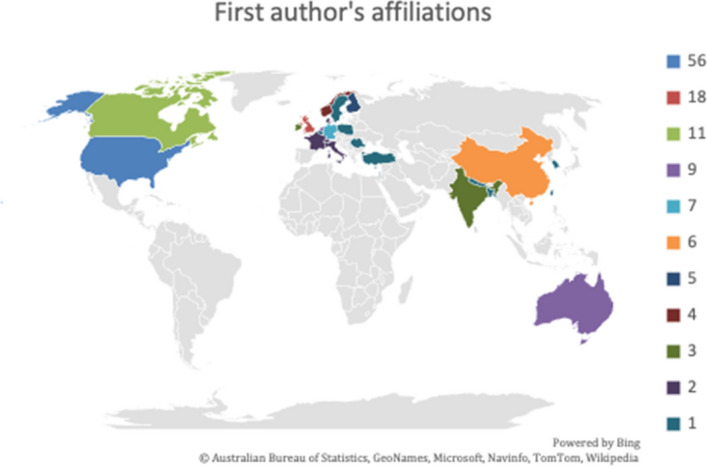
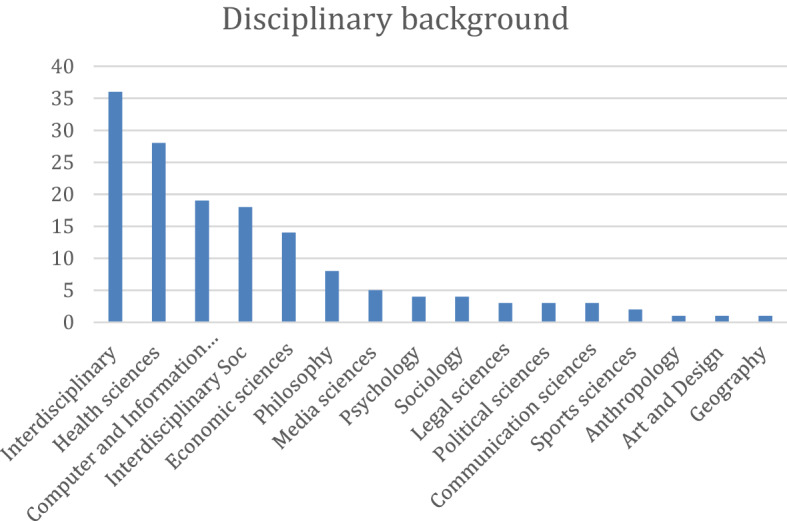
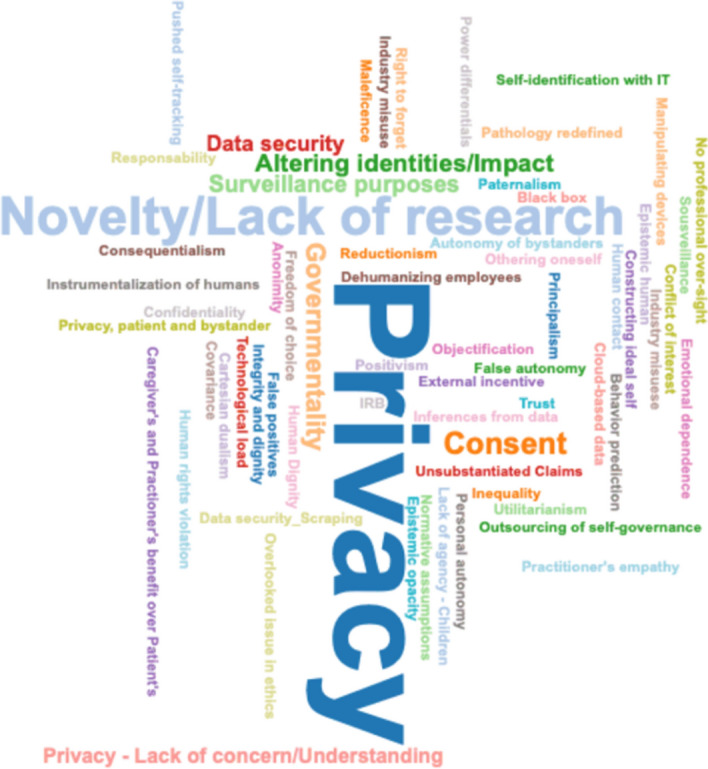
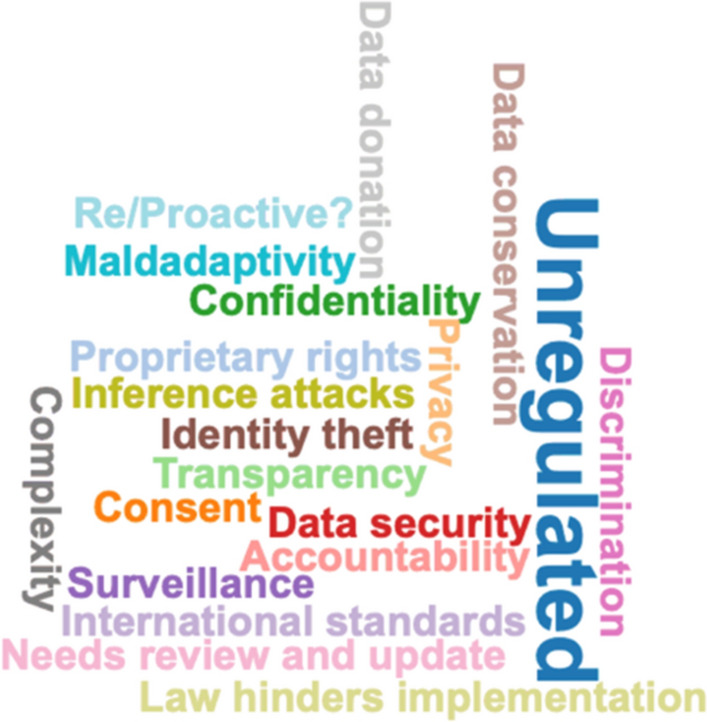
Verification
Claims the paper makes
The claims and statistics of this paper haven’t been checked yet.
Free: it reads the open-access text and checks the first 5 claims that cite a source we can check. Create a free account to check every claim.
Claims other papers make about this one
Each is checked against this paper’s own text: does it say what the citing paper says it does?
The source backs part of the claim, not all of it — or backs it for a different population, condition or comparison.
In the citing paper
“Real-time data transmission without proper encryption risks interception, while long-term storage poses challenges for resource-limited institutions (Tomičić et al., 2022).”
From Multimodal neuroimaging and AI integration in cognitive disorders: advances, challenges, and future directions for precision medicine (2026) · cites this paper as Tomičić et al., 2022
Experimental — accuracy not yet measured
Self-check
Percentages, sums and reported differences re-computed from the paper’s own numbers.
The self-check needs the paper’s full text.
Citations
Cites
PRISMA Extension for Scoping Reviews (PRISMA-ScR): Checklist and Explanation
Tricco, A. C., Lillie, E., Zarin, W., O'Brien, K. K., Colquhoun, H., Levac, D., Moher, D., Peters, M. D. J., Horsley, T., Weeks, L., et al. (2018) · Annals of Internal Medicine · doi:10.7326/m18-0850 · Cited by 43,565
Rayyan-a web and mobile app for systematic reviews.
Ouzzani, M., Hammady, H., Fedorowicz, Z., & Elmagarmid, A. (2016) · Systematic Reviews · doi:10.1186/s13643-016-0384-4 · Cited by 26,092
Actor Network Theory and Material Semiotics
Law, J. (2008) · The New Blackwell Companion to Social Theory · doi:10.1002/9781444304992.ch7 · Cited by 1,823
The Nature of Trust: From Georg Simmel to a Theory of Expectation, Interpretation and Suspension
Möllering, G. (2001) · Sociology · doi:10.1017/s0038038501000190 · Cited by 870
Torous, J., Kiang, M. V., Lorme, J., & Onnela, J.-P. (2016) · JMIR Mental Health · doi:10.2196/mental.5165 · Cited by 758 · cited 1×
“As defined by Torous et al. (2016) and Onnela and Rauch (2016), digital phenotyping is an emerging field that combines research and technology to analyse people’s interactions with the digital world and assess users’ health and well-being, monitor the effectiveness of treatments, identify psychiatric diseases, predict…”
BackgroundHarnessing Smartphone-Based Digital Phenotyping to Enhance Behavioral and Mental Health
Onnela, J.-P., & Rauch, S. L. (2016) · Neuropsychopharmacology · doi:10.1038/npp.2016.7 · Cited by 726 · cited 1×
“(2016) and Onnela and Rauch (2016), digital phenotyping is an emerging field that combines research and technology to analyse people’s interactions with the digital world and assess users’ health and well-being, monitor the effectiveness of treatments, identify psychiatric diseases, predict patient…”
BackgroundReviewing the definition of “elderly”
Orimo, H., Ito, H., Suzuki, T., Araki, A., Hosoi, T., & Sawabe, M. (2006) · Geriatrics & Gerontology International · doi:10.1111/j.1447-0594.2006.00341.x · Cited by 681
Online social networking as participatory surveillance
Albrechtslund, A. (1969) · First Monday · doi:10.5210/fm.v13i3.2142 · Cited by 462
The diverse domains of quantified selves: self-tracking modes and dataveillance
Lupton, D. (2016) · Economy and Society · doi:10.1080/03085147.2016.1143726 · Cited by 446
Data for life: wearable technology and the design of self-care
Schüll, N. D. (2016) · BioSocieties · doi:10.1057/biosoc.2015.47 · Cited by 445
Sharon, T. (2017) · Philosophy & Technology · doi:10.1007/s13347-016-0215-5 · Cited by 428 · cited 1×
“The specific know-how and practices developed by individuals or communities using connected objects have also received little attention in the literature outside of the Quantified Self movement or digitally skilled individuals or communities (Sharon, 2017).”
BackgroundAssessing health system performance in developing countries: A review of the literature
Kruk, M. E., & Freedman, L. P. (2008) · Health Policy · doi:10.1016/j.healthpol.2007.09.003 · Cited by 332
Ethical Challenges with Welfare Technology: A Review of the Literature
Hofmann, B. (2012) · Science and Engineering Ethics · doi:10.1007/s11948-011-9348-1 · Cited by 227
Titles versus titles and abstracts for initial screening of articles for systematic reviews
Mateen, F., Oh, Tergas, Bhayani, & Kamdar (2013) · Clinical Epidemiology · doi:10.2147/clep.s43118 · Cited by 202
Puri, A., Kim, B., Nguyen, O., Stolee, P., Tung, J., & Lee, J. (2017) · JMIR mHealth and uHealth · doi:10.2196/mhealth.8211 · Cited by 166
Self-tracking, health and medicine
Lupton, D. A. (2016) · Health Sociology Review · doi:10.1080/14461242.2016.1228149 · Cited by 149
Sobieraj, S., & Krämer, N. C. (2020) · Computers in Human Behavior · doi:10.1016/j.chb.2019.09.021 · Cited by 98
Passive data collection and use in healthcare: A systematic review of ethical issues
Maher, N. A., Senders, J. T., Hulsbergen, A. F. C., Lamba, N., Parker, M., Onnela, J.-P., Bredenoord, A. L., Smith, T. R., & Broekman, M. L. D. (2019) · International Journal of Medical Informatics · doi:10.1016/j.ijmedinf.2019.06.015 · Cited by 91 · cited 1×
“…the heuristic evaluation of preliminary literature search and by the approach taken by prior literature reviews (Cooper & Yon, 2019; Hofmann, 2013; Maher et al., 2019), a meta-data table listing all selected relevant indicators was developed jointly by the authors to determine which variables to…”
MethodChristidou, V., Dimopoulos, Κ., & Koulaïdis, V. (2004) · Public Understanding of Science · doi:10.1177/0963662504044108 · Cited by 85
Mohr, D. C., Shilton, K., & Hotopf, M. (2020) · npj Digital Medicine · doi:10.1038/s41746-020-0251-5 · Cited by 80
Rathbone, J., Albarqouni, L., Bakhit, M., Beller, E., Byambasuren, O., Hoffmann, T., Scott, A. M., & Glasziou, P. (2017) · Systematic Reviews · doi:10.1186/s13643-017-0629-x · Cited by 64
Digital Participatory Surveillance and the Zika Crisis: Opportunities and Caveats
Pagliari, C., & Vijaykumar, S. (2016) · PLoS neglected tropical diseases · doi:10.1371/journal.pntd.0004795 · Cited by 26
Pryss, R. C. (2019) · Studies in neuroscience, psychology and behavioral economics · doi:10.1007/978-3-030-31620-4_14 · Cited by 22
Communal Self-Tracking: Data Philanthropy, Solidarity and Privacy
Ajana, B. (2017) · Springer eBooks · doi:10.1007/978-3-319-65379-2_9 · Cited by 17
Cooper, I., & Yon, J. (2019) · Science Insights · doi:10.15354/si.19.re095 · Cited by 13
Outside the Lines: Issues in Interdisciplinary Research
Glasberg, R. (2018) · Journal of educational thought. · doi:10.55016/ojs/jet.v31i3.52494 · Cited by 11
Smart mobile crowdsensing for tinnitus research
Mehdi, M. (2019) · ACM/SIGAPP Symposium on Applied Computing (SAC) · doi:10.1145/3297280.3297654 · Cited by 7
Research works printed but not linked: 2
- Moscovici, S. (2001). Why a theory of social representation? In K. Deaux & G. Philogène (Eds.), Representations of the social: Bridging theoretical traditions (pp. 8–35). Blackwell Publishing.
- World Health Organization Preamble to the Constitution of WHO as adopted by the International Health Conference New York 1946 19 100
Cited by
Sarkar, B. D., Shardeo, V., Dwivedi, A., & Pamucar, D. S. (2024) · Technology in Society · doi:10.1016/j.techsoc.2024.102649 · Cited by 168
The comprehensive clinical benefits of digital phenotyping: from broad adoption to full impact
Zhang, Y., Wang, J., Zong, H., Singla, R. K., Ullah, A., Liu, X., Wu, R., Ren, S., & Shen, B. (2025) · npj Digital Medicine · doi:10.1038/s41746-025-01602-5 · Cited by 80
The development of social science research on smart grids: a semi-structured literature review
Kojonsaari, A.-R., & Palm, J. (2023) · Energy, Sustainability and Society · doi:10.1186/s13705-023-00381-9 · Cited by 37
Challenges and standardisation strategies for sensor-based data collection for digital phenotyping
Alam, N. B., Surani, M., Das, C. K., Giacco, D., Singh, S. P., & Jilka, S. (2025) · Communications Medicine · doi:10.1038/s43856-025-01013-3 · Cited by 51
Mapping the ethical landscape of digital biomarkers: A scoping review
Andreoletti, M., Haller, L., Vayena, E., & Blasimme, A. (2024) · PLOS Digital Health · doi:10.1371/journal.pdig.0000519 · Cited by 38
Metadata
- Authors
- Tomičić, A., Malešević, A., & Čartolovni, A.
- Affiliations
- Catholic University of Croatia (HR)
- Corresponding author
- Tomičić, Ana
- Venue
- Science and Engineering Ethics
- Published
- 2021-12-20
- Volume
- 28
- Issue
- 1
- Pages
- 1-1
- ISSN
- 1353-3452 (ISSN-L)
- 1471-5546
- PMC
- PMC8686352
- OpenAlex
- W4200317185
- Cited by
- 27
- References
- 27
- Citations by year
- 2026: 6 · 2025: 7 · 2024: 6 · 2023: 5 · 2022: 3
- FWCI
- 1.01
- Type
- journal article
- Language
- en
- Open access
- hybrid
- doi.org
- Licence
- cc-by
- creativecommons.org/licenses/by/4.0 (tdm)
- creativecommons.org/licenses/by/4.0 (vor)
- Locations
- Science and Engineering Ethics (publishedVersion, cc-by)
- PubMed Central (publishedVersion, cc-by)
- PubMed (publishedVersion)
- HAL (submittedVersion, cc-by)
- OSF Preprints (OSF Preprints) (submittedVersion)
- Funders
- Hrvatska Zaklada za Znanost (UIP-2019-04-3212)
- Topics
- Health Sciences › Medicine › Health Informatics › Artificial Intelligence in Healthcare and Education
- Physical Sciences › Computer Science › Artificial Intelligence › Ethics and Social Impacts of AI
- Physical Sciences › Computer Science › Information Systems › COVID-19 Digital Contact Tracing
- Keywords
- digital phenotyping, ethical, legal and social issues, patient self-management, privacy, data security, informed consent, regulation, technology adoption, trust, digital health technologies
- MeSH terms
- Delivery of Health Care, Humans, Morals, Technology, Privacy
About these checks
Registry, retraction, Cites and statistics results are computed, not judged, with one exception: a printed reference that no index lists is read once by a model before it counts as a citation error. Claims are extracted by a model and kept only when their quote appears verbatim in the text; each cited source is then checked, with a model’s help, for whether it says what the claim relies on. Those verdicts can be wrong — read the claim’s quote and the cited source before relying on one.
Statistics and arithmetic are recomputed, not judged.
Confidence bands are shown only for fields calibrated on our annotated test set. None is calibrated yet, so no band is shown.
What counts as a claim ›How we measure confidence ›How we check this ›
Are you an author, or do you see a problem with this page? Request a review
Data sources
Bibliographic data: Semantic Scholar, OpenAlex, Crossref.
Contains information from the Semantic Scholar Academic Graph Datasets, made available under the ODC Attribution License (ODC-BY 1.0).
Semantic Scholar’s data is described in: Kinney, R., et al. (2023). The Semantic Scholar Open Data Platform. arXiv:2301.10140.
