

Targeted Nanoparticles for Drug Delivery Across the Blood–Brain Barrier in Early and Late Stages of Alzheimer's Disease: A Review
Open accessThe DOI matches its Crossref record; 153 of the 251 references it cites were found in a registry or an index; 114 of the 184 sources its claims cite were checked for support.
Abstract
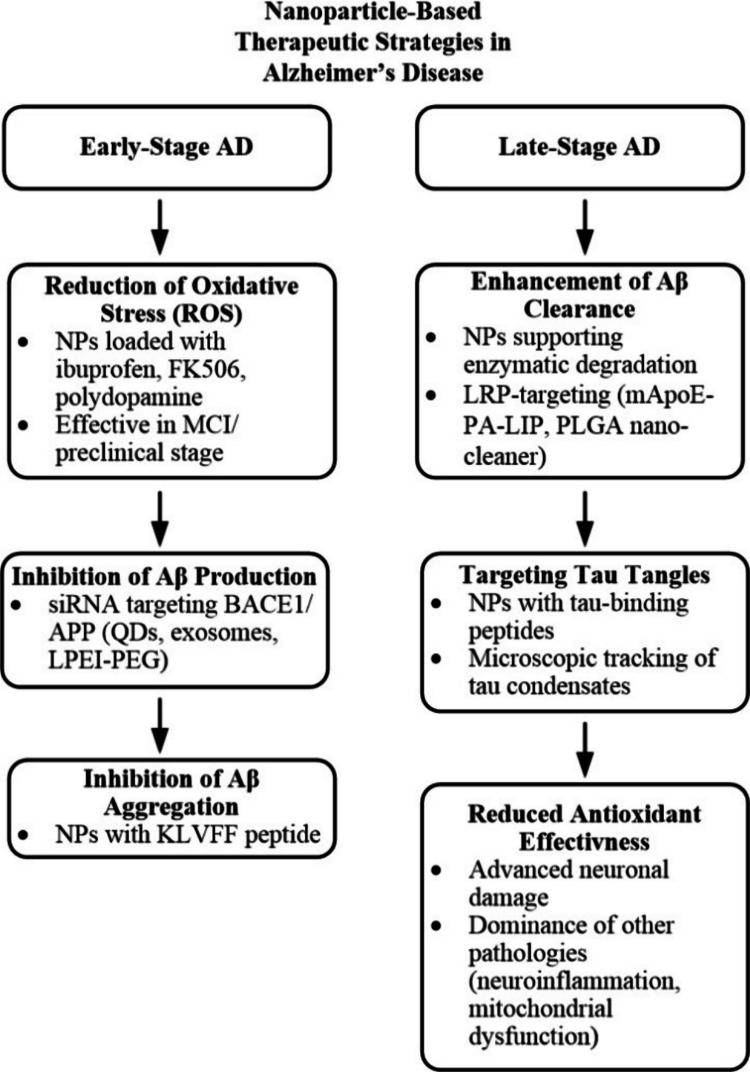
This review highlights the role of targeted nanoparticles as effective drug carriers across the BBB for both early and late stages of AD.
Overview
CoChat Summary
## TL;DR
This review argues that targeted nanoparticles can help overcome the blood–brain barrier in Alzheimer’s disease by improving brain delivery, targeting amyloid/tau pathology, and enabling stage-specific therapy. It emphasizes that early and late AD require different nanoparticle strategies, while safety, clearance, and clinical translation remain major barriers.
## Key findings
- Targeted nanoparticles are presented as a way to improve brain drug bioavailability and enable stage-specific intervention across early and late Alzheimer’s disease.
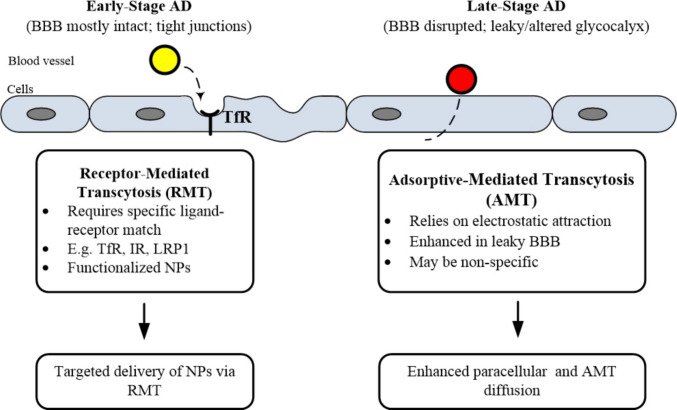
- The review identifies two main BBB-crossing mechanisms for nanoparticle delivery: receptor-mediated transcytosis (RMT) and adsorptive-mediated transcytosis (AMT).
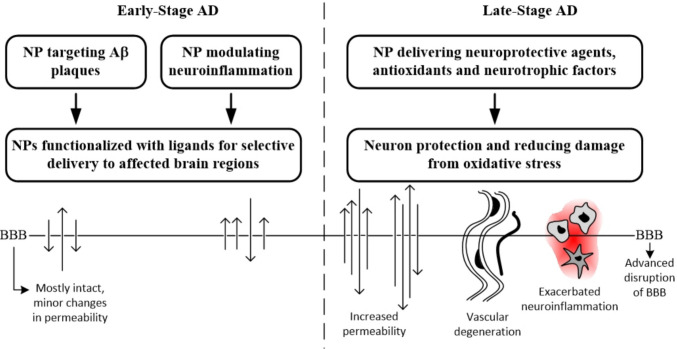
- In early AD, the BBB is described as mostly intact with only minor permeability changes, making receptor-targeted nanoparticles especially relevant; in late AD, BBB disruption increases nonspecific permeability and toxicity risk.
- The paper highlights that lipid-based and polymeric nanoparticles are the most promising platforms because of their biocompatibility, versatility, and surface modifiability, while metallic nanoparticles raise more toxicity concerns.
- It reports specific preclinical examples, including a multifunctional nanoformulation that in a transgenic mouse model reduced Aβ deposition, enhanced autophagy, and improved cognitive performance, and another nano-cleaner that promoted microglia-mediated Aβ clearance and regulated neuroinflammation.
- For safety, it notes quantitative toxicity examples: silver nanoparticles were reported to cause significant neurotoxicity above 10 μg/ml in primary cortical neurons, whereas PLGA nanoparticles showed minimal cytotoxic effects up to 100 μg/ml in neuronal and glial cultures.
## Methods
- Narrative review of literature on nanoparticle-based drug delivery across the BBB in Alzheimer’s disease, with emphasis on early vs. late disease stages.
- Synthesizes published findings on nanoparticle classes (lipid-based, polymeric, inorganic, and biological/exosomal systems), BBB transport mechanisms, targeting strategies, safety/toxicity, and diagnostic/theragnostic applications.
- Uses comparative, mechanism-focused analysis rather than original experimental data; the text references preclinical studies, animal models, cell culture studies, and clinical trial reports.
## Limitations
- The paper states that long-term safety, immunogenicity, biodistribution, clearance kinetics, and pharmacokinetics remain insufficiently characterized.
- It states that clinical translation is limited by poor BBB penetration, peripheral accumulation, suboptimal dosing, protein corona effects, and trial design issues, and that only a few nanoparticle formulations have advanced into clinical trials.
- Evident from the text: this is a review, so it does not present new experimental data or a systematic quantitative meta-analysis of efficacy across nanoparticle types.
Model-written summary. Check it against the paper before relying on it.
Integrity signals
Registry
Cites
Statistics
Figures
Verification
Claims the paper makes
68 Valid · 21 Not valid · 39 Not checked · 7 Own results and interpretations
At least one cited source doesn’t support this claim or points to a different paper, and none confirmed it — see the verdicts below.
In the paper
“For brain targeting, systems based on natural, synthetic, and hybrid materials are frequently employed; however, in the context of AD, synthetic polymers such as chitosan and poly(lactic-co-glycolic acid) (PLGA) are the most common choice [81].”
§ Targeted Nanoparticles for Drug Delivery Across the Blood–Brain Barrier in Early and Late Stages of Alzheimer's Disease: A Review > Nanoparticles as Drug Carriers in Alzheimer's Disease Treatment > Polymeric NPs
What the sources say
- Disputedcites [81] Zhang W, Mehta A, Tong Z, Esser L, Voelcker NH (2021) Development of Polymeric Nanoparticles for Blood-Brain Barrier Transfer-Strategies and Challenges. Adv Sci (Weinh) 8(10):2002794. 10.1002/advs.202002794 34026447 PMC8132167 sourceExperimental — accuracy not yet measured
In “Natural Polymeric Nanoparticles” (page unavailable), the paper explicitly classifies chitosan as a natural polymer, contrary to the claim that it is synthetic. “Synthetic Polymeric Nanoparticles” discusses PLGA formulations for crossing the blood–brain barrier, but does not establish that chitosan and PLGA are the most common choices for Alzheimer’s disease. (LLM, conf=0.87)
Checked by a reasoning model — may be wrong.
plain- Asserted: passes — The authors put it forward as true.
- Checkable: passes — It can be checked against evidence.
- Load-bearing: unclear — It is unclear whether the paper’s conclusions depend on it.
- Based: passes — The paper gives a reason why it holds.
- Disputed
The cited sources that could be checked couldn’t confirm or dispute this claim.
In the paper
“Targeting receptors such as transferrin, insulin, and LDL-related proteins allows selective and efficient nanoparticle (NP) uptake, facilitating delivery of therapeutic agents directly to affected brain regions [10, 11].”
§ Targeted Nanoparticles for Drug Delivery Across the Blood–Brain Barrier in Early and Late Stages of Alzheimer's Disease: A Review > Introduction
What the sources say
- Not checked — no full text of the sourcecites [10] Yu YJ, Zhang Y, Kenrick M, Hoyte K, Luk W, Lu Y et al (2011) Boosting brain uptake of a therapeutic antibody by reducing its affinity for a transcytosis target. Sci Transl Med 3(84):84ra44. 10.1126/scitranslmed.3002230 21613623 source
- Could not verifycites [11] Habib S, Singh M (2022) Angiopep-2-Modified Nanoparticles for Brain-Directed Delivery of Therapeutics: A Review. Polymers (Basel) 14(4):763. 10.3390/polym14040763 35215625 PMC8878382 sourceExperimental — accuracy not yet measured
The Discussion addresses antimicrobial meshes for pelvic organ prolapse, not receptor-targeted delivery to the brain. Searches for transferrin, insulin, LDL-related receptors, and blood–brain barrier nanoparticle delivery found no passage addressing the claim; the References mention nanoparticles only in a general drug-delivery title. No page numbers were available in our copy. (LLM, conf=0.78)
plainstates a cause- Asserted: passes — The authors put it forward as true.
- Checkable: passes — It can be checked against evidence.
- Load-bearing: passes — The paper’s conclusions depend on it.
- Based: passes — The paper gives a reason why it holds.
The cited sources support only part of this claim — read each source’s verdict below.
In the paper
“Nanoparticle-based drug delivery systems aim to overcome these challenges by exploiting specialized BBB transport mechanisms, primarily receptor-mediated transcytosis (RMT) and adsorptive-mediated transcytosis (AMT) [8, 9].”
§ Targeted Nanoparticles for Drug Delivery Across the Blood–Brain Barrier in Early and Late Stages of Alzheimer's Disease: A Review > Introduction
What the sources say
- Partly supportedcites [8] Lajoie JM, Shusta EV (2015) Targeting receptor-mediated transport for delivery of biologics across the blood-brain barrier. Annu Rev Pharmacol Toxicol 55:613–631. 10.1146/annurev-pharmtox-010814-124852 25340933 PMC5051266 sourceExperimental — accuracy not yet measured
The Introduction’s “Targeting biologics to the brain via RMT” section describes liposomes and polymeric nanoparticles decorated with RMT-targeting ligands for brain delivery. Its “Receptor-mediated transport at the BBB” section also describes AMT, but discusses it for cationized proteins, not nanoparticle delivery, and cautions that it may not be an ideal drug-delivery target. Page numbers are unavailable in our copy. (LLM, conf=0.88)
- Supportedcites [9] Saraiva C, Praça C, Ferreira R, Santos T, Ferreira L, Bernardino L (2016) Nanoparticle-mediated brain drug delivery: overcoming blood–brain barrier to treat neurodegenerative diseases. J Control Release 235:34–47. 10.1016/j.jconrel.2016.05.044 27208862 source
Section 4 (page unavailable) calls receptor-mediated transcytosis the most common route for nanoparticle entry into the brain and states that albumin- or chitosan-coated nanoparticles can cross the BBB by adsorptive transcytosis. Section 5 (page unavailable) also describes transcytosis among the mechanisms used by nanoparticles to cross the BBB. (LLM, conf=0.93)
plainstates a cause- Asserted: passes — The authors put it forward as true.
- Checkable: passes — It can be checked against evidence.
- Load-bearing: passes — The paper’s conclusions depend on it.
- Based: passes — The paper gives a reason why it holds.
- Partly supported
The sources with a verdict support this claim; the rest weren’t checked yet, have no full text we could read, or their verdicts aren’t rated yet.
In the paper
“A critical barrier to effective therapy is the blood–brain barrier (BBB), a selective interface that restricts the entry of most therapeutic agents into the brain [3, 4].”
§ Targeted Nanoparticles for Drug Delivery Across the Blood–Brain Barrier in Early and Late Stages of Alzheimer's Disease: A Review > Introduction
What the sources say
- Not checked — no full text of the sourcecites [3] Abbott NJ, Patabendige AAK, Dolman DEM, Yusof SR, Begley DJ (2010) Structure and function of the blood-brain barrier. Neurobiol Dis 37(1):13–25. 10.1016/j.nbd.2009.07.030 19664713 source
- Supportedcites [4] Zlokovic BV (2008) The blood-brain barrier in health and chronic neurodegenerative disorders. Neuron 57(2):178–201. 10.1016/j.neuron.2008.01.003 18215617 source
The Introduction calls the intact BBB a major obstacle to developing drugs for CNS disorders. It states that approximately 98% of small-molecule drugs and all large-molecule neurotherapeutics are normally excluded from the brain. (LLM, conf=0.95)
plainstates a cause- Asserted: passes — The authors put it forward as true.
- Checkable: passes — It can be checked against evidence.
- Load-bearing: passes — The paper’s conclusions depend on it.
- Based: passes — The paper gives a reason why it holds.
The cited sources support only part of this claim — read each source’s verdict below.
In the paper
“Simultaneously, widespread leakage and deposition of blood-derived proteins such as fibrinogen, thrombin, and albumin are observed [49, 55].”
§ Targeted Nanoparticles for Drug Delivery Across the Blood–Brain Barrier in Early and Late Stages of Alzheimer's Disease: A Review > Challenges in Drug Delivery Across the Blood–Brain Barrier
What the sources say
- Could not verifycites [49] Tao QQ, Lin RR, Chen YH, Wu ZY (2022) Discerning the role of blood brain barrier dysfunction in Alzheimer’s disease. Aging Dis 13(5):1391–1404. 10.14336/AD.2022.0130 36186141 PMC9466977 sourceExperimental — accuracy not yet measured
The section “Older people with COVID-19 are more likely to become severe” (page unavailable) discusses cytokine storms and microvascular clotting, not advanced Alzheimer’s disease or deposition of blood-derived proteins. Searches for fibrinogen, thrombin, albumin, and Alzheimer’s disease found no passage addressing the claim in our copy. (LLM, conf=0.77)
- Partly supportedcites [55] Sweeney MD, Sagare AP, Zlokovic BV (2018) Blood–brain barrier breakdown in Alzheimer disease and other neurodegenerative disorders. Nat Rev Neurol 14(3):133–150 29377008 PMC5829048 sourceExperimental — accuracy not yet measured
The 'Postmortem evidence of BBB disruption > Capillary leakages' section reports leakage and accumulation of fibrinogen, thrombin, and albumin in several brain regions of patients with Alzheimer’s disease. It does not specify advanced-stage disease or characterize the leakage as widespread, so those qualifiers are not established by this source. (LLM, conf=0.85)
plainstates an association- Asserted: passes — The authors put it forward as true.
- Checkable: passes — It can be checked against evidence.
- Load-bearing: unclear — It is unclear whether the paper’s conclusions depend on it.
- Based: passes — The paper gives a reason why it holds.
- Could not verify
52 more claims · 31 with their cited sources checked
Create a free account to see all 135 claims and to verify the 17 references still open.
- It may state two separate claims as one. 73
- The quote only partly states this claim. 1
- Probably not a substantial claim. 11
Self-check
Percentages, sums and reported differences re-computed from the paper’s own numbers.
Self-check results appear here once an independent check has confirmed them.
Cited works that were retracted
Works this paper cites that were later retracted, from the retraction notices publishers deposit. Major when the notice came out before this paper was published.
Rated major: it would touch a result — a value a result rests on, reported and recomputed p-values on opposite sides of the significance level, two passages that conflict with no sign which is right, or a cited work retracted before this paper was published.
Cited work 10.1016/j.heliyon.2022.e09577 · retracted 2022-06-01 · notice 10.1016/j.heliyon.2022.e09577 · this paper published 2025-11-19
Citations
Cites
1 retracted
Zhang, W., Taheri-Ledari, R., Ganjali, F., Afruzi, F. H., Hajizadeh, Z., Saeidirad, M., Qazi, F. S., Kashtiaray, A., Sehat, S. S., Hamblin, M. R., et al. (2022) · Heliyon · doi:10.1016/j.heliyon.2022.e09577 · Cited by 79
RetractedThe amyloid hypothesis of Alzheimer's disease at 25 years
Selkoe, D. J., & Hardy, J. (2016) · EMBO Molecular Medicine · doi:10.15252/emmm.201606210 · Cited by 6,164
Structure and function of the blood–brain barrier
Abbott, N. J., Patabendige, A. A. K., Dolman, D. E. M., Yusof, S. R., & Begley, D. J. (2010) · Neurobiology of Disease · doi:10.1016/j.nbd.2009.07.030 · Cited by 5,185
Oxidative Stress: Harms and Benefits for Human Health
Pizzino, G., Irrera, N., Cucinotta, M., Pallio, G., Mannino, F., Arcoraci, V., Squadrito, F., Altavilla, D., & Bitto, A. (2017) · Oxidative Medicine and Cellular Longevity · doi:10.1155/2017/8416763 · Cited by 4,837
PEGylation as a strategy for improving nanoparticle-based drug and gene delivery
Suk, J. S., Xu, Q., Kim, N., Hanes, J., & Ensign, L. M. (2016) · Advanced Drug Delivery Reviews · doi:10.1016/j.addr.2015.09.012 · Cited by 4,523
Factors affecting the clearance and biodistribution of polymeric nanoparticles
Alexis, F., Pridgen, E., Molnar, L. K., & Farokhzad, O. C. (2008) · Molecular Pharmaceutics · doi:10.1021/mp800051m · Cited by 3,699
The Blood-Brain Barrier in Health and Chronic Neurodegenerative Disorders
Zlokovic, B. V. (2008) · Neuron · doi:10.1016/j.neuron.2008.01.003 · Cited by 3,280
Solid lipid nanoparticles Production, characterization and applications
Mehnert, W. (2001) · Advanced Drug Delivery Reviews · doi:10.1016/s0169-409x(01)00105-3 · Cited by 3,150
Blood–brain barrier breakdown in Alzheimer disease and other neurodegenerative disorders
Sweeney, M. D., Sagare, A. P., & Zlokovic, B. V. (2018) · Nature Reviews Neurology · doi:10.1038/nrneurol.2017.188 · Cited by 3,076
Kamaly, N., Yameen, B., Wu, J., & Farokhzad, O. C. (2016) · Chemical Reviews · doi:10.1021/acs.chemrev.5b00346 · Cited by 3,070
Research works printed but not linked: 9
- Joseph TM, Kar Mahapatra D, Esmaeili A, Piszczyk Ł, Hasanin MS, Kattali M et al (2023) Nanoparticles: taking a unique position in medicine. Nanomaterials 13(3):574. 10.3390/nano13030574 36770535 PMC9920911 · DOI · Paper page
- Zhang J, Zhang Y, Wang J, Xia Y, Zhang J, Chen L (2024) Recent advances in Alzheimer’s disease: mechanisms, clinical trials and new drug development strategies. Signal Transduct Target Ther 9(1):1–29. 10.1038/s41392-024-01234-9 39174535 PMC11344989 · doi:10.1038/s41392-024-01234-9
- Suk JS, Xu Q, Kim N, Hanes J, Ensign LM (2016) PEGylation as a strategy for improving nanoparticle-based drug and gene delivery. Adv Drug Deliv Rev 99(Pt A):28–51. 10.1016/j.addr.2015.09.012 26456916 PMC4798869 · DOI · Paper page
- Salvador-Morales C, Flahaut E, Sim E, Sloan J, Green MLH, Sim RB (2006) Complement activation and protein adsorption by carbon nanotubes. Mol Immunol 43(3):193–201. 10.1016/j.molimm.2005.02.006 16199256 · DOI · Paper page
- Capela JP, Schifano F, Krsek A, Baticic L (2024) Nanotechnology-driven therapeutic innovations in neurodegenerative disorders: a focus on Alzheimer’s and Parkinson’s disease. Future Pharmacol 4(2):352–379. 10.3390/futurepharma4020020 · doi:10.3390/futurepharma4020020
- Sweeney MD, Sagare AP, Zlokovic BV (2018) Blood-brain barrier breakdown in Alzheimer disease and other neurodegenerative disorders. Nat Rev Neurol 14(3):133–150. 10.1038/nrneurol.2017.188 29377008 PMC5829048 · DOI · Paper page
- Suk JS, Xu Q, Kim N, Hanes J, Ensign LM (2015) PEGylation as a strategy for improving nanoparticle-based drug and gene delivery. Adv Drug Deliv Rev 99(Pt A):28–51. https://www.ncbi.nlm.nih.gov/pmc/articles/PMC4798869/. Accessed 10 Aug 2025 PMC4798869 26456916 · DOI · Paper page
- Alexis F, Pridgen E, Molnar LK, Farokhzad OC (2008) Factors affecting the clearance and biodistribution of polymeric nanoparticles. Mol Pharm 5(4):505–515. 10.1021/mp800051m 18672949 PMC2663893 · DOI · Paper page
- Tripathi P, Shukla P, Bieberich E (2022) Theranostic applications of nanomaterials in Alzheimer’s disease: a multifunctional approach. Curr Pharm Des 28(2):116–132. 10.2174/1381612827666220315111214 34809540 · doi:10.2174/1381612827666220315111214
Cited by
Nanobody Therapeutics in Alzheimer’s Disease: From Molecular Mechanisms to Translational Approaches
Godugu, D., Gattu, K., Suri, P., Daartey, A. B., Jadhav, K., & Rojekar, S. V. (2025) · Antibodies · doi:10.3390/antib15010001 · Cited by 9
“When such nanocarriers are functionalized with A β - or tau-specific Nbs and combined with BBB-crossing strategies, they may provide a modular route to targeted nanobody delivery in AD [61].”
Polymer Nanoparticles in Medical Applications—Future Directions
Zawidlak-Węgrzyńska, B., & Rydz, J. (2026) · Nanomaterials · doi:10.3390/nano16100630 · Cited by 12
“Active targeting (Figure 3) aims to improve cellular uptake and specificity by modifying nanoparticle surfaces with ligands such as antibodies, peptides, aptamers, or small molecules that bind to receptors overexpressed on target cells [90,91].”
Roamcharern, N., & Yubolphan, R. (2026) · Frontiers in Neuroscience · doi:10.3389/fnins.2026.1810486 · Cited by 5
“Moderate-affinity interactions generally promote productive transport, whereas excessively strong binding may result in receptor retention and lysosomal degradation rather than BBB passage (Kochman et al., 2026).”
InfluentialPanchal, D., Solanki, D., Solanki, R., Yadav, A. K., Bhatia, D. D., & Yadav, P. K. (2026) · ACS Chemical Neuroscience · doi:10.1021/acschemneuro.6c00245 · Cited by 7
Brain peptides in Alzheimer’s disease - pathophysiology and therapeutic advances
Pahal, S., Gupta, A., Kumar, V., Singh, P. B. R. P., Kaushik, M., Pahal, V., Atluri, G., & Chaudhary, A. (2026) · Cell and Tissue Research · doi:10.1007/s00441-026-04055-8 · Cited by 3
Toward nanomedicine-enabled RNA therapeutics for Alzheimer’s disease
Kara, G., & Villapol, S. (2026) · Molecular Neurodegeneration Advances · doi:10.1186/s44477-026-00026-z · Cited by 4
“When administered systemically, nanocarriers often adsorb serum proteins to form a "protein corona," which changes their pharmacokinetics, targeting accuracy, and immunogenicity [48].”
Chakravarty, S., Revi, N., & Bijukumar, D. R. (2026) · Biomedical Materials · doi:10.1088/1748-605x/ae6164 · Cited by 4
Bhukta, P., Sahu, P. K., & Acharya, B. (2026) · Next Nanotechnology · doi:10.1016/j.nxnano.2026.100495 · Cited by 2
Onyango, I. G., Woolf, N., Green, J., Stinchcomb, M., & Matveyeva, M. (2026) · Journal of Pharmaceutical Sciences · doi:10.1016/j.xphs.2026.104350 · Cited by 2
Current and emerging therapeutic approaches in Alzheimer’s disease
Chauhan, A., Devi, R., Singh, S., Thakur, R., Bhutani, K., Sharma, R., Kumari, A., Kumar, H., Pal, S., & Saini, A. K. (2026) · Discover Neuroscience · doi:10.1186/s13064-026-00290-5 · Cited by 4
“Additionally, nanotechnology-based approaches remain predominately at preclinical stage as adjunctive delivery system, with safety, scalability, and regulatory challenges limiting their gradual clinical translation over the next decade [102, 111].”
Targeted nanomedicine strategies for Alzheimer’s disease therapy
Ardah, M. T., Yaseen, B. M., Malathi, H., Ray, S., Thyagarajan, R., Shankhyan, A., Eshmetov, R., Ataullaev, Z., & Mishra, M. K. (2026) · Discover Nano · doi:10.1186/s11671-026-04763-8 · Cited by 3
“Inflammatory phenotypes may benefit more from microglia-targeted, inflammasome-modulating, or immunoregulatory nanoplatforms, whereas advanced disease with neuronal loss, vascular dysfunction, and impaired repair capacity may require regenerative or neurovascular support strategies [109, 110].”
Emerging use of bio-nanomaterials for brain pathologies
Noor, L., Singh, M. S., Upadhyay, A. K., & Joshi, V. (2026) · Nanotoxicology · doi:10.1080/17435390.2026.2634094 · Cited by 1
“…cationic proteins, peptides, and nanoparticles, making it a promising route for nanocarrier-based drug delivery (Hervé, Ghinea, and Scherrmann 2008; Kochman et al. 2025; Song et al. 2021). in neurodegenerative diseases including Alzheimer’s Disease (AD), Parkinson’s disease (PD), Amyotrophic…”
Paradigms for establishing long-term epigenetic states in brain
O’Geen, H., & Segal, D. J. (2026) · Current Opinion in Biomedical Engineering · doi:10.1016/j.cobme.2026.100665 · Cited by 1
Uti, D. E., Egbung, J. E., Alum, E. U., Bawa, I., Agada, S. A., Ogbu, C. O., & Ugwu, O. P.-C. (2026) · Obesity Medicine · doi:10.1016/j.obmed.2026.100712 · Cited by 3
Nanodelivery strategies for caloric restriction mimetics in age-associated neurodegeneration
Prabhu, P., Pai, V., & Singh, A. K. (2026) · Ageing Research Reviews · doi:10.1016/j.arr.2026.103203 · Cited by 3
Redox-responsive LNPs for therapeutics delivery
Zhou, Y., Lu, N., Hasan, M. W., Deng, F., Fan, J., Sang, R., & Chen, W. (2026) · Advanced Drug Delivery Reviews · doi:10.1016/j.addr.2026.115934 · Cited by 1
Gobinath, M., Mukherjee, S., Soundarya, R., Halagali, P., Seenivasan, R., Nand, S., Singh, P., & Sharma, H. (2026) · Letters in Drug Design & Discovery · doi:10.1016/j.lddd.2026.100528 · Cited by 3
Emerging diagnostic biomarkers and therapeutic targets in Alzheimer's disease
Dineshbhai, T. K., Rafaliya, D., Singh, A., Maheshwari, S., Lalan, M. S., & Chakraborthy, G. S. (2026) · Inflammopharmacology · doi:10.1007/s10787-026-02341-z · Cited by 1
Begum, M. Y., Rajkumar, M., Govindaraj, P., Prathap, N., Sudha, P. N., Hamod, M. A., Alotaibi, H., & Uvarajan, D. (2026) · Inflammopharmacology · doi:10.1007/s10787-026-02381-5 · Cited by 1
Theranostic Nanoplatforms for Alzheimer's Disease: A Critical Analysis of Conceptual Contradictions
Zorkina, Y., Abramova, O., Zubkov, E., Gurina, O., & Ushakova, V. (2026) · International Journal of Molecular Sciences · doi:10.3390/ijms27083560 · Cited by 1
“Targeting employs A β -specific ligands (e.g., anti-amyloid antibodies, curcumin, Congo red, thioflavin) [43].”
Stevanović, M. M., Nunić, J., Filipič, M., Digilio, G., Fragogeorgi, E. A., & Loudos, G. K. (2026) · Journal of Biomaterials Applications · doi:10.1177/08853282261422858
“66,67 These fi ndings underscore the importance of further studies to fully understand the fate of PLGA/SeNPs in vivo , to assess organ-speci fi c safety pro fi les, and to optimize their safety and targeting pro fi le for clinical translation.”
Cinar, O., Gebologlu, I. K., Kurt, S., & Öncel, S. Ş. (2026) · OpenNano · doi:10.1016/j.onano.2026.100291
Silicon quantum dots for neurotheranostic applications in dopamine detection
Tang, S., Lv, L., Liu, N., Xu, X., Zhang, H., & Yu, S. (2026) · Journal of Nanobiotechnology · doi:10.1186/s12951-026-04459-2
Mohamed, S. A., Gomaa, E., Elghamry, H. A., Fahmy, E. M., Abdelaty, A. I., & Megahed, M. A. (2026) · Journal of Drug Delivery Science and Technology · doi:10.1016/j.jddst.2026.108370 · Cited by 1
Bang-feng, L., Chen, X., Xie, R., Mo, Y.-F., Wu, Y.-Z., Meng, Y., Han, X.-L., Chen, M., & Peng, Y. (2026) · Frontiers in Immunology · doi:10.3389/fimmu.2026.1818802 · Cited by 5
“…historically been impeded by the “ double barrier ” challenge: the highly selective BBB that excludes most macromolecular therapeutics, and the dif fi culty of selectively targeting the microglial population (10 – 15% of brain cells) without off-target effects on neurons or astrocytes (157, 158).”
Kozaraji, S. M., Mousavi, S. M., & Setoodehkhah, M. (2026) · RSC Advances · doi:10.1039/d5ra09708h
Sanjai, M., Jeyabalan, J. B., Pandi, A. V., Saravanan, S. L., Clement, J. P., & Justin, A. (2026) · Experimental Brain Research · doi:10.1007/s00221-026-07327-5 · Cited by 2
Vishwakarma, H., Chauhan, A., Kaur, L., & Awasthi, A. (2026) · Journal of Pharmacy and Pharmacology · doi:10.1093/jpp/rgag060
Patra, S., & Nathani, A. (2026) · International Journal of Nanomedicine · doi:10.2147/ijn.s606830
Mundada, A. R., Badikol, A. R., & Mangu, K. (2026) · Neurogenetics · doi:10.1007/s10048-026-00921-3 · Cited by 1
The Potential of Inorganic Nanocarriers in Enhancing the Effectiveness of Ciprofloxacin: Review
Fahrezi, R. I., Prabowo, M. H., & Istikharah, R. (2026) · Next research. · doi:10.1016/j.nexres.2026.102147
Song, K., Gu, X., Sun, N., Xie, R., Chen, Z., Wang, Z., Li, Y., & Meng, L. (2026) · Biology · doi:10.3390/biology15151235
“…intrinsic neuroprotective effects, natural product-derived CDs (nanoparticles) and their functionalized, drug-loaded systems can serve as nanode-livery platforms, enhancing the transport of drugs or nucleic acids across the BBB and improving their delivery and release within the brain [212].”
Xing, S., Ren, P., Chen, Z., & Fu, Y. (2026) · Neuroscience · doi:10.1016/j.neuroscience.2026.07.063
A Comprehensive Review on Role of Nanotechnology in Drug Delivery System
Tiwari, S., Kotnala, S., Bhandari, R., Semwal, A., Vats, R., Singh, D., Rawat, D., Nayak, A., & Bhushan, B. (2026) · Trends in Biomaterials and Artificial Organs · doi:10.65795/rmhy7312
“Altogether, the systems of nanoparticles improve the therapeutic efficacy, mitigate adverse effects, and offer a platform of precision oncology [85].”
Semernya, E. P., Varlamova, E. G., Sariev, A., Nebesnaya, K. S., Charishnikova, O. S., Abramova, A. A., Baimler, I. V., Gudkov, S. V., Baev, A. Y., & Turovsky, E. A. (2026) · Experimental Neurology · doi:10.1016/j.expneurol.2026.115948 · Cited by 3
Acetyl L-Carnitine Nanoparticles Modulate Neuronal and Inflammatory Responses in In Vitro Cell Model
Mariano, A., Brugnoli, B., Francolini, I., Ammendola, S., & d’Abusco, A. S. (2026) · International Journal of Molecular Sciences · doi:10.3390/ijms27157024
“Given these pharmacokinetic characteristics, numerous studies in recent years have focused on the use of nanoparticle-based formulations to deliver drugs across the BBB for the treatment of brain disorders and increase bioavailability [14].”
Lee, J. M., Kim, H. O., Byun, S. W., Kim, Y.-J., Singh, M. K., Kim, S. S., & Yeo, S. G. (2026) · Materials Today Bio · doi:10.1016/j.mtbio.2026.103543 · Cited by 2
“Failure to account for this stage-dependent heterogeneity limits efficacy and reproducibility [63].”
Al‐allaq, A. A., Hassan, H. A., Hidayet, H. M., Abdulhakeem, A. A., & Ahmad, Z. A.-A. Q. (2026) · Micro · doi:10.3390/micro6030065 · Cited by 1
“The disease is characterized by the development of amyloid plaques, tau proteins, oxidative stress, and inflammation in the brain, all of which contribute to the degeneration of the neurons and the decline in cognitive abilities of those with AD [81].”
Introductory Chapter: Neurosurgical Paradigm – from Technical Mastery to Systemic Precision
Agrawal, A. (2026) · IntechOpen eBooks · doi:10.5772/intechopen.1016596
Sahu, P., Satapathy, T., Satapathy, A., & Satapathy, A. (2026) · Chinese Chemical Letters · doi:10.1016/j.cclet.2026.113318
Crișan, I. M., & Crețu, A. (2026) · Medicine and Materials · doi:10.36868/medmater.2026.06.02.08
“In Alzheimer’s disease and other chronic neurological disorders, targeted nanoparticles may be particularly relevant because disease progression, BBB dysfunction, and regional pathological changes can influence delivery efficiency and therapeutic response [5-7].”
Immune cells and nanotechnology: Innovations in therapy
Naomi, R., Balan, S. S., Zubairi, S. I., Halim, S., David, P. R., & Rajikan, R. (2026) · Elsevier eBooks · doi:10.1016/b978-0-443-44631-3.00008-1
Singaravelu, S., Balu, R., Senthilkumar, C., & Jayaprakash, J. (2026) · Frontiers in Biomaterials Science · doi:10.3389/fbiom.2026.1912922
Upadhyay, R., & Sevanan, M. (2026) · Advances in pharmacology · doi:10.1016/bs.apha.2026.04.002
Li, Z., Li, Y., Liu, R., Zhu, Y. M., Wang, R., Lu, K. P., & Zhou, X. Z. (2026) · Cells · doi:10.3390/cells15181650
“In addition, delivery strategies under investigation—receptor-mediated transcytosis, Fc engineering, intranasal administration, focused ultrasound-mediated BBB opening, and nanoparticle-based carriers—may further improve brain exposure [146–149].”
Abdel-Rasol, M. A. (2026) · Inflammopharmacology · doi:10.1007/s10787-026-02386-0 · Cited by 1
Todkar, R. R., Shirote, P. J., Mohite, S., Honmane, S. M., Angolkar, M., & Osmani, R. A. M. (2026) · BioNanoScience · doi:10.1007/s12668-026-02866-1
“In particular, intranasal drug delivery has received increasing interest as a means of brain targeting, facilitat - ing direct delivery of therapeutic drugs to the brain while bypassing both the blood-brain barrier and hepatic first-pass metabolism [14 , 15 , 26– 32 ].”
Begum, M. Y., Rajkumar, M., Govindaraj, P., Velmani, S., Rajkumar, P., Sudha, P. N., Hamod, M. A., & Alotaibi, H. (2026) · Molecular Neurobiology · doi:10.1007/s12035-026-06188-x
Marimuthu, A., Singh, M. T., Balasubramanian, S., & Krishnamurthy, P. T. (2026) · Molecular Neurobiology · doi:10.1007/s12035-026-06203-1
Rajendran, A. T., Prabhu, A., Madhava, A., Pallavi, K., Priya, S., & Vadakkepushpakath, A. N. (2026) · Journal of Drug Delivery Science and Technology · doi:10.1016/j.jddst.2026.108965
Huang, Q., Zuo, Y., Xie, Y., Liu, Z., Wang, L., Xu, H., Yu, M., & Liu, C. (2026) · ACS Biomaterials Science & Engineering · doi:10.1021/acsbiomaterials.6c01137
Alavian, F., & Khodabakhshi, F. (2026) · Advances in Redox Research · doi:10.1016/j.arres.2026.100205
Nimbalkar, J., & Shinde, R. (2026) · Journal of Natural Medicines · doi:10.1007/s11418-026-02090-x
Metadata
- Authors
- Kochman, U., Sitka, H., Kuźniar, J., Czaja, M., Kozubek, P., Beszłej, J. A., & Leszek, J.
- Affiliations
- Wroclaw Medical University (PL)
- Corresponding author
- Kochman, Urszula
- ORCID
- Venue
- Molecular Neurobiology
- Published
- 2025-11-19
- Volume
- 63
- Issue
- 1
- Pages
- 75-75
- ISSN
- 0893-7648 (ISSN-L)
- 1559-1182
- PMC
- PMC12627166
- OpenAlex
- W4416333752
- Semantic Scholar
- b42202428190de3530b2391ce9f02a227eb37f88
- Cited by
- 60
- References
- 156
- Citations by year
- 2026: 59 · 2025: 1
- FWCI
- 3.47
- Type
- journal article
- Language
- en
- Open access
- hybrid
- doi.org
- Licence
- cc-by-nc-nd
- creativecommons.org/licenses/by-nc-nd/4.0 (tdm)
- creativecommons.org/licenses/by-nc-nd/4.0 (vor)
- Locations
- Molecular Neurobiology (publishedVersion, cc-by-nc-nd)
- Europe PMC (PubMed Central) (publishedVersion, cc-by-nc-nd)
- PubMed (publishedVersion)
- Topics
- Physical Sciences › Materials Science › Biomaterials › Nanoparticle-Based Drug Delivery
- Life Sciences › Neuroscience › Neurology › Barrier Structure and Function Studies
- Life Sciences › Neuroscience › Cellular and Molecular Neuroscience › Alzheimer's disease research and treatments
- Keywords
- Alzheimer's disease, blood-brain barrier, targeted nanoparticles, nanoparticle drug delivery, early Alzheimer's disease, amyloid fibril formation, tau protein, neuroinflammation, oxidative stress, lipid nanoparticles, polymeric nanoparticles, inorganic nanoparticles, surface modification, receptor-mediated transcytosis, nanoparticle toxicity, biocompatibility, nanomedicine
- MeSH terms
- Alzheimer Disease, Animals, Blood-Brain Barrier, Drug Carriers, Humans, Drug Delivery Systems, Nanoparticles
About these checks
Registry, retraction, Cites and statistics results are computed, not judged, with one exception: a printed reference that no index lists is read once by a model before it counts as a citation error. Claims are extracted by a model and kept only when their quote appears verbatim in the text; each cited source is then checked, with a model’s help, for whether it says what the claim relies on. Those verdicts can be wrong — read the claim’s quote and the cited source before relying on one.
The claim verdicts this report counts are experimental: their accuracy is not yet measured.
A language model drew the claims from the paper on 2026-10-10, under version 3 of the claim definition (model deepseek-v4.1-flash, prompt extract-v3).
A second model labelled each claim on 2026-10-10 (model jev-1.13-20260917, definition revision gold-guideline-v0.2).
Cited sources are checked with a language model’s help (gpt-6-sol).
Statistics and arithmetic are recomputed, not judged.
Confidence bands are shown only for fields calibrated on our annotated test set. None is calibrated yet, so no band is shown.
What counts as a claim ›How we measure confidence ›How we check this ›
Are you an author, or do you see a problem with this page? Request a review
Data sources
Bibliographic data: Semantic Scholar, OpenAlex, Crossref.
Contains information from the Semantic Scholar Academic Graph Datasets, made available under the ODC Attribution License (ODC-BY 1.0).
Semantic Scholar’s data is described in: Kinney, R., et al. (2023). The Semantic Scholar Open Data Platform. arXiv:2301.10140.
