

Addictive social media use during Covid-19 outbreak: Validation of the Bergen Social Media Addiction Scale (BSMAS) and investigation of protective factors in nine countries
Open accessThe DOI matches its Crossref record, with a small difference in title or year; 116 of the 116 references it cites were found in a registry or an index.
Abstract
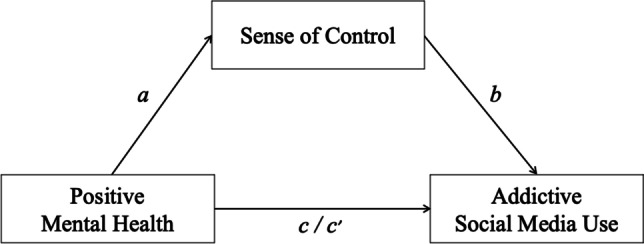
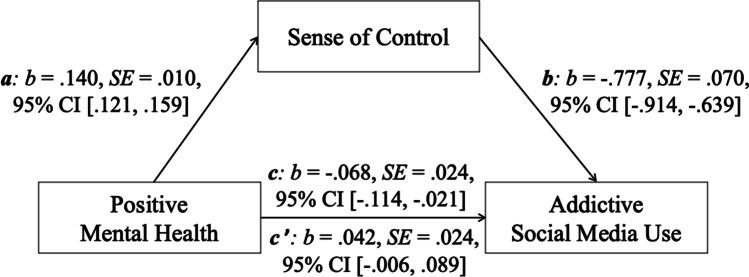
Since the Covid-19 outbreak, addictive social media use increased in many countries. To better understand this development, a universal instrument for the assessment of addictive social media use is required. Against this background, we examined the psychometric properties of the Bergen Social Media Addiction Scale (BSMAS) in representative population samples in nine countries (N = 9418, age range: “18 to 24 years” (youngest group), “55 years and older” (oldest group): China, France, Germany, Poland, Russia, Spain, Sweden, U.K., U.S.). Furthermore, we investigated potential factors and mechanisms that could be associated with addictive social media use. Our cross-national findings show that the BSMAS is a unidimensional reliable and valid instrument. Moreover, they reveal that the negative association between positive mental health and addictive social media use is mediated by sense of control in seven of the nine countries (exception: China, Russia). Thus, it can be hypothesized that activities which increase positive mental health could indirectly contribute to the decrease of addictive social media use. We identified conscious engagement in physical activity and a regular sleep rhythm during the pandemic as such potential activities. The fostering of both by governmental programs could enhance positive mental health and reduce addictive social media use.
Overview
The claims and statistics of this paper haven’t been checked yet.
Free: it reads the open-access text and checks the first 5 claims that cite a source we can check. Create a free account to check every claim.
Integrity signals
Registry
Cites
Statistics
Figures
Verification
Claims the paper makes
The claims and statistics of this paper haven’t been checked yet.
Free: it reads the open-access text and checks the first 5 claims that cite a source we can check. Create a free account to check every claim.
Claims other papers make about this one
Each is checked against this paper’s own text: does it say what the citing paper says it does?
The check wasn’t confident either way, so it gives no verdict — never disputed.
In the citing paper
“Studies show that excessive engagement with social media can impair attention.”
From Does social media addiction disrupt mindful attention of students in health colleges at a university in Saudi Arabia? (2025) · cites this paper as [10]
Experimental — accuracy not yet measured
Self-check
Percentages, sums and reported differences re-computed from the paper’s own numbers.
The self-check needs the paper’s full text.
Citations
Cites
Diagnostic and Statistical Manual of Mental Disorders
American Psychiatric Association (2013) · doi:10.1176/appi.books.9780890425596 · Cited by 116,369
(2013) · Cited by 44,563
(2017) · Cited by 16,319
Lovibond, P. F., & Lovibond, S. H. (1995) · Behaviour Research and Therapy · doi:10.1016/0005-7967(94)00075-u · Cited by 14,523 · cited 2×
“…nine countries, the mean scores of depression and anxiety symptoms that were assessed by the DASS-21 were within the described normal (not-pathological) range (i.e., subscale depression: normal range up to a score of 9; subscale anxiety: normal range up to a score of 7; Lovibond & Lovibond, 1995).”
Constructing validity: Basic issues in objective scale development.
Clark, L. A., & Watson, D. (1995) · Psychological Assessment · doi:10.1037/1040-3590.7.3.309 · Cited by 6,567 · cited 1×
“In all the other countries, it was slightly above the recommended range (i.e., .150 to .500; Briggs & Cheek, 1986; Clark & Watson, 1995): France: r mi = .522 (range: .360 to .722), Germany: r mi = .609 (range: .491 to .741), Poland: r mi = .567 (range: .404 to .760), Russia: r mi = .532 (range:…”
Sohrabi, C., Alsafi, Z., O'Neill, N., Khan, M., Kerwan, A., Al-Jabir, A., Iosifidis, C., & Agha, R. (2020) · International Journal of Surgery · doi:10.1016/j.ijsu.2020.02.034 · Cited by 6,069 · cited 1×
“To slow down the pandemic spread, governments and authorities all over the globe introduced restrictive behavior measures that reduce physical contact among the population (so-called “social distancing”) (Howard et al., 2021; Sohrabi et al., 2020).”
A “components” model of addiction within a biopsychosocial framework
Griffiths, M. (2005) · Journal of Substance Use · doi:10.1080/14659890500114359 · Cited by 3,088 · cited 4×
“Six core addiction elements (Griffiths, 2005) define addictive social media use: salience (permanent thinking about social media use), tolerance (enhanced amount of time is spent on social media to experience positive emotions), mood modification (mood improvement by social media use), relapse…”
InfluentialMental health problems and social media exposure during COVID-19 outbreak
Gao, J., Zheng, P., Jia, Y., Chen, H., Mao, Y., Chen, S., Wang, Y., Fu, H., & Dai, J. (2020) · PLoS ONE · doi:10.1371/journal.pone.0231924 · Cited by 2,830 · cited 2×
“…from both countries reported a remarkable increase of problematic social media use since the pandemic outbreak that is negatively linked to mental health (e.g., enhanced level of depression and anxiety symptoms) (Gao et al., 2020; Nek-liudov et al., 2020; Zhao & Zhou, 2021; Zhong et al., 2021).”
Mental Health Problems and Social Media Exposure During COVID-19 Outbreak
Gao, J., Zheng, P., Jia, Y., Chen, H., Mao, Y., Chen, S., Wang, Y., Fu, H., & Dai, J. (2020) · SSRN Electronic Journal · doi:10.2139/ssrn.3541120 · Cited by 2,830
The role of factor analysis in the development and evaluation of personality scales
Briggs, S. R., & Cheek, J. M. (1986) · Journal of Personality · doi:10.1111/j.1467-6494.1986.tb00391.x · Cited by 2,359 · cited 1×
“In all the other countries, it was slightly above the recommended range (i.e., .150 to .500; Briggs & Cheek, 1986; Clark & Watson, 1995): France: r mi = .522 (range: .360 to .722), Germany: r mi = .609 (range: .491 to .741), Poland: r mi = .567 (range: .404 to .760), Russia: r mi = .532 (range:…”
Research works printed but not linked: 3
- Berry JW Triandis H Berry JW Introduction to methodology Handbook of cross-cultural psychology 1989 Allyn & Bacon 1 28
- Lienert GA Raatz U Testaufbau und Testanalyse (5., völlig neubearb. und erw. Aufl.) 1994 Psychologie Verlags Union
- World Health Organization Global recommendations on physical activity for health 2010 World Health Organization 26180873
Cited by
Brailovskaia, J., & Margraf, J. (2023) · Computers in Human Behavior · doi:10.1016/j.chb.2023.107984 · Cited by 137
Self-citationCasale, S., Akbari, M., Seydavi, M., Bocci Benucci, S., & Fioravanti, G. (2023) · Addictive Behaviors · doi:10.1016/j.addbeh.2023.107838 · Cited by 85
Brailovskaia, J., Ozimek, P., Rohmann, E., & Bierhoff, H. (2023) · Computers in Human Behavior · doi:10.1016/j.chb.2023.107725 · Cited by 111
Self-citationBrailovskaia, J., Swarlik, V. J., Grethe, G. A., Schillack, H., & Margraf, J. (2022) · Journal of Public Health · doi:10.1007/s10389-022-01751-x · Cited by 73
“(Brailovskaia and Margraf 2022a).”
BackgroundSelf-citationSayılı, U., Pirdal, B. Z., Kara, B., Acar, N., Camcioglu, E., Yilmaz, E., Can, G., & Erginöz, E. (2022) · Journal of Community Health · doi:10.1007/s10900-022-01153-w · Cited by 67
“Thus, it can be hypothesized that activities that increase positive mental health could indirectly contribute to the decrease of addictive social media use [53].”
BackgroundDu, M., Zhao, C., Hu, H., Ding, N., He, J., Tian, W., Zhao, W., Lin, X., Liu, G., Chen, W., et al. (2024) · BMC Psychology · doi:10.1186/s40359-024-01705-w · Cited by 47
Aydin, M. K., & Kuş, M. (2023) · Frontiers in Psychology · doi:10.3389/fpsyg.2023.1175555 · Cited by 39
“Regarding the pandemic context, few studies focused on the SMTU profiles of adolescents during the pandemic (Muzi et al., 2021; Brailovskaia and Margraf, 2022; Marengo et al., 2022).”
BackgroundThe “Vicious Circle of addictive Social Media Use and Mental Health” Model
Brailovskaia, J. (2024) · Acta Psychologica · doi:10.1016/j.actpsy.2024.104306 · Cited by 51
Self-citationMeta-analysis of Reliability and Validity of the Bergen Social Media Addiction Scale (BSMAS)
Bottaro, R., Griffiths, M. D., & Faraci, P. (2025) · International Journal of Mental Health and Addiction · doi:10.1007/s11469-025-01461-x · Cited by 51
The Psychometric Properties of the Arabic Bergen Social Media Addiction Scale
Abiddine, F. Z. E., Aljaberi, M. A. A., Alduais, A. M. S., Lin, C.-Y., Vally, Z., & Griffiths, M. D. (2024) · International Journal of Mental Health and Addiction · doi:10.1007/s11469-024-01297-x · Cited by 35
“…of validated Arabic-translated versions of scales that assess social media-related addictive tendencies and have emphasized the need for a culturally adapted Arabic version of the measures (Al-Menayes, 2015; Brailovskaia & Margraf, 2022; Ghali et al., 2019; Gunter et al., 2016; Lenze, 2017).”
InfluentialOzimek, P., Brailovskaia, J., Bierhoff, H., & Rohmann, E. (2024) · Telematics and Informatics Reports · doi:10.1016/j.teler.2024.100117 · Cited by 57
Self-citationKrishnan, A. A., & Chew, P. K. H. (2024) · Psychiatric Quarterly · doi:10.1007/s11126-024-10068-9 · Cited by 33
Predictive Power of Positive Mental Health: A Scoping Review
Margraf, J., Teismann, T., & Brailovskaia, J. (2024) · Journal of Happiness Studies · doi:10.1007/s10902-024-00788-x · Cited by 36
“…Mahmood et al., 2021 ), or the PMH-Scale by Lukat et al. ( 2016 ) was only used as a measure to validate another questionnaire (Bibi et al., 2020b ; Brailovskaia & Margraf, 2022a ; Chao et al., 2020 ; Cwik et al., 2017 , 2021 ; Hofmann & Kohlmann, 2019 ; Lin et al., 2020 ; Scholten et al., 2020 ;…”
InfluentialSelf-citationBrailovskaia, J., & Margraf, J. (2022) · Current Research in Behavioral Sciences · doi:10.1016/j.crbeha.2022.100088 · Cited by 33
Self-citationVally, Z., Helmy, M. S., & Fourie, L. C. H. (2023) · PLoS ONE · doi:10.1371/journal.pone.0291034 · Cited by 29
“The 2-item scale first developed and employed by Brailovskaia and Margraf [37] was used to assess sense of control.”
BackgroundMethodŽmavc, M., Šorgo, A., Gabrovec, B., Crnkovič, N., Cesar, K., & Selak, Š. (2022) · International Journal of Environmental Research and Public Health · doi:10.3390/ijerph192013178 · Cited by 39
“As reported in previous BSMAS validation studies [12,15,19], symptoms of depression, anxiety and stress are significantly associated with BSMAS scores.”
BackgroundMethodResultCheng, X., Liu, J., Li, J., & Hu, Z. (2023) · Addictive Behaviors · doi:10.1016/j.addbeh.2023.107785 · Cited by 22
Brailovskaia, J., & Margraf, J. (2022) · PLoS ONE · doi:10.1371/journal.pone.0277631 · Cited by 30
“The brief version of the Bergen Social Media Addiction Scale (BSMAS; original version: [6]; German language version: [43]) assessed addictive SMU.”
MethodSelf-citationSirola, A., Nyrhinen, J., & Wilska, T. (2023) · Journal of Gambling Studies · doi:10.1007/s10899-022-10185-9 · Cited by 32
“A study by Brailovskaia & Margraf (2022) suggested that positive mental health can increase one’s sense of control, which can further protect one from developing addictive behaviors.”
BackgroundLiebherr, M., Heyder, A., Brailovskaia, J., Burkardt, T. M., Latrouite, C., Montag, C., & Antons, S. (2025) · Journal of Behavioral Addictions · doi:10.1556/2006.2025.00007 · Cited by 28
Self-citationAdaptation of the Bergen Social Media Addiction Scale (BSMAS) in Spanish
Copez-Lonzoy, A. J. E., Otazú-Alfaro, S., Vallejos-Flores, M., Luque, W. C., Salas-Blas, E., Montero, A. M., Dias, P. C., & Bazo‐Alvarez, J. C. (2023) · Acta Psychologica · doi:10.1016/j.actpsy.2023.104072 · Cited by 28
“Although there are two versions in Spanish, neither shows a clear adaptation process (Brailovskaia & Margraf, 2022; Carratal ´ a & Ib ´ a ˜ nez, 2019) or the evaluation of different evidence of validity (Brailovskaia & Margraf, 2022).”
BackgroundQuizhpe, L. I. A., & Viñán-Ludeña, M. S. (2025) · Frontiers in Psychology · doi:10.3389/fpsyg.2025.1578457 · Cited by 29
Santoro, G., Costanzo, A., Franceschini, C., Lenzo, V., Musetti, A., & Schimmenti, A. (2024) · International Journal of Environmental Research and Public Health · doi:10.3390/ijerph21030255 · Cited by 27
“Research supported the validity and reliability of the BSMAS [87–89].”
ResultBalcerowska, J. M., & Brailovskaia, J. (2024) · Computers in Human Behavior · doi:10.1016/j.chb.2024.108240 · Cited by 21
Self-citationBrailovskaia, J., Krasavtseva, Y. V., Kochetkov, Y., Tour, P., & Margraf, J. (2022) · Women s Health · doi:10.1177/17455057221141292 · Cited by 17
Self-citationBrailovskaia, J., Balcerowska, J. M., Precht, L.-M., & Margraf, J. (2023) · Computers in Human Behavior · doi:10.1016/j.chb.2023.107676 · Cited by 12
Self-citationConkey-Morrison, C., Zarate, D., March, E., Hunt, B. R., & Stavropoulos, V. (2025) · Computers in Human Behavior Reports · doi:10.1016/j.chbr.2025.100848 · Cited by 18
Stirnberg, J., Margraf, J., Precht, L.-M., & Brailovskaia, J. (2024) · Psychopathology · doi:10.1159/000538263 · Cited by 19
“Available research showed good scale reliability for the BSMAS with Cronbach ’ s α ranging between 0.82 and 0.90 [49].”
InfluentialSelf-citationSirola, A., Savolainen, I., & Oksanen, A. (2024) · Personality and Individual Differences · doi:10.1016/j.paid.2024.112709 · Cited by 19
Yang, X., Liu, Q., Chen, H., Li, Y., Zhang, S., Xiong, J., Zhang, C., Zhou, Q., & Liu, T. (2023) · Current Psychology · doi:10.1007/s12144-023-05353-y · Cited by 10
“Mobile phone use can provide a way for some people to reclaim a feeling of control over their lives, a process promoted by the high popularity, convenience, and multifunc-tionality of mobile phones (Brailovskaia & Margraf, 2022; Brailovskaia et al., 2021).”
Brailovskaia, J., & Margraf, J. (2024) · Computers in Human Behavior Reports · doi:10.1016/j.chbr.2024.100382 · Cited by 9
Self-citationYe, Y., Wang, H., Ye, L., & Gao, H. (2024) · International Journal of Mental Health Promotion · doi:10.32604/ijmhp.2024.049606 · Cited by 13
“As the statistical ef fi ciency of the product coef fi cient method is superior to the causal step method [40], the coef fi cient product method is increasingly used by more and more researchers.”
BackgroundMethodSocial media addiction and stress: insights from US Facebook and TikTok consumers
Coker, K. K., Hale, D. H., AlSaleh, D., & Thakur, R. (2025) · Journal of Consumer Marketing · doi:10.1108/jcm-02-2024-6597 · Cited by 21
AlAteeq, D. A., Doumi, R., Alharthi, A., Alsayari, N. A., Alotaibi, R. M., Alharthi, R., Althomali, W., Alsaif, B. A., Alshammari, A., Aladwani, S., et al. (2025) · Journal of Nature and Science of Medicine · doi:10.4103/jnsm.jnsm_207_24 · Cited by 9
Kornienko, D. S., Rudnova, N. A., Гордеева, Т. О., Sychev, O. A., Егоров, В., & Veraksa, А. (2023) · Social Psychology and Society · doi:10.17759/sps.2023140203 · Cited by 12
“С течением времени растет потребность в интенсивности использования (повышается толерантность), что проявляется в увеличении времени, проводимого в сети [23].”
Luk, J. W., Geda, D. W., Stangl, B. L., Cheng, C., Schwandt, M. L., Goldman, D. A., Diazgranados, N., & Ramchandani, V. A. (2023) · Frontiers in Psychiatry · doi:10.3389/fpsyt.2023.1268890 · Cited by 10
Discussing evidence on the components model of addiction. A commentary on Fournier et al. (2023)
Amendola, S. (2023) · Addictive Behaviors · doi:10.1016/j.addbeh.2023.107764 · Cited by 13
What role do self-regulatory mechanisms play in the risky use of digital media by adolescents?
Hrbáčková, K., Hladík, J., & Šafránková, A. P. (2025) · Frontiers in Psychology · doi:10.3389/fpsyg.2025.1675778 · Cited by 17
Wang, C., Dong, Y., Chen, C., Wang, Z., Qian, H., & Wang, Y. (2025) · Child Abuse & Neglect · doi:10.1016/j.chiabu.2025.107447 · Cited by 5
Savolainen, I., Brailovskaia, J., Sirola, A., Celuch, M., & Oksanen, A. (2025) · Computers in Human Behavior · doi:10.1016/j.chb.2025.108555 · Cited by 12
Self-citationAlYousef, N. H., Alhakeem, F. M., AlNasser, K. A., AlSinan, Z. H., Alessa, Z. K., AlDawood, F. M., Shafey, M. M., & Al-Johani, W. M. (2025) · Journal of Family and Community Medicine · doi:10.4103/jfcm.jfcm_223_25 · Cited by 4
Psychometric validation of the Jordanian version of the Bergen Social Media Addiction Scale (BSMAS)
Al-Dassean, K. A., & Murad, O. S. (2025) · Cogent Psychology · doi:10.1080/23311908.2025.2504763 · Cited by 6
“…network addiction scale (atwan et al., 2022). however, the BsMas scale has a favorable global reputation. it has been widely used in recent studies (Brailovskaia & Margraf, 2022; leung et al., 2020) and translated into multiple languages, including italian (Monacis et al., 2017), Persian (lin et…”
InfluentialHe, F., Ju, K., Sun, R., Hu, N., Cai, D., Zhang, X., & Margraf, J. (2024) · Current Psychology · doi:10.1007/s12144-024-06253-5 · Cited by 8
“Individuals with higher levels of positive mental health usually have a high sense of control and adapt to uncertainty and emergencies (Brailovskaia, & Margraf, 2022b; Niemeyer et al., 2019 ).”
InfluentialSelf-citationGu, Z., & Yang, C. (2024) · Current Psychology · doi:10.1007/s12144-024-06601-5 · Cited by 3
Grupp, K., Blessmann, M., König, H., & Hajek, A. (2025) · Heliyon · doi:10.1016/j.heliyon.2025.e41674 · Cited by 4
Ding, J., Liu, Z., & Chao, M. (2025) · Journal of Psychiatric Research · doi:10.1016/j.jpsychires.2025.07.009 · Cited by 9
Brailovskaia, J., Precht, L.-M., & Margraf, J. (2026) · Computers in Human Behavior Reports · doi:10.1016/j.chbr.2026.100933 · Cited by 3
Self-citationDigital Phenotyping for Problematic Technology Use: A Systematic Literature Review and Taxonomy
Schroeder, G. L., Francisco, R., & Barbosa, J. L. V. (2026) · Current Addiction Reports · doi:10.1007/s40429-026-00759-7 · Cited by 3
The Influence of the Cultural and Religious Factors on the Media
Khudarova, A., Abdramanov, Y., Tsvetkova, M., & Sokolovskiy, K. G. (2024) · Journal of Ethnic and Cultural Studies · doi:10.29333/ejecs/1830 · Cited by 3
“The situation of COVID-19 and opposition to vaccination in many societies have demonstrated what a huge role the “antifragility” of the public media system plays (Brailovskaia & Margraf, 2022; Kim et al., 2020; Mheidly & Fares, 2020).”
BackgroundAwan, K., Khan, S., Haider, S., Khan, N., Ali, Z., & Damaševičius, R. (2024) · Multimedia Tools and Applications · doi:10.1007/s11042-024-20399-1 · Cited by 2
White, G. (2023) · Journal of Mental Health Disorders · doi:10.33696/mentalhealth.3.014 · Cited by 3
Ma, Y., & Zhou, S. (2024) · Journalism and Media · doi:10.3390/journalmedia5040089 · Cited by 5
Haddad, M. E., Hecker, I., Wallez, S., Mary‐Krause, M., & Melchior, M. (2024) · Cambridge Prisms Global Mental Health · doi:10.1017/gmh.2024.2 · Cited by 2
Beyond the Wish: Actual Mobile Phone Use Surpassing Desire Brings More Distress
Liu, J., Liu, R., Ding, Y., Hong, W., & Yang, Y. (2024) · International Journal of Mental Health and Addiction · doi:10.1007/s11469-024-01303-2 · Cited by 2
“The research found that the decreased sense of control was associated with increased anxiety symptoms (Brailovskaia & Margraf, 2022, 2023).”
COMPREHENSIVE REVIEW: RISK FACTORS ASSOCIATED WITH SOCIAL MEDIA ADDICTION AMONG YOUNG POPULATION
Srivastava, U., & Barmola, K. C. B. K. C. (2024) · ShodhKosh Journal of Visual and Performing Arts · doi:10.29121/shodhkosh.v5.i6.2024.5104 · Cited by 2
Addictive behaviour in modern teenagers: risk and protective factors, prevention
Сетко, Н. П., Zhdanova, О. М., & Setko, A. G. (2025) · Hygiene and Sanitation · doi:10.47470/0016-9900-2025-104-4-442-450 · Cited by 1
Fong, T. C. T., Ye, X., & Yip, P. S. F. (2025) · Journal of Affective Disorders · doi:10.1016/j.jad.2025.120921 · Cited by 2
Nichol, B., Erfani, G., McCready, J. L., Gordon, C., Unsworth, J., Croston, M., Comparcini, D., Simonetti, V., Cicolini, G., Mikkonen, K., et al. (2026) · Nursing Open · doi:10.1002/nop2.70460 · Cited by 1
“The BSMAS scale has been validated in several European countries, China and the United States, confirming its psychometric characteristics (Brailovskaia and Margraf 2024).”
Dutschke, C. M., & Brailovskaia, J. (2026) · Journal of Social Media Research · doi:10.29329/jsomer.93 · Cited by 3
“Accordingly, fostering adolescents’ sense of control might represent a promising approach for interventions, as it has been linked to positive health outcomes and thereby addresses the aforementioned aspects (Brailovskaia & Margraf, 2024).”
Self-citationBrailovskaia, J., Precht, L.-M., Schaumburg, S., Margraf, J., & Schneider, S. (2026) · Computers in Human Behavior · doi:10.1016/j.chb.2026.109092 · Cited by 1
Self-citationLimniou, M., Raja, M., Donovan, M., & Hands, C. (2025) · Trends in Higher Education · doi:10.3390/higheredu4010009 · Cited by 4
“University policymakers and professional service staff should consider first-year students’ EDI characteristics when developing and implementing relevant support interventions.”
Tracking Ephemeral and Residual Emotions via Earable Inertial Sensing During Media Consumption
Zingre, S. R., Chugh, G., & Chakraborty, S. (2025) · IEEE International Conference on Pervasive Computing and Communications Workshops (PerCom Workshops) · doi:10.1109/percomworkshops65533.2025.00153 · Cited by 1
“Prolonged digital media exposure can cause both immediate and lingering emotional effects, making their monitoring crucial for psychological well-being [1].”
Balcerowska, J. M., & Brailovskaia, J. (2023) · SSRN Electronic Journal · doi:10.2139/ssrn.4600002 · Cited by 1
Self-citationMaterialism 2.0 – More Social Media Addiction and Stress Symptoms, Less Satisfaction with LifePreprint
Ozimek, P., Brailovskaia, J., Bierhoff, H., & Rohmann, E. (2023) · SSRN Electronic Journal · doi:10.2139/ssrn.4485058
Self-citationNyrhinen, J., Sirola, A., Frank, L., & Wilska, T. (2023) · Bled eConference · doi:10.18690/um.fov.6.2023.19
“Psychological resilience was negatively associated with loot box purchasing, indicating that psychological resources can protect from the development of problem behaviors particuarly during crises situations (Brailovskaia & Margraf, 2022; Fletcher & Sarkar, 2013).”
BackgroundHaddad, M. E., Hecker, I., Wallez, S., et al. (2023) · Cambridge Prisms Global Mental Health · doi:10.1017/gmh.2024.2.pr11
Haddad, M. E., Hecker, I., Wallez, S., et al. (2023) · Cambridge Prisms Global Mental Health · doi:10.1017/gmh.2024.2.pr12
Haddad, M. E., Hecker, I., Wallez, S., et al. (2023) · Cambridge Prisms Global Mental Health · doi:10.1017/gmh.2024.2.pr13
Mary‐Krause, M. (2023) · Cambridge Prisms Global Mental Health · doi:10.1017/gmh.2024.2.pr10
Haddad, M. E., Hecker, I., Wallez, S., et al. (2023) · Cambridge Prisms Global Mental Health · doi:10.1017/gmh.2024.2.pr9
Haddad, M. E., Hecker, I., Wallez, S., et al. (2023) · Cambridge Prisms Global Mental Health · doi:10.1017/gmh.2024.2.pr8
Haddad, M. E., Hecker, I., Wallez, S., et al. (2023) · Cambridge Prisms Global Mental Health · doi:10.1017/gmh.2024.2.pr7
Mary‐Krause, M. (2023) · Cambridge Prisms Global Mental Health · doi:10.1017/gmh.2024.2.pr6
Haddad, M. E., Hecker, I., Wallez, S., et al. (2023) · Cambridge Prisms Global Mental Health · doi:10.1017/gmh.2024.2.pr5
Haddad, M. E., Hecker, I., Wallez, S., et al. (2023) · Cambridge Prisms Global Mental Health · doi:10.1017/gmh.2024.2.pr4
Haddad, M. E., Hecker, I., Wallez, S., et al. (2023) · Cambridge Prisms Global Mental Health · doi:10.1017/gmh.2024.2.pr3
Haddad, M. E., Hecker, I., Wallez, S., et al. (2023) · Cambridge Prisms Global Mental Health · doi:10.1017/gmh.2024.2.pr2
Mary‐Krause, M. (2023) · Cambridge Prisms Global Mental Health · doi:10.1017/gmh.2024.2.pr1
Ali, H., Sohail, A., Bilal, H., Mufti, M. A., Ali, M. H., Zafar, M. R., & Zafar, M. R. (2025) · Journal of the Knowledge Economy · doi:10.1007/s13132-024-02470-2 · Cited by 1
“Whether it be individuals, society, or corporations, it has impacted all of us (Brailovskaia & Margraf, 2024).”
Wang, Y., Cui, Z., Ali, S., Nazar, R., & Anser, M. K. (2025) · Current Psychology · doi:10.1007/s12144-025-07464-0
Kılıç, R. T., & Aslan, H. (2025) · Gazi Sağlık Bilimleri Dergisi · doi:10.52881/gsbdergi.1599697 · Cited by 1
Validation of the Short Video Addiction Scale: A Psychometric Study Among Chinese AdolescentsPreprint
Jiang, Z., Kang, T., Chen, Y., Chen, W., & Wu, H. (2025) · Research Square · doi:10.21203/rs.3.rs-6259796/v1 · Cited by 2
Howard, A., Gmiro, Y., Gunnell, K. E., & Tamminen, K. A. (2025) · doi:10.71240/lcyc.168925
Gupta, S., Amin, F., & Paul, S. (2025) · The Family Journal · doi:10.1177/10664807251349838 · Cited by 1
Al-Ansari, N., Al‐Thani, D., & Bahameish, M. (2026) · Computers in Human Behavior Reports · doi:10.1016/j.chbr.2026.101083 · Cited by 2
Govindaswamy, C., Bhargav, A. V. S., & Kumar, M. S. N. (2025) · Indian Journal of Psychiatric Nursing · doi:10.4103/iopn.iopn_4_24
Examining excessive stock market information search behavior: A moderating effect of age and gender
Srivastava, A., Kumar, S., Goel, U., & Johri, A. (2026) · Acta Psychologica · doi:10.1016/j.actpsy.2026.106258 · Cited by 1
Beseler, A., Toepfl, F., Kravets, D., & Kling, J. (2026) · New Media & Society · doi:10.1177/14614448251413136
Shonak, P., & Kushwaha, S. (2025) · International Conference on Evolutionary Computing and Mobile Sustainable Networks (ICECMSN) · doi:10.1109/icecmsn68058.2025.11382993 · Cited by 1
“Social media use is also compulsive, which complicates the situation even more since the platform involved in addiction gives the adolescent a feeling of belonging and validation at the same time [5].”
Herrera, Y. R., Alonso-García, S., Criollo, A. D. R. C., & Núñez, J. A. L. (2026) · Behavioral Sciences · doi:10.3390/bs16030416 · Cited by 3
“This phenomenon has sparked social concern about the overuse of these virtual resources due to their potential to cause health problems (Valencia Ortiz et al., 2021; Brailovskaia & Margraf, 2024).”
Brailovskaia, J., Precht, L.-M., Teismann, T., & Margraf, J. (2026) · Acta Psychologica · doi:10.1016/j.actpsy.2026.106702 · Cited by 1
Self-citationButt, M. F., Mashhadi, S. F., Shahid, M. S., & Sair, F. (2026) · Discover Public Health · doi:10.1186/s12982-026-01985-0
Jakobsson, M., Björling, G., Broström, A., Huus, K., Eriksson, M., Bengtsson, S., Griffiths, M. D., & Pakpour, A. (2026) · Addictive Behaviors Reports · doi:10.1016/j.abrep.2026.100704 · Cited by 1
“Although previous work has examined the BSMAS in Sweden (Brailovskaia & Margraf, 2024), existing Swedish evidence is based on adult sample (18 + years) recruited online (e.g., online panels/volunteer web surveys), which may not generalize to school-based adolescent populations.”
InfluentialOrhan, B. E. (2026) · Behavioral Sciences · doi:10.3390/bs16060864 · Cited by 1
“…is consistent with the possibility that symptom-like patterns are broadly distributed across genders, while gendered differences may emerge more clearly in platform preferences and content-specific engagement that the BSMAS does not capture (Brailovskaia & Margraf, 2024; Zarate et al., 2022).”
More than screen deep - finding the inflection point of problematic social media use
Arnold, R. C. G., & Machande, A. D. (2026) · Journal of Social Media Research · doi:10.29329/jsomer.112
Wen, H., Liu, Y., & Luo, Y. (2026) · Computers in Human Behavior · doi:10.1016/j.chb.2026.109183
Cruz, G. V., Rosa, C. D., Lavallée, I., Gilles-Noguès, E., & Khazaal, Y. (2026) · Acta Psychologica · doi:10.1016/j.actpsy.2026.107797
Social Media Addiction Among Senior High School Students of Pasonanca National High School
Subrado, C. L., & Francisco, J. D. (2026) · International Journal of Sustainable and Integrated Studies · doi:10.65339/ijsis.v1.i2.110
“The finding is relevant to contemporary research on problematic social media use, which recognizes mood modification as one of the behavioral components associated with addictive or problematic patterns (Brailovskaia & Margraf, 2022; Copez-Lonzoy et al., 2023).”
Influential連志賢, Zhang, M., LIU, Z., & Dou, X. (2026) · European Journal of Investigation in Health Psychology and Education · doi:10.3390/ejihpe16100148
“…stress, depressive symptoms, anxiety, emotional agitation, reduced subjective well-being, and diminished life satisfaction (Abiddine et al., 2024; Bottaro et al., 2025; Brailovskaia & Margraf, 2024; Boniel-Nissim et al., 2022; Chang et al., 2022; Dadiotis et al., 2021; St ă nculescu, 2023).”
Montag, C., Kiefer, M., Connemann, B. J., Kammer, T., & Sanwald, S. (2026) · BMC Psychiatry · doi:10.1186/s12888-026-08743-1
“The German version was reformulated to assess social media addiction in general (and not just focus on Facebook; [10].”
Metadata
- Authors
- Brailovskaia, J., & Margraf, J.
- Affiliations
- Ruhr University Bochum (DE)
- Corresponding author
- Brailovskaia, Julia
- Venue
- Current Psychology
- Published
- 2022-05-21
- Volume
- 43
- Issue
- 14
- Pages
- 13022-13040
- ISSN
- 1046-1310 (ISSN-L)
- 1936-4733
- PMC
- PMC9122809
- OpenAlex
- W4281250389
- Semantic Scholar
- e1e974da08788539bc35707d08d3d8932aa47045
- Cited by
- 101
- References
- 116
- Citations by year
- 2026: 20 · 2025: 25 · 2024: 20 · 2023: 30 · 2022: 6
- FWCI
- 29.14
- Type
- journal article
- Language
- en
- Open access
- hybrid
- doi.org
- Licence
- cc-by
- creativecommons.org/licenses/by/4.0 (tdm)
- creativecommons.org/licenses/by/4.0 (vor)
- Locations
- Current Psychology (publishedVersion, cc-by)
- PubMed Central (publishedVersion, cc-by)
- PubMed (publishedVersion)
- Funders
- Ruhr-Universität Bochum
- Topics
- Social Sciences › Sociology and Political Science › Impact of Technology on Adolescents
- Social Sciences › Psychology › Clinical Psychology › COVID-19 and Mental Health
- Social Sciences › Psychology › Clinical Psychology › Sexuality, Behavior, and Technology
- Keywords
- Bergen Social Media Addiction Scale, scale validation, psychometric properties, COVID-19 pandemic, positive mental health, perceived control, physical activity, sleep rhythm, protective factors, cross-national comparison
About these checks
Registry, retraction, Cites and statistics results are computed, not judged, with one exception: a printed reference that no index lists is read once by a model before it counts as a citation error. Claims are extracted by a model and kept only when their quote appears verbatim in the text; each cited source is then checked, with a model’s help, for whether it says what the claim relies on. Those verdicts can be wrong — read the claim’s quote and the cited source before relying on one.
Statistics and arithmetic are recomputed, not judged.
Confidence bands are shown only for fields calibrated on our annotated test set. None is calibrated yet, so no band is shown.
What counts as a claim ›How we measure confidence ›How we check this ›
Are you an author, or do you see a problem with this page? Request a review
Data sources
Bibliographic data: Semantic Scholar, OpenAlex, Crossref.
Contains information from the Semantic Scholar Academic Graph Datasets, made available under the ODC Attribution License (ODC-BY 1.0).
Semantic Scholar’s data is described in: Kinney, R., et al. (2023). The Semantic Scholar Open Data Platform. arXiv:2301.10140.
