

Addictive social media use during Covid-19 outbreak: Validation of the Bergen Social Media Addiction Scale (BSMAS) and investigation of protective factors in nine countries
Open accessThe DOI matches its Crossref record, with a small difference in title or year; 116 of the 116 references it cites were found in a registry or an index.
Abstract
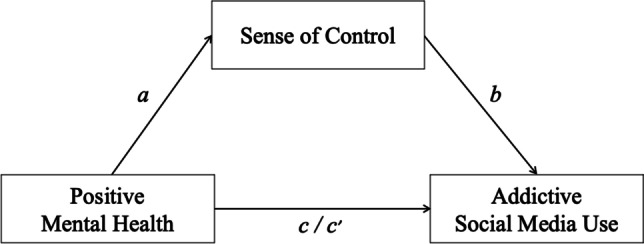
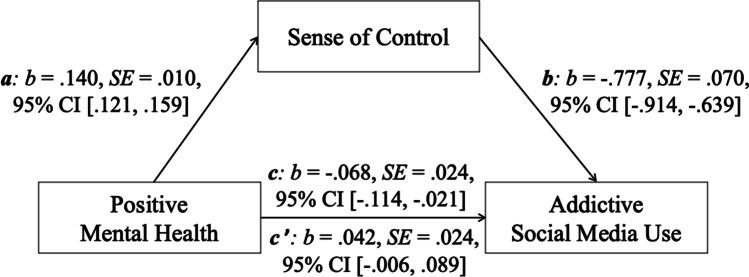
Since the Covid-19 outbreak, addictive social media use increased in many countries. To better understand this development, a universal instrument for the assessment of addictive social media use is required. Against this background, we examined the psychometric properties of the Bergen Social Media Addiction Scale (BSMAS) in representative population samples in nine countries (N = 9418, age range: “18 to 24 years” (youngest group), “55 years and older” (oldest group): China, France, Germany, Poland, Russia, Spain, Sweden, U.K., U.S.). Furthermore, we investigated potential factors and mechanisms that could be associated with addictive social media use. Our cross-national findings show that the BSMAS is a unidimensional reliable and valid instrument. Moreover, they reveal that the negative association between positive mental health and addictive social media use is mediated by sense of control in seven of the nine countries (exception: China, Russia). Thus, it can be hypothesized that activities which increase positive mental health could indirectly contribute to the decrease of addictive social media use. We identified conscious engagement in physical activity and a regular sleep rhythm during the pandemic as such potential activities. The fostering of both by governmental programs could enhance positive mental health and reduce addictive social media use.
Overview
The claims and statistics of this paper haven’t been checked yet.
Free: it reads the open-access text and checks the first 5 claims that cite a source we can check. Create a free account to check every claim.
Integrity signals
Registry
Cites
Statistics
Figures
Verification
Claims the paper makes
The claims and statistics of this paper haven’t been checked yet.
Free: it reads the open-access text and checks the first 5 claims that cite a source we can check. Create a free account to check every claim.
Claims other papers make about this one
Each is checked against this paper’s own text: does it say what the citing paper says it does?
The check wasn’t confident either way, so it gives no verdict — never disputed.
In the citing paper
“Studies show that excessive engagement with social media can impair attention.”
From Does social media addiction disrupt mindful attention of students in health colleges at a university in Saudi Arabia? (2025) · cites this paper as [10]
Experimental — accuracy not yet measured
Self-check
Percentages, sums and reported differences re-computed from the paper’s own numbers.
The self-check needs the paper’s full text.
Citations
Cites
Diagnostic and Statistical Manual of Mental Disorders
American Psychiatric Association (2013) · doi:10.1176/appi.books.9780890425596 · Cited by 116,369
(2013) · Cited by 44,563
(2017) · Cited by 16,319
Lovibond, P. F., & Lovibond, S. H. (1995) · Behaviour Research and Therapy · doi:10.1016/0005-7967(94)00075-u · Cited by 14,523 · cited 2×
“…nine countries, the mean scores of depression and anxiety symptoms that were assessed by the DASS-21 were within the described normal (not-pathological) range (i.e., subscale depression: normal range up to a score of 9; subscale anxiety: normal range up to a score of 7; Lovibond & Lovibond, 1995).”
Constructing validity: Basic issues in objective scale development.
Clark, L. A., & Watson, D. (1995) · Psychological Assessment · doi:10.1037/1040-3590.7.3.309 · Cited by 6,567 · cited 1×
“In all the other countries, it was slightly above the recommended range (i.e., .150 to .500; Briggs & Cheek, 1986; Clark & Watson, 1995): France: r mi = .522 (range: .360 to .722), Germany: r mi = .609 (range: .491 to .741), Poland: r mi = .567 (range: .404 to .760), Russia: r mi = .532 (range:…”
Sohrabi, C., Alsafi, Z., O'Neill, N., Khan, M., Kerwan, A., Al-Jabir, A., Iosifidis, C., & Agha, R. (2020) · International Journal of Surgery · doi:10.1016/j.ijsu.2020.02.034 · Cited by 6,069 · cited 1×
“To slow down the pandemic spread, governments and authorities all over the globe introduced restrictive behavior measures that reduce physical contact among the population (so-called “social distancing”) (Howard et al., 2021; Sohrabi et al., 2020).”
A “components” model of addiction within a biopsychosocial framework
Griffiths, M. (2005) · Journal of Substance Use · doi:10.1080/14659890500114359 · Cited by 3,088 · cited 4×
“Six core addiction elements (Griffiths, 2005) define addictive social media use: salience (permanent thinking about social media use), tolerance (enhanced amount of time is spent on social media to experience positive emotions), mood modification (mood improvement by social media use), relapse…”
InfluentialMental health problems and social media exposure during COVID-19 outbreak
Gao, J., Zheng, P., Jia, Y., Chen, H., Mao, Y., Chen, S., Wang, Y., Fu, H., & Dai, J. (2020) · PLoS ONE · doi:10.1371/journal.pone.0231924 · Cited by 2,830 · cited 2×
“…from both countries reported a remarkable increase of problematic social media use since the pandemic outbreak that is negatively linked to mental health (e.g., enhanced level of depression and anxiety symptoms) (Gao et al., 2020; Nek-liudov et al., 2020; Zhao & Zhou, 2021; Zhong et al., 2021).”
Mental Health Problems and Social Media Exposure During COVID-19 Outbreak
Gao, J., Zheng, P., Jia, Y., Chen, H., Mao, Y., Chen, S., Wang, Y., Fu, H., & Dai, J. (2020) · SSRN Electronic Journal · doi:10.2139/ssrn.3541120 · Cited by 2,830
The role of factor analysis in the development and evaluation of personality scales
Briggs, S. R., & Cheek, J. M. (1986) · Journal of Personality · doi:10.1111/j.1467-6494.1986.tb00391.x · Cited by 2,359 · cited 1×
“In all the other countries, it was slightly above the recommended range (i.e., .150 to .500; Briggs & Cheek, 1986; Clark & Watson, 1995): France: r mi = .522 (range: .360 to .722), Germany: r mi = .609 (range: .491 to .741), Poland: r mi = .567 (range: .404 to .760), Russia: r mi = .532 (range:…”
Brand, M., Wegmann, E., Stark, R., Müller, A., Wölfling, K., Robbins, T. W., & Potenza, M. N. (2019) · Neuroscience & Biobehavioral Reviews · doi:10.1016/j.neubiorev.2019.06.032 · Cited by 2,126 · cited 4×
“…between different moderating (e.g., general inhibitory control) and mediating (e.g., affective and cognitive responses to triggers) factors, the excessive online activity can contribute to the development of addictive tendencies and increase conflicts in the offline world (Brand et al., 2019).”
InfluentialAndreassen, C. S., Billieux, J., Griffiths, M. D., Kuss, D. J., Demetrovics, Z., Mazzoni, E., & Pallesen, S. (2016) · Psychology of Addictive Behaviors · doi:10.1037/adb0000160 · Cited by 2,095 · cited 8×
“For example, previous research described addictive social media use – as assessed with the BSMAS – to be positively related to other forms of addictive online activity such as Internet Gaming Disorder (Andreassen et al., 2016; Leung et al., 2020), the attachment style (e.g., discomfort with closeness, need for approva…”
InfluentialGalea, S., Merchant, R. M., & Lurie, N. (2020) · JAMA Internal Medicine · doi:10.1001/jamainternmed.2020.1562 · Cited by 2,089 · cited 2×
“…increase of addictive social media use (Masaeli & Farhadi, 2021; Zhao & Zhou, 2021) is accompanied by an enhancement of symptoms of stress, depression, and anxiety (Charles et al., 2021; Galea et al., 2020; Liu et al., 2020; Nekliudov et al., 2020; Paredes et al., 2020; Taylor et al., 2020).”
Keles, B., McCrae, N., & Grealish, A. (2020) · International Journal of Adolescence and Youth · doi:10.1080/02673843.2019.1590851 · Cited by 1,909 · cited 2×
“In contrast, others warn of the addictive tendencies and their potential negative impact on mental health (Andreassen et al., 2017; Brand et al., 2019; Kircaburun et al., 2020a; Marino et al., 2018).”
Development of a Facebook Addiction Scale
Andreassen, C. S., Torsheim, T., Brunborg, G. S., & Pallesen, S. (2012) · Psychological Reports · doi:10.2466/02.09.18.pr0.110.2.501-517 · Cited by 1,884 · cited 3×
“Sixth, originally the BSMAS (previously Bergen Facebook Addiction Scale) was developed to assess addictive Facebook use and thus focused on the characteristics of this specific social platform (Andreassen et al., 2012).”
InfluentialAn evidence review of face masks against COVID-19
Howard, J., Huang, A., Li, Z., Tufekci, Z., Zdimal, V., van der Westhuizen, H.-M., von Delft, A., Price, A., Fridman, L., Tang, L.-H., et al. (2021) · Proceedings of the National Academy of Sciences · doi:10.1073/pnas.2014564118 · Cited by 1,529
Andreassen, C. S., Pallesen, S., & Griffiths, M. D. (2017) · Addictive Behaviors · doi:10.1016/j.addbeh.2016.03.006 · Cited by 1,504 · cited 9×
“When available, previously validated national language versions of the used scales were included (e.g., BSMAS: Andreassen et al., 2017; Brailovskaia et al., 2020a; PMH-Scale: Cai et al., 2017; Margraf, Brailovskaia, et al., 2020; Sense of Control Scale: Niemeyer et al., 2019; DASS-21: Scholten et…”
InfluentialThe association between adolescent well-being and digital technology use
Orben, A., & Przybylski, A. K. (2019) · Nature Human Behaviour · doi:10.1038/s41562-018-0506-1 · Cited by 1,500 · cited 1×
“Some researchers emphasize that it is important not to over pathol-ogize intensive social media use and not to overestimate its potential consequences (Billieux et al., 2015; Carbonell & Panova, 2017; Orben & Przybylski, 2019).”
Constructing validity: New developments in creating objective measuring instruments.
Clark, L. A., & Watson, D. (2019) · Psychological Assessment · doi:10.1037/pas0000626 · Cited by 1,470
Rebar, A. L., Stanton, R., Geard, D., Short, C., Duncan, M. J., & Vandelanotte, C. (2015) · Health Psychology Review · doi:10.1080/17437199.2015.1022901 · Cited by 1,323 · cited 1×
“The present findings extend previous research conducted prior to the pandemic outbreak that emphasized the protective role of physical exercises and a regular sleep rhythm for mental health (Brunborg et al., 2011; Klaperski et al., 2013; Rebar et al., 2015).”
Liu, C. H., Zhang, E., Wong, G. T. F., Hyun, S., & Hahm, H. “. (2020) · Psychiatry Research · doi:10.1016/j.psychres.2020.113172 · Cited by 1,157 · cited 1×
“…increase of addictive social media use (Masaeli & Farhadi, 2021; Zhao & Zhou, 2021) is accompanied by an enhancement of symptoms of stress, depression, and anxiety (Charles et al., 2021; Galea et al., 2020; Liu et al., 2020; Nekliudov et al., 2020; Paredes et al., 2020; Taylor et al., 2020).”
Changes in sleep pattern, sense of time and digital media use during COVID‐19 lockdown in Italy
Cellini, N., Canale, N., Mioni, G., & Costa, S. (2020) · Journal of Sleep Research · doi:10.1111/jsr.13074 · Cited by 1,079 · cited 2×
“To at least temporarily escape the psychological burden, some individuals tend to intensive social media use (Cellini et al., 2020).”
Seligman, M. E. P. (1972) · Annual Review of Medicine · doi:10.1146/annurev.me.23.020172.002203 · Cited by 1,071 · cited 3×
“Notably, positive mental health contributes to one’s sense of control (e.g., Seligman, 1972).”
The pandemic of social media panic travels faster than the COVID-19 outbreak
Depoux, A., Martin, S., Karafillakis, E., Preet, R., Wilder-Smith, A., & Larson, H. (2020) · Journal of Travel Medicine · doi:10.1093/jtm/taaa031 · Cited by 1,068 · cited 1×
“Due to the need for “social distancing”, the relevance of social media use for daily life has remarkably increased since the Covid-19 outbreak (Depoux et al., 2020; Leme-nager et al., 2021).”
Problematic social media use: Results from a large-scale nationally representative adolescent sample
Bányai, F., Zsila, Á., Király, O., Maraz, A., Elekes, Z., Griffiths, M. D., Andreassen, C. S., & Demetrovics, Z. (2017) · PLOS ONE · doi:10.1371/journal.pone.0169839 · Cited by 984
Current Methodological Considerations in Exploratory and Confirmatory Factor Analysis
Schmitt, T. A. (2011) · Journal of Psychoeducational Assessment · doi:10.1177/0734282911406653 · Cited by 978 · cited 1×
“Instead, we ran an exploratory factor analysis (EFA) using principal component analysis (PCA; rotation method: varimax) on the six items of the BSMAS to investigate the underlying structure without any biases (Field, 2013; Schmitt, 2011).”
No More FOMO: Limiting Social Media Decreases Loneliness and Depression
Hunt, M. G., Marx, R., Lipson, C., & Young, J. (2018) · Journal of Social and Clinical Psychology · doi:10.1521/jscp.2018.37.10.751 · Cited by 947 · cited 1×
“In three experimental studies from Denmark, Germany, and the U.S., conscious reduction or a complete waiving of social media use significantly reduced addictive tendencies and/or improved mental health (Brailovskaia et al., 2020b; Hunt et al., 2018; Tromholt, 2016).”
Are we overpathologizing everyday life? A tenable blueprint for behavioral addiction research
Billieux, J., Schimmenti, A., Khazaal, Y., Maurage, P., & Heeren, A. (2015) · Journal of Behavioral Addictions · doi:10.1556/2006.4.2015.009 · Cited by 920 · cited 3×
“Some researchers emphasize that it is important not to over pathol-ogize intensive social media use and not to overestimate its potential consequences (Billieux et al., 2015; Carbonell & Panova, 2017; Orben & Przybylski, 2019).”
Social network site addiction - An overview
Andreassen, C., & Pallesen, S. (2014) · Current Pharmaceutical Design · doi:10.2174/13816128113199990616 · Cited by 840 · cited 1×
“…by a close emotional bond to the social media that is accompanied by permanent concerns about the online activities and a strong uncontrollable need to stay permanently online despite potential impairment of other areas of life (Andreassen & Pallesen, 2014; Brailovskaia et al., 2020a).”
Prevalence, Course, and Comorbidity of Insomnia and Depression in Young Adults
Buysse, D. J., Angst, J., Gamma, A., Ajdacic, V., Eich, D., & Rössler, W. (2008) · Sleep · doi:10.1093/sleep/31.4.473 · Cited by 834 · cited 2×
“, 2014), while an irregular sleep rhythm can foster depression and anxiety symptoms (Anderson & Bradley, 2013; Buysse et al., 2008).”
The uses and abuses of Facebook: A review of Facebook addiction
Ryan, T., Chester, A., Reece, J., & Xenos, S. (2014) · Journal of Behavioral Addictions · doi:10.1556/jba.3.2014.016 · Cited by 714 · cited 2×
“…Questionnaire (FIQ; Elphinston & Noller, 2011) and the short version of the Bergen Facebook Addiction Scale (BFAS; Andreas-sen et al., 2012) became the preferred instruments for the assessment of addictive social media use (see Duradoni et al., 2020; Marino et al., 2018; Ryan et al., 2014).”
Teenagers, screens and social media: a narrative review of reviews and key studies
Orben, A. (2020) · Social Psychiatry and Psychiatric Epidemiology · doi:10.1007/s00127-019-01825-4 · Cited by 706 · cited 1×
“This and the lack of cross-national findings that might provide universal evidence are often critiqued in the controversial debate on the significance of addictive social media use (Billieux et al., 2015; Carbonell & Panova, 2017; Orben, 2020).”
COVID stress syndrome: Concept, structure, and correlates
Taylor, S., Landry, C. A., Paluszek, M. M., Fergus, T. A., McKay, D., & Asmundson, G. J. G. (2020) · Depression and Anxiety · doi:10.1002/da.23071 · Cited by 673 · cited 1×
“…increase of addictive social media use (Masaeli & Farhadi, 2021; Zhao & Zhou, 2021) is accompanied by an enhancement of symptoms of stress, depression, and anxiety (Charles et al., 2021; Galea et al., 2020; Liu et al., 2020; Nekliudov et al., 2020; Paredes et al., 2020; Taylor et al., 2020).”
Eime, R. M., Young, J. A., Harvey, J. T., Charity, M. J., & Payne, W. R. (2013) · International Journal of Behavioral Nutrition and Physical Activity · doi:10.1186/1479-5868-10-135 · Cited by 632 · cited 1×
“It can reduce the negative impact of stressful life events, foster the fading out of negative emotions and the experience of positive emotions (Eime et al., 2013; Wang et al., 2012).”
Einführung in die Test- und Fragebogenkonstruktion
Bühner, M. (2008) · doi:10.17877/de290r-6148 · Cited by 622 · cited 1×
“…social media use with time daily spent on social media, depression, anxiety, and stress symptoms (convergent validity), as well as with positive mental health and sense of control (discriminant validity) were assessed by the calculation of zero-order bivariate correlation analyses (Bühner, 2011).”
Increase in suicide following an initial decline during the COVID-19 pandemic in Japan
Tanaka, T., & Okamoto, S. (2021) · Nature Human Behaviour · doi:10.1038/s41562-020-01042-z · Cited by 610 · cited 2×
“…positive mental health is an important protective factor that among others improves the efficacy of therapeutic treatment of mental disorders (Teismann et al., 2018) and reduces suicide-related outcomes (Brailovskaia et al., 2020c, d) that increased during the past year (Tanaka & Okamoto, 2021).”
Elphinston, R. A., & Noller, P. (2011) · Cyberpsychology, Behavior, and Social Networking · doi:10.1089/cyber.2010.0318 · Cited by 596 · cited 1×
“In the past years, however, the Facebook Intrusion Questionnaire (FIQ; Elphinston & Noller, 2011) and the short version of the Bergen Facebook Addiction Scale (BFAS; Andreas-sen et al., 2012) became the preferred instruments for the assessment of addictive social media use (see Duradoni et al.,…”
Sun, Y., & Zhang, Y. (2021) · Addictive Behaviors · doi:10.1016/j.addbeh.2020.106699 · Cited by 509 · cited 1×
“To enhance the positive experiences, the individual often continues the excessive online behavior (Sun & Zhang, 2020; Zhao & Zhou, 2021).”
Charles, N. E., Strong, S. J., Burns, L. C., Bullerjahn, M. R., & Serafine, K. M. (2021) · Psychiatry Research · doi:10.1016/j.psychres.2021.113706 · Cited by 459 · cited 3×
“…increase of addictive social media use (Masaeli & Farhadi, 2021; Zhao & Zhou, 2021) is accompanied by an enhancement of symptoms of stress, depression, and anxiety (Charles et al., 2021; Galea et al., 2020; Liu et al., 2020; Nekliudov et al., 2020; Paredes et al., 2020; Taylor et al., 2020).”
Monacis, L., de Palo, V., Griffiths, M. D., & Sinatra, M. (2017) · Journal of Behavioral Addictions · doi:10.1556/2006.6.2017.023 · Cited by 446 · cited 8×
“…related to other forms of addictive online activity such as Internet Gaming Disorder (Andreassen et al., 2016; Leung et al., 2020), the attachment style (e.g., discomfort with closeness, need for approval) (Monacis et al., 2017), and the personality trait narcissism (Andreassen et al., 2017).”
InfluentialThe Facebook experiment: Quitting Facebook leads to higher levels of well-being
Tromholt, M. (2016) · Cyberpsychology, Behavior, and Social Networking · doi:10.1089/cyber.2016.0259 · Cited by 419 · cited 1×
“In three experimental studies from Denmark, Germany, and the U.S., conscious reduction or a complete waiving of social media use significantly reduced addictive tendencies and/or improved mental health (Brailovskaia et al., 2020b; Hunt et al., 2018; Tromholt, 2016).”
Bates, L., Zieff, G., Stanford, K., Moore, J., Kerr, Z., Hanson, E., Barone Gibbs, B., Kline, C., & Stoner, L. (2020) · Children · doi:10.3390/children7090138 · Cited by 413 · cited 1×
“…national language version was available, the measures were translated into the national language from the English language version by the customary translation-back-translation-modification procedure (Berry, 1989) by the international team of the “Bochum Optimism and Mental Health”-Project.”
Psychometric properties of the Positive Mental Health Scale (PMH-scale)
Lukat, J., Margraf, J., Lutz, R., van der Veld, W. M., & Becker, E. S. (2016) · BMC Psychology · doi:10.1186/s40359-016-0111-x · Cited by 412
Self-citationAssociation between Facebook addiction, self-esteem and life satisfaction: A cross-sectional study
Błachnio, A., Przepiorka, A., & Pantic, I. (2016) · Computers in Human Behavior · doi:10.1016/j.chb.2015.10.026 · Cited by 387 · cited 2×
“, 2016) – and life satisfaction was negative (Błachnio et al., 2016; Brailovskaia et al., 2020c, d; Longstreet & Brooks, 2017; Worsley et al., 2018).”
Paredes, M. R., Apaolaza, V., Fernandez-Robin, C., Hartmann, P., & Yañez-Martinez, D. (2021) · Personality and Individual Differences · doi:10.1016/j.paid.2020.110455 · Cited by 383 · cited 1×
“…increase of addictive social media use (Masaeli & Farhadi, 2021; Zhao & Zhou, 2021) is accompanied by an enhancement of symptoms of stress, depression, and anxiety (Charles et al., 2021; Galea et al., 2020; Liu et al., 2020; Nekliudov et al., 2020; Paredes et al., 2020; Taylor et al., 2020).”
A comprehensive meta-analysis on Problematic Facebook Use
Marino, C., Gini, G., Vieno, A., & Spada, M. M. (2018) · Computers in Human Behavior · doi:10.1016/j.chb.2018.02.009 · Cited by 378 · cited 3×
“In contrast, others warn of the addictive tendencies and their potential negative impact on mental health (Andreassen et al., 2017; Brand et al., 2019; Kircaburun et al., 2020a; Marino et al., 2018).”
Dempsey, A. E., O'Brien, K. D., Tiamiyu, M. F., & Elhai, J. D. (2019) · Addictive Behaviors Reports · doi:10.1016/j.abrep.2018.100150 · Cited by 376 · cited 1×
“…a positive link between addictive social media use and negative factors of mental health such as symptoms of stress, depression, and anxiety (Atroszko et al., 2018; Boursier et al., 2020; Brailovskaia et al., 2021c; Dempsey et al., 2019; Keles et al., 2020; Lin et al., 2017; Worsley et al., 2018).”
Drouin, M., McDaniel, B. T., Pater, J., & Toscos, T. (2020) · Cyberpsychology, Behavior, and Social Networking · doi:10.1089/cyber.2020.0284 · Cited by 367 · cited 1×
“As a consequence, the popularity of social media such as Facebook, Instagram, TikTok, Snapchat, and Twitter that main aim is to connect people around the globe further increased (DataReportal, 2021; Drouin et al., 2020; Nekliudov et al., 2020; Zhong et al., 2021).”
Zhong, B., Huang, Y., & Liu, Q. (2021) · Computers in Human Behavior · doi:10.1016/j.chb.2020.106524 · Cited by 335 · cited 1×
“…from both countries reported a remarkable increase of problematic social media use since the pandemic outbreak that is negatively linked to mental health (e.g., enhanced level of depression and anxiety symptoms) (Gao et al., 2020; Nek-liudov et al., 2020; Zhao & Zhou, 2021; Zhong et al., 2021).”
Evans, S., Alkan, E., Bhangoo, J. K., Tenenbaum, H., & Ng-Knight, T. (2021) · Psychiatry Research · doi:10.1016/j.psychres.2021.113819 · Cited by 306 · cited 2×
“In addition, life-style factors such as eating behavior, smoking behavior and consume of alcohol could be considering as further predictors of positive mental health (Evans et al., 2021).”
Social networking addiction: Emerging themes and issues
D Griffiths, M. (2013) · Journal of Addiction Research & Therapy · doi:10.4172/2155-6105.1000e118 · Cited by 306 · cited 1×
“Therefore, the need for an instrument that focuses on social media in general and that includes a more accurate wording and terminology has been emphasized (Griffiths, 2013).”
Studies of Physical Activity and COVID-19 During the Pandemic: A Scoping Review
Caputo, E. L., & Reichert, F. F. (2020) · Journal of Physical Activity and Health · doi:10.1123/jpah.2020-0406 · Cited by 302 · cited 1×
“Their physical activity, sleep rhythm and sleep quality worsened, while sedentary behavior increased (Bates et al., 2020; Caputo & Reichert, 2020; Cellini et al., 2020; Chouchou et al., 2021; Eek et al., 2021).”
Shaw, A. M., Timpano, K. R., Tran, T. B., & Joormann, J. (2015) · Computers in Human Behavior · doi:10.1016/j.chb.2015.02.003 · Cited by 291 · cited 1×
“…the active use (e.g., uploading of status updates, writing of comments) is linked to the addictive tendencies, while passive use (e.g., reading of other users’ updates) can foster the experience of envy and contributes to depression and anxiety symptoms (e.g., Shaw et al., 2015; Zhao & Zhou, 2021).”
Leung, H., Pakpour, A. H., Strong, C., Lin, Y.-C., Tsai, M.-C., Griffiths, M. D., Lin, C.-Y., & Chen, I.-H. (2020) · Addictive Behaviors · doi:10.1016/j.addbeh.2019.04.027 · Cited by 290
Brailovskaia, J., Schillack, H., & Margraf, J. (2020) · Computers in Human Behavior · doi:10.1016/j.chb.2020.106511 · Cited by 244 · cited 10×
“When available, previously validated national language versions of the used scales were included (e.g., BSMAS: Andreassen et al., 2017; Brailovskaia et al., 2020a; PMH-Scale: Cai et al., 2017; Margraf, Brailovskaia, et al., 2020; Sense of Control Scale: Niemeyer et al., 2019; DASS-21: Scholten et…”
InfluentialSelf-citationAtroszko, P. A., Balcerowska, J. M., Bereznowski, P., Biernatowska, A., Pallesen, S., & Schou Andreassen, C. (2018) · Computers in Human Behavior · doi:10.1016/j.chb.2018.04.001 · Cited by 238
Life satisfaction: A key to managing internet & social media addiction
Longstreet, P., & Brooks, S. (2017) · Technology in Society · doi:10.1016/j.techsoc.2017.05.003 · Cited by 238 · cited 2×
“…nine countries, the mean scores of depression and anxiety symptoms that were assessed by the DASS-21 were within the described normal (not-pathological) range (i.e., subscale depression: normal range up to a score of 9; subscale anxiety: normal range up to a score of 7; Lovibond & Lovibond, 1995).”
Lin, C.-Y., Broström, A., Nilsen, P., Griffiths, M. D., & Pakpour, A. H. (2017) · Journal of Behavioral Addictions · doi:10.1556/2006.6.2017.071 · Cited by 236 · cited 10×
“As shown in Tables 2 and 3, the item-total scale correlations were good (Field, 2013) and showed a similar result pattern as in previous studies (e.g., Leung et al., 2020; Lin et al., 2017).”
InfluentialPrevalence of Internet-based addictive behaviors during COVID-19 pandemic: a systematic review
Masaeli, N., & Farhadi, H. (2021) · Journal of Addictive Diseases · doi:10.1080/10550887.2021.1895962 · Cited by 235 · cited 4×
“This resulted in an increase of addictive use tendencies (Masaeli & Farhadi, 2021).”
InfluentialWegmann, E., Stodt, B., & Brand, M. (2015) · Journal of Behavioral Addictions · doi:10.1556/2006.4.2015.021 · Cited by 223 · cited 1×
“This can contribute to an intensive social media use and the experience of further positive emotions (Brand et al., 2019; Wegmann et al., 2015).”
Facial Masking for Covid-19 — Potential for “Variolation” as We Await a Vaccine
Gandhi, M., & Rutherford, G. W. (2020) · New England Journal of Medicine · doi:10.1056/nejmp2026913 · Cited by 221
Handbook of health psychology and aging
Aldwin, C. M., Park, C. L., & Spiro, A. (2007) · Cited by 218
Zhao, N., & Zhou, G. (2021) · Frontiers in Psychiatry · doi:10.3389/fpsyt.2021.635546 · Cited by 210 · cited 6×
“In line with these findings, addictive social media use also increased since the pandemic outbreak (Masaeli & Farhadi, 2021; Zhao & Zhou, 2021).”
InfluentialSense of control predicts depressive and anxious symptoms across the transition to parenthood.
Keeton, C. P., Perry-Jenkins, M., & Sayer, A. G. (2008) · Journal of Family Psychology · doi:10.1037/0893-3200.22.2.212 · Cited by 194
Education and mental health: Do psychosocial resources matter?
Niemeyer, H., Bieda, A., Michalak, J., Schneider, S., & Margraf, J. (2019) · SSM - Population Health · doi:10.1016/j.ssmph.2019.100392 · Cited by 187 · cited 3×
“…previously validated national language versions of the used scales were included (e.g., BSMAS: Andreassen et al., 2017; Brailovskaia et al., 2020a; PMH-Scale: Cai et al., 2017; Margraf, Brailovskaia, et al., 2020; Sense of Control Scale: Niemeyer et al., 2019; DASS-21: Scholten et al., 2017a).”
Self-citationSleep disturbance in mental health problems and neurodegenerative disease
Anderson, K., & Bradley (2013) · Nature and Science of Sleep · doi:10.2147/nss.s34842 · Cited by 182
Regressionsanalyse: Theorie, Technik und Anwendung
Urban, D., & Mayerl, J. (2011) · VS Verlag für Sozialwissenschaften eBooks · doi:10.1007/978-3-531-93114-2 · Cited by 179
Lifestyle choices and mental health: a representative population survey
Velten, J., Lavallee, K. L., Scholten, S., Meyer, A. H., Zhang, X.-C., Schneider, S., & Margraf, J. (2014) · BMC Psychology · doi:10.1186/s40359-014-0055-y · Cited by 174 · cited 1×
“Moreover, a regular sleep rhythm is a well-known protective factor of mental health (Velten et al., 2014), while an irregular sleep rhythm can foster depression and anxiety symptoms (Anderson & Brad-ley, 2013; Buysse et al., 2008).”
Self-citationA critical consideration of social networking sites’ addiction potential
Carbonell, X., & Panova, T. (2017) · Addiction Research & Theory · doi:10.1080/16066359.2016.1197915 · Cited by 174 · cited 5×
“And similar to other forms of addictive behavior, there is a critical debate about the significance of addictive social media use (Carbonell & Panova, 2017).”
InfluentialCOVID-19 Lockdown Restrictions and Online Media Consumption in Germany
Lemenager, T., Neissner, M., Koopmann, A., Reinhard, I., Georgiadou, E., Müller, A., Kiefer, F., & Hillemacher, T. (2020) · International Journal of Environmental Research and Public Health · doi:10.3390/ijerph18010014 · Cited by 167
Brailovskaia, J., & Margraf, J. (2021) · Computers in Human Behavior · doi:10.1016/j.chb.2021.106720 · Cited by 167 · cited 5×
“…early due to their high level, offline conflicts can become obviously rather in the longer-term and especially in individuals with a low level of mental health who often tend to intensive social media use to escape negative offline experiences (Brailovskaia & Margraf, 2021; Xie & Karan, 2019).”
InfluentialSelf-citationLongobardi, C., Settanni, M., Fabris, M. A., & Marengo, D. (2020) · Children and Youth Services Review · doi:10.1016/j.childyouth.2020.104955 · Cited by 166 · cited 1×
“…addictive social media use and positive factors such as positive mental health – that is social, emotional and psychological well-being (Lukat et al., 2016) – and life satisfaction was negative (Błachnio et al., 2016; Brailovskaia et al., 2020c, d; Longstreet & Brooks, 2017; Worsley et al., 2018).”
Scholten, S., Velten, J., Bieda, A., Zhang, X. C., & Margraf, J. (2017) · Psychological Assessment · doi:10.1037/pas0000440 · Cited by 165 · cited 3×
“…previously validated national language versions of the used scales were included (e.g., BSMAS: Andreassen et al., 2017; Brailovskaia et al., 2020a; PMH-Scale: Cai et al., 2017; Margraf, Brailovskaia, et al., 2020; Sense of Control Scale: Niemeyer et al., 2019; DASS-21: Scholten et al., 2017a).”
Self-citationPontes, H. M., Taylor, M., & Stavropoulos, V. (2018) · Cyberpsychology, Behavior, and Social Networking · doi:10.1089/cyber.2017.0609 · Cited by 163 · cited 1×
“Considering the described interplay between social media use and mental health (e.g., Gao et al., 2020; Pontes et al., 2018; Xie & Karan, 2019), the understanding of involved mechanisms could provide ways how the negative mental health consequences of the pandemic could be reduced.”
Tang, C. S.-K., & Koh, Y. Y. W. (2017) · Asian Journal of Psychiatry · doi:10.1016/j.ajp.2016.10.027 · Cited by 162 · cited 1×
“Due to the enhanced amount of online time, the individual neglects offline obligations and important dates which consequently can result in interpersonal conflicts at home and at the working place (Tang & Koh, 2017).”
BRUNBORG, G. S., MENTZONI, R. A., MOLDE, H., MYRSETH, H., SKOUVERØE, K. J. M., BJORVATN, B., & PALLESEN, S. (2011) · Journal of Sleep Research · doi:10.1111/j.1365-2869.2011.00913.x · Cited by 158 · cited 1×
“The present findings extend previous research conducted prior to the pandemic outbreak that emphasized the protective role of physical exercises and a regular sleep rhythm for mental health (Brunborg et al., 2011; Klaperski et al., 2013; Rebar et al., 2015).”
Błachnio, A., & Przepiorka, A. (2019) · Social Science Computer Review · doi:10.1177/0894439318754490 · Cited by 158
Brailovskaia, J., & Margraf, J. (2020) · International Journal of Clinical and Health Psychology · doi:10.1016/j.ijchp.2020.06.002 · Cited by 155 · cited 11×
“When available, previously validated national language versions of the used scales were included (e.g., BSMAS: Andreassen et al., 2017; Brailovskaia et al., 2020a; PMH-Scale: Cai et al., 2017; Margraf, Brailovskaia, et al., 2020; Sense of Control Scale: Niemeyer et al., 2019; DASS-21: Scholten et al., 2017a).”
InfluentialSelf-citationRogowska, A. M., Pavlova, I., Kuśnierz, C., Ochnik, D., Bodnar, I., & Petrytsa, P. (2020) · Journal of Clinical Medicine · doi:10.3390/jcm9113494 · Cited by 154 · cited 1×
“The unhealthy lifestyle is positively linked to depression and anxiety symptoms (Chouchou et al., 2021; Evans et al., 2021; Rogowska et al., 2020), and can at least partly explain the decrease of mental health and well-being since the pandemic outbreak (Charles et al., 2021; Galea et al., 2020;…”
Klaperski, S., von Dawans, B., Heinrichs, M., & Fuchs, R. (2013) · Psychology of Sport and Exercise · doi:10.1016/j.psychsport.2012.11.003 · Cited by 150 · cited 1×
“The present findings extend previous research conducted prior to the pandemic outbreak that emphasized the protective role of physical exercises and a regular sleep rhythm for mental health (Brunborg et al., 2011; Klaperski et al., 2013; Rebar et al., 2015).”
Well-being and social media: A systematic review of Bergen addiction scales
Duradoni, M., Innocenti, F., & Guazzini, A. (2020) · Future Internet · doi:10.3390/fi12020024 · Cited by 141 · cited 3×
“Furthermore, they consciously regulated their sleep rhythm by fixed bedtime hours (Chouchou et al., 2021; Eek et al., 2021).”
Margraf, J., Brailovskaia, J., & Schneider, S. (2020) · PLoS ONE · doi:10.1371/journal.pone.0243523 · Cited by 140 · cited 2×
“Using the framework of our previous comparisons of countries with different welfare systems (Margraf et al., 2021; Margraf et al., 2020b; Scholten et al., 2018; Scholten et al., 2017b), we examined samples from the following nine countries: China, France, Germany, Poland, Russia, Spain, Sweden, the…”
Self-citationLess Facebook use – More well-being and a healthier lifestyle? An experimental intervention study
Brailovskaia, J., Ströse, F., Schillack, H., & Margraf, J. (2020) · Computers in Human Behavior · doi:10.1016/j.chb.2020.106332 · Cited by 138 · cited 10×
“When available, previously validated national language versions of the used scales were included (e.g., BSMAS: Andreassen et al., 2017; Brailovskaia et al., 2020a; PMH-Scale: Cai et al., 2017; Margraf, Brailovskaia, et al., 2020; Sense of Control Scale: Niemeyer et al., 2019; DASS-21: Scholten et…”
InfluentialSelf-citationWright, L., Steptoe, A., & Fancourt, D. (2021) · The Lancet Regional Health - Europe · doi:10.1016/j.lanepe.2021.100061 · Cited by 136 · cited 2×
“…sense of control confers resilience and can contribute to functional strategies to cope with the stressful situation (Keeton et al., 2008) such as trying to maintain the daily routine as far as possible and adherence to the governmental measures (Brailovskaia & Margraf, 2020; Wright et al., 2021).”
Boursier, V., Gioia, F., & Griffiths, M. D. (2020) · Computers in Human Behavior · doi:10.1016/j.chb.2020.106395 · Cited by 128 · cited 2×
“described a positive link between addictive social media use and negative factors of mental health such as symptoms of stress, depression, and anxiety (Atroszko et al., 2018; Boursier et al., 2020; Brailovskaia et al., 2021c; Dempsey et al., 2019; Keles et al., 2020; Lin et al., 2017; Worsley et al., 2018).”
Brailovskaia, J., Rohmann, E., Bierhoff, H.-W., Margraf, J., & Köllner, V. (2019) · Journal of Behavioral Addictions · doi:10.1556/2006.8.2019.63 · Cited by 123 · cited 8×
“They are especially frequent in clinical patients with diagnosed affective disorders who are not able to hide their urge to permanently stay online (Brailovskaia et al., 2019).”
InfluentialSelf-citationAdult Attachment Style, Emotion Regulation, and Social Networking Sites Addiction
Liu, C., & Ma, J.-L. (2019) · Frontiers in Psychology · doi:10.3389/fpsyg.2019.02352 · Cited by 121 · cited 1×
“Notably, earlier research from China and Russia emphasized the widespread of addictive social media use among the population, especially among young people (Liu & Ma, 2019; Zotova & Rozanov, 2020).”
Importance of Face Masks for COVID-19: A Call for Effective Public Education
Tso, R. V.-Y., & Cowling, B. J. (2020) · Clinical Infectious Diseases · doi:10.1093/cid/ciaa593 · Cited by 116
Nekliudov, N. A., Blyuss, O., Cheung, K. Y., Petrou, L., Genuneit, J., Sushentsev, N., Levadnaya, A., Comberiati, P., Warner, J. O., Tudor-Williams, G., et al. (2020) · Journal of Medical Internet Research · doi:10.2196/20955 · Cited by 116 · cited 1×
“…increase of addictive social media use (Masaeli & Farhadi, 2021; Zhao & Zhou, 2021) is accompanied by an enhancement of symptoms of stress, depression, and anxiety (Charles et al., 2021; Galea et al., 2020; Liu et al., 2020; Nekliudov et al., 2020; Paredes et al., 2020; Taylor et al., 2020).”
Uncontrollable Events and Alcohol Drinking
VOLPICELLI, J. R. (1987) · British Journal of Addiction · doi:10.1111/j.1360-0443.1987.tb01494.x · Cited by 115 · cited 1×
“As a consequence, people with low sense of control often tend to dysfunctional coping strategies such as excessive alcohol use and excessive use of media (Kircaburun et al., 2020b; Volpicelli, 1987).”
Elhai, J. D., McKay, D., Yang, H., Minaya, C., Montag, C., & Asmundson, G. J. G. (2021) · Human Behavior and Emerging Technologies · doi:10.1002/hbe2.227 · Cited by 115
Wang, F., Orpana, H. M., Morrison, H., de Groh, M., Dai, S., & Luo, W. (2012) · American Journal of Epidemiology · doi:10.1093/aje/kws199 · Cited by 113 · cited 1×
“It can reduce the negative impact of stressful life events, foster the fading out of negative emotions and the experience of positive emotions (Eime et al., 2013; Wang et al., 2012).”
Positive mental health, positive affect and suicide ideation
Teismann, T., Brailovskaia, J., & Margraf, J. (2019) · International Journal of Clinical and Health Psychology · doi:10.1016/j.ijchp.2019.02.003 · Cited by 93 · cited 2×
“Against the presented background and the not significant meditation model in our current study, we can only speculate – due to the cross-sectional study design – that the negative impact of social media use might be so strong in both countries that positive mental health which is well-known as a significant protective…”
Self-citationXie, W., & Karan, K. (2019) · Journal of Behavioral Addictions · doi:10.1556/2006.8.2019.09 · Cited by 89 · cited 2×
“Considering the described interplay between social media use and mental health (e.g., Gao et al., 2020; Pontes et al., 2018; Xie & Karan, 2019), the understanding of involved mechanisms could provide ways how the negative mental health consequences of the pandemic could be reduced.”
Hussain, Z., Wegmann, E., Yang, H., & Montag, C. (2020) · Frontiers in Psychology · doi:10.3389/fpsyg.2020.00211 · Cited by 85 · cited 1×
“Notably, there is a large body of studies that focus on risk factors – but not protective factors – of addictive social media use in China (see for example as overview Hussain et al., 2020) and there is overall very little published research on addictive social media use in Russia.”
Attachment Anxiety and Problematic Social Media Use: The Mediating Role of Well-Being
Worsley, J. D., Mansfield, R., & Corcoran, R. (2018) · Cyberpsychology, Behavior, and Social Networking · doi:10.1089/cyber.2017.0555 · Cited by 82 · cited 4×
“described a positive link between addictive social media use and negative factors of mental health such as symptoms of stress, depression, and anxiety (Atroszko et al., 2018; Boursier et al., 2020; Brailovskaia et al., 2021c; Dempsey et al., 2019; Keles et al., 2020; Lin et al., 2017; Worsley et al., 2018).”
InfluentialChouchou, F., Augustini, M., Caderby, T., Caron, N., Turpin, N. A., & Dalleau, G. (2021) · Sleep Medicine · doi:10.1016/j.sleep.2020.09.014 · Cited by 80 · cited 3×
“Furthermore, they consciously regulated their sleep rhythm by fixed bedtime hours (Chouchou et al., 2021; Eek et al., 2021).”
Southwick, F. S., & Southwick, S. M. (2018) · JAMA Psychiatry · doi:10.1001/jamapsychiatry.2018.0566 · Cited by 76 · cited 1×
“Its lack – that is a typical characteristic of people with low levels of positive mental health – can contribute to enhanced levels of helplessness and the strong wish to gain the control back (Skaff, 2007; Southwick & Southwick, 2018).”
Brailovskaia, J., Teismann, T., & Margraf, J. (2020) · Cyberpsychology, Behavior, and Social Networking · doi:10.1089/cyber.2019.0563 · Cited by 75 · cited 17×
“When available, previously validated national language versions of the used scales were included (e.g., BSMAS: Andreassen et al., 2017; Brailovskaia et al., 2020a; PMH-Scale: Cai et al., 2017; Margraf, Brailovskaia, et al., 2020; Sense of Control Scale: Niemeyer et al., 2019; DASS-21: Scholten et…”
InfluentialSelf-citationKircaburun, K., Griffiths, M. D., & Billieux, J. (2020) · International Journal of Mental Health and Addiction · doi:10.1007/s11469-019-0054-6 · Cited by 71 · cited 1×
“In contrast, others warn of the addictive tendencies and their potential negative impact on mental health (Andreassen et al., 2017; Brand et al., 2019; Kircaburun et al., 2020a; Marino et al., 2018).”
Eek, F., Larsson, C., Wisén, A. G. M., & Hansson, E. E. (2021) · International Journal of Environmental Research and Public Health · doi:10.3390/ijerph18020671 · Cited by 67 · cited 3×
“Furthermore, they consciously regulated their sleep rhythm by fixed bedtime hours (Chouchou et al., 2021; Eek et al., 2021).”
Loving-Kindness Meditation Promotes Mental Health in University Students
Totzeck, C., Teismann, T., Hofmann, S. G., von Brachel, R., Pflug, V., Wannemüller, A., & Margraf, J. (2020) · Mindfulness · doi:10.1007/s12671-020-01375-w · Cited by 63 · cited 1×
“For example, it could be investigated whether an experimental increase of positive mental health by loving-kindness meditation (Totzeck et al., 2020) can foster one’s sense of control and whether this can contribute to the decrease of addictive social media use.”
Self-citationCai, D., Zhu, M., Lin, M., Zhang, X. C., & Margraf, J. (2017) · Frontiers in Psychology · doi:10.3389/fpsyg.2017.01119 · Cited by 57 · cited 4×
“…previously validated national language versions of the used scales were included (e.g., BSMAS: Andreassen et al., 2017; Brailovskaia et al., 2020a; PMH-Scale: Cai et al., 2017; Margraf, Brailovskaia, et al., 2020; Sense of Control Scale: Niemeyer et al., 2019; DASS-21: Scholten et al., 2017a).”
InfluentialSelf-citationHu, S., Cai, D., Zhang, X. C., & Margraf, J. (2020) · Current Psychology · doi:10.1007/s12144-020-01175-4 · Cited by 53 · cited 1×
“Specifically, positive mental health is a well-known protective factor that buffers the impact of negative experiences and reduces the risk of mental disorders (e.g., Brailovskaia et al., 2020c, d; Cai et al., 2017; Hu et al., 2020; Teismann et al., 2018; Truskauskaite-Kuneviciene et al., 2020).”
Self-citationBrailovskaia, J., Stirnberg, J., Rozgonjuk, D., Margraf, J., & Elhai, J. D. (2021) · PLoS ONE · doi:10.1371/journal.pone.0261023 · Cited by 52 · cited 4×
“…a positive link between addictive social media use and negative factors of mental health such as symptoms of stress, depression, and anxiety (Atroszko et al., 2018; Boursier et al., 2020; Brailovskaia et al., 2021c; Dempsey et al., 2019; Keles et al., 2020; Lin et al., 2017; Worsley et al., 2018).”
InfluentialSelf-citationA brief psychological overview of disordered gaming
Kırcaburun, K., Pontes, H. M., Stavropoulos, V., & Griffiths, M. D. (2020) · Current Opinion in Psychology · doi:10.1016/j.copsyc.2020.03.004 · Cited by 50 · cited 2×
“In contrast, others warn of the addictive tendencies and their potential negative impact on mental health (Andreassen et al., 2017; Brand et al., 2019; Kircaburun et al., 2020a; Marino et al., 2018).”
Positive mental health and adjustment following life-stressors among young adults
Truskauskaitė‐Kunevičienė, I., Kazlauskas, E., Ostreikaite-Jurevice, R., Brailovskaia, J., & Margraf, J. (2020) · Current Psychology · doi:10.1007/s12144-020-00714-3 · Cited by 49 · cited 2×
“Specifically, positive mental health is a well-known protective factor that buffers the impact of negative experiences and reduces the risk of mental disorders (e.g., Brailovskaia et al., 2020c, d; Cai et al., 2017; Hu et al., 2020; Teismann et al., 2018; Truskauskaite-Kuneviciene et al., 2020).”
Self-citationTeismann, T., Brailovskaia, J., Totzeck, C., Wannemüller, A., & Margraf, J. (2018) · Behaviour Research and Therapy · doi:10.1016/j.brat.2018.06.006 · Cited by 48 · cited 4×
“Available research showed that positive mental health can predict the post-treatment severity status and the remission status from anxiety disorders (Teismann et al., 2018), a decrease of adjustment disorder symptoms (Truskauskaite-Kuneviciene et al., 2020), as well as a decrease of suicide-related…”
InfluentialSelf-citationAdherence to behavioral Covid-19 mitigation measures strongly predicts mortality
Margraf, J., Brailovskaia, J., & Schneider, S. (2021) · PLoS ONE · doi:10.1371/journal.pone.0249392 · Cited by 42 · cited 2×
“Using the framework of our previous comparisons of countries with different welfare systems (Margraf et al., 2021; Margraf et al., 2020b; Scholten et al., 2018; Scholten et al., 2017b), we examined samples from the following nine countries: China, France, Germany, Poland, Russia, Spain, Sweden, the U.”
Self-citationZotova, D., & Rozanov, V. A. (2020) · Vestnik of Saint Petersburg University Psychology · doi:10.21638/spbu16.2020.204 · Cited by 41 · cited 1×
“Notably, earlier research from China and Russia emphasized the widespread of addictive social media use among the population, especially among young people (Liu & Ma, 2019; Zotova & Rozanov, 2020).”
Brailovskaia, J., Margraf, J., & Teismann, T. (2021) · Current Psychology · doi:10.1007/s12144-021-02025-7 · Cited by 37 · cited 4×
“…a positive link between addictive social media use and negative factors of mental health such as symptoms of stress, depression, and anxiety (Atroszko et al., 2018; Boursier et al., 2020; Brailovskaia et al., 2021c; Dempsey et al., 2019; Keles et al., 2020; Lin et al., 2017; Worsley et al., 2018).”
InfluentialSelf-citationBrailovskaia, J., Teismann, T., & Margraf, J. (2020) · Current Psychology · doi:10.1007/s12144-020-01152-x · Cited by 35 · cited 10×
“When available, previously validated national language versions of the used scales were included (e.g., BSMAS: Andreassen et al., 2017; Brailovskaia et al., 2020a; PMH-Scale: Cai et al., 2017; Margraf, Brailovskaia, et al., 2020; Sense of Control Scale: Niemeyer et al., 2019; DASS-21: Scholten et…”
InfluentialSelf-citationScholten, S., Velten, J., Neher, T., & Margraf, J. (2017) · SSM - Population Health · doi:10.1016/j.ssmph.2017.07.010 · Cited by 33 · cited 3×
“…previously validated national language versions of the used scales were included (e.g., BSMAS: Andreassen et al., 2017; Brailovskaia et al., 2020a; PMH-Scale: Cai et al., 2017; Margraf, Brailovskaia, et al., 2020; Sense of Control Scale: Niemeyer et al., 2019; DASS-21: Scholten et al., 2017a).”
Self-citationBrailovskaia, J., Truskauskaitė‐Kunevičienė, I., Margraf, J., & Kazlauskas, E. (2021) · Journal of Affective Disorders Reports · doi:10.1016/j.jadr.2021.100182 · Cited by 32 · cited 4×
“…a positive link between addictive social media use and negative factors of mental health such as symptoms of stress, depression, and anxiety (Atroszko et al., 2018; Boursier et al., 2020; Brailovskaia et al., 2021c; Dempsey et al., 2019; Keles et al., 2020; Lin et al., 2017; Worsley et al., 2018).”
InfluentialSelf-citationScholten, S., Velten, J., & Margraf, J. (2018) · PLoS ONE · doi:10.1371/journal.pone.0194642 · Cited by 23 · cited 1×
“Using the framework of our previous comparisons of countries with different welfare systems (Margraf et al., 2021; Margraf et al., 2020b; Scholten et al., 2018; Scholten et al., 2017b), we examined samples from the following nine countries: China, France, Germany, Poland, Russia, Spain, Sweden, the…”
Self-citationMargraf, J., Lavallee, K. L., Zhang, X. C., Woike, J. K., & Schneider, S. (2020) · Journal of Psychosomatic Obstetrics & Gynecology · doi:10.1080/0167482x.2020.1816959 · Cited by 10 · cited 2×
“Using the framework of our previous comparisons of countries with different welfare systems (Margraf et al., 2021; Margraf et al., 2020b; Scholten et al., 2018; Scholten et al., 2017b), we examined samples from the following nine countries: China, France, Germany, Poland, Russia, Spain, Sweden, the…”
Self-citation
Research works printed but not linked: 3
- Berry JW Triandis H Berry JW Introduction to methodology Handbook of cross-cultural psychology 1989 Allyn & Bacon 1 28
- Lienert GA Raatz U Testaufbau und Testanalyse (5., völlig neubearb. und erw. Aufl.) 1994 Psychologie Verlags Union
- World Health Organization Global recommendations on physical activity for health 2010 World Health Organization 26180873
Cited by
Brailovskaia, J., & Margraf, J. (2023) · Computers in Human Behavior · doi:10.1016/j.chb.2023.107984 · Cited by 137
Self-citationCasale, S., Akbari, M., Seydavi, M., Bocci Benucci, S., & Fioravanti, G. (2023) · Addictive Behaviors · doi:10.1016/j.addbeh.2023.107838 · Cited by 85
Brailovskaia, J., Ozimek, P., Rohmann, E., & Bierhoff, H. (2023) · Computers in Human Behavior · doi:10.1016/j.chb.2023.107725 · Cited by 111
Self-citationBrailovskaia, J., Swarlik, V. J., Grethe, G. A., Schillack, H., & Margraf, J. (2022) · Journal of Public Health · doi:10.1007/s10389-022-01751-x · Cited by 73
“(Brailovskaia and Margraf 2022a).”
BackgroundSelf-citationSayılı, U., Pirdal, B. Z., Kara, B., Acar, N., Camcioglu, E., Yilmaz, E., Can, G., & Erginöz, E. (2022) · Journal of Community Health · doi:10.1007/s10900-022-01153-w · Cited by 67
“Thus, it can be hypothesized that activities that increase positive mental health could indirectly contribute to the decrease of addictive social media use [53].”
Background
Metadata
- Authors
- Brailovskaia, J., & Margraf, J.
- Affiliations
- Ruhr University Bochum (DE)
- Corresponding author
- Brailovskaia, Julia
- Venue
- Current Psychology
- Published
- 2022-05-21
- Volume
- 43
- Issue
- 14
- Pages
- 13022-13040
- ISSN
- 1046-1310 (ISSN-L)
- 1936-4733
- PMC
- PMC9122809
- OpenAlex
- W4281250389
- Semantic Scholar
- e1e974da08788539bc35707d08d3d8932aa47045
- Cited by
- 101
- References
- 116
- Citations by year
- 2026: 20 · 2025: 25 · 2024: 20 · 2023: 30 · 2022: 6
- FWCI
- 29.14
- Type
- journal article
- Language
- en
- Open access
- hybrid
- doi.org
- Licence
- cc-by
- creativecommons.org/licenses/by/4.0 (tdm)
- creativecommons.org/licenses/by/4.0 (vor)
- Locations
- Current Psychology (publishedVersion, cc-by)
- PubMed Central (publishedVersion, cc-by)
- PubMed (publishedVersion)
- Funders
- Ruhr-Universität Bochum
- Topics
- Social Sciences › Sociology and Political Science › Impact of Technology on Adolescents
- Social Sciences › Psychology › Clinical Psychology › COVID-19 and Mental Health
- Social Sciences › Psychology › Clinical Psychology › Sexuality, Behavior, and Technology
- Keywords
- Bergen Social Media Addiction Scale, scale validation, psychometric properties, COVID-19 pandemic, positive mental health, perceived control, physical activity, sleep rhythm, protective factors, cross-national comparison
About these checks
Registry, retraction, Cites and statistics results are computed, not judged, with one exception: a printed reference that no index lists is read once by a model before it counts as a citation error. Claims are extracted by a model and kept only when their quote appears verbatim in the text; each cited source is then checked, with a model’s help, for whether it says what the claim relies on. Those verdicts can be wrong — read the claim’s quote and the cited source before relying on one.
Statistics and arithmetic are recomputed, not judged.
Confidence bands are shown only for fields calibrated on our annotated test set. None is calibrated yet, so no band is shown.
What counts as a claim ›How we measure confidence ›How we check this ›
Are you an author, or do you see a problem with this page? Request a review
Data sources
Bibliographic data: Semantic Scholar, OpenAlex, Crossref.
Contains information from the Semantic Scholar Academic Graph Datasets, made available under the ODC Attribution License (ODC-BY 1.0).
Semantic Scholar’s data is described in: Kinney, R., et al. (2023). The Semantic Scholar Open Data Platform. arXiv:2301.10140.
