

Home Telehealth Uptake and Continued Use Among Heart Failure and Chronic Obstructive Pulmonary Disease Patients: a Systematic Review
Open accessThe DOI matches its Crossref record; 107 of the 107 references it cites were found in a registry or an index.
Abstract
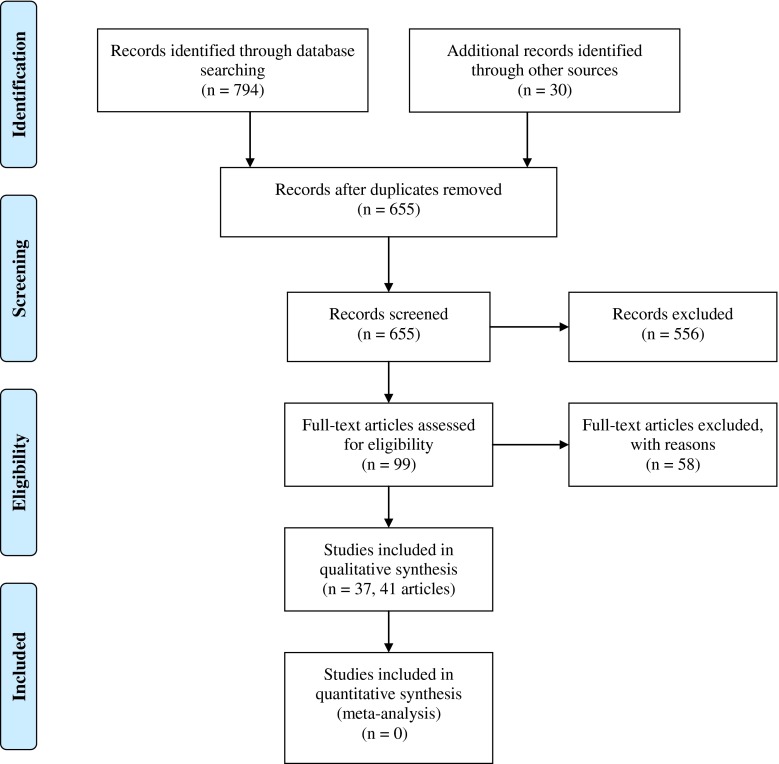
BACKGROUND: Home telehealth has the potential to benefit heart failure (HF) and chronic obstructive pulmonary disease (COPD) patients, however large-scale deployment is yet to be achieved. PURPOSE: The aim of this review was to assess levels of uptake of home telehealth by patients with HF and COPD and the factors that determine whether patients do or do not accept and continue to use telehealth. METHODS: This research performs a narrative synthesis of the results from included studies. RESULTS: Thirty-seven studies met the inclusion criteria. Studies that reported rates of refusal and/or withdrawal found that almost one third of patients who were offered telehealth refused and one fifth of participants who did accept later abandoned telehealth. Seven barriers to, and nine facilitators of, home telehealth use were identified. CONCLUSIONS: Research reports need to provide more details regarding telehealth refusal and abandonment, in order to understand the reasons why patients decide not to use telehealth.
Overview
The claims and statistics of this paper haven’t been checked yet.
Free: it reads the open-access text and checks the first 5 claims that cite a source we can check. Create a free account to check every claim.
Integrity signals
Registry
Cites
Statistics
Figures
Verification
Claims the paper makes
The claims and statistics of this paper haven’t been checked yet.
Free: it reads the open-access text and checks the first 5 claims that cite a source we can check. Create a free account to check every claim.
Claims other papers make about this one
Each is checked against this paper’s own text: does it say what the citing paper says it does?
The cited source says what the claim attributes to it.
In the citing paper
“The first review concluded that lack of training, poor patient tolerance with faulty systems, and technical problems all negatively affected uptake and sustained use of home-based remote monitoring [88].”
From Telemedicine in the OECD: An umbrella review of clinical and cost-effectiveness, patient experience and implementation (2020) · cites this paper as [88]
Self-check
Percentages, sums and reported differences re-computed from the paper’s own numbers.
The self-check needs the paper’s full text.
Citations
Cites
CONSORT 2010 Statement: updated guidelines for reporting parallel group randomised trials
the CONSORT Group, Schulz, K. F., Altman, D. G., & Moher, D. (2010) · BMC Medicine · doi:10.1186/1741-7015-8-18 · Cited by 13,371
Lopez, A. D., Mathers, C. D., Ezzati, M., Jamison, D. T., & Murray, C. J. (2006) · The Lancet · doi:10.1016/s0140-6736(06)68770-9 · Cited by 5,630
CONSORT 2010 statement: updated guidelines for reporting parallel group randomized trials
Schulz, K. F., Altman, D. G., Moher, D., & for the CONSORT Group* (2010) · Annals of Internal Medicine · doi:10.7326/0003-4819-152-11-201006010-00232 · Cited by 3,824 · cited 1×
“Moreover, some reporting guidelines are not as explicit as others, for example the Standards for Quality Improvement Reporting Excellence (SQUIRE) guidelines do not state that information relating to intervention acceptance and withdrawal should be recorded [81], whereas the Consolidated Standards of Reporting Trials…”
BackgroundHeidenreich, P. A., Albert, N. M., Allen, L. A., Bluemke, D. A., Butler, J., Fonarow, G. C., Ikonomidis, J. S., Khavjou, O., Konstam, M. A., Maddox, T. M., et al. (2013) · Circulation: Heart Failure · doi:10.1161/hhf.0b013e318291329a · Cited by 2,804
Global Burden of Disease and Risk Factors
(2006) · World Bank, Washington, DC eBooks · doi:10.1596/978-0-8213-6262-4 · Cited by 2,605
Telemonitoring in patients with heart failure
Chaudhry, S. I., Mattera, J. A., Curtis, J. P., Spertus, J. A., Herrin, J., Lin, Z., Phillips, C. O., Hodshon, B. V., Cooper, L. S., & Krumholz, H. M. (2010) · New England Journal of Medicine · doi:10.1056/nejmoa1010029 · Cited by 1,232
Adherence in Internet Interventions for Anxiety and Depression
Christensen, H., Griffiths, K. M., & Farrer, L. (2009) · Journal of Medical Internet Research · doi:10.2196/jmir.1194 · Cited by 1,133 · cited 1×
“The majority of papers included in the review were RCTs, where patient withdrawal from interventions has been found to be lower compared with practice [84].”
BackgroundPrediction of institutionalization in the elderly. A systematic review
Luppa, M., Luck, T., Weyerer, S., Konig, H.-H., Brahler, E., & Riedel-Heller, S. G. (2010) · Age and Ageing · doi:10.1093/ageing/afp202 · Cited by 902 · cited 1×
“” Studies scoring lower than 50 % were considered “low quality” [42].”
BackgroundMills, E. J., Nachega, J. B., Bangsberg, D. R., Singh, S., Rachlis, B., Wu, P., Wilson, K., Buchan, I., Gill, C. J., & Cooper, C. (2006) · PLoS Medicine · doi:10.1371/journal.pmed.0030438 · Cited by 818
Juenger, J., Schellberg, D., Kraemer, S., Haunstetter, A., Zugck, C., Herzog, W., & Haass, M. (2002) · Heart · doi:10.1136/heart.87.3.235 · Cited by 779
Research works printed but not linked: 1
- 101. Royal College of Nursing. RCN eHealth survey 2012 report: Positioning nursing in a digital world. London: RCN; 2013.
Cited by
Items 101–135 of 135
Usability of a continuous oxygen saturation device for home telemonitoring
Bonometti, F., Bernocchi, P., Vitali, A., Savoldelli, A., Rizzi, C., & Scalvini, S. (2023) · Digital Health · doi:10.1177/20552076231194547 · Cited by 6
“Some authors, however, highlight the importance of effectively controlling technological issues, as poorly managed problems could lead to patient rejection of the monitoring device.(16,17) In this study, considering the patient’s perspective, we evidenced critical issues that may hinder the transmission of clinical da…”
BackgroundResultWearable sensors for gesture analysis in smart healthcare applications
Butt, A. H., Moschetti, A., Fiorini, L., Dario, P., & Cavallo, F. (2017) · Institution of Engineering and Technology eBooks · doi:10.1049/pbhe009e_ch4 · Cited by 5
van Beurden, S. B., Cross, R., McDonagh, S. T. J., Clark, L., Thomas, C. R., Greaves, C. J., Doherty, P., Taylor, R. S., & Dalal, H. M. (2025) · Digital Health · doi:10.1177/20552076251406545 · Cited by 5
“51,52 Older adults with chronic conditions are more likely to engage when digital interventions are minimally disruptive, 53 which aligns with our fi nding that D:REACH-H supported engagement despite technical challenges.”
Telemedicine for palliative care: Current and future challenges
Mok, K. M. N., Zhu, X., Ng, X. H., & Neo, H. S. S. (2021) · Annals of the Academy of Medicine Singapore · doi:10.47102/annals-acadmedsg.2021284 · Cited by 3
Geuens, J., Swinnen, T. W., Geurts, L., Westhovens, R., Croon, R. D., & Abeele, V. V. (2020) · IEEE International Conference on Healthcare Informatics (ICHI) · doi:10.1109/ichi48887.2020.9374322 · Cited by 3
“In general, research suggests that the adoption of self-care technology is suboptimal [10], and that compliance to eHealth interventions is low [11].”
BackgroundDisler, R. T., Ly, L., Carter, D. R., Janjua, S., Prigmore, S., & Fortescue, R. (2023) · European Respiratory Society eBooks · doi:10.1183/2312508x.10002023 · Cited by 3
Lee, A. L., & Goldstein, R. S. (2015) · European Respiratory Society eBooks · doi:10.1183/2312508x.10019014 · Cited by 5
Telehealth for Integrated Cardiovascular and Diabetes Management: A Scoping Review
Estêvão, M. D., Fernandes, M. T., Sousa‐Coelho, A. L. D., Espírito‐Santo, M., & Nascimento, T. (2025) · Journal of Diabetes Research · doi:10.1155/jdr/1093671 · Cited by 3
Bernocchi, P., Aloisi, G. F., Serlini, M., Pasotti, E., Comini, L., & Scalvini, S. (2025) · Healthcare · doi:10.3390/healthcare14010090 · Cited by 2
“In particular, the nurse favours close support from operators, prompt feedback when needed and virtual services using digital devices, helping to keep patients safe and active in disease management [12,30,31].”
Family carer and professional perceptions of the potential use of telehealth for behavioural support
Tomlinson, S. R. L., Gore, N. J., & McGill, P. (2023) · Journal of Intellectual Disability Research · doi:10.1111/jir.13026 · Cited by 2
Curriculum and Competency Evaluation in Respiratory Therapy Entry-to-Practice Programs
Jones, T. D., Willis, L. D., Spray, B. J., & Berlinski, A. (2023) · Respiratory Care · doi:10.4187/respcare.10996 · Cited by 5
“39,40 Faculty familiarity and regional preferences may also contribute to the technique(s) emphasized in the program.”
Factors Influencing Adherence to Non-Invasive Telemedicine in Heart Failure: A Systematic Review
Koulaouzidis, G., Tsigkriki, L., Grammenos, O., Iliopoulou, S., Kalaitzoglou, M., Theodorou, P., Bostanitis, I., Skonieczna‐Żydecka, K., & Charisopoulou, D. (2025) · Clinics and Practice · doi:10.3390/clinpract15040079 · Cited by 4
Khan, M. J., KHALED, A. H. M., & Hasan, S. M. M. (2024) · Elsevier eBooks · doi:10.1016/b978-0-443-22270-2.00020-4 · Cited by 2
Stakeholder perceived value of telehealth: a systematic review
Sumanasekera, K., & Todorova, N. (2025) · BMJ Open · doi:10.1136/bmjopen-2025-105702 · Cited by 1
Capodici, A., Filippeschi, A., Noci, F., Michelucci, A., Motarajji, S. E., Benedetto, V., Vandelli, A., Passino, C., Emdin, M., Nuti, S., et al. (2026) · PLoS ONE · doi:10.1371/journal.pone.0351885 · Cited by 2
Evolving Changes in the Delivery of Health Services: A Place for Urological Homecare?
Al‐Rumaihi, K., Boorjian, S. A., & Jewett, M. A. S. (2018) · European Urology · doi:10.1016/j.eururo.2018.10.026 · Cited by 1
Research methods and methodology in telemedicine
Wade, V., & Smith, A. C. (2017) · Journal of Telemedicine and Telecare · doi:10.1177/1357633x17733088 · Cited by 3
Capítulo 14. Telemedicina y telesalud en falla cardiaca. ¿Es una alternativa?
Ramirez, J. (2016) · Revista Colombiana de Cardiología · doi:10.1016/j.rccar.2016.01.016 · Cited by 1
Telehealth: Improving Quality of Life in Veterans with Congestive Heart Failure
Callender, M. C. (2016) · ScholarWorks (Walden University) · Cited by 1
Greenhalgh, T., & Keen, J. (2014)
Analysis of the compliance with the measurement protocols scheduled in a telemonitoring system
Argha, A., & Celler, B. G. (2017) · International Conference on Orange Technologies · doi:10.1109/icot.2017.8336081
“of telehealth for CHF and COPD patients [9] reported”
BackgroundSul, A.-R., Lyu, D. H., & Park, D. A. (2017) · The Journal of Health Technology Assessment · doi:10.34161/johta.2017.5.2.007
Telerehabilitation assessment domains and process in chronic diseases: a scoping meta-reviewPreprint
Chapel, B., Alexandre, F., Héraud, N., Ologeanu‐Taddei, R., Cases, A.-S., Bughin, F., & Hayot, M. (2021) · Research Square · doi:10.21203/rs.3.rs-568354/v1
“Facilitators and individual barriers are also studied [45, 69].”
BackgroundMotivation of Physicians to Use and Recommend Apps for the Treatment of Haemophilia
Alpar, P., & Driebe, T. (2021) · INQUIRY The Journal of Health Care Organization Provision and Financing · doi:10.1177/00469580211047752 · Cited by 1
“Defining factors are as follows: (Relatively) long distances between physician and patient, permanent possibility of critical incidents and individualised treatment.(28,30) In order to conduct a study in such a treatment scenario, we need to concentrate on a chronic disease, which includes patient self-management in a…”
BackgroundInformation Retrieval and Social Media Mining
García, M. N. M. (2021) · MDPI eBooks · doi:10.3390/books978-3-0365-0247-2
Chapel, B., Alexandre, F., Héraud, N., Ologeanu‐Taddei, R., Cases, A.-S., Bughin, F., & Hayot, M. (2022) · Research Square · doi:10.21203/rs.3.rs-568354/v2
Virtual care initiatives for older adults in Australia: a scoping review (Preprint)Preprint
Savira, F., Gupta, A., Gilbert, C. A., Huggins, C. E., Browning, C. J., Chapman, W. W., Haines, T. P., & Peeters, A. (2022) · doi:10.2196/preprints.38081
Jahre, L. M. (2022) · OSF Preprints (OSF Preprints) · doi:10.31219/osf.io/fwuqp
Evaluation of the Amblyopia tracker app
O’Connor, A., Warburton, A., Farrelly-Waters, M., England, L., Clarke, R., & Kay, H. (2024) · Graefe s Archive for Clinical and Experimental Ophthalmology · doi:10.1007/s00417-024-06413-0
“[15, 16] and Painter et al. [7] reported a recruitment rate of 14.6% for vision testing at home during the pandemic.”
BackgroundInfluentialChapel, B., Alexandre, F., Heraud, N., Ologeanu‐Taddei, R., Cases, A.-S., Bughin, F., & Hayot, M. (2022) · Figshare · doi:10.6084/m9.figshare.20423695
Chapel, B., Alexandre, F., Heraud, N., Ologeanu‐Taddei, R., Cases, A.-S., Bughin, F., & Hayot, M. (2022) · Figshare · doi:10.6084/m9.figshare.20423692
Chapel, B., Alexandre, F., Heraud, N., Ologeanu‐Taddei, R., Cases, A.-S., Bughin, F., & Hayot, M. (2022) · Figshare · doi:10.6084/m9.figshare.20423689
Chapel, B., Alexandre, F., Heraud, N., Ologeanu‐Taddei, R., Cases, A.-S., Bughin, F., & Hayot, M. (2022) · Figshare · doi:10.6084/m9.figshare.20423698
Chapel, B., Alexandre, F., Heraud, N., Ologeanu‐Taddei, R., Cases, A.-S., Bughin, F., & Hayot, M. (2022) · Figshare · doi:10.6084/m9.figshare.20423701
Understanding preferences for telemedicine among long Covid patients: a cross-sectional studyPreprint
Łaszewska, A., Kienreich-Nitsche, G., Gamillscheg, P., & Mayer, S. (2026) · Research Square · doi:10.21203/rs.3.rs-9244683/v1
Metadata
- Authors
- Gorst, S. L., Armitage, C. J., Brownsell, S., & Hawley, M. S.
- Affiliations
- University of Sheffield (GB)
- Manchester Academic Health Science Centre (GB)
- James Cook University Hospital (GB)
- Corresponding author
- Hawley, Mark S.
- Venue
- Annals of Behavioral Medicine
- Publisher
- Oxford University Press (OUP)
- Published
- 2014-04-25
- Volume
- 48
- Issue
- 3
- Pages
- 323-336
- ISSN
- 0742-5554 (ISSN-L)
- 0883-6612
- 1532-4796
- PMC
- PMC4223578
- OpenAlex
- W2079736485
- Cited by
- 135
- References
- 107
- Citations by year
- 2026: 2 · 2025: 7 · 2024: 6 · 2023: 11 · 2022: 15 · 2021: 22 · 2020: 14 · 2019: 8 · 2018: 10 · 2017: 15 · 2016: 11 · 2015: 10 · 2014: 3
- FWCI
- 2.03
- Type
- journal article
- Language
- en
- Open access
- hybrid
- doi.org
- Licence
- other-oa
- Locations
- Annals of Behavioral Medicine (publishedVersion, other-oa)
- Europe PMC (PubMed Central) (publishedVersion, cc-by)
- PubMed Central (publishedVersion, cc-by)
- PubMed (publishedVersion)
- Research Explorer (The University of Manchester) (publishedVersion)
- White Rose Research Online (University of Leeds, The University of Sheffield, University of York) (acceptedVersion)
- Funders
- Economic and Social Research Council (TS/J00 0019/1)
- Topics
- Health Sciences › Medicine › Public Health, Environmental and Occupational Health › Telemedicine and Telehealth Implementation
- Health Sciences › Medicine › Geriatrics and Gerontology › Technology Use by Older Adults
- Health Sciences › Health Professions › General Health Professions › Mobile Health and mHealth Applications
- Keywords
- home telehealth, heart failure, chronic obstructive pulmonary disease, barriers to telehealth
- MeSH terms
- Heart Failure, Humans, Telemedicine, Pulmonary Disease, Chronic Obstructive
About these checks
Registry, retraction, Cites and statistics results are computed, not judged, with one exception: a printed reference that no index lists is read once by a model before it counts as a citation error. Claims are extracted by a model and kept only when their quote appears verbatim in the text; each cited source is then checked, with a model’s help, for whether it says what the claim relies on. Those verdicts can be wrong — read the claim’s quote and the cited source before relying on one.
Statistics and arithmetic are recomputed, not judged.
Confidence bands are shown only for fields calibrated on our annotated test set. None is calibrated yet, so no band is shown.
What counts as a claim ›How we measure confidence ›How we check this ›
Are you an author, or do you see a problem with this page? Request a review
Data sources
Bibliographic data: Semantic Scholar, OpenAlex, Crossref.
Contains information from the Semantic Scholar Academic Graph Datasets, made available under the ODC Attribution License (ODC-BY 1.0).
Semantic Scholar’s data is described in: Kinney, R., et al. (2023). The Semantic Scholar Open Data Platform. arXiv:2301.10140.
