

The DOI matches its Crossref record; 2 of the 2 references it cites were found in a registry or an index.
Co-planning and co-design as progress in the implementation of welfare services
Published version of a preprint
Abstract
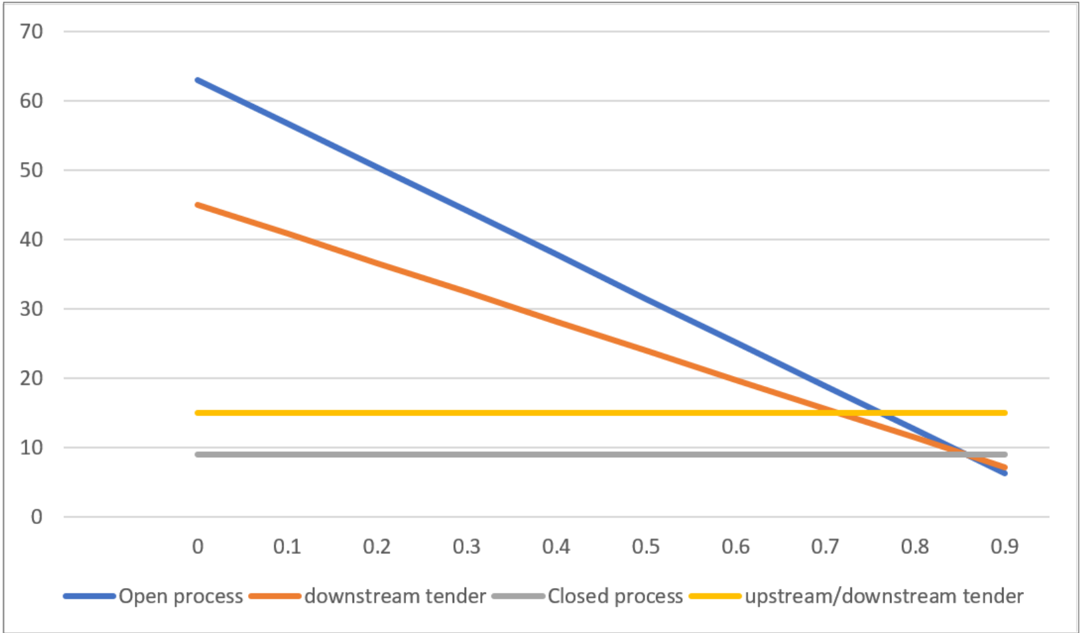
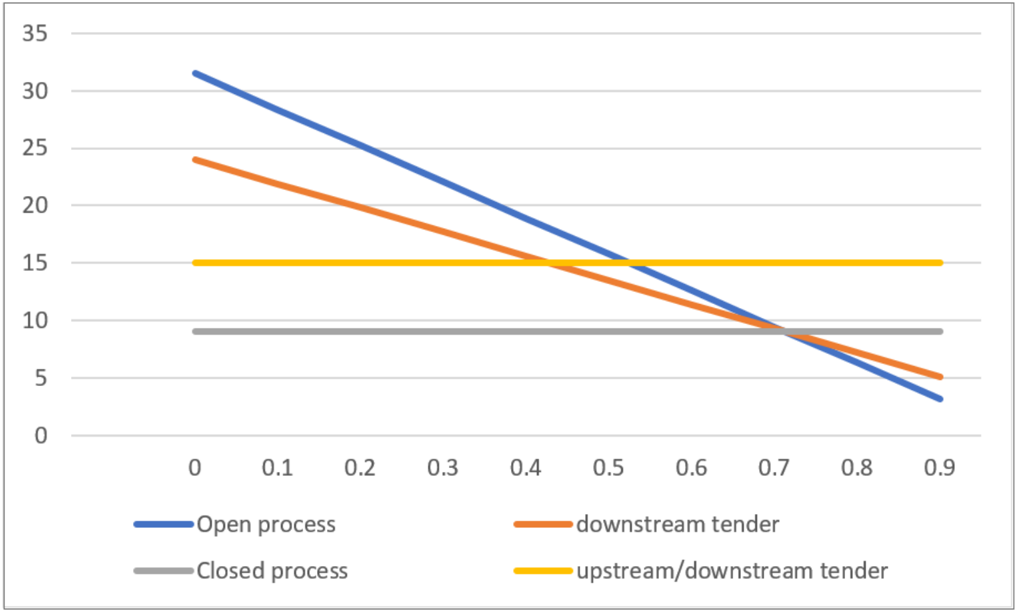
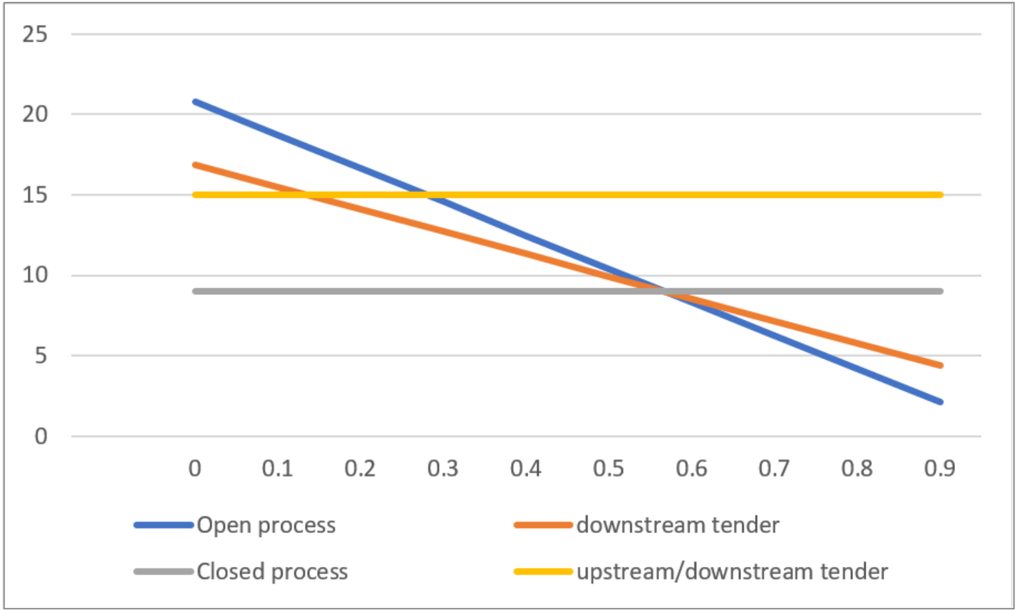
Co-planning (and co-design) of welfare services between public administrations and civic organisations is an innovative approach aiming to enact and maximise aggregate effort and competence contributions among complementary actors in the direction of participation and active citizenship. In our paper, we develop a simple theoretical framework trying to illustrate how it is possible to pursue the first best of an optimal participated planning, design and management approach for welfare services. We examine pros and cons of different solutions reconciling involvement of civil actors and respect of antitrust principles outlining four benchmark models with different characteristics in terms of upstream and downstream participation levels. We outline policy proposals to solve dilemmas related to the difficulty of jointly activating participation, intrinsic and monetary incentives avoiding in the meanwhile collusion and corruption.
Overview
The claims and statistics of this paper haven’t been checked yet.
Run the check — free, no account needed. It reads the open-access text and checks the sources it cites.
Integrity signals
Registry
Cites
Statistics
Figures
Verification
Claims the paper makes
The claims and statistics of this paper haven’t been checked yet.
Run the check — free, no account needed. It reads the open-access text and checks the sources it cites.
Claims other papers make about this one
Each is checked against this paper’s own text: does it say what the citing paper says it does?
In the citing paper
“By network agreements, we mean networking alliances as a non-legally enforceable set of proposed tasks and strategies undersigned by the counterparts that indicate modes of cooperation and make cooperation feasible and more likely, thereby helping to make the cooperative equilibrium an achievable focal point.”
From Win Together or Lose Alone: Circular Economy and Hybrid Governance for Natural Resource Commons (2024) · cites this paper as Becchetti et al., 2023
Self-check
Percentages, sums and reported differences re-computed from the paper’s own numbers.
The self-check needs the paper’s full text.
Citations
Cites
Intrinsic and Extrinsic Motivations: Classic Definitions and New Directions
Ryan, R. M., & Deci, E. L. (2000) · Contemporary Educational Psychology · doi:10.1006/ceps.1999.1020 · Cited by 18,666
CONSUMERS AS COPRODUCERS OF PUBLIC SERVICES: SOME ECONOMIC AND INSTITUTIONAL CONSIDERATIONS
Parks, R. B., Baker, P. C., Kiser, L., Oakerson, R., Ostrom, E., Ostrom, V., Percy, S. L., Vandivort, M. B., Whitaker, G. P., & Wilson, R. (1981) · Policy Studies Journal · doi:10.1111/j.1541-0072.1981.tb01208.x · Cited by 761
Research works printed but not linked: 25
- Alford J (2014) The multiple facets of co-production: building on the work of Elinor Ostrom. Public Manag Rev 16(3):299–316 · DOI
- Axelrod R, Dion D (1988) The further evolution of cooperation. Science 242(4884):1385–1390 · DOI
- Becchetti L, Salustri F (2019) The vote with the Wallet game: responsible consumerism as a multiplayer prisoner’s dilemma. Sustainability 11(4):1109 · DOI
- Becchetti L, Gianfreda G, Pace N (2012) Human resource management and productivity in the “trust game corporation.” Int Rev Econ 59(1):3–20 · DOI
- Bovaird T (2007a) Beyond engagement and participation: user and community coproduction of public services. Public Adm Rev 67(5):846–860 · DOI
- Bovaird T (2007b) Beyond engagement and participation: user and community coproduction of public services. Public Admin Rev 67(5):846–860 · DOI
- Brudney JL (1983) The evaluation of coproduction programs. Policy Stud J 12(2):376–385 · DOI
- Brudney JL, England RE (1983) Toward a definition of the coproduction concept. Public Admin Rev 26:59–65 · DOI
- Cahn E, Gray C (2012) Co-production from a normative perspective. In: Pestoff V, Brandsen T, Verschuere B (eds) New public governance, the third sector and co-production. Routledge, London, pp 129–144
- Daniel G, Arce M, Sandler T (2005) The dilemma of the prisoners’ dilemmas. Kyklos 58(1):3–24 · DOI
- Donetto S et al (2015) Experience-based co-design and healthcare improvement: realizing participatory design in the public sector. Des J 18(2):227–248
- Farrell J (1987) Cheap talk, coordination, and entry. Rand J Econ 18(1987):34–39 · DOI
- Hilbe C, Wu B, Traulsen A, Nowak MA (2014) Cooperation and control in multiplayer social dilemmas. PNAS 111:16425–16430 · DOI
- Jakobsen M (2013) Can government initiatives increase citizen coproduction? Results of a randomized field experiment. J Public Admin Res Theory 23(1):27–54 · DOI
- Levine CH (1984) Citizenship and service delivery: the promise of coproduction. Public Adm Rev 44:178–189 · DOI
- Osborne S, Radnor Z, Nasi G (2013) A new theory for public services management? Towards a (public) service-dominant approach. Am Rev Public Admin 43:135–158 · DOI
- Ostrom E (1999) Crossing the great divide: coproduction, synergy, and development. In: McGinnis MD (ed) Polycentric governance and development. Readings from the workshop in political theory and policy analysis, vol 15. University of Michigan Press, Ann Arbor
- Pestoff V (2009) Towards a paradigm of democratic participation: citizen participation and co-production of personal social services in Sweden. Ann Public Cooper Econ 80(2):197–224 · DOI
- Sen AK (1993) Capability and well-being. In: Nussbaum MC, Sen AK (eds) The quality of life. Oxford, Clarendon Press, pp 30–53 · DOI
- Sharp EB (1980) Toward a new understanding of urban services and citizen participation: the coproduction concept. Midwest Rev Public Admin 14(2):105–118 · DOI
- Sicilia M, Guarini E, Sancino A, Andreani M, Ruffini R (2016) Public services management and co-production in multi-level governance settings. Int Rev Adm Sci 82(1):8–27 · DOI
- Stewart JA, Plotkin JB (2013) From extortion to generosity, evolution in the Iterated Prisoner’s Dilemma. PNAS 110:1534–1535 · DOI · Paper page
- Vaillancourt Y (2009) Social economy in the co-construction of public policy. Ann Public Cooper Econ 80(2):275–313 · DOI
- Wärneryd K (1993) Cheap talk, coordination, and evolutionary stability. Games Econ Behav 5(4):532–546 · DOI
- Wilson R K (1981) Citizen coproduction as a mode of participation: conjectures and models. J Urban Aff 3:37–49 · DOI
Cited by
Sorted by citations
Win Together or Lose Alone: Circular Economy and Hybrid Governance for Natural Resource Commons
Becchetti, L., Bova, D. M., & Raffaele, L. (2024) · doi:10.2139/ssrn.4880178 · Cited by 16
Self-citation
Metadata
- Authors
- Becchetti, L., Pisani, F., & Raffaele, L.
- Venue
- International Review of Economics
- Published
- 2023-07-03
- Volume
- 70
- Issue
- 3
- Pages
- 301-322
- ISSN
- 1865-1704
- 1863-4613
- Cited by
- 7
- References
- 2
- Language
- en
- Funders
- Università degli Studi di Roma Tor Vergata
About these checks
Registry, retraction, Cites and statistics results are computed, not judged, with one exception: a printed reference that no index lists is read once by a model before it counts as a citation error. Claims are extracted by a model and kept only when their quote appears verbatim in the text; each cited source is then checked, with a model’s help, for whether it says what the claim relies on. Those verdicts can be wrong — read the claim’s quote and the cited source before relying on one.
Statistics and arithmetic are recomputed, not judged.
Confidence bands are shown only for fields calibrated on our annotated test set. None is calibrated yet, so no band is shown.
What counts as a claim ›How we measure confidence ›How we check this ›
Are you an author, or do you see a problem with this page? Request a review
How to cite
Cite CoChat for the checks on this page, and the paper for its own findings.
- This page
- CoChat. (2026). Citation check: Co-planning and co-design as progress in the implementation of welfare services. https://app.cochat.ai/papers/10.1007/s12232-023-00420-z
- The paper
- Becchetti, L., Pisani, F., & Raffaele, L. (2023). Co-planning and co-design as progress in the implementation of welfare services. International Review of Economics. https://doi.org/10.1007/s12232-023-00420-z
