

Focal-type, but not Diffuse-type, Amyloid Beta Plaques are Correlated with Alzheimer’s Neuropathology, Cognitive Dysfunction, and Neuroinflammation in the Human Hippocampus
Open accessThe DOI matches its Crossref record; 52 of the 52 references it cites were found in a registry or an index.
Abstract
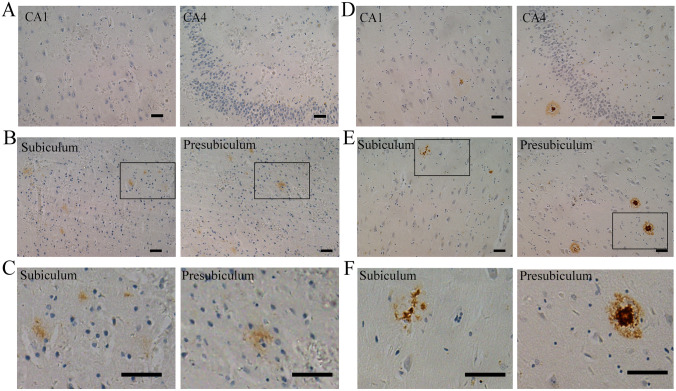
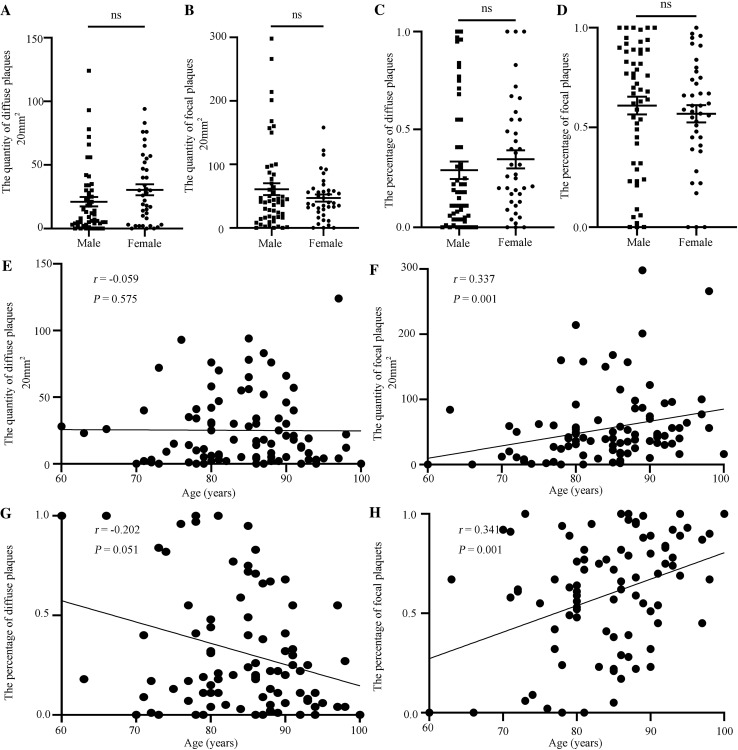
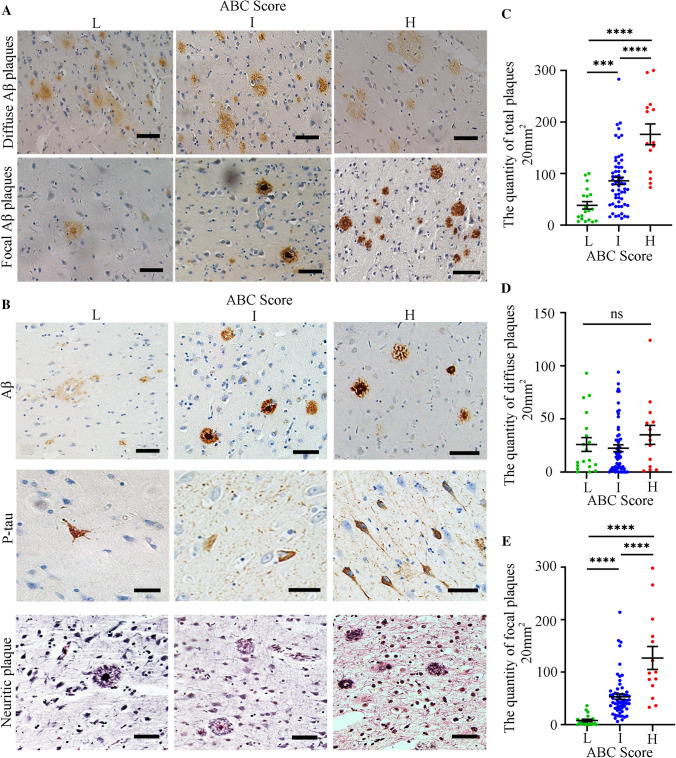
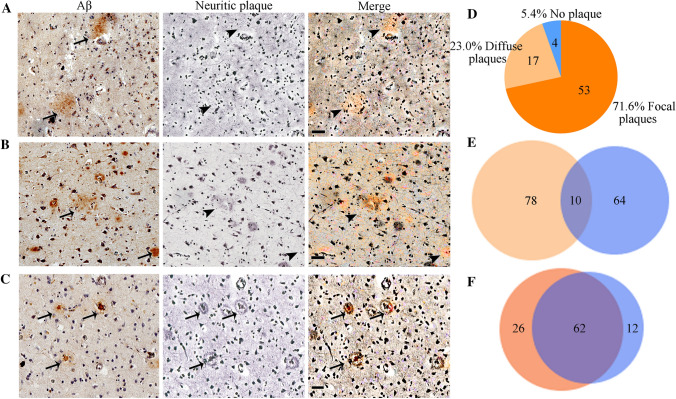
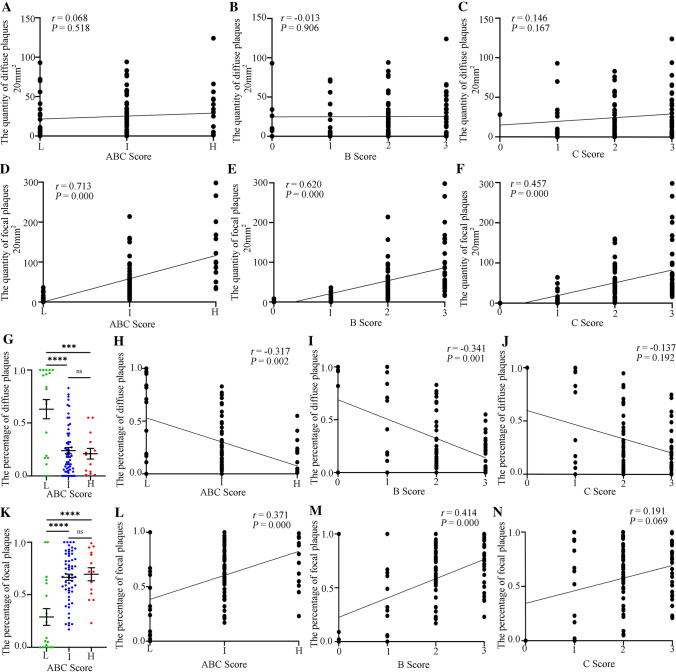
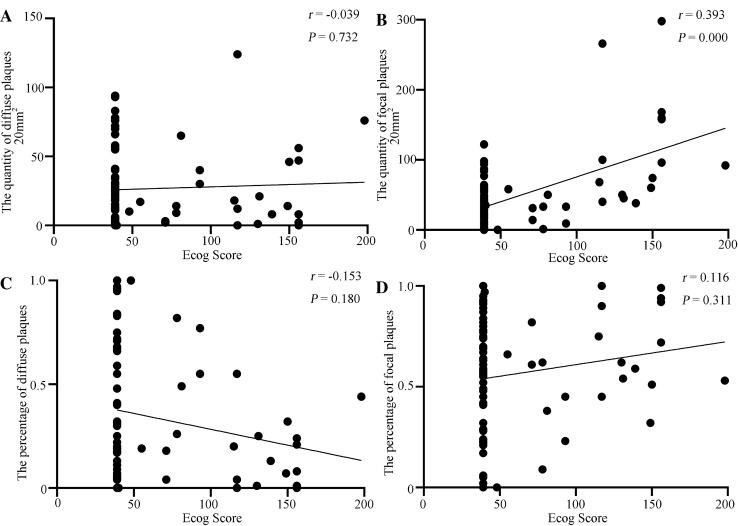
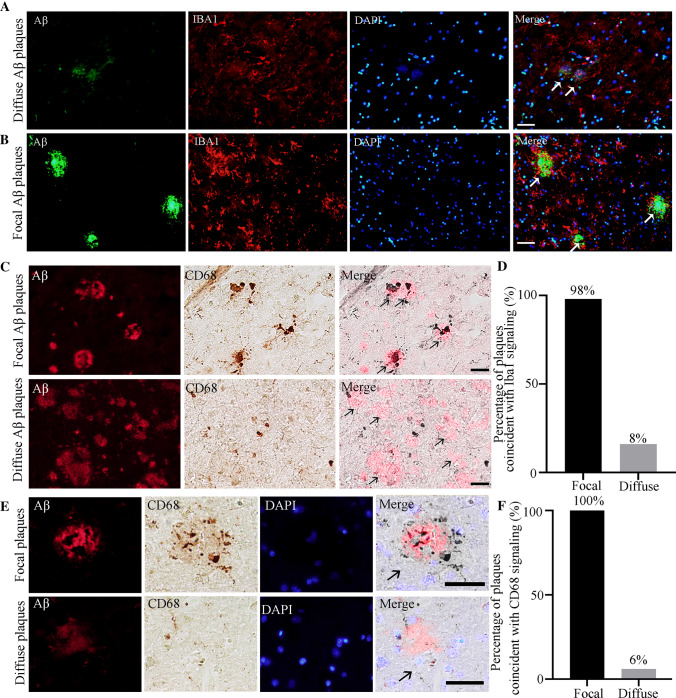
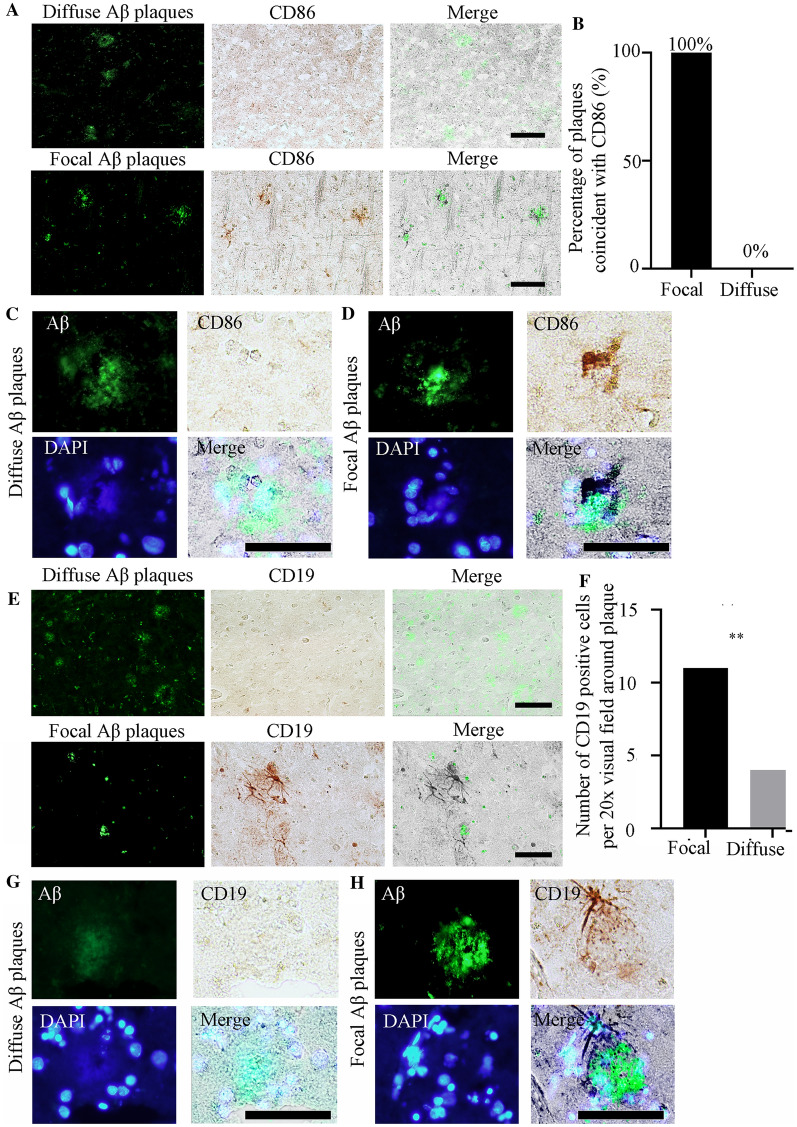
Amyloid beta (Aβ) plaques are one of the hallmarks of Alzheimer’s disease (AD). However, currently available anti-amyloid therapies fail to show effectiveness in the treatment of AD in humans. It has been found that there are different types of Aβ plaque (diffuse and focal types) in the postmortem human brain. In this study, we aimed to investigate the correlations among different types of Aβ plaque and AD-related neuropathological and cognitive changes based on a postmortem human brain bank in China. The results indicated that focal plaques, but not diffuse plaques, significantly increased with age in the human hippocampus. We also found that the number of focal plaques was positively correlated with the severity of AD-related neuropathological changes (measured by the “ABC” scoring system) and cognitive decline (measured by the Everyday Cognitive Insider Questionnaire). Furthermore, most of the focal plaques were co-localized with neuritic plaques (identified by Bielschowsky silver staining) and accompanied by microglial and other inflammatory cells. Our findings suggest the potential of using focal-type but not general Aβ plaques as biomarkers for the neuropathological evaluation of AD.
Overview
The claims and statistics of this paper haven’t been checked yet.
Free: it reads the open-access text and checks the first 5 claims that cite a source we can check. Create a free account to check every claim.
Integrity signals
Registry
Cites
Statistics
Figures
Verification
Claims the paper makes
The claims and statistics of this paper haven’t been checked yet.
Free: it reads the open-access text and checks the first 5 claims that cite a source we can check. Create a free account to check every claim.
Claims other papers make about this one
Each is checked against this paper’s own text: does it say what the citing paper says it does?
The source backs part of the claim, not all of it — or backs it for a different population, condition or comparison.
In the citing paper
“In addition, histopathological examination of six brain samples from AD patients show immunohis tochemical staining for CD19 + B lymphocytes near A β plaques [81].”
From Is there a role for B cells in Alzheimer's disease? (2026) · cites this paper as [81]
Experimental — accuracy not yet measuredThe cited source says what the claim attributes to it.
In the citing paper
“These findings were not formally published, however two recent reports suggest the presence of B cells in the brains of patients with AD [81,82].”
From Is there a role for B cells in Alzheimer's disease? (2026) · cites this paper as [81]
In the citing paper
“A recent study showed that it is the classical plaques with inflammatory cells rather than diffuse plaques that correlate with the cognitive impairment during AD.60”
From Amyloid β-based therapy for Alzheimer’s disease: Challenges, successes and future (2023) · cites this paper as [60]
Self-check
Percentages, sums and reported differences re-computed from the paper’s own numbers.
The self-check needs the paper’s full text.
Citations
Cites
McKhann, G. M., Knopman, D. S., Chertkow, H., Hyman, B. T., Jack, C. R., Kawas, C. H., Klunk, W. E., Koroshetz, W. J., Manly, J. J., Mayeux, R., et al. (2011) · Alzheimer's & Dementia · doi:10.1016/j.jalz.2011.03.005 · Cited by 18,657 · cited 1×
“Symptomatic AD follows an insidious and progressive course, which is characterized by early impairment in learning and memory, followed by later impairments in complex attention, executive function, language, visuospatial function, praxis, gnosis, and behavior and/or social abnormalities [46].”
BackgroundAlzheimer's disease: the amyloid cascade hypothesis
Hardy, J. A., & Higgins, G. A. (1992) · Science · doi:10.1126/science.1566067 · Cited by 7,484
The amyloid hypothesis of Alzheimer's disease at 25 years
Selkoe, D. J., & Hardy, J. (2016) · EMBO Molecular Medicine · doi:10.15252/emmm.201606210 · Cited by 6,164
A Unique Microglia Type Associated with Restricting Development of Alzheimer’s Disease
Keren-Shaul, H., Spinrad, A., Weiner, A., Matcovitch-Natan, O., Dvir-Szternfeld, R., Ulland, T. K., David, E., Baruch, K., Lara-Astaiso, D., Toth, B., et al. (2017) · Cell · doi:10.1016/j.cell.2017.05.018 · Cited by 5,493 · cited 4×
“AD patients undergo progressive Aβ plaque deposition followed by surrounding neuritic and glial cytopathology in the brain [31, 35].”
BackgroundInfluentialAlzheimer Disease: An Update on Pathobiology and Treatment Strategies
Long, J. M., & Holtzman, D. M. (2019) · Cell · doi:10.1016/j.cell.2019.09.001 · Cited by 3,204
Neuroinflammation and microglial activation in Alzheimer disease: where do we go from here?
Leng, F., & Edison, P. (2021) · Nature Reviews Neurology · doi:10.1038/s41582-020-00435-y · Cited by 3,179 · cited 2×
“Reactive glia and associated neuroinflammation are now regarded as playing key roles in both disease initiation and progression [35, 41, 47].”
BackgroundMontine, T. J., Phelps, C. H., Beach, T. G., Bigio, E. H., Cairns, N. J., Dickson, D. W., Duyckaerts, C., Frosch, M. P., Masliah, E., Mirra, S. S., et al. (2012) · Acta Neuropathologica · doi:10.1007/s00401-011-0910-3 · Cited by 2,894 · cited 4×
“A neuropathological AD score of I/H indicates that the donor is very likely to have AD and can be considered a sufficient explanation for dementia [36].”
BackgroundInfluentialNelson, P. T., Alafuzoff, I., Bigio, E. H., Bouras, C., Braak, H., Cairns, N. J., Castellani, R. J., Crain, B. J., Davies, P., Tredici, K. D., et al. (2012) · Journal of Neuropathology & Experimental Neurology · doi:10.1097/nen.0b013e31825018f7 · Cited by 2,050
Microglia in physiology and disease
Wolf, S. A., Boddeke, H. W. G. M., & Kettenmann, H. (2017) · Annual Review of Physiology · doi:10.1146/annurev-physiol-022516-034406 · Cited by 1,426 · cited 2×
“Reactive glia and associated neuroinflammation are now regarded as playing key roles in both disease initiation and progression [35, 41, 47].”
BackgroundAlzheimer’s Disease: The Challenge of the Second Century
Holtzman, D. M., Morris, J. C., & Goate, A. M. (2011) · Science Translational Medicine · doi:10.1126/scitranslmed.3002369 · Cited by 1,424
Research works printed but not linked: 1
- Roy S. Neuropathology: a reference text of CNS pathology. 2nd edition. David Ellison, Seth Love, Leila Chimelli, Brian N. Harding, James Lowe, and Harry V. Vinters, 754 pp, $365. Hum Pathol 2005, 36: 224.
Cited by
Amyloid β-based therapy for Alzheimer’s disease: Challenges, successes and future
Zhang, Y., Chen, H., Li, R., Sterling, K., & Song, W. (2023) · Signal Transduction and Targeted Therapy · doi:10.1038/s41392-023-01484-7 · Cited by 988
“A recent study showed that it is the classical plaques with inflammatory cells rather than diffuse plaques that correlate with the cognitive impairment during AD.(60)”
BackgroundSighencea, M. G., Popescu, R. Ș., & Trifu, S. C. (2024) · International Journal of Molecular Sciences · doi:10.3390/ijms252212311 · Cited by 38
“Research indicates that diffuse plaques may form earlier and develop into dense-core plaques, which are more stable and neurotoxic, playing a role in neurodegenerative processes, inflammatory responses, and more severe cognitive impairment in AD patients [19].”
Zhang, M., Liu, L., Xu, Y., Wang, W.-Z., Qiu, N., Zhang, F., Zhang, F., Wang, X., Chen, W., Xu, X.-Y., et al. (2023) · Metabolic Brain Disease · doi:10.1007/s11011-023-01242-2 · Cited by 26
Self-citationMosalam, E. M., Abdel‐Bar, H. M., Elberri, A. I., Abdallah, M. S., Zidan, A. A., Batakoushy, H. A., & Mansour, H. E. A. (2024) · International Journal of Biological Macromolecules · doi:10.1016/j.ijbiomac.2024.133742 · Cited by 26
Lian, Y., Jia, Y., Wong, J., Zhou, X., Song, W., Guo, J., Masters, C. L., & Wang, Y. (2023) · Molecular Psychiatry · doi:10.1038/s41380-023-02324-4 · Cited by 25
Metadata
- Authors
- Liu, F., Sun, J., Wang, X., Jin, S., Sun, F., Wang, T., Yuan, B., Qiu, W., & Ma, C.
- Affiliations
- Chinese Academy of Medical Sciences & Peking Union Medical College (CN)
- Corresponding author
- Ma, Chao
- Venue
- Neuroscience Bulletin
- Published
- 2022-08-26
- Volume
- 38
- Issue
- 10
- Pages
- 1125-1138
- ISSN
- 1995-8218 (ISSN-L)
- 1673-7067
- PMC
- PMC9554074
- OpenAlex
- W4293150299
- Cited by
- 48
- References
- 52
- Citations by year
- 2026: 11 · 2025: 18 · 2024: 13 · 2023: 6
- FWCI
- 5.73
- Type
- journal article
- Language
- en
- Open access
- hybrid
- doi.org
- Licence
- cc-by
- creativecommons.org/licenses/by/4.0 (tdm)
- creativecommons.org/licenses/by/4.0 (vor)
- Locations
- Neuroscience Bulletin (publishedVersion, cc-by)
- PubMed Central (publishedVersion, cc-by)
- PubMed (publishedVersion)
- Funders
- National Natural Science Foundation of China (81801114, 2021ZD0201100, 81771205)
- Chinese Academy of Medical Sciences
- Topics
- Life Sciences › Neuroscience › Cellular and Molecular Neuroscience › Alzheimer's disease research and treatments
- Health Sciences › Medicine › Psychiatry and Mental health › Dementia and Cognitive Impairment Research
- Life Sciences › Neuroscience › Neurology › Neuroinflammation and Neurodegeneration Mechanisms
- Keywords
- amyloid plaques, Alzheimer's disease, hippocampus, cognitive decline, neuroinflammation, microglia, neuritic plaques, biomarkers, postmortem brain
- MeSH terms
- Neuroinflammatory Diseases, Alzheimer Disease, Brain, Hippocampus, Humans, Amyloid beta-Peptides, Amyloid beta-Protein Precursor, Plaque, Amyloid, Cognitive Dysfunction
About these checks
Registry, retraction, Cites and statistics results are computed, not judged, with one exception: a printed reference that no index lists is read once by a model before it counts as a citation error. Claims are extracted by a model and kept only when their quote appears verbatim in the text; each cited source is then checked, with a model’s help, for whether it says what the claim relies on. Those verdicts can be wrong — read the claim’s quote and the cited source before relying on one.
Statistics and arithmetic are recomputed, not judged.
Confidence bands are shown only for fields calibrated on our annotated test set. None is calibrated yet, so no band is shown.
What counts as a claim ›How we measure confidence ›How we check this ›
Are you an author, or do you see a problem with this page? Request a review
How to cite
Cite CoChat for the checks on this page, and the paper for its own findings.
- This page
- CoChat. (2026). Citation check: Focal-type, but not Diffuse-type, Amyloid Beta Plaques are Correlated with Alzheimer’s Neuropathology, Cognitive Dysfunction, and Neuroinflammation in the Human Hippocampus. https://app.cochat.ai/papers/10.1007/s12264-022-00927-5
- The paper
- Liu, F., Sun, J., Wang, X., Jin, S., Sun, F., Wang, T., Yuan, B., Qiu, W., & Ma, C. (2022). Focal-type, but not Diffuse-type, Amyloid Beta Plaques are Correlated with Alzheimer’s Neuropathology, Cognitive Dysfunction, and Neuroinflammation in the Human Hippocampus. Neuroscience Bulletin. https://doi.org/10.1007/s12264-022-00927-5
Data sources
Bibliographic data: Semantic Scholar, OpenAlex, Crossref.
Contains information from the Semantic Scholar Academic Graph Datasets, made available under the ODC Attribution License (ODC-BY 1.0).
Semantic Scholar’s data is described in: Kinney, R., et al. (2023). The Semantic Scholar Open Data Platform. arXiv:2301.10140.
