

The development of telemedicine programs in Sub-Saharan Africa: Progress and associated challenges
Open accessThe DOI matches its Crossref record; 69 of the 73 references it cites were found in a registry or an index; 12 of the 15 sources its claims cite were checked for support.
Abstract
Monitoring the progress of telemedicine use in Sub-Saharan Africa (SSA) countries has received a considerable attention from many health organizations and governmental agencies. This study reviewed the current progress and challenges in relation to the development of telemedicine programs in SSA. The results from reviewing 66 empirical studies revealed an unbalanced progress across SSA countries. Further, technological, organisational, legal and regulatory, individual, financial, and cultural aspects were identified as the major barriers to the success of telemedicine development in SSA. This study reported the current trends in telemedicine application, as well as highlighting critical barriers for consideration by healthcare decision makers. The outcomes from this study offer a number of recommendations to support wider implementation and sustainable usage of telemedicine in SSA.
Overview
CoChat Summary
## TL;DR
This review synthesized 66 empirical studies on telemedicine in Sub-Saharan Africa and found progress that was uneven across regions and countries. It identified technological, organizational, legal/regulatory, individual, financial, and cultural barriers as the main constraints on telemedicine development.
## Key findings
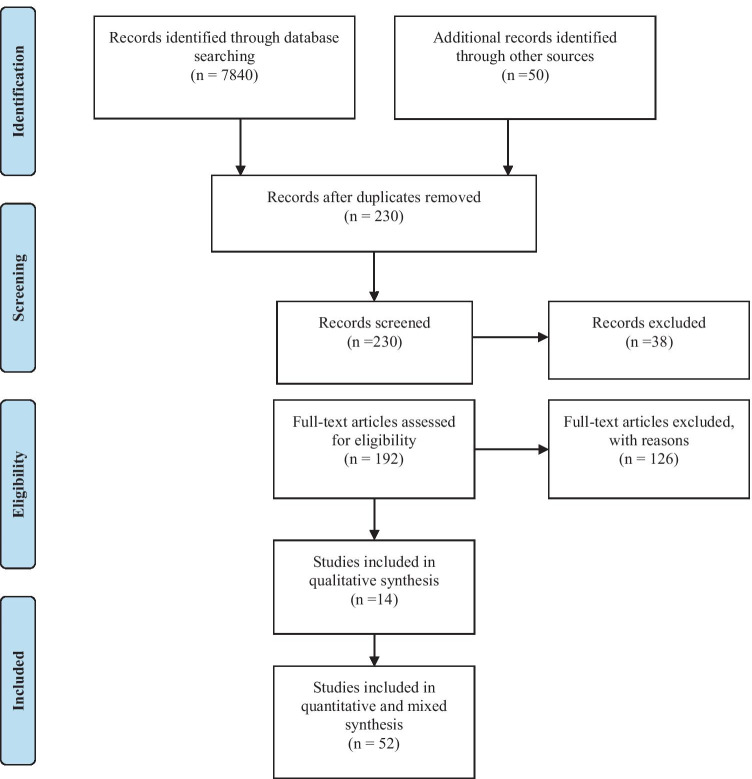
- The review screened 7,840 retrieved studies, removed 230 duplicates, assessed 192 full texts, excluded 126, and finalized 66 empirical studies for analysis.
- Telemedicine progress was unbalanced across SSA: the paper says SADC had the broadest range of systems and stronger national legislation, while Sahel-Saharan States had seen limited expansion beyond initial projects.
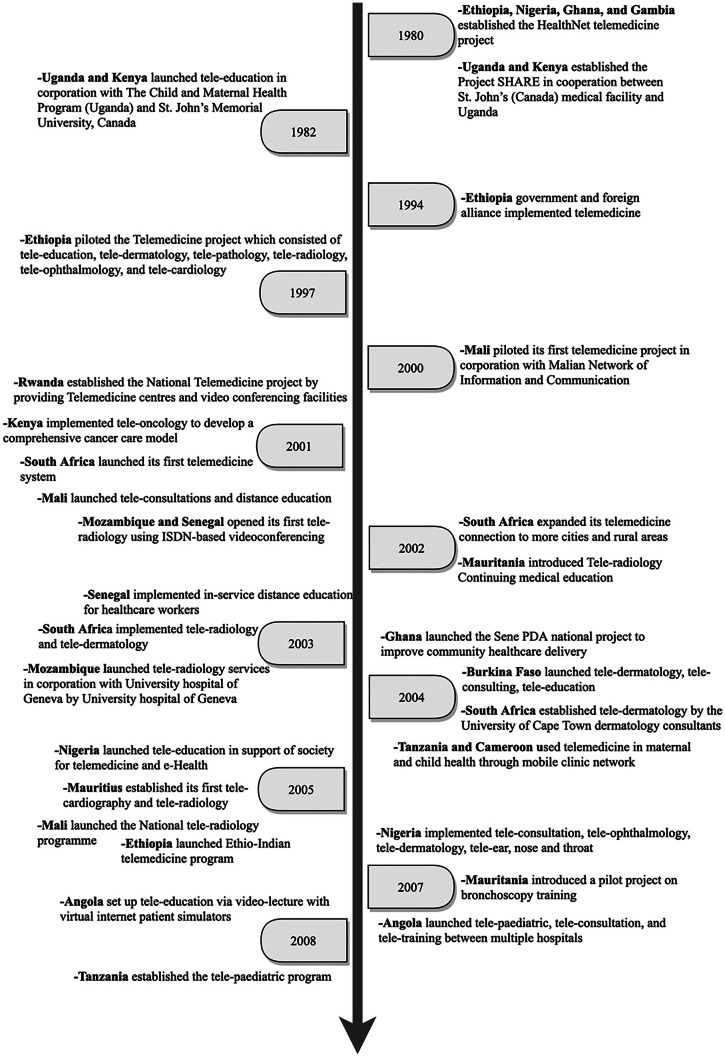
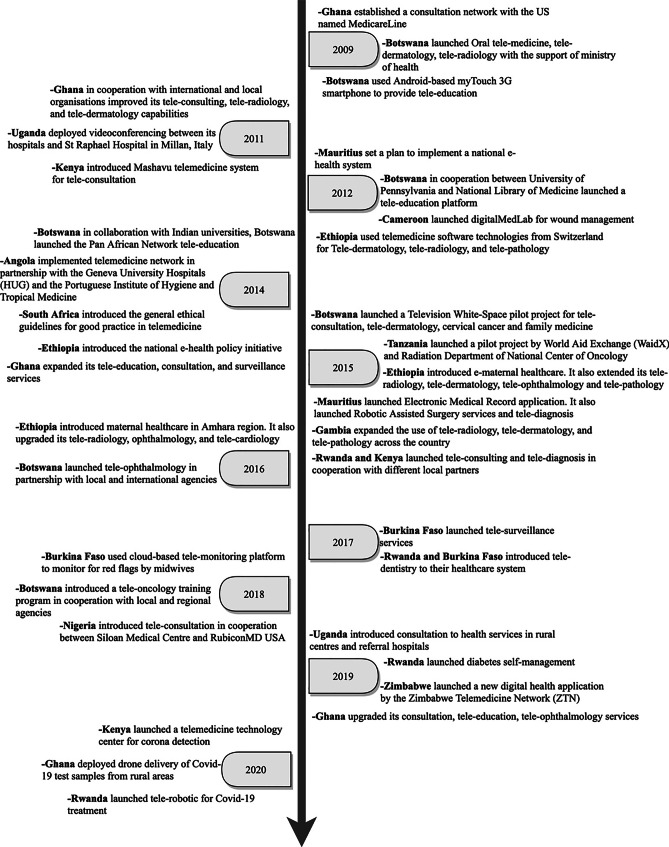
- The paper reports reasonable progress in ECOWAS and EAC, especially during the COVID-19 period, with uses including teleconsultation, teleradiology, telepathology, tele-oncology, tele-education, and COVID-19-related services.
- The review identified six major barrier categories: organizational, technological, financial, individual, cultural, and legal/regulatory barriers; the average interrater agreement for article coding was 86%.
## Methods
- Systematic review using PRISMA guidelines to answer two questions: current progress in telemedicine adoption in SSA and associated implementation challenges.
- Search covered multiple databases: PubMed, IEEE Xplore, Cochrane, ProQuest, Web of Science, Scopus, Global Health, and Google Scholar; no restrictions on language, data, or publication status were applied.
- Included only empirical studies and governmental reports; the final analysis used 66 studies, with challenges coded into six dimensions using an item-focused coding approach.
## Limitations
- The paper explicitly notes that much of the telemedicine use in SSA was implemented on a pilot project basis, and that there were knowledge gaps about the extent of usage and suitability.
- It also states that prior literature often covered telemedicine piecemeal or focused on specific services, limiting baseline evidence for broader comparisons.
- Evident from the text: the review depends on the scope and heterogeneity of the included studies, and some regional sections are much more developed than others, which may constrain comparability across SSA regions.
Model-written summary. Check it against the paper before relying on it.
Integrity signals
Registry
Cites
Statistics
Figures
Verification
Claims the paper makes
10 Valid · 6 Not valid · 3 Not checked · 19 Own results and interpretations
The cited sources support only part of this claim — read each source’s verdict below.
In the paper
“The effective use of tele-education can address the challenges associated with the lack of telemedicine expertise among clinicians, ethical and privacy concerns, which were identified as barriers to the successful implementation of telemedicine systems [6].”
§ The development of telemedicine programs in Sub-Saharan Africa: Progress and associated challenges > Implications for healthcare practitioners and providers
What the sources say
- Partly supportedcites [6] Dodoo JE, Al-Samarraie H, Alzahrani AI. "Telemedicine Use in Sub-Saharan Africa: Barriers and Policy Recommendations for Covid-19 and Beyond." Intern J Med Informat. 2021;151:104467. PMC9761083 33915421 sourceExperimental — accuracy not yet measured
Sections 4.4.1 and 4.4.3 identify insufficient training and telemedicine expertise as barriers, while sections 4.3.2 and 4.3.4 identify privacy and ethical concerns. Section 5 recommends education and training to improve clinicians’ skills, but recommends legal and policy measures—not tele-education—to address privacy and ethical concerns. The claim is supported as to the barriers, but not as to tele-education addressing all of them. (LLM, conf=0.86)
plainstates a cause- Asserted: passes — The authors put it forward as true.
- Checkable: passes — It can be checked against evidence.
- Load-bearing: passes — The paper’s conclusions depend on it.
- Based: passes — The paper gives a reason why it holds.
- Partly supported
The cited sources support only part of this claim — read each source’s verdict below.
In the paper
“According to Kifle, et al. [17], most of the telemedicine projects faced various sustainability-related issues, especially after the completion of the project period.”
§ The development of telemedicine programs in Sub-Saharan Africa: Progress and associated challenges > Progress in telemedicine in SSA > Community of Sahel-Saharan States (CSS)
What the sources say
- Partly supportedcites [17] Kifle M Mbarika VW Bradley RV Global diffusion of the internet x: the diffusion of telemedicine in ethiopia: potential benefits, present challenges, and potential factors Commun Assoc Inf Syst 2006 18 1 30 sourceExperimental — accuracy not yet measured
The 'Sustainability of Projects' section states that most telemedicine projects in developing countries established with external funding face major challenges after the project period has ended, with few examples of attained sustainability — this supports the claim's substance about post-project sustainability problems. However, our copy never mentions the Community of Sahel-Saharan States; the paper's scope is Ethiopia and, more broadly, developing countries / sub-Saharan Africa (Introduction; 'review of existing telemedicine projects in sub-Saharan Africa'). The claim's specific regional population is therefore not attributable to this source. (LLM, conf=0.78)
plain- Asserted: passes — The authors put it forward as true.
- Checkable: passes — It can be checked against evidence.
- Load-bearing: unclear — It is unclear whether the paper’s conclusions depend on it.
- Based: passes — The paper gives a reason why it holds.
- Partly supported
A result the paper reports from its own data — it cites no other source for it, so there is none to check. The quote shows it is in the paper.
In the paper
“We found variations in terms of extent of telemedicine applications across SSA countries.”
§ The development of telemedicine programs in Sub-Saharan Africa: Progress and associated challenges > Implications for healthcare practitioners and providers
plain- Asserted: passes — The authors put it forward as true.
- Checkable: passes — It can be checked against evidence.
- Load-bearing: passes — The paper’s conclusions depend on it.
- Based: passes — The paper gives a reason why it holds.
A result the paper states — it cites no source for it, so there is none to check. The quote shows it is in the paper.
In the paper
“The findings from the literature review suggests that the implementation of telemedicine systems in the Sahel-Saharan States has not seen much progress in terms of expansion of services following the completion of the initial projects.”
§ The development of telemedicine programs in Sub-Saharan Africa: Progress and associated challenges > Conclusion
hedged- Asserted: passes — The authors put it forward as true.
- Checkable: passes — It can be checked against evidence.
- Load-bearing: passes — The paper’s conclusions depend on it.
- Based: passes — The paper gives a reason why it holds.
A result the paper reports from its own data — it cites no other source for it, so there is none to check. The quote shows it is in the paper.
In the paper
“For example, the results show that tele-education can be used extensively for medical education in most SSA countries.”
§ The development of telemedicine programs in Sub-Saharan Africa: Progress and associated challenges > Implications for healthcare practitioners and providers
plain- Asserted: passes — The authors put it forward as true.
- Checkable: passes — It can be checked against evidence.
- Load-bearing: passes — The paper’s conclusions depend on it.
- Based: passes — The paper gives a reason why it holds.
9 more claims
Create a free account to see all 38 claims and to verify the 1 reference still open.
- Probably not a substantial claim. 17
- It may state two separate claims as one. 8
Claims other papers make about this one
Each is checked against this paper’s own text: does it say what the citing paper says it does?
The source backs part of the claim, not all of it — or backs it for a different population, condition or comparison.
In the citing paper
“provides robust evidence that digital health services can achieve substantial impacts on healthcare delivery patterns in low-resource settings [1, 2].”
From Telemedicine implementation and healthcare utilization in Rwanda: interrupted time series of Babyl digital health services from 2015 to 2024 (2026) · cites this paper as [1]
Experimental — accuracy not yet measuredThe check wasn’t confident either way, so it gives no verdict — never disputed.
In the citing paper
“This population-level analysis demonstrates that babyl telemedicine implementation in Rwanda was associated with reductions in facility-based consultations for common primary care conditions [1, 2]”
From Telemedicine implementation and healthcare utilization in Rwanda: interrupted time series of Babyl digital health services from 2015 to 2024 (2026) · cites this paper as [1]
Experimental — accuracy not yet measuredThe check wasn’t confident either way, so it gives no verdict — never disputed.
In the citing paper
“exceeds reductions reported in similar interventions in Kenya (32% reduction) and Uganda (45%) for comparable conditions [1, 8, 28]”
From Telemedicine implementation and healthcare utilization in Rwanda: interrupted time series of Babyl digital health services from 2015 to 2024 (2026) · cites this paper as [1]
Experimental — accuracy not yet measuredThe check wasn’t confident either way, so it gives no verdict — never disputed.
In the citing paper
“The minimal pediatric utilization (0.01%)”
From Telemedicine implementation and healthcare utilization in Rwanda: interrupted time series of Babyl digital health services from 2015 to 2024 (2026) · cites this paper as [1]
Experimental — accuracy not yet measuredThe check wasn’t confident either way, so it gives no verdict — never disputed.
In the citing paper
“This suggests that patients may have developed condition-specific preferences for care modalities, with respiratory symptoms being particularly amenable to virtual consultation [1, 2].”
From Telemedicine implementation and healthcare utilization in Rwanda: interrupted time series of Babyl digital health services from 2015 to 2024 (2026) · cites this paper as [1]
Experimental — accuracy not yet measured
2 more claims about this paper
Create a free account to see every claim other papers make about this one.
Citations
Cites
Liberati, A., Altman, D. G., Tetzlaff, J., Mulrow, C., Gøtzsche, P. C., Ioannidis, J. P. A., Clarke, M., Devereaux, P. J., Kleijnen, J., & Moher, D. (2009) · PLoS Medicine · doi:10.1371/journal.pmed.1000100 · Cited by 28,164 · cited 1×
“telemedicine programs in these countries?” We adapted the Preferred Reporting Items for Systematic Reviews and Meta-Analyses (PRISMA) guidelines [13] to answer these questions.”
MethodTelehealth for global emergencies: Implications for coronavirus disease 2019 (COVID-19)
Smith, A. C., Thomas, E., Snoswell, C. L., Haydon, H., Mehrotra, A., Clemensen, J., & Caffery, L. J. (2020) · Journal of Telemedicine and Telecare · doi:10.1177/1357633x20916567 · Cited by 1,828
Virtual health care in the era of COVID-19
Webster, P. (2020) · The Lancet · doi:10.1016/s0140-6736(20)30818-7 · Cited by 769
Six tips for your (systematic) literature review in business and management research
Fisch, C., & Block, J. (2018) · Management Review Quarterly · doi:10.1007/s11301-018-0142-x · Cited by 516 · cited 1×
“PRISMA was used in this study because it offers detailed and step-by-step instructions for identifying and evaluating previous studies in relation to the current research area [14, 15].”
MethodTutorial: Big Data Analytics: Concepts, Technologies, and Applications
Watson, H. J. (2014) · Communications of the Association for Information Systems · doi:10.17705/1cais.03465 · Cited by 340
Weber, A., Kalema-Zikusoka, G., & Stevens, N. J. (2020) · Frontiers in Public Health · doi:10.3389/fpubh.2020.00001 · Cited by 286
Shiferaw, F., & Zolfo, M. (2012) · Global Health Action · doi:10.3402/gha.v5i0.15638 · Cited by 161
Telemedicine: Potential applications in epidemic situations
Ohannessian, R. (2015) · European Research in Telemedicine / La Recherche Européenne en Télémédecine · doi:10.1016/j.eurtel.2015.08.002 · Cited by 151
Sub-Saharan Africa—the new breeding ground for global digital health
Holst, C., Sukums, F., Radovanovic, D., Ngowi, B., Noll, J., & Winkler, A. S. (2020) · The Lancet Digital Health · doi:10.1016/s2589-7500(20)30027-3 · Cited by 144 · cited 1×
“[8] commented that telemedicine systems can be a potential gamechanger in healthcare provision in SSA.”
BackgroundBiruk, K., & Abetu, E. (2018) · Journal of Healthcare Engineering · doi:10.1155/2018/2389268 · Cited by 125 · cited 1×
“This led healthcare professional to view telemedicine system as an additional task that would result in increased workload and time consuming [19, 20].”
Background
Research works printed but not linked: 3
- Cooper JO, Heron TE, Heward WL. Applied behavior analysis, 2nd ed. Upper Saddle River, NJ: Pearson/Merrill/Prentice-Hall, 2007.
- Katzenstein J Yrle AC Chrispin B Hartman S Lundberg O Telemedicine: An innovative technique in healthcare delivery Academy of Health Care Management Journal 2012 8 1/2 49
- Dinis M Santiago F Silva L Ferreira R Machado J Castela E Telemedicine as a tool for Europe-Africa cooperation: a practical experience International Conference on e-Infrastructure and e-Services for Developing Countries 2009 Springer 86 94
Cited by
Agbeyangi, A. O., & Lukose, J. M. (2025) · Healthcare · doi:10.3390/healthcare13070762 · Cited by 82
“…(accessed on 15 January 2025)), EAC (https://www.eac.int/ (accessed on 15 January 2025)), and SADC (https://www.sadc.int/ (accessed on 15 January 2025))) within Sub-Saharan Africa where reasonable progress has been made in telemedicine, especially during the COVID-19 pandemic [2].”
Teledentistry from research to practice: a tale of nineteen countries
Tantawi, M. E., Lam, W. Y. H., Giraudeau, N., Virtanen, J. I., Matanhire‐Zihanzu, C. N., Chifamba, T., Sabbah, W., Gomaa, N. A., Al‐Maweri, S. A., Uribe, S. E., et al. (2023) · Frontiers in Oral Health · doi:10.3389/froh.2023.1188557 · Cited by 100
Manyazewal, T., Davey, G., Hanlon, C., Newport, M. J., Hopkins, M. M., Wilburn, J., Bakhiet, S., Mutesa, L., Semahegn, A., Assefa, E., et al. (2024) · Nature Communications · doi:10.1038/s41467-024-54496-4 · Cited by 50
Africa, ChatGPT, and Generative AI Systems: Ethical Benefits, Concerns, and the Need for Governance
Wakunuma, K., & Eke, D. (2024) · Philosophies · doi:10.3390/philosophies9030080 · Cited by 33
Telemedicine in Health Care: A Review of Progress and Challenges in Africa
Ayo-Farai, O., Ogundairo, O., Maduka, C. P., Okongwu, C. C., Babarinde, A. O., & Sodamade, O. T. (2023) · Matrix Science Pharma · doi:10.4103/mtsp.mtsp_24_23 · Cited by 50
Telemedicine in Cardiology: Enhancing Access to Care and Improving Patient Outcomes
Tolu-Akinnawo, O. Z., Ezekwueme, F., & Awoyemi, T. (2024) · Cureus · doi:10.7759/cureus.62852 · Cited by 57
“Telemedicine was instrumental in managing major historic epidemic outbreaks, such as the Severe Acute Respiratory Syndrome (SARS) epidemic in Taiwan, the H1N1 and H7N9 influenza pandemics in China, and the Middle East Respiratory Syndrome (MERS) outbreaks [42, 43].”
BackgroundExperiences on the Utility and Barriers of Telemedicine in Healthcare Delivery in Kenya
Onsongo, S., Kamotho, C., de Wit, T. F. R., & Lowrie, K. (2023) · International Journal of Telemedicine and Applications · doi:10.1155/2023/1487245 · Cited by 47
“This is due to numerous barriers such as limited access to technology, poor internet infrastructure (particularly in remote and far-toreach areas), limited healthcare budgets, lack of reimbursement models, high infrastructure costs, limited regulatory oversight, and cultural barriers among users [17].”
BackgroundWang, M., Huang, K., Li, X., Zhao, X., Downey, L. E., Hassounah, S., Liu, X., Jin, Y., & Ren, M. (2025) · Bulletin of the World Health Organization · doi:10.2471/blt.24.292157 · Cited by 76
Evaluation of Current and Former Teleradiology Systems in Africa: A Review
Ewing, B., & Holmes, D. (2022) · Annals of Global Health · doi:10.5334/aogh.3711 · Cited by 27
Șerban, M., Toader, C., & Covache-Busuioc, R.-A. (2025) · International Journal of Molecular Sciences · doi:10.3390/ijms26157223 · Cited by 25
Cuadros, D. F., Huang, Q., Mathenjwa, T., Gareta, D., Devi, C., & Musuka, G. (2024) · Frontiers in Digital Health · doi:10.3389/fdgth.2024.1278223 · Cited by 32
“While telehealth has the capacity to enhance public health outcomes and mitigate disparities in Africa, there are still barriers in its implementation among patients, health professionals, healthcare sectors, and governments and institutions (8).”
BackgroundBlocker, A., Datay, M. I., Mwangama, J., & Malila, B. (2024) · Digital Health · doi:10.1177/20552076241256752 · Cited by 25
“15 Considerations of network access, infrastructure, power, and digital literacy are disregarded, leading to failure of implementation.”
BackgroundCarey, N., Abathun, E., Maguire, R., Wodaje, Y., Royce, C., & Ayers, N. (2023) · Palliative Medicine · doi:10.1177/02692163231162408 · Cited by 19
Barriers and facilitators of provision of telemedicine in Nigeria: A systematic review
Cole, O. K., Abubakar, M. M., Isah, A., Sule, S. H., & Ukoha-Kalu, B. O. (2025) · PLOS Digital Health · doi:10.1371/journal.pdig.0000934 · Cited by 30
“These variances in challenges with other SSA countries translate to dissimilarities in the extent of use and adoption across the region [18].”
Segun-Omosehin, O., Omiye, J. A., Elalfy, A., Sheriff, S. M., Kuti, F., Omole, O., Ogunyankin, K. O., Idemili-Aronu, N., Olawepo, J. O., Ezeanolue, E. E., et al. (2025) · npj Cardiovascular Health · doi:10.1038/s44325-025-00055-9 · Cited by 17
“Countries like Kenya and Rwanda launched dedicated tel-emedicine centers to manage COVID-19 cases, showcasing the ability to rapidly integrate and scale telemedicine services in resource-constrained environments 25 .”
Olufadewa, I. I., Iyiola, O. P., Nnatus, J., Fatola, K., Oladele, R. I., Olufadewa, T. A., Adesina, M. A., & Udofia, J. (2024) · Oxford Open Digital Health · doi:10.1093/oodh/oqae047 · Cited by 19
Telemedicine in Africa: Applications, Opportunities, and Challenges
Onsongo, S., & Kagotho, E. (2024) · Biomedical engineering · doi:10.5772/intechopen.1005094 · Cited by 21
Gafane-Matemane, L. F., Mokwatsi, G. G., & Boateng, D. (2023) · Connected Health · doi:10.20517/ch.2022.21 · Cited by 13
Climate change and mental health within the African context
dos Santos, M. (2022) · International Review of Psychiatry · doi:10.1080/09540261.2022.2093626 · Cited by 8
“We have recently seen (particularly during the Covid-19 epidemic) how approaches such as telemedicine can be successfully implemented across many sub-Saharan African countries, providing vulnerable populations with access to both mental health and health experts, which would have otherwise been absent (Dodoo et al., 2…”
BackgroundDigital health and artificial intelligence innovations for oncology in sub-Saharan Africa
Dako, F., de Moraes, F. Y., Doo, F. X., Abed, M., Anazodo, U., Patrick, L., Favorito, F. M., Fouad, E., Alabi, A. O., Avery, S., et al. (2025) · The Lancet Oncology · doi:10.1016/s1470-2045(25)00360-2 · Cited by 11
Olatunji, G. D., Kokori, E., Osaghae, O., Lawal, Z. D., & Olaogun, T. (2023) · Journal of Global Health Science · doi:10.35500/jghs.2023.5.e14 · Cited by 9
Assessing Strategic Priority Factors in eHealth Policies of Four African Countries
Larbi, D., Anthun, K. S., Asah, F. N., Debrah, O., & Antypas, K. (2022) · IST-Africa Conference (IST-Africa) · doi:10.23919/ist-africa56635.2022.9845650 · Cited by 7
“[10], Ghana has for instance made great progress in the implementation of eHealth.”
BackgroundKissi, J., & Annobil, C. (2025) · Stroke Research and Treatment · doi:10.1155/srat/5635369 · Cited by 9
“These challenges signi fi cantly impede the adoption and e ff ective utilization of telestroke solutions across the continent Dodoo et al. [27] 2022 Ghana The development of telemedicine programs in Sub-Saharan Africa: Progress and associated challenges”
Telemedicine in the Clinical Care of Neglected Tropical Diseases: A Scoping Review
Salvador, F. G. F., Wakimoto, M. D., Duarte, C. C. J., Lapão, L. V., Silveira, H., & Valete, C. M. (2025) · PLOS Neglected Tropical Diseases · doi:10.1371/journal.pntd.0012431 · Cited by 4
“The shortage of skilled health workforce in this region is a critical problem for addressing prevalent diseases, and consultations with specialists located in distant centers may be a good alternative in supporting infectious disease care [32].”
Morris, C., Scott, R. E., & Mars, M. (2024) · International Journal of Environmental Research and Public Health · doi:10.3390/ijerph21101388 · Cited by 5
“The challenges faced in South Africa, common to most African countries, have led to low uptake of telemedicine on the continent [11,12].”
BackgroundTelemedicine as a counselling tool for nurses in Central Africa
Ortega, M. R., Latorre, Y. O., Navarro, E. M., Casado‐Collado, A. J., Keubo, F. R. N., & Damou, F. (2024) · Journal of Advanced Nursing · doi:10.1111/jan.16406 · Cited by 8
“…that, despite the boom in telemedicine during the COVID-19 pandemic, there is unbalanced and fragmented progress in its development in Africa (Dodoo et al., 2022 ), with an unmistakable regional character, such that countries belonging to the West African region are the main drivers and the…”
InfluentialHashim, C. V., Llewellyn, E., Wood, R., Brett, T., Chinyanga, T., Webb, K. A., & Segal, K. S. (2024) · Journal of the International AIDS Society · doi:10.1002/jia2.26346 · Cited by 5
dos Santos, M. (2024) · Atmosphere · doi:10.3390/atmos15050562 · Cited by 4
“This was particularly apparent when the COVID-19 outbreak was occurring [13,33].”
BackgroundBolado, G. N., Ataro, B. A., Kebede, C., Kebamo, T. E., Minuta, W. M., & Wolde, A. D. (2025) · PLoS ONE · doi:10.1371/journal.pone.0329494 · Cited by 7
RetractedHealth workers’ perception of digital technology use to improve mental health services
Fashoto, O. Y., Sibiya, M. N., & Oladimeji, O. (2025) · Journal of Public Health in Africa · doi:10.4102/jphia.v16i1.1337 · Cited by 5
Telemedicine as an Approach to the Mental Health of Healthcare Workers in Angola
Serra, E., & Magalhães, T. (2025) · International Journal of Environmental Research and Public Health · doi:10.3390/ijerph22040565 · Cited by 4
“However, the adoption of telepsychiatry remains limited due to infras-tructural and cultural challenges [55].”
The Role of Telemedicine in Enhancing Surgical Care Delivery in Africa: A Literature Review
Huey, A. K. S., Sengar, A. S., Kazan, Z., Choudhary, K., Patel, R. P., Wojtara, M. S., & Uwishema, O. (2024) · Health Science Reports · doi:10.1002/hsr2.70264 · Cited by 4
Nedungadi, P., Onyancha, O. B., Filho, W. L., & Raghu Raman, R. (2025) · Discover Sustainability · doi:10.1007/s43621-025-01792-8 · Cited by 9
“Research highlights challenges in implementing telemedicine programs in sub-Saharan Africa, including financial, regulatory, and technological barriers [111].”
Lambon, J. I., & Ocansey, E. O. N. D. (2025) · African Journal of Accounting and Financial Research · doi:10.52589/ajafr-j1xsnpgk · Cited by 2
Peter, I. D., Danjuma-Karau, K. J., Omokhuale, E. M., et al. (2025) · International Journal of Public Health · doi:10.3389/ijph.2025.1607790 · Cited by 2
Telemedicine apps and their influence on the tourism industry: a qualitative study
Anaya, A. C., & Virto, N. R. (2025) · International Journal of Pharmaceutical and Healthcare Marketing · doi:10.1108/ijphm-10-2024-0114 · Cited by 5
Gandhi, D. B. C., Kamalakannan, S., D’souza, J., Montanaro, V. V. A., Chawla, N. S., Mahmood, A., Ngeh, E. N., Zarreen, S., Vijayanand, P. J., & Solomon, J. M. (2025) · Neurorehabilitation · doi:10.3233/nre-240053 · Cited by 4
“Despite the growing global interest in digital health strategies such as the adoption of TNR in Low-and-Middle-Income-Countries (LMICs), there are associated challenges, besides the aforementioned, in educating, researching and practicing TNR (Dodoo et al., 2022).”
Okpechi, I. G., Ringrose, J., Padwal, R. S., & Bello, A. K. (2023) · Connected Health · doi:10.20517/ch.2022.18 · Cited by 2
Towards culture driven artificial intelligence to bridge the cultural cognition gap
Younas, A., & Zeng, Y. (2026) · Discover Artificial Intelligence · doi:10.1007/s44163-026-01060-2 · Cited by 3
Sikakulya, F. K., Kamabu, L. K., Kabulo, K. D. M., Ntalaja, J., & Lekuya, H. M. (2025) · International Journal of Emergency Medicine · doi:10.1186/s12245-025-01016-w · Cited by 2
“While internet penetration remains low, pilot projects in Rwanda and Uganda demonstrate that mobile-based tele-radiology networks can provide reliable remote consultations even in bandwidth-con-strained settings [19].”
Adinoyi, A. B. (2025) · Texila international journal of public health · doi:10.21522/tijph.2013.13.02.art021 · Cited by 2
Zungu, T. L., Mdala, S. Y., Twabi, H. S., Kayange, P., & Gelişken, F. (2025) · Klinische Monatsblätter für Augenheilkunde · doi:10.1055/a-2441-7861 · Cited by 1
“Tele-education by using OCT imaging may offer the opportunity to improve the training of the ophthalmologist with respect to vitreoretinal knowledge.”
Technological Innovations and Their Impact on Disability in Asian and African Continents
Veerabathiran, R., & Thomas, S. M. (2025) · SpringerBriefs in modern perspectives on disability research. · doi:10.1007/978-981-96-6076-6_4 · Cited by 2
The Transformative Role of Digital Health in Nigeria's Remote CommunitiesPreprint
Fabuluje, J. (2024) · Preprints.org · doi:10.20944/preprints202408.2099.v1
Salvador, F. G. F., Jardim, C. D., Wakimoto, M. D., Lapão, L. V., Silveira, H., & Valete‐Rosalino, C. M. (2024) · medRxiv · doi:10.1101/2024.08.07.24311593 · Cited by 1
Andre, A. B. F., John-Paul, C. O., Ndoungué, V. F., Jean, I. D., Claude, B., & Manga, L. J. O. (2024) · Journal of Public Health and Epidemiology · doi:10.5897/jphe2024.1492 · Cited by 1
“In Cameroon, telemedicine was first used in 2004 in maternal and child health through a mobile clinic network (Dodoo et al., 2022).”
MethodBarro, S. G., Kambire, J., Kantagba, Y. M. K., Karambiri, D., Ouattara, T. A., Ougda, C. N., & Staccini, P. (2023) · Studies in health technology and informatics · doi:10.3233/shti230777 · Cited by 2
Seizure Safari: Bridging the Treatment Gap in Rural Tanzania and Shaking Up Epilepsy Care
Marawar, R. (2023) · Epiliepsy currents/Epilepsy currents · doi:10.1177/15357597231175008 · Cited by 2
Rubuga, F. K., Absolomon, G., Uhawenimana, T. C., Nsaba-Uwera, Y. D., Muhire, J., Hagenimana, J. D., Nyabyenda, E. C., Irakiza, P., Semakula, M., Remera, E., et al. (2026) · BMC Primary Care · doi:10.1186/s12875-026-03179-8 · Cited by 1
“Our analysis suggests that each additional sys-tem integration (insurance, labs, pharmacy) was associated with 12–15% increases in consultation completion rates [1, 28, 31].”
InfluentialChilunjika, S. R. T., & Ngulube, P. (2026) · BMC Digital Health · doi:10.1186/s44247-026-00300-w
“Agbeyangi and Lukose [6] identified low internet penetration as a major constraint to telemedicine adoption, while several studies highlighted unreliable electricity as a persistent obstacle to the routine use of digital health systems in rural PHC facilities [1, 13, 21].”
InfluentialBlocker, A., Biyabani, A., Mwangama, J., Datay, M. I., & Malila, B. (2026) · JMIR Human Factors · doi:10.2196/84272
“Evidence collected in a review of telemedicine in sub-Saharan Africa corroborates these challenges [17].”
Telemedicine in the sky: prospects and challenges for the aviation sector in Sub Saharan Africa
Chilunjika, S. R. T., & Ngulube, P. (2026) · Frontiers in Digital Health · doi:10.3389/fdgth.2026.1865607
Bonney, R. A., Boateng, D., Struckmann, V., & Opoku, D. (2026) · BMC Health Services Research · doi:10.1186/s12913-026-15091-z
Shahid, A., Adesiji, T., Conteh, J. Y., Zubairu, A. Z., Arif, R., Salad, M. H., Tariq, A., Umbugadu, E. S., Dumbuya, M., Iloke, C. V., et al. (2026) · Health Science Reports · doi:10.1002/hsr2.72722
“Platforms such as MobiHealth, Tremendoc, and Dokilink offered remote consultations, electronic prescriptions, and follow‐up care, mitigating physician shortages and overcoming geographic barriers [8].”
Overview of Telemedicine in Central Africa, Specifically in Democratic Republic of Congo
Tshikuta, S. K., & Sharadhi, A. K. (2026) · Advances in computational intelligence and robotics book series · doi:10.4018/979-8-2600-2238-2.ch003
Latey, D. A. K., & Lubajo, R. (2026) · Advances in computational intelligence and robotics book series · doi:10.4018/979-8-2600-2238-2.ch006
The Role of Technology in Tackling Global Health Challenges
Saatchi, A. G. (2026) · IGI Global eBooks · doi:10.4018/979-8-3373-3341-0.ch001
Patterns of AI Adoption in U.S. Telehealth: Lessons for Sub-Saharan Africa
Lienou, T., & Bagmi, A. (2026) · Pan Africa Science Journal · doi:10.47787/00d5d003
Tsogbe, D., Martin, T., & Gyanmea, A. B. (2026) · PLOS Global Public Health · doi:10.1371/journal.pgph.0005025
“Evidence from South Africa and Nigeria indicates that telehealth can complement face-to-face models by reducing logistical burdens [10,11].”
Oppong, E. D., Twum, P., Mensah, K. A., Findeiss, V., Bonney, R. A., Quentin, W., & Opoku, D. (2026) · BMC Digital Health · doi:10.1186/s44247-025-00233-w
“Similar challenges have been reported in Nigeria and Kenya, where poor equipment maintenance contributed to telemedicine program collapses [20, 21].”
Insights for Resilient and Patient-Centric Healthcare Systems
Sparacino, L., & Schmid, A. (2026) · Springer eBooks · doi:10.1007/978-3-032-10532-5_4
Using mental health demand to prioritize areas for improving telehealth capacity
Ratnapradipa, K. L., Horner, R. D., Kabayundo, J., Brashear, M., & Watanabe‐Galloway, S. (2025) · Health Policy and Technology · doi:10.1016/j.hlpt.2025.101119
Stewart, T. (2025) · Journal of Advanced Nursing · doi:10.1111/jan.17031
Bikorimana, L., Estrada, E. H., Niyigena, A., Riviello, R. R., Kateera, F., Hedt‐Gauthier, B., & Cubaka, V. K. (2025) · Maternal Health Neonatology and Perinatology · doi:10.1186/s40748-024-00200-9
Future and Innovations in Medical Physics
Ayet, A. K., Faleh, M. S., Hamid, S. A., & Alawi, A. M. A. (2025) · Bright Sky Publications eBooks · doi:10.62906/bs.book.365
Role of Emerging Technologies in Promoting Sustainable Environment and Public Health
Soomro, J. A., Suhrab, M., & Ali, B. A. A. (2025) · Springer eBooks · doi:10.1007/978-3-031-99770-9_23
Warf, B. (2024) · Advances in electronic government, digital divide, and regional development book series · doi:10.4018/979-8-3693-5956-3.ch001 · Cited by 2
Peter, I. D., Danjuma-Karau, K. J., Omokhuale, E. M., et al. (2024) · Research Square · doi:10.21203/rs.3.rs-4440590/v1
Metadata
- Authors
- Dodoo, J. E., Al-Samarraie, H., & Alsswey, A.
- Affiliations
- University of Cape Coast (GH)
- Al-Zaytoonah University of Jordan (JO)
- Venue
- Health and Technology
- Published
- 2021-11-25
- Volume
- 12
- Issue
- 1
- Pages
- 33-46
- ISSN
- 2190-7188 (ISSN-L)
- 2190-7196
- PMC
- PMC8613515
- OpenAlex
- W3214935913
- Cited by
- 68
- References
- 73
- Citations by year
- 2026: 15 · 2025: 24 · 2024: 17 · 2023: 9 · 2022: 3
- FWCI
- 1.29
- Type
- journal article
- Language
- en
- Open access
- hybrid
- doi.org
- Licence
- cc-by
- creativecommons.org/licenses/by/4.0 (tdm)
- creativecommons.org/licenses/by/4.0 (vor)
- Locations
- Health and Technology (publishedVersion, cc-by)
- PubMed Central (publishedVersion, cc-by)
- PubMed (publishedVersion)
- White Rose Research Online (University of Leeds, The University of Sheffield, University of York) (acceptedVersion)
- Topics
- Health Sciences › Medicine › Public Health, Environmental and Occupational Health › Telemedicine and Telehealth Implementation
- Health Sciences › Medicine › Public Health, Environmental and Occupational Health › Global Health and Surgery
- Physical Sciences › Computer Science › Information Systems › ICT in Developing Communities
- Keywords
- telemedicine, sub-Saharan Africa, telehealth adoption barriers, health technology implementation, health policy, financial barriers, cultural barriers, telemedicine applications
About these checks
Registry, retraction, Cites and statistics results are computed, not judged, with one exception: a printed reference that no index lists is read once by a model before it counts as a citation error. Claims are extracted by a model and kept only when their quote appears verbatim in the text; each cited source is then checked, with a model’s help, for whether it says what the claim relies on. Those verdicts can be wrong — read the claim’s quote and the cited source before relying on one.
The claim verdicts this report counts are experimental: their accuracy is not yet measured.
A language model drew the claims from the paper on 2026-10-10, under version 3 of the claim definition (model deepseek-v4.1-flash, prompt extract-v3).
A second model labelled each claim on 2026-10-10 (model jev-1.13-20260917, definition revision gold-guideline-v0.2).
Cited sources are checked with a language model’s help (gpt-6-sol and qwen3.8-omni-flash).
Statistics and arithmetic are recomputed, not judged.
Confidence bands are shown only for fields calibrated on our annotated test set. None is calibrated yet, so no band is shown.
What counts as a claim ›How we measure confidence ›How we check this ›
Are you an author, or do you see a problem with this page? Request a review
Data sources
Bibliographic data: Semantic Scholar, OpenAlex, Crossref.
Contains information from the Semantic Scholar Academic Graph Datasets, made available under the ODC Attribution License (ODC-BY 1.0).
Semantic Scholar’s data is described in: Kinney, R., et al. (2023). The Semantic Scholar Open Data Platform. arXiv:2301.10140.
