

TraMiner: Vision-Based Analysis of Locomotion Traces for Cognitive Assessment in Smart-Homes
Open accessThe DOI matches its Crossref record; 64 of the 64 references it cites were found in a registry or an index.
Abstract
The rapid increase in the senior population is posing serious challenges to national healthcare systems. Hence, innovative tools are needed to early detect health issues, including cognitive decline. Several clinical studies show that it is possible to identify cognitive impairment based on the locomotion patterns of the elderly. In this work, we investigate the use of sensor data and deep learning to recognize those patterns in instrumented smart-homes. In order to get rid of the noise introduced by indoor constraints and activity execution, we introduce novel visual feature extraction methods for locomotion data. Our solution relies on locomotion trace segmentation, image-based extraction of salient features from locomotion segments, and vision-based deep learning. We carried out extensive experiments with a large dataset acquired in a smart-home test bed from 153 seniors, including people with cognitive diseases. Results show that our system can accurately recognize the cognitive status of the senior, reaching a macro-$$F_1$$ F 1 score of 0.873 for the three categories that we target: cognitive health, mild cognitive impairment, and dementia. Moreover, an experimental comparison shows that our system outperforms state-of-the-art methods.
Overview
The claims and statistics of this paper haven’t been checked yet.
Free: it reads the open-access text and checks the first 5 claims that cite a source we can check. Create a free account to check every claim.
Integrity signals
Registry
Cites
Statistics
Figures
Verification
Claims the paper makes
The claims and statistics of this paper haven’t been checked yet.
Free: it reads the open-access text and checks the first 5 claims that cite a source we can check. Create a free account to check every claim.
Claims other papers make about this one
Each is checked against this paper’s own text: does it say what the citing paper says it does?
The cited source says what the claim attributes to it.
In the citing paper
“Zolfaghari et al. (2022) transformed indoor locomotion patterns into visual representations for DL-based analysis”
From Multimodal neuroimaging and AI integration in cognitive disorders: advances, challenges, and future directions for precision medicine (2026) · cites this paper as Zolfaghari et al., 2022
Self-check
Percentages, sums and reported differences re-computed from the paper’s own numbers.
The self-check needs the paper’s full text.
Citations
Cites
Breiman, L. (2001) · Machine Learning · doi:10.1023/a:1010933404324 · Cited by 133,538
(2014) · Cited by 33,419
(1992) · Cited by 23,431
An Introduction to Support Vector Machines and Other Kernel-based Learning Methods
Cristianini, N., & Shawe-Taylor, J. (2000) · doi:10.1017/cbo9780511801389 · Cited by 13,855
Improving neural networks by preventing co-adaptation of feature detectors
Hinton, G. E., Srivastava, N., Krizhevsky, A., Sutskever, I., & Salakhutdinov, R. R. (2012) · arXiv · doi:10.48550/arxiv.1207.0580 · Cited by 6,382 · cited 1×
“In this field, this solution achieved major improvements over other regularization methods [39, 40].”
MethodAn Introduction to Support Vector Machines
Cristianini, N., & Shawe-Taylor, J. S. (2000) · ePrints Soton (University of Southampton) · Cited by 4,115
Hearing loss and cognitive decline in older adults
Lin, F. R., Yaffe, K., Xia, J., Xue, Q.-L., Harris, T. B., Purchase-Helzner, E., Satterfield, S., Ayonayon, H. N., Ferrucci, L., Simonsick, E. M., et al. (2013) · JAMA Internal Medicine · doi:10.1001/jamainternmed.2013.1868 · Cited by 4,017
A survey of decision tree classifier methodology
Safavian, S. R., & Landgrebe, D. (1991) · IEEE Transactions on Systems, Man, and Cybernetics · doi:10.1109/21.97458 · Cited by 3,808
Cohen, W. W. (1995) · Machine Learning Proceedings 1995 · doi:10.1016/b978-1-55860-377-6.50023-2 · Cited by 3,787 · cited 2×
“The well-known Naive Bayes [49] classifier; – Logistic regression classifier [50], relying on a multinomial logistic regression model with a ridge estimator; – Multilayer perceptron (MLP) feed-forward artificial neural network algorithm; – Support Vector Machines [51] – k Nearest Neighbours ( kNN ) [52] lazy classifie…”
Practical Recommendations for Gradient-Based Training of Deep Architectures
Bengio, Y. (2012) · Lecture Notes in Computer Science · doi:10.1007/978-3-642-35289-8_26 · Cited by 2,259 · cited 1×
“The approach also provides robust convergence, avoiding local minima [42].”
Background
Research works printed but not linked: 2
- Cook DJ, Schmitter-Edgecombe M, Crandall A, Sanders C, Thomas B. Collecting and disseminating smart home sensor data in the CASAS project. In Proceedings of the CHI Workshop on Developing Shared Home Behavior Datasets to Advance HCI and Ubiquitous Computing Research, 2009.
- Shawe-Taylor J, Cristianini N. Support vector machines, volume 2. Cambridge University Press Cambridge, 2000.
Cited by
Javed, A. R., Saadia, A., Mughal, H., Gadekallu, T. R., Rizwan, M., Maddikunta, P. K. R., Mahmud, M., Liyanage, M., & Hussain, A. (2023) · Cognitive Computation · doi:10.1007/s12559-023-10153-4 · Cited by 82
“The most commonly used were the VanKasteren dataset [264–267], Center of Advanced Studies in Adaptive Systems (CASAS) dataset [268–271], and UCI HAR dataset [272–274].”
MethodArtificial intelligence-enabled digital transformation in elderly healthcare field: Scoping review
Lee, C., Wang, C., Fan, X., Li, F., & Chen, C. (2023) · Advanced Engineering Informatics · doi:10.1016/j.aei.2023.101874 · Cited by 102
SDHAR-HOME: A Sensor Dataset for Human Activity Recognition at Home
Ramos, R. G., Domingo, J. D., Zalama, E., Gómez‐García‐Bermejo, J., & López, J. (2022) · Sensors · doi:10.3390/s22218109 · Cited by 40
“The TraMiner prototype [44] is also capable of recognizing locomotion patterns inside homes.”
BackgroundTeh, S. K., Rawtaer, I., & Tan, H.-P. (2022) · IEEE Journal of Biomedical and Health Informatics · doi:10.1109/jbhi.2022.3185798 · Cited by 35
Zhang, F., Chan, A. P. C., & Li, D. (2023) · Safety Science · doi:10.1016/j.ssci.2023.106310 · Cited by 31
Human Fall Detection for Smart Home Caring using Yolo Networks
Bo, L. U. O. (2023) · International Journal of Advanced Computer Science and Applications · doi:10.14569/ijacsa.2023.0140409 · Cited by 31
“Life expectancy is rising, and fertility is significantly declining in the modern world due to several socioeconomic causes [2].”
BackgroundZolfaghari, S., Suravee, S., Riboni, D., & Yordanova, K. (2023) · ACM Computing Surveys · doi:10.1145/3603495 · Cited by 21
Self-citationCorda, E., Massa, S. M., & Riboni, D. (2024) · Future Internet · doi:10.3390/fi16020046 · Cited by 17
Self-citationCabrera-León, Y., Báez, P. G., Fernández-López, P., & Suárez-Araujo, C. P. (2024) · Journal of Alzheimer s Disease · doi:10.3233/jad-231271 · Cited by 14
““TraMiner” is a novel trajectory mining system to be used in smart homes where sensor infrastructures exist [125].”
BackgroundActivity Recognition in Smart Homes via Feature-Rich Visual Extraction of Locomotion Traces
Zolfaghari, S., Massa, S. M., & Riboni, D. (2023) · Electronics · doi:10.3390/electronics12091969 · Cited by 12
Self-citationDevelopment of YOLO-based Model for Fall Detection in IoT Smart Home Applications
Gao, P. (2023) · International Journal of Advanced Computer Science and Applications · doi:10.14569/ijacsa.2023.01410117 · Cited by 13
Dang, M., Liu, B., Chen, Y., & Zhang, Z. (2026) · Psychoradiology · doi:10.1093/psyrad/kkag007 · Cited by 10
Zolfaghari, S., Kristoffersson, A., Folke, M., Lindén, M., & Riboni, D. (2024) · Sensors · doi:10.3390/s24051381 · Cited by 8
Self-citationKhodabandehloo, E., Alimohammadi, A., & Riboni, D. (2022) · ACM Transactions on Cyber-Physical Systems · doi:10.1145/3470454 · Cited by 7
Self-citationA Survey of Artificial-Intelligence Enabled Digital Transformation in Elderly Healthcare Field
Lee, C., Wang, C., Li, F., Deng, Q., & Chang, D. (2022) · Advances in transdisciplinary engineering · doi:10.3233/atde220662 · Cited by 6
Walking path images from real-time location data predict degree of cognitive impairment
Faruk, T., Shum, L. C., Iaboni, A., & Khan, S. S. (2023) · Artificial Intelligence in Medicine · doi:10.1016/j.artmed.2023.102657 · Cited by 5
A Combination of Visual and Temporal Trajectory Features for Cognitive Assessment in Smart Home
Zolfaghari, S., Loddo, A., Pes, B., & Riboni, D. (2022) · IEEE International Conference on Mobile Data Management (MDM) · doi:10.1109/mdm55031.2022.00078 · Cited by 5
Self-citationCognitive assessment in neurodegenerative diseases: A review of interactive methods
Li, H., Yang, G., Su, Z., Xu, B., Hu, B., & He, L. (2025) · Information Fusion · doi:10.1016/j.inffus.2025.103836 · Cited by 5
An Initial Investigation of Mental Well-being Monitoring through Personal Healthcare Devices
Massa, S. M., Porcu, E., & Riboni, D. (2024) · ACM Conference on User Modeling, Adaptation and Personalization (UMAP) · doi:10.1145/3631700.3665240 · Cited by 3
Self-citationAlshammari, S., Alsubaie, M. N., Figeys, M., Rincon, A. M. R., Ezeugwu, V. E., Esmail, S., Daum, C., Liu, L., & Cruz, A. M. (2025) · Applied Clinical Informatics · doi:10.1055/a-2657-8212 · Cited by 2
Research Progress on the Intelligent Health Management of the Cognitive Frailty of the Elderly
Li, X., Zhang, Y., Tian, Y., Cheng, Q., Gao, Y., & Gao, M. (2021) · International Symposium on Artificial Intelligence for Medicine Sciences (ISAIMS) · doi:10.1145/3500931.3500942 · Cited by 2
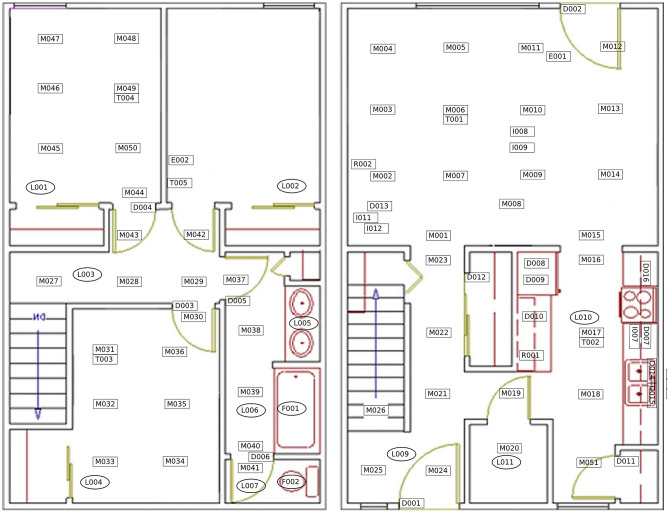
“Figure 1 The layout of the smart home[19]”
BackgroundМоделі адаптивної системи розумного будинку на базі мереж петрі та моделей Маркова
Beregovska, K., & Teslyuk, V. (2024) · Науковий вісник НЛТУ України · doi:10.36930/40340616 · Cited by 1
Ambient Intelligence Ecosystem for Elderly Pattern Detection and Care Using Social Robots
Ramos, R. G., Domingo, J. D., Zalama, E., & Gómez‐García‐Bermejo, J. (2024) · IEEE International Conference on Internet of Things (iThings) and IEEE Green Computing and Communications (GreenCom) and IEEE Cyber, Physical and Social Computing (CPSCom) and IEEE Smart Data (SmartData) · doi:10.1109/ithings-greencom-cpscom-smartdata-cybermatics62450.2024.00061 · Cited by 1
“Furthermore, the TraMiner prototype [22] can recognise locomotion patterns within homes using data gathered from 153 elderly individuals, including those with cognitive impairments.”
MethodUnsupervised detection of interesting discrete sequences using Bayesian surprisePreprint
McGarry, K., McDonald, S., & Button, D. (2022) · Research Square · doi:10.21203/rs.3.rs-1238817/v1
Classifying ambulation patterns in institutional settings
Sera-Josef, J.-V. T., LaViola, J. J., & Bowen, M. E. (2024) · Smart Health · doi:10.1016/j.smhl.2024.100503
AI-Based Measurement Tools for Intrinsic Capacity in Older Adults: Scoping Review
Yu, C., Lu, P., Zhou, Y., Zhao, J., Yang, X., Tang, D., & Ying, L. (2026) · Journal of Medical Internet Research · doi:10.2196/90411
Zhao, Z., Zhao, M., Lu, M., Qin, C., Li, B., Zhang, S., Yan, R., Zhao, F., Chen, H., & Liu, J. (2026) · Journal of NeuroEngineering and Rehabilitation · doi:10.1186/s12984-026-01904-z
“However, recent advancements in artificial intelligence, particularly in computer vision, coupled with the widespread availability and affordability of sensors and smartphones, offer a promising avenue for addressing these limitations [12, 13].”
Zolfaghari, S., Johansson‐Pajala, R., Hammar, L. M., & Daneshtalab, M. (2026) · Frontiers in Digital Health · doi:10.3389/fdgth.2026.1745662
“Globally, environmental sensors are increasingly used in dementia detection and fall prevention (1, 20, 21).”
Self-citationBhavana, K., Rao, G. M., Sinha, A., Sindhu, V., & Khalid, S. (2026) · Advances in Public Health · doi:10.1155/adph/5105227
Metadata
- Authors
- Zolfaghari, S., Khodabandehloo, E., & Riboni, D.
- Affiliations
- University of Cagliari (IT)
- K. N. Toosi University of Technology (IR)
- Corresponding author
- Zolfaghari, Samaneh
- Khodabandehloo, Elham
- Riboni, Daniele
- Venue
- Cognitive Computation
- Published
- 2021-02-02
- Volume
- 14
- Issue
- 5
- Pages
- 1549-1570
- ISSN
- 1866-9956 (ISSN-L)
- 1866-9964
- PMC
- PMC7851509
- OpenAlex
- W3127349886
- Cited by
- 29
- References
- 64
- Citations by year
- 2026: 5 · 2025: 2 · 2024: 7 · 2023: 8 · 2022: 6 · 2021: 1
- FWCI
- 1.98
- Type
- journal article
- Language
- en
- Open access
- hybrid
- doi.org
- Licence
- cc-by
- creativecommons.org/licenses/by/4.0 (tdm)
- creativecommons.org/licenses/by/4.0 (vor)
- Locations
- Cognitive Computation (publishedVersion, cc-by)
- PubMed Central (publishedVersion, cc-by)
- PubMed (publishedVersion)
- UNICA IRIS Institutional Research Information System (University of Cagliari) (submittedVersion, public-domain)
- Funders
- Università degli Studi di Cagliari
- Topics
- Physical Sciences › Computer Science › Computer Vision and Pattern Recognition › Context-Aware Activity Recognition Systems
- Health Sciences › Medicine › Psychiatry and Mental health › Dementia and Cognitive Impairment Research
- Health Sciences › Health Professions › Physical Therapy, Sports Therapy and Rehabilitation › Balance, Gait, and Falls Prevention
- Keywords
- cognitive impairment detection, dementia, mild cognitive impairment, home automation, older adults, visual feature extraction, activity recognition
About these checks
Registry, retraction, Cites and statistics results are computed, not judged, with one exception: a printed reference that no index lists is read once by a model before it counts as a citation error. Claims are extracted by a model and kept only when their quote appears verbatim in the text; each cited source is then checked, with a model’s help, for whether it says what the claim relies on. Those verdicts can be wrong — read the claim’s quote and the cited source before relying on one.
Statistics and arithmetic are recomputed, not judged.
Confidence bands are shown only for fields calibrated on our annotated test set. None is calibrated yet, so no band is shown.
What counts as a claim ›How we measure confidence ›How we check this ›
Are you an author, or do you see a problem with this page? Request a review
Data sources
Bibliographic data: Semantic Scholar, OpenAlex, Crossref.
Contains information from the Semantic Scholar Academic Graph Datasets, made available under the ODC Attribution License (ODC-BY 1.0).
Semantic Scholar’s data is described in: Kinney, R., et al. (2023). The Semantic Scholar Open Data Platform. arXiv:2301.10140.
