

Are mindfulness and self-compassion related to psychological distress and communication in couples facing lung cancer? A dyadic approach.
Open accessThe DOI matches its Crossref record; 72 of the 73 references it cites were found in a registry or an index.
Abstract
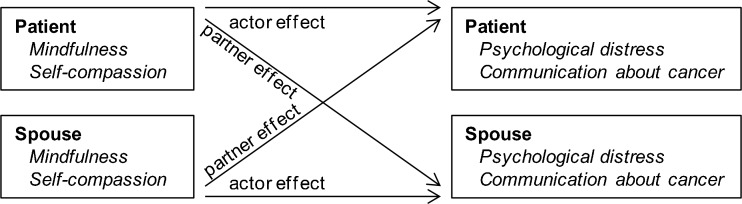
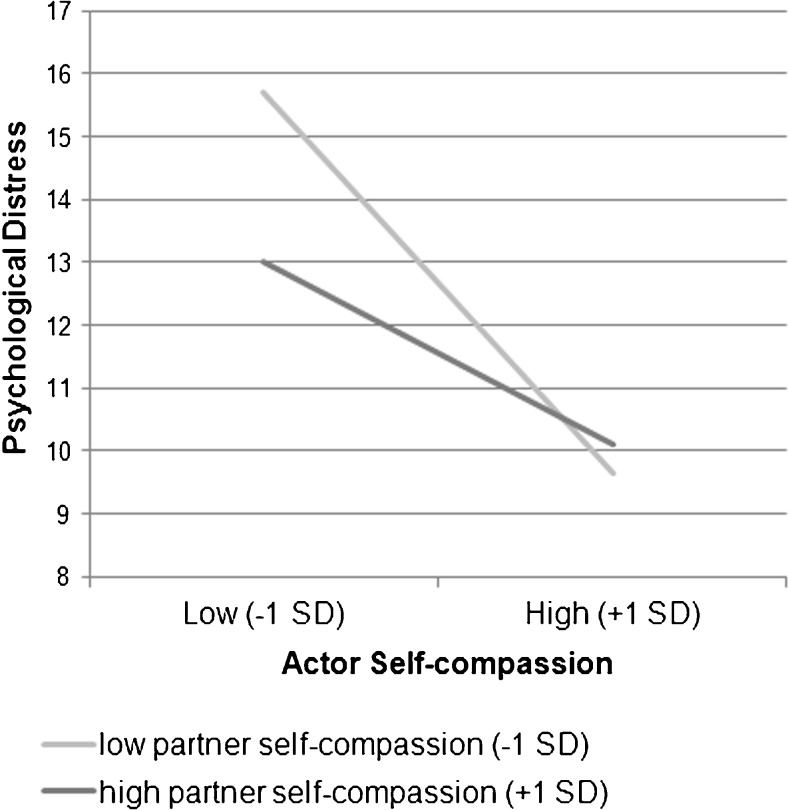
Lung cancer patients and their spouses report high rates of distress. Due to the increasing popularity of and evidence for mindfulness-based interventions in cancer, mindfulness and self-compassion have been identified as potentially helpful skills when coping with cancer. This dyadic study examined how mindfulness and self-compassion are related to psychological distress and communication about cancer in couples facing lung cancer. Using the actor-partner interdependence model, self-reported mindfulness, self-compassion, psychological distress and communication about cancer were analyzed in a cross-sectional sample of 88 couples facing lung cancer. Regarding psychological distress, no difference was found between patients and spouses. In both partners, own levels of mindfulness ( B = −0.19, p = .002) and self-compassion ( B = −0.45, p < .001) were negatively related to own distress levels. At a dyadic level, own self-compassion was less strongly associated with distress if the partner reported high self-compassion ( B = 0.03, p = .049). Regarding communication about cancer, patients reported to communicate more openly with their partner than with spouses. However, after controlling for gender, this difference was no longer significant. In both partners, own self-compassion ( B = 0.03, p = .010) was significantly associated with own communication while mindfulness was not. A trend showed that mindfulness of the partner was related to more open communication in the individual ( B = 0.01, p = .080). These findings give a first indication that mindfulness and self-compassion skills may go beyond the individual and could impact couple functioning. Future research should examine whether couples facing (lung) cancer may benefit from programs in which mindfulness and self-compassion are cultivated.
Overview
The claims and statistics of this paper haven’t been checked yet.
Free: it reads the open-access text and checks the first 5 claims that cite a source we can check. Create a free account to check every claim.
Integrity signals
Registry
Cites
Statistics
Figures
Verification
Claims the paper makes
The claims and statistics of this paper haven’t been checked yet.
Free: it reads the open-access text and checks the first 5 claims that cite a source we can check. Create a free account to check every claim.
Claims other papers make about this one
Each is checked against this paper’s own text: does it say what the citing paper says it does?
The source backs part of the claim, not all of it — or backs it for a different population, condition or comparison.
In the citing paper
“The current findings contribute to a small body of research suggesting that the benefits of mindfulness and illness acceptance processes are more intrapersonal than interpersonal in nature (Pakenham & Samios, 2013; Schellekens et al., 2017).”
From Relations of Mindfulness and Illness Acceptance With Psychosocial Functioning in Patients With Metastatic Breast Cancer and Caregivers. (2020) · cites this paper as Schellekens et al., 2017
Experimental — accuracy not yet measuredThe source backs part of the claim, not all of it — or backs it for a different population, condition or comparison.
In the citing paper
“Mindful acceptance of the cancer experience has been shown to facilitate couple wellbeing68 and to impart psychological benefits on both members of the couple.69”
From Preliminary Development of a Mindfulness-Based Group Therapy to Expand Couples’ Sexual Intimacy after Prostate Cancer: A Mixed Methods Approach (2021) · cites this paper as [68]
Experimental — accuracy not yet measuredIn the citing paper
“One dyadic study with lung cancer patients and their partners showed that more self-compassion was related to less psychological distress in individuals with low levels of self-compassion (Schellekens et al., 2017).”
From Mindfulness Training for People With Dementia and Their Caregivers: Rationale, Current Research, and Future Directions (2018) · cites this paper as Schellekens et al., 2017
Self-check
Percentages, sums and reported differences re-computed from the paper’s own numbers.
The self-check needs the paper’s full text.
Citations
Cites
Jemal, A., Bray, F., Center, M. M., Ferlay, J., Ward, E., & Forman, D. (2011) · CA: A Cancer Journal for Clinicians · doi:10.3322/caac.20107 · Cited by 54,679
The Hospital Anxiety and Depression Scale
Zigmond, A. S., & Snaith, R. P. (1983) · Acta Psychiatrica Scandinavica · doi:10.1111/j.1600-0447.1983.tb09716.x · Cited by 47,139
Applied Multiple Regression/Correlation Analysis for the Behavioral Sciences
Cohen, P., Cohen, P., West, S. G., & Aiken, L. S. (2014) · Psychology Press eBooks · doi:10.4324/9781410606266 · Cited by 20,737
Depression and quality of life in older persons: A review
Sivertsen, H., Bjørkløf, G. H., Engedal, K., Selbæk, G., & Helvik, A.-S. (2015) · Dementia and Geriatric Cognitive Disorders · doi:10.1159/000437299 · Cited by 14,152
The validity of the Hospital Anxiety and Depression Scale
Bjelland, I., Dahl, A. A., Haug, T. T., & Neckelmann, D. (2002) · Journal of Psychosomatic Research · doi:10.1016/s0022-3999(01)00296-3 · Cited by 9,779 · cited 1×
“The HADS has been validated in several Dutch patient populations and oncology patients and showed good internal consistency (Bjelland et al. 2002; Spinhoven et al. 1997).”
Background(2008) · Medical Entomology and Zoology · Cited by 7,477
Mindfulness: A proposed operational definition.
Bishop, S. R., Lau, M., Shapiro, S., Carlson, L., Anderson, N. D., Carmody, J., Segal, Z. V., Abbey, S., Speca, M., Velting, D., et al. (2004) · Clinical Psychology: Science and Practice · doi:10.1093/clipsy.bph077 · Cited by 7,234
The Development and Validation of a Scale to Measure Self-Compassion
NEFF, K. D. (2003) · Self and Identity · doi:10.1080/15298860309027 · Cited by 6,436 · cited 8×
“Self-compassion involves acknowledging one’s pain and recognizing this is part of the human experience while meeting the pain with kindness and understanding (Neff 2003).”
BackgroundResultInfluential(2006) · Cited by 3,705
(2001) · Cited by 3,666
Research works printed but not linked: 1
- 23. Germer CK. The mindful path to self-compassion. New York: Guilford Press; 2009.
Cited by
Self-Compassion and Current Close Interpersonal Relationships: a Scoping Literature Review
Lathren, C. R., Rao, S. S., Park, J., & Bluth, K. (2021) · Mindfulness · doi:10.1007/s12671-020-01566-5 · Cited by 186
Schellekens, M. P. J., van den Hurk, D. G. M., Prins, J. B., Donders, A. R. T., Molema, J., Dekhuijzen, R., van der Drift, M. A., & Speckens, A. E. M. (2017) · Psycho-Oncology · doi:10.1002/pon.4430 · Cited by 138
Self-citationKappen, G., Karremans, J. C., Burk, W. J., & Buyukcan-Tetik, A. (2018) · Mindfulness · doi:10.1007/s12671-018-0902-7 · Cited by 118
“Moreover, Study 3 is one of the few studies to approach the interpersonal effects of mindfulness from a dyadic perspective (for notable exceptions, see Barnes et al. 2007; Iida and Shapiro 2017; Pakenham and Samios 2013; Schellekens et al. 2017; Williams and Cano 2014).”
BackgroundSelf-citationSchellekens, M. P. J., Wolvers, M. D. J., Schroevers, M. J., Bootsma, T. I., Cramer, A. O. J., & van der Lee, M. L. (2020) · Journal of Behavioral Medicine · doi:10.1007/s10865-019-00084-7 · Cited by 93
Self-citationBögels, S. M., & Emerson, L. (2018) · Current Opinion in Psychology · doi:10.1016/j.copsyc.2018.12.001 · Cited by 98
Hughes, M., Brown, S. L., Campbell, S., Dandy, S., & Cherry, M. G. (2021) · Mindfulness · doi:10.1007/s12671-021-01602-y · Cited by 88
“Two papers used path analysis to identify mediators (Brown et al. 2020; Skinta et al. 2019), whilst one considered moderation (Schellekens et al. 2017).”
BackgroundMethodInfluentialClarke, J., & Draper, S. (2020) · Internet Interventions · doi:10.1016/j.invent.2019.100293 · Cited by 65
“…describing, acting with awareness, non-judging of inner experience, and non-reactivity to inner experience), we followed other researchers (De Bruin et al., 2016; Schellekens et al., 2017) in using the average of all FFMQ-SF item scores, with higher scores indicating greater mindfulness.”
MethodArambasic, J., Sherman, K. A., Elder, E., & Breast Cancer Network Australia (2019) · Psycho-Oncology · doi:10.1002/pon.5068 · Cited by 66
“This is particularly pertinent as self‐compassion is not only believed to stem from prior interpersonal interactions(27) but also implicated in romantic relationship formation post‐breast cancer(34) and the quality of dyadic adjustment and communications among couples in the cancer context.(43)”
BackgroundBerk, L., Warmenhoven, F., van Os, J., & van Boxtel, M. (2018) · Frontiers in Psychology · doi:10.3389/fpsyg.2018.00982 · Cited by 63
Zhu, L., Yao, J., Wang, J., Wu, L., Gao, Y., Xie, J., Liu, A., Ranchor, A. V., & Schroevers, M. J. (2019) · Psycho-Oncology · doi:10.1002/pon.5174 · Cited by 62
Stress and Quality of Life of Patients with Cancer: The Mediating Role of Mindfulness
Dehghan, M., Jazinizade, M., Malakoutikhah, A., Mahani, A. M., Iranmanesh, M. H., Oghabian, S., Mohammadshahi, F., Janfaza, F., & Zakeri, M. A. (2020) · Journal of Oncology · doi:10.1155/2020/3289521 · Cited by 70
“*e results of the studies suggest that patients who are more mindful may be better able to regulate their emotional responses [55], which can help the patients cope with the disease and improve their living conditions and quality of life.”
BackgroundCochrane, A., Reid, O., Woods, S., Gallagher, P., & Dunne, S. (2021) · Psycho-Oncology · doi:10.1002/pon.5694 · Cited by 43
“Similarly, Schellekens et al.34 found that higher mindfulness (using the same measure as the previous study) (β = 0.19, p 0.002) and self‐compassion (β = −0.45, p 0.001) were related to lower caregiver distress.”
InfluentialGarcia, A. C. M., Júnior, J. B. C., Sarto, K. K., Marcelo, C. A. D. S., Paiva, E. M. D. C., Nogueira, D. A., & Mills, J. (2021) · European Journal of Oncology Nursing · doi:10.1016/j.ejon.2021.101924 · Cited by 56
Hsieh, C., Yu, C., Chen, H., Chen, Y., Chang, N., & Hsiao, F. (2019) · Psycho-Oncology · doi:10.1002/pon.5106 · Cited by 36
“In a couple study, dispositional mindfulness of lung cancer patients and their partners was correlated with the outcomes of communication about their own needs.(18) Individual mindfulness was associated with their partners' inner psychological well‐being.”
BackgroundSelf‐compassion and psychological distress in chronic illness: A meta‐analysis
Baxter, R., & Sirois, F. M. (2024) · British Journal of Health Psychology · doi:10.1111/bjhp.12761 · Cited by 43
Beyond “being open about it”: A systematic review on cancer related communication within couples
Hasson‐Ohayon, I., Goldzweig, G., Braun, M., & Hagedoorn, M. (2022) · Clinical Psychology Review · doi:10.1016/j.cpr.2022.102176 · Cited by 43
Karremans, J. C., Kappen, G., Schellekens, M. P. J., & Schoebi, D. (2020) · Scientific Reports · doi:10.1038/s41598-020-78919-6 · Cited by 39
Self-citationLam, K. F. Y., Lim, H. A., Kua, E. H., Griva, K., & Mahendran, R. (2017) · Mindfulness · doi:10.1007/s12671-017-0794-y · Cited by 33
Williamson, T. J., Garon, E. B., Shapiro, J. R., Chavira, D. A., Goldman, J. W., & Stanton, A. L. (2022) · Health Psychology · doi:10.1037/hea0001156 · Cited by 33
van der Donk, L. J., Fleer, J., Tovote, A., Ranchor, A. V., Smink, A., Mul, V. E. M., Sanderman, R., & Schroevers, M. J. (2020) · Mindfulness · doi:10.1007/s12671-019-01298-1 · Cited by 25
“Based on previous literature that being diagnosed with cancer is associated with higher levels of depressive symptoms and negative affect (Mozaffarieh et al. 2007; Pinto-Gouveia et al. 2014; Schellekens et al. 2017), we assumed that having had cancer can be used as an indicator of stress.”
BackgroundResultInfluentialCho, D., Kim, S., Durrani, S., Liao, Z. X., & Milbury, K. (2020) · Journal of Pain and Symptom Management · doi:10.1016/j.jpainsymman.2020.10.001 · Cited by 27
Cultivating Self-Compassion Promotes Disclosure of Experiences that Threaten Self-Esteem
Dupasquier, J. R., Kelly, A. C., Moscovitch, D. A., & Vidovic, V. (2019) · Cognitive Therapy and Research · doi:10.1007/s10608-019-10050-x · Cited by 28
van Roij, J., Raijmakers, N. J. H., Kloover, J. S., Kuip, E. J. M., Smilde, T. J., van der Velden, L., Rodin, G., & van de Poll-Franse, L. V. (2022) · Psycho-Oncology · doi:10.1002/pon.5961 · Cited by 25
Milbury, K., Engle, R., Tsao, A., Liao, Z., Owens, A., Chaoul, A., Bruera, E., & Cohen, L. (2018) · Journal of Pain and Symptom Management · doi:10.1016/j.jpainsymman.2017.11.027 · Cited by 21
The dyadic influences of mindfulness on relationship functioning
McGill, J. M., Burke, L. K., & Adler‐Baeder, F. M. (2020) · Journal of Social and Personal Relationships · doi:10.1177/0265407520944243 · Cited by 25
“…are mixed, however, with some studies finding some support for partner effects of mindfulness (Lenger et al., 2017; Williams & Cano, 2014; Zamir et al., 2017) and other studies finding no support for the influence of partner (Barnes et al., 2007; Pakenham & Samios, 2013; Schellekens et al., 2016).”
Resultvan der Lee, M. L., & Schellekens, M. P. J. (2020) · Translational Behavioral Medicine · doi:10.1093/tbm/ibz019 · Cited by 20
Self-citationBossio, J. A., Higano, C. S., & Brotto, L. A. (2021) · Sexual Medicine · doi:10.1016/j.esxm.2020.100310 · Cited by 18
Raque‐Bogdan, T. L., Ash-Lee, S., Mitchell, J. L., Joseph, E. C., Ross, K. V., Solberg, M., & Owen, J. J. (2020) · Journal of Psychosocial Oncology · doi:10.1080/07347332.2020.1801943 · Cited by 24
Chinh, K., Secinti, E., Johns, S., Hirsh, A., Miller, K., Schneider, B., Storniolo, A. M., Mina, L., Newton, E., Champion, V., et al. (2020) · Oncology Nursing Forum · doi:10.1188/20.onf.739-752 · Cited by 17
“The current findings contribute to a small body of research suggesting that the benefits of mindfulness and illness acceptance processes are more intrapersonal than interpersonal in nature (Pakenham & Samios, 2013; Schellekens et al., 2017”
BackgroundResultInfluentialTian, X., Liao, Z., Yi, L.-J., Tang, L. L., Chen, G., & Herrera, M. (2022) · Asia-Pacific Journal of Oncology Nursing · doi:10.1016/j.apjon.2022.100151 · Cited by 21
The Association Between Trait Mindfulness and Cardiovascular Reactivity During Marital Conflict
Kimmes, J. G., May, R. W., Seibert, G. S., Jaurequi, M. E., & Fincham, F. D. (2017) · Mindfulness · doi:10.1007/s12671-017-0853-4 · Cited by 24
“In one study, a trend was found to suggest that one partner’s level of trait mindfulness was related to more open communication in the other partner (Schellekens et al. 2016).”
BackgroundSemenchuk, B. N., Kullman, S. M., Neilson, C. J., Ceccarelli, L. A., Boreskie, K. F., Kehler, D. S., Tutkaluke, T., Duhamel, T. A., & Strachan, S. M. (2022) · Mindfulness · doi:10.1007/s12671-021-01821-3 · Cited by 22
The compassion connection: Experience sampling insights into romantic attraction
Ciarrochi, J., Sahdra, B. K., Fraser, M. I., Hayes, S. C., Yap, K., & Gloster, A. T. (2024) · Journal of Contextual Behavioral Science · doi:10.1016/j.jcbs.2024.100749 · Cited by 21
“Moreover, in the specific context of health challenges, higher self-compassion levels have been associated with less difficulty in discussing sensitive issues such as infertility (Raque-Bogdan & Hoffman, 2015; Schellekens et al., 2017; Shaw et al., 2018).”
Faghani, F., Choobforoushzadeh, A., Sharbafchi, M. R., & Poursheikhali, H. (2022) · Wiener klinische Wochenschrift · doi:10.1007/s00508-022-02057-4 · Cited by 18
Wang, H., Sun, X., Yue, H., Yang, Y., & Feng, D. (2021) · European Journal of Cancer Care · doi:10.1111/ecc.13538 · Cited by 19
Self-Compassion in Relationships and Caregiving Contexts
Lathren, C. (2023) · Mindfulness in behavioral health · doi:10.1007/978-3-031-22348-8_15 · Cited by 16
Dawson, S. J., Fitzpatrick, E. T., Farm, G. H.-J., & Rosen, N. O. (2023) · Archives of Sexual Behavior · doi:10.1007/s10508-023-02658-8 · Cited by 17
“Self-compassion is also associated with more effective and open communication about individual health and sexual difficulties (Raque-Bogdan & Hoffman, 2015; Schellekens et al., 2017), which could also lend itself to a stronger romantic and sexual connection between both members of the couple.”
BackgroundGao, W., Zhang, Q., Zhang, L., Xu, M., Zhu, Y., & Han, J. (2025) · European Journal of Oncology Nursing · doi:10.1016/j.ejon.2025.102798 · Cited by 9
Morin, L., Laurin, J. C., Doucerain, M. M., & Grégoire, S. (2023) · Journal of Social and Personal Relationships · doi:10.1177/02654075231156404 · Cited by 17
Gaylord, S. A., Faurot, K. R., Shafer, J. S., Harr, E. D., Lathren, C., Roth, I., Giscombé, K., Sheffield-Abdullah, K. M., & Williams, S. (2022) · Contemporary Clinical Trials Communications · doi:10.1016/j.conctc.2022.101031 · Cited by 10
Ketay, S., Thorson, K. R., Roy, A. R. K., & Welker, K. M. (2022) · Mindfulness · doi:10.1007/s12671-022-02044-w · Cited by 9
“For example, several studies provide support for the idea that the mindfulness of one’s partner can shape one’s own evaluations of the relationship and communication within the relationship (Lenger et al., 2017; Schellekens et al., 2017; Williams & Cano, 2014).”
ResultParents' marital satisfaction, self‐compassion, and harsh discipline in China: A dyadic analysis
Wang, D., Xie, R., Yan, R., Ding, W., & Lin, X. (2023) · Family Relations · doi:10.1111/fare.12951 · Cited by 13
Xie, W., Jen, E., Dougherty, A. W., Hu, H., Ho, W. S., & Cheung, H. N. (2025) · AI & Society · doi:10.1007/s00146-025-02771-3 · Cited by 12
Chinh, K., Mosher, C. E., Brown, L. F., Beck‐Coon, K., Kroenke, K., & Johns, S. A. (2020) · Mindfulness · doi:10.1007/s12671-019-01299-0 · Cited by 8
Rajaei, A., Heshmati, S., & Giesemann, X. (2022) · American Journal of Family Therapy · doi:10.1080/01926187.2022.2106460 · Cited by 7
“…couples’ mindfulness and their cancer-related distress are in line with prior research that documents the beneficial effects of mindfulness for couples with cancer (e.g., Barnes et al., 2017; Pruitt & McCollum 2010; Schellekens et al., 2016; Shore, 2018; Wachs & Cordova, 2007; Walsh et al., 2009).”
BackgroundResultPandya, S. P. (2020) · Contemporary Family Therapy · doi:10.1007/s10591-020-09547-5 · Cited by 9
Hsiao, F., Ho, C., Yu, C., Shih, J.-Y., Lin, Z., Huang, F., Chen, Y., & Hsieh, C. (2025) · Psychosocial Intervention · doi:10.5093/pi2025a1 · Cited by 6
Li, J., Zhou, T., Li, C., Zou, J., Zhang, J., Yuan, B., & Zhang, J. (2024) · Asia-Pacific Journal of Oncology Nursing · doi:10.1016/j.apjon.2024.100622 · Cited by 7
Williamson, T. J., Brymwitt, W. M., Gilliland, J. L., Carter‐Harris, L., Mao, J. J. J., Lynch, K. A., Emard, N., Omachi, S., Jacobs, R. L., Tefera, M. Y., et al. (2025) · Translational Behavioral Medicine · doi:10.1093/tbm/ibae074 · Cited by 6
The Role of Mind–Body Approaches in Promoting Healthcare Engagement and Positive Behavior Change
Kraemer, K. M., Luberto, C. M., Hall, D. L., & Yeh, G. Y. (2020) · Respiratory medicine · doi:10.1007/978-3-030-44889-9_9 · Cited by 6
A systematic review of the factors associated with lung cancer stigma
McCann, S., Vehar, L., & Dunne, S. K. (2026) · Social Science & Medicine · doi:10.1016/j.socscimed.2026.119301 · Cited by 5
Chan, E. W. W., Liang, L., Liu, N. H., & Hou, W. K. (2021) · Journal of Health Psychology · doi:10.1177/13591053211030994 · Cited by 5
“A dyadic study examining couples facing lung cancer indicated no significant difference in distress levels between cancer patients and their spouses, whereas self-compassion was found to be negatively associated with psychological distress for both patients and their caretaking partners (Schellekens et al., 2017).”
BackgroundLi, X., Lam, C. B., & Chung, K. K. H. (2022) · Mindfulness · doi:10.1007/s12671-022-01875-x · Cited by 4
“A growing body of research has been using APIMs to examine the actor and partner effects of mindfulness—especially on psychological and marital well-being—among married and unmarried couples from the USA and Australia and unmarried couples from China (Cox et al., 2020; Hogan & Gordon, 2020; Zhou et al., 2020).”
ResultInfluentialTrajectories of Self-compassion and Psychological Symptoms in Newly Diagnosed Cancer Patients
Wang, J., Hu, Y., Wei, L., Liu, A., Yao, J., Schroevers, M. J., & Zhu, L. (2022) · Mindfulness · doi:10.1007/s12671-021-01809-z · Cited by 6
“, 2018) as well as cancer patients (Gillanders et al., 2015; Pinto-Gouveia et al., 2014; Przezdziecki et al., 2013; Schellekens et al., 2017; Todorov et al., 2019; van der Donk et al., 2020).”
BackgroundHaghdoost, M., Sarajkhorrami, N., & Makvandi, B. (2021) · journal of ilam university of medical sciences · doi:10.52547/sjimu.29.6.48 · Cited by 4
Bitan, S., Hasson‐Ohayon, I., Lavidor, M., & Daches, S. (2025) · Journal of Psychosocial Oncology · doi:10.1080/07347332.2025.2570787 · Cited by 6
Morris, K. L. (2024) · American Journal of Family Therapy · doi:10.1080/01926187.2024.2434849 · Cited by 4
Zarei, K., Musarezaie, A., & Ashouri, E. (2021) · Iranian Journal of Nursing and Midwifery Research · doi:10.4103/ijnmr.ijnmr_284_20 · Cited by 3
“found no link between emotional distress and self‐compassion in patients with lung cancer.[22] In this regard, Salarhaji et al.”
BackgroundEffectiveness of Vipassana Meditation on Communication Skills of Employees
Pradhan, S., & Kumar, V. V. A. (2019) · Annual International Conference on 4C's - Communication, Commerce, Connectivity, Culture (SIMSARC) · doi:10.4108/eai.18-12-2018.2283812 · Cited by 6
Nik, A. H., Heidari, H., Davoodi, H., & Jafari, A. (2021) · Journal of Research in Behavioural Sciences · doi:10.52547/rbs.19.1.13 · Cited by 3
Hill, T. G., Allsop, D. B., Bagnell, K. B., & Rosen, N. O. (2025) · Journal of Happiness Studies · doi:10.1007/s10902-025-00880-w · Cited by 3
“Equity and exchange theory (Underwood, 2009) suggests that self-compassionate partners’ may communicate more effectively and openly about health and sexual difficulties (Raque-Bogdan & Hoffman, 2015; Schellekens et al., 2017).”
The Relational Impact of Mindfulness Through the Lens of the MIRROR Model
Karremans, J. C., van der Schans, K. L., & Leavitt, C. E. (2025) · Springer eBooks · doi:10.1007/978-3-031-91451-5_13 · Cited by 5
Self-citationMelendez‐Rhodes, T., & Lal, A. (2025) · American Journal of Family Therapy · doi:10.1080/01926187.2024.2431328 · Cited by 2
“Behavior activation, assertiveness training, communication training, mindfulness-based stress reduction among other interventions can be helpful to reduce symptoms of depression, anxiety and cancer related distress in patients and their families (Rajaei et al., 2024; Schellekens et al., 2017).”
Rajati, R., Khadivzade, T., Esmaily, H., & Danesh, F. (2022) · Nursing and Midwifery Journal · doi:10.52547/unmf.20.2.155 · Cited by 2
Self-Compassion and Chronic Medical Conditions
Finlay‐jones, A. L., Boggiss, A. L., & Serlachius, A. S. (2023) · Mindfulness in behavioral health · doi:10.1007/978-3-031-22348-8_19 · Cited by 4
Zhang, X., Zhang, H., Li, J., Shao, D., Li, J., Jiao, J., & Cao, F. (2025) · Healthcare and Rehabilitation · doi:10.1016/j.hcr.2025.100023 · Cited by 2
Dupasquier, J. R. (2020) · UWSpace (University of Waterloo) · Cited by 2
Moran, E. (2018) · Arrow@dit (Dublin Institute of Technology) · doi:10.34961/8038 · Cited by 1
Life Expectancy in the Spouses of Veterans
Samadifard, H., & Narimani, M. (2018) · مجله طب جانباز · doi:10.29252/ijwph.10.3.151 · Cited by 1
Pleine conscience et relations de couple
Dierickx, C. (2018) · Elsevier eBooks · doi:10.1016/b978-2-294-75892-8.00007-5
van der Donk, L. J. (2020) · University of Groningen research database (University of Groningen / Centre for Information Technology) · doi:10.33612/diss.136048320
Nazari, G., Amiri, H., Afshariniea, K., & Kakabaraei, K. (2021) · journal of ilam university of medical sciences · doi:10.52547/sjimu.29.2.95 · Cited by 3
Area, K. F. R. (2005)
Adaptive Processes Through Crisis: a Biopsychosocial-Spiritual Examination of Couples Facing Cancer
Rajaei, A., Jensen, J. F., Brimhall, A. S., Knauss, A., Schwartz, A., Torres, E., & Köse, Ö. (2022) · International Journal of Systemic Therapy · doi:10.1080/2692398x.2022.2106744 · Cited by 1
The Influence and Causes of Self-Compassion on Close Relationship
王, 志. (2022) · Advances in Psychology · doi:10.12677/ap.2022.1210416
Self-Compassion dan Psychological Well-Being pada Pasien Kanker
Sihombing, R. M., Nuraini, T., & Afiyanti, Y. (2024) · Journal of Telenursing (JOTING) · doi:10.31539/joting.v6i1.10321
Çetiner, E., & Kavradım, S. T. (2024) · Akdeniz Hemşirelik Dergisi · doi:10.59398/ahd.1446809
Yang, X., Sun, Z., Chen, X., Qiu, X., Mao, J., Wang, C., Li, Q., & Zhao, J. (2025) · European Journal of Oncology Nursing · doi:10.1016/j.ejon.2025.102899 · Cited by 1
Jiang, Q., Xiao, F., Chen, H., Tan, R., Wang, X., & Lu, T. (2026) · Transplantation Proceedings · doi:10.1016/j.transproceed.2025.11.003
Bu, X., Chung, J. O. K., Jiang, L., Jin, C., & Leung, D. Y. P. (2026) · Supportive Care in Cancer · doi:10.1007/s00520-025-10287-1
“Previous work consistently demonstrated that patients communicate more than their spouses [34–37].”
Trindade, I. A., Caçador, M. I., & Moreira, H. (2025) · Springer eBooks · doi:10.1007/978-3-031-89095-6_22
Batool, T., Iqbal, S., & Froelicher, E. S. (2026) · Clinical Nursing Research · doi:10.1177/10547738261434127 · Cited by 1
“MBSR was the most frequent intervention as it was tested in six of the studies (Birnie et al., 2010; Lengacher et al., 2012; Schellekens et al., 2017; Türkoğlu & Kavuran, 2024; Van Den Hurk et al., 2015; Whitebird et al., 2013) that utilized various types of MBIs.”
InfluentialSelf-Compassion as Resistance: Exploring the Benefits of Self-Compassion for Queer Couples
Morris, K. L. (2026) · Contemporary Family Therapy · doi:10.1007/s10591-026-09782-2
Self-compassion and romantic relationship functioning: The role of active coping during conflict
Lou, X., Wang, H., Li, Y., & Wang, Y. (2026) · Personality and Individual Differences · doi:10.1016/j.paid.2026.113879
Smedley, D. K., Zheng, Y., & Kimmes, J. G. (2026) · Journal of Social and Personal Relationships · doi:10.1177/02654075261472931
Metadata
- Authors
- Schellekens, M. P. J., Karremans, J. C., van der Drift, M. A., Molema, J., van den Hurk, D. G. M., Prins, J. B., & Speckens, A. E. M.
- Affiliations
- Radboud University Medical Center (NL)
- Radboud University Nijmegen (NL)
- Corresponding author
- Schellekens, Melanie P. J.
- Venue
- Mindfulness
- Published
- 2016-09-06
- Volume
- 8
- Issue
- 2
- Pages
- 325-336
- ISSN
- 1868-8527 (ISSN-L)
- 1868-8535
- PMC
- PMC5355515
- OpenAlex
- W2509155664
- Cited by
- 85
- References
- 73
- Citations by year
- 2026: 7 · 2025: 10 · 2024: 7 · 2023: 5 · 2022: 14 · 2021: 11 · 2020: 12 · 2019: 8 · 2018: 6 · 2017: 4
- FWCI
- 8.02
- Type
- journal article
- Language
- en
- Open access
- hybrid
- doi.org
- Locations
- Mindfulness (publishedVersion, cc-by)
- PubMed Central (publishedVersion, cc-by)
- PubMed (publishedVersion)
- Radboud Repository (Radboud University) (submittedVersion)
- Funders
- KWF Kankerbestrijding (NL) (KUN 2011-5077)
- Topics
- Social Sciences › Psychology › Clinical Psychology › Mindfulness and Compassion Interventions
- Health Sciences › Medicine › Oncology › Cancer survivorship and care
- Social Sciences › Psychology › Social Psychology › Attachment and Relationship Dynamics
- Keywords
- self-compassion, lung cancer, psychological distress, couple communication, dyadic analysis, actor-partner interdependence, coping with cancer, gender differences
About these checks
Registry, retraction, Cites and statistics results are computed, not judged, with one exception: a printed reference that no index lists is read once by a model before it counts as a citation error. Claims are extracted by a model and kept only when their quote appears verbatim in the text; each cited source is then checked, with a model’s help, for whether it says what the claim relies on. Those verdicts can be wrong — read the claim’s quote and the cited source before relying on one.
Statistics and arithmetic are recomputed, not judged.
Confidence bands are shown only for fields calibrated on our annotated test set. None is calibrated yet, so no band is shown.
What counts as a claim ›How we measure confidence ›How we check this ›
Are you an author, or do you see a problem with this page? Request a review
Data sources
Bibliographic data: Semantic Scholar, OpenAlex, Crossref.
Contains information from the Semantic Scholar Academic Graph Datasets, made available under the ODC Attribution License (ODC-BY 1.0).
Semantic Scholar’s data is described in: Kinney, R., et al. (2023). The Semantic Scholar Open Data Platform. arXiv:2301.10140.
